A guide for choosing and using motorised mobility devices: mobility scooters and electric wheelchairs
←
→
Page content transcription
If your browser does not render page correctly, please read the page content below
APRIL 2010

A guide for choosing and using motorised mobility devices:
mobility scooters and electric wheelchairs

keeping victorians connected
Acknowledgements                                                            Contents

VicRoads acknowledges the contribution of the following organisations and   Introduction                                          4
individuals in reviewing this publication:
                                                                            Who may use a motorised mobility device?              5
Dr Marilyn Di Stefano, School of Occupational Therapy, Latrobe University
                                                                            Think about your health                               6
Dr Maree Dyson, Transport Accident Commission
                                                                            Choosing the right motorised mobility device           7
Ms Susan Dyson, Travellers Aid Disability Access Service
Mr Nazim Erdem, Australian Quadriplegic Association                         Checks to make before each trip                       13
Ms Eleanor Fergeus, Department of Human Services, Victoria                  Out and about                                         14
Mr Andrew Gannan, Mobility Aids Australia Pty Ltd                           Road rules for pedestrians
Mr Mark Grant, Department of Human Services, Victoria                       on motorised mobility devices                         18
Ms Tricia Greenway, Arthritis Victoria                                      Rate yourself – can you be a safe user?           22
Ms Mary-Ann Leithof, ParaQuad Victoria
Ms Robin Lovell, School of Occupational Therapy, Latrobe University
Mr Emilio Savle, Department of Transport, Victoria
Ms Margaret Stevens, Disability Justice Advocacy

Thanks to Angela Lampard, Nillumbik Shire Council for assistance with
photography, and special thanks to Simone Pilens and Bob Bruce for acting
as models.

                                                                            Disclaimer
                                                                            This guide explains the legal requirements for
                                                                            pedestrians using motorised mobility devices. It is
                                                                            intended as a guide only. It does not purport to set
                                                                            out the full requirements of the law. For a complete
                                                                            knowledge of the road law, you should consult the
                                                                            appropriate Acts and Regulations.

                                                                            © VicRoads 2006

  2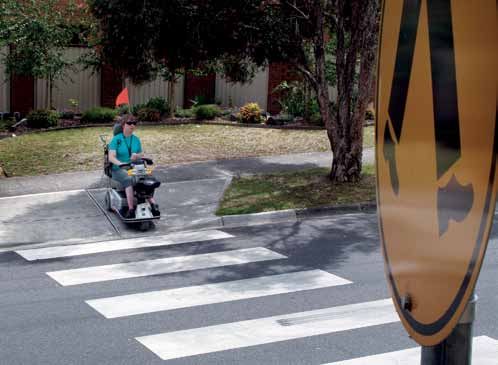
Introduction                                                                        Who may use a motorised mobility device?                                            5

The Victorian Government is                   are not defined as motor              If you are not capable of walking or have difficulty in
committed to helping people to get            vehicles and therefore cannot         walking you may use a motorised mobility device.
around who have difficulty in walking.        be registered                         Your doctor can help you make this decision or may
This is so that everyone can remain           must have a maximum capable           refer you to an occupational therapist for further
active members of our community.              speed of 10km/h on level ground       assessment. It is illegal for anyone else to use such a
As we see more older and disabled             and a maximum unladen mass            device on a footpath or a road.
people in our community, there will           of 110kg
be more motorised mobility devices            are to be used only by people with
in use on our footpaths. It is essential      an injury, disability or medical
that users do their part to keep              condition which means they are
themselves and other road users safe.         unable to walk or have difficulty
They need to be aware of the road             in walking. People who do not
rules and use the devices responsibly         have difficulty in walking are not
and safely.                                   permitted to use them.
VicRoads has produced this
                                           People using these devices or
Guide following a recommendation
                                           manual wheelchairs are considered
from the Victorian Parliamentary
Road Safety Committee.                     pedestrians, and therefore must
                                           obey the same road rules as
This Guide applies to motorised                                                                                                               Mobility scooters
                                           pedestrians. These road rules are                                                                  are designed for use
devices for use by people who              explained on page 18.
are unable to walk or have difficulty in                                                                                                      outdoors and for travel
walking. These devices are:                There are Australian Standards                                                                     on footpaths.
                                           for the construction of motorised
   mobility scooters
                                           mobility devices. These have been
   electric wheelchairs.                   written by experts in the area to
Under the Road Safety Act (1986) and       ensure that these devices are safe for
Road Rules - Victoria these devices:       people to use and do not put other
                                           people using roads and footpaths at
                                           risk. These standards for motorised
                                           mobility devices are voluntary.
                                           This means that suppliers may
                                           legally sell devices that do not meet
                                           the Standards.

                                           It is strongly recommended that
                                           you request a written statement of
                                                                                                                                              Electric wheelchairs
                                           compliance with the Standards from
                                                                                                                                              are generally designed
                                           the supplier whenever you buy or hire
                                                                                                                                              for indoor use, but can
                                           a device. A summary of the relevant                                                                also be suitable for
                                           standards is on page 10.                                                                           outdoor use.
   4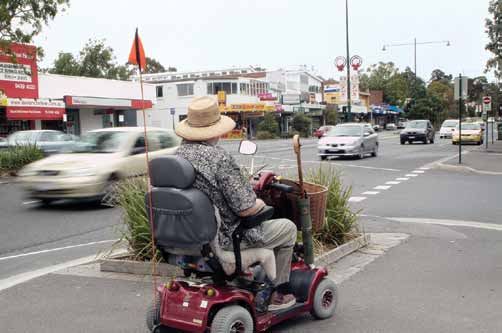
Think about your health                                                          Choosing the right motorised mobility device                                       7

                                                                                 Get independent advice                    Talk with your family and don’t rush
                                                                                                                           your decision. Carefully consider
                                                                                 If you are considering getting a
                                                                                                                           how you plan to use your new
                                                                                 motorised mobility device, it is
                                                                                                                           device and the places you will be
                                                                                 important that you get independent
                                                                                                                           travelling to. Ask yourself:
                                                                                 and expert advice before buying.
                                                                                 To make sure that your investment            How far do I need to travel?
                                                                                 is a good one, you need to know              Will I be able to make all trips
                                                                                 before you pay, that it will suit your       along footpaths?
                                                                                 needs. Make sure you deal with an            What surfaces will I be travelling
                                                                                 experienced and reputable supplier,          over?
                                                                                 but remember that few salespeople         Smaller devices, devices with
                                                                                 will be qualified to assess your needs.   smaller wheels and devices with
                                                                                 Ideally, you should ask your doctor       three wheels may be less stable over
                                                                                 for a referral to an occupational         uneven surfaces.It is also important
                                                                                 therapist. Occupational therapists        to choose a device that is suitable
                                                                                 are trained to help you live your life    to your weight and build as the size
                                                                                 as independently as possible.             and weight of the rider can affect
                                                                                 They will assess your individual          stability, especially when turning.
                                                                                 abilities and needs, your local
                                                                                 environment and the features you          Should you buy or hire?
                                                                                 need to ride safely and legally.
                                                                                 They can also advise you on cost          Think about how long you will
In deciding to use a motorised            Eyesight, reaction time, sitting       subsidies that may be available in        need the device. If it is only for a
mobility device, consider your            balance and posture, and               certain circumstances.                    short time while you recover from
health. For people who have               clear thinking are important                                                     an illness or injury then hiring may
difficulty walking, these vehicles give   considerations. Your doctor and        Which device should you                   be cheaper. If you need the device
mobility. Walking is a gentle form of     occupational therapist will be able    choose?                                   on an ongoing basis then buying
exercise that helps to keep you fit       to provide advice. You should also                                               may be the better option. A good
                                                                                 Motorised mobility devices vary in        supplier should let you trial a device
and reduces the possibility of other      use the checklist on page 22.          design, size, features and price.
health problems. You should make                                                                                           and will offer after sales service.
                                          Motorised mobility devices can         If you have some limitations using
a practice, if possible, of walking                                                                                        You may be able to buy a device
                                          sometimes be modified after            your hands, pay particular attention
short distances. When discussing a                                                                                         second-hand, but make sure it suits
                                          purchase, but this can be expensive.   to the controls – different designs
motorised mobility device with your                                                                                        your needs and is in good working
                                          So it is important to make sure the    suit different people.
doctor and occupational therapist,                                                                                         order. Have it checked by a qualified
                                          device is easy to use before you       Modified controls for operation by
make sure you ask about exercise                                                                                           service agent. Have the battery
                                          buy it.                                arm, chin or head are available.
and diet.                                                                                                                  tested, because these can
                                                                                 Technology is improving rapidly. It is    be expensive to replace.
Just as for driving a car, you need to                                           now possible to customise mobility        Ensure there is a local service agent
be sure that you are able to operate                                             devices for many people. Once again       for the scooter and that spare parts
a motorised mobility device safely                                               an expert such as an occupational         are readily available.
before you buy it.                                                               therapist will be able to help.
  6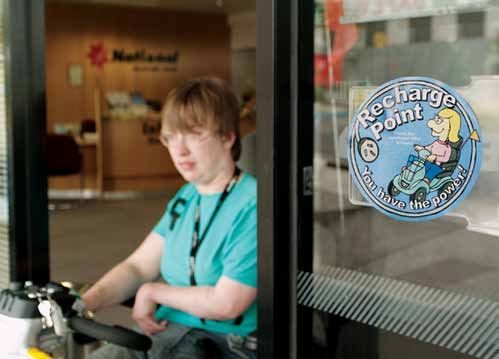
9

Important features                                                                     Reflective flag
                                                                                       A fluorescent orange flag on a pole
Key-operated on/off switch                                                             attached to the device is important
A key-operated switch that                                                             for safety. This helps you to be seen
immobilises the device makes it                                                        more easily by other pedestrians
much more difficult for other people                                                   and motorists, especially in places
to improperly use the vehicle.                                                         such as shopping centre car parks.
                                                                                       The flag should be at head height
Luggage carriers
                                                                                       when standing beside the device,
These are good for transporting
                                                                                       but no more than two metres above
small loads but may restrict the
                                                                                       the ground.
manoeuvrability of your device.
Make sure your shopping does not                                                       Reflectors or reflective tape
obscure your view to the back and                                                      These should be white on the front,
the sides or obstruct the controls.                                                    yellow on the sides and red on
Your safety, and the safety of others,                                                 the back. Reflectors or reflective
is the most important consideration.                                                   materials make it easier to be seen
You must be able to see traffic and                                                    on dull days and at night.
pedestrians in all directions. Arrange                                                 Reflectors for bicycles are suitable,
for delivery by taxi or collection by a                                                or use a Class 1A reflective tape.
friend if your load is too big.

Headlight and tail lights
On dull days or at night, they might
save your life! The type of LED (Light
Emitting Diode) lights that are used
on bicycles are very bright. They use
little electricity and are less likely to   Clearance lights
drain the battery. In order to make         When you are crossing a road,
your device highly visible at night,        it can be difficult for motorists
the bottom of each light (white             to see your headlights or tail
on the front and red on the back)           lights. Static (non-flashing) yellow
should be a minimum of 350mm                clearance lights on the side of
                                                                                                                               Mirrors
above the ground.                           your device also make it easier to
                                                                                                                               These are to help you to see
                                            see you on dull days and at night.
                                                                                                                               pedestrians and traffic beside you
Tie down points                             Yellow LED (Light Emitting Diode)
                                                                                                                               and behind you. While not required
Strong tie down points enable               lights are very bright. They use little
                                                                                                                               by the Standards, mirrors are a
your mobility device to be safely           electricity and are less likely to drain
                                                                                                                               useful aid to keep you and other
restrained in a wheelchair-                 the battery. These clearance lights
                                                                                                                               road users safe.
accessible taxi. Ask about having           should not be flashing because
them fitted before you make your            they could be confused with
purchase.                                   turning indicators.

   8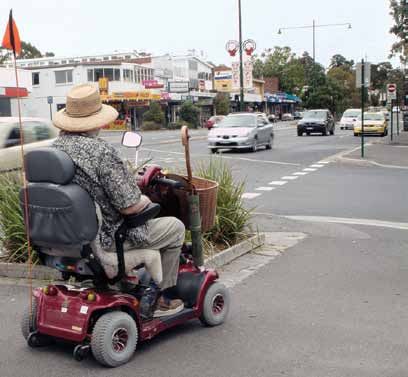
11

Complying with rules and Australian Standards                                     Questions to ask the supplier           How useful is the user manual?
There are two essential questions         The Australian Standards are            How much does it cost?                  You need written instructions on
to ask before you buy or hire a           voluntary, and some motorised                                                   how to operate and maintain your
                                                                                  Make sure you know all the costs
motorised mobility device:                mobility devices may not meet                                                   motorised mobility device and the
                                                                                  before you buy or hire.
1. 	Does it comply with Road Rules       the standards. The standards are                                                supplier is required to supply a user
                                          designed by experts to improve your        If buying, will the supplier allow   manual.
     – Victoria?
                                          safety and the safety of other road        me to use the wheelchair or
2. 	Does it meet the Australian                                                                                             Is the manual simple and easy
                                          users. They can be purchased from          scooter for a trial period before
     Standards for motorised mobility                                                                                        to understand?
                                          Standards Australia. See the website:      purchase?
     devices?                                                                                                                Are the following instructions
                                          standards.org.au                           If buying, what is the price to
It is important that before you buy                                                                                          clear?
                                          Any supplier should be aware of            buy it?
or hire, ask the supplier for a written                                                                                          How to recharge the batteries
                                          the Australian Standards. It is not        If hiring, what is the hiring fee
statement that the device complies                                                                                            	Basic maintenance that you
                                          necessary that you know about the          and deposit?
with the following road rules. It:                                                                                               should do at home
                                          standards in detail. However, it is        What is the TOTAL cost to me?
     is designed to carry one person                                                                                          	How to change light bulbs,
                                          important that you ask for a written
     must have a maximum capable                                                  What is the warranty like?                     and what light bulbs to buy
                                          statement that your motorised
     speed of 10km/h on level ground      mobility device complies with all of    A warranty protects you from loss if    What can it do? What can’t it do?
     and a maximum unladen mass           the standards that are listed below.    the device is faulty.
     of 110kg.                                                                                                            Above all, the device must meet
                                                                                     Is there a written warranty?         your needs and be able to cope with
 Standard     Name of Standard           What it deals with                          Does the warranty cover parts        the trips you plan to make.
 AS 2142      Reflectors for pedal       Acceptable types of reflectors for          and labour?
                                                                                                                             What is the top speed on
              bicycles                   visibility                                  How long does the warranty last?        level ground?
 AS 3696      Wheelchairs                3696. Static stability                      Who arranges and pays for               What sort of hill can it climb?
                                         3696.2 Dynamic stability                    delivery of the device to an
                                                                                                                             Can it climb over kerbs and
                                         3696 3 Efficiency of brakes                 authorised repairer while under
                                                                                                                             gutters?
                                                                                     warranty?
                                         3696.4 Energy consumption                                                           How does it cope with the
                                                                                     Do I get a replacement while
                                         3696.5 Overall dimensions,                                                          different surfaces I plan to travel
                                                                                     mine is being repaired under
                                         mass & turning space                                                                on?
                                                                                     warranty?
                                         3696.6 Maximum speed,                                                               How long will fully charged
                                         acceleration & retardation               What back-up service is provided?          batteries last?
                                         3696.8 Static, impact & fatigue tests      Is training provided on how to        Can it be transported?
                                         3696.9 Climatic tests                      use the device?
                                                                                                                            Can it be safely restrained in a
                                         3696.10 Obstacle climbing ability          Is help provided if you need
                                                                                                                            wheelchair-accessible taxi?
                                                                                    advice?
                                         3696.14 Power and controls                                                         Can it be manoeuvred onto a
                                                                                    Does the supplier do servicing
 AS3744.1     Ignitability of upholstery Smouldering cigarette                                                              bus, and off again without having
                                                                                    and repairs?
 ISO 7176-7   Wheelchairs – seating      Size of & accessibility to seat                                                    to back out?
              dimensions

   10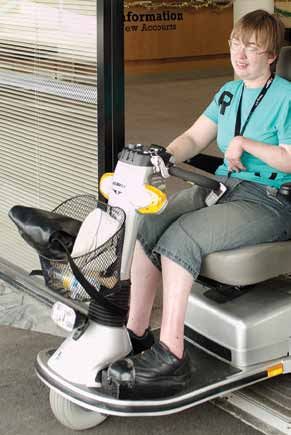
Checks to make before each trip                                                13

                                                                                                   Are the batteries fully charged?
                                                                                  Batteries
                                                                                                   How long can I travel on fully charged batteries?
                                                                                                   Are the tyres inflated to the correct pressure?
                                                                                  Tyres
                                                                                                   Under-inflated tyres may cause stability problems.
                                                                                                   Are you fit to drive?
                                                                                                   Have you recently been unwell or taken medicines or
                                                                                                   alcohol that may affect your judgement?
                                                                                  Your
                                                                                                   Have the dosages of your medicines been changed
                                                                                  judgement
What equipment does it                     Where can servicing be done?                            recently?
come with?                                 Will the servicing company                              If your health has declined, should you check with your
                                           collect and return the motorised                        doctor before you go out?
You will need some basic
equipment to keep your motorised           mobility device?                                        Is the seat adjusted to the correct height?
mobility device working properly.          If they have to keep it for                             Some seats turn sideways to make it easier to get on.
                                                                                  Seat
                                           an extended period, will the                            If your seat does this, make sure it is facing forwards and
   Is a battery charger included in
                                           servicing company provide a                             locked in position before you move.
   the price?
                                           replacement?                                            Is it sunny outside? Do you need a hat and sunscreen?
   Are there clear instructions on
                                           How often does it need to                               Is it wet outside? Do you need a rain coat?
   how to charge the batteries and
                                           be serviced?                                            If it’s wet make sure that the controls are protected from
   how to care for them?                                                          Weather
                                           How much will a service cost?                           the weather.
   Is there a gauge for checking tyre
                                           Will the servicing company                              Be very careful that clothes, umbrellas or canopies do not
   pressures? Make sure you buy a
                                           provide a statement that                                make it hard for you to watch and listen for traffic.
   spare tube.
                                           all equipment is working in                             Are you dressed appropriately for the weather?
   Are there spare globes?
                                           accordance with specifications?        Clothing         Are you wearing light-coloured clothing so you can be
What about the initial set-up?                                                                     seen more easily?
                                        What about breakdowns?
Your supplier may be able to                                                                       Do you have a mobile phone? This makes it is easy to
                                        It is important to know what service      Mobile phone
reprogram the controls to make your                                                                contact someone if you have a problem.
                                        is available if there is a breakdown
selected device drive more evenly.
                                        and you are away from home.                                Do you have a waterproof label on the device with your
   Can the controls be set up to suit                                                              name and mobile phone number? This enables others
                                           If hiring, is breakdown insurance      Identification
   me and my abilities?                                                                            to contact you in the event of loss or if your device is
                                           already arranged?
   Can I contact the supplier with                                                                 obstructing entrances.
                                           If buying, what insurance is
   any questions later?
                                           available and how much does                             If you are carrying bags, shopping or parcels, be careful
What about servicing?                      it cost? The RACV provides a                            about the extra weight and the effect it may have on the
There will be some servicing that          breakdown service membership                            balance of your device.
needs to be done by experts.               – call 13 19 55 for details. You can
                                                                                  Your load        Make sure that any parcels you are carrying do not get in
                                           also check with other breakdown
   Are spare parts readily available       service companies.                                      the way of controls. Do not let these items restrict your
   for this brand and model?                                                                       view or obscure your lights in the front, to the back or to
                                                                                                   the sides.

  12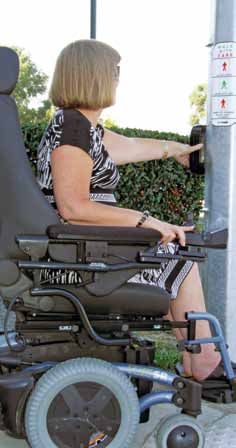
Out and about                                                                                                                                                     15

Your responsibilities when using your motorised mobility device                  Getting there safely
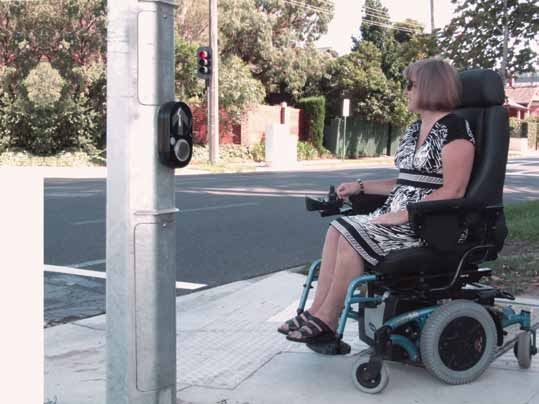
               You need to be very careful and slow down when near                Plan to use    Footpaths are safer than roads. If there are no footpaths,
               other people, especially pedestrians, cyclists and children.       streets with   plan to use quieter roads. Avoid uneven surfaces, dips and
Safety of
               You should make sure that your motorised mobility device           footpaths      potholes.
others
               complies with Australian Standards – see page 10. These are
                                                                                  Avoid hills    Climbing hills uses more battery power. Going down hills
               there for your safety and the safety of other road users.
                                                                                  where          puts more strain on your balance as well as your brakes.
               You should make sure that your motorised mobility device           possible       If you must travel up or down a hill, do so slowly.
               is clearly visible to pedestrians and to motorists on dull days
               and at night. Use the lights and reflectors recommended            Make turns     The faster you take a turn, the more danger there is of
Be seen                                                                           slowly         tipping over.
               on page eight. and wear light-coloured clothing so you can
               be seen more easily. Remember that it can be quite dark            Approach
               outside even at 5pm in winter!                                     ramps and      Do not approach ramps or kerbs at an angle – there may
               Make sure that the controls of the vehicle are designed so         kerbs head-    be a danger of tipping over.
               you can operate them safely with your particular disability.       on
Keep control
               An occupational therapist can help you choose the best                            Country roads often do not have footpaths and may also
               device to suit your condition.                                                    have rough edges. Generally, cars travel faster on country
               It is highly desirable that you take out public liability          Take care      roads. Avoid country roads if possible. If you must use a
               insurance. In the event that your motorised mobility device        on country     country road, stay as close to the kerb as possible, facing
               injures someone or damages property, public liability              roads          oncoming traffic. Use your lights, even at daytime, and
               insurance will protect you from having to pay for medical                         watch carefully for traffic. Return to the footpath or nature
               treatment or property repairs. Check with your home                               strip as soon as possible.
               insurance company as they may cover use of a motorised                            Never approach too close to the back of a parked car.
               mobility device.                                                                  Be aware that drivers may not be able to see you, especially
Have                                                                              Be careful
               You should also seriously consider insuring the device                            when they are reversing. If you must cross the road near a
the right                                                                         around
               against theft and damage. It will be expensive to replace                         parked car, cross in front of the parked car. Do not park near
insurance                                                                         parked cars
               if it is stolen. It may also be expensive to repair damage.                       moving cars or machinery. Be aware of how vulnerable you
               Insuring against theft or damage will reduce these costs.                         are around larger, faster-moving vehicles.
               Breakdown insurance may be another useful investment.
               This is available from companies that provide a breakdown
               service for cars. The RACV provides a breakdown service
               membership – call: 13 19 55 for details. You can also check
               with other companies.

                                                                                 This Metlink brochure has useful information about using
                                                                                 public transport with your motorised mobility device.
  14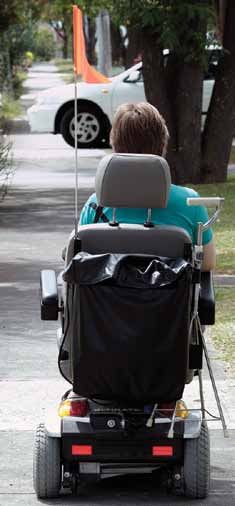
17

Crossing roads                                                                      Sharing footpaths

                  Pedestrian crossings and traffic lights are the safest places                    Where possible, keep left to allow room for other pedestrians
                                                                                    Keep left
                  to cross roads and they are better lit at night. You can also                    to pass.
Choose the        use children’s crossings (school crossings), but make sure
                                                                                                   Look behind and to the sides before changing direction.
best place to     the flags are displayed. Where there is no crossing facility,
                                                                                    Be careful     Your vehicle can injure people. Make use of your mirrors
cross the road    choose a straight section of road with few parked cars
                                                                                    changing       when you have to change direction. You must also turn your
                  and good visibility. At night cross where there is plenty
                                                                                    direction      head and check behind – mirrors do not show the whole
                  of street lighting.
                                                                                                   scene behind you.
                  There may be a ramp on the near side of the road, but is
                                                                                                   Check your mirrors frequently. Be aware of the location of
Look before       there a ramp on the other side of the road? You could get         Use mirrors
                                                                                                   cars and pedestrians behind you, so that you can take action
crossing roads    stuck on the road. Check that you can get off the road on         all the time
                                                                                                   quickly in the event of an incident.
                  the other side before starting to cross.
                                                                                                   Other footpath users can reasonably expect you to behave
                  You must give way to motor vehicles.
                                                                                    Be             responsibly. Listening to music or radio on headphones,
Avoid             Motorists have to look in many different directions at
                                                                                    responsible    or using your mobile phone, may distract you from the
crossing at       roundabouts and it may be hard for them to see you.
                                                                                                   important job of keeping other people safe.
roundabouts       Use pedestrian crossings or traffic lights if possible,
                  otherwise cross at a well-lit, quiet, straight section of road.                  Do not travel alongside another motorised mobility device
                                                                                    One at a
                                                                                                   on the footpath or road. Have consideration for other road
Make sure you Make eye contact with drivers before leaving the kerb.                time
                                                                                                   and footpath users. Travel in single file.
have been       Wear light coloured clothing – especially in bad weather and
seen by drivers at night.                                                           Stopping
Crossing railway and tram tracks                                                                   Before getting on or off, make sure that the motor is
                                                                                                   switched off. You may accidentally hit the control when
Cross railway                                                                       Turn off
                                                                                                   getting on or off. Make sure the brakes are on before you get
level crossings   Getting caught in railway lines can have deadly results.
                                                                                                   off.
only at           Cross railway lines on pedestrian cross-overs and cross the
pedestrian        rails at right angles.                                                           Try not to stop on slopes. This puts an extra strain on brakes.
crossings                                                                           Slopes         Your device will be less stable on slopes. Avoid turns if
                                                                                                   possible, when going up or down a slope.
                  Cross tram tracks at right angles. There is a danger of being
Cross tram                                                                                         Do not obstruct doorways, gateways or driveways when you
                  caught in tram tracks. Try to cross at pedestrian crossings
tracks with                                                                                        stop. Be considerate of others. Parking or stopping where
                  or traffic lights, then if you do get caught in tracks there
care                                                                                Keeping        vehicles are moving can be dangerous, as your device is
                  may be other pedestrians to help you.
                                                                                    clear          smaller than cars and may be difficult to see. Stopping or
                  How to cross railway and tram tracks
                                                                                                   parking in such places may result in damage to your vehicle
                  Cross as near as you can to an angle of 90 degrees
                                                                                                   and injury to you or to others.
                  to the rails.
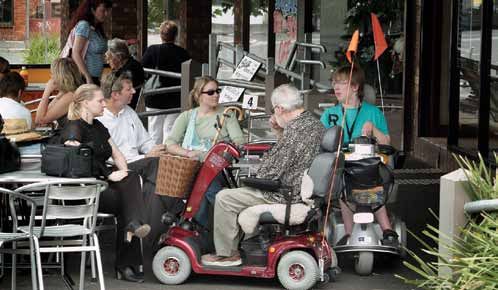
                                                                                                   Other people have to use footpaths as well. Try to park your
                                                                                    Stop to one    vehicle so that other people, including children on bicycles
                                                                                    side           and others using mobility devices and prams can move
                                                                                                   along the footpath freely.
  16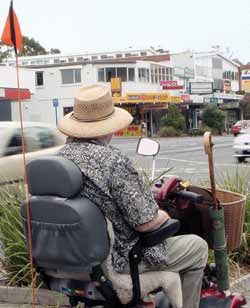
Road rules for pedestrians on motorised                                                                                                                                  19
mobility devices
Motorised mobility devices are designed to be used on footpaths. The road          Crossing at roundabouts
rules that apply to users of motorised mobility devices are the road rules that
                                                                                   Avoid crossing roads near
apply to pedestrians. It is important that you know the rules and obey them.
                                                                                   roundabouts. If you do use them
A licence is not required to use a motorised mobility device.
                                                                                   leave the kerb when there is no
Crossing the road                                                                  traffic on the roundabout. You must
                                                                                   give way to all motor vehicles on or
   You must cross a road by the               You must not jaywalk.                entering a roundabout.
   shortest direct route.                     You must not obstruct traffic.
                                                                                   Intersections with no lights or signs
                                                                                   Avoid crossing in these locations.
                                                                                   You may start to cross the road if there are no cars travelling along the road
                                                                                   you are crossing. But check carefully for cars turning into the road you are
                                                                                   crossing. The drivers may not have seen you.
                                                                                   You must not start to cross a road in front of a car driving along the road you
                                                                                   are crossing. You must not start to cross a road if there is danger of a collision.
Crossing at lights
                                                                                   Using the footpath
   When crossing at traffic lights            You must not leave the kerb if
   without pedestrian signals, you            the signal is yellow or red.            You must use a footpath or                  You must not travel along
   may start to cross on the green                                                    nature strip if one is available and        a road if there is a suitable
   light only. You may leave the                                                      safe to use.                                footpath or nature strip that can
   kerb when the signal is green.                                                                                                 be safely used.

   When crossing at pedestrian                You must not leave the kerb if the   If there is no suitable footpath or nature strip, and you need to travel on the
   lights you must obey the                   ‘walking man’ is red. If you are     road, you must travel facing the oncoming traffic.
   ‘walking man’ signals. You may             already on the road and the red
   leave the kerb when the ‘walking           ‘walking man’ is flashing, you may   Separated footpath
   man’ is green.                             cross to the nearest safe place.                                                    On a separated footpath, you
                                                                                                                                  may travel on either the part
                                                                                                                                  of the footpath marked for
                                                                                                                                  pedestrians only or the part
                                                                                                                                  marked for bicycles only.
                                                                                                                                  However, it is recommended that
                                                                                                                                  you travel on the pedestrian path.

  18
21
‘Bicycles Only’ path RECHARGE scheme —
‘You have the power’
When crossing a ‘Bicycles Only’ When crossing a bicycle path,
path, let bicycles pass before you you must give way to cyclists. As a motorised mobility device This scheme was first developed in
cross the path. user you would understand how the Shire of Nillumbik and based on
important it is to plan your trip so its success, is becoming available in
you have enough charge in the many locations across Victoria.
battery. The RECHARGE scheme The RECHARGE scheme is a state
is about encouraging businesses funded MetroAccess initiative,
in your community to provide a in partnership with local businesses
power point so you can recharge and Mobility Aids Australia.
your battery, if required. RECHARGE
stickers are displayed on the For more information visit the
windows of participating businesses website: rechargescheme.org.au or
so you can easily find them. It’s telephone your local council and
about giving you more confidence ask for the MetroAccess Officer
to get to and from your destination, (metropolitan areas) or RuralAccess
knowing support is available. Officer (rural areas).
No Pedestrians’ sign
You must not travel past a sign
banning pedestrians.
20Rate yourself – how safe are you? 23
Your safety is important. The safety Eligibility to use
of other people is important too.
Am I unable to walk or have
Answer these questions before you
difficulty in walking?
buy or hire a motorised mobility
device. Rate yourself again on a
regular basis (every six months) after Health benefits and costs
you start using your device. Walking is a mild exercise that
If you are unsure, ask a family is good for health. Does added
member or trusted friend. You can mobility justify possible costs to my
also ask your doctor. Your doctor health?
might refer you to an occupational
therapist just to be sure. Coordination and strength
Can I operate the controls? Can I
turn the key; adjust the dials; use
the accelerator and brake?
Can I steer the device and turn
around tight corners?
Can I turn my head to look to the Vision Thought process and memory
side? Can I detect and move around Can I remember how to operate all
Can I turn my head to look behind obstacles in my field of vision? the controls?
when reversing? Can I detect moving objects and Can I remember the road rules?
avoid collisions?
Can I concentrate for lengthy
Physical balance and Can I detect things to the sides while periods whilst riding?
endurance I am looking ahead – things like cars
Can I react quickly in order to stop
Can I keep my balance when and pedestrians around me?
or turn in an emergency?
travelling over rough and uneven
ground? Perception
Feelings and judgement
Can I adjust my body position when Can I judge distances correctly?
Can I stay calm in difficult
travelling up and down slopes like
Can I judge the speed of my own situations?
ramps and hills?
motorised mobility device and other
Can I be patient with other people
Can I stay sitting down for extended vehicles and pedestrians?
and traffic?
periods of time?
Can I make good judgements to
Can I stand and walk for short
protect myself from injury and to
distances?
keep others safe?
22For further information please phone
13 11 71 or visit vicroads.vic.gov.au
VRPIN01671/8 03.11 S.C 96586
keeping victorians connectedYou can also read


