A LIVEABLE METRO AREA - Case for Change: Shaping Waikato Metropolitan Area
←
→
Page content transcription
If your browser does not render page correctly, please read the page content below
A LIVEABLE
METRO AREA
Case for Change: Shaping
  the Future Hamilton-
Waikato Metropolitan Area
Contents
Executive summary                                       4

1.   A plan for liveability                             6

     » 1.1 Vision of a liveable future                  6
     » 1.2 Our opportunities                            8
     » 1.3 Tangata Whenua                               8
     » 1.4 Shaping our future: the need to plan         12
     » 1.5 What is the Metro Spatial Plan?              14

2.   Waikato River and ecological areas
     are our heart                                      16

     » 2.1 Healthy Waikato River                        16
     » 2.2 Preserving natural capital                   18
     » 2.3 Emissions and climate change                 21

3.   Harnessing growth for greater liveability          24

     » 3.1 Housing affordability                        24
     » 3.2 Economic performance                         30

4.   Improving access and urban form                    34

     » 4.1 Infrastructure, urban form and land supply   34
     » 4.2 Access                                       38

5.   Conclusion                                         48

                                                             3
Executive summary
We need to provide for growth in a way that protects Improving access and urban form
and enhances valued water bodies; and restores and
enhances ecological resources. If we cannot capture this We have an opportunity to improve our transport choices
opportunity, we face: and the success of our urban form. We need to deliver
infrastructure, transport and services in a way that supports
• Continued degradation of the Waikato River and liveable neighbourhoods, community wellbeing, targeted
increased density and high-quality urban environments. If
depletion of valued ecological resources.
we cannot capture this opportunity, we face:
The Hamilton-Waikato Metropolitan Plan • We are well connected by walking, cycling, and • Negative impact on community wellbeing as natural
public transport, making it easy to get around. Our
(MSP) is our chance to consider how we connected, people-friendly urban neighbourhoods
capital is lost and urbanisation continues. • Delivery of infrastructure, transport and services
can best plan for our long-term future; support a strong city core. • Loss of natural systems, plants, animals, land and that continues to follow market demand for growth,
waterways to urbanisation unnecessarily. resulting in an inability to plan and direct growth in
to maintain and improve our liveability • We are a welcoming community providing choices in a way that supports infrastructure, density and high-
how we move around, and where we live and work. quality urban form.
through the way we grow our sub-region Harnessing growth for greater liveability
• People can afford to live and move around and • Missed opportunities for economic productivity gains if
and how we move around. We know our have opportunities to work and thrive as part of our We have an opportunity to harness growth to make growth is constrained due to infrastructure or land supply.
population will continue to increase and community. our urban areas more affordable and attractive. We
we can improve our urban outcomes if can provide for a quality, vibrant metro area where
we manage growth differently. This Case
The Metro Area is connected by the Waikato River, the
awa which has provided physical and spiritual sustenance
communities have choices and easy connections to jobs,
affordable homes and recreational opportunities. If we Where we are now -
for Change explores the need to think for Maaori for the past 800 years. Te Ture Whaimana o Te cannot capture this opportunity, we face: current urban form
Awa o Waikato – Vision and Strategy for the Waikato River
long-term and explains what the MSP has a key role in shaping the future of the area, and that • Housing options in the metro area that continue to be Without timely infrastructure delivery, communities
can accomplish for our communities. of the wider region. unaffordable for many. suffer. This can manifest as less affordable housing,
lost productivity opportunities, increased congestion
While wishing to develop land in a way that sustains • Lack of choice of housing typology and location limits and transport cost, crowded civic infrastructure, and
their economic capacity and provides opportunities for will affect affordable options.
Urban Growth Agenda iwi members, retaining their historical role as kaitiaki
• Poor access creating barriers to economic
environmental impacts. While the problem is more complex
than infrastructure alone, we are seeing many of these
of the environment is a primary aspiration of tangata effects today. The longer we wait to change the way we
The Government’s Urban Growth Agenda (UGA) was opportunities and imposing additional transport costs
whenua in the area. Tangata whenua envision a collective grow, the more exacerbated these impacts will become.
developed to remove barriers to growth, improve housing on households.
approach to sustainable land use which allows the mauri
affordability and support thriving communities. The MSP of ancestral land, waters, cultural sites and taonga to be
was identified as part of the UGA and is a joint-initiative of restored and enhanced.
the Future Proof sub-regional partnership. The partnership
will also deliver the Hamilton to Auckland Corridor Plan
Conclusion
(H2A) to support sustainable growth and increased Our valued natural resources Our current urban form and the way we grow comes with
connectivity between Hamilton and Auckland. Opportunities for improved are being depleted challenges, and opportunities. The decisions we make
The MSP seeks to determine a shared 100+ year vision urban outcomes Water quality in the Waikato River is
now will influence our long-term opportunities. With timely
and well-planned infrastructure delivery we will provide
and spatial framework for Hamilton, parts of Waipaa
The MSP enables a discussion about how city-shaping significantly degraded and does not for growth in a way that achieves the UGA objectives:
and Waikato. The MSP will respond to the UGA and
leading infrastructure can support a preferred form for meet expectations protect land of significant environmental, cultural or
H2A Corridor Plan by setting out how city-shaping
our metro area that results in improved liveability and heritage value; build resilience to natural hazards and
infrastructure and land use can support a preferred spatial
addresses the UGA objectives. Infrastructure can be a Housing options are unaffordable for climate change; deliver affordable housing; and, respect
form for our metro area to achieve in improved urban
serious bottleneck in the supply of residential, commercial many and improve the environment. The success of the Maaori
growth outcomes. By changing the way we grow and
or industrial development capacity if its delivery is poorly economy can continue to be a pillar of our growth.
move around, we’ll improve our liveability and ensure our
people have safe, warm and affordable housing. timed or located. The MSP will focus on lead- investment We have enough land capacity for the The sub-region has a history and willingness to work
in strategic infrastructure to purposefully shape our urban next 30 years, but infrastructure is a together in a collaborative way on growth management and
form and improve how liveable our communities become. handbrake on growth. strategic planning. There is significant potential within the
We have three main opportunities to improve our urban
Metro spatial plan vision outcomes by changing the way we grow. Our economy is underproducing,
metropolitan area and wider regional strength along the H2A
Corridor to provide a better future for our communities. The
impacting relative housing affordability MSP will build from the Case for Change to set out how we
Our vision is for the Metro Area to be a highly liveable and
sought-after place to live in New Zealand. In 100+ years deliver on the UGA’s objectives with a strategy for our sub-
Waikato River and natural areas are our heart Transport choice and urban form can region’s long-term success.
we will be a metropolitan area where:
better improve wellbeing and add
We have an opportunity to further embrace the
• The natural and built environment co-exist in harmony Waikato River and natural areas as the heart of the
and we have a healthy Waikato River as the heart. Metro Area, that fits with Te Ture Whaimana o Te Awa
o Waikato - Vision and Strategy for the Waikato River.
4 5
1
1. A plan for liveability
The Hamilton Waikato Metropolitan
Plan (MSP) is our chance to consider
how we can best plan for our long-term
                                                                 1.1 Vision of a liveable future
                                                                 Our vision is for the Metro Area to be a highly liveable
future; to maintain and improve our                              and sought-after place to live in New Zealand. In
                                                                 100+ years we will be a metropolitan area where:
liveability through the way we grow our
sub-region and how we move around.                                •   The natural and built environment co-exist in harmony
We know our population will continue                                  and we have a healthy Waikato River as the heart.

to increase and we can improve our                                •   We are well connected by walking, cycing, and
                                                                      public transport, making it easy to get around. Our
urban outcomes if we manage growth                                    connected, people-friendly urban neighbourhoods
differently.                                                          support a strong city core.

The Government’s Urban Growth Agenda (UGA) was                    •   We are a welcoming community providing choices in
developed to provide long-term changes in response                    how we move around, and where we live and work.
to growth, to improve housing affordability and support           •   People can afford to live and move around and
thriving communities. The Metro Spatial Plan was                      have opportunities to work and thrive as part of our
identified as part of the UGA and is a joint-initiative of the        community.
Future Proof sub-regional partnership, delivering on the
Hamilton to Auckland Corridor Plan. The Metro Spatial
Plan seeks to determine a shared 100+ year vision and            The Metro Area is connected by the Waikato River, the
spatial framework for Hamilton, parts of Waipaa and              awa which has provided physical and spiritual sustenance
                                                                 for Maaori for the past 800 years. Te Ture Whaimana o
Waikato.
                                                                 Te Awa o Waikato – Vision and Strategy for the Waikato           Where is the vision from?
The Metro Spatial Plan is about how city-shaping                 River has a key role in shaping the future of the area, and
infrastructure and land use can support a preferred              that of the wider region. The vision for the river is a future
spatial form for our metro area that results in improved         where a healthy Waikato River sustains abundant life and
                                                                                                                                  The vision statement was initially
urban growth outcomes. This Case for Change explores             prosperous communities.                                          developed in April 2019 at the
the need to think long-term and explains what the Metro
Spatial Plan can accomplish for our communities.                                                                                  Investment Logic Mapping
The decisions we make now will influence our long-                                                                                workshop. Due to the scale of
term opportunities. Without timely infrastructure delivery,                                                                       the projects and the long-term
communities suffer. We can provide for growth in a
way that achieves the UGA objectives: protect land of
                                                                                                                                  aspirations, participants were
significant environmental, cultural or heritage value,                                                                            asked to share their vision.
build resilience to natural hazards and climate change,
deliver affordable housing and respect and improve the
                                                                                                                                  Representatives attended from
environment. Mana whenua aspirations in the Metro Area                                                                            Waka Kotahi NZ Transport
are significant. The success of the Maaori economy will be
an integral part of how we grow.
                                                                                                                                  Agency, Ministry of Housing and
                                                                                                                                  Urban Development (MHUD),
                                                                                                                                  Department of Treasury, Future
                                                                                                                                  Proof, Waikato Regional Council,
                                                                                                                                  Waipaa District Council, Waikato
                                                                                                                                  District Council, and Hamilton
                                                                                                                                  City Council. The vision was
                                                                                                                                  subsequently circulated to Future
                                                                                                                                  Proof Implementation Committee
                                                                                                                                  in November 2019.

6
1.2 Our opportunities • Create more efficient growth patterns and reduce our
high dependency on private vehicles. This can lift our
The Metro Area presents strong growth on a national scale. community and environmental wellbeing and better Four iwi practice ahi kaa within
connect people with economic opportunities.
Population growth can benefit us. We have the opportunity the Metro Area. Waikato-Tainui is
to make sure the Metro Area remains a great place to live,
but also provides for housing and economic opportunity These outcomes can come about by managing the the largest local iwi with a total
that meets the changing needs of our community. growth of our metropolitan area and our infrastructure of 75,500 members followed by
with a much longer-term timeframe than we currently do.
We want to test how we can do things differently than we Ngaati Hauaa (8,598 members),
Figure 1 Change in population have in the past. A ‘boundaryless’ planning approach is Raukawa (7,000 registered
one way we can do things differently.
in past 48 years (1970-2018) members, but the majority of the
As a Future Proof partnership, we already work towards
liveability and our communities’ wellbeing. Through the
Metro Area), and Ngaati Koroki
450%
Metro Spatial Plan our focus has shifted to the metro Kahukura (3,388 members)
400% area, a longer aspirational timeframe and within a national
350% context.
300%
The Waikato region has been a desirable
250%
location for settlement since Maaori arrived in
200% Aotearoa New Zealand. Offering an abundance
150% Why focus on liveability? of natural resources and fertile land, it has long been
known as a food basket (rourou) to tangata whenua.
100%
Liveability expresses the idea of Tangata whenua within the Metro Area descended from
50% the Tainui waka tracing their ancestry back 800 years.
a place that is good to live, work Over centuries Maaori have established various paa
0%
and play-an urban environment and kaainga predominantly near areas rich in natural
Ngaaruawaahia
Te Awamutu
Hamilton
Cambridge
Wiapaa
Waikato DC
where people enjoy a high quality resources and alongside rivers, notably their awa tupuna
the Waikato River. When Europeans arrived, settlers
of life. This is a term that speaks developed towns and farms around these populous
to how well our people are doing. kaainga. The Kiingitanga movement originated in the
Waikato region under the first Maaori King Pootatau Te
Wherowhero to unite iwi and halt land sales.
The Metro Spatial Plan includes approximately 658
By changing the way we grow and move around to hectares of land classified as Maaori Freehold Land. The
improve our liveability and ensure our people have safe, largest clusters of this land are located in Pukemoremore
warm and affordable housing. As growth has occurred. and Te Kauwhata, and smaller ones in Taupiri,
We can better; Ngaaruawaahia, Te Kowhai, Gordonton, Tamahere, Kihikihi
and Hamilton City.
• Embrace the Waikato River and natural areas as the
heart of the Metro Area. 1.3 Tangata Whenua Marae are the cultural, social and political hubs that unify
iwi, hapuu and whaanau. It is at marae that tangata whenua
• Harness growth to make our urban areas more The Metro Spatial Plan provides opportunities to improve hold traditional ceremonies, have intertribal encounters,
affordable and attractive. tangata whenua connections to waahi tapu, waahi debate significant issues and commemorate the
tuupuna, papakaainga, whenua, education and economic deceased. They are the heart of Maaori communities and
• Improve our transport choices and the success of our prosperity. therefore a waahi tapu. Today, marae is often used for civil
urban form. defence purposes and serve as a place to care for those
While wishing to develop land in a way that sustains their
experiencing hardship. There are 13 marae in the Metro
economic capacity and provides opportunities for iwi
To achieve these opportunities, we need to work hard to Area of which eight are located in the Waikato district, three
members, retaining their historical role as kaitiaki of the
make changes to the way our city grows; in Hamilton city and two in the Waipaa district.
environment is a primary aspiration of tangata whenua in
the area. Tangata whenua envision a collective approach
• Enable our infrastructure services and land use planning to sustainable land use which allows the mauri of ancestral
to accommodate long-term increased population. If we land, waters, cultural sites and taonga to be restored and
cannot successfully plan for growth, we will not be able enhanced. This includes enhancing the environmental
to access the economic opportunities and prosperity health of the Waikato River in accordance with the vision
we could otherwise achieve. and strategy for the Waikato River, while supporting iwi
access to social and economic opportunities.
8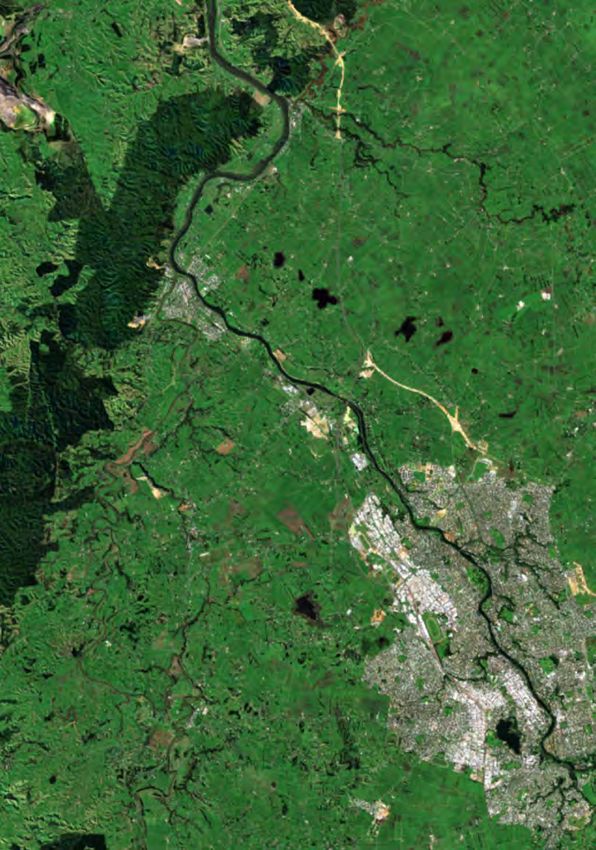
1.4 Shaping our future: environments that are accessible to all, and improved
access to jobs, services (including social services such as
Figure 2 Where we are now -
current urban form
the need to plan education and health) and other amenities.
Now is the time to influence the type and location of land
The Government’s UGA sets out a strategy to create the use and infrastructure to avoid some of the negative
conditions for the market to respond to growth, bring outcomes of growth experienced in other cities. We
down the cost of urban land, improve housing affordability want to maintain and improve our liveability in the face of Water quality in the Waikato River
Our valued natural resources
and support thriving communities. The development continued growth. We want to avoid the cost of retrofitting is significantly degraded and
of spatial plans for key growth areas is one pillar of are being depleted
transport corridors into existing urban areas; congestion does not meet expectations.
the Urban Growth Agenda. The main objective of the that stalls growth and economic productivity; and we want
UGA is to improve housing affordability underpinned by to understand where is the most appropriate areas for
affordable urban land. This will be supported by wider
objectives to:
increased density and how best to deliver housing that • Across the Central Waikato Zone, wetland are • Land use activities are a main contributor of
meets our communities’ needs. 2-3% of their estimated historic cover and forests the nitrogen phosphoros volumes found in the
Infrastructure can be a serious bottleneck in the supply of the basin floor are reduced to less than 1% of Waikato River.
their former extent.
of residential, commercial or industrial development • In the lower Waikato River (e.g. from Hamilton
Urban Growth Agenda capacity if its delivery is poorly timed or located. Our plan • Of the approximately 300 threatened species northwards) 31.6% of test sites are unsatisfactory
can focus on lead- investment in strategic infrastructure currently in the Waikato Region, nearly a quarter for ecological health and 87.4% are unsatisfactory
primary objectives to shape our urban form and improve how liveable our strongly prefer wetlands and waterbodies, key for swimmability.
communities become. ecosystems of the MSP area.
Without timely infrastructure delivery, communities
Improve choices
suffer. This can manifest as less affordable housing, lost
for the location and
productivity opportunities, increased congestion and
type of housing
transport cost, crowded civic infrastructure (e.g. parks and
libraries) and environmental impacts. While the problem
is more complex than infrastructure alone, we are seeing We have enough land capacity
Housing options are
Improve access to many of these effects today. Some of the reasons we for the next 30 years of growth,
unaffordable
employment, education need a vision-based long-term plan focused on liveability but infrastructure is a handbrake
and services are shown in Figure 2 (next page).
• Over 75% of Hamilton / Waikato / Waipaa home • We need to ensure this land capacity is in the
owners spend more than 30% of their income on right location and will deliver the right densities.
housing costs.
Assist emission “This Government has made • We need three waters infrastructure to meet land
reductions and build • The largest city in the metro area, Hamilton, is supply demands beyond 2027.
housing and urban develoment a the third least affordable housing market in New
climate resilience; and
• The Waikato River is nearly fully allocated as a
priorty. Everyone on New Zealand Zealand.
water source during summer low flow conditions.
deserves healthy, secure and • In Hamilton / Waikato / Waipaa collectively
there was a 375% increase in demand on the
Enable quality-built
affordable homes that provide social housing register from December 2017 to
environment, while avoiding access to jobs, education, December 2019.
unnecessary urban sprawl. amenties and services. When
preforming well-being of residents
and raise living standards for all”
Improved transport choice and
The Metro Spatial Plan enables a discussion about how From Planning for Successful Cities: A discussion Our economy is
urban form can improve wellbeing
city-shaping infrastructure can support a preferred form documentation on a proposed National Policy underproducing
Statement on Urban Development
and add to community vitality
for our metro area that results in improved liveability and
addresses the UGA objectives. Promoting quality built
environments can help deliver urban forms with improved
energy efficiency, less negative impact on the environment, • GDP in the Waikato Region has lagged behind • We need to ensure this land capacity is in the
a wider variety of low emission transport modes, with New Zealand growth in the past 10 years by 5%. right location and will deliver the right densities.
• We could be more productive and contribute a • We need three waters infrastructure to meet land
greater proportion to the national economy if we supply demands beyond 2027.
1 Ministry of Housing and Urban Development. Cabinet Paper: 3 Infrastructure Australia (2018) Planning Liveable Cities: A place-
were a larger economic centre. • The Waikato River is nearly fully allocated as a
water source during summer low flow conditions.
Urban Growth Agenda proposed approach retrieved 2020-05-01 based approach to sequencing infrastructure and growth.
www.hud.govt.nz/assets/Urban-Development/Urban-Growth-
Agenda/62eeb57f4e/urban-growth-agenda-cabinet-paper.PDF
2 New Zealand Productivity Commission (2017) Better urban
planning: Final report
10 11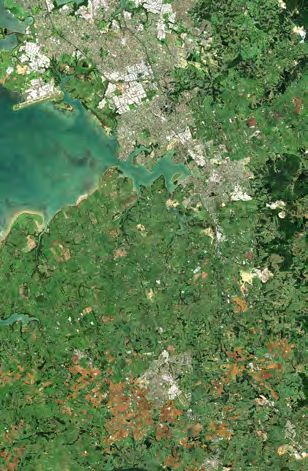
1.4.1 Hamilton to Auckland                                                   Nationally the H2A Corridor is a valued collection of
                                                                              green spaces, towns, marae and settlements that are
 Corridor Plan                                                                connected by Aotearoa New Zealand’s most significant
                                                                              river and the nationally significant parallel inter-city road
 The Hamilton to Auckland (H2A) Corridor Plan is a                            and rail connections; no other corridor contains such a
 high-level initiative to create communities that current                     valuable flow of water, people and goods.
 and future residents want to live in. It’s about our
 wellbeing. The plan’s aim is to help deliver the UGA                         The H2A Corridor Plan seeks to plan for the communities
 by supporting sustainable growth and increased                               of interest in a ‘boundaryless’ way. The Metro Spatial Plan
 connectivity between Hamilton and Auckland.                                  is within the Waikato Region and encompasses Hamilton
                                                                              city and surrounding parts of Waipaa and Waikato districts,
                                                                              where the environment, economy and communities
                                                                              between the three authorities are very much linked4.

     Hwi awarua ki te | Corridor for wellbeing

     The Hamilton-Auckland Corridor is an initiative seeking                   •   Improving access to employment, public services
     to create communities that current and future residents                       and amenities creating employment opportunities in
     want to live in. Its about our wellbeing. The plan’s                          the corridor
     vision is to support sustainable growth and increase
     connectivity between Hamilton and Auckland by:
                                                                               •   Piloting new finance and funding tools to pay for
                                                                                   infrastructure

      •   Improving housing affordability and choices                          •   Trailing new urban planning tools to coordinate
                                                                                   growth development.
      •   Enhancing the quality of the natural and built
          environments and the vitality of Auckland and
          Hamilton and the communities within the corridor

     Hamilton to Auckland Corridor Plan Objectives

     Wāhi Toitū, wāhi toiora                            Awarua                                       Wāhi mahi, wāhi noho
     Places with enduring presence                      Key corridors                                Places to work and live
     places to grow only with great care

     To manage growth in a manner                       To strengthen corridor connections           To grow urban settlements and
     that...                                            that...                                      places...

      •   Protects and enhances                          •   Shape and guide future urban              •   Make efficient use of existing
          the quality of the natural                         growth towards sustainable,                   infrastructure and resources,
          environments and cultural                          resilient and affordable
          heritage                                           settlement patterns, and
                                                                                                       •   Are transit-oriented and
                                                                                                           connected
      •   Anticipates the transition to a                •   Improve access to housing,
                                                                                                       •   Provide affordable housing
          low-carbon future and builds                       employment, public services
                                                                                                           choices that respond to
          climate resilience, and                            and amenities through, along
                                                                                                           demand, including quality
      •   Avoids increasing the impacts                      and within the corridor.                      intensification, and
          and residual risks of natural
          hazards.
                                                                                                       •   Provide high quality live-work-
                                                                                                           play settlements.

 4 Rural-Urban Linkages – Literature Review for Waikato Spatial Plan,         Spatial Plan. Dovetail. waikatoplan.co.nz/assets/Waikato-Plan/About-
 16 March 2015 – Adrian Field and Tanya Perrott (Dovetail) Field, A., &       the-plan-/Our-connections-files/Urban-Rural-Linkages-Literature-
 Perrott, T. (2015). Rural-urban linkages: Literature review for Waikato      Review-for-Waikato-Spatial-Plan.pdf

12
1.5 The Metro Urban Growth Agenda
Figure 3 H2A Corridor
Plan Focus Areas
PAPAKURA
Spatial Plan Main objective: to improve housing affordability,
Papakura-Pokeno:
Supporting and unlocking,
underpinned by affordable urban land:
The Metro Spatial Plan is a joint project where appropriate, the
between the Future Proof sub-regional significant residential and
partnership involving regional and • Improve choices for the location and type of housing employment development
territorial authorities, central government • Improve access to employment, education and services; DRURY
potential and iwi aspirations
agencies and iwi. It seeks to determine for this string of welldefined,
a shared 100+ year vision and spatial • Assist emission reductions and build climate resilience; and rail-linked settlements
framework for the Metro Area, with a 30- • Enable quality-built environment, while avoiding unnecessary PUKEKOHE
through integrated growth
year plan for priority development areas urban sprawl. management, funding
and enabling investments. and financing and key
transformational projects.
This document, A Case for Change,
explores what the Metro Spatial Plan can
WAIUKU POKENO
accomplish for our communities. The TUAKAU
long-term vision-based Metro Spatial
Plan is ambitious in looking much further H2A Corridor Plan
forward than current Council resource
management or financial planning can do. Hei awarua ki te oranga - MEREMERE River Communities:
It builds on existing planning work such Corridor for wellbeing Supporting community and
as the current Future Proof Strategy and iwi-led revitalisation and
planning documents from Hamilton City, The plan’s vision is to support targeted growth that will
Waipaa and Waikato District Councils. sustainable growth and TE KAUWHATA realise the full value of the
increase connectivity between natural, transport, marae
Hamilton and Auckland by: Metro Spatial Plan and recreational networks
1.5.1 What it will include • Improving housing “The Hamilton-Waikato-
that braid the area together
affordability and choices as an asset for its people
The Metro Spatial Plan will includes these Waipaa Metro Area will be a
and many others who can
sought-after place to live in
main elements: • Enhancing the quality
New Zealand”
visit and travel through.
of the natural and built
• Critical areas for protection and environments and the
restoration, and areas to avoid vitality of Auckland We are a metropolitan HUNTLY
developing and Hamilton and the area where: Hamilton-Waikato
• Core transport corridors
communities within the • The natural and built Metro Area:
corridor environment co-exist in Supporting and
• Blue-green networks and corridors
• Improving access to harmony and we have a unlocking the residential
• Priority development areas, and, employment, public healthy Waikato River as and employment NGARUAWAHIA MORRINSVILLE
services and amenities the heart of the city. development potential
• Leading and enabling social and
network infrastructure. • Creating employment • The area is well connected and iwi aspirations for
by public transport and this fast-developing
opportunities in the corridor
easy to get around. Our metropolitan area
• Piloting new finance and connected people-friendly through joint planning,
funding tools to pay for urban neighbourhoods integrated growth
infrastructure HAMILTON
support a strong city core. management and key
transformational projects.
• Trialling new urban • We are a welcoming
planning tools to community providing
coordinate growth choices in how we move
development. around, and where we live
and work.
• People can afford to live
KEY CAMBRIDGE
and move around and
have opportunities to work Existing urban areas
and thrive as part of our State Highways
community.
Railway
We will achieve our vision (Data source: H2A
by working in partnership to Shared Statement of TE AWAMUTU
capitalise on our strengths. Intent, Future Proof)
14 15
22. Waikato River and
natural areas are our heart
Figure 4 Sources of
nutrients, Waikato/ Waipaa
Rivers (2003-2012)5
NI
TR
OG
EN
To achieve the Metro Spatial Plan’s vision of a place
where the natural and built environment co-exist in
We have an opportunity to harmony and where the river is at the heart of our
PHO
embrace the Waikato River place, we need to plan in a way that proactively seeks
Taupo
and natural areas as the to achieve better environmental outcomes than we are PH
S
currently achieving. In the future, the healthy Waikato ORUS Background
heart of the Metro Area River sustains abundant life and prosperous communities Point sources
who, in turn, are all responsible for restoring and Landuse
We need to provide for growth in a way that
protecting the health and wellbeing of the River, and all it
protects and enhances valued water bodies; and
embraces, for generations to come.
restores and enhances ecological resources.
There is extensive evidence in western science and
What happens if we don’t rise to the challenge?
maatauranga Maaori that the River is degraded. Over time,
human activities and land uses through its catchments have
• The Waikato River is already significantly degraded the Waikato River and reduced the relationships
degraded and valued ecological resources and aspirations of communities towards the River. The UP
are being depleted. 7.3% PE
natural processes of the Waikato River have been altered
R
• Failure to protect and restore the ecological over time by physical intervention, land use and subsurface
Figure 5 Water quality
W
assets will constrain growth and impact on hydrological changes. The degradation of the Waikato
AI
community wellbeing. River and its catchment has severely compromised iwi in for ecological health
KA
their ability to exercise mana whakahaere or conduct their and swimming5 31.6%
TO
• Our natural systems, plants, animals and tikanga and kawa.
R
waterways are being degraded and land
IVER
lost to urbanisation unnecessarily. We can It will take commitment and time to restore and protect the
health and wellbeing of the Waikato River. In biophysical 27.3% Water quality
improve environmental outcomes, increase for ecological
LO W E R W
natural capital, and improve the health of the terms, evidence shows that water quality deteriorates as health,
the River flows from its source to the Tasman Sea. The 12.8% UP 43.6%
Waikato River. PE 2014-2018
Waipaa River, the largest tributary to the Waikato River, R
is also a significant source of sediment, nutrients and AI
W
KA
pathogens. TO R I V E R
AI
65.5%
KA
A key process is the identification of Waahi toituu areas,
There are many causes of degradation. Water pollution,
24.8%
TO
which are places with enduring presence that should be
principally from land use, is a very significant source of
12.6%
R
protected. In addition there area other areas constrained pollutants entering the River systems. This has increased
IVER
by man made or natural features, potentially limiting future as land use in some parts of the catchment has intensified Water
urban development. (for example conversions from forestry to dairy farming). quality for
LO W E R W
Land use activities contributed 61% of the nitrogen, and swimming,
45% of the phosphorous found in the Waikato and Waipaa 2014-2018
30.2%
2.1 Healthy Waikato River Rivers between 2003 and 2012.
AI
KA
Excellent
TO R I V E R Satisfactory
Vision and Strategy for the Waikato River 57% Unsatisfactory
/ Te Ture Whaimana o Te Awa Waikato 87.4%
‘Tooku awa koiora me oona pikonga
he kura tangihia o te maataamuri-
(“The river of life, each curve more
beautiful than the last”)
5 From Waikato Regional Council: https://waikatoregion.govt.nz/
environment/environmental-information/environmental-indicators/
river-and-streams/indicator-river-water-quality-ecological-health/river-
water-quality-ecological-health-results/
16 17
2.2 Preserving natural capital                                             focussed on low density greenfield development.10 We
                                                                           will continue to need new urban land to develop onto,
                                                                           butwe need to change the way we plan to better preserve
We need to change the way we                                               high quality soils and avoid development in sensitive
plan to better preserve high quality                                       environmental, cultural and heritage areas. The Metro
                                                                           Area can develop in a way that will reduce the need to
soils, avoid development in sensitive                                      travel by private car by planning for more compact urban
environmental, cultural and heritage                                       settlements with quality development and amenity levels.
areas. ‘Waahi toituu’ (areas where we                                      When looking at expansion areas in which to grow, we
should avoid urban development) and                                        have identified natural and man-made attributes (areas
‘waahi toiora’ (areas where we should                                      where we should avoid urban development, such as areas
                                                                           with elite soils, or significant natural areas). These areas will
plan with care) will help us to plan                                       help us to plan carefully into the future.
carefully into the future.
The Metro Area is known as New Zealand’s food bowl,
surrounded by soils that are amongst the country’s best.
Current trends show that urban and rural-residential
expansion is reducing the availability of some of our most
                                                                               Natural capital is the region’s
versatile land (land use classifications 1-4).                                 bank balance of mountains,
The Waikato region has about a quarter of New Zealand’s                        forests, soils, rivers, air, habitats,
high-class soils (around 300,000 ha) with class one land
making up only 1.9% of the region’s total land area (about
                                                                               birds, bees, cows and grass.
45,000 ha).6                                                                   The region’s economy and
The creation of lifestyle blocks may pose a greater                            people’s wellbeing rely on an
risk to the availability of high-quality soil resources for                    abundant and healthy natural
the primary sector than does urban expansion. While
the outward growth of urban centres in New Zealand                             capital. Natural capital provides
between 1990 and 2008 consumed 0.5 percent of                                  many necessary services, often
high-class land (LUC 1–2), analysis in the same 2013
study shows that lifestyle blocks had already occupied                         at no charge, such as water for
10 percent of high-class land (data to 2011).7 In Waikato                      drinking, lakes to swim in, soil to
Region between 2001 and 2017, the area of total
residential use on versatile land approximately doubled,                       grow food, microbes to recycle
with an average increase of 542 ha per year – an area                          nutrients and break down waste,
equivalent to more than four average-sized dairy farms.8
                                                                               climate regulatory features,
The councils in the Metro Area have already started
to change their planning so that ‘infill development’                          locations to support cultural and
(occurring inside existing urban areas rather than                             spiritual wellbeing.
extending out into new-build or ‘greenfield’ areas) is
enabled. This has had the effect of reducing the amount                        The Waikato Plan. (n.d.) https://waikatoplan.co.nz/assets/
of new urban land, particularly in Hamilton where around                       Waikato-Plan/About-the-plan-/Our-environment-files/
48% of development over the 10 years to 2016 occurred
within existing city boundaries.9
However, greenfield development in the Metro Spatial Pl
an area is still occurring at relatively low densities, and
development in Waipaa and Waikato is predominantly

6 Kettle, M. (2013). Waikato Spatial Plan: Environmental wellbeing         9 Hamilton City Council. (2017). Hamilton City District Plan Monitoring
working paper. Waikato Regional Council. https://waikatoplan.co.nz/        Strategy. https://www.hamilton.govt.nz/our-council/council-
assets/Waikato-Plan/About-the-plan-/Our-environment-files/5-d-             publications/districtplans/Monitoring%20Report%202017/mobile/
Enviornmental-Wellbeing-Report-December-2013.pdf                           index.html#p=18
7 Statistics New Zealand. (2018). Land cover. http://archive.stats.govt.   10 White, M., & Future Proof Technical Implementation Group. (2015).
nz/browse_for_stats/environment/environmental-reporting-series/            Future Proof monitoring report 2015. Future Proof. http://www.
environmental-indicators/Home/Land/land-cover.aspx                         futureproof.org.nz/assets/FutureProof/Documents/15-future-proof-
8 Waikato Progress Indicators: residential expansion onto versatile        monitoring-report-april-2015-final.pdf
land, retrieved 2020-05-01 from https://www.waikatoregion.govt.nz/
Community/Waikato-Progress-Indicators-Tupuranga-Waikato/Report-
cards/Rural-subdivision/

18
Whi�kahu
Taupiri
Figure 6 Geographical Open space access is important for people’s health
2.2.1 Biodiversity and needs to be at the heart of our planning for our
features and constraints
As rural and urban land uses have expanded and metropolitan future. Waikato-Tainui wish to see an
intensified in the Waikato region biodiversity has declined, approach to environmental management that goes
Morrinsville
largely due to ecosystem loss and fragmentation as well beyond sustainability, towards an approach that enhances
as degradation by contaminants and pest plants and the environment. In October 2018, Hamilton City Council’s
Ngaruawahia Gordonton animals. Wetlands have been reduced to around 2-3% Community, Services and Environment Committee set
of their estimated historic cover, while the forests of the a 10% indigenous biodiversity cover target which is
basin floor have been reduced to less than 1% of their anticipated to include the river corridor and gullies and
former extent and now survive only as small isolated the surrounds of peat lakes in the urban area.
Horo�u fragments. Surrounding the Metro Spatial Plan area, the
hill country forests have fared better, particularly on the
steeper hill slopes. There are currently 305 species of
native plants and animals threatened with extinction.11
2.3 Emissions and
Open space access is important for people’s health climate change
and needs to be at the heart of our planning for our
Te Kowhai
metropolitan future. Waikato-Tainui wish to see an As we face a future where climate change will bring
Eureka
approach to environmental management that goes increased extremes in weather, including increased
beyond sustainability, towards an approach that potential for flooding and for droughts, we need to plan
enhances the environment.12 In October 2018, Hamilton for a low-carbon future and develop in a way that means
City Council’s Community, Services and Environment even with a changed climate, we are resilient.
Committee set a 10% biodiversity target.
Tauwhare
The natural ecosystems of the rich alluvial floodplains,
Tauwhare Pa
swamps and bogs of the lowlands have almost completely Figure 7 Waikato Region transport emissions
been cleared or drained across the Metro Area. Tawa and (GHG inventory: 07-2015 to 06-2016)
Matangi
totara forests would once have covered most of the well-
drained and moderately-drained sites across the floor of
the basin, whereas tall kahikatea forests and peat bogs
Templeview
0.6%
would have grown in the wetter areas. Now only tiny bush Jet Kerosene 0.2%
remnants remain scattered sparsely across the Metro Av Gas
Area. Wetlands have been similarly reduced with the only 2.4% 0.3%
large remaining wetland being Moanatuatua on the peat Rail emissions
LPG
Key:
Legend Rukuhia
lands between Cambridge and Te Awamutu.
District Council Boundaries In contrast, most of the peat lakes that formed on the
margins of the domed peat bogs still remain, although
Metro Plan Area of Interest
their water quality is generally poor and the wetlands
Catchments
and bush around their margins have mostly been cleared
LINZ Swamp or reduced to a narrow fringe. The peat lakes, their
Reserves
Ngahinapouri
catchments and adjacent former peat bog areas offer
Doc Public Conservation Areas
Cambridge
valuable opportunities for enhancement. Of the 305
threatened species currently known to be present in the
Peat Soils
Waikato Region, 69 specialise in this sort of environment,
Flood Data Ohaupo
preferring bogs, swamps, streams, rivers or lakes.
Rive - Lakes
Many of the hills surrounding the basin floor are still forested 42%
QEII Trust Covernants as are the steeper gully banks of the rivers and the more 54%
Designations incised streams. The banks of the Waikato and Waipaa
Significant Natural Areas Rivers are together the best current option for restoration of Petrol
Elite Soil (LUC 1)
large-scale connectivity for forest birds requiring continuous
forest across the Metro Area. Diesel
Prime Soil (LUC 2, LUC 3)
Urban Areas
Slope 15 to 25 degrees
11 Leathwick, J., 2016. Opportunity for conservation of primary 14 Stancu, C., & Marquart, M. (2017). Waikato Region greenhouse gas
Pirongia
Slope greater than 25 degrees
HCC Water Bulkmain Existing indigenous-dominated ecosystems in the Central Waikato Zone. inventory - July 2015 to June 2016. Waikato Regional Council. https://
Unpublished report to the Waikato Regional Council. www.waikatoregion.govt.nz/assets/WRC/WRC-2019/TR201731.pdf
HCC Wastewater Interceptors Te Awamutu
12 Waikato-Tainui. (2013). Chapter 7: Towards environmental 15 2018 Manaaki Whenua - Landcare Research report (LC3348)
Digital Terain Model (Motoriki
Datum) enhancement - Te Whakapakari i Te Taiao. In Waikato-Tainui entitled ‘Hamilton Halo Strategic Review: future options for Halo
RL: 165m Environmental Plan (pp. 56-57). https://www.waikatotainui.com/ goals and implementation.
services/taiao/tai-tumu-tai-pari/13 Stancu, C., & Marquart, M. (2017).
RL: 10m Waikato Region greenhouse gas inventory - July 2015 to June 2016.
Waikato Regional Council. https://www.waikatoregion.govt.nz/assets/
Kihikihi
WRC/WRC-2019/TR201731.pdf
20 212.4.1 Emission sources
Most greenhouse gas emissions in the Waikato region Potential effects of climate
are from agriculture, accounting for 75% of the region’s change on the Waikato region
emissions. This includes carbon dioxide from the deep
peat soils that form some of our best agricultural soils. Changes in weather patterns
When drained for agriculture, the peat is exposed to the
atmosphere and it oxidises, causing the soil to subside at
- differences in rainfall,
a rate of about one metre every 50 years. temperature and microclimates
Transport is the second highest contributor, at 12% of
could affect agriculture and
emissions. Most emissions from transportation sources horticulture. The location of some
are from on-road transport, contributing approximately industries, agriculture, horticulture
97% of the total (2015/16 data).13
and tourism may change.
The Waikato’s transportation emissions per capita are
higher than the New Zealand average (at 3.61 compared More turbulent weather - extreme
3.27 with emissions per capita in metric tonnes of carbon weather can increase flooding,
dioxide equivalent, 2015/16).14 The Metro Area is likely to
be contributing higher transport emissions than the rest of
erosion, droughts and damage
the region due to the level of urbanisation in this part of ecosystems.
the region
Sea level rise - higher sea levels
will affect coastal communities
2.4.2 Mitigation increasing coastal flooding and
Reduction in greenhouse gas emissions will happen in the erosion.
context of nation-wide central Government-led emissions
initiatives, including land and resource uses that are outside Threats to biodiversity - species
of the focus of the Metro Spatial Plan. In the context of this that are already under threat or
Plan, we can aim to reduce emissions through approaches
such as making sure urban development reduces the
at the limit of their climatic range
need to travel, providing improved travel choice to key may not be able to survive.
destinations, and transitioning over time to lowering the
need for car-based travel.
New diseases and pests may
take hold. Tropical pests and
Carbon sequestration is another important element
in mitigating greenhouse gas emissions. In the Metro tropical diseases like malaria may
Area, we have opportunities to consider the carbon become established in areas
sequestration role of peat soils. Peat lands store around
800 tonnes of carbon per hectare compared with mature
where they currently do not exist.
indigenous forests which store around 250 tonnes of
Waikato Regional Council. (2019). Climate change. https://
carbon per hectare across the region, peat soils have www.waikatoregion.govt.nz/environment/natural-resources/
been estimated to store carbon equivalent to five years of air/weather-affects-air-quality/climate-change/
New Zealand’s net emissions (source: Waikato Regional
Council). There are substantial opportunities for carbon
sequestration that also delivers habitat restoration.15
223
3. Harnessing growth
for greater liveability
“Quality affordable housing is
important for healthy families.
Families and communities can
have better outcomes when
suitable quality housing is
available to all.”
Figure 8 Social Housing Register
1,000,000
New Zealand
Auckland
Hamilton
Tauranga
Wellington
Christchurch
Dunedin
The growing gap between incomes and housing costs Waikato Region Housing Initiative – 2018 Housing
means more individuals and households are struggling. 800,000
We have an opportunity to The shortage of quality and affordable housing and
harness growth to make our increasing household stress tends to have the worst
urban areas more affordable impact on the most vulnerable people in the community, • Household incomes have not kept up 600,000
including Maaori, older people, solo parents, students,
and attractive. children and people with complex physical and
with house price growth.
We need to provide for a quality, vibrant metro
psychological needs. • Around 75% of Hamilton homeowners
are spending more than 30% of their incomes on 400,000
area where communities have choices and housing costs.
easy connections to jobs, affordable homes and
recreational opportunities. • Rents have also increased significantly. In Hamilton,
What happens if we don’t rise to the challenge? “The liveability of urban areas rents increased by 19% between 2015 and 2018. 200,000
stems from unique combinations • Recent demand for the social housing register has
• Housing options in the metro area will of amenity values (open
grown dramatically in Hamilton, Waikato and Waipaa:
continue to be unaffordable for many. from 255 in December 2017 to 1,210 in December 0
space, design features and 2019 (an increase of 375 per cent over 2 years).16 07 09 11 13 15 17 19
• Lack of choice of housing typology and
location limits will affect affordable options. urban vegetation); historic and • There is an existing housing supply shortfall of around
4,000 houses in Hamilton. The majority of the shortfall
• Poor access creates barriers to cultural heritage; location; and is in community and social housing.17 (Data source: The Housing Register, December 2019)
opportunities and imposes additional intangibles such as character,
transport costs on households.
landscape, and ‘sense of place.” If we can address our housing challenge it will have
significant flow-on benefits in terms of health, social and
Parliamentary Commissioner for the Environment. (1998). The cultural wellbeing, education and the economy.
cities and their people: New Zealand’s urban environment.
3.1 Housing affordability (https://www.pce.parliament.nz/media/pdfs/cities.pdf)
We need to improve liveability, including
affordable housing that meets our
The current state in terms of housing in
needs. Without change, housing options the metropolitan area can be summarised as
in the metro area will continue to be follows, by focusing on the main urban centre
unaffordable for many and a lack of where we have to best information:
choice of housing typology and location
will further affect affordable options. • Home ownership rates have been declining. In
Hamilton, 43% of people owned their own home in
2016 compared to 55% in 2001. Maaori and Pacific
Inefficient growth can lead to reduced community
peoples have lower household ownership relative to
wellbeing and access to opportunities such as housing,
the general population.
jobs, education, health and recreation. These are all
elements that affect liveability and quality of life. • Hamilton is the third (after Auckland and Tauranga)
least affordable housing market in New Zealand, with
There is the potential for Metro Area to emerge as a
a median house price to median household income
significant and thriving metropolitan area, but this will 16 The Housing Register, December 2019 version, from Ministry 17 Nifa Limited. (2019). Waikato region housing initiative – 2018
of 6.8 times (three times is considered affordable).
only work if there is a strong focus on creating a great
Waikato and Waipaa districts have similar issues with of Social Development at: https://www.msd.govt.nz/about-msd- housing stocktake. The Waikato Plan. https://waikatoplan.co.nz/
place to live. This includes meeting housing needs, and-our-work/publications-resources/statistics/housing/index. assets/Waikato-Plan/Projects/Final-Housing-Stocktake-Report-minor-
house price to incomes sitting at between 4.5 and 5.5.
providing affordable housing choices, improving access html#LatestresultsndashDecember20191 change-6-September-2019.pdf
to employment, education and services, addressing • Median house prices have risen significantly in all Momentum Waikato Community Foundation. (2016). Waikato Vital
deprivation issues and enabling a high-quality built three territorial areas over the last five years at a rate Signs. https://momentumwaikato.nz/uploads/Waikato_Vital_Signs_
environment. We know that if we can do these things, we of around 9% per annum. The median house price in Report_2016.pdf (Statistics NZ)
can significantly improve the quality of life for our people. Hamilton is $597,000.
24 251B
Figure 9 Household incomes Median Houses Prices – Hamilton, Average Dwelling Value, 2007-201919
less than national average Waikato & Waipaa, 2001-201818
New Zealand Wellington
1
Auckland Christchurch
$700,000 Hamilton Dunedin
Waikato
District Tauranga
$600,000
$500,000 1,000,000
$400,000
$300,000 800,000
$200,000
$100,000
1B 600,000
0
39A Mar 01 Mar 06 Mar 13 Dec 18
400,000
1
Hamilton
Waikato District
39
Hamilton Waipa District
City 200,000
26
23 0
07 09 11 13 15 17 19
1
1B
Within the next 25 years the
Waikato regions population is
135%
1
21
expected to grow by around
89,000
increase indemand on the social
people
3
housing registar from December 2017 (361) to
December 2018 (896) in the Waikato region.
Key:
8% 51,000
District Council Boundaries
Railway In 2018, more than of the Roughly
population in the Waikato needed financial houses are needed in the
Household income Waipa top-ups from the Government to afford Waikato region over the next 25
< 2019 national District their rent or mortgage. Total $9.8m. years including approximately
average ($102,613) 26,000 in Hamilton.
2500 - 25,000
25,001 - 40,000 Source: “The Waikato Plan. (2019). Waikato region
housing initiative: 2018 stocktake report summar
40,001 - 55,000
55,001 - 70,000
70,001 - 85,000
85,001 - 100,000
100,001 - 102,613
N/A 18 The Waikato Plan. (2019). Waikato region housing initiative: 2018 19 Data from CoreLogic
stocktake report summary. https://waikatoplan.co.nz/assets/Waikato-
(Data source: StatsNZ) Plan/Projects/6320-Housing-Initiative-Summary-Report_WR.pdf Future Proof. (2019). Future Proof market indicators report. https://
www.futureproof.org.nz/assets/FutureProof/Documents/Housing-and-
business-market-indicator-monitoring-report-May-2019.pdf
26 27Figure 10 Index of
3.1.1 Socio-economic deprivation 1B
social deprivation
The metropolitan area has widely varying levels of 1
socio-economic deprivation. Those who are identified
as deprived experience greater hardships and have
insufficient access to resources such as education, Waikato
housing and healthcare. This goes to the heart of District
liveability and quality of life and helps identify areas
that stand to benefit most from investment into better
affordable housing and access driven by improved
transport choice.
The New Zealand Index of Deprivation (2018) combines
nine variables from the 2018 census which reflect nine
dimensions of deprivation as a measure of relative
socioeconomic deprivation.20 Nearly half (47%) of the 1B
Metro Spatial Plan population lives in areas measured
as amongst the 30% most deprived areas in the country. 39A
This is particularly acute in Hamilton where 56% of the 1
population fall into this category. In Waikato District a large
part of the population lives in areas of low deprivation
and a large part of the population lives in areas of high 39
Hamilton
deprivation with less in the middle. Waipaa has the lowest City
amount of population in deprived areas amongst the three.
26
23
Percentage of Population
1
by Deprivation Index Area
1B
High
1
21
Key:
3
District Council Boundaries
Railway
Deprivation Index
High
Waipa
District
Low
0% 5% 10% 15% 20% 25%
Low
Hamilton Waipa District
Waikato District Total Metro Spatial Plan
(Data source: Socioeconomic
Deprivation Indexes: NZDep and
NZiDep, Department of Public
Health, University of Otago online at
20 Socioeconomic Deprivation Indexes: NZDep and NZiDep, https://www.otago.ac.nz/wellington/
departments/publichealth/research/
Department of Public Health, University of Otago online at https:// hirp/otago020194.html#2018)
www.otago.ac.nz/wellington/departments/publichealth/research/hirp/
otago020194.html#2018
293.2 Economic performance more productive than smaller cities. Broadly speaking, as
the effective density of a city doubles, the productivity of
its working population can increase by 3-8%.22
We want to increase economic “A high-performing city balances
Another larger population centre can support a more
productivity by the way our urban areas robust national economy. The Metro Area can grow into
the benefits and costs of
grow and perform. This can translate this opportunity. agglomeration to provide
into higher wages, more and better Urban places with the right mix of amenities and earning opportunities for current and
jobs, and greater housing affordability opportunities benefit the wellbeing of their people. potential residents to achieve
Transport connections, social infrastructure and density
for our people. can contribute positively to earning opportunities and their goals. By doing so, a
As a hub of agriculture, transport and trade our area
amenities. If we continue to grow as a spread out, high-performing city effectively
low-density city, it may not achieve the benefits of
offers diverse and growing opportunities for employment,
agglomeration and is less likely to reach the productivity contributes to the wellbeing of its
education and investment. As part of the ‘Golden Triangle’
of economy and freight with Auckland and Tauranga,
opportunities available to a large city in New Zealand.23 residents.”
the Metro Area is well connected to major hubs and There is room for increased productivity in the Metro
other regions. In addition to strong regional connections Area. Growth of per capita Gross Domestic Product in the Waikato Region Housing Initiative – 2018 Housing
Hamilton’s proximity to Auckland International Airport Waikato has lagged New Zealand growth, increasing only
and the North Island’s ports ensures the city is strongly 2% in total over the last 10 years (to 2019), in comparison
linked to the rest of the world. Our sub-region can play an to GDP per capita for the whole of New Zealand which
increasingly significant role in providing for growth in New has increased by about 7% in that period. 24,25
Zealand - to the benefit of our people and our neighbours.
In Figure 10, Productivity vs importance to local economy
From a national perspective, a challenge facing New the dark line represents the average New Zealand
Zealand’s economic structure is a relative lack of large productivity for an industry. Markers show the relative
population centres within which activities like the creative importance of an industry to the local economy. Those to
sector, research and development, logistics, marketing the right of the line are an industry that is more productive
and sales and technology and innovation can thrive.21 than the average, while those to the left are lower than
Larger cities with larger labour markets are generally average. Most markers in Auckland are higher than the
average - they have a higher
than average productivity. The
Waikato region and Hamilton
Figure 10 Productivity vs city, with a few notable
importance to local economy exceptions, are typically to the
left of the average line, showing
room for improvement to GDP
14%
per capita.
12% Improving the participation rate
Share of local economy
10% in employment is an opportunity.
There are areas of concentrated
8% unemployment, particularly
6% Hamilton and parts of Waikato.
By fostering the development of
4% Hamilton and the wider Metro
2% Area as a denser and better-
connected metropolitan area
0% we can support an increased
0% 20% 40% 60% 80% 100% 120% 140% 160% amount of high-value economic
Regional productivity as % of New Zealand productivity by industry and social activities. Growth
done well has been shown to
translate into higher wages,
(Data source: Te Waka (2019 Quarterly Economic Update Q4; and Infometrics)
more and better jobs, and
greater housing affordability.
21 The Future Hamilton – Role, Function, Purpose, BERL 23 The Future Hamilton – Role, Function, Purpose, BERL
22 Rosenthal, S., and Strange, W. (2004), ‘Evidence on the nature 24 Te Waka. (2019). Quarterly economic update Q4: 2019. From:
and sources of agglomeration economies’, pp. 2119-2171 in Cities and https://www.tewaka.nz/site_files/18710/upload_files/TeWaka_
Geography, Volume 4, edited by V Henderson and J Thisse. Elsevier. QuarterlyEconomicUpdate_Q42019_A4_11-251119_final.pdf?dl=1/
2 Maré, D. C, and Daniel, J G. (2009), Agglomeration elasticities in Infometrics
New Zealand, NZ Transport Agency Research Report 376. Available 25 Te Waka. (2019). The Waikato economy. From: https://www.tewaka.
at: https://www.nzta.govt.nz/assets/resources/research/reports/376/
docs/376.pdf nz/site_files/18710/upload_files/TeWaka_TheWaikatoEconomy_
Jun19_A4_9-071019_final.pdf?dl=1/Infometrics
30You can also read


