A new river innovation challenge - WATERFRONT TORONTO MARCH 01 2021 - Port Lands
←
→
Page content transcription
If your browser does not render page correctly, please read the page content below
a new river
innovation
challenge
WATERFRONT TORONTO MARCH 01 2021

TABLE OF CONTENTS

INTRODUCTION                                                                           4
BACKGROUND & CONTEXT                                                                   6
CHALLENGE DESCRIPTION AND GOALS                                                       10
CHALLENGE TIMELINE                                                                    16
CHALLENGE SUBMISSION INSTRUCTIONS                                                     17
EVALUATION, SELECTION AND AWARD PROCESS                                               20
CHALLENGE PARTNERS                                                                    21

                              Please go to https://portlandsto.ca/a-new-river-innovation-
                                       challenge/ to download the following documents:

                                                   Appendix A – PLFP Data Collection
                                                          Appendix B – Contest Rules
                                                 Appendix C – Data Privacy Guidance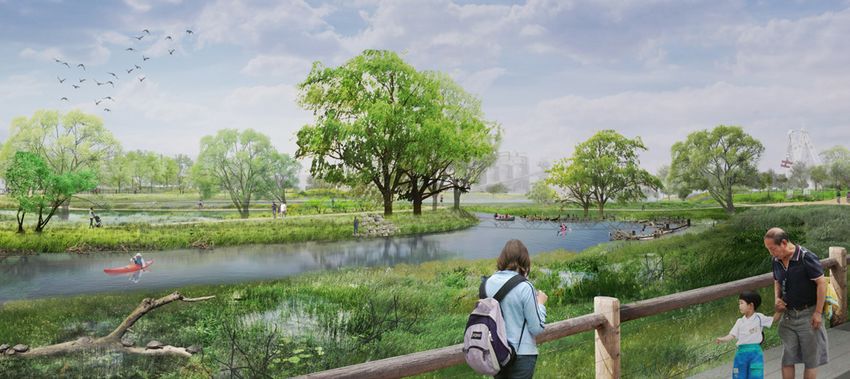
Waterfront Toronto’s Port Lands Flood Protection (PLFP) project
INTRODUCTION
               will protect 240 hectares of downtown Toronto from flooding by
               transforming the existing mouth of the Don River into a natural
               and ecologically functioning river channel. Through this project, we
               will generate a wealth of data about the new river mouth and the
               natural systems that support it.

               This challenge invites data scientists and designers to develop
               creative, compelling and innovative ways to interpret and
               communicate this scientific information to the public. Our intent
               is to leverage our partnerships and the data we generate to foster
               innovation in science communication. The outcome will be to
               stimulate interest and knowledge about how natural systems
               function, and the benefits they bring to urban systems; to share
               this information with the people who will use and enjoy the river
               valley; and to encourage stewardship of the river’s water, wildlife
               and habitats.

004
PORT
LANDS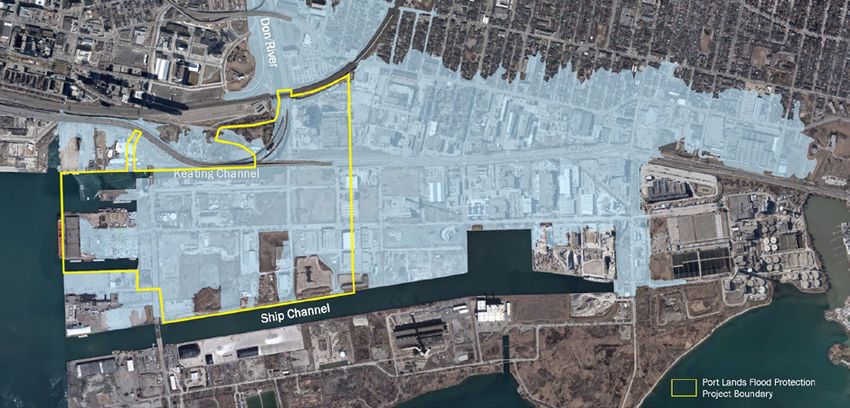
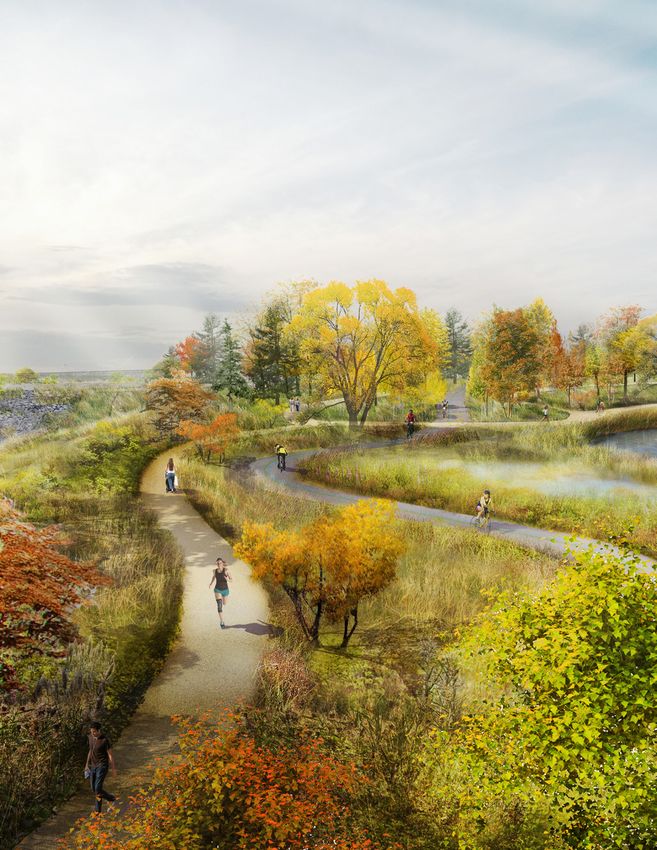
Rendering looking south towards the future
River Valley Park in the Port Lands.
                                             005
                                             INNOVATION
                                             CHALLENGE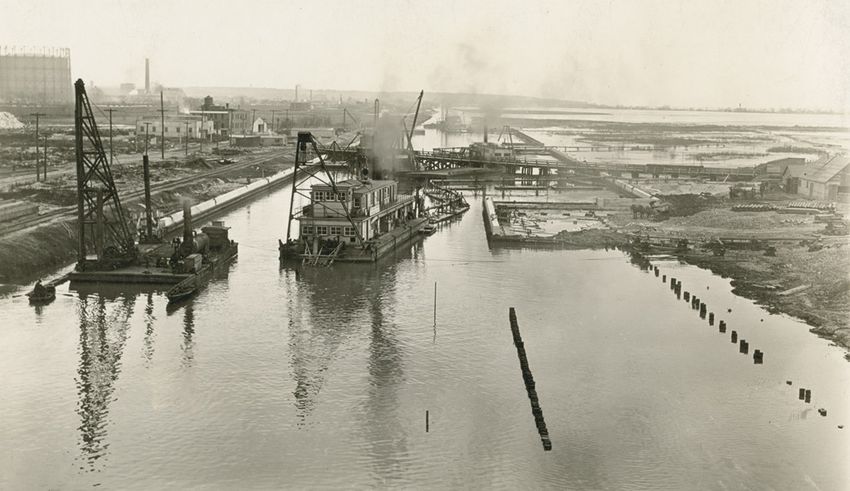
BACKGROUND & CONTEXT   WATERFRONT TORONTO
                       Waterfront Toronto was established by the Government of Canada,
                       the Province of Ontario and the City of Toronto in 2001 to lead and
                       oversee the renewal of Toronto’s Waterfront. As public advocates
                       and stewards of Toronto’s waterfront revitalization, our mandate
                       is to transform our city’s waterfront by creating extraordinary new
                       places to live, work, learn and play.

                       The Port Lands Flood Protection Project is the largest urban
                       renewal project currently underway in North America and one of the
                       largest waterfront redevelopment initiatives in the world. Waterfront
                       Toronto is delivering a leading-edge city-building model that seeks
                       to place Toronto at the forefront of global cities in the 21st century.

                       Waterfront Toronto’s vision includes transforming the waterfront
                       into beautiful and sustainable communities, fostering economic
                       growth in innovation-based industries and ultimately redefining how
                       Toronto, Ontario and Canada are perceived by the world. It is guided
                       by our Resilience and Innovation Framework for Sustainability,
                       which outlines a set of values to guide revitalization efforts:

                       •   Climate Positive: Waterfront Toronto’s projects and initiatives
                           support the development of low carbon communities with an
                           aspiration to reduce greenhouse gas emissions below zero.
                       •   Inclusive Resilience: Toronto’s waterfront is a dynamic,
                           adaptive and flexible environment with the ability to respond
                           to technical, social and environmental changes.
                       •   Intelligent & Connected: Technologies are used to support
                           community needs and improve quality of life.
                       •   Human Experience-Driven: Waterfront communities are
                           healthy, safe, just, active, multi-generational, human scale
                           and accessible. Design excellence enriches the human
                           experience.
                       •   Biophilic: The waterfront is a place where people learn from
                           and are inspired by nature.

006
PORT
LANDS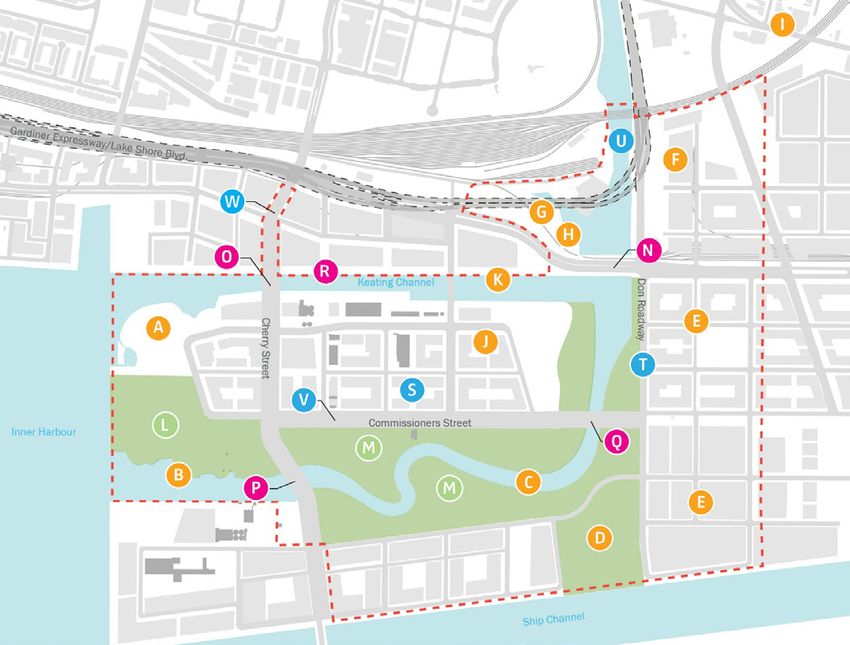
Looking east during construction of the Keating Channel in 1914. Source: City of Toronto Archives

PLFP Project Boundary within Floodplain.

                                                                                                    007
                                                                                                    INNOVATION
                                                                                                    CHALLENGE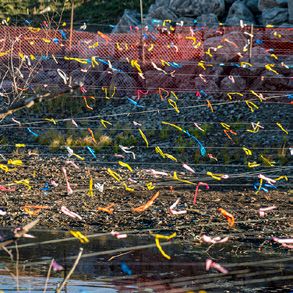
PROJECT CONTEXT
                                                For thousands of years, the mouth of the Don River was a fertile
                                                wetland, fishing ground and important gathering place for Indigenous
                                                people who lived in the region. In the early 1900s, Toronto filled in the
                                                wetland now known as the Port Lands to make space for growing
                                                industry—and redirected the Don River with an unnatural ninety-
                                                degree turn down the Keating Channel. At about 356 hectares
                                                (880 acres) this extensive, underutilized area on Toronto’s eastern
                                                waterfront presents an unprecedented opportunity to revitalize this
                                                massive brownfield site into new communities on prime waterfront
Construction at the Port Lands: Crews
installing geosynthetic clay line. Along with   land. However, about 290 hectares (715 acres) of the area are
geomembrane and protective sand, the liner
provides a barrier between the soil below       currently at risk of flooding from the Don River watershed and as
the river and the river bottom finishes.        a result flood protection is required before any redevelopment can
                                                occur.

                                                A new mouth for the Don River will be created by excavating a
                                                new channel, as well as a green spillway to help accommodate
                                                any overflow. PLFP will result in two new outlets for the river into
                                                Lake Ontario, new parks and green space along the river and inner
                                                harbour, four new bridges and new public roads throughout the
                                                area. It will also enhance habitat for natural species and will re-
                                                establish wetlands and aquatic habitat in the area, which provide
                                                social and environmental benefits and naturally moderate the
                                                effects of flooding and erosion.
Construction at the Port Lands: Welders
working on the reclaimed metal girders          In June 2017, the three levels of government announced $1.25
from Marine Terminal 35. The girders will
be used as guard rails on the new bicycle       billion in funding for Waterfront Toronto to naturalize the mouth
bridges in the parks.                           of the Don River, provide flood protection and lay the groundwork
                                                for new communities. Michael Van Valkenburgh and Associates
                                                (MVVA) has been retained as the lead designer for this project.
                                                Construction began in 2018 and will be complete in 2024.

                                                For more detail about the Port Lands Flood Protection Project
                                                please visit: https://portlandsto.ca/

                                                For more detail about the History of the Port Lands please visit:
                                                https://portlandsto.ca/history-of-the-port-lands/

Construction at the Port Lands: Several
hundred species of plants will grow in the
Port Lands in 2024. These colourful wires
repel geese and other birds from areas with
tender new plants, in order to help them get
established.

008
PORT
LANDS
Port Lands Flood Protection Project Scope

                                            009
                                            INNOVATION
                                            CHALLENGE
CHALLENGE DESCRIPTION          CHALLENGE DESCRIPTION
      AND GOALS                As part of the Don Mouth Naturalization and Port Lands Flood
                               Protection Environmental Assessment (a provincial assessment
                               process to evaluate potential environmental effects ahead of major
                               infrastructure projects), Waterfront Toronto along with Toronto
                               Region Conservation Authority (TRCA) and its partners have been
                               gathering scientific data to measure the performance of PLFP. A
                               comprehensive monitoring program has been in place since the
                               pre-design stage and will continue throughout construction and
                               after the project has been completed.

                               Current monitoring objectives include data collected around the
                               following categories (as laid out in the Environmental Assessment):

                        Biophysical        Environmental Performance Monitoring
                        Component          Requirements
                        Aquatic Habitat    •   Identify trends of aquatic habitat and species
                        and Species            targets through post-establishment
                                           •   Evaluate aquatic habitat and species against
                                               intended modelled outcomes and historical
                                               conditions
                        Wetland            •   Evaluate wetland function against intended
                        Function               modelled outcomes
                        River Form and     •   Observe impact of major flow events on river
                        Function               form and the effectiveness of river management
                                               features
                                           •   Observe major flow events to evaluate
                                               effectiveness of flood protection measures
                        Terrestrial        •   Evaluate the trajectory of newly created terrestrial
                        Habitat and            habitat against intended outcomes
                        Species
                        Surface and        •   Evaluate the effectiveness of on-site stormwater
                        Groundwater            controls
                        Quality            •   Observe the effectiveness of contaminated
                                               groundwater isolation measures
                        Flow and           •   Document changes in flow and participation
                        Precipitation          patterns over time to inform the need for
                                               management adjustments

010
PORT
LANDS
For more details about the Environmental Assessment please visit:
https://trca.ca/conservation/green-infrastructure/don-mouth-
naturalization-port-lands-flood-protection-project/don-mouth-
environmental-assessment/
Please see Appendix A for further details regarding the data
collected as part of PLFP.
After its completion in 2024, PLFP will leave an engineered
ecological system legacy to many generations of Torontonians.
Lined with wetlands, aquatic habitat, and lush new parks, this
infrastructure project will deliver:
• 1,000 m river channel
• 9.8 ha. of created wetlands
• 25 ha of publicly accessible greenspace
• 23.6 ha. of permanent and ephemeral fish habitat
Rendering looking north towards the future River Valley Park in the Port Lands.
011
INNOVATION
CHALLENGEThis challenge asks: How do we collect, interpret and share
environmental data from these new ecosystems to educate visitors
and motivate conservation behavior in the wider community?
Waterfront Toronto is inviting innovators to identify and/or originate
new ways of creating wider public knowledge of conservation
science generated by PLFP. The outcome could result in either a
physical or a digital platform.
The submitted ideas should aim to collect, reveal and decode
scientific data in compelling and appealing ways in order to
Bumble Bee Watch App
educate citizens about nature and encourage stewardship and
Source: https://www.xerces.org/blog/ sustainable development. This can be done through innovations in
citizen-science-is-wonderful-thing
environmental data collection platforms/methods/instruments as
well as data interpretation and representation.
Who can participate?
This challenge encourages multi-disciplinary collaboration and is
open to a wide variety of experts including designers, scientists,
engineers, computer scientists and others from private, public or
nonprofit sectors. We encourage corporate applicants to consider
opportunities to include students or young professionals on their
team.
Waterfront Toronto and TRCA staff are ineligible to participate.
Individual or corporate applicants who have previously or are
SENTRY, a bio-electrode microbial activity
and water quality monitoring platform. currently employed by Waterfront Toronto are invited to participate
Source: https://techhub.wwf.ca/innovator/
real-time-bio-electrode-monitoring-of- in this challenge however they are ineligible to receive prize money.
water-environments/
Individuals who are contest officials, contest judges, contest
staff, contest advisors, or in any position of authority in any other
companies or institutions that assist entrants, or in any other
position of conflict with other entrants, are ineligible to receive prize
money.
Waterfront Toronto is committed to representing the diversity of
Toronto and encourages diverse and multidisciplinary teams.
Ontario Reptile and Amphibian Atlas
Source: https://appadvice.com/
app/ontario-reptile-and-amphibian-
atlas/1213924432
012
PORT
LANDSCOMPETITION GOALS
1 We are looking for ideas that support the following
objectives:
Contributes to the Scientific Body of Knowledge: the
design collects and conveys information in a way that
2 contributes to the body of knowledge regarding urban
natural environment systems.
Promotes Environmental Stewardship: the design
supports individuals learning about the impact of their
actions on the environment and promotes conservation
3 behavior. Change theory is logical and well supported by
research.
Compelling Experience/ Design Excellence: the user
4 experience is of excellent graphical, interactive or physical
quality and is engaging, persuasive and simple.
Accessible: the resulting platform is designed to
be physically and digitally barrier-free. Designs are
encouraged that, through new technologies or data
collection/management/representation, will make the
roads, parks, public spaces and neighbourhoods in the
5 Port Lands more accessible to people of diverse mental
and physical abilities.
Data & privacy: the submission considers how data is
used, and (where the platform collects new data) how
the data is made available for use by others. Where the
6 design uses data about individuals or groups of people,
any relevant privacy protections are explicitly described.
Reduced Environmental Footprint: designs incorporate
7 sustainability considerations, including source of materials,
energy use, and physical impact on environment.
Feasible Implementation: the design is technically
feasible and reasonably implementable/scalable.
013
INNOVATION
CHALLENGECOMPETITION CATEGORIES
Designs and ideas can engage with one or more of the following
areas of study:
a Water – flooding, hydrology, stormwater, water quality
b Terrestrial ecosystem – plants and animals above the water
line
c Aquatic ecosystem – fish and plants under water
d Environmental change – lake levels, average temperature,
etc
e Human Ecology – waste, transportation, carbon footprint,
impact on the natural environment
DATA AND PRIVACY CONSIDERATIONS
Projects can leverage data from TRCA’s data portal and potentially
other third-party sources to generate ideas that can combine the
physical environment with data that they generate to interpret and
communicate scientific learnings to the public. Project teams will
need to demonstrate their commitment to responsibly manage
data through its lifecycle with security and privacy considerations
addressed.
Appendix C provides detailed guidance on data and privacy
considerations.
Waterfront Toronto collects information solely for the purposes of A
New River Innovation Challenge. Any data and/or private information
is collected, used and shared by Waterfront Toronto or their contest
partners is in accordance with the Personal Information Protection
and Electronic Documents Act, S.C. 2000, c. 5 (PIPEDA).
014
PORT
LANDS015
Rendering of the future wetlands at the Port
Lands.
INNOVATION
CHALLENGECHALLENGE TIMELINE CHALLENGE KICKOFF
Challenge Brief is released on March 1st, 2021.
QUESTION DEADLINE
All questions to be submitted by 11:59pm on March 25, 2021
to innovationchallenge@waterfrontoronto.ca. Responses to all
questions will be posted on the project website by April 9, 2021.
CHALLENGE DEADLINE
All submissions must be received by Waterfront Toronto by 11:59pm
on May 7, 2021 through submission to innovationchallenge@
waterfrontoronto.ca for consideration by our selection panel.
REVIEW AND SELECTION PROCESS
Submissions will be evaluated by a panel of expert judges who will
select the top three submissions. Each team whose submission is
selected will receive a $10,000 award.
The selection panel will identify one of the top three submissions to
move forward with further development and potential integration
in the PLFP project. Waterfront Toronto will offer the selected
design team an honorarium of $30,000 to further advance their
design.
Winners will be announced by end of May. Selected winners will be
notified via email and will be announced on our website: https://
portlandsto.ca/a-new-river-innovation-challenge/
DESIGN DEVELOPMENT
Waterfront Toronto staff and the selected winning team will work
together to advance the winning design. Project team will be
expected to present a progress update to Waterfront Toronto six
months from the date the honorarium is awarded.
016
PORT
LANDSCHALLENGE SUBMISSION SUBMISSION REQUIREMENTS
INSTRUCTIONS Please submit designs to innovationchallenge@waterfrontoronto.
ca before 11:59pm on May 7, 2021. We cannot accept submissions
after the deadline.
The email subject line should contain the following title: A New
River Innovation Challenge Submission.
Please ensure that your submission includes all the items outlined
under ‘Submission Content’, below. To facilitate evaluation,
organize the content in your submission in the same order as they
are outlined.
Successful submissions will receive a receipt message. If you do
not receive this message, please reach out to innovationchallenge@
waterfrontoronto.ca.
SUBMISSION FORMAT
Submissions should be a PDF formatted on 8.5” x 11” size paper
and no longer than 20 pages, single-sided. In addition to the 20
pages, you may include appendices that may consist of CVs and
promotional literature. Please use a font no smaller than 10-point.
SUBMISSION CONTENT
Aim to provide relevant, concise, and compelling information about
the following:
1. Summary
Submit a one-page summary of the submission, including a name
for your project.
2. Project Team
Submit materials that highlight the unique strengths, talents, and
breadth of knowledge and experience of each team member.
Submission must include:
• An outline of the proposed team structure, identifying the
names of all participating team members and their specific
roles. A team lead and contact information should be clearly
identified.
• An organization chart illustrating the proposed roles and
responsibilities of key team members working on the project.
017
INNOVATION
CHALLENGEPlease identify if any team members are students on the
chart.
• A brief description highlighting the qualifications and
experience of the key team members. Curricula vitae
indicating professional affiliations can be included as an
appendix. If applicable, specify any team members that have
previously or are currently under contract with Waterfront
Toronto.
3. Project Description
Submit materials that provide a clear and concise overview of your
proposal. Submission must include:
• A detailed approach and methodology and the audience that
this project hopes to reach if the project is developed. Include
the study subject and what kind of data set(s) will be analyzed
or generated. Appendix A provides examples of the types of
data that are currently collected as part of PLFP and could be
leveraged for this project.
• A statement on how your proposal contributes to the
scientific body of knowledge and environmental stewardship
of the future new river and Port Lands area.
• A brief impact assessment of the environmental footprint of
your proposed design.
• An overview of the accessibility principles included in your
design and their implementation.
• Please describe if your submission falls in one or more of the
competition categories listed on page 14.
• A section that explains the relationship of your project with
the future landscape, river and parks.
We encourage teams to include images, diagrams, and precedents
that might strengthen their submissions.
4. Data Privacy Statement
Submit a preliminary data management plan for your proposal.
Submission must include:
• The ways in which any data being leveraged has been
collected, stored and used in a manner compliant with the
Personal Information Protection and Electronic Documents
Act (PIPEDA) and other relevant municipal, provincial or
018
PORT
LANDSfederal privacy regimes.
• Types and methods of data collection, generation, analysis,
storage, and transmission, and plans for re-use, re-distribution,
derivative production, archiving, and preservation that reflects
the entire data lifecycle in project design.
• Efforts made to integrate security and privacy considerations
into project design.
• Identification of risks and development of appropriate
mitigation strategies.
Waterfront Toronto values and respects your privacy. Any
submissions and/or private information is collected, stored, used
and shared by Waterfront Toronto or their contest partners is in
accordance with the Personal Information Protection and Electronic
Documents Act, S.C. 2000, c. 5 (PIPEDA). Any questions regarding
the collection or use of information contact innovationchallenge@
waterfrontoronto.ca.
5. Steps to Implementation and Schedule
Provide a description of the process and timing of bringing the
proposed design to a final product. Submission must include:
• A timeline (a Gantt chart is not required but could be
submitted).
• A description of each of the steps to implementation.
6. Cost Estimate
Include a high-level one-page estimate of the costs to develop
the idea into a final product. The estimate should also allocate a
percentage towards contingency.
Questions?
You can submit questions via email to innovationchallenge@
waterfrontoronto.ca by March 25, 2021. We will publish all
responses to the questions submitted to us on the project website
by April 9, 2021.
Please refer to Appendix B to learn more about Contest Rules.
019
INNOVATION
CHALLENGEEVALUATION, SELECTION EVALUATION CRITERIA
AND AWARD The submissions will be evaluated according to the following
PROCESS criteria and associated weightings. Note that the criteria reflect
the submission requirements set out on page 17– Submission
Content.
EVALUATION CRITERIA
Project Team
• Team Structure (See Submission 5 pts
Requirements)
• Team Qualifications (See Submission 5 pts
Requirements)
Project Description
• Approach and Methodology (See 10 pts
Submission Requirements)
• Contributes to the Scientific Body of 5 pts
Knowledge (See Competition Goals)
• Promotes Environmental Stewardship (See 5 pts
Competition Goals)
• Compelling Experience, Excellent Design 5 pts
(See Competition Goals)
• Accessible (See Competition Goals) 5 pts
• Data & Privacy Protections (See Competition 5 pts
Goals)
• Reduced Environmental Footprint (See 5 pts
Competition Goals)
Steps to Implementation and Cost
• Feasible Implementation (See Competition 20 pts
Goals)
• Costs Estimate (See Submission 20 pts
Requirements)
Background and Context
• Relationship to the future landscape, river 10 pts
and parks (See Background and Context)
Total Score 100 pts
Waterfront Toronto and its partners look forward to receiving your
ideas and thank you for your participation in the challenge.
020
PORT
LANDSCHALLENGE PARTNERS TORONTO AND REGION CONSERVATION AUTHORITY
The Toronto and Region Conservation Authority (TRCA) works
with its partners to ensure that Toronto and Region is built upon a
natural foundation of healthy rivers and shorelines, greenspace and
biodiversity, and sustainable communities. With more than 60 years
of practical experience in protecting the environment, educating
young people, and creating resilient communities, TRCA works
with government, businesses, local organizations and individuals
to build a greener, cleaner, healthier place to live.
TRCA is one of 36 conservation authorities in Ontario. Its jurisdiction
includes Canada’s largest urban centre, nine watersheds and the
Lake Ontario shoreline from Mississauga to Ajax. Working with the
regional municipalities of York, Durham, Peel, the City of Toronto,
TRCA protects and restores the natural environment and the
fundamental ecological services that our environment provides.
RBC TECH FOR NATURE GRANT
This competition is made possible through RBC’s Tech for Nature
Grant Program. The Tech for Nature Grant Program brings
together charitable organizations and technology experts to build
multi-partner coalitions to address and help solve our shared
environmental challenges.
021
INNOVATION
CHALLENGE022 PORT LANDS
You can also read


