A world of difference - Client guide to navigating business operations post the recent civil unrest in South Africa - Eversheds Sutherland
←
→
Page content transcription
If your browser does not render page correctly, please read the page content below

A world of difference
Client guide to navigating
business operations post the
recent civil unrest in South Africa

Contents

Competition exemption during the civil unrest                                                                           5

Managing the employment relationship after the recent civil unrest                                                      7

ManaHI ging real estate contracts when your infrastructure has been destroyed                                          10

Red flags for businesses: organised crime and the proceeds of unlawful activity                                        11

Environmental disaster – duty of care                                                                                  13

SASRIA - your insurance lifeline                                                                                       15

Does the recent social unrest excuse performance under a contract?                                                     16

Navigating back-up solutions and disaster recovery plans where telecommunications infrastructure has been destroyed.   17

Can destruction of business premises or stock losses be viewed as a material adverse effect?                           19

Global map                                                                                                             20
A world of difference
Client guide to navigating business operations post the recent civil unrest in South Africa

How can we help you?

Over the past two weeks, South Africa has been grappling with devastating civil unrest and as a
result, has had severe consequences to business operations. We have had discussions with many
of our clients to see how they are managing with the distressing effects of looting, rioting, and
violence in the country. We have identified some key issues that many are dealing with and our
wealth of experience across a wide range of industries enables us to assist with these unique
challenges of business and other strategic issues that require legal insight.

In order to further assist you, we have put together this client guide which contains useful articles
for you to navigate business operations during this difficult period.

Please do not hesitate to contact us should you require any further information or assistance.

Our offices:

 Melrose Arch, Johannesburg                                 Bryanston, Johannesburg           La Lucia Ridge, Durban

 3rd Floor, 54 Melrose Boulevard                            The Campus, Ground floor,         3B The Ridge
 Melrose Arch                                               Carnoustie Building               8 Torsvale Crescent
 Melrose North, 2196                                        Bryanston, 2196                   La Lucia Ridge, 4019
 Johannesburg                                               Johannesburg                      Durban
 South Africa                                               South Africa                      South Africa

 T: +27 10 003 1400                                         T: +27 10 003 1377                T: +27 31 940 0501

A world of difference
Client guide to navigating business operations post the recent civil unrest in South Africa

                                  “We must admit that we did not
                                    have the capabilities and plans
                                    in place to respond swiftly and
                                              decisively.”
                                                                                                    Cyril Ramaphosa

                                                                                              President of South Africa
A world of difference
Client guide to navigating business operations post the recent civil unrest in South Africa

Competition exemption during the civil
unrest

 In the past few weeks, South Africa has seen devastating                          The Block Exemptions have defined essential goods as:
 violence and unrest erupt across certain parts of the
 country. The civil unrest significantly disrupted supply                          “…basic food and consumer items, emergency products,
 chains within the KwaZulu-Natal and Gauteng provinces,                            medical and hygiene supplies (including pharmaceutical
 as manufacturers, warehouses and distribution centres                             products), refined petroleum products and emergency
 were destroyed. Consequently, the Department of Trade,                            clean-up products. Essential goods include the final good
 Industry and Competition (“the DTI”) issued the Block                             itself as well as all inputs in the supply chain required for
 Exemption for the Security of Supply of Essential Goods                           the production, distribution and retail of the essential
 (Government Gazette 44854) (“the Block Exemption”),                               goods”.
 effective from 15 July 2021 to 15 August 2021, to prevent
 critical shortages and to ensure equitable distribution of                        The exemption
 essential goods within the country.
                                                                                   The Block Exemptions allow for the following agreements
 In managing the effects of the disruption to supply chains                        and practices between firms:
 parties must coordinate across production, distribution,
 and sale, particularly in respect of essential goods.                             Communication exemption
 Ordinarily, this type of coordination would be prevented
 by the Competition Act 89 of 1998 (“the Act”).                                    Firms shall be allowed to communicate with one another
 The Block Exemption provides a special dispensation to                            in relation to:
 firms operating in the supply chain for essential goods, by
 allowing certain agreements and practices to take place                           (i) the loss of stock or capacity to determine the extent
 which are normally restricted in terms of section 4 and 5                         and location of likely shortages of essential goods;
 of the Act.
                                                                                   (ii) the availability of stocks and capacity in order to
 The restriction of anti-competitive agreements and                                determine the overall capacity for supply and the ability
 practices                                                                         of different firms to supply different areas, as well as the
                                                                                   timing thereof; and
 Section 4 of the Act provides inter alia that horizontal
 (between competitors) agreements and practices are                                (iii) the extent of demand for essential goods in different
 restricted where they include the division of markets by                          parts of the country to determine the extent of shortage
 allocating customers, suppliers, territories, or specific                         and an equitable distribution of available supply across
 types of goods or services; or where they result in                               the country to consumers and customers, including small
 substantially preventing, or lessening, competition in a                          businesses.
 market. Section 5 of the Act provides inter alia that
 vertical (between a firm and its suppliers, its customers                         Coordination exemption
 or both) agreements and practices are restricted where
 they result substantially preventing, or lessening,                               Firms are allowed to coordinate with one another
 competition in a market.                                                          concerning:
                                                                                   (i) the allocation of inputs across producers of essential
 Firms will have to cooperate and coordinate their efforts                         goods to reduce anticipated or actual shortages, and to
 to address the disruption to supply chains for essential                          ensure an equitable distribution of essential goods across
 goods. It was therefore necessary for the DTI to provide                          the country, including the transfer of inputs between
 clarity in respect of certain exemptions from the                                 producers of essential goods;
 application of section 4 and 5 of the Act in response to
 these extraordinary events.                                                       (ii) the distribution of essential goods to different
                                                                                   geographic areas in order to ensure an equitable
 The application and scope                                                         distribution of essential goods across the country to
                                                                                   consumers, and especially poorer households, and
 Firms who qualify for the exemption are those operate in                          customers, including small businesses; and
 the supply chain for essential goods and who require
 certain agreements and practices for the sole purpose of                          (iii) measures that may expand stocks or capacity to
 responding to actual and anticipated shortages for                                relieve anticipated shortages of essential goods.
 essential goods arising from disruptions to the supply
 chains for essential goods.
A world of difference
Client guide to navigating business operations post the recent civil unrest in South Africa

 Exclusion from the exemptions

 The Block Exemptions specifically record that nothing in
 the Block Exemption shall allow for price-fixing and/or
 collusive tendering in respect of essential goods.

 Furthermore, since we are currently still in the midst of
 the Covid-19 pandemic, firms are reminded that the
 provisions of the Customer Protection and National
 Disaster Management Regulations and Directions issued
 on 19 March 2020, shall continue to apply and that any
 price increases in respect of essential goods must be
 appropriately justified.

 Practical steps

 Please note that in order qualify for the exemption, firms
 must notify the Commission and the DTI, prior to
 engaging in agreements and/or practices.

 Firms are further reminded that notwithstanding the
 Exemption Block, the excessive pricing regulations
 remain in force, which prohibit increasing prices of
 essential goods, price fixing and collusive tendering.

 Firms are required to keep strict records of all agreements
 and/or practices, including all minutes of meetings held
 in relation thereto. These records must be submitted to
 the Commission within a reasonable time.

 Extraordinary events require extraordinary responses,
 and the Block Exemption certainly demonstrates this.

For more information contact:

                  Tanya Pollak
                  Partner

                  T: +27 10 003 1444
                  M: +27 83 628 8117
                  tanyapollak@eversheds-sutherland.co.za

                  Kirstie Kerr
                  Associate

                  T: +27 10 003 1427
                  M: +27 82 683 6132
                  kirstie-lynnekerr@eversheds-sutherland.co.za

                  Sarah Charlton
                  Associate

                  T: +27 10 003 1451
                  M: +27 83 640 3899
                  sarahcharlton@eversheds-sutherland.co.za
A world of difference
Client guide to navigating business operations post the recent civil unrest in South Africa
Managing the employment relationship
after the recent civil unrest
The imprisonment of former president, Jacob Zuma, to, and for the duration of, the force majeure event.
sparked unprecedented civil unrest, including looting and
violence, across KwaZulu Natal and Gauteng. This public The absence of a force majeure clause does not, however,
disorder took place under the auspices of the #FreeZuma leave employers without remedy. In these instances,
campaign and has had a devastating impact on employers may rely on the common law principle of
individuals and businesses, many of which were already supervening impossibility of performance. Supervening
buckling under the pressure wrought by the Covid-19 impossibility of performance occurs when circumstances
pandemic. arise which were brought about by neither the employees
nor the employer, and which prevent employees from
This civil unrest, once again, placed employers and rendering their services to the employer. In these cases,
employees alike in unchartered territory. This article aims employers will be able to rely on the “no work, no pay”
to provide guidance on traversing this territory through principle for the duration of the events which give rise to
reliance on our common law, legislation, and case law. the impossibility of performance and until it becomes
possible for employees to tender their services again.
Assessing the impact of the recent civil unrest on
Assessing the impact of the recent civil unrest on
employment relationships in the short term
employment relationships in the long term
Many employers may be questioning whether they are Unfortunately, the civil unrest may have long last effects.
obliged to pay their employees for the days on which their Employers may find themselves in the unfortunate
businesses were unable to operate because of the civil position of having a decrease in income as a result of
unrest. being unable to conduct business, and/or of not being
able to afford their current cost structure, including the
A force majeure event is an unforeseen and superior costs of employing its workforce.
force, event, or circumstance beyond the control of the
contracting parties, and which renders contractual Employers may need to explore more drastic measures to
performance impossible. Civil unrest, through no fault of ensure the survival of their businesses. These measures
the employer or its employees, may result in the may include inter alia:
operations of a business being halted. This could be
considered a force majeure event as the employer and
employees alike will both be unable to fulfil the temporary lay-offs;
obligations arising from their employment relationship. implementing short time working arrangements;
and;
In these circumstances, the point of departure would be retrenchment.
to examine the employment contract as well as workplace
Insofar as short time is concerned, the starting point
policies and procedures which provide for, and regulate,
would be to consider the employees’ employment
the terms and conditions of service applicable to
contracts. In instances where the employment contracts
employees. Force majeure clauses will generally provide
make provision for this, the applicable clause must be
that for the duration of the unforeseen event, the
adhered to.
obligations arising from the contract will be suspended,
or terminated. Effectively, the employer’s obligation to
Rather, employers must embark upon a consultation
remunerate employees will not be breached if the
process with the effected employees (often through union
employer elects to withhold the payment of salaries owing
representatives) and explain the impact which the civil
A world of difference
Client guide to navigating business operations post the recent civil unrest in South Africa
unrest has had on the employer’s operational Employers will need to assess whether their employees’
requirements. Ideally, these consultations will lead to an refusal to attend at the workplace constitutes a failure to
agreement with the effected employees to implement carry out a lawful order, or if such refusal is reasonable,
short time. on a case-by-case basis.
If, however, an employer is unable to reach agreement Can an employer fire employees who have been
with their employees or if an employer immediately caught “red handed” looting and/or participating in
intends on retrenching employees, either temporarily or violence?
permanently, a formal section 189 process as provided
for in the Labour Relations Act must be embarked upon. As a general rule, employers do not have the power to
The employer will have to follow the fair and prescribed discipline employees for conduct which is not work related
procedure required by the Labour Relations Act, as well and which occurs outside of the workplace and outside of
as justify the operational requirements giving rise to the working hours. However, there are exceptions to the
need to retrench. general rule.
What if the employer’s circumstances improve The Labour Court in Edcon Ltd v Cantamessa and others
following retrenchment? held that an exception to the general rule would occur
when there is a connection between the misconduct and
Employers are required to consider previous employees the employer’s business. In this specific case, because the
who have been retrenched in the past 6 (six) months for employee identified herself as an Edcon employee on
re-employment, should any vacancies arise for which Facebook the court held that her misconduct, in making
they have the requisite skills and experience. a racist remark on Facebook, could be linked to her
employer and that the employer was within its right to
What if the workplace has been damaged and does discipline her.
not constitute a safe environment for employees to
attend at, in the opinion of the employer? In the case of Maloka v CCMA the Labour Court held that
the ability of an employer to dismiss an employee for off-
The Occupational Health and Safety Act places an duty misconduct was even more pertinent when the
obligation on employers to provide and maintain, as far misconduct constituted a criminal offence and inter alia
as is reasonably practicable, a working environment that where the nature of the misconduct destroyed the
is safe and without risk to the health of employees. A relationship of trust between the employer and employee.
failure to comply with this obligation will constitute an
offence and may give rise to monetary fines and/or Therefore, an employer can take disciplinary action for
imprisonment. off-duty misconduct if one or more of following exceptions
arise:
In the circumstances, and to avoid contravention of the
Occupational Health and Safety Act, employers might be the misconduct impacts the reputation of the
well advised to shut down the workplace if it has been employer;
damaged in order to ensure that it is safe before
employees are allowed to return to work. Such a company the misconduct constitutes a criminal offence;
shutdown would be of the employer’s own volition and
employers will, therefore, be required to continue to pay the misconduct affects the employment
employees their salaries during the shutdown. relationship; or
As such, it may be preferable for employers to implement the misconduct can be linked to the employee’s
the following measures during a company shutdown duties, employer’s business, or the workplace.
implemented for the purposes of ensuring that the
workplace is safe for the return of its employees: Engaging in acts of looting and public violence may, in
certain instances, result in legitimate disciplinary
directing employees to work from home; or proceedings being embarked upon by an employer
against an employee(s). If the misconduct can be linked
directing employees to take annual leave. to the employer, for example through identifying
themselves (or others identifying them) as employees of
What if the employees feel that it is not safe to the employer on a social media platform, the employer
attend at the workplace? will be empowered to take disciplinary action against
them, which could lead to their dismissal.
In these instances, the Occupational Health and Safety
Act will yet again find application. The Act requires that However, employers must follow fair disciplinary
employees must carry out lawful orders given to them. procedures before embarking upon any disciplinary
Employees also have the duty to report an unsafe or proceedings against looters.
unhealthy situation to their employer or health and safety
representatives.
A world of difference
Client guide to navigating business operations post the recent civil unrest in South Africa
Conclusion
In these distressing times, employers must focus on
maintaining the trust and confidence of their employees
by showing leadership, acting responsibly and most
importantly by abiding by the law.
Employers should, as good practice:
Monitor and adhere to the advice and guidance
provided by the State (if any);
Assess and mitigate the potential risks faced by
employees, customers and/or visitors; and
Inform employees and unions about any
proposed measures which they intend on
implementing to manage the current situation.
For more information contact:
Sandro Milo
Partner
T: +27 10 003 1433
M: +27 83 444 0320
sandromilo@eversheds-sutherland.co.za
Nadia Froneman
Senior Associate
T: +27 10 003 1437
M: +27 82 301 5079
nadiafroneman@eversheds-sutherland.co.za
Kathleen Butler
Trainee Associate
T: +27 10 003 1386
M: +27 71 894 8442
kathleenbutler@eversheds-sutherland.co.za
A world of difference
Client guide to navigating business operations post the recent civil unrest in South Africa
Managing real estate contracts when your
infrastructure has been destroyed:
Excited, nervous, stressed, and maybe even a little sad. To eliminate uncertainty, especially in relation to
These are all emotions you might feel when you are insurance, it is recommended that the Parties ensure that
selling or buying a property. It can be your home or the contract contains clauses specifically relating to
business – a place where you created priceless memories possession, risk, and profit and loss in the property, and
or taking a leap to jump start a new venture. The entire the destruction or damage (ie. complete destruction and
process can be overwhelming and at the same time, partial destruction) of the property. It would be
rewarding. devastating for a buyer to bear the risk in the property
prior to transfer and to be uninsured where the property
It starts when a seller and buyer (“the Parties”) conclude is damaged through “ill fortune” prior to transfer. The
a purchase and sale contract (“the contract”). Once the buyer would still be liable to pay the full purchase price
contract is concluded, the registration of transfer must be to the seller. It would also be advisable for the seller to
formally executed in the Deeds Registries office, at which retain its insurance over the property until transfer, even
stage ownership is passed from the seller to the buyer. if risk has passed to the buyer prior to transfer. Again,
However, after the contract is concluded and before the however, the seller’s insurance would not accrue for the
registration of transfer is executed, what happens if the benefit of the buyer but would provide security to the
property is destroyed or damaged? Who is liable for the seller in the event that the buyer is unable to pay the
loss? purchase price.
Unless the Parties agree on specific terms relating to risk
of damage or destruction to the property in their contract, It is recommended that in order to cover events such as
then the common law will apply. This holds that: the complete or partial destruction of the property after
conclusion of the contract but prior to transfer, the Parties
The seller is responsible for loss caused by agree that:
his/her fault or through the fault of persons for
whom the seller is responsible;
the seller shall keep the property insured and at
The buyer carries the risk of accidental loss or its cost, reinstate the property or repair the
damage to the property, provided that the damaged or destroyed portion of the property;
contract has been properly concluded and any and
suspensive conditions in the contract have been
fulfilled. A suspensive condition frequently if the buyer is in occupation of the property prior
included in contracts is that the buyer obtains a to transfer, that it will not be liable for any
loan to fund the purchase price. This common occupational rent or will only be liable for a
law “risk rule” applies to loss through “ill fortune” reduced rental pro rata to the extent to which
such as fire and floods and would also apply to the buyer is deprived of occupation of the
damage caused through third parties, such as property.
riots and other civil disobedience.
Usually, however, the contract will record that the risk, We are available to assist and make the transition process
profit and loss in the property will pass to the buyer on as smooth as possible for both Parties. If you are
the date of possession and this, in turn, is usually uncertain of any terms of the contract, please reach out
to our Conveyancing department.
recorded as the date of registration of transfer. In this
instance, the seller will be liable for any loss, destruction
or damage to the property before registration of transfer.
For more information contact:
Lerosha Naidoo
Associate
T: +27 31 940 0501
M: +27 84 534 3983
leroshanaidoo@eversheds-sutherland.co.zaA world of difference
Client guide to navigating business operations post the recent civil unrest in South Africa
Red flags for businesses: organised crime
and the proceeds of unlawful activity
The State Capture inquiry, disappearance of R500 billion The money donated by Business A to LetsHelp
in Covid-19 relief funds and the recent spate of looting would constitute the proceeds of an unlawful
have had a devastating impact on many South African activity / ill-gotten gains as provided for the in
businesses. These events bring into sharp focus the issue the Prevention of Organised Crime Act 121 of
of organised crime in South Africa with Police Minister, 1998 (”POCA”).
Bheki Cele commenting that “organised crime plays a
hand in looting.” If LetsHelp were to then approach Business B to
purchase a refrigerator, Business B would then
The 2019 ENACT Organised Crime Index ranked South benefit from the proceeds of an unlawful activity.
Africa 10th in Africa for criminality. Parties involved in
large-scale organised crime make significant financial If LetsHelp were to then sell or donate that
gains, which gains are referred to as the proceeds of refrigerator to a Business C, a small eatery,
unlawful activity. Business C would also benefit from the proceeds
of unlawful activity.
How can organised crime affect your law-abiding
business? Encouragingly, the 2019 ENACT Organised Crime Index
ranked South Africa 9th in regard to its resilience to
The reality is your business may unwittingly be defrauded organised crime. This is largely due to the promulgation
or unknowingly benefit from the proceeds of unlawful of legislation and creation of an institutional framework
activity. In the wake of the disruption to the economy by that enables South Africa to effectively respond to and
the Covid-19 pandemic and the recent protests and combat organised crime. We discuss this briefly below:
looting in Gauteng and Kwa-Zulu Natal, businesses need
to be vigilant about the legitimacy of their suppliers, POCA
clients and corporate social responsibility efforts.
Constitutional Court Justice Jafta noted: “POCA was
enacted in pursuit of legitimate and important
The response to the call to arms for South Africans to
government purposes of combating serious organised
unite in rebuilding what has been lost, damaged and
crime and preventing criminals from benefiting from the
destroyed following the protests and looting has been
proceeds of their crimes.”
uplifting. Communities and the private sector have pulled
together to assist those who have lost businesses, homes
POCA has far-reaching consequences and was introduced
and access to basic supplies such as food and medicine.
to create measures to combat organised crime and to
provide mechanisms for the recovery of proceeds of
NGOs and businesses have sprung up seeking financial
unlawful activity.
donations to provide aid to various causes or claiming to
procure goods and services for those in need. It is
It has such a broad application that a person or business
however essential that, before making donations or
can be found guilty of an offence under POCA if it can be
selling goods or services to such NGOs and businesses,
established that that individual (including the directors of
you request their incorporation documents and conduct a
a company) or business ought reasonably to have known
due diligence on the project in respect of which they are
that the property or funds it acquired was derived directly
seeking assistance.
or indirectly from unlawful activity.
Some of these enterprises geared at ‘assisting’ in the
This means that any person or business that:
wake of the looting may themselves be involved in
organised crime and benefitting from the proceeds
- acquires (by purchase or donation),
thereof.
- is in possession of, or
- makes use of the proceeds of unlawful activity
For example:
o If Business A, a long-term insurer, were to could be guilty of a crime if it can be established that they
donate money to LetsHelp, an entity passing knew or ought to have reasonably known the origins of
itself off as an NGO, without ensuring that they the proceeds.
were indeed legitimate, it would have been
defrauded. As an accountable institution in In the earlier example this applies to the money earned
terms of the Financial Intelligence Centre Act 38 by Business B from the sale of the refrigerator to
of 2001 (“FICA”), Business A would likely have LetsHelp.
contravened the obligations in terms of FICA.A world of difference
Client guide to navigating business operations post the recent civil unrest in South Africa
It applies to Business C that received the refrigerator from
LetsHelp whether it purchased it or received it as a
donation.
FICA
FICA provides laws to assist companies, and specifically
accountable institutions, to combat money laundering
activities (the abuse of financial systems to hide the
proceeds of crime) and to create control measures aimed
at facilitating the detection and investigation of money
laundering.
It is important that accountable institutions which are
obliged to comply with FICA do so to avoid being
penalised for non-compliance. More importantly,
compliance is essential to ensure that the necessary
safeguards are in place to detect when a company may
be conducting business with illegitimate businesses and
benefitting from the proceeds of unlawful activity.
This applies to Business A in the earlier example.
POCA and FICA both impose reporting obligations under
section 29 of FICA on anyone who carries on a business,
manages a business or is employed by a business and
who knows or suspects or ought reasonably to have
known or suspected that:
Their business has/is about to receive proceeds
of unlawful activities.
Their business is a party to a transaction that:
• Facilitated or is likely to facilitate the
transfer of proceeds of unlawful
activities or property which is
connected to an offence relating to
money laundering;
• Has no business or lawful purpose
It is therefore important that businesses remain vigilant
and have policies in place to enable employees to identify
and act on suspicious activity and transactions.
Please contact us for assistance in reviewing or drafting
policies for your business, providing training on the law
and advice in regard to potentially suspicious
transactions.
For more information contact:
Laura Schlebusch
Senior Associate
T : +27 10 003 1446
M : +27 72 746 3606
lauraschlebusch@eversheds-sutherland.co.za
Rebecca Wise
Associate
T : +27 10 003 1447
M : +27 72 060 9863
rebeccawise@eversheds-sutherland.co.zaA world of difference
Client guide to navigating business operations post the recent civil unrest in South Africa
Environmental disaster – duty of care
The extensive pollution and degradation of the Umhlanga The NEMA has further established several mechanisms to
Lagoon and surrounding coastline, allegedly caused by enforce compliance and to punish those who fail to
the contaminated water runoff from the dousing of the comply, including by way of private prosecution.
burning United Phosphorus Limited chemical warehouse
in Cornubia, KwaZulu-Natal could be considered an Section 28 Duty of Care and Remediation of
environmental disaster. Environmental Damage | Scope and Extent of
Liability for Significant Environmental Degradation
While it may not be possible to hold a single person or
company accountable in these circumstances, and the In accordance with the principles of sustainable
clean-up is left to the local authority with assistance from development and the “Polluter Pays Principle”, as
United Phosphorus Limited, it does serve as a warning to provided for in section 2 of NEMA, section 28 of NEMA
those who neglect to ensure that they are aware of their (“the Duty of Care”) provides that: -
environmental legal obligations and their environmental
duty of care. “Every person who causes has caused or may cause
significant pollution or degradation of the
The Environmental Duty of Care environment must take reasonable measures to prevent
such pollution or degradation from occurring, continuing
Failure by a company to recognise their environmental or recurring, or, in so far as such harm to the environment
duty of care can result in a hefty fine and even criminal is authorised by law or cannot reasonably be avoided or
prosecution and a prison sentence. stopped, to minimise and rectify such pollution or
degradation of the environment.”
In a recent judgment, BP Southern Africa (Pty) Ltd was
privately prosecuted and found guilty of contravening the “Every person” includes, but is not limited to, an owner of
National Environmental Management Act 107 of 1998 land or a person in control of land or premises or a person
(“NEMA”) and the Environmental Conservation Act 73 of who has a right to use the land or premises.
1986 for failing to comply with their environmental legal
obligations. The Duty of Care imposes a general duty on every person
to take reasonable measures to avoid or to minimize and
It is thus imperative for a company to understand how rectify, significant harm caused to the environment,
the NEMA applies to them and the mechanisms by which which includes such measures to, inter alia, investigate,
they may be forced to comply or, failing compliance, the assess, and evaluate the impact of their activities on the
risk of being criminally prosecuted. environment, eliminate any source of the pollution or
degradation, and remedy the effects of the pollution or
The main statutory provision relating to environmental degradation.
protection, and the right to an environment that is not
harmful to human health is section 24 of the Constitution It is important to note that while there is a presumption
of the Republic of South Africa, 1996. The NEMA is the in South African common law against the retrospective
national framework legislation that gives effect to the application of legislation, section 28 creates an exception
constitutionally enshrined environmental right. to this rule in that it applies with retrospective effect.
The NEMA applies to all-natural and juristic persons and Section 28(1A) of NEMA, inserted in 2009, provides that
all Organs of State within the Republic of South Africa. the Duty of Care also applies “to a significant pollution or
degradation that […] occurred before the
The NEMA has established several mechanisms which commencement of this Act”. Additionally, the Duty of
create peremptory obligations on any person whose Care applies to significant pollution or degradation that
actions may have a detrimental effect on “arises or is likely to arise at a different time from the
the environment. One such mechanism is section 28 actual activity that caused the contamination”.
“Duty of Care”.
13A world of difference
Client guide to navigating business operations post the recent civil unrest in South Africa
Consequently, a responsible person may be held liable for
significant pollution or degradation that had occurred
before 1999 or which occurs after the actual date of
contamination.
Whilst section 28 empowers the Director-General, the
Director-General of the department responsible for
mineral resources, or a provincial head of department to
issue a directive to any person who is causing, has
caused, or may cause significant pollution or degradation
of the environment, NEMA provides additional
enforcement mechanisms.
Section 31L Power to issue compliance notices
Section 31L of NEMA empowers environmental
management inspectors to issue compliance notices if
there are reasonable grounds for believing that a person
has not complied with a relevant provision of the law for
which that inspector has been designated or “with a term
or condition of a permit, authorisation or other instrument
issued in terms of such law”.
A person who receives a compliance notice must comply
with that notice within the time stated in the notice.
Considering the recent judgment in Uzani Environmental
Advocacy CC v BP Southern Africa (Pty) Ltd we are likely
to see similar cases of prosecution in the near future.
Further, considering the broad nature of the Duty of Care,
the number of mechanisms provided by NEMA to enforce
compliance, and the severe penalties for breaching any
statutory provision concerned with the protection of the
environment, it is imperative for companies to ensure
that they are aware of their environmental legal
obligations and to put measures in please to ensure that
they are environmentally legally compliant.
For more information contact:
Glynn Kent
Senior Associate
T : +27 31 940 0501
M : + 27 72 384 7025
glynnkent@eversheds-sutherland.co.za
14A world of difference
Client guide to navigating business operations post the recent civil unrest in South Africa
SASRIA - Your insurance lifeline
The devastation caused by the looting and civil commotion within Kwa-Zulu Natal (KZN) and Gauteng in July 2021,
will undoubtedly lead to a surge in insurance claims submitted to the South African Special Risk Association (SASRIA).
What is SASRIA? When do I submit my claim?
The sole special risk insurance provider in South Africa. It Claims must be submitted within 30 days from the date
was established following the 1976 Soweto uprisings of the loss. It is imperative that those who consider
when short-term insurers refrained from underwriting claiming from SASRIA act within the permissible deadline.
losses suffered from public disorder, including civil Any late claims will not be recognised by SASRIA and
commotion. could have dire consequences for the person(s)
submitting the claim.
How do I contact SASRIA?
Will my claim be processed?
SASRIA does not deal with the public directly however,
insurance companies or brokers act as intermediaries SASRIA is believed to be well funded and stable. The
between the insured and SASRIA. Managing Director of SASRIA, Cedric Masondo, in an
interview with TimesLive, stated that: “Our clients won’t
have to go to great lengths to prove that there was a link
Am I covered by SASRIA? between their loss and a civil commotion.”
Cover is not automatically included in short-term There is concern that the claims will not be paid out in a
insurance policies and should be elected over and above time-efficient manner however, they should be paid out
cover taken out with short-term insurers. within three to four working days depending on claim
volumes.
What am I covered for?
Insured parties who have suffered material damage will - Legal Advice: Peruse your insurance policies and
most likely have also suffered business interruption losses advise on your applicable cover.
and should examine their policy carefully to check the - Claim verification: Verify if your cover includes
extent to which they may be covered. SASRIA and if you can claim from the unrest.
- Claim collation: Assist with quantifying and
collating your claim for submission.
- Claim submission and Query Management:
Submit the claim on your behalf and deal with
queries that may arise from the insurers.
For more information contact:
Peter van Niekerk Ian Petherbridge
Managing Partner Specialist Consultant
T: +27 10 003 1420 T: +27 31 940 0501
M: +27 82 490 9789 M: +27 82 453 5403
petervanniekerk@eversheds-sutherland.co.za ianpetherbridge@eversheds-sutherland.co.za
Donovan Avenant
Partner
T: +27 31 940 0501
M: +27 83 788 5387
donovanavenant@eversheds-sutherland.co.za
15A world of difference
Client guide to navigating business operations post the recent civil unrest in South Africa
Does the recent social unrest excuse
performance under a contract?
It is common for a service/ supply agreement to will not be objectively impossible if that performance
contain force majeure provisions, in terms of which one has merely become more onerous or costly.
party is excused from performing under the contract
where an event, that is beyond its reasonable control, This is in contrast to a force majeure clause, which may
renders it impossible for the party to perform timeously allow for the suspension of the performance of an
or at all. The inclusion of such a clause is crucial so as obligation where such performance is not necessarily
to ensure that where a party finds itself objectively impossible.
restricted/prevented from performing, due it an “act of
God”, is not held liable for its non-performance. There is no doubt that the recent rioting and looting
that has taken place in South Africa has been beyond
The successful implementation of a force majeure the control of contracting parties and has severely
clause will, either temporarily or permanently, release disrupted businesses operating in the affected, and
the affected party from its contractual obligations that surrounding, areas. But whether, or not, such
are affected by the relevant force majeure event, and businesses are able to invoke the provisions of the
release the counterparty from its reciprocal obligations. force majeure clauses in their contracts (or the
In addition, the force majeure provisions effectively common law doctrine of “supervening impossibility”) to
suspend the unaffected party’s remedies that are excuse performance, depends largely on how they
ordinarily afforded to it as a result of the breach of were affected by the events, and whether or not the
contract arising from the non-performance. unrest factually prevented/delayed performance.
Many businesses may see the events as an opportunity
The material issues that are to be considered in to “excuse performance” so as to avoid liability.
determining the applicability of a force majeure clause
are generally: (i) does the event in question constitute We would strongly recommend that any party affected
a force majeure event; and (ii) if so, does the event by the recent unrest, and seeking to invoke its rights
prevent the affected party from performing. under a force majeure clause, or the common law
doctrine of “supervening impossibility”, pursue legal
What would constitute a force majeure event, and the advice, because an erroneous reliance on these
applicability of the clause to the circumstances, is principles may constitute a repudiation of the contract,
largely dependent on the wording of the clause. affording the counterparty the right to either: (i)
Typically a “Force Majeure Event” is, and should be, accept such repudiation and cancel the contract and/or
widely defined so as to include, without limitation, claim damages; or (iii) reject the repudiation and hold
anything that is beyond the reasonable control of a the other party to its obligations under the contract and
party together with a list of events that would qualify, claim damages arising from the delay.
but not limit the definition. The party asserting the
occurrence of the force majeure event will bear the
burden of proving that the event is one which was For more information contact:
contemplated by the definition, and prevents
performance, rather than that performance has
Tanya Waksman
become more difficult or economically burdensome. Partner
T: +27 10 003 1422
Where an agreement does not contain a force majeure M: +27 83 408 4360
clause, a party that is unable or prevented from tanyawaksman@eversheds-sutherland.co.za
performing an obligation under the contract, due to an
Michael Peters
event which is beyond its control, may rely on the Senior Associate
common law notion of “supervening impossibility”. A T: +27 10 003 1416
party shall be entitled to rely on this common law M: +27 72 421 8817
michaelpeters@eversheds-sutherland.co.za
doctrine if, following the conclusion of a contract,
performance of an obligation becomes temporarily or Bryoni Govender
partially impossible to perform through no fault of Candidate Attorney
either of the parties. It is important to note that, T: +27 10 003 1393
whether or not the obligation has become impossible, M: +27 84 841 8854
bryonigovender@eversheds-sutherland.co.za
is an objective test and performance of an obligationA world of difference
Client guide to navigating business operations post the recent civil unrest in South Africa
Navigating back-up solutions and disaster
recovery plans where telecommunications
infrastructure has been destroyed.
The acts of violence, looting, and arson, in South Africa Businesses should take the following into consideration
during July 2021, affected many companies, in different when preparing a BC & DRP:
industries, and left companies without some core
components of their business. The Information and Consider what threats the business could potentially
Communications Technology (“ICT”) industry was not face, considering previous threats encountered by
spared. This was confirmed by the Independent the business, common threats that are present in
Communications Authority of South Africa (“ICASA”), in the industry in which it operates, and the real and
an article published on 13 July 2021, after discovering imminent threats to the region where the business
that communication infrastructure had been vandalised primarily operates. Once these have been identified,
during the riots, including 113 network towers. the company is in a better position to establish a
resilient business using the BC & DRP.
While the citizens of South Africa are doing their part to
#RebuildSA, the vandalism and destruction of ICT Identify the business-critical assets (those assets
infrastructure has affected many ICT companies, and that are essential for business operations) and
their customers, that are dependent on this infrastructure important assets (those that facilitate continued
to run their businesses. Without this infrastructure, ICT business operations) and establish a redundancy
systems may be more susceptible to unexpected and plan that can be implemented if those assets are
prolonged down-time, loss or corruption of data, and fully, or even partially, destroyed or no longer
potential security breaches, all of which could adversely functional.
affect your business.
Define the recovery time objective (“RTO”), being
The latest civil unrest is an example of how quickly the duration of time and a service level within which
unexpected and unforeseeable events can occur and a business process must be restored after a disaster
makes it clear that (especially with the latest legislation in order to avoid unacceptable consequences
coming into force, such as the Protection of Personal associated with a break in continuity. The RTO
Information Act) companies can no longer put off should be used as the basis for determining the
spending money on necessary measures to protect their mitigation steps and measures needed to prevent
systems and data. With that being said, all companies business interruption and down-time associated
should ensure that they and their ICT service providers with the particular business. This could include full
have adequate technical and organisational measures, or partial redundancy, hot, warm, or cold disaster
including suitable back-up, business continuity, and recovery sites.
disaster recovery, systems and processes (“BC & DRP”)
which detail steps that will be implemented to enable the The importance of data to the business and the risk
business to continue to operate and provide services to of data loss in the event of a crisis. If the business
its customers, even in the face of an unexpected event or relies on the use of data for its business operations,
crisis, or at least minimise any negative effect on business the company should consider replicating its data on
operations. other (off-site) systems to ensure that there is a
back-up copy readily available, including any cyber-
attacks.A world of difference
Client guide to navigating business operations post the recent civil unrest in South Africa
The BC & DRP acts as the company’s safety net, and is
essential for reducing business interruption, limiting the
company’s exposure to damages, and restoring critical
services to their normal state with minimum delay. If you
already have a BC & DRP, it is important to have it
reviewed regularly to ensure that the BC & DRP: i)
provides for all risks and threats that the business may
encounter; (ii) remains relevant as the business evolves;
and iii) when implemented, will serve its purpose, and
mitigate any further financial, technical, and reputational
damage to the company.
As with most things in life, the company will need to weigh
up the risks of a disaster happening, with the costs of
implementing a BC & DRP, and determine how much it is
willing to risk or spend.
For more information contact:
Grant Williams
Partner
T: +27 10 003 1375
M: +27 83 448 3733
grantwilliams@eversheds-sutherland.co.za
Kayla Ferreira
Associate
T: +27 10 003 1379
M: +27 79 240 1940
kaylaferreira@eversheds-sutherland.co.zaA world of difference
Client guide to navigating business operations post the recent civil unrest in South Africa
Could the destruction of business
premises or stock losses be viewed as a
material adverse effect?
The civil unrest that plagued certain parts of South Africa In the case where the stock or moveable property is
last week left many business premises ransacked and looted, then the lender may determine that such event
looted. Those with credit are advised to review their loan has a material adverse effect on the borrower’s financial
documentation with their financial service provider to condition.
determine if they have the right to declare the civil unrest
as a material adverse effect, also known as a MAC, as Where a lender concludes that a material adverse effect
such rights must have been agreed to between a lender has occurred and notifies the borrower of its view, then it
and the borrower. may constitute an event of default under the facility
agreement, thereby allowing for a lender to accelerate the
The Loan Market Association’s standard facility repayment of the entire credit facility (or enforce such
agreements, commonly used in large corporate lending other remedies available to it).
transactions, defines a MAC as an event that materially
influences the business operations, property, financial In some instances, and depending on the definition of a
condition, or prospects of the borrower, guarantor and/or material adverse effect in the facility agreement, the
group of companies that the borrower entrusts to perform lender may in its sole discretion determine whether a
their obligations under the finance documents, which may material adverse event has occurred, which grants the
contain the facility agreement. The definition goes further lender an extremely powerful right.
to explain that a MAC may also influence the validity or
enforceability of any financial security granted by the We advise borrowers to engage with their lenders to
finance documents or the rights or remedies of the lender understand whether they are considering invoking the
under any security arrangements. material adverse effect and exercising their rights
accordingly, as this may leave lenders in a precarious
It is evident that a lender would be impacted by the total position if they have no means to settle the credit facility
or partial destruction of the business premises and/or earlier than the agreed term.
stock losses of the borrower in a manner that may affect
the ability of a borrower (and its guarantors) to meet the
obligations under the financial documents. In other
words, any borrower’s financial condition would be For more information contact:
negatively impacted due to the destruction of business
premises and/or looting of stock as it will no longer be
Ian Petherbridge
able to trade or undertake trading in the near future. Specialist Consultant
There is evidently scope for the material adverse effect in
T: +27 31 940 0501
the provisions of facility agreements to be applied in this M: +27 82 453 5403
case. ianpetherbridge@eversheds-sutherland.co.za
Borrowers are generally required to grant security to the
lender, such as a cession and pledge over their stock on
hand or other moveable assets or a cession over their
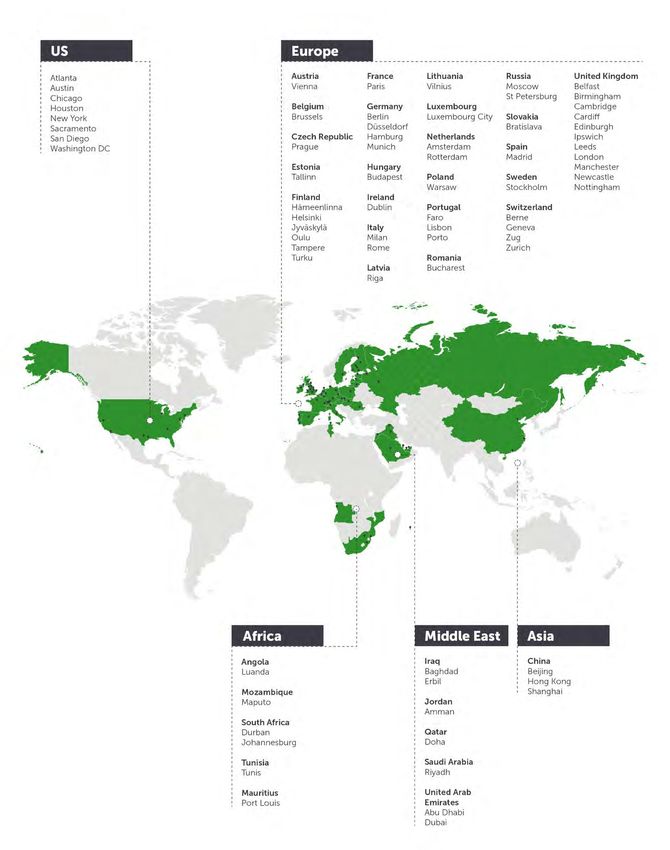
debtors’ book debts.A world of difference Client guide to navigating business operations post the recent civil unrest in South Africa Global map
eversheds-sutherland.com
© Eversheds Sutherland 2021. All rights reserved.
Eversheds Sutherland (International) LLP and Eversheds Sutherland (US) LLP are
part of a global legal practice, operating through various separate and distinct legal
entities, under Eversheds Sutherland. For a full description of the structure and a list
of offices, please visit www.eversheds-sutherland.com.
LDS_002\8743084\1
You can also read


