Allostatic Stress and Inflammatory Biomarkers in Transgender and Gender Expansive Youth: Protocol for a Pilot Cohort Study
←
→
Page content transcription
If your browser does not render page correctly, please read the page content below
JMIR RESEARCH PROTOCOLS                                                                                                              Cohen et al

     Protocol

     Allostatic Stress and Inflammatory Biomarkers in Transgender
     and Gender Expansive Youth: Protocol for a Pilot Cohort Study

     Mara Cohen*, BA; Baer Karrington*, MScPH, MD; Howard Trachtman, MD; Caroline Salas-Humara, MD
     Department of Pediatrics, New York University Langone, New York, NY, United States
     *
      these authors contributed equally

     Corresponding Author:
     Mara Cohen, BA
     Department of Pediatrics
     New York University Langone
     145 E 32nd St
     14th Floor
     New York, NY, 10016
     United States
     Phone: 1 6469297970
     Email: mara.cohen2@nyulangone.org

     Abstract
     Background: A growing number of adolescents are coming out as transgender and gender expansive (TGE). These teenagers
     have been shown to have significantly worse health outcomes than their cisgender peers. Hypotheses to explain this discrepancy
     are based on increased stress levels surrounding the societal acceptance of gender identity. In this context, elevated allostatic load
     (AL), which describes the wear and tear sustained by the body in response to repeated exposure to stress, has been associated
     with adverse long-term health outcomes.
     Objective: This protocol aims to measure AL among TGE adolescents compared with their cisgender peers and assess how AL
     varies depending on psychological stress and perceived societal acceptance.
     Methods: This is an observational proof-of-concept pilot study in which AL will be measured by assaying an array of inflammatory
     cytokines and cortisol in urine, saliva, and hair samples of TGE youth, and these parameters will be compared with those of
     age-matched control participants. A questionnaire will assess 4 aspects of psychosocial well-being: presence and management
     of depression and anxiety, gender identity support by family members, gender minority stress, and degree of perceived safety in
     the surrounding community. Samples and surveys will be collected at 3 visits (baseline, 6 months, and 12 months). This study
     will incorporate TGE coinvestigators to inform all aspects of design, data collection, and analysis and ensure that practices are
     carried out in a respectful and sensitive manner.
     Results: As of May 2021, the start of data collection for this project has continued to be postponed as a result of the COVID-19
     pandemic, which has both impacted the functioning of the clinic and funding requests. We hope to begin participant recruitment
     and interviews with coinvestigators soon.
     Conclusions: We hypothesize that AL will be primarily influenced by psychological well-being and perceived support and that
     it will be similar in TGE adolescents and in age-matched cisgender control participants when acceptance and perceived support
     are high. The results of this study have the potential to increase our understanding of the health challenges faced by TGE individuals
     during adolescence as well as to show that low levels of acceptance may have detrimental health outcomes secondary to elevated
     ALs; this may lead to the development of a biomarker profile to assess allostatic stress in TGE patients that can be used to guide
     management.
     International Registered Report Identifier (IRRID): PRR1-10.2196/24100

     (JMIR Res Protoc 2021;10(5):e24100) doi: 10.2196/24100

     KEYWORDS
     transgender; gender diverse; adolescence; allostatic load; stress biomarkers; participatory action research; stress; biomarkers;
     participatory; gender

     https://www.researchprotocols.org/2021/5/e24100                                                JMIR Res Protoc 2021 | vol. 10 | iss. 5 | e24100 | p. 1
                                                                                                               (page number not for citation purposes)
XSL• FO
RenderX
JMIR RESEARCH PROTOCOLS Cohen et al
due to repeated exposure to stressful events, whether these
Introduction events pose a real or interpreted threat [23]. These real or
Health Disparities in Transgender Youth perceived threats trigger the activation of both the sympathetic
nervous system adrenal medullary axis and the HPA axis,
On the basis of recent research, it is estimated that between releasing catecholamines and glucocorticoids, respectively [24].
0.7% and 1.8% of children and adolescents identify as Although beneficial in the short term, chronic overactivation
transgender and gender expansive (TGE), the highest percentage of these axes can have a detrimental effect on biological systems,
of any age group in the United States [1,2]. A TGE individual leading to overcompensation and eventual collapse as well as
is a person who is assigned a sex at birth that does not match decreased ability to respond to future stressors due to changes
their current gender identity. Sex refers to someone’s genetic in the nervous system [17]. One’s resilience to stress and ability
and hormonal makeup (male, female, or intersex), whereas to perceive threats and properly mobilize allostatic mechanisms
gender is the societally informed expression of assigned sex, is determined by a combination of many factors, including
and gender identity is someone’s internal sense of gender [3]. individual (eg, genetics), behavioral (eg, coping abilities), and
Research has shown that TGE adolescents tend to have historical differences (eg, prior episodes of trauma, abuse, or
significantly worse perceived health, higher rates of depression stressful environments) [17].
and suicidal ideation, higher rates of HIV, higher rates of
experienced violence (childhood sexual abuse and trauma), and Elevated cortisol, in addition to other inflammatory cytokines
fewer preventive health checkups than their cisgender peers such as interleukins and TNF-α, is associated with deleterious
[4-9]. Many hypotheses have been proposed to account for these health consequences [25], such as cardiovascular compromise
adverse health outcomes, including an increased incidence of [26], increased susceptibility to asthma exacerbations [27], and
bullying and other forms of social rejection [10-13]. The impaired wound healing [28]. An increase in overall AL has
minority stress model is most relevant to this proposal (Meyer also been associated with negative health outcomes later in life.
[14]), which explains health disparities among sexual minorities The large-scale American National Health and Nutrition
and proposes that chronic stress arises from the marginalization, Examination Survey found that AL can serve as a predictor of
discrimination, rejection, and violence that may be encountered, ischemic heart disease in conjunction with income gradient and
feared, or internalized. This leads to mental health issues such education [29]. Seeman et al [30] documented that among older
as depression, anxiety, suicidal ideation and/or attempts, and/or adults, higher baseline AL was associated with increased 7-year
substance abuse [14]. The minority stress model was recently mortality and decreased physical and cognitive function. They
extended to encompass transgender people by including also found that AL was a better predictor of mortality and
gender-related stressors and transphobia [15,16]. physical ability than either looking at specific syndromes or
individual stress markers [30]. Furthermore, there is evidence
Allostatic Load that the effects of increased AL may be particularly significant
Allostasis is the process to remain stable during change. during key developmental periods, such as adolescence [18].
However, in contrast to homeostasis, in which the internal
environment remains steady, allostasis refers to the body’s active
AL and the Lesbian, Gay, Bisexual, and Transgender
fluctuation in response to stressful changing conditions [17]. In Community
response to this stress, the hypothalamic-pituitary-adrenal (HPA) Chronic stress affects the physical well-being of lesbian, gay,
axis and the sympathetic-adrenomedullary axis are both and bisexual (LGB) adults, which has been demonstrated in
activated and in turn incite many physiologic changes to allow studies showing different baseline cortisol levels and altered
the body to adapt to stress, with primary mediators including cortisol reactivity to stress in LGB adults compared with
neuroendocrine chemical messengers such as cortisol, heterosexual adults [31,32]. However, very few studies have
epinephrine, and norepinephrine, and immune and inflammatory examined the stress biomarkers of TGE people [33]. A study
chemical messengers such as interleukin-6 (IL-6) and tumor by Colizzi et al [34] of 70 adult transmen and transwomen who
necrosis factor-α (TNF-α) [18]. These primary mediators in had cortisol levels measured before and 12 months after
turn exact a secondary physiologic response ranging from initiating gender-affirming hormones found that the participants
metabolic (dyslipidemia, elevated glucose levels, and waist-hip had lower cortisol levels after gender-affirming hormone therapy
ratio) to cardiovascular (increased blood pressure and heart rate [34]. In addition, DuBois et al [35] explored cortisol levels in
variability) and inflammatory (C-reactive protein [CRP] and transitioning adult transgender men; transmen who reported
fibrinogen) [18,19]. In addition, nutrition and medication use higher levels of transition-related stressors had higher morning
can influence primary and secondary responses [20]. The cortisol levels than men who did not report feeling
allostatic load (AL) model is the end product, the cumulative transition-related stressors.
toll of this stress to a certain point in time on physical and mental
Despite the dearth of studies on stress biomarkers, multiple
health to create a comprehensive picture of the body’s response
studies have demonstrated that psychological distress is not
to stress and trauma. This model has been used successfully in
inevitable for TGE persons but rather mediated through the
children, with recommendations on measuring both primary
degree of social and community acceptance and, in particular,
and secondary end points to best capture both axes [17,21]. IL-6
parental affirmation of TGE identity [36]. When TGE children
and CRP were the most frequently measured inflammatory
were raised in supportive environments, levels of depression,
biomarkers based on a systematic review published in 2020
as determined by parent-filled surveys, did not differ from
[22]. An elevated AL in the absence of a current stressor
age-matched cisgender control participants [34,35]. Furthermore,
represents the wear and tear put on the body’s ability to adapt
https://www.researchprotocols.org/2021/5/e24100 JMIR Res Protoc 2021 | vol. 10 | iss. 5 | e24100 | p. 2
(page number not for citation purposes)
XSL• FO
RenderXJMIR RESEARCH PROTOCOLS Cohen et al
having parents who were interested in a gender-affirming are at a similar life stage. Although the clinic does see patients
program was a protective factor against depression in TGE aged up to 24 years, young adults aged 18 years and older have
youth [37,38]. The positive effects of parental support appear more autonomy over their bodies and lives, which may influence
to persist through adulthood based on a study of LGB adults their perceived stressors. As this was a pilot study, the only
who had improved responses to acute stress compared with required baseline characteristic for all participants was that they
LGB adults with less parental support during childhood [39]. identified as either TGE for the study population or cisgender
Other protective factors include pride in one’s gender identity for the control population. However, patients with preexisting
and strong connections to TGE communities [36]. chronic conditions, including obesity (BMI>95%), chronic
kidney disease stage 3 or higher, liver disease, chronic infections
In addition to the support children receive in their homes,
such as hepatitis B, hepatitis C, HIV, tuberculosis, or
multiple other areas could lead to elevated stress around gender
autoimmune disorders such as systemic lupus erythematosus
identity, such as the safety of a neighborhood and possible
or primary immunodeficiency, receiving treatment with steroids,
comorbid depression and anxiety [40]. Furthermore, these
or current smokers will be excluded from the study because
extrafamilial environments, which also include school, religious,
these conditions and medications or habits may alter levels of
and work environments, had an immense influence over
stress and inflammatory biomarkers [43-45]. We will also focus
intrafamilial experiences [41], demonstrating the
recruitment efforts on patients who have not initiated hormone
interconnectedness of all environments on the experience of
therapy, although this will not be a requirement. In addition,
TGE youth. These results highlight the importance of affirmative
nongender affirming care medication use will not influence
care in all situations, a stance echoed in a recent policy statement
participant selection.
issued by the American Academy of Pediatrics [42].
A total of 40 cisgender control participants will be recruited
Filling in the Gaps from the adolescent clinic where adolescents are seen for a
To further explore the importance of affirmative care and social variety of issues, including adolescent consultative care such
acceptance in TGE youth, we propose using AL measurements as gynecological concerns and sexual health. Patients with
in addition to psychosocial surveys to monitor physiological chronic diseases or diagnosed infections will be excluded as
stress. The addition of an array of inflammatory biomarkers is outlined above for TGE participants. Recruitment of control
important because it not only provides greater insight into participants in this subspecialty clinic will minimize biases that
overall stress levels but also underscores the physical might occur when recruiting in other clinics, such as different
consequences of an unsupportive environment that may arise socioeconomic backgrounds or home locations. Control
from familial disapproval, unsafe geosocial environments, participants will be matched by age and sex assigned at birth
societal stress or marginalization, and/or comorbid psychiatric in a 1:1 ratio with TGE participants. These variables were
disorders. These include anxiety and depression, which most chosen to ensure the correlation between neurologic
likely arise secondary to gender-related discrimination. To the development and the activity of stress hormone pathways.
best of our knowledge, no previous studies have explored the
interaction of these factors in TGE youth. TGE participants must be able to return for all 3 visits and fill
out all surveys in English, whereas control participants will only
Methods be required to attend 1 visit.
Participant Recruitment
Study Aims
TGE adolescents and control participants will be asked if they
This study aims to (1) determine the AL of TGE youth compared are interested in participating in this study before or after their
with appropriately matched cis-gender control participants based usually scheduled appointment. The full details of the study
on assays of inflammatory cytokines and cortisol levels and (2) will be discussed, including details of the questionnaire and the
explore the relationship between supportive environments and need for hair, urine, and saliva samples. Potential participants
communities, supportive families, safe geosocial environments, will be told that not wanting to partake in the study will not
and well-controlled psychiatric comorbidities on the AL of TGE affect current or future medical care. Treating physicians will
youth. not be included in the consent process to ensure that patients
Ethics Approval will be comfortable saying no to study inclusion. As the
participants will all be under 18 years of age, they will give
This study was approved by the New York University (NYU)
assent and their parents and guardians will provide consent. If
Langone Health Center Office of Science and Research
they wish to withdraw from the study at any point, any sample
Institutional Review Board (IRB).
will be immediately retrieved and destroyed. To maintain the
Study Participants and Sites study’s statistical power, we will adopt a recruit to replace the
We plan to recruit a total of 80 participants, 40 TGE adolescents enrollment strategy.
and 40 cisgender control participants. TGE participants will TGE Coinvestigators
include children and adolescents aged between 12 and 18 years
A unique aspect of our study, which will hopefully be
who attend the gender clinic at Fink Children’s Ambulatory
commonplace in biomedical research, is the active inclusion of
Care Center at NYU Langone for evaluation of gender
members from the study community, in this case TGE
dysphoria. This age range was chosen as it reflects the ages of
individuals, in the implementation and analysis of the study.
the patients seen at the gender clinic and ensures that participants
https://www.researchprotocols.org/2021/5/e24100 JMIR Res Protoc 2021 | vol. 10 | iss. 5 | e24100 | p. 3
(page number not for citation purposes)
XSL• FO
RenderXJMIR RESEARCH PROTOCOLS Cohen et al
There are multiple reasons for this. First, the TGE community leading or poorly worded questions, or other issues with the
has often been misrepresented and mistreated by medicine, protocol. If TGE coinvestigators suggest that it may alter
especially TGE people from racially minoritized backgrounds; previously agreed-upon end points, there will be a research team
consequently, many TGE people feel uncomfortable and unsafe meeting to discuss the proposal and decide if that end point is
with health care providers [46]. Including community members needed or discuss an alternative way to reach that end point.
on the research team to give insight into respectful research During this time, they will undergo the Collaborative
practice will hopefully demonstrate the research team’s Institutional Training Initiative program training, as required
willingness to learn and help instill trust between the medical by all researchers at the hospital. This training will include
professionals involved and community members. Furthermore, Health Insurance Portability and Accountability Act training to
TGE coinvestigators will help identify areas of the study that help protect research participants’ identities. TGE
may be easily misinterpreted or difficult to understand for coinvestigators will be involved in data analysis, helping to
members of the study population. This insight will be invaluable provide a community perspective when interpreting the results,
in ensuring the feasibility of the study and the validity of the and will be involved in writing up and presenting the study
findings. Finally, TGE coinvestigators will be able to provide results in academic journals and conferences, respectively. The
invaluable insight into data interpretation and help guide how research team has committed to teaching data analysis methods
the findings can be best implemented to help the community. to help TGE coinvestigators with this section, as we feel that
imparting specialized knowledge is an important aspect of this
TGE coinvestigators, who have not yet been recruited, will
project.
include 1 transfeminine and 1 transmasculine person between
the ages of 18 and 24 years, which should help prevent any We anticipate that being a part of this research team will help
overlap with the study population. The sole requirement is the these youth personally and professionally in multiple ways,
ability to read and write in English and physically come to the from gaining research experience to mentorship opportunities.
clinic in a COVID-19–safe manner. We will try to involve TGE people are underrepresented in medicine and research
individuals who have an interest in research and/or medicine teams, so including them as coinvestigators will help close this
and have had limited opportunities to become immersed in the gap [48]. Although TGE coinvestigators will receive many
field, therefore recruiting from multiple groups. We will recruit different intangible opportunities, we will also compensate them
patients at the gender clinic seen by an alternative physician monetarily for their time and effort. This demonstrates that the
not involved in this study. A community institute that provides research team values the commitment from the community,
gender-affirming services, including mental health and support which helps decrease important economic disparities in minority
groups, was also chosen as a recruitment site because of the communities and acts as an equalizer to show commitment to
connection the study team has with the institute and to avoid inclusion [49]. In addition to monetary compensation, we place
overlap between the study population and coinvestigators. a strong emphasis on mentorship. All of the study investigators
Finally, we will also recruit from a local shelter for TGE youth will make time for TGE coinvestigators to review the project
who are unhoused. Recruiting from these places will ensure in smaller groups and discuss other aspects of medicine and
that we are providing all TGE youth who may want to participate research in general, as TGE coinvestigators would like.
in the opportunity to apply. After filling out an initial interest
This novel aspect of the study design has several limitations.
form on Research Enterprise Data Capture (REDCap), accessible
Although we would prefer to include more than 2 coinvestigators
with a quick response (QR) code and link on the pamphlet,
to obtain a broader range of perspectives, there are limited
applicants will be contacted for a phone interview and asked
resources to adequately compensate more individuals who might
about their availability, goals, and interest in the project. Prior
want to take on this role. As the clinic at which the study will
experience with research will not be a requirement because we
take place is not insular but rather part of a larger institution,
are particularly seeking individuals with limited previous
steps will be taken to limit exposure to possible institutional
opportunities. We acknowledge that using a web-based survey
transphobia that TGE coinvestigators may face in the workplace.
for application will limit the opportunity to those who have the
These will include informing staff and security about TGE
technology. However, we believe this will have a minimal effect
coinvestigators and their role in the project ahead of time and
because most young adults have telephones with the capacity
providing support during onboarding procedures, which may
to use QR codes [47].
have limited gender options.
Although we acknowledge that the TGE coinvestigators were
not involved in the research question formation or the original
Study Design or Data Collection and Measures
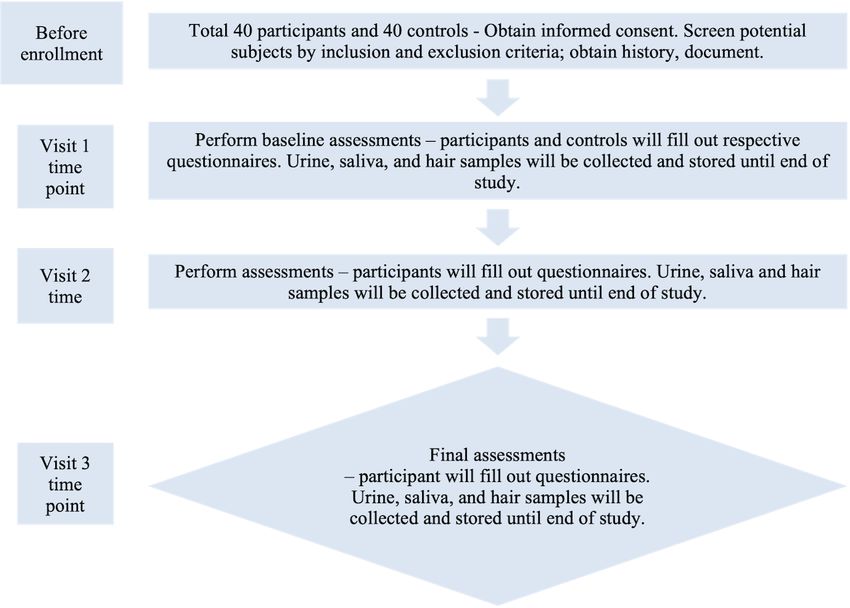
design, and therefore this project cannot be labeled participatory There will be 3 visits in total for the TGE participants, 6 months
action research, they will be involved in the setup and apart (baseline, 6 months, and 12 months). The total duration
implementation of the project going forward. TGE of participation will be 1 year. Figure 1 shows a schematic
coinvestigators will have the opportunity to review the study representation of the TGE arm study design. Control participants
design and surveys to ensure that they agree that the design will will only require a single baseline visit for bio-sample collection
be effective and that there are no overlooked assumptions, and will not be required to take any surveys.
https://www.researchprotocols.org/2021/5/e24100 JMIR Res Protoc 2021 | vol. 10 | iss. 5 | e24100 | p. 4
(page number not for citation purposes)
XSL• FO
RenderXJMIR RESEARCH PROTOCOLS Cohen et al
Figure 1. Schematic of the study design. This schematic demonstrates the tasks completed at enrollment and at each subsequent visit for transgender
and gender expansive TGE participants.
During all visits, the child’s gender identity and 4 main older. Although the GMSR has not been validated in people
variables—familial support, geosocial safety perception, younger than 18 years old, it is the only measure of gender
comorbid depression and anxiety, and gender identity minority minority stress of which the authors are aware. The question
stress—will be determined via a survey questionnaire responses were modified to be appropriate for participants aged
administered on REDCap, which will also store participant data. between 12 years and 18 years. The research team recognizes
Participants will be given the Parental Attitudes of Gender that answering 150 questions can be demanding, especially for
Expansiveness Scale for Youth and the Adverse Childhood young people, and the risk of decreased attentiveness as the
Experience Questionnaire to determine familial support [50,51]. questions continue can affect the results. To help prevent this,
To determine geosocial safety perception, a previously used snacks and beverages will be provided. In addition, every
questionnaire to inquire about a child’s perception of approximately 20 minutes until completion, participants will
neighborhood safety will be given [52,53]. Participants will be be asked to stand up, walk, and/or stretch. Participants will have
given the modified Patient Health Questionnaire-9A (adolescent) the option of asking for the accompaniment of a research team
and Self-Report for Childhood Anxiety Related Emotional member should they desire. Insurance information will be
Disorders survey [54] to assess depression and anxiety. Finally, collected from the electronic health record, which will indicate
gender-related discrimination, rejection, and victimization the family’s access to medical care.
experienced internally and externally will be surveyed with the
Stress and inflammatory biomarkers will be measured at the
gender minority stress and resilience (GMSR) measure modified
initial visit and the 2 follow-up visits. To capture the primary
to be suitable for adolescents [55]. The GMSR also addresses
mediators of AL, the biomarkers measured were cortisol, IL-6,
intersectionality and how gender identity may be perceived with
and TNF-α. The secondary mediators measured included CRP,
other identities, such as religious, race or ethnicity, or
BMI, and waist-to-hip ratio. Measuring both primary and
occupational identities, as well as addresses community support
secondary mediators is recommended in pediatric patients to
by exploring how welcomed individuals feel by their
best capture the AL [21]. Efforts will be made to schedule all
communities. All surveys used have strong reliability and
appointments during the afternoon to minimize diurnal variation
validity, and each participant has approximately 150 questions
and enable a more uniform assessment of cortisol and urine
to complete. These surveys are expected to take approximately
inflammatory markers levels [43,56-58]. At each session,
1 hour to complete. A study investigator will be nearby to help
participants will have stress and inflammatory biomarkers
participants in the survey if needed. All surveys used except for
measured before the survey and after listening to a 10-minute
the GMSR have been validated in children aged 12 years and
https://www.researchprotocols.org/2021/5/e24100 JMIR Res Protoc 2021 | vol. 10 | iss. 5 | e24100 | p. 5
(page number not for citation purposes)
XSL• FO
RenderXJMIR RESEARCH PROTOCOLS Cohen et al
relaxation tape to account for possible transient increases in shift in the pandemic should occur during the study period, then
stress on route to the appointment. Researchers will be blinded the control group will have an additional measurement session
to the sample source to reduce possible bias. added to adjust for how this shift may affect ALs.
Urine samples will be collected and assayed using the Luminex Statistical Analysis
Panel (model number HSTCMAG28PMX21BK), which has
been used successfully to determine inflammatory and stress Primary Objective
biomarkers in infants and toddlers enrolled in an obesity Our general approach of comparing TGE youth biomarkers with
prevention trial [59]. This panel can measure an array of cisgender control participants will include paired two-tailed t
cytokines, including IL-1ß, IL-6, IL-10, and TNF-α. Salivary test analysis and analysis of variance (ANOVA) to determine
and hair cortisol levels will also be measured. Salivary cortisol whether there is a significant difference in the cytokine profile
has been used previously in adolescent populations to explore between the 2 groups’ levels, as defined by a P value of less
the effects of parental support on stress response [60]. Hair than .05.
cortisol content is an integrated index of stress over an extended
Secondary Objective
period. A small sample of hair from the head will be collected
with child-safe scissors as a measure of chronic stress levels Within the TGE youth samples, we will use paired t test analysis
[61,62]. Saliva will be collected into a polypropylene vial with and ANOVA to determine if there is a difference in biomarker
a straw using the passive-drool technique [63]. All samples, levels between different age brackets (12-14 years and 15-18
marked with the participant ID number, will be stored at −70 years) and ethnicity (White vs Black or Hispanic), with
°C within 1 hour of collection until the batch assay of the analyte significance being determined by a P value less than .05. If we
panels. If agreed upon by participants, the residual samples on do not have enough participants in a certain age bracket, we
will be stored in the NYU Biorepository for potential use in will not perform this analysis.
future studies. Otherwise, all samples will be destroyed after Linear regression analysis will be conducted to determine if
the completion of the study. there is a relationship between questionnaires and biomarker
Sample Size levels for each participant. We will also include a regression
analysis to ascertain correlation, with an R-squared value greater
Recruitment will end when approximately 40 TGE participants
than 50% needed to determine the relationship.
and 40 control participants are enrolled for a total of 80
participants, as determined by a total of approximately 200 Statistical Execution
patients in the gender clinic with an expected enrollment of All statistical calculations will be performed using GraphPad
20% to 30%. On the basis of a total population of approximately Prism version 8.0.0 for Mac (GraphPad Software).
21,000 transgender youth in New York State from the Williams
Institute and a total of 200 patients in our clinic, a sample Results
population of 13 participants and 13 control participants would
be adequate to generate a study with 80% power with a 95% As of September 2020, the study received IRB approval but
CI of 17 [34]. Therefore, by aiming for 40 participants in each had not yet begun data collection. Although we planned to begin
arm, we will exceed this value. active recruitment in the summer of 2020, we have had to
postpone owing to the COVID-19 pandemic. This health
COVID-19 Precautions
emergency has significantly affected the frequency of in-person
This pilot study was conceptualized before the COVID-19 visits and clinical research. In addition, we are still waiting to
pandemic. Most of this study will not be affected. Participants hear from multiple grants that were delayed as a result of the
will be able to complete the survey on a computer either by pandemic. We hope to receive funding support and begin
themselves or with a single research team member in the room, participant recruitment and interviews with coinvestigators
which will allow COVID-19 safety precautions. Sample shortly.
collection will also be done with a single research team member
in compliance with COVID-19 precautions. The recruitment of Discussion
TGE coinvestigators will be done using fliers and pamphlets,
as previously discussed, and interviewing TGE coinvestigators Summary
will be performed over Zoom, Skype, or FaceTime. Although
As described above, adolescents have the highest percentage
originally the TGE coinvestigators were to be a part of data
of TGE identifying members of any age group in the United
collection, because of COVID-19 restrictions, this will not be
States, yet this population has minimal published research [1,2].
possible. However, the research team will keep TGE
This study seeks to fill some of the gaps in the literature
coinvestigators abreast of implementation and be available to
regarding the physical consequences of acceptance. We propose
discuss data collection.
that AL of TGE individuals may be used as an integrated
COVID-19 has added numerous stressors to everyday life, and biomarker for the risk of long-term adverse health consequences
as such, has most likely caused changes to individual ALs. based on the level of acceptance in different environments. To
However, no studies have explored COVID-19 and ALs in reiterate, we hypothesize that TGE status is not a cause of
pediatric patients to the research team’s knowledge. The control increased AL, but rather that an increase is the consequence of
group will correct for any universal increases. If another major social and environmental experiences. To this end, we therefore
https://www.researchprotocols.org/2021/5/e24100 JMIR Res Protoc 2021 | vol. 10 | iss. 5 | e24100 | p. 6
(page number not for citation purposes)
XSL• FO
RenderXJMIR RESEARCH PROTOCOLS Cohen et al
sought to measure the presence of 4 variables—depression and with some indication that a similar process could occur in the
anxiety, gender identity familial support, gender identity human brain [64]. However, in a study of 20 postmenopausal
community support, and gender-related minority stress—which cisgender women, exogenous estrogen was associated with only
may influence the AL in TGE youth. The effects of psychiatric, slightly elevated levels of dehydroepiandrosterone and
familial, and community support on AL may help target areas dehydroepiandrosterone sulfate and not significantly elevated
of effective intervention going forward and provide a better levels of cortisol [65]. In a separate study of 12 cisgender
understanding of the stress sources among TGE youth. women, exogenous testosterone was found not to influence
endogenous cortisol levels [66]. Although commencement of
Strengths and Limitations gender-affirming therapy at any point during the study should
This study has some limitations that must be acknowledged. not significantly alter our data, we will document
The confounding variable of socioeconomic status, which can gender-affirming hormone use to enable later adjustment for
increase stress, is outside the scope of this study. By recruiting any effect. Furthermore, the effects of gender-affirming therapy
all patients from the same site, there were some limitations to on self-perceived stressors will be captured during our surveys.
the range of backgrounds represented. However, given the
diversity of the area surrounding the hospital and the limited Conclusions
number of sites providing adolescent gender care in the New The results of this study will be useful in guiding larger-scale
York metropolitan area, we expect to be able to recruit a diverse studies to assess allostatic stress in TGE youth. These results
range of participants. Furthermore, the fact that participants are also have the potential to shape practical interventions to benefit
already seeking care at an adolescent gender clinic can bias the TGE youth by providing scientific evidence in favor of affirming
sample toward more accepting situations. We hope that we can programs, including support groups for both parents and
still identify subtle variations in levels of support and validation teenagers, parental consultations with gender experts with a
by using a number of surveys. Although the results of this study range of backgrounds to increase familial acceptance,
are limited by sample size, they will provide the first data set encouragement of Gay-Straight Alliance and LGB club
that can hopefully be expanded over time as more research is involvement, and encouragement of community centers with a
conducted with the TGE youth population. TGE focus. In addition, the results of this study have the
potential to enhance the argument for policies that would
Another area of potential concern is the direct effect of
increase TGE safety and acceptance in the community, such as
gender-affirming therapy on the results. However, we believe
antibullying measures. The implications of physical harm caused
that this effect, even longitudinally, should be minimal. There
by a lack of acceptance will hopefully increase the trend toward
are no consistent data indicating that exogenous hormones
broader acceptance of the TGE population. Finally, the findings
influence the HPA axis [34,64-66]. Colizzi et al [34] reported
may enable the development of a biomarker profile that can be
that estrogen might alter hormone-binding globulin levels,
used as an objective measure of allostatic stress in TGE patients
thereby skewing stress hormone levels. In addition, brain
and to monitor the effectiveness of therapeutic interventions on
plasticity, synapse formation, and signaling pathways differ
their well-being.
between male and female rodents based on sex hormone levels,
Acknowledgments
The authors would like to thank Dr Samantha Busa for her contributions to the development of this project.
Conflicts of Interest
None declared.
References
1. Herman JL, Flores AR, Brown TN, Wilson BD, Conron KJ. Age of individuals who identify as transgender in the United
States. The Williams Institute, Los Angeles, CA. 2017. URL: https://williamsinstitute.law.ucla.edu/wp-content/uploads/
Age-Trans-Individuals-Jan-2017.pdf [accessed 2021-04-30]
2. Johns MM, Lowry R, Andrzejewski J, Barrios LC, Demissie Z, McManus T, et al. Transgender identity and experiences
of violence victimization, substance use, suicide risk, and sexual risk behaviors among high school students - 19 states and
large urban school districts, 2017. MMWR Morb Mortal Wkly Rep 2019 Jan 25;68(3):67-71 [FREE Full text] [doi:
10.15585/mmwr.mm6803a3] [Medline: 30677012]
3. Fausto-Sterling A. Sexing the body: gender politics and the construction of sexuality. Choice Rev Online 2000 Oct
01;38(02):-. [doi: 10.5860/choice.38-0919]
4. Rider GN, McMorris BJ, Gower AL, Coleman E, Eisenberg ME. Health and care utilization of transgender and gender
nonconforming youth: a population-based study. Pediatrics 2018 Mar 05;141(3):e20171683 [FREE Full text] [doi:
10.1542/peds.2017-1683] [Medline: 29437861]
5. Perez-Brumer A, Day JK, Russell ST, Hatzenbuehler ML. Prevalence and correlates of suicidal ideation among transgender
youth in California: findings from a representative, population-based sample of high school students. J Am Acad Child
Adolesc Psychiatry 2017 Sep;56(9):739-746 [FREE Full text] [doi: 10.1016/j.jaac.2017.06.010] [Medline: 28838578]
https://www.researchprotocols.org/2021/5/e24100 JMIR Res Protoc 2021 | vol. 10 | iss. 5 | e24100 | p. 7
(page number not for citation purposes)
XSL• FO
RenderXJMIR RESEARCH PROTOCOLS Cohen et al
6. Almeida J, Johnson RM, Corliss HL, Molnar BE, Azrael D. Emotional distress among LGBT youth: the influence of
perceived discrimination based on sexual orientation. J Youth Adolesc 2009 Aug;38(7):1001-1014 [FREE Full text] [doi:
10.1007/s10964-009-9397-9] [Medline: 19636742]
7. Garofalo R, Deleon J, Osmer E, Doll M, Harper GW. Overlooked, misunderstood and at-risk: exploring the lives and HIV
risk of ethnic minority male-to-female transgender youth. J Adolesc Health 2006 Mar;38(3):230-236. [doi:
10.1016/j.jadohealth.2005.03.023] [Medline: 16488820]
8. Clark H, Babu AS, Wiewel EW, Opoku J, Crepaz N. Diagnosed HIV infection in transgender adults and adolescents: results
from the National HIV Surveillance System, 2009-2014. AIDS Behav 2017 Sep 29;21(9):2774-2783 [FREE Full text] [doi:
10.1007/s10461-016-1656-7] [Medline: 28035497]
9. Newcomb ME, Hill R, Buehler K, Ryan DT, Whitton SW, Mustanski B. High burden of mental health problems, substance
use, violence, and related psychosocial factors in transgender, non-binary, and gender diverse youth and young adults. Arch
Sex Behav 2020 Feb 14;49(2):645-659 [FREE Full text] [doi: 10.1007/s10508-019-01533-9] [Medline: 31485801]
10. Roberts AL, Rosario M, Slopen N, Calzo JP, Austin SB. Childhood gender nonconformity, bullying victimization, and
depressive symptoms across adolescence and early adulthood: an 11-year longitudinal study. J Am Acad Child Adolesc
Psychiatry 2013 Mar;52(2):143-152 [FREE Full text] [doi: 10.1016/j.jaac.2012.11.006] [Medline: 23357441]
11. Toomey RB, Card NA, Casper DM. Peers' perceptions of gender nonconformity: associations with overt and relational
peer victimization and aggression in early adolescence. J Early Adolesc 2014 May 01;34(4):463-485 [FREE Full text] [doi:
10.1177/0272431613495446] [Medline: 26236066]
12. Roberts AL, Rosario M, Corliss HL, Koenen KC, Austin SB. Childhood gender nonconformity: a risk indicator for childhood
abuse and posttraumatic stress in youth. Pediatrics 2012 Mar 20;129(3):410-417 [FREE Full text] [doi:
10.1542/peds.2011-1804] [Medline: 22351893]
13. Russell ST, Ryan C, Toomey RB, Diaz RM, Sanchez J. Lesbian, gay, bisexual, and transgender adolescent school
victimization: implications for young adult health and adjustment. J Sch Health 2011 May;81(5):223-230. [doi:
10.1111/j.1746-1561.2011.00583.x] [Medline: 21517860]
14. Meyer IH. Prejudice, social stress, and mental health in lesbian, gay, and bisexual populations: conceptual issues and
research evidence. Psychol Bull 2003 Sep;129(5):674-697 [FREE Full text] [doi: 10.1037/0033-2909.129.5.674] [Medline:
12956539]
15. Hendricks ML, Testa RJ. A conceptual framework for clinical work with transgender and gender nonconforming clients:
an adaptation of the Minority Stress Model. Prof Psychol Res Pr 2012 Oct;43(5):460-467. [doi: 10.1037/a0029597]
16. Miller LR, Grollman EA. The social costs of gender nonconformity for transgender adults: implications for discrimination
and health. Sociol Forum (Randolph N J) 2015 Sep;30(3):809-831 [FREE Full text] [doi: 10.1111/socf.12193] [Medline:
27708501]
17. Juster R, McEwen BS, Lupien SJ. Allostatic load biomarkers of chronic stress and impact on health and cognition. Neurosci
Biobehav Rev 2010 Sep;35(1):2-16. [doi: 10.1016/j.neubiorev.2009.10.002] [Medline: 19822172]
18. Beckie TM. A systematic review of allostatic load, health, and health disparities. Biol Res Nurs 2012 Oct 23;14(4):311-346.
[doi: 10.1177/1099800412455688] [Medline: 23007870]
19. Guidi J, Lucente M, Sonino N, Fava G. Allostatic load and its impact on health: a systematic review. Psychother Psychosom
2021 Aug 14;90(1):11-27 [FREE Full text] [doi: 10.1159/000510696] [Medline: 32799204]
20. Suvarna B, Suvarna A, Phillips R, Juster R, McDermott B, Sarnyai Z. Health risk behaviours and allostatic load: a systematic
review. Neurosci Biobehav Rev 2020 Jan;108:694-711. [doi: 10.1016/j.neubiorev.2019.12.020] [Medline: 31846655]
21. Condon EM. Chronic stress in children and adolescents: a review of biomarkers for use in pediatric research. Biol Res Nurs
2018 Oct 04;20(5):473-496 [FREE Full text] [doi: 10.1177/1099800418779214] [Medline: 29865855]
22. Kuhlman KR, Horn SR, Chiang JJ, Bower JE. Early life adversity exposure and circulating markers of inflammation in
children and adolescents: a systematic review and meta-analysis. Brain Behav Immun 2020 May;86:30-42. [doi:
10.1016/j.bbi.2019.04.028] [Medline: 30999015]
23. McEwen B, Stellar E. Stress and the individual. Mechanisms leading to disease. Arch Intern Med 1993 Sep
27;153(18):2093-2101. [Medline: 8379800]
24. Sapolsky RM. How do glucocorticoids influence stress responses? Integrating permissive, suppressive, stimulatory, and
preparative actions. Endocr Rev 2000 Feb 01;21(1):55-89. [doi: 10.1210/er.21.1.55]
25. Björntorp P, Rosmond R. Obesity and cortisol. Nutrition 2000 Oct;16(10):924-936. [doi: 10.1016/s0899-9007(00)00422-6]
26. Whitworth JA, Williamson PM, Mangos G, Kelly JJ. Cardiovascular consequences of cortisol excess. Vasc Health Risk
Manag 2005 Apr;1(4):291-299 [FREE Full text] [doi: 10.2147/vhrm.2005.1.4.291] [Medline: 17315601]
27. Marin TJ, Chen E, Munch JA, Miller GE. Double-exposure to acute stress and chronic family stress is associated with
immune changes in children with asthma. Psychosom Med 2009 May;71(4):378-384 [FREE Full text] [doi:
10.1097/PSY.0b013e318199dbc3] [Medline: 19196805]
28. Ebrecht M, Hextall J, Kirtley L, Taylor A, Dyson M, Weinman J. Perceived stress and cortisol levels predict speed of
wound healing in healthy male adults. Psychoneuroendocrinology 2004 Jul;29(6):798-809. [doi:
10.1016/s0306-4530(03)00144-6]
https://www.researchprotocols.org/2021/5/e24100 JMIR Res Protoc 2021 | vol. 10 | iss. 5 | e24100 | p. 8
(page number not for citation purposes)
XSL• FO
RenderXJMIR RESEARCH PROTOCOLS Cohen et al
29. Sabbah W, Watt RG, Sheiham A, Tsakos G. Effects of allostatic load on the social gradient in ischaemic heart disease and
periodontal disease: evidence from the Third National Health and Nutrition Examination Survey. J Epidemiol Community
Health 2008 May 01;62(5):415-420. [doi: 10.1136/jech.2007.064188] [Medline: 18413454]
30. Seeman TE, McEwen BS, Rowe JW, Singer BH. Allostatic load as a marker of cumulative biological risk: MacArthur
studies of successful aging. Proc Natl Acad Sci U S A 2001 Apr 10;98(8):4770-4775 [FREE Full text] [doi:
10.1073/pnas.081072698] [Medline: 11287659]
31. Juster R, Hatzenbuehler ML, Mendrek A, Pfaus JG, Smith NG, Johnson PJ, et al. Sexual orientation modulates endocrine
stress reactivity. Biol Psychiatry 2015 Apr 01;77(7):668-676 [FREE Full text] [doi: 10.1016/j.biopsych.2014.08.013]
[Medline: 25444167]
32. Hatzenbuehler ML, McLaughlin KA. Structural stigma and hypothalamic-pituitary-adrenocortical axis reactivity in lesbian,
gay, and bisexual young adults. Ann Behav Med 2014 Mar 24;47(1):39-47 [FREE Full text] [doi: 10.1007/s12160-013-9556-9]
[Medline: 24154988]
33. DuBois LZ, Gibb JK, Juster R, Powers SI. Biocultural approaches to transgender and gender diverse experience and health:
integrating biomarkers and advancing gender/sex research. Am J Hum Biol 2021 Jan 19;33(1):e23555. [doi:
10.1002/ajhb.23555] [Medline: 33340194]
34. Colizzi M, Costa R, Pace V, Todarello O. Hormonal treatment reduces psychobiological distress in gender identity disorder,
independently of the attachment style. J Sex Med 2013 Dec;10(12):3049-3058. [doi: 10.1111/jsm.12155] [Medline:
23574768]
35. DuBois LZ, Powers S, Everett BG, Juster R. Stigma and diurnal cortisol among transitioning transgender men.
Psychoneuroendocrinology 2017 Aug;82:59-66. [doi: 10.1016/j.psyneuen.2017.05.008] [Medline: 28511045]
36. Tan KK, Treharne GJ, Ellis SJ, Schmidt JM, Veale JF. Gender minority stress: a critical review. J Homosex 2020 Aug
23;67(10):1471-1489. [doi: 10.1080/00918369.2019.1591789] [Medline: 30912709]
37. Olson KR, Durwood L, DeMeules M, McLaughlin KA. Mental health of transgender children who are supported in their
identities. Pediatrics 2016 Mar 26;137(3):e20153223 [FREE Full text] [doi: 10.1542/peds.2015-3223] [Medline: 26921285]
38. Hill DB, Menvielle E, Sica KM, Johnson A. An affirmative intervention for families with gender variant children: parental
ratings of child mental health and gender. J Sex Marital Ther 2010 Jan 04;36(1):6-23. [doi: 10.1080/00926230903375560]
[Medline: 20063232]
39. Cook SH, Pruessner JC, Lupien SJ, Juster R. Sexual orientation moderates the association between parental overprotection
and stress biomarker profiles. Psychol Sex 2018 May 02;9(3):204-220. [doi: 10.1080/19419899.2018.1470105]
40. Higa D, Hoppe MJ, Lindhorst T, Mincer S, Beadnell B, Morrison DM, et al. Negative and positive factors associated with
the well-being of lesbian, gay, bisexual, transgender, queer, and questioning (LGBTQ) youth. Youth Soc 2012 Jun
13;46(5):663-687. [doi: 10.1177/0044118x12449630]
41. Bhattacharya N, Budge SL, Pantalone DW, Katz-Wise SL. Conceptualizing relationships among transgender and gender
diverse youth and their caregivers. J Fam Psychol 2020 Oct 29:-. [doi: 10.1037/fam0000815] [Medline: 33119364]
42. AAP Policy Statement Urges Support and Care of Transgender and Gender-Diverse Children and Adolescents.
HealthyChildren. 2018 Sep 17. URL: https://www.healthychildren.org/English/news/Pages/
Support-for-Transgender-and-Gender-Diverse-Children-and-Adolescents.aspx [accessed 2021-05-12]
43. Jessop DS, Turner-Cobb JM. Measurement and meaning of salivary cortisol: a focus on health and disease in children.
Stress 2008 Jan 07;11(1):1-14. [doi: 10.1080/10253890701365527] [Medline: 17853059]
44. Wolf JM, Nicholls E, Chen E. Chronic stress, salivary cortisol, and alpha-amylase in children with asthma and healthy
children. Biol Psychol 2008 Apr;78(1):20-28. [doi: 10.1016/j.biopsycho.2007.12.004] [Medline: 18243483]
45. Calcaterra V, Vinci F, Casari G, Pelizzo G, de Silvestri A, De Amici M, et al. Evaluation of allostatic load as a marker of
chronic stress in children and the importance of excess weight. Front Pediatr 2019 Aug 7;7:335 [FREE Full text] [doi:
10.3389/fped.2019.00335] [Medline: 31440490]
46. Grant JM, Motter LA, Tanis J. Injustice at every turn: a report of the national transgender discrimination survey. National
Center for Transgender Equality. 2011. URL: https://transequality.org/sites/default/files/docs/resources/NTDS_Report.pdf
[accessed 2021-04-30]
47. Villanti AC, Johnson AL, Ilakkuvan V, Jacobs MA, Graham AL, Rath JM. Social media use and access to digital technology
in US young adults in 2016. J Med Internet Res 2017 Jun 07;19(6):e196 [FREE Full text] [doi: 10.2196/jmir.7303] [Medline:
28592394]
48. Dimant OE, Cook TE, Greene RE, Radix AE. Experiences of transgender and gender nonbinary medical students and
physicians. Transgend Health 2019 Sep 01;4(1):209-216 [FREE Full text] [doi: 10.1089/trgh.2019.0021] [Medline: 31552292]
49. Ozer E. Youth-led participatory action research: developmental and equity perspectives. Adv Child Dev Behav
2016;50:189-207. [doi: 10.1016/bs.acdb.2015.11.006] [Medline: 26956074]
50. Hidalgo MA, Chen D, Garofalo R, Forbes C. Perceived parental attitudes of gender expansiveness: development and
preliminary factor structure of a self-report youth questionnaire. Transgend Health 2017 Dec;2(1):180-187 [FREE Full
text] [doi: 10.1089/trgh.2017.0036] [Medline: 29159312]
https://www.researchprotocols.org/2021/5/e24100 JMIR Res Protoc 2021 | vol. 10 | iss. 5 | e24100 | p. 9
(page number not for citation purposes)
XSL• FO
RenderXJMIR RESEARCH PROTOCOLS Cohen et al
51. Felitti VJ, Anda RF, Nordenberg D, Williamson DF, Spitz AM, Edwards V, et al. Relationship of childhood abuse and
household dysfunction to many of the leading causes of death in adults. Am J Prev Med 1998 May;14(4):245-258. [doi:
10.1016/s0749-3797(98)00017-8]
52. Côté-Lussier C, Jackson J, Kestens Y, Henderson M, Barnett TA. A child's view: social and physical environmental features
differentially predict parent and child perceived neighborhood safety. J Urban Health 2015 Mar 2;92(1):10-23 [FREE Full
text] [doi: 10.1007/s11524-014-9917-0] [Medline: 25450517]
53. Côté-Lussier C, Mathieu M, Barnett TA. Independent associations between child and parent perceived neighborhood safety,
child screen time, physical activity and BMI: a structural equation modeling approach. Int J Obes (Lond) 2015 Oct
26;39(10):1475-1481. [doi: 10.1038/ijo.2015.98] [Medline: 26100138]
54. Mental health screening and assessment tools for primary care. American Academy of Pediatrics. 2012. URL: https://www.
aap.org/en-us/advocacy-and-policy/aap-health-initiatives/mental-health/documents/mh_screeningchart.pdf [accessed
2021-04-30]
55. Testa RJ, Habarth J, Peta J, Balsam K, Bockting W. Development of the gender minority stress and resilience measure.
Psychol Sex Orient Gender Diver 2015 Mar;2(1):65-77. [doi: 10.1037/sgd0000081]
56. Gordis EB, Granger DA, Susman EJ, Trickett PK. Asymmetry between salivary cortisol and alpha-amylase reactivity to
stress: relation to aggressive behavior in adolescents. Psychoneuroendocrinology 2006 Sep;31(8):976-987. [doi:
10.1016/j.psyneuen.2006.05.010] [Medline: 16879926]
57. Hankin BL, Badanes LS, Smolen A, Young JF. Cortisol reactivity to stress among youth: stability over time and genetic
variants for stress sensitivity. J Abnorm Psychol 2015 Mar;124(1):54-67 [FREE Full text] [doi: 10.1037/abn0000030]
[Medline: 25688432]
58. Kong SY, Stabler TV, Criscione LG, Elliott AL, Jordan JM, Kraus VB. Diurnal variation of serum and urine biomarkers
in patients with radiographic knee osteoarthritis. Arthritis Rheum 2006 Aug;54(8):2496-2504 [FREE Full text] [doi:
10.1002/art.21977] [Medline: 16868970]
59. Birch L, Anzman-Frasca S, Paul IM. Starting early: obesity prevention during infancy. Nestle Nutr Inst Workshop Ser
2012;73:81-94. [doi: 10.1159/000341300] [Medline: 23128768]
60. Lippold MA, Davis KD, McHale SM, Buxton OM, Almeida DM. Daily stressor reactivity during adolescence: the buffering
role of parental warmth. Health Psychol 2016 Sep;35(9):1027-1035 [FREE Full text] [doi: 10.1037/hea0000352] [Medline:
27175577]
61. Noppe G, Van Rossum EF, Koper JW, Manenschijn L, Bruining GJ, de Rijke YB, et al. Validation and reference ranges
of hair cortisol measurement in healthy children. Horm Res Paediatr 2014 Aug 9;82(2):97-102 [FREE Full text] [doi:
10.1159/000362519] [Medline: 25115629]
62. Vanaelst B, Michels N, De Vriendt T, Huybrechts I, Vyncke K, Sioen I, et al. Cortisone in hair of elementary school girls
and its relationship with childhood stress. Eur J Pediatr 2013 Jun 1;172(6):843-846. [doi: 10.1007/s00431-013-1955-1]
[Medline: 23371393]
63. Ice GH. Measuring emotional and behavioral response. Measur Stress Hum 2007:60-93. [doi:
10.1017/CBO9780511542435.004]
64. McEwen BS, Milner TA. Understanding the broad influence of sex hormones and sex differences in the brain. J Neurosci
Res 2017 Jan 02;95(1-2):24-39 [FREE Full text] [doi: 10.1002/jnr.23809] [Medline: 27870427]
65. Abraham GE, Maroulis GB. Effect of exogenous estrogen on serum pregnenolone, cortisol, and androgens in postmenopausal
women. Obstet Gynecol 1975 Mar;45(3):271-274. [Medline: 163457]
66. Hermans EJ, Ramsey NF, van Honk J. Exogenous testosterone enhances responsiveness to social threat in the neural
circuitry of social aggression in humans. Biol Psychiatry 2008 Mar 01;63(3):263-270. [doi: 10.1016/j.biopsych.2007.05.013]
[Medline: 17727825]
Abbreviations
AL: allostatic load
ANOVA: analysis of variance
CRP: C-reactive protein
GMSR: gender minority stress and resilience
HPA: hypothalamic-pituitary-adrenal
IL-6: interleukin-6
IRB: Institutional Review Board
LGB: lesbian, gay, and bisexual
NYU: New York University
QR: quick response
REDCap: Research Enterprise Data Capture
TGE: transgender and gender expansive
TNF-α: tumor necrosis factor α
https://www.researchprotocols.org/2021/5/e24100 JMIR Res Protoc 2021 | vol. 10 | iss. 5 | e24100 | p. 10
(page number not for citation purposes)
XSL• FO
RenderXJMIR RESEARCH PROTOCOLS Cohen et al
Edited by G Eysenbach; submitted 03.09.20; peer-reviewed by IN Gomez, G Myreteg; comments to author 15.01.21; revised version
received 01.02.21; accepted 24.02.21; published 19.05.21
Please cite as:
Cohen M, Karrington B, Trachtman H, Salas-Humara C
Allostatic Stress and Inflammatory Biomarkers in Transgender and Gender Expansive Youth: Protocol for a Pilot Cohort Study
JMIR Res Protoc 2021;10(5):e24100
URL: https://www.researchprotocols.org/2021/5/e24100
doi: 10.2196/24100
PMID:
©Mara Cohen, Baer Karrington, Howard Trachtman, Caroline Salas-Humara. Originally published in JMIR Research Protocols
(https://www.researchprotocols.org), 19.05.2021. This is an open-access article distributed under the terms of the Creative
Commons Attribution License (https://creativecommons.org/licenses/by/4.0/), which permits unrestricted use, distribution, and
reproduction in any medium, provided the original work, first published in JMIR Research Protocols, is properly cited. The
complete bibliographic information, a link to the original publication on https://www.researchprotocols.org, as well as this
copyright and license information must be included.
https://www.researchprotocols.org/2021/5/e24100 JMIR Res Protoc 2021 | vol. 10 | iss. 5 | e24100 | p. 11
(page number not for citation purposes)
XSL• FO
RenderXYou can also read


