Appendix A Building Energy Transition Plan - A Roadmap for Decarbonizing the Residential and Commercial Building Sectors in Maryland - Maryland ...
←
→
Page content transcription
If your browser does not render page correctly, please read the page content below

Appendix A
     Building Energy
     Transition Plan
A Roadmap for Decarbonizing the Residential and
    Commercial Building Sectors in Maryland
A ROADMAP FOR DECARBONIZING THE RESIDENTIAL AND
       COMMERCIAL BUILDING SECTORS IN MARYLAND

                                              1
This is a report by the Maryland Commission on Climate Change, which is charged with
advising the Governor and General Assembly on ways to mitigate the causes of, prepare
for, and adapt to the consequences of climate change. The Commission is chaired by
the Maryland Department of the Environment Secretary Ben Grumbles and consists of
members representing state agencies, the Maryland General Assembly, local
government, business, environmental non-profit organizations, organized labor,
philanthropic interests, and universities in Maryland.

Policy proposals included in this report are supported by the Commission but do not
necessarily reflect current state policy. This report is meant to guide Maryland
policymakers on decisions related to reducing greenhouse gas emissions from
buildings in pursuit of achieving targets in Maryland’s 2030 Greenhouse Gas Reduction
Act Plan and the Commission’s recommendation that Maryland achieve net-zero
emissions economywide by 2045.

November 2021

                                                                                        2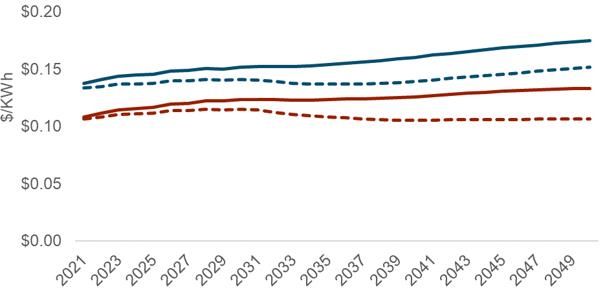
Table of Contents

Executive Summary ................................................................................................................. 4
Background .............................................................................................................................. 6
E3’s Building Decarbonization Study ..................................................................................... 7
   Key Findings ......................................................................................................................... 7
   Stakeholder Feedback ......................................................................................................... 9
   Final Scenario Results ....................................................................................................... 10
      Total Costs ...................................................................................................................... 11
      Electricity System Impacts ............................................................................................ 12
      Gas System Impacts ...................................................................................................... 13
      Electricity and Gas Rate Impacts .................................................................................. 14
      Consumer Costs ............................................................................................................. 15
      Emissions Reductions.................................................................................................... 16
Building Decarbonization Roadmap for Maryland .............................................................. 18
Core Recommendations ....................................................................................................... 19
Additional Recommendations .............................................................................................. 25
Appendix: Building Decarbonization Policies in Other States ........................................... 29

                                                                                                                                         3
Executive Summary
Direct use of natural gas, heating oil, and propane in buildings – primarily for space heating and
water heating – accounted for 13 percent of Maryland’s greenhouse gas emissions in 2017.
Maryland’s 2030 Greenhouse Gas Reduction Act (GGRA) Plan calls for reducing emissions from
buildings through energy efficiency and by converting fossil fuel heating systems to electric
heat pumps. Heat pumps are essentially air conditioners that can reverse cycle to provide
efficient heating and cooling in one system, powered by increasingly clean electricity. They are
already the second most common heating system in Maryland.

While the 2030 GGRA Plan sets a goal of electrifying fossil fuel end-uses in buildings, it also
calls on the Maryland Commission on Climate Change (MCCC) to develop a Building Energy
Transition Plan to identify specific measures and goals to decarbonize the buildings sector.

Energy + Environmental Economics (E3) examined four scenarios that would nearly achieve net-
zero emissions for Maryland’s residential and commercial buildings sectors by 2045, aligning
with the MCCC-recommended target for economywide emissions reductions. E3 found that a
“MWG Policy” scenario is the lowest-cost scenario among all that were modeled. E3’s findings
include estimated future costs and benefits based on a certain set of assumptions; actual
results could differ from the findings included in this report.

What is the MWG Policy scenario?

The MCCC’s Mitigation Work Group (MWG) formed a Buildings Sub-Group to guide E3’s study
and craft this Building Energy Transition Plan. A broad and diverse group of stakeholders
provided valuable input over seven months and developed the policy recommendations
presented herein. E3 modeled an “MWG Policy” scenario to evaluate the impacts of this Plan
and recommendations, which are based on four core concepts:

   •   Ensure an equitable and just transition, especially for low-income households
   •   Construct new buildings to meet space and water heating demand without fossil fuels
   •   Replace almost all fossil fuel heaters with heat pumps in existing homes by 2045
   •   Implement a flexible Building Emissions Standard for commercial buildings

E3 found that implementing this Plan would:

   •   Reduce emissions from residential and commercial buildings by 95 percent by 2045
   •   Reduce construction and energy costs for most building types
   •   Ramp up electricity system investments to around $1B annually by 2045
   •   Ramp down gas system investments, saving around $1B annually by 2045
   •   Increase electricity rates by 2 cents per kilowatt-hour by 2045
   •   Provide the lowest gas rates among all scenarios modeled
                                                                                                  4
Core Recommendations

This Plan includes four Core Recommendations (and 12 additional recommendations) that are
designed to achieve a just transition to a decarbonized buildings sector in Maryland.

   1. Adopt an All-Electric Construction Code – The General Assembly should require the
      Maryland Building Code Administration to adopt a code that ensures that new buildings
      meet all water and space heating demand without the use of fossil fuels. A cost-
      effectiveness test would allow building projects to seek variances to code requirements
      while maintaining electric-ready standards.

   2. Develop a Clean Heat Retrofit Program – The General Assembly should require and
      provide funding to state agencies to implement programs (with the utilities, if applicable)
      that would:
          a. Retrofit 100 percent of low-income households by 2030
          b. Encourage fuel-switching through EmPOWER beginning in 2024
          c. Encourage beneficial electrification through EmPOWER beginning in 2024
          d. Target 50 percent of residential heating system, cooling system, and water
             heater sales to be heat pumps by 2025, 95 percent by 2030
          e. Align energy plans, approvals, and funding with the objectives of this Plan

   3. Create a Building Emissions Standard – The General Assembly should require the
      Maryland Department of the Environment to develop a Building Emissions Standard that
      would guide commercial and multifamily residential buildings to net-zero emissions by
      2040. State-owned buildings would meet this standard by 2035. The General Assembly
      should also provide tax incentives and resources to help owners of covered buildings
      develop and implement emissions reduction measures. An alternative compliance
      pathway would be available to allow covered buildings to continue using fossil fuels
      when emissions reduction measures are unnecessarily expensive.

   4. Develop Utility Transition Plans – The General Assembly should require the Public
      Service Commission to oversee a process whereby the electric and gas utility
      companies develop plans for achieving a structured and just transition to a near-zero
      emissions buildings sector in Maryland.

                                                                                               5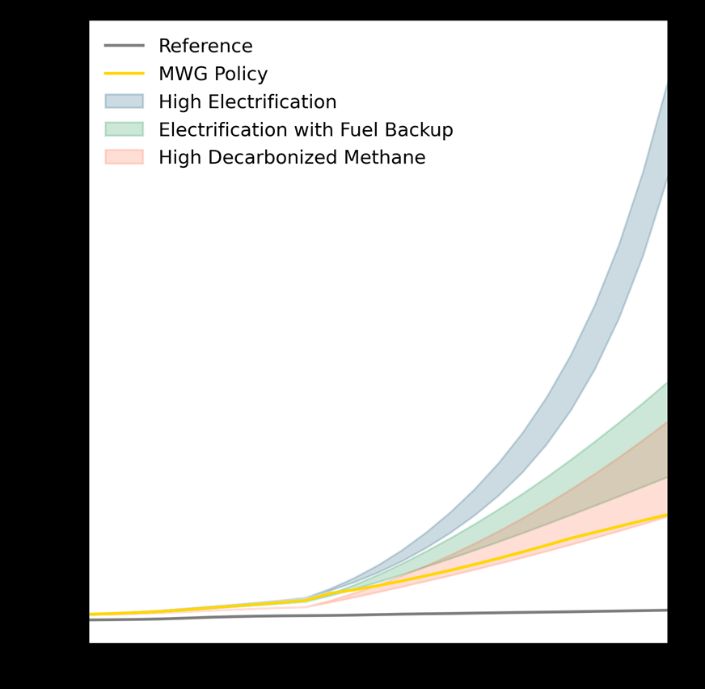
Background
The combustion of fossil fuels in buildings is a substantial source of greenhouse gas (GHG)
emissions in Maryland. Most of this energy use is for space and water heating. Maryland’s 2030
Greenhouse Gas Reduction Act (GGRA) Plan calls for reducing GHG emissions from residential
and commercial buildings through energy efficiency and by converting fossil fuel heating
systems to efficient electric heat pumps that are powered by increasingly clean and renewable
electricity. The 2030 GGRA Plan shows a steady transition to heat pump adoption, leading to at
least 80 percent of residential space heating systems being heat pumps by 2050.

While the 2030 GGRA Plan sets a goal of electrifying fossil fuel end-uses in buildings, it also
calls on the Maryland Commission on Climate Change (MCCC) to develop a Building Energy
Transition Plan to identify specific measures and goals to decarbonize the buildings sector.
Programs are not yet in place to achieve the building energy transition envisioned by the 2030
GGRA Plan and additional building emissions reductions will be needed for Maryland to achieve
post-2030 GGRA targets. More clarity is needed on the levels of efficiency, electrification, and
other measures that will be necessary for Maryland to achieve its long-range emissions
reduction goals while keeping energy costs affordable for Marylanders.

The MCCC’s Mitigation Work Group (MWG) launched a Buildings Sub-Group in 2020 to explore
pathways to attain deeper emissions reductions from buildings. The Sub-Group’s work led to a
report, Decarbonizing Buildings in Maryland, including recommendations for next-step actions.
The Sub-Group continued its work in 2021, as called for in the 2030 GGRA Plan, to develop this
Building Energy Transition Plan to serve as a roadmap for reaching net-zero emissions from
residential and commercial buildings by 2045, aligning with the MCCC’s recommendation that
Maryland should achieve net-zero emissions economywide by that year.

The Maryland Department of the Environment (MDE) – with funding from the U.S. Climate
Alliance and The Nature Conservancy – worked with Energy + Environmental Economics (E3) to
conduct a Maryland Building Decarbonization Study, which serves as the foundation for this
Building Energy Transition Plan. The Buildings Sub-Group provided guidance and review of E3’s
work from March through October 2021.

The contents of this Building Energy Transition Plan reflect findings from E3’s study, the Sub-
Group’s proceedings over the past two years, input from various stakeholders, and building
decarbonization policies developed by other states.

                                                                                                  6
E3’s Building Decarbonization Study
Key Findings
E3 initially modeled three scenarios that were selected by the Buildings Sub-Group in May 2021.
Each scenario nearly1 achieves net-zero emissions by 2045 for the residential and commercial
buildings sectors. The initial three scenarios were:
High Electrification – Almost all buildings adopt heat pumps and improve shell
performance by 2045. All-electric new construction starting in 2025.
Electrification with Fuel Backup – Existing buildings adopt and use heat pumps for most
of the annual heating load by 2045, but existing furnaces and boilers provide backup
heating in the coldest hours of the year. Fossil fuels are replaced with low-carbon
renewable fuels by 2045. All-electric new construction starting in 2025.
High Decarbonized Methane – Most buildings use fuel for heating and improve shell
performance by 2045. Fossil fuels are replaced with low-carbon renewable fuels by 2045.
The initial study uncovered several key findings that informed the Buildings Sub-Group’s crafting
of policy recommendations. Key findings included:
• All-electric new buildings typically have the lowest construction and operating costs
o All-electric buildings produce zero direct emissions2 and zero indirect emissions
when electricity is produced from zero-emissions sources (the 2030 GGRA Plan
calls for 100 percent clean electricity generation in Maryland by 2040).
o For single-family homes, all-electric homes cost less to construct than new
mixed-fuel homes.
o For multifamily buildings, all-electric buildings cost about the same to construct
as mixed-fuel buildings.
o For commercial buildings, all-electric buildings can have higher or lower
construction costs than mixed-fuel buildings depending on building type and use.
o All-electric new buildings of all types – residential and commercial – have the
lowest total annual costs (including equipment, maintenance, and energy costs)
in every net-zero emissions scenario modeled.
1 Each scenario depends on renewable low-carbon fuels to achieve net-zero direct emissions but methane leaks from
in-state gas infrastructure would still produce indirect emissions, estimated to be at the following levels in 2045: 0.02
million metric tons (MMT) of carbon dioxide equivalent (CO2e) in the High Electrification scenario; 0.09 MMT CO2e in
the Electrification with Fuel Backup scenario; and 0.19 MMT CO2e in the High Decarbonized Methane scenario.
Indirect emissions from electricity consumption in buildings is assumed to be between 5 MMT CO2e and 0 CO2e
depending on the pace of electricity sector decarbonization in states that supply power to Maryland.
2 Excluding refrigerants such as hydrofluorocarbons that can leak from heat pump and air conditioning systems.
7• Retrofitting existing buildings with heat pumps can reduce equipment, maintenance,
and energy costs
o Heat pumps work well in Maryland’s climate and are already the second most
common heating system used in buildings statewide.
o For single-family homes, the cost to install a heat pump (which provides heating
and cooling) is close to the cost of replacing both an air conditioner and a gas
furnace. At current utility rates, annual energy costs are comparable between
homes with heat pumps and homes with gas furnaces. Annual energy costs are
lower for homes with heat pumps than homes heated by electric resistance, oil,
or propane.
o For multifamily buildings, the cost of installing heat pumps can be significantly
less than the cost of replacing existing air conditioning and gas systems. At
current utility rates, annual energy costs are comparable between housing units
with heat pumps and units with gas heating.
o For commercial buildings, the cost-effectiveness of replacing heating and
cooling systems with heat pumps depends on building type and use.
• Electricity system capacity would need to increase to accommodate building and
vehicle electrification
o Peak electricity demand could roughly double by 2045 driven by heating demand
during the coldest hours of the year.
o New electricity system investments could increase electricity rates gradually,
increasing residential electricity rates from 14 cents/kilowatt-hour (kWh) in 2021
to 18 cents/kWh in 2045 in a High Electrification scenario.
o Electricity system costs and rate impacts can be reduced through a variety of
demand management measures.
o Annual electricity consumption in Maryland is projected to remain constant as
increasing demand from buildings and vehicles is offset by energy efficiency.
• Using low-carbon fuels for supplemental heating during the coldest hours of the year
could reduce electricity system investments but a dual-fuel approach is complicated
o Replacing natural gas (historic cost around $3/MMBtu) with low-carbon fuels
such as biomethane (estimated cost $10-25/MMBtu), hydrogen (estimated cost
$15-25/MMBtu), or synthetic natural gas (estimated cost $30-70/MMBtu) could
be a cost-effective alternative to building-out the electricity system to handle
peak heating demand from a highly electrified building stock.
o An Electrification with Fuel Backup scenario would require sophisticated policy
design and utility rate structures to encourage consumers to use fuel backup
heating only during the coldest hours of the year.
o Using low-carbon fuels outside of the coldest hours of the year could lead to very
high energy costs for consumers using fuel for heating.
8• Gas consumption is projected to decrease between 62 and 96 percent by 2045
o Gas consumption in buildings would decrease between 62 percent in the
Electrification with Fuel Backup scenario and 96 percent in the High
Electrification scenario.
o Gas delivery rates could increase more than 20-times the current rate for
consumers left on the gas system, leading to significant equity concerns.
Stakeholder Feedback
The Buildings Sub-Group and MWG reviewed and discussed E3’s initial findings between July
and October 2021 and provided valuable feedback that led to the development of policy
recommendations and refinement of E3’s modeling. The following summarizes key points of
discussion and explains how stakeholder input influenced the development of this Plan.
• Equity and affordability are top priorities – There was general agreement that reducing
energy burden, making holistic improvements to homes, and ensuring that people are
not left behind in the transition are priorities for decarbonization policy. This feedback
informed recommendations on implementing holistic retrofits of 100 percent of low-
income households by 2030, strengthening incentives for retrofit projects, mandating
lowest-cost construction practices to improve housing affordability, and initiating utility
transition planning processes to protect consumers from paying higher energy costs.
• New buildings should be all-electric – There was general agreement that new buildings
should be constructed to all-electric standards but that a cost-effectiveness test should
be used to allow buildings, especially commercial buildings, to be constructed with
mixed-fuel equipment if all-electric construction is too expensive. This feedback was
incorporated into a recommendation to adopt an all-electric construction code.
• Commercial buildings need flexibility to reduce emissions – There was general
agreement that all-electric solutions are not always the most cost-effective measures
for reducing emissions from commercial buildings. Commercial building owners should
receive technical and financial support to identify and implement low-cost emissions
mitigation measures, which could include offsetting emissions that are too expensive to
eliminate. This feedback led to a recommendation to develop a flexible Building
Emissions Standard.
• A fuel-backup approach is problematic – Several stakeholders raised concerns that
implementing an Electrification with Fuel Backup scenario is impractical given utility
ratemaking law and consumer behavior. Maryland’s Office of People’s Counsel wrote in
its comments, “The [Electrification with Fuel Backup scenario] would require coordinating
rate setting for not one, but two, utilities. This expectation of precision rate setting is both
legally and practically unrealistic... the effort under the [Electrification with Fuel Backup]
scenario would require coordinating the price signals of two utilities with competing
interests. These utilities will not agree on the proper price signals. Based on our
experience, this assumption of efficient rate setting across utilities is not realistic.”
9The Office of People’s Counsel added, “The transition toward a clean energy system will
require significant efforts to address equity impacts, but maintaining two systems [electric
and gas] will significantly exacerbate inequities. It is undisputed that maintaining the gas
system for backup use requires substantial increases in the rates for gas delivery. The high
electrification case requires no backup fuels, thus obviating the need for the massive
capital investments that have yet to be made to maintain the gas infrastructure.” Other
stakeholders expressed similar concerns. This feedback led to having E3 model a fourth
scenario that shows a more practical approach to decarbonizing buildings.
• Impacts of climate change, methane leaks from gas distribution, competition for low-
carbon fuels, and other factors should be included in E3’s modeling – Stakeholders
suggested several ways of improving E3’s study methodology throughout the process.
The U.S. Climate Alliance graciously provided additional funding to allow E3 to run
several sensitivity analyses to address most of the improvements requested by
stakeholders. The additional analyses refined E3’s study results but did not change the
key findings mentioned above.
Final Scenario Results
Several rounds of discussion on E3’s initial study and draft versions of this Plan helped the
Buildings Sub-Group and MWG hone-in on a roadmap and recommendations for decarbonizing
buildings in Maryland. The core concepts are to:
• Ensure an equitable and just transition, especially for low-income households
• Construct new buildings to meet space and water heating demand without fossil fuels
• Replace almost all fossil fuel heaters with heat pumps in existing homes by 2045
• Implement a flexible Building Emissions Standard for commercial buildings
With additional funding from the U.S. Climate Alliance, E3 modeled a fourth scenario, called the
“MWG Policy” scenario, to estimate the costs associated with this Plan. The results show that
the MWG Policy scenario has the lowest total cost of all four scenarios while also avoiding the
need to maintain backup systems in homes or transitioning to expensive low-carbon fuels.
Detailed results are included on the following pages.
10Total Costs
The MWG Policy scenario requires investments in electricity grid infrastructure (to increase
system capacity) and in building equipment (to replace fuel heaters with electric heat pumps).
These investments help consumers reduce costs for natural gas, oil, and propane. Annual costs
and savings are shown in Figure 1. This represents the lowest-cost scenario of all the
decarbonization scenarios modeled.
Figure 1: Annual Incremental Total Resource Costs relative to Reference. Results account for climate
change impacts on heating and cooling demand. Building shell improvements are excluded. 3
In the low-cost scenario, net costs (without accounting for economic benefits such as job
creation, health impacts, etc.) would remain around business-as-usual levels through the 2020s.
Net costs increase in the 2030s and 2040s as capacity is added to the electricity system and
most buildings complete the transition to becoming all-electric. Costs would level off after this
period of infrastructure investments.
Alternative compliance costs, which are associated with the Building Emissions Standard
proposed in this Plan, could begin in the 2030s for commercial, multifamily, and state-owned
buildings that do not meet emissions reduction targets. The alternative compliance costs
shown in Figure 1 are based on a modeling exercise assuming that owners of many buildings
covered by the Building Emissions Standard would choose to pay a rate of $100 per metric ton
of carbon dioxide equivalent (tCO2e) in leu of reducing emissions below target levels.
Assumptions here are rough, so these above all other costs should not be taken as certain.
3E3 included deep shell retrofits (wall insulation, roof insulation, glazing, air-tightness, and heat recovery) in its
original study but determined that shell improvements are not necessary as cost-control measures in any scenario.
E3 removed shell improvements from Figure 1 to illustrate a more likely cost projection for the MWG scenario.
11Electricity System Impacts
Electricity system investments – for generation capacity, transmission, and distribution – are
significantly lower in the MWG Policy scenario than in the High Electrification scenario. That is
because achieving high electrification in Maryland’s residential buildings has a small impact on
peak electricity demand. E3’s work on the MWG Policy scenario uncovered that commercial
buildings in Maryland have a much greater impact on peak electricity demand than residential
buildings have. As a result, the MWG Policy scenario, which modeled high electrification in the
residential sector and modest electrification in the commercial sector, is projected to increase
peak electricity demand only 3 gigawatts by 2045.
Figure 2: Incremental Electric System Costs relative to Reference in 2045. Details of the electric sector
cost assumptions are documented in E3’s Maryland Building Decarbonization Study.
Figure 3: Peak Electricity Load Projections for the MWG Policy scenario. Based on typical summer and
winter peak electricity demand.
12Gas System Impacts
Gas system throughput decreases 75 percent in the MWG Policy scenario, which results in
$1.3B in avoided gas system infrastructure costs and $20.7B in avoided fuel costs from 2021
through 2045. Fuel costs are much lower in the MWG scenario than the Electrification with Fuel
Backup or High Decarbonized Methane scenarios because the MWG scenario avoids
transitioning to expensive low-carbon fuels.
Figure 4: Incremental Gas System Costs relative to Reference in 2045. Details of the gas sector cost
assumptions are documented in E3’s Maryland Building Decarbonization Study.
Figure 5: Gas Demand in 2021-2045 in the MWG Policy scenario. Most remaining gas consumption in
2045 would be in commercial buildings. Emissions from gas consumption in commercial buildings would
be offset through the proposed Building Emissions Standard alternative compliance path.
13Electricity and Gas Rate Impacts
Electricity rates increase gradually in the MWG Policy scenario to pay for the incremental
electricity system costs. Rates are projected to increase from around 14 cents/kWh in 2021 to
17 cents/kWh in 2045 for residential customers and from around 11 cents/kWh in 2021 to 13
cents/kWh in 2045 for commercial customers. For both customer classes, rates are projected
to increase by 2 cents/kWh by 2045 compared to the reference case.
Figure 6: Electricity Rates in the MWG Policy scenario
Although gas rate impacts are smaller in the MWG Policy scenario than any other scenario
modeled, gas rates increase as consumers leave the gas system, leaving fewer consumers to
pay for gas system costs. Gas rates remain flat through the 2020s but then climb to the $40-
50/MMBtu range by 2045. This Plan recommends transitioning 100 percent of low-income
households to heat pumps by 2030 to reduce energy burden for the most vulnerable
Marylanders. Heat pump adoption in the commercial sector and the rest of the residential
sector would ramp up in the 2030s as the costs of operating gas heating systems increase.
Figure 7: Residential Gas Rates Figure 8: Commercial Gas Rates
14Consumer Costs
Much of the heating equipment installed in the 2020s will be operational through the 2030s and
into the 2040s, so it is important to consider not only what energy costs are today but what they
will be over the lifecycle of equipment. E3 estimated annualized lifecycle consumer costs –
including costs for equipment, operations and maintenance, and utility bills – for several types
of buildings. Results are summarized in the following table.
Table 1: Annualized Consumer Costs in the MWG Policy scenario. Gas, electricity, and equipment costs
are based on 2035 rates. Costs for shell improvements are included but E3 found that many shell
improvements are not cost-effective, so actual consumer costs could be lower the costs reflected in this
table. “Difference” is the annualized savings (or cost) of all-electric compared with mixed-fuel buildings.
Mixed-Fuel All-Electric Difference
New Construction $5,500 $3,800 $1,700
Single-family Residential
Retrofit $6,100 $5,500 $600
New Construction $4,100 $3,400 $700
Multifamily Residential
Retrofit $3,900 $3,500 $400
New Construction $18,400 $15,500 $900
Small Commercial
Retrofit $17,800 $15,500 $2,300
New Construction $150,000 $147,000 $3,000
Large Commercial
Retrofit $139,000 $147,000 ($8,000)
E3 found that, given continued improvement in the cost and performance of electric space and
water heating equipment and projected increases in natural gas rates by 2035, most all-electric
buildings will have lower lifecycle costs than mixed-fuel alternatives. The exception is an
existing, large, mixed-fuel commercial building where the cost to retrofit it into an all-electric
building could result in higher annualized costs. This is an example of the type of building that
might pursue the Building Emissions Standard alternative compliance path instead of
implementing measures to achieve net-zero direct emissions.
15Emissions Reductions
Residential sector emissions reductions are heavily dependent on heat pump adoption rates. If
greater than 90 percent of homes adopt heat pumps by 2045, then residential emissions would
decrease at least 90 percent. E3’s modeling assumes strong heat pump adoption rates,
resulting in residential emissions falling around 90 percent, from 5.4 million metric tons of
carbon dioxide equivalent (MMT CO2e) in 2017 to around 0.6 MMT CO2e by 2045.
Commercial sector emissions fall less sharply due to continued reliance on fossil fuels in many
buildings. E3 estimates that commercial sector emissions could fall from 5.3 MMT CO2e in
2017 to around 3.1 MMT CO2e by 2045. These emissions, however, would be offset through the
Building Emissions Standard alternative compliance program. Revenue from the alternative
compliance program would be invested in carbon sequestration, negative emissions
technologies, or other measures that would net-out remaining emissions from commercial,
multifamily, and institutional buildings and allow the state to meet its emerging 2045 net-zero
emissions goal.
Overall, E3 estimates that residential and commercial building emissions could decrease
around 95 percent by 2045 including offsets from the alternative compliance program.
Figure 9: Greenhouse Gas Emissions in the MWG Policy scenario. Graph shows net emissions from
residential and commercial buildings (direct emissions less commercial building emissions that are
offset through the Building Emissions Standard alternative compliance program).
16Roadmap and
Recommendations
17Building Decarbonization Roadmap for Maryland Red shading indicates transition
time to near-zero emissions
All-Electric Construction Code P
Zero direct emissions
New Homes Heat pumps for space heating/cooling and water heating
by 2024
Ready for solar, EV charging, and building-grid interaction
All-Electric Construction Code P
Zero to low direct emissions
New Commercial Heat pumps or other clean energy technologies where practical
by 2024
Ready for solar, EV charging, and building-grid interaction
Clean Heat Retrofit Program P
Zero direct emissions
Existing Homes Incentives for holistic efficiency, electrification, comfort, and safety upgrades E
by 2045
Gradual transition to an all-electric residential buildings sector
Building Emissions Standard P
Net-zero emissions
Existing Commercial Flexible, technology-neutral program
by 2040
Owners choose the best path for their buildings
Clean and Renewable Energy Standard L
Zero emissions
Electricity Supply Renewable Portfolio Standard S
by 2040 G
Regional Greenhouse Gas Initiative S
Gas Transition Plan P
Low emissions
Heating Fuel Supply Plan for a significant reduction in gas consumption
by 2045
Building Emissions Standard alternative compliance/carbon offset P
Legend: P = Proposed herein E = Existing but should be strengthened G = GGRA Plan target L = Legislation introduced S = In statute
18 12Core Recommendations
Each of the Core Recommendations correspond with a critical component of the Building
Decarbonization Roadmap for Maryland (above), which presents a suite of policies that would
collectively guide Maryland’s residential and commercial building sectors to nearly achieve net-
zero emissions by 2045.
1. Adopt an All-Electric Construction Code
The General Assembly should require the Maryland Building Code Administration to adopt a
code that ensures that new buildings meet all water and space heating demand without the
use of fossil fuels (allowing for the use of electric heat pumps, solar thermal, and other
existing and potential clean energy solutions) and are ready for solar, electric vehicle
charging, and building-grid interaction. This code shall apply to all new residential,
commercial, and state-funded buildings beginning as early as possible but no later than
2024. Legislation should ensure that the Building Code Administration or appropriate local
jurisdictions have authority, resources, and direction to effectively enforce compliance with
the code. The Building Code Administration shall also develop and implement training
courses on the benefits and challenges of all-electric and electric-ready buildings for
building developers, realtors, real estate appraisers, and lenders.
The Building Code Administration shall allow exemptions for building types for which
compliance with these requirements is not feasible. The Building Code Administration shall
also develop a cost-effectiveness test to allow building projects to seek variances to code
requirements while maintaining electric-ready standards. The cost-effectiveness test shall
include the federal Social Cost of Carbon. If a new commercial building receives a variance
and produces greenhouse gas emissions on-site, then it would participate in the Building
Emissions Standard (proposed herein) and follow its own tailored plan for reaching net-zero
emissions.
Discussion: A recommendation to adopt an all-electric construction code was supported by the
MWG in 2020 but the MCCC wanted to receive this Building Energy Transition Plan before
voting on the measure. Studies including E3’s Maryland Buildings Decarbonization Study and
RMI’s The New Economics of Electrifying Buildings add to a body of work demonstrating that
all-electric new homes have lower construction and energy costs than mixed-fuel homes. This
means that all-electric new homes help improve housing affordability and local air quality while
reducing greenhouse gas emissions in Maryland.
For commercial construction, all-electric design can increase construction and/or energy
costs, which is why a test is proposed to help commercial building developers identify cost-
effective clean energy solutions or receive a variance from the all-electric code. Residential
building projects would also be able to seek variances using the cost-effectiveness test.
19The New Building Institute’s Building Decarbonization Code, which is an overlay to the 2021
International Energy Conservation Code (IECC) and compatible with ASHRAE 90.1, includes an
all-electric pathway that is one possible solution for code adoption. California and Washington
recently adopted building energy efficiency codes and EV infrastructure codes.
2. Develop a Clean Heat Retrofit Program
The General Assembly should require state agencies to develop and implement (with the
utilities, if applicable) a Clean Heat Retrofit Program that meets the following targets:
A. Retrofit 100 percent of low-income households by 2030 – Provide funding to
enable the Maryland Energy Administration (MEA), the Department of Housing &
Community Development (DHCD), and local governments and organizations to offer
little-to-no upfront cost comprehensive retrofits to 100 percent of low-income
households by 2030. Holistic retrofits would include weatherization, heat pump
installation, and otherwise improve the health and safety of homes statewide.
Dedicate funds to address safety-and-health upgrades and electric-panel and wiring
improvements, which are commonly needed in low-income households before
electrification projects can be completed. Building electrification programs should
prioritize low-income customers and be funded and designed to ensure that they do
not increase the energy burden of low and moderate-income customers.
Discussion: It is critical that the state assist households with high energy burden to
transition off the gas system before gas rates increase above current levels. Note that
gas rates could increase for reasons described in this Plan or for other reasons such as
impacts from new regulations, increasing gas supply costs, etc.
B. Encourage fuel-switching through EmPOWER beginning in 2024 (modified
MCCC recommendation from 2020) – Require incentives for the electrification of
existing fossil fuel systems through the EmPOWER program and direct the Public
Service Commission (PSC) to require the electric utilities to proactively encourage
customers with gas, oil, or propane heating systems to replace or supplement those
systems with electric heat pumps, especially for low-income households and
consumers. State agencies also should modify programs they manage to facilitate
fuel-switching if not already allowed.
Discussion: Gas heating systems are added to this recommendation, which was
otherwise approved by the MCCC in 2020. Not yet enacted in state policy. Currently
being discussed by the PSC’s EmPOWER Future Programming Work Group.
C. Encourage beneficial electrification through EmPOWER beginning in 2024
(MCCC recommendation from 2020) – Require that the core objective of EmPOWER
change from electricity reduction to a portfolio of mutually reinforcing goals,
20including GHG emissions reduction, energy savings, net customer benefits, and
reaching underserved customers. Encourage beneficial electrification, which are
strategies that provide three forms of societal benefits: reduced energy consumption
(total source BTUs), lower consumer costs, and reduced GHG emissions. Beneficial
electrification programs should be prioritized first for low-income households and
consumers and should be aligned with other health and safety upgrades to consider
a whole-home or whole-building retrofit approach to ensure cost-effectiveness and a
focus on benefitting underserved homes and businesses first.
Discussion: Approved by the MCCC in 2020. Not yet enacted in state policy. Currently
being discussed by the PSC’s EmPOWER Future Programming Work Group.
D. Target 50 percent of residential HVAC and water heater sales to be heat
pumps by 2025, 95 percent by 2030 (modified MCCC recommendation from
2020) – Require that incentives (for consumers, contractors, and manufactures)
through EmPOWER and other programs are sufficient to meet a target of 50 percent
of HVAC and water heater sales to be heat pumps by 2025 and 95 percent by 2030.
Heat pumps (air source or ground source) should be sized to meet all space heating
and cooling demand. Heat pump water heaters should be grid-interactive to serve as
energy storage devices. Grid-interactive electric resistance water heaters are allowed
when heat pump water heaters cannot be installed. Require that electric utilities
provide payment options such as on-bill, low-interest financing to spread out upfront
costs including electrical upgrades. These targets apply to residential systems but
consideration should be given to developing proper incentives and financing options
for commercial system electrification.
Discussion: In 2020, the MCCC approved a recommendation that 50 percent of space
heater sales should be heat pumps by 2025. The target makes more sense as an HVAC
sales target because heat pumps replace heating and cooling systems. Water heaters
are added to the recommendation this year. If HVAC and water heater sales reach
around 95 percent heat pumps by 2030, then most existing homes would be retrofit
with heat pumps by 2045 based on typical equipment replacement schedules.
E. Align energy plans, approvals, and funding with the objectives of this Plan –
Ensure that the state government’s plans, approvals, and funding decisions related
to energy align with the objectives of this Building Energy Transition Plan.
Discussion: This recommendation, which previously focused on discontinuing the use
of the Strategic Energy Investment Fund to expand fossil fuel use and infrastructure,
was broadened to be inclusive of all energy-related decisions.
213. Create a Building Emissions Standard
The General Assembly should require MDE to develop a Building Emissions Standard that
shall achieve net-zero emissions from commercial and multifamily residential buildings by
2040. State-owned buildings shall meet this standard by 2035. Historic buildings shall be
exempt. The Standard shall give commercial, multifamily, and institutional building owners
flexibility in bringing their buildings in line with the state’s emissions reduction targets. The
Standard shall include measurement and reporting of direct (on-site) emissions and support
from the state to implement emissions reduction measures. Emissions reduction measures
include but are not limited to:
• Maintaining and retro-commissioning building energy systems
• Implementing HVAC scheduling and other smart control systems
• Making building shell and other energy efficiency improvements
• Replacing fuel burning equipment with efficient electric equipment including air
source heat pumps, ground source heat pumps, and induction cooktops
• Installing variable refrigerant flow (VRF) and other systems that capture and utilize
waste heat
• Switching fossil fuels with low-carbon renewable fuels
• Installing carbon capture systems (possibly for facilities like larger combined heat
and power or district energy plants) if the captured emissions can be stored or
utilized in a way that leads to permanent and verifiable emissions reductions
Buildings covered by the Building Emissions Standard shall:
• Measure and report direct emissions to MDE annually starting in 2025
• Achieve net-zero direct emissions by 2040 (2035 for state-owned buildings)
The MCCC’s MWG will study and recommend interim targets for covered buildings as part
of the MWG’s 2022 work plan.
The General Assembly shall provide resources to MEA to offer technical and financial
support to help owners of covered buildings develop and implement emissions reduction
measures. An alternative compliance pathway should be available to allow commercial
building owners to pay a reasonable fee for emissions above target levels. The alternative
compliance payment should be reasonable, perhaps corresponding with the cost of
implementing additional carbon sequestration or negative emissions technologies in
Maryland, but not less than the federal Social Cost of Carbon. The state should create
commercial tax credits and direct subsidy payments for upgrades related to building
decarbonization projects large enough to reduce the simple payback period to between 3
and 7 years.
22Discussion: New York City and Boston are among the U.S. jurisdictions that have implemented
building performance standards aimed at guiding commercial buildings to net-zero emissions
by mid-century. Building performance standards commonly include interim targets for energy
intensity or emissions – thresholds that decrease every five years or so. This proposal
previously included just one interim target (50 percent reduction by 2030) in recognition that
buildings will not undergo many equipment replacement cycles between now and 2040 (2035
for state-owned buildings). However, the MWG replaced the proposed 2030 target with a plan
to study and recommend interim targets in 2022.
The target date is set at 2040 to allow the state time to invest revenue from non-compliance
payments into carbon sequestration, negative emissions technologies, or other measures that
will help net-out remaining emissions from commercial, multifamily, and institutional buildings
and allow the state to meet its emerging 2045 net-zero emissions goal.
4. Develop Utility Transition Plans
The General Assembly should require the PSC to oversee a process whereby the electric and
gas utility companies develop plans for achieving a structured and just transition to a near-
zero emissions buildings sector in Maryland. Key objectives of those plans include:
Gas Transition Plans
• Appropriate gas system investments/divestments for a shrinking customer base and
reductions in gas throughput in the range of 50 to 100 percent by 2045
• Comprehensive equity strategy to enable LMI households to improve energy
efficiency and electrify affordably
• Regulatory, legislative, and other policy changes needed for a managed and just
transition of the gas system and infrastructure
• Operational practices to meet current customer needs and maintain safe and reliable
service while minimizing infrastructure investments
• Assessment of existing gas infrastructure and options for contraction
• Alternative models for the gas utility’s long-term role, business model, ownership
structure, and regulatory compact, as part of a managed transition
Electric Transition Plans
• Electric system investments for a highly electrified buildings sector
• Ratepayer protections, especially for LMI Marylanders
• Incentives to facilitate the transition to a highly electrified buildings sector
• Demand management solutions to reduce winter peak electricity demand
23The PSC shall amend or reject plans that do not meet these objectives. The PSC shall set up
a stakeholder process to review the Electric and Gas Transition Plans.
Discussion: E3 estimates that between 2021 and 2045, gas consumption would decrease by
96 percent in a High Electrification scenario, 75 percent in the MWG Policy scenario, and 62
percent by electrifying building heating loads to the point when summer and winter peak
electricity demand is roughly equal, which is considered a no-regret action by ICF for
decarbonizing buildings. In any scenario, Maryland should expect a significant reduction in gas
consumption and should plan for that transition.
California, Colorado, Massachusetts, Minnesota, New York, and Washington are among the
states that have opened PSC proceedings on the role of gas distribution companies in a clean
energy future.
24Additional Recommendations
The recommendations in this section further support building decarbonization in Maryland and
are complementary to the Core Recommendations above. Some of the following are MCCC
recommendations from 2020 that are not yet enacted by the state, and some are
recommendations offered by participants of the Buildings Sub-Group.
5. Prioritize an equitable level of benefits for all Marylanders (MCCC recommendation
from 2020)
The Governor, State Agencies, Commissions, and General Assembly should ensure that all
policy decisions to reduce GHG emissions from the building sector in Maryland, including
those within these recommendations, prioritize an equitable level of benefits to limited
income households, the state’s affordable and multifamily housing stock, and low-income
ratepayers, and concurrently with the benefits provided to others.
Discussion: Approved by the MCCC in 2020. Not fully enacted in state policy.
6. Improve interagency coordination for holistic building retrofits (MCCC
recommendation from 2020)
The Governor, via Executive Order, or General Assembly, via legislation, should revive an
Interagency Task Force with the goal of increased and consistent coordination across
programs, policies, and funding streams to retrofit Maryland’s existing residential and
commercial buildings to achieve healthier, safer, more efficient, and climate-friendly homes
and businesses. This Green and Healthy Task Force would identify opportunities to align
lead, mold, asbestos, and indoor air quality remediation intervention schedules with energy
efficiency upgrades and electrification retrofit programs to ensure a more cost-effective,
whole-building retrofit program that meets Maryland’s various health, safety, affordability,
and climate action goals. Progress should be tracked and measured through a public state
dashboard. Funding should be provided to make holistic improvements to every limited
income and affordable housing unit in the state by 2030.
Discussion: The last sentence of this recommendation was added based on Buildings Sub-
Group participant comments in 2021. The rest was approved by the MCCC in 2020.
7. Use federal funds for comprehensive retrofits of low-income housing
Maryland should prioritize the use of any relevant federal resources coming from the budget
reconciliation process, American Rescue Plan Act, and other funding sources to perform
comprehensive health, safety, efficiency, and electrification retrofits for affordable housing
and should ensure that any new federal funds are not used to support the expansion or
installation of new fossil fuel infrastructure or appliances.
25Discussion: Proposed by Buildings Sub-group participants.
8. Sunset financial subsidies for fossil fuel appliances within EmPOWER
EmPOWER Maryland and other energy programs in the state should be focused on providing
financial assistance only to non-fossil fuel equipment, appliances, and infrastructure
associated with the building sector and any and all incentives and subsidies for fossil fuel
systems should be eliminated. This should be paired with an increased incentive size for
non-fossil appliances and systems installed for limited income consumers.
Discussion: Proposed by Buildings Sub-group participants.
9. Offer incentives for net-zero energy all-electric new buildings (MCCC
recommendation from 2020)
The Maryland Building Codes Administration should develop optional codes and standards
for efficient all-electric net-zero energy buildings, including allowance of near-site renewable
energy systems such as community solar projects, and determine how to incentivize
builders to design to those standards. This work should be coordinated with the DHCD in
shaping incentive offerings since DHCD already has a Net Zero Loan Program in place and
could provide useful insights on program design and existing market gaps to increase the
reach of other incentive efforts.
Discussion: Approved by the MCCC in 2020. Not fully enacted in state policy.
10. Lead by example through the electrification and decarbonization of state buildings
(modified MCCC recommendation from 2020)
The General Assembly should require that all new state-owned buildings and major
renovations to existing state-owned buildings use efficient electric systems for primary
space and water heating unless granted an exception based on cost or building
characteristics that would make an electric system impractical, including existing use of
district heat or combined heat and power. This requirement should apply to projects
covered by the Maryland High Performance Building Act.
The General Assembly should require that when existing fossil fueled space and water
heating equipment is replaced in State-owned buildings, at least two alternate systems
should be proposed, with an Energy Simulation and Life Cycle Cost Analysis of the proposed
systems. The Energy Simulation and Life Cycle Cost Analysis should include a cost of
carbon equal to the federal Social Cost of Carbon. The State should provide all necessary
funds to address any additional costs incurred, net of utility incentives, from switching to
zero/low-carbon equipment.
26Climate change mitigation, adaptation, and resiliency, including contributing to Maryland's
greenhouse gas reduction goals, should be demonstrably central design goals in any
building construction or renovation procured with any funds, loans, grants, tax or other
benefit from the State of Maryland.
Discussion: The first paragraph was approved by the MCCC in 2020. The second and third
paragraphs were offered by Buildings Sub-Group participants.
11. Allow local jurisdictions to set higher fines for non-compliance on building
performance
The General Assembly should create enabling legislation to allow local jurisdictions to set
higher fines for non-compliance with local building energy/emissions performance
standards. The current limit is $500.
Discussion: Montgomery County has proposed to create Building Energy Performance
Standards to guide commercial and multi-family buildings to greater energy efficiency and
lower emissions. Counties including Montgomery are unable to levy a fine for non-compliance
that is sufficient to motivate compliance with the standards.
12. Offer tax credits or other incentives for enhanced energy efficiency in new
construction
Several Maryland counties provide property tax credits or other incentives for energy
efficient and green buildings. State funding for these incentives in addition to the county
support would encourage other counties to act similarly. Montgomery County, which is
committed to an 80 percent reduction in greenhouse gas emissions by 2027 and zero
emissions by 2035, has property tax credits for new and existing multifamily and
commercial buildings based on energy reductions and certifications, and is looking at
expanding incentives. Anne Arundel, Baltimore, and Howard Counties offer a tax credit for
high performance homes and Anne Arundel and Baltimore Counties award a higher tax
credit for a higher performance score.
Discussion: Proposed by Buildings Sub-group participants.
13. Allow above-code green programs to comply with the state-adopted International
Energy Conservation Code (IECC)
The State can ease the path to building more energy efficient homes by declaring that
residential buildings constructed to above-code green programs comply with the State-
adopted IECC. The ANSI-approved ICC 700 National Green Building Standard, Energy Star
certifications, and Leadership in Energy and Environmental Design (LEED) rating system are
nationally recognized above-code programs. These programs work with experts to ensure
27that energy and other targets are met and are performing properly. They can help accelerate
growth to homes reaching Zero Energy because certifications under above code programs
are supported by appraisers and lenders recognizing the greater value of highly efficient
buildings. The GSE Fannie Mae has developed Single-Family Green Mortgage-Backed
Securities (MBS) that link to Energy Star certifications and is expected to include other
green certifications. Fannie Mae already has Multifamily Green MBS that recognize multiple
green building certifications.
Discussion: Proposed by Buildings Sub-group participants.
14. Allow a portfolio approach to renewable energy generation
On-site energy generation and sharing of energy among a portfolio of buildings should be
incentivized by lifting the limitations on net metering, virtual net metering, and meter
aggregation that apply to commercial property. The state should work to address or
mitigate the unfavorable Federal tax treatment that limits on-site energy generation by real
estate investment trusts.
Discussion: Proposed by Buildings Sub-group participants.
15. Evaluate property tax assessment processes to support decarbonization efforts
Local governments should begin to evaluate and make contingencies for changes to
building valuations and tax base resulting from obsolescence or reduced operating income
as well as the possible need to increase the use of real estate tax credits to offset the costs
and reduce the payback periods of building decarbonization projects.
Discussion: Proposed by Buildings Sub-group participants.
16. Identify locations that need grid upgrades to accommodate new all-electric
buildings
Electricity utilities should provide information about locations where the grid is not sufficient
to serve new construction of multi-story, all-electric buildings with electric vehicle charging
and a method to determine the cost and timetable for necessary upgrades.
Discussion: Proposed by Buildings Sub-group participants.
28Appendix: Building Decarbonization Policies in
Other States
California
• New Construction – Heat Pumps and EV-Ready Building Codes: In August 2021,
California adopted its 2022 building energy efficiency standards for new and existing
buildings, becoming the first state to establish electric heat pumps as a baseline
technology in its building codes.4 The codes also establish “electric-ready” requirements
so homes are able to support EV charging and electric heating and cooking, in addition
to expanding standards for onsite solar and battery storage and strengthening
ventilation standards.5 After the code becomes effective in 2023, experts estimate that
this combination of standards will lead most new homes and buildings to be built gas-
free, which is an already established trend that this code will reinforce. The 2022 code is
estimated to provide $1.5 billion in consumer benefits and reduce 10 million metric tons
of greenhouse gases over the course of 30 years.6 California also has the statewide
TECH and BUILD initiatives to drive market adoption of heat pumps in existing and new
buildings, respectively.
Colorado
• Building Standards – Statewide Performance Standards: In June 2021, Colorado
became the second state to advance a statewide building performance standard with its
passage of legislation that calls for the development of standards that achieve a 7
percent reduction in GHG emissions by 2025 and a 20 percent reduction by 2030, below
2021 levels. This bill also requires annual energy use reporting from owners of buildings
larger than 50,000 square feet, beginning in 2022.7
• Energy Efficiency for Gas Utilities: In June 2021, Colorado adapted their energy
efficiency policies to better support greenhouse gas reductions.8
o Senate Bill 21-264 requires gas utilities to file and implement first-in-the-nation
“Clean Heat Plans” that may utilize electrification, efficiency, leak reduction, and
4 Natural Resources Defense Council. “California Passes Nation’s First Building Code that Establishes Pollution-free
Electric Heat Pumps as Baseline Technology; Leads Transition Off of Fossil Fuels in New Homes.” August 11, 2021.
https://www.nrdc.org/media/2021/210811-0.
5 California Energy Commission. “Energy Commission Adopts Updated Building Standards to Improve Efficiency,
Reduce Emissions From Homes and Businesses.” August 11, 2021. https://www.energy.ca.gov/news/2021-
08/energy-commission-adopts-updated-building-standards-improve-efficiency-reduce-0.
6 California Energy Commission, 2022 Building Energy Efficiency Standards Summary,
https://www.energy.ca.gov/sites/default/files/2021-08/CEC_2022_EnergyCodeUpdateSummary_ADA.pdf
7 Colorado General Assembly. “HB21-1286: Energy Performance For Buildings.” Accessed August 31, 2021.
https://leg.colorado.gov/bills/hb21-1286.
8 Colorado Energy Office. “Colorado adopts nation-leading policies to reduce GHG pollution from buildings.” June 8,
2021. https://energyoffice.colorado.gov/press-releases/colorado-adopts-nation-leading-policies-to-reduce-ghg-
pollution-from-buildings.
29You can also read


