Power and Energy Systems - School of Information Technology and Electrical Engineering - School of Information ...
←
→
Page content transcription
If your browser does not render page correctly, please read the page content below
Power and Energy Systems
   School of Information Technology
      and Electrical Engineering
UQ Power and Energy Systems
Academic Staff

            Professor Tapan Saha                                 Dr Wayes Tushar
            BSc Eng., M.Tech., PhD, Grad. Cert. (HE), FIEAUST,   B.Sc, PhD, SMIEEE
            CPEng, IEEE Fellow, RPEQ                             Advanced Queensland Research Fellow
            Leader, UQ Solar & Director of Australasian          Wayes’ main research interests include energy
            Transformer Innovation Centre                        and storage management, peer-to-peer
            Tapan’s research interests include condition         energy trading, renewable energy, smart grid,
            monitoring of electrical equipment and               design thinking, and game theory.
            integration of renewable energy to the
            national grid.

            Professor Neil Horrocks                              Professor Firuz Zare
            BCom, GAICD, GEER                                    B. Eng, M.Sc, PhD, SMIEEE
            Centre Director, Redback Technologies                ARC Future Fellow
            Research Centre                                      As the ARC Future Fellow, Firuz’s main
            Neil’s research interests include real-time          research fields are power electronics
            data collection and analytics for low-voltage        applications and control, renewable energy
            networks and visualisation of those insights for     systems, harmonics in distribution netwroks,
            Network operators, industry and consumers.           Electromagnetic Interfaces (EMI) and pulsed
                                                                 power systems.

            Dr Chandima Ekanayake                                Assoc. Professor Mithulananthan
            BSc Eng, Tech. Lic., PhD, SMIEEE                     Nadarajah
            Senior Lecturer                                      B.Sc. (Eng.), M.Eng, Ph.D, Grad. Cert. (HE), SMIEEE
            Chandima’s research interests are condition          Mithulan’s research interests are grid
            monitoring of power apparatus, alternatives          integration of renewable energy, battery
            for insulating oil, perfomance studies of HV         energy storage and electric vehicle
            insulators, high voltage engineering and             charging stations.
            impact of renewables on grid assets.

            Dr Dan Martin                                        Dr Rahul Sharma
            B.Eng. (Honours), PhD, MIEEE                         B.Tech, Master of Engineering Science, PhD, MIEEE
            Lecturer                                             Senior Lecturer
            Dan’s work surrounds determining the life            Rahul’s research interests include control
            remaining of power transformer insulation,           systems, system modelling, fault diagnosis,
            and has worked with Energex, Ergon Energy,           real-time optimisation and applications to
            Powerlink Qld and TransGrid to deploy his            power systems and vehicle electrification.
            technology into their network.

            Dr Hui Ma                                            Dr Olav Krause
            B.Eng, M.Eng, M.Eng (research), PhD, SMIEEE          Dipl.-Ing. (M.Sc. Eng.), Dr.-Ing. (D.Eng.), MIEEE
            Lecturer                                             Senior Lecturer
            Hui’s research interests include modelling,          Olav’s main research activities are in
            sensing, signal processing and machine               monitoring and autonomous management of
            learning applications in power system, high          electrical power distribution networks with
            voltage engineering and electrical insulation,       major contributions to the determination of
            and wireless sensor networks.                        network loadability limits, state and network
                                                                 parameter estimation.

            Dr Negareh Ghasemi                                   Dr Ruifeng Yan
            B.Eng., M.Eng.,PhD, MIEEE                            BEng, MEng, PhD, MIEEE
            Lecturer                                             ARC DECRA Fellow & Lecturer
            Negareh’s research interests include Power           Ruifeng’s research areas are solar PV and
            Electronics and Control, Pulsed Power and            wind technology, power transmission and
            Ultrasound Systems and their applications.           distribution system analysis, and network
                                                                 operation and control.

2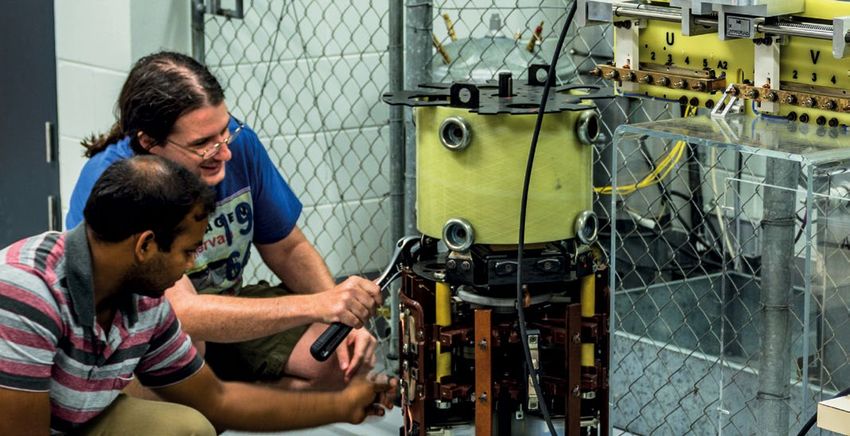
Dr Feifei Bai                                      Dr Yi Cui
             B.Eng., PhD, MIEEE                                 B.Eng., M.Eng.,PhD, MIEEE
             Advance Queensland Research Fellow                 Research Fellow
             Feifei’s research interests include solar PV       Yi’s research interests include wide-area
             integration to the power grid, PMU applications    monitoring and control, data analytics and
             in distribution power networks, data-driven        machine learning of distribution networks,
             power system modelling and inter-area              condition assessment and fault diagnosis of
             oscillation damping control.                       power transformers.

             Dr Mollah Rezaul Alam                              Dr Jalil Yaghoobi
             B.Econ, B.Econ Hons,.PhD                           B.Eng., M.Eng.,PhD, MIEEE
             Postdoctoral Research Fellow                       Postdoctoral Research Fellow
             Mollah’s research interests include                Jalil’s research interests include power quality
             characterization of power quality events,          of LV networks, power electronics, renewable
             machine learning, pattern recognition,             energy integration in power systems, and
             fault detection, classification and analysis       power system voltage stability.
             considering the impacts of distributed energy
             resources and dynamic loads.

             Dr Lakshitha Naranpanawe                           Dr Hansika Rathnayake
             BSc Eng., PhD, MIEEE, MIET                         BSc Eng., PhD, MIEEE
             Postdoctoral Research Fellow                       Postdoctoral Research Fellow
             Lakshitha’s research interests include condition   Hansika’s research interests include control
             monitoring of power transformers, generators,      of active front end systems in renewable
             bare overhead conductors and other power           energy systems, electric machine drives,
             system assert, developing vibro-acoustic           electromagnetic Interfaces (EMI) and power
             condition monitoring techniques and applying       quality research.
             FEM-based simulation techniques in condition
             monitoring of power system equipment.

Research Staff
             Friska (Dendi) Pambudi                             Gian-Marco Morosini
             Friska is working as a software developer for      Gian-Marco is part of the research team
             the Australian Renewable Energy Agency             working on the Solar Enablement Initiative.
             (ARENA)-funded Solar Enablement Initiative         The focus of his work is network development
             (SEI) project.                                     of and modelling for the State Estimation (SE)
                                                                Algorithm at the core of the project as well as
                                                                analysis of SE results.

             Mr Ray Holzheimer                                  Andre Gebers
             B.Eng, RPEQ
             Manager - Australasian Transformer Centre          Andre is working as a systems developer for
             Ray has over 40 years experience in the            the Australian Renewable Energy Agency
             electrical industry, including power transformer   (ARENA)-funded Solar Enablement Initiative
             design, manufacture and test, mining, water        (SEI) project. His interests lie in software
             resources, transmission substation design,         development and Unix server administration.
             procurement and maintenance.

                                                                                                               3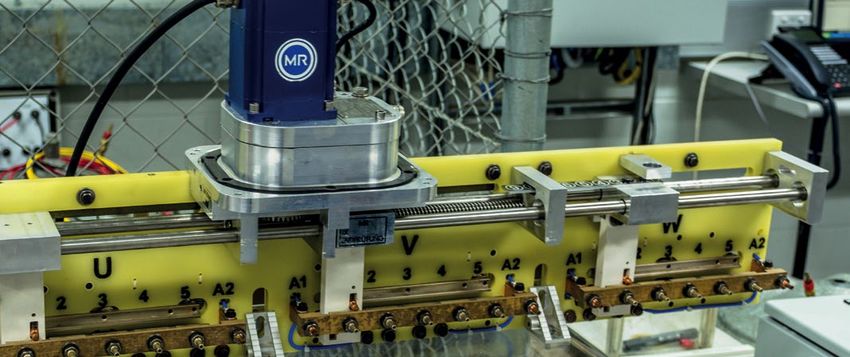
Welcome
Power and Energy Systems research activities are centred          Solar Research at UQ
on dynamic analysis of renewable energy integration and
                                                                  University of Queensland has the largest university solar PV
condition assessment of critical electricity infrastructure.
                                                                  facilities in the world. In 2011 UQ has installed 1.3 MW rooftop
Power Systems are generally large, non-linear, interconnected
                                                                  PV stations across several buildings at the Universities
and complex. There is a significant need for an improvement
                                                                  St Lucia campus with more than 5000 polycrystalline silicon
in the planning and operation of such power systems, in
                                                                  solar panels, covering a space equivalent to one-and-a-
particular with high proliferation of distributed renewable
                                                                  half rugby fields. Since then, UQ St. Lucia campus Solar PV
energy sources in the Australian national electricity grid. The
                                                                  installations have significantly grown in many other building
School’s research is specifically directed at the analysis and
                                                                  roofs and totaled around 2.5 MW.
prediction of the dynamic behaviour of power systems for
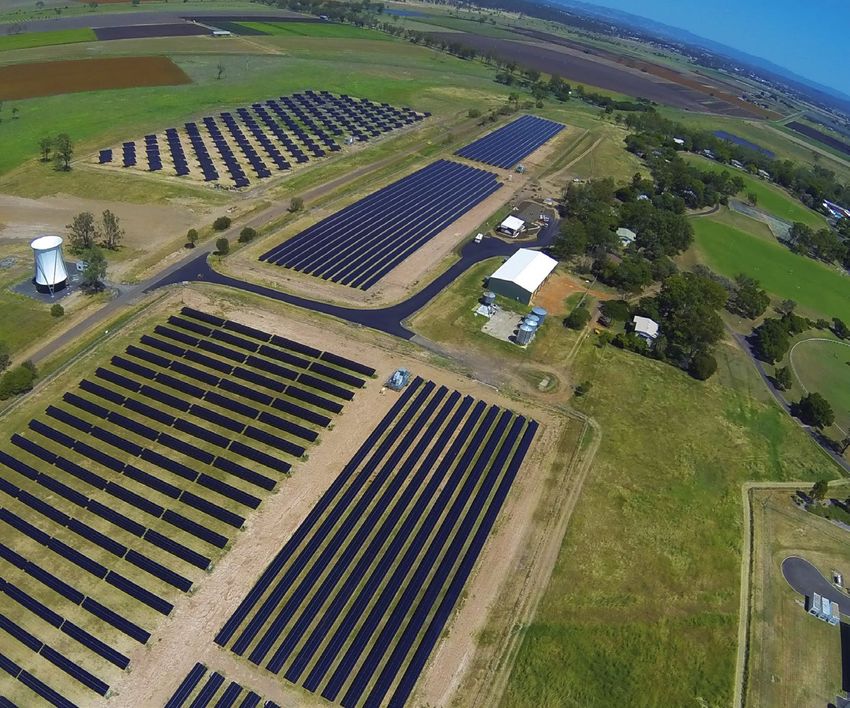
reliable and secure operations. Amongst the many options          In 2015 UQ has installed 3.3 MW Solar Research Facility
in this area, power system stability analysis tools and power     comprises more than 37,000 thin-film photovoltaic panels,
systems control methodologies are the most important foci.        mounted on 10ha former airstrip at the university’s Gatton
                                                                  Campus. This 3.3MW system comprises of 5 arrays:- a dual
A significant proportion of the electricity infrastructure in
                                                                  tracking array, a single axis tracking array and 3 fixed tilt panel
Australia and other countries is aged and requires special
                                                                  arrays. Multiple PV mounting technologies including fixed-tilt,
attention. The focus is thus industry orientated research
                                                                  single-axis and dual-axis tracker technologies are in operation
and aims to deliver next generation condition assessment
                                                                  side-by-side in the same field to investigate their performance.
techniques that comprise accurate modelling and
                                                                  PV panels mounted on a single axis tilts from east to west
interpretative tools for power transformers, underground
                                                                  throughout the day to maximise energy output. Dual Axis
cables and other plant assets. Australasian Transformer
                                                                  Tracking Array trackers are capable of a 340° slewing motion
Innovation Centre has been established within the School of
                                                                  and 180° tilt that allow the panels to directly face the sun at all
Information Technology and Electrical Engineering, which
                                                                  times and thus, maximize output power. A 600 kW, 760 kWh
focuses on the asset management of power transformers
                                                                  Battery Energy Storage System (BESS) has been integrated
in the modern electrical network. In this center, we apply
                                                                  with the Gatton Solar Research Facility.
innovative research and industry experience together
with professional training to help members operate their          The University of Queensland will become the first major
transformer fleets sustainably and efficiently. Researchers       university in the world to offset 100 per cent of its electricity
in this area includes industry experts in transformer asset       usage through its own renewable energy assets. A 64
management, as well as researchers and educators from             megawatt (MW) solar farm will be in operation in 2020, which
leading Australian universities.                                  is just outside of Warwick, on Queensland’s Southern Downs.
                                                                  This PV Plant will be connected to the grid and will offset
Another major research focus area for the group is to study
                                                                  UQ’s carbon footprint, which will make UQ a carbon neutral
the visibility of low voltage and medium voltage electricity
                                                                  energy user.
distribution network that determines the operational state of
the network and forms the basis for automated management          These solar plant facilities along with the state of the art
of the network using the state estimation algorithm. This         renewable energy laboratory are providing a unique research
algorithm would provide a platform for automated network          opportunity to Power and Energy Systems researchers to
management applications including the coordination of             understand the challenges and opportunities of solar PV
solar PV generation, demand side management, energy               integration to the electricity grid. Our group is working with
storage, electric vehicles and network loading during critical    local distribution utilities in Australia to solve some of the
times to help reduce the need for capital-intensive network       major integration challenges.
augmentations and associated electricity price increases.
The Power & Energy Systems Research group is actively             Industry 4.0 Energy Test Lab @ UQ
involved with industry oriented challenges and enjoys
                                                                  Following the Prime Minister’s Industry 4.0 Taskforce
strong industry collaboration in research both nationally
                                                                  adoption of the ‘Industry 4.0 Testlabs strategic initiative’,
and internationally. The area is also a major partner of the
                                                                  in cooperation with the German Platform Industry 4.0, six
Australian Power Institute and Energy Networks Australia.
                                                                  Universities around Australia have been selected for the
Another major research focus area for the group is in Power       National Industry 4.0 Testlab pilot program. UQ is building an
Electronics and Control, where a number of specific research      Energy testlab focusing on Green and Smart Energy – An IoT
topics are being investigated, which includes grid connected      enabled digital manifestation of the entire electricity network
inverters for renewable energy systems, high efficient energy     portfolio for energy management, power system analysis,
conversion systems (Motor Drive Systems), grid robustness         and sector specific cyber security. The testlab will serve as
and power quality of future grids (0 – 2 kHz and 2 – 150 kHz),    a point of engagement between SMEs and Researchers to
and impact of high penetration of grid-connected power            enable knowledge transfer and collaboration to facilitate
electronics on distribution networks.                             in-depth power and energy system research, research cyber
                                                                  resilience, and create engaging and deeply realistic teaching
The Power & Energy Systems Research group is actively
                                                                  and learning experience for students. The testlab will integrate
involved with industry oriented challenges and enjoys
                                                                  key technologies and expertise of electrical and mechanical
strong industry collaboration in research both nationally
                                                                  engineering, big data, cyber security, design innovation,
and internationally. The area is also a major partner of the
                                                                  human-computer interaction, software programming,
Australian Power Institute and Energy networks Australia.
                                                                  economics and policy design to UQ’s current strong focus in
                                                                  multi-disciplinary energy research.
4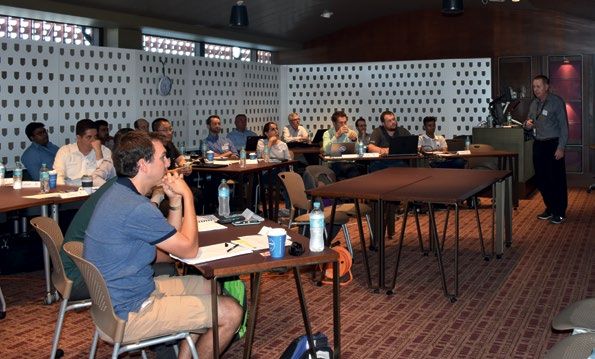
Research and Discovery
Power and Energy Systems research has long been a strength of The University of Queensland.

The strong research output has continued in recent years and        integration to the transmission and distribution grid. This
the productiveness of the group’s research activities can be        includes power system analysis tools for solar PV, wind and
attributed to the close links and generous support provided by      other renewable energy integration into the national electricity.
the group’s industrial and academic research partners.
                                                                    Significant research is in progress to address the challenges of
The group has two primary areas of focus in research. A             rooftop distributed solar PV and commercial/industrial solar PV
number of academics are working on condition monitoring of          integration to the distribution low voltage grid. The group has
ageing assets of electricity industry. This includes transformer,   obtained significant financial support from both the Australian
cables, overhead transmission/distribution conductors and           Research Council and national and international research
other assets. The other is focused on renewable energy              partners.

Preventing transformer failures caused by silver                    Sustainable operation of transformers with better
sulphide (2017–2020)                                                understanding of technical and economic constraints
This project investigates mechanisms leading to the loss of         (ARC Linkage Project 2014–2019)
effective silver surface protection and the corrosion of OLTC       This project aims to develop new methodologies that industry
silver contacts. The primary objectives of the project are:         can apply to maximize the usage of transformers. Through
• Investigate how to measure the barrier formed by a                the innovative use of fiber optic sensing, new leakage current
  passivator on the surface of a metal and why this chemical        detection methods and use of advanced pattern recognition
  attack occurs, the factors determining its rate, and how to       techniques, coupled with the research to understand the
  limit the rate of degradation.                                    ageing processes of biodegradable oils, transformer lifespan
• Perform an investigation to understand why passivator is          can be accurately determined. The expected outcomes are
  not effective in preventing damage to silver contact and          new monitoring techniques and improved life-cycle costing for
  why certain chemical components of mineral oil attack             various transformers.
  the silver.                                                       Researchers
• Produce a technique that the utilities can use to determine
                                                                    •		Professor Tapan Saha
  OLTCs which are at high risk of silver sulphide, and failure.
                                                                    • Dr Chandima Ekanayake
Researchers                                                         • Dr Dan Martin
•   Professor Tapan Saha                                            • Dr Hui Ma
•   Dr Dan Martin                                                   • Mr Md Abdul Hafeez Ansari
•   Dr Hui Ma                                                       • Dr Lakshitha Wanisekara Naranpanawe
•   Mr Sameera Samarasinghe                                         • Dr Junhyuck Seo

Industry Partner                                                    Industry Partners
• Energy Networks Association Limited                               •   Powerlink Queensland
                                                                    •   TransGrid
                                                                    •   AusGrid
                                                                    •   Ergon Energy
                                                                    •   Wilson Transformer Company

                                                                                                                                   5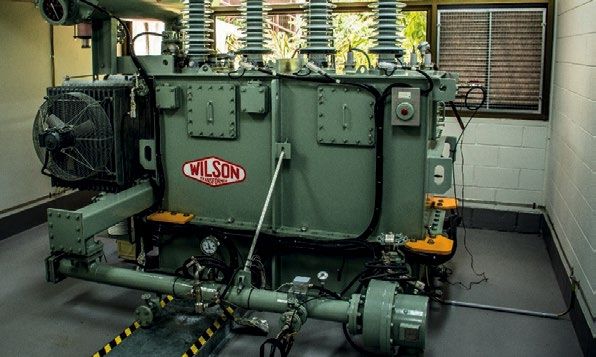
UQ Energy TESTLAB                                                      Power Quality Monitoring of Grids with High
UQ, as part of a new national $5 million pilot program, is             Penetration of Power Converters, ARC Linkage Project
building an Industry 4.0 Energy Testlab led by Professor               (2018-2020)
Tapan Saha of the Power and Energy Systems Group.                      The project aims to monitor and analyse power quality
The lab, which will be completed by the end of 2019, will              of grids within the frequency ranges of 0-2 kHz (existing
provide a physical space for businesses and researchers to trial,      regulations) and 2-150 kHz (new regulations). Power quality
explore and showcase Industry 4.0 technologies and                     of grids deteriorate due to high penetrations of inverter based
processes in the energy and cyber-physical security domain,            renewable energy systems. To estimate power quality of grids,
enable educational institutions and industry, particularly             a multi-domain simulation model based on grid configurations
small-to-medium enterprises, to collaborate, and develop skills        and operating conditions will be developed in this project.
needed to take full advantage of opportunities presented by            Developed methodologies will assist network service providers
Industry 4.0. Through the Industry 4.0, a grant of more than           to better analyse harmonics and resonances within low and
$500 miilion in software from Siemens will give University of          high voltage power systems and further support them to
Queendland students and researchers the access to                      develop new planning guidelines and regulations to address
advanced technology, building their skills in digital and              power quality of grid connected solar inverters and
data-driven industries.                                                wind turbines.
                                                                       Researchers
                                                                       •   Professor Firuz Zare
                                                                       •   Professor Tapan Saha
                                                                       •   Dr Daniel Eghbal
                                                                       •   Mr Tayyab Rahman
                                                                       Industry Partners
                                                                       • Energy Queensland
                                                                       • Powerlink Queensland

      ARC Future Fellow

     Addressing Challenges for the Future Grids – Harmonics Standardization, ARC Future Fellowships (2016-2020)
     Due to the global demand for energy saving and reduction         quality issues of the residential, commercial and industrial
     of greenhouse gas emissions, utilization of renewable            distribution networks in Australia b) investigate and develop
     energy sources and efficient loads based on power                novel techniques to improve power quality and reliability
     electronics technology is increased in electricity networks.     of the grids c) develop harmonics emission and immunity
     The negative aspects of this technology are very complex         levels and modify the Australian standards accordingly.
     and not well known which affect reliability and robustness
     of the grids. The main aims of this project are to: a) develop   Researcher
     advanced tools for a better understanding of power               • Professor Firuz Zare

6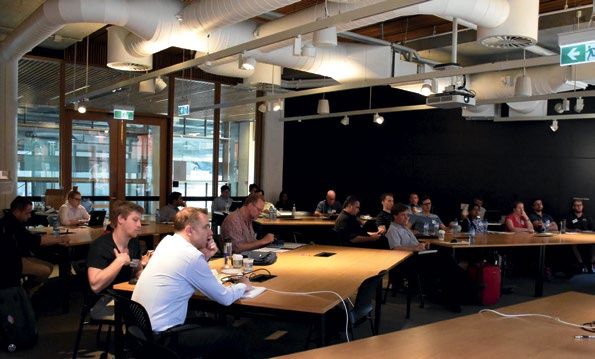
High-precision Condition Monitoring of Critical                          Enabling high photovoltaic penetration in power
Equipment in Modern Distribution Networks                                distribution networks (2018-2020)
(Advance Queensland Industry Research Fellow Project                     The rapid uptake of residential solar systems has resulted in
2019-2021)                                                               extensive voltage management issues for power distribution
This project aims to provide a cost-effective way to monitor             grids. This project aims to develop a novel hybrid control
and predict equipment conditions by leveraging big                       method for network voltage regulation with high photovoltaic
data measured via partner’s high-precision Distribution                  penetration. Without such technology, the further integration
Phasor Measurement Units (D-PMUs). Using laboratory                      of solar photovoltaic into the power grid will become
experimentation and advanced machine learning techniques                 increasingly difficult. The outcome of this project will enable
to extract signatures of equipment conditions, the project will          power utilities to cost-effectively regulate network voltage and
provide an online early-warning system to prevent impending              ultimately remove barriers for future photovoltaic deployment.
failures. The outcome will deliver an innovative condition               This will deliver significant economic benefits for both the
monitoring tool, which will strengthen the reliability of                wider community and utility providers, along with substantial
Queensland distribution networks, reduce electricity cost and            environmental outcomes through increased use of sustainable
achieve Queensland’s 50% renewable energy target by 2030.                energy sources.
                                                                         This project greatly aligns with one of Australian Science and
Researchers
                                                                         Research Priorities – Energy, and will advance power industries
• Dr Feifei Bai                                                          towards a more sustainable and resilient future.
• Prof Tapan Kumar Saha
• Dr Ruifeng Yan                                                         Funding body
                                                                         • ARC DECRA Scheme
Industry Partners
• Noja Power                                                             Researcher
• Energy Queensland                                                      • Dr Ruifeng Yan (DECRA Fellow)

     Increasing Visibility of Distribution Networks to Maximise PV Penetration Levels, ARENA Funded (2017-2019)
     The Solar Enablement Initiative will provide improved           Industry Partners
     visibility and understanding of electricity network             •   Australian Renewable Energy Agency (ARENA)
     performance and avoid undue restrictions being placed on        •   Energy Networks Australia (ENA)
     the capacity of new Solar PV installations and their export     •   Australian Power Institute (API)
     into the Australian grid, thereby enabling an increase in the   •   Energex
     percentage of renewable energy connected to the grid            •   UnitedEnergy
     Researchers                                                     •   TasNetworks
                                                                     •   Springfield Land Corporation
     •   Dr Olav Krause
                                                                     •   Aurecon
     •   Friska (Dendi) Pambudi
     •   Andre Gebers
     •   Gian-Marco Morosini
     •   Ms Xiang Li

                                                                                                                                     7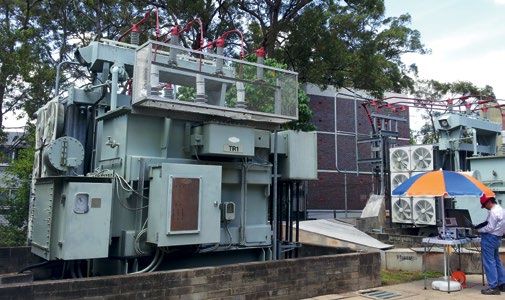
Peer-to-Peer Energy Trading Schemes for Sustainable                  Monitoring and management system for smart
Cities, Advance Queensland Research Fellowship                       distribution networks (ARC Linkage Project)
(2017-2020)                                                          (2013-2018)
This project aims to address these issues by empowering              This project aims to develop, implement and test an innovative
individual users to participate in energy trading with each          state estimation algorithm for monitoring low voltage
other and with the central energy supplier and increasing the        electricity distribution networks. The proposed system is an
flow of clean energy within the grid system. This fellowship         essential step to enable a range of smart network applications
aims to explore the technique of peer-to-peer (P2P) energy           to manage peak network loads and increasing amounts of solar
trading by managing storage devices at the different levels of       photovoltaic generation, and could defer or eliminate capital
the grid system and will propose scheduling mechanisms for           intensive network augmentations and associated customer
individual users with distributed energy resources. This project     electricity price increases.
will explore the potential of game theory, auction theory, and
data science in designing suitable energy trading schemes            Researchers
with practical impacts, and propose a P2P energy trading             • Dr Olav Krause
scheme across various heterogeneous energy entities, through         • Professor Tapan Saha
the novel integration of different approaches, which will also       • Professor Sebastian Lehnhoff
consider diverse practical constraints.
                                                                     Industry Partners
Researchers                                                          • Ergon Energy
• Dr Wayes Tushar                                                    • Energex
• Professor Tapan Saha

Industry Partner                                                     IMAGE ABOVE SOURCED FROM: Australian PV Institute (APVI) Solar Map,
                                                                     funded by the Australian Renewable Energy Agency, accessed from
• Redback Technologies                                               pv-map.apvi.org.au on 30 April 2018.

International Collaborators
• Princeton University, USA
• Singapore University of Technology and Design (SUTD),
  Singapore

     Conductor Condition Monitoring API-ENA Innovation Project (2018-2019)
     This project will investigate how to effectively monitor        smart sensor based condition monitoring technique will be
     and assess the condition of overhead conductor for an           tested on a representative type of conductor.
     improved asset management of conductors in Australian
     networks. A comprehensive study will be performed               Researchers
     to understand the conductor degradation mechanism               •   Professor Tapan Saha
     and parameters that affects each types of degradation           •   Dr Hui Ma
     mechanism with the focus on the root causes of Australian       •   Dr Lakshitha Naranpanawe
     conductor deterioration. A ‘health index’ method will be        •   Mr Colin Lee
     developed for conductor condition assessment improving          •   Mr Keith Callaghan
     the ability to predict the likelihood of conductor failure.
                                                                     Industry Partners
     A number of state-of-the-art conductor condition
     monitoring techniques will be evaluated for their suitability   • Energy Networks Australia (ENA)
     for Australian networks. With assistance from the industry      • API Partners
     partners, the ‘health index’ methodology and the new

8
Recently completed projects and
                                                                  their funding sources
                                                                  • Development of Smart Power Transformers
                                                                    with Intelligent Monitoring, Diagnostic and Life
                                                                    Management Systems (ARC Linkage Project)
                                                                  • Investigation of Stability and Power Quality Issues
                                                                    from the Wide Spread Photovoltaic Integration into
                                                                    Electricity Distribution Networks, (ARC Linkage
                                                                    Project)
Synchrophasor Measurement Data Applications                       • Queensland Geothermal Energy Centre of
for Distributed Energy Resource Connection and                      Excellence (Queensland Government)
Distribution System Management (ARENA Project)
                                                                  • Evaluation of the Impact of Demand Response
The aim of this project is to investigate and develop possible      Program on Transmission Network Planning
synchrophasor data applications to actively manage                  (TransGrid)
distribution networks and release more capacity for connecting
renewables. This project will study the impact of renewables on   • Optimum Location of FACTS Devices with
the distribution grid, investigate the benefit of Synchrophasor     Advanced Control Scheme for Improving
Measurement Data for renewable integration, and develop load        the Security of Complex Power Grid
and DER models.                                                     (ARC Linkage Project)

Researchers                                                       • Control Methodologies of Distributed Generation
                                                                    for Enhanced Network Stability and Control
•   Professor Tapan Saha
                                                                    (CSIRO Intelligent Grid Cluster Project)
•   Dr Ruifeng Yan
•   Mr David Amoateng                                             • Investigation of Key Factors Affecting Advanced
•   Mr Manikandan Padmanaban                                        Planning Tools for the Prevention of System-Wide
                                                                    Blackouts of Large Power Systems
Industry Partners                                                   (ARC Discovery project)
• Noja Power
                                                                  • Emergency Control of Power Systems
• Energy Queensland
                                                                    (ARC Discovery Project)
                                                                  • Condition Assessmentof Medium-Voltage
                                                                    XLPE-Insulated Cables Degraded by Water Treeing
                                                                    (ARC Linkage project)
                                                                  • Innovation in Power System Asset Management
                                                                    (UQ VC’s Strategic Fund)
                                                                  • Investigation of Demand Diversity and New
                                                                    Generation Entry into Electricity Market Simulation
                                                                    Tools (ARC Linkage Project)
                                                                  • The Polarisation Based Diagnostics of Power
                                                                    Transformers (ARC Linkage Project)
                                                                  • An Investigations of the Impacts of Increased
                                                                    Power Supply to the National Grid by Wind
                                                                    Generators on the Australian Electricity Industry
                                                                    (ARC Linkage Project)

                                                                                                                        9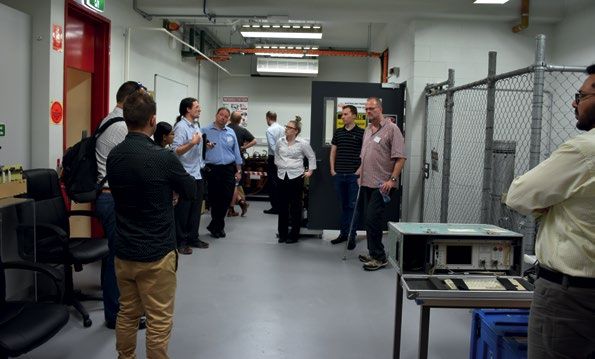
www.itee.uq.edu.au/tic

The Australasian Transformer
Innovation Centre
Australia’s Leading Transformer Research Centre:             Some examples of currently conducted R&D projects
Filling Australia’s critical need for Transformer            including:
Innovation and Education. Collaborative initiative by        • Optimizing network ratings for power transformers
Australia’s Transformer experts from research and              retrofilled with vegetable oil
industry. Over $1 million jointly committed and being        • Development of PD Analytic Tools for Ester Fluid
invested to establish the centre including:                    Filled Transformers
                                                             • Criteria for Retro filling Transformers with Ester Fluids
• Wilson Transformer Company donated natural ester           • Asset Management of Network Power Transformers in the
  oil filled research transformer                              Presence of High Penetrations of Solar and Wind Generation
• Dynamic Ratings state-of-the-art on-line condition
  monitoring system                                          The Centre houses:
• Reinhausen’s latest generation tap changers and            • Research-grade power transformer donated by
  education                                                    Wilson Transformer Company
• University of Queensland new Long Pocket                   • Sensory technology, provided by Dynamic Ratings
  Transformer Laboratory with state or the art
                                                             Other commercial grade equipment to carry out testing
  research equipment
                                                             and research include:
• Collaborative effort by UQ, QUT, UNSW
                                                             •   Omicron DIRANA (FDS and PDC combined)
  and Griffith researchers
                                                             •   Frequency response analysis equipment
                                                             •   Partial discharge monitoring
                                                             •   Ageing facilities
The research programme is designed to create innovations     •   Polarisation/depolarisation currents and return voltage
that meet the evolving needs of industry including:              measurement
• Decreasing the risk of transformer failure during normal   •   Frequency domain spectroscopy
  and contingency events                                     •   Vaisala water activity measurement probes
• Reducing maintenance costs and extending life with         •   Fibre optic equipment to measure temperature
  improved condition monitoring.                                 and water content of insulation
• Investigating improved operation, performance and risks    •   Thermal infrared camera for studying heating and
  with natural esters oil                                        temperature rise
• Increasing transformer utilisation and working
  transformers smarter
• Investigating effects of renewable generation
  on transformer life and cyclic rating

10
The Centre offers innovation and CPD programmes purpose
built for the industry’s future needs and delivered by acclaimed
transformer experts. The programmes bring a total focus
on best practice asset management and high performance.
Member organisations will reap the benefits of this focus
through reduced costs, increased asset performance, reliability
and asset management breakthroughs.
Basic transformer courses will include transformer theory and
applications, procurement, design, operation, maintenance
and condition monitoring techniques. Advanced courses
will include transformer ageing, failure analysis, specifying
for requirements, dynamic loading, and condition based
maintenance. Courses will be delivered by transformer experts
from universities, transformer manufacturers and transmission
and distribution companies.
In these 2 day intensive courses the delegates will be given
an overview on how to make the best use of their transformer
assets. The course has been set up to be delivered jointly by
industry and academic staff, where the delegates enjoy the
best of both worlds in course relevance, depth and structure.
In general, academic staff will discuss the fundamental
background to the various concepts while industry staff show
how to apply these concepts to real-life situations.
Some examples of delivered CPD courses including:
Power Transformer Testing – Cradle to Grave Power Transformer Mineral and Ester Oils
(1–2 July 2019) – Analysis and Management (11–12 February 2019)
– Transformer Testing Standards/ Factory Acceptance • Mineral Oils
Testing (FAT) – Implementing Life cycle Oriented Maintenance of
– Common FAT HV testing – How to perform and interpret transformer oils
the results – Getting the most from your oil laboratory provider
– Routine maintenance testing and diagnostic tests to find – Natural and Synthetic Esters
the faults – Retrofilling with esters
– Temperature rise testing and sound power tests – Sampling/testing oils in the field, laboratory testing,
– Detailed study of a range of offline common electrical interpreting the results
tests carried out on power transformers
Course was delivered by:
– Field Diagnostic testing
Chian Yaw (Nynas Singapore), Philippe Reboul (Nynas
Course was delivered by: Australia), Jayaram Baniya (Energy Q), Tony Tuong Ngo
Ray Holzheimer (UQ), Florian Predl (OMICRON), Joe Tusek ((Powerlink Queensland), Prof Tapan Saha (UQ), Ray
(Verico), Troy Petersen (Powerlink), Tim Macklin (Powerlink), Holzheimer (UQ), Dr Russell Martin (M&I Materials, UK), Antony
Chandima Ekanayake (UQ) Giacomin (TJIH2b)
11Some examples of delivered CPD courses continued:
Researchers
• Director: Professor Tapan Saha
• Deputy Director: Dr Chandima Ekanayake
Power Transformer HV Bushings – Design, Maintenance • Manager: Mr Ray Holzheimer
and Risk Mitigation (12–13 November 2018) • Dr Dan Martin
– HV Bushings Design • Dr Hui Ma
– Bushing testing in the field • Dr Chandima Ekanayake
• Dr David Allan
– Bushing failure statistics
• Dr Shawn Nielsen
– Mechanism of bushing failures
– How to detect bushing failures and carry out condition
assessment using off line techniques
– Implementing Life cycle Oriented Maintenance of
Bushings-Utility Experience
– How to detect bushing failures and asses the condition Power Transformer Tap Changers – Design,
using online techniques
Maintenance and Retrofit (27–28 June 2018)
– On line condition monitoring of bushings using double
reference method – Understand the basic principles of tap changers, including
oil, vacuum
– Implementing Life cycle Oriented Maintenance of
Bushings-Utility Experience – Learn the basic arrangement of regulating windings,
benefits and issues of oil and vacuum diverters
Course was delivered by a unique mix of nine industry and – Understand tap changer designs and applications,
academic experts: differences between diverter and selector type, Loading
Rob Milledge (ABB Australia), Joe Tusek (Verico), Dr. Dan capability
Martin (UQ), Prof. Tapan Saha (UQ), Dr. Hui Ma (UQ), Dr. Wenyu – Become familiar with OLTC maintenance for oil and
Guo (OMICRON), Mark Cotton (Ausnet), Brian D. Sparling vacuum types
(Dynamic Ratings), Bo Zou (Dynamic Ratings), Rafael Mattos – Witness live of diverter maintenance, steps to take for
(Reinhausen Australia), Mike Elms (Western Power), Carlos high diverter moisture content
Santos (Western Power), Ross Kempnich (Essential Energy). – Participate in a forum for OLTC fault investigation and
supply restoration
– Understand MR & ABB retrofit options where oil diverters
are replaced by vacuum
– Understand the benefits of dynamic resistance tests
– Be exposed to how some utilities are implementing life
cycle oriented maintenance of tap changers
– Moisture tolerance, Life extension
– Learn about OLTC failures due to silver sulphide formation
Course was delivered by:
Dr. Thomas Smolka (Reinhausen Australia), Anders Hakansson
(ABB Singapore), Rob Milledge (ABB Australia), Dr. Wenyu
Guo (OMICRON), Dr. Hui Ma (UQ), Dr. Dan Russell (Energy
Queensland), Mike Elms (Western Power), Ross Kempnich
(Essential Energy), Ray Holzheimer (TIC)
12
Contact: transformer@itee.uq.edu.auThe Australasian Transformer Innovation Centre members Industry Collaborations
(present & past)
Energy Queensland
Australian Energy Market Operator
(AEMO)
Powerlink Queensland
TransGrid
AusGrid
CS Energy
Stanwell Corporation
Ergon Energy
Energex
The Australian Power Institute
CIGRE Australia
Maschinenfabrik Reinhausen
TasNetworks
Nynasw
Weidmann
ActewAGL
Wilson Transformer Company
Aurecon
TRUenergy Pty Ltd
Vestas International Wind Technology
A/S
Hydro Tasmania
United Energy
ABB
Essential Energy
Maxivar
K-Bik Power Pty. Ltd.
Budin – Philipp Partners
Dynamic Ratings
Endeavour Energy
SA Power Networks
Siemens
University Collaborations
University of New South Wales, Sydney
Australia
QUT, Brisbane, Australia
Jadavpur University, India
IIT Kharagpur, India
IIT Bombay, India
Xi’an Jiaotong University, Xi’an, China
South West Jiao Tong University, China
Hunan University, China
TU Dortmund University, Germany
University of Texas at Austin, USA
AIT, Bangkok
University of Michigan, USA
Griffith University, Brisbane, Australia
SUTD, Singapore
University of Oxford, UK
Princeton University, USA
IIT Delhi
13Current Competitive Fellowships
ARC Future Fellow: Dr Firuz Zare
Addressing challenges for the future grids: and an efficient loads approach based on power
Harmonics standardisation. The main aim of electronics technology. However, this can affect
this project is to deliver appropriate frequency grid reliability and robustness. The project aims
standardisation to protect electricity grids and to develop advanced tools to better understand
support the use of renewable energy sources. the power quality issues of Australian residential,
Globally, there is no harmonic standardisation commercial and industrial distribution networks. It
within the frequency range of 2–150 kHz, which also aims to develop novel techniques to improve
can significantly affect the reliability of electricity power quality and reliability of the grids, and to
networks and smart grids. Electricity networks develop harmonics emission and immunity levels to
are increasingly using renewable energy sources modify the Australian standards accordingly.
ARC Discovery Early Career Researcher Award (DECRA) Fellow: Dr Ruifeng Yan
Present electricity supply models are based on scheduling mechanisms for individual users with
centralized and fossil-fuel-based supply, with very distributed energy resources. However, P2P trading
high cost and poor environmental sustainability. involves energy management across various
This project aims to address these issues by heterogeneous entities with different properties
empowering individual users to participate in and energy objectives. Hence, this project will
energy trading with each other and with the central explore the potential of game theory, auction
energy supplier, and increasing the flow of clean theory, and data science in designing suitable
energy within the grid system. This fellowship energy trading schemes with practical impacts,
closely works with Redback Operations Pty Ltd and propose a P2P energy trading scheme across
to explore the technique of peer-to-peer (P2P) various heterogeneous energy entities, through
energy trading by managing storage devices at the novel integration of different approaches, which
different levels of the grid system and will propose will also consider diverse practical constraints.
Advance Queensland Early Career Fellow: Dr Wayes Tushar
Enabling high photovoltaic penetration in power regulate network voltage and ultimately remove
distribution networks. This project aims to barriers for future photovoltaic deployment. This
develop a novel hybrid control method for power will deliver significant economic benefits for both
distribution grid network voltage regulation with the wider community and utility providers, along
high photovoltaic penetration. The outcome of this with substantial environmental outcomes through
project will enable power utilities to cost-effectively increased use of sustainable energy sources.
Advance Queensland Early Career Fellow: Dr Feifei Bai
With more solar photovoltaic integration NOJA Power high-precision Distribution Phasor
into distribution networks, there has been an Measurement Units. This project will provide an
acceleration in electrical equipment ageing. This online early-warning system to prevent impending
project aims to provide a cost-effective way failures. The outcome will deliver an innovative
to monitor and predict equipment conditions condition monitoring tool, which will strengthen
by leveraging big data measured via partner the reliability of Queensland distribution networks.
Honorary/Adjunct Professors Honorary/Adjunct Research Fellows
• Emeritus Professor Mat Darveniza • Dr Md Jan E Alam
• Professor Ian Hiskens • Dr Daniel Eghbal
• Dr David Allan • Dr Sebastian Lehnhoff
• Dr Ross Baldick • Dr Nadali Mahmoudi
• Dr David Birtwhistle • Dr Nahid-Al Masood
• Dr Deb Chattopadhyay • Dr Nilesh Modi
• Dr Richard Harris • Dr Guangning Wu
• Dr Christian Rehtanz
14Teaching and Learning
The Power and Energy Systems group is actively involved in teaching
in undergraduate and postgraduate engineering programs.
Coursework Scholarships
Academics contribute specialist courses in power systems and API Bursaries
broad power engineering areas of electrical engineering based The UQ Power and Energy Systems group is one of the founding
specialisations. university partners of the API’s Undergraduate Bursary Awards
ELEC3300 Energy Conversion & Utilisation Program. This is a collaborative program between the API,
ELEC4300 Power Systems Analysis universities and industry that has supported hundreds of
ELEC4302 Power Systems Protection outstanding power engineering undergraduates during their
ELEC4400 Power Electronics university course encouraging them to study and pursue
ELEC4320 Asset Management & Condition Monitoring subjects to pursue a career in the power engineering industry.
ELEC7309 Power System Planning and Reliability api.edu.au/bursary
ELEC7310 Electricity Market Operation and Security
ELEC7313 Renewable Energy Integration: Technologies to ES Cornwall Scholarships
Technical Challenges The UQ Power and Energy group is also proud to fund and
ELEC7051 Transformer Technology Design & Operation manage the ES Cornwall Memorial Scholarship, which for more
than 55 years has underpinned the early career development of
Further information can be obtained from
aspiring industry engineers though supporting and mentoring
www.itee.uq.edu.au/future-students
their overseas employment in the electric power industry.
Some recent winners of ES Cornwall Scholarships: $3,500 per month for up to 18 months.
• Christopher Du Plessis from AEMO escornwall.com.au
• Tara-Lee MacArthur from Ergon Energy
• Alexandra Price from Energex Engineers Australia Queensland Electrical Branch Medal
This is awarded annually to a UQ student with a medal and
$500 from the EESA. Recipients are assessed based on
GPA, involvement in Power Engineering courses and thesis
submission.
www.engineersaustralia.org.au
UQ Graduate School Postgraduate Scholarships for
Higher Degree Research
The UQ Graduate School offers a number of scholarship
opportunities that provide financial support for tuition fees,
living costs and travel to enable research candidates to
focus on their research and achieve the best results.
Further details about the scholarships can be viewed at
www.uq.edu.au/grad-school
UQ PhD and MPhil Scholarship information can be obtained
from the link graduate-school.uq.edu.au/scholarships
15National and International
Collaborations
The Power and Energy Systems research group has strong links with the local electricity industry and active research
collaborations with a number of national and international universities.
Photo courtesy of Redback Technologies Pty Ltd
Professional activities Redback Technologies
(IEEE, Engineers Australia & CIGRE) One of the UQ Power and Energy System group’s latest
The Power and Energy Systems group is an active contributor industry partner is Redback Technologies Pty Ltd, a new
to the world’s leading technical forums for the electric power Start-Up company that is developing and supplying innovative
industry. This includes: and intelligent inverters “with a difference” for household PV
systems. Redback System provides intelligent technology
• CIGRE, the world’s leading technical association for large that gives the power to store, monitor and manage home’s
electric power systems, covering 90 countries. solar energy. We have been working with Redback and other
• IEEE and IEEE Power & Energy Systems Society – with more Industry partners to Plan a Ground breaking development that
than 426,000 IEEE members in more than 160 countries will enable householders to compete with traditional higher
• Engineers Australia- national forum for the advancement of cost Supply-side solutions to power system Security needs
engineering and the professional development of members. and wholesale Markets. Our group is working with Redback
in a $4 million Advance Queensland Platform Technology
Professor Saha is an Australian CIGRE Panel member of A2 Program project that will lead to the development of a smart
Transformer and D1 Materials and Emerging Test Techniques. PES energy monitoring platform that will give customers the
research group academics regularly publish papers at the CIGRE ability to instantly analyse and control energy consumption.
biennial Paris Sessions. Dr. Olav Krause is a member of C6. Redback managing director Philip Livingston said the smart
The group is a strong supporter of the Queensland Chapter power monitoring platform would enable home owners and
of IEEE-PES with a number of members serving on the businesses to understand and control their energy usage and
Queensland Committee and many technical papers published will help networks to more efficiently manage the grid, allowing
at IEEE-PES international conferences. Professor Saha is the for increased penetration of renewables. The UQ research
current Chair of IEEE PEs Chapter and has served the IEEE team is working on the project in collaboration with industry
Queensland Section as Chair for two terms. partners including Redback Technologies, Energy Queensland
and Springfield City Group. UQ Power and Energy Systems
Dr Chandima Ekanayake is the current IEEE PES Qld SEction Group Leader Professor Tapan Saha said the platform would
Vice Chair and UQ Students Branch Counsellor. bring enormous benefit to customers managing their own
Group members are also active contributors to Engineers energy consumption. “This will help to increase penetration of
Australia. Professor Saha is the current Board Member of renewables in to the grid and tackle some of the key energy
Electrical College of Engineers Australia and has been serving challenges the industry is facing.”
the Queensland Electrical Branch for many years. He is also Researchers
an Editorial Board Member of AJEEE Journal published by • Professor Neil Horrocks
Engineers Australia. • Professor Tapan Saha
• Dr Ruifeng Yan
• Dr Rahul Sharma
• Dr Yi Cui
• 2 PhD students
16Photo courtesy of Powerlink Queensland
Photo courtesy of Powerlink Queensland
Transformers UQ Supporting the Australian Power Institute (API)
The power transformer condition monitoring group has The API is an Australian National Organisation, strongly
been supported by the Australasian Transformer Innovation supported by the Australian Power Industry and committed
Centre. The Centre is supported by many utilities, national and to working collaboratively with Australian Power Engineering
international manufacturers and universities. Current centre Universities to ensure that the Power industry has access to the
members include Wilson Transformer, The Australian Power required quantities of power engineering graduates with the
Institute, CIGRE Australia, Reinhausen, United Energy, Dynamic necessary engineering skills to meet industry’s needs now and
Ratings, SA Power Networks, Powerlink, TasNetworks, Essential into the future.
Energy, MAXIVAR, K-BIK Power, Energy Queensland, NYNAS,
The API, together with the University of Queensland and
WEIDMANN, ABB, Transmission & Distribution Publisher,
Powerlink Queensland, established the API/Powerlink
Budin-Phillipp Partners and ETEL Transformers. Current ARC
Australian Chair in Electricity Transmission at the University of
research projects are supported by utilities AusGrid, Energex,
Queensland, which ended in 2017.
Ergon Energy, Powerlink Queensland and TransGrid, and by the
Wilson Transformer Company. UQ’s Power Energy Systems group has been selected as one
of the most qualified and experienced universities in Australia
The group focusses on developing the technologies required by
to support API and the power industry in the development of
the industry to optimise the management of their transformer
research projects nominated by API and industry.
fleet. This is becoming even more important since the industry
is under pressure to reduce costs.
The recent successes of the group include: delivering software
to the utilities which estimate the life remaining of transformer
insulation (and therefore of the whole transformer), and
providing a holistic monitoring system which uses algorithms
developed from the research. So far, the group’s software
is currently in use with the utilities, where their feedback is
invaluable in determining future direction.
AURTRA : Power & Energy Systems Commercialisation
Based on 25 years of transformer research, some IPs were AURTRA was incorporated in 2016 and has built its IP
licenced to AURTRA, which is now commercialising their upon a foundation of technology from the University of
hardware and software technology for asset management Queensland
in the Power distribution industry.
More information can be obtained from www.aurtra.net.
17Facilities
The teaching and research in power and energy systems is supported by sophisticated laboratory facilities.
Renewable Energy Laboratory Power Systems & Power Quality Laboratory
The Power and Energy Systems group has developed a state The power system simulation laboratory has analytical
of the art renewable energy laboratory with funding from AGL software tools to simulate, plan, design and control complex
Solar Flagship Education Infrastructure Fund. interconnected power systems with state of the art solutions.
The lab is equipped with modern renewable energy research The analytical tools available at PSS-L can solve power system
facilities including: problems in wide range of time frames, from micro seconds to
steady state and study impact of renewable energy integration,
• Two Real Time Digital Simulator racks
Custom Power devices, etc. Some of the software tools
• Power Amplifiers
available at the PSS-L are listed below.
• Solar Emulator
• STATCOM Apart from the above tools, the powerful server located at
• Battery Storage the PSS-L carries a number of test power systems, both at
• Battery simulator transmission and distribution level typically used for research in
• Wind turbine control setup (With dSPACE) power and energy system research.
• Most commercial power systems analytical tools
• PSS/E
• DSAT tools
• PowerWorld
• DigSILENT Power Factory
• PSCAD/EMTDC
• SINCAL
Page 18Intelligent Plant Diagnostics Laboratory Machines Laboratory
A well-equipped insulation diagnostics laboratory, which is UQ has developed the Machines Laboratory as an online
very actively used for insulation degradation and over-stress laboratory –in which real laboratory experiments can
measurements. be accessed through the Internet using the MIT’s iLab
environment.
This lab includes a lightning impulse voltage generator,
single and multiple impulse current generators, 300kV AC This laboratory has a number of conventional laboratory
transformer system, Recovery Voltage and Polarisation / experiments (Transformer & AC circuits) and a number of online
Depolarisation current measurement system, frequency domain machines experiments (AC, DC and Synchronous machines) using
dielectric spectroscopy equipment with HV variable frequency iLabs, which can be shared across university or across the world.
power supply, Partial Discharge Measurement System, thermal
The iLabs vision is to share expensive equipment and
imaging camera and Frequency Response Analyser.
educational materials associated with lab experiments as
Intelligent Plant Diagnostic laboratory has a special accelerated broadly as possible within higher education and beyond.
ageing experimental facility at Long Pocket. This laboratory
This is the only online machines laboratory in the country and
is suitable for long term ageing experiments under controlled
is jointly funded by the Australian Power Institute and the
moisture and temperature for transformers and other
University of Queensland.
insulation materials.
Solar PV demonstration system
A PV demonstration setup consists of PV The PV demo system is used for teaching
array and troubleshooting system. The system and demonstrating the connections,
provides hands-on skills and troubleshooting operation and troubleshooting. Specially,
ability across the types of PV systems students or researchers can gain practical
commonly used such as standalone and grid- knowledge to get the further exposure in PV
connected. It is used for teaching connection, system.mal imaging camera and Frequency
operation, programming, and troubleshooting Response Analyser.
of AC/DC and grid-connected PV systems.
Intelligent Plant Diagnostic laboratory has
The PV array has capability of connecting PV
a special accelerated ageing experimental
panels in series and parallel.
facility at Long Pocket. This laboratory is
This system contains a mobile workstation, suitable for long term ageing experiments
component panels with breakers, combiner under controlled moisture and temperature
box, MPPT charge controller, lamps, for transformers and other insulation
batteries, meters, grid-connected inverter, materials.
a fault insertion system. The system can be
used to show the different effects (shading,
angle tracking, heating and cooling of
panels) on the PV power output.
19Professor Tapan Saha
Professor Tapan Saha receives Professor Tapan Saha: Current Editorial roles, keynote
IEEE Fellowship presentations and IEEE Distinguished Lectures:
Professor Tapan Saha has been • Editorial Board Member of the IEEE Transactions on Power
named a 2019 Fellow of the Institute Delivery
of Electrical and Electronics • Editorial Board Member of the IEEE Transactions on
Engineers (IEEE). Professor Saha Sustainable Energy
was the only person in Queensland • Associate Editor, Australian Journal of Electrical and
to receive the IEEE Fellowship Electronics Engineering
in 2019, which recognised his • Associate Editor, IEEE Transactions on Dielectric and Electric
contribution to the monitoring and Insulation
assessment of power transformers. • Associate Editor, International Journal of Emerging Electric
Prof Saha was delighted to see the highest recognition of his Power Systems, De Gruyter Publications
research impact and industry contribution from the largest
• Editorial Board, International Transactions on Electrical
and most prestigious professional organisation in his area of
Energy Systems, John Wiley & Sons, Ltd.
research.
Professor Saha has been a Professor of Electrical Engineering Keynote Presentations and Distinguished Lectures:
since 2005 and has published more than 500 papers in journals • 2018 10th International Conference on Electrical and
and peer reviewed conferences. “I have been very fortunate to Computer Engineering (ICECE), BUET Dhaka Bangladesh:
work with many bright minds including my current and past Keynote Speech
HDR students and more than 20 Post-Doctoral fellows. “In • International Conference on Energy and Power Engineering
reality, this achievement has only been possible due to their (ICEPE) 2019, BRAC University, March 2019, Plenary Session
combined contributions in my academic career” Prof Saha said. speaker
Professor Saha is recognised as an international expert in • IEEE PES Innovative Smart Grid Technologies (ISGT) Asia
condition monitoring of transformers and is well known 2019, Chengdu, China May 2019: Keynote Speaker
internationally by practicing utility engineers, manufacturers IEEE Distinguished Lectures:
and in academia. In recent years, he has further diversified
• IEEE PES Bangladesh Chapter: Ahsanullah University of
his research into the challenges of solar PV integration to
Engineering and Technology, Dhaka, December 2018
electricity grids. “UQ has provided me an outstanding teaching
and research environment and support, where I have been able • IEEE PES Bangladesh Chapter: BRAC University, Dhaka
to build the largest and strongest power and energy systems Bangladesh, December 2018
research group in the country,” he said. • IEEE PES Malaysia Chapter April 2019
• University of Malaya April 2019
“As a Fellow, I hope to continue providing excellent teaching
• University of Melbourne July 2019
and research in electrical engineering, in particular tackle the
challenging issues of renewable energy integration to the
electricity grid and ageing assets,” he said.
Snapshot of Professor Tapan Saha’s activities in the last year
1. Attended IEEE PRSGM 2018 at Portland and delivered. 7. Visited Beijing, China to deliver one keynote and one
2. Visited UCSI University in Malaysia to attend their Beijing Jiao Tong special session lectures at an international
graduation ceremony as a distinguished guest. conference. Also visited the Tsinghua University and
3. Visited IIT Delhi as a UQ delegate to launch the joint PhD delivered an IEEE PES Distinguished lecture at the
program between UQ and IIT Delhi and establishment of department of electrical engineering.
IITDAR. Also delivered a seminar on the first inaugural 8. Visited University of Malaya to review the department of
energy workshop. electrical engineering teaching:curriculum, research and
4. Visited James Cook University of North Queensland to external engagement. Also delivered a research seminar
deliver Peter Arlett memorial lecture. at the department of electrical engineering, university of
5. Visited Dhaka Bangladesh and delivered a keynote/ Malaya for HDR students and staff.
plenary lecture in ICECE 2018. Also delivered Two IEEE PES Delivered an IEEE PES Distinguished lecture at the IEEE
Distinguished Lectures at BRAC university and Ahsanullah Malaysia Chapter of PES.
University of science and technology. 9. Delivered a keynote speech at the Innovative Smart Grid
6. Visited Dhaka Bangladesh in March 2019 to attend ICEPE 2019 Technologies Asia 2019 Conference at Chengdu, China
and organised two plenary sessions and chaired 2 sessions. which was attended by more than 800 delegates.
10. Visited Southwest Jiaotong University (SWJTU) and delivered
a research seminar to 100+ HDR students and staff.
20You can also read


