Atlantic Energy Gateway Transmission Modeling Study Report - A Study of Transmission Upgrade Options For Atlantic Canadian Utilities
←
→
Page content transcription
If your browser does not render page correctly, please read the page content below
Atlantic Energy Gateway
Transmission Modeling Study
           Report

   A Study of Transmission Upgrade Options
                     For
          Atlantic Canadian Utilities

                 March 30, 2012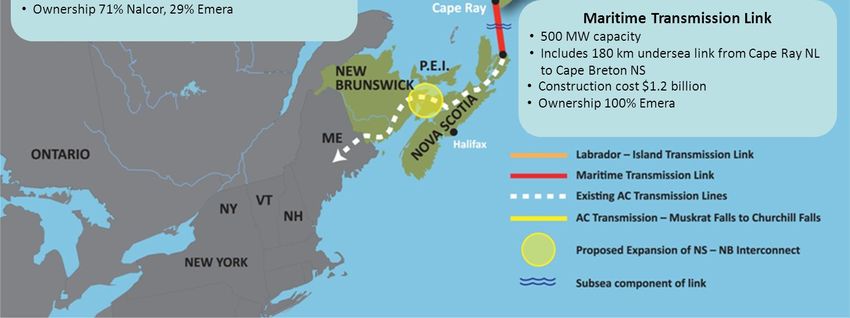
AEG Transmission Modeling Study

                              Table of Contents

                                                                     Page
1.   Executive Summary                                                 1

2.   Background                                                         2

3.   Transmission Study Approach                                        4

4.   Existing Transmission Capacity                                     5

5.   Transmission Upgrades                                              6

6.   Discussion of Results                                              7

Appendix 1    Preliminary List of AEG Regional Transmission Upgrade Options

Appendix 2    Summary of Existing Firm and Non-Firm Transmission Capacity
              of New Brunswick Interfaces With Nova Scotia and PEI

Appendix 3    Scope of Transmission Studies to Accommodate the Proposed
              AEG Transfer Levels Via NB Interfaces with its Atlantic
              Neighbours 2020 to 2040

Appendix 4    Labrador – Island Link and Maritime Link Description

                   AEG Transmission Planning Committee

                 Organization                                  Member
New Brunswick System Operator                      Alden Briggs
                                                   Scott Brown
New Brunswick Power Transmission Corporation       Randy MacDonald
Maritime Electric Company Limited                  John Cunniffe
Nova Scotia Power Incorporated                     Tim Leopold
Newfoundland & Labrador Hydro                      Peter Thomas
Government of Nova Scotia                          Scott McCoombs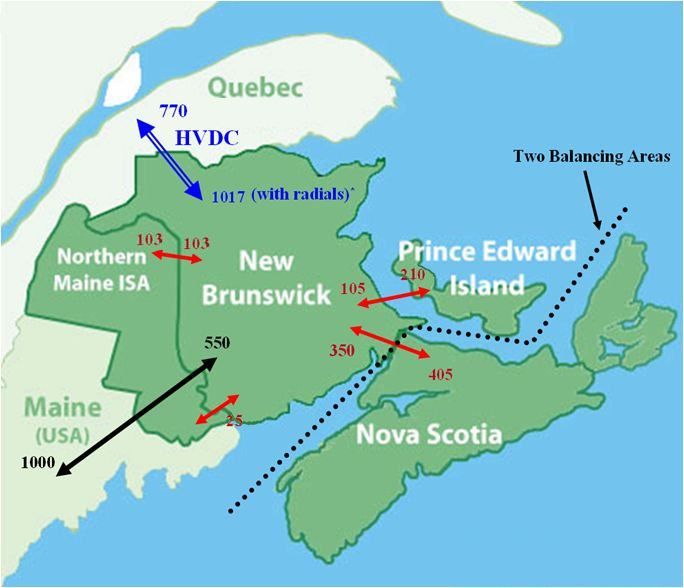
AEG Transmission Modeling Study

       Atlantic Energy Gateway Transmission
       Modeling Study Report
       A Study of Transmission Upgrade Options
       for Atlantic Canadian Utilities
        1. Executive Summary

The Atlantic Energy Gateway (AEG) project is a regional initiative of the federal
government, the Atlantic provincial governments, electric utilities of Atlantic Canada
and the system operators in New Brunswick and Nova Scotia. The objective of the
AEG project is to contribute to the development of Atlantic Canada's clean energy
resources by identifying the opportunities and assisting in evaluating the advantages
of the region’s substantial and diversified renewable energy potential for wind, tidal,
solar, biomass/biofuels, geothermal and hydro.
At the heart of the AEG project is a resource assessment of the Atlantic Canada
integrated regional power supply systems through the development of a representative
model of the electricity system. That model was used to evaluate the current
operation of the system as well as develop scenarios that integrate increasing amounts
of renewable and non-emitting energy sources for domestic and export loads.
A tighter integration of the Atlantic Canada electrical system will lead to increased
opportunities for inter-provincial energy trade. These opportunities are enhanced by
implementing a number of key transmission upgrade options within and between
provinces, not just facilities at the borders. Adequate transmission capacity is a key
element to generation expansion. Lack of transmission capacity leads to congestion
and results in sub-optimal generation dispatch. This results in increased electricity
production costs through curtailment of low cost generation and dispatch of more
costly alternatives. The addition of transmission capacity will reduce marginal
electricity costs across the region.
Various potentially desirable transmission upgrade options were identified by the
Transmission Planning Committee. Studies performed using the integrated resource
model, under the direction of the AEG Resource Development Modeling group,
identified the key interfaces as those between New Brunswick and Nova Scotia, and
New Brunswick and Prince Edward Island. These interfaces have been previously
studied at a high level to determine their approximate transfer capabilities and the
costs to upgrade transmission facilities into this area. This information was provided
to the AEG Resource Development Modeling group.
As the resource development plan becomes known and the Atlantic Canada electricity
system evolves, more comprehensive transmission studies will be required to assess
the impact and define the transmission upgrades necessary to implement the plan.

                                                                             Page 1
AEG Transmission Modeling Study
2. Background
The objective of the Atlantic Energy Gateway (AEG) project is to contribute to the
development of Atlantic Canada's clean energy resources by identifying the
opportunities, and assisting in evaluating the advantages of the region’s substantial
and diversified renewable energy potential for wind, tidal, solar, biomass/biofuels,
geothermal and hydro.
The AEG project is a collaboration of the four Atlantic Canada provincial energy
departments, electric utilities representing each Atlantic Canada province, Atlantic
Canada Opportunities Agency and Natural Resources Canada. The work includes
planning for generation, transmission, and system operation, as well as electricity
markets, supply chain development, research and development and regulatory
improvements. The AEG project is an initiative sponsored by the government of
Canada to encourage the development of additional clean and renewable energy
supplies in Atlantic Canada.
A major component of the AEG work plan is the undertaking of a series of studies
designed to provide a plan for the future development of the electrical system. This
plan is widely known as an Integrated Resource Plan (IRP). The IRP is a resource
assessment of the Atlantic Canada integrated regional power supply systems through
the development of a representative model of the electricity system. The model is
used to evaluate the current operation of the system as well as develop scenarios that
integrate increasing amounts of generation, including renewable and non-emitting
energy sources, for supply to domestic and export loads.
A tighter integration of the Atlantic Canada electrical system will lead to increased
opportunities for inter-provincial energy trade. These opportunities may be enhanced
by implementing a number of key transmission upgrade options within and between
provinces. Adequate transmission capacity is a key element to generation expansion.
The purpose of the Transmission Modeling Study, under the direction of the
Transmission Planning Committee, is to quantify the increased inter-provincial
capacity that would be achieved by a number of key transmission upgrade options
within Atlantic Canada. The study also provides estimates of the cost of each of the
options.
The results of the study are anticipated to provide information that can be used by
Atlantic Canadian governments and utilities in developing and executing energy
related policies that will be based on region-wide analyses. The study will develop a
greater understanding of the electricity system costs and benefits to guide the policy
decision making process with the best information available.
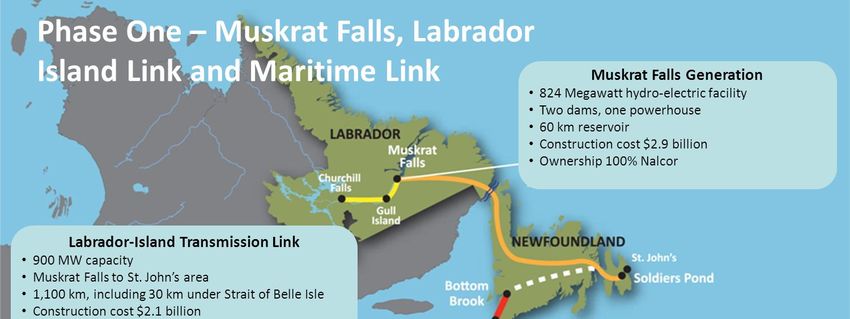
For the purposes of the IRP, Phase I of the Lower Churchill Project is deemed to be in
the base case. This consists of the Muskrat Falls generation facility, the Labrador-
Island Transmission Link and the Maritime Transmission Link (Figure 1). This
project delivers 500 MW via the Maritime Transmission Link to Cape Breton.
Page 2AEG Transmission Modeling Study
As a result of the Lower Churchill Project being in the base case, the focus of the
Transmission Modeling Study is on the transmission capability in and between the
Maritime Provinces. The Maritime Provinces transmission system must be capable of
accommodating the 500 MW of injection into Cape Breton as well as accommodating
evolving generation and load patterns in the Maritimes. The Transmission Modeling
Study did not include analysis of any of the transmission which forms part of the
Muskrat Falls, Labrador-Island Transmission Link or the Maritime Transmission
Link.
Figure 1: Phase One – Muskrat Falls, Labrador-Island Link and Maritime Link
Page 3AEG Transmission Modeling Study
3. Transmission Study Approach
A Transmission Planning Committee representing governments and utilities of
Atlantic Canadian provinces was formed to coordinate the efforts of the AEG
transmission study. This Transmission Planning Committee was chaired by the New
Brunswick System Operator (NBSO).
In Phase I of the transmission study, various potentially desirable transmission
upgrade options were identified by the Transmission Planning Committee. This list is
provided in Appendix 1. These transmission upgrade options were to be studied at a
high level to determine their approximate transfer capabilities and associated cost.
These transfer capabilities and costs were then to feed into the associated IRP study.
In Phase II of the transmission study, comprehensive transmission studies were to be
preformed on the viable transmission options flowing from the IRP.
The AEG Resource Development Modeling group contracted with Ventyx to do the
resource study. Ventyx’s task was to develop a system model to be used in a series of
production cost simulations using their planning software (Strategist). These studies
were completed under the direction of the AEG Resource Development Modeling
group.
Initially, Ventyx studied two scenarios. The first scenario, the ‘Expanded
Transmission Capability’ option, assumed that transmission capacity was upgraded to
achieve higher interface capabilities as follows:
NB ← NS = 800 MW
NB → NS = 800 MW
NB ← PEI = 350 MW
NB → PEI = 350 MW
The higher interface capabilities between NB, NS and PEI do not exist today. To
achieve these levels, additional transmission infrastructure is required. These
Transmission Upgrades are discussed in Section 5.
The second scenario, the ‘Limited Transmission Capability’ option, assumed that
transmission capacity is as it exists today. Further detail of existing transmission
interface capacity is included in section 4 and in Appendix 2.
The production modeling process identified the key interfaces as those between New
Brunswick and Nova Scotia and New Brunswick and Prince Edward Island. These
interfaces have been previously studied at a high level to determine their approximate
transfer capabilities and associated cost. This information was provided to the AEG
Resource Development Modeling group. At this time, it is unknown if there is a
requirement to study any of the other transmission projects identified in Appendix 1.
Page 4AEG Transmission Modeling Study
4. Existing Transmission Capacity
The Total Transfer Capability (TTC) of an interface is a best engineering estimate of
the total amount of electric power, measured in MW, which can be transferred over
an interface in a reliable manner for a given timeframe. The TTC of an interface is
determined by performing power flow and stability studies under seasonal system
conditions. Note that the TTC and is a combination of firm and non-firm
transactions. Further details of the methodology for calculating transmission capacity
can be seen in Attachment C of the NBSO Open Access Transmission Tariff.
The existing TTC between regions as currently posted on the NBSO OASIS are
shown on the map below (Figure 2). Further discussion is attached as Appendix 2
titled “Summary of Existing Firm and Non-Firm Transmission Capacity of New
Brunswick Interfaces with Nova Scotia and PEI”. Note that there are many factors to
be considered when determining the capability of the transmission system.
Figure 2: Existing Interface Total Transmission Capabilities (MW)
Note: The NB→NS flow is limited to 300 MW under normal conditions. This is due
to an NS System Operating Limit put in place to avoid unacceptable amounts
of under frequency load shedding in NS for loss of the interface.
Page 5AEG Transmission Modeling Study
5. Transmission Upgrades
The production modeling process identified the key interfaces as being those
between:
1. New Brunswick and Nova Scotia, and
2. New Brunswick and Prince Edward Island
These interfaces have been previously studied at a high level to determine their
approximate transfer capabilities and associated cost. A summary of the findings
from these previous studies follow.
The New Brunswick-Nova Scotia Interface
The NB-NS interface was studied by NB Power and NS Power in 2010. The study
was prompted by the desire to investigate the options to increase the total transfer
capabilities between NB and NS. The study team examined the options necessary
to expand the 345 kV transmission system between the provinces. This study
included both analysis of transmission capacity and capital cost for proposed
infrastructure additions. The transmission reinforcements recommended in this
report provide a potential solution to increasing the transfer capability to at least
800 MW in both directions between New Brunswick and Nova Scotia.
The recommended reinforcements of the existing system required the following:
o a second 345 kV transmission line from Onslow to Salisbury with a tap
into Memramcook
o a second 345 kV transmission line from Salisbury to Coleson Cove
o a new 138 kV line from Springhill to Onslow
o additional voltage control at Norton, Salisbury and Memramcook
The estimated total cost of the transmission infrastructure additions is
$411 million.
The New Brunswick-Prince Edward Island Interface
The NB-PEI interface has been the subject of previous study. The study
concluded that the addition of a third 138 kV cable connecting the two provinces
would provide a total of at least 350 MW interface capability in both directions.
The new cable would parallel the existing 138 kV cables and terminate at or near
the existing submarine cable terminations in New Brunswick and PEI. The
estimated cost of the new interconnection facilities is approximately $77 million.
In addition, a third line between the Memramcook and Murray Corner substations
is required to fulfill the potential of 350 MW of load flow in both directions on
the NB-PEI interface. The cost of this line is approximately $28 million. Further
study is required to refine the route and specifics of this transmission line.
Page 6AEG Transmission Modeling Study
Table 1: Transmission Analysis Summary
Transmission Upgrade Option Terminal Terminal Interface Capability Cost(2)
(MW) $x
NS→NB NB→NS million
345 kV Onslow/Coleson Cove Onslow, NS Coleson Cove, NB 800 800 $454
345 kV Onslow/Salisbury Onslow, NS Salisbury, NB 750 tbd $224
(1)
345 kV Onslow/Memramcook Onslow, NS Memramcook, NB 500+ tbd $176
(1) The export from NB to PEI is to be added to this Transfer capability.
(2) 2010 estimate escalated to year 2015 at 2% per year.
Transmission Upgrade Option Terminal Terminal Interface Capability Cost(3)
(MW) $x
PEI→NB NB→PEI million
138 kV PEI/Murray Corner Bedeque, PEI Murray Corner, NB 350 350 $111
(3) 2012 estimate escalated to year 2015 at 2% per year.
6. Discussion of Results
The AEG Transmission Planning Committee initially had a broad focus on potentially
beneficial transmission upgrades. The production modeling process quickly identified
the key interfaces as being those between New Brunswick and Nova Scotia and New
Brunswick and Prince Edward Island. These interfaces had been previously studied at
a high level to determine their approximate transfer capabilities and associated cost.
Findings identified in this report are preliminary. Existing studies were used where
available to determine cost and identify potential operational issues. The extent of
transmission studies to date is not sufficient to commit to installation and operation of
transmission infrastructure required to increase tie capacity at various interfaces.
Appendix 3 identifies studies that are required to access the impact and define the
requirements necessary to enhance the transmission capabilities of NB interfaces with
NS and PEI that may be desirable for the horizon years 2020 and 2040. This
document does not include details for additional system impact studies required for
the transmission grids within Nova Scotia, PEI, and Newfoundland and Labrador.
They too will need studies similar to those outlined in Appendix 3.
Page 7AEG Transmission Modeling Study
AEG Transmission Modeling Study
Appendix 1
Table 1: Preliminary List of AEG Regional Transmission Upgrade Options
# Transmission Upgrade Option Terminal (From) Terminal
(To)
1a 345 kV Onslow/Coleson Cove Onslow, NS Coleson Cove, NB
1b 345 kV Onslow/Salisbury Onslow, NS Salisbury, NB
1c 345 kV Onslow/Memramcook Onslow, NS Memramcook, NB
2a 138 kV PEI/Memramcook PEI Memramcook, NB
2b 138 kV PEI/Murray Corner PEI Murray Corner, NB
3 138 kV PEI/NS PEI NS
4 HVDC Bottom Brook/Lingan Bottom Brook,NL Near Lingan, NS
5 HVDC NL/Salisbury NL Salisbury, NB
6 Options 1a & 2a n/a n/a
7 Options 1a & 2a & 4 n/a n/a
8 345 kV Lepreau/Orrington Lepreau, NB Orrington, Maine
9 HVDC NB/HQ NB HQ
10 HVDC Lepreau/NE Lepreau, NB tbd
11 HVDC Lepreau/NE Lepreau, NB tbd
12 Options 7 & 8 n/a n/a
13 Options 7 & 9 n/a n/a
14 Options 7 & 8 & 9 n/a n/a
15 345 kV Digby/Lepreau Digby, NS Coleson Cove, NB
16 Upgrade NB & MPS Interface tbd tbd
Appendix 1 - Page 1AEG Transmission Modeling Study
AEG Transmission Modeling Study
Appendix 2
Summary of Existing Firm and Non-Firm
Transmission Capacity of
New Brunswick Interfaces
With
Nova Scotia and PEI
For AEG Resource Group Modelling
1.0 Summary
The existing 2011/12 Firm and Non-Firm transmission capacities available on the New
Brunswick/Nova Scotia interface and the New Brunswick/PEI interface are shown in the
following table.
2011/12
NB / NS Interface NB / PEI Interface
NB NS NS NB NB PEI PEI NB
Firm Non-Firm Firm Non-Firm Firm Non-Firm Firm Non-Firm
Winter 0 300 178 350 80 210 105 105
Summer 20 300 178 350 80 210 105 105
Winter season months are November to March inclusive. Summer season months are
April to October inclusive.
For AEG Resource modeling, the 2011/12 Firm and Non-Firm transmission numbers
represent the Limited Transmission case in years 2020 through 2040 with the following
assumptions:
Existing reserve sharing agreements are maintained.
Existing firm transmission reservations are renewed.
Existing transmission numbers do not reflect future resource and load changes
affecting transmission flows in the south eastern area of NB, and these changes
are unknown at this time.
2.0 References
[1] Total Transfer Capability Report of the NSPI and MECL Interfaces for Winter
2011-12 Part 1. July 29, 2011
[2] Total Transfer Capability Report of the NSPI and MECL Interfaces for Winter
2011-12 Part 2. October 12, 2011
Appendix 2 - Page 1AEG Transmission Modeling Study
3.0 Background - Summary of 2011/12 TTC and TRM Values
2011/12
NB / NS Interface NB / PEI Interface
NB NS[1] NS NB[2] NB PEI[3] PEI NB[4]
TTC TRM TTC TRM TTC TRM TTC TRM
Winter 405 405 350 172 210 130 105 0
Summer 405 385 350 172 210 130 105 0
[1] The NB NS TTC value is comprised of the following two components:
300 MW of this TTC value is due to an NS System Operating Limit (SOL)
under normal system conditions in place to avoid unacceptable amounts of
under frequency load shedding in NS for loss of the NSPI interface.
105 MW of this TTC value allows for NS access its portion of the Maritime
reserve requirement under emergency conditions.
The NB NS TRM values account for variances in generation dispatch. Under
high flows from southwest NB into southeast NB line 1149 can become
overloaded for the loss of line 3004. A portion (105 MW) of the total TRM for
this interface for exports from NB to NS must be set aside to allow NS access to
its share of the Maritime reserve requirement. This TRM value is also related to
the transfer capability constraints for simultaneous exports from NB to NS and
PEI, and the current 80 MW of long-term firm reservations from NB to PEI.
[2] The NS NB TTC value is limited by an SOL in NS. This SOL restricts imports
to NB from NS in order to avoid rejecting more than two Lingan units to remain
tied to the NB transmission system for the loss of the interconnecting 345 kV line
3025/8001.
The NS NB TRM value allows for NB access to its 172 MW share of the
Maritime reserve requirement.
[3] This NB PEI TTC value is limited by the 8 hour thermal limit (105 MW at a
0.9 pf) of each 138 kV undersea cable between the Murray Corner (NB) and
Bedeque (PEI) terminals. There is a Cable Overload Scheme in PEI that will shed
load in PEI for the loss of one cable to protect the remaining in-service cable.
This NB PEI TRM value accounts for variances in generation dispatch. Under
high flows from southwest NB into southeast NB line 1149 can become
overloaded for the loss of line 3004. This TRM value is related to the transfer
capability constraints for simultaneous exports from NB to NS and PEI. Currently
there are long-term firm reservations totalling 80 MW from NB to PEI across the
MECL interface. These long-term firm commitments exceed the firm limit when
the NB system load is slightly above 2600 MW. The possible options for meeting
these long-term firm commitments include:
Page 2AEG Transmission Modeling Study
The appropriate dispatch of generation.
Implementing a temporary operational mitigation measure to monitor loading
on line 1149 and take operator action as needed.
[4] This PEI NB TTC value is limited by the eight hour thermal limit (117 MVA)
of one undersea 138 kV cable between NB and PEI for the loss of the other 138
kV undersea cable. A power factor of 0.90 has been factored into the TTC limit.
There is no TRM required.
4.0 Background - Summary of 2011/12 Firm and and Non-Firm Transmission
Capacity
The TTC/TRM values is section 3.0 are converted to Firm and Non-Firm as follows:
Firm Transmission = TTC – TRM
Non-Firm Transmission Capacity = TTC – reserve sharing amount
2011/12
NB / NS Interface NB / PEI Interface
NB NS NS NB NB PEI PEI NB
Firm Non-Firm Firm Non-Firm Firm Non-Firm Firm Non-Firm
Winter 0 300 178 350 80 210 105 105
Summer 20 300 178 350 80 210 105 105
Page 3AEG Transmission Modeling Study
AEG Transmission Modeling Study
Appendix 3
Scope of
Transmission Studies to Accommodate
the Proposed AEG Transfer Levels Via
NB Interfaces with its Atlantic
Neighbours 2020 to 2040
January 30, 2012
Power System Engineering
New Brunswick System Operator
510-C Brookside Drive
Fredericton, NB Canada
E3A 8V2
Appendix 3 - Page 1AEG Transmission Modeling Study
Scope of Transmission Studies to Accommodate the Proposed AEG
Power Transfer Levels Via NB interfaces with its Atlantic Neighbours
2020 to 2040
1. Background Information
The Atlantic Energy Gateway (AEG) initiative is an opportunity to promote and
facilitate the development of clean and renewable energy sources in Atlantic
Canada. The initiative will complement all current and future energy plans and
resources being undertaken in the region in the timeframe between 2020 to 2040.
The AEG Initiative involves work by the four Atlantic Canada energy
departments, their provincial utilities and ACOA and Natural Resources Canada.
The work includes planning for generation, transmission, and system operation,
as well as electricity markets, supply chain development, research and
development and regulatory improvements.
Because of its geographic location New Brunswick is impacted by changes to
import, export and wheeling of electrical power directly to and from Nova
Scotia, Prince Edward Island, Quebec and New England, and indirectly to and
from Newfoundland and Labrador.
2. Objectives of this Document:
1. Give a brief summary of the existing Total Transmission Capabilities (TTC)
between NB and its neighbouring systems with focus on NB interface
capabilities with NS and PEI.
2. Give a scope of the transmission studies required to assess the impact and define
the requirements necessary to enhance the transmission capabilities of NB
interfaces with NS and PEI, in light of the preliminary findings of the AEG
Resource Modeling and Transmission groups for the horizon years 2020 and
2040.
3. Give an estimate of the man-weeks required to complete the studies.
4. This document does not include details for additional system impact studies
required for the transmission grids in Nova Scotia, PEI, and Newfoundland and
Labrador.
.
Appendix 4 - Page 2AEG Transmission Modeling Study
3. Summary of Total Transfer Capability (TTC) Values between NB and
Neighbouring Systems
The geographical map of Figure 1 shows NB electrical interfaces with neighbouring
systems. The existing 2011/12 export and import TTC values at various NB electrical
interfaces are shown in Figures 2 and 3 respectively.
Figure 1: New Brunswick Electrical Interfaces with Neighbouring Systems
Appendix 4 - Page 3AEG Transmission Modeling Study
Figure 2: NB Transmission Map Showing Maximum Export TTC Values as of
2011/12
Note: The NB→NS flow is limited to 300 MW under normal conditions. This is due
to an NS System Operating Limit put in place to avoid unacceptable amounts
of under frequency load shedding in NS for loss of the interface.
Appendix 4 - Page 4AEG Transmission Modeling Study
Figure 3: NB Transmission Map Showing Maximum Import TTC Values as of
2011/12
Appendix 4 - Page 5AEG Transmission Modeling Study
4. Firm and Non-Firm Transfer Capability of NB Interfaces with NS and PEI
The present Firm and Non-Firm transmission capacities available on the New
Brunswick/Nova Scotia interface and the New Brunswick/PEI interface are shown in
Table 1. For AEG Resource modeling, the 2011/12 Firm and Non-Firm transmission
numbers represent the Limited Transmission case in years 2020 through 2040 with the
following assumptions:
Existing reserve sharing agreements are maintained.
Existing firm transmission reservations are renewed.
Existing transmission numbers do not reflect future resource and load changes
affecting transmission flows in the southeastern area of NB, and these changes are
unknown at this time.
Table 1: Firm and Non-Firm Capability of NB Interfaces with NS and PEI -2011/12
2011/12
NB / NS Interface NB / PEI Interface
NB NS NS NB NB PEI PEI NB
Firm Non-Firm Firm Non-Firm Firm Non-Firm Firm Non-Firm
Winter 0 300 178 350 80 210 105 105
Summer 20 300 178 350 80 210 105 105
5. Transmission Studies Required to Enhance the Capability of NB Interfaces with
NS and PEI-2020 to 2040
As indicated in Table 1, the firm transfer capacity between NB and its Atlantic
neighbours is almost zero. Although the tables display some non-firm numbers, the
number of hours that the grid is capable of serving these non-firm quantities is expected
to shrink in the future as load grows, particularly in south eastern New Brunswick.
Therefore in order to meet the objectives of the AEG initiative and effectively utilize the
electrical energy resources in Atlantic Canada, enhancing NB interfaces with NS and PEI
may be required.
Building on previous preliminary studies between NB Power and Nova Scotia Power,
this document gives the scope of additional studies required to assess the impact of three
transmission development scenarios:
Appendix 4 - Page 6AEG Transmission Modeling Study
Scenario A: This scenario, shown in Figure 4, involves building 345 kV transmission
lines parallel to existing lines from Coleson Cove-Salisbury-Memramcook in NB to
Onslow, NS, with the objective of achieving firm bidirectional transfer capacity between
NB and NS of 800 MW. This development scenario will include the necessary
terminations of the new lines, reactive/voltage control facilities, and
upgrade/enhancement of the underlying 138 kV systems in NB and NS. Comprehensive
study is required to define the requirements to achieve that objective and assess the
impact on the interconnected system. Also, study is required to assess the individual and
simultaneous TTC values between the NB system and its interfaces with NS and PEI.
Figure 4: Transmission Development Scenario “A”
Appendix 4 - Page 7AEG Transmission Modeling Study
Scenario B: This scenario, shown in Figure 5, involves building parallel 345 kV lines
only from Salisbury-Memramcook in NB to Onslow, NS. This scenario aims mainly at
achieving a TTC value from NS to NB of about 750 MW, based on preliminary studies.
Further comprehensive study is required to define the requirements to achieve that
objective and assess the impact on the interconnected system. Also study is required to
assess the individual and simultaneous TTC values between NB system and NS and PEI
interfaces.
Figure 5: Transmission Development Scenario “B”
Appendix 4 - Page 8AEG Transmission Modeling Study
Scenario C: This scenario, shown in Figure 6, involves limited development of the
345 kV transmission system between Memramcook, NB and Onslow, NS. This scenario
aims mainly at achieving a TTC value from NS to NB of about 500 MW, based on
preliminary studies. Further comprehensive study is required to define the requirements
to achieve that objective and assess the impact on the interconnected system. Also study
is required to assess the individual and simultaneous TTC values between NB system and
NS and PEI interfaces.
Figure 6: Transmission Development Scenario “C”
Appendix 4 - Page 9AEG Transmission Modeling Study
6. Study Scope for Transmission Development Scenario ‘A” for 2020/2021:
Basic Assumptions:
Study year 2020.
No under voltage load shedding, no curtailment of firm load or firm transactions
for design (normal criteria) contingencies as per NPCC and NERC criteria and
standards.
Size of largest acceptable loss of load in the Maritimes is 250 MW.
Transmission development under the MPRP in Maine, USA is complete.
Size of the largest acceptable loss of source in the Maritimes is 740 MW
(Equivalent to simultaneous import from both Madawaska and Eel River).
A third cable between PEI and NB is installed.
Development of Muskrat Falls project.
The HVDC interconnection between NFLD and NS has been developed.
Any other transmission or generation projects in Atlantic Canada and Maine,
USA foreseen by 2020.
Base Case Development:
Load Levels Based on forecasted load in NB and neighbouring systems for year
2020:
o Winter Peak
o Summer Peak Load
o Summer Light Load
Generation dispatch in NB and the Maritimes in general: Include all committed
wind generation or any other potential projects by 2020 as presented in the AEG
resource modeling group report.
A special Winter Peak base case without any wind generation in the Maritimes
will be developed.
Network configuration and assumptions for new transmission facilities will be
modeled as in the most recent NPCC Overall Transmission Review. The base
cases will be modified to incorporate any additional transmission reinforcements
in NB and NS systems, which will be identified in the course of this SIS, for the
purpose of accommodation of the TSRs from HQ to NS.
Import/Export conditions over NB interconnections with, Quebec and New
England will be modeled at their Total Transfer Capabilities.
Approach for Developing the Base Cases for Transmission:
Start from Base Cases of the most recent NPCC Overall Transmission Review.
Update load, dispatch and network for 2020/2021 as per most recent load forecast.
Incorporate NB, NS and PEI initial modeling assumptions for their respective
systems.
o NB/NS interface upgrades
o HVDC bus location to connect Nova Scotia with NALCOR.
Appendix 4 - Page 10AEG Transmission Modeling Study
o Model other potential transmission assumptions for each of the three
transmission development scenarios A, B and C (e.g. 345 kV
reinforcement between Coleson Cove, Salisbury, Memramcook and
Onslow).
o Model any additional reinforcements required for the underlying 138 kV
system and voltage/reactive controls.
o Model equivalent generators to account for potential new sources in the
future as documented in by the AEG resource modeling group.
The tentative matrix of Base Cases for the study year 2020/2021, assuming the
transmission scenario “A”, is shown in Table 4.
Appendix 4 - Page 11AEG Transmission Modeling Study
Table 4: Matrix of Base Cases for Transmission Development Scenario A
2020/2021
Import/ Export
(MW)
NB-NS NB-PEI NB-NE NB-HQ NALCOR-NS
(HVDC)
Summer Light Load SL-D1-A -800 100 1000 500(1) 500
SL-D2-A 800 100 1000 -740 -320
Summer Light Load (Lepreau off)
SL-D3-A -800 -200 1000 0 500
SL-D4-A 800 200 1000 -740 -320
Intermediate Load (Summer Peak)
SP-D1-A -800 -200 1000 500(1) 500
SP-D2-A 800 200 1000 -740 -320
Winter Peak Load WP-D1-A -800 200 1000(2) 0 500
WP-D2-A 800 200 1000(2) -740 -320
Winter Peak Load (Lepreau off)
WP-D3-A -800 200 0 -350 500
WP-D4-A 800 200 -500 -740 -320
Winter Peak Load (All wind in Maritimes off)
WP-D5-A -800 200 -500 0 500
WP-D6- A 800 200 -500 -740 -320
Notes:
1) To observe the simultaneous export limits to NE and HQ and the 250 MW
maximum loss of load limit, the 500 MW export limit to HQ is composed of 250
MW at each of Eel River and Madawaska HVDC links.
2) NB to NE Transfer will be adjusted up to 1000 MW, depending on availability of
generation capacities in NB.
Study and Analysis:
Part I: All Facilities In-Service:
o Steady State Analysis:
o Thermal and Voltage/Reactive (V/R) analysis
Appendix 3 - Page 12AEG Transmission Modeling Study
o Single Contingency Load Flow Analysis
o Identify any additional facilities required to support the transfers listed in the
matrix of base cases. Modify the base case as necessary.
o Normal Criteria Transient Stability and Post Contingency Analysis
o Extreme Contingency Analysis. To test if there is an adverse system impact
that may require mitigation measures.
o Review of Special Protection Systems (SPSs)
o Short Circuit Analysis. To test if there is a need to upgrade the protection or
switching switchgear.
o Conclusions and Recommendations for Part I
Part II: Under Single Contingency Outage (n-1) Conditions
o List of Facilities out-of-service.
o For each out-of-service facility reconstruct a new base case, taking into
consideration the 30 minute dispatch including adjusting the transfers between
NB and its neighbouring systems.
o Reconstruct base case import/export matrix.
o Steady State Analysis.
o Thermal and V/R analysis.
o Single Contingency Load Flow Analysis
o Normal Criteria Transient Stability and Post Contingency Analysis
o Extreme Contingency Analysis
o Review of Special Protection Systems (SPSs)
o Short Circuit Analysis
o Conclusions and Recommendations for Part II
Study Scope for Transmission Development Scenario ‘A” for 2040/2041:
Modify the matrix of base cases as per the input from the AEG Resource Group. Repeat
the analysis for year 2040/2041 following the same procedure as given in Section 6 for
year 2020/2021.
Study Scopes for Transmission Development Scenarios ‘B” and “C” are similar to
“A”, but require development of new matrices of base cases, based on input from
the AEG Resource Group.
Appendix 4 - Page 13AEG Transmission Modeling Study
References:
[1] Summary of Existing Firm and Non-Firm Transmission Capacity of New
Brunswick Interfaces with Nova Scotia and PEI for AEG Resource Modeling Group,
NBSO, January 18, 2012.
[2] Total Transfer Capability Report of the NSPI and MECL Interfaces for Winter
2011-12 Part 1. July 29, 2011
[3] Total Transfer Capability Report of the NSPI and MECL Interfaces for Winter
2011-12 Part 2. October 12, 2011
NBSO Time Estimate for of Completion of the Transmission Study of the Three
Proposed Transmission Scenarios for the AEG Initiative:
An estimated person-weeks for completion of the studies is given below.
Estimated Time
Task
(Engineer-weeks)
Base Case Set-Up (data collection, load flow, dynamics,
automation files, diagrams, etc) for year 2020/2021- 3
Transmission Scenario A
Steady State Simulation and Analysis-Scenario A 3
Transient Simulation and Analysis-Scenario A 4
Repeat for year 2040/2041-Scenario A 8
Repeat for Transmission Scenario B 2020/2021 and 2040/2041 15
Repeat for Transmission Scenario C 2020/2021 and 2040/2041 10
Miscellaneous (meetings, resolving of unforeseen issues, etc) 4
Compilation of Report 4
Total Estimated Time 51
Appendix 4 - Page 14AEG Transmission Modeling Study
AEG Transmission Modeling Study
Appendix 4
Labrador – Island Link and Maritime Link Description
Introduction
Phase One of the Lower Churchill Project includes development of the Muskrat
Falls generating facility on the lower Churchill river in Labrador, construction of
high voltage ac transmission between Churchill Falls and Muskrat Falls,
construction of an HVdc transmission system between Labrador and the Island of
Newfoundland, high voltage ac transmission upgrades on the Island and
construction of an HVdc transmission system between Newfoundland and Nova
Scotia.
Muskrat Falls Generating Station
The Muskrat Falls Generating Station will consist of four 206 MW hydroelectric
generator sets for a rated plant capacity of 824 MW. The electric generators will
have a 0.90 power factor to provide the necessary reactive power supply to the
HVdc converter station located adjacent to the plant. Kaplan turbines will be
utilized as the prime mover.
Labrador Transmission Additions
The Muskrat Falls generator step-up transformers will increase the voltage from
the rated terminal voltage of the machine to 315 kV. Two single circuit, 250 km
long, 315 kV transmission lines will connect the Muskrat Falls switchyard to the
switchyard at Churchill Falls. At Churchill Falls an extension to the 735 kV
switchyard will include 735/315 kV autotransformers and the 315 kV
transmission line terminations.
Labrador – Island Link (LIL)
The Labrador – Island HVdc Transmission System, or LIL, will be a ±350 kV
bipole with a rating of 900 MW (450 MW per pole). The system will utilize line
commutated converter technology. The transmission system includes 380 km of
overhead HVdc transmission line in Labrador, a 30 km submarine cable crossing
of the Strait of Belle Isle and 688 km of overhead HVdc transmission line on the
Island of Newfoundland. The overhead transmission system will include optical
fibre in the overhead ground wire for high speed communication between
converter stations
The converter station in Labrador will be located adjacent to the Muskrat Falls
Generating Station. The converter station on the Island of Newfoundland will be
located on the Avalon Peninsula near the major load center at a location called
Soldiers Pond. Soldiers Pond has been selected as the location of the converter
station given that:
Appendix 4 - Page 1AEG Transmission Modeling Study
it is located between the Holyrood Thermal Generating Station (which will
cease production with the construction of the LIL) and the load center on
the northeastern Avalon Peninsula; and
all major 230 kV transmission lines in the region converge near this
location, thereby reducing ac transmission line upgrades.
The LIL will have a nominal rating of 900 MW in bi-pole mode. In mono-polar
mode each pole is capable of operating at 900 MW for ten minutes and 675 MW
continuous. This arrangement prevents loss of load/load shedding on the Island
of Newfoundland system for permanent loss of a pole. The 10 minute, 900 MW
rating provides time for operators on the Island to start standby generation.
The Soldiers Pond converter station will include three high inertia synchronous
condensers for voltage support, reactive power control, equivalent short circuit
ratio and frequency support for the wide operating range of the LIL. The system
is designed to withstand the temporary loss of the bi-pole (i.e. pole-to-pole faults).
The Strait of Belle Isle cable crossing will include three cables (one energized
spare) and switching arrangements at both cable transition compounds for
redundancy.
System Upgrades Island of Newfoundland
Upgrades to the ac transmission system on the Island of Newfoundland include
230 kV circuit breaker replacements due to increase short circuit levels,
conversion of units at Holyrood to synchronous condenser capability and thermal
uprating of a number of 230 kV transmission lines.
Maritime Link (ML)
The Maritime Link will connect the 230 kV ac transmission system on the
western portion of the Island of Newfoundland to Cape Breton in Nova Scotia.
The system will be rated ±200 kV and 500 MW in bi-pole mode. Given the
relatively weak connection points in both the Newfoundland and Nova Scotia
systems, the voltage source converter technology will be employed.
The HVdc transmission system will consist of 130 km of overhead HVdc
transmission line from Bottom Brook in Newfoundland to the Cabot Strait, 180
km of submarine cable across the Cabot Strait and approximately 46 km of
overhead HVdc in Cape Breton to the NSPI ac transmission system.
To limit the impact of ML outages, an asymetrical bi-pole arrangement will be
used for the VSC converters to permit mono-polar operation of ML. This, in turn,
provides a mono-polar rating of 250 MW.
The addition of a new 230 kV transmission line from Granite Canal to Bottom
Brook on the Newfoundland transmission system permits transfer of up to 250
MW via the ML for single 230 kV transmission contingencies on the Island of
Newfoundland.
Appendix 4 - Page 2AEG Transmission Modeling Study
The ML will be bi-directional in design such that power and energy can be
imported from the Maritimes to Newfoundland should there be a sustained forced
bi-pole outage to the LIL.
Appendix 4 - Page 3You can also read


