BATCHELOR LOCAL EMERGENCY PLAN 2020/21 - ntpfes
←
→
Page content transcription
If your browser does not render page correctly, please read the page content below
BATCHELOR LOCAL EMERGENCY PLAN 2020/21

TERRITORY EMERGENCY MANAGEMENT COUNCIL

                                                    Authority

 The Batchelor Emergency Plan (the Plan) approved by the Territory Controller in
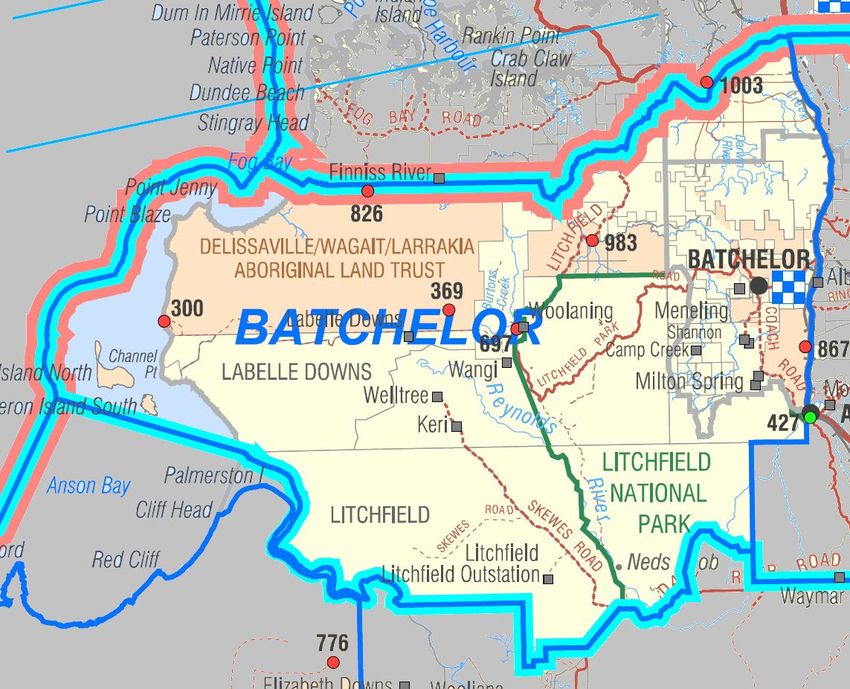
 2013 and in accordance with section 17 of the Emergency Management Act 2013
 (NT) (the Act) has been reviewed and endorsed by the Regional Controller.

 Regional Controller
 Travis Wurst

 Dated this 17th day of November 2020

Copyright: 2020

Disclaimer
Every effort has been made to ensure that the information contained within these guidelines is accurate and where
possible reflects current best practice. However, NTES does not give any warranty or accept any liability in relation to the
content of material contained in the document.

Batchelor Local Emergency Plan 2020/21                                                                          Page | 2
Table of Contents
Purpose ......................................................................................................................................................6
Application .................................................................................................................................................6
Related References ....................................................................................................................................6
Plan ............................................................................................................................................................6
Key Considerations.....................................................................................................................................6
Locality Context .........................................................................................................................................7
       Climate and Weather .........................................................................................................................7
       Geography ..........................................................................................................................................7
       Sites of Conservation or Cultural Significance ...................................................................................7
       Tourism ..............................................................................................................................................8
Public Administration.................................................................................................................................8
       NT and Local Government .................................................................................................................8
Infrastructure .............................................................................................................................................8
       Building Codes ....................................................................................................................................8
       Land Use .............................................................................................................................................8
       Power Generation and Distribution ...................................................................................................9
       Water Services ...................................................................................................................................9
       Health Infrastructure .........................................................................................................................9
       Emergency Service Infrastructure ......................................................................................................9
       Roads..................................................................................................................................................9
       Airports ..............................................................................................................................................9
       Rail Infrastructure ............................................................................................................................10
       Telecommunication .........................................................................................................................10
       Local Radio Stations .........................................................................................................................10
       Vulnerable Clients ............................................................................................................................11
Preparation ..............................................................................................................................................11
       Disaster Hazard Analysis and Risk Register ......................................................................................11
       Transport Incident (Road, Aircraft and Rail) ....................................................................................11
       Tropical Cyclone ...............................................................................................................................11
       Bushfire ............................................................................................................................................12
       Pandemic……………………………………………………………………………………………………………………………… .....12
       Preparation Activities .......................................................................................................................12
       Public Education...............................................................................................................................12
       Planning............................................................................................................................................12
       Resource Coordination ....................................................................................................................13
       Training and Education ....................................................................................................................13
       Exercises ...........................................................................................................................................13
       Response ..........................................................................................................................................13

Batchelor Local Emergency Plan 2020/21                                                                                                          Page | 3
Control and coordination………………….............................................................................................13
       Local Emergency Controller .............................................................................................................14
       Local Emergency Committee ...........................................................................................................14
       Local Recovery Coordinator and Coordination Committee .............................................................14
       Emergency Operations Centres (EOCs) ............................................................................................14
       WebEOC ...........................................................................................................................................15
       Situation Reports (SITREPs)..............................................................................................................16
       Activation of the Plan .......................................................................................................................16
       Stakeholder Notifications ................................................................................................................16
       Official Warnings and General Public Information ..........................................................................17
       Australasian Inter-Service Incident Management System (AIIMS) ..................................................17
       Closure of Schools ............................................................................................................................17
       Closure of Government Offices ........................................................................................................18
       Emergency Shelters..........................................................................................................................18
       Evacuation Planning and Accommodation ......................................................................................19
       Register. Find. Reunite Registration and Inquiry System.................................................................19
       Impact Assessment ..........................................................................................................................19
Recovery...................................................................................................................................................19
       Transitional Arrangements ..............................................................................................................20
       Handover Arrangements..................................................................................................................20
Plan Governance ......................................................................................................................................20
Annexures ................................................................................................................................................21
       Annex A: Hierarchy of Plans .............................................................................................................22
       Annex B: Functional Groups - Roles and Responsibilities ................................................................25
       Annex C: Functions Table .................................................................................................................26
       Annex D: Resource List.....................................................................................................................29
       Annex E: Identified Risk Guideline – Transport................................................................................30
       Annex F: Identified Risk Guideline – Cyclone ...................................................................................33
       Annex G: Identified Risk Guideline – Bushfire .................................................................................46
       Annex H: Evacuation Guideline ........................................................................................................53
       Annex I: SITREP Template ................................................................................................................59
       Annex J: Summary of Response and Recovery Activities .................................................................60
       Annex K: Contact Details ..................................................................................................................63
       Annex L: Debrief………………………………………………………………………………………………………………………….70
       Annex M: Glossary ...........................................................................................................................72
       Annex N: Acronyms ..........................................................................................................................75

Batchelor Local Emergency Plan 2020/21                                                                                                      Page | 4
Version History The following table lists all previous endorsed versions of this plan: Plan Endorsed Batchelor Local Emergency Plan 2016/2017 Batchelor Local Emergency Plan 2020/2021 Amendment List Proposals for amendment to this plan are to be forward to: Officer in Charge, Local Controller Batchelor Police Station. Amendments promulgated are to be certified below when entered: Revision Description Local Controller Date July 2018 New template development and review D.Hawkes/ NTES Aug 2018 Plan review. Formatting amendments A.Heath/ NTFRES Jan 2020 Plan review. Formatting amendments J.Richardson/NTPFES Oct 2020 Plan review. Formatting amendments P.Parkanyi/NTPFES Batchelor Local Emergency Plan 2020/21 Page | 5
Purpose
1.        The purpose of this Plan is to describe the emergency management
          arrangements for Batchelor District (the District) during 2020/21.

Application
2.        This Plan applies to:
          •      Batchelor District.

Related References
3.        The following references apply:

             •   Emergency Management Act 2013 (NT)

         •       Territory Emergency Plan 2020/21

         •       Northern Region Emergency Plan 2020/21

             •   National Disaster Risk Reduction Framework (NDRRF)

             •   National Disaster Risk Assessment Guidelines (NERAG).

Key Considerations
4.        The Emergency Management Act 2013 (NT) (the Act) is the legislative basis
          for emergency management across the Northern Territory (NT).
5.        The Act reflects an all hazards approach to emergency and disaster events,
          natural or otherwise. It provides for the adoption of measures necessary for
          the protection of life and property from the effects of such events.
6.        The Act defines the emergency management structures, roles and
          responsibilities for the NT and, in conjunction with the Territory and Regional
          Plan(s), form the basis for this Plan.
7.        This Plan:

          •      confirms appointment of a Local Emergency Controller and Local
                 Recovery Coordinator

          •      confirms establishment of the Local Emergency Committee (LEC) and
                 Local Recovery Coordination Committee (LRCC)

          •      assesses hazards most likely to affect the community

          •      specifies control and coordination arrangements for mobilisation of
                 local and, if necessary regional, Territory and national resources

          •      identifies roles and responsibilities of key stakeholders
          •      details specific emergency response procedures for the higher risk
                 situations.
8.        This Plan complements the Northern Region Emergency Management Plan
          as it relates to the District. For further information on the hierarchy of plans,
          refer Annex A.

Batchelor Local Emergency Plan 2020/21                                           Page | 6
Locality Context
9. The District covers approximately 4735 square kilometres (including
Litchfield National Park) and is located approximately 100km south of Darwin
and forms part of Region 1 (Northern Region), as defined by the Territory
Emergency Plan.
10. The District population fluctuates between 2,700 and 3,700 persons, the
main population centre being the town of Batchelor.
Climate and Weather
11. The District experiences similar weather conditions to those which occur
throughout the Top End of the NT. That is, there is a distinct 'Wet' (November
to May) and 'Dry' (June to October) season.
12. Compared to Darwin, temperatures tend to be slightly higher during the Wet
and slightly lower during the Dry. The District’s average annual rainfall is
approximately 1,700 millimetres.
Geography
13. The District covers the full spectrum of topography from coastal plains
through to open woodland and rain-forest to escarpment relief.
14. There are three major river systems in the district being Finniss River,
Reynolds River and Adelaide River.
Sites of Conservation or Cultural Significance
15. Litchfield National Park is considered to be a site of significance for the
Batchelor area and contains several Cultural significant sites.
16. Further information about this site can be found here.
Batchelor Local Emergency Plan 2020/21 Page | 7Tourism
17. Tourism is also a major economic contributor to the District, particularly
throughout the months of May to October. Most of the tourist activity occurs
within Litchfield Park with additional facilities being provided in Batchelor
itself.
Public Administration
NT and Local Government
18. NT Government agencies that have a presence in the District include:
• NT Police, Fire and Emergency Services (NTPFES)
• NT Police Force (NTPF) (Police Station)
• Fire Emergency Response Group (FERG Volunteer Unit)
• Bushfires NT- (BART)
• Department of Health
• Batchelor Health Centre.
• Department of Education
• Batchelor Area School
• Batchelor Institute
• Batchelor Outdoor Education Centre.
19. Local government in the District is provided by the Coomalie Community
Government Council.
Infrastructure
Building Codes
20. Buildings and construction in the District are subject to the Building Act 2016
(NT), NT Building Regulations.
Land Use
21. Batchelor has the following land usage:
• Pastoral
• Education
• Residential
• Freehold
• Parks / Reserves
• Mining tenements
• Crown Lease.
Batchelor Local Emergency Plan 2020/21 Page | 8Power Generation and Distribution
22. All power supplied to Batchelor comes from Channel Island power station in
Darwin.
Water Services
23. Batchelor is supplied from three bores into two water tanks: Major Tank and
Hill Top Tank.
Health Infrastructure
24. The Batchelor Primary Health Centre has the capacity to provide to
emergency medical aid in addition to routine health treatment.
25. Serious medical cases are required to be medically evacuated to Darwin
Emergency Service Infrastructure
26. The District has the following emergency service infrastructure:
• Police Station and cells
• Fire Emergency Service Response Group (FERG)
• Ambulance Service is provided by the Batchelor Health Clinic Bush
Ambulance
• Coomalie Council / DIPL / BART
Roads
27. Batchelor has the following main roads in the area :
• Stuart Highway
• Batchelor Road
• Crater Lake Road
• Litchfield Park Road.
28. During the Wet season, all roads may be subject to inundation at various
creek/river crossings and low lying areas.
Airports
29. The table below lists the airports/strips in Batchelor area.
Name of Datum Details (type, length etc.) Operator of the strip
the Strip
Litchfield 13°26.’S Direction: 120° / 300° Manager or Tipperary
Station 130 °30E Dimensions: 1600m x 15m Care Taker – John
Surface: Natural (graded) COGILL – 0889782403
Windsock: West end of strip
Managed by Tipperary
Hazard: Wallaby Station – David
Lighting: Unknown CONNOLLY -
Fuel Held: AVTUR/AVGAS 0427559006
Batchelor 13°04.’S Direction: 140° / 320° Albatross Helicopters,
131 °02E Dimensions: 1600m Lookabout Station
Batchelor Local Emergency Plan 2020/21 Page | 9Windsock: Middle of strip, NE side 088955200
Hazard: Nil
Lighting: Unknown
Fuel Held: AVGAS and JETA1
Channel 13°09.’S Direction: 160° / 340° Caretaker – Ron
Point 130 °08E Dimensions: 2060m x 120m Stockley
Surface: Black Soil
Windsock:
Hazard: Dry season emergency
only
Lighting: Unknown
Fuel Held: Nil
Coomalie 13°00.’S Direction: 170° / 350° Bushfires NT – John
130 °07E Dimensions: 943m x 20m Whatley
Surface: Sealed
Windsock: Richard Luxton
Hazard: Fenced 0438760072
Lighting: Nil
Fuel Held:
Hughes 12°41.’S Direction: 140° / 320° Bushfires NT – John
131 °05E Dimensions: 1500m x 30m Whatley
Surface: Sealed
Windsock:
Hazard:
Lighting: Nil
Fuel Held:
Helipad UTM 52 L. Fenced Helipad only
Florence 0694565
Falls 8546791
Helipad UTM 52 L Fenced Helipad only
Wangi Falls 0681071
8543817
Rail Infrastructure
30. There are rail crossings near the Stuart Highway on Crater Lake Road and
Batchelor Road.
Telecommunication
31. Telecommunications are available across the Batchelor town area via a
combination of landline, mobile and satellite communications delivery.
32. Telstra Service within Batchelor Community, Optus service now available
within Litchfield National Park
Local Radio Stations
33. The District has the following radio stations:
• 97.3FM Radio Rum Jungle
• 92.1FM ABC Radio National
• 92.9FM.
Batchelor Local Emergency Plan 2020/21 Page | 10Vulnerable Clients
34. A list of all vulnerable medical patients is held with the manager of the
Batchelor Health Centre.
35. The Local Coomalie Community Government Council do provide services for
aged care residents.
Preparation
Disaster Hazard Analysis and Risk Register
36. The LEC has identified the following hazards for the District which require a
detailed operational response procedure:
• Transport Incident (Road, Aircraft and Rail)
• Tropical Cyclone
• Bushfire.
Hazard Overall Overall Likelihood Risk Rating
Consequence
Transport Incident Minor Likely Medium
Transport incident Air Minor Possible Low
Transport incident Rail Minor Possible Low
Cyclone - Category 1 or 2 Minor. Likely Medium
Cyclone Category 3 Major Likely High
Cyclone Category 4 Major Likely High
Cyclone category 5 Major Likely High
Bushfire Moderate Likely High
37. These hazards have been rated against the National Disaster Risk
Assessment Guidelines (NERAG) gave the following results:
Transport Incident (Road, Aircraft and Rail)
38. Transport incidents refer to aircraft, motor vehicle and rail accidents.
39. These incidents are of an impact nature with little or no lead time. With the
exception of maintaining infrastructure, no mitigation can be put in place.
40. Batchelor Police and FERG maintain a road crash rescue capability to
provide first response to any major incident.
41. Procedures surrounding aircraft incidents have been developed by the
Australian Transport and Safety Bureau and can found here.
Tropical Cyclone
42. Tropical cyclones are low-pressure systems that form over warm tropical
waters and have gale force winds (sustained winds of 63 kilometres per
hours or greater, and gusts in excess of 90 kilometres per hour) near the
centre.
Batchelor Local Emergency Plan 2020/21 Page | 1143. Gale force winds can extend hundreds of kilometres from the cyclone centre.
If sustained winds around the centre reach 118 kilometres per hour (gusts in
excess 165 kilometres per hour) then the system is called a severe tropical
cyclone (these equate to category 3 or above).
44. Prevention and preparative controls for tropical cyclones include, but are not
limited to:
• Preparation of the Local Emergency Plan and convening the LEC
• Implementation of cyclone preparation initiatives and council clean ups
• Radio, television and social media broadcasts and billboard
announcements
• Police patrols.
Bushfire
45. A fire hazard includes a fire threat to the township, housing and infrastructure
in the District including all the surrounding outstations.
46. Controlled burning occurs on a yearly basis in the District and the
surrounding communities.
Pandemic
47. The Local Pandemic Action Plan provides the specific details on how the
community will respond to a pandemic situation. The local plan is guided by
the Northern Territory Department of Health Remote Community Outbreak
Management Plan.
L:\gdsbat\Batchelor Emergency Plans\Batchelor Pandemic Plan\Local Pandemic Plan -
Batchelor .docx
Preparation Activities
48. Preparation activities are those arrangements that ensure, should an
emergency occur, all resources and services which are needed to provide
an emergency management response to the effects can be efficiently
mobilised and deployed.
Public Education
49. The NTES delivers community education, awareness and prevention
programs. These are also conducted by Commonwealth Government
agencies (Emergency Management Australia, Bureau of Meteorology), as
well and non-government entities (Bushfires NT) to ensure ongoing public
awareness of emergency and disaster events. Further information is
available on each organization’s respective website.
Planning
50. The Act requires Emergency Plans to be maintained at a Territory, regional
and local level. Arrangements in plans aim to be flexible and scalable for all
hazards. The planning process enables agreements to be reached between
people and organizations in meeting communities’ needs during
emergencies. The plan becomes a record of the agreements made by
Batchelor Local Emergency Plan 2020/21 Page | 12contributing organizations to accept roles and responsibilities, provide
resources and work cooperatively.
51. In accordance with section 17 of the Act, the operation and effectiveness of
approved emergency plans must be reviewed at least once every 12 months.
Resource Coordination
52. A master resource register is to be maintained by the District Local Controller
for rapid reference during emergency management operations – refer
Annex D Stakeholders are to ensure that the District Local Controller is kept
advised of changes to resource holdings, operational response capability
and key personnel contact arrangements on a regular basis.
Training and Education
53. The Act requires that those involved in emergency planning and operations
are to be appropriately trained. The NTES Emergency Management Training
Unit provides the required training and education capability to ensure NT
Government and non-government entities are appropriately trained.
Exercises
54. Exercises are a key measure for testing the effectiveness of plans and should
be conducted at all levels and involve all stakeholders. Exercises ensure that
plans are robust and understood, and that capabilities and resources are
adequate to implement them.
55. Exercises are conducted when an Emergency Plan has not been enacted
since the last review, or substantial changes have occurred, including:
• Legislative changes
• Major changes have occurred in the areas of key personnel, positions
or functions across
• New or emerging hazards/risks have been identified.
56. Delivery of exercises is guided by advice from the Territory, Regional or
Local Controllers, the Territory Recovery Coordinator, Territory Emergency
Management Council or Regional or as required by functional groups 1.
Response
57. Response actions are those taken in anticipation of, during, and immediately
after an emergency to ensure that its effects are minimised and that people
affected are given immediate relief and support2.
Control and coordination
58. Arrangements for response are based on pre-agreed roles and
responsibilities for stakeholders. When the scale and complexity of an event
is such that resources of the community are depleted a number of
arrangements are in place for assistance from the region, the Territory and/or
the Australian Government. Pathway for assistance is through the Regional
Controller.
Batchelor Local Emergency Plan 2020/21 Page | 13Local Emergency Controller
59. In accordance with section 76 of the Act, the Territory Controller has
appointed a District Local Emergency Controller (Local Controller).
60. The Local Controller is the OIC of Batchelor Police Station.
61. The Local Controller is subject to the directions of the Regional Controller for
the region in which the District is located.
1 Section 3.5 & 3.6 of the Territory Emergency Plan.
2 https://knowledge.aidr.org.au/media/1764/handbook-9-australian-emergency-management-arrangements-kh-final.pdf
The powers, functions and directions of the Local Controller can be found in
sections 77, 78 and 79 of the Act.
Local Emergency Committee
62. In accordance with section 80 of the Act, the Territory Controller has
established a Batchelor Local Emergency Committee (LEC).
63. The Local Controller is Chair of the LEC. Remaining membership consists of
representatives from NT Government and non-government entities within the
District.
64. Division 11 of the Act specifies the establishment, functions, powers;
membership and procedure requirements of a LEC.
Local Recovery Coordinator and Coordination Committee
65. In accordance with section 87 of the Act, if a region and/or locality has been
affected by an event, the relevant Regional Recovery Coordinator may
appoint a Local Recovery Coordinator.
66. The Local Recovery Coordinator will establish a local Recovery Coordination
Committee drawing from membership of the LEC and other relevant
members of the community as deemed necessary.
67. The Local Recovery Coordinator will report directly to the Regional Recovery
Coordinator.
68. Division 12 of the Act specifies the functions, powers and directions the Local
Recovery Coordinator is subject to.
69. Division 13 of the Act specifies the establishment, functions, powers,
membership and procedure requirements of Recovery Coordination
Committee.
Emergency Operations Centres (EOCs)
70. Local Control Centres (LCCs) will be established as required by Local
Controllers to provide a central focus to the management, control and
coordination of emergency operations in the District. When activated, the
functions of the LCCs are:
• information collection and dissemination
• preparation and issue of official warnings and advice to the public
• coordination of the provision of resources required in the locality
Batchelor Local Emergency Plan 2020/21 Page | 14• submitting requests for resources through the Regional Controller or
the Territory Emergency Operations Centre where applicable
• dissemination of information to the media and general public through
the Public Information Group to ensure a single point of truth for
releases of information to the wider community3.
71. The District Local Control Centre (LCC) is the Batchelor Police Station.
3 Territory Emergency Plan Section 4.5.3
72. The Regional EOC will generally be located in Darwin at the Peter McAulay
Centre.
73. Agencies and Functional Groups may establish their own Coordination
Centres to provide the focal point for the overall control and coordination of
their own agency resources.
74. Liaison Officers from functional groups and support agencies will attend the
EOC as required.
WebEOC
75. WebEOC is a critical information management system used throughout the
NT. It is an effective and efficient tool used by stakeholders that have a role
and responsibility under the Territory Emergency Plan during prevention,
preparation, response and recovery phases of any event.
76. WebEOC is a contemporary platform for the coordination of multi-agency
response to any critical incident be it a severe weather event, flood, bush fire,
industrial accident, major crime, terrorism or a large scale planned event. It
provides the capacity to record (in real time) all information relevant to an
incident and to share that information with other persons at the scene, an
EOC and Functional Group personnel.
77. WebEOC allows for information sharing, managing tasks and submitting
situational reports. It also assists the Control Authority to manage and
disseminate current decisions and objectives. Together these functionalities
provide an up-to-date situational awareness.
Situation Reports (SITREPs)
78. It is essential for effective control and coordination of emergency
management operations that the Local Controller is able to gather and collate
relevant information relating to the emergency from regular, concise and
accurate SITREPs.
79. LEC members are to provide SITREPs at agreed times to enable the
preparation of a consolidated report which will be distributed to all committee
members and other relevant authorities. This may be achieved through the
WebEOC incident management system.
Activation of the Plan
80. With the exception of cyclones where six stages are used, this plan set out
five stages of activation these stages are designed to ensure a graduated
response to hazardous events, thereby reducing the possibility of under or
Batchelor Local Emergency Plan 2020/21 Page | 15over reaction by the emergency management agency.
81. The stages are:
Stage 1 Alert This stage is declared when the Local Controller
receives warning of an event which, in his or her
opinion, may necessitate a emergency
management response
Stage 2 Standby This stage is declared when the Local Controller
considers an emergency operation is imminent.
During this stage passive emergency measures
are commenced
Stage 3 Activation This stage is declared when active emergency
measures are required
Stage 4 Stand-down This stage is declared when the Local Controller
response operations considers that no further emergency
and transition to management are necessary but if the
Recovery consequences of the emergency require
ongoing recovery coordination the Local
Controller will advise the Local Recovery
Coordinator in preparation for a transition to
recovery.
Stage 5 Recovery This stage is called if on-going recovery
operations and coordination is required.
82. The stages identified above provide for a sequential response. However, it
may be necessary because of the degree of warning and speed of onset of
an event for either the Regional or Local Controller to amalgamate the
actions required under one stage.
83. Recovery may be activated when an incident or event has occurred that did
not necessitate the activation of response stages 1 to 4. This may be in
relation to a sudden impact event or slow onset event such as a drought
situation.
Stakeholder Notifications
84. Upon activation of the Plan the following personnel are to be advised as a
matter of urgency:
• all available members of the LEC
• Divisional Superintendent
• Region Controller
• NTES Duty Officer.
85. The Local Controller will notify LEC members of imminent events or
activations through various means including but not limited to phone, SMS
and email notifications.
Official Warnings and General Public Information
86. Official warnings are issued by the Bureau of Meteorology (BoM),
Geoscience Australia and Bushfires NT.
Batchelor Local Emergency Plan 2020/21 Page | 1687. Emergency Alert (EA) is a national telephony-based emergency warning
system that can deliver warning messages to landlines and mobile handsets
based on the service address and mobile handsets based on the last known
location of the device.
88. The Standard Emergency Warning Signal (SEWS) is an audio alert signal
(wailing siren) which may be broadcast on public media to draw attention to
the fact that an urgent safety message is about to be made. Generally, SEWS
is only played before announcements concerning significant emergencies
where emergency management arrangements should be activated as a result.
89. Authority to utilise the Emergency Alert and SEWS may be given by virtue of
the approval of an emergency plan. The authority and delegations can be
found in the Territory Emergency Plan.
90. Control and Hazard Management Authorities may have pre-planned use of
SEWS for non-weather related events approved by virtue of the approval of
a Regional or Special emergency plan.
91. The District will receive official warnings and general public information
through the following means:
• radio broadcast
• television news broadcast.
92. Warning and information messages for general public are authorised by the
Local/Regional Controller, as relevant. The dissemination of such warnings
and information is to be by whatever means are appropriate and available at
the time.
Australasian Inter-Service Incident Management System (AIIMS)
93. The Australasian Inter-Service Incident Management System (AIIMS) is a
robust incident management system that will enable the seamless integration
of activities and resources of a single agency or multiple agencies when
applied to the resolution of any event.
Closure of Schools
94. The decision to close schools due to an impending threat will be made by the
Chief Minister on advice from the Territory Emergency Management Council
(TEMC). When the nature of an event demands an immediate response,
local authorities will take the appropriate steps to ensure the safety to the
public. This action may include the temporary closure of a school to begin
preparations, pending formal closure of the school by the Chief Minister for
the remainder of the event.
95. The decision to reopen schools will be made by the Chief Minister on advice
from the Chief Executive, Department of Education.
Closure of Government Offices
96. The decision to close government offices due to an impending threat will be
made by the Chief Minister on advice from the TEMC. When the nature of an
event demands an immediate response, local authorities should take all
appropriate steps to ensure public safety and the protection of property.
97. The decision to re-open government offices will be made by the Chief
Batchelor Local Emergency Plan 2020/21 Page | 17Minister on advice from the TEMC.
98. All NT Government agencies are to have an Emergency Preparedness Plan
which sets out their processes for closing down their offices once approval
has been given. This should have clearly articulated employee guidelines to
ensure employees know when they are authorised to leave and are required
to return to work.
Emergency Shelters
99. Emergency shelters and places of refuge are buildings or structures that
provide people with a place of protection and shelter during a disaster or
emergency event such as a cyclone, flood, fire or tsunami.
100. The table following shows those facilities identified as cyclone shelters, their
estimated capacity and the organisation responsible for their preparation and
management.
Responsibility Shelter Capacity Contact
Dept of Education Batchelor Outdoor 150 Elizabeth Bowyer,
Education Unit -Dining Batchelor Area
Hall School Principal
Dept of Education Batchelor Institute 100 Professor Steve
B17 LARKIN,
CEO Batchelor
Institute
101. There are no private buildings built to the Cyclone code in Batchelor.
102. The responsibilities of the emergency shelter manager are:
• the provision of those buildings designated as emergency shelters
• the provision of personnel to staff and operate the emergency shelters
at such times as they are activated
• the maintenance of effective liaison with other stakeholders with
responsibilities relating to cyclone shelters, in particular the NTPF.
103. Emergency shelters are opened under the direction of the Territory or
Regional Controller in consultation with the Emergency Shelter Group.
Emergency shelters will not normally operate for more than 48 hours.
104. The timing of the opening of emergency shelters will be dependent upon the
severity of the impending incident, the numbers to be sheltered, the time of
day the incident is expected to impact and the period of time the emergency
shelters are likely to be occupied.
105. The announcement that emergency shelters are open in the District will be
made by radio broadcast and will include emergency shelter rules such as
no pets or alcohol being permitted in shelters and that food will not be
provided.
106. The Department of Education in conjunction with NT Police are responsible
for the management of emergency shelters during an emergency event.
Evacuation Planning and Accommodation
Batchelor Local Emergency Plan 2020/21 Page | 18107. Evacuation is a risk management strategy that can be used to mitigate the
effect of an emergency or disaster on a community4.
108. The decision to evacuate a community, including establishing an evacuation
centre, is not taken lightly as it represents significant resource and financial
implications5.
4 EM Manual 11 Evacuation Planning, page 1
5 Australian Emergency Management, Evacuation Planning Handbook 4 2013
109. Evacuation of the District will be considered as a last resort. Where an
evacuation is required the TEMC, in consultation with the Local Controller
and the District will arrange emergency accommodation and transport, as
necessary, through the relevant Functional Group/s.
Register. Find. Reunite Registration and Inquiry System
110. Australian Red Cross, in partnership with the Commonwealth Attorney-
General’s Department, has developed an improved system to help reunite
families, friends and loved ones separated by an emergency. This system is
called Register. Find. Reunite.
111. This system can be initiated by either the Territory or Regional Controller
without the national system being activated6.
112. The Welfare Group maintains Register. Find. Reunite. Any activation of this
system should occur in consultation with the Welfare Group in the first
instance.
Impact Assessment
113. Immediately after a hazard has affected a community, assessment of the
impact is a vital component of the situational awareness and implementation
of response and recovery activities.
114. Guidelines to conduct rapid assessments in the NT, including the
establishment of a dedicated Rapid Assessment Team/s (RAT) to collect
data in the field have been developed. A copy is available in the WebEOC
library for emergency management practitioners.
115. The Survey, Rescue and Impact Assessment Group, led by the NTPFES, is
responsible for impact assessments.
116. At the local level, Local Controllers can activate the NTES to undertake
impact assessments if deemed appropriate.
Recovery
117. Emergency recovery is the coordination process of supporting affected
communities in the reconstruction of the physical infrastructure, restoration
of the economy and of the environment, and support for the emotional and
physical wellbeing of those affected.
118. Recovery is often a long term process which can be measured in months,
years or even decades. For the purpose of this plan only the early recovery
phase is detailed.
Batchelor Local Emergency Plan 2020/21 Page | 19Transitional Arrangements
119. The transition from response to recovery coordination represents a
fundamental shift in operational aims and tempo. This shift is from the
protection of life and supporting the immediate needs of the community, to
establishing longer term, more sustainable support structures.
120. The transition to recovery coordination occurs at a time agreed to by the:
• Territory Controller
• Territory Recovery Coordinator
after consultation with the TEMC, Regional Controller and Regional
Recovery Coordinator.
66 EM Manual 11 Evacuation Planning, page 1
6
Australian Emergency Management, Evacuation Planning Handbook 4 2013
6
Territory Emergency Plan Section 4.17
Handover Arrangements
121. Formal handover to recovery coordination will not occur until the Territory
Recovery Coordinator is satisfied the following briefings have been
completed:
• the Territory Controller has briefed the TEMC and the Territory
Recovery Coordinator
• the Regional Controller has briefed the nominated Recovery
Coordinator
• where there is significant changeover of personnel, the EOC planning
operations and logistics sections have briefed incoming recovery
planning, operations and logistics staff.
122. The Regional Recovery Coordinator will ensure all functional group leaders,
agencies, support groups and other relevant stakeholders are notified of the
transition to recovery well before it occurs. This notification is to include
changes to relevant contact details and other pertinent information.
123. A summary of response and recovery activities can be found at Annex J.
Plan Governance
124. Part 2, Division 3 of the Act outlines the preparation, consideration, approval
and review requirements for Local Emergency Plans.
Batchelor Local Emergency Plan 2020/21 Page | 20Annexures Annex A Hierarchy of Plans Annex B Roles and Responsibilities Annex C Functions Table Annex D Resource Lists Annex E Identified Risk Guideline –Transport Incident Annex F Identified Risk Guideline – Cyclone Annex G Identified Risk Guideline – Bushfire Annex H Evacuation Guideline Annex I SITREP Template Annex J Summary of Response Annex K Contact Details Annex L Debrief Annex M Glossary Annex N Acronyms Batchelor Local Emergency Plan 2020/21 Page | 21
Annex A: Hierarchy of Plans
Emergency management planning in the Territory is based upon a hierarchal system. It
originates with the Territory Emergency Plan which provides the basis for subsequent
regional, local and specific emergency management plans relating to specific threats.

•   Territory Emergency Plan. A plan to describe the Northern Territory’s approach to
    emergency and recovery operations, the governance and coordination arrangements and
    roles and responsibilities of agencies. The plan is supported by regional, local and hazard
    specific plans and functional group sub plans.
•   Regional Emergency Plans. The regional emergency management structure is based
    upon two Police Regions. The plans provide a basis for coordinated emergency and
    recovery operations in the region.
•   Local Emergency Plans. Plans developed for coordinated emergency and recovery
    operations in the identified locality.
•   Territory Wide Plans. Plans are not associated with functional group operational plans
    but cover an all hazard/all agency/all regions approach.
•   Agency/functional group plans. Plans developed for agencies or functional groups to
    deliver the functions and operations of their agency during an Emergency or disaster.
•   Australian Government Plans and Arrangements. The Australian Government publish
    a range of national plans to deal with emergencies and disasters.

•   Special Emergency Plans. Plans outlining the arrangements for the control, coordination
    and support response, for hazard specific emergencies and disasters such as emergency
    terrestrial and aquatic pest and disease incursions.

Batchelor Local Emergency Plan 2020/21                                              Page | 22
Annex B: Functional Groups - Roles and Responsibilities
Functional Group Position and Agency
Biosecurity and Product Industry Department of Primary Industry and
Resources
Communication Technology NTPFES
Critical Goods and Services Department of Trade, Business and
Innovation
Emergency Shelter Department of Education
Engineering DIPL
Medical Department of Health
Public Health Department of Health
Public Information Department of the Chief Minister
Public Utilities Power and Water Corporation
Transport DIPL
Survey and Rescue NTPF with the assistance of Fire and
Emergency Response Groups
Welfare Territory Families
Function/Activity Position and Organisation or Provider
Medical Services Batchelor Primary Health Centre -
Department of Health
Power Supply (ESO) Power and Water Corporation
Food supplier Department of the Chief Minister with the
assistance of the Batchelor store
Transportation DIPL
Housing Department of Housing and Community
Development
Full details on agency roles and responsibilities are detailed in the Northern Territory
Emergency Plan.
Batchelor Local Emergency Plan 2020/21 Page | 23Annex C: Functions Table
Emergency Response and Recovery Functions with Identified
Agencies/Organisation/Provider
During an event some of these functions may be needed at a local level.
Please consider which agency or community member might be responsible for
providing this function:
Functions Agency /Organisation/Provider
responsible
Animal / Livestock Management Biosecurity and Animal Welfare Group
(Department of Primary Industry and
Resources)
Anti-looting protection NT Police
Banking Services Critical Goods and Services Group
(Department of Trade, Business and
Innovation)
Broadcasting: What radio stations provide
announcements Public Information Group (Department of
the Chief Minister)
Provider: ABC
Clearing of essential traffic routes Engineering Group
Clearing storm water drains Coomalie Council / DIPL
Clothing and Household Items Welfare
Community Clean Up Coomalie Council
Control, coordination and management NT Police
Coordination to evacuate public NT Police
Critical Goods and Services (protect/resupply) Department of Trade, Business and
• Food Innovation
• Bottle Gas
• Camping Equipment
• Building supplies
Damaged public buildings: Coordination and Engineering Group
inspections
Disaster Victim Identification capability NT Police DVI
Emergency Alerts / SEWS NT Police
Emergency Catering Not Defined
Emergency food distribution Welfare
Emergency Operations Centre (EOC), NT Police/ DCM
including WebEOC, Recovery coordination centre
(RCC)
Emergency shelter. Staff, operations and control Education, NT Police and NT Emergency
Service
Evacuation centre - Staffing, operations and control Territory Families, NT Police and NT
Emergency Service
Identification of suitable buildings for shelters LEC
Batchelor Local Emergency Plan 2020/21 Page | 24Financial Relief /Assistance Department of Treasury and Finance, Welfare
Group (Territory Families), Department of
Payments of NDRRA (National Disaster Relief and
Trade, Business and Innovation Department of
Recovery Assistance)
Primary Industry and Resources and
Department of Housing and Community
Development (agency involvement will depend
on the type of event)
Interpreter Services Australian Interpreter Service
Management of Expenditure in emergencies Welfare
Medical services Department of Health
Network communications (IT): Responders / Public Communication Technology Group (NT Police,
Fire and Emergency Services) – currently
Maintenance and restoration of emergency
under review
communication
Personal Support Welfare Group
Power: Protection and restoration : Power and Water Corporation
Public messaging during response and recovery. BOM, NT Police,
Public Information Group (Department of
the Chief Minister)
Public/Environmental Health (EH) management Department of Health
• All EH functions including water & food safety
• Disease Control
Rapid Impact Assessment Department of the Chief Minister
Recovery Coordination Department of the Chief Minister
Repatriation As detailed in local emergency
arrangements
Restoration of public buildings Department of Housing and Community
Development
Restoration of roads and bridges (council/territory) DIPL/ Coomalie Council
excluding railways
Road management and traffic control including public Coomalie Council /Engineering Group
Information on road closures
Sewerage: Protection and restoration Power and Water Corporation
Survey NT Police
Temporary accommodation (Recovery) Department of Housing and Community
Development
Traffic Control NT Police, DIPL contractors
Transport : Commercial and Public airport/ planes, Transport Group – DIPL Local – Cookes
automobiles, buses Tours for Buses.
Vulnerable Groups Welfare Group
Waste management Coomalie Council
• Collection
• Disposal of Stock
Water (including drinking water): Protection and Power and Water Corporation
restoration
Batchelor Local Emergency Plan 2020/21 Page | 25Annex D: Resource List (Update as needed)
RESOURCE REGISTER Locality - Batchelor
Resource Communications Fire Fighting Rescue Medical Aircraft Vehicles Plant Fuel Accommodation Food Supply
/Shelter & Storage
HF
Legend UHF
A=Appliance
D=Dropon Unit
RAR=Road Accident
Rescue Team
H=Hospital
A=Ambulance
F=Fixed Wing
H=Helicopter
S=Sedan/Stationwagon
U=Utility
T=Tractor
B=Bulldozer
A=Avgas
D=Distillate
B=Beds
R=Rooms
R=Retail store
B=Bulk dry goods
T=Trailer HE=Heavy Rescue C=Clinic (oo)=Seating Capacity B=Bus (seating) C=Crane (mobile) J=Jet aviation C=Caravans K=Commercial Catering
Agency/Organis VHF F=Foam Equipment F/A=First Aid Kits (s)=Stretcher T=Truck (capacity) F=Frontend Loader L=LPG T=Tents P=Portable cooking
Marine (M)
ation Satellite Ph (SP)
E=Extinguisher WS=Workshop SF=Stretcher (fld) (w)=Winch WT=Water tanker F/L=Forklift S=Super Tp=Tarpaulins F=Freezer (fixed)
(4.5kg and above) PG=Portable Genset SB=Stretcher-(bsk) (kg)=Payload FT=Fuel tanker L=Lowloader U=Unleaded PS=Plastic sheeting Fm=Freezer (mobile)
GFU – Grass Fire Unit FL=Floodlighting B=Blankets LW=Liquid waste tanker B/H=Back hoe C=Coolroom
G=Grader Cm=Coolroom (mobile)
BC=Bobcat
Batchelor Police HF, UHF, VHF, Digital PG F/A F
S U B,R
Parks & Wildlife
FERG T 1500Lts
UHF, VHF, SP A, F, E RAR, PG, FL F/A, SB, B
Parks and Wildlife UHF, VHF, SP x 4 Dx2 PG x 2, WS F/A x 6, SB, U x 4, S, 1 B x 5, R x 2 F x 2, Fm x 2
(Batchelor) B
Oxy Viva x 2
Parks and Wildlife Motorola Digital D SB
(Florence Falls)
Parks and Wildlife Motorola Digital Oxy Viva, SF
(Wangi Falls)
Parks and Wildlife UHF, SP Dx2 Emergency Response F/A x 2, Oxy Viva, SF Ux2 1 T D (Bulk)
(Walkers Creek) Trailer
Bushfires NT Sx2 F/L x 1
UHF x 11, VHF x 51, GFU x 29, T x 5 F/A x 35 Have contracts for F & Ux4 WT x 11
SP x 5 H
PAWC PAWA frequency Ex2 WS F/A U 1 D Rx2 F
Batchelor SP E F/A x 4 S U x 40Litre
B (22), B B – 150+, R – 80+ F, K, C, Gen Set
Outdoor S/F
(19)
Education
Centre
Batchelor Institute E x 50 WS F/A x 20 B(22)x4, T, F L B – 240, R – 108 C, B, F, K
B(19)x3,
Ux2, Sx2,
SW
Coomalie Shire Ex3 WS F/A x 3 U Ux2 T T
Council
B.A.R.T VHF x 15 Tx2, GFUx7, Dx3, A F/Ax3 Ux7
Batchelor Health Ex4 U S
UHF, SP C, F/A, A, SF x 2, B
Centre
Litchfield Motel D x 10000 ltr U x B, R Gen Set backup
10000 ltr
Where Functional Groups are identified, those agencies are responsible for ensuring that a record of resources available during an event are completed and made available to the Local Controller during an
event.
Batchelor Local Emergency Plan 2020/21 Page | 26Annex E: Identified Risk Guideline – Transport Introduction This plan provides generic guidance on the response to air and road emergencies within the District which necessitate the activation of emergency management arrangements. Aircraft Aircraft movements in the Batchelor include small fixed wing aircraft and rotary wing aircraft generally used for aerial mustering. Region personnel involved with aircraft accidents are advised to obtain and read a copy of the Australian Transport Safety Bureau Civil and Military Aircraft Accident Procedures for Police Officers and Emergency Services Personnel. Motor Vehicle Main roads within the District are well maintained and have a bitumen surface. An extensive four wheel drive track network is also present throughout the NT that creates additional potential issues associated with remote area incidents. Vehicular traffic ranges from cars to motorcycles, tourist coaches, caravans, road trains, and stock and fuel transporters. The vast majority of traffic accidents will be dealt with under existing day to day arrangements. Traffic accidents involving hazardous materials are covered under HAZMAT Risk. Rail The railway line extends from Darwin through to South Australia and passes to the East of the Batchelor Township. Initial Responses The main goals of any rescue are to bring the most good to the greatest number and to evacuate the living as soon as possible. NTES will assume control of the scene, move survivors who are not severely injured or trapped in the wreckage to an appropriate space and commence the task of finding and extricating the trapped, seriously injured, unconscious, or deceased. These procedures may change if there is any threat of fire or explosion. Reconnaissance Once the Incident Controller has taken charge of the scene, two man reconnaissance teams should be sent, equipped with radio, clipboard, flashlight and basic medical gear, into assigned sectors of the wreckage to locate survivors. Rescue As information comes in from reconnaissance teams about the location and condition of survivors, rescue teams will respond. Batchelor Local Emergency Plan 2020/21 Page | 27
You can also read


