FINAL March 2020 - TriMet
←
→
Page content transcription
If your browser does not render page correctly, please read the page content below
FINAL March 2020
TriMet: A History of Innovation and Service
From our beginning, TriMet has served as a leader and innovator in public transit. We have
delivered many “firsts” in our 50-year drive to strengthen the communities and the metropolitan
region we serve.
1969 Private transit service in the Portland area faced flagging ridership and losses—threatening
        cuts in service. Civic and business leaders came together to find a solution and by the end
        of the year, TriMet was born. The first TriMet buses began service on December 1.
1973 TriMet identifies strategies to increase bus ridership by simplifying and concentrating
        downtown service on the 5th and 6th Avenue Transit Mall and expanding its bus fleet.
1975 TriMet begins service that eventually becomes TriMet LIFT, well in advance of
        requirements by the Americans with Disabilities Act of 1990.
1982 A grid of bus lines with some running every 15-minutes or less all day is introduced to
        Portland’s eastside. This provided for better cross-town direct trips without having to
        transfer through downtown. It set the stage for future Frequent Service and transit network
        improvements.
1986 The eastside Banfield Light Rail Project begins service as MAX.
1998 Westside MAX Blue Line introduces low-floor, easy-entry light rail vehicles to North
        America.
2001 Airport MAX Red Line (the West Coast’s first train to plane) and the modern Portland
        Streetcar opens.
2004 Interstate MAX Yellow Line opens ahead of schedule with improvements to connecting
        bus service.
        TransitTrackerTM, one of the first real-time arrival information systems in the nation, starts.
2005 TriMet and Google develop the GTFS (General Transit Feed Specification), which is now
        a worldwide standard for transit apps. TriMet becomes the first transit system on Google
        Transit.
2009 I-205/Portland Mall MAX Green Line to Clackamas Town Center and PSU opens on time,
        upgrading the Portland Mall and adding light rail service north-south in downtown Portland.
        TriMet opens WES Commuter Rail, a 14.7 mile, suburb-to-suburb commuter rail line with
        service between Beaverton and Wilsonville.
        TriMet introduces Open Trip Planner, an online trip planner that includes transit, biking,
        and walking options. This open-source trip planner is now used at many systems around
        the world.
2013 TriMet introduces its Mobile Ticketing App. Use of this app overtakes cash payments on
        buses by 2017.
2015 TriMet opens the Portland-Milwaukie MAX Orange Line, which includes Tilikum
        Crossing, Bridge of the People, the first multimodal bridge of its kind in the U.S. It carries
        MAX, streetcar trains, buses, bicyclists, and pedestrians only.
2017 TriMet introduces Hop Fastpass®, the next generation of electronic fare systems.
2018 TriMet pioneers virtual card on mobile devices for Hop Fastpass®.
2019 TriMet releases the next generation multimodal trip planner integrating bikesharing,
        ridesharing and e-scooters with transit, biking and walking delivering a complete open trip
        planning platform.
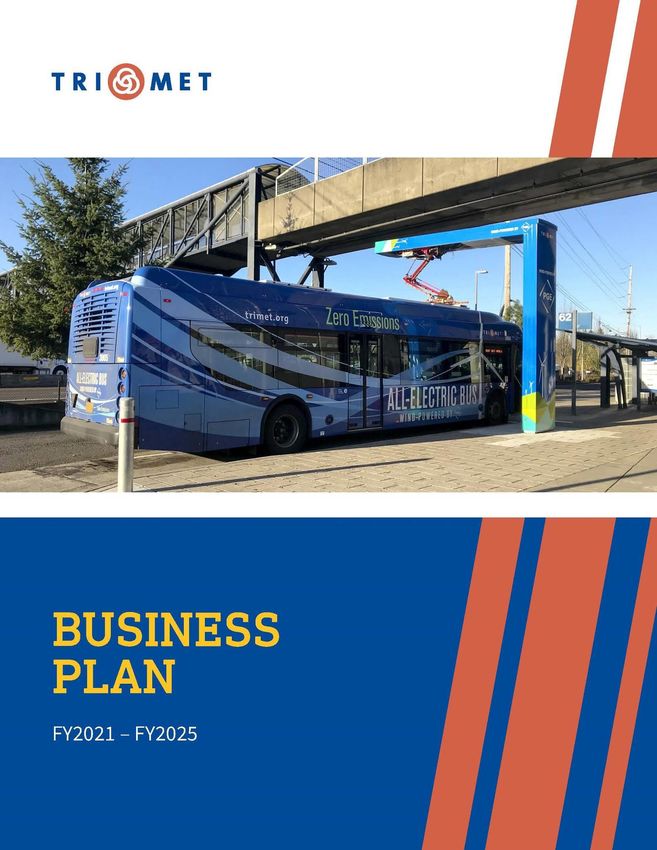
        In what is believed to be a United States transit industry first, all-electric buses introduced
        on Line 62 will be powered by 100 percent wind energy.
        TriMet commits to multiple efforts to reduce carbon footprint.

                                                 i
                                TRIMET BUSINESS PLAN FY2021 – FY2025
Letter from the General Manager
                     TriMet’s business is a critical public service to this region. We provide
                     transit services and other mobility choices to help you move around our
                     rapidly growing region. This Business Plan presents how we serve our
                     riders, our stakeholders and taxpayers, and our broader community. All
                     of these wonderful people are our valued customers. We strive to provide
                     great service while ensuring we are fiscally responsible. We are always
                     in pursuit of a great customer experience while at the same time ensuring
                     we are cost-effective.
                     We update the strategic Business Plan annually. This Business Plan is
for FY2021 through FY2025. In the Plan, we track specific Measures and Targets, report our
performance, and learn how to improve using Key Strategic Actions. This year, we’ve added
an update on our Objectives and a focused discussion on our Mobility Management efforts
(see Page 8). We also marked which Key Strategic Actions most directly address our
Strategic Priorities and Points of Emphasis for FY2021.
At the time of this writing, the effects of COVID-19 were beginning to impact our community
directly. We will be monitoring Business Plan performance Measures and responding as
needed. We will continue to provide transit and mobility options to do what we can to help
keep people safe and keep our community moving.
As we manage the largest growth in our agency’s history and modernize our internal
practices and services, including the greening of our fleet, I am so proud of our team of
dedicated professionals supporting and leading our operations who work together to make
our service even more customer friendly and reliable. We have continued to improve on-time
performance and reduce travel times so that you can have more confidence in when your
train or bus will arrive and how long it will take to get where you’re going. We are also
working with cities, counties, and the Oregon Department of Transportation to deliver
improvements at intersections, smarter traffic signals, and other ways to make buses more
reliable and faster.
Thanks to the State of Oregon, House Bill 2017 (HB2017) now provides more funding for
transit. This funding pays for the Low-Income Fare program for eligible adult riders. In
addition, we are adding services and investments in areas with many low-income
households. For the next three years, we plan to introduce more HB2017-funded service
each year, especially on bus routes with high ridership potential.
TriMet turned 50 this year! We still embrace the need to stay current, by expanding our
benefits to the region. Now, at trimet.org, you can plan a trip to and from anywhere in the
TriMet district and see options for buses and trains, and for using a Park & Ride, biking,
walking, e-scooter, Uber, or Biketown. You can then link to those services online or on your
smart device so you can book and pay for the ride too. Give it a try! We continue to deliver
new products that will enhance your travelling experience. We realize our customers have
travel choices and we need to earn the right, every day, to ensure we are on top of that list.

                                                  Doug Kelsey
                                                  General Manager

                                                ii
                               TRIMET BUSINESS PLAN FY2021 – FY2025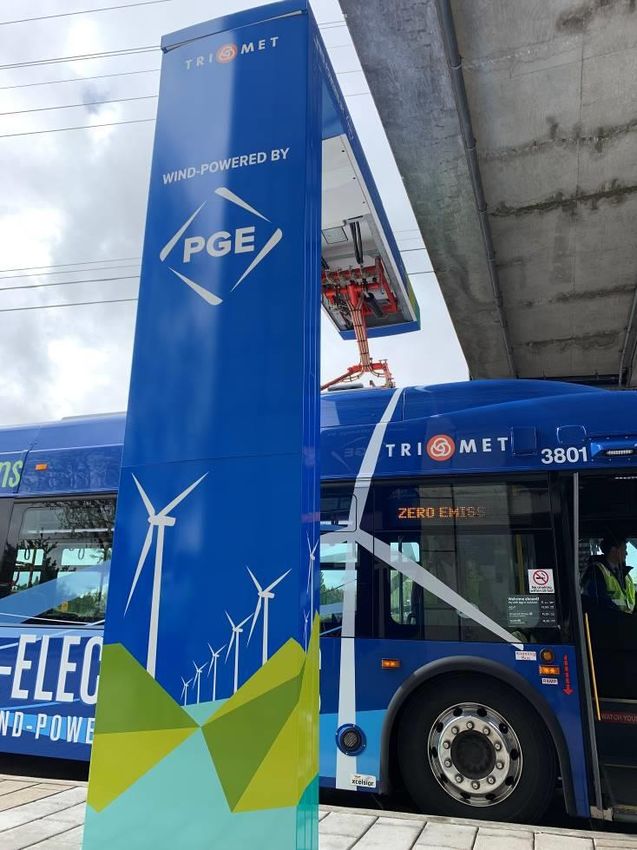
iii
TRIMET BUSINESS PLAN FY2021 – FY2025
Table of Contents
                                                                                                                             Page

TriMet: A History of Innovation and Service ................................................................ i

Letter from the General Manager ................................................................................. ii
About TriMet .................................................................................................................. 1
          TriMet’s Primary Roles in the Region ................................................................... 1
Strategic Priorities & Points of Emphasis ................................................................... 3
Strengths, Weaknesses, Opportunities, and Challenges .......................................... 5
Premises ........................................................................................................................ 7
Update on Progress and Mobility Management .......................................................... 8
Serving the Community with this Plan ...................................................................... 10
Goals, Objectives, Measures, Targets, and Key Strategic Actions ......................... 14
          Goals and Objectives Overview .......................................................................... 15
          Customers .......................................................................................................... 17
          Internal Business Practices ................................................................................ 29
          People & Innovation ............................................................................................ 41
          Financial ............................................................................................................. 49
The Route Ahead ......................................................................................................... 53
Acronyms and Definitions .......................................................................................... 55

                                                              iv
                                             TRIMET BUSINESS PLAN FY2021 – FY2025
About TriMet
About Us
Transit district created by Oregon law serving
over 1.6 million people in a 533-square-mile area
Primarily funded through an employer payroll
tax, self-employment tax, and a recently-
introduced employee payroll tax. Fare
revenues and some federal, state and local
grants round out our budget
Governed by a seven-member board of
directors, who each represent a geographical
district where they must reside
Mobility Information for Travelers
Next generation multimodal trip planner integrating rail, bus, bike, walking, bike sharing, scooter
sharing, ridesharing and combined options: available now at trimet.org
Rider Support: 503-238-RIDE(7433) call or text; 1-844-MyHopCard(694-6722); hello@trimet.org;
twitter.com/trimethelp (@trimethelp); twitter.com/myhopcard (@myhopcard)
When the next train or bus will arrive at any stop: trimet.org or by text: send stop ID # to 27299
Service alerts: trimet.org/alerts and twitter.com/trimetalerts (@trimetalerts)
Social media accounts: Facebook.com/trimet; twitter.com/trimet (@trimet); Instagram.com/ridetrimet
(@ridetrimet)
TriMet’s Primary Roles in the Region
Providing service and projects that:
Support our economy and provide opportunity: Get employees to work, students to school, and
customers to businesses with integrated mobility options
Ease congestion: Attract many riders to transit and encourage travel modes other than driving by
providing integrated mobility, coordinated information and the kinds of service and capital
projects that lead to development and lifestyles that rely less on driving, especially during rush
hours
Provide mobility for those with few options: Provide a critical service for seniors, people with
disabilities, school kids, low-income households, households without cars and others who have
limited mobility options by getting them to work, school and other destinations on transit or with
other accessible mobility options
Help shape the future of our region: Deliver service, mobility options, and capital projects that
attract residents, businesses, and development to centers, main streets, and corridors which
communities have identified as future growth areas
Reduce emissions and support environmental sustainability: Deliver mobility options and support
development that encourage mobility other than driving; transit, walking, and bicycling especially
promote personal and community health, and reduce resource use, greenhouse gases, and
emissions in neighborhoods
1
TRIMET BUSINESS PLAN FY2021 – FY2025
Our Goals fit into four
strategic Success
Categories:
Customers
Internal Business Practices
People and Innovation
Financial
The categories build up to
our Customers, who are the
ultimate judge of how well
we are meeting our Vision,
Mission, and Values, and
delivering on TriMet’s
Primary Roles in the
Region (see p.1)
2
TRIMET BUSINESS PLAN FY2021 – FY2025
Strategic Priorities & Points of Emphasis
This Business Plan covers Fiscal Years FY2021 through FY2025 and will be updated annually with a rolling
five-year horizon. The following Strategic Priorities and Points of Emphasis guide the Business Plan and the
annual budget process for FY2021.
Strategic Priorities
TriMet will always:
continue to build a culture of safety to improve system safety and security
incorporate equity in our decision-making and activities
For the next decade and more, TriMet will strategically work toward the following priorities (for roughly a 5-15
year horizon).
Customers
Enhance ridership and Pursue customer information, service, projects, measures of success, and
increase non-single- regulations that increase use of transit and decrease single-occupancy
occupancy-vehicle trips vehicle driving
Enhance Customer Become a connector and integrator of transportation choices
Experience Significantly reduce customer travel times on key lines
Increase cleanliness on vehicles and across the system
Enhance access to transit Use short- and long-term tools, including transit-oriented development
Internal Business Practices
System Safety and Improve presence on the system by enhancing tools, techniques, and
Security infrastructure for system safety and security
Optimize internal Pursue improved or new processes and systems to cost-effectively increase
processes and systems effectiveness
People & Innovation
Training Strategy Develop and implement long-term operating, safety, and maintenance
training needs, approaches, and implementation steps
Financial
Maintain our current Improve the state of good repair for TriMet assets to maintain our current
system system in good condition for our customers
Increase available funding Enhance available resources for service and projects by improving farebox
for service and projects recovery and increase use, return, and value capture on TriMet assets
Manage funding and fleet Manage fleet and network expansion to increase mid-term to long-term
to increase ridership ridership by:
Increasing and/or expanding bus service
Delivering regional projects, such as Southwest Corridor Light Rail,
Division Transit Project, the Better Red Project, and reliability investments
3
TRIMET BUSINESS PLAN FY2021 – FY2025
Points of Emphasis for FY2021
We must focus and emphasize specific efforts in this Business Plan and in the TriMet Budget. Again,
considering equity in all of our activities and continuing to build a culture of safety, TriMet’s points of
emphasis for FY2021 are:
Customers
Enhance Mobility and Pursue new mobility opportunities and partnering to enhance mobility and
Connections to Transit connections to transit
Increase service and frequency
Measure Success Beyond Develop new measures and targets that better measure success beyond
Ridership ridership on board TriMet transit vehicles
Develop estimate of carbon footprint and track progress in reducing carbon
emissions
Presence on the System Provide high-visibility safety and security presence on the system, especially
fare compliance
Internal Business Practices
Expand Transit Priority Secure additional bus lane and intersection treatments
Champion policies that give transit priority over single-occupancy vehicles
at cities, counties, Metro and Oregon Department of Transportation
Implement IT Strategic Develop and begin implementation of the strategic Information Technology
Plan plan to make our systems more reliable, our data more useful and our work
more effective and efficient
Deliver Capital Program Deliver TriMet’s capital program along with design and funding steps for key
regional projects: Southwest Corridor, Better Red Project, and Division
Transit Project
People & Innovation
Enhance Employee Continue to implement recommendations from employment diversity report
Diversity
Develop Training Develop operating, safety, and maintenance training strategy
Strategy
Financial
Deliver HB2017-Payroll- Continue to increase enrollment in the Low-Income Fare program and
Tax-Funded Services and increase service and frequency
Benefits
4
TRIMET BUSINESS PLAN FY2021 – FY2025
Strengths, Weaknesses,
Opportunities, and Challenges
Each year, we will refresh our understanding of our strengths and weaknesses, as well as the external forces
and current circumstances that present both opportunities and challenges for us in achieving our vision,
mission, and goals. The list is generated with input and guidance from TriMet employees, information gathered
from many sources during our engagement activities, and finalized with guidance from the TriMet Board. The
rest of the contents of the Business Plan are informed by our understanding of our strengths, weaknesses,
opportunities, and challenges. These are included in thinking when developing Key Strategic Actions and
expectations for our Targets.
Strengths Weaknesses
System safety is a value at TriMet Have not yet fully achieved a consistent culture of
safety
Mission-driven work
Employees who are the face of TriMet and Many competing needs for capital and operating
provide customer service every single day resources
HB2017 new funding from state Workload, expectations, and staff capacity not
consistently well-matched
Strong revenue base for the Plan period
Overall positive public support of TriMet Physical separation of administration employees and
operations employees hinders communication and
Proven ability to expand
teamwork
Regional thought leader and influencer
Working and Wage Agreement limits flexibility
Accessible, open data with good supporting
information technology infrastructure Not a consistent and shared internal understanding of
what it means to provide excellent customer service
Progress on providing more comprehensive
information to customers about options for Dispersed and not fully coordinated data collection,
traveling within the region management, and document sharing
Support from Congressional delegation and TriMet is in the early stages of refining systems to better
state leadership deliver large numbers of small capital projects
First Special Tax Revenue Bond to receive
Training needs at all levels
highest ratings from Moody’s (Aaa), S & P
(AAA) and Kroll (AAA) Incomplete internal resources for communicating with
our riders and communities with limited English
Demonstrated desire to work across
proficiency
departments and divisions
Improved average age of fixed-route bus fleet Capital asset maintenance and replacement needs
Good Hop Fastpass® adoption rate and Still developing succession planning and technical
introduction of virtual pay capacity
Low-Income Fare rapidly gaining customers
High level of pension funding
5
TRIMET BUSINESS PLAN FY2021 – FY2025Opportunities Challenges
Strong public and jurisdictional support for Competing regional demands and priorities
existing and expanded public transit Reducing carbon footprint
Enhanced public input with new tools and Enhanced safety of employees who provide direct
approaches for better understanding of service to customers
customer needs Resiliency to significant but rare events such as
earthquakes and infectious diseases
Increased payroll tax funding
Congestion and impact on bus travel times
New technologies available for data analysis,
Maintaining reliability and addressing crowding
information, and communication
challenges
External partnerships, including transit agency Operating complexity and/or cost of some services
peers and jurisdictions with transportation
Competitive local labor market (especially information
regulatory authority
technology and other technical positions)
Advance opportunities to collaborate with Union Perception of level of safety and security for riders
leadership
Limitations on resources to meet customer demand for
Pursue and leverage new technologies latest technology products and services
available for productivity and new services High customer expectations of service levels and
service capacity
Open source and open data community
connections Disruption to riders by persons with an emotional or
mental disability
Increased security on the system
Changing political and regulatory environment
Growth of Transportation Network Companies Portions of service area lacking sidewalks or with
(TNCs) and other travel options may help solve inaccessible crossings and sidewalks
“first- and last-mile” challenges
Cybersecurity
Autonomous vehicle technology and potential Maintaining consistent coordination with local partners
for safety and efficiency benefits to help transit operate more efficiently with less delay
Support at federal level (Federal Transit Concerns about facilities and projects from nearby
Administration and Congress) residents
High project-related real estate costs
Further transit-oriented development leveraging
Growth of ridehailing companies and other mobility
Reputation based on proven project delivery options could be destabilizing
history
Waning public trust in government and large
Ability to leverage strong brand institutions
Quick and timely delivery of service and facilities
Potential for 3rd party commercial revenue
generating opportunity Potential risk of major safety incident (e.g., train
derailment)
Regional and local growth policies
Robust local and transit industry construction demand
Bus-only lanes and other transit prioritization creates price and delivery risk for TriMet capital
projects
High percentage of riders who actively choose
Asset maintenance and replacement impacts available
to ride TriMet over their other options
budget
Further expand diversity of TriMet staff and Potential significant economic downturn
contractors
High expectations about TriMet’s ability to deliver
Light rail fleet replacement and remanufacturing community improvement and transformation including
sidewalks, housing, and place making
Advances in clean fuel technology
Uncertainty in clean fuel technology timing and
reliability
6
TRIMET BUSINESS PLAN FY2021 – FY2025Premises
Agency
TriMet vision, mission, and values for mobility integration continue to guide TriMet
TriMet will strengthen its culture of safety
Requirements
TriMet will meet or exceed all regulatory obligations at federal, state, and local levels
Cost Effectiveness
All proposed actions will be informed by the need to ensure cost effectiveness and risk mitigation
Growth
Population and employment growth continues in the same general pattern using Metro’s projections
Service needs and expectations of the region and employers are that annual service growth will average
about 2.1 percent or more plus additional HB2017-funded service, with modest LIFT growth of two percent
or less
Economy
Regional growth will continue in the long run
Fuel/energy prices will stay relatively stable over the five-year horizon
No major, sustained increases in the unemployment rate
Financial
TriMet will continue to use state funding provided by HB2017 to provide for the Low-Income Fare program,
expand service (especially to low-income communities), purchase battery electric buses, assist in building
needed facilities to support growth, and facilitate Community/Job Connectors
Emphasis on State of Good Repair needs to continue
Federal and state funding and oversight will remain relatively constant
TriMet maintains its excellent bond rating
Strategic Financial Plan guidelines remain in force
Sustainability
Increasingly urgent need to reduce carbon emissions
Service
Service will grow and respond to changing demographics in various communities in the region
TriMet continues to focus on its vital culture of safety as well as on-time performance for rail and bus
Vehicle Technology
Fleet mix – TriMet continues to operate mostly 40-foot buses; TriMet will add articulated buses for the
Division Transit Project and will be testing articulated buses for other lines
TriMet continues under Non-Diesel Bus Plan1 toward electrification of the bus fleet
Autonomous vehicle technology offers some opportunities and potential challenges which require more
exploration
1 trimet.org/electricbuses/pdf/TriMet-Non-Diesel-Bus-Plan-September-2018.pdf
7
TRIMET BUSINESS PLAN FY2021 – FY2025Update on Progress and Mobility Management
Update: Progress on Objectives
This year, TriMet has completed an Objective from the previous Business Plan. We are also adjusting several
others to recognize our progress and take advantage of lessons learned and evolving conditions.
Achieve market acceptance of Hop Fastpass® as a fare instrument
Hop Fastpass® now accounts for over 75 percent of fixed-route fares collected on TriMet! We are ahead of
schedule because the original Target was to reach 75 percent by FY2022. By the end of FY2020, all
institutional pass users will be fully integrated with the Hop Fastpass® system, the Low-Income Fare is fully
integrated, and most other fare instruments (like paper passes) have been phased out. This Objective is
complete. TriMet will continue to look for ways to use Hop Fastpass® to improve our customers’ experience,
and that effort is captured in Objective 21: Maximize benefits and potential of Hop Fastpass®.
Objective 10. Improve environmental sustainability and stewardship
This newly-worded Objective better recognizes TriMet’s commitment to sustainability, including the development
of a “carbon lens” for procurement and other key decision-making.
Objective 22. Reduce TriMet’s Carbon Footprint
The old wording called for testing electric buses, but we are no longer simply testing them. TriMet has made a
commitment to shifting our entire bus fleet to non-diesel energy by 2040 or before and is currently pursuing
purchase of new electric buses and conversion of mid-life buses to electric. These, plus other efforts like using
wind power to operate MAX light rail, are aimed toward reducing TriMet’s carbon footprint to do our part in
addressing climate change.
Objective 32. Foster employee innovation, including process improvements and partnerships
Innovation continues to be essential to TriMet’s long-term success.
Objective 36. Maintain acceptable farebox recovery to optimize the balance of service demands, revenue, and
cost
Previously, two Objectives addressed cost-effectiveness. These are now consolidated into a single Objective.
Measures and Actions have been combined.
Update: Measures and Targets
The majority of Measures are at Target or better. For those that are off Target, we have assessed the current
needs, expected outcomes of Key Strategic Actions underway and amended or added Key Strategic Actions
where this appears needed. For those Measures that are close to Target but in the “caution” category, we have
adjusted Key Strategic Actions where needed.
Measure Status = on target = caution = off target
Number of Measures 59 17 9
Percent of Measures 69.4 percent 20.0 percent 10.6 percent
8
TRIMET BUSINESS PLAN FY2021 – FY2025Update: Key Strategic Actions
Status Number Description
Key Strategic Actions completed. Highlights include:
District-wide, in-depth events and engagement assisting customers in best
use of Hop Fastpass® and Low-Income Fare Program (Objectives 2, 5,
and 8)
Completed 18 LIFT C.A.R.E.S. automated phone functions for LIFT riders (Objective 9)
Completed control and signal improvements at Rose Quarter and Lloyd
District (Objective 20)
Outreach events to firms, minority chambers, and small business groups to
grow business inclusion and diversity (Objective 23)
Key Strategic Actions with multiple year horizons or that need many years of
Continued 44
continuing effort
Key Strategic Actions that are now better defined, re-focused to better meet
Edited or new 61
updated needs, or added due to new factors that must be addressed
Mobility Management
TriMet’s mission is to connect people with valued mobility options that are safe, convenient, reliable, accessible,
and welcoming for all. The core of that effort is to provide safe, seamless, and attractive bus, rail, and
paratransit service. However, the options for mobility have expanded greatly in this decade. TriMet’s primary
roles in the region can be enhanced by making connections between transit and other modes as frictionless as
possible. “Mobility management” is about enabling the complete trip, which may or may not include transit, but
which enables people to get around without being forced to use a car.
One important part of mobility management is providing high-quality information about integrated mobility
options. TriMet’s integrated mobility trip planner does exactly that. At trimet.org, anyone can plan a trip
between any two points in the region with transit, walking, bicycling, Park & Ride, Uber, e-scooter, or bikeshare.
In the future, we aim to add even more options.
But mobility management is about more than customer information and an easy-to-use trip planning interface
that works on any mobile device. In order to improve mobility in the region substantially, we must do more. This
includes taking care of what we have now; making improvements and increasing service; expanding access to
mobility options; building projects; and providing seamless mobility options. TriMet will keep working hard to
make services more convenient for current and future customers, more sustainable, and to help people navigate
all the mobility options available to best fit their needs.
9
TRIMET BUSINESS PLAN FY2021 – FY2025Serving the Community with this Plan
This Business Plan and its Goals and Objectives are informed by our ongoing efforts to understand the needs
and desires of our riders and the broader community. As we continue to engage the diverse communities across
the tri-county service area we are committed to constantly looking for opportunities to improve our approach, our
systems, and our services in response to the information, perspectives, and feedback we gather.
TriMet uses a wide variety of methods to engage with the public, our riders, and especially communities that are
traditionally under-served and under-represented. Information, insight, stories, complaints, commendations, and
preferences gathered from these activities inform our work on the Business Plan, the Budget, the annual service
plan, and project decision-making processes. The following is a summary of engagement activities we use.
TEAC - TriMet’s Transit Equity Advisory Committee provides insight and guidance to the General Manager
on issues of equity, access, and inclusion. Members represent a diverse cross-section of community leaders
and serve to extend the agency’s outreach and community involvement. TEAC meets monthly
(trimet.org/meetings/teac). Current TEAC member agencies include the following nonprofit and community
based organizations and programs: Africa House (part of Immigrant and Refugee Community Organization
[IRCO]), Asian Pacific American Network of Oregon (APANO), Asian Family Center (also part of IRCO), Bus
Riders Unite!, Central City Concern, Centro Cultural de Washington County, Clackamas Community College,
Clackamas Workforce Partnership, Gresham Planning Commission, Immigrant & Refugee Community
Organization (IRCO), JOIN PDX, Latino Network, Milwaukie High School, Multnomah County Youth
Commission, Oregon Food Bank, Portland Community College, The Street Trust, and a TriMet Board Member.
TEAC Subcommittee: Safety & Security – TriMet has formed a broad-based advisory committee of
community stakeholders to explore ways to improve safety and security and overall presence on the TriMet
system, while also addressing concerns about equitable treatment of low income and historically
underrepresented groups, youth or other vulnerable populations. The group includes member organizations
and/or agencies like the Coalition of Communities of Color, IRCO, Portland Opportunities Industrialization
Center (POIC)/ Rosemary Anderson High School, Oregon Food Bank, SE Works, Constructing Hope,
Multnomah County Disability Services Advisory Council, Multnomah County Mental Health & Substance Abuse
Advisory Committee, and Ride Connection.
TEAC Subcommittee: Youth Committee – this recently-launched youth-focused workgroup helps provide
youth voice and perspective across TriMet’s many service areas. The group will focus much like TEAC but with
a youth-centric approach. The initial areas of interest are safety, training, and youth fare.
CAT – The Committee on
Accessible Transportation
advises the TriMet Board of
Directors and staff on plans,
policies and programs for seniors
and people with disabilities. The
General CAT Business meeting
occurs every two months
(trimet.org/meetings/cat).
Additional field activities, sub-
committees, and ad hoc
committee meetings are
scheduled as needed.
Language Access Advisory Committee: TriMet has formed a new committee to guide our implementation of
the updated Language Access Plan. In addition, the committee supports and advises on the work of TriMet’s
Transit Equity, Inclusion and Community Affairs Department and the outreach to TriMet riders with Limited
10
TRIMET BUSINESS PLAN FY2021 – FY2025English Proficiency. The committee consists of bilingual working professionals from community-based
organizations and other government agencies that have a history, experience, and or passion for ensuring that
access, especially for those with English as a Second Language, is available across public systems in a
thoughtful and consistent manner. The committee currently has members who are able to speak and read in
Spanish, Vietnamese, Russian, Chinese, Korean, Arabic, and English.
Ongoing TriMet Agency and Initiative Outreach
Over the course of the year, TriMet staff across a variety of program areas and departments engage in
hundreds of community engagement and outreach efforts. From our monthly Rider’s Club outreach that
reaches over 60,000 riders to our daily rider support work with our street team staff, to onboard customer
surveys where staff connect with thousands of riders, TriMet works to leverage every channel possible to
engage our community, keep our riders informed, and provide them a forum to provide us with feedback.
TriMet Annual Budget and Service Planning outreach: TriMet partners with a host of community based
organizations and Board members to ensure opportunities for community engagement and feedback within
each of the regions seven Board districts. In partnership with community groups, TriMet works to ensure that
these opportunities are located in accessible community locations at various times to support maximum
community participation.
Project outreach: Community Affairs – TriMet’s Community Affairs program creates connections between
design teams, construction crews and the communities where new transit infrastructure is being built and where
improvements to the system are being constructed. The team is responsible for raising awareness of these
projects and gathering input from the communities they will serve.
During the design phase of a project, the Community Affairs team builds personal relationships with people and
organizations to help weave community values into the technical fabric of transit projects. They serve as a first
point of contact and long-term resource for residents, businesses and property owners within a specific
geographic area. Their work includes establishing project advisory committees, engaging with community-based
organizations, tabling at community events, and actively gathering feedback about proposed projects, in person
and online. With this information, they help project staff integrate community perspectives into designs.
During construction, the Community Affairs team draws on established relationships to help minimize impacts
for businesses and residents by advising construction managers about the unique needs at each site.
Representatives keep people informed about what to expect during construction, and are available 24 hours a
day to resolve any problems that may arise. They support small businesses by providing customized signage
and connecting them with resources like free business consulting services. The team also leads safety outreach
around the opening of new transit services.
TriMet’s Reduced Fare Program – In 2018, TriMet launched a Low-Income Fare program, providing Oregon
residents who had an annual income at or below 200 percent of the federal poverty level with the chance to
save up to 72 percent off the cost of fare. Now in its second year the program has already enrolled over 29,000
participants. TriMet stays connected to Low-Income Fare program customers and also with over 30 community
based and government social service providers who make up the backbone of the program by providing
registration services to program participants all across the tri-county region. These partner location agencies
also create opportunities for TriMet to receive daily feedback and provide forums for TriMet staff to communicate
not only directly to our rider community but also to the organizations that provide ongoing wrap-around services
to some of our riders. Current partners include the following agencies: Immigrant and Refugee Community Org.
(IRCO), Care Oregon, Oregon Department of Human Services - eight Locations, Cascade Aids Project,
Washington County Maternal & Reproductive Health, Catholic Charities, Washington County WIC Program,
Centro Cultural, Clackamas County Health and Human Services, Outside In, Clackamas County Corrections,
Transition Center, Rosewood Initiative, PSU Parking and Transportation, Transition Projects, Portland
Community College, Urban League of Portland, Clackamas Community College, Division Midway Alliance,
Pacific University, Go Lloyd, Gresham/Barlow School District, Good Neighbor Center, Worksource Portland,
11
TRIMET BUSINESS PLAN FY2021 – FY2025JOIN PDX, Oregon Employment Department Clackamas, Health Share (Oregon Health Plan/Medicaid),
Community Action Organization, Home Forward, Metropolitan Family Services, and Human Solutions
Multicultural Outreach and Engagement Services – TriMet is deeply committed to serving all people in our
community. We also realize that we serve a very diverse and complex community and in order to engage our
community in the most cultural appropriate manner, staff issued a Request for Proposals (RFP) to community-
based organizations to enhance our engagement efforts with underrepresented communities on a wide-range of
projects and initiatives. These services are also intended to strengthen organizational capacity within
underrepresented communities and increase opportunities for relationship building with TriMet. Currently TriMet
works with at least seven organizations and is looking to add more to ensure our outreach efforts are designed
in partnership with community experts and organizations based in the communities we are working with.
TriMet representatives at Community Meetings and conversations – TriMet staff are also very active in
participating in dozens of community conversations, task forces, and planning efforts to stay connected and
informed with the opportunities and challenges faced by our riders and community. Staff participate with groups
like Portland United Against Hate, the East County Caring Community, the Metropolitan Alliance for Workforce
Equity, Oregon Association of Minority Entrepreneurs (OAME), the Business Development Institute, National
Association of Minority Contractors (NAMC) Oregon, Professional Business Development Group, and many
others.
Riders Club is TriMet’s online engagement program. This 60,000-plus person email list offers a direct, filter-free
way to communicate with riders, nurture their interest for transit and reward their passion for our services.
Members receive regular emails with agency news, giveaways, discounts, and more. The Club also provides a
pool of people to survey about agency plans and use as beta testers for new technology. This direct feedback
helps ensure we’re responsive to the needs of riders. Riders Club is one of the largest and most successful
online engagement programs in the transit industry.
Rider and public comments on any topic are recorded and the data are analyzed periodically to identify trends to
help TriMet address customer and community needs.
The Business Plan is presented during public Board meetings, with annual results in August/September, a
strategic update at a Board retreat in the Fall, a draft version available for public comment in January, and a
final version released in March. The Plan is always available at trimet.org/businessplan.
All of these relations and the information gathered guide TriMet’s decision-making and inform and shape the
Objectives, the Targets, and the Key Strategic Actions of the Business Plan each year.
12
TRIMET BUSINESS PLAN FY2021 – FY202513 TRIMET BUSINESS PLAN FY2021 – FY2025
Goals, Objectives, Measures, Targets,
and Key Strategic Actions
The following pages identify Objectives, Measures, Targets, and Key Strategic Actions designed to make smart,
measurable progress on each of the Goals. In the following tables of Objectives, you will find:
Goals – Statements of expected or desired achievements or outcomes.
Objectives – More specific statements of Goals in a way that is actionable and leads to Measures, Targets,
and Key Strategic Actions.
Measures – Quantitative or qualitative methods of identifying the performance or status of a given Objective
or issue.
Targets – Specific planned-for performance on Measures. Each Measure has an associated Target to
ensure that the Business Plan is focused and leads to a clear indication of whether targets are being met
(and therefore test whether chosen actions are effective).
Key Strategic Actions – Specific actions identified to make progress toward Targets that can be clearly
assigned and managed.
Our Strategy Map gives structure to Goals of the overall TriMet Business Plan. On the following pages,
Objectives, Measures, Targets, and Key Strategic Actions provide more clarity about where we are making
progress. We will coordinate the efforts and actions of all TriMet departments so that our efforts are aligned at
each level.
Simple icons next to each Measure show our status and each Objective table has a description of results.
A list of acronyms and definitions for terms used is included at the end of this Plan.
14
TRIMET BUSINESS PLAN FY2021 – FY2025Goals and Objectives Overview
Goals and Objectives Overview
Each of the 12 Goals has one or more Objectives which help define our intentions and lead to Key Strategic Actions. The Goals and
Objectives for FY2021 are summarized here. The following pages present far more detail, including specific Measures, Targets, and Key
Strategic Actions for each Objective.
Customers
Satisfied community Supportive broader
Satisfied riders
stakeholders and employers community
1. Provide safe 2. Increase ridership 6. Help shape the 7. Ease congestion 11. Ensure strong
service future of cities and our by providing attractive support for transit and
4. Ensure equitable region in line with travel options during TriMet
3. Improve overall
distribution of services Metro 2040 Growth peak periods
customer experience 12. Increase funding
and resources across Concept
TRIMET BUSINESS PLAN FY2021 – FY2025
9. Advance mobility for regional mobility
5. Improve the TriMet system
8. Support the for those with limited expansion
customer information
and services region’s economy by options
expanding employee
access to jobs and 10. Improve
customer access to environmental
businesses and sustainability and
15
services stewardship
Internal Business Practices
Deliver safe, efficient and Design and deliver Business practices that
equitable service successful projects create value and spur
innovation and continuous
improvement
13. Increase personal 14. Provide reliable 17. Develop higher 18. Develop 21. Maximize benefits 22. Reduce TriMet’s
safety performance capacity bus services partnerships to and potential of Hop carbon footprint
15. Improve service 16. Increase support faster and Fastpass®
19. Meet milestones more reliable bus 24. Innovatively
delivery resiliency for successful service 23. Grow business increase financial
development of inclusion and diversity resources
Southwest Corridor 20. Improve existing efforts
MAX infrastructure for
reliability and capacityPeople and Innovation
TriMet is where diverse and Foster service excellence
Ensure a culture of safety
talented people want to and innovation
come, stay, and thrive
25. Successfully 26. Invest wisely 27. Ensure open and 32. Foster employee
implement the Safety in people honest communication innovation, including
Management System between management process improvements
(SMS) across the 28. Foster sense of and direct-customer- and partnerships
organization community and cross- serving employees
functional
camaraderie 29. Achieve agency
30. Recruit a talented
Affirmative Action
goals
workforce
31. Pursue
Professional Growth
TRIMET BUSINESS PLAN FY2021 – FY2025
for Employees
Financial
Fiscally sound and Manage assets to ensure Financial capacity to
compliant
16
safety and optimize value, advance regional
performance, and resiliency expectations for service
growth and quality as
represented in Regional
Transportation Plan
33. Manage 34. Meet or exceed 35. Manage financial
financial performance state of good repair capacity to deliver regional
within Strategic targets for all identified expectations for service
Financial Plan asset classes growth
guidelines
36. Maintain acceptable
farebox recovery to
optimize the balance of
service demands, revenue,
and costCustomers
Customers
Everyone in the TriMet region is a customer in the sense that we strive to provide an effective and efficient public service that benefits all
within our region. More than two-thirds of adults in the region ride TriMet at least occasionally, but even those who don’t ride still benefit. By
providing transit, we also provide benefits to employers, community stakeholders, and to the broader community. Along with our riders, they
have expectations for TriMet in terms of congestion, environmental sustainability, and community benefits, so we have also included them
here.
Satisfied Riders [Customers Goal 1]
OBJECTIVE STATUS RESULTS & PROGRESS
1. Provide safe Deployment Now recording audio and video on internal bus cameras with view of operators and
service strategy in customers at farebox
development
Succeeded through interest arbitration in installation of cameras and audio recording in light
TRIMET BUSINESS PLAN FY2021 – FY2025
FY2020
rail vehicle cabs; new vehicles will come with these while older vehicles will be retrofitted
Presence on system increased during FY2020 with new staff and altered work procedures for
existing staff to increase time on board
Developing scope of work informed by initial recommendations from safety and security
advisory committee
Training department structure overhauled and strategic training staff hired; Operations
17
Training Strategy on track for completion and implementation steps in FY2021
Focus
FY21
FY22
FY23
FY24
FY25
MEASURE /
KEY STRATEGIC ACTIONS
TARGET
Continue SP Continuously engage with community groups and riders to meet safety ● ● ● ● ●
FY2021-FY2025
deployments needs on board and at TriMet facilities
based on strategy PE Implement updated security deployment strategies ●
during FY2021 Develop quarterly reporting for safety and security advisory committee ●
on fare compliance program
In collaboration with state, regional and local governments, develop ● ●
policy framework and take initial steps for testing of non-revenue
vehicle(s) with autonomous vehicle technology
PE = Directly addresses a Point of Emphasis for FY2021
SP = Directly addresses a Strategic Priority
= on target = caution = off target = completed Key
Strategic ActionSatisfied Riders [Customers Goal 1]
OBJECTIVE STATUS RESULTS & PROGRESS
2. Increase Average Expanded the use of multicultural marketing firms and strategies (e.g., working with non-profits that have existing
ridership weekly ties to cultural groups in the region) to increase awareness among current and potential riders of the benefits
boardings up available from using Hop Fastpass® and Low-Income Fare program
1.3 percent20F
Defined first- and last-mile shuttle services to be operated by counties under HB2017 funding from state, connecting
riders to TriMet service
Bus service hours budget increased 2.2 percent during FY2020 (for an average of 3.4 percent over the past three
years), adding frequency and/or days of service to different lines around the region
FY2020
Line 20-Burnside/Stark and Line 76-Beaverton/Tualatin became Frequent Service bus lines
Continuing service enhancements funded by House Bill 2017 (HB2017) “Keep Oregon Moving” state funding;
investments include battery electric buses, and the Low-Income Fare program; service funded by HB2017 defined
TRIMET BUSINESS PLAN FY2021 – FY2025
in Public Transportation Improvement Plan 3 through FY2023
More bus lane and intersection treatments installed in partnership with City of Portland, reducing travel times,
improving reliability, and minimizing delays to bus riders; Rose lanes installed on approaches to downtown bridges
and other locations, saving 20 to 50 percent of travel time and more in some locations
Four transit-oriented development projects are in construction at TriMet sites and two more in negotiations4
New resident marketing packages for transit sent to thousands of households
18
Focus
FY21
FY22
FY23
FY24
FY25
MEASURE / TARGET KEY STRATEGIC ACTIONS
Increased boardings during SP Develop strategies to increase ridership compared to regional growth, including: ● ● ● ● ●
o Target service enhancements in locations that will address changing demands ● ● ● ● ●
FY2021-FY2025
FY2021
o Personalized marketing programs (e.g., new resident information or piloting ●
tourist-focused automated tours)
2 percent annual o Increase employer fare program participation ●
percentage increase in PE Enhance high-demand service with HB2017 funding that will result in significant ● ● ● ● ●
boardings for bus and MAX ridership increases
by FY2022
PE = Directly addresses a Point of Emphasis for FY2021
SP = Directly addresses a Strategic Priority
2 Fixed-route bus and MAX for FY2020 through February compared to FY2019; data does not yet reflect impacts from COVID-19
3 trimet.org/betterbus/ptip.htm
4 As of early calendar year 2020
= on target = caution = off target = completed Key
Strategic ActionSatisfied Riders [Customers Goal 1]
OBJECTIVE STATUS RESULTS & PROGRESS
3. Improve overall
customer experience
3.5 customer
complaints5 about
Increased visibility and frequency of customer service personnel on the system
personal safety and security Increased frequency for detailed cleaning for MAX vehicles
FY2020
per 100,000 Bus maintenance performing deep cleaning protocol to enhance customer experience
Starting agency-wide customer experience during FY2020
TriMet Riders’ Club welcomed the 60,000th member during FY2020
Updating TriMet Pedestrian Plan to enhance access to transit by walking and using mobility
devices
Focus
FY21
FY22
FY23
FY24
FY25
MEASURE / TARGET KEY STRATEGIC ACTIONS
TRIMET BUSINESS PLAN FY2021 – FY2025
SP Improve cleanliness of vehicles ●
FY2021-FY2025
2.8 or fewer customer complaints about
personal safety and security per 100,000 Expand customer information through technologies that ●
boardings support chat function
SP Complete agency-wide customer experience training ●
19
SP = Directly addresses a Strategic Priority
= on target = caution = off target = completed Key
Strategic Action
5 FY2020 to date as of end of February 2020Satisfied Riders [Customers Goal 1]
OBJECTIVE STATUS RESULTS & PROGRESS
4. Ensure Revenue hours provided All minority and/or low-income lines are better than, equal to, or within 5 percent average
equitable Vehicle loads of non-minority and/or non-low-income lines on all measures
distribution On-time performance FY2020 service changes again enhanced bus service in neighborhoods with high
of services Service availability concentrations of persons of color and/or low-income
and Vehicle assignment – Bus Partnered with nearly 50 non-profits, social service agencies, colleges and universities to
resources Vehicle assignment – MAX expand access to Low-Income Fare program6
FY2020
across the Stop amenities:
TriMet Partnered with 40 community-based organizations to updated and improve TriMet’s
Seating
system Language Access Plan
Lighting
Low-income fare program has over 26,000 participants, ahead of schedule
Elevators
Digital displays
TRIMET BUSINESS PLAN FY2021 – FY2025
Shelters
Signs, maps and/or schedules
Waste receptacles
Focus
FY21
FY22
FY23
FY24
FY25
MEASURE / TARGET KEY STRATEGIC ACTIONS
20
Minority and low-income access SP Conduct annual review of service performance, vehicle assignments, and ● ● ● ● ●
within five percent equal, or better amenity distribution and implement needed service or amenity
compared to non-minority and non- adjustments to reach equity targets
FY2021-FY2025
low-income access across different
1F
SP Enhance outreach and engagement activities with communities of ● ● ● ● ●
measures: concern to ensure equity is a part of every significant decision for TriMet
service and budget priorities
Revenue hours provided
SP Implement updated TriMet Language Access Plan ● ● ●
Vehicle loads SP Test equity lens, working with community partners, Transit Equity ●
On-time performance Advisory Committee, the Coalition of Communities of Color, and the
Service availability Center for Equity and Inclusion
Vehicle assignment SP Implement and assess equity lens ● ● ●
Stop amenities
SP = Directly addresses a Strategic Priority
= on target = caution = off target = completed Key
Strategic Action
6 news.trimet.org/2019/12/video-trimet-partners-with-nearly-50-organizations-to-expand-access-to-low-income-fare/Satisfied Riders [Customers Goal 1]
OBJECTIVE STATUS RESULTS & PROGRESS
5. Improve
customer
Implemented
improvements
Completed district-wide, in-depth events and engagement to assist customers in taking best
advantage of Hop Fastpass® and Low-Income Fare Program
information and under Customer
Piloting new digital information screens in preparation for replacement of all old screens in
services FY2020 Information Strategy
FY2021 – FY2023
Introduction of new trimet.org site with enhanced functions and new enhanced multimodal trip planner
scheduled for beta-testing in Spring 2020 to improve customer information regarding trip planning and
provide more mobility options for each trip using quality, cost-effective open-source information
technology
Focus
FY21
FY22
FY23
FY24
FY25
MEASURE /
TRIMET BUSINESS PLAN FY2021 – FY2025
KEY STRATEGIC ACTIONS
TARGET
Implementation SP Implement enhanced information to customers through technology advances and ● ● ● ● ●
steps for communications strategies:
customer o Minimize imprecise, global service messages ● ●
information o Deliver multi-year project to overhaul our existing digital information displays and ● ● ●
introduce new and expanded digital components
FY2021-FY2025
strategy
21
o Develop strategy for on-board digital information displays ●
PE Enhance technology and partnership protocols in support of mobility management and ● ●
mobility as a service to provide frictionless information and travel for customers
PE Encourage cities, counties, and state to implement policies and procedures that support ● ● ● ● ●
comprehensive and frictionless information on mobility options:
o Research opportunities and needs ●
o Develop and pilot approaches ●
o Implement identified approaches that result in policies and procedures that support ● ●
mobility options
PE = Directly addresses a Point of Emphasis for FY2021
SP = Directly addresses a Strategic Priority
= on target = caution = off target = completed Key
Strategic ActionSatisfied Community Stakeholders and Employers [Customers Goal 2]
OBJECTIVE STATUS RESULTS & PROGRESS
6. Help shape the future Access to housing and employment Housing and employment development continues to occur around light rail
of cities and our region measures7: and Frequent Service bus consistent with regional and local development
in line with Metro 2040 Housing units: strategies; the value of development within an easy walking distance of
Growth Concept 14.2 percent near MAX (increased from MAX stations is now estimated at well over $25 billion
14.1 percent)
Four transit-oriented development projects are in construction at TriMet
32.2 percent near Frequent Service Bus sites and two more are in negotiations
FY2020
(decreased from 32.3 percent)
86.4 percent near all transit (decreased Using grant from Oregon Department of Transportation to develop transit-
from 86.5 percent) oriented development station area planning including approaches to
Employment: broaden community engagement
27.5 percent near MAX (decreased from
TRIMET BUSINESS PLAN FY2021 – FY2025
27.9 percent)
24.7 percent near Frequent Service bus
(decreased from 24.8 percent)
All transit (decreased to 93.0 percent)
Focus
FY21
FY22
FY23
FY24
FY25
MEASURE / TARGET KEY STRATEGIC ACTIONS
22
Percentage of housing SP Implement framework and approach for TriMet’s support of transit- ● ● ● ● ●
FY2021-FY2025
development and oriented development and equitable housing and for value capture
employment within walking that supports transit demand around MAX, Division Transit Project,
distance of MAX, Division and Frequent Service bus, including management of real property
Transit Project, and and underutilized Park & Ride lots, including:
Frequent Service bus o Complete station-area development strategy under grant from ● ●
greater than or equal to Oregon Department of Transportation
previous year
SP = Directly addresses a Strategic Priority
= on target = caution = off target = completed Key
Strategic Action
7 As of November 2019You can also read


