Bird Census News Journal of the European Bird Census Council www.ebcc.info 2021
←
→
Page content transcription
If your browser does not render page correctly, please read the page content below
Bird
Census
News
Journal of the European Bird Census Council
www.ebcc.info

                                 2021
                             Volume 34 n°1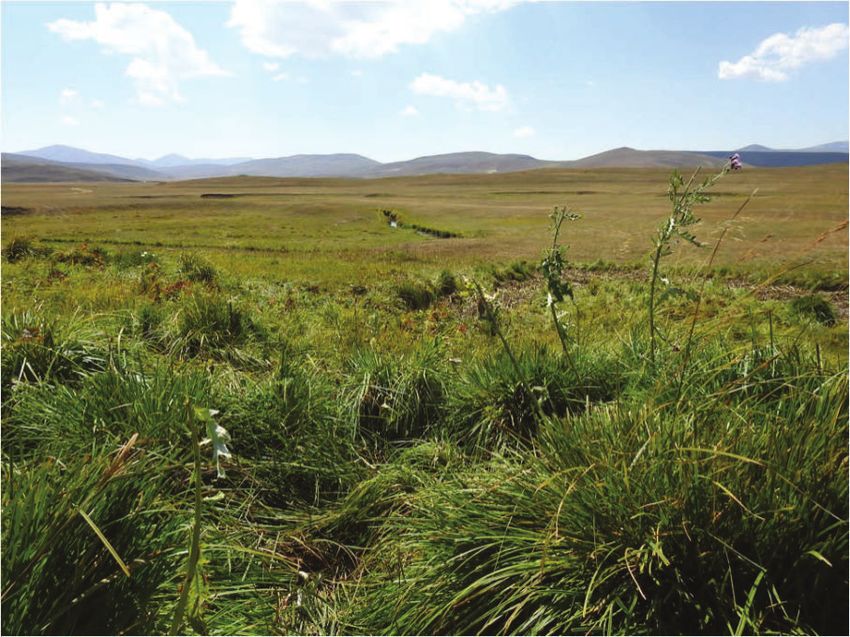
Bird Census News
2021, volume 34 n° 1
ISSN 1381-5261
Free download pdf from www.ebcc.info

Bird Census News is the Journal of the European Bird Census Council or EBCC. The EBCC
exists to promote the organisation and development of atlas, census work and population
studies in all European countries; it promotes communication and arranges contacts
between organisations and individuals interested in census and atlas work, primarily (but not
exclusively) in Europe.

Bird Census News reports developments in census and atlas work in Europe, from the local
to the continental scale, and provides a forum for discussion on methodological issues.

CHIEF EDITOR:
Aleksi Lehikoinen
    Finnish Museum of Natural History
    P.O. Box 17, University of Helsinki, Finland
    aleksi.lehikoinen • helsinki.fi

EDITING TEAM:
Henning Heldbjerg
    Department of Bioscience, Aarhus University
    hh • bios.auk.dk
Mark Eaton
   Royal Society for the Protection of Birds, UK
   Mark.Eaton • rspb.org.uk
Jean-Yves Paquet
    Département Études Aves-Natagora, Namur, Belgium
    Jean-yves.Paquet • aves.be

LAY-OUT:
Olga Voltzit
    Zoological Museum of Moscow Lomonosov State University, RU
    Voltzit • zmmu.msu.ru

Cover illustration by Evgeniy Koblik
Bird Census News 2021, 34/1: 1

                                     Bird Census News
                                  Volume 34/1, June 2021

Monitoring and use of bird data
There are many different ways to monitor birds. Breeding bird surveys and International mid-winter
Waterbird Counts are probably the most commonly used examples. This issue of the Bird Census
News introduces a less-known method: roost counts. The first article is an example from the Nether-
lands, where the method has produced important information on both breeding and non-breeding
bird populations. The monitoring data is collected, so that it can be used in various ways. The second
paper is about Corn Crake surveys in Armenia and how the data has been used to evaluate the con-
servation status of the species. The third paper summaries the latest report on the state of the birds
in the United Kingdom, which is largely based on monitoring data. The last three articles of the issue
continues two new series. We have two interviews with observers of the EBCC board, Sergi Herrando
and Alena Klvaňová, and the final article discusses the online tool of the Dutch territory mapping
scheme. Enjoy!
Aleksi Lehikoinen
Editor Bird Census News

                                                  1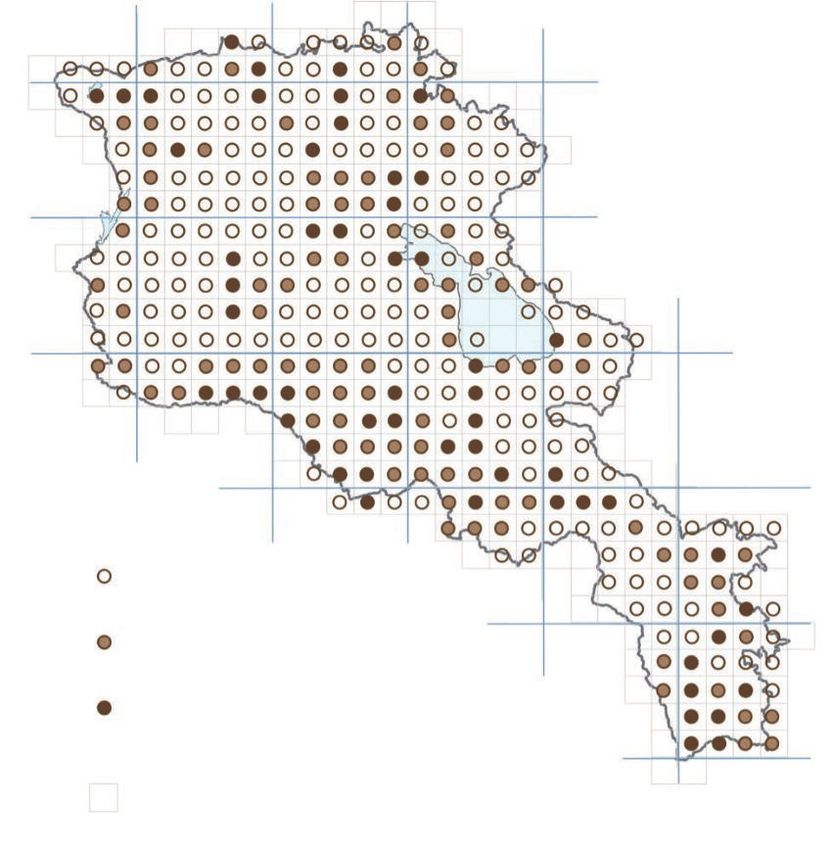
Bird Census News 2021, 34/1: 2

Aleksi Lehikoinen
     Editorial ................................................................................................................................. 1
Paul van Els and Chris van Turnhout
     Communal roost counts in the Netherlands: a summary of 10 years of monitoring ............. 3–8
Karen Aghababyan, Anush Khachatryan, Asya Ghazaryan, and Viktorya Gevorgyan
    About the state of Corn Crake Crex crex Bechstein 1803 in Armenia ..................................... 9–17
Mark A. Eaton
   The state of the UK’s birds 2020 — a summary ...................................................................... 18–20
European Monitoring News
Aleksi Lehikoinen
     Introducing the EBCC board:
     Sergi Herrando ....................................................................................................................... 21–22
     Alena Klvaňová ...................................................................................................................... 23–24
Chris van Turnhout, Gerard Troost and Jan-Willem Vergeer
     Introducing online tools to give feedback to the volunteers, volume 2: Dutch breeding bird
     monitoring program .............................................................................................................. 25–27

                                                                            2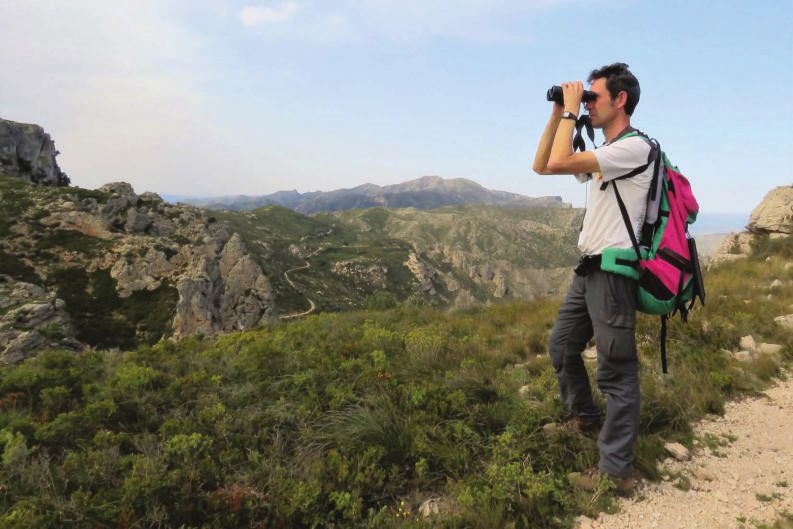
Bird Census News 2021, 34/1: 3–8

                      Communal roost counts in the Netherlands:
                        a summary of 10 years of monitoring

                                 Paul van Els & Chris van Turnhout

    Sovon Dutch Centre for Field Ornithology, PO Box 6521, 6503 GA Nijmegen, The Netherlands
                       paul.vanels@sovon.nl, chris.vanturnhout@sovon.nl
                    Corresponding author: Paul van Els paul.vanels@sovon.nl

                      Abstract. Communal roost counts are a useful tool for national and site-based monitor-
                      ing of bird populations during the non-breeding period, particularly in situations when
                      birds disperse widely during the day to forage and are hard to count at that time. Within
                      the Dutch application of the European Bird Directive, specific numeric goals are set for
                      19 species in the Netherlands to safeguard their communal roosts in protected areas
                      and populations in surrounding areas that depend on these roosts. Since the start of our
                      national Communal Roost Census in 2009, we have greatly increased our knowledge of
                      locations of roosts and the numbers they hold, particularly (but not only) in Bird Directive
                      sites. Based on our experience from 10 years of monitoring, we discuss advantages and
                      drawbacks of roost counts and share examples from Great Egret and Caspian Tern counts.

Introduction                                              Currently, 53 Natura 2000 sites have been as-
                                                          signed a communal roost function for 19 species
Approximately 135 bird species make use of com-           (Table 1). Mostly, these concern large wetlands
munal roosting sites in the Netherlands, including        and species that are important in an international
species that only roost socially at high tide (van        context. As a secondary goal of the census, roosts
den Bremer et al. 2008). There have been a great          for other species and outside Natura 2000 sites
number of ‘grey’ publications dealing with this           are also gathered. These may after all affect the
aspect of avian life history, mostly focusing on          communal roost function of Natura 2000 sites or
single species counts within a well-defined region        they may be used as a guideline for future desig-
during one or multiple seasons, often combined            nation of complementary sites.
with a description of ecological aspects of com-          Apart from this site-specific monitoring, for some
munal roosting (e.g. Kleefstra 2010, Wymenga et           species also the national trend of the non-breed-
al. 2013, Altenburg & van Horssen 2018). Here,            ing population is assessed using communal roost
we give a synopsis of the systematic, annual              counts, instead of using counts of foraging birds
counts of communal roosts that have taken place           made during the day, such as under the Dutch
since the winter season of 2009/10, as part of the        Wetland Bird Census (Hornman et al. 2019). With
Dutch Communal Roost Census.                              roost counts, a larger proportion of the popula-
In the Netherlands, Natura 2000 sites have been           tion can be counted with a much more limited
assigned under the EU Bird Directive for breed-           time investment. This concerns species that are
ing, migrating/wintering and roosting birds. This         restricted to a specific habitat, that are relatively
means that any potential disturbance (e.g. chang-         scarce and show a strong, seasonal peak in oc-
es in water level management, recreation, new             currence or roost in large numbers in a limited
infrastructure for transport or energy) for roost-        number of locations: Caspian Tern Hydroprogne
ing birds in these areas needs prior research into        caspia, Gull-billed Tern Gelochelidon nilotica,
possible consequences. For this purpose, numeric          Black Tern Chlidonias niger, Common Crane Grus
goals have been formulated for most species-ar-           grus, Ruff Philomachus pugnax and Black-tailed
ea combinations, based on known numbers from              Godwit Limosa limosa. For the latter two species,
available water bird and roost counts during the          a combination of non-overlapping wetland and
period 2008–2012 (van Kleunen et al. 2017).               roost counts is used to calculate a national trend
These are used as a reference, and compared               (van Els et al. 2020). Roost counts are also suita-
with the results from counts that are carried out         ble for more common species that forage in wide-
as part of the Dutch Communal Roost Census.               ly scattered locations in farmland (outside large

                                                      3
Bird Census News 2021, 34/1: 3–8

Table 1. Target species of the Dutch National Communal          multiple species may be counted, that simulta-
        Roost Census and number of Bird Directive areas
        designated as roost sites for these species.
                                                                neously have a peak in their occurrence (e.g.
                                                                Eurasian Oystercatcher Haematopus ostralegus,
 Species                                        Areas (n)       Ruff Calidris pugnax and Black-tailed Godwit;
 Eurasian Cormorant Phalacrocorax carbo            13           Eurasian Cormorant and Great Egret). Roosts of
 Great Egret Ardea alba                            4            several species (e.g. Great Egret, geese, terns)
 Bewick’s Swan Cygnus columbianus                  19           persist for many years, so that search time is re-
 Whooper Swan Cygnus cygnus                        4
                                                                duced to a minimum, but other species are more
 Taiga Bean Goose Anser fabalis                    3
                                                                capricious in their use of roosts (e.g. Starling
                                                                Sturnus vulgaris, hirundines) and require more
 Tundra Bean Goose Anser serrirostris              12
                                                                effort. New roosts can be found opportunistical-
 Pink-footed Goose Anser brachyrhynchus            4
                                                                ly, or by searching for promising locations based
 Greater White-fronted Goose Anser albifrons       28
                                                                on the ecology of different species, always keep-
 Lesser White-fronted Goose Anser erythropus       3
                                                                ing in mind that predation and disturbance-free
 Graylag Goose Anser anser                         27
                                                                locations are most attractive. For several species
 Barnacle Goose Branta leucopsis                   24           (e.g. Great Cormorant, herons and egrets, geese,
 Brent Goose Branta bernicla                       6            Crane), sheltered water bodies with or without
 Eurasian Crane Grus grus                          3            woody vegetation are suitable, others frequent
 Eurasian Oystercatcher Haematopus ostralegus      1            sand bars and islets (e.g. terns, waders), or iso-
 Ruff Philomachus pugnax                           5            lated groups of trees (e.g. crows, pigeons), and
 Black-tailed Godwit Limosa limosa                 19           some are decidedly picky: migrating swallows
 Eurasian Curlew Numenius arquata                  6            almost exclusively roost in reed beds. The Dutch
 Caspian Tern Hydroprogne caspia                   3            Communal Roost Census database holds infor-
 Black Tern Chlidonias niger                       3            mation on all known roosts; roosts that are no
                                                                longer used or roosts that have become unavail-
                                                                able due to e.g. tree cutting are marked as un-
wetlands) during the daytime and are therefore                  used, but may be used again in the future.
difficult to assess completely using tradition-                 Out of two to three counts per year for each spe-
al water bird counts, such as Great Egret Ardea                 cies, the highest number is used as a seasonal
alba, and Great Cormorant Phalacrocorax carbo.                  maximum per roost. Because numbers fluctuate
                                                                at roosts, maxima are better representations of
Methods                                                         true numbers than means. This way of working
                                                                has a few limitations; because roost counts are
To be able to count total numbers of roosting                   a snapshot in time, it is possible that the highest
birds accurately, it is desirable to perform counts             numbers are missed. This results in fairly large
simultaneously at a regional or national level.                 effects of chance in count results, so it will take
For the Dutch Communal Roost Census (Fig. 1),                   longer before trends are detected at site level
two or three counts are organized within spe-                   (Kleefstra 2010, Altenburg & van Horssen 2018),
cies-specific time windows per year since 2009                  although preliminary statistical exploration indi-
(and, for some species, outside of the frame-                   cates these chance effects do not hinder trend
work of the Roost Census before that time). Time                development. In addition, peak occurrence of
windows coincide with the peak occurrence of                    particular species do not occur simultaneously
each particular species, and consist of a period                everywhere in a country (Altenburg & van Hors-
of two weeks around a single preference date,                   sen 2018). Traditionally, large nature reserves
to offer some flexibility to observers, and offer               have been an obstacle to bird counts, but simul-
the possibility to combine the roost count with                 taneous counts (by sometimes >10 counters)
the mid-monthly wetland count. Two to three                     of locally roosting birds offer a solution for this
one-hour counts per year per site form a com-                   problem. Many roosts regularly move geograph-
promise between capturing some of the (large)                   ically and at the moment of counting (usually
fluctuations in numbers through time and at-                    around dusk), so there may not be time to visit
tracting a sufficient number of volunteer ob-                   or search for another location. Another issue is
servers. Of course, more counts per roost during                counters only reporting positive numbers, lead-
the year are encouraged. During a time window,                  ing to a lack of null counts. If null counts happen

                                                            4
Bird Census News 2021, 34/1: 3–8

                              Number of volunteers in Dutch Communal Roost Census

            520

            500

            480

            460

            440

            420

            400

            380
                    2013/14      2014/15    2015/16     2016/17      2017/18   2018/19    2019/20

Figure 1. Number of participants in Dutch Communal Roost Census by year.

repeatedly, the motivation to count decreases,               sorts of sheltered water bodies. Because roosts
even though numbers at roosts fluctuate natu-                tend to be compact and birds are easily counted
rally. For these reasons, roost counts are some-             because of their conspicuous coloration, few ob-
times incomplete, especially in large areas that             servers are generally needed. The largest roosts
consist of a network of multiple smaller roosts.             are found in the river Rhine basin, in the west-
However, the advantages of capturing large                   ern polders and around Lake IJsselmeer and the
numbers of birds during a relatively small time              lake-district in the north of the country. These
interval generally outweigh the disadvantages                are all areas where the species has always been
and there are workaround solutions for incom-                numerous, ever since the explosive spread of the
plete counts. A post-hoc correction is applied by            species across the country. The median number
imputing numbers on known roosts that were                   of birds per roost is 12 (1st–3rd quantile: 5–27).
not counted. Missing values are imputed accord-              Roost counts have resulted in 30% higher totals
ing to a multiplicative model of site, year, and             of the species compared to the results from the
month factors in UINDEX (Underhill & Prŷs-Jones              Wetland Bird Survey, because birds foraging in
1995). Imputing is only applied and used when                agricultural areas are not well represented in
there is a predefined minimum amount of count                these counts (Klaassen 2012).
data available.
                                                             Caspian Tern Hydroprogne caspia
Case examples of roost counts:                               In the Netherlands, the Caspian Tern occurs only
Great Egret and Caspian Tern                                 for a very short period during migration (Fig.
                                                             2b, 3). Numbers are higher during mid-August
Great Egret Ardea alba
                                                             through the beginning of September than during
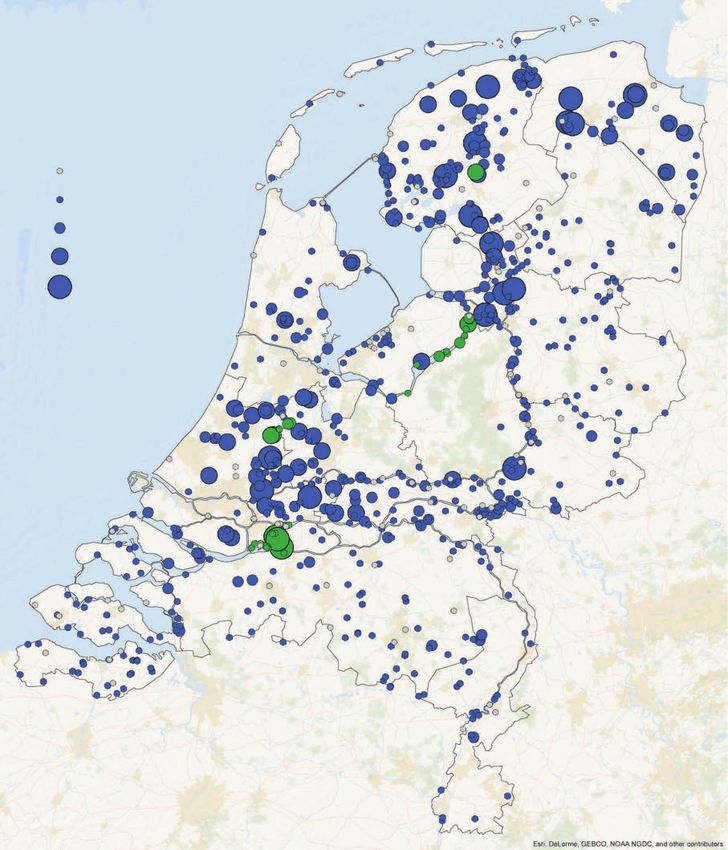
With over 11,000 counts since the inception of               April and May, so simultaneous roost counts with
the National Roost Census, the Great Egret is                >20 count participants nationwide are organised
the most frequently counted species. This is also            during three days in late summer. The species of-
evident from the geographic spread of counts                 ten forages individually during the day over large
(Fig 2a); there are only a few areas in the Neth-            water bodies, where they range widely, so that
erlands that lack roost counts of the species.               roost counts are the ideal way to monitor the
The near-absence of Great Egrets on the sandy                species. The largest roosts are found on sand bars
soils in the eastern half of the country is genu-            near the shores of Lake IJsselmeer. Numbers of
ine. Roosts are generally found in and around all            the Caspian Tern have increased steadily during

                                                         5
Bird Census News 2021, 34/1: 3–8

         Great Egret

     mean of seasonal maximum

              0

              1–25
              26–50
              51–100

              101–295

Figure 2a. Distribution and size (mean of seasonal maximum counts, 2009–17) of communal roosts in the Netherlands of
Great Egret. Green symbols refer to sites with a specific target for communally roosting birds, blue symbols are outside
the Natura 2000-network or are without targets for roosting birds.

the last decade, from >10 individuals in the 1980s             Caspian Tern roosts are small, with a mean of 8
to on average >100 individuals in the last decade.             (3–18) individuals. A challenge in counting roosts
This contrasts with the trend of breeding pairs in             of the species is that Caspian Terns frequently
the Baltic, which decreased for long and has now               change roost sites due to varying water levels.
stabilized (Eskildsen & Vikstrøm 2011), and could              The enthusiasm of volunteer counters to track
indicate a change in migratory route. In general,              these every time makes up for this, however.

                                                           6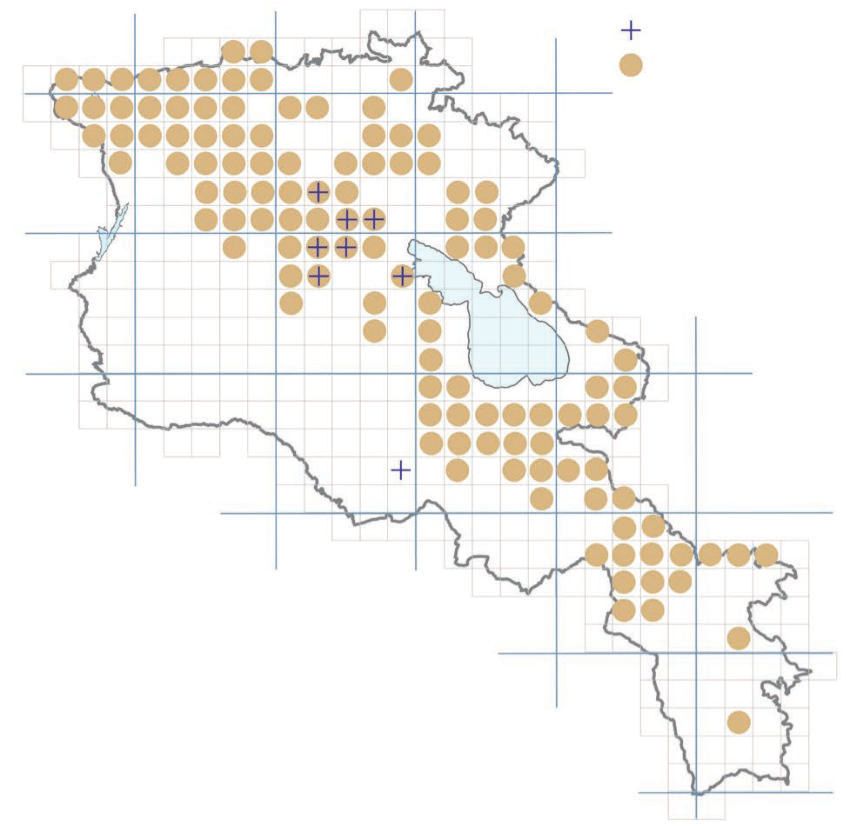
Bird Census News 2021, 34/1: 3–8

         Caspian Tern

      mean of seasonal maximum

              0

              1–5
              6–10
              11–25

              26–45

Figure 2b. Distribution and size (mean of seasonal maximum counts, 2009–17) of communal roosts in the Netherlands of
Caspian Tern. Green symbols refer to sites with a specific target for communally roosting birds, blue symbols are outside
the Natura 2000-network or are without targets for roosting birds.

References
Altenburg J.F. & P. van Horssen. 2018. Opvallende verandering in het maandelijks voorkomen van de Wulp op
          slaapplaatsen langs de Lek. Limosa, 91: 61–70.
van den Bremer L., O. Klaassen & M. van Roomen 2008. Slaapplaatsen van vogels: toekomstig verspreidings-
          en monitoringsonderzoek. Sovon-informatierapport 2008-05. Sovon Vogelonderzoek Nederland,
          Nijmegen.
CBS 2018. Meetprogramma’s voor flora en fauna. Kwaliteitsrapportage NEM over 2017. CCN creatie, Den Haag.

                                                            7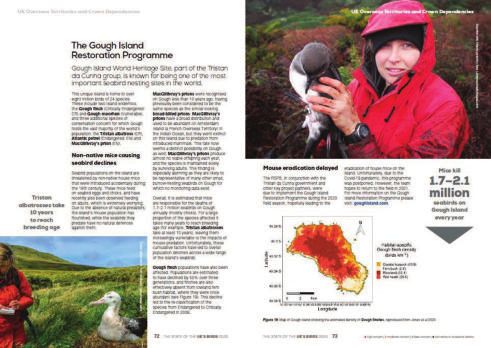
Bird Census News 2021, 34/1: 3–8

                                200

                                180

                                160

                                140
               maximum number

                                120

                                100

                                80

                                60

                                40

                                20

                                  0
                                      80/81   85/86   90/91   95/96   00/01   05/06      10/11      15/16

Figure 3. Trends in seasonal maximum counts of Caspian Tern. The dark blue line represents the trend, light blue lines
indicate confidence intervals and red dots are individual seasonal maximum counts.

Eskildsen A. & T. Vikstrøm 2011. Truede og sjældne ynglefugle i Danmark 2010. Dansk Ornitologiske Forening,
            108: 1–144.
Hornman M., F. Hustings, K. Koffijberg, E. van Winden, P. van Els, A. van Kleunen, Sovon Ganzen-en
            Zwanenwerkgroep & L. Soldaat 2019. Watervogels in Nederland in 2016/2017. Sovon Rapport
            2019/01. Sovon Vogelonderzoek Nederland, Nijmegen.
Klaassen O. 2012. De toename van overwinterende Grote Zilverreigers in Nederland aan de hand van
            dagtellingen en slaapplaatstellingen. Limosa, 85: 82–90.
Kleefstra R. 2010. Monitoring van ganzen op slaapplaatsen in het centrale merengebied van Friesland 1998–
            2010. Limosa, 83: 160–167.
Underhill, L. G., & R. P. Prŷs-Jones 1994. Index numbers for waterbird populations. I. Review and methodology.
            Journal of Applied Ecology, 31: 463–480.
Van Els, P., E. van Winden, O. Klaassen, L. Soldaat, C. van Turnhout. 2020. Gemeenschappelijke slaapplaatsen in
            Nederland: resultaten van 10 jaar tellen. Limosa, 93: 92–102.
Van Kleunen, M. van Roomen, J. A. M. Janssen, A. T. Kuiters, E. van Winden, A. Boele, A. M. Schmidt, & T.
            van Vreeswijk 2017. Advies over correcties en bijstellingen van Natura 2000-doelen. Wageningen
            University & Research, rapport 2779c.
Wymenga, E., Y. van der Heide & M. Koopmans 2013. Steltlopers op slaapplaatsen in Fryslân in 2011. Twirre, 23:
            3–9.

Received: 24.11.2020
Accepted: 19.04.2021

                                                                8
Bird Census News 2021, 34/1: 9–17
About the state of Corn Crake Crex crex Bechstein 1803 in Armenia
Karen Aghababyan, Anush Khachatryan, Asya Ghazaryan, Viktorya Gevorgyan
Bird Links Armenia (former TSE Towards Sustainable Ecosystems) NGO,
87b Dimitrov, apt 14, 0020 Yerevan, Armenia
karen.aghababyan@gmail.com
Abstract. The Corn Crake Crex crex is one of the most secretive birds in Armenia, which
was assessed as Vulnerable in the last edition of National Red Book. We carried out
national surveys in 2003–2019 and estimate the current occupied range of the Corn
Crake in Armenia as 1,859 km2 and its Extent of Occurrence as 16,621 km2. In 2019 we
estimate the species’ population size at 2,529 calling males (95% CI: 1,770–3,290). Its
population trend shows a moderate significant decline; –19% in 17 years, with insignif-
icant fluctuations. Surveys of the seven Hunters’ Unions of Armenia found that there
are 10,000 to 20,000 active hunters, which sometimes shoot Corn Crake due to lack of
knowledge of the Red-listed status of the species. Existing mowing practices result in
habitat degradation, which also contribute to the decline of the Corn Crake. Currently
the species deserves a conservation status of Vulnerable under criteria B1ab+B2ab+C1.
To protect the species, it is recommended: (1) develop better financial mechanisms to
fund the monitoring of the populations of the game species and control of hunting and
poaching; (2) develop a new State exam for obtaining a hunting license aimed at having
better educated and more responsible hunters; (3) establish small seasonal protect-
ed areas for the Corn Crakes; (4) develop and introduce alternative mowing schemes
which support higher survival of Corn Crakes’ chicks; (5) develop alternative fodder for
livestock in winter to decrease their need in hay. The proposed measures should be
accompanied by monitoring of the species.
Introduction & Kalashyan 2010). Corn Crakes show some hab-
itat specialization within Armenia, inhabiting
Corn Crake (Crex crex) is a monotypic species, a rather narrow range of meadows and marsh-
widely distributed in Eurasia (Taylor & Kirwan es from 1,200 to about 2,500 metres above sea
2020). Its global conservation status was down- level (Adamian & Klem 1999). The landscapes in-
graded during the last decade from Near Threat- habited by the species may indeed potentially be
ened with decreasing population trend (BirdLife influenced by various anthropogenic factors, and
International 2008) to Least Concern with a stable the birds may be victims of direct persecution.
population trend (BirdLife International 2016). Ten years after the last assessment, it is a time to
This classification has taken place on the basis of review the conservation status of the Corn Crake
improved knowledge of the species’s global ex- examining changes in its distribution and popula-
tinction risk, as opposed to a genuine recovery to tion, and evaluating existing and potential threats
favourable conservation status across its range. for the species.
At the European scale the species is also con-
sidered as Least Concern (BirdLife International
2015), while in Armenia it was included in the Material and methods
Red Book of Animals of Armenia as Vulnerable
Corn Crake data collection
VU B1ab (iii)+2ab (iii) with unknown population
size and trend and an assumption of such threats Early observations of Corn Crake in Armenia re-
as disturbance by agricultural operations during corded in the literature were collated and sum-
the breeding season, disturbance by shepherd marized in Adamian & Klem (1999). Systemat-
dogs, which accompany livestock in the period of ic data collection on the Corn Crake started in
nomadic grazing in the mountains, disturbance 2003 within a National Bird Monitoring Program.
by wild herb collectors, and poaching (Aghasyan The standard European Monitoring Grid with a
9Bird Census News 2021, 34/1: 9–17
squares, at least once surveyed
in the period of 2003–2019
squares, surveyed regularly
during 2003–2019
squares, where transects were con-
ducted annually during 2003–2019
squares not visited during
2003–2019
Figure 1. Squares (on a 10×10-km grid) surveyed for Corn Crakes in Armenia either systematically (annually after first
count), or opportunistically (at least in one year) over the period 2003–2019.
10×10-km mesh was applied to Armenia (Council ever, males call loudly and regularly during the
of Europe 2018), dividing the territory of the re- breeding season, having an unmistakable voice
public into 374 squares. The monitored squares and making it possible to detect their presence
were of two kinds: “systematic” ones that, once and to count them. In the surveyed squares, data
counting started on them, were systematically on Corn Crake was obtained from two different
counted every subsequent year, and “opportun- sources: (1) opportunistic observations and (2)
istic” ones, where counts were carried out when standardized counts (data collected according to
the opportunity arose. In total, in the period of standard methodology). Both types of data may
2003–2019 the 325 squares were visited at least be used to create species distribution maps, and
once during that period, including 147 squares, data collected by the second method was used
with systematic data collection (see the map on for estimating population densities and trends.
Fig. 1). In total, out of 325 surveyed squares the 1. Opportunistic observations were provided by
data on Corn Crake was collected in 118 squares. birdwatchers and accepted as long as they con-
The Corn Crake is quite a secretive species, which formed to minimum data requirements: accurate
spends most of the time in rather high herbal veg- species identification, observation date, geograph-
etation, and is hardly seen walking or flying. How- ical coordinates, name of nearest locality (human
10Bird Census News 2021, 34/1: 9–17
settlement, mountain, historical site, etc.), breed- thanks to the fieldwork required for the Europe-
ing code (based on the bird’s behaviour, indicat- an Breeding Bird Atlas 2 (Keller et al. 2020), and
ing how likely it is that the bird is breeding in the some new standardized counts were created
surveyed area — (Voříšek et al. 2008)), observer from atlas routes. All data were collated at the
name and contact details. The observations often end of each counting season, entered into a data-
have additional information, e.g., time, obser- base and checked.
vation duration, number of people in the group,
etc. Since it was not always possible to record the Hunting data collection
precise geographical coordinates on the spot, the
To gather information on possible hunting pres-
information was sometimes provided at the level
sure on the Corn Crake, we conducted surveys
of the 10×10-km square.
of the heads of seven Hunting Unions and their
2. Standardized counts (counts done following a
hunter members (keeping the hunters’ survey
predefined standard protocol) can be conducted
confidential to reduce the risk of false reporting).
by both professional ornithologists and amateur
We tried to keep the numbers per Hunting Un-
skilled birdwatchers. Counts were carried out
ion roughly equal (minimum difference was two
during a fixed period of 1 or 2 hours, when an
and the maximum difference was 10 hunters).
observer slowly walked along a transect route
The survey was conducted in spring 2019, after
counting all the calling males within 200 m either
the end of the 2018–2019 hunting season, which
side of the transect (hence in a strip 400 m wide).
usually starts on 20th to 25th of August and lasts
The specific call of the Corn Crake is clearly audi-
until end of March of the next year. For the sur-
ble even from a farther distance, that is why we
vey we have sent out over 800 questionnaires.
assume high detectability of the birds within the
A total of 486 responses were received, and a
200 m distance from each side of the transect.
further 14 responses obtained following person-
As far as possible, surveys were done a couple of
al requests, giving a total of 500. The following
hours before the sunrise or in evening soon after
questions were included in the questionnaire: (1)
sunset, in favorable weather conditions, such as
do you hunt? (2) do you know Corn Crake (photo
absence of rain and weak wind (below Beaufort
of the bird supplied)? (3) do you ever hunt Corn
Force 3). The earlier studies (Hudson et al. 1990)
Crake? (4) how often do you hunt Corn Crake (al-
suggest that the calling activities of Corn Crakes
most every year; not frequently; rarely)? (5) how
can be significantly reduced before 23:00 and af-
many Corn Crake do you hunt per annum? (6) do
ter 2:00 am, and therefore its number could be
you know whether Corn Crake is in Red Book of
underestimated, however we assume that use
Armenia or not? (7) do you know anything about
of the same method over the period of time pro-
punishment for illegal shooting of Corn Crake?
vides us with the reliable data for computation of
We also interviewed staff at the State Inspector-
the species population trend. The best period for
ate for Nature Protection and Mineral Resourc-
Corn Crake counts was considered to be between
es. These interviews were conducted with four
15 May and 10 June, nevertheless, data collected
inspectors from Shirak, Lori, Kotayk, and Vayots
later in mid-June to July were used as well. The
Dzor Provinces and were less structured. The
standardized counts required more detailed data
main questions that were relevant here were
collection than incidental observations: number
related to the ability of the inspectors to detect
of calling males heard, observation date, geo-
poaching on this red-listed species.
graphical coordinates of the beginning and end
of the route, type of habitat, start and end times
Data analysis
of the count, individual-specific breeding codes,
observer name and contact details. The number The distributional range of Corn Crake was deter-
of routes in one 10×10-km square varied from mined at the 10km x 10-km square level. A giv-
one to two, depending on how many habitat en square was considered occupied if the calling
types were present in a square. Each route was males were recorded in any of the 17 years 2003–
dedicated to one type of habitat only. We tried to 2019 through incidental observation or standard-
keep the same routes for the standardized counts ized count. To compare the change in distribution
and to survey them every year, whenever pos- from before 2003 with that during 2003–2017,
sible. However, in the period 2013–2017, when we also digitized all the previous records summa-
the number of volunteer counters increased rized in Adamian and Klem (1999). The available
11Bird Census News 2021, 34/1: 9–17
before 2003
2003–2019
Figure 2. Distribution of the Corn Crake in Armenia based on a 10×10-km square grid, before and after 2003.
habitats of the species were calculated using the transects and its standard error (SE) was calculat-
software package ArcGIS 10.0 (Environmental ed. The total size of the population of Corn Crakes
Systems Research Institute, Inc.) using the own in Armenia in 2019 was estimated as the sum of
database of the habitat shape files. The Extent of the number obtained by multiplying the 2019
Occurrence was computed using IUCN guidelines upper and lower ranges of the density (average
(IUCN Standards and Petitions Committee 2019). ± SE) by the area of habitat within the occupied
For the purpose the rule of minimum convex pol- range. The density of the species and therefore
ygons (the smallest polygon in which no internal the total population size of the species is taken as
angle exceeds 180° and which contains all the minimum, since the earlier studies (Hudson et al.
sites of occurrence) was applied within the over- 1990) demonstrated that the surveys conducted
all distribution inside the borders of Armenia before 23:00 and after 4:00 am can provide fig-
The density of the Corn Crake was taken in com- ures, which are up to five times lower than the
mon for this species format of calling males real densities of the species.
(Taylor & Kirwan 2020, EEA 2020). The density To calculate population trends, we used transects
of Corn Crakes was estimated for each transect with multi-year data series and processed the
route by dividing the recorded number by the data (density values per transect and year) using
area around a transect, obtained as the length TRIM 3.54 software (van Strien et al. 2004). In
of the route multiplied by the strip width of 400 total, there were 289 data values analyzed from
m. The density values were then averaged across 17 transects monitored annually. We calculated a
12Bird Census News 2021, 34/1: 9–17
Figure 3. Typical habitat of the Corn Crake in the Vardenis mountains of Armenia. Photo by K. Aghababyan.
population index using log-linear Poisson regres- the timberline (Fig. 3). Its presence was typically
sion, and applying a time effect model; the indices associated with tall (60–100 cm) herbal vegeta-
are calculated relative to 2003, which is given a tion and often with some wet marsh-like areas.
value of 100. TRIM also provides an estimate of The total area occupied by Corn Crake in Armenia
overall trend in the form of the average annual is estimated at 1,859 km2. The Extent of Occur-
rate of change r and its standard error SE(r) across rence is estimated at 16,621 km2. The population
the full span of years (Pannekoek & van Strien appears to be fragmented into at least 15 sub-
2005). The importance of the trend was assessed populations.
based on its magnitude and statistical significance The average density of the species (±SE) in 2019
in accordance to van Strien at al. (2001). makes 1.36 (±0.21) calling males per square km
(95% confidence limits 0.95 to 1.77 birds). For
2019 the size of the breeding population of Corn
Results Crakes in Armenia was estimated at 2,529 call-
Distribution, population size and trend in ing males (95% confidence limits 1,770 to 3,290
Armenia birds).
From 2003 to 2019, the population index calcu-
During the surveys of 2003–2019 the Corn Crake
lated by TRIM (Fig. 4) showed a moderate decline
was recorded in relatively large areas of Northern
(p < 0.05). The overall decline of the population
and Central regions of the country (Fig. 2). The
during 17 years was –19%, while the annual de-
species was recorded at elevations mainly rang-
crease was –1.3% ± 0.020% SE (Fig. 4).
ing from 1,400 to 2,600 m above sea level, al-
though some calling males were recorded as low
Hunting
as 1,020 m above sea level. The main habitats oc-
cupied by Corn Crake included meadows located According to the seven Hunters’ Unions of Arme-
on plateaus, in river valleys, and on slopes above nia, there are over 50,000 hunters in the coun-
13Bird Census News 2021, 34/1: 9–17
120
100
Collated index
80
60
2003 2005 2007 2009 2011 2013 2015 2017 2019
Years
Crex crex indices 95% confidence interval Linear (Crex crex indices)
Figure 4. Annual abundance index (relative to 2003, which is standardized to 100) of Corn Crake abundance in Armenia
during 2003–2019. The red line is the best-fitting curve with a constant rate of change. Up-down boxes indicate the differ-
ence between data points and the upper 95% confidence interval (CI), while up-down solid bars indicate the difference
with lower 95% CI.
try. However, the number of active hunters was The interview with the State Inspectorate body
estimated by the Hunters Unions to lie between established that during the last four years there
10,000 and 20,000 people. Out of the 500 hunters were no cases of poaching of Corn Crake record-
surveyed, all reported that they do hunt almost ed. However, the Inspectorate pointed out that
every season, but only 87 (17%) of them knew the absence of such records can be a result of
the Corn Crake. Out of those 87 hunters, 23 (26% very low number of inspections, due to under-
or 5% of total hunters surveyed) responded that staffing within the Inspectorate body and a lack
they have hunted Corn Crake. All 23 hunters men- of financial resources allocated for the inspection
tioned that they hunt Corn Crake rarely (at most process. The Inspectorate also noted an absence
once per three years) and every time they have of cooperation between the Inspectorate and the
got 1–2 birds. Only two hunters (2% of 87 hunters Hunters’ Unions, in contrast to the situation that
who knew the bird and 0.4% of total hunters sur- prevailed in Soviet times (before independence in
veyed) responded that they know about inclusion 1991), when such cooperation was very efficient
of the Corn Crake in the Red Book and about ex- and hunters volunteered for the inspection pro-
istence of punishment for illegal shooting of the cess, keeping poaching at a low level.
species.
Interviews with the heads of seven Hunters’ Un-
ions established that the hunters obtain hunting Discussion
permits based on two recommendations from Corn Crake population status
existing hunters and a face-to-face interview. The
questions asked at the interview cover weapon Adamian and Klem (1999) summarize the histor-
safety but do not assess knowledge on game ical distribution of the Corn Crake in Armenia,
birds’ species identification, which public lands and state that the species is rare and occurs in
are open to hunting, which species are Red-list- Tsakhkunyats and Pambak mountain ridges. The
ed, which hunting methods are allowed and publication also mentions a single record from
which ones prohibited, daily bag limits, cases of 16 May 1963 and 5 May 1964 in Jrvezh, but the
poaching and the punishments. specimen can hardly be considered a breeding
14Bird Census News 2021, 34/1: 9–17
one as the area is occupied by semi-desert and the Extent of Occurrence below 20,000 km2, crite-
arid mountain steppe. Lyaister and Sosnin (1942) ria B2, having the Area of Occupancy below 2,000
add several points to those records, which slight- km2, and accompanying points ‘a’ — as it has se-
ly expand distribution of Corn Crake at Pambak verely fragmented population and ‘b’ — because
mountains and vicinity of Lake Sevan. Dahl (1944) it shows continuous decline of mature individuals.
adds a point in Urts Mountain Ridge where the Also, conditionally, the species fits criteria C1, hav-
bird was observed on 15 May 1939. By compar- ing less than 10,000 mature individuals and decline
ison with the results of our surveys, it therefore of more than 10% over three generations. The
appears that the Corn Crake’s distribution in Ar- rescue effect, which could be an important point
menia is much wider and the species was most for the small countries like Armenia is theoretical-
probably overlooked in the counts due to its very ly possible in northern and north-western regions
secretive and nocturnal behavior. We did not find of the country, which are bordering with Georgia
the species at Urts mountains again, and assume and Caucasus part of the Turkey. Currently, the de-
that the Corn Crakes could probably breed here tailed information about the population status is
in past, but disappeared due to change of the available for Turkey, which supposes breeding of
habitat under aridization, which is caused by de- 80–200 calling males (BirdLife International 2015)
crease of precipitations and increase of average and can hardly support Armenian population. The
summer temperature documented for entire Ar- information for Georgia is less precise and sug-
menia (Ministry of Nature Protection 2015). gests 10,000–50,000 calling males with a poor
The number of calling males, currently estimated data quality, while providing no information on
for Armenia (1,770 to 3,290) significantly differs the species’ trend (BirdLife International 2015). In
from the figures presented in the IUCN assess- the same time, both countries are facing the simi-
ment of the species, which supposes presence lar issues of overgrazing and uncontrolled mowing
of 500–800 calling males in the country (BirdLife (Javakhisgvili et al. 2020), which could probably
International 2015). Taking into account that our affect the population of the Corn Crake in their
survey of the species was conducted in the hours countries, and therefore can negatively influence
when the calling activities of the Corn Crakes de- their potential in rescue of Armenian population
cline (Hudson et al. 1990), the real number of the of the species. Therefore, the species should still
calling males could be substantially higher. There- be considered as Vulnerable, but the criteria have
fore, we take the current estimate as conditional to be revised into B1ab+B2ab+C1 (IUCN Standards
and preliminary, aiming to test the night counts and Petitions Committee 2019) in Armenia.
of the Corn Crakes for the subsequent studies.
With the same reservation in mind, the number Threats
of mature individuals can be roughly estimated The poaching on the Corn Crake takes place, and
from the assumption that one male of Corn Crake rough calculation of number of shot birds per an-
usually bonds with two – three females (Taylor & num results from 420 to 840 specimens, assum-
Kirwan 2020), and thus can be computed by mul- ing existence of 10,000 to 20,000 active hunters
tiplying number of calling males by 2.5, resulting respectively. The main causes of poaching are
to 4,400 to 8,200 mature individuals. lack of hunters’ education and awareness and
The conservation status of the Corn Crake was lack of inspection’s control. This is mostly the re-
evaluated as Vulnerable B1ab(iii)+2ab(iii) for the sult of a lack of targeted financial resources and a
latest edition of the Red Book of Animals of Ar- lack of cooperation between the Ministry of Envi-
menia (Aghasyan & Kalashyan 2010). Under IUCN ronment, State Environmental Inspection and the
Red List guidelines, the time period over which Hunters’ Unions.
to assess population change is three generation Another threat comes from the practice of
lengths, which in the case of the Corn Crake is hay-making, similar to the situation in many
11.1 years (from the BirdLife global assessments European countries such as Britain and Ireland
at http://datazone.birdlife.org). Calculation of the (Green & Stowe 1993), and Sweden (Berg & Gus-
extent of the decline during a period of 11 years tafson 2007). The local villages mostly use slopes
indicates a reduction of 16%, which is well below for livestock grazing and flatter areas for cutting
the threshold of 30% needed to qualify under the hay that is stored to feed the livestock over
Red List criterion A. The species nevertheless fits winter. Those flatter and moister areas with high
the category Vulnerable under criteria B1, having grass are the core microhabitats for the Corn
15Bird Census News 2021, 34/1: 9–17
Crake and are being harvested in late June to early ers; (3) establish small seasonal protected are-
July, which is likely to destroy nests and kill chicks as prohibited for mowing and livestock grazing;
and to leave this secretive ground nester with in- (4) develop and introduce alternative mowing
sufficient cover. The growing use of hand mow- schemes which support higher survival of Corn
ers allows cutting the grass in the areas, which Crakes’ chicks; (5) develop alternative fodder for
where inaccessible for the machinery mowing livestock in winter to decrease their need in hay.
before, which even more reduces the safe habi- The proposed conservation measures should be
tats for the Corn Crakes. A high mortality of the accompanied with the monitoring of the species,
Corn Crake chicks is reported in Britain due to to secure proper assessment of the efficiency of
use of machinery mowing that proceeded from the suggested methods.
the outside of the field inwards and the mortality
decreased with the change of the scheme, which
was mowing from inside outwards (Green 2020). Acknowledgements
Most important of all is to delay hay-mowing un- The monitoring of the species in Armenia is sup-
til most birds have large young from their second ported by members of the Armenian Birdwatch-
brood that takes place in August (Green 2020). ing Association. Significant portion of the data
was provided by Hasmik Ter-Voskanyan. Data ar-
Recommendations chiving is supported by the Observation Founda-
To halt the decline of Armenian population of tion. During 2015–2017 the survey was also sup-
Corn Crake, we recommend two groups of meas- ported financially by the European Bird Census
ures, related to (a) improving the control of hunt- Council (EBCC) through a grant from the MAVA
ing and poaching and (b) improving the manage- Foundation for the European Breeding Bird Atlas
ment of meadows and reconsidering the mowing EBBA2. The Deutsche Gesellschaft für Interna-
practices. In particular, we suggest the following: tionale Zusammenarbeit (GIZ) GmbH supported
(1) develop alternative mechanisms for allocating Environmental Programme contributed to the
the funds which are generated from the sale of data analysis. Administrative support during this
hunting permits, targeting the revenue towards work was provided by the Ministry of Environ-
monitoring the populations of the game species ment of the Republic of Armenia. Dr. Rhys Green
and towards better control of hunting and poach- from Department of Zoology of the University of
ing on the ground; (2) develop a new State exam Cambridge and Dr. Sergi Herrando from Catalan
for obtaining a hunting license aimed at having Ornithological Institute commented on the early
better educated and more responsible hunt- draft of the manuscript.
References
Adamian, M. & Klem, D. 1999. Handbook of the Birds of Armenia. American University of Armenia, California.
Aghasyan, A. & Kalashyan, M. (eds.) 2010. The Red Book of Animals of the Republic of Armenia. Yerevan, Minis-
try of Nature Protection.
Aghababyan, K.E., Ter-Voskanyan, H., Tumanyan, S., & Khachatryan, A. 2015. First National Atlas of the Birds of
Armenia. Bird Census News, 28 (2): 52–58.
Berg, Å. & Gustafson, T. 2007. Meadow management and occurrence of corncrake Crex crex. Agriculture Ecosys-
tems & Environment, 120 (2–4): 139–144.
BirdLife International. 2008. Crex crex. The IUCN Red List of Threatened Species 2008. e.T22692543A26660497.
Downloaded on 04 January 2021.
BirdLife International. 2015. Crex crex. The IUCN Red List of Threatened Species 2015. e.T22692543A60016665.
Downloaded on 04 January 2021. (scope: Europe).
BirdLife International. 2016. Crex crex. The IUCN Red List of Threatened Species 2016. e.T22692543A86147127.
https://dx.doi.org/10.2305/IUCN.UK.2016–3.RLTS.T22692543A86147127.en. Downloaded on 04
January 2021.
Cramp, S. & Perrins, C. M. 1980. Handbook of the birds of Europe, the Middle East and Africa. The birds of the
western Palearctic, Vol II: Hawks to Bustards. Oxford University Press, Oxford.
Council of Europe 2018. Transfer of National Data to Pan-European 10×10 km grid for Non-EU contracting
parties to Bern Convention (Guidance Document). European Topic Centre on Biological Diversity.
Strasbourg, 27 September 2018. T-PVS/PA (2018) 14. 42 pp.
16Bird Census News 2021, 34/1: 9–17
Dahl, S.K. 1944. Vertebrates of Sarayboolagh Mountains. Zool. Digest, 3: 5–46. [In Russian].
EEA, 2020. Article 12 EU population status assessments — Methodology. European Environmental Agency,
European Topic Centre on Biological Diversity. Technical paper. 10 pp.
Fayvush, G., Arakelyan, M., Aghababyan, K., Aleksanyan, A., Aslanyan, A., Ghazaryan, A., Oganesyan, M., Ka-
lashyan, M. & Nahapetyan, S. 2016: In Baloyan, S. (ed.) The “Emerald” Network in the Republic of
Armenia. Yerevan. Ministry of Nature Protection.
Green, R., & Stowe, T. 1993. The Decline of the Corncrake Crex crex in Britain and Ireland in Relation to Habitat
Change. Journal of Applied Ecology, 30 (4): 689–695.
Green, R. 2020. Corn Crake conservation. British Birds, 113: 671–685.
Hudson, A., Stowe, T. & Aspin, S. 1990. Status and distribution of Corncrakes in Britain in 1988. British Birds, 83
(5): 173–187.
IUCN Standards and Petitions Committee. 2019. Guidelines for Using the IUCN Red List Categories and Criteria.
Version 14. Prepared by the Standards and Petitions Committee. 113 pp.
Javakhishvili, Z., Aghababyan, K., Sultanov, E., Tohidifare, M., Mnatsekanov, R., Isfendiyaroğlu, S. 2020. Status of
Birds in the Caucasus. In: Zazanashvili, N., Garforth, M., and Bitsadze, M. Ecoregional Conservation
Plan for the Caucasus, 2020 Edition. Supplementary Report. WWF, KfW, Tbilisi. 72–82.
Keller, V., Herrando, S., Voríšek, P., Franch, M., Kipson, M., Milanesi, P., Martí, D., Anton, M., Klvanová, A.,
Kalyakin, M.V., Bauer, H.-G. & Foppen, R.P.B. 2020. European Breeding Bird Atlas 2: Distribution,
Abundance and Change. European Birds Census Council & Lynx Edicions, Barcelona.
Lyaister, A.F. & Sosnin, G.V. 1942. Materials on Ornithofauna of Armenian SSR. Ornis Armeniaca. Yerevan, 418
pp. [In Russian].
Ministry of Nature Protection. 2015. Armenia’s Third National Communication on Climate Change. Yerevan,
“Lusabats” Publishing House, 165 p.
Taylor, B. & Kirwan, G.M. 2020. Corn Crake (Crex crex), version 1.0. In Birds of the World (del Hoyo, J., Elliott, A.,
Sargatal, J., Christie, D.A. & de Juana, E., eds). Cornell Lab of Ornithology, Ithaca, NY, USA.
Pannekoek, J. & van Strien, A.J. 2005. TRIM 3 Manual (TRends & Indices for Monitoring data). Statistics Nether-
lands. Retrieved from https://www.ebcc.info/art-13/ on 16th of Dec 2019.
van Strien, A.J., Pannekoek, J. & Gibbons, D.W. 2001. Indexing European bird population trends using results of
national monitoring schemes: a trial of a new method. Bird Study, 48: 200–213.
van Strien, A.J., Pannekoek, J., Hagelmeijer, E.J.M. & Verstrael, T.J. 2004. A loglinear Poisson regression method
to analyse bird monitoring data. In: Anselin, A. (ed.). Bird Numbers 1995, Proceedings of the Interna-
tional Conference and 13th Meeting of the European Bird Census Council, Pärnu, Estonia. Bird Census
News, 13: 33–39.
Voříšek, P., Klvaňová, A., Wotton, S., & Gregory, R.D. 2008. A best practice guide for wild bird monitoring
schemes. First edition. RSPB/CSO.
Received: 21.03.2021
Accepted: 21.05.2021
17Bird Census News 2021, 34/1: 18–20
The state of the UK’s birds 2020 — a summary
Mark A. Eaton
Royal Society for the Protection of Birds, UK
Mark.Eaton@rspb.org.uk
Since 1999, a partnership of the UK’s bird monitoring, research and
conservation organisations have published annual summaries of the
latest monitoring results for birds in the UK and its overseas territo-
ries: The state of the UK’s birds (SUKB) reports. After hiatus, with no
reports since 2017, SUKB 2020 (Burns et al. 2020) was published in
December, and here we give a brief summary of the findings.
The UK is fortunate to have a long tradition of ornithology, with
structured monitoring programmes dating back as far as 1928,
when the British Trust for Ornithology’s Heronries Census began.
Standardised monitoring of common breeding birds and wintering
waterbirds began in the late 1960s, and of rare breeding birds from
the early 1970s, so we have well-established volunteer-based moni-
toring programmes, some of which involve thousands of observers.
While there remain some species for which data on population size
and trends are sparse, these monitoring efforts means SUKB has a
wide range of survey updates to cover in its 80 pages.
New population estimates for the UK’s the biomass of non-native Pheasants Phasianus
birds colchicus in September is estimated to be more
than the post-breeding biomass of all native spe-
Reporting for Article 12 of the Birds Directive — cies combined, with largely unquantified ecologi-
while the UK was still in the European Union — cal impacts (see Mason et al. 2020).
has resulted in the publication of new population
estimates for all of the UK’s regularly occurring
bird populations (Woodward et al. 2020). A syn-
Population trends
thesis of these estimates in SUKB 2020 reveals SUKB 2020 gives summary tables for trends de-
that the UK has around 83 million pairs of native rived from all the UK’s main bird monitoring pro-
breeding birds, with the Wren Troglodytes trog- grammes. The Breeding Bird Survey (www.bto.
lodytes being the commonest with 11 million org/our-science/projects/bbs), and its prede-
pairs; this and ten other species contribute 60% cessor the Common Bird Census, provide trends
of all the UK’s breeding birds. The total is approx- from 1970 onwards covering 117 species. In addi-
imately 19 million pairs fewer than in 1966, ow- tion, for the first time in SUKB, we present trends
ing to a rapid net loss of birds in the late 1970s in survival and productivity for a subset of spe-
and 1980s, driven largely by declines in numbers cies covered by demographic studies based on
of House Sparrows Passer domesticus and Tree ringing and nest-recording. Many of the individ-
Sparrows P. montanus, Starlings Sturnus vulgaris, ual species’ trends will seem familiar to readers
Whitethroat Sylvia communis and Skylark Alau- across Europe, for example marked declines in
da arvensis. Total native bird biomass has risen birds of agricultural habitats, such as Turtle Dove
slightly over the same period, however, mainly Streptophilia turtur (down by 98% since 1970),
due to the increase in Woodpigeons Columba whereas many generalist woodland species have
palumbus. Meanwhile, due to the release of ap- increased, e.g. Blackcap Sylvia atricapilla (up by
proximately 47 million individuals per annum, 335% since 1970).
18Bird Census News 2021, 34/1: 18–20
bution, rather than flyway-level population
declines. In oher instances, however, these
declines, such as for Bewick’s Swan Cygnus
columbianus and Common Pochard Aythya
ferina, are known to be related to declines
on a much wider scale.
Not just the UK
The UK is unusual in having four constituent
nations, and as in recent years responsibili-
ty for the delivery of conservation has been
devolved to national governments, the re-
porting of the status biodiversity at nation-
Rare and scarce breeding birds are monitoring al level has assumed greater importance. As a
by the Rare Breeding Birds Panel (www.rbbp.org. consequence, SUKB 2020 is the first report in the
uk); it is notable that many of the UK’s rare and series to include dedicated sections for England,
scarce breeding birds are increasing. Thirteen Northern Ireland, Scotland and Wales, reporting
new species have become established as regu- species’ trends for these nations, although re-
lar breeding birds in the UK since the 1970s, and porting at these smaller spatial scale (particularly
another 24 species have increased by over 50% for the smaller nations of Northern Ireland and
over the same period. This is in marked compari- Wales) means that sample sizes are smaller and
son with the declines in many common and wide- population trends can be produced for fewer spe-
spread species. cies. The Welsh section is provided in the Welsh
The UK has internationally important populations language as well as English.
of many seabirds, and a section on the Seabird Of course, the report gives a brief overview of
Monitoring Programme (www.jncc.gov.uk/our- the European Breeding Bird Atlas 2 (Keller et al.
work/seabird-monitoring-programme/) gives the 2020), with a few examples given of species of
latest results from annual monitoring of 14 spe- particular interest to UK readers, such as the ad-
cies in a sample of 500 colonies. We await the vancing Cattle Egret Bubulcus ibis and retreating
results from a complete census of Britain and Redwing Turdus iliacus.
Ireland’s seabirds, the first for 20 years, which Finally, looking even further afield, SUKB 2020
will give a more robust assessment of popula- gives a selection of updates on birds across the
tions and trends, and cover all 25 of our breeding UK’s 14 Overseas Territories (OT’s), which are
seabird species including those difficult-to-study scattered across the globe. These OT’s contain
species such as Leach’s Petrel Hydrobates leuco- extremely important bird populations, including a
rhous, Manx Shearwater Puffinus puffinus and substantial number of endemics and huge num-
Black Guillemot Cepphus grylle. bers of penguins, albatrosses and other seabirds,
In international terms, the other significant el- and include 69 globally threatened species. Efforts
ement of the UK’s avifauna is the popula-
tions of wintering waterbirds that migrate
from further north and east to winter on
our coasts. The volunteer-based Wetland
Bird Survey (www.bto.org/our-science/pro-
jects/wetland-bird-survey) provides robust
annual population trends for most of these
species. Whilst many species of wintering
waterbird have shown long-term increas-
es, in recent years population declines have
become more prevalent. In some cases re-
cent declines in species’ numbers winter-
ing in the UK are thought to be related to
climate driven changes in wintering distri-
19Bird Census News 2021, 34/1: 18–20
highlighted, including on Gough Island, part
of the Tristan da Cunha group in the South
Atlantic, where species such as the Gough
Finch Rowettia goughensis, MacGillivray’s
Prion Pachyptila macgillivrayi and even the
mighty Tristan Albatross Diomedea dabbene-
na are threatened by predation by intro-
duced house mice; a project to eradicate the
mouse population before it drives endemic
species to extinction is now underway.
The full SUKB 2020 report can be down-
loaded at here, and all previous reports are
available from here. If you have any ques-
tions or comments on the report the lead
to help vulnerable island populations through author, Fiona Burns, can be contacted on fio-
the removal of non-native invasive predators are na.burns@rspb.org.uk.
References
Burns F., Eaton M.A., Balmer D.E., Banks A., Caldow R., Donelan J.L., Douse A., Duigan C., Foster S., Frost T.,
Grice P.V., Hall C., Hanmer H.J., Harris S.J., Johnstone I., Lindley P., McCulloch N., Noble D.G., Risely K.,
Robinson R.A., Wotton S. 2020. The state of the UK’s birds 2020. The RSPB, BTO, WWT, DAERA, JNCC,
NatureScot, NE and NRW, Sandy, Bedfordshire.
Keller, V., Herrando, S., Voříšek, P., Franch, M., Kipson, M., Milanesi, P., Martí, D., Anton, M., Klvaňová, A.,
Kalyakin, M.V., Bauer, H.-G. & Foppen, R.P.B. 2020. European Breeding Bird Atlas 2: Distribution,
Abundance and Change. European Bird Census Council & Lynx Edicions, Barcelona.
Mason, L.R., Bicknell, J.E., Smart, J. & Peach, W.J. 2020 The impacts of non-native gamebird release in the UK:
an updated evidence review. RSPB Research Report No. 66. RSPB Centre for Conservation Science,
Sandy, UK.
Woodward, I., Aebischer, N., Burnell, D., Eaton, M., Frost, T., Hall, C., Stroud, D.A. & Noble, D. 2020. Population
estimates of birds in Great Britain and the United Kingdom. British Birds, 113: 69–104.
20You can also read


