Building a Strong Client-Focused Franchise - Investor Presentation March 2019 - CIBC.com
←
→
Page content transcription
If your browser does not render page correctly, please read the page content below
Building a Strong Client-
Focused Franchise
Investor Presentation
March 2019
2

Forward-Looking Statements
A NOTE ABOUT FORWARD-LOOKING STATEMENTS: From time to time, we make written or oral forward-looking statements within the meaning of certain securities laws, including in
this presentation, speeches, filings with Canadian securities regulators or the SEC and in other communications. All such statements are made pursuant to the ‘‘safe harbour’’
provisions of, and are intended to be forward-looking statements under applicable Canadian and U.S. securities legislation, including the U.S. Private Securities Litigation Reform Act
of 1995. These statements include, but are not limited to, statements made in the ‘‘Core business performance’’, ‘‘Strong fundamentals’’, and ‘‘Making a difference in our
Communities’’ sections of the news release, and the Management's Discussion and Analysis in our 2018 Annual Report under the heading ‘‘Financial performance overview -- Outlook
for calendar year 2019’’ and other statements about our operations, business lines, financial condition, risk management, priorities, targets, ongoing objectives, strategies, the
regulatory environment in which we operate and outlook for calendar year 2019 and subsequent periods. Forward-looking statements are typically identified by the words
‘‘believe’’, ‘‘expect’’, ‘‘anticipate’’, ‘‘intend’’, ‘‘estimate’’, ‘‘forecast’’, ‘‘target’’, ‘‘objective’’ and other similar expressions or future or conditional verbs such as ‘‘will’’,
‘‘should’’, ‘‘would’’ and ‘‘could’’. By their nature, these statements require us to make assumptions, including the economic assumptions set out in the ‘‘Financial performance
overview -- Outlook for calendar year 2019’’ section of our 2018 Annual Report, as updated by quarterly reports, and are subject to inherent risks and uncertainties that may be
general or specific. A variety of factors, many of which are beyond our control, affect our operations, performance and results, and could cause actual results to differ materially
from the expectations expressed in any of our forward-looking statements. These factors include: credit, market, liquidity, strategic, insurance, operational, reputation and legal,
regulatory and environmental risk; the effectiveness and adequacy of our risk management and valuation models and processes; legislative or regulatory developments in the
jurisdictions where we operate, including the Dodd-Frank Wall Street Reform and Consumer Protection Act and the regulations issued and to be issued thereunder, the Organisation
for Economic Co-operation and Development Common Reporting Standard, and regulatory reforms in the United Kingdom and Europe, the Basel Committee on Banking Supervision’s
global standards for capital and liquidity reform, and those relating to bank recapitalization legislation and the payments system in Canada; amendments to, and interpretations of,
risk-based capital guidelines and reporting instructions, and interest rate and liquidity regulatory guidance; the resolution of legal and regulatory proceedings and related matters;
the effect of changes to accounting standards, rules and interpretations; changes in our estimates of reserves and allowances; changes in tax laws; changes to our credit ratings;
political conditions and developments, including changes relating to economic or trade matters; the possible effect on our business of international conflicts and terrorism; natural
disasters, public health emergencies, disruptions to public infrastructure and other catastrophic events; reliance on third parties to provide components of our business
infrastructure; potential disruptions to our information technology systems and services; increasing cyber security risks which may include theft of assets, unauthorized access to
sensitive information, or operational disruption; social media risk; losses incurred as a result of internal or external fraud; anti-money laundering; the accuracy and completeness of
information provided to us concerning clients and counterparties; the failure of third parties to comply with their obligations to us and our affiliates or associates; intensifying
competition from established competitors and new entrants in the financial services industry including through internet and mobile banking; technological change; global capital
market activity; changes in monetary and economic policy; currency value and interest rate fluctuations, including as a result of market and oil price volatility; general business and
economic conditions worldwide, as well as in Canada, the U.S. and other countries where we have operations, including increasing Canadian household debt levels and global credit
risks; our success in developing and introducing new products and services, expanding existing distribution channels, developing new distribution channels and realizing increased
revenue from these channels; changes in client spending and saving habits; our ability to attract and retain key employees and executives; our ability to successfully execute our
strategies and complete and integrate acquisitions and joint ventures; the risk that expected synergies and benefits of the acquisition of PrivateBancorp, Inc. will not be realized
within the expected time frame or at all; and our ability to anticipate and manage the risks associated with these factors. This list is not exhaustive of the factors that may affect any
of our forward-looking statements. These and other factors should be considered carefully and readers should not place undue reliance on our forward-looking statements. Any
forward-looking statements contained in this report represent the views of management only as of the date hereof and are presented for the purpose of assisting our shareholders
and financial analysts in understanding our financial position, objectives and priorities and anticipated financial performance as at and for the periods ended on the dates presented,
and may not be appropriate for other purposes. We do not undertake to update any forward-looking statement that is contained in this presentation or in other communications
except as required by law.
3

CIBC Strategy and
Performance Update
4
CIBC Snapshot
CIBC (CM: TSX, NYSE) is a leading North American financial institution. Through our four strategic business units – Canadian
Personal and Small Business Banking, Canadian Commercial Banking and Wealth Management, U.S. Commercial Banking and
Wealth Management, and Capital Markets - our 44,000 employees provide a full range of financial products and services to 10
million personal banking, business, public sector and institutional clients in Canada, the U.S. and around the world.
As at, or for the period ended, January 31, 2019: YTD 2019 Adjusted Net Income by
SBU1,2
Market Cap $49.4 billion
Dividend Yield 4.8%
Our Stock
Adjusted ROE1 16.0%
Canadian
Five-Year TSR 61.7% Commercial
Banking & Wealth
Management
24%
Clients ~10 million Canadian Personal
& Small Business
Banking Centres 1,045 Banking
Our Company 48%
Employees 43,815 Capital Markets
Total Assets $614.6 billion 15%
Moody’s Aa2, Stable
S&P A+, Stable
Our Credit Rating3
Fitch AA-, Stable
DBRS AA, Stable U.S. Commercial Banking
& Wealth Management
13%
(1) Adjusted results are non-GAAP measures. See the non-GAAP section of CIBC’s Q1 2019 Report to Shareholders.
(2) Excludes the Corporate & Other segment.
(3) Long-term senior debt ratings.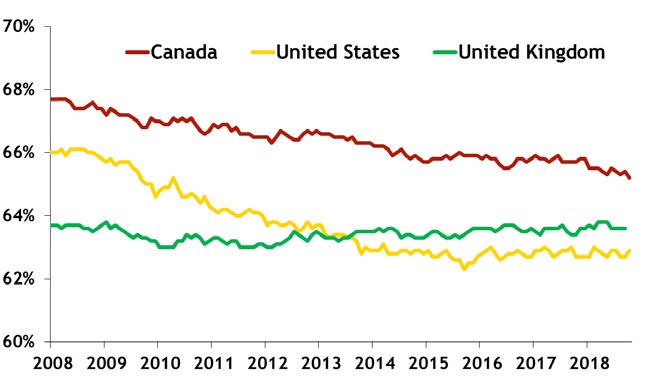
Building a relationship-oriented franchise...
                                                                                                                                                                     5

for a modern world

Strong Client-Focused Culture                                                                   Diversified Earnings Growth2
                                                                                                                    Canada        U.S.    Other

                        Clarabridge North American Diamond
                        Award in 2017
                                                                                                      96%         90%          82%         80%          82%

                        Highest overall score1 in mobile                                                                  2%   16%         15%    5%    17%     1%
                        banking functionality and usability for                                        5%        1% 9%
                                                                                               -1%
                        4th consecutive year in 2017                                                  2016       2017          2018      YTD 2019      2020
                                                                                                                                                       Target

Optimized Operational Efficiency2                                                               Disciplined Capital Deployment
      58.0%        57.2%         55.6%        54.5%        55.0%                                  CET1 Capital Ratio comfort zone: approximately 11%
                                                                        52.0%

                                                                                                  Excess capital deployed in areas to generate the greatest
                                                                                                  shareholder value:
                                                                                                     • Invest in organic growth
       2016         2017         2018      YTD 2019 Run Rate Run Rate                                • Grow dividends in-line with earnings
                                                     Target   Target
                                                    by 2019 by 2022                                  • Judicious exercise of Normal Course Issuer Buyback
                                                                                                       program
                                                                                                     • Inorganic growth

(1) CIBC’s score is relative to Canada’s Big 5 banks.
(2) Adjusted to exclude items of note. See the non-GAAP section of CIBC’s Q1 2019 Report to Shareholders.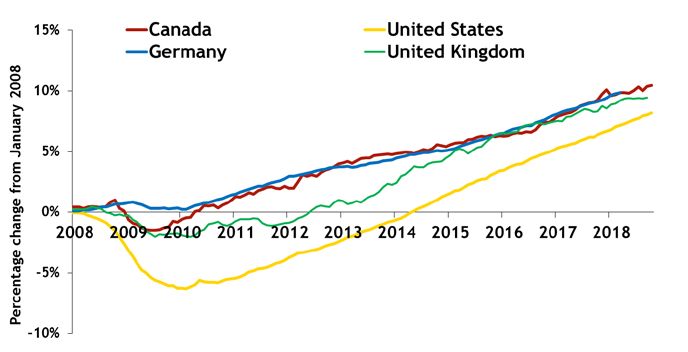
6

Strong and Consistent Returns to Shareholders
Adjusted Diluted Earnings Per Share1                                                          Adjusted Return on Equity1
(C$)                                                                                          (%)

                                           12.21                      12.04                         19.9       19.0
                              11.11                                                                                             18.1   17.4
                10.22                       3.00                                                                                               16.0     16.7
   9.45

                                            3.08

                                            2.95
                                                          3.01
                                            3.18

   2015          2016         2017          2018        YTD Q1       LTM Q1                         2015       2016             2017   2018   YTD Q1   LTM Q1
                                                         2019         2019                                                                     2019     2019

Dividends Per Share                                                                           Adjusted Dividend Payout Ratio1,2
(C$)                                                                                          (%)

                               5.08         5.32                                                    45.4       46.4             46.2           45.1     44.7
                 4.75                                                                                                                  43.4
   4.30                                     1.36

                                            1.33

                                            1.33          1.36

                                            1.30

   2015          2016         2017          2018        YTD Q1                                      2015       2016             2017   2018   YTD Q1   LTM Q1
                                                         2019                                                                                  2019     2019

(1) Adjusted results are non-GAAP measures. See the non-GAAP section of CIBC’s Q1 2019 Report to Shareholders.
(2) Common dividends paid as a percentage of net income after preferred dividends and premium on preferred share redemptions.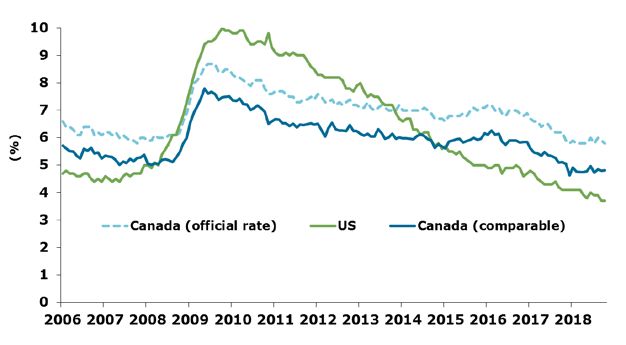
7

Profitable Revenue Growth with Expense Discipline
Adjusted Revenue (TEB)1,2                                                                        Adjusted Non-Interest Expenses1
(C$ billions)                                                                                    (C$ billions)

                         +8%                                                                                               +6%
                                              18.1                        18.1                                                                  10.1             10.0
                                 16.3                                                                                             9.3
                  15.0                                                                                8.5           8.7
      14.3                                     4.5                                                                                              2.5

                                               4.6                                                                                              2.5

                                               4.4           4.6                                                                                2.5     2.5
                                               4.6                                                                                              2.5

      2015       2016           2017          2018        YTD Q1        LTM Q1                       2015          2016          2017           2018   YTD Q1   LTM Q1
                                                           2019          2019                                                                           2019     2019

Adjusted Efficiency Ratio (TEB)1,2                                                               Adjusted Net Income1
(%)                             (3)
                                                                                                 (C$ billions)
                         -4.0                                                                                             +12%
      59.6                                                                                                                                      5.4
                  58.0           57.2         55.6                        55.4
                                                            54.5                                                                  4.7
                                                                                                                    4.1                         1.3
                                                                                                      3.8
                                                                                                                                                1.4

                                                                                                                                                1.3     1.3      1.3
                                                                                                                                                1.4

      2015       2016           2017         2018         YTD Q1        LTM Q1                       2015          2016          2017           2018   YTD Q1   LTM Q1
                                                           2019          2019                                                                           2019     2019

(1) Adjusted results are non-GAAP measures. See the non-GAAP section of CIBC’s Q1 2019 Report to Shareholders.
(2) TEB = Taxable Equivalent Basis - a non-GAAP financial measure representing the gross up of tax-exempt revenue on certain securities to an
    equivalent before-tax basis to facilitate comparison of net interest income from both taxable and tax-exempt sources.
(3) 2015 to 2018 variance.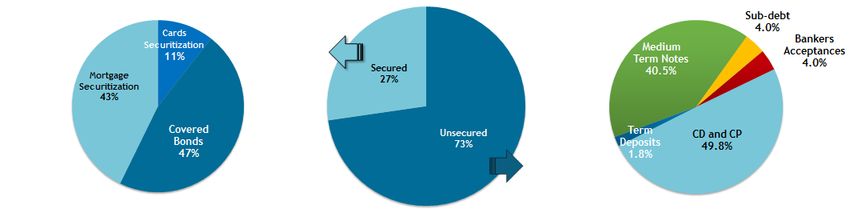
8

Commitment to Balance Sheet Strength
Basel III CET1 Ratio                                                                            Basel III Total Capital Ratio
(%)                                                                                             (%)

                        11.3                          11.4           11.2                              15.0         14.8                            14.9      14.7
          10.8                         10.6                                                                                           13.8

                                              (1)                                                                                            (1)
         2015           2016           2017           2018         YTD Q1                              2015         2016              2017          2018     YTD Q1
                                                                    2019                                                                                      2019

Basel III Leverage Ratio2                                                                        Liquidity Coverage Ratio2
(%)                                                                                              (%)

                                                       4.3            4.2                                                                           128.0     131.0
          3.9            4.0            4.0                                                            119.0       124.0          120.0

           n/a                                                                                          n/a

         2015           2016           2017           2018         YTD Q1                          Q4 2015       Q4 2016        Q4 2017            Q4 2018   Q1 2019
                                                                    2019

(1) On June 23, 2017, CIBC completed the acquisition of PrivateBancorp, Inc. and its subsidiary, The PrivateBank and Trust Company.
(2) Public disclosure of the Basel III Leverage Ratio and the Liquidity Coverage Ratio was required effective January 1, 2015.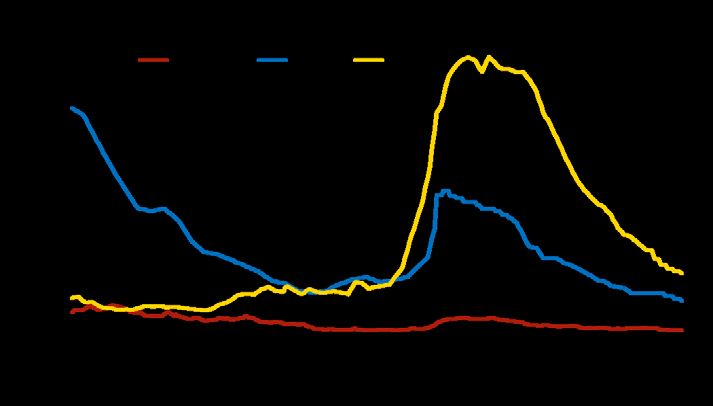
9

  Good Credit Performance
  Adjusted Provision for Credit Losses1,2                                                         Coverage Ratio3
  (C$ billions)                                                                                   (%)

                        0.90                                                                             46
                                    0.81           0.84
       0.77
                                                                                                                       34             36
                                                   0.24                                                                                                33
                                                                                                                                                                     29
                                                   0.24
                                                                  0.34
                                                                  0.04         Non-Impaired
                                                   0.21
                                                                  0.30         Impaired
                                                   0.15
       2015             2016        2017          2018          YTD Q1                                  2015          2016           2017          2018            YTD 2019
                                                                 2019

  Loan Loss Ratio2
  (bps)
70

                   56                              53
                                  51
                           //                                       44
                                                                                      38
                                                                                                                        31                                                30
                                                                                                        27                               25                  26
                                                                                                                                                  //

2009              2010           2011             2012             2013             2014             2015             2016             2017                 2018       YTD 2019

 Global financial crisis                                                                                          Oil & gas crisis

  (1) Adjusted results are non-GAAP measures. See the non-GAAP section of CIBC’s Q1 2019 Report to Shareholders.
  (2) Fiscal years prior to 2011 are under Canadian GAAP. Fiscal years 2011 to 2017 are under IAS 39. Effective November 1, 2017, we adopted IFRS 9.
  (3) Allowance for Credit Losses divided by Gross Impaired Loans and Acceptances.
10
Our Strategy Drives Organic Growth and Shareholder Value
2018 Results
Financial Measure Medium-Term Target Reported Adjusted1
Diluted Earnings Per Share Growth 5%-10% on average, annually 4% 10%
Return on Common Shareholders’ Equity 15%+ 16.6% 17.4%
55% run rate by 2019
Efficiency Ratio 57.5% 55.6%
52% run rate by 2022
Basel III CET1 Ratio Strong buffer to regulatory minimum 11.4%
Dividend Payout Ratio 40%-50% 45.5% 43.4%
Total Shareholder Return Exceed the industry average2
60.6%
(rolling five-year period) (62.0% as of October 31, 2018)
(1) Adjusted results are non-GAAP measures. See the non-GAAP section of CIBC’s Q1 2019 Report to Shareholders
(2) Defined as the S&P/TSX Composite Banks Index.11 Strategic Business Units
12

Canadian Personal and Small Business Banking

Our business strategy

Our goal is to build a modern consumer and small business relationship bank.

Strategic Priorities

  • Winning at relationships through deeper needs-based          • Being easy to bank with by implementing meaningful
    conversations including more financial planning;               process enhancements and helping clients experience the
                                                                   ease of managing their day-to-day banking.
  • Delivering market-leading solutions that offer clients great
    value and benefits, are easy to use and provide a more
    focused product line; and

Medium Term Targets

                  Earnings                                                       Efficiency                           Competitive Positioning
             Growth1 over 3 years                                                  Ratio1
                         5% - 7%
Canadian Personal and Small Business Banking
13
Financial Highlights1
Adjusted Net Income2 Adjusted Efficiency Ratio2
(C$ billions) (%)
+9%
2.56 2.53 53.0 52.6 50.9 50.7 50.8
2.14 2.25
0.67
0.64
0.59 0.63
0.66
2016 2017 2018 YTD 2019 LTM 2019 2016 2017 2018 YTD 2019 LTM 2019
Deposits Average Loans & Acceptances
(C$ billions) (C$ billions)
163 167 173 244 257 257
153 220
2016 2017 2018 YTD 2019 2016 2017 2018 YTD 2019
(1) On June 20, 2017, we announced changes to CIBC’s leadership team and organizational structure to further accelerate our transformation. As a
result of these changes, we have a new reporting structure and prior period amounts up to 2015 were reclassified accordingly.
(2) Adjusted results are non-GAAP measures. See the non-GAAP section of CIBC’s Q1 2019 Report to Shareholders.14
Canadian Commercial Banking and Wealth Management
Our business strategy
We are focused on building and enhancing client relationships, being Canada’s leader in financial advice and generating long-
term consistent growth.
Strategic Priorities
• Scaling our Commercial Banking model • Increasing agility & efficiency in Wealth Management
• Deepening client relationships across our bank
Medium Term Targets
Earnings Efficiency Loan and Deposit
Growth1 over 3 years Ratio1 Growth
10% - 12% ~50% 9% - 11%
CAGR run-rate in F2022 CAGR in F2020
(1) Non-GAAP measure adjusted for items of note. See the non-GAAP section of CIBC’s Q1 2019 Report to ShareholdersCanadian Commercial Banking and Wealth Management
15
Financial Highlights1
Adjusted Net Income2 Adjusted Efficiency Ratio2
(C$ billions) (%)
+15%
1.31 1.31 57.7 56.3 53.5 51.9 52.7
1.14
0.99 0.33
0.35
0.31 0.32
0.31
2016 2017 2018 YTD 2019 LTM 2019 2016 2017 2018 YTD 2019 LTM 2019
Commercial Banking: Wealth Management:
Average Loans and Deposits Assets Under Administration and Management3
(C$ billions) (C$ billions)
60 274 273
56 269
51 252
47
43 48 53 162 165 168
37 145
2016 2017 2018 YTD 2019 2016 2017 2018 YTD 2019
Loans Deposits AUA AUM
(1) On June 20, 2017, we announced changes to CIBC’s leadership team and organizational structure to further accelerate our transformation. As a
result of these changes, we have a new reporting structure and prior period amounts up to 2015 were reclassified accordingly.
(2) Adjusted results are non-GAAP measures. See the non-GAAP section of CIBC’s Q1 2019 Report to Shareholders.
(3) Assets Under Management (AUM) amounts are included in the amounts reported under Assets Under Administration (AUA).16
U.S. Commercial Banking and Wealth Management
Our business strategy
Our goal is to build the go-to commercial and wealth management bank for our chosen client segments and markets with a
focus on developing deep, profitable relationships leveraging the full complement of CIBC’s products and services across our
North American platform.
Strategic Priorities
• Growing organically through long-term client • Enhancing our U.S. platform
relationships
• Investing to serve our clients
Medium Term Targets
Earnings Efficiency Loan Growth Deposit Growth
Growth1 over 3 years Ratio1
10% - 12%U.S. Commercial Banking and Wealth Management
17
Financial Highlights1
Adjusted Net Income2 Adjusted Efficiency Ratio (TEB)2,3
(C$ billions) (%)
0.63 71.9
0.59
60.0
+152% 0.14 54.4 54.0 54.0
0.17
0.22
0.14 0.17
0.09
0.14
2016 2017 2018 YTD 2019 LTM 2019 2016 2017 2018 YTD 2019 LTM 2019
Assets Under Administration and Management4 Commercial Loans and Commercial Real Estate Loans
(C$ billions) (C$ billions)
74 80 80 17
15
44 5
59 60 60 0 14 15
38 8 10
2016 2017 2018 YTD 2019 2016 2017 2018 YTD 2019
AUA AUM CRE Loans
Commercial Real Estate Loans
(1) On June 20, 2017, we announced changes to CIBC’s leadership team and organizational structure to further accelerate our transformation. As a result of these changes, we have a new
reporting structure and prior period amounts up to 2015 were reclassified accordingly. F2017 results for this segment reflect the acquired assets of PrivateBancorp, Inc. (closed on June
23, 2017) and Geneva Advisors, LLC (closed on August 31, 2017).
(2) Adjusted results are non-GAAP measures. See the non-GAAP section of CIBC’s Q1 2019 Report to Shareholders.
(3) TEB = Taxable Equivalent Basis - a non-GAAP financial measure representing the gross up of tax-exempt revenue on certain securities to an equivalent before-tax basis to facilitate
comparison of net interest income from both taxable and tax-exempt sources.
(4) Assets Under Management (AUM) amounts are included in the amounts reported under Assets Under Administration (AUA).18
Capital Markets
Our business strategy
Our goal is to be the leading capital markets franchise for our core clients in Canada and the lead relationship bank for our key
clients globally by delivering best-in-class insight, advice and execution. To enable CIBC’s strategy and priorities, we
collaborate with our partners across our bank to deepen and enhance client relationships.
Strategic Priorities
• Becoming the leading capital markets platform in Canada • Increasing connectivity across CIBC to deliver better
for our core clients service for clients
• Building a North American client platform with global
capabilities
Medium Term Targets
Earnings Efficiency
Growth1 over 3 years Ratio1
5% - 10% ~50%
CAGR2 in F2022
(1) Non-GAAP measure adjusted for items of note. See the non-GAAP section of CIBC’s 2018 Annual Report.
(2) Forecast earnings growth from base of $225MM-$250MM (Q4 2017) quarterly adjusted earnings.Capital Markets
19
Financial Highlights1
Adjusted Net Income2 Adjusted Efficiency Ratio (TEB)2,3
(C$ billions) (%)
+2%
1.09 1.07 51.2 52.2 52.7
1.02 47.9 48.6
0.95
0.23
0.27
0.25
0.20
0.32
2016 2017 2018 YTD 2019 LTM 2019 2016 2017 2018 YTD 2019 LTM 2019
Adjusted Loan Losses2,4 Average Loans and Acceptances, Net of Allowances
(C$ millions) (C$ billions)
155 30
25 26
23
66
42 Impaired
24 Non-Impaired
-4
-30
2016 2017 2018 YTD 2019 2016 2017 2018 YTD 2019
(1) On June 20, 2017, we announced changes to CIBC’s leadership team and organizational structure to further accelerate our transformation. As a
result of these changes, we have a new reporting structure and prior period amounts up to 2015 were reclassified accordingly.
(2) Adjusted results are non-GAAP measures. See the non-GAAP section of CIBC’s Q1 2019 Report to Shareholders.
(3) TEB = Taxable Equivalent Basis - a non-GAAP financial measure representing the gross up of tax-exempt revenue on certain securities to an
equivalent before-tax basis to facilitate comparison of net interest income from both taxable and tax-exempt sources.
(4) Fiscal years 2015 to 2017 are under IAS 39. Effective November 1, 2017, we adopted IFRS 9.20 Balance Sheet & Funding
21

Strong, High Quality Liquid Client Driven Balance Sheet
Based on Q1/19 results
                                                 Assets                            CAD 615BN                     Liabilities & Equity

                                       Cash and Repos                                     111%                         Unsecured Funding
          30%                                                                                                                                                       27%
                                                                                        Coverage
         Liquid                                                                                                                                                  Wholesale
         Assets                        Trading &                                                                                                                  Funding
                                       Investment Securities
                                                                                                                          Secured Funding      (3)

                                                                                           103%
                                       Residential                                                                      Personal Deposits
                                                                                         Coverage
                                       Mortgages (1)                                      (Deposits
                                                                                           +Capital
                                                                                          /Loans)                                                                     63%
                                                                                                                                                                  Capital +
        61%                                                                                                                                                          Client
       Loan                                                                                                                                                         related
      Portfolio                                                                                                         Business & Gov’t
                                                                                                                        Deposits                                   funding
                                       Other Retail Loans

                                                                                                                      Securitization &
                                       Corporate Loans                                                                Covered Bonds
                                                                                                                      Capital
                Mainly                 Other Assets(2)                                                                Other Liabilities(2)                Mainly
              Derivatives                                                                                                                               Derivatives
 (1) Securitized agency MBS are on balance sheet as per IFRS
 (2) Derivatives related assets, are largely offset by derivatives related liabilities. Under IFRS derivative amounts with master netting agreements
     cannot be offset and the gross derivative assets and liabilities are reported on balance sheet.
 (3) Includes Obligations related to securities sold short, Cash collateral on securities lent and Obligations related to securities under repurchase
     agreements
22
CIBC Funding Strategy and Sources
Funding Strategy
CIBC’s funding strategy includes access to funding through retail deposits and wholesale funding and
deposits
CIBC updates its three year funding plan on at least a quarterly basis
The wholesale funding strategy is to develop and maintain a sustainable funding base through which
CIBC can access funding across many different depositors and investors, geographies, maturities, and
funding instruments
Wholesale Funding Sources Wholesale Market (CAD Eq. 143.4BN), Maturity Profile
Wholesale deposits Canada, Credit card securitization
U.S. Canada, U.S.
Mortgage securitization
Global MTN programs
programs
Covered Bond program Structured Notes
Source: CIBC Q1-2019 Report to Shareholders1. Introduction & Regulatory Framework 23
Defining Liquidity Risk
Wholesale Funding Geography
Wholesale Funding By Currency
CAD 48.5 BN EUR 6.5 BN, CHF 1.1 BN, GBP 3.4 BN,
SEK 2.0 BN, NOK: 0.15 BN
Canada Mortgage Bonds
Cards Securitization Covered Bonds
Medium Term Notes Medium Term Notes
Canadian Dollar Deposits
HKD 2.4 BN
Medium Term Notes
USD 55.7 BN
Covered Bond Program AUD 2.4 BN
Cards Securitization
Covered Bonds
Medium Term Notes
Medium Term Notes
US Dollar Deposits
Wholesale Funding By Product
Source: CIBC Q1-2019 Quarterly Report to Shareholders, Bloomberg
Unsecured includes Obligations related to securities sold short, Cash collateral on securities lent and Obligations related to securities under
repurchase agreements.24
CIBC Funding Composition
Funding Sources – January 2019
Funding sources BN
Personal deposits 172.8
Business and government deposits 141.0
Unsecured funding 1 100.2
Securities sold short or repurchase agreements 60.6
2
Capital 40.1
Securitization 20.9
Covered bond 18.3
Bank deposits 11.5
Others (Includes derivatives) 49.3
Total 614.6
Wholesale market, currency3 BN
USD 74.0
CAD 48.5
Other 20.9
Total 143.4
1 Unsecured funding is comprised of wholesale bank deposits, certificates of
deposit and commercial paper, bearer deposit notes and bankers’
acceptances, senior unsecured EMTN and senior unsecured structured notes
Source: CIBC Q1-2019 Supplementary Financial Information 2 Capital includes subordinated liabilities
3 Currency composition, in Canadian dollar equivalent, of funding sourced by
CIBC in the wholesale market. Source: CIBC Q1-2019 Report to Shareholders25 Macroeconomic Overview
26

Canadian Economy Selected Indicators
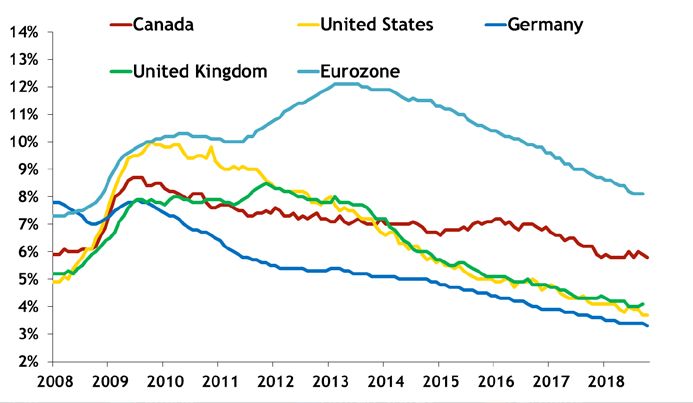
                              Unemployment Rate
                                                                                                                • Canada’s unemployment rate less volatile in
                                                                                                                  the past decade, and not directly comparable
                                                                                                                  to the United States unemployment rate1
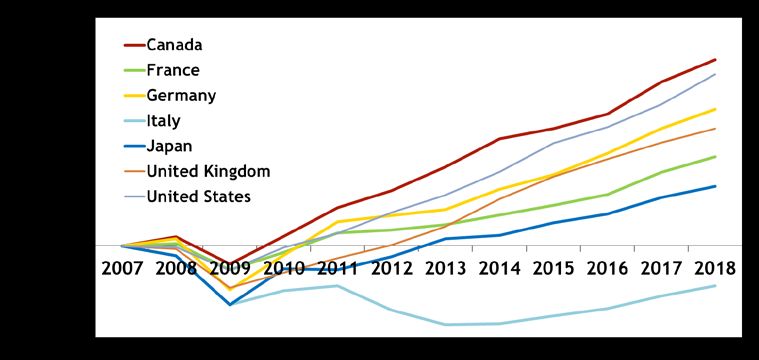
                                                                                                                • As measured by GDP indexed to 2007, the
                                                                                                                  Canadian economy has outperformed other
                                                                                                                  major economies since the financial crisis of
                                                                                                                  2008
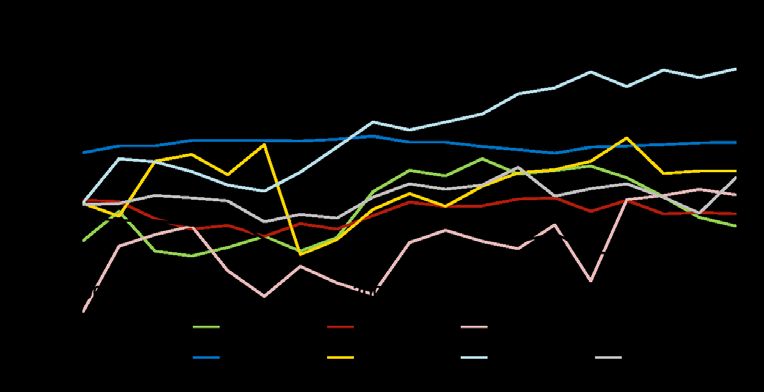
                                                                                                                • Canadian savings rate consistently positive in
                                                                                                                  the past decade
    Source: Statistics Canada; U.S. Bureau of Labor Statistics, Oct 2018

                                 GDP Indexed to 2007                                                                                       Household Net Savings Ratio

         Source: IMF, World Economic Outlook Database, Oct 2018
                                                                                                                                  Source: OECD, Economic Outlook No 104, Nov 2018
1Certain groups of people in Canada are counted as unemployed, but are deemed to not participate in the labour force in the U.S. – e.g. job seekers who only looked at job ads,
or individuals not able to work due to for family responsibilities.
27
Canadian Labour Market Profile
Total Employment
Strong Job Creation Record
• Canada regained all jobs lost during the recession by
January 2010, before the United Kingdom and the
United States
• Net employment increases in Canada and the United
States from January 2008 to December 2018 are
1,800,200 and 12,165,000, respectively
• Participation rate holding higher than in the U.S.
and the U.K.
Unemployment Rate Participation Rate
Source: Bloomberg (Index) - CANLNETJ, CANLEMPL, UKLFEMCH, UKLFEMPF, USEMNCHG, NFP T, CANLXEMR, UKEUILOR, USURTOT, UMRTEMU, CANLPRTR, UKLFMGWG and
PRUSTOT.28
Mortgage Market Performance and Urbanisation Rates
Mortgage Arrears by Number of Mortgages
Canadian mortgages consistently outperform
U.S. and U.K. mortgages
Low defaults and arrears reflect the strong Canadian credit
culture
Mortgage interest is generally not tax deductible, resulting
in an incentive for mortgagors to limit their amount of
mortgage debt
In most provinces, lenders have robust legal recourse to
recoup losses
Mortgage arrears have steadily declined from high of 0.45%
in 2009 to 0.24% in 2018
Population in Top Four Cities
Source: CML Research, CBA, MBA. *Mortgage arrears of 3+ months in Canada
and UK or in foreclosure process in the US 40%
35%
Canada has one of the highest urbanisation rates % of Population 30%
in the G7 25%
20%
Almost 40% of the Canadian population lives in one of
15%
the four largest cities
10%
A greater rate of urbanisation is a strong contributor to
5%
increases in property values
0%
Canada U.K. U.S. Germany France
Source: 2014 Census for France, 2016 Census for Canada, 2011
Census for UK, Germany; 2010 Census for US29
Canadian Mortgage Market
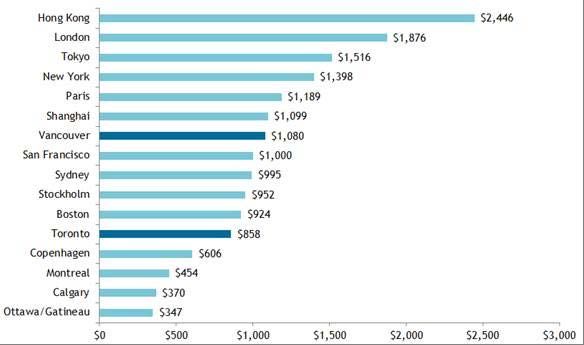
World Home Prices Per Square Foot (USD) House Price & Household Income Growth
Source: Global Property Guide, OREB, CREB
GMREB, MAR, TREB, CAR, REBGV (2018)
Source: Bloomberg, CREA
Consistently High Owner’s Equity2 Household Debt Service Ratio1
Source: Federal Reserve, Statistics Canada 2 Indexed Source: Federal Reserve, Statistics Canada 1 Includes interest component only30
Canadian vs. US Mortgage Market
Canada United States
• Conservative product offerings – generally • More exotic offerings (e.g. ARMs, IOs) and a
consist of fixed or variable rate option greater proportion of mortgages are variable
Product • Borrowers qualify based on qualifying posted or adjustable rate
mortgage rate • Borrowers were often qualified using teaser
rates
• Prepayment penalties are common • Mortgages can be prepaid without penalty
• Terms usually 5 years or less, renewable at • 30 year term most common
maturity – allows reassessment of credit • Amortizations usually 30 years, but can be up
Underwriting • Amortization usually 25 years, but can be up to to 50 years
30 years • Mortgage insurance often used to cover
• Mortgage insurance mandatory if LTV over 80%. portion of LTV over 80%
Insurance covers full amount31
Canadian vs. US Mortgage Market (continued)
Canada United States
• Interest is generally not tax deductible, so there • Interest is tax deductible, creating an
is an incentive to take on less mortgage debt incentive to take on more mortgage debt
• Lenders have recourse to both the borrower and • Lenders have limited recourse in most
the property in most provinces jurisdictions
• Foreign buyer and vacant home tax: this tax was
imposed by the BC government in Aug./16 to cool
the GVA housing market. The ON government
followed suit in Apr./17 to cool the GTA housing
market.
Regulation • Oct./16: A stress test used for approving high-
and ratio mortgages will be applied to all new insured
Taxation mortgages. Home buyers need to qualify for a
loan at the negotiated rate in the mortgage
contract, but also at BoC’s five-year fixed posted
mortgage rate.
• Jan./18: The Office of the Superintendent of
Financial Institutions (OSFI) introduced new rules
on mortgage lending, requiring stress tests on
uninsured mortgages and cutting out practices
designed to circumvent lending limits.32
Canadian vs. US Mortgage Market (continued)
Canada United States
• In Feb./18, the BC government introduced tax
measures to further cool down the GVA housing
market:
1. BC to implement a Speculation Tax on vacant
residential properties in BC’s largest urban
centres. In 2018, tax rate will be 0.5% of
property’s assessed value. In 2019 and subsequent
years, tax rates will be as follows:
• 2% for foreign investors and satellite families
• 1% for Canadian citizens and permanent
Regulation residents who do not live in B.C.
and • 0.5% for B.C. residents who are Canadian
Taxation citizens or permanent residents
2. BC to increase foreign buyer’s tax from 15% to
20% and expand to outside Metro Vancouver,
including the Fraser Valley, Nanaimo, the Central
Okanagan and the Capital Regional District
3. BC to increase taxes on homes worth more than
$3 million
4. BC to cancel interest-free loans (no interest or
principal payments for the first 5 years) to first
time home buyers which offered a second
mortgage to qualified buyers33 Regulatory Environment
34
Regulatory Environment Continually Evolving
The Basel Committee has finalized its Basel III reforms. Key changes include:
A new Standardized Approach for credit, CVA and operational risk (2022)
A new credit risk framework for constraining model-based approaches to reduce RWA variations (2022)
Revised market risk (2022), counterparty credit risk (2019), and securitization (2019) frameworks
A capital “output” floor based on the revised Standardized Approach to replace the existing Basel I
Capital Floor. Floor calibrated at 50% starting 2022 and increasing to 72.5% in 2027
Capital Risk-Based
Finalized leverage ratio framework with new leverage ratio buffer for G-SIBs and revised treatment of
off-balance sheet and derivative exposures
Requirements Capital Ratios OSFI implemented a revised capital floor based on Basel II Standardized Approaches starting Q2/18.
In effect until the new capital floor comes in 2022.
In July 2018, OSFI issued a discussion paper on the domestic implementation of the Basel III reforms.
Proposal includes new risk weight functions for mortgages and credit cards, accelerated adoption of
revised operational risk framework (2021), no phase-in of the capital “output” floor (2022) and
increased leverage ratio requirements for D-SIBs
In June 2018, OSFI announced revisions to Pillar 2 buffer requirements (details on next slide)
Liquidity OSFI mandates minimum LCR for Canadian institutions of 100%, which became effective Jan 1, 2015.
Coverage Ratio US Foreign Bank Organizations (FBOs) with35 Canadian Bail-in Regime Update
36
How Bail-In Is Expected To Work
When OSFI deems a bank has ceased to or may be about to cease to continue to be viable, it may trigger temporary
takeover of the bank and carry out the bail-in conversion of NVCC capital and bail-in debt to common equity.
At bail-in, all NVCC instruments would be fully converted to common equity based on pre-determined conversion ratios
Portion of the bail-in debt that would be converted to common equity as well as the conversion ratio would be determined
by the authorities on a case-by-case basis
1. Pre-Loss Balance Sheet 2. Loss Event 3. Post Bail-in
Loss
Other
Senior
Liabilities
Other Other
Senior Senior
Liabilities Liabilities
Bail-in Debt
Bail-in Debt
NVCC Sub- Bail-in Debt
Assets
Debt
Assets Assets
NVCC Sub-
NVCC Debt
Preferred
Equity Common
NVCC Equity
Preferred
Common Equity
Equity
Common
Equity37
Canadian Bail-in Regime Update
On April 18, 2018, Department of Finance published the bail-in regulations, and OSFI finalized the
guidelines on Total Loss Absorbing Capacity (TLAC) and TLAC holdings.
1. Department of Finance’s bank recapitalization (bail-in) conversion regulations
Provide statutory powers to CDIC (through Governor in Council) to enact the bail-in regime including the ability to
convert specified eligible shares and liabilities of D-SIBs into common shares in the event such bank becomes non-viable
Bail-in eligible liabilities include tradable (with CUSIP/ISIN), unsecured debt with original maturity of over 400 days
Excluded liabilities are covered bonds, consumer deposits, secured liabilities, derivatives, and structured notes1
Effective on September 23, 2018
2. OSFI’s TLAC guideline
TLAC liabilities must be directly issued by the D-SIB, satisfy all of the requirements set out in the bail-in regulations, and
have residual maturity greater than 365 days
Minimum requirements:
TLAC ratio = TLAC measure / RWA > 21.5%
TLAC leverage ratio = TLAC measure / Leverage exposure > 6.75%
TLAC supervisory target ratio set at 23% RWA2
Effective Fiscal 2022. Public disclosure will start in Q1 2019.
3. OSFI’s TLAC holdings
Our investment in other G-SIBs and other Canadian D-SIB’s TLAC instruments are to be deducted from our own tier 2
capital if our aggregate holding, together with investments in capital instruments of other FIs, exceed 10% of our own
CET1 capital
Implementation starting in Q1 2019
1 As referenced in the Bank Recapitalization (Bail-in) Regulations: http://laws-lois.justice.gc.ca/eng/regulations/SOR-2018-
57/FullText.html
2 Increases to 23.25% when Domestic Stability Buffer of 1.75% becomes effective April 30, 2019Canadian Bail-in Regime – Comparison to Other
38
Jurisdictions
Bail-in implementation in other jurisdictions has increased the riskiness of bail-inable
bonds vs. non-bail-inable bonds:
Legislative changes prohibit bail-outs, increasing the probability that bail-in will be relied on
The hierarchy of claims places bail-in debt below deposits and senior debt through structural
subordination, legislation or contractual means
Bail-in is expected to rely on write-down of securities, imposing certain losses on investors
The Canadian framework differs from other jurisdictions on several points:
The Canadian government has not introduced legislation preventing bail-outs
Canadian senior term debt will be issued in a single class and will not be subordinated to another class
of senior term debt like other jurisdictions such as the US and Europe
Canada does not have a depositor preference regime; bail-in debt does not rank lower than other
liabilities
No Creditor Worse Off principle provides that no creditor shall incur greater losses than under insolvency proceedings
There are no write-down provisions in the framework
Conversion formula under many scenarios may result in investor gains39 Corporate Responsibility
Our Environmental, Social and Governance (ESG)
                                                                                                               40

Commitments
• We are contributing to a sustainable future through our ESG commitments which are detailed in our 2018
  Corporate Responsibility Report.
• Our approach to sustainability aligns with our corporate strategy, as our ESG initiatives are
  interconnected with our performance as a business and our ability to connect with and be relevant to our
  diverse stakeholders.

2018 Highlights
 Included in DJSI North America    Among the Best 50
                                   Corporate Citizens

   $1.5B         Responsible Investment funds held on behalf of our clients
   $1.5B         Financing towards renewable power projects in the last five years
  $182B          Debt financing to help businesses grow
    88%          Employee Engagement score: 7 points above the global financial services norm
    44%          Representation rate of women on CIBC’s Board
   $80M          Corporate and employee contributions to 2,077 charitable organizations in Canada and the US
                 Ethical sourcing & supplier labour practices
                 Signatory to the UN Principles for Responsible Investment
                 Supporter of the Task Force on Climate-related Financial Disclosures
41 Appendix
42

Canadian Personal Banking Digital Transformation1
    Digital Adoption Rate2                                                            Active Mobile Users3 (Millions)

                                  470 bps                                                                  33.5%

                                  64.4%                    67.1%                                                         2.7
         62.4%                                                                                               2.3
                                                                                              2.0

         Q1/17                    Q1/18                   Q1/19                              Q1/17         Q1/18        Q1/19
    Banking Centres                                                                  Self-Serve Transactions4 (%)

                                  -5.4%                                                                   330 bps

          1,105                    1,076                                                                                88.6%
                                                           1,045                                           86.9%
                                                                                             85.3%

         Q1/17                    Q1/18                   Q1/19                              Q1/17         Q1/18        Q1/19
1    Excludes Simplii Financial.
2    Digital Adoption Rate calculated using 90-day active users.
3    Active Mobile Users represent the 90-day Active clients in Canadian Personal Banking.
4    Reflect financial transactions only.
Canadian Personal and Small Business
43
Banking Market Share
Q1/19
Balances YoY Most Current Absolute YoY Growth
1
($B) Growth Market Share Rank Rank
Money-In
Personal Deposits & GICs 151 3.6% 16.7% 4 4
Canadian Retail Mutual Fund and ETF AUM 102 -1.0% 13.5% 5 4
Small Business Deposits & GICs 23 2.8% 13.7% 4 4
Money-Out
Real Estate Secured Personal Lending 224 -0.2% 18.1% 4 6
Other Personal Lending incl. Cards 30 5.8% 12.5% 4 1
Small Business Lending 3 1.0% 10.2% 5 6
1Market share is calculated using most current data available from OSFI (as at Dec/18), CBA (as at Sep/18), IFIC (as at Jan/19) and CETFA (as at
Jan/19), and is based on 6 banks (CIBC, BMO, BNS, NA, RBC and TD).44
Oil & Gas Retail Exposure
Retail Exposure1 in Oil Provinces ($B) • $40.8B of retail exposure1 to oil
provinces2 (or $23.1B excluding insured
mortgages)
41.3 41.2 41.2 41.1 40.8
− Alberta accounts for $32.3B or 79% of
the retail exposure1
− Average LTV3 of 66% in the uninsured
mortgage portfolio
Q1/18 Q2/18 Q3/18 Q4/18 Q1/19 Uninsured HELOC
Mortgages 8%
35%
Loan-to-Value (LTV)3
Other
Q1/18 Q2/18 Q3/18 Q4/18 Q1/19 14%
Insured Mortgages 69% 70% 70% 70% 71% Insured
Uninsured Mortgages 65% 66% 66% 65% 66% Mortgages
HELOC 63% 64% 64% 63% 64% 43%
1 Comprises mortgages, HELOC, unsecured personal lines and loans, credit cards and small business.
2 Alberta, Saskatchewan and Newfoundland and Labrador.
3 LTV ratios for residential mortgages are calculated based on weighted average.45
Canadian Real Estate Secured Personal Lending
90+ Days Delinquency Rates Q1/18 Q4/18 Q1/19 • Delinquency rates increased in Q1/19
Total Mortgages 0.23% 0.24% 0.27% • The Greater Vancouver Area1 (GVA) and
Greater Toronto Area1 (GTA) continue to
Uninsured Mortgages 0.19% 0.19% 0.21%
outperform the Canadian average
Uninsured Mortgages in GVA 1 0.07% 0.06% 0.10%
• Oil provinces remain stable QoQ, but
1
Uninsured Mortgages in GTA 0.10% 0.08% 0.13% have increased YoY
Uninsured Mortgages in Oil Provinces 0.48% 0.54% 0.54%
Mortgage Balances ($B; spot) HELOC Balances ($B; spot)
203 202 201 22.1
21.6 21.8
63 63 63 6.6 6.9 6.7
28 28 27 2.7 2.8 2.8
112 111 111 12.3 12.4 12.3
Q1/18 Q4/18 Q1/19 Q1/18 Q4/18 Q1/19
1 1 1 1
Other Region GVA GTA Other Region GVA GTA
1 GVA and GTA definitions based on regional mappings from Teranet.Canadian Uninsured Residential Mortgages — Q1/19
46
Originations
Beacon Distribution • Originations of $6B in Q1/19
• Average LTV1 in Canada: 64%
39%39% − GVA2: 56%
32%30%31% 36%
− GTA2: 61%
16%15%15%
6% 6% 5% 10%10%10%
≤650 651-700 701-750 751-800 >800
2 2
Canada GVA GTA
Loan-to-Value (LTV)1 Distribution
35%32% 42% 35%
30%
22% 18% 22%
14%10% 16%
4% 7% 5% 8%47
Canadian Uninsured Residential Mortgages
Beacon Distribution • Better current Beacon and LTV1
distributions in GVA2 and GTA2 than the
Canadian average
39%42%40%
27%24%27% • Less than 1% of this portfolio has a
Beacon score of 650 or lower and an LTV1
14%12%13% 13%16%13%
7% 6% 7% over 75%
• Average LTV1 in Canada: 54%
≤650 651-700 701-750 751-800 >800
2 2 − GVA2: 44%
Canada GVA GTA
− GTA2: 51%
Loan-to-Value (LTV)1 Distribution
39%
27% 29%30%33% 27%
23% 21%
16% 12% 12%
9% 10% 9%
3%48
CIBC Contacts
HRATCH PANOSSIAN, EXECUTIVE VICE-PRESIDENT
Email: Hratch.Panossian@cibc.com
Phone: +1 416-956-3317
JASON PATCHETT, SENIOR DIRECTOR
Email: Jason.Patchett@cibc.com
Phone: +1 416-980-8691
ALICE DUNNING, SENIOR DIRECTOR
Email: Alice.Dunning@cibc.com
Phone: +1 416-861-8870You can also read


