Carbon Sources and the Graphitization of Carbonaceous Matter in Precambrian Rocks of the Keivy Terrane (Kola Peninsula, Russia) - MDPI
←
→
Page content transcription
If your browser does not render page correctly, please read the page content below
minerals
Article
Carbon Sources and the Graphitization of
Carbonaceous Matter in Precambrian Rocks of the
Keivy Terrane (Kola Peninsula, Russia)
Ekaterina Fomina 1, * , Evgeniy Kozlov 1 , Kirill Lokhov 2 , Olga Lokhova 3 and
Vladimir Bocharov 4
 1   Geological Institute, Kola Science Centre, Russian Academy of Sciences, 14, Fersmana Street,
     184209 Apatity, Russia; kozlov_e.n@mail.ru
 2   Institute of Earth Sciences, Saint-Petersburg State University, 7/9, Universitetskaya Emb.,
     199034 St. Petersburg, Russia; k.lokhov@spbu.ru
 3   Institute for the History of Material Culture, Russian Academy of Sciences, 18, Dvortsovaya Emb.,
     191186 St.-Petersburg, Russia; olga.lohova@yandex.ru
 4   Resource Center for Geo-Environmental Research and Modeling (GEOMODEL), Saint-Petersburg State
     University, 1, Ulyanovskaya Street, 198504 St. Petersburg, Russia; bocharov@molsp.phys.spbu.ru
 *   Correspondence: fomina_e.n@mail.ru; Tel.: +7-921-276-2996

 Received: 15 December 2018; Accepted: 3 February 2019; Published: 8 February 2019

 Abstract: The Precambrian rocks of the Keivy Terrane reveal five types of carbonaceous matter
 (CM): Fine-grained, flaky, nest, vein, and spherulitic. These types differ in their distribution
 character, carbon isotope composition, and graphitization temperatures calculated by the Raman
 spectra of carbonaceous material (RSCM) geothermometry. Supracrustal rocks of the Keivy Terrane
 contain extremely isotopically light (δ13 CPDB = –43 ± 3‰) carbon. Presumably, its source was a
 methane–aqueous fluid. According to temperature calculations, this carbon matter and the host strata
 underwent at least two stages of metamorphism in the west of the Keivy Terrane and one stage in
 the east. The CM isotope signatures of several samples of kyanite schists (δ13 CPDB = –33 ± 5‰) are
 close to those of oils and oil source rocks, and they indicate an additional carbon reservoir. Thus, in
 the Keivy territory, an oil-and-gas bearing basin has existed. Heavy carbon (δ13 CPDB = −8 ± 3‰)
 precipitated from an aqueous CO2 -rich fluid is derived from either the lower crust or the mantle.
 This fluid probably migrated from the Keivy alkaline granites into the surrounding rocks previously
 enriched with “methanogenic” carbon.

 Keywords: graphitization; carbon isotopes; RSCM geothermometry; polyphase metamorphism;
 alkaline granites; Precambrian; Kola Peninsula; graphite

1. Introduction
      The Keivy Terrane of the Archean Kola Province, located in the northeast of the Baltic Shield,
is a unique object for studying carbonaceous matter (CM). Different morphologies of CM are present
in variable quantities in gneisses, amphibolites, quartzites, and schists of the Keivy and Tundra
series [1]. The aluminous metapelites of the Keivy series (predominantly kyanite schists) are rich
in carbon (0.1–2.3 wt % on average) [1–3]. These rocks are exposed over a wide area (Figure 1) of
about 200 km in length and from several hundred meters to 10–14 km in width in the central part of
the Keivy Terrane, as well as several smaller bands and lenses in its eastern and southern parts [3].
The rocks are considered to have originated from sediments that accumulated in a shallow water
basin in a stable tectonic setting [1,2]. Keivy series schists are metamorphosed unequally. According
to References [4–6], most of the stratum was metamorphosed under amphibolite facies conditions at

Minerals 2019, 9, 94; doi:10.3390/min9020094                                www.mdpi.com/journal/minerals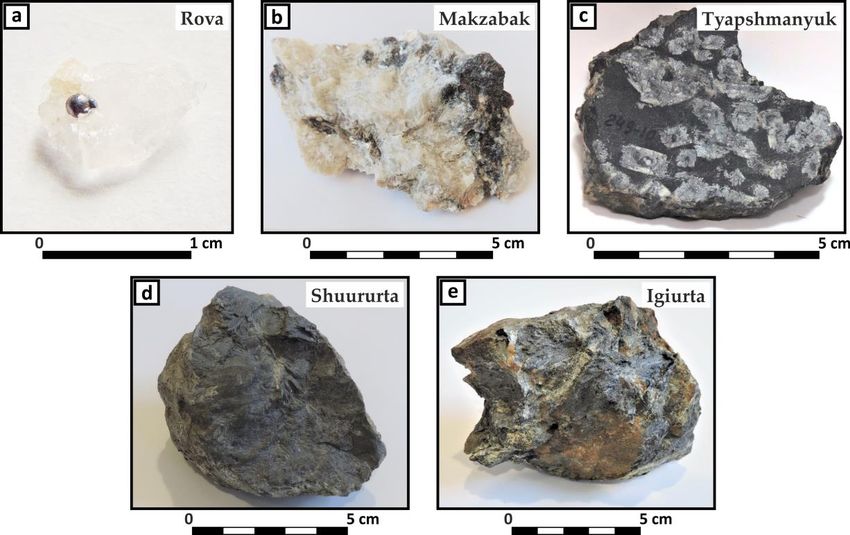
Minerals 2019, 9, 94 2 of 17
Minerals 2019, 9, x FOR PEER REVIEW 2 of 17
T = 450–560 ◦ C and P = 4–5.3 kbar. In the central part of the Keivy Terrane (mostly in kyanite schists),
metamorphism increased either to T = 550–600 °C and P = 6–6.5 kbar [5], or to T = 540–620 °C and P =
metamorphism increased either to T = 550–600 ◦ C and P = 6–6.5 kbar [5], or to T = 540–620 ◦ C and
5.2–6 kbar [7]. In the east, temperatures were reduced to T < 500 °C (epidote–amphibolite facies, the
P = 5.2–6 kbar [7]. In the east, temperatures were reduced to T < 500 ◦ C (epidote–amphibolite facies,
pressure is not specified) [4,6]. Within the zone of influence of the alkaline granites (the western part
the pressure is not specified) [4,6]. Within the zone of influence of the alkaline granites (the western
of the Terrane), metamorphism proceeded under the conditions of kyanite–sillimanite subfacies of
part of the Terrane), metamorphism proceeded under the conditions of kyanite–sillimanite subfacies of
amphibolite facies at T = 550–650 °C and P < 4 kbar [4]. Thermodynamic constructions suggest
amphibolite facies at T = 550–650 ◦ C and P < 4 kbar [4]. Thermodynamic constructions suggest several
several stages of metamorphism [5], but their numbers, ages, and correspondence to geodynamic
stages of metamorphism [5], but their numbers, ages, and correspondence to geodynamic events vary
events vary between authors [6]. The age of the metapelites is also debatable. Some authors believe
between authors [6]. The age of the metapelites is also debatable. Some authors believe that they are
that they are Archean [3,6,8–10], while others state that they are Paleoproterozoic [11,12]. However,
Archean [3,6,8–10],
reliable dating whilerocks
of these others state
has notthat
beenthey are Paleoproterozoic
performed. [11,12].
In this article, However,
we discuss reliable
previous anddating
new
of these rocks has not been performed. In this article, we discuss previous and new
data on CM, which abounds in the Keivy metapelites as scattered fine particles and largerdata on CM, which
abounds in theflakes.
intergranular Keivy metapelites as scattered fine particles and larger intergranular flakes.
Figure 1.
Figure 1. Geological
Geologicalscheme
schemeofofthethe Keivy
Keivy Terrane
Terrane compiled
compiled on the
on the basis
basis of1:500,000
of the the 1:500,000 Geological
Geological Map
Map of the Kola Region (simplified after Reference [13]), showing sampling locations (letters
of the Kola Region (simplified after Reference [13]), showing sampling locations (letters in blue circles): in blue
circles): (a)—Makzabak
(a)—Makzabak (sillimanite
(sillimanite schists); schists);
(b)—Rova (b)—Rova (quartzolites);
(quartzolites); (c)—Tyapshmanyuk
(c)—Tyapshmanyuk (kyanite (kyanite
schists);
schists); (d)—Shuururta
(d)—Shuururta (kyanite
(kyanite schists); schists); (kyanite
(e)—Igiurta (e)—Igiurta (kyanite
schists). schists).
Legend: 1—mafic Legend: 1—maficrocks,
and ultramafic and
ultramafic rocks, PR1; 2—Keivy alkaline granite complex, AR2; 3—gabbroids, AR2;
PR1; 2—Keivy alkaline granite complex, AR2; 3—gabbroids, AR2; 4—granitoids of normal alkalinity 4—granitoids of
normal alkalinity (undivided), AR2; 5—Keivy series aluminous schists, AR2; 6—Tundra
(undivided), AR2; 5—Keivy series aluminous schists, AR2; 6—Tundra series rocks (acidic, medium, series rocks
(acidic,
basic medium, basic
metavolcanics, metavolcanics,
mica mica parashists),
parashists), AR2; 7—gneisses AR2; 7—gneisses and
and amphibolites amphibolites
of Kola of Kola
series (basement
series (basement
complex), complex),
AR; 8—faults. TheAR; 8—faults.
green The green
line delineates theline delineates
boundaries the Keivy
of the boundaries of the
Terrane. TheKeivy
inset
Terrane.
shows theThe inset shows
position the position
of the Keivy Terrane ofwithin
the Keivy Terrane
the Kola within the Kola Peninsula.
Peninsula.
We present
We present the
the first
first data
data on
on CM
CM from
from alkaline
alkaline granites
granites of
of the
the Keivy Terrane.
Terrane. The
The Keivy
Keivy alkaline
granite complex
granite complexhas hasan anage
ageofof2.67–2.65
2.67–2.65GaGa [14–16]
[14–16] and
and it occupies
it occupies an area
an area of more
of more thanthan km2 [17].
2500 2500 km2
[17]. to
Due Due
thetopoor
the poor
exposure exposure
of theofcontact
the contact
zones,zones, the relationship
the relationship to theto the surrounding
surrounding rocks rocks
is notisclear.
not
clear.gives
This Thisrise
gives rise to contradictory
to contradictory interpretations.
interpretations. Some authorsSome authorsasuggested
suggested metasomatic a metasomatic
or rheomorphic or
rheomorphic
genesis genesis
of granites of and
([11] granites ([11] and
references references
therein). Otherstherein).
describeOthers describe
the intrusion of the intrusion
granitic magma of
granitic
either magma
into either of
formations into
theformations of the same tectonomagmatic
same tectonomagmatic system [18] or into system [18] ormetamorphosed
previously into previously
metamorphosed
rocks [3,17]. Theserocks
rocks [3,17].
are the These
world’srocks
oldestare the world's
rare-metal oldest granites
anorogenic rare-metal anorogenic
[15,16,19]. In thegranites
contact
[15,16,19].
zones In the
between thecontact
alkalinezones between
granites alkaline granites
and the metamorphic andasthe
rocks, metamorphic
well rocks,part
as in the internal as well as
of the
in the internal
granitic partpegmatites
intrusions, of the granitic intrusions, pegmatites
and quartzolites are common.and quartzolites
Following arethe
[20,21], common. Following
term “quartzolite”
[20,21], the term “quartzolite” is used for a pegmatitic or hydrothermal rock that is primarily
composed of quartz (> 60 vol %). The available geochronological estimates imply the possibility of
the diachronous formation of pegmatites and quartzolites: The first formation stage was syngenetic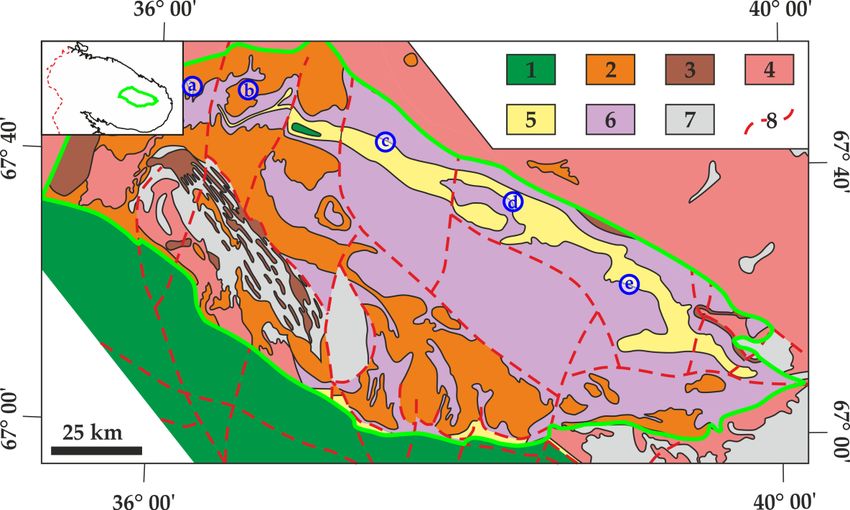
Minerals 2019, 9, 94                                                                                 3 of 17

is used for a pegmatitic or hydrothermal rock that is primarily composed of quartz (> 60 vol %).
The available geochronological estimates imply the possibility of the diachronous formation of
pegmatites and quartzolites: The first formation stage was syngenetic to granites [16,20,22], and
the second one occurred 1.6–1.7 Ga ago during the regressive stage of the Svecofennian metamorphic
event [21,23]. The formation temperature of these rocks is about 400 ◦ C [5]. The CM studied forms
spherulites in quartzolite veins and lenses in the inner part of the Keivy alkaline granite complex.
      Additionally, we studied large clusters of CM from the sillimanite schists, preserved in the west
of the Keivy Terrane, about 100 m from the granites. The spatial proximity of the latter, as well as
the structural and geochemical peculiarities of the sillimanite schists, allows for their formation to be
related to the metamorphic–metasomatic processing of metapelites ([2,3] and references therein). CM
forms nests from 5 to 10 cm in diameter, and veins from 0.2 to 2 cm in thickness in these rocks, which
was explained to be a result of the assimilation and recrystallization of the initial metapelitic CM under
the contact influence of granites [2,3].
      Different CM morphologies occur in metamorphic rocks, magmatic rocks and metasomatic rocks,
throughout the vast territory of the Keivy Terrane [1–3]. This makes the carbonaceous matter a witness
of various geological events that occurred during the Precambrian era within the Keivy Terrane. CM
morphology, the nature of its distribution, and its relationships with associated minerals play a highly
informative role in the study of its precursors, and of the conditions for the transformation of host rocks
during various metamorphic–metasomatic processes. This is due to the low CM mobility in rocks,
and the peculiarity of its internal structure, which sensitively reflects peak crystallization conditions,
remaining irreversible in the course of further retrograde transformations [2,24–26]. Geothermometry
based on the Raman spectra of carbonaceous material (RSCM) was invented for different types
of rocks [26–29]. This technique has been successfully used to estimate the peak temperatures of
both regional and contact metamorphism [30–35]. According to Reference [36], it works even in
the case of polymetamorphic complexes. Since the 13 C/12 C ratios of the main carbon reservoirs are
contrasting [37–39], the carbon isotope characteristics of CM also provide valuable information on the
nature of carbon in rocks.
      In this paper, we report data from the Keivy Terrane CM, obtained by petrographic and
mineralogical investigations, Raman spectroscopy, and carbon isotope analysis. Our study aims
to characterize the main sources of carbon in the Keivy rocks, as well as to clarify controversial issues
on the evolution of the Keivy Terrane, using CM as an indicator of peak thermal events. The results of
this study are valuable, both for the understanding of the regional geology of the Kola Peninsula, and
for a deeper understanding of crustal processes of the Precambrian period.

2. Materials and Methods

2.1. Samples
     We investigated three rock species comprising all of the CM morphotypes currently known in
the Keivy Terrane. To obtain the characteristics of the CM, we selected samples from five formations
(Figure 1) that were geographically distant from each other: (1) CM-bearing quartzolites from the
Keivy alkaline granite complex; (2) sillimanite schists near the contact with this massif; and (3) kyanite
schists from three different areas (the Tyapshmanyuk, Shuururta, and Igiurta areas).
     CM-bearing quartzolites (Figure 2a) were selected from a lens with an area of 10 × 20 m in
the Rova locality in the western part of the Keivy alkaline granite complex. They represent a
massive, coarse-grained rock of milky-white color, primarily composed of quartz (more than 90 vol %).
Minor minerals were astrophyllite, arfvedsonite, and riebeckite, and accessory phases were titanite,
pyrochlore, galena, and cassiterite. Sixteen samples of this rock were analyzed.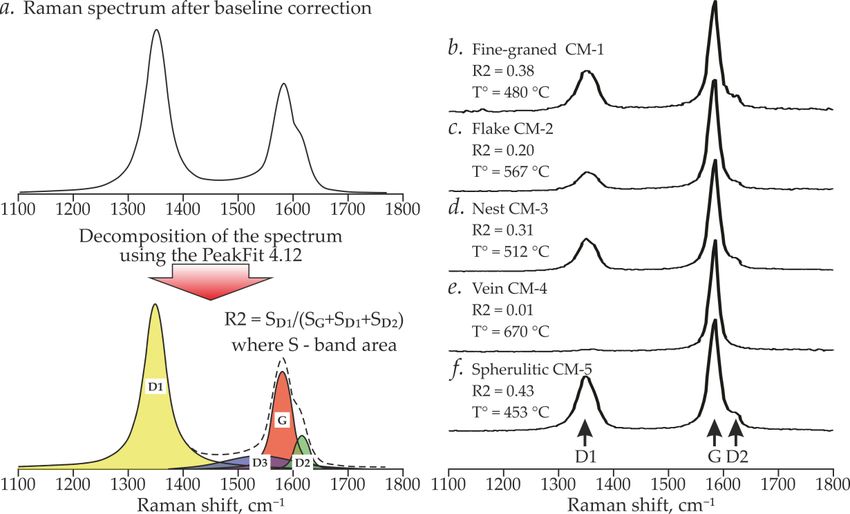
heterogeneous; therefore, we selected 25 samples.
         Kyanite schists were selected with eight samples from the Tyapshmanyuk mountain (Figure 2c)
  and 23 samples from Shuururta mountain (Figure 2d) of the central Keivy region, as well as 12
  samples from the Igiurta mountain (Figure 2e) of the eastern Keivy region. These schists vary in
  sizes, orientations, and proportions of minerals; however, in general, the set of rock-forming
Minerals       9, 94 constant. The main minerals are kyanite and quartz, and the minor ones are muscovite,
         2019, was
  minerals                                                                                            4 of 17
  plagioclase, staurolite, and CM.

        Figure
     Figure  2. 2. Studiedcarbonaceous
                Studied      carbonaceousmatter
                                          matter (CM)-bearing
                                                   (CM)-bearing rocks:
                                                                  rocks: (a)
                                                                          (a)Quartzolite
                                                                             Quartzolitefrom
                                                                                           fromthe
                                                                                                 theKeivy
                                                                                                     Keivy alkaline
                                                                                                              alkaline
        granite complex    (the Rova area), (b) sillimanite schist, selected near the contact  with  this
     granite complex (the Rova area), (b) sillimanite schist, selected near the contact with this complex complex
        (the
     (the    Makzabak
          Makzabak       area),and
                       area),   andkyanite
                                    kyaniteschists
                                            schists from
                                                     from (c)
                                                          (c) the
                                                              the Tyapshmanyuk,
                                                                  Tyapshmanyuk,(d)  (d)the
                                                                                         theShuururta
                                                                                             Shuururta andand(e)(e)
                                                                                                                 thethe
        Igiurta areas.
     Igiurta areas.

   2.2.Sillimanite
        Analytical Methods
                   schists (Figure 2b) crop out only in the west of the Keivy Terrane. We selected them
from the   Makzabak area,
        Mineralogical            where they investigations
                          and petrographic      formed narrow    of strips and lenses
                                                                    thin sections                   × 300
                                                                                        (up to 20thin
                                                                                   and polished             m) ininthe
                                                                                                        sections
enclosing   mica
   transmitted   andand   mica–garnet
                       reflected          schists,
                                 light were         at out
                                              carried   about  100 manfrom
                                                            by using          the contact
                                                                         Axioplan          to the
                                                                                    2 Imaging      alkaline
                                                                                               optical        granites.
                                                                                                        microscope
The   major
   (Carl     andOberkochen,
          Zeiss,    secondary minerals
                                  Germany).  of The
                                                 the morphology
                                                      sillimanite schists   are (in varying
                                                                     and structure            amounts) sillimanite,
                                                                                     of the CM-spherulites     from
   quartzolites
staurolite,      were(locally),
             kyanite     additionally   inspectedmargarite,
                                    muscovite,      by using contrasting    backscattered
                                                                quartz, chloritoid,        electron (BSE)
                                                                                     CM, ilmenite,           images
                                                                                                      Nb-rutile,   and
   obtained   with   a  Hitachi   S-3400N   scanning     electron  microscope   (the "Geomodel"
apatite. Monazite, corundum, zircon, xenotime, and fergusonite occurred sporadically. The sheet    RC   SPbSU,    St.
   Petersburg,
silicates        Russia).
          are often   substituted by berthierine. Sillimanite schists are structurally highly heterogeneous;
        Carbon    isotope
therefore, we selected 25   analyses  were conducted on an IRMC Delta V (Thermo Finnigan, San Jose, CA,
                               samples.
   USA)   mass  spectrometer     at
      Kyanite schists were selected the Institute  for the
                                          with eight        History
                                                        samples     of Material
                                                                  from           Culture of RAS
                                                                        the Tyapshmanyuk          (St. Petersburg).
                                                                                               mountain    (Figure 2c)
   The  samples    were   mechanically    divided   into  pieces, each  maximally
and 23 samples from Shuururta mountain (Figure 2d) of the central Keivy region,     enriched with   oneasofwell
                                                                                                            the CM
                                                                                                                 as 12
   morphologies. Crushed samples of about 2 g in weight were subjected to chemical treatment with
samples from the Igiurta mountain (Figure 2e) of the eastern Keivy region. These schists vary in sizes,
   hydrochloric acid, with the addition of ammonium fluoride to dissolve the carbonate and silicate
orientations, and proportions of minerals; however, in general, the set of rock-forming minerals was
   components. The extraction of the substance into the inlet system was initiated by combustion, i.e.,
constant. The main minerals are kyanite and quartz, and the minor ones are muscovite, plagioclase,
   transferring carbon to the CO2 state. The instrumental error in determining the carbon isotopic
staurolite, and CM.
   composition did not exceed ± 0.05% (95% confidence interval). To validate the data and to exclude
2.2.the instrument
      Analytical   error, representative samples of each rock type from each object were additionally
                 Methods
   analyzed by using the Finnigan MAT Delta instrument in a dual inlet mode at the Institute of
     Mineralogical and petrographic investigations of thin sections and polished thin sections in
transmitted and reflected light were carried out by using an Axioplan 2 Imaging optical microscope
(Carl Zeiss, Oberkochen, Germany). The morphology and structure of the CM-spherulites from
quartzolites were additionally inspected by using contrasting backscattered electron (BSE) images
obtained with a Hitachi S-3400N scanning electron microscope (the “Geomodel” RC SPbSU,
St. Petersburg, Russia).
     Carbon isotope analyses were conducted on an IRMC Delta V (Thermo Finnigan, San Jose, CA,
USA) mass spectrometer at the Institute for the History of Material Culture of RAS (St. Petersburg).
The samples were mechanically divided into pieces, each maximally enriched with one of the CM
Minerals 2019, 9, 94 5 of 17
morphologies. Crushed samples of about 2 g in weight were subjected to chemical treatment with
hydrochloric acid, with the addition of ammonium fluoride to dissolve the carbonate and silicate
components. The extraction of the substance into the inlet system was initiated by combustion, i.e.,
transferring carbon to the CO2 state. The instrumental error in determining the carbon isotopic
composition did not exceed ± 0.05% (95% confidence interval). To validate the data and to exclude
the instrument error, representative samples of each rock type from each object were additionally
analyzed by using the Finnigan MAT Delta instrument in a dual inlet mode at the Institute of Geology
and Mineralogy, SB RAS (Novosibirsk, Russia). The procedure of the carbon isotope analysis applied
in the present study was analogous to that described in Reference [40].
In order to conduct interlaboratory verification, the collection of Raman spectra was carried
out in two laboratories. Part of the data was obtained at the Institute of Geology of the KSC RAS
with a Nicolet Almega XP (Thermo Scientific, Waltham, MA, USA) dispersive spectrometer equipped
with an Olympus BX41 confocal microscope (Olympus Corporation, Tokyo, Japan) for navigation,
using 50× and 100× objectives. An exciting He-Ne laser with a wavelength of 532 nm was used;
the exposure time ranged from 4 to 30 s, and the number of repetitions was 2–30. Another part of the
data was obtained at the “Geomodel” RC of the SPbSU Scientific Park (St. Petersburg) with a HORIBA
Jobin-Yvon LabRam HR800 laser Raman spectrometer (Horiba, Ltd., Kyoto, Japan) equipped with an
Olympus confocal microscope (100× objective lens, Olympus Corporation, Tokyo, Japan). The Raman
scattering signal was excited by an Ar+ laser (514.5 nm) with an acquisition time of 4–10 s, and with
10–15 repetitions. In both laboratories, the calibration was performed by using the Raman line of
silicon at 521 cm–1 . The limit of the spectral resolution was about 2 cm–1 . The final laser power did not
exceed 3 mW.
Polishing can damage the CM structure [41,42], and researchers often study CM beneath the
surface of transparent adjacent grains [26,42,43]. Not all types of the studied CM were available for
this method. The last polishing steps with an abrasive size less than 1 µm have the greatest impact
on the CM structure [42,44]. In this study, uncoated samples polished by a monocrystalline diamond
slurry with a grain size of 3 µm were used. The duration of polishing did not exceed 5 min. However,
some influence of polishing on the CM structure could reduce the actual values of the graphitization
temperatures. Where possible, the polarized laser beam was set to be perpendicular to the mean
CM c-axis, which maximizes the Raman signal. The spectra of the neighboring mineral phases were
also collected.
2.3. Raman Spectra Processing
Spectral decomposition (Figure 3) and the determination of the peak position, band area (A), peak
width (FWHM), and band intensity (I) were performed using the PeakFit 4.12 software (Systat Software
GmbH, Erkrath, Germany). Peaks were approximated by the Voigt function. The decomposition
was based on the presence of peaks in the spectrum of natural CM, with up to 8–9 peaks [26,27,41].
According to this concept, in the first-order region (1100–1800 cm–1 ), graphite with a perfect crystal
structure exhibits only one sharp peak at ~1580 cm–1 (the so-called “G band”), corresponding to
planar vibrations of carbon atoms in the structure. In the spectrum of less ordered CM with defects in
graphene layers, additional first-order peaks appear at ~1350 cm–1 and ~1620 cm–1 (the D1 and D2
bands, respectively). In some cases, low-intensity bands that are especially wide in a poorly ordered
amorphous matter, are also observed at about 1400–1500 cm–1 (D3) and 1100–1200 cm–1 (D4). As the
degree of crystallinity increases, the relative intensities and areas of the D-peaks decrease, and the
weak lines disappear [43]. An indicator of the CM ordering degree is the La value (the in-plane
crystallite size), which is calculated through the relative intensity ratio of the D1 and G bands [41,45].
The intensity-based R1 = ID1 /IG ratio and area-based R2 = AD1 ⁄(AG + AD1 + AD2 ) ratio are also used
as sensitive parameters to describe the structural order of CM [26,29]. Peaks from the second-order
region (2200–3400 cm–1 ) located near 2400, 2700, 2900, and 3300 cm–1 are regarded as overtones or
combination scattering [43].Minerals 2019, 9, 94 6 of 17
Minerals 2019, 9, x FOR PEER REVIEW 6 of 17
Figure
Figure 3. 3.(a)(a)Schematic
Schematicdecomposition
decomposition diagram
diagram ofof CM
CM Raman
Ramanspectrum
spectrumininthethefirst-order region
first-order region
(1100–1800 cm–1–1) and (b–f) characteristic spectra (in the same region) of different CM morphologies
(1100–1800 cm ) and (b–f) characteristic spectra (in the same region) of different CM morphologies
from
from thethe studiedrocks
studied rocksofofthe
theKeivy
KeivyTerrane.
Terrane.
3. Results
The graphitization temperature of CM was assessed by an RSCM geothermometer, calibrated
(1) for a 514.5 nm laser for regional metamorphism [26], and those calibrated for a 532-nm laser [27]
3.1. Morphology of Carbonaceous Matter
(2) for contact and (3) for regional metamorphism. The first RSCM geothermometer has an absolute
Five
precision ±50 ◦ C, while types
of morphological in the of CM
last twowere found (initorder
calibrations, of30
is of ± ◦ C. The calculations
prevalence): Dispersed offine particles
temperatures
(hereafter fine-grained CM), flakes, irregular aggregates (hereafter “nests” or “nest CM”),
by the first geothermometer are closest to the average values of the three indicated thermometers. veins, and
The second geothermometer yielded 5–10 C higher, and the third geothermometer yielded 10–15 ◦ C
spherulites (Figures 2 and 4). ◦
The fine-grained
lower temperatures. carbonaceous
Hereafter, (CM-1)
the results of isonly
presented in all studied
the calculations schists
by the (Figure 4a,b). Thisare
first geothermometer
presented. This geothermometer is valid for the temperature range of 330–650 C black
form reached the highest concentrations in kyanite schists, coloring them gray ◦to [26]. (see Figure
2c–e). It is quite evenly dispersed in the rock matrix as tiny particles ranging in size from fractions of
3. microns
Results to three microns, and it was included in rock-forming silicates. Notably, the fine- and
medium-grained areas of the schists tend to be enriched with CM-1 more than large silicate crystals.
3.1. Morphology
Metapelitesof Carbonaceous
contain flakyMatter
carbonaceous matter (CM-2) in variable quantities, from a few
microns to 0.05 mm in length, localized in the interstitial space, within schistosity, and/or along grain
Five morphological types of CM were found (in order of prevalence): Dispersed fine particles
cracks (Figure 4c,d). In the kyanite schists, large kyanite paramorphoses are light, almost devoid of
(hereafter fine-grained CM), flakes, irregular aggregates (hereafter “nests” or “nest CM”), veins, and
CM inclusions, and contain flaky CM along their edges, cracks, and interstities (see Figures 2c and
spherulites (Figures 2 and 4).
4c). The kyanite schists of the Igiurta mountain (east of the Keivy Terrane) does not contain this CM
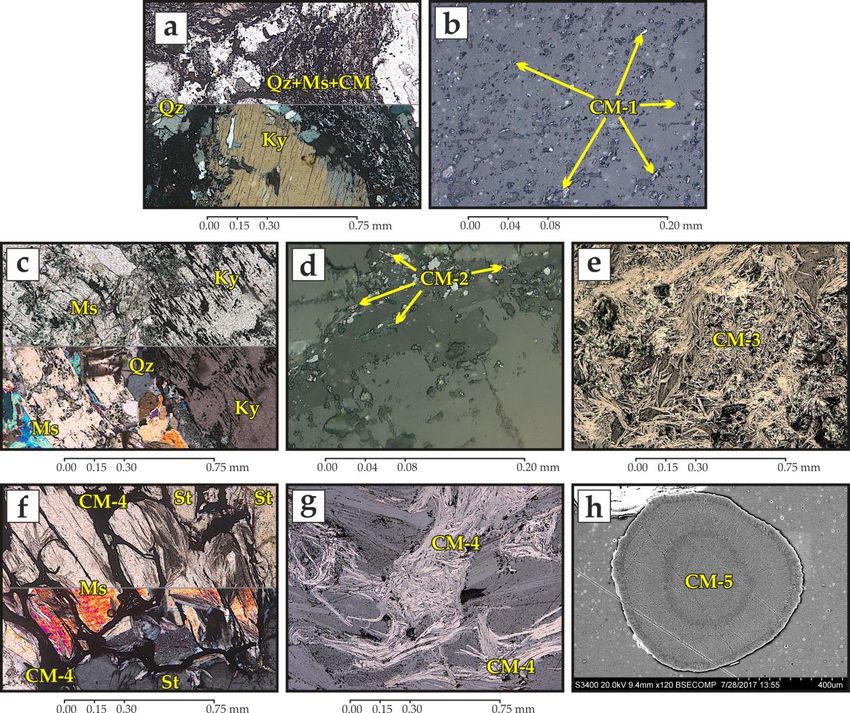
The fine-grained carbonaceous (CM-1) is presented in all studied schists (Figure 4a,b). This form
morphology, while CM-1 was ubiquitous therein.
reached the highest concentrations in kyanite schists, coloring them gray to black (see Figure 2c–e).
It is quite evenly dispersed in the rock matrix as tiny particles ranging in size from fractions of microns
to three microns, and it was included in rock-forming silicates. Notably, the fine- and medium-grained
areas of the schists tend to be enriched with CM-1 more than large silicate crystals.
Metapelites contain flaky carbonaceous matter (CM-2) in variable quantities, from a few microns
to 0.05 mm in length, localized in the interstitial space, within schistosity, and/or along grain cracks
(Figure 4c,d). In the kyanite schists, large kyanite paramorphoses are light, almost devoid of CM
inclusions, and contain flaky CM along their edges, cracks, and interstities (see Figures 2c and 4c).
The kyanite schists of the Igiurta mountain (east of the Keivy Terrane) does not contain this CM
morphology, while CM-1 was ubiquitous therein.Minerals 2019, 9, 94 7 of 17
Minerals 2019, 9, x FOR PEER REVIEW 7 of 17
Figure
Figure 4. 4.CMCMmorphologies
morphologies and and their
their position
position in
in the
the studied
studiedrocks
rocksfrom
fromthethe
Keivy
KeivyTerrane: (a) (a)
Terrane:
Section of a sample of kyanite schist with CM-bearing matrix and (b) morphology
Section of a sample of kyanite schist with CM-bearing matrix and (b) morphology of fine-grained of fine-grained
CM-1
CM-1 therein;(c)(c)interstitial
therein; interstitialdistribution
distribution of
of flaky
flaky CM-2
CM-2 in inkyanite-muscovite
kyanite-muscovite segregations andand
segregations (d) (d)
morphology of CM-2; (e) nest of CM-3; (f) muscovite-staurolite part of the sillimanite schist veined
morphology of CM-2; (e) nest of CM-3; (f) muscovite-staurolite part of the sillimanite schist veined
with CM-4 and (g) the morphology of the latter; (h) zoning in spherulitic CM-5. Images: (h) is a
with CM-4 and (g) the morphology of the latter; (h) zoning in spherulitic CM-5. Images: (h) is a
backscattered electron (BSE) photomicrograph; (a,c,f) are transmitted light photomicrographs
backscattered electron (BSE) photomicrograph; (a,c,f) are transmitted light photomicrographs (top—one
(top—one polarizer, bottom—two polarizers); (b,d,e,g) are reflected light photomicrographs.
polarizer, bottom—two polarizers); (b,d,e,g) are reflected light photomicrographs. Abbreviations: CM
Abbreviations: CM – carbonaceous matter (the numbers correspond to the morphologies, see
– carbonaceous matter (the numbers correspond to the morphologies, see explanations in the text);
explanations in the text); Ms—muscovite; Ky—kyanite; Qz—quartz; and St—staurolite.
Ms—muscovite; Ky—kyanite; Qz—quartz; and St—staurolite.
Sillimanite schists contain four CM morphologies: In addition to CM-1 and CM-2, nest (CM-3)
Sillimanite schists contain four CM morphologies: In addition to CM-1 and CM-2, nest (CM-3)
and vein (CM-4) varieties. CM-1 and CM-2 are sporadically present in staurolite grains and
andsillimanite
vein (CM-4) varieties. CM-1 and CM-2 are sporadically present in staurolite grains and sillimanite
fibrolites only. CM in these rocks has a dominantly “nest” morphology of up to 10 cm in
fibrolites only. CM in
width, distributed these rocks
extremely has aThe
unevenly. dominantly “nest” morphology
nests are composed of aggregatesof of
upmid-sized
to 10 cmsinuous
in width,
distributed extremely unevenly.
flakes (CM-3) (Figure 4e). The nests are composed of aggregates of mid-sized sinuous flakes
(CM-3) Vein
(Figure 4e).
carbonaceous matter (CM-4) occurs exclusively in sillimanite schists. The thickness of the
Veinranges
veins carbonaceous
from a matter (CM-4) occurs
few millimeters exclusively
to 2 cm. They are in composed
sillimanite of
schists.
curved The thickness
planks of the
of CM,
veins ranges from
interspersed a few
with millimeters
rutile to 2Notably,
and ilmenite. cm. TheyCM-4
are composed of curved
veins crosscut planks
the main of CM,
minerals ininterspersed
the rock,
with rutile and
including ilmenite.
staurolite Notably,
(Figure 4f,g). CM-4 veins crosscut the main minerals in the rock, including
CM-5
staurolite from4f,g).
(Figure quartzolites located inside the alkaline granite massif occurrs exclusively as
spherulites
CM-5 from ranging in sizelocated
quartzolites from fractions ofalkaline
inside the a millimeter to massif
granite 5 mm. occurrs
These spherulites
exclusivelyare uneven,
as spherulites
composed of dense aggregates, often zonal (Figure 4h), and distributed chaotically
ranging in size from fractions of a millimeter to 5 mm. These spherulites are uneven, composed of in the rock.
dense
Sometimes, intergrowths of several spherulites were observed. Spherulitic CM morphology
aggregates, often zonal (Figure 4h), and distributed chaotically in the rock. Sometimes, intergrowths has not of
been spherulites
several previously were
described in anySpherulitic
observed. rocks of the
CMKeivy Terrane,has
morphology although
not beenit previously
is known indescribed
various in
geological objects [46–49].
any rocks of the Keivy Terrane, although it is known in various geological objects [46–49].Minerals 2019, 9, 94 8 of 17
3.2. Stable Carbon Isotope Data
The investigated CM exhibited significant differences in carbon isotope composition (Table 1).
Table 1. Carbon isotope composition of CM from the Keivy Terrane.
Lat. Host
Sample Locality Long. (N) CM Type n2 δ13 CPDB , ‰
(E) Rock 1
K-162 Igiurta 67.36658 39.02185 Ky CM-1 2 −33.3 . . . −38.2
K-163 Igiurta 67.36794 39.02407 Ky CM-1 4 −41.3 . . . −45.8
K-164 Igiurta 67.36933 39.02696 Ky CM-1 3 −41.4 . . . −45.9
K-165 Igiurta 67.37166 39.03104 Ky CM-1 3 −45.2 . . . −46.8
Igiurta, kyanite schists, only CM-1, n = 12: Median −44.7‰, mean −43.1‰, SD 4.0‰
249-10 Tyapshmanyuk 3 67.72212 37.43463 Ky CM-1 + CM-2 4 −43.4 . . . −44.5
250-10 Tyapshmanyuk 3 67.72084 37.43778 Ky CM-1 + CM-2 4 −43.7 . . . −44.8
Tyapshmanyuk, kyanite schists, CM-1 + CM-2 mix, n = 8: Median −44.2‰, mean −44.2‰, SD 0.5‰
K-197 Shuururta 67.58354 38.21614 Ky CM-1 + CM-2 2 −29.1 . . . −36.1
K-200 Shuururta 67.58362 38.22089 Ky CM-1 + CM-2 2 −41.3 . . . −45.1
K-201 Shuururta 67.58420 38.22161 Ky CM-1 + CM-2 4 −27.3 . . . −33.1
K-202 Shuururta 67.58534 38.22317 Ky CM-1 + CM-2 3 −30.1 . . . −33.4
K-203 Shuururta 67.58634 38.22675 Ky CM-1 + CM-2 2 −35.2 . . . −35.7
K-216 Shuururta 67.59379 38.28372 Ky CM-1 + CM-2 3 −30.9 . . . −38.3
G2-14-2 Shuururta 67.53086 38.09548 Ky CM-1 + CM-2 1 −37.7
G3-17-1 Shuururta 67.58487 38.22785 Ky CM-1 + CM-2 1 −32.6
G3-17-2 Shuururta 67.58487 38.22785 Ky CM-1 + CM-2 1 −33.2
G3-18-1 Shuururta 67.54943 38.27469 Ky CM-1 + CM-2 1 −40.2
G3-21-1 Shuururta 67.55296 38.29061 Ky CM-1 + CM-2 1 −37.8
G4-30-1 Shuururta 67.56740 38.08735 Ky CM-1 + CM-2 1 −33.2
G4-31-1 Shuururta 67.56934 38.06529 Ky CM-1 + CM-2 1 −34.5
Shuururta, kyanite schists, CM-1 + CM-2 mix, n = 23: Median −33.4‰, mean −34.3‰, SD 4.4‰
F13028 Makzabak 67.84095 36.17565 Sill CM-3 + CM-4 20 −14.2 . . . −22.6
Makzabak, sillimanite schists, CM-3 + CM-4 mix, n = 20: Median −17.4‰, mean −18.3‰, SD 1.7‰
F13028 Makzabak 67.84095 36.17565 Sill CM-4 2 −10.1 . . . −10.7
Makzabak, sillimanite schists, only CM-4, n = 2: Median −10.4‰, mean −10.4‰, SD 0.4‰
F12026 Rova 67.83838 36.54107 Qz CM-5 9 −5.6 . . . −9.1
Rova, quartzolites, CM-5, n = 9: Median −7.5‰, mean −7.4‰, SD 1.9‰
1Hereafter: Ky—kyanite schists, Sill—sillimanite schists, Qz—quartzolites; 2 n—the number of analyses; 3
Coordinates of the samples from the Tyapshmanyuk area are taken from the map.
Isotope data of an inseparable mixture of fine-grained CM-1 and flaky CM-2 for kyanite schists
of the Tyapshmanyuk mountain are homogeneous with δ13 CPDB = −43.4‰ to −44.8‰. CM-1 from
the Igiurta mountain shows an isotopic composition close to that of the CM from Tyapshmanyuk
mountain, although it is more variable (from –41.3‰ to −46.8‰). For one sample, heavier values
were obtained (–35.8 ± 2.5‰). Carbon isotope data for kyanite schists from Shuururta mountain,
where CM-1 and CM-2 morphologies were found, are divided into two sets. Three analyses (from two
samples) yielded a δ13 CPDB value of –42.7 ± 2.5‰. In the other 20 analyses, values vary from –27.3‰
to –38.3‰, with the most values in a range of ±2.5‰ from a median of –33.2‰. Sillimanite schists
of the Makzabak area contain several CM types. The range of δ13 CPDB variations for the nest CM-3
(possibly contaminated by CM-4) is –14.2‰ to –22.6‰, with more than half of the analyses falling into
the interval –17.4 ± 0.4‰. The carbon of the CM-4 veins is significantly heavier, with δ13 CPDB values
of −10.1 to −10.7‰. Spherulites from the Rova quartzolites contain the heaviest carbon, with δ13 CPDB
values of −5.6‰ to −9.1‰.Minerals 2019, 9, 94 9 of 17
3.3. RSCM Temperature Estimates
The Raman spectra of all investigated CM types except for spherulites yield R2 ratio values ofMinerals 2019, 9, 94 10 of 17
Minerals 2019, 9, x FOR PEER REVIEW 10 of 17
Figure 5. Variations
5. Variations in in carbon
carbon isotopecompositions
isotope compositions(δ(δ1313C
CPDB))and crystallization temperatures (T °C)◦
Figure PDB and crystallization temperatures (T C)
of CM morphotypes (signed) from the rocks of the studied objects. Top marks the possible
of CM morphotypes (signed) from the rocks of the studied objects. Top marks the possible sources sources of
carbon. To the right of the frame, the thermal mode of events during which CM crystallized is shown
of carbon. To the right of the frame, the thermal mode of events during which CM crystallized
(the rationale for this data interpretation is discussed in Section 4). For the Shuururta and
is shown (the rationale for this data interpretation is discussed in Section 4). For the Shuururta
Tyapshmanyuk rocks, CM-1 and CM-2 were not amenable to separation, therefore the isotope
and Tyapshmanyuk rocks, CM-1 and CM-2 were not amenable to separation, therefore the isotope
characteristics of mixtures are displayed.
characteristics of mixtures are displayed.
In In
thethe spectrum
spectrum ofof thevein
the veinCM-4,
CM-4,the thenarrowest
narrowest G G peak
peak was
was observed,
observed,and andthethedisorder
disorderbands
bands
are very weak or completely absent. Its structure is the most well-ordered
are very weak or completely absent. Its structure is the most well-ordered compared to the other compared to the other
morphologies [41]. The calculated peak temperatures are about 540–640 °C, with a mean value of 580
morphologies [41]. The calculated peak temperatures are about 540–640 ◦ C, with a mean value of
°C close to the upper limit of applicability of the geothermometer [26].
580 ◦ C close to the upper limit of applicability of the geothermometer [26].
The lowest temperatures were obtained for spherulites. Notably, the zoning seen on the BSE
The lowest temperatures were obtained for spherulites. Notably, the zoning seen on the BSE photo
photo is controlled by the variability in the ordering degree of the carbonaceous matter, which is
is controlled by the variability in the ordering degree of the carbonaceous matter, which is reflected
reflected in their Raman spectra. The number of zones in the spherulites varied depending on their
in their Raman spectra. The number of zones in the spherulites varied depending on their size. On
size. On average, the calculated temperature range for the CM-5 spherulites is about 410–500 °C,
average, ◦ C, with a mean
with athe calculated
mean value of temperature
450 °C. The range for the CM-5
temperatures spherulites
calculated is about
for CM-5 410–500
(and, possibly, CM-4) are
value of 450 C.◦ The likely
temperatures
suppositive (most minimal),calculated for CM-5 (and,
since the crystallinity possibly,
degrees of veinCM-4) are suppositive
and magmatic CM are (most
not
likely minimal),
clearly correlatedsince
withthetemperature
crystallinity degrees of vein and magmatic CM are not clearly correlated
[41,52,53].
with temperature
To assess the [41,52,53].
RSCM results, it is necessary to evaluate the polishing effect on the obtained RS
data. In Reference [51],results,
To assess the RSCM it is necessary
it was shown to evaluate
that polishing the polishing
increases effect
the R1 ratio. Onon the
the obtained
contrary, RS data.
G-band
In Reference [51], it was shown
width at half-maximum (FWHM thatG) polishing
parameter increases
is polishingtheresistant
R1 ratio.and Onisthe contrary,
related with G-band width
the R1 value
at half-maximum (FWHM
by the linear function ) parameter
ofGFWHM G = 14is+polishing
35R1 [51].resistant and is related
The measured with
R1 values of the
eachR1ofvalue by the
the eight
groups
linear of CM
function of from
FWHM theGKeivy
= 14 +Terrane
35R1 [51].(seeThe
Table 2) vary widely
measured (R1of
R1 values ineach
Tableof2),
thewhich
eightindicates
groups oftheCM
fromeffect
the of polishing.
Keivy Terrane The FWHM
(see Table G2)values within (R1
vary widely these
ingroups are
Table 2), almost
which identical
indicates (FWHM
the effect ofG in Table
polishing.
The2).FWHM
This confirms
G values the insensitivity
within of this parameter
these groups are almosttoidentical
polishing. We selected
(FWHM the Raman
G in Table 2). This spectra of
confirms
those samples in which CM was least affected by polishing. Those spectra
the insensitivity of this parameter to polishing. We selected the Raman spectra of those samples in have minimal R1 values
(R1*CM
which in Table 2). An
was least additional
affected selection controller
by polishing. is the have
Those spectra proximity of the
minimal R1individual
values (R1* FWHM G values
in Table 2). An
(FWHMselection
additional G* in Table 2) calculated by using R1* to the average FWHMG values of the sampling.
controller is the proximity of the individual FWHMG values (FWHMG * in Table 2)
Comparison
calculated by usingof temperatures
R1* to the averageT* withFWHM average sampling temperatures (T) made it possible to
G values of the sampling. Comparison of temperaturesMinerals 2019, 9, 94 11 of 17
T* with average sampling temperatures (T) made it possible to evaluate deviations in estimates of
peak temperatures. In CM-1, in CM-2, and in CM-3, the difference between T* and T is not large
(20–40 ◦ C), and the FWHMG and FWHMG * are close. The results obtained are systematically lowered.
The error is within the absolute precision of the geothermometer used [26]. Thus, the determined
values correspond to the lower limit of the true peak temperatures. Notably, T* values are close to
T measurements made by using the (3) geothermometer [27]. For CM-4 and CM-5, the differences
between T* and T are higher, and the FWHMG and FWHMG * differ noticeably. Thus, the true peak
temperatures of CM-4 and CM-5 should be considered to be higher, which is consistent with [53].
Statistical processing of the obtained peak temperatures is required for the reliable discrimination
of the graphitization conditions. Based on the asymmetry of the “box-and-whiskers” and the length
of the “whiskers” (Figure 5), we can assume a multiplicity of outliers, and the absence of a normal
distribution of peak temperatures for most of the CM types. Therefore, robust nonparametric statistics
(the median test, the Kruskal–Wallis test, the Kolmogorov–Smirnov test, and the Mann–Whitney U
test) were used [54–57]. All tests were performed for the p = 0.05 confidence interval.
A comparison of the CM-1 and CM-2 peak temperatures from three kyanite schist localities
shows that CM-1 and CM-2 do not belong to a single data sample, as they have different medians
and distributions. Statistical tests for CM-2 from different areas reveal a high probability of their
belonging to a single data sample, with a general median of 560 ◦ C (in different tests, p vary from
0.6 to 0.8). Statistically, vein CM-4 from sillimanite schists can also be part of this data sample (p from
0.2 to 0.4). Similarly, CM-1 from different localities of kyanite schists are parts of a single data sample,
with a general median of 500 ◦ C (p from 0.8 to 1.0). The nest CM-3 from sillimanite schists can also
be considered to be part of this data sample (p from 0.3 to 0.4). Only CM-3 is statistically close to
spherulitic CM-5 from quartzolites. The median of the combined CM-3 + CM-5 data sample is 450 ◦ C.
However, the probability that these two CM types belong to a single data sample is close to the selected
significance level (p from 0.1 to 0.2).
4. Discussion
In rocks of the Keivy Terrane, five CM types, with different morphologies, structural positions,
crystallization temperatures, and carbon isotope signatures are present. The largest amounts of carbon
in the Keivy Terrane are formed as fine-grained (CM-1) and flaky (CM-2) matter. In the mid-1970s,
the first carbon isotope data for CM from kyanite schists from Shuururta mountain (about 35‰) were
published [1]. Based on this, all carbon in the Keivy Terrane was henceforth considered as a product of
the metamorphism of sedimentary biogenic matter. An extremely isotopically light carbon (δ13 CPDB
from –42‰ to –47‰) was detected in high-Al metamorphic schists and metasomatic kyanite rocks
from shear zones of the Keivy Terrane (Vorgel’urta and Manyuk areas) [58].
Light CM (δ13 CPDB = –43.5 ± 3.3‰) is a characteristic for all kyanite schists of the study area.
Rocks traced in a zone of about 200 km in length have this isotopic signature. Following [58],
the source of carbon depleted in the 13 C could be an aqueous-methane fluid from sedimentary
rocks with organic compounds. This is consistent with the data on fluid inclusions in kyanite
rocks, which contain CO2 and solutions of calcium and sodium chlorides, methane and “heavier”
hydrocarbons [58]. Abiogenic methane from the Fennoscandian, Canadian, and African Shields has
similar isotope characteristics [59–62]. However, according to Reference [63], “as the thermal stress
on carbon complexes increases, more 12 C–13 C bonds are broken and the gas becomes isotopically
heavier”. Methane, a precursor of CM, should have been isotopically lighter [39]. Such signatures
are then beyond the limits of variations in the isotopic composition of abiogenic methane ([64] and
references therein).
Our investigation confirms the existence of CM with an isotopic composition of δ13 CPDB –32.8 ±
5.5‰, along with extremely isotopically light CM (δ13 CPDB = –43.5 ± 3.3‰) in kyanite schists of the
Shuururta mountain. Moreover, one probe from the Igiurta mountain yielded heavier (δ13 CPDB
–35.8 ± 2.5‰) values. This indicates the probability of carbon assimilation from an additionalMinerals 2019, 9, 94 12 of 17
reservoir that was more highly enriched in the 13 C isotope. Similar isotopic signatures are seen
in oils and oil source rocks [39,65,66]. In this light, the recent discovery of forms externally resembling
nanobacteria in the schist samples from Shuururta mountain is of interest [67]. It is possible that
these organisms contributed to the carbon isotope signatures of some parts of metasedimentary strata
in this area. However, taking into account rather large variations in the isotopic composition of
the abiogenic gas [59], this CM could also be of abiogenic origin. Nevertheless, the coexistence of
isotopic signatures resembling those of natural gases and oils allows us to assume the existence of a
Precambrian oil-and-gas-bearing basin within a considerable area of the Keivy Terrane. This hypothesis
is supported by recent geodynamic reconstructions, according to which the Keivy Terrane (“domain”)
could have been a “median massif” during the Neoarchean period, which is often characterized by the
presence of hydrocarbon deposits [68].
The isotopically heavy (δ13 CPDB = –7.4 ± 1.8‰) carbon of the CM-5 spherulites from the
intragranite quartzolites of the Keivy alkaline granite complex could be derived either by CO2
assimilation from lower-crustal fluids or from CO2 -rich mantle fluids [37,69]. A similar carbon isotopic
composition (δ13 CPDB = –10.4 ± 0.3‰) was found in vein CM-4. This indicates the kinship of the
CM-4 and CM-5 precursors. Previously, mantle-derived CM was not detected in the Keivy Terrane.
One of the important results of our study is the discovery of at least three isotopically contrasting
carbon sources.
According to the isotope data, the carbon of CM-3 is intermediate between “methanogenic” and
“mantle” (δ13 CPDB = –18.4 ± 4.5‰). This is possibly a product of fluid remobilization of extremely
light carbon that was dynamically enriched in 13 C isotope during its migration. The second scenario is
that carbon precipitated from a multicomponent mixture of CH4 -rich and CO2 -rich fluids from the
above sources. Alternatively, these isotope characteristics could be the result of mixing between the
isotopically light and heavy forms of carbon matter [70,71].
The results of RSCM thermometry demonstrate statistically significant differences in the peak
temperatures of CM-1 and CM-2. Graphitization is a progressive, irreversible transformation [24,25,41].
Therefore, the coexisting CM-1 and CM-2 in kyanite schists, and CM-3 and CM-4 in sillimanite schists
with different graphitization temperatures are indicators of polymetamorphic events. This is in good
agreement with the conclusions on the multi-stage regional metamorphism of supracrustal formations
of the Keivy Terrane [5,6] The described coexistence is possible only if the second event was lower in
temperature. Otherwise, the graphitization temperatures would be the same for both CM types, and
they would correspond to the maximum thermal effect [25].
Thus, the earliest metamorphic event recorded in the CM of the kyanite schists was the peak
metamorphism (about 550 ◦ C). The obtained values are close to the termobarometrical estimates of the
kyanite schist formation [4,7]. CM-4 peak temperatures from sillimanite schists are statistically similar
to those of CM-2 flakes. This suggests graphitization by a single event. The carbon isotope signatures
of CM-4 and its morphology indicate fluid transportation of a parental compound of C (probably, CO2 )
from the endogenous (granitic) source. The fluid nature of vein CM-4 does not permit the unequivocal
acceptance of its thermometric estimates (> 580 ◦ C) [41,52]. However, they are close to the estimates
for metamorphic conditions of sillimanite schists (550–650 ◦ C) [5]. Structural relationships of the vein
CM-4 with sillimanite, staurolite, and muscovite (namely, its crosscutting of the indicated minerals)
suggest that CM-4 was generated later than the minerals of metamorphic association of host rocks.
Hence, supracrustal rocks of the Keivy Terrane underwent metamorphism either prior to the intrusion
of a granitic melt (“zero metamorphic event”), or contemporaneously with this intrusion (2.67–2.65
Ga). The latter assumption supports the idea of the formation of sillimanite schists under the thermal
influence of alkaline granite intrusions [3].
The CM-2 and CM-4 peak temperatures are the same. Apparently, an early event involved the
regional heating of the rocks of the Keivy Terrane during the large-scale granitic intrusion in the
Archean. The maximum thermal exposure was manifested around the contacts of the granitic massifs,
which is fixed at the peak temperatures of CM-4.Minerals 2019, 9, 94 13 of 17
No signs of the peak temperature effect were found in kyanite schists of the Igiurta mountain.
This suggests a decrease in the intensity of the first (hot) metamorphic event from the northwest to the
east of the Keivy Terrane, which confirms the previous thermobarometric estimates [4,5].
The second (regressive) event induced the graphitization of CM-1 in kyanite schists and CM-3 in
sillimanite schists. Its peak temperatures are about 500 ◦ C, and the impact is traced throughout the
Keivy Terrane.
Considering the obtained temperature estimates, the CM-5 spherulites may have crystallized
at the final formation stage of the granite massif. This is consistent with quartzolite formation
temperature estimates [5], and the idea that the host quartzolites are the end-members of the granitic
magma fractionation formed by residual fluid-saturated Si-rich melts [20,22]. The graphitization
temperatures of spherulites (about 450 ◦ C) slightly exceeded those that were obtained by classical
thermobarogeochemical methods for quartzolites (about 400 ◦ C) [5]. Possibly, this is caused by the
influence of the regressive (“cold”) regional metamorphism.
5. Conclusions
1. The extremely light (δ13 CPDB = –40.2‰ to −46.8‰) carbonaceous matter characterizes the rocks
from the northwest to the east of the Keivy Terrane.
2. In the kyanite schists of the Shuururta mountain and the Igiurta mountain, along with extremely
isotopically light CM, that with a carbon isotope composition of about –33‰ δ13 CPDB is
widespread. This denotes the existence of an additional carbon reservoir.
3. Within the Keivy Terrane, CM with isotopically heavy carbon (δ13 CPDB = −5.6‰ to −10.7‰)
occurs both in quartzolites from alkaline granites, and in the sillimanite, schists surrounding
the latter.
4. CM graphitization in kyanite schists most likely occurred in two stages of regional metamorphism,
the peak event and the regressive event, respectively. Peak temperatures of the CM graphitized
are maximal in sillimanite schists surrounding alkaline granites in the northwest of the Keivy
Terrane (> 580 ◦ C). Those in the kyanite schists from the central part of the Terrane are lower
(~ 550 ◦ C). In CM from the east of the Keivy Terrane, no evidence of this peak metamorphic
event was found. The mineral associations of the sillimanite and kyanite rocks, corresponding to
amphibolite facies, reflect this early hot event. The obtained data suggest a relationship between
this event and the regional heating induced by the intrusion of alkaline granite magmas in the
Archaean period.
The second metamorphic event affected all supracrustal rocks of the Keivy Terrane. It proceeded at
temperatures of about 500 ◦ C. The traces of this event were recorded in the mineral associations and CM
of kyanite schists of the eastern part of the Keivy Terrane, metamorphosed under epidote–amphibolite
facies conditions.
Author Contributions: Conceptualization, E.F. and E.K.; Investigation, E.F., O.L. and V.B; Data curation, K.L.;
Writing—original draft preparation, E.F.; Validation, E.K. and K.L; Visualization, E.K.; Funding acquisition, E.F.;
Writing-Review and Editing, E.F. and E.K.
Funding: This research was funded by the Russian Foundation for Basic Research, grant number 18-35-00068,
and carried out in the Geological Institute KSC RAS under the state order number 0231-2015-0007.
Acknowledgments: Thorough reviews by two anonymous reviewers significantly improved the manuscript.
Special thanks are due to our colleagues from the GI KSC RAS, Yu.N. Neradovskiy and I.A. Gorbunov for the
provided samples, as well as to the research group of G.Yu. Ivanyuk for the provided study materials and
invaluable help with fieldwork. We are grateful to V.N. Reutsky (SB RAS, Novosibirsk) for isotope analyzes of a
part of the samples. Scientific discussions with V.P. Petrov are appreciated.
Conflicts of Interest: The authors declare no conflict of interest.Minerals 2019, 9, 94 14 of 17
References
1. Sidorenko, S.A.; Sidorenko, A.V. Organic Matter in the Precambrian Sedimentary-Metamorphic Rocks; Nauka:
Moskow, Russia, 1975. (In Russian)
2. Melezhik, V.A.; Basalayev, A.A.; Predovskiy, A.A.; Balabonin, N.L.; Bolotov, V.I.; Pavlova, M.A.;
Gavrilenko, B.V.; Abzalov, M.Z. Carbon Deposits of the Early Stages of the Earth’s Development (Geochemistry and
Accumulation Conditions on the Baltic Shield); Zhukov, R.A., Ed.; Nauka: Leningrad, Russia, 1988. (In Russian)
3. Bel’kov, I.V. Kyanite Schists of the Keivy Suite; Tochilin, M.S., Ed.; Academy of Sciences USSR: Leningrad,
Russia, 1963. (In Russian)
4. Petrov, V.P.; Belyaev, O.A.; Voloshina, Z.M.; Bogdanova, M.N.; Ivliyev, A.I. Metamorphism of Early Precambrian
Supracrustal Complexes; Zagorodniy, V.G., Ed.; Nauka: Leningrad, Russia, 1986. (In Russian)
5. Petrov, V.P.; Belyaev, O.A.; Voloshina, Z.M.; Balagansky, V.V.; Glazunkov, A.N.; Pozhilenko, V.I. Endogenous
Metamorphic Regimes of the Early Precambrian (Northeastern Part of the Baltic Shield); Mitrofanov, F.P., Ed.;
Nauka: Leningrad, Russia, 1990. (In Russian)
6. Early Precambrian of the Baltic Shield; Glebovitskii, V.A. (Ed.) Nauka: St.-Petersburg, Russia, 2005. (In Russian)
7. Pindyurina, E.O.; Kol’tsov, A.B. Schists of Keiv metamorphic complex (Kola Peninsula): Mineral paragenesis
and formation conditions. Vestn. Spbsu 2015, 7, 38–58. (In Russian with English abs.)
8. Pushkarev, Y.D. Megacycles in the Evolution of the Crust–Mantle System; Nauka: Leningrad, Russia, 1990.
(In Russian)
9. Radchenko, A.T.; Balaganskiy, V.V.; Basalaev, A.A.; Vinogradov, A.N.; Golionko, G.B.; Petrov, V.P.;
Pozhilenko, V.I.; Radchenko, M.K. Precambrian Tectonics of the Northeastern Part of the Baltic Shield (Explanatory
Note for the 1:500000 Geological Map); Mitrofanov, F.P., Ed.; Nauka: St.-Petersburg, Russia, 1992. (In Russian)
10. Bushmin, S.A.; Glebovitskii, V.A.; Presnyakov, S.L.; Savva, E.V.; Shcheglova, T.P. New data on the age
(SHRIMP II) of protolith and paleoproterozoic transformations of the Archean Keivy terrain (Kola Peninsula).
Dokl. Earth Sci. 2011, 438, 661–665. [CrossRef]
11. Mints, M.V. 3. Neoarchean intracontinental areas of sedimentation, magmatism, and high-temperature
metamorphism (hot regions) in eastern Fennoscandia. In East European Craton: Early Precambrian History and
3D Models of Deep Crustal Structure; Mints, M.V., Konilov, A.N., Philippova, I.B., Zlobin, V.L., Babayants, P.S.,
Belousova, E.A., Blokh, Y.I., Bogina, M.M., Bush, W.A., Dokukin, P.A., et al., Eds.; Geological Society of
America: Boulder, CO, USA, 2015; Vol. 510, p. 0. ISBN 9780813725109.
12. Fallick, A.E.; Hanski, E.J.; Kump, L.R.; Medvedev, P.V.; Melezhik, V.A.; Prave, A.R.; Svetov, S.A.
The Palaeoproterozoic of Fennoscandia as context for the Fennoscandian Arctic Russia—Drilling Early
Earth Project. In The Early Palaeoproterozoic of Fennoscandia: Geological and Tectonic Settings // Reading the
Archive of Earth’s Oxygenation; Melezhik, V.A., Ed.; Springer: Berlin/Heidelberg, Germany, 2013; pp. 33–38,
ISBN 9783540885573.
13. Balaganskiy, V.V.; Basalayev, A.A.; Belyaev, O.A.; Pozhilenko, V.I.; Radchenko, A.T.; Radchenko, M.K.
The 1:500,000 Geological Map of the Kola Region (Northeastern Baltic Shield); Mitrofanov, F.P., Ed.; GI KSC RAS:
Apatity, Russia, 1996. (In Russian)
14. Mitrofanov, F.P.; Zozulya, D.R.; Bayanova, T.B.; Levkovich, N.V. The world’s oldest anorogenic alkali granitic
magmatism in the Keivy structure on the Baltic Shield. Dokl. Earth Sci. 2000, 374, 238–241.
15. Zozulya, D.R.; Bayanova, T.B.; Eby, G.N. Geology and Age of the Late Archean Keivy Alkaline Province,
Northeastern Baltic Shield. J. Geol. 2005, 113, 601–608. [CrossRef]
16. Vetrin, V.R.; Rodionov, N.V. Geology and geochronology of neoarchean anorogenic magmatism of the Keivy
structure, Kola Peninsula. Petrology 2009, 17, 537–557. [CrossRef]
17. Batieva, I.D. Petrology of Alkaline Granites in Kola Peninsula; Nauka: Leningrad, Russia, 1976. (In Russian)
18. Balagansky, V.V.; Myskova, T.A.; Skublov, S.G. On the age of felsic metavolcanites of the Archaean Lebyazhka
sequence, Kola region, Baltic Shield. In Proceedings of the Geology and Geochronology of the Rock-Forming
and Ore Processes in Crystalline Shields, Apatity, Russia, 8–12 July 2013; Mitrofanov, F.P., Bayanova, T.B.,
Eds.; K&M Publishing House: Apatity, Russia, 2013; pp. 17–20. (In Russian)
19. Bagiński, B.; Zozulya, D.; MacDonald, R.; Kartashov, P.M.; Dzierżanowski, P. Low-temperature hydrothermal
alteration of a rare-metal rich quartz–epidote metasomatite from the El’ozero deposit, Kola Peninsula, Russia.
Eur. J. Mineral. 2016, 28, 789–810. [CrossRef]You can also read


