Collisions in Space: The Threat of Asteroid Impacts - Dr. Melissa N. Hayes-Gehrke Astronomy Dept. University of Maryland Mid-Atlantic Senior ...
←
→
Page content transcription
If your browser does not render page correctly, please read the page content below
Collisions in Space: The Threat of
              Asteroid Impacts
                                 Chelyabinsk meteor, Feb. 15, 2013
Dr. Melissa N. Hayes-Gehrke
     Astronomy Dept.
   University of Maryland

Mid-Atlantic Senior Physicists
           Group
       Sep. 17, 2014
                                  Image from asterisk.apod.com/viewtopic.php?t=30724

1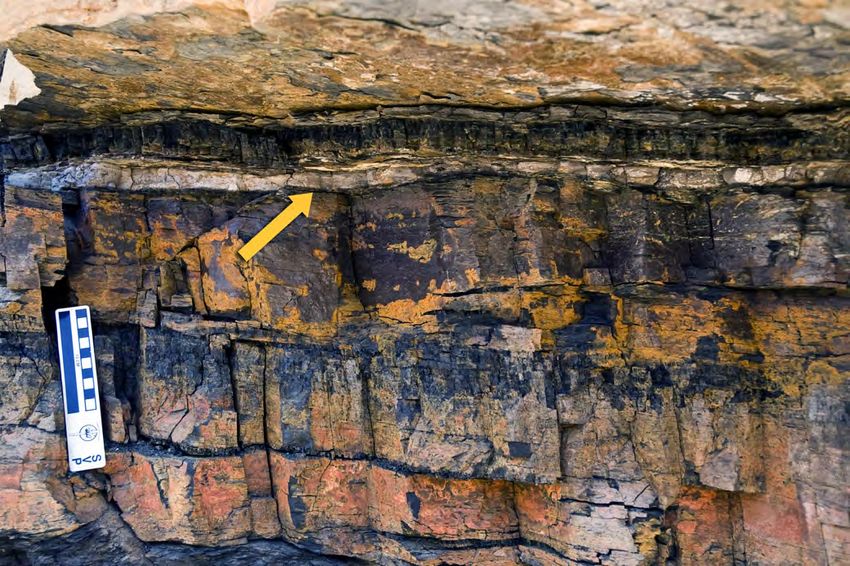
Talk Outline        Comet Shoemaker-Levy 9
                        impact sites on Jupiter, 1994
● What we've learned
from past impacts

●Which asteroids pose
an impact threat?

● What could we do to
                                    Image by JPL/NASA/STScI
stop an impact?
2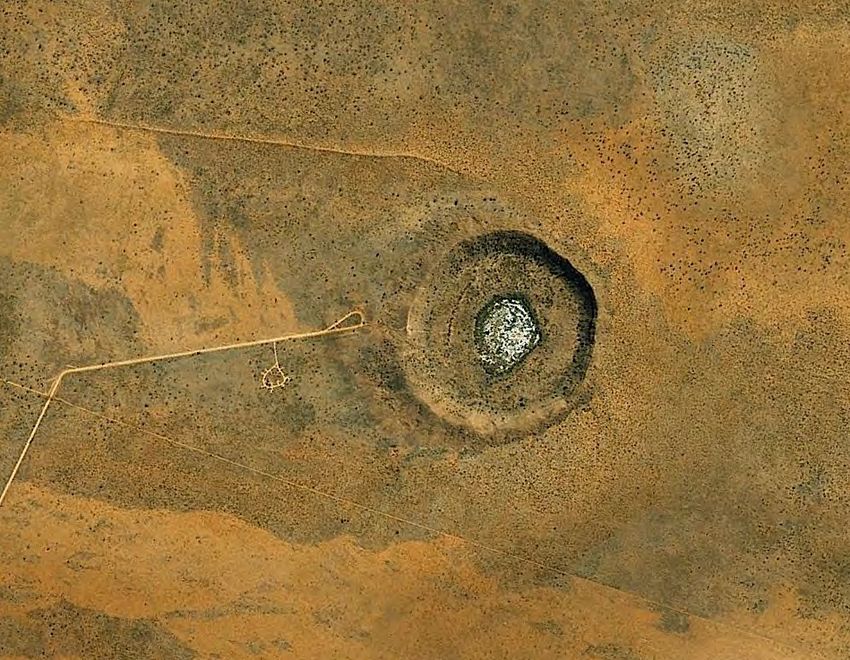
What We've Learned from Past Impacts
                           Meteor Crater
● Meteor Crater
● Tunguska

● K-T Impact

● Shoemaker-Levy 9

● Chelyabinsk

                              Image copyright M.N. Hayes-Gehrke

3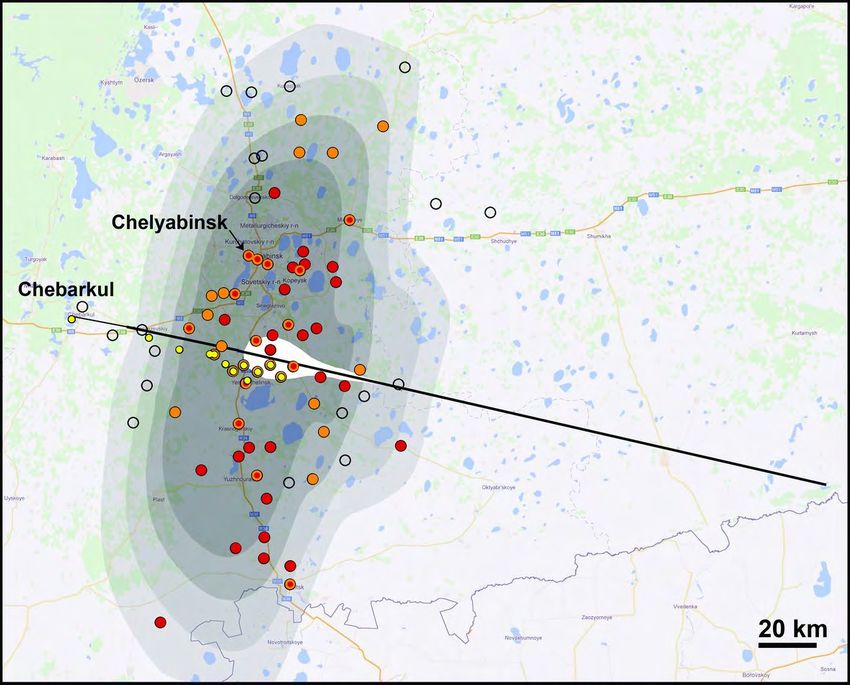
About 50,000 years ago, a 50-m
    metallic asteroid impacted the surface
    in Arizona at about 12 km/s, creating
                Meteor Crater.
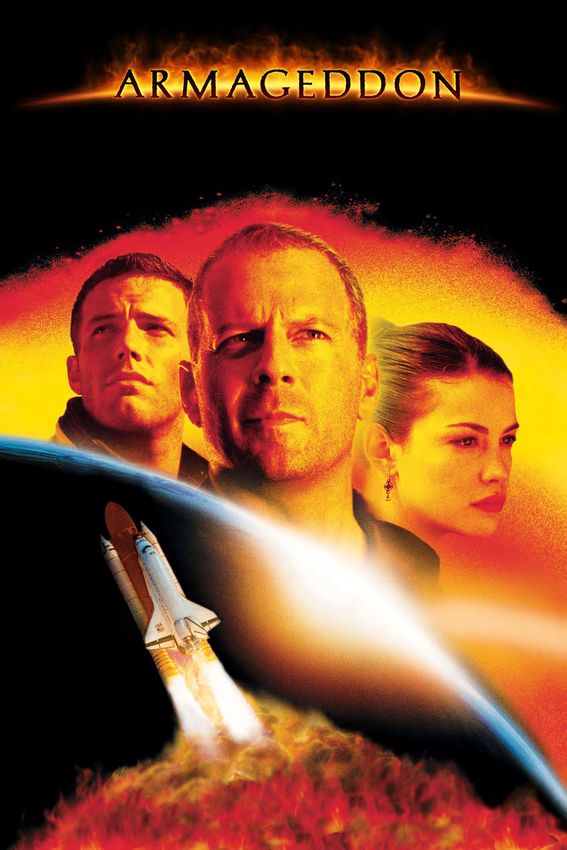
                                                 Approx.
                                                 1.5 km
                                                 across,
                                                 175 m
                                                 deep

                             Image by D. Roddy

4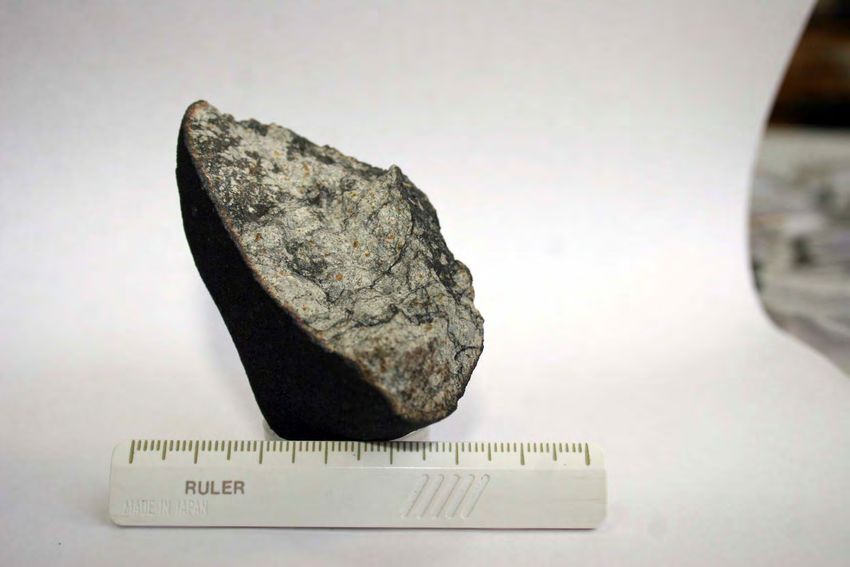
From late 1800s to mid-1900s,
    Meteor Crater's impact origin was
                debated.

                               Image by NASA
5                              Earth Observatory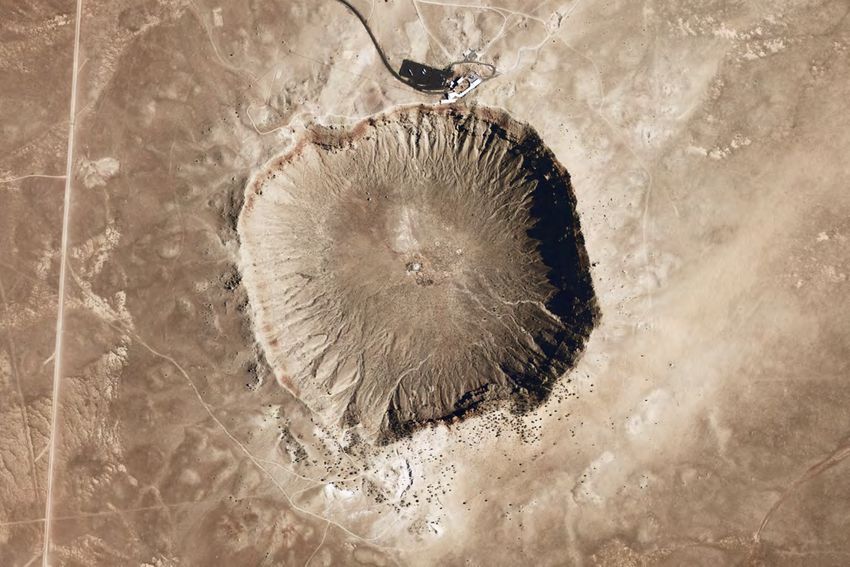
By studying Meteor Crater, scientists
      have learned the basics of crater
                formation.

6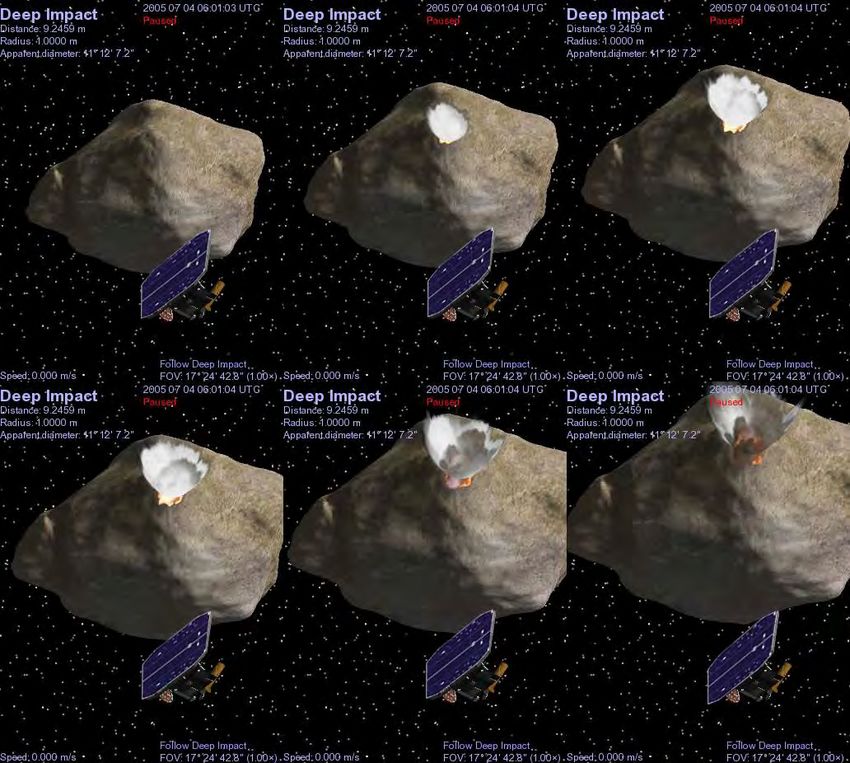
In 1908, a 40-m meteoroid entered the
      Earth's atmosphere over Tunguska,
      Siberia, and was visible as a bright
                    fireball.

                                                  artist's
                                                  conception

            Image copyright William K. Hartmann
7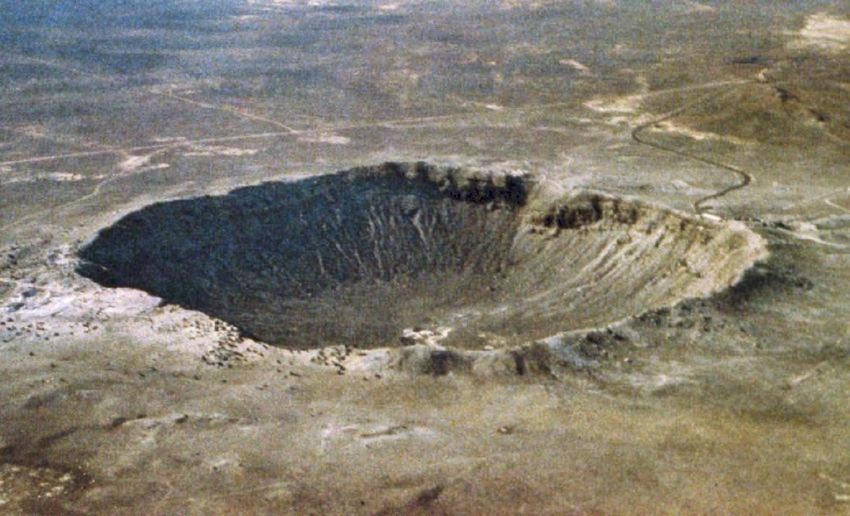
It entered the Earth's atmosphere at
    15 km/s and fragmented explosively
           8 km above the surface.

                                                 artist's
                                                 conception

8          Image copyright William K. Hartmann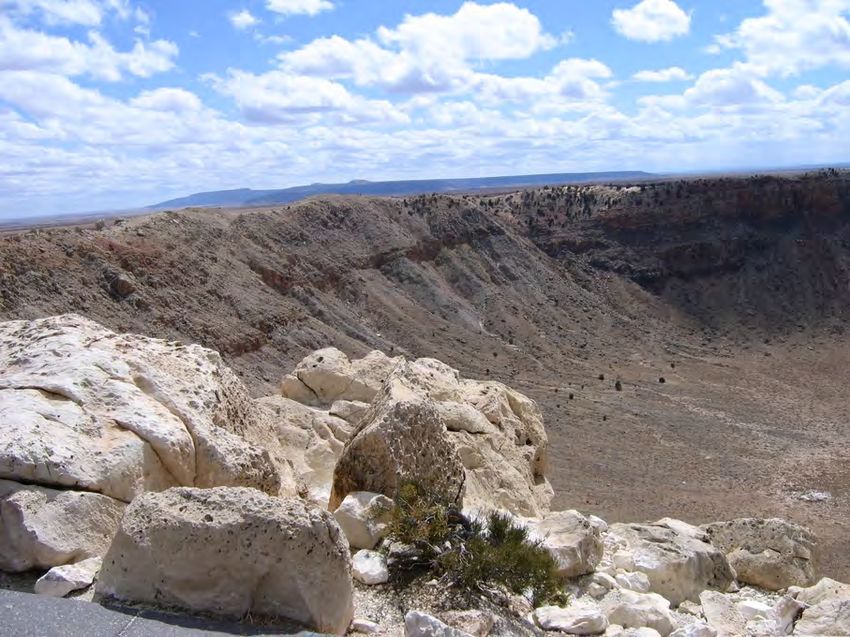
The airburst created a huge fireball and
    shockwave, which flattened 2200 km2
        and ignited a huge forest fire.

                                Image from
                                http://members.aol.com/mrb26/

9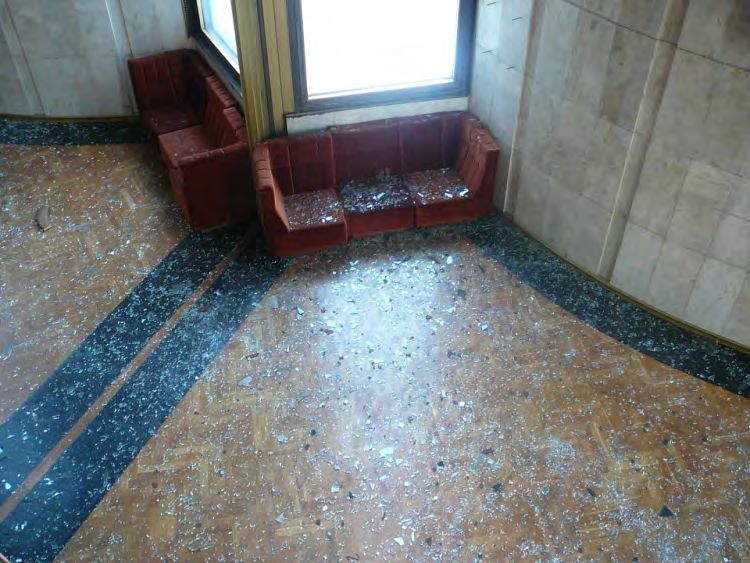
By studying the Tunguska event,
 scientists learned that an impactor does
 not have to hit the surface in order to be
                destructive.
                                                                              felled trees
                                                                              photographed by
                                                                              Leonid Kulik,
                                                                              1927

     Image from Tunguska Page of Bologna Univ, http://www-th.bo.infn.it/tunguska/
10
About 65 MY ago, an asteroid hit the
Earth's surface on the Yucatan
peninsula at 50 km/s in what has been
named the K-T impact.
11The 10 km asteroid created in impact
crater about 170 km across.
12 Image from Geological Survey of CanadaThe heat and shockwave of the
impact caused damage for thousands
of miles, plus an earthquake, tsunamis
and firestorm.
artist's
con-
ception
of
100 m
tsunami
13Climate change caused by dust, soot, and
gases ejected into the air caused the
extinction of 50% of all plant and animal
species, including the dinosaurs.
gray layer is
K-T
boundary near
Trinidad, CO
14 Image by Mark Ryan, www.sciencebuzz.org/buzz-tags/k-t-eventBy studying the K-T impact, scientists
have learned about the world-wide
effects of a large impact.
artist's conception
of Chicxulub
crater after
1000 yrs
Image by William K. Hartmann
15In July 1994, about two dozen pieces
of the broken-up Comet Shoemaker-
Levy 9 impacted Jupiter.
Image by NASA, ESA, H. Weaver, E. Smith
16As the comet pieces fragmented in
airbursts in Jupiter's atmosphere, many
of them created fireballs and spread dark
plumes of material in the atmosphere.
Image by
17 NASA, ESABecause the impacts had been predicted
with ample warning, an unprecedented
number of observations were made,
even though the actual impacts occurred
out of sight from Earth.
images
from
Galileo
spacecraft
Images by NASA, JPL, CalTech
18From this impact, scientists and the public learned that large impacts are still occurring in the solar system today. 19
On Feb. 15, 2013, a 20 m meteoroid
      entered the Earth's atmosphere above
     Chelyabinsk, Russia and was visible as a
          fireball brighter than the Sun.

20          Image from asterisk.apod.com/viewtopic.php?t=30724
It entered the Earth's atmosphere at
about 20 km/s (45,000 mph) and
fragmented explosively about 30 km
above the surface.
Dashcam
videos
21 Image from regulus-starnotes.blogspot.com/2013/02/more-on-chelyabinsk-asteroid-bolide.htmlAbout 76% of the meteor fragments
vaporized, creating an airburst and
shockwave.
Image by AP Photo/Chelyabinsk.ru
22Some people nearest the fireball were
sunburned, many more felt the heat of
the airburst, and some experienced
temporary blindness or eye pain.
image is
overexposed
by the
brightness
of the
airburst
23 Image from russiatrek.org/blog/nature/unique-photos-of-chelyabinsk-meteorite-explosionUnder the path of the fireball, people
were blown off their feet by the
shockwave, which also caused structural
damage and collapse of some nearby
buildings.
collapsed roof
of a factory
24 Image by Pospel Aglass damage map
Buildings as
far away as
120 km (75 mi)
had shattered
windows from
the shockwave.
Image from Popova et al. Science 2013
25About 1500 people sought treatment
after the airburst, mostly for injuries
from shattered glass.
shattered
windows in
Chelyabinsk
Drama
Theater
26 Image from gallery.ru/watch?ph=z6Q-ewl8FA few hundred meteorites have been
recovered from the airburst.
map of the location of some meteorites and track of meteor
Image by Svend Buhl
27The meteorites indicate that the original
meteoroid was a rocky asteroid.
28 Image by Laboratory of Meteoritics, Vernadsky InstituteUsing video footage, astronomers have
been able to determine the meteoroid's
orbit before impact.
Image by P. Chodas,
29 NASA/JPLFrom the Chelyabinsk airburst,
scientists have learned a lot about
how airbursts occur and their effects.
30 Image by Victor SharyginThe Chelyabinsk airburst also brought
the threat of asteroid impacts to the
public's attention.
Image from http://www.slate.com/blogs/bad_astronomy/2013/02/15/breaking_huge_meteor_explodes_over_russia.html
31Which asteroids are a threat to impact
the Earth?
32As of Sep. 2, 2014,
654,249 asteroids have been discovered
and about 2/3 have official numbers.
25,000
Number
semimajor
axis (AU)
1 2 3 4 5
33 Image copyright Minor Planet CenterThe asteroids that could possibly impact
the Earth are near-Earth asteroids,
which have perihelia less than 1.3 AU.
red: near-
Earth asteroids
green: main-
belt asteroids
Image copyright
34 Minor Planet CenterBy the end of 2013, about 10,500
near-Earth asteroids had been
discovered.
35 Image by Alan B. Chamberlain, JPLTelescopic surveys are continuing to
search for the estimated 500,000 near-
Earth asteroids that exist.
36 Image by Alan B. Chamberlain, JPLBy studying known asteroid populations
and past impacts on the Earth and other
worlds, scientists have estimated the
frequency of impacts of different sizes.
Image
copyright
Pearson
37 Education IncThese types of statistics help scientists
and policy makers decide what types of
impacts are likely and plan for them.
Image
copyright
Pearson
38 Education IncSince it is
inevitable that the
Earth will be
impacted by an
asteroid in the
future, what could
we do to stop an
impact?
39 Image copyright Touchstone PicturesAll plausible defense methods involve
deflecting the asteroid: changing its
orbit so that it misses the Earth.
near-Earth
asteroid 2011
MD's close pass
by the Earth in
2011 changed its
aphelion distance
from 1.05 AU to
1.1 AU
Image by NASA/JPL
40One method of deflecting an asteroid
would be to hit it with a kinetic
impactor – ram it with a spacecraft.
artist's
conception of
a kinetic
impactor
deflection
mission
41 Image by ESAA small-scale test of such a deflection was
successfully conducted by the Deep Impact
mission to Comet Tempel 1 in 2005.
simulation of
the Deep
Impact impact
Images by Jestr and
42 Jack HigginsA similar deflection strategy would be to
explode a nuclear weapon on or near the
asteroid's surface in order to change its
orbit.
Image from space.com
43A more controlled method to deflect an
asteroid would be to push it slowly off-
course with a spacecraft.
artist's
conception of
a spacecraft
pushing an
asteroid
Image from Schweickart
44 et al. 2006Another controlled deflection method
would be to pull the asteroid off-course
using the gravitational force between it
and a spacecraft.
artist's
conception
of a gravity
tractor
45 Illustration by Dan DurdaAll of the deflection techniques take time,
so it is crucial to have as much warning
time as possible before an impact.
Image from
the NEOShield
46 ProjectCurrently, the US does not have any
specific deflection plan prepared.
Image from
the NEOShield
47 ProjectA research group working at Iowa State
University and Goddard Space Flight
Center have been researching a
Hypervelocity Asteroid Intercept Vehicle
(HAIV) to prevent an impact.
48 Image from Barbee et al., Planetary Defense Conference 2013We know asteroids have impacted the
Earth in the past, and we know there are
still asteroids in the solar system that
could impact us, so it makes sense to be
prepared.
Wolfe Creek
impact crater
in Australia,
870 m across,
less than
300,000 yrs old
49 Image from Google EarthYou can also read


