Cyanobacteria Photosynthetic Energy Platform (1.3.4.301) - March 24th, 2021 Advanced Algal Systems Jianping Yu NREL
←
→
Page content transcription
If your browser does not render page correctly, please read the page content below

BETO 2021 Peer Review

  Cyanobacteria Photosynthetic
  Energy Platform (1.3.4.301)
  March 24th, 2021
  Advanced Algal Systems
  Jianping Yu
  NREL

This presentation does not contain any proprietary, confidential, or otherwise restricted information
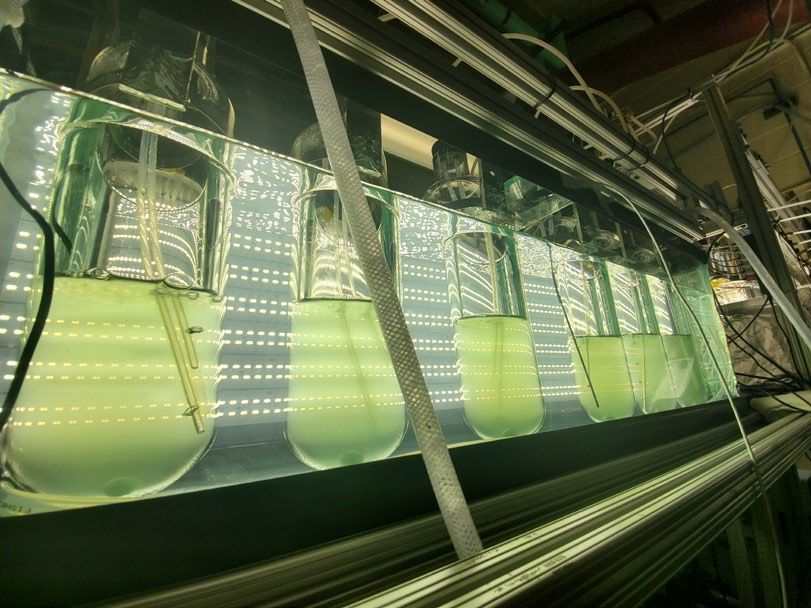
Project Overview
Goals: Develop cyanobacteria genetic tools to improve photosynthetic efficiency
and biomass productivity through manipulation of energy regulation
mechanisms, leading ultimately to lower cost for fuels and chemicals
Outcome: New concept of Energome, new discoveries of energy management
mechanisms, novel strategies to improve photosynthetic productivity
Relevance: Model cyanobacteria allow for rapid hypothesis testing and transfer
of lessons to other cyanobacteria and eukaryotic algae

                                                                            NREL | 2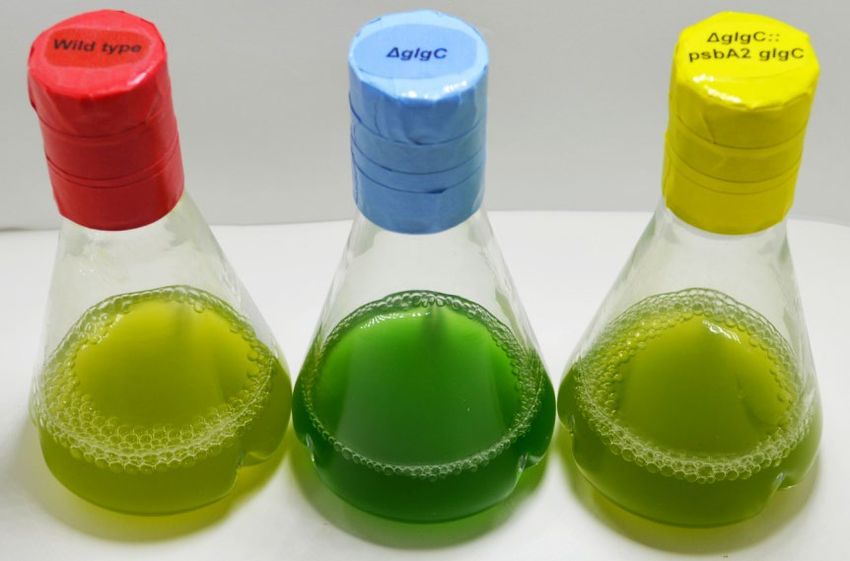
Photosynthetic Energy Management Models

           Evolved System                                        Engineered System
                  PHOTONS
                                                                   PHOTONS

                              Light energy                                       Light energy
LIGHT REACTIONS                dissipation                                        dissipation
                                                 LIGHT REACTIONS

Futile cycles       ENERGY                       Futile cycles      ENERGY
                    CHARGE                                          CHARGE

                                        GROWTH
                                                                                           GROWTH

                             MAINTENANCE                                     MAINTENANCE

                                                                                                    NREL | 3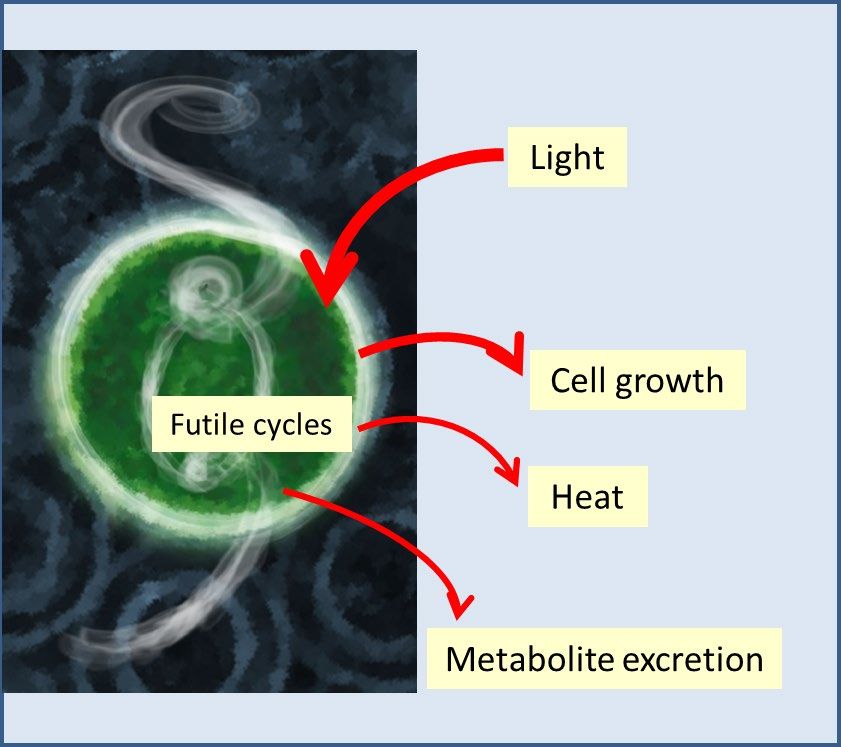
Market Trends    NREL’s Bioenergy Program Is Enabling a
                Sustainable Energy Future by Responding
                          to Key Market Needs

                Value Proposition
                • Increasing algal biomass productivity by
                  20% from current SOT would translate to
                  about $0.90 per GGE MFSP reduction

                Key Differentiators
                • We developed Energome (energy-ome)
                  concept to guide novel engineering
                  strategies to unleash unused potential in
                  photosynthesis
                • In-house mutant library and genetic
                  engineering toolboxes in model
                  cyanobacteria enable rapid hypothesis
                  testing.
                                                        NREL | 4
1. Management
Single task: Cyanobacterial genetics and physiology

Team members: Michael Cantrell – postdoc on physiology and engineering in
cyanobacteria; weekly updates. Nick Sweeny assisted with SAGE reactors.

BETO: Regular meetings, quarterly and milestone reports

Related Projects
Lessons may be transferred to algae in DISCOVR and other projects; interaction with
SAGE reactor work.
Risks
Energy regulation processes in algal systems are not well understood. Lack of
precedents in improving biomass productivity by targeting energy levels.

Risk mitigation strategies
Screen multiple mutant strains in a model cyanobacterium for rapid hypothesis testing.
                                                                                         NREL | 5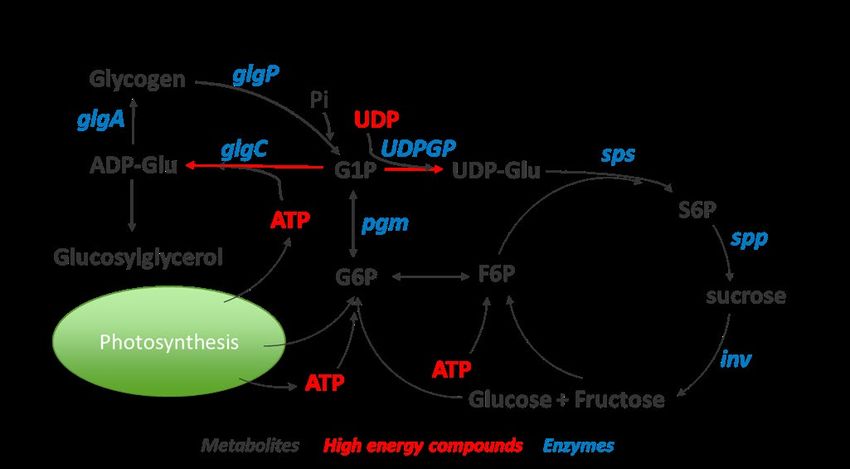
2. Approach

1. Why cyanobacteria? Good genetic engineering tools. Some
   commercial strains such as spirulina.
2. Manipulate cellular energy management system which controls
   growth and carbon partition, based on studies in carbon storage
   mutants.
3. Building on a wealth of tools, data and strains in the genetic model
   Synechocystis 6803. Evaluate impact of gene knockout and
   knockdown on growth rate, energy levels, and photosynthesis under
   various light conditions.
4. Extend the lessons to other cyanobacteria and test for fast growth.
Go/No-go Decision 3/31/2020: Demonstrate successful 20% increase in biomass
productivity under simulated outdoor light conditions using Synechocystis strains, and to
deliver a strategy to initiate transfer of the technology to other strains of industrial interest.
                                                                                                NREL | 6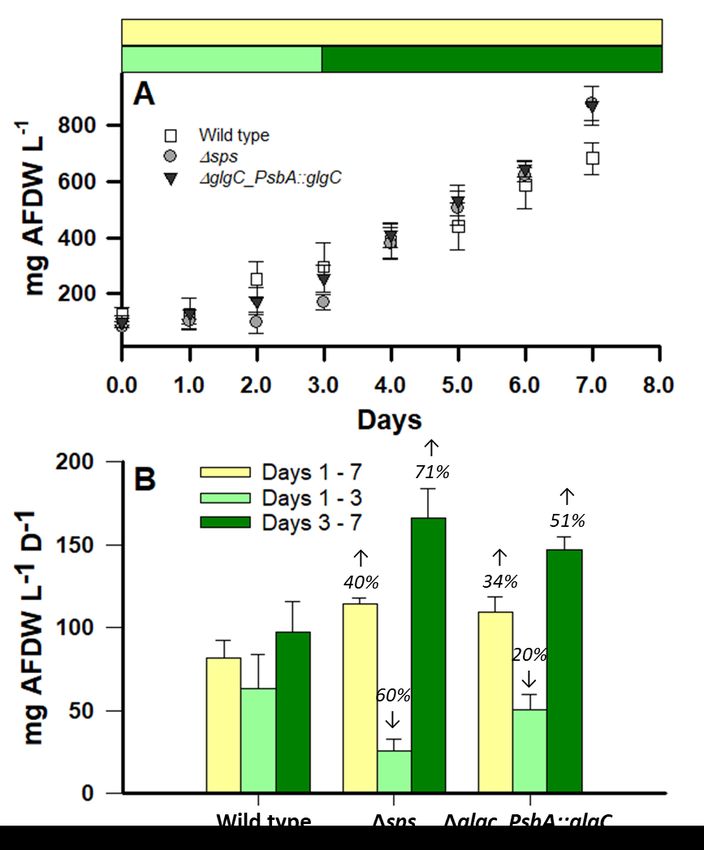
3. Impact

•   Improved biomass productivity in cyanobacteria by >20%.
•   Published papers FY19-FY21 and Impact Factors
     1. Metabolic Engineering 8.7
     2. Green Chemistry 8.6
     3. Biotechnology for Biofuels 6.4
     4. Frontiers in Microbiology 4.2
     5. Book chapter in Cyanobacteria Biotechnology

•   One provisional US patent application and a Record of Invention in FY21
•   Mutant library contributed to new Office of Science BER SFA on BioSecurity,
    and new EERE TCF project on wastewater treatment

                                                                              NREL | 7
4. Progress and Outcomes
• The primary challenge in algal technology is energy conversion efficiency,
currently up to a few percentages from photon energy to biomass energy.
• Most incoming solar energy is lost in photosynthesis, through mechanisms
that are not fully understood. This work shows large room for improvement
via the identification and manipulation of mechanisms in the cellular energy
regulation system - Energome.
Light
• We generated and analyzed
multiple mutants, and discovered
that cyanobacteria use futile cycles ATP/NADPH Cell growth
to dissipate ATP regulated by
Energome
Heat; fluorescence
• We demonstrated that by reducing
energy dissipation, more energy is
directed to cell growth. Metabolite secretion
NREL | 8Two futile cycles in energy management
• Glycogen cycle: key enzyme ADP Glucose Pyrophosphorylase (glgC gene)
• Sucrose cycle: key enzyme Sucrose Phosphate Synthase (sps gene)
NREL | 9Energy engineering: Reducing futile cycle flux increased
ATP levels, photosynthetic and growth rates
• When glycogen cycle was knocked out in Synechocystis 6803, the mutant
showed higher Energy Charge (ATP / ATP+ADP), but poor growth under
outdoor light conditions. Here we knocked it down instead.
• We have eliminated sucrose cycle flux by knocking out sps gene.
Both the glycogen knock-down strain and
the Δsps strain showed in flasks
1. increased photosynthesis (O2 evolution)
2. higher energy charge
3. faster (>20%) growth
in continuous light of moderate or high
intensities or simulated outdoor light.
NREL | 10SAGE reactors mimic outdoor light cycles
A Simulated Algae Growth Environment B Light regime: AzCATI site
1800
Light Intensity (umol m-2 s-1)
1600
1400
1200
1000
800
600
400
200
0
30 C
̊
0.00
0.53
1.06
1.59
2.13
2.66
3.19
3.72
4.25
4.78
5.31
5.84
6.38
6.91
7.44
7.97
8.50
1% CO2
Time (Days)Increased growth rates in
SAGE reactors
• Mutants showed 34-40% faster
growth over WT in 7 days
• In the first 3 days, mutants grew
more slowly than WT, likely due to
change in growth conditions from
flasks to SAGE where the mutations
may slow down the adaptation
process as metabolic penalty
• After day 3, mutants grew 51-71%
faster than WT
• Longer growth periods and pre-
adapted cells are being tested.
NREL | 12Mutants show faster growth and higher energy charge
under all tested light conditions
Coming soon
NREL | 13Mutants show higher energy charge especially in early
morning hours
Measurements were made during exponential growth for each culture
– day 2 for shake flasks and day 4 for SAGE reactors
NREL | 14Key accomplishments
• Discovered futile cycles as energy management mechanisms
• Demonstrated novel strategies to increase biomass productivity
Future work
• Transfer lessons from Synechocystis 6803 to two Synechococcus
strains and test for higher biomass productivity.
• Use Energome concept to identify new engineering targets, such as
an enzyme that “hides” ATP, towards higher biomass productivity.
NREL | 15Quad Chart Overview
Project Goal
Timeline Manipulate energy regulation in photosynthesis to
• Project start date: October 1, 2018 improve energy conversion efficiency which
• Project end date: September 30, 2021 currently stands at up to a few percentages
End of Project Milestone
FY20 Active Project Demonstration of a successful platform for rapid
testing of photosynthesis and biomass
DOE 400K 1200K improvement hypotheses in cyanobacteria,
Funding including strains of industrial relevance, as well as a
route to implement these strategies in selected
eukaryotic species, selecting at least 3 translatable
engineering targets with a projected biomass
productivity improvement of at least 20%.
Barriers addressed
Atf-C: Biomass genetics and development
Funding Mechanism
AOP.
NREL | 16Thank you
www.nrel.gov
This work was authored by the National Renewable Energy Laboratory, operated by Alliance for Sustainable Energy,
LLC, for the U.S. Department of Energy (DOE) under Contract No. DE-AC36-08GO28308. Funding provided by U.S.
Department of Energy Office of Energy Efficiency and Renewable Energy BioEnergy Technologies Office . The views
expressed in the article do not necessarily represent the views of the DOE or the U.S. Government. The U.S.
Government retains and the publisher, by accepting the article for publication, acknowledges that the U.S.
Government retains a nonexclusive, paid-up, irrevocable, worldwide license to publish or reproduce the published
form of this work, or allow others to do so, for U.S. Government purposes.Additional Slides
NREL | 18(Not a template slide – for information purposes only)
The following slides are to be included in
your submission for evaluation purposes,
but will not be part of your oral
presentation –
You may refer to them during the Q&A
period if they are helpful to you in
explaining certain points.
NREL | 19Responses to Previous Reviewers’ Comments
• FY19 Peer Review comment: Not clear how the findings in Synechocystis will
transfer to other algae
• Response: Currently strain development in other algae is often limited by lack of
easy genetic engineering tools. Development of such tools is a priority in the field.
Meanwhile we are testing the lessons in other algae, starting with other cyanobacteria
• Go/No Go Milestone (3/31/2020): Demonstrate successful 20% increase in biomass
productivity under outdoor conditions using stacked Synechocystis strains, and to
deliver a strategy to initiate transfer of the technology to other strains of industrial
interest.
• BETO Executive Summary of Results: NREL demonstrated successful 23%
increase in biomass productivity under outdoor conditions using a mutant
Synechocystis strains. NREL developed a strategy to initiate transfer of the
technology to other strains of industrial interest, Synechococcus PCC 7002 and
Synechococcus UTEX 2973.
NREL | 20Publications, Patents, Presentations, Awards, and Commercialization
1. Comparative analysis of cyanobacteria species reveals a novel guanidine-degrading enzyme that controls genomic stability of ethylene-
producing strains. Bo Wang, Yao Xu, Xin Wang, Joshua S. Yuan, Carl H. Johnson, Jamey D. Young, Jianping Yu. Submitted.
2. Xiang Gao, Chao Wu, Michael Cantrell, Melissa Cano, Jianping Yu, Wei Xiong (2021) What We Can Learn from Measuring Metabolic
Fluxes in Cyanobacteria. In: Cyanobacteria Biotechnology (Paul Hudson, ed). Wiley. In press.
3. Claudia Durall, Pia Lindberg, Jianping Yu and Peter Lindblad (2020) Increased ethylene production by overexpressing
phosphoenolpyruvate carboxylase in the cyanobacterium Synechocystis PCC 6803. Biotechnology for Biofuels 13:16. DOI: 10.1186/s13068-
020-1653-y
4. Chao Wu, Huaiguang Jiang, Isha Kalra, Xin Wang, Melissa Cano, PinChing Maness, Jianping Yu, Wei Xiong (2020) A generalized
computational framework to streamline thermodynamics and kinetics analysis of metabolic pathways. Metabolic Engineering. DOI:
10.1016/j.ymben.2019.08.006
5. Bo Wang, Tao Dong, Aldon Myrlie, Liping Gu, Huilan Zhu, Wei Xiong, PinChing Maness, Ruanbao Zhou, Jianping Yu (2019)
Photosynthetic Production of Nitrogen-Rich Compound Guanidine. Green Chemistry. 21, 2928 – 2937. DOI: 10.1039/c9gc01003c.
6. Damien Douchi, Feiyan Liang, Melissa Cano, Wei Xiong, Bo Wang, Pin-Ching Maness, Peter Lindblad, Jianping Yu (2019) Membrane-Inlet
Mass Spectrometry enables a quantitative understanding of inorganic carbon uptake flux and carbon concentrating mechanisms in
metabolically engineered cyanobacteria. Frontiers in Microbiology. DOI: 10.3389/fmicb.2019.01356.
7. Jianping Yu, Bo Wang. Guanidine degradation enzyme and methods of use. (2020) US Provisional Patent application. No. 63/126,828.
8. Invited seminar speaker: Las Alamos National Laboratory. October 6th, 2020. Title: Overcoming genetic instability in cyanobacterial
ethylene production.
NREL | 21
9. Invited seminar speaker: University of Missouri Kansas City. March 6th, 2020. Title: Cyanobacteria photosynthesis and biotechnology.Other strategies to enhance algal productivity:
(1) Increasing CO2 uptake via overexpression of FbaA
• We developed a MIMS method to quantify CO2 uptake and
fixation rates simultaneously in real time
• FbaA (a key enzyme in CBB cycle) over-expression enhanced
both rates, indicating a regulatory link between CBB flux and
carbon concentrating mechanism
Douchi et al (2019) Membrane-Inlet Mass Spectrometry enables a quantitative
understanding of inorganic carbon uptake flux and carbon concentrating
mechanisms in metabolically engineered cyanobacteria. Frontiers in Microbiology.
DOI: 10.3389/fmicb.2019.01356.
NREL | 22(2) Increasing CO2 fixation and ethylene production by
overexpression of PEP Carboxylase
• Overexpression of an alternative carbon fixation enzyme
PEPC complemented CO2 fixation by Rubisco
• Increased CO2 fixation led to 3X increase in ethylene
productivity in engineered cyanobacteria
Durall et al (2020) Increased ethylene production by overexpressing
phosphoenolpyruvate carboxylase in the cyanobacterium Synechocystis PCC 6803.
Biotechnology for Biofuels 13:16. DOI: 10.1186/s13068-020-1653-y
NREL | 23(3) Enhancing ethylene production with guanidine degradation
• A decades-long puzzle in cyanobacterial ethylene production is the
cause of genomic instability in Synechococcus 7942.
• We found that a co-product guanidine accumulates in ethylene-
producing cyanobacteria.
• We identified a new class of enzyme from Synechocystis 6803 that
degrades guanidine (manuscript under review).
• Heterologous expression of this enzyme enabled genomic stability
and higher productivity in ethylene-producing cyanobacteria.
• Wang et al (2019) Photosynthetic Production of Nitrogen-Rich Compound Guanidine.
Green Chemistry. 21, 2928 – 2937. DOI: 10.1039/c9gc01003c.
• Guanidine degradation enzyme and methods of use. (2020) US Provisional Patent
application. No. 63/126,828.
NREL | 24You can also read


