DISCOCERV TM - SURGICAL TECHNIQUE GUIDE - SPINEMarketGroup
←
→
Page content transcription
If your browser does not render page correctly, please read the page content below
DISCOCERV                    TM

                             Cervical Disc Prosthesis

SURGICAL TECHNIQUE GUIDE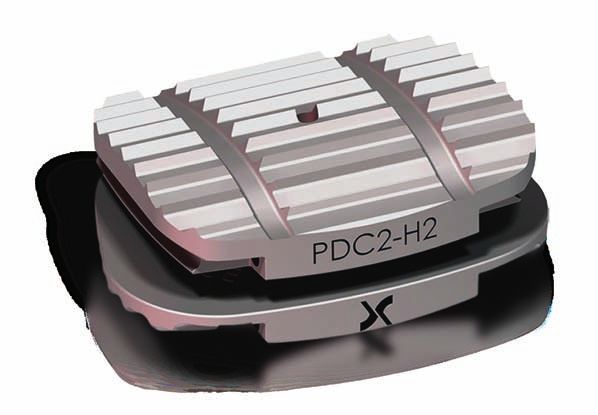
F EATUR E S & BENEFITS

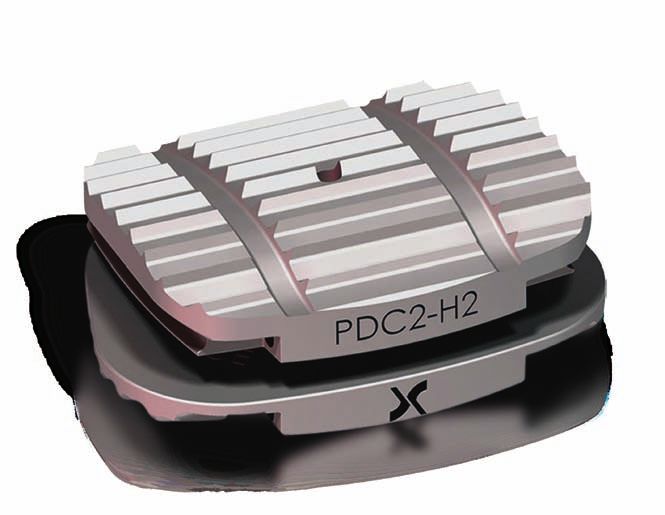
    Discocerv™: the evolution
    of the Cervidisc cervical disc
    prosthesis

     Operating time saving                                                         Optimized design

     Color coding to optimize instruments identification                           Convex upper and lower plates to comply with the
     according to the size of the prosthesis                                       anatomical curvature of the disc space

     Longevity
                                                                              The superior ceramic part (convex) is made from
     The plates are made from titanium TA6V ELI (ASTM                         alumina (AL203 ISO 6474 type A) and the inferior part
     F136 or ISO 5832-3) which gives the prosthesis excellent                 (concave) from zirconia (ZrO2HfO2Y2O3 ISO 13356) giving
     mechanical and biomechanical properties                                  excellent wear resistance in the long term

2       Please refer to the Instructions For Use document enclosed within product packaging prior to use.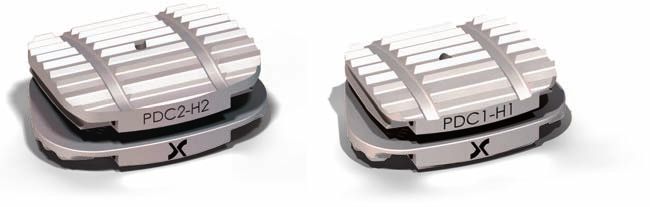
The cervical disc prosthesis DISCOCERV™ –                                  The indications include the following :
Cervidisc Evolution is a surgical device                                   • degenerative disc disease
intended to preserve the physiological                                     • herniated disc
mobility of the cervical functional spinal unit
via the anterior route.                                                    • myelopathy associated with a spondylotic
                                                                              stenosis of the foramen or canal
The disc replacement is only indicated for                                 • root disease associated with a neurological
levels from C3 to C7. The main indication is                                  deficiency that does not respond to
disc degeneration without instability.                                        conservative treatments

   Mobility

   Angulation of 9° in the sagittal and coronal planes to preserve the physiological amplitude of a normal disc

         9°                                                                              9°                                 9°

   Security                                                                      Controlled movement

   Bi-directional grooves to avoid antero-posterior                              Perfect joining of the inferior and superior ceramic
   and lateral migration of the titanium plates                                  parts so as to facilitate prosthesis mobility

     Please refer to the Instructions For Use document enclosed within product packaging prior to use.                                  3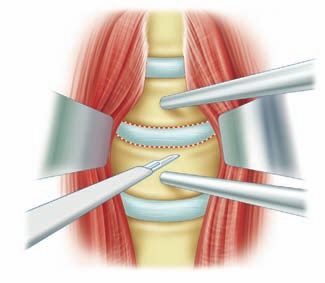
SUR GICAL TEC HNIQ UE

                                                                           Pre-operative considerations

                                                                           Indications :
                                                                           The DISCOCERV™ cervical disc prosthesis is a surgical
                                                                           implant intended to maintain the physiological cervical
                                                                           mobility of a spinal segment. The prosthesis is implanted
                                                                           between C3 and C7 by the anterior route.

                                                                           The principal indication is degeneration of the disc without
                                                                           instability. The indications are as follow :
                                                                           • degenerative disc disease
                                                                           • herniated disc
                                                                           • myelopathy associated with a spondylotic stenosis of
                                                                           the foramen or canal
                                                                           • root disease associated with a neurological deficiency
                                                                              that does not respond to medical treatments

                                                                           Contraindications :
                                                                           The contraindications to the cervical disc prosthesis
                                                                           DISCOCERV™ are as follow :
                                                                           • active infection or local inflammation
                                                                           • vertebral osteoporosis
                                                                           • vertebral tumor disease
                                                                           • injury
                                                                           • local deformity
                                                                           • instability
                                                                           • surgical history at the site to be treated
                                                                           • rheumatoid arthritis
                                                                           • metabolic bone disease
                                                                           • pregnancy
                                                                           • incompatible age or physical condition of the patient
                                                                           • obvious lack of mobility at the level concerned
                                                                           • allergy or intolerance towards the materials constituting
                                                                              the device
                                                                           • any situation not included in the indications

                                                                           The DISCOCERV™ cervical disc prosthesis must not be
                                                                           used in the context of disorders requiring a multi-staged
                                                                           arthroplasty or an adjacent arthrodesis (above or below).

                                                                           The DISCOCERV™ cervical disc prosthesis is not
                                                                           designed, intended or sold for uses other than those
                                                                           indicated.

                                                                           Pre-operative X-rays
                                                                           A pre-operative scanner section and profile X-ray should
                                                                           preferably be performed to determine the ideal size of
                                                                           DISCOCERV™ cervical disc prosthesis to be implanted.

4   Please refer to the Instructions For Use document enclosed within product packaging prior to use.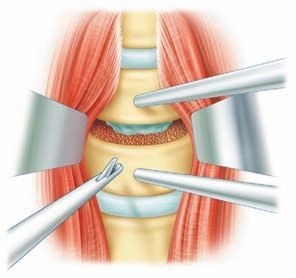
1   Surgical protocol/patient positioning
a The surgery should be performed under general
anesthesia. The patient should be placed in dorsal
decubitus on an ordinary table. The head should
be placed in the neutral position (no flexion or
hyperextension) ; it may be held in place with an adhesive
band. It is vital to keep a strict profile to avoid losing the
median line. The success of surgery depends on
this. It is possible to position the head on a transparent
headrest or a transparent extension of the table.
b The approach is a standard right anterior pre-sterno-
cleido-mastoid approach (Cloward or Smith-Robinsson).
 c Under scopic control, determine the correct
intervertebral level (image intensifier).
d After incision of the anterior longitudinal ligament,
perform the disc resection usingappropriate rongeurs and/
or curettes.

2  Discectomy and preparation
of the surgical site
When the disc has been excised, proceed with a bilateral
postero-lateral foraminal decompression. If the disc
space is too tight, an intersomatic retractor may be
used. Decompression may require a high speed drill or
a kerisson to free the bone (osteophytosis). This surgical
gesture should be performed under surgical microscope.

                                                                                                          5
      Please refer to the Instructions For Use document enclosed within product packaging prior to use.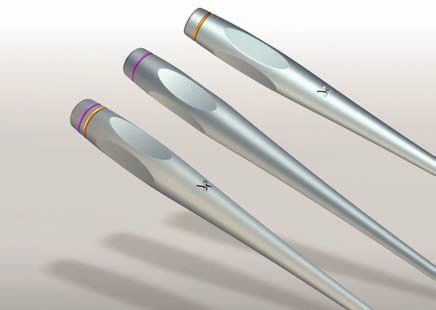
SUR GICAL TEC HNIQ UE

                                                                                   3   Preparation of the endplates
                                                                                   The vertebral plates should be prepared and cleaned
                                                                                   carefully with the curette. A damaged cartilage may
                                                                                   cause subsidence of the prosthesis in the vertebral body.
                                                                                   This procedure is essential to ensure optimum contact
                                                                                   between the implant and adjacent vertebral plates, to
                                                                                   avoid secondary displacement.

                                                                                   4   Control of the intervertebral space
                                                                                   Once the site preparation is finalized, the flat probe
                                                                                   should be inserted in the intervertebral space. The flat
                                                                                   probe allows to verify the quality of the intervertebral
                                                                                   space created after discectomy and select the correct
                                                                                   prosthesis footprint.

                                                                                   The flat probes feature a midline laser marking on its
                                                                                   superior part that can help to evaluate the midline of the
    Note : It is important to insert the two flat probes one after the other to
                                                                                   intervertebral space.
    determine the size of the most suitable prosthesis. In order to support
    a better distribution of the constraints on the vertebral endplates, the       Based on this midline laser marking; a marking realized
    prosthesis covering the largest part of the endplate should be chosen.         with help of drilling tool, onto the superior and inferior
                                                                                   vertebral body can help to keep the midline till the end of
                                                                                   the surgery.

                                                                                   The flat probes also feature a color coding helping to
                                                                                   identify the prosthesis footprint (Yellow: Small footprint;
                                                                                   Purple: Large footprint)

                                                                                   5   Insertion of the prosthesis trials
                                                                                   After selection of the appropriate footprint, the set of
                                                                                   prosthesis trials must be used to determine the ideal
                                                                                   size of the prosthesis to be inserted. The trials also
                                                                                   feature the same color coding system as the flat probes,
                                                                                   according to the footprint selection in previous step, only
                                                                                   the trials following the same color coding will be used. The
                                                                                   design of the trials perfectly matches the dimension of the
                                                                                   prosthesis without anchoring teeth. The trials are used to
    Note : The trials can be introduced and removed easily since their             determine the implant best suited to the patient’s anatomy
    surface have no retaining edges. Trials reflect the height of the implants
    without teeth.
                                                                                   and requirements.
    Trials as flat probes also feature laser marking to identify midline of the
    intervertebral space                                                           The choice of the right size of the prosthesis is the most
                                                                                   critical part. If the prosthesis is too small, it may migrate
                                                                                   and if it is too big, it may interfere with mobility.

               Flat probe                            Prosthesis trials
               21GPC0_                                21FPDC_-H_
6           Please refer to the Instructions For Use document enclosed within product packaging prior to use.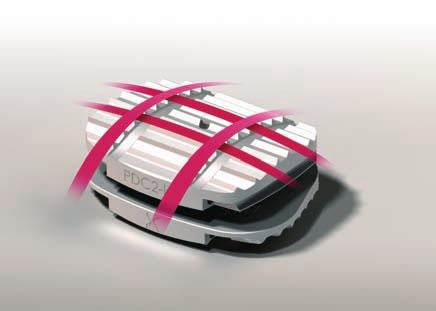
To determine the size of the most suitable implant, it is
recommended to first insert the smallest trial implant and
sequentially select the next biggest one till the proper size
is achieved.

The height to be restored can be determined according
to the adjacent disc heights or the facet parallelism at the
index level. This is left to the surgeon's discretion.

Following the reference and laser marking indicated onto
the trial, the corresponding appropriate prosthesis is
selected.

6   Insertion of the cervical distractor
The distractor should then be inserted in the
intervertebral space. It is recommended to slightly distract
the intevertebral space during the prosthesis implantation
time. If the anatomy of the patient does not allow the
introduction of the specific distractor, a Caspar distractor
can be used.

The distractor should be correctly positioned in the
transversal plane and should be centered along the
midline. The distractor branches should be in contact with
the posterior wall.

Scopic control should be performed to ensure correct                                                         Note : To optimize the surgical
placement of the distractor:                                                      The distractor branches    gesture the middle line may be
                                                                                 should be in contact with   marked on the lower and upper
• frontal control is used to verify correct positioning of the                     the posterior wall.      vertebral plates.
   distractor in the transversal plane and exact centering
   along the midline.
• profile control is used to verify the retraction of the
   vertebral plates and if needed the retraction of the joint
   facets.

                                                                                        Distractor                       Holder
                                                                                        21EDC0_                        21PRE0_
      Please refer to the Instructions For Use document enclosed within product packaging prior to use.                                        7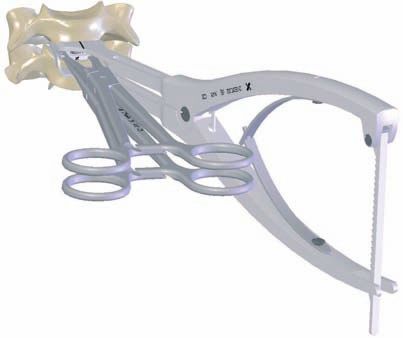
SUR GICAL TEC HNIQUE

    TOP VIEW OF THE HOLDER               FRONTAL VIEW OF THE HOLDER                  7   Positioning of the prosthesis on the holder
                                                         TOP
                                                                                    The holder is used for impaction of the prosthesis in the
                                                                                    intervertebral space. The holder tips fit on the lateral sides
                                                                                    of the prosthesis to ensure a firm grasp of the implant.

                                                      BOTTOM
                                                                                    Firstly, the upper plate (including spherical ball) of the
                                                                                    prosthesis is positioned manually (A) on the two upper
    Note : the inscription “TOP” should always be on the top of the instrument      arms of the holder. The lower plate of the prosthesis is
                                                                                    then inserted (B) in the two lower arms of the holder using
                                                                                    the flexibility of the instrument.

                   A                                                         B

    Note : it is important to obtain a perfect coupling between the two ceramic parts.
    Note : To ensure a correct positioning of the implant onto the holder, make sure the frontal part of the prosthesis (including laser marking logo and
    references) are in contact with the holder. When inserted into the patient, these laser marking logo and references should be visible by the surgeon.

                                                                                     8   Insertion of the prosthesis
                                                                                    The holder takes up little space because it is in line with
                                                                                    the prosthesis, leaving the operative zone totally visible.
                                                                                    The distractor is used to guide the holder and facilitate
                                                                                    visualization of the correct alignment of the prosthesis.
                                                                                    The effort during insertion of the prosthesis should be
                                                                                    along the ancillary axis.

                                            Note : No lever or torsion
                                            movement should be applied to
                                            the holder during impaction of
                                            the prosthesis.

             Superior key                             Inferior key
            21CLE03 and                                21CLE04
              21CLE05
8          Please refer to the Instructions For Use document enclosed within product packaging prior to use.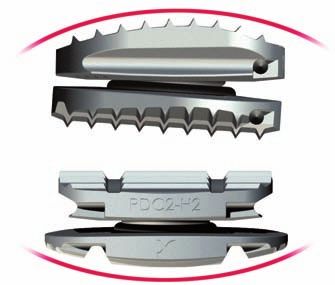
The posterior edge of the prosthesis must be positionned                    Note : After scopic control and if necessary, the superior and inferior
as close as possible to the posterior wall of the operated                  keys may be used to reposition the prosthesis. For clear identification
                                                                            of the repositioning tool concerning the footprint size, the superior key
vertebrae. That is why it is necessary to correctly prepare                 features the same color coding as previously described (yellow: small
the intervertebral space and to remove all osteophytes.                     footprint; purple: bigger footprint).

When the prosthesis is in place, the distractor and then
the holder may be withdrawn. It is important to check                               SUPERIOR KEY                              INFERIOR KEY
that the prosthesis is correctly placed with a per-operative
X-ray.

A proper implant positioning means that the prosthesis is
perfectly aligned with the posterior wall.

The inferior and superior key can help to adjust the final
positioning of the implant.

9   Closure of the approach wound
The approach wound is closed after rinsing. Hemostasis
is verified and drainage may be required. The platysma
should be carefully reconstituted and the skin closed by
absorbable intradermic sutures.

    Removing the implant
    If it becomes necessary to remove the prosthesis, the cervical approach should
    be performed again until exposure of the instrumented zone. The distractor should
    be inserted and the two retrieval keys placed on the prosthesis to facilitate
    withdrawal of the implant.

                                                                                                                              Retrieval key
                                                                                                                                 21PIN04

      Please refer to the Instructions For Use document enclosed within product packaging prior to use.                                                 9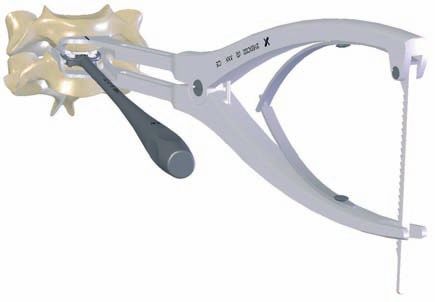
DISCOCERV                               TM

               Cervidisc evolution

      INSTRUCTIONS, IMPLANTS & INSTRUMENTS

10
I NS TR U CTI ONS O F U SE
Instruction for use implanting the Cervical Disc Prosthesis DISCOCERV, the vertebral
plates must be carefully prepared by removing the cartilaginous layer
Notice d'instructions
and roughening the subchondral bone. It is important not to remove
OBJECTIVE OBJECTIF
any of the bony endplate as this could lead to subsidence of the
The Cervical Disc Prosthesis DISCOCERV is an implant La prothèse discale cervicale DISCOCERV est un implant
Cervical Disc Prosthesis DISCOCERV. Obtaining an absolutely stable
intended for the surgical treatment of the cervical spine. destiné aux traitements chirurgicaux du rachis cervical.
primary anchorage of the disc replacement is essential in order to
The Cervical Disc Prosthesis DISCOCERV is intended La prothèse discale cervicale DISCOCERV s’adresse
achieve lasting fixation of the implant. The following defects can lead
for patients suffering from degenerative disorders of the aux patients souffrant d’une pathologie dégénérative du
to dislodgement, subsidence and compression of the implant or other
cervical spine, but who do not display any instability. rachis cervical et ne présentant pas d’instabilité.
post-operative complications:
• excessive removal of bone when preparing the endplate,
GENERAL DESCRIPTION • selection of an inappropriate size of disc prosthesis, DESCRIPTION GÉNÉRALE
The Cervical Disc Prosthesis DISCOCERV has been • forcible introduction of the replacement, resulting in vertebral La prothèse discale cervicale DISCOCERV a été conçue
designed in order to preserve cervical mobility. The preserved fractures, pour permettre de restaurer une mobilité, au niveau cervical. La
mobility is similar to physiological mobility. The Cervical • be careful to avoid excessive resection of the uncus, which mobilité restaurée est proche d’une mobilité physiologique.
Disc Prosthesis DISCOCERV takes the form of a ceramic could weaken the vertebral plate. La prothèse discale cervicale DISCOCERV se présente sous
joint, consisting of a cup and a spherical ball. The two parts la forme d’une articulation en céramique, composée d’une
that form the joint are embedded in metal plates that come Secondary anchorage is achieved by means of osteointegration cupule et d’une sphère. Les deux éléments formant l’articulation
into contact with the vertebral bodies. The upper surface that takes place within the porous structure of the titanium plates sont fixés dans des plateaux métalliques venant au contact des
of the disc replacement inserted into the disc chamber is of the replacement. This porous structure is obtained by applying corps vertébraux. La prothèse mise en place dans la chambre
convex in the sagittal plane, and has a convex profile on a deposit of titanium T40 (ISO 5832-3 or ASTM F67). An X-ray discale présente une forme convexe sur sa face supérieure
its lower surface, in order to match the vertebral plate to checkup makes it possible to confirm that the cervical disc dans le plan sagittal et un profil convexe sur sa face inférieure
the frontal plane as closely as possible. Several different replacement has been correctly positioned relative to the vertebrae. afin d’épouser au mieux le plateau vertébral dans le plan frontal.
thicknesses are supplied in order to fit different morphologies After the implantation, the batch number and the reference code Plusieurs hauteurs sont proposées afin de s'adapter aux
of the intervertebral spaces. The Cervical Disc Prosthesis of the Cervical Disc Prosthesis DISCOCERV implanted must différentes morphologies d’espaces intervertebraux. La prothèse
DISCOCERV is manufactured from ELI titanium (according always be recorded in the patient’s surgical file. This can be done discale cervicale DISCOCERV est fabriquée à partir de titane
to ISO5832-3 or ASTM F136), and from two different types using the labels provided inside the sterile packaging. ELI (selon ISO5832-3 ou ASTM F136), et de ceramique de
of ceramics: zirconia and alumina (ISO 13356 and ISO 6474, This product is a single use device. Under no circumstances nature différente Zircone et alumine (respectivement ISO 13356
respectively). The titanium endplates have been plasma should it be reused. While the device may appear to be et ISO 6474). Les plateaux en titane sont recouverts d’un dépôt
sprayed (with Titanium according to 5832-3 or ASTM F67). undamaged, it may have small defects or internal stress patterns, plasma titane (selon 5832-3 ou ASTM F67).
as a result of the prior implantation or removal that could lead La prothèse discale cervicale DISCOCERV ne doit pas être
The Cervical Disc Prosthesis DISCOCERV must not be to fatigue failure. Additionally, please note that the removed
used with components supplied by other manufacturers. utilisée avec des composants provenant d’autres fabricants.
implant has not been designed or validated so as to allow for
decontamination of microorganisms. Reuse of this product
INDICATIONS INDICATIONS
could lead to cross-infection and/or material degradation as a
The Cervical Disc Prosthesis DISCOCERV is a surgical implant La prothèse discale cervicale DISCOCERV est un implant
result of the decontamination process. The company accepts no
intended to preserve the physiological cervical mobility of a chirurgical visant à restaurer la mobilité cervicale physiologique
responsibility for products which have been reused.
segment of the spine via the anterior route. The disc replacement d’un segment rachidien par voie antérieure. La prothèse ne
Attention: no silicone, formaldehyde or latex based products s’implante qu’entre les niveaux C3 et C7. La principale indication
is only indicated for levels from C3 to C7. The main indication is
should be implanted with a SCIENT’X implant. est une dég énérescence discale ne présentant pas d’instabilité.
disc degeneration that does not display any instability.
The indications include the following: Les indications comprennent :
• degenerative disc disease, PACKAGING • maladie dégénérative du disque,
• herniated disc, Cervical Disc Prosthesis DISCOCERV are supplied in individual • hernie discale,
• myelopathy associated with a spondylotic stenosis of the sterile packaging. The associated accessory instruments are • myélopathie associée à une sténose spondylotique
foramen or canal, supplied in a single container, in kit form. The packaging and the foraminale ou canalaire,
• root disease associated with a neurological deficiency that kit must be closed, sealed and intact when received. If the depot • radiculopathie associée à un déficit neurologique, résistant
does not respond to medical treatments. kit system is used, it is essential to check that it is complete. The aux traitements médicaux.
condition of all the implants and instruments must always be
checked before use. If the kit is to be reassembled in the depot, CONTRE-INDICATIONS :
CONTRAINDICATIONS
the implants are supplied in sterile packs, and the instruments in Les contre-indications de la prothèse discale cervicale
The contraindications for the Cervical Disc Prosthesis
individual sachets. In this case, the labeling shows the reference DISCOCERV comprennent :
DISCOCERV are as follows:
and batch number of the product, as well as the details of the • infection active ou inflammation locale,
• active infection or local inflammation,
manufacturer. Instruments supplied in sachets are not sterile. • ostéoporose vertébrale,
• vertebral osteoporosis,
The storage conditions must be such as to maintain the • affection vertébrale tumorale,
• vertebral tumor disease,
integrity of the implants, the associated accessories and their • traumatisme,
• injury,
respective packaging. • déformation locale,
• local deformity,
If the packaging ensuring the sterility of the implants has been • instabilité,
• instability,
compromised, or if the implants or accessories have been • antécédents chirurgicaux au niveau à traiter,
• surgical history at the site to be treated,
damaged, the devices concerned must not be used, and • arthrite rhumatoïde,
• rheumatoid arthritis,
should be returned to SCIENT'X. • maladie métabolique osseuse,
• metabolic bone disease,
• pregnancy, • grossesse,
• incompatible age or physical condition of the patient, DECONTAMINATION, CLEANING AND STERILIZATION • âge et état physique du patient incompatibles,
• obvious lack of mobility at the level concerned, Products delivered in sachets are not sterile. • absence manifeste de mobilité du niveau considéré,
• allergy or intolerance towards the materials constituting the • allergie ou intolérance au matériaux constituants le dispositif,
For implants delivered sterile: the implants are sterilized by
device, • tout cas non compris dans les indications.
Gamma radiation at doses of 25 to 40 kGy. The expiry date is 5
• any situation not included in the indications. years. The expiry date of sterile parts is indicated on the packaging. La prothèse discale cervicale DISCOCERV ne doit pas
The Cervical Disc Prosthesis DISCOCERV must not be Re-sterilization of implants delivered sterile is prohibited. être utilisée dans le cadre de pathologies nécessitant une
used in the context of disorders requiring a multi-staged arthroplastie multi-étagée ou une arthrodèse adjacente
For instruments not sterile on delivery: all instruments (supérieure ou inférieure).
arthroplasty or an adjacent arthrodesis (above or below).
delivered non-sterile must be decontaminated, cleaned and La prothèse discale cervicale DISCOCERV n'est pas
The Cervical Disc Prosthesis DISCOCERV is not designed,
sterilized before and after use. Implants and instruments in conçue, destinée ou vendue pour des utilisations autres que
intended or sold for any uses other than those indicated.
sachets must be removed from the original packaging for the celles indiquées.
following operations:
POSSIBLE SIDE EFFECTS
Recommended method: EFFETS SECONDAIRES POSSIBLES
• infection,
• Decontamination: Plunge the instruments into a bactericidal • infection,
• post-operative migration of the implant,
and fungicidal solution of the didecyldimethylammonium • migration post-opératoire de l’implant,
• spontaneous fusion,
chloride type diluted to 0.5 % (5mL to 1 litre water). Length • fusion spontanée,
• in cases of fusion affecting the vertebral stages adjacent to
of soaking: 20 min. Rinse with demineralized water. • en cas de fusion atteintes des étages vertébraux adjacents
the level of the arthroplasty,
• Cleaning: Wash the instruments in a LANCER type machine au niveau de l’arthroplastie,
• dislocation,
with suitable cleaning products, rinse and dry. Any product • dislocation,
• the plates of the disc replacement may be driven down into
that might damage the equipment is forbidden (such as • enfoncement des plateaux de la prothèse dans les corps
the vertebral bodies,
bleach, formol, etc.). vertébraux,
• intolerance towards the material.
• Sterilization: We recommend sterilising the instruments in • intolérance au matériel.
Note: An additional surgical operation may be necessary to an autoclave: Note : Une intervention chirurgicale supplémentaire peut être
correct a side effect. - pre-heating for 25’ at 110°C (1 bar) nécessaire pour corriger un effet secondaire.
Warnings: Not every surgical operation leads to an entirely - vacuum 5' (0.8 bar under atmospheric pressure)
Avertissements : Un résultat entièrement satisfaisant
satisfactory outcome. This is particularly true of spinal surgery, - heating 5' at 120°C (1 bar)
n’est pas systématiquement obtenu à chaque opération
where numerous external factors can compromise the results. - vacuum 5' (0.8 bar)
chirurgicale. Cela est particulièrement vrai en chirurgie
- sterilization 18' at 134°C (2 bars)
du rachis où de nombreux éléments extérieurs peuvent
SURGICAL PRECAUTIONS - drying 20' return to room temperature
compromettre les résultats.
The surgeon must be fully conversant with the Cervical
Disc Prosthesis DISCOCERV, the method of application, COMPLAINTS
PRÉCAUTIONS OPÉRATOIRES
the instruments and the surgical procedure. The Cervical Any complaints, together with the reference and lot number of
Le chirurgien doit être parfaitement familiarisé avec la
Disc Prosthesis DISCOCERV must be implanted using the the incriminated product, should be sent to Scient’x.
prothèse discale cervicale DISCOCERV, la méthode
recommended operative technique. The appropriate size of
d'application, les instruments et la technique opératoire. La
the Cervical Disc Prosthesis DISCOCERV must be selected ADDITIONAL INFORMATION prothèse discale cervicale DISCOCERV doit être implantée
according to the height of the disc to be restored, a height For further information, contact SCIENT'X, conformément à la technique opératoire préconisée.
that is inappropriate for the height of the normal interbody Only for information La taille de la prothèse discale cervicale DISCOCERV doit
space could compromise the clinical outcome. Subject to modification without notification être choisie en fonction de la hauteur discale à restaurer, une
It is recommended that an intervertebral distractor be used to carry For updated IFU, please contact your local customer service. hauteur inadaptée à la hauteur de la chambre cervicale peut
out the discectomy and insertion of the disc replacement. Before
compromettre le résultat clinique.
11IN ST R UCTIONS OF US E
Il est recommandé d'utiliser le distracteur intervertébral pour RÉCLAMATIONS • intolleranza al materiale.
réaliser la discectomie et la mise en place de la prothèse. Toute réclamation, accompagnée de la référence et du
Avant implantation de la prothèse discale cervicale numéro de lot du produit incriminé, doit être transmise à la Nota : per la correzione degli effetti avversi potrebbe rendersi
DISCOCERV, les plateaux vertébraux doivent être curetés société Scient’x. necessario un ulteriore intervento chirurgico. Il chirurgo è
soigneusement et avivés sans être fragilisés pour éviter les tenuto a informare il paziente dei possibili effetti avversi.
risques d'enfoncement de la prothèse discale cervicale INFORMATIONS COMPLÉMENTAIRES Avvertenza : Non tutti gli interventi chirurgici si concludono
DISCOCERV. Pour toute information complémentaire, contactez Scient'x. necessariamente con un esito totalmente soddisfacente. Ciò
L’obtention d’un ancrage primaire absolument stable de la Notice à titre informatif. vale in particolare per la chirurgia del rachide, i cui risultati
prothèse est une condition primordiale pour la fixation durable Sujet à modification. possono essere compromessi da numerosi fattori esterni.
de l’implant. Les défauts suivants peuvent être à l’origine d’un Notice complète disponible auprès de votre service client.
descellement, enfoncement de l’implant ou de toutes autres PRECAUZIONI CHIRURGICHE
complication post-opératoires : Il chirurgo deve avere maturato una conoscenza approfondita
• Amincissement excessif de la corticale osseuse lors de la della protesi discale cervicale DISCOCERV™, della metodica
préparation du plateau, di applicazione, dello strumentario e della tecnica chirurgica.
• Sélection inappropriée de la taille de la prothèse, La protesi discale cervicale DISCOCERV™ deve essere
• Introduction en force de la prothèse entrainant des fractures impiantata ricorrendo alla tecnica chirurgica raccomandata.
par éclatement ou un trait de refend osseux, Istruzioni per l'uso La dimensione corretta della protesi discale cervicale
• Attention au fraisage excessif des uncus de nature à DISCOCERV™ deve essere selezionata sulla base dell'altezza
fragiliser le plateau vertébral. UTILIZZO PREVISTO del disco da ripristinare; un'altezza non adeguata rispetto
L’obtention d’un ancrage secondaire est autorisé par La protesi discale cervicale DISCOCERV™ è un impianto all'altezza del normale spazio tra i corpi vertebrali potrebbe
l’ostéointégration qui prend place dans la structure poreuse destinato al trattamento chirurgico del rachide cervicale. compromettere l'esito clinico.
des plateaux en titane de la prothèse. Cette structure poreuse La protesi discale cervicale DISCOCERV™ è destinata Si consiglia di utilizzare un distrattore intervertebrale per
est obtenue par la réalisation d’un dépôt de titane T40 (ISO a pazienti affetti da disturbi degenerativi del rachide l'effettuazione della discectomia e per l'inserimento della
5832-3 ou ASTM F67). cervicale non accompagnati da instabilità. protesi. Prima dell'impianto di una protesi discale cervicale
Un contrôle radiographique permet de constater le bon DISCOCERV™ sono necessari curettage e cruentazione
positionnement de la prothèse cervicale par rapport aux vertèbres. DESCRIZIONE GENERALE adeguati dei piatti vertebrali evitando di renderli eccessivamente
Après implantation, le numéro de lot et la référence de La protesi discale cervicale DISCOCERV™ è stata fragili in modo da evitare il rischio di affondamento della
la prothèse discale cervicale DISCOCERV implantée progettata per il ripristino della mobilità cervicale. La mobilità prothèse discale cervicale DISCOCERV.
doivent systématiquement être enregistrés dans le dossier così ripristinata risulta simile alla mobilità fisiologica. La protesi L'ottenimento di un fissaggio primario completamente stabile
chirurgical du patient. Ceci peut être effectué grâce à l’une discale cervicale DISCOCERV™ si compone di un giunto in della protesi è essenziale al fine di conseguire una fissazione
des étiquettes disponibles dans l’emballage stérile. ceramica, composto da una coppa e da una sfera. Le due parti duratura dell'impianto. Le difettosità riportate di seguito
Ce produit est à usage unique. Il ne doit en aucun cas che costituiscono il giunto sono incorporate a placche metalliche possono essere causa di affondamento e mobilizzazione
être réutilisé. Bien que le dispositif puisse paraitre en parfait che entrano a contatto con i corpi vertebrali. La protesi inserita dell’impianto o di altre complicanze postoperatorie :
état, il peut présenter de petits défauts ou des contraintes nello spazio discale presenta una forma convessa sulla faccia • rimozione eccessiva di corticale ossea nella preparazione
résiduelles résultant d’une utilisation antérieure et pouvant superiore sul piano sagittale e ha un profilo convesso sulla del piatto vertebrale,
mener à une rupture en fatigue. De plus, veuillez noter que superficie inferiore, al fine di corrispondere per quanto possibile • selezione di una protesi discale di dimensioni non corrette,
la décontamination des dispositifs réutilisés n’est pas validée al piatto vertebrale sul piano frontale. Sono disponibili diversi • introduzione forzata della protesi, con conseguente frattura
et que les dispositifs n’ont pas été conçus en ce sens. La spessori in modo da garantire l'adattamento alle varie morfologie per scheggiamento o scanalatura ossea,
réutilisation d’un tel produit pourrait mener à une contamination degli spazi intervertebrali. La protesi discale cervicale • prestare atenzione a non fresare eccessivamente l’uncus,
croisée et/ou à une dégradation du matériel résultant du DISCOCERV™ è prodotta in titanio ELI (conformemente alle ciò che potrebbe indebolire il piatto vertebrale.
procédé de décontamination. Le Fabricant n’accepte aucune norme ISO5832-3 o ASTM F136) e in due tipologie di ceramica: L'ancoraggio secondario viene conseguito tramite
responsabilité concernant les produits réutilisés. ceramica di zirconia e ceramica di allumina (rispettivamente l’osteointegrazione a livello della struttura porosa della placca
Attention : aucun produit à base de silicone, de formaldéhyde ISO 13356 e ISO 6474). Il piatto vertebrale in titanio si presenta in titanio della protesi. Tale struttura porosa viene ottenuta
ou de latex ne doit être implanté avec un implant SCIENT’X. ricoperto da uno strato di plasma di titanio (conforme a con l'applicazione di un deposito di titanio T40 (ISO 5832-3
ISO5823-3 o ASTM F67). o ASTM F67).
EMBALLAGE La protesi discale cervicale DISCOCERV™ non deve Un controllo radiografico permette di confermare il corretto
Les prothèses discales cervicales DISCOCERV sont essere utilizzata con componenti di altri produttori. posizionamento della protesi discale cervicale rispetto alle
livrées dans des emballages stériles individuels. Leurs vertebre.
instruments ancillaires associés sont livrés dans un seul INDICAZIONI Dopo l'impianto, il numero di lotto ed il codice di
conteneur, un « kit ». Les emballages et le kit doivent être La protesi discale cervicale DISCOCERV è un impianto riferimento della protesi discale cervicale DISCOCERV™
fermés, scellés, et intacts à la réception. chirurgico sviluppato per la conservazione della mobilità impiantata devono sistematicamente essere registrati nella
Si le système de kit en dépôt est utilisé, la composition complète fisiologica di un segmento del rachide cervicale per via cartella clinica del paziente utilizzando le etichette disponibili
du kit doit être attentivement vérifiée. Le bon état de tous les anteriore. La protesi viene impiantata esclusivamente tra i all'interno della confezione sterile.
implants et instruments doit être contrôlé avant toute utilisation. livelli C3 e C7. L’indicazione principale è la degenerazione Il prodotto è monouso e non deve in n essun caso essere
En cas de réassortissement de kit en dépôt, les implants sont discale non accompagnata da instabilità. riutilizzato. Pur risultando apparentemente in perfetto
livrés en boites stériles et les instruments en sachet individuel. Le indicazioni includono : stato, il prodotto potrebbe presentare piccole difettosità
L’étiquetage reprend alors la référence et le numéro de lot du • patologia degenerativa discale, o conseguenze di una sollecitazione residua risultante
produit ainsi que les coordonnées du fabricant. Les instruments • ernia del disco dall’utilizzo precedente che potrebbero comportare la rottura
livrés en sachets ne sont pas stériles. • mielopatia associata a stenosi spondilotica foraminale o per fatica. Va inoltre tenuto presente che la decontaminazione
Les conditions de stockage doivent permettre de maintenir canalare dei dispositivi riutilizzati non è una procedura convalidata
l’intégrité des implants, des ancillaires associés et de leurs • radiculopatia associata a deficit neurologico non e che i dispositivi non sono stati progettati a tale
emballages respectifs. rispondente alla terapia medica. scopo. Il riutilizzo del prodotto potrebbe essere causa
En cas d’endommagement de l’emballage assurant la stérilité di contaminazione incrociata, mentre la procedura di
des implants ou d’endommagement des implants ou des decontaminazione potrebbe comportare il degrado del
CONTROINDICAZIONI
ancillaires, les dispositifs concernés ne doivent pas être materiale. Il Produttore non è responsabile delle conseguenze
La protesi discale cervicale DISCOCERV™ è
utilisés et doivent être retournés à SCIENT’X. del riutilizzo di un prodotto.
controindicata nei casi seguenti :
• infezione in corso o infiammazione locale, Attenzione : non utilizzare prodotti a base di silicone,
DÉCONTAMINATION, NETTOYAGE ET STÉRILISATION • osteoporosi vertebrale, formaldeide o lattice in combinazione con impianti Scient’x.
Les produits livrés en sachets ne sont pas stériles. • tumore vertebrale,
Pour les implants livrés stériles : les implants sont stérilisés • traumi, CONFEZIONE
par rayonnement Gamma à la dose de 25 à 40 kGy. Le délai • deformità locale, Le protesi discali cervicali DISCOCERV™ vengono fornite in
de péremption est de 5 ans. La date limite d’utilisation des • instabilità, confezioni sterili individuali. Lo strumentario associato viene fornito
éléments stériles est indiquée sur l’emballage. La restérilisation • pregressa chirurgia del sito da trattare, in un container unico, un “kit”. La confezione e il kit devono essere
des implants livrés stériles est proscrite. • artrite reumatoide, chiusi, sigillati e integri al momento della consegna.
Pour les instruments livrés non stériles : tous les • malattie metaboliche dell'osso, In caso di utilizzo di un kit riassortito da magazzino, verificare
instruments livrés non stériles doivent êtres décontaminés, • gravidanza, attentamente che il kit sia completo. Le condizioni di tutti gli
nettoyés et stérilisés avant et après utilisation. Les • incompatibilità del paziente per età o condizioni fisiche, impianti e del relativo strumentario devono sempre essere
instruments en sachet doivent être sortis de leur emballage • manifesta mancanza di mobilità del livello oggetto di verificate prima dell'uso. In caso di riassortimento del kit in
d'origine pour les opérations suivantes : trattamento, magazzino, gli impianti vengono forniti in confezioni sterili
• allergia o intolleranza ai materiali che compongono il e lo strumentario viene consegnato in sacchetti individuali.
Méthode conseillée : dispositivo, In tal caso, le etichette recano indicazione del codice e del
• Décontamination : Plonger les instruments dans • tutti i casi non previsti nelle indicazioni. numero di lotto del prodotto, oltre ai dettagli del produttore.
une solution bactéricide et fongicide de type chlorure Gli strumenti forniti in sacchetti non sono sterili.
didécyldiméthylammonium diluée à 0,5 % (5mL pour 1 litre La protesi discale cervicale DISCOCERV™ non deve
essere utilizzata nel quadro di patologie che richiedano Le condizioni di stoccaggio devono garantire l'integrità
d'eau tiède). Durée du trempage: 20 min. Rincer à l’eau dell’impianto, dello strumentario associato e delle rispettive
déminéralisée. interventi di artroplastica in più stadi o artrodesi adiacente
(superiore o inferiore). confezioni.
• Nettoyage : Laver les instruments en machine de type Qualora la confezione che garantisce la sterilità dell'impianto
LANCER avec des produits de nettoyage adaptés, rincer, La protesi discale cervicale DISCOCERV™ è stata
progettata e prevista per i soli utilizzi indicati e non deve non risulti integra, oppure in caso di impianti o accessori
sécher. Tout produit susceptible d'altérer le matériel est à danneggiati, i dispositivi in oggetto non devono essere
proscrire (eau de javel, formol…). essere venduta per utilizzi differenti.
utilizzati e vanno restituiti a Scient’x.
• Stérilisation : Nous recommandons le mode de stérilisation
en autoclave pour les instruments : POSSIBILI EFFETTI AVVERSI
• infezione, DECONTAMINAZIONE, PULIZIA E STERILIZZAZIONE
- préchauffage 25’ à 110°C (1 bar),
• migrazione postoperatoria dell'impianto, I prodotti consegnati in sacchetti non sono sterili.
- vide 5' (0,8 bar sous pression atmosphérique),
- chauffage 5' à 120°C (1 bar), • fusione spontanea, Impianti consegnati sterili: gli impianti vengono sterilizzati
- vide 5' (0,8 bar), • in caso di fusione, danni a carico dei livelli vertebrali a raggi gamma al dosaggio di 25 – 40 kGy. La scadenza è
- stérilisation 18' à 134°C (2 bars), adiacenti al livello dell’artroplastica, di cinque anni. La data limite di utilizzo dei componenti sterili
- séchage 20' retour à l'ambiante. • lussazione, è indicata sulla confezione. È vietata la risterilizzazione degli
• affondamento delle placche della protesi nei corpi vertebrali, impianti consegnati sterili.
12Strumenti consegnati non sterili: lo strumentario • edad y estado físico del paciente incompatibles, Las condiciones de almacenamiento deben permitir mantener
consegnato non sterile deve essere decontaminato, pulito • ausencia manifiesta de movilidad del nivel considerado la integridad de los implantes, del instrumental asociado y de
e sterilizzato prima e dopo l’uso. Impianti e strumenti avvolti • alergia o intolerancia a los materiales que constituyen el sus respectivos embalajes.
in sacchetti devono essere estratti dal sacchetto d'origine dispositivo, En caso de daño en el embalaje que garantiza la esterilidad
procedendo quindi agli interventi riportati di seguito: • cualquier caso no incluido en las indicaciones. de los implantes, o de daño en los implantes o en el
Metodica raccomandata: La prótesis discal cervical DISCOCERV no debe ser utilizada instrumental, los dispositivos afectados no deben ser
• Decontaminazione: Immergere gli impianti e gli en el marco de las patologías que requieren una artroplastia utilizados y deben ser devueltos a SCIENT’X.
strumenti in una soluzione battericida e fungicida tipo multinivel o una artrodesis adyacente (superior o inferior).
didecildimetilammonio cloruro diluito allo 0,5 % (5 ml per La prótesis discal cervical DISCOCERV no ha sido diseñada ni DESCONTAMINACIÓN, LIMPIEZA Y ESTERILIZACIÓN
un litro di acqua tiepida). Durata dell’immersione: 20 min. está destinada o vendida para usos diferentes a los indicados. Los productos suministrados en bolsas no son estériles.
Sciacquare con acqua demineralizzata. Para los implantes suministrados estériles: los implantes
•P ulizia: Lavare gli impianti e gli strumenti in una macchina POSIBLES EFECTOS SECUNDARIOS han sido esterilizados por radiación Gamma en dosis de 25 a
di pulizia tipo LANCER con adeguati prodotti di pulizia, • infección, 40 kGy. El plazo de caducidad es de 5 años. La fecha límite
sciacquare e asciugare. Non utilizzare prodotti quali varichina • migración postoperatoria del implante, de utilización de los elementos estériles viene indicada en el
o formaldeide che potrebbero danneggiare i materiali. • fusión espontánea, embalaje. Queda excluida la reesterilización de los implantes
• Sterilizzazione: Si raccomanda di sterilizzare in autoclave • en caso de fusión, daños en los niveles vertebrales suministrados estériles.
impianti e strumenti secondo la seguente modalità: adyacentes a la artroplastia, Para los implantes e instrumentos suministrados no
- preriscaldamento: 25’ a 110°C (1 bar) • dislocación, estériles: todos los implantes e instrumentos suministrados
- vuoto: 5’ (0,8 bar a pressione atmosferica) • hundimiento de las placas de la prótesis en los cuerpos no estériles deben ser sometidos a descontaminación,
- riscaldamento: 5’ a 120°C (1 bar) vertebrales, limpieza y esterilización antes y después de su utilización.
- vuoto: 5’ (0,8 bar) • intolerancia al material. Los implantes e instrumentos en bolsa deben sacarse de su
- sterilizzazione: 18’ a 134°C (2 bar)
Nota: Una intervención quirúrgica adicional puede resultar embalaje original para las siguientes operaciones:
- asciugatura: 20’ ritorno a temperatura ambiente
necesaria para corregir un efecto secundario. Método aconsejado:
RECLAMI Advertencias: No se puede conseguir un resultado totalmente • Descontaminación: Sumergir los implantes y los
I reclami, corredati da riferimento e numero di lotto del satisfactorio en cada operación quirúrgica. Esto es especialmente instrumentos dentro de una solución bactericida y fungicida
prodotto, dovranno essere trasmessi alla società Scient’x cierto en los casos de cirugía del raquis, en los que numerosos tipo cloruro de didecyldimethylammonium diluida al
elementos externos pueden comprometer los resultados. 0,5% (5mL por 1 litro de agua templada). Duración de la
INFORMAZIONI ULTERIORI inmersión: 20 min. Enjuagar con agua desmineralizada.
Per ulteriori informazzioni, rivolgersi a SCIENT'X. PRECAUCIONES OPERATORIAS • Limpieza: Lavar los implantes y los instrumentos a
A solo scopo informativo El cirujano debe estar perfectamente familiarizado con máquina del tipo LANCER con productos de limpieza
soggetto a modifica senza notifica la prótesis discal cervical DISCOCERV, el método de adecuados, enjuagar y secar. Se debe excluir cualquier
Per richiedere istruzioni d’uso aggiornate, contattare il aplicación, los instrumentos y la técnica operatoria. La producto susceptible de alterar el material (lejía, formol…).
Servizio Clienti locale. prótesis discal cervical DISCOCERV debe ser implantada • Esterilización: Recomendamos el modo de esterilización
conforme a la técnica operatoria recomendada. en autoclave para los implantes y los instrumentos:
El tamaño de la prótesis discal cervical DISCOCERV debe - precalentamiento 25’ a 110ºC (1 bar)
elegirse en función de la altura discal que se va a restaurar, - vacío 5’ (0,8 bar bajo presión atmosférica)
pues una altura inadecuada para la altura del compartimento - calentamiento 5’ a 120ºC (1 bar)
cervical puede comprometer el resultado clínico. - vacío 5’ (0,8 bar)
Instrucciones de uso Se recomienda utilizar el distractor intervertebral para realizar - esterilización 18’ a 134ºC (2 bar)
la discectomía y la colocación de la prótesis. Antes de la - secado 20’ vuelta a la temperatura ambiente
OBJETIVO implantación de la prótesis discal cervical DISCOCERV,
La prótesis discal cervical DISCOCERV es un implante las placas vertebrales deben ser cuidadosamente raspadas RECLAMACIONES
destinado a los tratamientos quirúrgicos del raquis cervical. y pulidas sin que se vuelvan frágiles a fin de evitar los riesgos Toda reclamación, acompañada de la referencia y del número
La prótesis discal cervical DISCOCERV va dirigida a los de hundimiento de la prótesis discal cervical DISCOCERV. de lote del producto incriminado, deberá ser transmitida a la
pacientes que padecen una patología degenerativa del La obtención de un anclaje primario absolutamente estable sociedad Scient’x.
raquis cervical y que no presentan inestabilidad. de la prótesis es una condición primordial para la fijación
duradera del implante. Los defectos siguientes pueden ser la INFORMACIÓN COMPLEMENTARIA
DESCRIPCIÓN GENERAL causa de un desprendimiento, hundimiento del implante o de Para cualquier información complementaria, póngase en
La prótesis discal cervical DISCOCERV ha sido diseñada cualquier otra complicación postoperatoria: contacto con SCIENT’X.
para permitir restaurar una movilidad a nivel cervical. La • Adelgazamiento excesivo de la cortical ósea durante la Para información soló
movilidad restaurada se acerca a una movilidad fisiológica. preparación de la placa Puede ser modificado sin notificación
La prótesis discal cervical DISCOCERV se presenta en forma • Selección inapropiada del tamaño de la prótesis Para instrucciones de uso actualizados, contactad el
de una articulación de cerámica, formada por una cúpula y una • Introducción forzada de la prótesis provocando fracturas atención al cliente local
esfera. Los dos elementos que forman la articulación vienen por estallido o una línea de separación ósea
fijados en placas metálicas que se colocan en contacto con los • Cuidado con el fresado excesivo de los uncus susceptible
cuerpos vertebrales. La prótesis colocada en el compartimento de volver frágil la placa vertebral
discal tiene una forma convexa en su cara superior en el plano La obtención de un anclaje secundario se logra mediante la Additional informations / Renseignements /
sagital y un perfil convexo en su cara inferior a fin de unirse de la osteointegración que se produce en la estructura ósea de Ulteriori informazioni / Información complementaria
mejor manera posible con la placa vertebral en el plano frontal. las placas de titanio de la prótesis. Esta estructura porosa se
Se ofrecen varias alturas con el fin de adaptarse a las diferentes obtiene mediante el depósito de una capa de titanio T40 (ISO
morfologías de espacios intervertebrales. La prótesis discal 5832-3 o ASTM F67).
cervical DISCOCERV está fabricada a partir de titanio ELI Un control radiográfico permite comprobar el posicionamiento
(según ISO5832-3 o ASTM F136), y de cerámica de naturaleza correcto de la prótesis cervical respecto a las vértebras.
diferente a base de Circonio y alúmina (respectivamente ISO Tras la implantación, el número de lote y la referencia de la 22 avenue Jean Bart
13356 e ISO 6474). Las placas de titanio están revestidas de prótesis discal cervical DICOCERV implantada deben ser 78960 VOISINS-LE-BRETONNEUX - FRANCE
una capa de plasma de titanio (según ISO5823-3 o ASTM F67). sistemáticamente registrados en el expediente quirúrgico TL +33 (0)1 39 30 69 30
La prótesis discal cervical DISCOCERV no debe ser utilizada del paciente. Esto puede efectuarse por medio de una de las FX +33 (0)1 30 43 82 77
con componentes que provengan de otros fabricantes. etiquetas disponibles en el embalaje estéril. qualite@scientx.com
Este producto es de un solo uso. No debe en ningún caso
INDICACIONES ser reutilizado. Aunque pueda parecer que el dispositivo
La prótesis discal cervical DISOCERV es un implante está en perfecto estado, puede tener pequeños defectos
quirúrgico cuyo objetivo es restaurar la movilidad cervical o tensiones residuales debido a un uso anterior y pueden
Do not use if package is damaged.
fisiológica de un segmento raquídeo por vía anterior. La provocar una ruptura por fatiga. Además, sírvase constatar Ne pas utiliser si l'emballage est endommagé.
prótesis sólo se implanta entre los niveles C3 y C7. La que la descontaminación de los dispositivos reutilizados no Non utilizare se la confezionz appare dannegiata.
indicación principal es la degeneración discal que no está validada y que los dispositivos no han sido diseñados en No utilizar si el emalaje está daňado
presenta inestabilidad. ese sentido. La reutilización de un producto como este podría
Non-sterile. Sterile.
provocar una contaminación cruzada y/o una degradación Non stérile. Stérile.
Las indicaciones incluyen:
del material como consecuencia del procedimiento de Non sterile. Sterile.
• enfermedad degenerativa del disco
descontaminación. El Fabricante no asumirá ninguna No estéril. Estéril.
• hernia discal
responsabilidad relacionada con los productos reutilizados.
• mielopatía asociada a una estenosis espondilótica foraminal Date of manufactur. Manufacturer.
o del canal Atención: No se debe implantar con un implante SCIENT’X Date de fabrication. Fabricant.
ningún producto a base de silicona, formaldehído o látex. Data di produzione. Produttore.
• radiculopatía asociada a un déficit neurológico, resistente a
Fecha de fabricación. Fabricante.
los tratamientos médicos
EMBALAJE Do not reuse. Use only.
CONTRAINDICACIONES Las prótesis discal cervicales DISCOCERV se suministran A usage unique. Utiliser jusqu'au.
dentro de unos embalajes estériles individuales. Su Mono uso. Utilizare entro.
Las contraindicaciones de la prótesis discal cervical De un solo uso. Utilizar hasta el.
DISCOCERV incluyen: instrumental asociado se suministra en un solo contenedor,
• infección activa o inflamación local, un “kit”. Los embalajes y el kit deben estar cerrados, sellados Read IFU.
• osteoporosis vertebral, e intactos en el momento de su recepción. Lire le mode d'emploi.
Si se utiliza el sistema de kit en depósito, se debe verificar Leggere le istruzioni.
• afección vertebral tumoral, Leer el modo de emplo.
• traumatismo, atentamente la composición completa del kit. Antes de
• deformación local, su utilización, se debe controlar el buen estado de todos
• inestabilidad, los implantes e instrumentos. En caso de reposición de Only for information. Subject to modification without notification.
• antecedentes quirúrgicos en el nivel a tratar, productos de un kit en depósito, los implantes se suministran For updated IFU, please contact your local customer service.
• artritis reumatoide, en cajas estériles y los instrumentos en bolsa individual. El
• enfermedad metabólica ósea, etiquetado recoge entonces la referencia y el número de lote
• embarazo, del producto así como las coordenadas del fabricante. Los Date of revision : 06/2010
instrumentos suministrados en bolsas no son estériles.
13You can also read


