Fauna of Cobalt-Rich Ferromanganese Crust Seamounts - Technical Study: No. 8
←
→
Page content transcription
If your browser does not render page correctly, please read the page content below
Fauna of Cobalt-Rich
Ferromanganese Crust
Seamounts
        Technical Study: No. 8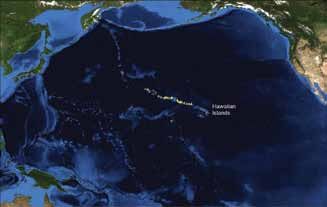
ISA TECHNICAL STUDY SERIES

                           Technical Study No. 1
      Global Non-Living Resources on the Extended Continental Shelf:
                        Prospects at the year 2000

                           Technical Study No. 2
   Polymetallic Massive Sulphides and Cobalt-Rich Ferromanganese Crusts:
                            Status and Prospects

                           Technical Study No. 3
  Biodiversity, Species Ranges and Gene Flow in the Abyssal Pacific Nodule
   Province: Predicting and Managing the Impacts of Deep Seabed Mining

                           Technical Study No. 4
Issues associated with the Implementation of Article 82 of the United Nations
                      Convention on the Law of the Sea

                           Technical Study No. 5
 Non-Living Resources of the Continental Shelf Beyond 200 Nautical Miles:
  Speculations on the Implementation of Article 82 of the United Nations
                    Convention on the Law of the Sea

                           Technical Study No. 6
         A Geological Model of Polymetallic Nodule Deposits in the
                    Clarion-Clipperton Fracture Zone

                           Technical Study No. 7
         Marine Benthic Nematode Molecular Protocol Handbook
                         (Nematode Barcoding)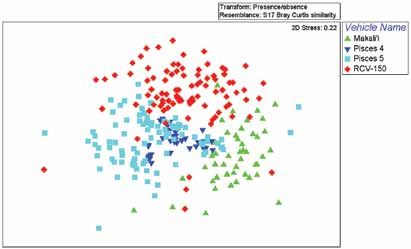
Fauna of Cobalt-Rich
Ferromanganese Crust
     Seamounts

  ISA TECHNICAL STUDY: No. 8

  International Seabed Authority
        Kingston, Jamaica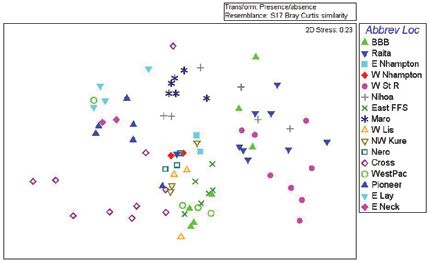
The designations employed and the presentation of material in this publication
     do not imply the expression of any opinion whatsoever on the part of the
     Secretariat of the International Seabed Authority concerning the legal status of
     any country or territory or of its authorities, or concerning the delimitation of its
     frontiers or maritime boundaries.
     All rights reserved. No part of this publication may be reproduced, stored
     in a retrieval system, or transmitted in any form or by any means, electronic,
     mechanical, photocopying or otherwise, without the prior permission of the
     copyright owner. Application for such permission, with a statement of purpose
     and the extent of the reproduction, should be addressed to the International
     Seabed Authority, 14-20 Port Royal Street, Kingston, Jamaica.

     National Library of Jamaica Cataloguing-in-Publication Data
     Fauna of Cobalt-rich ferromanganese crust seamounts : report / [prepared for
     the International Seabed Authority by Malcolm Clark … [et al.]].
          p. : col. ill., maps ; cm. – (ISA technical study; 8)
     Bibliography : p.
     ISBN: 978-976-95268-7-7 (pbk)
     1. Seamount animals 2. Marine animals 3. Marine mineral resources
     4. Submarine topography 5. Oceanography
     I. Clark, Malcolm II. Series
     578.77 – dc 22

     Copyright © International Seabed Authority 2011
     International Seabed Authority
     14-20 Port Royal Street
     Kingston, Jamaica
     Tel: (876) 922 9105, Fax: (876) 922 0195
     Website: http://www.isa.org.jm

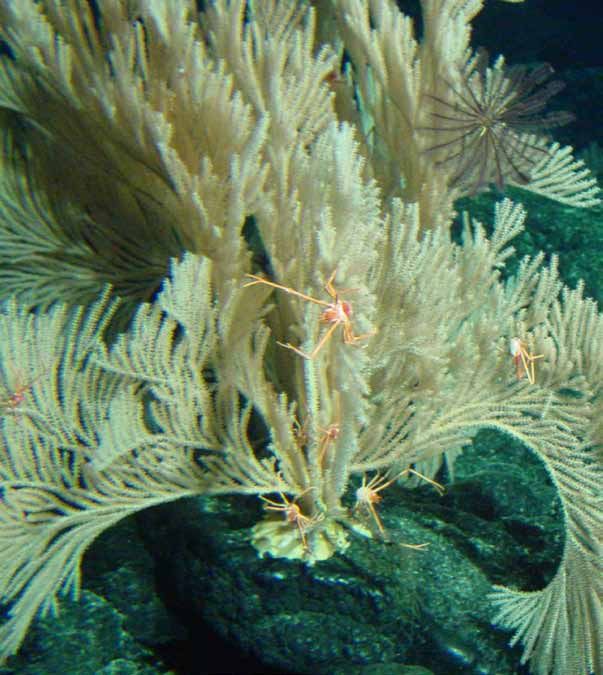
     Photo of coral Calyptrophora alpha with squat lobsters and a feather star
     courtesy of Hawai’i Undersea Research Laboratory

ii                                                           Fauna of Cobalt-Rich Crust Seamounts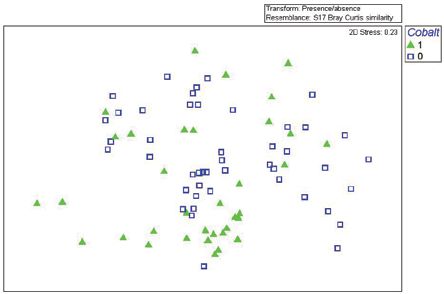
Table of Contents
             List of Figures  .  .  .  .  .  .  .  .  .  .  .  .  .  .  .  .  .  .  .  .  .  .  .  .  .  .  .  .  .  .  .  .  .  .  .  .  .  .  .  .  .  .  .  .  .  .  .  .  .  .  .  .  .  .  .  .  .  .  .  .  .  .  .  .  .  .  .  .  .  .  .  .  .  .  .  . iv
             List of Tables .  .  .  .  .  .  .  .  .  .  .  .  .  .  .  .  .  .  .  .  .  .  .  .  .  .  .  .  .  .  .  .  .  .  .  .  .  .  .  .  .  .  .  .  .  .  .  .  .  .  .  .  .  .  .  .  .  .  .  .  .  .  .  .  .  .  .  .  .  .  .  .  .  .  .  .  . iv
             Foreword .  .  .  .  .  .  .  .  .  .  .  .  .  .  .  .  .  .  .  .  .  .  .  .  .  .  .  .  .  .  .  .  .  .  .  .  .  .  .  .  .  .  .  .  .  .  .  .  .  .  .  .  .  .  .  .  .  .  .  .  .  .  .  .  .  .  .  .  .  .  .  .  .  .  .  .  .  .  .  .  . v
             Executive Summary .  .  .  .  .  .  .  .  .  .  .  .  .  .  .  .  .  .  .  .  .  .  .  .  .  .  .  .  .  .  .  .  .  .  .  .  .  .  .  .  .  .  .  .  .  .  .  .  .  .  .  .  .  .  .  .  .  .  .  .  .  .  .  .  .  .  .  .  .  .  . vi
             1. Background  . . . . . . . . . . . . . . . . . . . . . . . . . . . . . . . . . . . . . . . . . . . . . . . . . . . . . . . . . . . . . . . . . . . . . . . . . . 1
             2. Methods . . . . . . . . . . . . . . . . . . . . . . . . . . . . . . . . . . . . . . . . . . . . . . . . . . . . . . . . . . . . . . . . . . . . . . . . . . . . . 5
             3. Results . . . . . . . . . . . . . . . . . . . . . . . . . . . . . . . . . . . . . . . . . . . . . . . . . . . . . . . . . . . . . . . . . . . . . . . . . . . . . . 15
             4. Discussion . . . . . . . . . . . . . . . . . . . . . . . . . . . . . . . . . . . . . . . . . . . . . . . . . . . . . . . . . . . . . . . . . . . . . . . . . . . 71
             5. References . . . . . . . . . . . . . . . . . . . . . . . . . . . . . . . . . . . . . . . . . . . . . . . . . . . . . . . . . . . . . . . . . . . . . . . . . 79

Fauna of Cobalt-Rich Crust Seamounts                                                                                                                                                                                                                                 iii
List of figures
Figure 1 Location of dive sites
Figure 2 Multidimensional scaling (MDS) on presence/absence transformed data from full HURL
dataset
Figure 3 Number of dives per location (a) and length of bottom time per dive (b) of Pisces 4
and Pisces 5 submersible dives versus the total number of species
Figure 4 Species accumulation curves for dives on Cross Seamount
Figure 5 Cluster dendrogram of the reduced presence/absence invertebrate data
Figure 6 MDS plot of the reduced presence/absence invertebrate data
Figure 7 MDS plot of the reduced presence/absence invertebrate data
Figure 8 MDS plot of the reduced presence/absence invertebrate data overlaid with values for
average depth of dive and bubbles that increase in size with increasing depth
Figure 9 Cluster dendrogram of the reduced presence/absence invertebrate data by depth zone
Figure 10 Representative images of Porifera ‘species’
Figure 11 Representative images of Cnidaria ‘species’
Figure 12 Representative images of Mollusc ‘species’
Figure 13 Representative images of Crustacea ‘species’
Figure 14 Representative images of Echinoderm ‘species’
Figure 15 Representative images of Chondrichthyes ‘species’
Figure 16 Representative images of Osteichthyes ‘species’
List of tables
Table 1 Summary of data examined for this study
Table 2 Summary of location and dive information for final dataset used for multivariate
analyses
Table 3 Summary of number of ‘species’ recorded from all dives broken down by phylum
Table 4 Full list of ‘species’ recorded from cobalt-rich and non cobalt-rich sites in this study
Table 5 Results of BIOENV analyses of the reduced dataset for each single variable
Table 6 Species contributing the most to similarity within a given depth zone
Table 7 Species that had consistently the largest contribution to distinguishing depth zones
iv Fauna of Cobalt-Rich Crust SeamountsForeword
A principal function of the International Seabed Authority is to regulate deep
seabed mining and to give special emphasis to ensuring that the marine
environment is protected from any harmful effects which may arise during mining
activities, including exploration. Recent developments have highlighted the
potential of cobalt-rich ferromanganese crusts as a deep-sea mineral resource.
Seamounts in the central-west Pacific Ocean are known to have thick, cobalt-rich
ferromanganese crusts. These are of commercial interest for mining. However,
very little is known about the faunal communities on these seamounts, and in
particular whether they could be different from those that occur on seamounts
which do not have thick cobalt-rich crusts. Such information is fundamental
to evaluating the potential impacts of mining operations, and formulating
environmental guidelines for mining operations. This study was commissioned by
the International Seabed Authority to assess patterns of community composition
and diversity on seamounts with, and without, cobalt-rich crusts, and the factors
that determine these patterns.
This study has provided a considerable advance in the knowledge of the
biodiversity of cobalt-rich crusts, and factors that might drive community
composition. However, the database and analyses can be expanded to improve
the results. In particular, data on substrate type can be incorporated, and analyses
can extend beyond presence-absence to include abundance. It is important to
examine both of these factors in order to confirm the implication of the present
study; that there is no effect of crust composition on the fauna. A workshop is
planned in 2011 to review the present results, and to undertake further analyses.
This report was prepared for the International Seabed Authority by Malcolm
Clark (NIWA, New Zealand), Christopher Kelley (Hawaiian Underwater
Research Laboratory, USA), Amy Baco (Florida State University, USA) and Ashley
Rowden (NIWA, New Zealand). The views expressed are those of the authors
and do not necessarily reflect those of the International Seabed Authority. The
Authority expresses it appreciation to the Census of Marine Life Programme on
Seamounts (CenSeam) for its cooperation in making this study possible.
Fauna of Cobalt-Rich Crust Seamounts vExecutive Summary
Seamounts in the central-west Pacific Ocean are known to have thick, cobalt-rich
ferromanganese crusts. These are of commercial interest for mining. However, very
little is known about the faunal communities on these seamounts, and in particular
whether they could be different from those that occur on seamounts which do
not have thick cobalt-rich crusts. Such information is fundamental to evaluating the
potential impacts of mining operations, and formulating environmental guidelines
for mining operations. This study was commissioned by the International Seabed
Authority in order to assess patterns of community composition and diversity on
seamounts with, and without, cobalt-rich crusts, and the factors that determine
these patterns.
Video data were extracted from submersible and ROV dives carried out by the
Hawaiian Underwater Research Laboratory on a range of seamount features in
the Hawaiian Archipelago between 1983 and 2003. There were 270 dives covering
33 locations, comprising a mixture of potentially commercial cobalt-rich and non
cobalt-rich crust sites. Data were checked and edited, and a final total of over
30,000 observational records were extracted.
There were 967 ‘species’ identified from all the dives combined. The majority
of these were Cnidarians (corals, anemones and related taxa) with 287 species,
Osteichthyes (bony fishes) with 252, Echinoderms (such as starfishes.) with 154, and
Crustaceans (crabs, shrimps) with 106. The species seen varied between locations,
with 209 recorded only from cobalt-rich sites, 271 from non cobalt-rich sites, and
487 seen at both types of crust sites. A full list of recorded species is provided,
showing occurrence on grouped cobalt-rich and non cobalt-rich sites.
Preliminary analyses revealed differences in data between the sampling vehicles,
and so a reduced set of presence-absence observations was compiled from just
Pisces 4 and Pisces 5 submersible dives for more detailed analysis. This reduced
dataset comprised 13,000 records of invertebrate megafauna from 81 dives at
16 sites. Multivariate analyses showed no significant difference in the invertebrate
community composition between cobalt-rich and non cobalt-rich sites. However,
there was considerable variation between locations. The main determinant of
community composition was depth, with three zones defined: approximately
200–350 m; 360–600 m; and 750–1800 m. Cniderian species, especially corals, were
commonly the characterizing or discriminating species in these faunal assemblages.
Almost 200 images taken in situ of the main species, or reperesentative species
of the major taxa, are provided for Porifera, Cnideria, Mollusca, Crustacea,
Echinodermata, Chondrichthyes and Osteichthyes.
Overall, the study has provided a considerable advance in our knowledge of
the biodiversity of cobalt-rich crusts, and factors that might drive community
composition. However, the database and analyses can be expanded to improve the
results. In particular, data on substrate type can be incorporated, and analyses can
extend beyond presence-absence to include abundance. It is important to examine
both of these factors in order to confirm the implication of the present study; that
there is no effect of crust composition on the fauna. A workshop is planned in 2011
to review the present results, and to undertake further analyses.
vi Fauna of Cobalt-Rich Crust Seamountschapter one Background
1. Background
    Seamounts are prominent features of the world’s underwater topography. It is
    estimated there may be as many as 100,000 large seamounts (with an elevation
    of 1,000 m or greater) (Wessel, 2001), distributed throughout the world’s oceans
    (e.g. Kitchingman et al., 2007), where they provide physically isolated benthic
    marine habitats in otherwise pelagic and midwater regions. Because of the
    isolated geographic nature of these habitats, seamounts (as well as ridges, banks
    and oceanic islands) have been hypothesized to be locations where speciation
    occurs in deep-sea fauna (e.g. Hubbs, 1959; Wilson and Kaufmann, 1987). Many
    seamounts and seamount chains have been reported to have high levels of
    faunal endemicity (Rogers, 1994; Parin et al, 1997; Richer de Forges et al, 2000),
    although several recent studies and reviews show that this cannot be taken as a
    generalisation for all seamounts (e.g. Samadi et al, 2006; O’Hara, 2007; Stocks and
    Hart, 2007; McLain, 2007). Nevertheless, seamounts and similar offshore features
    are widely accepted as potentially playing an important role in the ecology of the
    deep-sea (Clark et al, 2010).
    Seamounts are well known to attract concentrations of fish, which form the basis
    of numerous commercial fisheries (e.g. Clark et al, 2007a; Da Silva and Pinho,
    2007). However, they are also increasingly of interest for the exploitation of their
    mineral resources (United Nations-ISA, 2004). Polymetallic massive sulphide
    deposits can form on seamounts with black smoker and other volcanic activity
    (e.g. Herzig and Petersen, 2002; Herzig, 2007), and cobalt-rich ferromanganese
    crusts occur on seamounts, ridges and plateaus where crust minerals precipitate
    out onto rocky surfaces that currents sweep clean of sediments over long
    periods (Hein, 2002). These crusts occur universally on exposed rocks
    throughout the oceans, but form thick pavements (up to 250 mm thick) primarily
    on large seamounts and guyots in the western and central Pacific Ocean (Hein,
    2002; Zhou, 2007; Hein, in press). The chemical composition of the crusts can be
    high in manganese and iron, and this could have an effect on the animals able to
    live in such a habitat. Very little research has been conducted on the influence of
    the chemical composition of a hard substratum on seabed communities. Veillette
    et al (2007) found no clear relationship between fauna and the geochemical
    composition of the outer surface of polymetallic nodules from different areas
    of the seabed. However, they were not able to compare the composition of
    nodule fauna with that of other hard substratum types at the same water depths.
    The biological communities associated with the particular chemical environment
    at, and surrounding, active hydothermal vents have been extensively studied in
    recent decades (e.g. Van Dover, 2000) but much less is known about the fauna of
    cobalt-rich crusts on seamounts (Grigg et al., 1987).
    Seamount benthic communities are vulnerable to human activities. Bottom
    trawling and long-lining have been shown to have significant impact on seamount
    communities, particularly on sedentary structure-forming corals and sponges (e.g.
    Koslow et al, 2001; Clark and Koslow, 2007; Rowden and Clark, 2009), and the
    slow growth of such taxa (e.g. Rogers et al., 2007) can prolong recovery from
    impact. This further highlights the need for scientific data on the ecology and

2                                                          Fauna of Cobalt-Rich Crust Seamounts
ecosystem function of seamount communities in order to inform appropriate
management.
The International Seabed Authority (ISA) has the mandate under the United
Nations Convention on the Law of the Sea (UNCLOS) to regulate exploration
for, and exploitation of, marine mineral resources in ‘The Area’ which is beyond
the boundaries of national jurisdiction. It has held a number of workshops since
2000, most notably in 2004 and 2006, to bring together available information
on the geology and biology of cobalt-rich ferromanganese crusts found
predominantly on seamounts in the central-northern Pacific Ocean (CNP).
However, it has become clear that seamounts worldwide have been poorly
sampled (e.g. Stocks et al, 2004; Clark, 2009), and that very little is known about
the CNP seamounts in particular (Koslow, 2007). Much more information was
needed to describe and understand the composition of seamount communities,
and subsequently to ascertain the potential impact of exploration and mining of
these seamount deposits, and to develop robust environmental guidelines for
exploration. This has been one of the objectives of the Census of Marine Life
programme on seamounts (‘CenSeam’) (Clark et al, 2007b).
During the ISA workshop in 2006, CenSeam reviewed available data and
potential sources of information that could help improve our knowledge of
cobalt-rich crust communities, and subsequently gained funding from the ISA to
undertake the present study to compile available information on seamounts in
the cobalt-rich zone of the CNP from the dive archives of the Hawaii Undersea
Research Laboratory (HURL). These dives cover the Hawaiian Archipelago, a
portion of which falls within the cobalt-rich zone. The HURL database, therefore,
represents a previously untapped source and the best available data on the
fauna of cobalt-rich seamounts and other features, and also includes data on
features from the non cobalt-rich portion of the Archipelago for comparison.
The database includes data not just on seamounts, but also on other seamount-
like features including oceanic islands, atolls and banks, and so also provides
insights into the degree of uniqueness of the fauna on cobalt-rich seamounts as
compared to that of nearby features.
Study objectives
1) To assess patterns of community composition and diversity of fauna at
cobalt-rich and non cobalt-rich sites, and the factors that determine these
patterns.
2) To examine gaps in current knowledge of these patterns with a view to
encouraging collaborative research to address them.
3) To provide the ISA with recommendations to input into formulation of
environmental guidelines for future mining contractors.
Fauna of Cobalt-Rich Crust Seamounts 34 Fauna of Cobalt-Rich Crust Seamounts
chapter two Methods
2. Methods

    Data

    All data used for this study come from the HURL submersible and ROV video
    logging database. Data were extracted from dives conducted in the Hawaiian
    Archipelago and nearby seamounts between 1983 and 2003 by the RCV-
    150 remotely operated vehicle (ROV) and the Makali’i, Pisces 4, and Pisces 5
    submersibles. Data selection was discussed with Dr Jim Hein (United States
    Geological Service), and only dives with data collected from depths greater than
    200 m were included in this analysis (shallow, younger, seamounts were thought
    to have little prospect of having thick cobalt crust). The sites included a mixture
    of cobalt-rich and non cobalt-rich seamounts. These were defined on the basis
    of their potential for mining, and hence considered seamount size and shape as
    well as likely cobalt concentration. The use of the terms “cobalt-rich” and “non
    cobalt-rich” in this report is therefore not to be treated solely as an indication of
    cobalt richness in the crust. The selected portion of the database included 30,652
    records for 270 dives at 33 locations (Table 1). “Location” refers to an individual
    feature (seamount, island, atoll or bank). The geographical distribution of cobalt-
    rich and non cobalt-rich sampling locations is shown in Figure 1.
    Each data record consisted of a single row of a Microsoft Excel file, with each
    species/operational taxonomic unit (hereafter referred to as ‘species’) observed
    in a five-minute interval recorded as a separate row. Five-minute intervals with
    no taxa were recorded as a single row with “none” in the species column. These
    data were included along with additional columns to record vehicle, dive number,
    date, site position, observation interval, organism type degree of certainty of
    species identification, and depth.
    Before analysis the database was modified as follows: a) typographical errors
    and misspellings were corrected; b) taxa with the same species designations
    but different higher-level taxon designations were made uniform; c) all records
    with no taxa observed were removed (this is useful information, but not for this
    particular analysis); and d) all records that listed a taxon as, or were inferred as,
    “dead” were removed.

6                                                            Fauna of Cobalt-Rich Crust Seamounts
Table 1. Summary of data examined for this study. The number of dives per features is supplied, with
the number of faunal observations in parentheses. CR=cobalt-rich, NCR=non cobalt-rich
Location Cobalt Makali’i Pisces 4 Pisces 5 ROV
Johnson Atoll CR 34 (558)
Cross Seamount CR 4 (1846) 40 (1691) 3 (149)
Bishop Seamount CR 1 (146)
Pensacola Seamount CR 1 (103)
East Necker Seamount CR 2 (1466) 5 (291)
Necker CR 3 (48)
East French Frigate Shoals CR 1 (361) 5 (2618) 6 (354)
French Frigate Shoals CR 6 (122)
Bank 66 CR 3 (125) 1 (152) 1 (31)
North FFS Seamount CR 1 (178)
Baby Brooks Bank CR 2 (38) 3 (485) 4 (854) 7 (211)
Nihoa CR 6 (826) 5 (106)
WestPac Bank CR 4 (1681) 1 (36)
East Twin Banks CR 1 (194)
West St Rogatien Bank NCR 3 (504) 5 (1409) 10 (247)
Raita Bank NCR 3 (542) 8 (1996) 13 (594)
Maro Reef NCR 6 (1344) 8 (347)
East Laysan Seamount NCR 4 (1638)
Laysan Bank NCR 8 (277)
Laysan Island NCR 1 (169) 1 (64)
East Northhampton Seamount NCR 2 (404) 3 (52)
West Northhampton Seamount NCR 2 (316) 2 (40)
Pioneer Bank NCR 6 (2455) 5 (298)
Pioneer Ridge NCR 2 (65)
West Lisianski Bank NCR 1 (351) 2 (432) 4 (212)
East Salmon Seamount NCR 1 (238)
Salmon Bank NCR 1 (85) 1 (65)
Pearl and Hermes Atoll NCR 1 (167)
Ladd Seamount NCR 1 (197)
Nero Seamount NCR 1 (201) 2 (240) 2 (123)
Kure Atoll NCR 2 (35)
North Kure Bank NCR 1 (3) 1 (177) 2 (37)
Northwest Kure Bank NCR 1 (254) 2 (544) 1 (58)
Fauna of Cobalt-Rich Crust Seamounts 7Specimen photographs
Representative images of the identified species have been taken as frame-grabs
from the footage for inclusion in a HURL reference guide to the common fauna
of the region. A selection was made from the HURL images for inclusion here to
enable the reader to visualize the main species or taxa.
Figure 1.
Location of dive sites
Legend:
Sites highlighted in
yellow are cobalt-rich
sites; those in white
are non cobalt-rich
sites.
8 Fauna of Cobalt-Rich Crust SeamountsData pretreatment and multivariate analyses
The modified database was converted to a species by sample matrix, with
individual dives as the samples, using the Excel function “Pivot Table”. The Excel
file was then transferred to the software package PRIMER 6.1.11 (Clarke and
Gorley, 2006) for multivariate statistical analyses. All functions and routines
discussed below are a part of the PRIMER software package (see references
in Clarke and Warwick, 2001). Additional information for dive location, cobalt
site designation, feature type (e.g. seamount, atoll, bank), average depth of dive,
minimum depth of dive, maximum depth of dive, latitude, longitude, bottom time,
Principal Investigator (PI) and summit depth of feature, were extracted from the
database and HURL dive logs. These data and vehicle types were then used to
construct PRIMER “Environmental” and “Factors” datasets.
Over the course of the 20 years of the database compilation and changes in
technology, abundance data and time intervals were not consistently logged
across vehicles. There were also multiple cameras on the submersibles and
individual organisms may have been observed by more than one camera. These
animals would be counted twice and therefore abundance counts from the
database would not accurately reflect actual numbers. Because of these issues,
the dataset was converted to a presence/absence dataset. This conversion was
done using the PRIMER “transform data” function. A ranked similarity matrix was
then constructed for the presence/absence data using the Bray-Curtis similarity
algorithm. A matching matrix was created for the environmental data using a
Euclidean distance metric.
Because there was a difference in camera arrangement, camera type and logging
method between the four vehicles used to create the video log, an Analysis of
Similarity (ANOSIM, multivariate equivalent of ANOVA) was first carried out
using the entire dataset (including fish) to test the null hypothesis that there
was no difference in faunal community composition with vehicle type. The null
hypothesis was rejected (Global R= 0.295, p = 0.001) and a multidimensional
scaling (MDS) ordination plot showed the clear pattern of difference between
most vehicle types (Figure 2). However, the pairwise ANOSIM result revealed
that there is no difference in community composition between submersibles
Pisces 4 and Pisces 5 (R= -0.026, p = 0.724). Based on the latter result, a new
dataset was constructed of data from only the Pisces 4 and Pisces 5 submersible
dives in order to avoid confounding further analyses by vehicle type.
Fauna of Cobalt-Rich Crust Seamounts 9Figure 2. Multidimensional scaling (MDS) on presence/absence transformed data
from full HURL dataset
Legend: Individual points represent a single dive. Data cluster by vehicle, although
those from Pisces 4 and 5 overlap and are not significantly different.
For the remaining multivariate analyses, the following modifications were
made to the Pisces 4 and 5 dataset in order to improve the robustness of the
planned tests: a) all taxa with a certainty of species identification score of 4
(“problematic”) or blank were removed from the dataset to improve taxonomic
consistency; b) all fish taxa were removed from the dataset as the focus of this
study is on benthic invertebrates; c) all locations with only a single dive were
removed because the ANOSIM test requires more than one sample per factor;
d) the maximum number of dives per location was set at ten (ten dives out of
38 dives were selected at random from Cross Seamount) in order to remove
a positive linear relationship between number of dives and number of species
(Figure 3a), and to provide a more balanced design for the ANOSIM test; and
e) dives with < 3 species were removed, revealed to be obvious outliers in a
preliminary assessment of the MDS P4 106–1 species and P5 462–3 species.
The remaining dives had a minimum of six species per dive.
A plot of length of time on the bottom for each dive versus number of species
was also examined to determine if bottom time affected sampling results. There
was no correlation between bottom time and number of species (Figure 3b), so
no additional dives were removed based on bottom time.
Species accumulation curves indicated that even selecting ten dives would not
fully describe the fauna at a location. The plot of species against number of dives
for Cross Seamount shows the curve still rising (Figure 4), and continues with no
asymptote to the total number of dives.
10 Fauna of Cobalt-Rich Crust SeamountsFigure 3. Number of dives per location (a) and length of bottom time per dive (b) of Pisces 4 and
Pisces 5 submersible dives versus the total number of species
(a)
(b)
The reduced dataset for the formal multivariate analysis consisted of 13,175
records, 81 dives, 16 locations and 448 species. Of the 16 locations, six were
cobalt-rich, and 10 non cobalt-rich. Dive sites at sampling locations covered a
wide range of depths (Table 2). Modified PRIMER “Environmental” and “Factor”
datasets were produced for the reduced dataset.
Fauna of Cobalt-Rich Crust Seamounts 11Figure 4. Species accumulation curves for dives on Cross Seamount
Note: several methods of calculation are plotted, note some give nearly identical results and are
not visible.
A two-way nested ANOSIM test was carried out to test for differences in
community composition between cobalt-rich and non cobalt-rich site groups,
and between locations within these groups. MDS ordination plots and the
routine CLUSTER, which creates a hiercharchial dendrogram of the group-
average clustering of sites, were used to visualize the results. The relationships
between the community composition and the environmental variables were
investigated using the BIOENV correlation procedure. The species contributing
to the similarity and dissimilarity between sites within different depth zones
(nested within location groups) were investigated using the similarity percentages
procedure, SIMPER. Species that consistently ‘characterized’ the similarity of a
community, or ‘discriminated’ the dissimilarity between communities were those
for which the ratio of the average similarity/dissimilarity to the standard deviation
was >1.3 (Clarke and Warwick, 2001).
12 Fauna of Cobalt-Rich Crust SeamountsTable 2. Summary of location and dive information for final dataset used for multivariate analyses
Summit Depth
Lat. Lon. N. N.
Location Cobalt Feature Depth Range PI
N W Dive Species
(m) (m)
Baby Brooks Kelley,Parrish,
24.0 166.7 CR Bank 54 7 200-552 102
Bank Baco,Dollar
Cowen,
372- Malahoff Baco,
Cross Smt 18.7 158.3 CR Seamount 352 10 80
1755 Mullineaux
Grigg, Parrish
E French Island
23.9 165.3 CR 358 6 346-684 137 Baco,Parrish
Frigate Shoals Bank
1076-
E Necker 23.3 163.6 CR Seamount 414 2 112 Baco
1808
319-
Nihoa 23.2 161.8 CR Emergent 0 6 68 Smith
1240
285-521,
WestPac Bank 23.3 162.6 CR Bank 339 4 1000- 115 Baco,Parrish
1817
1135-
E Laysan Smt 25.7 171.4 NCR Seamount 1171 4 115 Baco
1808
E 278-
25.3 172.0 NCR Seamount 30 2 76 Parrish
Northampton 1044
322-
Maro Reef 25.5 170.4 NCR Emergent 0 6 66 Baco,Smith
1045
Nero Smt 27.9 177.9 NCR Seamount 67 3 279-734 42 Baco,Parrish
NW Kure
28.9 179.6 NCR Bank 362 3 204-595 67 Baco,Parrish
Bank
405-
Pioneer Bank 25.8 173.5 NCR Bank 37 6 164 Baco
1825
Raita Bank 25.5 169.6 NCR Bank 18 10 200-586 95 Kelley,Baco
W Lisianski
26.3 174.5 NCR Bank 70 3 300-760 75 Baco
Bank
W
25.5 172.3 NCR Seamount 38 2 240-863 48 Parrish
Northampton
W St Rogatien
24.5 167.3 NCR Bank 55 8 200-567 60 Kelley
Bank
Fauna of Cobalt-Rich Crust Seamounts 1314 Fauna of Cobalt-Rich Crust Seamounts
chapter three Results
3. Results

     Seamount fauna
     There were 967 ‘species’ identified from all the dives combined. The majority
     of these were Cnidarians (corals, anemones and related taxa) with 287 species
     (Table 3), Osteichthyes (bony fishes) with 252, Echinoderms (starfishes etc) with
     154, and Crustaceans (crabs, shrimps) with 106. The species seen varied between
     locations, with 209 recorded only from cobalt-rich sites, 271 from non cobalt-
     rich, and 487 seen at both types of crust sites.

     Table 3. Summary of number of ‘species’ recorded from all dives broken down by phylum, the
     numbers seen only at cobalt-rich or non-cobalt-rich sites, and the number recorded at both types of
     habitat

      Phylum                         Total            Cobalt-rich      Non cobalt-rich    Both

      Algae                          7                2                1                  4

      Protozoa                       1                0                1                  0

      Porifera                       82               20               18                 44

      Cnidaria                       287              74               68                 145

      Ctenophora                     2                0                0                  2

      Annelida                       6                2                1                  3

      Mollusca                       36               10               15                 11

      Arthropoda Chelicerata         1                0                1                  0

      Arthropoda Crustacea           106              25               37                 44

      Echiura                        1                0                1                  0

      Bryozoa                        1                1                0                  0

      Echinodermata                  154              36               48                 70

      Tunicata                       5                0                3                  2

      Chondrichtyes                  26               3                9                  14

      Osteichthyes                   252              36               67                 149

      Mammalia                       1                0                1                  0

      Total                          967              209              271                487

16                                                                     Fauna of Cobalt-Rich Crust Seamounts
The full list of species is given in Table 4, with the number of observations
reported for the combined locations grouped into cobalt-rich and non cobalt-
rich. The numbers should not be interpreted as any indication of abundance
(see explanation in the methods section, above) but they help give a general
impression of relative abundance; hence they are retained in preference to simply
indicating presence or absence. Note that since the study was completed in
2009, some species names may have been changed or revised.
Table 4. Full list of ‘species’ recorded from cobalt-rich and non cobalt-rich sites in this study
Non
Cobalt-
Phylum Group ‘Species’ Cobalt-
rich
rich
Algae algae algae 127 64
Algae chlorophyta chlorophyta 3 2
Algae chlorophyta Ulva fasciata 1
Algae chlorophyta Ulva sp 2 2
Algae rhodophyta rhodolith 2
Algae rhodophyta rhodophyta 1 4
Algae rhodophyta rhodophyta coralline 3
Protozoa xenophyophore xenophyophore 2
Porifera corallistid Corallistes sp 1
Porifera demospongiid demospongiid knob 3 4
Porifera demospongiid demospongiid red 1
Porifera demospongiid demospongiid white 1
Porifera demospongiid demospongiid yellow 11
Porifera euplectellid Bolosoma sp 16 3
Porifera euplectellid Bolosoma sp cf 1
Porifera euplectellid Bolosoma sp1 1
Porifera euplectellid Bolosoma sp2 1
Porifera euplectellid bolosominae 9 3
Porifera euplectellid Corbitellinae n sp 14 1
Porifera euplectellid Dictyaulus sp 5
Porifera euplectellid Euplectella sp 18 16
Porifera euplectellid euplectellid 3 2
Porifera euplectellid euplectellid vase 1 7
Fauna of Cobalt-Rich Crust Seamounts 17Table 4. Ctnd...
Non
Cobalt-
Phylum Group ‘Species’ Cobalt-
rich
rich
Porifera euplectellid Hertwigia sp cf 13 4
Porifera euplectellid Regadrella sp 41 52
Porifera euplectellid Regadrella sp1 18 13
Porifera euplectellid Regadrella sp3 9 2
Porifera euplectellid Saccocalyx sp 1
Porifera euplectellid Saccocalyx sp cf 2 14
Porifera euplectellid Sericolophus hawaiicus 17 59
Porifera euplectellid Walteria flemmingi 1
Porifera euplectellid Walteria leuckarti 2
Porifera euplectellid Walteria sp 5 45
Porifera euplectellid Walteria sp3 1
Porifera euplectellid Walteria sp2 1
Porifera euplectellid Walteria sp4 3 1
Porifera euretid chonelasmatinae club cf 1
Porifera euretid chonelasmatinae ribbon cf 18 44
Porifera euretid chonelasmatinid 4 87
Porifera euretid Endorete sp 8 8
Porifera euretid euretinid 1 5
Porifera farreid fareid n genus 8
Porifera farreid Farrea occa 35 19
Porifera farreid Farrea sp 13 13
Porifera farreid Farrea sp1 23
Porifera farreid farreid 24
Porifera farreid farreid stalked cf 1
Porifera hexactinellid hexactinellid 199 83
Porifera hexactinellid hexactinellid columnar 9
Porifera hexactinellid hexactinellid cone 1
Porifera hexactinellid hexactinellid cup 16 9
Porifera hexactinellid hexactinellid dish 1 2
18 Fauna of Cobalt-Rich Crust SeamountsNon
Cobalt-
Phylum Group ‘Species’ Cobalt-
rich
rich
Porifera hexactinellid hexactinellid fuzzy 1
Porifera hexactinellid hexactinellid ruffle 2
Porifera hexactinellid hexactinellid shell 1
Porifera hexactinellid hexactinellid spiny club 1
Porifera hexactinellid hexactinellid square-top 2
Porifera hexactinellid hexactinellid stalked 8 7
Porifera hexactinellid hexactinellid stalked bowl 14 1
Porifera hexactinellid hexactinellid stalked tulip 2
Porifera hexactinellid hexactinellid tan 7 1
Porifera hexactinellid hexactinellid unknown 1
Porifera hexactinellid hexactinellid vase 7 2
Porifera hexactinellid hexactinellid waffle 2
Porifera hexactinellid hexactinellid white 5 6
Porifera petrosiid Petrosia sp 1
Porifera pheronematid pheronematid 8 15
Porifera pheronematid pheronematid sp2 22 99
Porifera pheronematid Platylistrum platessa 146 42
Porifera pheronematid Poliopogon sp 7 73
Porifera pheronematid Poliopogon sp1 3 1
Porifera pheronematid Poliopogon sp2 13 5
Porifera pheronematid Poliopogon sp3 1 4
Porifera pheronematid Semperella schultzei 14 46
Porifera pheronematid Semperella sp 7 5
Porifera pheronematid Semperella sp2 8
Porifera rosellid rosellid 2
Porifera rossellid Basthydorus sp 1
Porifera rossellid Caulophacus sp 9 1
Porifera rossellid Caulophacus sp1 6 1
Porifera rossellid Trichasterina sp1 22 16
Fauna of Cobalt-Rich Crust Seamounts 19Non
Cobalt-
Phylum Group ‘Species’ Cobalt-
rich
rich
Porifera rossellid Trichasterina sp2 1
Porifera sponge sponge 5 4
Porifera sponge sponge barrel 1
Porifera sponge sponge blue 2
Porifera sponge sponge cup 1
Porifera sponge sponge orange tube 1
Porifera sponge sponge white 97 3
Porifera tretodictyid tretodictyid 81 12
Porifera tretodictyid tretodictyid waffle 32
Cnidaria acanthogorgiid Acanthogorgia sp 18 12
Cnidaria acanthogorgiid Acanthogorgia striata 12
Cnidaria actinernid Actinernus nobilis 15
Cnidaria actiniid Stylobates aenus 2 7
Cnidaria actinoscyphiid Actinoscyphia sp 3
Cnidaria actinoscyphiid Actinoscyphia sp2 2 1
Cnidaria actinoscyphiid Actinoscyphia sp3 7
Cnidaria actinostolid actinostolid 4 1
Cnidaria actinostolid actinostolid orange 1
Cnidaria actinostolid actinostolid tan 31 11
Cnidaria alcyonacean alcyonacean 1 4
Cnidaria alcyonacean alcyonacean red 7 2
Cnidaria alcyonacean alcyonacean red striped 1
Cnidaria alcyonacean alcyonacean white 1
Cnidaria alcyoniid Anthomastus fisheri 22 18
Cnidaria alcyoniid Anthomastus robusta 1
Cnidaria alcyoniid Anthomastus sp 2 75
Cnidaria alcyoniid Anthomastus sp red 2 11
Cnidaria alcyoniid Anthomastus steenstrupi 3
Cnidaria alcyoniid Anthomastus white 2
20 Fauna of Cobalt-Rich Crust SeamountsNon
Cobalt-
Phylum Group ‘Species’ Cobalt-
rich
rich
Cnidaria alcyoniid Bellonella molokaiensis 3
Cnidaria anemone anemone 5 158
Cnidaria anemone anemone banded 1 1
Cnidaria anemone anemone barred 1
Cnidaria anemone anemone black 1
Cnidaria anemone anemone brown 47 3
Cnidaria anemone anemone burrowing 1
Cnidaria anemone anemone clonal 28
Cnidaria anemone anemone clonal brown 1
Cnidaria anemone anemone gray 2
Cnidaria anemone anemone orange 32 37
Cnidaria anemone anemone orange small 1
Cnidaria anemone anemone purple 4 1
Cnidaria anemone anemone red 1 3
Cnidaria anemone anemone tan 2
Cnidaria anemone anemone white 5
Cnidaria anthemiphyllid Anthemiphyllia macrolobata 2
Cnidaria anthoptilid Anthoptilum grandiflorum cf 2
Cnidaria anthoptilid Anthothela nuttingi 15 2
Cnidaria antipatharian antipatharian 16 5
Cnidaria antipatharian Cirrhipathes sp 1
Cnidaria antipatharian Cirrhipathes/Stichopathes 39 189
Cnidaria antipatharian Dendropathes/Myriopathes 8 1
Cnidaria antipathid Antipathes griggi 3
Cnidaria antipathid Antipathes sp 25 9
Cnidaria antipathid Antipathes subpinnata 7 3
Cnidaria antipathid antipathid 5
Cnidaria antipathid Aphanipathes sp1 63 5
Cnidaria antipathid Stichopathes sp 6 3
Fauna of Cobalt-Rich Crust Seamounts 21Non
Cobalt-
Phylum Group ‘Species’ Cobalt-
rich
rich
Cnidaria boloceroid Bolocera sp cf 2
Cnidaria boloceroid Boloceroides daphneae 1
Cnidaria caryophylliid Caryophyllia diomedeae 5
Cnidaria caryophylliid Caryophyllia rugosa 3
Cnidaria caryophylliid caryophylliid 2 5
Cnidaria caryophylliid Desmophyllum dianthus 3 21
Cnidaria caryophylliid Trochocyathus aithoseptatum 6
Cnidaria ceriantharian ceriantharian 1
Cnidaria cerianthid Aracnanthus sp 2
Cnidaria cerianthid cerianthid 1 4
Cnidaria cerianthid cerianthid banded 6
Cnidaria cerianthid cerianthid brown 1 1
Cnidaria cerianthid cerianthid cf 1
Cnidaria cerianthid cerianthid gray 1
Cnidaria cerianthid cerianthid green 1
Cnidaria cerianthid cerianthid tan 1
Cnidaria chrysogorgiid Chrysogorgia chryseis 3
Cnidaria chrysogorgiid Chrysogorgia geniculata 9 5
Cnidaria chrysogorgiid Chrysogorgia sp 8 9
Cnidaria chrysogorgiid Chrysogorgia stellata 1 15
Cnidaria chrysogorgiid chrysogorgiid 1 67
Cnidaria chrysogorgiid Iridogorgia bella 25 54
Cnidaria chrysogorgiid Iridogorgia magnispiralis cf 37 1
Cnidaria chrysogorgiid Iridogorgia sp 32 24
Cnidaria chrysogorgiid Metallogorgia melanotrichos 76 39
Cnidaria chrysogorgiid Pleurogorgia militaris 1
Cnidaria chrysogorgiid Radicipes spiralis cf 2
Cnidaria chrysogorgiid Rhodaniridogorgia superba 2 18
Cnidaria cladopathid Trissopathes pseudotristicha 4 2
22 Fauna of Cobalt-Rich Crust SeamountsNon
Cobalt-
Phylum Group ‘Species’ Cobalt-
rich
rich
Cnidaria clavulariid Clavularia grandiflora 38
Cnidaria clavulariid Telestula corregata 2
Cnidaria clavulariid Telestula sp 4
Cnidaria clavulariid Telestula sp2 6
Cnidaria clavulariid Telestula spiculocola 1
Cnidaria cnidarian cnidarian 61 26
Cnidaria cnidarian cnidarian orange 2 6
Cnidaria cnidarian cnidarian red 8
Cnidaria cnidarian cnidarian white 1 1
Cnidaria cnidarian cnidarian white cluster 1 33
Cnidaria cnidarian cnidarian yellow 2
Cnidaria coralliid corallid yellow 1
Cnidaria coralliid Corallium abyssale 7 4
Cnidaria coralliid Corallium ducale 3
Cnidaria coralliid Corallium kishinouyei 4 5
Cnidaria coralliid Corallium laauense 4 2
Cnidaria coralliid Corallium regale 159 48
Cnidaria coralliid Corallium secundum 71 8
Cnidaria coralliid Corallium secundum cf 1
Cnidaria coralliid Corallium sp 88 2
Cnidaria coralliid Paracorallium tortuosum 9 1
Cnidaria coralliid Paracorallium tortuosum cf 2
Cnidaria corallimorpharian corallimorpharian white tipped 5 8
Cnidaria corymorphid Corymorpha sp 2 4
Cnidaria dendrophylliid Balanophyllia sp cf 5
Cnidaria dendrophylliid dendrophylliid 91 19
Cnidaria dendrophylliid Eguchipsammia fistula 4 7
Cnidaria dendrophylliid Eguchipsammia fistula cf 1
Cnidaria dendrophylliid Eguchipsammia serpentina 7
Fauna of Cobalt-Rich Crust Seamounts 23Non
Cobalt-
Phylum Group ‘Species’ Cobalt-
rich
rich
Cnidaria dendrophylliid Eguchipsammia sp 7
Cnidaria dendrophylliid Enallopsammia rostrata 46 138
Cnidaria flabellid Flabellum pavoninum 1
Cnidaria flabellid Flabellum sp 1
Cnidaria flabellid Javania lamprotichum 23 8
Cnidaria flabellid Javania sp 6 9
Cnidaria flabellid Polymyces wellsi 1 3
Cnidaria flabellid Truncatoflabellum sp 1 1
Cnidaria funiculinid funiculinid 1
Cnidaria gardineriid Gardineria hawaiiensis 5 13
Cnidaria gorgonian gorgonian 444 12
Cnidaria gorgonian gorgonian blue 1
Cnidaria gorgonian gorgonian branched 2 5
Cnidaria gorgonian gorgonian brush 1
Cnidaria gorgonian gorgonian fan 3
Cnidaria gorgonian gorgonian leather 1
Cnidaria gorgonian gorgonian maze 2
Cnidaria gorgonian gorgonian purple 2
Cnidaria gorgonian gorgonian red 2 1
Cnidaria gorgonian gorgonian tan 2 2
Cnidaria gorgonian gorgonian two branch 1
Cnidaria gorgonian gorgonian wavy stem 2
Cnidaria gorgonian gorgonian white 11 7
Cnidaria gorgonian gorgonian white single stalk 45
Cnidaria gorgonian gorgonian white small 4
Cnidaria gorgonian gorgonian yellow 16 2
Cnidaria haleciid Hydrodendron gorgonoides 8 1
Cnidaria halipterid Halipterus sp 17
Cnidaria halipterid Halipterus willemoesi 9 45
24 Fauna of Cobalt-Rich Crust SeamountsNon
Cobalt-
Phylum Group ‘Species’ Cobalt-
rich
rich
Cnidaria hormathiid hormathiid 35 86
Cnidaria hormathiid hormathiid cf 1
Cnidaria hormathiid hormathiid sp1 4 5
Cnidaria hormathiid hormathiid sp2 2 2
Cnidaria hormathiid hormathiid sp3 2
Cnidaria hormathiid hormathiid sp4 4 1
Cnidaria hormathiid hormathiid sp5 3
Cnidaria hormathiid hormathiid sp6 1
Cnidaria hydrozoan hydromedusa 1
Cnidaria hydrozoan hydrozoan 5 23
Cnidaria hydrozoan hydrozoan feather 2 1
Cnidaria isidid isidid 11 111
Cnidaria isidid isidid branched 16 8
Cnidaria isidid isidid bushy 1
Cnidaria isidid isidid cf 5
Cnidaria isidid isidid curly 2
Cnidaria isidid isidid lyrate 1
Cnidaria isidid isidid lyrate n genus A 1
Cnidaria isidid isidid nodal 9
Cnidaria isidid isidid nodal bushy orange 82 6
Cnidaria isidid isidid nodal lyrate 6 32
Cnidaria isidid isidid nodal lyrate n genus A 1
Cnidaria isidid isidid nodal planar genus 3 2
Cnidaria isidid isidid nodal planar pink 1
Cnidaria isidid isidid nodal planar white 9
Cnidaria isidid isidid nodal spider 78 189
Cnidaria isidid isidid planar 7
Cnidaria isidid isidid spiral 1
Cnidaria isidid Keratoisis flabellum cf 45
Fauna of Cobalt-Rich Crust Seamounts 25Non
Cobalt-
Phylum Group ‘Species’ Cobalt-
rich
rich
Cnidaria isidid Keratoisis grandis cf 11
Cnidaria isidid Keratoisis sp 2 9
Cnidaria isidid Keratoisis sp orange 1
Cnidaria isidid Keratoisis sp yellow 1
Cnidaria isidid Keratoisis sp4 8
Cnidaria isidid Lepidisis olapa cf 33 119
Cnidaria isidid Lepidisis sp cf 97 238
Cnidaria isidid Lepidisis sp cf branched 12 33
Cnidaria isidid Lepidisis sp cf red 22 1
Cnidaria isophelliid Telmatactis sp 2
Cnidaria kereoidid Kereiodes mosaica 4 26
Cnidaria kereoidid Keroeides pallida 2 4
Cnidaria kophobelemnid Calibelemnon symmetricum 229 124
Cnidaria kophobelemnid kophobelemnid cf 1
Cnidaria kophobelemnid Kophobelemnon stelliferum cf 1 19
Cnidaria leiopathid Leiopathes sp 57 31
Cnidaria liponematid Liponema brevicornis 5 17
Cnidaria liponematid Liponema sp 6 15
Cnidaria marianactid cf Marianactis sp cf 2
Cnidaria myriopathid Myriopathes ulex 2
Cnidaria nemanthid cf Nemanthus sp cf 2
Cnidaria nidaliid Nidalia sp 2
Cnidaria nidaliid Siphonogorgia alexanderi 6 7
Cnidaria nidaliid Siphonogorgia collaris 5 37
Cnidaria nidaliid Siphonogorgia sp 1
Cnidaria oculinid Madrepora kauaiensis 8 49
Cnidaria oculinid Madrepora oculata 2
Cnidaria oculinid Madrepora sp 3
Cnidaria olindidiid Monobrachium sp 9
26 Fauna of Cobalt-Rich Crust SeamountsNon
Cobalt-
Phylum Group ‘Species’ Cobalt-
rich
rich
Cnidaria paragorgiid Paragorgia dendroides 19 44
Cnidaria paragorgiid Paragorgia regalis 35 15
Cnidaria paragorgiid Paragorgia sp 3
Cnidaria paragorgiid Paragorgia sp1 26 19
Cnidaria paragorgiid Paragorgia sp2 17
Cnidaria paramuriceid Anthomuricea tenuispina 19
Cnidaria paramuriceid Bebryce brunnea 8
Cnidaria paramuriceid Muriceides tenuis 2
Cnidaria paramuriceid paramuriceid 5 4
Cnidaria paramuriceid paramuriceid blue 122 2
Cnidaria paramuriceid paramuriceid tan 116 24
Cnidaria paramuriceid paramuriceid yellow 1
Cnidaria parazoanthid Gerardia sp 336 356
Cnidaria parazoanthid Gerardia sp cf 1 1
Cnidaria parazoanthid Parazoanthus sp 9 15
Cnidaria parazoanthid Parazoanthus sp1 brown 77 62
Cnidaria parazoanthid Parazoanthus sp2 white 37 1
Cnidaria pennatulacean pennatulacean 52 22
Cnidaria pennatulacean pennatulacean twisted 3
Cnidaria pennatulacean pennatulacean white 2 44
Cnidaria pennatulid Pennatula flava cf 1 4
Cnidaria pennatulid Pennatula inflata 1 19
Cnidaria pennatulid Pennatula perceyi cf 1 5
Cnidaria pennatulid Pennatula sp 18 4
Cnidaria pennatulid Pennatula sp4 cf 4
Cnidaria periphyllid periphyllid 1
Cnidaria plexaurid Anthomuricea sp 1
Cnidaria plexaurid Eunicella sp 2
Cnidaria plexaurid Paracis miyajimai 1 1
Fauna of Cobalt-Rich Crust Seamounts 27Non
Cobalt-
Phylum Group ‘Species’ Cobalt-
rich
rich
Cnidaria plexaurid Paramuricea sp 2
Cnidaria plexaurid Pseudothesea sp 5
Cnidaria plexaurid Swiftia sp cf 2
Cnidaria pocilloporid Madracis kauaiensis 2
Cnidaria primnoid Amphilaphis circumoperculum 69
Cnidaria primnoid Callogorgia formosa 5 6
Cnidaria primnoid Callogorgia formosa cf 1
Cnidaria primnoid Callogorgia gilberti 29 2
Cnidaria primnoid Callogorgia sp 15 4
Cnidaria primnoid Calyptrophora alpha 1
Cnidaria primnoid Calyptrophora alpha cf 87 23
Cnidaria primnoid Calyptrophora sp 18 7
Cnidaria primnoid Calyptrophora sp lyrate 3 4
Cnidaria primnoid Calyptrophora sp2 2 6
Cnidaria primnoid Calyptrophora sp4 4
Cnidaria primnoid Calyptrophora spinosa 13
Cnidaria primnoid Calyptrophora versluysi 5
Cnidaria primnoid Calyptrophora wyvillei 17 1
Cnidaria primnoid Calyptrophora wyvillei cf 9
Cnidaria primnoid Candidella gigantea 72 43
Cnidaria primnoid Candidella helminthopora 16 2
Cnidaria primnoid Candidella sp unbranched 1
Cnidaria primnoid Fanellia euthyeia 1 22
Cnidaria primnoid Fanellia euthyeia cf 2 2
Cnidaria primnoid Narella dichotoma 97 82
Cnidaria primnoid Narella gigas 69 11
Cnidaria primnoid Narella macrocalyx 8 27
Cnidaria primnoid Narella sp 177 58
Cnidaria primnoid Narella sp cf 1
28 Fauna of Cobalt-Rich Crust SeamountsNon
Cobalt-
Phylum Group ‘Species’ Cobalt-
rich
rich
Cnidaria primnoid primnoid 98 34
Cnidaria primnoid primnoid bushy 34
Cnidaria primnoid primnoid lyrate 8
Cnidaria primnoid primnoid planar 1
Cnidaria primnoid Thouarella hilgendorfi 2 13
Cnidaria protoptilid Protoptilum sp 9 2
Cnidaria protoptilid Protoptilum sp cf 1
Cnidaria rhopalonematid Colobonema sp 1
Cnidaria schizopathid Bathypathes alternata 1 4
Cnidaria schizopathid Bathypathes branched 6
Cnidaria schizopathid Bathypathes conferta 115 36
Cnidaria schizopathid Bathypathes patula 2 5
Cnidaria schizopathid Bathypathes sp 3 28
Cnidaria schizopathid Dendropathes bacotaylorae 2
Cnidaria schizopathid Stauropathes sp 1
Cnidaria schizopathid Stauropathes staurocrada 2 16
Cnidaria schizopathid Umbellapathes helioanthes 2 11
Cnidaria scleractinian scleractinian 58 36
Cnidaria scleractinian scleractinian orange 4
Cnidaria scleractinian scleractinian single polyp 24 15
Cnidaria scyphozoan scyphozoan 3 25
Cnidaria scyphozoan scyphozoan satellite 5
Cnidaria solanderiid Solanderia sp 4 1
Cnidaria stoloniferan stoloniferan 8
Cnidaria stylasterid Distichopora anceps 18
Cnidaria stylasterid Distichopora asulcata 7
Cnidaria stylasterid Distichopora violacea 12 1
Cnidaria stylasterid Stylaster griggi 1
Cnidaria stylasterid stylasterid 1
Fauna of Cobalt-Rich Crust Seamounts 29Non
Cobalt-
Phylum Group ‘Species’ Cobalt-
rich
rich
Cnidaria tubulariid tubulariid 4 14
Cnidaria tubulariid tubulariid sp2 3
Cnidaria umbellulid Umbellula sp 9 1
Cnidaria virgulariid Virgularia abies cf 2
Cnidaria virgulariid Virgularia sp 3 5
Cnidaria zoanthinarian zoanthinarian 12 3
Ctenophora coeloplanid Lyrocteis sp 38 41
Ctenophora ctenophore ctenophore 1 7
Annelida bristleworm bristleworm 1 1
Annelida polychaete polychaete 1
Annelida scaleworm scaleworm 1
Annelida serpulid serpulid 1
Annelida tube worm tubeworm 9 2
Annelida worm worm 1 1
Mollusca bivalve bivalve 16
Mollusca cassidid Phalium kurodai 1 1
Mollusca cephalopod cephalopod 1 1
Mollusca cerithiid Cerithium matukense 3
Mollusca cerithiid Cerithium sp 1
Mollusca cirroteuthid Cirrothauma magna cf 8
Mollusca conid conid w/pargurid 1
Mollusca conid Conus smirna 3
Mollusca conid Conus sp 1
Mollusca cymatiid Charonia sp 1
Mollusca cypraeid Cypraea tessellata 1
Mollusca decapod decapod cf 1
Mollusca gastropod gastropod 8 12
Mollusca gastropod gastropod with anemone 1
Mollusca histioteuthid Histioteuthis cerasina 1
30 Fauna of Cobalt-Rich Crust SeamountsNon
Cobalt-
Phylum Group ‘Species’ Cobalt-
rich
rich
Mollusca joubiniteuthid Joubiniteuthis portieri 2
Mollusca mollusk mollusk 7
Mollusca octopodid Berrya hoylei 3 4
Mollusca octopodid Callistoctopus cf ornatus 2
Mollusca octopodid octopodid 7 3
Mollusca octopodid Octopus sp 5 14
Mollusca octopodid Octopus sp1 7
Mollusca ommastrephid Nototodarus hawaiiensis 6 7
Mollusca opisthoteuthid Grimpoteuthis sp 7 2
Mollusca pectinid pectinid 3
Mollusca pinnid Pinna muricata 1
Mollusca pleurobranchid Koonsia sp 1
Mollusca pleurobranchid Pleurobranchella nicobarica 2 7
Mollusca pleurobranchid pleurobranchid 8 3
Mollusca pleurobranchid Pleurobranchus mammalatus 1
Mollusca polycerid polycerid 21
Mollusca ranellid Charonia tritonis 1
Mollusca tonnid Tonna dolium 1
Mollusca tonnid Tonna melanostoma 1
Mollusca tonnid Tonna sp 2
Mollusca tritoniid Tritonia sp 2
Arthropoda Chelicerata pycnogonid pycnogonid 3
Arthropoda Crustacea amphipod amphipod 5 8
Arthropoda Crustacea amphipod amphipod cf 3
Arthropoda Crustacea aristeid aristeid 1
Arthropoda Crustacea aristeid Aristeus semidentatus 2
Arthropoda Crustacea aristeid Benthesicymus laciniatus 1 8
Arthropoda Crustacea barnacle barnacle 5
Arthropoda Crustacea barnacle barnacle stalked 1
Fauna of Cobalt-Rich Crust Seamounts 31Non
Cobalt-
Phylum Group ‘Species’ Cobalt-
rich
rich
Arthropoda Crustacea barnacle barnacle unstalked 1
Arthropoda Crustacea barnacle barnacle unstalked large white 3
Arthropoda Crustacea calappid Calappa pokipoki 1
Arthropoda Crustacea calappid calappid 2
Arthropoda Crustacea calappid Mursia hawaiiensis 1
Arthropoda Crustacea chirostylid chirostylid 4 8
Arthropoda Crustacea chirostylid chirostylid cf 2
Arthropoda Crustacea chirostylid Eumunida balssi 2 2
Arthropoda Crustacea chirostylid Eumunida sp 2 2
Arthropoda Crustacea chirostylid Eumunida treguieri 4 26
Arthropoda Crustacea chirostylid Gastroptychus sp 1
Arthropoda Crustacea chirostylid Gastroptychus sp one stripe 1
Arthropoda Crustacea chirostylid Pseudomunida fragilis 2
Arthropoda Crustacea cirripedia cirripedia unidentified 1
Arthropoda Crustacea crab crab 51 6
Arthropoda Crustacea crab crab unknown 1
Arthropoda Crustacea crustacean crustacean 2 4
Arthropoda Crustacea decapod decapod 15 11
Arthropoda Crustacea diogenid Dardanus sp 3
Arthropoda Crustacea dynomenid Dynomene devaneyi 4 2
Arthropoda Crustacea galatheid Babamunida n sp1 2 7
Arthropoda Crustacea galatheid galatheid 86 68
Arthropoda Crustacea galatheid galatheid banded 1
Arthropoda Crustacea galatheid Munida normani 5
Arthropoda Crustacea galatheid Munida plexaura 5 1
Arthropoda Crustacea galatheid Munida sp 7 1
Arthropoda Crustacea galatheid Munidopsis sp 3 3
Arthropoda Crustacea galatheid Paramunida hawaiiensis 3 8
Arthropoda Crustacea galatheid Paramunida hawaiiensis cf 1
32 Fauna of Cobalt-Rich Crust SeamountsNon
Cobalt-
Phylum Group ‘Species’ Cobalt-
rich
rich
Arthropoda Crustacea geryonid geryonid 2 12
Arthropoda Crustacea geryonid Neopilumnoplax major 18 5
Arthropoda Crustacea geryonid Progeryon mus 2
Arthropoda Crustacea heterolepadid Heteralepas sp cf 1 1
Arthropoda Crustacea homolid Homola dickensoni 1 1
Arthropoda Crustacea homolid Homola sp 2
Arthropoda Crustacea homolid homolid 6 2
Arthropoda Crustacea homolid Lamoha williamsi 1
Arthropoda Crustacea homolid Paramola alcocki 11 2
Arthropoda Crustacea homolid Paromola japonica 9 1
Arthropoda Crustacea homolid Paromola sp 1 19
Arthropoda Crustacea latreillid Latreilla velida 1
Arthropoda Crustacea latreillid Latreilla velida 1
Arthropoda Crustacea leucosiid leucosiid 1
Arthropoda Crustacea leucosiid leucosiid cf 1
Arthropoda Crustacea leucosiid Randallia distincta 7 3
Arthropoda Crustacea lithodid Lithodes longispinna 5
Arthropoda Crustacea lithodid Lithodes nintokuae 3
Arthropoda Crustacea lithodid lithodid 2
Arthropoda Crustacea lithodid Neolithodes sp 3 4
Arthropoda Crustacea majid Cyrtomaia smithi 9 1
Arthropoda Crustacea majid Cyrtomaia sp 1
Arthropoda Crustacea majid Sphenocarcinus carbunculus 3
Arthropoda Crustacea mysid mysid 2
Arthropoda Crustacea nematocarcinid nematocarcinid 1
Arthropoda Crustacea nematocarcinid Nematocarcinus tenuirostris 13 2
Arthropoda Crustacea odontodactylid Odontodactylus hawaiiensis 2
Arthropoda Crustacea pagurid Ciliopagurus hawaiiensis 2 4
Arthropoda Crustacea pagurid pagurid 25 16
Fauna of Cobalt-Rich Crust Seamounts 33Non
Cobalt-
Phylum Group ‘Species’ Cobalt-
rich
rich
Arthropoda Crustacea pagurid pagurid big claw 3
Arthropoda Crustacea pagurid pagurid in cone shell 1
Arthropoda Crustacea pagurid pagurid in natacid shell 1
Arthropoda Crustacea pagurid pagurid with anemone 2
Arthropoda Crustacea pandalid Heterocarpus ensifer 5 3
Arthropoda Crustacea pandalid Heterocarpus laevigatus 13 14
Arthropoda Crustacea pandalid Heterocarpus sp 2
Arthropoda Crustacea pandalid pandalid 5 1
Arthropoda Crustacea pandalid Plesionika alcocki 15
Arthropoda Crustacea pandalid Plesionika edwardsii 1 1
Arthropoda Crustacea pandalid Plesionika martia 3
Arthropoda Crustacea pandalid Plesionika normani 2
Arthropoda Crustacea pandalid Plesionika pacifica 6 5
Arthropoda Crustacea pandalid Plesionika sp 12 7
Arthropoda Crustacea pandalid Plesionika sp flag 1
Arthropoda Crustacea pandalid Plesionika sp1 3
Arthropoda Crustacea pandalid Plesionika sp2 1 5
Arthropoda Crustacea pandalid Plesionika sp3 2
Arthropoda Crustacea pandalid Plesionika sp4 1
Arthropoda Crustacea pandalid Plesionika sp5 1
Arthropoda Crustacea parapagurid parapagurid 1
Arthropoda Crustacea parapagurid Sympagurus birkenroadi 13
Arthropoda Crustacea parapagurid Sympagurus dofleini 17 11
Arthropoda Crustacea parapagurid Sympagurus sp 1
Arthropoda Crustacea parthenopid parthenopid 1
Arthropoda Crustacea parthenopid Tutankhamen pteromerus 3
Arthropoda Crustacea penaeid Aristaeopsis edwardsiana 44 39
Arthropoda Crustacea poecilasmatid Megalasma sp cf 1
Arthropoda Crustacea poecilasmatid Octolasmis hawaiiense cf 1
34 Fauna of Cobalt-Rich Crust SeamountsNon
Cobalt-
Phylum Group ‘Species’ Cobalt-
rich
rich
Arthropoda Crustacea polychelid Homeryon asper 1 3
Arthropoda Crustacea polychelid polychelid 1
Arthropoda Crustacea protosquillid Echinosquilla sp 2 2
Arthropoda Crustacea raninid raninid 2
Arthropoda Crustacea scalpellid Alcockianum cf alcockianum 1
Arthropoda Crustacea shrimp shrimp 141 196
Arthropoda Crustacea shrimp shrimp red 4 4
Arthropoda Crustacea shrimp shrimp white 4
Arthropoda Crustacea shrimp shrimp white dot 3
Arthropoda Crustacea squillid squillid 1 1
Arthropoda Crustacea xanthid xanthid 1
Echiura echiuroid echiuroid 1
Bryozoa bryozoan bryozoan 1
Echinodermata antedonid Antedon sp 1
Echinodermata antedonid Antedon sp tan 1
Echinodermata antedonid Antedon sp yellow 1 2
Echinodermata antedonid Antedon sp yellow cf 2
Echinodermata aspidodiadematid Aspidodiadema hawaiiensis 6 3
Echinodermata aspidodiadematid Aspidodiadema sp 2 6
Echinodermata aspidodiadematid Aspidodiadema sp cf 4
Echinodermata asteriid Sclerasterias euplecta 3
Echinodermata asteriid Tarsastrocles verrilli 4
Echinodermata asterinid Anseropoda insignis 4
Echinodermata asteroid asteroid 62 59
Echinodermata asteroid asteroid 1 arms 1
Echinodermata asteroid asteroid 7 arms 1
Echinodermata asteroid asteroid 9 arms white 1
Echinodermata asteroid asteroid orange 2 3
Echinodermata asteroid asteroid white 6 2
Fauna of Cobalt-Rich Crust Seamounts 35You can also read


