From The Tunnels Below Gotham
←
→
Page content transcription
If your browser does not render page correctly, please read the page content below
From The Tunnels Below Gotham

                                1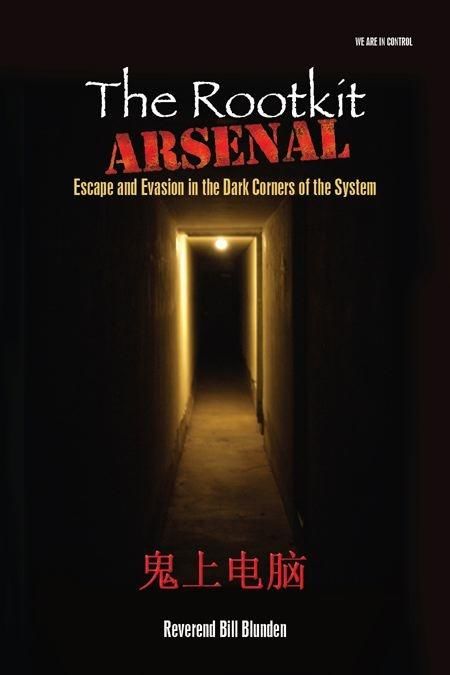
Anti-Forensics
The Rootkit Connection
     Black Hat USA 2009
     Las Vegas, Nevada

                  Bill Blunden
                   Principal Investigator
                   Below Gotham Labs

                                            2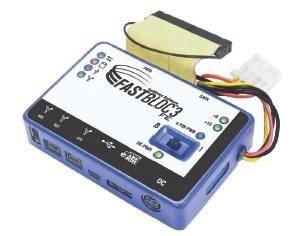
Introduction                                                       Below Gotham
                                                                   Laboratories

   Introduction                            Data Source Elimination
   The Quandary of Live Response           Memory-Resident Rootkits
   Another Option: Post-Mortem Analysis    Firmware-Based Rootkits
   Anti-Forensic Strategies

   Tactics & Countermeasures               Operational Issues
   Forensic Duplication                    Footprint and Fault-Tolerance
   Recovering Files                        Launching a Rootkit
   Recovering Deleted Files                Conclusions
   Capturing a Metadata Snapshot
   Identifying Known Files
   File Signature Analysis
   Static Analysis of an .EXE
   Runtime Analysis of an .EXE

                © 2009 Below Gotham Labs   www.belowgotham.com             Slide 3
The Quandary of Live Response                                                             Below Gotham
                                                                                          Laboratories

 Fundamental Issue → A rootkit can interfere with runtime data collection

  The Athens Affair
          Rootkit monitored digitized voice traffic on Ericsson AXE switches
          Patched the commands that listed active code blocks
          Integrity checking code was subverted (patch suspected)
                    http://www.spectrum.ieee.org/telecom/security/the-athens-affair

     The DDefy Rootkit
              Vendors downplay the threat to live disk imaging as unlikely
              DDefy Injects a filter driver to feed bad data to forensic tools
                         http://www.ruxcon.org.au/files/2006/anti_forensic_rootkits.ppt

         Defeating Hardware-Based RAM Capture on AMD64
                   Vendors attempt to sidestep OS entirely to avoid interference
                   Rutkowska defeated this by manipulating Northbridge map table
                            http://invisiblethings.org/papers/cheating-hardware-memory-acquisition-updated.ppt

                © 2009 Below Gotham Labs                 www.belowgotham.com                     Slide 4
Another Option: Below Gotham
Post-Mortem Analysis Laboratories
Forensic Duplication
Recover Files
Recover Other FS Objects
Take Metadata Snapshot
Remove Known Files
File Signature Analysis
Static .EXE Analysis
Runtime .EXE Analysis
© 2009 Below Gotham Labs www.belowgotham.com Slide 5An Aside: Assume the Worst-Case Below Gotham
Laboratories
Assumption
For the sake of keeping things interesting:
Let’s assume we’re facing off against a highly skilled, well-armed, adversary
The “they’re all idiots” mentality is dangerous (don’t underestimate your opponent!)
Richard Bejtlich
Director of Incident Response, GE
Former MI officer (AFCERT, AFIWC, AIA)
http://taosecurity.blogspot.com/
In High-Security Environments
Compromise may be assumed a priori
Security professionals may employ forensic analysis preemptively
© 2009 Below Gotham Labs www.belowgotham.com Slide 6Anti-Forensic Strategies Below Gotham
Laboratories
Primary Goal: Outlast the investigator (exhaust their budget, e.g. THX 1138)
Strategy Tactical Implementations
Data Source Elimination Memory-Resident Code, Autonomy
Data Destruction Data and Metadata Shredding, Encryption
Data Concealment In-Band, Out-of-Band, & Application Level
Data Transformation Encryption, Compression, Obfuscation
Data Fabrication Leave False Audit Trails, Introduce Known Files
Institute Defense in Depth
Implement strategies concurrently to augment their effectiveness
Use Custom Implementations
Want to frustrate attempts to rely on automation to save time
© 2009 Below Gotham Labs www.belowgotham.com Slide 7Tactics and Countermeasures Below Gotham
Laboratories
Introduction Data Source Elimination
The Quandary of Live Response Memory-Resident Rootkits
Another Option: Post-Mortem Analysis Firmware-Based Rootkits
Anti-Forensic Strategies
Tactics & Countermeasures Operational Issues
Forensic Duplication Footprint and Fault-Tolerance
Recovering Files Launching a Rootkit
Recovering Deleted Files Conclusions
Capturing a Metadata Snapshot
Identifying Known Files
File Signature Analysis
Static Analysis of an .EXE
Runtime Analysis of an .EXE
© 2009 Below Gotham Labs www.belowgotham.com Slide 8Forensic Duplication Below Gotham
Laboratories
Reserved Disk Regions
One way to undermine forensic duplication is to avoid being captured on the image
Reserved regions like the HPA and DCOs were tenable hideouts (at one point in time)
Bad News
HPA/DCO-sensitive tools are now commonplace
Example: FastBloc 3 Field Edition
Write blocker that can detect and access HPAs and DCOs
http://forensics.marshall.edu/MISDE/Pubs-Hard/FastblocFE.pdf
© 2009 Below Gotham Labs www.belowgotham.com Slide 9Recovering Files Below Gotham
Laboratories
Tactics that Hamper File Recovery
Encrypted Volumes
Nothing to carve, looks like random bytes
Plausible Deniability → Nested encrypted volumes
Conspicuous, use as part of an exit strategy
File System Attacks
Won’t necessarily obstruct file carvers
Can lead to erratic behavior (do NOT want this)
Conspicuous, use as part of an exit strategy
Concealment
Definitely has potential (at least in the short-term)
In‐Band Concealment
Out‐of‐Band Concealment
Application Layer Concealment
© 2009 Below Gotham Labs www.belowgotham.com Slide 10In-Band Concealment Below Gotham
Laboratories
In-Band Use regions described by the FS specification
Examples
Reserved space in file system metadata structures
Alternate Data Streams
Clusters allocated to $BadClus
Implementations
Data Mule FS
Developed by the grugq, targets the ext2fs file system
Stores data in inode reserved space
http://www.blackhat.com/presentations/bh-europe-04/bh-eu-04-grugq.pdf
Issues
Surviving file system integrity checks
Allocating a sufficient amount of storage (managing many small chunks)
© 2009 Below Gotham Labs www.belowgotham.com Slide 11An Aside: In-Band on Windows Below Gotham
Laboratories
The NTFS Master File Table (MFT)
Central repository for all NTFS file system meta-data
Is a relational database consisting of a series of records
Each file/directory corresponds to one or more 1 KB records in the MFT
Hiding Data in The MFT: FragFS
Rootkit presented at Black Hat Federal 2006 by Thompson and Monroe
Identified available reserved space and slack space in MFT records
NTFS is a Licensed Specification
Microsoft provides an incomplete Technical Reference
http://technet.microsoft.com/en-us/library/cc758691.aspx
For (free) low-level details, we must rely on the Linux-NTFS project
http://sourceforge.net/projects/linux-ntfs/
Brian Carrier also wrote a book that relates many details
http://www.digital-evidence.org/fsfa/index.html
© 2009 Below Gotham Labs www.belowgotham.com Slide 12Out-of-Band Concealment Below Gotham
Laboratories
Out-of-Band Use regions NOT described by the FS specification
Examples
The HPA, DCOs
Slack Space (file-based, partition-based, etc.)
Implementation
Metasploit’s slacker.exe
http://www.metasploit.com/research/projects/antiforensics/
Issues
Finding storage space that’s unlikely to be overwritten or re-allocated
Beware of slack-space wiping tools (PGP Desktop Professional 9.0.4+)
http://www.metasploit.com/research/vulnerabilities/pgp_slackspace/
© 2009 Below Gotham Labs www.belowgotham.com Slide 13An Aside: Slacker.exe Below Gotham
Laboratories
//Step [1] ‐ set the FP to the logical EOF Logical EOF & FP Physical EOF
SetFilePointer(fileHandle, 0, NULL, FILE_END);
sector sector sector sector sector sector sector sector
//Step [2] ‐ write data between the logical EOF and physical EOF
WriteFile(fileHandle, buffer, SZ_BUFFER, &nBytesWritten, NULL); FP
FlushFileBuffers(fileHandle);
sector sector sector sector sector sector sector sector
//Step [3] ‐ move FP back to the old logical EOF FP
SetFilePointer(fileHandle, ‐SZ_BUFFER, NULL, FILE_CURRENT);
sector sector sector sector sector sector sector sector
//Step [4] ‐ truncate the file nondestructively (on XP)
SetEndOfFile(fileHandle);
© 2009 Below Gotham Labs www.belowgotham.com Slide 14An Aside: Microsoft Responds Below Gotham
Laboratories
Microsoft Addresses this Issue in Vista
Calls to SetEndOfFile() zero out file slack space before returning
One Solution
Design a rootkit that manages file slack space from Kernel-Space
Place metadata in a known location to avoid using an external tracking file
Be Warned: don’t leave this metadata in plaintext format!
KMD manages file slack space
User-Mode code sees a virtual block device
© 2009 Below Gotham Labs www.belowgotham.com Slide 15Application Layer Concealment Below Gotham
Laboratories
Application Layer Use regions defined by a particular file format
Examples
Steganography
http://www.blackhat.com/presentations/bh-usa-04/bh-us-04-raggo/bh-us-04-raggo-up.pdf
Rogue Database Entries
Injecting code to create a Trojan Executable
Dawid Golunski, “Rogue Binaries - How to Own the Software,” hakin9, 1/2008
Issues
Not very effective with static files, a binary diff will expose alteration
Must identify files that are normally subject to constant updates
Modifying database files through official channels leaves an audit trail
If possible, see if you can navigate the database file manually
http://helios.miel-labs.com/downloads/registry.pdf
© 2009 Below Gotham Labs www.belowgotham.com Slide 16Recovering Deleted Files Below Gotham
Laboratories
Tactics that Impede Recovery of Deleted Data
File Wiping
Software-based wiping tools often rely on overwriting data in place
Not always effective on journaling and RAID-based file systems
Metadata Shredding
Deleting data isn’t enough, must also clean up the file system
Example: The Defiler’s Toolkit (TDT) built by the grugq
http://www.phrack.org/issues.html?issue=59&id=6
1st
Encryption Prize
Encrypt data before it’s persisted to disk storage
Destroy the key and the data becomes random junk
How do we protect the key
From being intercepted?
© 2009 Below Gotham Labs www.belowgotham.com Slide 17An Aside: Key Management Below Gotham
Laboratories
Hints on Protecting Encryption Keys
Don’t Store Keys on Disk
If you do, encrypt it with another encryption key
Minimize Runtime Key Exposure
You should assume that debuggers will be brought into play
Lock the Memory Containing the Key
Need to prevent recovery of the key from the page file/partition
On Unix: mlock() (see sys/mman.h)
On Windows: VirtualLock() (see Winbase.h)
Note: you’ll need to obfuscate these calls because they’re beacons
© 2009 Below Gotham Labs www.belowgotham.com Slide 18Capturing a Metadata Snapshot Below Gotham
Laboratories
Tactics that Undermine the Integrity of Metadata
Binary Modification
This will place a known good file into the “unknown” category
Too conspicuous for the scenario of preemptive forensics
As part of an exit strategy, serves as a diversionary measure
Timestamp Modification
Can be applied to non-system files to fabricate a false trail
Note: On NTFS, more than one attribute has timestamp data!
$STANDARD_INFORMATION and $FILE_NAME
User User
Logon Logoff
Program
Installed
© 2009 Below Gotham Labs www.belowgotham.com Slide 19An Aside: TimeStomp.exe Below Gotham
Laboratories
The FILE_BASIC_INFORMATION argument stores four LARGE_INTEGER values
These values represent the number of 100-nanosecond intervals since 1601
When these values are small, the Windows API doesn’t translate them correctly
if(modTimeStamp)
{
fileBasicInfo.CreationTime.LowPart = 1;
fileBasicInfo.CreationTime.HighPart = 0;
...
}
ntstatus = ZwSetInformationFile
(
handle, //IN HANDLE FileHandle
&ioStatusBlock, //OUT PIO_STATUS_BLOCK IoStatusBlock
&fileBasicInfo, //IN PVOID FileInformation
sizeof(fileBasicInfo), //IN ULONG Length
FileBasicInformation //IN FILE_INFORMATION_CLASS
);
© 2009 Below Gotham Labs www.belowgotham.com Slide 20Identifying Known Files Below Gotham
Laboratories
Investigator Performs a Cross-Time Diff
Eliminate known good and known bad files, identify unknown files
Files
Known Good Known
Bad
How Can We Sabotage this Stage?
Preimage Attack
Files altered in this manner can be discovered via a binary diff
Inject Known Good and Known Bad Files
Consumes bandwidth, but is definitely conspicuous
(e.g. time needed to get reference check sums)
Has potential as part of an exit strategy
(e.g. Decrypt a known bad file, let it act as a decoy)
© 2009 Below Gotham Labs www.belowgotham.com Slide 21File Signature Analysis Below Gotham
Laboratories
Tactics that Subvert File Signature Analysis
Transmogrification
Alter the file header so that it doesn’t match the predefined signature
Keep in mind that an investigator can always crank up a hex editor
http://www.metasploit.com/data/antiforensics/BlueHat-Metasploit_AntiForensics.ppt
Steganography and Encryption
Can encrypt an executable → no signature whatsoever
Encode a configuration text file and wrap it in an executable
[Hidden Processes]
hxdef* aHhkZWYqDQptc3RmdHAuZX
mstftp.exe hlDQprZXlsb2dnZXIuZXhl
keylogger.exe
© 2009 Below Gotham Labs www.belowgotham.com Slide 22Static Analysis of an .EXE Below Gotham
Laboratories
Static Analysis Tools Example
File Header Readers dumpbin.exe
Disassemblers IDA Pro
Hex Editors HxD
Countermeasures
Store the .EXE in a format that cannot be readily analyzed
Countermeasure Tools Description
Cryptor (e.g. EXECryptor) Encrypts the original application
Packer (e.g. UPX) Compresses the original application
Bytecode Compiler Recasts the machine code as p-code
© 2009 Below Gotham Labs www.belowgotham.com Slide 23Basic Operation Below Gotham
Laboratories
Original Encrypted/Packed/P-code Section(s) Stub Code Unveils its Payload,
Executable Prefixed by Stub Code Transfers Program Control
.text Section
Original
.data Section Tool Executable Runtime Original
(Encapsulated) Code & Data
.idata Section (Ready to Run)
.reloc Section
Stub Code
Original Entry Point New Entry Point Stub Code
© 2009 Below Gotham Labs www.belowgotham.com Slide 24Recurring Theme: Userland Exec Below Gotham
Laboratories
Origins
Standard family of exec functions on Unix systems
int execv(const char *path, char *const argv[]);
int execve(const char *path, char *const argv[], char *const envp[]);
int execvp(const char *file, char *const argv[]);
Replace the current process image with a new process image
Core functionality is provided by facilities in the kernel
Stub Code ≈ Userland Exec
Loads an arbitrary byte stream (from disk)
Makes adjustments so that the byte stream can execute
Doesn’t use the native OS loader (e.g. it’s a User-Mode loader)
This sort of functionality will prove useful later on…
© 2009 Below Gotham Labs www.belowgotham.com Slide 25Stub Code Issues – Part I Below Gotham
Laboratories
If Key Material is Stored in the Stub
Break the payload into segments, use a different key for each one
Use multiple keys that are generated at runtime from a seed value
Storing Key Material Outside of the Stub
Hide key material in a reserved region (MFT, HPA, BIOS, etc.)
Use an environmental key, that’s specific to the target machine
http://papers.weburb.dk/archive/00000136/01/eicar05final.pdf
Use Custom Tools
Public tools leave a signature (http://www.peid.info/ )
This enables automated tools that unpack/decrypt the payload
Implement a combination of packing, encrypting, and bytecode
For example: bytecode is encrypted and then compressed
Use multiple packing/encrypting algorithms to buy time
But, be aware of the size penalty you will pay
© 2009 Below Gotham Labs www.belowgotham.com Slide 26Stub Code Issues – Part II Below Gotham
Laboratories
Camouflage
Stub code has only a few sections, not many imports, and very little string data
Section Table
01 UPX0 VirtSize: 00052000 VirtAddr: 00001000
02 UPX1 VirtSize: 0001B000 VirtAddr: 00053000 Look familiar?
03 .rsrc VirtSize: 00008000 VirtAddr: 0006E000
This scarcity of data is a dead giveaway to the investigator
Can Fabricate extra code and data to make the stub appear legitimate
Example: VERSIONINFO resource-definition statement
http://msdn.microsoft.com/en-us/library/aa381058.aspx
Runtime Exposure
Foiling static analysis is a temporary countermeasure at best
It should be used as part of a defense in depth approach
Ultimately, the stub will unveil its payload at runtime
This leads us to the next topic…
© 2009 Below Gotham Labs www.belowgotham.com Slide 27Runtime Analysis of an .EXE Below Gotham
Laboratories
Runtime Analysis Tools Example
Debuggers (User & Kernel-Mode) OllyDbg, WinDBG, KD
Resource Monitors SysInternals Suite
API Tracers Windows Logger.exe
Network Packet Analyzers Wireshark
System Logs Windows Event Logs
Countermeasures
The very same tools that vendors used to defend against crackers (role reversal!)
Countermeasure Description
Tamperproofing Detect and respond to patching (e.g. a debugger)
Obfuscation Make code/data difficult to interpret and reverse
Autonomy Rely as little as possible on the official channels
© 2009 Below Gotham Labs www.belowgotham.com Slide 28Tamperproofing Below Gotham
Laboratories
Step 1 ─ Detecting Modifications
Want to know when a debugger has set a breakpoint or disabled a routine with NOPs
Official API Calls (are relatively easy to subvert)
BOOL WINAPI IsDebuggerPresent(); //user‐mode
BOOLEAN KdRefreshDebuggerNotPresent(); //kernel‐mode
Checksums are a more robust approach
Avoid a centralized checksum API, implement redundant integrity checks
Create integrity checking routines to monitor your integrity checks
Plant decoy integrity checks to mislead the investigator
Periodically reinstate code to prevent it from being overwritten with NOPs
Step 2 ─ Responding to Modifications
Disassociate integrity checks from response (delayed trigger)
Embed subtle bugs and have the integrity checks correct them
Do NOT crash and burn, send them on a goose chase (buy time)
© 2009 Below Gotham Labs www.belowgotham.com Slide 29Obfuscation Below Gotham
Laboratories
Code Morphing is preferable, has less impact on the source base
http://www.strongbit.com/execryptor_inside.asp
Obfuscation Strategy Tactics
Reduce Code Abstraction In-line expansion, central routine dispatching
Rearrange Code Code interleaving
Break Conventions Using exceptions to transfer program control
Encrypt Code Use code checksums as a decryption key
Note - encrypted routines are inherently not thread-safe
Microsoft uses obfuscation to implement Kernel Patch Protection
http://uninformed.org/index.cgi?v=3&a=3&p=4
Skype also relies heavily on obfuscation to hamper reversing
http://www.blackhat.com/presentations/bh-europe-06/bh-eu-06-biondi/bh-eu-06-biondi-up.pdf
© 2009 Below Gotham Labs www.belowgotham.com Slide 30Autonomy Below Gotham
Laboratories
Official Channels → Windows API → Audit Trail (Event Logs)
Countermeasure
User-Mode
Minimize the interface between rootkit and OS
Less dependence means more stealth Rootkit
Kernel-Mode
Rootkit Implementation Details
Athens Affair Maintained its own database instance
Deepdoor Modified a couple of DWORDS in the NDIS data section
Deeper Door Established a direct channel to local NIC hardware
Blue Pill Hypervisor-based, lies outside of child partition
© 2009 Below Gotham Labs www.belowgotham.com Slide 31Data Source Elimination Below Gotham
Laboratories
Introduction Data Source Elimination
The Quandary of Live Response Memory-Resident Rootkits
Another Option: Post-Mortem Analysis Firmware-Based Rootkits
Anti-Forensic Strategies
Tactics & Countermeasures Operational Issues
Forensic Duplication Footprint and Fault-Tolerance
Recovering Files Launching a Rootkit
Recovering Deleted Files Conclusions
Capturing a Metadata Snapshot
Identifying Known Files
File Signature Analysis
Static Analysis of an .EXE
Runtime Analysis of an .EXE
© 2009 Below Gotham Labs www.belowgotham.com Slide 32Memory-Resident Rootkits Below Gotham
Laboratories
The best way to defeat disk analysis → Never write to the disk to begin with
This strategy has so much potential that it deserves special attention
Memory-Resident Variant
Several ways to implement Syscall Proxying
Memory-Resident Development Tools
Data Contraception
In-Memory Library Injection
Persistence by Re-Infection
© 2009 Below Gotham Labs www.belowgotham.com Slide 33An Aside: Userland Exec Reloaded Below Gotham
Laboratories
From Earlier: Cryptors and Packers
The stub loaded a byte stream that originally resided on disk
A Full-Blown Userland Exec
Is essentially a stub that can load code from a memory buffer
The buffer usually receives its byte stream from a network connection
Sidesteps restrictions imposed by the native OS loader (e.g. disk residence)
Implementations Description
Nebbett’s Shuttle Uses Win32 API to overwrite a suspended process
ul_exec Library that loads ELF binaries into an address space
SHELF Revised version of ul_exec for use in exploits
© 2009 Below Gotham Labs www.belowgotham.com Slide 34Syscall Proxying Below Gotham
Laboratories
Processes client request
Invokes OS system call
Client Application Marshals output parameters
Stub_WriteFile() Returns response to client
Syscall Stub Syscall Server
syscall_Request() WriteFile()
Local System Marshals request parameters Remote System
Initiates syscall request Operating System
Processes server response NtWriteFile()
Example
Core Security Technologies, CORE IMPACT Pen Testing Tool
http://www.coresecurity.com/content/syscall-proxying-simulating-remote-execution
Issues
Network Chatter
The average application makes lots, and lots, of system calls
Low‐Level Nature of the Technique
Portability becomes an issue, marshalling is a royal pain
© 2009 Below Gotham Labs www.belowgotham.com Slide 35Memory-Resident Tools Below Gotham
Laboratories
Source Code Exploited Process
Compiler
Client Application
Local System Machine Code
Results Remote System
Example
Immunity, Inc., CANVAS Penetration Testing Tool
Uses MOSDEF, a memory-resident C compiler that generates position independent code
http://www.immunitysec.com/products-canvas.shtml
http://www.immunitysec.com/downloads/MOSDEF2dot0.tar.gz
Variations
Compiler could output bytecode to be run by an injected virtual machine
Replace compiler by an interpreter, send it bytecode from client side
© 2009 Below Gotham Labs www.belowgotham.com Slide 36Data Contraception Below Gotham
Laboratories
Process Address Space
Client Application Server
Local System (e.g. gdb, jre, gawk) Remote System
Example
Remote Exec: Built by the grugq, uses the GNU debugger and his ul_exec library
http://www.phrack.org/issues.html?issue=62&id=8#article
http://archive.cert.uni-stuttgart.de/bugtraq/2004/01/msg00002.html
Requirements
Use a Common Utility for the Server
Minimizes the amount of forensic evidence
Necessitates a “Smart” Client
Compensates for general nature of the server
© 2009 Below Gotham Labs www.belowgotham.com Slide 37In-Memory Library Injection Below Gotham
Laboratories
Exploited Process
DLL
DLL
DLL
Client Application Server
Local System Remote System
Example
Metasploit’s Meta-Interpreter (Meterpreter)
Extensible remote shell that’s delivered in an exploit payload
Extensions are implemented as DLLs rather than as raw machine code
Sam Juicer: a Meterpreter extension that dumps password hashes without disk writes
Implementation
Routines used by the dynamic loader are hooked
Enables a DLL’s byte stream to be loaded from memory
http://www.nologin.org/Downloads/Papers/remote-library-injection.pdf
© 2009 Below Gotham Labs www.belowgotham.com Slide 38Persist via Re-Infection Below Gotham
Laboratories
Monitor re-infects
[4] targeted host
Monitor listens
[3] for heartbeat
0‐day Exploit
Targeted host fails
[2] to emit heartbeat
Targeted host
[1] restarted
Notes
Heartbeat could be a signal transmitted over a passive covert channel (PCC)
Don’t generate any traffic of our own, merely alter existing packet streams
http://invisiblethings.org/papers/passive‐covert‐channels‐linux.pdf
Based on ideas presented by Joanna Rutkowska
http://www.blackhat.com/presentations/bh‐federal‐06/BH‐Fed‐06‐Rutkowska/BH‐Fed‐06‐Rutkowska‐up.pdf
© 2009 Below Gotham Labs www.belowgotham.com Slide 39Firmware-Based Rootkits Below Gotham
Laboratories
Can also avoid the disk by hiding in firmware
Public Research
John Heasman, http://www.blackhat.com/presentations/bh-federal-06/BH-Fed-06-Heasman.pdf
Anibal Sacco and Alfredo Ortega, http://cansecwest.com/csw09/csw09-sacco-ortega.pdf
Darmawan Salihun, BIOS Disassembly Ninjutsu Uncovered, A-List Publishing, 2006
Commercial
Absolute Software sells Computrace, which includes a BIOS-based persistence agent
http://developernet.absolute.com/products-core-technology.asp
Several OEMs have embedded this agent at the firmware level
http://www.absolute.com/partners/bios-compatibility
Scenario
Someone figures out how to commandeer Computrace…
© 2009 Below Gotham Labs www.belowgotham.com Slide 40Operational Issues Below Gotham
Laboratories
Introduction Data Source Elimination
The Quandary of Live Response Memory-Resident Rootkits
Another Option: Post-Mortem Analysis Firmware-Based Rootkits
Anti-Forensic Strategies
Tactics & Countermeasures Operational Issues
Forensic Duplication Footprint and Fault-Tolerance
Recovering Files Launching a Rootkit
Recovering Deleted Files Conclusions
Capturing a Metadata Snapshot
Identifying Known Files
File Signature Analysis
Static Analysis of an .EXE
Runtime Analysis of an .EXE
© 2009 Below Gotham Labs www.belowgotham.com Slide 41Footprint and Fault Tolerance Below Gotham
Laboratories
The Tradeoff
Minimize Footprint → Sacrifice Restart Survival
May need to balance the two based on:
The type of environment being targeted
The value of the data to be acquired
The skill level of your opponent(s)
Caveats
If the value of the data warrants the necessary R&D, you can have both
Periodic shutdowns can occur even in high-end environments
The Chicago Stock Exchange reboots its machines every evening
http://staging.glg.com/tourwindowsntserver/CHX/pdf/tech_road.pdf
© 2009 Below Gotham Labs www.belowgotham.com Slide 42Launching a Rootkit Below Gotham
Laboratories
Assuming a knowledgeable, well-armed, adversary…
Preferred Vector: Install a Memory-Resident Rootkit via an Exploit
Everything happens inside of an existing process (no need to launch a new one)
Can avoid disk modification entirely (though traces may reside in the page file)
Less Attractive Vector: Install an Agent in the Firmware
Firmware launches a bare-bones server that loads the rootkit proper over a socket
Leaves a minimal amount of code on the system, in a spot that’s often ignored
Least Attractive Vector: Persist Somewhere on Disk
Initiating code will, by necessity, be naked and accessible
You can expect that your code will, with enough effort, be discovered
Leverage the five anti-forensic strategies with defense in depth to buy time
© 2009 Below Gotham Labs www.belowgotham.com Slide 43Conclusions Below Gotham
Laboratories
Bottom Line
State of the art anti-forensics can defeat disk analysis
(Perhaps this explains why this is a relatively inactive sub-field?)
Observation
A rootkit may never use disk storage…
But it still has to execute in memory
And it will almost always talk to the outside
Corollary
The arms race continues in the domains of live response and NSM
© 2009 Below Gotham Labs www.belowgotham.com Slide 44For More Information… Below Gotham
Laboratories
The Rootkit Arsenal
Jones & Bartlett Publishers (May 4, 2009)
ISBN‐10: 1598220616
© 2009 Below Gotham Labs www.belowgotham.com Slide 45Thanks and Greetings Below Gotham
Laboratories
To Security Researchers
Who Shared with the Rest of Us
David Aitel, John Aycock, Richard Bejtlich, BigBoote, Darren Bilby,
Maximiliano Cáceres, Brian Carrier, Jamie Butler, James Foster,
Dawid Golunski, Glyn Gowing, the grugq, Nick Harbour, John
Heasman, Greg Hoglund, Alex Keller, George Ledin, Elias Levy,
The Linux-NTFS project, Vinnie Liu, Mark Ludwig, Mathew
Monroe, Mental Driller, NV Labs, H D Moore, Metasploit, Jeff
Moss, Gary Nebbett, Matt Pietrek, Pluf, Ripe, Marc Rogers, Mark
Russinovich, Joanna Rutkowska, Darmawan Salihun, Bruce
Schneier, Sherri Sparks, skape, Skywing, Sven Schreiber,
Alexander Tereshkin, Irby Thompson, Jarkko Turkulainen,
Dmitry Vostokov
© 2009 Below Gotham Labs www.belowgotham.com Slide 46Questions? Below Gotham
Laboratories
Thank You for Your Time
© 2009 Below Gotham Labs www.belowgotham.com Slide 47You can also read


