Function of the Drosophila TGF-a homolog Spitz is controlled by Star and interacts directly with Star
←
→
Page content transcription
If your browser does not render page correctly, please read the page content below
Mechanisms of Development 107 (2001) 13±23
                                                                                                                           www.elsevier.com/locate/modo

      Function of the Drosophila TGF-a homolog Spitz is controlled by
                     Star and interacts directly with Star
     Frank Hsiung a, Eric R. Grif®s a, Amanda Pickup b, Maureen A. Powers a, Kevin Moses a,*
                   a
                   Department of Cell Biology, Emory University School of Medicine, 1648 Pierce Drive NE, Atlanta, GA 30322-3030, USA
           b
               Molecular, Cell, and Developmental Biology, University of California at Los Angeles, 2203 Life Sciences, 621 Young Drive South,
                                                               Los Angeles, CA 90095, USA
                                    Received 6 April 2001; received in revised form 15 May 2001; accepted 17 May 2001

Abstract
   Drosophila Spitz is a homolog of transforming growth factor a (TGF-a) and is an activating ligand for the EGF receptor (Egfr). It has been
shown that Star is required for Spitz activity. Here we show that Star is quantitatively limiting for Spitz production during eye development. We
also show that Star and Spitz proteins colocalize in Spitz sending cells and that this association is not coincident with the site of translation ±
consistent with a function for Star in Spitz processing or transmission. Finally, we have de®ned minimal sequences within both Spitz and Star
that mediate a direct interaction and show that this binding can occur in vivo. q 2001 Elsevier Science Ireland Ltd. All rights reserved.
Keywords: Drosophila; Star; Spitz; TGF-a; Growth factor; Secretion; Development; Signal transduction; EGF; EGF receptor; Retina

1. Introduction                                                                  1995; Golembo et al., 1996; O'Keefe et al., 1997; Stemer-
                                                                                 dink and Jacobs, 1997; Szuts et al., 1997; Wasserman and
   The Drosophila homolog of the EGF receptor (Egfr)                             Freeman, 1998). In the developing eye, Spitz is required for
mediates signal transduction during many aspects of devel-                       the assembly of the ommatidia after the speci®cation of the
opment, including regulation of the cell-cycle and pattern-                      founding R8 photoreceptor cell (Freeman, 1994, 1996; Tio
ing during oogenesis, zygotic and imaginal development                           et al., 1994; Tio and Moses, 1997). At least some of these
(Schweitzer and Shilo, 1997; Freeman, 1998; Nilson and                           functions in the developing eye appear to be conserved in
SchuÈpbach, 1999; Bier, 2000; Carpenter, 2000; Schles-                           vertebrates (Reh and Cagan, 1994; Bermingham-McDo-
singer, 2000). In the developing eye, Egfr signaling                             nogh et al., 1996; Neumann and NuÈsslein-Volhard, 2000).
mediates the speci®cation of the eye itself, cell growth                            The Drosophila Star protein and another family of
and survival, the recruitment of cells to the developing                         proteins called Rhomboids are required in the Spitz sending
ommatidia, and the induction of development in the optic                         cell for the proper function of Spitz in all stages of devel-
lobes of the brain (Xu and Rubin, 1993; Sawamoto and                             opment, including the developing eye (Bier et al., 1990;
Okano, 1996; Dickson, 1998; Dominguez et al., 1998;                              Heberlein and Rubin, 1991; Freeman et al., 1992; Heberlein
Huang et al., 1998; Kumar et al., 1998; Spencer et al.,                          et al., 1993; Kolodkin et al., 1994; Schweitzer et al., 1995;
1998; Chen and Chien, 1999; Kumar and Moses, 2000,                               Sturtevant and Bier, 1995; Queenan et al., 1997; Schweitzer
2001; Yang and Baker, 2001).                                                     and Shilo, 1997; Stemerdink and Jacobs, 1997; Freeman,
   The ®rst of several positively acting Egfr ligands known                      1998; Guichard et al., 1999; Wasserman et al., 2000). Star
in Drosophila was Spitz, which is a single EGF domain                            is an integral membrane protein that is expressed in cells
growth factor homolog in the transforming growth factor                          that secrete Spitz and is localized to the early endoplasmic
a (TGF-a)/glial growth factor (GGF) family (Aaronson,                            reticulum (ER) and nuclear envelope (Kolodkin et al., 1994;
1991; Rutledge et al., 1992; Schweitzer et al., 1995). spitz                     Pickup and Banerjee, 1999). However, while Rhomboid is
acts in patterning the dorsal chorionic appendages, the                          also an integral membrane protein, it has been localized to
embryonic cuticle, central nervous system and the imaginal                       apical patches only (Sturtevant et al., 1996). This difference
discs (Mayer and NuÈsslein-Volhard, 1988; Schweitzer et al.,                     in subcellular localization suggests that Star may act at an
                                                                                 earlier point than Rhomboid in the pathway of Spitz matura-
 * Corresponding author. Tel.: 11-404-727-8799; fax: 11-404-727-4717.            tion. Schweitzer and co-workers showed that Star and
   E-mail address: kmoses@cellbio.emory.edu (K. Moses).

0925-4773/01/$ - see front matter q 2001 Elsevier Science Ireland Ltd. All rights reserved.
PII: S 0925-477 3(01)00432-4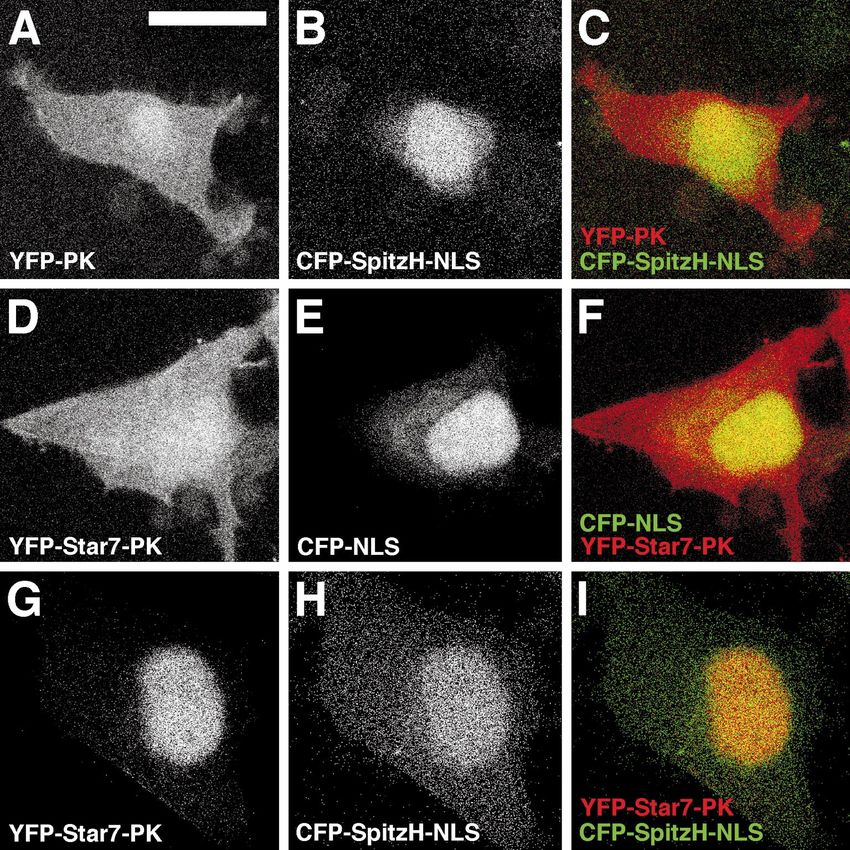
14                                    F. Hsiung et al. / Mechanisms of Development 107 (2001) 13±23

Rhomboid function is required for the signaling activity of            1993). We thus examined the subcellular expression
ectopically expressed full-length Spitz (`membrane' or                 patterns of both Spitz and Star proteins as well as spitz
`mSpitz') but not for the activity of a truncated form of              RNA in the developing eye by immunolocalization and/or
Spitz that does not require cleavage to release the factor             RNA in situ hybridization and confocal microscopy (see
domain (`secreted' or `sSpitz', Schweitzer et al., 1995).              Fig. 1 and Section 4).
This suggests that Star and Rhomboid both act in the                      To detect Spitz protein, we used a mouse polyclonal anti-
production of a functional Spitz signal in the sending cell            serum that was raised against a portion of Spitz that lies N-
and, furthermore, that they may function in the maturation             terminal to the fully processed growth factor-homologous
of the Spitz factor: in protein cleavage, glycosylation, secre-        domain (Tio and Moses, 1997). Thus the Spitz antigen
tion or presentation. In a conceptually similar experiment,            detected in the experiments described below can only
the expression of Drosophila Spitz in a Xenopus animal cap             include precursor forms of the Spitz protein within the
sandwich assay has been shown to require both Star and                 cells that express it ± we are unlikely to be visualizing the
Rhomboid (Bang and Kintner, 2000). The very fact that                  mature secreted factor (`s-Spitz'). We ®nd that Spitz antigen
Star nulls are haploinsuf®cient dominant mutations with a              is found throughout the cytoplasm of the developing photo-
rough eye phenotype indicates that Star is genetically dose            receptor cells (Fig. 1A,D, as published in Tio and Moses,
sensitive and suggests that Star function may be quantita-             1997). The Spitz protein is granular rather than evenly
tively limiting on the Spitz signal during eye development             distributed and these granules are both perinuclear (Fig.
(Harris et al., 1976; Mayer and NuÈsslein-Volhard, 1988).              1D) and located in the apical microvillae (Fig. 1A). Star
Finally, the published subcellular localizations of Star               protein is somewhat more evenly distributed (Fig. 1B,E,H)
protein at the EM level and of Spitz by confocal microscopy            but is most abundant in granules that colocalize with the
suggest that Star may interact directly with Spitz at some             Spitz granules (Fig. 1C,F). This is consistent with an early
point during its translation, maturation, secretion or presen-         association of Star with nascent Spitz protein in the ER (as
tation (Tio and Moses, 1997; Pickup and Banerjee, 1999).               published by Pickup and Banerjee, 1999) and the mainte-
   In this paper, we present data that support the direct inter-       nance of this association all the way to the site of signal
action of Star with Spitz in vivo in the developing eye. We            transmission (the apical microvillae). However, we cannot
show that Spitz and Star proteins colocalize in developing             draw any ®rm conclusion that Spitz and Star are adjacent
retinal cells by confocal microscopy and that the quantita-            proteins in the ER in vivo from these data alone: while if
tive expression of Star can control the quantitative expres-           they are naturally adjacent, they are likely to be ®xed in
sion of Spitz ± in both loss and gain-of-function Star                 close proximity to each other by the action of the PLP
genotypes in the developing eye. Furthermore, as previously            (2% paraformaldehyde, 0.01 M NaIO4, 0.075 M lysine,
reported (Freeman, 1996), we con®rm that ectopic expres-               0.037 M NaPO4, pH 7.4) ®xative but the normal subcellular
sion of mSpitz has no phenotypic consequence unless                    membranes are probably disrupted by the subsequent wash-
accompanied by the overexpression of Star. We show that                ing step that includes triton. To further explore this proposed
the binding of Star to Spitz is mediated by the 48-residue             direct interaction between Spitz and Star, we have under-
domain of Spitz and by a 19-amino-acid segment of Star                 taken biochemical experiments described below.
(which we call the `growth factor binding domain' or                      Moreover, we found that spitz mRNA, while showing a
GFBD) and that these two short protein segments can direct             granular distribution, does not colocalize with the Star/Spitz
the colocalization of `cargo' proteins to the same sub-cellu-          protein granules (Fig. 1I). This suggests that Star is not
lar compartment when expressed in HeLa cells. These data               directly involved in spitz translation. The Star antigen
will be discussed in terms of models for the function of Star          appears to be more abundant than Spitz in these images.
protein in Spitz signaling in vivo.                                    However, this experiment is far from quantitative and we
                                                                       are reluctant to draw any conclusion from this observation.

2. Results                                                             2.2. Star function is the limiting factor for the quantity of
                                                                       Spitz antigen in vivo
2.1. Spitz and Star proteins are colocalized within
developing photoreceptor cells                                            While it was clear from published work that Star is
                                                                       required for the expression of Spitz, it was not obvious
   We and others have shown that Star acts genetically                 that the quantity of Star is normally limiting for Spitz
upstream of spitz, that Star is required for the function of           expression. To test this, we examined the expression of
full length (m)Spitz but not a truncated secreted form                 Spitz antigen in the developing eye in conditions of both
(s)Spitz and that Star protein can be detected in the nuclear          loss-of-function for Star and of Star ectopic expression (Fig.
envelope and early ER (Schweitzer et al., 1995; Golembo et             2). In Star mutant (loss-of-function) mosaic clones Spitz
al., 1996; Pickup and Banerjee, 1999; Bang and Kintner,                antigen is greatly reduced (Fig. 2A±C). That it is not entirely
2000). Furthermore, Star has an essential role in the devel-           absent may be due to the accumulation of some amount of
oping eye (Heberlein and Rubin, 1991; Heberlein et al.,                unprocessed Spitz precursor protein. We observe that Spitz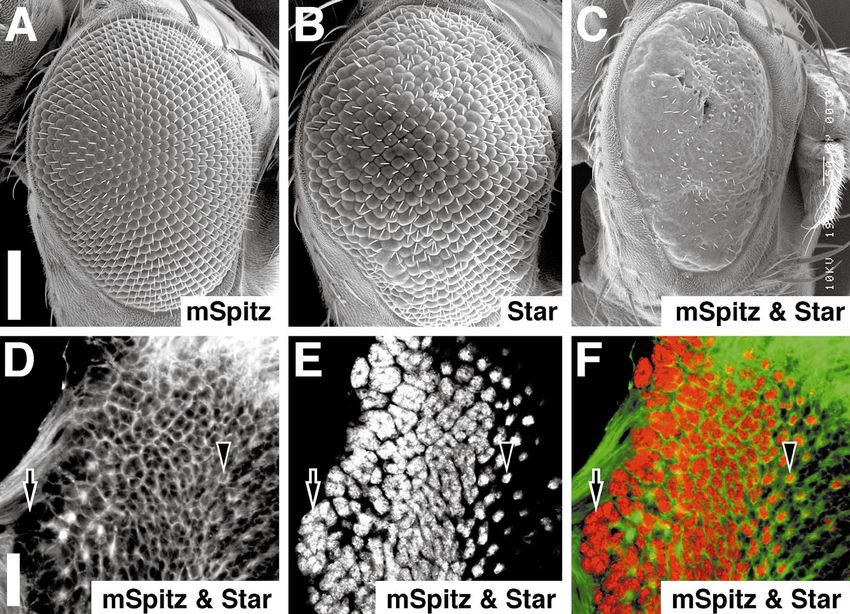
F. Hsiung et al. / Mechanisms of Development 107 (2001) 13±23                                                    15

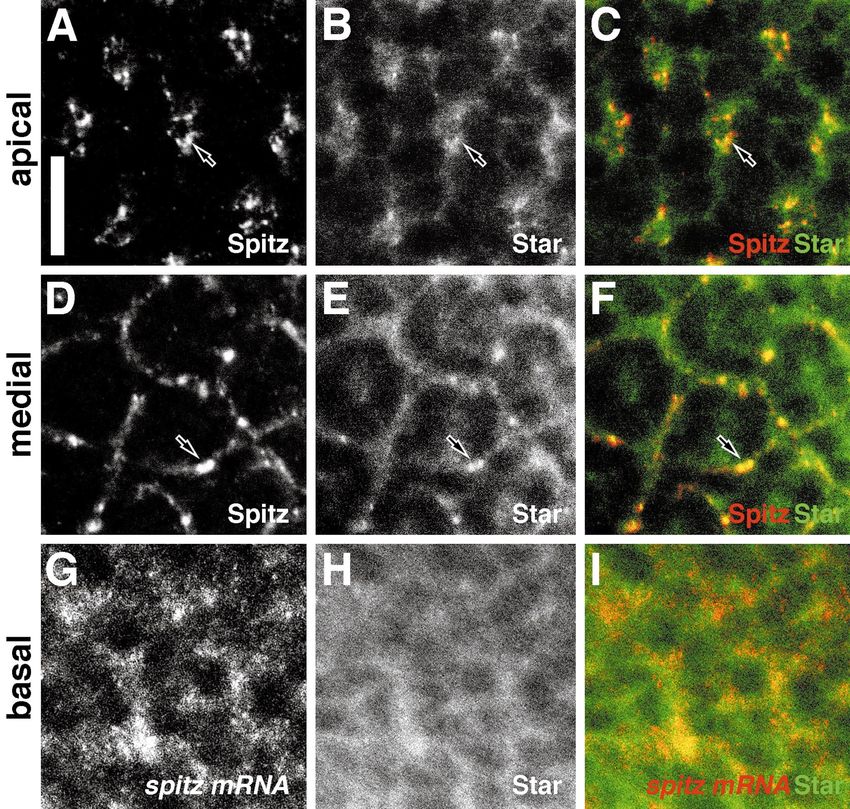
Fig. 1. Spitz and Star protein, but not spitz mRNA colocalize in the developing eye. Confocal images of third instar eye imaginal discs showing Spitz and Star
antigens and spitz mRNA as indicated (see Section 4): (A±C) show an apical optical section, (D±F) are mid-level and (G±I) are basal. In (C,F), Spitz is red and
Star is green. In (I), spitz mRNA is red and Star protein is green. Note colocalization (C,F) of most intense level of stain (examples indicated by arrows). Scale
bar in (A) is 10 mm (all panels to the same scale). Anterior right.

protein level in the Star mutant clones was not visibly                             also homozygous for a Star cDNA driven by an hsp70 gene
reduced in the furrow itself (arrow in Fig. 2A,C), but only                         promoter. Thus the third instar eye imaginal disc consists of
in the later columns of developing ommatidia. It may be that                        patches of cells that express b-galactosidase and are wild-
Star is not limiting for Spitz protein expression in the furrow                     type for Star and patches of cells that are negative for b-
itself and that the later loss is due to a reduced number of                        galactosidase and which express elevated levels of Star
differentiating photoreceptor cells in the clone.                                   ectopically. When Star protein is thus overexpressed in
   We expressed Star ectopically in the developing eye by                           mosaic clones, Spitz antigen now appears anterior to the
inducing mosaic clones with ey:FLP to drive the eye tissue                          morphogenetic furrow (Fig. 2D±F). This indicates that the
to consist entirely of recombinant cells (see Section 4).                           quantity of Star is normally limiting for the expression of
FRT-mediated recombination is operationally a one-way                               Spitz ± at least in some parts of the developing eye (i.e.
process: after mitosis, the two daughter cells are homozy-                          anterior to the morphogenetic furrow). This must depend
gous. Under these conditions, FLPase is expressed in the eye                        on the observed low levels of spitz mRNA anterior to the
anlagen continuously. Thus as development proceeds, the                             furrow (Tio et al., 1994; Tio and Moses, 1997).
pool of un-recombined cells is progressively depleted. By                              Others have shown that Star loss-of-function mutant cells
the third instar, the eyes are entirely composed of cells                           die in the developing eye (Heberlein and Rubin, 1991;
homozygous for one or other of the two chromosomes.                                 Heberlein et al., 1993). Thus the loss of Spitz antigen in
   These clones were visualized using negative marking                              our Star loss-of-function clones (see Fig. 2A±C) could be
with b-galactosidase and the cells within these clones are                          trivially due to the apoptotic death of these cells. To test
16                                            F. Hsiung et al. / Mechanisms of Development 107 (2001) 13±23

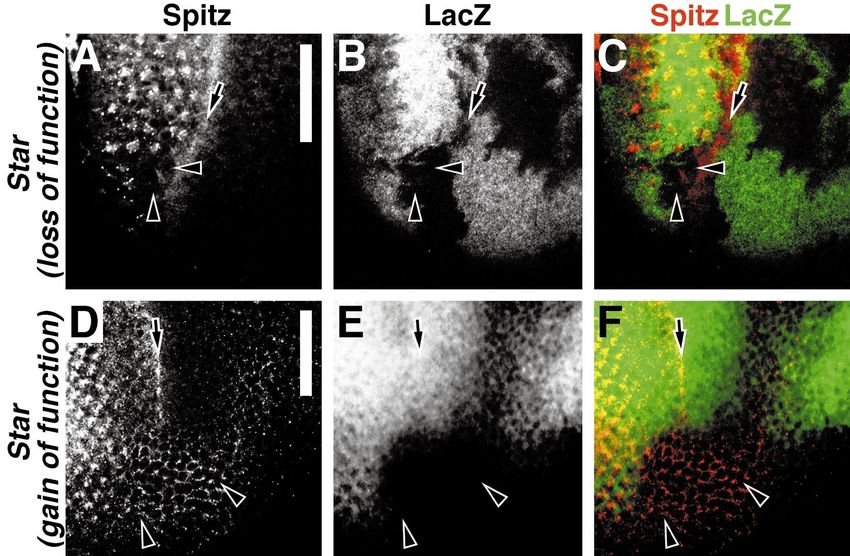
Fig. 2. Star function controls Spitz antigen. Confocal images of third instar eye imaginal discs containing clones of cells mutant for Star (see Section 4). (A±C)
Star loss-of-function, note that Spitz antigen is reduced in the clone (arrowheads). LacZ negatively marks the homozygous Star 2 cells. (D±F) Star ectopic
expression clone, note that Spitz antigen is ectopically expressed both sides of the furrow (arrowheads). Spitz and LacZ antigens as indicated. Position of the
furrow indicated with arrows. Scale bars in (A) and (B) are 50 mm (panels in the same row to the same scale). Anterior right.

this, we visualized apoptotic cells in Star loss-of-function                        sory cells. When we stained the third instar eye imaginal
clones using TUNEL (Fig. 3A). We ®nd that there is cell                             discs from these animals, we observed that most or all nuclei
death in these clones, but that it occurs far posterior to the                      in the late developing ommatidial clusters stain for Elav
furrow (about 10 ommatidial columns or 20 h after the                               (Fig. 4D±F). This is consistent with their differentiation as
passage of the furrow). Furthermore, we were able to visua-                         extra photoreceptor cells and may explain the reduced
lize the near-normal expression of several other proteins in                        number of accessory cells. Indeed, a very similar result
these clones in the region of the furrow: Atonal (Ato in Fig.                       was observed for the function of these proteins in the devel-
3B) as well as Elav and Boss (data not shown). Thus we                              oping wing (Pickup and Banerjee, 1999). The fact that
conclude that living cells are present within the Star loss-of-                     elevating levels of mSpitz has no gross effect on the devel-
function clones for about 1 day after the passage of the                            oping eye until Star protein is also elevated is consistent
furrow. Furthermore, these cells are suf®ciently vigorous                           with a normal limiting function for Star on Spitz expression.
to express at least three other proteins. Our observation
that they fail to express Spitz is thus not a simple conse-
quence of cell morbidity, but is a differential effect of loss of
Star function. This is consistent with a direct role for Star in
Spitz protein expression.
   For further evidence that Star function is normally limit-
ing for Spitz function in vivo, we drove ectopic and elevated
levels of unprocessed full-length or `mSpitz' expression in
the developing eye using an GMR:Gal4 driver (see Section
4). We ®nd that the resulting adult compound eye is indis-
tinguishable from wild-type (Fig. 4A). This suggests that the
quantity of spitz mRNA expression is not normally limiting
for spitz function in the developing eye. We similarly over-                        Fig. 3. Star loss-of-function induces late cell death. Confocal images of
expressed Star and this results in a moderate rough eye                             third instar eye imaginal discs containing clones of cells mutant for Star
phenotype (Fig. 4B). This suggests that the quantity of                             (see Section 4). TUNEL, Ato and LacZ as indicated. LacZ negatively marks
Star function may be limiting in normal development.                                the homozygous Star 2 cells. Position of the furrow indicated with arrow-
                                                                                    heads. Scale bar in (A) is 100 mm, (B) is to the same scale. Note that
When we expressed both mSpitz and Star together in the
                                                                                    TUNEL shows apoptotic cells in the Star clones ± but only about 10
same animal, we observed a strong synergy (Fig. 4C). We                             columns, or 20 h after the passage of the furrow (arrow in A). Also note
observed smooth eyes with little or no red pigment and few                          that Ato expression is nearly normal in the clones (arrow in B). Anterior
mechanosensory bristles. This suggests a de®cit of acces-                           right.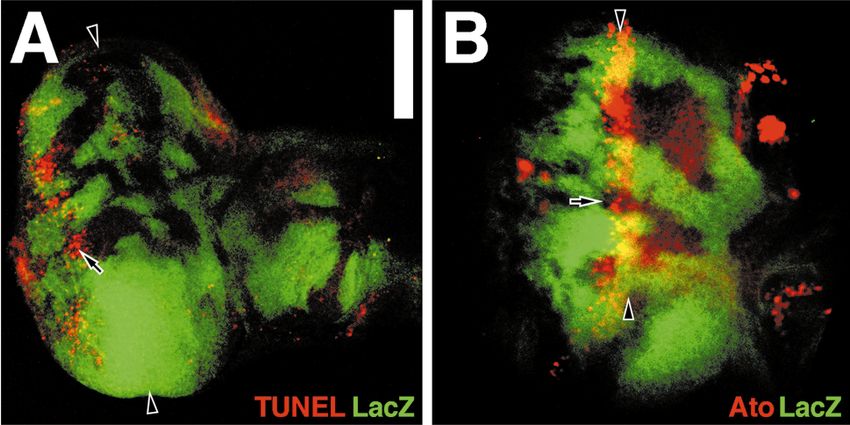
F. Hsiung et al. / Mechanisms of Development 107 (2001) 13±23                                                      17

Fig. 4. The quantity of Star is the limiting factor for Spitz function in vivo: (A±F) the protein(s) named in the lower right has been over-expressed in the
developing eye (see Section 4). (A±C) SEM of adult compound eyes, anterior right. (D±F) Confocal image of the edge of a third instar eye imaginal disc, red ±
Elav (neural nuclei), green ± actin. Overexpression of mSpitz has no effect and is indistinguishable from wild-type (A). Overexpression of Star has a moderate
effect (B). Overexpression of both Star and mSpitz together is synergistic (C). In the double overexpression (C), there is a de®cit of accessory cells resulting in a
smooth eye and an excess of photoreceptor neurons. Close to the furrow (arrowhead in D±F), there is a near normal array of single neurons. However, as
ommatidial assembly proceeds across the disc, excess numbers of neurons are recruited into each cluster (arrows in D±F). Scale bar in (A) is 100 mm (B,C to
the same scale). Scale bar in (D) is 25 mm (E,F to the same scale).

2.3. The EGF homologous `factor' domain of Spitz protein                              that is responsible for binding to Spitz. We repeated the
mediates speci®c binding to Star in vitro                                             binding experiments described above using GST±SpitzC
                                                                                      and a series of seven sub-fragments of Star, 35S labeled in
   The colocalization of Spitz and Star proteins is consistent                        vitro (called Star1 through Star7, see Fig. 6). Each Star
with direct contact between these two proteins in vivo. To                            fragment was tested for binding to GST alone and to
approach this, we tested a series of fragments of Spitz fused                         GST±SpitzC. While Star1 and Star2 both bind GST±SpitzC,
to glutathione-S-transferase (GST) for their ability to bind to                       they also bind equally well to GST alone. We thus cannot
full-length (66 kDa) Star protein expressed in vitro and                              demonstrate any speci®c SpitzC binding activity in Star1 or
labeled with 35S-methionine (see Section 4). We made                                  Star2. However, both Star4 and Star5 do bind speci®cally to
seven such protein fusions (SpitzA±GST through SpitzG±                                SpitzC and these two fragments overlap over a short range
GST, Fig. 5) and ®nd that the SpitzC fragment strongly                                (residues 402±421). To con®rm this location for a speci®c
interacts with Star and that SpitzF interacts weakly (Fig.                            GFBD, we expressed a smaller fragment: Star7 (residues
5). However, we found that the weak binding of SpitzF is                              390±420). As this fragment is too small to be labeled in
not speci®c ± it also binds luciferase and all sub-fragments                          vitro by our protocol, we fused this to yellow ¯uorescent
of Star tested (see below). Thus we suggest that SpitzC                               protein (YFP). We ®nd that this Star7±YFP fusion is speci-
(residues 71±125) contains the major, high-speci®city bind-                           ®cally precipitated by GST±SpitzC (Fig. 6). As a control,
ing domain for Star protein. An eighth Spitz fragment                                 we tested YFP alone and found that it is not precipitated by
(SpitzH, residues 75±122) is very similar to but slightly                             either GST±SpitzC or GST alone. Our data are thus consis-
smaller than SpitzC and behaves identically in this assay                             tent with a GFBD within Star that lies between the N-term-
(data not shown). SpitzC and SpitzH closely contain the                               inal residue of Star5 and the C-terminal amino acid of Star7
domain of Spitz, which is cleaved to release the six cysteine                         ± a domain of only 19 residues.
containing EGF homologous `factor' domain (residues 78±
122). Thus our data are consistent with Spitz binding to Star
                                                                                      2.5. The factor domain of Spitz and the GFBD of Star can
via the factor domain.
                                                                                      interact in vivo

2.4. A 19-amino-acid fragment from Star protein mediates                                 Our in vitro experiments (above) suggest that Spitz binds
speci®c binding to Spitz in vitro                                                     to Star via the factor domain and that Star binds to Spitz via
                                                                                      the 19-residue GFBD we de®ned. However, in vitro studies
   We also sought to de®ne the minimal domain within Star                             like these may be prone to artifacts and require in vivo
18 F. Hsiung et al. / Mechanisms of Development 107 (2001) 13±23 Fig. 5. GST±Spitz fusion proteins can precipitate labeled full length Star. At the top is a diagram of the structure of Spitz (230 amino-acids in total). The N and C termini and the signal sequence, mature factor and transmembrane domains are indicated. Below are seven sub-fragments that were fused to GST (A±G, see Section 4). These were used to precipitate 35S-methionine labeled Star protein (66 kDa) as shown. Also shown are two controls: glutathione±agarose beads alone (BDS) and glutathione±agarose beads bound to GST alone (GST). Note that fragment `C' strongly precipitates Star (dark shading) and fragment `F' does so only weakly. However, Fragment `F' binds other targets such as luciferase (data not shown) and we therefore consider this binding non-speci®c. Fragment `C' does not bind to a control target (luciferase) in this assay. Fig. 6. GST±Spitz fragment C speci®cally recognizes a single region of the Star protein. At the top is a diagram of the structure of Star (597 amino acids total). The N and C termini and the trans-membrane domain are indicated. Below are seven sub-fragments (1±7, see Section 4). These fragments were individually labeled and precipitated with GST±Spitz fragment C (SpitzC) and glutathione±agarose beads complexed to GST alone (GST, as a control) as shown in the gels. Protein fragment sizes indicated in kDa. Note that as Star7 is fused to YFP, it runs high on the gel (see Section 4). Note that Star fragment 2 is equally precipitated by both Spitz and GST ± and we therefore consider this binding non-speci®c. Note that fragments 4, 5 and 7 de®ne a minimal sequence that is speci®cally bound by Spitz fragment C.
F. Hsiung et al. / Mechanisms of Development 107 (2001) 13±23                                                 19

con®rmation. To approach this, we expressed two readily                            fusion proteins do not normally bind signi®cantly to each
detectable `cargo proteins' in tissue culture (HeLa) cells and                     other in HeLa cells.
then used these to test for the ability of the Spitz factor                           We then fused the 48 amino-acid SpitzH fragment
domain and the Star GFBD to cause the `cargo' proteins                             (containing the factor domain) to CFP±NLS to yield CFP±
to colocalize.                                                                     SpitzH±NLS and as expected, this fusion protein is still
   The `cargo' proteins were yellow and cyan ¯uorescent                            directed to the nucleus when expressed in HeLa cells (Fig.
proteins (YFP fused to another fragment to yield YFP±pyru-                         7B,H). We fused the GFBD containing Star7 fragment to
vate kinase (PK) and CFP). When YFP±PK is transfected                              YFP±PK to yield YFP±Star7±PK and, as expected the
into HeLa cells, it is evenly distributed between the nucleus                      protein remains evenly distributed (Fig. 7D). However,
and the cytoplasm (Fig. 7A). We directed CFP to the                                when CFP±SpitzH±NLS and YFP±Star7±PK are coex-
nucleus by adding a nuclear localization sequence from                             pressed in HeLa cells, both the cyan and the yellow ¯uor-
SV40 virus large T antigen (CFP±nuclear localization signal                        escent labels colocalize predominantly to the cell's nuclei
(NLS), Kalderon et al., 1984a,b) and when transfected into                         (Fig. 7G±I). This suggests that the two proteins bind
HeLa cells, as expected CFP±NLS is nuclear (Fig. 7E).                              together in the HeLa cells' cytoplasm and are then cotran-
When the two fusion proteins (YFP±PK and CFP±NLS)                                  slocated into the nucleus by virtue of the SV40 NLS on the
are cotransfected into HeLa cells, YFP±PK remains gener-                           CFP±SpitzH±NLS partner. Control experiments show that
ally distributed and CFP is nuclear. This shows that the two                       translocation of the yellow label (YFP) to the nucleus

Fig. 7. The Spitz factor domain can drive subcellular colocalization of a cargo protein via the Star GFBD in vivo. Confocal images of HeLa cells transfected to
express proteins as indicated (see Section 4): (A±C) shows a cell coexpressing YFP±PK and CFP±SpitzH±NLS. Note that YFP±PK is evenly distributed while
CFP±SpitzH±NLS is predominantly nuclear. (D±F) show a cell coexpressing YFP±Star7±PK and CFP±NLS. Note that YFP±Star7±PK is evenly distributed
while CFP±NLS is predominantly nuclear. (G±I) shows a cell coexpressing YFP±Star7±PK and CFP±SpitzH±NLS. Note that now both proteins are predo-
minantly nuclear. Compare the three YFP expressing cells (A,D,G), and note that YFP±PK is predominantly nuclear only when both the Star GFBD and the
Spitz factor domain are available to link the YFP±PK fusion protein to the CFP±NLS fusion protein. Scale bar in (A) is 20 mm.
20                                         F. Hsiung et al. / Mechanisms of Development 107 (2001) 13±23

requires both SpitzH and Star7 ± either one alone will not                      draw any conclusions as to the actual relative abundance of
mediate binding (Fig. 7A±F). It is important to note that we                    these proteins ± these experiments were not quantitative.
do not suggest that either Spitz or Star are normally nuclear                   Taken together, all these data suggest that the quantity of
proteins. We used this colocalization assay only to demon-                      Star protein is the critical limiting factor for the Spitz/Egfr
strate that the Spitz factor domain and the Star GFBD are                       signal, at least during the normal development of the
capable of signi®cant and stable binding in a living cell.                      compound eye.
                                                                                   We have also used a series of GST-mediated in vitro
                                                                                binding experiments to de®ne a single region each in
3. Discussion                                                                   Spitz and Star that mediate their direct interaction (Fig.
                                                                                8). In Spitz, this 48-residue segment (SpitzH) is virtually
   Genetic analysis indicated that Star (with rhomboid) may                     identical to the `factor' domain ± that part of the protein that
function upstream of the transmission of Spitz from sending                     contains the six cysteine residues and other features that
cells (Schweitzer et al., 1995; Bang and Kintner, 2000) and                     show homology to the small diffusible growth factors of
Star protein has been shown to be localized to the nuclear                      the TGF-a family (MassagueÂ, 1990; Derynck, 1992). In
envelope and the early ER (Pickup and Banerjee, 1999).                          Star, we have de®ned a 19-amino-acid GFBD responsible
Taken together, these data suggested to us that Star may                        for binding to Spitz. To con®rm these results, we conducted
function in the translation, post-translational cleavage,                       a test in vivo: we fused SpitzH to CFP as well as a dominant
glycosylation, secretion or presentation of Spitz. To                           NLS. This CFP±SpitzH±NLS fusion when expressed in
approach this, we localized Star and Spitz proteins and                         HeLa cells is directed to the nucleus by virtue of the NLS
spitz mRNA in a series of pair-wise double stains at the                        and a cyan-colored signal is detected there by confocal
confocal level. We found that Spitz and Star proteins do                        microscopy. We also made a fusion protein in which an
colocalize, but that spitz RNA does not. Furthermore Spitz                      evenly distributed YFP±PK protein was fused to the
and Star proteins appear together in granular structures that                   GFBD from Star (YFP±Star7±PK). When YFP±Star7±PK
are perinuclear as well as apical in the cells. This suggests                   is expressed alone in HeLa cells, the yellow signal is evenly
that the Spitz±Star interaction persists through much or all                    distributed, but when coexpressed with CFP±SpitzH±NLS,
of the secretory pathway.                                                       the yellow signal moves to the nucleus. This `cargo' experi-
   We found that controlling the quantity of Star directly                      ment con®rms that the Spitz factor domain and the Star
affects the quantity of Spitz antigen seen (in loss and gain-                   GFBD can bind in vivo. Taken together, the in vitro
of-function mosaic clones and by ectopic expression in the                      `GST-pull down' experiments and the in vivo HeLa cell
entire eye). In short, less Star results in less Spitz and more                 `cargo' experiments are consistent with a direct interaction
Star in more (and ectopic) Spitz. Consistent with this, we                      in the living ¯y between the Spitz factor domain and the Star
found that overexpression of mSpitz alone has no phenotypic                     GFBB. However, neither of these two experiments tested
effect, but that overexpression of Star does result in a moderate               this interaction in the secretory pathway.
rough eye suggesting that normally spitz RNA is in excess and                      It is interesting to note that the Spitz `factor' domain is N-
the quantity of the signal is limited by Star. Furthermore, over-               terminal to the Spitz trans-membrane domain ± and thus
expressing both mSpitz and Star together results in a synergis-                 presumed to lie outside of the plasma membrane (or in the
tic effect ± and a grossly disordered eye, with a large excess of               lumen of the organelles of the secretory pathway). The
photoreceptors and a de®cit of accessory cells. As the main                     GFBD in Star lies C-terminal to its trans-membrane domain
function of the Spitz/Egfr signal in the eye is to recruit cells to             and thus would appear to lie on the wrong side of the plasma
the developing clusters and specify them as photoreceptor                       or organelle membranes to interact directly with the Spitz
neurons, this phenotype is consistent with a great increase in                  factor domain. However, structural features of Star have led
the quantity of this signal. Our immuno-colocalization data                     others to suggest that Star is actually a type II integral
appear to suggest that there is more Star antigen than Spitz                    protein, with its C-terminus outside and its N-terminus
in the developing eye (Fig. 1). However, it is very dif®cult to                 inside (Kolodkin et al., 1994). This is therefore consistent

                  Fig. 8. Binding domains in Spitz and Star. See text. Six conserved cysteine residues in Spitz indicated by asterisks.
F. Hsiung et al. / Mechanisms of Development 107 (2001) 13±23 21
with a direct interaction between the Spitz factor domain 0.1 M NaPO4, pH 7.4, then ®xed at room temperature for
and the Star GFBD in vivo. 30±45 min in `PLP'. This solution was made fresh before
In summary, we have shown that Spitz and Star proteins use. After ®xation, discs were transferred to 0.1 M NaPO4,
associate in living cells in the developing Drosophila pH 7.4, 0.1% Triton X-100 and washed for 1 h at room
compound eye, that Star controls the quantity of Spitz signal temperature. They were then transferred to 0.1 M NaPO4,
and that these proteins interact via the factor domain in Spitz pH 7.4, 0.1% Triton X-100, 10% normal goat serum to
and the GFBD (we de®ned) in Star. Our data are consistent block for 15 min. Then discs were transferred to the primary
with a role for Star in some stage or stages of Spitz signal antibody (dilution optimized for each antibody used) in
production subsequent to its translation. These conclusions 0.1 M NaPO4, pH 7.4, 0.1% Triton X-100, 10% normal
are very similar to those reached by others for Rhomboid goat serum overnight at 48C. Then discs were transferred
family proteins (Bier et al., 1990; Freeman et al., 1992; to 0.1 M NaPO4, pH 7.4, 0.1% Triton X-100 and washed for
Sturtevant et al., 1993; Schweitzer et al., 1995; Sturtevant 20 min, twice. Then discs were transferred to 0.1 M NaPO4,
et al., 1996; Sapir et al., 1998; Guichard et al., 1999; Bang pH 7.4, 0.1% Triton X-100, 10% normal goat serum and
and Kintner, 2000; Wasserman et al., 2000). While we can washed and blocked for 20 min. Next discs were transferred
draw no ®rm conclusions from our data, we suggest that Star to secondary antibody (dilution optimized for each antibody
may be involved in a complex in the secretory pathway that used) in 0.1 M NaPO4, pH 7.4, 0.1% Triton X-100, 10%
acts in the maturation of Spitz. Star could act before Rhom- normal goat serum and incubated at room temperature for
boid as Star has been localized early in the pathway (Pickup 3 h. For colocalization, primary antibodies were: mouse
and Banerjee, 1999) and Rhomboid has been localized to the anti-Spitz (Tio and Moses, 1997); rat anti-Star (Pickup
apical microvillae (Sturtevant et al., 1996) or they may act and Banerjee, 1999). Secondary antibodies were: HRP±
together. There is no evidence to suggest that either Star or donkey anti-rat (ML, Jackson Lab); Cy5-rat anti-mouse
Rhomboid are themselves proteases capable of cleaving (ML, Jackson Lab). HRP-donkey anti-rat was ampli®ed
Spitz: perhaps they recruit one. Alternately Star may act using a Tyramide kit (NEN/Life Science Products). In
as a chaperone to route the pro-Spitz protein correctly mosaic clone experiments, b-galactosidase (LacZ) protein
within the secretory pathway or it might be required for was visualized using either Rabbit anti-b-galactosidase
the correct folding of Spitz or it may recruit glycosylation (Cortex Biochem) or mouse anti-b-galactosidase (Promega)
enzymes. Indeed, our data suggest that Star can interact with primary antibodies and FITC±goat anti-rabbit (Jackson
the Spitz factor domain in vitro in conditions in which it Labs) or Cy5±goat anti-mouse (Jackson Labs) secondaries,
may not be correctly folded. It is interesting to note that as appropriate. Atonal protein was visualized with rabbit
anterior to the furrow, in the developing eye that Star anti-ATO (Jarman et al., 1994) primary antibody and
appears to be quantitatively limiting on Spitz expression. Cy5±rat anti-mouse (ML, Jackson Labs) secondary anti-
It may be that Spitz pro-protein that is not correctly routed body. Elav protein was visualized with rat anti-ELAV
or cleaved may be unstable. (Developmental Studies, Hybridoma Bank) primary and
While there are several known Rhomboid proteins, Star FITC±goat anti-rat (Jackson Labs). Boss protein was visua-
appears to be unique in the Drosophila genome. While lized with mouse anti-Boss (KraÈmer et al., 1991) primary
homologs of Rhomboid have been detected in vertebrates and Cy5±rat anti-mouse (ML, Jackson Labs) secondary
(Guichard et al., 1999; Wasserman et al., 2000), we have antibody. For spitz RNA in situ hybridization, digoxi-
been unable to detect any homolog of Star outside of Droso- genin-labeled DNA probes were prepared by polymerase
phila, either by searching for similarities to the entire chain reaction (PCR) from a spitz cDNA clone BA3 (Tio
protein sequence or to the GFBD alone. We have shown et al., 1994). Hybridization and visualization were as
that Star is essential in Drosophila for the activation of an published (Kumar and Moses, 2001). Apoptotic cells were
otherwise inactive growth factor homolog (Spitz). There detected by TUNEL stain (Intergen Company) using the
may be proteins with similar functions in vertebrates, manufacturer's protocols. Filamentous actin was visualized
which have conserved structure but which are too far with rhodamine-conjugated phalloidin (Molecular Probes).
diverged at the primary sequence level to be found with Fluorescent images were obtained using a Zeiss LSM510
current computer searching algorithms. confocal microscope. Scanning electron microscopy (SEM)
was as previously described (Moses et al., 1989).
4. Experimental procedures 4.2. Genetics and mosaic clone analysis
4.1. Immunolocalization, RNA in situ hybridization and For colocalization of Spitz and Star proteins in the devel-
microscopy oping eye, imaginal discs from w; hs-S 8/In(2LR)O third
instar larvae raised continuously at 258C were prepared as
For immunolocalization, imaginal discs were prepared previously described (Tomlinson and Ready, 1987). hs-S 8
and stained largely as described by Tomlinson and Ready was as previously described (Kolodkin et al., 1994). Star
(1987) with minor modi®cations: discs were dissected in loss-of-function clones were obtained from third instar22 F. Hsiung et al. / Mechanisms of Development 107 (2001) 13±23
larvae of the genotype: ey:FLP/1; S 126 FRT40A/ BglII and BamH1 sites to generate the YFP±Star7±PK
p(conD)25A FRT 40A. p(conD)25A drives general expres- construct. HeLa cells (ATCC) were maintained in DMEM
sion of b-galactosidase in the eye disc (Tio and Moses, media (Gibco) plus 10% FCS at 378C with 5% CO2 and
1997). Star ectopic expression clones were obtained from transfected with Fugene 6 (Roche) according to the manu-
third instar larvae of the genotype: ey:FLP/1; hs-S 8 facturer's procedure, then incubated overnight. Cells were
FRT43D/FRT43D P(arm:LacZ). Star and mSpitz were ®xed in 4% paraformaldehyde and mounted in vectashield
misexpressed using UAS-S 4-3 (Golembo et al., 1996) and (Molecular Probes).
UAS-mSpi (Freeman, 1996) driven by GMR:Gal4 (Pignoni
and Zipursky, 1997).
Acknowledgements
4.3. Protein binding assays
This work was funded by a grant from the US National
Fragments of Spitz were generated by PCR with restric- Science Foundation (IBN-9807892). We thank N. Arnheim,
tion enzyme linked primers (BamH1 and EcoR1), ligated in U. Banerjee, V. Fuandez, K. Hagedorn, A. Hodel, M. Stall-
frame into pGEX-2T vector (Amrad Corp.), and expressed cup, J. Tower and R. Warrior for advice and discussion and
in BL-21(DE3) competent cells (Stratagene). Spitz frag- B.-Z. Shilo for Drosophila stocks.
ments are: (A) amino acids 1±50; (B) 28±70; (C) 71±125;
(D) 130±177; (E) 161±195; (F) 178±213; (G) 196±230; (H)
75±122 (see Fig. 5). Star fragments were generated by PCR. References
All Star fragments were synthesized with T7 promoters and
Kozak sequences at their 5 0 ends, and stop codons and Aaronson, S.A., 1991. Growth factors and cancer. Science 254, 1146±1153.
Bang, A.G., Kintner, C., 2000. Rhomboid and Star facilitate presentation
poly(A) addition sites at their 3 0 ends. The PCR products and processing of the Drosophila TGF-alpha homolog spitz. Genes
were used directly for in vitro protein synthesis using the Dev. 14, 177±186.
TNT-coupled transcription/translation kit (Promega). Full Bermingham-McDonogh, O., McCabe, K.L., Reh, T.A., 1996. Effects of
length Star is 597 amino acids, Star fragments are: (1) GGF/neuregulins on neuronal survival and neurite outgrowth correlate
amino acids 1±210; (2) 140±279; (3) 244±360; (4) 305± with erbB2/neu expression in developing rat retina. Development 122,
1427±1438.
421; (5) 402±522; (6) 422±597; (7) 390±420 (see Fig. 6). Bier, E., 2000. Drawing lines in the Drosophila wing: initiation of wing
Fragment 7 is too small for in vitro labeling, it was therefore vein development. Curr. Opin. Genet. Dev. 10, 393±398.
fused to YFP to increase its size and then treated similarly to Bier, E., Jan, L.Y., Jan, Y.N., 1990. rhomboid, a gene required for dorso-
Fragments 1±6. Binding assays were as previously ventral axis establishment and peripheral nervous system development
described (Dai et al., 2000). Protein products were resolved in Drosophila melanogaster. Genes Dev. 4, 190±203.
Carpenter, G., 2000. The EGF receptor: a nexus for traf®cking and signal-
on 12% SDS polyacrylamide gels and transferred to nitro- ing. BioEssays 22, 697±707.
cellulose membranes before exposing ®lm at 2808C. Equal Chen, C.-K., Chien, C.-T., 1999. Negative regulation of atonal in proneural
amount of GST fusion protein was loaded in each lane, cluster formation of Drosophila R8 photoreceptors. Proc. Natl. Acad.
standardized by Western blot using a goat-anti-GST anti- Sci. 96, 5055±5060.
body (Amersham Pharmacia) and equal quantities of 35S in Dai, H., Hogan, C., Gopalakrishnan, B., Torres-Vazquez, J., Nguyen, M.,
Park, S., Raftery, L.A., Warrior, R., Arora, K., 2000. The zinc ®nger
vitro labeled full length Star was used for each lane in Fig. 5. protein Schnurri acts as a Smad partner in mediating the transcriptional
Equal amounts of 35S label for each Star fragment was used response to decapentaplegic. Dev. Biol. 227, 373±387.
for each lane in Fig. 6. Derynck, R., 1992. The physiology of transforming growth factor-a. Adv.
Cancer Res. 58, 27±52.
4.4. Cell culture experiment Dickson, B.J., 1998. Photoreceptor development: breaking down the
barriers. Curr. Biol. 8, R90±R92.
CFP±NLS and CFP±Spitz fragment H-NLS were cloned Dominguez, M., Wasserman, J.D., Freeman, M., 1998. Multiple functions
into the pECFP-C1 vector (Clonetech) between BglII and for the EGF receptor in Drosophila eye development. Curr. Biol. 8,
1039±1048.
BamH1 sites. CFP±NLS was made by PCR amplifying the Freeman, M., 1994. The spitz gene is required for photoreceptor determina-
SV40 NLS sequence with BglII-linked 5 0 primer and tion in the Drosophila eye where it interacts with the EGF receptor.
BamH1-linked 3 0 primer. CFP±SpitzH±NLS was made by Mech. Dev. 48, 25±33.
amplifying the Spitz fragment with a BglII-linked 5 0 primer, Freeman, M., 1996. Reiterative use of the EGF receptor triggers differen-
and a BamH1-linked 3 0 primer that also includes the SV40 tiation of all cell types in the Drosophila eye. Cell 87, 651±660.
Freeman, M., 1998. Complexity of EGF receptor signaling revealed in
NLS sequence. SpitzH was tested and shown to have the Drosophila. Curr. Opin. Genet. Dev. 8, 407±411.
same binding capability to Star as SpitzC in a GST precipi- Freeman, M., Kimmel, B.E., Rubin, G.M., 1992. Identifying targets of the
tation assay as described above. Truncated PK (residues 15± rough homeobox gene of Drosophila: evidence that rhomboid functions
430) was PCR ampli®ed with enzyme site linked primers in eye development. Development 116, 335±346.
and cloned into pEYFP-C1 (Clonetech) between BamH1 Golembo, M., Raz, E., Shilo, B.-Z., 1996. The Drosophila embryonic
midline is the site of Spitz processing, and induces activation of the
and Xba1 sites to generate the YFP±PK construct. Star frag- EGF receptor in the ventral ectoderm. Development 122, 3363±3370.
ment 7 was re-ampli®ed with a BglII-linked 5 0 primer and Guichard, A., Biehs, B., Sturtevant, M.A., Wickline, L., Chacko, J.,
BamH1-linked 3 0 primer, and cloned into YFP±PK between Howard, K., Bier, E., 1999. rhomboid and Star interact synergisticallyF. Hsiung et al. / Mechanisms of Development 107 (2001) 13±23 23
to promote EGFR/MAPK signaling during Drosophila wing vein devel- Queenan, A.M., Ghabrial, A., SchuÈpbach, T., 1997. Ectopic activation of
opment. Development 126, 2663±2676. torpedo/Egfr, a Drosophila receptor tyrosine kinase, dorsalizes both the
Harris, W.A., Stark, W.S., Walker, J.A., 1976. Genetic dissection of the eggshell and the embryo. Development 124, 3871±3880.
photoreceptor system in the compound eye of Drosophila melanoga- Reh, T.A., Cagan, R.L., 1994. Intrinsic and extrinsic signals in the devel-
ster. J. Physiol. 256, 415±439. oping vertebrate and ¯y eyes: viewing vertebrate and invertebrate eyes
Heberlein, U., Rubin, G.M., 1991. Star is required in a subset of photo- in the same light. Perspect. Dev. Neurobiol. 2, 183±190.
receptor cells in the developing Drosophila retina and displays dosage Rutledge, B.J., Zhang, K., Bier, E., Jan, Y.N., Perrimon, N., 1992. The
sensitive interactions with rough. Dev. Biol. 144, 353±361. Drosophila spitz gene encodes a putative EGF-like growth factor
Heberlein, U., Hariharan, I.K., Rubin, G.M., 1993. Star is required for involved in dorsal±ventral axis formation and neurogenesis. Genes
neuronal differentiation in the Drosophila retina and displays dosage- Dev. 6, 1503±1517.
sensitive interactions with Ras 1. Dev. Biol. 160, 51±63. Sapir, A., Schweitzer, R., Shilo, B.-Z., 1998. Sequential activation of the
Huang, Z., Shilo, B.Z., Kunes, S., 1998. A retinal axon fascicle uses spitz, EGF receptor pathway during Drosophila oogenesis establishes the
an EGF receptor ligand, to construct a synaptic cartridge in the brain of dorsoventral axis. Development 125, 191±200.
Drosophila. Cell 95, 693±703. Sawamoto, K., Okano, H., 1996. Cell±cell interactions during neural devel-
Jarman, A.P., Grell, E.H., Ackerman, L., Jan, L.Y., Jan, Y.N., 1994. atonal opment: multiple types of lateral inhibitions involved in Drosophila eye
is the proneural gene for Drosophila photoreceptors. Nature 369, 398± development. Neurosci. Res. 26, 205±214.
400. Schlessinger, J., 2000. Cell signaling by receptor tyrosine kinases. Cell 103,
Kalderon, D., Richardson, W.D., Markham, A.F., Smith, A.E., 1984a. 211±225.
Sequence requirements for nuclear location of simian virus 40 large- Schweitzer, R., Shilo, B.-Z., 1997. A thousand and one roles for the Droso-
T antigen. Nature 311, 33±38. phila EGF receptor. Trends Genetics 13, 191±196.
Kalderon, D., Roberts, B.L., Richardson, W.D., Smith, A.E., 1984b. A short Schweitzer, R., Shaharabany, M., Seger, R., Shilo, B.-Z., 1995. Secreted
amino acid sequence able to specify nuclear location. Cell 39, 499±509. Spitz triggers the DER signaling pathway and is a limiting component
Kolodkin, A.L., Pickup, A.T., Lin, D.M., Goddman, C.S., Banerjee, U., in embryonic ventral ectoderm determination. Genes Dev. 9, 1518±
1994. Characterization of Star and its interactions with sevenless and 1529.
EGF receptor during photoreceptor cell development in Drosophila. Spencer, S.A., Powell, P.A., Miller, D.T., Cagan, R.L., 1998. Regulation of
Development 120, 1731±1745. EGF receptor signaling establishes pattern across the developing
KraÈmer, H., Cagan, R.L., Zipursky, S.L., 1991. Interaction of bride of Drosophila retina. Development 125, 4777±4790.
sevenless membrane-bound ligand and the sevenless tyrosine-kinase Stemerdink, C., Jacobs, J.R., 1997. Argos and Spitz group genes function to
receptor. Nature 352, 207±212. regulate midline glial cell number in Drosophila embryos. Develop-
Kumar, J.P., Moses, K., 2000. Cell fate speci®cation in the Drosophila ment 124, 3787±3796.
retina. In: Fini, E. (Ed.). Vertebrate Eye Development. Results and Sturtevant, M.A., Bier, E., 1995. Analysis of the genetic hierarchy guiding
Problems in Cell Differentiation, Springer, Berlin, pp. 93±114. wing vein development in Drosophila. Development 121, 785±801.
Kumar, J.P., Moses, K., 2001. EGF receptor and notch signaling act Sturtevant, M.A., Roark, M., Bier, E., 1993. The Drosophila rhomboid gene
upstream of eyeless/Pax6 to control eye speci®cation. Cell 104 (in mediates the localized formation of wing veins and interacts genetically
press). with components of the EGF-R signaling pathway. Genes Dev. 7, 961±
Kumar, J.P., Tio, M., Hsiung, F., Akopyan, S., Gabay, L., Seger, R., Shilo, 973.
B.-Z., Moses, K., 1998. Dissecting the roles of the Drosophila EGF Sturtevant, M.A., Roark, M., O'Neill, J.W., Biehs, B., Colley, N., Bier, E.,
receptor in eye development and MAP kinase activation. Development 1996. The Drosophila rhomboid protein is concentrated in patches at
125, 3875±3885. the apical cell surface. Dev. Biol. 174, 298±309.
MassagueÂ, J., 1990. Transforming growth factor-a. J. Biol. Chem. 265, Szuts, D., Freeman, M., Bienz, M., 1997. Antagonism between EGFR and
21393±21396. Wingless signaling in the larval cuticle of Drosophila. Development
Mayer, U., NuÈsslein-Volhard, C., 1988. A group of genes required for 124, 3209±3219.
pattern formation in the ventral ectoderm of the Drosophila embryo. Tio, M., Moses, K., 1997. The Drosophila TGFa homolog Spitz acts in
Genes Dev. 2, 1496±1511. photoreceptor recruitment in the developing retina. Development 124,
Moses, K., Ellis, M.C., Rubin, G.M., 1989. The glass gene encodes a zinc- 343±351.
®nger protein required by Drosophila photoreceptor cells. Nature 340, Tio, M., Ma, C., Moses, K., 1994. spitz, a Drosophila homolog of trans-
531±536. forming growth factor-a, is required in the founding photoreceptor cells
Neumann, C.J., NuÈsslein-Volhard, C., 2000. Patterning of the zebra®sh of the compound eye facets. Mech. Dev. 48, 13±23.
retina by a wave of sonic hedgehog activity. Science 289, 2137±2139. Tomlinson, A., Ready, D.F., 1987. Neuronal differentiation in the Droso-
Nilson, L.A., SchuÈpbach, T., 1999. EGF receptor signaling in Drosophila phila ommatidium. Dev. Biol. 120, 366±376.
oogenesis. Curr. Top. Dev. Biol. 44, 203±243. Wasserman, J.D., Freeman, M., 1998. An autoregulatory cascade of EGF
O'Keefe, L., Dougan, S.T., Gabay, L., Raz, E., Shilo, B.Z., DiNardo, S., receptor signaling patterns the Drosophila egg. Cell 95, 355±364.
1997. Spitz, Wingless, emanating from distinct borders, cooperate to Wasserman, J.D., Urban, S., Freeman, M., 2000. A family of rhomboid-like
establish cell fate across the Engrailed domain in the Drosophila epider- genes: Drosophila rhomboid-1 and roughoid/rhomboid-3 cooperate to
mis. Development 124, 4837±4845. activate EGF receptor signaling. Genes Dev. 14, 1651±1663.
Pickup, A.T., Banerjee, U., 1999. The role of Star in the production of an Xu, T., Rubin, G.M., 1993. Analysis of genetic mosaics in developing and
activated ligand for the EGF receptor signaling pathway. Dev. Biol. adult Drosophila tissues. Development 117, 1223±1237.
205, 254±259. Yang, L., Baker, N.E., 2001. Role of the EGFR/Ras/Raf pathway in speci-
Pignoni, F., Zipursky, S.L., 1997. Induction of Drosophila eye development ®cation of photoreceptor cells in the Drosophila retina. Development
by Decapentaplegic. Development 124, 271±278. 128, 1183±1191.You can also read


