GCOM-C Update TANAKA, Kazuhiro GCOM project manager - Joint PI Workshop Jan 18, 2021 - JAXA/EORC
←
→
Page content transcription
If your browser does not render page correctly, please read the page content below
GCOM-C Update
TANAKA, Kazuhiro
GCOM project manager
Joint PI Workshop Jan 18, 2021

                                 1
GCOM-C Status
◼ Successful launch on Dec. 23, 2017
◼ SGLI First Light on Jan. 1, 2018. → stable operation in 3 years
◼ SGLI ALL 29 products are in public since Dec. 20, 2018 as Ver.1.
◼ Ver.2 data release on June 29, 2020 as planned
                                                              GCOM-C Launch
                                                              H-IIA rocket F-37
                                                                  01:26:22 UTC
                                                              On Dec. 23, 2017

                                                               Japanese name
Everything is nominal                                              “SHIKISAI”

as planned.

                                                                                  2
GCOM-C Products
◼   Approx. 100GB/day data is downlinked via Svalbard Station.
◼   Approx. 1TB/day products in 156 folders are generated in GCOM-C
    ground system.
                                                                                         1TB/day
 GCOM-C
“SHIKISAI”
                        Raw Data          L1B(1)                                      NRT (13)

                        100GByte

                                                        Statistics Processing … etc
                        (per day)
                                          LAND(9)                                     L1B (2)

                                          ATMOS(8)                                    L2 (16)
         > 1000km                 Geo
        19 channels                &
                                                                                      L2 Statics
                                 Radio    OCEAN(7)                                    L2 global (42)
                                Process

                                          CRYOS(4)                                    L3 (83)
                              Ground
                                                                                      156 folders
                              System      29 Products
                                                                                      @ G-Portal       3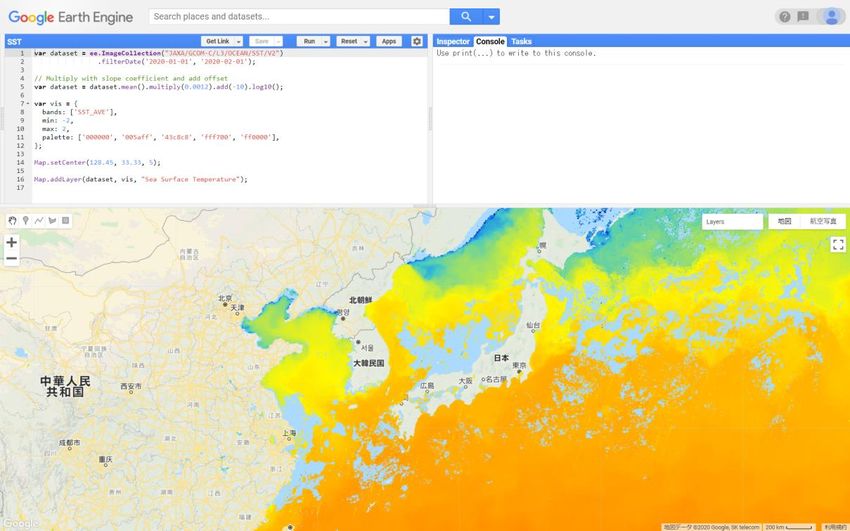
Satellite operation
◆ Satellite system is stable since launch.
Satellite System    Normal
TTC-RF, MDHS-RF     Normal
MDHS-DH             Tentative stop of MDR operation       No MDR recording for 10hours
                    on May 21, 2018                       Radiation effect is suspected
TTC-DH              Normal
AOCS, RCS           Normal
EPS, PDL            Normal
TCS                 Normal
SGLI VNR            Tentative stop of PL Tilt operation   No tilting for 10-14 hours
                    6 times over SAA region.              Radiation effect is suspected
SGLI IRS            Normal                                Regular TIR health check
                                                          with 3 months interval

 Satellite & ground system information such as products, status and obs. plan is available
 at “SHIKISAI Portal”. https://shikisai.jaxa.jp/index_en.html
                                                                                             4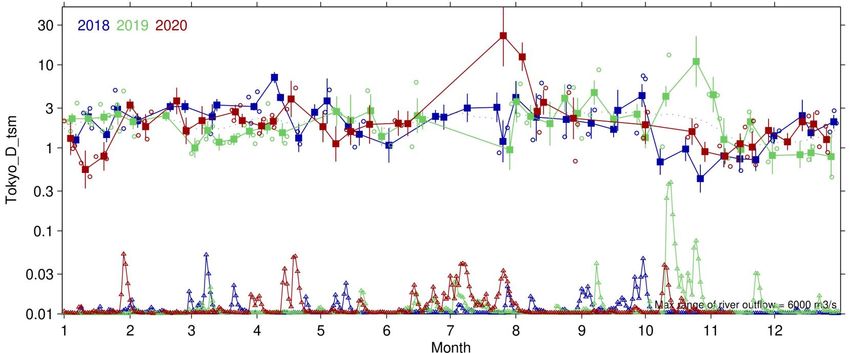
VN & SW Cal. Coefficients is
SGLI Calibration reflected to products
since Ver.2 data processing
• LED(Halogen), Solar & Lunar Cals are consistent for VNR & SWI.
TIR is calibrated using black body & deep space in real time, degradation is very small.
TI01 Gain [%] TI02 Gain [%]
(Normalized at Jan. 30, 2018) (Normalized at Jan. 30, 2018)
0.0 0.0
-0.5 -0.5
-1.0 -1.0
2018/1 2019/1 2020/1 2018/1 2019/1 2020/1
5
GCOM-C satellite orbit
Orbital debris avoidance maneuver on March 15 & May 05, 2019.
Acceleration maneuver is planned in early Feb. 2021.
Inclination maneuver for Local Sun Time is planned in June 2021.
EAST →
40
Ground Track [km]
20 Debris Avoidance
△
Manouver
Accel. Manouver
0
-20
△ NOW
NOON → ←WEST
-40
2018/01/01 2018/07/20 2019/02/05 2019/08/24 2020/03/11 2020/09/27 2021/04/15 2021/11/01
10:30:00
▽ NOW
Local Sun Time
10:25:00
10:20:00
10:15:00 △
← NIGHT
Inclin. Manouver
10:10:00
2018/01/01 2018/07/20 2019/02/05 2019/08/24 2020/03/11 2020/09/27 2021/04/15 2021/11/01
6
Optical thickness of fine-mode aerosols by SGLI polarimetry
✓ Aerosol anomalies are clearly captured by the three-year observation of SGLI polarimetry in Australia, Siberia,
  California, and Amazon areas
✓ SGLI will contribute to understanding of the climate system including the aerosol-cloud-radiation processes
                                                          SGLI fine-mode aerosol anomaly (difference from 2018-2020 average)

                                                             AOT anomaly averaged in the rectangular area

                           Australia

                      AOT@500nm               2019/12

        Siberia
                          California

                                  Amazon

                       AOT@500nm              2020/09
SGLI polarimetry is sensitive to the fine mode aerosols
including fire-smoke and urban aerosols.                           2018                  2019                  2020        7
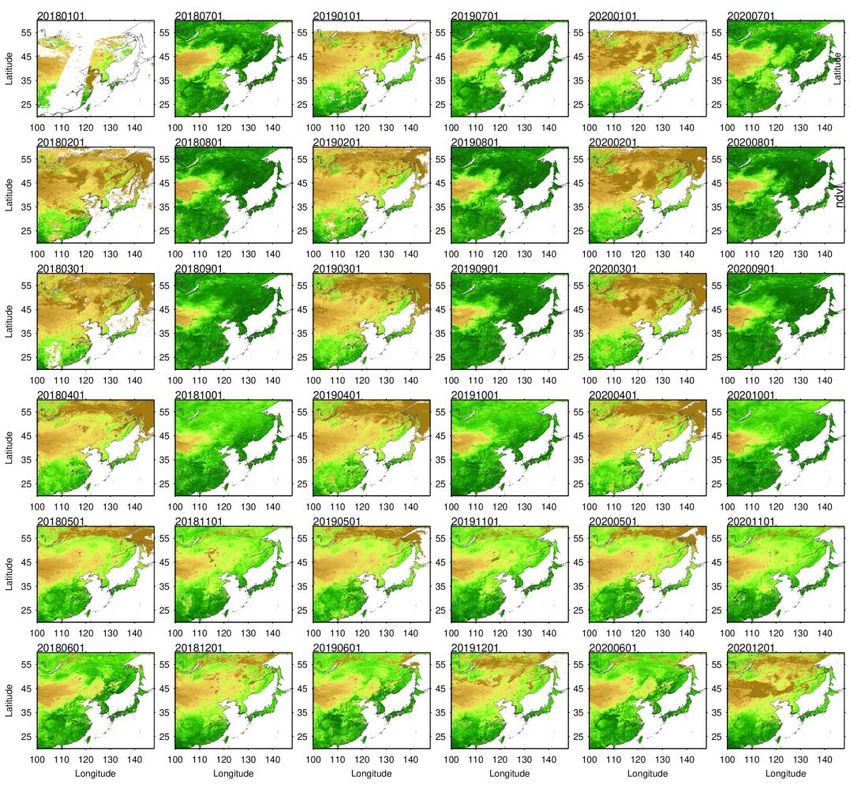
Year-to-year change of NDVI                                                             Target area
                                                                                  52N, 124E
       2018                  2019                 2020
Jan

                      July                 July                 July

Feb                                                                                                 NDVI around 52N, 124E

                      Aug                  Aug                  Aug
                                                                                   2018,
Mar                                                                                2019,
                                                                                   2020                leafing
                      Sep                  Sep                  Sep
                                                                                                   Increase of NDVI
Apr                                                                                                by snow melt

                      Oct                  Oct                  Oct

May                                                                      2018               2019                 2020
                                                                                melted
                      Nov                  Nov                  Nov
Jun

                      Dec                  Dec                  Dec    Snow cover of 30 Mar - 7 Apr around 52N, 124E

      In the northeast Asia, the spring leafing in 2019 was later than one in 2018 by about 1-2
      weeks corresponding to the late melting of snow cover in the early spring
      ✓ SGLI will contribute to understanding of the earth system including the vegetation-carbon processes and
        improvement of the related parameters in ecosystem models
                                                                                                                            8
Year-to-year change of coastal ocean color
(Total suspended matter concentration)

                                                                                   Typhoon
           river outflow                              Frequent rainbands

  Ocean color (Total suspended matter concentration,
  TSM) in Tokyo bay seems influenced by the river
  outflow increased by heavy rainfall in the drainage
  basin, e.g., the end of Sep. 2018, Oct. 2019, and the
  end of Jul. 2020
  The river outflow data is obtained from JAXA's land surface & river simulation
  system, "Today's Earth (TE)“: https://www.eorc.jaxa.jp/water/

✓ SGLI will contribute to understanding of the coastal land-ocean interaction and improvement of the related
  parameters in coastal numerical models                                                                       9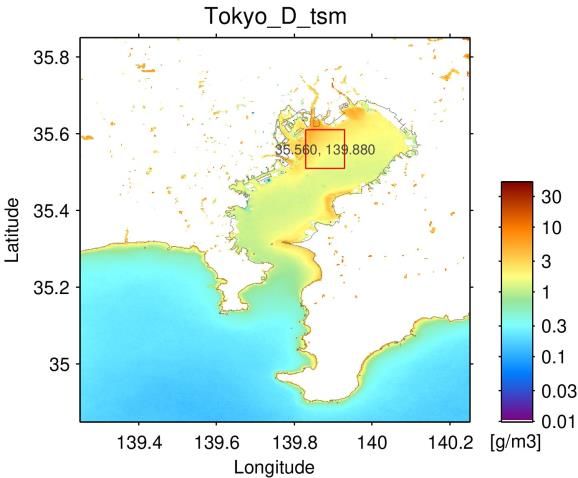
GCOM Mission
✓ GCOM mission is in the execution phase.
                               GCOM Mission                                         Climate Change
    Sat Obs.                                              Model
   GCOM-W      GCOM-C       GCOM Obs.                                              Model Pred.
                                                         Earth System Model
                        Radiation                                              Temperature
                        •   Cloud, Aerosol                     大気
                        •   Reflectance (LULC)           対流圏界面                 Sea Level
                        •   Snow & Ice
                        •   Surface Temp
                                                 data                          Snow & Ice
                                                               雪氷              Env. Change
                        Carbon Cycle             comp
                        •   Vegetaion                                           • Precipitation
                        •   Land Cover                                          • Extreme Weather
                        •   Chllophyl-a                      陸 海                • Land Use Change
                        •   Coastal Change

                        Water Cycle                        Modeling
       Global           • Water Vaper, Cloud
                        • Precipitation                 Parameterization
     Observation        • Soil Moisture
                        • Snow and Ice                     Prediction
                        • Surface Temp. Winds

         Data                            Env. Monitoring                      Earth System
       Utilization                       Process Study                           Model
                                              ECVs

                                                                                                     10
Data utilization on platform(tellus, GEE)
✓ Data delivery to tellus since 2019. Chrollophl a Sea Surface Temp
✓ Level-3 data delivery to Google Earth
Engine (GEE) since Nov. 2020.
✓ Data application activities are encouraged.
https://developers.google.com/earth-engine/datasets/tags/gcom-c
Leaf Area Index Land Surface Temp.
SGLI SST on
GEE Code Editor
11Schedule
Three years from first light
→ Such as seasonal change data analysis is encouraged
2017 2018 2019 2020 2021 2022 2023
Dec.23▲ ▲Jan.01 ▲ ▲ NOW ▲
Launch Fist Light Ver.1 Ver.2 ▽ Ver.3(TBD)
Routine Phase (5 years)
Dec.20 △ △ △
GCOM Sympo. PI W.S. 2020 PI W.S. 2021
Data Processing Ver.1 Ver.2 Ver.3
Data Re-Processing Ver.1 Ver.2 Ver.3
12Summary
GCOM-C satellite and SGLI are stable.
GCOM-C data has been provided to the public
continuously since Dec. 20, 2018.
GCOM-C routine phase operations for 5 years
(Dec. 2017 – Dec. 2022)
GCOM mission is in the execution phase
Encouragement to the practical use for the social benefits.
Encouragement to the climate research for GCOM mission.
Thank you
Shikisai@ml.jaxa.jp
https://shikisai.jaxa.jp/index_en.html
13You can also read


