HILL CLIMB PERFORMANCE FACTOR (Pf) CONCEPT OF CAR CLASSIFICATION - EXPLANATION AND REQUIREMENTS FOR 2019 EVENTS - FIA
←
→
Page content transcription
If your browser does not render page correctly, please read the page content below
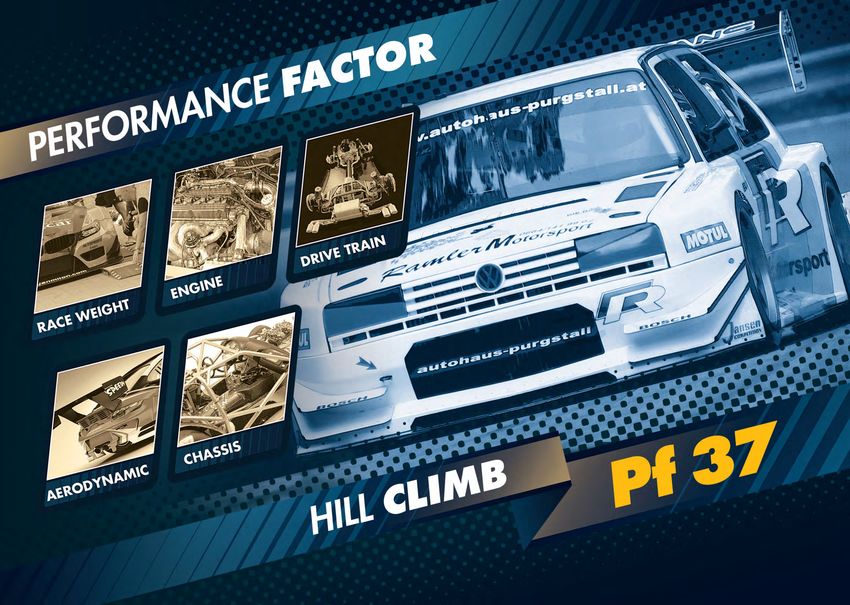
HILL CLIMB

PERFORMANCE FACTOR (Pf)
CONCEPT OF CAR CLASSIFICATION

EXPLANATION AND REQUIREMENTS FOR 2019 EVENTS

                                       28-02-2019 (issue 2)
                                                              1
2

HILL CLIMB REQUIREMENTS OF THE FIA Pf WEBSITE

                                       CONTENTS

INTRODUCTION
PERFORMANCE FACTOR (Pf)
PROJECT TIMING
FIA Pf WEBSITE
FIA REQUIREMENTS FOR EACH EVENT
COMPETITORS
SCRUTINEERS
COMPARISON (ELIGIBLE CARS)

• Appendix 1- Input data for the FIA Pf website
• Appendix 2 - Performance Factor calculations
• Appendix 3 - Aerodynamic component dimension definition
• Appendix 4 - Chassis component classification
                                                                                              3
HILL CLIMB REQUIREMENTS OF THE FIA Pf WEBSITE

                                            4
HILL CLIMB REQUIREMENTS OF THE FIA Pf WEBSITE

INTRODUCTION
The Performance Factor (Pf) concept is designed to classify a diverse range of ‘production based’ cars for all hill climb
competitions. The objective is to simply combine the technical features of a car to determine the class it will compete in.
This process will be independent of the car’s previous homologations, one-make series build specification or previous
competition history.
This will allow cars, previously unable to be used in FIA Hill Climbs, to return to active competition and allow a larger
variety of new cars to be proposed for entry.

Using physical data input by the competitor describing their car, calculations are made to derive a Pf number that places
the car in the appropriate class.

The Pf will ensure that:

     – The competitor is clear which class the car is allowed to compete in.

     – The organiser can easily put the car in the appropriate class for an event.

     – The scrutineers have physical elements available at an event to check against the classification.

     – The stewards can resolve technical protests at an event without reference to paperwork from other
     championships/homologations, etc.

The objective in 2019 is to test the Pf systems, ahead of the 2020 season implementation.
                                                                                                                              5
HILL CLIMB REQUIREMENTS OF THE FIA Pf WEBSITE

PERFORMANCE FACTOR (Pf)

The Pf is derived from physical data input by the competitor to describe the car being entered. This involves using the data for
calculations and checks against qualifying ‘exceptions’ that limit the class a car may compete in.

a) To calculate the Pf, the FIA Pf website is used as shown in Table 1.

Table 1

  FIA Pf Website Features

  FIA Pf Website Operation               Comments will be solicited from competitors, officials and organisers about the
                                         operation and features of the website.
  Input Car Data                         Competitor enters data for his/her car.
  Calculation                            FIA Pf Website uses input data to calculate a Pf number.

                                                                                                                                   6
HILL CLIMB REQUIREMENTS OF THE FIA Pf WEBSITE

PERFORMANCE FACTOR (Pf)

b) Calculation

The Pf calculation is as follows and is detailed in Appendix 2:

                                                              Race Weight
  Pf =                   (Engine Component * Drive Train Component * Aero Component * Chassis Component)

Each component is calculated using physical data supplied by the competitors about their car.
The resulting number (Pf) is used to place the car in a class.

c) The minimum weight of a car cannot be less than the weight decided by the FIA Hill Climb Commission (normally as described in
Article 277.3 of Appendix J for Category I). Awaiting for new technical regulations (for application from 2020).

d) Pf Classification of cars

A car’s Pf will determine the class it is in.

For example, Class 1 contains the higher performance cars with a Pf number in the range of 0-50. Higher numbered classes will
contain lesser performing cars. The number of classes will be determined according to the Pf number ’window‘ to be decided.
                                                                                                                                   7
HILL CLIMB REQUIREMENTS OF THE FIA Pf WEBSITE

PERFORMANCE FACTOR (Pf)

Pf classification (example)*

*values, terminologies and classifications published only by way of general guidance

e) Pf Website Access

The FIA Pf website will be accessible to: all parties, including the general public/press. They will be able to use this website to see
how different combinations of technical specifications change the car’s performance. Similar to preparing a car in a motor sport
video game.
                                                                                                                                          8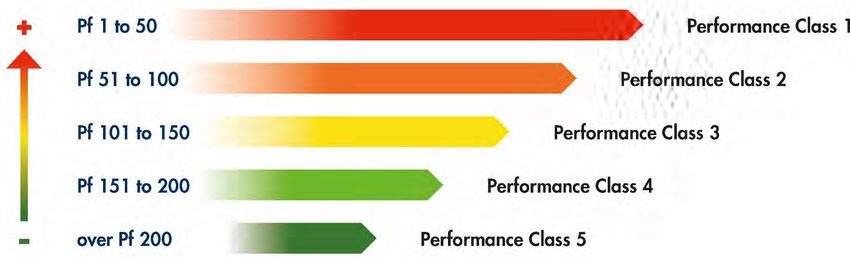
HILL CLIMB REQUIREMENTS OF THE FIA DATABASE

                                       9
HILL CLIMB REQUIREMENTS OF THE FIA Pf WEBSITE

PROJECT TIMING
                                                                               Table 2
During 2019
The Pf is to be trialled the FIA Championship events listed in Table 2. Pf
simulations will be conducted by FIA technical observers.                      Event                               Date          Nr of FIA
                                                                                                                                 Personnel
Drivers and Competitors
                                                                                                                                 Attending
                                                                               St Jean du Gard               FRA   12-14/04          2-3
Drivers and Competitors from Category 1 (Groups A, N, S20 and GT)
and Group E2-SH in Category 2 will have to complete the Pf                     Rechberg                      AUT   26-28/04          2-3
information on the entry form (from the Pf technical declaration)              Rampa Int. da Falperra        PRT   10-12/05          1-2
before the FIA Competition or, on request, during scrutineering.               Subida Int. al Fito           ESP   17-19/05          1-2
The procedures related to this Pf technical declaration (online                Ecce Homo Sternberk           CZE   31/05-02/06       1-2
registration etc.) will be specified in a bulletin.                            ADAC Glasbachrennen           DEU   14-16/06          1-2
                                                                               Trento Bondone                ITA   05-07/07          1-2
These trials will be used to help educate and inform organisers,               Dobsinsky kopec               SVK   19-21/07          1-2
competitors, officials and stewards on the Pf concept and gather data
                                                                               Limanowa                      POL   26-28/07          2-3
on potential challenges at specific events.
                                                                               St. Ursanne                   CHE   16-18/08          1-2
This will require a larger team to deal with the technical and media           GHD Petrol Ilirska Bistrica   SVN   30/08-01/09       1-2
requirements.                                                                  Buzetski dani                 HRV   13-15/09          1-2

                                                                                                                                             10
HILL CLIMB REQUIREMENTS OF THE FIA Pf WEBSITE
PROJECT TIMING
In 2020
The aim is to implement the Pf system in Category 1 (Groups A, N,
S20 and GT) and in Category 2 (Group E2-SH) for the full FIA
Championship and Cup.
In 2021
The aim is to implement the Pf system in Category 2 (Groups E2-SS,
E2-SC and CN) for the full FIA Championship and Cup.
11HILL CLIMB REQUIREMENTS OF THE FIA Pf WEBSITE
FIA Pf WEBSITE
Multiple levels of access will be required to cater for the different user groups.
The FIA Pf website must be useable for these users as described below in Data Output.
The results of testing the system in 2018 & 2019 will help the FIA to understand how to implement the concept in 2020.
Data Output
USER GROUP USE OF PERFORMANCE FACTOR (PF) DATA OUTPUT ACCESS ALLOWED BY USER GROUP
PF NUMBER INPUT DATA
COMPETITORS The Pf of the competitor’s own car and the class the car YES YES
qualifies for for the competitor’s car only and can alter the data for the
competitor’s car only
SCRUTINEERS Use data to check the car at an event YES YES
for all cars visual access only for all cars
[A unique scrutineer comment
sheet will be used for their
input]
ORGANISERS Pf used to arrange cars into appropriate classes YES NO
for all cars
TIMEKEEPERS Results use classes determined by Pf YES NO
for all cars
STEWARDS Access to appropriate car data if relevant to a protest YES YES
for all cars visual access only for all cars
12HILL CLIMB REQUIREMENTS OF THE FIA Pf WEBSITE
FIA Pf WEBSITE
a) The FIA Pf website is an ideal addition to the concept because it will provide a platform to input, manipulate and provide
information to all groups requiring access to the information.
b) The competitor will have an access point to the FIA Pf website where they will fill out an electronic ‘Declaration Form’ by
entering data describing their car and declaring it is correct. Once they have entered this data, subsequent events will require
minimal input. If there is a modification to the car during the season they can input the change into the FIA Pf website and the
new Pf will be logged.
c) Organisers can access the same FIA Pf website to check the cars entered into their event. The classification of these cars
will be done automatically using the data the competitor entered and declared accurate, thus saving the organiser time
before the event.
Organisers can run national classes within the FIA competitions that can be ‘isolated ‘ for local prizes using the FIA Pf
website if requested.
d) Stewards can handle protests or scrutineers’ reports quickly with the requirement for only physical checks. The results
can therefore be verified and released more easily.
13HILL CLIMB REQUIREMENTS OF THE FIA Pf WEBSITE REQUIREMENTS FOR EACH FIA CHAMPIONSHIP EVENT The following will be required from the organiser to support the FIA personnel attending each event described in Table 2. General Requirements during the event A dedicated work room or area with mobile phone signal and power supply (1-4 people). Internet Wifi access. A dedicated translator. An information session (20mn) led by the FIA technical observer and scheduled following the Drivers’ Briefing (screen, beamer, microphone, Wifi access). Before scrutineering - Internet Wifi access in the weighing area. - Weight scales for the competitors to check race weights (free access within a specified time frame). - An area to present the Pf to organisers / officials / competitors. During scrutineering - Internet Wifi access in the scrutineering area. - Weight scales to check race weights. During competitions - An internet Wifi access in the scrutineering area (essential) and in parc fermé (if possible). - Weight scales to check race weights with a minimum of 4 people to operate the four balance pads. - A screen to display the live timing in the format specified by FIA. - A dedicated timekeeper in charge of issuing the Pf results and documents according to FIA format. 14
HILL CLIMB REQUIREMENTS OF THE FIA Pf WEBSITE

COMPETITORS
a) Before the FIA Championship competitions (or, on request, during scrutineering), drivers and competitors from Category 1
(Groups A, N, S20 and GT) and Group E2-SH in Category 2 will have to fill in the Pf form on the FIA Pf website.

During these FIA Championship events, the FIA personnel will engage local competitors to help them fill out the ‘Declaration
Form’ and introduce them to the Pf concept. By doing this, the FIA personnel can gather the following information and help
disseminate information about Pf to the end users.

     •       Entrant information;
     •       Car information;
     •       Driver equipment information.

b) Access to multi-lingual information will be important and this is why a dedicated translator will be required.

c) It is also hoped that the FIA Pf website will be accessible during the event to demonstrate to the competitors how potential
car changes affect the Pf classification.

                                                                                                                                  15
HILL CLIMB REQUIREMENTS OF THE FIA Pf WEBSITE
SCRUTINEERS
a) During the event, the scrutineers will be shown how the Pf classification will be used and how the FIA Pf website could
facilitate and enhance their checking ability. They will be able to check the following to aid their technical checks:
• Check car data to confirm correct classification;
• See reports on the car from preceding events.
b) Scrutineers can input notes into a car’s data file relating to the specific event. FIA personnel will demonstrate this data access
and input procedure.
16COMPARISON / ELIGIBLE CARS
THE FOLLOWING PAGES ILLUSTRATE A SAMPLE OF POTENTIAL
HILL CLIMB CARS AND COMPARE THEIR 2019 ELIGIBILITY
WITH THEIR POTENTIAL 2020 ELIGIBILITY.
17COMPARISON OF CARS ELIGIBLE FOR 2019 FIA EUROPEAN HILL CLIMB CHAMPIONSHIP AND THEIR POTENTIAL ELIGIBILITY FOR 2020
LIST (NOT EXHAUSTIVE)
Car 2019 2020 Pf Specifications
Organisers can get a larger variety of entries into the Eligible in ELIGIBLE 2.0 l. Turbo 4WD 1380kg
FIA Competition with the use of the Pf. Examples are Category II
Category I
in the table below. Mitsubishi Lancer Evo IX
Group E2-SH
NOT ELIGIBLE ELIGIBLE 1.9 l. Turbo FWD 1120kg
Category I
Car 2019 2020 Pf Specifications Seat Léon Super Coppa
Group FFSA/A
ELIGIBLE ELIGIBLE 2 l. Turbo 4WD 1400kg
NOT ELIGIBLE ELIGIBLE 1.4 l. N/A FWD 925kg
Category I Category I
Category I
Group N Group FFSA/FN
Mitsubishi Lancer Evo IX Peugeot 106 XSi
ELIGIBLE ELIGIBLE 2.0 l. N/A FWD 1200kg NOT ELIGIBLE ELIGIBLE 3.2 l. Turbo RWD 1200kg
Category I Category I Category I
Group N Group FFSA/GTTS
Honda Civic
BMW M3 E46 GTR
ELIGIBLE ELIGIBLE 1.6 l. N/A FWD 1095kg NOT ELIGIBLE ELIGIBLE 2 l. N/A RWD 1180kg
Category I Category I Category I
Group A (R3T) GroupE1
Citroën DS3 R1 BMW 320 WTCC
ELIGIBLE ELIGIBLE 1.8 l. N/A FWD 1250kg NOT ELIGIBLE ELIGIBLE 2 l. Turbo 4WD 1300kg
Category I Category I Category I
Group A GroupE1
Honda Integra Type R
Subaru ImprezaWRX STI
NOT ELIGIBLE ELIGIBLE 2.2 l. Turbo 4WD 1250kg
NOT ELIGIBLE ELIGIBLE 1.7 l. Turbo 4WD 1070kg
Category I Category I
Group E1 GroupE1
Audi Sport Quattro
NOT ELIGIBLE ELIGIBLE 2.0 l. Turbo 4WD 1200kg Audi 80 Quattro
NOT ELIGIBLE ELIGIBLE 1.6 l. N/A FWD 1120kg
Category I
Category I
Group E1
Lancia Delta Integrale EVO GroupE1
NOT ELIGIBLE ELIGIBLE 2 l. Turbo 4WD 1325kg Honda Civic
NOT ELIGIBLE ELIGIBLE 1.6 l. N/A FWD 950kg
Out of Group A Category I
homologation CategoryI
Mitsubishi Lancer Evo VIII
GroupE1
Eligible in ELIGIBLE 5.7 l. N/A RWD 1250kg
Peugeot 106 GTi
Category II
NOT ELIGIBLE ELIGIBLE 2.0 l. N/A FWD 830kg
Category I
Category I
Group E2-SH
Opel Kadett C V8 GT/R
GroupE1 18
VW SciroccoCOMPARISON OF CARS ELIGIBLE FOR 2019 FIA EUROPEAN HILL CLIMB CHAMPIONSHIP AND THEIR POTENTIAL ELIGIBILITY FOR 2020
LIST (NOT EXHAUSTIVE)
Car 2019 2020 Pf Specifications
NOT ELIGIBLE ELIGIBLE 2.3 l. N/A RWD 980kg
Category I
Opel Kadett Group E1
NOT ELIGIBLE ELIGIBLE N/A RWD 1150kg
Category I
Group
FFSA/GTTS
Volvo TC10
NOT ELIGIBLE ELIGIBLE 2.0 l. N/A FWD 960kg
BTCC Category I
Renault Williams BTCC
NOT ELIGIBLE ELIGIBLE 1.6 l. N/A FWD 1130kg
Swift Cup Category I
Suzuki Swift Sport 1.6
NOT ELIGIBLE ELIGIBLE 2.0 l. Turbo 4WD 1270kg
Category I
Group E1
Mitsubishi Mirage R5 WRT
Evo2
NOT ELIGIBLE ELIGIBLE 1.6 l. Turbo FWD 1130kg
Group E1 Category I
(Italian Starter Class –
Racing start)
BMW Mini JCW
NOT ELIGIBLE ELIGIBLE 1.3 l. N/A FWD 800kg
Group National (“class Category I
1A - Bantam Saloon
Class” / Irish Hill Climb
Championship)
Vauxhall Nova-Suzuki
* N/A Naturally Aspirated Induction
19APPENDIX 1
PERFORMANCE FACTOR
INPUT DATA FOR THE FIA Pf WEBSITE
20APPENDIX 1 - PERFORMANCE FACTOR / INPUT DATA FOR THE FIA Pf WEBSITE
1. GENERAL INFORMATION 4. DRIVETRAIN
Input # Input #
1 Entrant name 20 Driven wheels position ☐ FWD ☐ RWD ☐ AWD
2 Driver name 21 No. of gears
3 Contact email 22 Shifting mechanism ☐ Manual ☐ Sequential
4 Car - make 23 Wheel diameter Inches
5 Car - model
6 Engine – make 5. AERODYNAMIC
Input #
2. RACE WEIGHT 24 Wheelbase mm
Input # 25 Front overhang (max) mm
7 Race weight kg 26 Splitter ahead of bumper mm
(weight of the car, driver and fluids incl.) 27 Rear overhang (max) mm
28 Diffuser rearward of rear bumper mm
3. ENGINE 29 Rear wing position rearward of rear mm
Input # wheel centreline
8 Origin ☐ Car ☐ Moto 30 Rear wing height above ground level mm
9 Cylinder layout ☐L ☐V☐W☐H 31 Front width of car on front axle centreline mm
10 No. of cylinders 32 Rear width of car on rear axle centreline mm
11 No. of valves
(total in the engine) 6. CHASSIS
Input #
12 Bore mm
33 Roll cage type (see Appendix 4) ☐1 ☐2☐3
13 Stroke 34 Chassis structure type ☐1 ☐2☐3☐4
14 Displacement cm3 (see Appendix 4)
15 Oil Sump type ☐ Dry ☐ Wet 35 No. of operable doors and rear hatch (if ☐2 ☐3☐4☐5
16 Fuel type applicable)
☐ Petrol ☐ Diesel 36 Fuel tank type
17 Induction type
☐ Production ☐ FIA
☐ Turbo / Supercharger 37 Windscreen ☐ Glass ☐ Plastic
☐ Normally aspirated
18 No. of restrictors
19 Restrictor inside diameter mm Pf
21APPENDIX 2
PERFORMANCE FACTOR
CALCULATIONS
22APPENDIX 2 - PERFORMANCE FACTOR CALCULATIONS
The class the car will run in will be determined by the Performance Factor (Pf) calculated using the data provided by each competitor
in the ‘Declaration Form’ on the FIA Pf website.
Rw
Pf =
PcE * PcD * PcA * PcC
Where Rw = Racing weight (including Driver)
PcE = Engine Performance Component
PcD = Drive Train Performance Component
PcA = Aerodynamic Performance Component
PcC = Chassis Performance Component
23APPENDIX 2 - PERFORMANCE FACTOR CALCULATIONS
The class the car will run in will be determined by the Performance Factor (Pf) calculated using the data provided by the competitor
in the ‘Declaration Form’ on the FIA Pf website.
► Appendix 1 Input Number 7
RACING WEIGHT (Rw)
Weight of car and driver As measured in parc fermé
[Kg]
ENGINE (PcE)
► Appendix 1 Input Numbers 8-19
Engine =
FIA Power calculation using data from engine component in Appendix 1 Input
Numbers 8-19
24APPENDIX 2 - PERFORMANCE FACTOR CALCULATIONS
DRIVETRAIN (PcD)
► Appendix 1 Input Numbers 20-23
Input Values
Number of Gears N in 1.1^(N/4)
Wheel Diameter (inches) 17” Standard in 76kg / inch diameter
Configuration question reply Yes No
Gearbox actuation Manual x 1.0 x 1.0
Sequential (automatic) x 1.1 x 1.0
Driven Wheels Front wheel drive x 1.0 x 1.0
Rear wheel drive x 1.1 x 1.0
All-wheel drive x 1.3 x 1.0
25APPENDIX 2 - PERFORMANCE FACTOR CALCULATIONS
AERODYNAMIC (PcA) ► Appendix 1 Input Numbers 24-32
Input Values
Wheelbase WB See Appendix 3
[mm]
Front overhang to SFOH Front overhang, See Appendix 3
Splitter [mm] Front of splitter to front axle line
Splitter length SL Front of splitter to front of bumper See Appendix 3
[mm] overhang
Rear overhang LROH Rear overhang See Appendix 3
(lower) to end of Rear axle line to longest dimension,
diffuser or bumper rear bumper or diffuser
[mm]
Rear overhang to RWROH Rear overhang above top of tyre See Appendix 3
end of rear wing height, rear axle line to rear wing
[mm] Rear dimension (if rearward of rear
bumper )
Rear wing height RWH Maximum height of rear wing from See Appendix 3
[mm] ground
Width at front Wfw From outside of tyre to outside of See Appendix 3
wheels [mm] tyre at front
Width at rear Wrw From outside of tyre to outside of See Appendix 3
wheels [mm] tyre at rear
Calculated Values
Splitter area SA= SFOH * Wfw
[m ]
2
Diffuser area DA= LROH * Wrw
[m2]
Rear wing area RWA= (RWROH2+RWH2)½ * Wrw
[m ]
2
Calculation using data from aero component in Appendix 1 Input Numbers 24-32
26APPENDIX 2 - PERFORMANCE FACTOR CALCULATIONS
CHASSIS (PcC) ► Appendix 1 Input Numbers 33-35
Roll cage Factor
used
Type 1 App. J 253 Article 8.3.1 + Article See Appendix 4 1
8.3.2.1
Using basic cage in Dwg 253 1-3
plus one or more of Dwg 253 4-15
Type 2 Type 1, plus one or more of Dwg See Appendix 4 2
253 16-33
Type 3 Cage with extra structure not in App. J See Appendix 4 3
253 Article 8.3.2
EXTRA Factor
Chassis structure used
CS1 No extra structural members 1
CS2 Structural member(s) between one or See Appendix 4 2
both axle strut towers without
intermediate connections.
CS3 Additional structural member(s) within See Appendix 4 3
the central structural volume
CS4 Additional structural member(s) See Appendix 4 4
outside the central structural volume
Number of doors
Number of doors and rear hatch that 2 to 5
access the cockpit of the car.
27APPENDIX 2 - PERFORMANCE FACTOR CALCULATIONS
Specific data will trigger exceptions to the calculated Pf. Certain configurations will be allowed only in defined classes.
Examples are:
• Production fuel tanks are currently not allowed in FIA international events (Appendix 1, Input Number 36).
• To be confirmed - The use of non-production windscreen material may be allowed in lower Pf number classes, i.e. higher
performance levels (Appendix 1, Input Number 37).
These exceptions will trigger appropriate changes to the calculation described above.
28APPENDIX 3
AERODYNAMIC COMPONENT DIMENSION
DEFINITION
29APPENDIX 3 - AERODYNAMIC COMPONENT DIMENSION DEFINITION
Aerodynamic Component Dimension Description
SL
SFOH WB LROH
RWROH
SL ► Splitter Length [mm] / Front of splitter to front of bumper overhang
SFOH ► Front Overhang to Splitter [mm] / Front overhang, Front of splitter to front axle line
WB ► Wheelbase [mm]
LROH ► Rear Overhang (lower) to end of Diffuser or Bumper [mm] / Rear overhang, Rear axle line to longest dimension, rear bumper or
diffuser
RWROH ► Rear Overhang to end of Rear Wing [mm] / Rear overhang above top of tyre height, rear axle line to rear wing Rear dimension (if
rearward of rear bumper) 30APPENDIX 3 - AERODYNAMIC COMPONENT DIMENSION DEFINITION
Aerodynamic Component Dimension Description
RWH
Wfw Wrw
Wfw ► Width at Front Wheels [mm] / From outside of tyre to outside of tyre at front
Wrw ► Width at Rear Wheels [mm] / From outside of tyre to outside of tyre at rear
RWH ► Rear Wing Height [mm] / Maximum height of rear wing from ground
31APPENDIX 4
CHASSIS COMPONENT CLASSIFICATION
32APPENDIX 4 - CHASSIS COMPONENT CLASSIFICATION
Roll Cage Types are described below:
Type 1 Basic Roll Cage
253-1 253-2 253-3
Type 1 Basic Roll Cage (additions)
253-7 253-9 253-10 253-11 253-12 253-13
253-14 253-15 33APPENDIX 4 - CHASSIS COMPONENT CLASSIFICATION
Type 2 Roll Cage (optional additions)
253-16 253-17 253-18 253-18B 253-19 253-20
253-21 253-22 253-23 253-24 253-25 253-26
34APPENDIX 4 - CHASSIS COMPONENT CLASSIFICATION
Type 2 Roll cage (optional additions)
253-27 253-28 253-28B 253-29 253-30 253-31
253-32 253-33
35APPENDIX 4 - CHASSIS COMPONENT CLASSIFICATION
Type 3 Roll cage (non Appendix J type)
Roll cages that have any of the following items will be classified as Type 3
• Welding to the central structural volume.
• More than six mounting feet (unless indicated in Type 2 cage options).
• If a structure starts and ends on a roll cage and is not described in Type 1 and 2.
36APPENDIX 4 - CHASSIS COMPONENT CLASSIFICATION
Chassis structure classification
Chassis structure classes are described below using the following definitions:
• A central structural volume is defined as the volume inside:
o a vertical plane passing through the forward most part of the front windscreen;
o a vertical plane passing through the rear of the rear wheels;
o roof, floor, door and side body panels;
o for open cars, the interior volume unbounded by the above criteria will be defined as the exterior of the roll cage.
• A structural member is a rigid element connecting two or more points of the bodywork and/or roll cage.
• Bodywork is defined as the roof, side panels, doors and floor.
• A roll cage bar defined by Appendix J, Article 253, Drawing 253-18, will also be considered as a structural
member for the purpose of CS2 if any part is within 150 mm of the lower connection point along the axis of the backstay.
37APPENDIX 4 - CHASSIS COMPONENT CLASSIFICATION
Chassis structure classification
CS1 Chassis structure Class 1 No extra structural members
CS2 Chassis structure Class 2 Structural member(s) between one or both
axle strut towers without intermediate
connections.
Type 2 roll cage and CS2 strut structure
CS3 Chassis structure Class 3 Additional structural member(s) to those
described in CS2 within the central
structural volume.
CS3 additional structure internal
38APPENDIX 4 - CHASSIS COMPONENT CLASSIFICATION
Chassis structure classification
CS4 Chassis structure Class 4 Additional structural member(s) to
members described in CS2 and CS3
outside the central structural volume
CS4 additional structure external
39Pf WEBSITE
www.fiaperformancefactor.com
40•Pf website CONTACT
CONTACT: pf@fia.com
4142
You can also read


