Homeowners Guide to Flood resilience - A Living Document
←
→
Page content transcription
If your browser does not render page correctly, please read the page content below
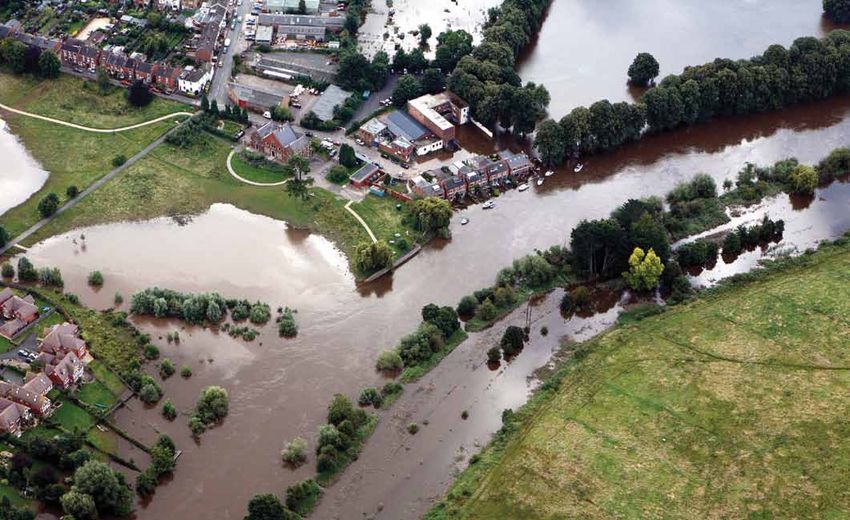
Homeowners Guide to Flood resilience
           A Living Document

                                       3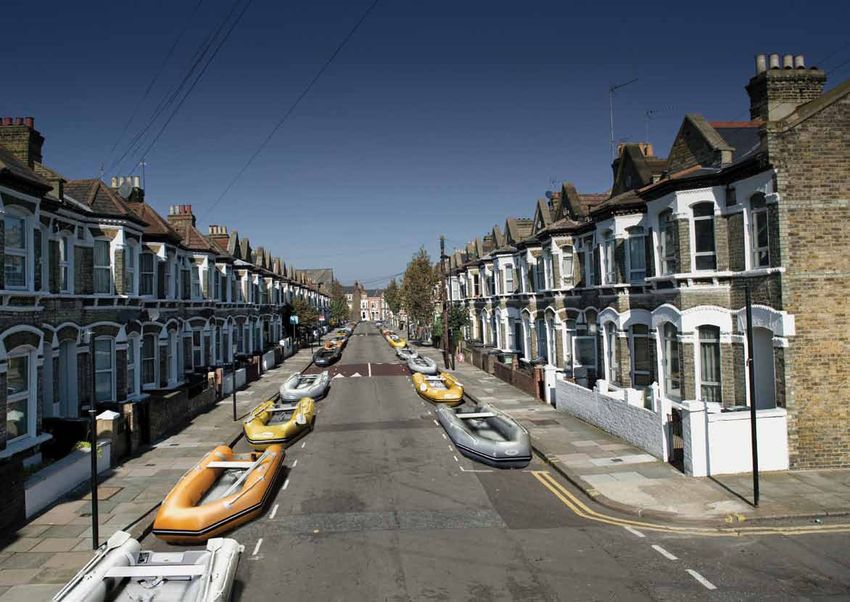
Contents

Foreword                                                                                          1
1. Why should I think about flood risk? - For a personal perspective from Mary Dhonau             3
2. What is the risk to houses from flooding?                                                      5
3. How do I find out if my home is at risk from flooding?                                         6
4. Should I consider protecting my home from flooding?                                            7
5. How best to protect myself, my family and my home from flooding?                               8
6. Where can I find help?                                                                         12
7. The flood protection product information tables                                                13
8. Permanent resistance                                                                           15
9. Temporary resistance                                                                           22
10. Resilience                                                                                    27
11. Community solutions                                                                           32
12. Case studies                                                                                  36
13. Directory of flood protection product manufacturers and suppliers featured in this handbook   46
14. Useful links and references                                                                   52

                                                                                                   4
Foreword

Flooding can have a devastating impact on homes and families. This was clearly         This guide which is written especially with the home owner in mind hopes to
shown by the terrible floods, which hit so many parts of England and Wales             reduce the worry about what flood protection products to use, and illustrates
in 2007, Cumbria in both 2009 and 2012, and many areas over the winter of              the variety of ways a home can be protected, how difficult the product is to fit
2013/14.                                                                               and when it is appropriate to use them.
According to Environment Agency figures, in England alone over 5 million               It is often the case when the flood water is too high that it is better to let the
people live and work in properties that are at risk of being flooded, by rivers, the   floodwater in and adapt your home to reduce the devastation the floodwater
sea, surface water flooding or a combination of these*.                                can have, so there is a section on this too, using case studies from people who
                                                                                       have been flooded but have now taken moves to make their homes resilient to
At the time of writing (June 2014), the way in which flood insurance will be dealt
                                                                                       flooding.
with in the UK is about to undergo a major change. The insurance industry and
the Government have agreed on a new ‘not-for-profit’ scheme, to be called              Sadly, flooding is set to get worse and it is essential that we not only know our
‘Flood Re’, which will come into force in 2015. This will replace the previous         own flood risk, prepare in advance and take moves to protect our own homes.
arrangements, which guaranteed availability of insurance but not affordability.        Being flooded is an appalling experience. This guide has been written by the
(There are more details on this in the Guide).                                         Know Your Flood risk campaign in conjunction with RAB Consultants Ltd (first
                                                                                       edition) and MDA (2014 update). We hope that it will help inform you as to what
Protecting your own home from being flooded still continues to be a very
                                                                                       can be done to mitigate against floods and help to reduce the misery that being
sensible option, however, as insurance arrangements cannot prevent the
                                                                                       flooded brings with it.
appalling disruption and emotional trauma that comes with the flooding and its
aftermath. The prospect can be a baffling one, with many people not knowing            *Ref: Environment Agency (2013) Flooding in England - a national assessment
how to go about protecting their homes other than with the humble and                  of flood risk [online]. Available at: http://www.environment-agency.gov.uk/
inefficient sandbag.                                                                   research/library/publications/108660.aspx

                      Mary Dhonau, OBE                                                                       Carly B Rose

                      Chief Executive                                                                        Researcher
                      Know Your Flood Risk Campaign                                                          Know Your Flood Risk Campaign

                                                                                                                                                                            1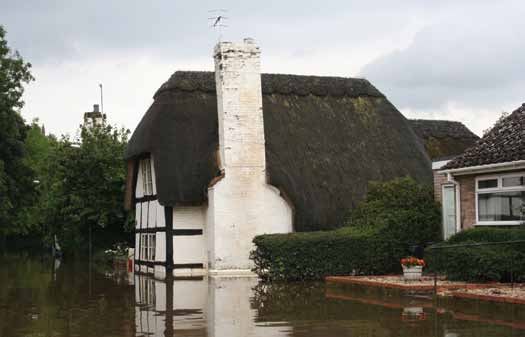
Authors:
Mary Dhonau (Chief Executive, Know Your Flood Risk Campaign), Gavin Wilson (RAB Consultants Ltd), Andrew McHugh (RAB Consultants Ltd),
Russell Burton (RAB Consultants Ltd); and Carly Rose (MDA) - 2014 update.

Any errors, omissions and/or anomalies are entirely attributable to the authors.
This is a living document. Updates and amendments are encouraged from users. For feedback on the handbook, please contact:

Carly Rose
MDA
Email: mdacarly@gmail.com

Acknowledgements:
Tony Andryszewski (Environment Agency)                                      David Hickman (Lincolnshire County Council)
David Bartram (Environment Agency)                                          Ben Lukey (Environment Agency)
Jason Beedell (Smiths Gore)                                                 Steve Lumb (Boston Borough Council)
Steven Bickers (DEFRA)                                                      Stephen Merrett (Environment Agency)
Chris Brown (JMP Consultants Ltd)                                           Tony Mulhall (Royal Institution of Chartered Surveyors)
Alan Cripps (Royal Institution of Chartered Surveyors)                      David Oake (Environment Agency)
Tim Dawe (JMP Consultants Ltd)                                              Mervyn Pettifor (Flood Management Support Services Ltd)
Mary Dhonau (Chief Executive, Know Your Flood Risk)                         Neal Ricketts (Environment Agency)
Katharine Evans (Environment Agency)                                        Ian Sinclair (Environment Agency)
Alan Freeman (Lincolnshire County Council)                                  Jeff Stacey (London Port Authority and Emergency Planning Society)
Elved Gray-Jones (Environment Agency)                                       Andrew Teanby (Smiths Gore)
Ron Whitehead (Flood Protection Association)

                                                                                                                                                 2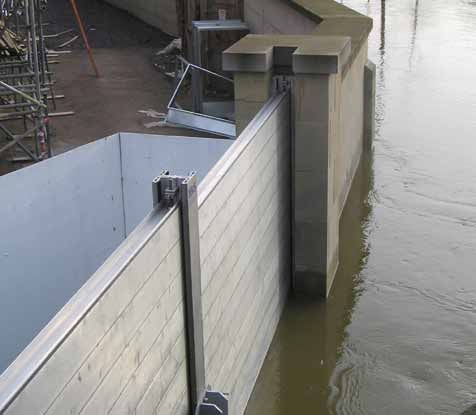
1. Why should I think about flood risk? - For a personal perspective from Mary Dhonau

Having suffered first hand from the effects of being flooded, I know only too       Whilst protecting a home from being flooded is not cheap, flood insurance
well what an appalling experience it is. Being a victim of floodwater ravaging      is becoming extremely expensive; taking steps to protect your home from
your home has far-reaching and long-term consequences for everyone                  flooding may enable you to obtain insurance at a more affordable price than
concerned. Flooding is not just when the media and the minister come to             would otherwise have been available, you’ll certainly be looked on more
visit. To watch helplessly as everything you have worked so hard for is thrown      favourably than if you do nothing. If you do not put protective measures in
into a skip is hard enough, but to lose precious sentimental items - such as        place, you may be unable to obtain flood insurance which may well invalidate
children’s first drawings or photos of relatives who are no longer with us - is     your mortgage. Couple that with the emotional effects of being flooded, flood
completely devastating.                                                             resistance (protection) and resilience (adapting your home so that the flood
                                                                                    water does the least damage possible) suddenly seems a highly favourable
Many people have told me of occasions when they have gone to look for
                                                                                    option.
something only to remember it having been lost years earlier in a flood;
once again, the pain comes teeming back to haunt them. The misery is                For further information and guidance, click on the following links:
further compounded by having to move out of your home into alternative
                                                                                    www.defra.gov.uk/publications/files/pb13684-flood-risk-insurance.pdf
accommodation for months, sometimes years on end and to stand
powerlessly by and watch as your precious home becomes a building site.             www.defra.gov.uk/publications/files/pb13082-flood-insurance.pdf
When re-building your home doesn’t go to plan, it can often cause more              For information about how to purchase a flood report go to
upset than the actual flood itself. It is these intangible consequences of being
flooded that are often overlooked when thinking about protecting your home          www.knowyourfloodrisk.co.uk
from being flooded again in the future.                                             Flood insurance cover and resistance and resilience
Many of us happily invest in smoke alarms and security locks to protect             The UK insurance industry currently provides insurance against flooding as
ourselves against fires or thefts but if you live in a floodplain you’re far more   a standard feature of buildings and contents insurance. This contrasts with
likely to be flooded than have your house lost in a fire. A flood is the most       the approach widely used in other countries, where flood cover is sold as a
effective and indiscriminate ‘burglar’ there is, it will take everything you        separate policy, just as motor insurance is here.
have including items of no value to anyone else. We don’t stop to think about
investing in flood prevention as we believe that Government should protect          An agreement between the industry and the UK Government, known as the
us, or our insurance will cover it. The sad truth is that with so many of us at     ‘Statement of Principles’ had been in place since 2000, but it was acknowledged
risk of being flooded, there just isn’t enough Government money to protect          that this had become unsustainable and that a new approach was needed. For
everyone and your insurance cover might not pick up the full bill.                  example, the scheme meant insurers only had commitments to their existing

                                                                                                                                                                  3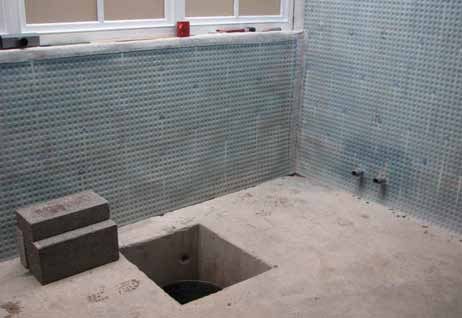
customers, and were able to refuse cover to new ones whose homes were at          Until the new scheme begins, the insurance industry has agreed to continue
flood risk. Also, the Statement did not guarantee affordable flood premiums       with the previous method. During this period, those at high risk can access
or manageable excesses, and an increasing number of people were struggling        specialist brokers and insurers who can provide cover in the majority of cases.
to afford flood insurance. The insurance industry and the Government have         However, the general public may not be aware of these options, particularly if
therefore agreed on a new ‘not-for-profit’ scheme, to be called ‘Flood Re’, due   they rely on price comparison websites which will tend only to show products
to come into force in the summer of 2015.                                         from mainstream insurers (and properties at flood risk are likely to be refused
                                                                                  cover using this method).
The new scheme is intended to ensure flood insurance for the household
sector remains both widely affordable and available. The scheme will provide      There is help on finding a broker here:
a fund to allow people at high flood risk, who might otherwise struggle to get
                                                                                  http://www.biba.org.uk/UploadedFiles/600floodguide.pdf
affordable insurance, to obtain flood cover at a set price. This will be based
on Council Tax bands although, at the time of writing, not every home will        The government has also published guidance on obtaining flood insurance here:
be included (the exclusions are expected to be houses in band H; those built      https://www.gov.uk/government/publications/property-floodprotection-flood-
post-2009; and most leasehold buildings). The premium to cover the flood risk     risk-report.
part of the household policy will be capped and customers will not notice any
difference. Flood Re will be funded via a levy on insurers, and premiums for      How can resistance and resilience help people access affordable
low risk householders should not go up.                                           insurance currently?
There is, however, a ‘catch’ built in to this arrangement. Flood Re has           Resistance and resilience measures can avoid the need to claim, or reduce
confirmed that after the first flood claim, they will pay for a property level    the value of any claim made, which can help maintain access to mainstream
survey, which will tell the homeowner what adaptations they can make to           insurance. It is more common for insurers to take account of flood resilience
reduce their flood risk. If the same property is flooded again and a second       measures when providing insurance to large commercial and public sector
claim made, the homeowner will then receive a warning letter: those who           customers. For homes, some specialist insurers will take account of
have not taken moves to protect their property and submit a third claim will      resistance and resilience that are installed to reduce the effects of flooding.
no longer be eligible for flood insurance under the Flood Re scheme. Prudent      These specialist insurers may offer a way for properties at very high risk, with
homeowners will therefore continue to need information and advice on              a history of flooding, to maintain access to insurance.
selecting flood protection measures for the foreseeable future.

                                                                                                                                                                4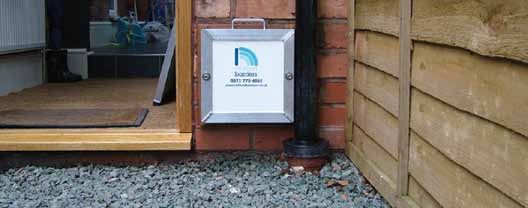
2. What is the risk to houses from flooding?
There are a number of potential sources of flooding that can threaten your home:

i.     Surface water flooding. In prolonged, exceptionally heavy downpours, which               bodies of raised water, such as mill ponds and agricultural treatment lagoons
       are becoming more frequent, the ground may saturate and the drains and                   that may pose a flood risk locally.
       sewers which carry away surface water may not be able to cope or may                vi. Burst water mains. Considerable amounts of water may be released, which
       even be blocked with debris or hailstones, leading to surface water flooding.            may flood the street and enter adjacent properties. The flooding is usually
       Surface water flooding will flow downhill and collect in low-lying areas which           comparatively shallow and short-lived, but may nevertheless cause extensive
       means that houses in low basins or at the foot of slopes may be at particular            damage to the ground floors or basements.
       risk of surface water flooding.
                                                                                           vii. Sewer flooding. When sewage escapes from the pipe through a manhole,
ii.    Groundwater flooding generally occurs during long and intense rainfall when              drain, or by backing up through toilets, baths and sinks this is known as
       infiltration into the ground raises the level of the water table until it exceeds        sewer flooding. Sewer flooding can be caused by: a blockage in a sewer pipe;
       ground levels. It is most common in low-lying areas overlain by porous soils             a failure of equipment; too much water entering the sewers from storm run-
       and rocks, or in areas with a naturally high water table. Groundwater flooding           off (from roads and fields) and rivers and watercourses which overflowed; or
       is a particular risk to buildings with basements.                                        the sewer being too small to deal with the amount of sewage entering it. The
iii.   River flooding. River flooding occurs following heavy rainfall (or melting               cause of the problem may be some distance away from where the flooding is
       snow) across the upstream reaches and tributaries of a watercourse where                 happening.
       the normal river channel is unable to carry the resulting high flow of water.       A flood can happen to any property from one or more of these sources and at any
       Adjacent low-lying properties and land are then liable to flood. River flooding     time. For most property in the UK the risk is small, however some premises are
       can extend over very large areas causing widespread damage and may be               more at risk than others because of their geographic location and particular local
       long-lasting and difficult to drain away. Fast-flowing floodwaters can be           situation.
       dangerous to people and animals and can structurally damage buildings.
                                                                                           Flooding of your home will almost always involve water entering the building
iv.    Coastal and tidal flooding is caused by high tides coinciding with a low-           from outside. Houses are usually built to prevent ‘normal’ water sources getting
       pressure storm system which raises sea and tidal water levels, overwhelming         in by the use of damp proof membranes, roof over-hangs, guttering, below
       coastal defences. This may be made worse by strong winds blowing sea water          ground drains and raised finished floor levels in the ground floor. Normal house
       onto the coast. Coastal flooding may affect not only property on the coast          construction is not designed to keep flood water out when large amounts of water
       itself but also property in tidal river basins some distance from the coast, due    lie against the building for any period of time.
       to floodwater being forced up the tidal reaches of rivers.
                                                                                           There are many routes by which external flood water can enter your house. Some
v.     Reservoir or dam failure. There are many thousands of reservoirs and                are very obvious such as doorways, windows, air bricks and cracks in walls.
       retained bodies of raised water across the UK, that pose a flood risk from          Others are not so visible such as washing machine outlets, downstairs toilets,
       failure of the retaining dam. Reservoirs larger than 25,000 cubic metres must       soaking through brick walls, below ground gaps in the walls and floors. The
       be registered with the Environment Agency and will be regularly inspected           chance of water getting into your house will also depend on things like the depth
       to ensure their safety. Dam failures in the UK are uncommon, so while the           of flood water and the time it takes to drain away.
       consequences of a dam failure are potentially catastrophic and could affect a
       large area, the chances of it happening are remote. There are many smaller

                                                                                                                                                                           5
3. How do I find out if my home is at risk from flooding?

The first check that you can do, and which doesn’t cost anything, is to
investigate whether your property is at risk of flooding from a number of
sources, using the maps provided by the Environment Agency (covering both
England and Wales) here:
http://watermaps.environment-agency.gov.uk
By choosing the relevant map and entering your post code the map will
indicate the areas at risk of flooding with dark blue shading for the highest
risk, lighter shades where there is some risk and no shading where the risk
is very low (meaning that each year, this area has a chance of flooding of
less than 1 in 1000 or 0.1%). Click the map at the location of your house and
a summary of flood risk at that area will be provided. The risk is graded as
‘very low’, ‘low’, ‘medium’ or ‘high’.
An additional map, called ‘Flood and coastal risk management activities’
shows where new schemes are being planned, and the likely year of the work.
These maps give a general guide only, and are not accurate down to
individual properties. They show areas at risk, and if so, whether there are
considered to be adequate flood defences in place. However, they do not
take into account local variations in physical features, nor the height of a
                                                                                different types of flooding, including local groundwater flooding risks which
property’s lowest floor above the surrounding ground. At the time of writing,
                                                                                are not currently included on the Environment Agency’s flood maps. Currently
the maps do not give any information about the flood risk from raised bodies
                                                                                (2014) the VAT exclusive cost of such a search is around £25 for a residential
of water holding less than 25,000 cubic metres (such as agricultural lagoons
                                                                                property, though higher for commercial properties depending on the total
or mill ponds), nor groundwater flooding. The Know Your Flood Risk campaign
                                                                                number of hectares covered.
is currently uniquely placed to provide information on your groundwater flood
risk as part of our (chargeable) Flood Report.                                  This type of report will not go to the level of detail where you would know what
                                                                                to expect when a flood occurs, you may still have questions such as: From
Local knowledge is an important source of information about the flood risk
                                                                                which direction will water come? How much warning will I get? How deep
to your home. Long-standing neighbours may have useful knowledge about
                                                                                will the water get? For how long will the water stay? How often will I flood?
flooding that occurred in the area before you moved in. Your local council or
                                                                                Will water get into my house? Can I protect my home? A specialist flood risk
water company may hold flood records.
                                                                                consultant would be able to answer these questions but you should expect fees
For a more accurate assessment of flood risk you can go to a specialist         of several hundred pounds. These are very modest costs when compared with
search provider who, for a small fee, will provide you with a more detailed,    the overall price of your house, mortgage costs and ongoing insurance fees.
‘desktop’ property-specific report. This will determine the risks from the

                                                                                                                                                               6
4. Should I consider protecting my home from flooding?

Whether and to what extent flood protection measures are necessary will            Having decided whether you should apply flood protection, the next question is,
depend on the degree of flood risk, and the vulnerability of your house and        of the many options available, which is the best choice for me?
occupants. As a minimum you should investigate the degree of risk to your
property using the Environment Agency’s flood map (see question 3, How do
I find out if my home is at risk from flooding?).
                                                                                       According to a report prepared for Defra in 2007, repairing a house
If your property does not lie in a shaded area (very low risk) it is very              after a flood was estimated to cost between £10,000 and £50,000
important to note there may still be risk of flooding, for example, from               depending on the flood depth. This will now have increased still
groundwater, or raised bodies of water holding less than 25,000 cubic metres           further, owing to inflation*.
(such as agricultural lagoons or mill ponds).
                                                                                       Academic research has found flood protection measures to be cost-
If there is a low risk, usually meaning that the chance of flooding is less            effective**:
than 1 in 100 (1%) in any year (Insurance Band 1 type properties as a broad
                                                                                       “While resilient repairs were found to be more expensive than
guide), but the risk is not serious enough to significantly affect the buildings
                                                                                       traditional methods (average 34% higher) they were found to
insurance, you should make some plans about how you would deal with a
                                                                                       significantly reduce the repair costs assuming a subsequent flood
flood if one was to occur, bearing in mind that floods are happening to many
                                                                                       were to take place. Resilient flood mitigation measures... will help in
properties which have never previously flooded. As a minimum, you need a
                                                                                       limiting the cost of repairs up to as much as 73 per cent for properties
Flood Plan (discussed as part of the next question). You may also consider
                                                                                       with a 20 per cent annual chance of flooding... the up-front investment
introducing some flood protection measures when convenient, for example
when you are carrying out refurbishment and replacement work.                          would be recovered following a single subsequent flood event.”

If the risk is medium, there is a chance of flooding between 1 in 100 (1%) and
                                                                                       * Bowker, P, 2007. Flood Resistance and Resilience Solutions. An R&D Scoping
1 in 30 (3.3%). (Insurance Band 2 properties and some others at local risk), for         Study. R&D Technical Report.
example if the property has previously been flooded, you should have a Flood           ** Rotimi Joseph, David Proverbs, Jessica Lamond, Peter Wassell, (2011)
Plan (discussed as part of Section 5) and you may also consider whether                   “An analysis of the costs of resilient reinstatement of flood affected properties:
some flood protection measures to the property would be appropriate.                      A case study of the 2009 flood event in Cockermouth”, Structural Survey,
These measures can be implemented when improvements and alterations                       Vol. 29 Iss: 4, pp.279 - 293
are undertaken, perhaps as a consequence of new ownership, or may be
undertaken solely to ensure peace of mind and maintain market value.
If the risk is high, with a chance of flooding greater than 1 in 30 (3.3%).
(Insurance Band 3 properties, and those which have been flooded more than
once within the last ten years or so), you will need a Flood Plan (discussed as
part of Section 5) and you should actively consider flood protection measures,
in order to maintain insurance cover and to minimise the negative impact on
market value.

                                                                                                                                                                               7
5. How best to protect myself, my family and my home from flooding?

To keep yourself and your family safe and to choose the best option for protecting your home, you are going to need some facts about the flood risk and facts
about the vulnerability of your house. The more reliable the facts then the more certain you can be that you have chosen the best option. Factors that influence
the best choice of flood protection is discussed below. However you should be aware that many of the important facts can be difficult to establish and require
technical knowledge and experience to make reliable estimates. You should obtain specialist advice from surveyors with flood risk experience or specialised
flood risk consultants.
The area at risk of flooding should be identified and the mechanism of flooding determined, such as the source of flooding (e.g. rivers, seas, reservoirs,
groundwater, surface water, sewers and mains supply) and the pathways that water will take to reach the site.
Facts about the flood risk
There are four facts about the flood water that are of particular importance:

                                                                    Flood depths expected at your house. Low depths, for example 100mm, are unlikely to put people at risk
                                                                    but water damage to buildings and contents may be significant without any flood protection. High water
                                                 1000mm possible    depths, for example 1m, may severely threaten the safety of people and may cause extensive damage to
Flood depth                                      300mm typical
                                                                    buildings. It may be dangerous to keep deep floods out of a building because of the large weight of water
                                                                    pressing against the walls.

                    hours      days     weeks                       Flood duration is the time that flood water is expected to stay at your house. Temporary flood defences
Flood duration                                                      may successfully keep water out if flooding is expected to last for just a couple of hours, whereas, long
                                                                    flood durations may give time for water to penetrate into the building. It may be safe to take refuge and
                                                                    stay in a building for short duration floods but this will depend on the other factors.
                 Days         Minutes

                                                                    Flood onset is the time for flood water to reach your house from its source. Short onset flooding
Flood onset                                                         (flash floods) are particularly dangerous as there is little time available to get people to safety or to
                     Hours
                                                                    protect buildings.

                        BAR        BAR          BAR
Flood annual                                                        Flood annual probability is a measure of the chance of flooding to your house over the course of 1 year.
probability             10%           1%        0.1%                Different approaches to flood protection may be needed depending upon how likely flooding is expected.

{ Dark blue indicates strong applicability of products in dealing with flooding, with light blue indicating reducing applicability. }

                                                                                                                                                                                8
These four key factors are used to decide what you and your family should do This gives surveyors a recognised framework for assessing flood risk and will
when flooding strikes, for example ‘evacuation’ or ‘go-in, stay-in and tune-in’. help people set out the flood risk information that insurers may ask them to
The factors are also important for guiding the best way to flood protect your provide. This offers a way of encouraging insurers to accept good property level
home. As well as listing currently available flood protection products, this protection schemes as a way of mitigating insurance, and therefore making
handbook includes a simple graphical indication of the applicability of the insurance more available and affordable. However, it will need to be promoted
products to flood depth, flood duration, flood onset and flood probability. to people, local authorities and agencies, as well as the insurance industry.
There are other important factors that have an impact on flood risk at your Choosing the right flood protection products
home, notably the expected velocity of flood water. Rapidly flowing water at Flood protection designed to keep water out of your house is referred to as
even low depths will increase the risk to both people and buildings. flood ‘resistance’ products. Temporary flood resistance products are those
The effect of flood defences should also be taken into account when that need deploying (fitting or activating) prior to flooding arriving whereas
estimating the above factors. permanent flood resistance products do not need activating. Flood ‘resilience’
refers to measures that reduce flood damage to buildings in situations where
Sources of information for the important factors include the Environment
water is allowed to enter.
Agency, local authority and local library archives. Local knowledge, particularly
from long-standing residents, is invaluable. Calculations of things like rainfall, The important facts about the flood risk and the facts about your home, when
river flows, pipe capacities and measurements of ground levels may be needed taken together, will guide the best choice of permanent resistance, temporary
to make reliable estimates, for which you should obtain specialist help. resistance or resilience and the product lists in this handbook will help with
this. Other factors will play a part in the decision making process, such as
Facts about your home – a property-level survey cost, visual impact, ease of deployment and product performance.
A property level survey should establish facts such as the level of thresholds
The best answer for your home will most likely involve a combination of
and floors, the likely points of water entry, whether attempts should be made
products. Other risks, such as the continued operation of fire exit doors, will
to keep water out of your home or just to allow the water in and enhance the
need to be considered and competing priorities balanced as well as ensuring
building in such a way as to limit the damage and promote rapid clean up. The
that any protection methods do not unnecessarily add to flooding elsewhere.
property-level survey of your house should be performed by an
In some situations, such as where surface water is the main source of
experienced professional.
flooding, the best answer may not involve the products discussed in this
A standard template for surveying property-level flood risk has been developed handbook, such as improving drainage systems or re-landscaping gardens.
by the Environment Agency/Defra in association with the Association of British
The chosen flood protection products will only be effective if they are used
Insurers, British Institution of Insurance Brokers and the National Flood Forum.
in the right way, at the right time and are stored and maintained correctly
The documents can be found at: to ensure their long term effectiveness. You need to be clear about the best
http://www.gov.uk/government/publications/property-flood-protection- way to act in a flood emergency to protect lives and buildings. A flood plan is
flood-risk-report essential for achieving these aims.
9Make a Household Flood Plan! The Environment Agency issues flood warnings for specific areas. There are
Being prepared for an emergency will reduce the risk to you and your family three flood warning codes:
and limit the damage to your house and its contents.
A Household Flood Plan will need to establish the best emergency actions
and who does what when flooding looks set to strike.
The important facts about flood risk and the availability of flood warnings will
guide your best action in an emergency. Evacuation is most appropriate where
flooding is deep and flood warnings will give you time to move to a place of
safety unaided. Identifying a place of safe refuge with possible rescue by the
emergency services may be the best approach where rapid flooding occurs A Flood Alert A Flood Warning means that A Severe Flood Warning
and safe evacuation is not possible. means that flooding is expected and that means that there is
flooding is possible you should take immediate severe flooding and
The Household Flood Plan should clearly list actions needed on receipt of a and that you need action. You should take danger to life. These are
flood warning, such as how to set up any temporary flood protection devices to be prepared. action when a flood warning issued when flooding is
as well as giving a maintenance schedule to ensure correct operation of is issued and not wait for a posing significant risk
devices in the future. The plan should take account of the possibility of flood Severe Flood Warning. to life or disruption to
communities.
protection devices failing or their design being exceeded.
Flood warnings
Flood warnings will give you time to prepare for flooding which could save you
time, money and heartache. They are also vital in order to know when to carry
out your flood plan. The Environment Agency provides a free flood warning
service for many of the communities at risk of flooding. To find out if a service
is available in your area, and to sign up contact Floodline on:
0345 988 1188
This service sends you a direct message when flooding is expected and may
affect your property. You can receive warnings by telephone, mobile, email,
SMS text message or fax, whichever you prefer. You can also view flood
warnings through the Environment Agency website:
http://apps.environment-agency.gov.uk/flood/31618.aspx
Or via Twitter: follow @EnvAgency OR if you in Wales follow @NatResWales
Or on Facebook: www.facebook.com/FloodAlerts (England and Wales)
10There are other warning services that are available where an area isn’t It is vital that your Household Flood Plan is kept up to date, such as when
covered by a formal flood warning service, for example the Met Office circumstances change, and to make sure that everyone knows what to do
provides a National Severe Weather Warning Service (NSWWS) to warn what flooding occurs.
the public of severe weather, including heavy rainfall. The NSWWS issues
Your local council is an important resource when creating a Household Flood
alerts when severe weather is expected more than 24 hours ahead, and
Plan for things such as finding a place to evacuate and whether you are best
warnings when severe weather is expected in the next 24 hours.
to evacuate or stay in your house. They may have an emergency planning
All warnings and alerts appear on the Met Office website: officer to offer assistance.
http://www.metoffice.gov.uk/public/weather/warnings/#?tab=map&map= The Environment Agency provides a guide for preparing a Flood Plan and
Warnings&zoom=5&lon=-3.50&lat=55.50&fcTime=1404082800 offers a template to follow on the website. You can access this by visiting:
and are also communicated to the public via electronic and broadcast media. http://apps.environment-agency.gov.uk/flood/151256.aspx
Some local authorities may also issue warnings to residents. Private flood
level alarms are also available for purchase (refer to page 20).
116. Where can I find help?
There is a list of useful links at the end of this document where you can get work with emergency responders during flooding events and during severe
further help and advice. events they will provide advice to the local public about the incident and what
action to take. This may include organising rest centres for evacuated people.
Environment Agency (England)/Natural Resources Wales
These organisations have responsibility for building, maintaining and operating Both the Environment Agency and LLFA will be able to assist you with
flood defences, as well as for issuing flood warnings to the public, with a understanding your flood risk and deciding how best to protect yourself. If
particular emphasis on rivers, seas and reservoirs. you are at particular flood risk and have previously flooded, your local council
may be able to offer some financial assistance for flood protection measures
The Environment Agency has an extensive website covering flood risks and through Property-Level Flood Protection funding or from other local
what to do to prepare for a flood, during a flood and after a flood. authority funds.
Following the floods of 2007 and the subsequent Pitt report, the Flood and
Water Management Act 2010, Lead Local Flood Authorities (LLFA) were set
up within local authority structures to manage local flood risk. Your LLFA will
127. The flood protection product information tables
The following pages of this handbook provide a list of flood protection products At the time of writing, a more stringent standard (with lower permitted leakage
grouped into categories to help you understand the way they work and to rates, for example) is in development, which is expected to become PAS1188
assist with choosing the best product. Each category is described with simple – 2014. Products conforming to the previous standard (PAS1188-2009) but
graphics showing the kind of flood situation to which that group of products is falling short of the new one, will retain their 2009 Kitemark, forming a two-tier
most applicable. Advice on flood plans is given within the product categories, system for the first time. This publication will be updated to show the relevant
such as the importance of warning systems to deploy products in good time or information once it becomes publicly available. Current categories:
training needed to correctly erect flood defences.
Building aperture products PAS1188-1 This includes parts of the building
A list of products currently available for each category is provided with notes which allow people to enter or provide ventilation to the building (e.g. windows)
on advantages/disadvantages and the current suppliers of such items. The up to a width of 2,400 mm. The products are tested in conditions for static flood
indicative costs (for application to a single dwelling) are banded as follows: water rising up to a level between 600 mm and 900 mm above ground level.
There is a permissible leakage rate that is set at one litre per hour per metre of
seal under the designated maximum water depth.
< £100 Low Temporary products PAS1188-2 A temporary flood protection product is for
£100 - £750 Low-medium use away from buildings but may be sealed against structures or buildings at
£750 - £1500 Medium section ends. They can also help to reduce the seepage of groundwater into the
£1500 - £5000 Medium-high lower foundations and ground floor level of the property. The maximum leakage
> £5000 High rate is 40 litres per hour per metre of product measured along its base where it
> £10000 Very high forms a seal.
Demountable products PAS1188-4 A demountable flood protection product
is capable of being removed and reinstalled on permanent mountings. It is for
Flood protection products that have been performance tested and comply with
use away from buildings and may be sealed against structures or buildings
the relevant kitemark standards are indicated by ‘BSi’ highlighted in yellow.
at section ends. The leakage rate is 40 litres per hour per metre of product
Kitemarked products measured along its base where it forms a seal.
‘PAS 1188’ is an industry driven standard, which provides a benchmark for (Note – category 1188-3 has been discontinued).
flood resilience technologies. A ‘publicly available specification’ (PAS) typically For more information please visit the British Standards Institute website:
forms the first stage in formulating a full British Standard. Testing involves
static water, waves and currents. It was first developed by the British Standards http://www1.kitemark.com/cms/listing/guide/flood-protection-products
Institution (BSi) in association with the Environment Agency in 2003, and
updated in 2009.
13Other relevant standards The information contained in the handbook was originally obtained from a
BS EN 13564 Anti-flooding devices for buildings (covers Non Return Valves literature review, by consultation with industry experts and a wide range of
for Sewers) manufacturers and suppliers of products. In June 2014, a web search was
undertaken to update the information to include companies and/or products
Note - European standards (beginning BS EN) have the status of British new to the market; this revised guide contains the information obtained through
standards. this process and provides the correct and up to date contact information for the
This specifies types and requirements for materials, performance, design, companies listed in Section 13.
construction and marking for factory made anti-flooding devices for faecal and/ No endorsement is given of any products or services listed. The information
or non-faecal wastewater for use in drainage systems of buildings operating is designed to act as a directory for your assistance. This is a living document.
under gravity in accordance with EN 12056-1. Updates and amendments are encouraged from users, manufacturers and
There are also International Standards (beginning ISO), one of which applies to suppliers. Please refer to the foreword for details.
rendering products.
ISO 15148:2002 Hygrothermal performance of building materials and products
- Determination of water absorption coefficient by partial immersion.
This European Standard is intended to assess the rate of absorption of water,
by capillary action from continuous or driving rain during on site storage or
construction, by insulating and other materials, which are normally protected.
The method is suitable for renders or coatings tested in conjunction with the
substrate on which they are normally mounted. It is not intended to assess the
absorption of water by materials used under water or in overall contact with
saturated ground, where a total immersion test is more appropriate.
148. Permanent resistance
Permanent resistance products are designed to stop water entering your Flood plan considerations
home either through existing openings (doors, windows, airbricks, vents and
These products do not require activating to make them work and so protection
pipes) or to stop it penetrating the walls. Flood protection is permanently
to your home does not depend upon receiving and acting on a flood warning.
in place, with no action needed to deploy the device, which is why it is often
No training is needed to operate the products and no long term storage of
described as a ‘fit and forget’ approach. These measures are designed to
items is required. Routine inspection and maintenance of the products is
lessen the damage that floodwater can do and also to give homeowners extra
however essential.
time to move ground floor contents. The measures may only be effective for a
limited time and limited water depth. Creating a flood plan is important for protecting people and your property in
an emergency. As well as stating who does what when flooding is expected,
These products will only keep water out if they are correctly used as part of a the flood plan should say what to do in a ‘worst case scenario’ such as water
package of measures identified from a property-level flood protection survey seepage through flood protection devices, flooding that is higher than the
carried out by a qualified and experienced surveyor. No particular action is flood protection products are designed to resist and people being trapped in
required by you to make the product work and so they will protect even while the home with rising water.
you are away from your home and if flooding arrives quickly with no warning.
The products are designed to keep water out for long periods, however seepage
is possible (depending upon both workmanship and flood conditions) and the
existing (2009) BSI Kitemark standard allows for some seepage.
There is a risk to the structure of your home if deep water is held back by the
external walls due to the pressure of water. For this reason the products are
only suitable for limited flood depths. A structural assessment of the building
is recommended where flood depths in excess of 300mm (about a foot) are
intended to be resisted.
15Private flood level alarms
As the devices themselves are permanently installed, details of these 1000mm possible
products are included in this section, although they are also relevant to the Flood depth 300mm typical
sections on temporary and resilient measures.
Even though your home and its contents may be protected by permanent
measures, you may benefit from prior warning to take other actions, such hours days weeks
as moving cars or caravans to higher ground. If your home is in an area not Flood duration
served by official flood warnings, you may be able to install a private flood
level alarm system.
These normally include a water sensor and an alarm unit. The sensor will Days Minutes
detect flood water and send a signal to the alarm unit that will make a sound Flood onset
an alert to warn you of the approaching flood risk.
The sensor will need to be carefully installed at a location where rising
Hours
flood water will be detected well before flooding commences to alert you
to the risk (such as during the night) and to give you time to take action. It
is recommended that you obtain expert help choose the right system and
correctly install it. Permission from landowners and local authorities may
be needed prior to installing the sensor. BAR BAR BAR
Flood annual
probability
10% 1% 0.1%
Required input
of people Low Mid High
16Product type Indicative cost Available products/suppliers Comments Images
Auto-barriers High to Very high ‘SAFB’ (self activating flood barrier – inc Powered by floodwater itself, no electrics.
both small-scale domestic AND large
Unobtrusive. Structure of building is
area types) (UK Flood Barriers)
not the limiting factor. High initial cost,
Self Closing Flood Barrier (Flood Control including below-ground work; May need
International) additional seepage measure.
‘Auto Roller shutter’; ‘FloodBreak’ SAFB resting position – UK
(Aquobex) Flood Barriers
‘Spring Dam’ (Tilt-dam Ltd)
SAFB deployed – UK Flood
Barriers
Water-resisting external Medium-high ‘Flood Safety Door’ BSi (Aquobex); Some models include ‘Escape hatch’
doors / windows option, built in to the top half of the door,
‘Flash Flood Door’ BSi (Flash Flood
to aid rescue/delivery of emergency
Doors Ltd)
supplies etc whilst keeping water out
Flood Resistant Doors (Flood Divert Ltd) of the property.
‘FloodProof’ doors (FloodGuard Uk Ltd) Unobtrusive - look the same as normal
doors. Some types may need measures Flash Flood Door (BSi)
‘StormMeister’ flood doors (Wm Snape to deal with seepage. May be difficult
Man Servs Ltd UK) to evacuate if people are trapped inside
‘Flood Defender’ BSi (UK Flood Barriers) with rising water. A door may keep
water out at depths that are dangerous
‘Flood Plan door’ BSi (Stormguard) to the structure of the building.
‘Whitehouse Flood Door’ BSi
(Whitehouse Construction Co Ltd)
Defence Doors Ltd
Other – Drain Angel Flood Windows
Flood Windows (Defence Doors Ltd) These windows still open when
required; designed to withstand
collision from floating debris.
17Product type Indicative cost Available products/suppliers Comments Images
Sealing around external Low ‘Soudal Fixall’ (Drain Angel Ltd) Permanently elastic after curing
doors / windows
‘Flood Angel Silicone’ (UK Flood Remains flexible; contains fungicide.
Barriers)
Unobtrusive and inexpensive, but needs
careful application. Not appropriate
in conjunction with normal doors/
windows, which are not designed to
resist high water pressure. May also
need measures to deal with seepage.
Sealing cracks / weep- Low MD III Duct Sealing System; MD II Duct Unobtrusive and inexpensive. Needs
holes / service inlets Sealing System; MD IV Duct Sealing careful application, using water-
and service entry and System; CSD duct sealing solutions resistant formula (not standard
exit points; duct sealing (Aquobex) product). May just reduce penetration
products rate. Damp problems could result if
‘Soudal Fixall’ (Drain Angel Ltd)
weep-holes are permanently covered.
‘Slipsil’ service entry point seal/duct An uncovered ‘weep hole’
plugs (Aquobex; Flood Sense Ltd) in brickwork
‘Flood Angel Silicone’ (UK Flood
Barriers)
Render / external tanking Medium to High ‘Polyprufe’ ext tanking (Aquobex) Should seal all cracks even when walls
are in relatively poor condition.
‘Vandex’ cementitious range (Safeguard
Europe) Below-ground work involved. May just
reduce penetration rate. May need
facing bricks as well. May need planning
approval - visually alters building. May Ref: Severn Trent
lead to damp within the walls.
18Product type Indicative cost Available products/suppliers Comments Images
Re-pointing Low-medium ‘InsuDry’ powder (mortar additive) May just reduce penetration rate.
(DrainAngel Ltd)
Unobtrusive. Brickwork needs to be in
good condition to be effective. May lead
to damp within the walls.
Wall sealant Medium (including labour) ‘Aquastop’/’InsuDry’ liquid (DrainAngel Aquastop = For painting DPC joints
Ltd) and below; dries to cement colour. (For
above DPC, InsuDry recommended.)
Nanoshell’; ‘Stone Water-Guard’
(Aquobex) Note – ‘Water repellent coatings’
(also called ‘damp-proofing masonry Nano-technology sealant
‘Waterstop’ coating (UK Flood Barriers)
creams’) are not intended for under- applied to right of breeze
‘S500 wall sealant’ (Watertight water use (in accordance with ISO block, none on left (Aquobex)
International) 15148:2002(E) - Hygrothermal
performance.)
Tanking (internal), Very high Internal cavity wall tanking with Designed to be completely waterproof.
including cavity drain membrane/drain channel/pump Offers groundwater protection.
membrane systems system plus joint sealant (Aquobex/
Needs sump and pump. Vulnerable
FloodGuards)
to damage due to later alterations.
Cavity drain membranes/sump/pump Primarily designed to protect against
system (Drain Angel Ltd) groundwater.
Aquadrain perimeter floor drain
Aquobex
channels (Drain Angel Ltd)
‘Flood Angel Tanking Polymer’ (UK Flood
Barriers)
‘Kiltox’ cavity drain membrane/tanking
‘Newton System 500’ (John Newton & Co
Ltd)
‘Oldroyd’ range (Safeguard Europe)
‘Triton cavity drain membranes’ (Triton
Chemicals)
‘Wykamol cavity drain membranes’/
sump/pump systems
19Product type Indicative cost Available products/suppliers Comments Images
Bolt-down manhole Bespoke Saint Gobain PAM May require liaison with local authority/
covers sewerage agency.
Water resisting airbricks Low (single product) ‘SMART airbrick’ BSi (Aquobex/ Inexpensive and unobtrusive. Needs
/ permanent airbrick Medium (including fitting FloodGuards; CSI Flood-products; Drain careful installation and maintenance.
covers costs for multiple units) Angel Ltd; Eco Coverage Technologies; May need measures to deal with
Floodgate Ltd; Multi Flood Solutions) seepage.
Automatic anti-flood airbrick (FloodArk;
UK Flood Barriers; Whitehouse
SMARTairbricks (BSi)
Construction Co Ltd)
‘Snorkelvent’ (from 310 to 900mm Need to choose correct height from
height) (Aquobex; Donite Plastics) range available to avoid overtopping.
Snorkelvent
Anti-backflow valves for Low to medium Optima 160 (Aquobex) Relevant standard is BS EN 13564 -
sewer pipes (backwater ‘Anti-flooding devices for buildings’
‘Kessel’ NRV BSi (Mission Rubber;
valves)
Redi) ‘Watertight International NRV’ Unobtrusive and inexpensive. May need
BSi (Floodgate Ltd) Anti-flood valves to assess the impact on neighbours.
BSi (Marley) ACO ‘QUATRIX’ BSi (ACO
Building Drainage)Flood Angel NRV BSi Optima 160 – Aquobex
(Flood Angel)
Other: ‘Forge’ antiflood sewer valve (Drain
technology) ‘Hunter’ NRV (Flood Sense
Ltd) Drain Angel; Flood Ark; Multi Flood
Solutions; Whitehouse Construction Co Ltd)
NRV/’Flusher’ combination (Aquobex)
Non-return valves (NRVs) Waste pipe NRV – Aquobex
for appliance waste-pipes Appliance NRVs (washing machine outlets
etc) (Drain Angel; FloodArk; Flood Divert Ltd)
20Product type Indicative cost Available products/suppliers Comments Images
Built-in sump and pump Low (pump only) ‘Permaguard’ unit (Drain Angel Ltd) Rapid deployment. Relatively low cost.
systems Medium-high (system) Helps where a resistance product leaks.
Aquobex; Flood Ark; Flood Divert; UK
Can remove flood water in an emergency.
Flood Barriers; Whitehouse Construction
Co Ltd Must be positioned and sized correctly.
May require ancillary power supply. Will
need servicing and maintenance.
Flood alarm systems Low-medium ‘FloodSafe 3000’ flood alarm (Flood Safe) 24/7 monitoring. Needs careful
(domestic) installation. Needs regular testing/
Other - Flood Angel
maintenance.
Telemetry early warning (UK Flood May need to obtain permission from
Barriers) landowners/local authorities.
Bespoke See also Community section for mass IBS flood gate
warning types. (installer Yorkshire
Dampcourse)
Permanent barrier Medium-high to Very high Glazed barriers (Aquobex; Defence Structure of building is not a
walls with demountable (depending on length Doors Ltd; IBS Engineered Products Ltd) limiting factor.
gates / concealed gates / required / groundworks
Flip-up hydraulic gates (IBS Engineered See also Community section for wider
permanent swing gates involved)
Products Ltd) area systems.
Flood gates (Whitehouse Construction
Co Ltd; IBS Engineered Products)
Hardwood flood gates (Flood Divert Ltd)
Drop-down barrier (Aquobex)
Raised porch / threshold Medium-high to High Property level survey needed to establish Unobtrusive, but disabled access may
appropriate threshold height. need to be considered. Low flood depths
only; waterproof door may also be
needed.
Brick-facing using Medium Engineering bricks must conform to
Note ‘Clay Engineering bricks’ are
engineering bricks British Standard BS 3921: Class A (blue)
made to a lower standard.
water absorption9. Temporary Resistance
Temporary resistance measures are aimed at keeping floodwater out of a may be required, in a location that is easily accessed. Routine inspection and
building by putting in place devices that block doors, windows, airbricks, vents maintenance of the products is however essential.
and pipes. In order to be protected, these products will need to be installed
Creating a flood plan is important for protecting people and your property in
before flood water arrives. They are designed to lessen the damage that
an emergency. As well as stating who does what when flooding is expected,
floodwater can do and also to give homeowners extra time to move ground
the flood plan should say what to do in a ‘worst case scenario’ such as water
floor contents. The measures may only be effective for a limited time and
seepage through flood protection devices, flooding that exceeds the design
limited water depth.
of the flood protection products, people being trapped in the home with
These products will only keep water out if they are correctly used as part rising water.
of a package of measures identified from a property-level flood protection
Private flood level alarms
survey carried out by a qualified and experienced surveyor. The products will
need to be put into place in good time before flood water arrives and then As the devices themselves are permanently installed, details of these
removed once the flood risk has passed. The products are designed to keep products are included in the previous section.
water out for long periods, however seepage is possible (depending upon If your home is in an area not served by official flood warnings, you may be
both workmanship and flood conditions) and the existing (2009) BSi Kitemark able to install a private flood level alarm system. These normally include a
standard allows for some seepage. There is a risk to the structure of your water sensor and an alarm unit. The sensor will detect flood water and send
home if deep water is held back by the external walls due to the pressure of a signal to the alarm unit that will make a sound an alert to warn you of the
water. For this reason the products are only suitable for limited flood depths. approaching flood risk. The sensor will need to be carefully installed at a
A structural assessment of the building is recommended where flood depths location where rising flood water will be detected well before your home is
in excess of 300mm (about a foot) are intended to be resisted. about to flood to alert you to the risk (such as during the night) and to give you
Flood plan considerations time to take action. It is recommended that you obtain expert help choose the
right system and correctly install it. Permission from landowners and local
These products require activating to make them work and so protection to your
authorities may be needed prior to installing the sensor.
home depends upon receiving and acting on a flood warning. Some training
may be needed to correctly operate the products and long term storage of items
22Some suppliers offer household ‘kits’ including a selection of products to
suit an average house at risk from relatively low level flooding. It should be
borne in mind that deeper/longer lasting floods may require higher levels
of protection. Also, where the home is attached to others (semi-detached
1000mm possible
or terraced properties) water may also enter via party walls, unless the 300mm typical
Flood depth
neighbouring homeowner takes similar steps. Two examples are shown below:
hours days weeks
From Drain Angel, including full instructions/guide: Flood duration
InsuDry Liquid and Powder; Aquastop; airbrick covers; door barrier;
Panseal; sewer valve; Puddlesucker; sealant and access hatch.
Days Minutes
< 1 foot and 6 hours’ flood duration = £745 (inc p and p)
Flood onset
< 6 inch and 4 hours’ flood duration = £985 (inc p and p)
Hours
From Flood Divert
2 Kitemarked door barriers, some air brick covers, some non return
valves (for sinks and washing machine pipes), some packs of self BAR BAR BAR
Flood annual
inflating sandbag equivalents and wall sealant. probability
Less than £950.00 (plus p and p) 10% 1% 0.1%
Required input
of people Low Mid High
23Product type Indicative cost Available products/suppliers Comments Images
Barriers for doors / Low-medium (single ‘FloodArk’ barriers BSi (Flood Ark) Many temp barriers require a
windows / garages product) fixed frame, others do not – eg
Flood Angel ‘Defender’ and ‘Sentinel’
FloodBarriers from Watertight Int;
barriers BSi (UK Flood Barriers)
FloodGate.
Medium-high (whole home ‘FloodBarriers’ BSi (Watertight Int)
Rapid deployment. Low weight and
package)
‘Floodgate’ BSi (Aquobex; CSI Flood- easily deployed products available.
products; JTA Flood) Floodguards
Items require storage space. Some
‘Floodguards’ BSi (Aquobex) barriers need tools for deployment. (courtesy Aquobex)
‘Floodtite’ panels (Aquobex; CSI Flood- Permanent fixings on the building with
products) most products. Deployment may be
physically difficult for some individuals.
Caro barriers bespoke solutions for May need measures to deal with
Listed Buildings (Aquobex) seepage.
Stop log system BSi (Defence Doors Ltd; Note - For demountable options
Flood Divert Ltd) (requiring permanent groundworks) see
‘Flood Plan’ boards (Stormguard) Community section.
‘Damfast’ door barriers (Flood Sense
Ltd)
‘Floodshield’ door barrier (Flood shield;
Multi Flood Solutions)
‘Floodwall’ BSi (FloodWall)
‘HydroGuard’ barriers (HydroGuard)
‘FloodBuddy’ (Newlands)
‘FloodDoor’ (Snorklevent; Whitehouse
Const)
‘Coplastix’ Stop log system (Ham-Baker
Ltd)
24You can also read


