Lighting A Case Study on for Museums and Galleries - Museums and Galleries QLD
←
→
Page content transcription
If your browser does not render page correctly, please read the page content below
A Case Study on

  Lighting
for Museums and Galleries
This Project is delivered by Museums & Galleries Queensland in partnership with
Museums & Galleries of NSW, Regional and Public Galleries Association of NSW and
Regional Galleries Association of Queensland.

Museums & Galleries Queensland is supported by the Queensland Government through
Arts Queensland, and is assisted by the Australian Government through the Australia
Council, its arts funding and advisory body.

Museums & Galleries of NSW is supported by the NSW Government through Arts NSW.

This Activity received funding from the Australian Government as a part of the Energy
Efficiency Information Grants Program and is supported by the Visual Arts and Craft
Strategy, an initiative of the Australian state and territory governments.

Page 2 / 25
Project Team

Museums & Galleries Queensland:
Rebekah Butler

Museums & Galleries of New South Wales:
Michael Rolfe

Regional Galleries Association of Queensland:
John Walsh

Regional and Public Galleries Association of New South Wales:
Debbie Abraham

Steensen Varming:
Chris Arkins
Emrah Baki Ulas
Ashleigh Bretherton

International Conservation Services:
Julian Bickersteth
Fiona Tennant

With special thanks to:
Simm Steel (Art Gallery of New South Wales), Debbie Abraham (Lake Macquarie City Art
Gallery), Tania Creighton (UTS Gallery), Jane Cush (Goulburn Regional Art Gallery),
Belinda Hanharan (Hazelhurst Regional Gallery and Arts Centre)

Authors

Emrah Baki Ulas
Ashleigh Bretherton

Typeface
Varming (Copyright © 2013, Steensen Varming)

Cover Image
Brett Whiteley Studio (Copyright © 2015, Steensen Varming)

Copyright © 2015, Steensen Varming,
Sydney/Australia
All rights reserved.

Page 3 / 25
Disclaimer

The inclusion of products and suppliers does not imply endorsement or support of any of
the services, products or providers by Museums & Galleries Queensland or project
partners. Users of this publication are responsible for independently verifying any and all
information, services, products or providers.

Whilst this document aims to provide information that is as accurate as possible for each
case study, there may be a tolerance to the data provided. The energy saving figures act
as an indication of the potential contribution that lighting upgrades can make to the overall
gallery/museum building.

The views expressed herein are not necessarily the views of the Commonwealth of
Australia and the Commonwealth does not accept responsibility for any information or
advice contained herein.

This publication is primarily intended to provide guidance for facilities staff at museums,
galleries, cultural and archival facilities. It is not intended to be exhaustive or definitive as
the issues addressed continue to be a major topic of discussion and debate. It is
recommended for users of this guide to exercise their own professional judgement and
consult suitably qualified professionals when deciding whether to abide by or depart from
it.

Page 4 / 25
Foreword
When considering the different operating systems of a museum or gallery, lighting
has perhaps undergone the greatest changes in recent times. Most notably these
include the phasing out of inefficient incandescent lighting and the rapid development
of new technologies and associated operating systems.
We have developed this resource, in the form of case studies, to assist museum and
gallery staff to identify the best long-term lighting upgrade or replacement solution
for their institution. The case studies presented draw on the direct experience of five
Australian public galleries. They document their existing systems, lighting solution
adopted, project costs and assessment of improved energy efficiencies following
implementation.
This resource is intended to be used when working with stakeholders, consultants or
suppliers to better understand the range of options, potential costs, benefits and
practical feasibility of different lighting design solutions. It is also recommended that
it be used in conjunction with A Practical Guide for Sustainable Climate Control and
1
Lighting in Museums and Galleries and that users seek appropriate professional advice.
Museums & Galleries Queensland could not provide such informative resources
without the generous input and cooperation of:
our project partners – Museums & Galleries of New South Wales, Regional
and Public Galleries Association of New South Wales and Regional Galleries
Association of Queensland;
our funding partners – the Australian Government through the Department of
Industry and Science; and the Visual Arts and Craft Strategy, an initiative of
the Australian, state and territory governments;
our respected project consultants, Steensen Varming and International
Conservation Services; and
the galleries/art museums featured in the case studies.
We acknowledge the support of each of these entities and their contribution to the
publication of this resource.
Rebekah Butler
Executive Director
Museums & Galleries Queensland
1
Available from www.magsq.com.au
Page 5 / 25 A Case Study on Lighting for Museums and Galleries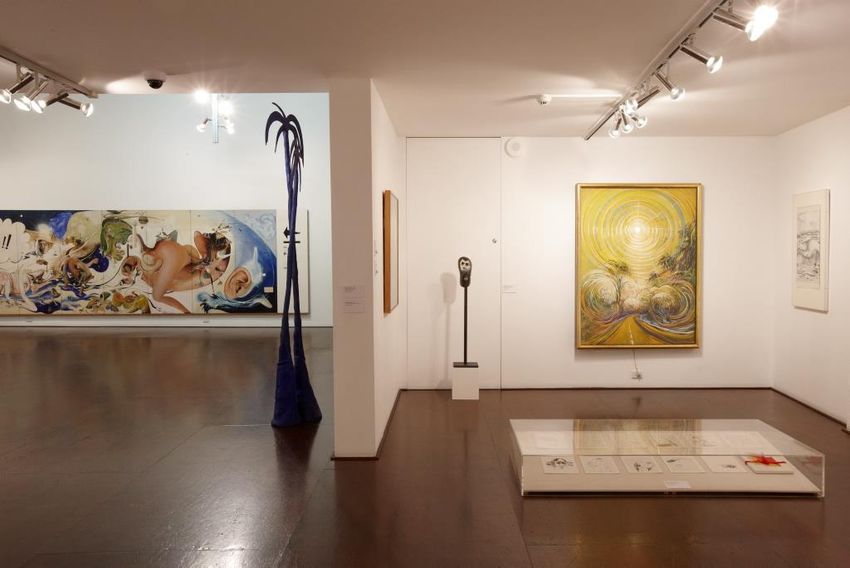
Contents
1.0           Introduction                                                                       7
2.0           Objectives                                                                        8
  2.1         Demonstrate energy saving initiatives                                              8
  2.2         Be relevant for different project scales                                           8

3.0           Case Study                                                                        9
  3.1         Institution #1: Art Gallery of New South Wales Brett Whiteley Studio               9
  3.2         Institution #2: Lake Macquarie City Art Gallery                                   15
  3.3         Institution #3: University of Technology Sydney (UTS) Gallery                     18
  3.4         Institution #4: Goulbourn Regional Art Gallery                                    21
  3.5         Institution #5: Hazelhurst Regional Gallery and Arts Centre                       23

4.0           Summary                                                                           25

Page 6 / 25                                A Case Study on Lighting for Museums and Galleries
1.0 Introduction
The aim of these case studies, is to canvass a range of different lighting solutions
available today to museums and galleries. It is also hoped that they will inform the
relevant decision makers on the various aspects of these solutions and assist in making
sustainable decisions for future lighting upgrades for their institutions.
The document demonstrates, how today’s museums and galleries can achieve
extensive energy savings utilising energy efficient technologies that also provide
suitable exhibition display conditions for collections, visual comfort, performance and
enjoyment for visitors. The document studies a range of options and strategies for
museums and galleries. It is not intended to preclude professional advice, rather it is
developed to aid in identifying options suitable for a particular situation and in so
doing, to act as a companion to, professional lighting design input.
This study received funding from the Australian Government as a part of the Energy
Efficiency Information Grants Program and is designed to be most relevant to
museums and galleries in Australia. It is worth noting, however, that it is developed
with many years collective experience in the museum and gallery sector covering
locations all over the world. The technical issues discussed are of regular debate and
should always be considered with specific regards to the ongoing research and
development in the related fields. This document provides principles that are largely
applicable to, or at least informative for most facilities globally.
This document utilises a series of case studies as industry benchmarks to present how
these technical issues have been addressed by like-minded galleries of varying scales
and budgets. They offer ideas on a range of solutions that contribute towards energy
savings, and provide feedback to other galleries looking to upgrade their facilities in
the future.
A number of Institutions have been studied in this document based on:
Their potential to demonstrate sustainable approaches;
Their relevance to Australian museums and galleries;
The variety of solutions they have adopted in their lighting systems;
Ease of access to their information and communication;
Their recent lighting upgrade projects which can become a benchmark for
other institutions.
The selected Institutions are:
1. Brett Whiteley Studio (Managed by the Art Gallery of New South Wales
(AGNSW)): Complete lighting and lighting control refurbishment, including
new LED luminaires, new lighting track infrastructure and new Digitally
Addressable Lighting Interface (DALI) lighting control system
2. Lake Macquarie City Art Gallery: Upgrade to LED luminaires and DALI control
system, whilst keeping existing track infrastructure in place
3. University of Technology Sydney (UTS) Gallery: Keeping the existing
lighting control infrastructure and upgrading the lighting tracks and the
luminaires
4. Goulbourn Regional Art Gallery: Minor upgrade on a small budget through
relamping of existing luminaires with LED retrofit lamps
5. Hazelhurst Regional Gallery and Arts Centre: Upgrade keeping existing
lighting track infrastructure, replacing existing luminaires and upgrading
lighting control system (project not yet undertaken)
Page 7 / 25 A Case Study on Lighting for Museums and Galleries
2.0 Objectives
Through in-depth analysis of the five different lighting upgrades, this document aims
to address the following objectives.

2.1           Demonstrate energy saving initiatives

This document aims to demonstrate how to achieve extensive energy savings utilising
energy efficient technologies that also provide suitable exhibition display and address
conservation requirements.

In evaluating the success of an installation, it is important to address the public user
experience alongside the facility management experience. Any energy saving
initiatives should also offer an improved visual experience through quality of light, as
well as improved long-term maintenance and efficiency of the system.

2.2           Be relevant for different project scales
Through inclusion of varying lighting upgrades this document aims to provide useful
information for the benefit of museums and galleries in Australia, to suit varying
budgets, sizes and to provide an understanding of real benefits that are achievable
for different circumstances.

Page 8 / 25                             A Case Study on Lighting for Museums and Galleries
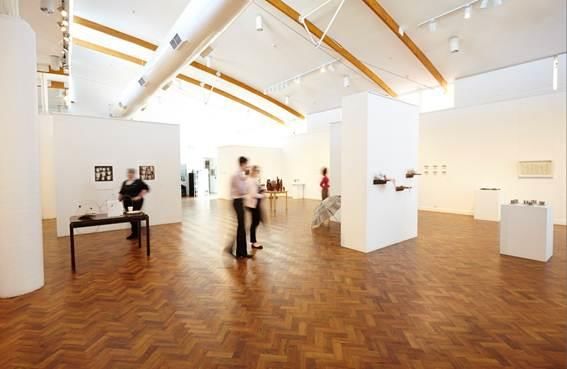
3.0 Case Study
3.1 Institution #1: Art Gallery of New South Wales
Brett Whiteley Studio
3.1.1 Context
Size of Refurbishment: Approximately 360m²
Project Price Bracket: Over $200,000
Project Description: The Brett Whiteley Studio is a local gallery operating under the
Art Gallery of New South Wales (AGNSW). The LED lighting upgrade completed in
2014 acted as a pilot project for future lighting upgrades for the larger galleries within
the AGNSW. A complete LED lighting refurbishment was undertaken, including new
LED luminaires, new track infrastructure, and a new DALI lighting control system.
All outdated lighting tracks, track mounted luminaires, security lighting, emergency and
exit lighting were replaced with an integrated system.
Previous Installation:
Track layout and offset from the wall was not ideal for artwork lighting.
Original tracks with incandescent fittings had high energy consumption and
were utilising phased-out technology.
Original lighting fixtures had limited optical control.
Lighting control was via traditional rotary dimmers from 1996 offering limited
flexibility.
Exit and emergency luminaires consisted of a single point non addressable
system with individual batteries. Fittings were obtrusive, large and less
efficient than newer technology.
Security lighting was through separate fluorescent battens with no optical
control.
Surface mounted conduits to other services such as smoke detectors were
exposed and obtrusive.
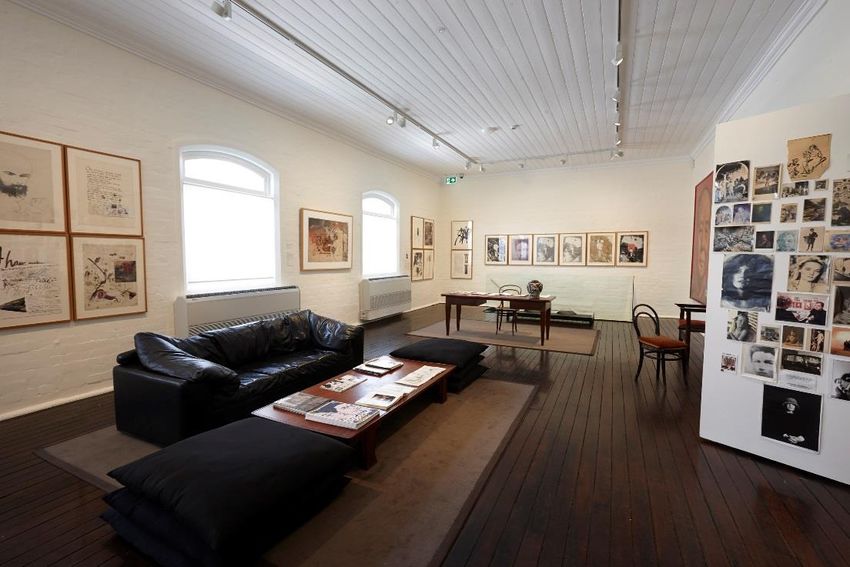
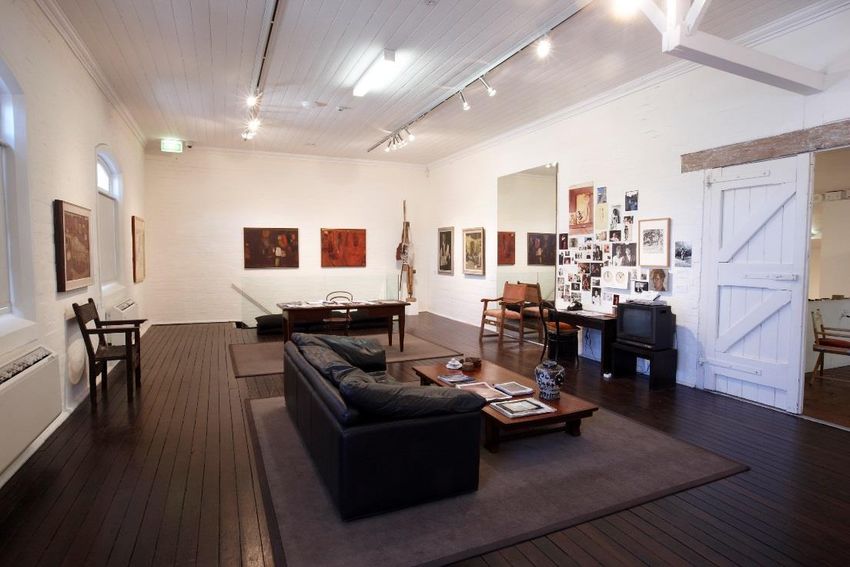
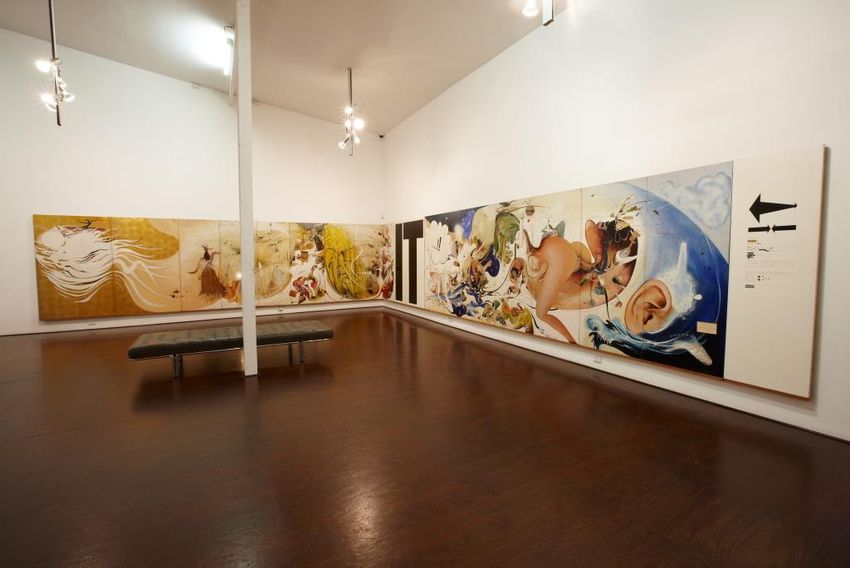
Brett Whiteley Studio Pre-Lighting Upgrade. Photo by Art Gallery of New South Wales.
Page 9 / 25 A Case Study on Lighting for Museums and GalleriesBrett Whiteley Studio Pre-Lighting Upgrade. Photo by Art Gallery of New South Wales.
Brett Whiteley Studio Pre-Lighting Upgrade. Photo by Art Gallery of New South Wales.
The main objectives of the refurbishment:
Improve the gallery’s performance in terms of sustainability, maintainability
and safety;
Provide lighting to optimise art viewing conditions with consideration to
conservation and photo-degradation requirements;
Minimise glare and discomfort;
Provide a lighting solution that features intelligence and adaptability that is
also in line with the original architectural fabric;
Provide a lighting system that achieves energy savings through efficient
luminaires and intelligent control;
Minimise maintenance costs.
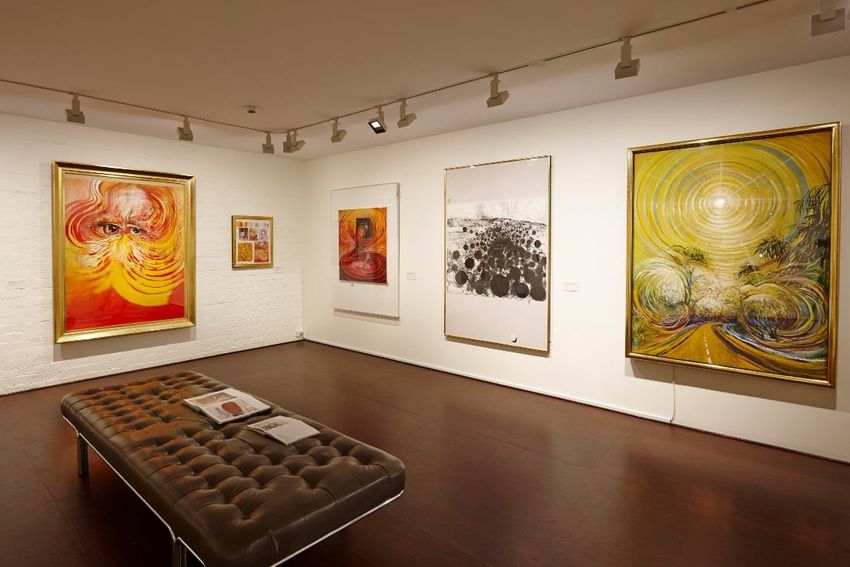
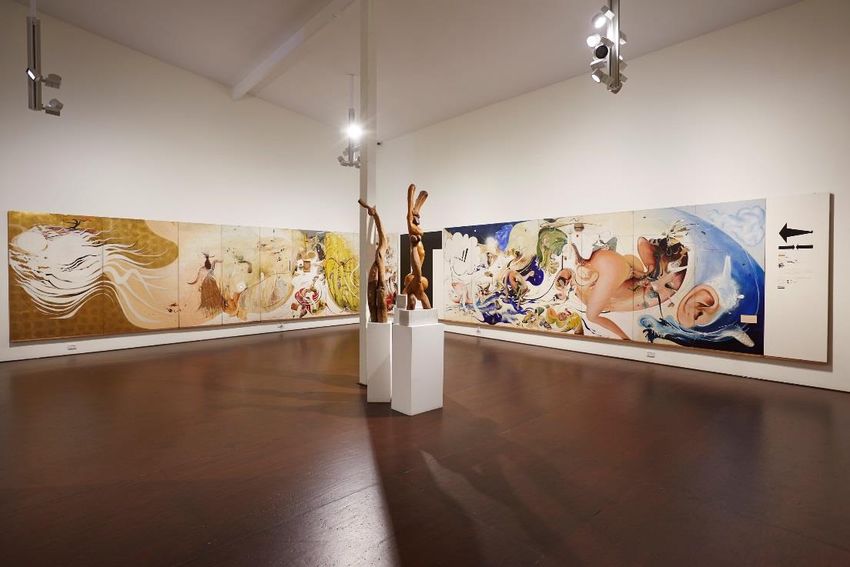
Page 10 / 25 A Case Study on Lighting for Museums and Galleries3.1.2 Lighting Solution Gallery Lighting All lighting track was replaced with new DALI lighting track. In the traditional gallery spaces, the track was recessed in the plasterboard for a more seamless aesthetic. Track locations were revised to provide optimal offset from the gallery walls. Although this resulted in greater lengths of track than the previous installation, the luminaires can be located where they are needed to provide a seamless lighting scheme. This offset also reduces glare from the light source on the artwork glass, providing a more optimal location, enhancing the viewer experience. All existing surface mounted conduits were re-located within walls for a cleaner visual environment. The original vertical tracks were also upgraded, however the visual intent remained in line with the original design. New LED fittings replaced previous incandescent fittings for general circulation and artwork lighting, and were programmed accordingly. Glare shields were added to fittings where required for visual comfort. Brett Whiteley Studio Post-Lighting Upgrade. Photo by Art Gallery of New South Wales. Page 11 / 25 A Case Study on Lighting for Museums and Galleries
Brett Whiteley Studio Post-Lighting Upgrade. Photo by Art Gallery of New South Wales.

Brett Whiteley Studio Post-Lighting Upgrade. Photo by Art Gallery of New South Wales.

Emergency and Exit Lighting

New LED emergency and exit luminaires were provided, resulting in not only an
energy benefit, but also a more integrated visual aesthetic. Where possible, the
emergency luminaires were integrated into the base of the vertical tracks to reduce the
visual lighting infrastructure and create a streamlined aesthetic. The new fittings were
also provided with long-life lithium batteries for increased longevity of the installation,
and reduced maintenance requirements.

Lighting Control

An intelligent DALI lighting control system was installed in the gallery to provide
flexibility and adaptability of the lighting control system.

The gallery has been zoned to three DALI universes with specific gallery spaces
assigned to each universe for ease of programming. A control universe refers to a
network of fittings that can be controlled by one DALI controller. Each universe, or
network, can control a maximum of 64 addresses, though it is recommended not to
load the network to 100%. Within these universes all luminaires are separately
programmable. These levels can be set by the gallery staff through a mobile device/

Page 12 / 25                                   A Case Study on Lighting for Museums and Galleries
tablet application. Scenes can be selected through either the mobile device/tablet
application or the dynalite switchpanel.

The general modes that have been considered include:

     1.   Open for Visitors: Artwork lighting luminaires are individually programmable
          and are set to levels to suit artwork requirements. A selection of fittings that
          face downwards, rather than at the artworks are set to a level to provide
          general circulation lighting. Each time an installation is changed the luminaire
          settings need to be reviewed and adjusted as required through individually
          addressing the lights from the mobile device/tablet application. The
          luminaires that are used for circulation lighting are also used in the following
          two settings.
     2.   After Hours Security: Selected luminaires identified for circulation lighting are
          dimmed to 20% for this mode.
     3.   Working/Cleaning: Selected luminaires identified for circulation lighting are
          dimmed up to 100% for this mode.

The DALI control system provides adaptability and flexibility for the changing nature of
a gallery space.

Spare capacity has been in-built into the system as a contingency for future additional
luminaires.

3.1.3 Discussion

The Brett Whiteley Studio LED lighting upgrade achieves energy initiatives through
implementation of the following:

1.   Replacement of incandescent luminaires with LED

The original 60W R80 and 100W incandescent track luminaires were replaced with the
following new LED luminaires:

43 x New Erco Lightboard 12W LED (Various lenses)
25 x New Erco Optec 12W LED (Various lenses)
58 x New Erco Optec 24W LED (Oval Flood)

The quantity of luminaires was replaced ‘like for like’, with the 60W incandescent
fittings being replaced with 12W LED fittings and the 100W incandescent fittings being
replaced with 24W LED fittings.

As a comparison of the energy reduction, the total wattage of the previous fittings
resulted in a load of 9,880W which was reduced to 2,264W in the lighting upgrade.
This produced an energy reduction of 77%.

Another benefit of moving to LED is the reduced maintenance costs that are
anticipated, due to the longer life of the LED light source versus a traditional
incandescent bulb. This is of particular importance for this installation due to the high
mounting location of central vertical track fittings.

2.   Improved Light Quality

Extensive testing of a range of LED suppliers was undertaken to provide the best
solution for the gallery space to ensure that the use of LED would improve the user
experience. The quality of light, fitting aesthetic, power consumption, fitting size,
fitting flexibility and cost were all evaluated. The selected fitting offers a range of
lenses and wattages within the same family, which was a benefit for this gallery space.
Circular fittings were utilised with elliptical beams for general wall lighting with a range
of spot and flood lenses used where required. As the lenses are interchangeable, this
improves the flexibility and adaptability of the gallery lighting scheme. The LED colour
rendering was found acceptable when compared to the older incandescent fitting with
good differentiation between the whites in the paintings.

Page 13 / 25                             A Case Study on Lighting for Museums and Galleries
3. Upgrade of Emergency and Exit Luminaires New LED Emergency and Exit luminaires with long-life lithium batteries reduce maintenance requirements and also reduce energy consumption. This is a low-cost option to achieve an energy saving. 4. Intelligent Programmable Lighting Control and Lighting Optimisation The lighting control in the Brett Whiteley Studio plays an important role in operational savings for electrical consumption, in extending the lifetime of the luminaires and in reducing system maintenance. Programming of the intelligent lighting control system allows the setting of lighting control scenes to reduce illuminance levels where possible and conserve energy. Efficient aiming of light at dimmed levels is also beneficial from a conservational point of view, reducing the lux hours on the artwork. This is supported by the after hours lighting strategy which utilises a select group of fittings dimmed to a low level, and aimed at the floor to provide safe movement. This is an improvement on the previous design that utilised fluorescent battens for security lighting with little optical control. The same luminaires are also programmed to different dimmed levels to carry out the functions of circulation and working/cleaning. The multi-functional use of these luminaires assists in reducing capital costs. Whilst the initial programming of luminaire dimming levels requires greater time, skilled labour and cost than a traditional lighting control system, the long-term maintenance is anticipated to be reduced. Re-programming fittings or programming new fittings requires staff training, however the flexibility and adaptability offered by the system is a big benefit for changing gallery installations and offers a high level of control. 3.1.4 Lessons Learnt The gallery has noted some technical issues with the operation of the system with a lag when connecting from the tablet to the AGNSW server when re-setting the dimmed levels. Due to the specific control set-up requirements of this gallery, the local lighting control system communicates with the main gallery. Options need to be further investigated to increase the speed with the server communication, to improve response time. Page 14 / 25 A Case Study on Lighting for Museums and Galleries
3.2 Institution #2: Lake Macquarie City Art Gallery
3.2.1 Context
Size of Refurbishment: Approximately 435m²
Project Price Bracket: $100,000 - $200,000
Project Description: The Lake Macquarie City Art Gallery is a renowned regional
gallery. The proposed lighting upgrade forms part of the gallery’s sustainability and
environmental strategy to minimise the building’s carbon footprint. The lighting
upgrade proposes retaining the existing track infrastructure, and providing new LED
track fittings and a new lighting control system. It should be noted that this project is
in progress and was not completed at the time of producing this resource, however
the information endeavours to be as factual as possible.
Previous Installation:
Traditional, mostly incandescent lamp track fittings that had a considerable
footprint on the building performance, both in terms of direct lighting load as
well as air conditioning cooling load.
Lighting infrastructure had become obsolete due to the phasing out
incandescent light sources and the difficulty of finding replacement lamps.
Existing leading edge dimming system was not compatible with dimming
new LEDs to low levels. This is a common issue with existing controls and
new LED systems as the new LED luminaires may not fully dim, often
dimming from 10% to 0% rather than smoothly dimming down.
The main objectives of the refurbishment:
Reduce the lighting consumption load to reduce the building’s carbon
footprint;
Provide a new lighting scheme that addresses quality of light and
sustainability of the lighting systems;
Retain functional track element.
3.2.2 Lighting Solution
General Gallery Lighting
As the existing track infrastructure is in good working condition, and already located in
suitable locations and offset from the walls, it is proposed to be retained in the
upgrade. The existing Erco track is to be re-configured to take the DALI dimming
protocol of the new LED luminaires.
The existing Clipsal leading edge dimming system operating luminaires in the gallery’s
exhibition space is to be replaced with a Tridonic DALI lighting control system to allow
a more flexible lighting solution that is more compatible with LED sources. The DALI
system allows greater control over the lighting pre-sets and individual addressing of
artwork lighting luminaires to specific levels. The existing Clipsal dimming system will
be retained for the lighting control of areas outside of the upgrade.
The existing incandescent fittings of the exhibition space are proposed to be replaced
with new LED track luminaires for greater energy efficiency, reducing energy
consumption of the lighting load and a reduction in the heat load.
Lighting Control
A new DALI lighting control system is proposed to provide complete flexibility of the
lighting control system. Programming and other functions, such as addressing and
commissioning new luminaires, is to be carried out through a tablet application.
Page 15 / 25 A Case Study on Lighting for Museums and GalleriesThe gallery’s exhibition space will be divided into three DALI universes. Spare capacity
has been built into this assessment for future additions. Within these universes,
luminaires are proposed to be individually addressable as well as controllable in
groups. It is anticipated that the lighting design, layout and programming will be
undertaken for each new exhibition every six weeks. Each new lighting design is to be
saved, becoming part of the Open/Close pre-set function for the gallery’s entire
lighting control system. This system encompasses both the DALI and Clipsal c-bus
systems for the operation of all internal and external gallery building lights.
The system is to have a number of pre-set functions which are to be operated from
two small lighting control panels, one to be situated in the gallery foyer, and the other
at the back exit to the gallery. The system will also be controlled through the tablet
application. Pre-set functions are anticipated to include the following scenarios:
1. Open/Closed: The exhibition space, and all other building lights, are to be
switched on or off, most commonly at the start and close of business.
2. Installation: All exhibition luminaires dimmed up to 100% to maximise
visibility during exhibition installation.
3. Pre-design: All exhibition luminaires are to be dimmed to 80% as a baseline
for preparing a new exhibition lighting design.
4. Wall washes 1-8: Wall washes are to be grouped into 8 pre-sets, enabling
scenarios where entire gallery walls require uniform levels
5. Universe 1-3: All luminaires (excluding wall washes) are to be grouped into 3
pre-sets, enabling the three most common exhibition floor-layouts to be lit at
uniform levels.
6. Cleaning: For occasions when staff or cleaners are moving through the
exhibition space outside of public opening hours, a small number of selected
luminaires throughout the entire exhibition space are to be dimmed up to
100% to provide safe visibility levels.
3.2.3 Discussion
The Lake Macquarie City Art Gallery LED lighting upgrade proposes energy initiatives
through implementation of the following:
1. Replacement of incandescent with LED
A study was undertaken prior to the lighting upgrade to assess the project energy
savings and maintenance savings that could be achieved.
Based on an operation of approximately 2,340 hours a year, the analysis indicated an
energy saving of 37,674 kWh annually. Considering the impact on the mechanical
cooling and heating systems the total expenditure savings, on energy consumption
alone, is predicted at $7,997.65 per annum.
The projected expenditure savings for lamp replacement moving from incandescent to
LED is predicted at $4,922.06 per annum.
The total predicted expenditure savings for energy, operational and maintenance is
$12,919.71 per annum.
This analysis was based on the replacement of the following existing fittings:
88 x Erco Wallwashers (150W)
62 x Erco Spot (Unipar Par 30) (100W)
6 x Erco Pollux (50W)
The upgrade will replace these with the following DALI LED luminaires:
150 x 24W Erco Light Board Wallwasher
10 x 6W Erco Pollux contour framing spotlight
Page 16 / 25 A Case Study on Lighting for Museums and GalleriesTo provide future flexibility, the track mounted wallwasher luminaires are to be
supplied with 170 interchangeable lenses of varying distributions including wallwash,
flood and spot to suit the changing needs to the gallery space.
As a comparison of the energy reduction, the total wattage of the previous fittings
results in a load of 19,700W which will be reduced to 3,660W in the lighting upgrade.
This will result in an energy saving of 82%, plus additional savings for the reduced heat
load of the luminaires and the implication of this on the mechanical cooling systems.
2. Improved Light Quality
The new LED track fittings had to offer a solution that was acceptable in terms of the
presentation of the cultural material on display and also in consideration of the
preventative conservation requirements of the gallery. The new LED fittings:
have a high colour rendering index;
are dimmable to suit the specific display requirements;
have controlled optics; and
have interchangeable lenses to place light where needed.
3. Intelligent Programmable Lighting Control and Lighting Optimisation
The new lighting control system will allow individual and grouped luminaires to be
programmed to the required dimming levels, thus optimising the lighting scheme.
The system will utilise internet (Cloud) monitoring to track and record all lighting
activity, including energy use, DALI line features, failed ballast, lamp failures,
emergency function and duration test results, thereby streamlining maintenance
procedures. This information will be accessible remotely and at any time by gallery
staff for reporting and analysis. The use of this monitoring function offers the potential
for savings in maintenance and the potential to increase longevity of luminaires
through analysis of use. It will also assist the gallery in planning for future expenses
and its maintenance regime.
The use of three DALI universes maximises the efficiency and ease of programming.
The use of defined pre-set scenes will assist in maximising the life of the luminaires
and in providing the required illuminance where needed.
The new lighting control system will be programmed to align with the open/close
function of the entire building, streamlining the control between the new and existing
systems.
4. Retaining working/functional existing equipment
The re-use of working/functional existing track infrastructure equipment not only
reduced the capital costs of the new installation but also offered an environmentally
considerate approach.
Page 17 / 25 A Case Study on Lighting for Museums and Galleries3.3 Institution #3: University of Technology
Sydney (UTS) Gallery
3.3.1 Context
Size of Refurbishment: Approximately 180m²
Project Price Bracket: $25,000 - $100,000
Project Description: The UTS Gallery is a small, privately-run flexible gallery space
within the UTS campus. The gallery showcases a wide range of interdisciplinary
works requiring a flexible lighting solution. The lighting upgrade involved replacement
of lighting track and upgrade to new LED luminaires. The lighting control system was
left in place, rather than removed, and is used as a time clock to turn the fittings on
and off to suit the gallery occupancy requirements. The new LED luminaires are
dimmed on-board.
Previous Installation:
Luminaires breaking due to location and mounting of track.
Leading edge dimming 15-20 years old (spare parts and replacement parts
no longer stocked and are difficult to source).
Existing luminaires were a combination of tungsten halogen, incandescent
and dichroic, contributing to a significant lighting load.
The main objectives of the refurbishment:
Provide a lighting upgrade within budget with a simple user interface;
Provide a cohesive lighting solution to the gallery space;
Reduce the incidence of luminaire and track adapter breakages by addressing
the track luminaire mounting issues;
Consider future proofing of the lighting scheme.
3.3.2 Lighting Solution
Gallery Lighting
Although the existing track was still in good working condition, the mounting
arrangement and type of track limited the options of compatible new fittings. All
existing track and track luminaires were therefore replaced with new Erco lighting track
and new Erco LED luminaires. The new track was mounted flush within the existing
track support channel to ensure new fittings could be easily inserted and removed,
which was a significant improvement on the previous arrangement.
Whilst the existing leading edge dimming system was not compatible with the new
LED luminaires, it was retained to act as a time clock to turn the lighting on and off as
per the existing settings for the gallery occupancy requirements.
Due to the size and nature of the gallery, as well as budget constraints, it was decided
that the new LED luminaires were to be individually dimmed on-board at each fitting.
Whilst this is a labour intensive exercise for each exhibition, and does not provide the
same level of accuracy that is offered by an intelligent programmable dimming system,
it is a simple and cost effective solution suitable for this gallery space. In addition, as
the fittings do not need to be programmed or individually addressed on the lighting
control system, no user training is required, thus eliminating this cost.
Page 18 / 25 A Case Study on Lighting for Museums and GalleriesUTS Gallery Post-Lighting Upgrade. Photo by Emrah Baki Ulas
3.3.3 Discussion
The UTS Gallery LED lighting upgrade achieves energy initiatives through
implementation of the following:
1. Replacement of Halogen, Incandescent and Dichroic luminaires with new LED
luminaires
Though a small lighting upgrade, the change to LED has improved the efficiency of the
gallery.
The original installation was comprised of the following track luminaires (approximate):
20 x 100W Bi-Pin Incandescent Spotlights
12 x 300W Tungsten Halogen Wallwashers
10 x 35W Dichroic Luminaires
These were replaced with:
24 x 24W Erco Optec
9 x 24W Erco Lightboard
Due to a consistent lighting typology and optic that was more suitable for the gallery
design, the quantity of fittings was reduced. As a comparison of the energy reduction,
the total wattage of the previous fittings results in a load of 5,950W which was
reduced to 792W in the lighting upgrade. This resulted in an energy reduction of
approximately 87%.
Another cost benefit of the new installation is the revised mounting location of the
track, which allows luminaires to be easily fitted in the track, significantly reducing the
potential for breakages that was prevalent in the previous installation. This
significantly reduces maintenance costs of the luminaires.
2. Re-use of existing functional equipment
Retaining the existing leading edge lighting control system not only minimised the
associated labour costs of the removal of the system, but also eliminated the need to
install a new time clock. Whilst the functionality as a dimming system was obsolete,
the infrastructure still functioned successfully for the new required purpose.
Page 19 / 25 A Case Study on Lighting for Museums and Galleries3.3.4 Lessons Learnt Whilst the on-board dimming function was selected for simplicity and cost implications, recent short-term exhibitions/events within the space have highlighted the limitations of this type of control. As fittings are individually set and not able to be dimmed in a group, setting the levels is a time consuming process and cannot be carried out at short notice if requested. It has also been noted by the gallery that the on-board dimmer knob is stiff and can be difficult to move to the right dimming level. Page 20 / 25 A Case Study on Lighting for Museums and Galleries
3.4 Institution #4: Goulbourn Regional Art Gallery
3.4.1 Context
Size of Refurbishment: Approximately 400m²
Project Price Bracket: Under $25,000
Project Description: Goulburn Regional Art Gallery is administered by Goulburn
Mulwaree Council, NSW. It showcases regional and national exhibitions, and presents
a range of education and public program activities. A minor lighting upgrade was
undertaken, retaining existing track, track fittings and control system, and upgrading
the existing luminaire with LED replacement bulbs.
Previous Installation:
Traditional, mostly 120W PAR38 incandescent lamp track fittings and 50W
MR16 wall mounted spotlights with large energy consumption
Traditional on/off lighting control with no dimming function
The main objectives of the refurbishment:
Provide a more energy efficient solution through LED sources on a limited
budget.
Provide a lighting scheme that enhanced the appearance of the artworks
showcased in the space and responded to conservation requirements.
3.4.2 Lighting Solution
Gallery Lighting
Due to a limited budget, the scope of work for the lighting upgrade was minimal. All
existing track infrastructure, track luminaires and traditional lighting control were
retained. The existing luminaires were upgraded with 18W LED Par38 replacement
bulbs and the existing wall luminaires were replaced with 10W LED MR16 fittings.
These were controlled through the existing on/off lighting control system.
The new LED bulbs and LED luminaires offer good colour rendering and spectral
distribution to enhance the user experience, and provide suitable lighting to address
conservation requirements.
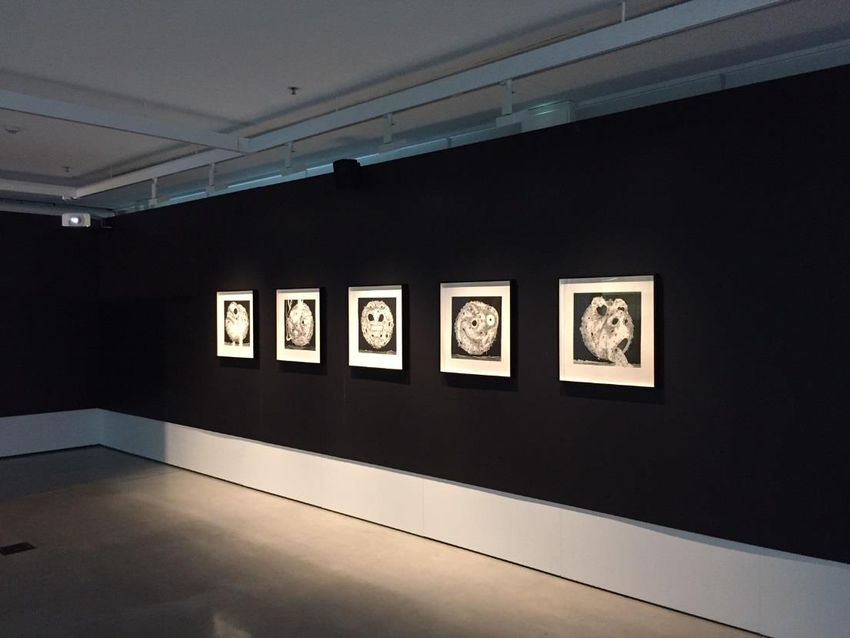
Goulburn Regional Art Gallery Post-Lighting Upgrade. Photo by Mim Stirling.
Page 21 / 25 A Case Study on Lighting for Museums and Galleries3.4.3 Discussion
The Goulburn Regional Art Gallery LED lighting upgrade achieves energy initiatives
through implementation of the following:
1. Replacement of existing traditional light sources with new LED replacement
bulbs
The lighting upgrade offers the gallery a more energy efficient lighting solution, with
the replacement bulbs having a lower power consumption with a greater lighting
output. The main energy savings are seen through this reduced power consumption.
The original installation was comprised of the following luminaires:
55 x 120W Par38 Incandescent Track fittings
12 x 50W MR16 Wall mounted spotlights
These were replaced with:
55 x 18W Par 38 LED Philips replacement bulbs to existing spotlights
12 x 10W LED MR16 Gamma Illumination Fex wall mounted spotlights
As a comparison of the energy reduction, the total wattage of the previous lighting
scheme results in a load of 7,200W which was reduced to 1,110W in the lighting
upgrade. This resulted in an energy reduction of 84%.
2. Reduced maintenance costs
Due to the longer life expectancy of LED bulbs versus traditional light sources, the
gallery can expect to see savings in maintenance and replacement of lamps.
3.4.4 Lessons Learnt
The project demonstrates how extensive energy savings can be achieved and
maintenance requirements can be drastically improved even on limited budget, while
also improving the lighting conditions for the display of the artworks.
Page 22 / 25 A Case Study on Lighting for Museums and Galleries3.5 Institution #5: Hazelhurst Regional Gallery and
Arts Centre
3.5.1 Context
Size of Refurbishment: Approximately 180m²
Project Price Bracket: N/A (Proposed Upgrade Only)
Project Description: Hazelhurst Regional Gallery and Arts Centre is a regional gallery,
community gallery, arts centre and café. A lighting upgrade has been proposed for the
main community gallery area. The proposed lighting upgrade is yet to be
implemented, however the design offers examples of lighting upgrade initiatives,
including upgrade of existing track to suit DALI protocol, upgrade of existing track
luminaires to LED luminaires, and upgrade of existing fluorescent cove lighting to LED
strip lighting.
Previous Installation:
Existing luminaires for general gallery lighting were a combination of 150W
Erco wallwashers and mono-points.
3-Circuit Erco track in good working condition.
Architectural lighting through fluorescent batten uplighting of cove and wall
mounted 150W metal halide uplighters.
The main objectives of the refurbishment:
Provide a more coherent visual aesthetic that provides energy savings and is
suitable for a gallery space;
Increase flexibility of lighting control and operation from wireless device;
Reduce gallery energy consumption.
3.5.2 Lighting Solution
Gallery Lighting
New Erco LED, DALI dimmable track luminaires are proposed to replace the older Erco
track luminaire technology, aiding in reducing the energy footprint of the lighting
scheme and assisting in providing greater flexibility in the lighting control approach.
Additional spotlight LED track luminaires are proposed to be introduced into the
lighting system for further control and flexibility of the lighting solution.
As the existing Erco 3-circuit track is in good working condition, it is proposed that this
is retained in the upgrade and electrically re-configured to accept the new DALI
dimming protocol.
As the existing mono-point luminaires are in good working condition, but are
redundant in the space, it is proposed that these are removed and returned to the
gallery for future use elsewhere.
Architectural Lighting
Though not directly lighting artworks within the space, the architectural lighting
significantly contributes to the sense of brightness and openness of the space and
enhances the viewing experience.
Page 23 / 25 A Case Study on Lighting for Museums and GalleriesIt is proposed that the existing fluorescent lamps in the architectural cove are replaced
with a simple, energy efficient linear LED strip light with diffuser to uplight the ceiling.
Consideration may be given to re-painting the ceiling in a matt white to increase the
diffusion of light across the surface.
It is proposed that the existing metal halide wall uplights are retained but re-lamped to
reduce the energy consumption.
Lighting Control
It is proposed to install an intelligent DALI lighting control system for this area of the
gallery to provide greater flexibility and allow individual luminaires to be programmed
and set to the required dimming level.
It is anticipated that as the institution upgrades adjacent gallery areas, these could be
connected to the central intelligent lighting control network for consistency,
maintenance and monitoring of the lighting installation in the building.
It is proposed that a mobile device/tablet be purchased by the gallery to undertake
lighting control changes as the programmer moves around the space. This allows real
time setting of the fittings in the context of the exhibition.
General modes may be considered for day-to-day use including use of the lighting to
provide circulation, night time security and cleaning modes as well as general gallery
lighting.
3.5.3 Discussion
The proposed lighting upgrade of the Hazelhurst Regional Gallery and Arts Centre
aims to achieve energy initiatives through implementation of the following:
1. Replacement of existing luminaires with more efficient light sources and new
LED luminaires
The current installation is comprised of the following:
8 x 150W metal halide uplights
8 x 150W Erco monopoint luminaires
25 x 150W Erco track wallwashers
9 x 36W T8 Fluorescent battens
These are proposed to be replaced with:
8 x 35W metal halide lamps to existing wall fittings
30 x 24W LED DALI Erco track mounted wall washers
8 x 26W LED DALI track mounted spotlight projectors
11,600mm x 17W/m LED strip light with diffuser
The luminaire quantity is proposed to be slightly increased to provide greater flexibility
to the gallery. The energy consumption, however, proposes to offer a significant
saving. As a comparison of the proposed energy reduction, the total wattage of the
existing lighting scheme results in a load of 6,474W which is proposed to be reduced
to a load of 1,405W in the lighting upgrade. This results in a potential energy saving of
79%.
2. Intelligent Programmable Lighting Control and Lighting Optimisation
The proposed lighting control system offers a key contribution to the operational
savings of the electrical consumption of the lighting upgrade. Through the
programming of individual luminaires and lighting scenes, the gallery will be able to
provide the required illuminance levels without over-lighting the space. This is also
beneficial from a conservation point of view, reducing the lux hours on the artwork.
Page 24 / 25 A Case Study on Lighting for Museums and Galleries4.0 Summary With changes in legislation and greater public awareness of energy consumption, moving towards LED light sources assists in reducing the energy load of a gallery or museum and achieving compliance whilst responding to wider public concerns. Case study analysis indicates that there are a wide range of lighting upgrade initiatives that can be undertaken to achieve an energy efficient and better suited lighting solution no matter the size or budget of the gallery. The key issues to consider include: LED Luminaire Upgrade Benefits All case study galleries have shown a significant energy saving when moving from traditional light sources such as incandescent and halogen, to newer LED lighting technology. As well as the energy savings, the case studies demonstrate that LED technology can improve the light quality of the space and be suitable for museum and gallery lighting requirements. The type of LED upgrade is determined by the available funding and condition of the existing lighting infrastructure. Energy savings are achievable through a simple LED lamp replacement upgrade to a more complete luminaire, lighting control and track upgrade. Lighting Control Upgrade Benefits A variety of lighting control solutions are available to suit different gallery-specific requirements. Whilst intelligent lighting control provides far greater flexibility and monitoring of a lighting system, more traditional lighting control methods may be more suitable in some contexts due to monetary or functional requirements. Intelligent lighting control can be utilised in a variety of configurations to provide the level of flexibility required by the gallery. Whilst the Brett Whiteley Studio utilises individual programming for complete flexibility of the lighting control system, other galleries may prefer a simplified user interface with pre-programmed scenes or dimming control over larger groups of fittings. As noted in the case study feedback, all lighting control solutions have benefits and drawbacks. It is important to assess each gallery on a case-by-case basis to suit the functional and budget requirements. Payback One of the main concerns when it comes to lighting upgrades is the payback of the installation. Whilst smaller galleries with reduced opening hours may see a longer period of payback in terms of purely monetary return on capital outlay, there are many other factors that play an important role in assessing the overall payback of a lighting upgrade. The perception of prestige plays a crucial role in the profile of the gallery in the industry and also in the public realm. A gallery seen to be constantly striving to improve the user experience, responding to environment issues of energy consumption and embracing new technology, is likely to increase visitation and be more attractive to potential exhibitors. By enhancing their long-term sustainability and energy efficiency, museums and galleries can also set a positive example and educate their communities. Page 25 / 25 A Case Study on Lighting for Museums and Galleries
You can also read


