LONG DISTANCE AIRBORNE DISPERSAL OF SARS COV 2 IN COVID 19 WARDS - NATURE
←
→
Page content transcription
If your browser does not render page correctly, please read the page content below
www.nature.com/scientificreports
OPEN Long‑distance airborne dispersal
of SARS‑CoV‑2 in COVID‑19 wards
Karolina Nissen1, Janina Krambrich2, Dario Akaberi2, Tove Hoffman2, Jiaxin Ling2,
Åke Lundkvist2, Lennart Svensson3,4 & Erik Salaneck1*
Evidence suggests that SARS-CoV-2, as well as other coronaviruses, can be dispersed and potentially
transmitted by aerosols directly or via ventilation systems. We therefore investigated ventilation
openings in one COVID-19 ward and central ducts that expel indoor air from three COVID-19 wards
at Uppsala University Hospital, Sweden, during April and May 2020. Swab samples were taken from
individual ceiling ventilation openings and surfaces in central ducts. Samples were subsequently
subjected to rRT-PCR targeting the N and E genes of SARS-CoV-2. Central ventilation HEPA filters,
located several stories above the wards, were removed and portions analyzed in the same manner.
In two subsequent samplings, SARS-CoV-2 N and E genes were detected in seven and four out of 19
room vents, respectively. Central ventilation HEPA exhaust filters from the ward were found positive
for both genes in three samples. Corresponding filters from two other, adjacent COVID-19 wards
were also found positive. Infective ability of the samples was assessed by inoculation of susceptible
cell cultures but could not be determined in these experiments. Detection of SARS-CoV-2 in central
ventilation systems, distant from patient areas, indicate that virus can be transported long distances
and that droplet transmission alone cannot reasonably explain this, especially considering the
relatively low air change rates in these wards. Airborne transmission of SARS-CoV-2 must be taken
into consideration for preventive measures.
Abbreviations
ACH Air changes per hour
CoV Coronavirus
COVID-19 Coronavirus infectious disease 2019
Ct Cycle threshold
HFNC High flow nasal cannula
Hpi Hour post infection
HVAC Heating Ventilation Air-condition
MERS Middle eastern respiratory syndrome
RNA Ribonucleic acid
rRT-PCR Real time reverse transcriptase polymerase chain reaction
SARS Severe acute respiratory syndrome
During the coronavirus infectious disease 19 (COVID-19) pandemic, droplet transmission has been considered
the most significant transmission route for severe acute respiratory syndrome coronavirus 2 (SARS-CoV-2),
although other routes such as aerosol, fecal–oral, and indirect transmission via fomites may contribute to the
rapid global dissemination of the virus1,2. The relative importance of aerosols versus droplets in the transmission
of respiratory infections is difficult to distinguish, since particles of both aerosol and droplet size are generated
for example when talking3,4. Aerosols are smaller than droplets, traditionally defined as smaller than 5 µm in
diameter, and are thought to remain airborne longer, enabling transmission at greater distances and over longer
periods of t ime5. This definition has been challenged and may very well be an over-simplification and it may be
precarious to rigidly differentiate the two c ategories3,6,7.
Previously, other coronaviruses have been shown to disperse via aerosols and ventilation, and have been
determined to cause HVAC (heating, ventilation, air conditioning) associated and nosocomial infections as well
as extensive hospital outbreaks8–13. In recent studies, extensive environmental contamination of SARS-CoV-2 in
1
Department of Medical Sciences, Uppsala University, Uppsala, Sweden. 2Department of Medical Biochemistry
and Microbiology, Uppsala University, Uppsala, Sweden. 3Department of Molecular Medicine and Virology,
Linköping University, Linköping, Sweden. 4Division of Infectious Diseases, Department of Medicine, Karolinska
Institute, Solna, Sweden. *email: erik.salaneck@medsci.uu.se
Scientific Reports | (2020) 10:19589 | https://doi.org/10.1038/s41598-020-76442-2 1
Vol.:(0123456789)www.nature.com/scientificreports/
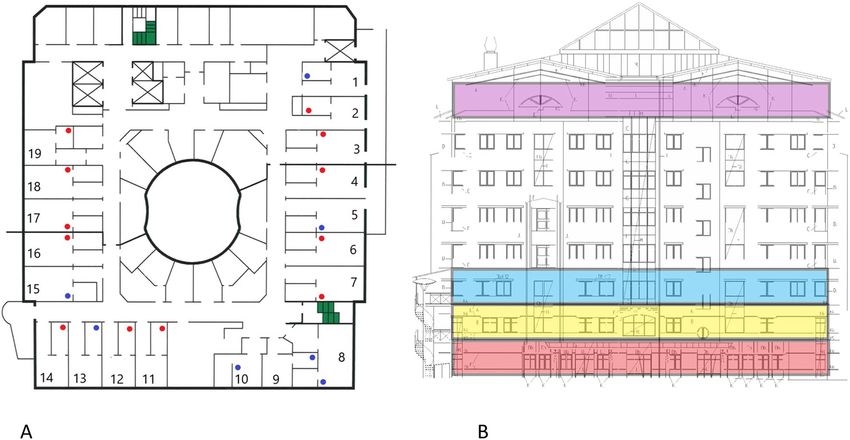
Figure 1. (A) Overview of the 19 investigated COVID-19 ward rooms (ward 1). Dots indicate approximate
placing of ceiling vent openings. Red dots indicate openings that where SARS-CoV-2 RNA was detected in
at least one of two samplings, blue dots openings negative in both samplings. (B) Lateral view of the hospital
building. Ward levels: red; COVID-19 outpatient clinic, yellow and blue; COVID-19 wards 1 and 2, with 19
rooms each, purple; eighth floor with central ventilation fans and HEPA filters. Individual ceiling vent openings
were investigated on the second-floor ward (yellow) seen in (A).
hospital settings has been demonstrated, and viral RNA has been found both in air samples and in samples from
air vent openings in isolation rooms14–18. Also, the potential for the aerosol transmission route of SARS-CoV-2
is supported by other recent s tudies17,19–21. The increased risk for infection in indoor environments, as well as
superspreading events, could be explained by airborne t ransmission22–26. In this context it is therefore vital to
understand the amount of SARS-CoV-2 in confined spaces and the distances at which virus can be passively
dispersed. Hospital rooms where COVID-19 patients are treated are obviously venues in which airborne trans-
mission is both of great importance to understand, as well as a suitable environment to study this phenomenon.
In this study from a COVID-19 infectious disease ward at Uppsala University Hospital, Sweden, we investigated if
SARS-CoV-2 RNA could be detected in and near air vent openings in isolation rooms and in filters in the central
ventilation system situated on the eighth (top) floor of the hospital building. As RNA was detected at substantial
distances from patient areas, fluid sample collections were performed in an attempt to determine the potential
infective ability of SARS-CoV-2 detected in the systems. Our findings may suggest both airborne dispersal of
SARS-CoV-2 and possible long-distance dissemination of SARS-CoV-2 via ventilation air flow.
Materials and methods
Sampling strategy. Sampling was performed on separate occasions during April and May 2020. In the first
two occasions, 17 and 28 April, surfaces of exit vent openings in all 19 patient rooms in ward 1 (Fig. 1a) were
swabbed as described below. When repeated on April 28, the internal surfaces of the central ventilation ducts,
on the top floor were also swabbed and filter sections removed, as described further below. Due to the detec-
tion of SARS-CoV-2 RNA in the ventilation system (see “Results”), a further sample collection was performed
using fluid traps, both at the terminal end of the ducts prior to the exhaust filters (at the same area where swabs
were taken on April 28) as well as under the ceiling vent openings in the ward rooms (ward 1, see Fig. 1b), in an
attempt to determine the infective ability of any collected virus.
Swab samples. Surfaces were swabbed using sterile nylon flocked swabs (Copan eSwab, Copan Italia SpA,
Italy) moistened in sterile viral transport medium (VTM), containing Hank’s balanced salt solution (Gibco,
UK) supplemented with 2% fetal bovine serum (Gibco, USA), 100 µg/ml Gentamicin, and 0.5 µg/ml Ampho-
tericin B27. Round ceiling vent openings were swabbed around the inside of the entire opening (circumference
ca 25 cm). Swabs were placed in tubes containing 750 µl viral transport medium and stored at 4 °C until analysis
within 24–72 h. Sampling was performed on April 17 and 28, 2020. Indoor relative air humidity and temperature
were 30–31% and 20–21 °C, respectively.
Filter samples. Exit ventilations from each of the eight stories in the investigated hospital building, (Fig. 1b),
lead to separate HEPA filter systems, located on the eighth (top) floor. Consequently, we could identify ducts
and exhaust filters collecting air from individual floors not merging airflows. We chose to examine exhaust filters
from three floors in the building that had been specifically designated for COVID-19 patients; two COVID-19
wards and a COVID-19 out-patient clinic. In addition, we examined exhaust filters from one story with per-
Scientific Reports | (2020) 10:19589 | https://doi.org/10.1038/s41598-020-76442-2 2
Vol:.(1234567890)www.nature.com/scientificreports/
PCR results (Ct
value)
Approximate distance from ward to top
Corresponding floor Exit airflow from ward (m3/s) floor filters (m) Sample N gene E gene
Top floor air vent samples
Ventilation shaft swab Negative Negative
Air vent filter sample 1 37.13 37.30
Covid-19 outpatient clinic 2.45 56 Air vent filter sample 2 Negative Negative
Air vent filter sample 3 38.79 36.96
Cell medium in petri dish Negative Negative
Ventilation shaft swab 1 Negative Negative
Ventilation shaft swab 2 Negative Negative
Air vent filter sample 1 36.86 34.91
Covid-19 ward 1 2.27 53
Air vent filter sample 2 36.31 34.87
Air vent filter sample 3 35.32 35.41
Cell medium in petri dish Negative 33.00
Ventilation shaft swab Negative Negative
Air vent filter sample 1 37.42 38.70
Covid-19 ward 2 2.55 49 Air vent filter sample 2 35.72 33.85
Air vent filter sample 3 36.72 36.08
Cell medium in petri dish 35.32 33.16
Air vent filter sample × 3 (negative
Ground level non-patient care area 3.48 60 Negative Negative
control)
Table 1. rRT-PCR analysis of samples from filters and swabs in the ventilation system at the 8th floor, top
level of the hospital building. Samples not exhibiting fluorescence above threshold level after 45 PCR cycles
are labeled “negative”. Ct: cycle threshold, N gene: SARS-CoV-2 Nucleocapsid gene, E gene: SARS-CoV-2
Membrane Small Envelope gene.
sonnel areas and a cafeteria, as a negative control. The distance between the COVID-19 wards and the exhaust
filters and inspection hatches was 49, 53 and 56 m respectively for each COVID-19 ward (Table 1). The four
stories located between the COVID-19 wards and the central ventilation in the top of the building (Fig. 1b)
only sporadically harbored COVID-19 patients and were therefore not investigated. Adjacent inspection hatches
upstream from (prior to) the HEPA filters were opened, and internal 30 × 30 cm surfaces swabbed as described
above. Furthermore, one (out of six) 60 × 60 cm laminate F7 HEPA filter sections was removed from each system
(filtering air from one ward or floor) and three filter samples (3 × 3 cm) were randomly cut out of the filters using
sterilized scissors, placed in vials containing 2.5 ml of viral transport medium (described above), and stored at
4 °C until analysis within 72 h. The removed filters had been routinely replaced one month prior to collection.
Fluid samples. Fluid sample collection was performed near air entrances (ward rooms) and exits (directly
prior to exhaust filters) in the ventilation system by placing open, 10 cm diameter petri dishes with 10 ml of
DMEM (Dulbecco’s Modified Eagle’s medium (cell medium); Gibco) diluted 1 to 5 with autoclaved water, sus-
pended 15 cm below ceiling vent openings (in ward rooms) for 24 h, or placed within central vent ducts via
inspection hatches for 3 h. DMEM was diluted to ensure appropriate salt balance for the cells and no osmotic
effect on the virus after evaporation of water during the collection process. We used DMEM instead of water only
to be able to add the whole volume of sample onto cells without a dilution effect of the cell medium. These points
were chosen in an attempt to determine if virus found entering and/or exiting the ventilation ducts retained
infective ability, in response to the PCR results from vent opening and exhaust filters. The suspended petri dishes
in the ward rooms were placed within what we expected to be the normal air flow to ventilation ducts, as well
as placing the dishes as far from the patients as possible, in order to avoid contamination by coughing induced
droplets or other patient or personnel activity in the rooms. An open petri dish containing cell medium was
exposed to air in the biosafety level (BSL)-2 area of the laboratory for 24 h and used as a negative control, along
with non-exposed DMEM and viral transport medium. DMEM and VTM spiked with synthetic oligonucleo-
tides (gBlocks, IDT, Belgium) based on N and E gene sequences with introduced 5 base pair deletions were used
as positive controls (Suppl. Table 1). DMEM exposed to air in 19 ward rooms were combined to three pools.
Pooling was performed when we could establish that a large number of rooms were occupied by non-contagious
patients (seven rooms), patients with suspected COVID-19 but not confirmed (five rooms) and only six rooms
were occupied by contagious COVID-19 patients (May 13, 2020) (Suppl. Table 1). Due to evaporation during
collection, the final concentration of DMEM in the petri dishes after collection was equivalent to undiluted cell
medium. The entire pooled volume ranging from 5 to 10 ml was subsequently applied to Vero E6 cells in T25
flasks and incubated up to 13 days. Samples were subsequently collected and subject to rRT-PCR. Petri dishes
with 10 ml DMEM exposed to air outside of patient areas for 24 h were used as negative control.
Scientific Reports | (2020) 10:19589 | https://doi.org/10.1038/s41598-020-76442-2 3
Vol.:(0123456789)www.nature.com/scientificreports/
Ward conditions. All exit vent openings in the ward rooms are situated in the ceiling and are approximately
3 to 5 m from the head end of the beds (fresh air input openings are at 0 to 50 cm above floor level). Seven of
the 19 openings are situated in adjacent washing rooms (see Fig. 1a) and are up to approximately 5 to 6 m from
beds. Total air changes per hour (ACH) for each patient room varied between 1.5 and 2.6 in ward 1, and 2.1 to
2.7 in ward 2, between 2.8 and 3.2 in the outpatient clinic, (measured December 2017). Air flow in the central
ventilation shafts, from each story, ranged between 2.27 and 3.48 m3/s (Table 1). Pressure differences in rooms
in ward 1 varied, − 6 to − 8.1 Pa between corridor and anterooms and + 5.5 to + 18 Pa between anterooms and
patient rooms (measured March 2020). Hence, the anterooms were under negative pressure compared to the
adjacent ward corridor as well as patient rooms.
RNA extraction and rRT‑PCR. RNA was extracted using 280 μl of samples and QIAamp viral RNA kit
(Qiagen, Hilden, Germany), according to manufacturer’s protocol. Portions of the SARS-CoV-2 nucleocapsid
(N) and envelope small membrane protein (E) genes were amplified by rRT-PCR, using primers (Thermo Fisher
Scientific, Waltham, MA, USA) previously described28–30 and the SuperScript III OneStep RT-PCR System with
Platinum Taq DNA Polymerase kit (Invitrogen, Carlsbad, CA, USA). In brief, the two reaction mixtures (25 μl)
contained 12.5 μl reaction buffer (a buffer containing 0.4 mM of each dNTP, 3.2 mM MgSO4), 1 μl of enzyme
solution (SuperScript III RT/Platinum Taq Mix), 1.25 μl of probe primers solution (10 µM stock concentration)
3 μl magnesium sulfate (50 nM), and 7.25 μl of RNA. The cycling conditions were as follows: cDNA synthesis at
55 °C for 30 min (min) and 50 °C for 2 min followed by 45 cycles of denaturation at 95 °C for 15 s (s), extension
at 57 °C for 30 s and collecting the fluorescence signal at 68 °C for 30 s. Target 1 (E gene) forward primer ACA
GGTACGTTAATAGTTAATAGCGT; reverse primer TGTGTGCGTACTGCTGCAATAT; and probe 5′-FAM-
ACACTAGCCATCCTTACTGCGCTTCG-TAMRA-3′. Target 2 (N gene) forward primer GGGGAACTTCTC
CTGCTAGAAT; reverse primer CAGCTTGAGAGCAAAATGTCTG; and probe 5′-FAM-TTGCTGCTGCTT
GACAGATT-TAMRA-3′. As positive controls, double stranded DNA fragments (gBlocks, IDT, Belgium) with a
five-nucleotide deletion in the targeted part of the E ( 102 copies/µl) and N ( 103 copies/µl) gene were used. Posi-
tive control Ct vales were 31.67 ± 0.68 and 28.07 ± 2.66 respectively. All PCR products with a Ct value < 45 were
confirmed by Sanger sequencing (Macrogen, the Netherlands). Negative controls (swabs) were performed on
non-exposed VTM (Suppl. Table 1).
Inoculation. Vero E6 cells (green monkey kidney cells (ATCC CRL-1586)) were seeded into T-25 flasks and
grown in DMEM (Gibco, 41966) supplemented with 10% FBS (Gibco, USA) and 1 × Penicillin–Streptomycin
(Sigma-Aldrich, PA333). The flasks were incubated (37 °C, 5% CO2) until cells confluency reached approxi-
mately 90%, after which the cell media was substituted with 9 ml of pooled samples supplemented with 2% FBS
and 1 × Penicillin–Streptomycin. Potential cytopathic effect (CPE) was observed daily. Increase in viral load was
determined by rRT-PCR, using 100 μl of supernatant from each T-25 flask at 0 (base line for comparison), 24
and 120 h post infection (hpi). rRT-PCR was also performed on DMEM exposed to air in a BSL-2 laboratory
for 24 h (see section “Fluid samples”), non-exposed DMEM and DMEM spiked with SARS-CoV-2 synthetic oli-
gonucleotide control sequence as negative and positive controls, respectively (Suppl. Table 1). Eleven days post
inoculation, supernatants from the pooled samples (1 ml) were passed once into new flasks seeded with Vero E6
cells and containing 4 ml of cell media. Two days after the passage, samples were taken as described above for
quantification by rRT-PCR. All procedures involving live virus were performed in a BSL-3 laboratory.
Ethical approval. Approval for accessing patient information was granted from the Swedish Ethical Review
Authority DNR 2020-01787. As this retrospective data collection was considered completely anonymized by the
Ethics committee, the need for patient consent was waived by the Swedish Ethical Review Authority. The study
was conducted according to good clinical and scientific practices and following the ethical principles of the
Declaration of Helsinki.
Results
SARS‑CoV‑2 RNA detection from ward samples. In two consecutive surface sampling rounds, per-
formed on April 17 and 28, 2020, both SARS-CoV-2 N and E gene RNA were detected in seven (36.8%) out of 19
vent openings, while 11 days later, four vents (21%) were positive for both genes. Ct values varied between 33.77
and 39.78 (Table 2) and sequences were confirmed by Sanger sequencing. All three pooled cell medium samples
from patient room ceilings were positive for both genes; Ct values ranged between 33.41 and 36.64. Pool 1 (Fluid
traps from 7 rooms occupied by confirmed COVID-19 patients) N gene 35.47 and E gene 36.4, Pool 2 (6 sus-
pected COVID-19 patient rooms) N gene 33.41 and E gene 36.64; Pool 3, (5 suspected non-contagious patient
rooms), N gene 34.07 and E gene 36.64). Despite the attempt to arrange the potentially most infective samples
in pools 1 and 2, a retrospective overview of patient diagnostics revealed that PCR-positive patients occupied
rooms generating samples in all three pools (Suppl. Table 2).
SARS‑CoV‑2 RNA detection in central ventilation samples. Samples extracted from the main
exhaust filters, located on the eighth (top) floor of the investigated hospital building (Fig. 1b), from each sepa-
rate ventilation system for the three investigated COVID-19 wards were positive for both genes in eight (88.9%)
out of nine samples (Table 2). Swabs taken from internal surfaces of three central ventilation channels at the
top floor were all negative (Ct values > 45) (Table 1). Petri dishes containing cell medium, placed in inspection
hatches in the central ventilation system prior to the exhaust filters, were found to contain SARS-CoV-2 RNA
(both N and E genes) in one (33.3%) out of three specimens from ward 2 (Ct values 35.32 and 33.16 for N and E
Scientific Reports | (2020) 10:19589 | https://doi.org/10.1038/s41598-020-76442-2 4
Vol:.(1234567890)www.nature.com/scientificreports/
Patient details Ventilation opening
PCR results (Ct
SARS-CoV-2 PCR Respiratory support value)
PCR results (Ct
value)
Days since onset Patient sample
Room Sample set of symptoms date N gene E gene Current Last 24 h N gene E gene
1 17 April 1, 2020 23.51 22.22 Oxygen Oxygen Negative Negative
1
2 8 April 21, 2020 19.14 18.64 HFNC HFNC Negative Negative
1 11 April 15, 2020 31.68 32.55 Oxygen Oxygen 35.33 33.77
2
2 12 April 18, 2020 13.3 13.91 Oxygen Oxygen Negative Negative
10 April 12, 2020 16.89 16.86 Oxygen Oxygen
1 37.94 37.90
Unoccupied
3*
2 16 April 15, 2020 25.47 25.43 None Oxygen
38.82 37.76
9 April 21, 2020 14.96 14.98 HFNC Oxygen/HFNC
15 April 7, 2020 25.98 25.33 HFNC HFNC
1 39.55 38.71
Unoccupied
4*
20 April 13, 2020 19.72 19.11 Oxygen Oxygen/HFNC Negative Negative
2
29 April 5, 2020 17.16 16.59 None Oxygen
Unoccupied
1 Negative Negative
7 April 14, 2020 25.38 25.33 HFNC HFNC
5*
Unoccupied
2 Negative Negative
8 April 23, 2020 Negative Negative Oxygen Oxygen
8 April 11, 2020 17.91 16.88 Oxygen Oxygen
1 36.24 36.70
20 March 31, 2020 25.18 24.1 HFNC HFNC
6*
5 April 25, 2020 Negative Negative None None
2 Negative 36.78
Unoccupied
7 April 16, 2020 22.84 22.5 None None
1 39.28 Negative
Unoccupied
7*
Unoccupied
2 Negative Negative
16 April 22, 2020 32.19 Negative Oxygen Oxygen
Unoccupied
1 Negative Negative
1 April 17, 2020 Negative Negative None None
8*
Unoccupied
2 Negative Negative
15 April 21, 2020 16.09 15.99 None Oxygen
1 8 April 16, 2020 17.22 17.88 Oxygen Oxygen Negative Negative
9
2 12 April 24, 2020 23.76 23.7 None None Negative Negative
1 20 April 5, 2020 21.95 21.57 HFNC HFNC Negative Negative
10
2 8 April 27, 2020 Negative Negative Oxygen Oxygen Negative Negative
1 12 April 11, 2020 10.08 9.65 HFNC Oxygen/HFNC Negative Negative
11
2 Unoccupied 38.61 37.55
1 Unoccupied 39.77 38.95
12
2 12 April 21, 2020 16.09 15.99 None Oxygen 39.78 Negative
1 5 April 15, 2020 24.87 25 Oxygen Oxygen/HFNC Negative Negative
13
2 11 April 28, 2020 30.74 Negative HFNC HFNC Negative Negative
1 7 April 17, 2020 Negative Negative Oxygen Oxygen Negative Negative
14
2 8 April 26, 2020 23.55 22.04 HFNC HFNC 38.75 38.45
Unoccupied
1 Negative Negative
Unoccupied
15*
15 April 20, 2020 14.95 14.83 Oxygen Oxygen
2 Negative Negative
Unoccupied
13 April 13, 2020 15.95 15.47 Oxygen Oxygen
1 37.26 36.14
Unoccupied
16*
23 April 14, 2020 17.91 17.58 HFNC HFNC
2 Negative Negative
Unoccupied
18 April 16, 2020 31.03 36.18 None None
1 Negative Negative
8 April 13, 2020 16.94 15.95 None Oxygen
17*
15 April 18, 2020 29.23 28.38 HFNC HFNC
2 Negative 38.63
30 April 8, 2020 25.31 25.44 Oxygen Oxygen
Continued
Scientific Reports | (2020) 10:19589 | https://doi.org/10.1038/s41598-020-76442-2 5
Vol.:(0123456789)www.nature.com/scientificreports/
Patient details Ventilation opening
PCR results (Ct
SARS-CoV-2 PCR Respiratory support value)
PCR results (Ct
value)
Days since onset Patient sample
Room Sample set of symptoms date N gene E gene Current Last 24 h N gene E gene
Unoccupied
1 Negative 37.76
18 April 6, 2020 19.02 17.62 Oxygen Oxygen
18*
Unoccupied
2 Negative Negative
Unoccupied
1 14 April 6, 2020 14.28 13.58 Oxygen Oxygen 37.56 35.28
19
2 19 April 18, 2020 17.16 15.87 HFNC HFNC 36.78 35.31
Table 2. Overview of results from the 19 investigated COVID-19 ward rooms (ward 1), including patient
details regarding duration of symptoms, date when clinical sample was collected for PCR-diagnosis, PCR-result
from clinical sample and ongoing oxygen therapies when ventilation samples were collected. Rooms marked
with an * can accommodate two patients, and thus patient data is supplied for two patients for each sample
occasion. Sample set 1: April 17, 2020. Sample set 2: April 28, 2020. Samples not exhibiting fluorescence above
threshold level after 45 PCR cycles are labeled “negative”. No O2: No ongoing patient oxygen therapy, O2:
conventional nasal cannula or mask, HFNC: High Flow Nasal Cannula, Ct: cycle threshold, N gene: SARS-
CoV-2 Nucleocapsid gene, E gene: SARS-CoV-2 Membrane Small Envelope gene.
genes respectively), while one (33.3%) of the three specimens from ward 1 contained only the E gene (Ct value
33.00) (Table 1).
Infectivity in Vero E6 cells. No significant CPE nor decrease in rRT-PCR Ct values were seen compared
to baseline values (see “Results” above for Ct values) after 24 or 120 hpi on Vero E6 cells from samples retrieved
from ward vent openings or central ventilation ducts or filters.
Discussion
Several aspects during the COVID-19 pandemic support the risk of aerosol transmission of SARS-CoV-2. First,
mounting evidence for pre- and asymptomatic transmission, where the spread of droplets through coughing
and sneezing cannot be a major factor, must raise questions about aerosol t ransmission31. Second, aerosols gen-
erated by speech could theoretically contain enough SARS-CoV-2 virus particles to support transmission, and
these aerosols can remain airborne for up to ten minutes20. In addition, coronaviruses can be emitted in aerosols
through normal b reathing32. Third, field studies in hospital wards have detected SARS-CoV-2 RNA both in vent
openings and in the air14–17. These findings are not unexpected seeing as similar observations have been made
for both SARS and Middle East Respiratory Syndrome (MERS)8,33,34.
In this study, we found SARS-CoV-2 RNA in vent openings in ward rooms harboring COVID-19 patients.
Viral RNA was also detected in fluid placed in open dishes suspended below vent openings. Similar levels of viral
RNA were detected in exhaust filters and open petri dishes with cell medium at least 44 to 56 m from the three
investigated COVID-19 wards. Only a small fraction of each filter was analyzed implying that a large number of
particles emanating from COVID-19 wards can disperse to greater distances than can be explained by droplet
transmission routes. In previous studies, the effect of ventilation has not shown any obvious impact on the risk
for spread of droplet-transmitted diseases, probably since droplets are more governed by gravity35. Furthermore,
the ventilation system in the investigated hospital building has a relatively low air flow; between 1.7 and 3 total
air changes per hour (ACH) for each room, depending on room volumes. The recommendation for airborne
infection isolation rooms is 12 ACH in most g uidelines35. Notably, the relative air humidity in the investigated
environment was low, between 30 and 31%. Low air humidity has recently been suggested to increase the risk
of airborne SARS-CoV-2 d ispersal36,37.
We initiated this study by performing rRT-PCR on numerous surface and filter samples. Detection of SARS-
CoV-2 as well as other coronavirus RNA in ventilation openings has been reported before10,15,38. However, the
detection of viral RNA in the exhaust filters over 50 m from patient care areas was unexpected. In response to
these findings, we found it vital to rapidly address the question of infective ability in order to determine the
immediate risk of infection for uninfected patients, personnel working in the investigated wards and service
personnel that might be exposed while working with the ventilation systems. We therefore employed the ad hoc
methods described above in an attempt to determine the infective ability of the samples. We are aware that there
are several potential limitations to the employed sampling methods in fluid traps; the likelihood of viral particles
being deposited in fluids by gravity, the length of time the viral particles retain infective ability, concentration and
increased osmolarity of the cell medium by evaporation as well as pH increase due to oxygen exposure during
sampling. We have not determined whether the detected RNA could be from viral particles that have been inac-
tivated by antibodies, seeing as a majority of the patients admitted to at least one of the wards were in later phases
of COVID-19 disease at both collection dates (Table 2), and may have likely developed an immune response.
Even though we could not determine infective capability of virus collected in cell medium, we repeatedly detected
Scientific Reports | (2020) 10:19589 | https://doi.org/10.1038/s41598-020-76442-2 6
Vol:.(1234567890)www.nature.com/scientificreports/
SARS-CoV-2 RNA using this method. The placement of the petri dishes, either just below the ceiling in ward
rooms or at distances around at least 50 m from patients in central vent ducts indicates that dispersal by means
other than larger droplets must occur, since larger droplets are considered to precipitate by gravity within one or
two meters from a source5. Although RNA could be detected in samples from ward rooms and central ventilation
ducts, no infectivity was seen after inoculating samples on susceptible cells. This collection method was adopted
in order to rapidly address the question as to what threat the RNA findings may infer in a clinical setting. Several
explanations for these results may be identified. First, the Ct values are close to the detection limit, indicating
that there were few viral copies in theses samples. Also, many of the admitted patients at this time point (later
than other samplings in this study) were in late phases of COVID-19 or cleared of infection. We chose to report
this as we could detect SARS-CoV-2 RNA in these samples, and that droplets do not appear to be a plausible
explanation for these findings as droplets could unlikely follow a ballistic pathway from patient into the petri
dished at 2.5 m height, and in all three pools. It is important to continue to develop effective sampling methods
in order to determine infective ability of SARS-CoV-2 as well as differentiating between patients in early and late
phases of disease. Since we are aware of these technical limitations, we have recommended service personnel to
take adequate protective measures while working with the ventilation systems as we cannot definitively repudiate
the risk of infection from contaminated air.
Ongoing oxygenation therapies, such as High Flow Nasal Cannula (HFNC) oxygenation, in each room did
not apparently correlate to detection, or Ct values, of SARS-CoV-2 RNA in vent openings (Table 2). This raises
the question if the risk for airborne transmission should be considered in more situations than during potentially
aerosol generating procedures such as H FNC6. This is further corroborated by the studies on aerosols generated
20,32
when speaking and b reathing . Results differed in ward rooms between the two samplings of vent openings,
which could be due to varying disease progression for the occupying patients. Some vent openings were positive
for both N and E genes despite the rooms having been evacuated and routinely cleaned (Table 2). This suggests
that detection also could result from viral shedding by previous patients and calls for further studies on how long
SARS-CoV-2 RNA can be detected in the environment, with the accompanying risk for transmission via fomites.
Alternatively, detection of viral RNA in the ventilation systems could arise from such activities as handling bed
linens or cleaning which may disturb viral particles from textiles or surfaces and displace them into the air, and
that these virions have dried and been rendered inactive. On the other hand, RNA deterioration after inactiva-
tion could limit the extent of this source of RNA found in HVAC systems.
In this study we could not demonstrate infectious capability of the virus, when inoculated on Vero E6 cells,
from samples in either vent openings, exhaust filters or by collection directly in cell medium. This is likely due to
the pathogens rapidly drying in the vents or inadequate amounts of virus collected near vent openings or in front
of exhaust filters. Also, collection directly in cell medium does not appear to have been performed previously
and these results should be interpreted cautiously. Furthermore, admitted patients in the ward were between day
5 and 23 after symptom onset (Table 2). There is accumulating evidence that COVID-19 contagiousness peaks
shortly prior to symptom onset2,31,39. This implies that the patients in this study may be in a less contagious phase
of COVID-19 disease, which is consistent with the findings that SARS-CoV-2 infectivity appears to be low eight
days after symptom onset39,40. Nevertheless, during dispersal from a patient to ventilation, and over considerable
distances, the virus may still retain infective capability. RNA was also detected in containers placed at ceiling level,
demonstrating that viral particles were airborne during these specific periods, at not only deposited on fomites
over longer, uncertain duration. We speculate that the risk of infection by exposure to ventilation system air is
presumably very low, due to dilution of viral load and drying. Nevertheless, the apparent capability of the virus
to be transported in air, as we present here, should raise concerns for the risk of infection in smaller, confined
spaces in close proximity to contagious patients, i.e. all air in patients rooms, intensive care units, etc. during care
for COVID-19 patients41. This may be even more important concerning patients in earlier phases of disease, in
which contagiousness may be high. This includes both symptomatic and asymptomatic SARS-CoV-2 infected
persons in any confined space, such as homes, public transportation, restaurants, etc. The presented findings
indicate airborne dissemination of SARS-CoV-2, especially considering the distance SARS-CoV-2 RNA was
dispersed. However, further investigations, preferably discriminating between patients in early and later phases
of SARS-CoV-2 disease as well as direct sampling of expiratory air from COVID-19 patients will be needed to
resolve this question.
Conclusions
Detection of coronavirus RNA, including SARS-CoV-2, in hospital and other ventilation systems has been
reported, as well as nosocomial and HVAC associated o utbreaks8–13. In particular, MERS coronavirus, closely
related to SARS-CoV-2, has caused major hospital associated outbreaks9–12. Also, growing concern about aerosol
transmission of SARS-CoV-2 has recently been v entilated42. Here we present further evidence for SARS-CoV-2
ability to disperse from patients to ward vent openings as well as detection of viral RNA in ventilation exhaust
filters located at least 50 m from patient room vent openings. Although we could not conclude that the viral
samples in this collection retained infective ability, the distance at which we detected RNA suggests that there
may be a risk for airborne dissemination and transmission, especially at much closer distances to contagious
persons in confined spaces, both in and outside hospital environments. We therefore find it reasonable to take
precautionary measures against airborne transmission and that further investigations are necessary.
Received: 3 September 2020; Accepted: 28 October 2020
Scientific Reports | (2020) 10:19589 | https://doi.org/10.1038/s41598-020-76442-2 7
Vol.:(0123456789)www.nature.com/scientificreports/
References
1. World Health Organization. Modes of transmission of virus causing COVID-19: Implications for IPC precaution recommenda-
tions: Scientific brief, 27 March 2020. https://apps.who.int/iris/handle/10665/331601 (2020).
2. He, X. et al. Temporal dynamics in viral shedding and transmissibility of COVID-19. Nat. Med. 26, 672–675. https://doi.
org/10.1038/s41591-020-0869-5 (2020).
3. Gralton, J., Tovey, E., McLaws, M.-L. & Rawlinson, W. D. The role of particle size in aerosolised pathogen transmission: A review.
J. Infect. 62, 1–13. https://doi.org/10.1016/j.jinf.2010.11.010 (2011).
4. Bahl, P. et al. Airborne or droplet precautions for health workers treating COVID-19?. J. Infect. https: //doi.org/10.1093/infdis /jiaa1
89 (2020).
5. Siegel, J. D., Rhinehart, E., Jackson, M., Chiarello, L. & Committee, H. C. I. C. P. A. Guideline for isolation precautions: Prevent-
ing transmission of infectious agents in health care settings. Am. J. Infect. Control 35(S65–164), 2007. https://doi.org/10.1016/j.
ajic.2007.10.007 (2007).
6. Wilson, N. M., Norton, A., Young, F. P. & Collins, D. W. Airborne transmission of severe acute respiratory syndrome coronavirus-2
to healthcare workers: A narrative review. Anaesthesia 75, 1086–1095. https://doi.org/10.1111/anae.15093 (2020).
7. Fennelly, K. P. Particle sizes of infectious aerosols: Implications for infection control. Lancet Respir. Med. 8, 914–924. https://doi.
org/10.1016/S2213-2600(20)30323-4 (2020).
8. Kim, S.-H. et al. Extensive viable middle east respiratory syndrome (MERS) coronavirus contamination in air and surrounding
environment in MERS isolation wards. Clin. Infect. Dis. 63, 363–369. https://doi.org/10.1093/cid/ciw239 (2016).
9. Kim, K. H., Tandi, T. E., Choi, J. W., Moon, J. M. & Kim, M. S. Middle East respiratory syndrome coronavirus (MERS-CoV) out-
break in South Korea, 2015: Epidemiology, characteristics and public health implications. J. Hosp. Infect. 95, 207–213. https://doi.
org/10.1016/j.jhin.2016.10.008 (2017).
10. Bin, S. Y. et al. Environmental contamination and viral shedding in MERS patients during MERS-CoV outbreak in South Korea.
Clin. Infect. Dis. 62, 755–760. https://doi.org/10.1093/cid/civ1020 (2016).
11. Majumder, M. S., Brownstein, J. S., Finkelstein, S. N., Larson, R. C. & Bourouiba, L. Nosocomial amplification of MERS-coronavirus
in South Korea, 2015. Trans. R. Soc. Trop. Med. Hyg. 111, 261–269. https://doi.org/10.1093/trstmh/trx046 (2017).
12. Cho, S. Y. et al. MERS-CoV outbreak following a single patient exposure in an emergency room in South Korea: An epidemiological
outbreak study. Lancet 388, 994–1001. https://doi.org/10.1016/S0140-6736(16)30623-7 (2016).
13. Lu, J. et al. COVID-19 Outbreak associated with air conditioning in restaurant, Guangzhou, China, 2020. Emerg. Infect. Dis. 26,
1628–1631. https://doi.org/10.3201/eid2607.200764 (2020).
14. Guo, Z.-D. et al. Aerosol and surface distribution of severe acute respiratory syndrome coronavirus 2 in hospital wards, Wuhan,
China, 2020. Emerg. Infect. Dis. 26, 1583–1591. https://doi.org/10.3201/eid2607.200885 (2020).
15. Ong, S. W. X. et al. Air, surface environmental, and personal protective equipment contamination by severe acute respiratory syn-
drome coronavirus 2 (SARS-CoV-2) from a symptomatic patient. JAMA 323, 1610–1612. https://doi.org/10.1001/jama.2020.3227
(2020).
16. Chia, P. Y. et al. Detection of air and surface contamination by SARS-CoV-2 in hospital rooms of infected patients. Nat. Commun.
11, 2800. https://doi.org/10.1038/s41467-020-16670-2 (2020).
17. Liu, Y. et al. Aerodynamic analysis of SARS-CoV-2 in two Wuhan hospitals. Nature 582, 557–560. https://doi.org/10.1038/s4158
6-020-2271-3 (2020).
18. Santarpia, J. L. et al. Aerosol and surface contamination of SARS-CoV-2 observed in quarantine and isolation care. Sci. Rep. 10,
12732. https://doi.org/10.1038/s41598-020-69286-3 (2020).
19. van Doremalen, N. et al. Aerosol and surface stability of SARS-CoV-2 as compared with SARS-CoV-1. N. Engl. J. Med. 382,
1564–1567. https://doi.org/10.1056/NEJMc2004973 (2020).
20. Stadnytskyi, V., Bax, C. E., Bax, A. & Anfinrud, P. The airborne lifetime of small speech droplets and their potential importance
in SARS-CoV-2 transmission. Proc. Natl. Acad. Sci. USA 117, 11875–11877. https://doi.org/10.1073/pnas.2006874117 (2020).
21. Tang, S. et al. Aerosol transmission of SARS-CoV-2? Evidence, prevention and control. Environ. Int. 144, 106039. https://doi.
org/10.1016/j.envint.2020.106039 (2020).
22. Jing, Q.-L. et al. Household secondary attack rate of COVID-19 and associated determinants in Guangzhou, China: A retrospective
cohort study. Lancet. Infect. Dis. 20, 1141–1150. https://doi.org/10.1016/S1473-3099(20)30471-0 (2020).
23. Frieden, T. R. & Lee, C. T. Identifying and interrupting superspreading events-implications for control of severe acute respiratory
syndrome coronavirus 2. Emerg. Infect. Dis. 26, 1059–1066. https://doi.org/10.3201/eid2606.200495 (2020).
24 Rocklöv, J., Sjödin, H. & Wilder-Smith, A. COVID-19 outbreak on the diamond princess cruise ship: Estimating the epidemic
potential and effectiveness of public health countermeasures. J. Travel Med. https://doi.org/10.1093/jtm/taaa030 (2020).
25 Li, W. et al. Characteristics of household transmission of COVID-19. Clin. Infect. Dis. https://doi.org/10.1093/cid/ciaa450 (2020).
26. Wang, D. et al. Clinical characteristics of 138 hospitalized patients with 2019 novel coronavirus-infected pneumonia in Wuhan,
China. JAMA 323, 1061. https://doi.org/10.1001/jama.2020.1585 (2020).
27. Centers for Disease Control and Prevention. Preparation of Viral Transport Medium https: //www.cdc.gov/corona virus /2019-ncov/
downloads/Viral-Transport-Medium.pdf (2020).
28 Corman, V. M. et al. Detection of 2019 novel coronavirus (2019-nCoV) by real-time RT-PCR. Eurosurveillance https://doi.
org/10.2807/1560-7917.ES.2020.25.3.2000045 (2020).
29. Wang, Y., Wang, Y., Chen, Y. & Qin, Q. Unique epidemiological and clinical features of the emerging 2019 novel coronavirus
pneumonia (COVID-19) implicate special control measures. J. Med. Virol. 92, 568–576. https: //doi.org/10.1002/jmv.25748 (2020).
30. Centers for Disease Control and Prevention, Respiratory Viruses Branch, Division of Viral Diseases. 2019-Novel Coronavirus
(2019-nCoV) Real-Time rRT-PCR Panel Primers and Probes https://www.cdc.gov/coronavirus/2019-ncov/downloads/rt-pcr-panel
-primer-probes.pdf (2020).
31 Furukawa, N. W., Brooks, J. T. & Sobel, J. Evidence supporting transmission of severe acute respiratory syndrome coronavirus 2
while presymptomatic or asymptomatic. Emerg. Infect. Dis. https://doi.org/10.3201/eid2607.201595 (2020).
32. Leung, N. H. L. et al. Respiratory virus shedding in exhaled breath and efficacy of face masks. Nat. Med. 26, 676–680. https://doi.
org/10.1038/s41591-020-0843-2 (2020).
33. Morawska, L. & Cao, J. Airborne transmission of SARS-CoV-2: The world should face the reality. Environ. Int. 139, 105730. https
://doi.org/10.1016/j.envint.2020.105730 (2020).
34. Yu, I. T. S. et al. Evidence of airborne transmission of the severe acute respiratory syndrome virus. N. Engl. J. Med. 350, 1731–1739.
https://doi.org/10.1056/NEJMoa032867 (2004).
35. Qian, H. & Zheng, X. Ventilation control for airborne transmission of human exhaled bio-aerosols in buildings. J. Thorac. Dis. 10,
S2295–S2304. https://doi.org/10.21037/jtd.2018.01.24 (2018).
36. Quraishi, S. A., Berra, L. & Nozari, A. Indoor temperature and relative humidity in hospitals: Workplace considerations during
the novel coronavirus pandemic. Occup. Environ. Med. 77, 508–508. https://doi.org/10.1136/oemed-2020-106653 (2020).
37. Dbouk, T. & Drikakis, D. Weather impact on airborne coronavirus survival. Phys. Fluids 32, 093312. https: //doi.org/10.1063/5.00242
72 (2020).
38. Correia, G., Rodrigues, L., Gameiro da Silva, M. & Gonçalves, T. Airborne route and bad use of ventilation systems as non-negligible
factors in SARS-CoV-2 transmission. Med. Hypotheses 141, 109781. https://doi.org/10.1016/j.mehy.2020.109781 (2020).
Scientific Reports | (2020) 10:19589 | https://doi.org/10.1038/s41598-020-76442-2 8
Vol:.(1234567890)www.nature.com/scientificreports/
39. Wölfel, R. et al. Virological assessment of hospitalized patients with COVID-2019. Nature 581, 465–469. https://doi.org/10.1038/
s41586-020-2196-x (2020).
40 Bullard, J. et al. Predicting infectious SARS-CoV-2 from diagnostic samples. Clin. Infect. Dis. https://doi.org/10.1093/cid/ciaa638
(2020).
41. Somsen, G. A., van Rijn, C., Kooij, S., Bem, R. A. & Bonn, D. Small droplet aerosols in poorly ventilated spaces and SARS-CoV-2
transmission. Lancet Respir. Med. 8, 658–659. https://doi.org/10.1016/S2213-2600(20)30245-9 (2020).
42 Morawska, L. & Milton, D. K. It is time to address airborne transmission of COVID-19. Clin. Infect. Dis. https://doi.org/10.1093/
cid/ciaa939 (2020).
Acknowledgements
We thank Thomas Collin and the service technicians at Uppsala University Hospital for their kind cooperation
and assistance in accessing blueprint data and ventilation ducts, and Dr. Kåre Bondeson at Uppsala University
Hospital for supplying patient PCR data.
Author contributions
Study design, sampling, main authorship, by K.N. and E.S. PCR by T.H., J.K., cell culture experiments by D.A.,
J.L. and Å.L. Study design and interpretation by L.S. Manuscript preparation by all.
Funding
Open Access funding provided by Uppsala University.
Competing interests
The authors declare no competing interests.
Additional information
Supplementary information is available for this paper at https://doi.org/10.1038/s41598-020-76442-2.
Correspondence and requests for materials should be addressed to E.S.
Reprints and permissions information is available at www.nature.com/reprints.
Publisher’s note Springer Nature remains neutral with regard to jurisdictional claims in published maps and
institutional affiliations.
Open Access This article is licensed under a Creative Commons Attribution 4.0 International
License, which permits use, sharing, adaptation, distribution and reproduction in any medium or
format, as long as you give appropriate credit to the original author(s) and the source, provide a link to the
Creative Commons licence, and indicate if changes were made. The images or other third party material in this
article are included in the article’s Creative Commons licence, unless indicated otherwise in a credit line to the
material. If material is not included in the article’s Creative Commons licence and your intended use is not
permitted by statutory regulation or exceeds the permitted use, you will need to obtain permission directly from
the copyright holder. To view a copy of this licence, visit http://creativecommons.org/licenses/by/4.0/.
© The Author(s) 2020
Scientific Reports | (2020) 10:19589 | https://doi.org/10.1038/s41598-020-76442-2 9
Vol.:(0123456789)You can also read


