MARINE HAVENS UNDER THREAT - The impacts of the climate crisis on tropical coral reefs and the communities that rely on them
←
→
Page content transcription
If your browser does not render page correctly, please read the page content below
MARINE HAVENS
         UNDER THREAT
          The impacts of the climate crisis on tropical coral reefs
          and the communities that rely on them

A report produced by the Environmental Justice Foundation

                                                            1
OUR MISSION

                                                 EJF believes environmental security is a human right.

The Environmental Justice Foundation             EJF strives to:
(EJF) is a UK-based environmental and            •	Protect the natural environment and the people and wildlife
human rights charity registered in England
                                                    that depend upon it by linking environmental security, human
and Wales (1088128).
                                                    rights and social need

1 Amwell Street
                                                 •	Create and implement solutions where they are needed most
London, EC1R 1UL
                                                    – training local people and communities who are directly
United Kingdom
                                                    affected to investigate, expose and combat environmental
www.ejfoundation.org
                                                    degradation and associated human rights abuses
Comments on the report, requests for
further copies or specific queries about         •	Provide training in the latest video technologies, research and
EJF should be directed to:                          advocacy skills to document both the problems and solutions,
info@ejfoundation.org                               working through the media to create public and political
                                                    platforms for constructive change
This document should be cited as: EJF (2020)
                                                 •	Raise international awareness of the issues our partners are
Marine havens under threat: The impacts of          working locally to resolve
the climate crisis on tropical coral reefs and
the communities that rely on them.
                                                 Our Oceans Campaign

                                                 EJF’s Oceans Campaign aims to protect the marine environment,
                                                 its biodiversity and the livelihoods dependent upon it. We are
                                                 working to eradicate illegal, unreported and unregulated fishing
                                                 and to create full transparency and traceability within seafood
                                                 supply chains and markets. We conduct detailed investigations
                                                 into illegal, unsustainable and unethical practices and actively
                                                 promote improvements to policy making, corporate governance
                                                 and management of fisheries along with consumer activism and
                                                 market-driven solutions.

                                                 EJF is working to secure sustainable, legal and ethical seafood.

                                                 Our ambition is to secure truly sustainable, well-managed
                                                 fisheries and with this the conservation of marine biodiversity
                                                 and ecosystems and the protection of human rights.

                                                 EJF believes that there must be greater equity in global fisheries
                                                 to ensure developing countries and vulnerable communities
                                                 are given fair access and support to sustainably manage their
                                                 natural marine resources and the right to work in the seafood
                                                 industry without suffering labour and human rights abuses.

                                                 We believe in working collaboratively with all stakeholders to achieve
                                                 these goals.
Cover picture credit:
Gaby Barathieu / Coral Reef Image Bank           For further information visit www.ejfoundation.org

2
CONTENTS

EXECUTIVE SUMMARY                                            4
INTRODUCTION                                                 6
CORALS UNDER THREAT                                          9
LOSS OF MARINE WILDLIFE                                     12
THREATS TO PEOPLE                                           13
PROTECTING CORAL REEFS                                      15
CONCLUSION                                                  18

                          Credit: The Ocean Agency / XL Catlin Seaview Survey
ine species
                                                                        ste m s
                                                                    cosy

                                                                                  mar
                                                                   te

                                                                            all
                                                           es
      Co

                al                                             i

                                                          ch
                                                          er
on

                                                                            of
                     re e
           r

     ep                                               h
                            fs c                 of t

                                                                    er
th

          la                       omprise one                          a

                                                                   rt
               ne                                       d          qu
                    t, s
                           upp                      ate
                                 orting an esti m

                                                                                                                    Credit: Jayne Jenkins / Coral Reef Image Bank

                                      EXECUTIVE SUMMARY
                                      Coral reefs comprise one of the richest ecosystems on the planet, supporting an estimated
                                      quarter of all marine species and rivalling rainforests in terms of diversity of wildlife. 1/2

                                      Yet, they are under imminent risk of destruction. In their latest Special Report, the Intergovernmental
                                      Panel on Climate Change listed coral reefs as one of the most threatened ecosystems on Earth.

                                      The IPCC estimates that global warming of just two degrees would result in the death of 99%
                                      of corals, and the loss of this habitat would have devastating impacts on marine wildlife across
                                      interconnected ecosystems.3 Species of fish, dolphins, sharks and already endangered sea turtles
                                      would be widely affected. It would also prove catastrophic for the estimated 275 million people
                                      living in coastal communities who depend directly on coral reef ecosystems for food, income
                                      and storm protection.4

                                      EJF urges decision-makers to take immediate action to protect
                                      these ecosystems and the communities that rely on them.                                    Th e O cea n Age
                                                                                                                                                  n   cy
                                      To do this, we must urgently increase the ambition and scale                                                         /X
                                      of action to decarbonise the global economy and effectively
                                                                                                                                                            L
                                                                                                                                                                Ca

                                      address the climate crisis, while simultaneously eradicating
                                                                                                                                                                tli
                                                                                                                                                                 nS

                                      pollution and illegal and damaging fishing practices. This
                                                                                                                                                                    e av ie

                                      report focuses on climate change as the primary long-term
                                      threat to coral reefs, but it is clear that both unsustainable
                                                                                                                                                                            w Su rvey

                                      fishing and pollution are serious near-term threats that must
                                      not be neglected.

                                      If the combined threats of climate change, pollution and
                                      overfishing facing coral reefs are not fully addressed, the future
                                      of a significant proportion of marine biodiversity, and those that
                                      rely on it, will be critically threatened.

                                                                                                4
EJF RECOMMENDATIONS
Saving coral reefs means ending the climate crisis, therefore:

• All countries must rapidly and fully implement the global climate change agreement
   established in Paris in December 2015, raising their emission reduction pledges over time,
   keeping the global temperature below 1.5°C above pre-industrial levels.

• A full transition to zero carbon by all major industrialised economies is needed by 2030.
   That means reducing emissions across every part of every industry and ensuring a reliable
   supply of truly renewable energy. A clear set of policies is required to facilitate long-term
   investment and innovation in solar, wind, wave, and geo-thermal energy.

• T he EU should initiate the creation of a high-profile, fully resourced, inter-agency taskforce to
   coordinate the work of the multiple bodies in the Commission, including (but not limited to)
   Environment, Climate Action, Migration and Humanitarian Affairs, International Cooperation
   and Development as well as the High Representative of the Union for Foreign Affairs
   and Security Policy. This will drive a more effective, integrated approach towards wider
   international responses to climate change.

• T he devastating implications for fundamental human rights and economic prosperity of
   our failure to roll-back global heating must be made central to national, regional and global
   economic policy and decision making – to help facilitate this, a UN special rapporteur on
   human rights, economic well-being and climate change should be immediately established,
   fully resourced and charged with developing recommendations for action, reporting by 2021.

To ensure that corals survive the climate change that is irreversible:

• Illegal and unsustainable fishing must be stopped. One key way states can achieve this is by
   increasing transparency in the industry by following EJF’s Charter for Transparency.5

• F ishing practices that destroy reefs must be banned worldwide and such bans must be
   effectively enforced.

• Marine protected areas must offer true protection, with clear restrictions and effective
   conservation aims, such that they provide an effective and much-needed haven for corals,
   fish and other wildlife.

• Marine protected areas must be expanded so that they cover at least 30% of the oceans.

• Coral-harming pollution, from agricultural run-off to sewage and plastics, must be curbed.
   In many locations tackling such problems will have other positive effects for coastal
   communities, such as improved sanitation as a result of better sewage treatment.

• In all deliberations and future negotiations, all stakeholders must be included, with special
   reference to local communities.

                                                 5
275 million people       INTRODUCTION
           directly depend on reefs
              for their livelihoods
                and sustenance.       Coral reefs cover approximately 0.1% of the ocean and are
                                      one of the oldest ecosystems in the world; with fossils dating
                                      as far back as 500 million years.6/7 They support hundreds of
                                      thousands of animal and plant species 8, totalling a quarter of
                                      all marine species.9

                                      These include hard and soft corals, fish, sponges,
                                      crustaceans, molluscs, sea turtles, sharks and dolphins.10
                    70-90%            They are often of critical importance to coastal and island
            of corals would be lost   communities as a source of food, income and physical
                in a 1.5°C world      protection against storm damage; making them of crucial
               and 99% at 2°C.        importance to both people and planet.11

                                      The structural basis of reefs is neither rocks nor plants,
                                      but layers of calcium carbonate. This compound is
                                      produced by coral polyps, soft-bodied marine organisms, to
                                      form their individual protective skeletons. This eventually
                                      forms the structure of entire reefs in a process known
                                      as calcification.12 Coral polyps live in symbiosis with
                                      zooxanthellae, an alga which supplies them with energy
                                      and nutrients and gives them their vibrant colour.13

                                      Coral reefs exist in a delicate balance of conditions:
                                      temperature, salinity, nitrate and phosphate concentration,
                                      carbonate saturation and light availability14 must all be
                                      right, and these can be influenced by a range of external
                                      factors. Globally, coral reefs tend to be found in tropical or
                                      semi-tropical latitudes, where temperatures range from
                                      23 – 29°C,15 and in shallow waters, where there is sufficient
                                      sunlight available for photosynthesis.16

                                      Approximately 850 million people live within 100 km of
                                      coral reefs and at least 275 million of them directly depend
                                      on reefs for their livelihoods and sustenance.17 Dependence
                                      on reefs is particularly common in small island developing
                                      states, countries in the Coral Triangle (see box: The Coral
                                      Triangle), and coastal populations in developing countries;
                                      who are left increasingly vulnerable as reefs degrade under
                                      climate change.18

                                      More than 75% of all coral reefs on the planet are
                                      currently threatened by a combination of stressors
                                      including climate change, overfishing and destructive
                                      fishing, coastal development, pollution and damage.19
                                      As they deteriorate, fish populations disappear, reefs
                                      provide less storm protection, they are less attractive to
                                      tourists and they no longer contribute to the formation of
                                      sandy beaches, another protective barrier for coastlines
                                      and attraction for tourists.20 Overfishing and pollution
                                      are serious immediate threats to many reefs; however,
                                      climate change is now the primary concern and will
                                      cause irreversible damage to reefs worldwide.21 The stark
                                      warning from the IPCC is that 70-90% of corals would be
                                      lost in a 1.5°C world and 99% at 2°C.22

Credit: Hannes Klostermann /             6
Coral Reef Image Bank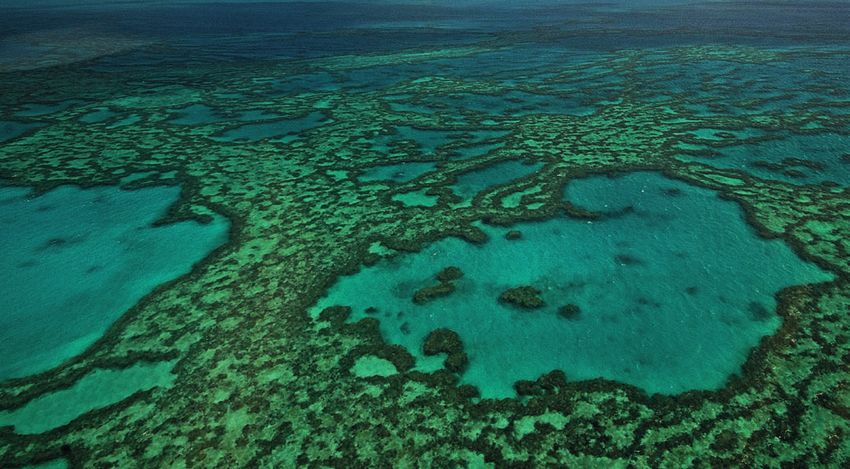
Credit: Image courtesy of Expedition to the Deep Slope 2007, NOAA-OE

         Deep-water reefs
         While tropical coral reefs are typically found up to 150m, cold deep-water reefs can be found at 2000m or
         lower. Deep-water reefs are biologically distinct as they do not rely on the availability of light and as such will
         be affected by climate change in different ways.23

         It has been suggested that deep-water reefs could provide a refuge for shallow-water coral ecosystems under
         changing oceanic conditions.24 However, not only are deep water reefs vulnerable to disturbances themselves,
         but there are concerns about the suitability and ability of most coral larvae to migrate to deep water reefs.
         Only 25% of total coral biodiversity – the ‘depth-generalist’ species – would be suited to deep water reefs.25
         Deep-water reefs may act as a refuge for some shallow corals, but it is not an ecosystem-wide phenomenon.26/27
         Deep reefs are unable to act in a refuge capacity for the vast majority of species from shallow reefs.28

         Research surrounding the impact of climate change on deep reefs is limited as they are difficult to access.29
         Furthermore, shallow, warm-water reefs tend to be of more direct importance to humans as they are closer to
         settlements. This report therefore focuses on warm-water, tropical reefs.

         Rising temperatures - rising risks

 2�°C

1.5�°C

                                                                                                                  very high risk

 1°C
                                                                                                                  high risk

                                                                                                                  moderate risk
0.5�°C

                                                                                                                  undetectable

 0�°C
            Threatened    Extreme   Coral die-off   Arctic      Coastal          River          Crop
            ecosystems    weather                   region      flooding       flooding        yields
                           events

Figure 1: Adapted from - Assessment of level of risk in various spheres affected by climate change. Source: IPCC, 2018

                                                                           7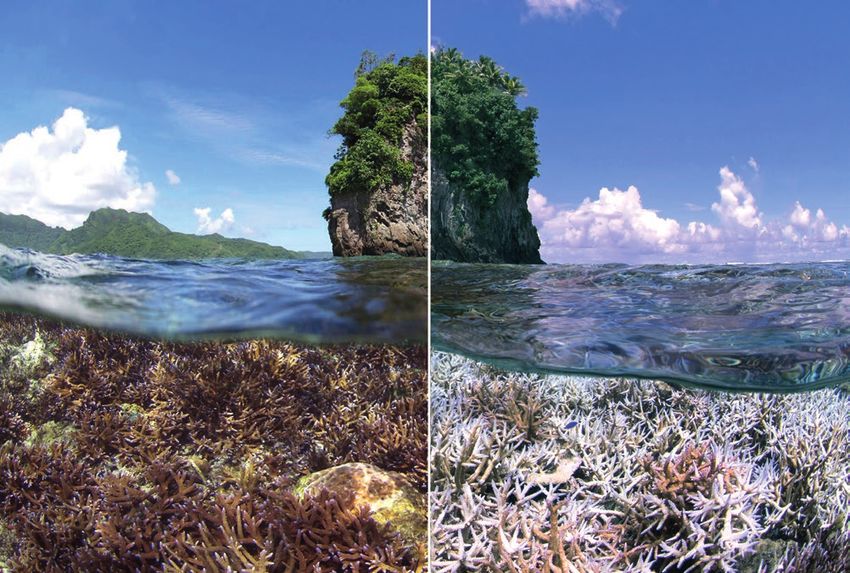
Asia, the Pacific and Australia
                                                      Caribbean and the Atlantic Ocean

                                                                                                                                                                  70%	ocoral
                                                                                                                                                                         f the world’s
                                                                  	of the world’s
                                                              9% coral reefs                                                                                                  reefs

                                                                                                                                                                  80% oaref thethreatened
                                                                                                                                                                                   coral reefs
                                                           75% oaref thethreatened
                                                                            coral reefs
                                                                                                          Western Indian Ocean

                                                                                                                14%	ocoral
                                                                                                                       f the world’s
                                                                                                                            reefs

                                                                                                                65% oaref thethreatened
                                                                                                                                 coral reefs

                                                                                          Sources: UNEP (2016) Global Environment Outlook GEO-6 Regional Assessment / McClanahan, T.R. (2002),
                                                                                                   The near future of coral reefs. Environmental Conservation, vol. 29, number 4, pp. 460-483

                          The Coral Triangle
                          The Coral Triangle covers 647 million hectares of land and sea in South-east Asia and houses the highest concentration
                          of marine species on the planet, including 76% of known species of coral, 2,500 species of reef fish and many endangered
                          animals such as blue whales.30 Because of this immense biodiversity and richness, it is often referred to as ‘the Amazon
                          of the Seas’.31

                          130 million of those who live within the Coral Triangle rely directly on their coastal and marine resources32, yet 90% of
                          its coral reefs are currently at risk.33/34

                         THE AMAZON OF THE SEAS
                                                              The Coral Triangle houses            130 million of those                                90% of the Coral
                                                              76% of known species                 who live within the Coral                           Triangle coral reefs
                                                              of coral, 2,500 species              Triangle rely directly                              are currently
                                                              of reef fish and many                on their coastal and                                at risk
                                                              endangered animals                   marine resources
                                          C BY 2.0)
                                   r (C
                              oo
                         Gl
                 n
         tia
C re d i t : C h r i s

                                                                                              8                                                                 Credit: Katerina Katopis /
                                                                                                                                                                Coral Reef Image Bank
CORALS UNDER THREAT

Coral bleaching: when corals are stressed by changes in conditions such as temperature, light or
nutrients, they expel the symbiotic algae living in their tissues, causing them to turn completely white.35

The climate crisis is a severe threat to coral reefs. As the global temperature rises, reefs will be put at risk from
warming oceans, higher frequency cyclones, increased precipitation, sea level rise, rising acidification and
changing ocean circulation.36 These factors alter the delicate balance of conditions necessary for tropical coral
reefs to function, causing bleaching and destruction of reefs. In many cases, this damage is irreversible.

       Urgent action on climate change
       The climate crisis obviously extends far beyond coral reefs, and is already affecting the entirety of the Earth’s
       ecosystem, and all those living within it.

       A full transition to zero carbon by all major industrialised economies is needed by 2030. That means reducing
       emissions across every part of every industry and ensuring a reliable supply of truly renewable energy. A clear
       set of policies is required to facilitate long-term investment and innovation in solar, wind, wave, and geo-
       thermal energy. This move to carbon-free electricity will need effective storage systems and grids designed for
       high volume of variable renewable power. This must be achieved without relying on unsustainable measures
       such as nuclear power or driving deforestation or food insecurity by growing food-based bio-fuels.

                                     CO2
                             H2O + CO2 = H2CO3
                                H+         H+
                                      H+

   WARMING OCEAN         OCEAN ACIDIFICATION        SEA LEVEL RISE                  CHANGES IN STORM PATTERNS                                 CHANGES IN PRECIPITATION      ALTERED OCEAN CURRENTS
  | thermal stress |   a result of increased CO2   | sedimentation|               | stronger, more frequent storms|                              | increased runoff of       | change in connectivity
                       | reduction in pH levels|                                                                                               freshwater, sediment and     and temperature regimes|
                                                                                                  l y a f f ect s co                            land-based pollutants|
                                                                                    m   at ical                        r al
                                                                           e   dr a                                           r ee
                                                                       g

                                                                                                                                 fe
                                                                  an

                                                                                                                                     cos
                                                             e ch

                                                                                                                                      ys te
                                                          C l i ma t

                                                                                                                                       ms

                             Coral bleaching                                                                                                               Lack of food and
                                                                                                                                                           dispersal of larve

                            Decreased growth rates                                                                                               Algal blooms and murky water,
                            and structural integrity     Smothering of coral                                      Infectious disease                      reduced light

                                                                           Destruction of reef structure

Figure 2: Adapted from - Threats to coral reefs: climate change37

                                                                                                    9
Acidification
      Along with forests, oceans are a major carbon sink;
      they absorb approximately 30% of the CO2 released into
      the atmosphere38, helping to mitigate global warming.
      As atmospheric CO2 rises, more is absorbed by the ocean;
      however, this also causes it to become more acidic.
      In the past century, the average acidity of the oceans has
      increased by 26%.39

      Normally, reef-building corals use naturally occurring
      carbonate in the oceans to form their calcium carbonate
      skeletons.40 As the ocean acidifies, less carbonate is                              Oceans are a major
      available for this process. Along with impacting reef growth,                     carbon sink; they absorb
      this causes existing coral skeletons to become brittle and
      more vulnerable to damage from storms.41                                           approximately 30% of
                                                                                         the CO2 released into
      Along with affecting living corals, acidification will cause
                                                                                            the atmosphere.
      the calcium carbonate in the sediments that support the reef
      to dissolve, an issue that is likely to increase notably by the
      end of the century.42/43 Reefs with less structural integrity
      have been found to attract fewer new corals, and therefore
      may struggle to rebuild after loss of carbonate.44
                                                                               Credit: The Ocean Agency / XL Catlin Seaview Survey / Richard Vevers

      Coral soundscapes in danger
      Coral reefs have a distinct soundscape which is vital in attracting young fish to safe, suitable habitats and guides fish who have
      left the reef back to their home. However, degraded reefs are unable to perform this important ecological function.

      Soundscapes from recently degraded reefs are significantly quieter and attract
      40% fewer juvenile fish when compared to healthy reefs, research has shown.45

      The soundscape effect is likely to cause negative impacts on reef resilience, as
                                                                                                            Soundscapes from
      healthy fish populations are essential in helping reefs to recover from storm                         recently degraded reefs
      damage and bleaching.46
                                                                                                            are significantly quieter
      This is prevalent in the Great Barrier Reef, where the ‘reef orchestra’ is being                      and attract 40% fewer
      silenced as it degrades and corals deteriorate.47 As a result of recurrent bleaching
      events and repeated cyclones, the wildlife that used to live in the reef has begun
                                                                                                            juvenile fish.
      to disappear, along with the multitude of sounds they make.48

                                                                        10
Credit: Lindsey Kramer/ USFWS
Rising temperatures Extreme weather and disease
Alongside ocean acidification, the major impact of Under future global warming scenarios, the intensity of
the climate crisis on coral reefs is rising temperature. tropical cyclones is likely to increase significantly.61 Strong
While corals are affected by both excessively warm winds and wave action can damage or destroy reefs.62 Reefs
and cold temperatures outside their narrow range, often provide protection to coastal communities, absorbing
the majority of tropical reefs are closer to their upper energy from storm waves before they reach the shore, which
thermal limits, meaning they are particularly vulnerable reduces casualties, damage and subsequent reconstruction
to higher temperatures.49 Warming causes a breakdown costs.63 The natural ability of reefs to recover from storm
of the symbiotic relationship between coral and the damage has suffered under repeated and increasingly
photosynthetic algae, starving the coral of nutrients.50 intense storms. Coastal communities are not only losing
As the algae die off, corals lose their colour in what is a major source of food and income but also a vital line of
known as a ‘bleaching’ event.51 defence against extreme weather.
Even if global warming is kept to under 2°C, most reefs More intense rainfall under the climate crisis will also cause
will still experience mass bleaching, in part because of larger volumes of surface runoff, which transfers nutrients
the complexity and geographical variation of oceanic and sediments to the ocean. When these sediments settle
temperature changes.52 For example, in 2016 the Great on reefs, they smother corals, blocking the light.64 The
Barrier Reef suffered ‘a catastrophic die-off’ of 30% of its same effect occurs when algal blooms form due to excess
coral, under extremely high temperatures experienced in concentrations of nutrients.65
the summer heatwave.53 These extreme heatwave events
are increasingly common under the climate crisis. Climate change has also been linked to the spread of
infectious diseases66 and the expansion of invasive species
In certain conditions, some corals are able to recover from – such as sponges or lionfish – which can survive in harsher
bleaching events, particularly in deep water reefs.54 However, conditions than corals and other reef wildlife.67
this relies on optimum recovery conditions, where reefs
are repopulated by coral larvae. In reality, these conditions
are rare. Repeated bleaching events, ocean acidification,
intense storms, pollution and overfishing are all increasingly Overfishing and pollution
common and severely hamper reef recovery.
On average across the Great Barrier Reef, the recovery rate of Climate change is an existential threat to coral reefs, but
corals from bleaching events has declined by 84% between they are also faced with other anthropogenic stressors.
1992-2010.55 Unfortunately, this scenario is now common; Currently, overfishing is considered to be the greatest
massive bleaching events have overwhelmed the capacity immediate threat for at least 55% of the world’s coral reefs.68
of reefs to bounce back. While corals need approximately
10-15 years to naturally recover, massive bleaching events By 2050, Pacific reef fish populations are projected to
now occur on average every 6 years.56 decrease by 20%.69 Fish are an important part of coral reef
ecosystems, as they consume algae which would otherwise
smother the reef, disrupting coral growth and making it
inhospitable for new coral larvae.70/71/72
In 2016 the reef lost 30%
of its coral to bleaching.
The Great Barrier Reef
The Great Barrier Reef is the Earth’s largest living structure, approximately the size of Italy.57 For 500,000 years it
has been home to an astonishingly diverse array of wildlife, and in more recent times, has played an important role
in Indigenous culture and modern Australia’s economy.58 However, this unique ecosystem is under serious threat as
the climate crisis escalates. In 2016 the reef lost 30% of its coral to bleaching59, and its recovery rate from bleaching
events has declined by 84% between 1992-2010.60
11“We need to tackle both local and global
impacts at the same time. If we fix
the climate problem, humans can still
continue to degrade reefs. But if we fix
the local threats, climate change is still going
to be an enormous problem.”
Dr Elizabeth Shaver, Coral Restoration Lead for the Nature
Conservancy’s Reef Resilience Network Programme73
Credit: John Turnbull (CC BY-NC-SA 2.0)
LOSS OF MARINE WILDLIFE
As well as overfishing, destructive fishing practices can leave Tropical coral reefs support an estimated quarter of all
corals more vulnerable to pollution and climate change. marine species: hundreds of thousands of animal and plant
Bottom trawling is especially damaging and tends to have species, who rely on the reef for food, shelter and a safe
high bycatch of key species such as sea turtles.74 Dynamite place to live and reproduce.79/80 These complex ecosystems
fishing is often used in reef waters and is directly damaging to include hard and soft corals, sponges, crustaceans,
reef structure, as well as severely depleting fish populations.75 molluscs, fish, sea turtles, sharks, dolphins and much
more – including ‘foundation’ and ‘keystone’ species such
Pollution is an additional concern for coral reefs.76 as corals and sea turtles.81 The Great Barrier Reef alone has
Sediments, agricultural fertilisers and pesticides, plastics, over 600 different species of coral polyps.82
sewage and other pollution from human activities inland
can damage coral reefs. Sediments, often topsoil washed Sharks are the apex predators of the reef ecosystem. Species
from fields, physically smother corals, whereas nutrient such as the White-tip Reef Shark, Grey Reef Shark and
pollution in the form of fertiliser or sewage can also lead Tiger Shark are prevalent across Pacific, Indian and Coral
to smothering by encouraging the growth of harmful Triangle reefs.83 They feed primarily on reef species such
algae. Plastic pollution is also a serious problem, and as octopuses, crustaceans and a variety of reef fishes, and
recent research has shown that the likelihood of corals use reefs as safe nursery grounds for their young.84 They
succumbing to disease increases from 4% to 89% when they even provide food and habitat for fish species that eat
are in contact with plastic.77 their parasites.85 Yet despite their key role in maintaining a
healthy ecosystem, their populations are poorly managed,
Pollution is becoming an increasing concern as coastal even on the Great Barrier Reef.86
settlements expand, especially where there are poor or
non-existent waste disposal strategies. Many fish species rely exclusively on coral reefs; such
as Butterflyfish, whose larvae settle only on live coral
These factors are vital for coral reef conservation, however, colonies87 and who rely on coral polyps for 80% of their
even if addressed they cannot eliminate the threat of the diet.88 The loss of 99% of their sole habitat – which the
climate crisis. A study of the 2016 mass coral reef bleaching IPCC predicts will occur at 2°C of global heating – would be
event found that variations in water quality and fishing devastating, not only for Butterflyfish but a multitude of
pressure between reefs were independent of the severity of other species heavily dependent on reefs.89
bleaching events.78 This suggests that local conservation
efforts against pollution and overfishing will be of little help
if unchecked climate change continues.
12THREATS TO PEOPLE
There are many clear links between the health of coral Healthy coral reefs have long been an essential source
cover and marine life90; for example, over an eight-year of food, employment, income and storm protection for
period, loss of coral cover led to declines in 75% of reef fish coastal communities. According to the UN, an estimated
populations in Papua New Guinea.91 850 million people around the world live within 100 km of
coral reefs and at least 275 million depend on them for their
In reefs suffering such massive biodiversity losses, livelihoods and sustenance.97 And this number is increasing;
even the remaining, more resilient, fish species are still at in Asia and the Pacific alone, 325 million more people are
risk of losing their function in the local environment and expected to live in coastal zones by 2025.98
seeking other habitats, leaving reefs unable to fully recover
from disturbances.92
Maintaining coral biodiversity is key to reef survival; reefs Feeding coastal communities
rich in coral species attract more fish and other marine
life and are better placed to recover from storm damage,
bleaching, pollution, disease and predator outbreaks.93 Reefs are a crucial food source for many coastal communities.
Increasingly, however, reefs are damaged too frequently for In developing countries, coral reefs contribute approximately
corals to recover. For example, after months of particularly a quarter of the total annual fish catch, feeding 1 billion
warm ocean temperatures in 2015, 55% of corals in people in Asia alone.99 Six million fishers–over a quarter of
inshore reefs in the Red Sea experienced bleaching; after the world’s small-scale fishers–harvest from coral reefs.100
this episode, only the strongest corals survived, and fish
populations dropped significantly.94 In the USA, over 50% of all federally managed fisheries
species depend on coral reefs for part of their life cycle.101
If coral reefs continue to face the combined threats of The annual dockside value of commercial US fisheries from
climate change, pollution and overfishing, the future of coral reefs is over $100 million.102
marine biodiversity will be in doubt. Overall, 32.8% of
704 reef-building coral species are already at high risk of Reefs are the main source of animal protein for the
extinction.95 If a third of all species that construct reefs are populations of many isolated islands, especially those with
threatened, what does the future hold for the quarter of all limited resources and trade opportunities.103 The threat to
marine species that depend on them? food security is particularly pressing for the populations of
small island developing states because of their lack of land.
In fact, many coastal communities would have limited capacity
A single hammerhead shark can generate up to to adapt to a world without 99% of its reefs.104 Low-lying
US$1.6 million throughout its life from eco-tourism coastal settlements and small island developing states are
revenue, research in Costa Rica has shown.96 particularly vulnerable to the ripple effects of reef degradation.
– UN Environment Programme These communities often experience some of the combined
stresses of high population density, territorial isolation, limited
sources of income, and a lack of other natural resources.
In the Persian Gulf, 19 million people live within 30 km of
a coral reef, however, 85% of reefs in this area are currently
threatened105 and a 30% decrease in fish catch potential is
expected by 2090.106
ck
ll o
Po
ai r t
© A l as
THE ECONOMIC VALUE OF CORAL REEFS
Tourism and recreation = $9.6 billion
Coastal protection = $9.0 billion
Fisheries = $5.7 billion
Wildlife = $5.5 billion107
A note of caution: Valuing biodiversity in this way is of course
subjective, how do we put a value on a species’ intrinsic right to exist?
13Boosting the economy
Coral reefs also provide opportunities for employment and In addition, for many countries, seafood exports from
income generation. Both fishing and tourism are highly coral reef fisheries are important to the economy.
dependent on the health of the reef. Tourism relies on the For example, spiny lobsters represent a major source of
attractiveness of reefs – namely their healthiness, which export income for the Caribbean, and are the main fishery
generates the spectacular colours, and the abundance of for 24 Caribbean countries.115
marine life.108
Damage to coral reefs and the resultant decline in fish
stocks are jeopardising the livelihoods of millions of people
around the world. For island communities who rely heavily
Damage to coral reefs and the resultant decline in fish on fishing and tourism with few alternatives, the rate at
stocks jeopardises the livelihoods of millions of people which climate change is damaging coral reefs may surpass
around the world.109 their capacity to adapt.
Small island developing states can be particularly dependent Protecting the coastline
on coral reef tourism such as scuba diving and snorkelling.
In Bonaire, more than half of the 74,000 visitors it received
in 2007 were divers.110 Even in larger economies such as the Another vital function of coral reefs is to provide physical
USA and Australia, where reef tourism makes up a much protection from wave action, storms and erosion for coastal
smaller part of the economy, it still generates billions of US communities around the world. More than 150,000 km of
dollars in income every year.111 In a study of 108 countries shoreline in 100 countries and territories receives some
and territories with coral reefs, at least 94 benefitted from protection from coral reefs, through reduction of wave
reef tourism, and in 23 of these, it accounts for more than energy and associated damages.116 On the east African coast
15% of GDP.112 For large and small economies alike, the loss of alone, approximately 3-4 million people benefit from this
reef tourism would be significant. shoreline protection.117
For states with low average income and access to inshore coral Coral reefs can absorb 70-90% of wave energy, forming a
reefs, employment in the fishing industry is often particularly natural protective barrier.118 Not only does this ensure a safer,
attractive because of low start-up costs and the relative ease of more stable way of life for communities, but also prevents
accessing reef fish without need for high-tech equipment.113 the substantial costs that would be incurred from building
Many jobs depend on sustainable reef fisheries; there are hard coastal defences and repairing storm damage.
an estimated six million reef fishers worldwide and over a
quarter of the world’s small-scale fishers work on coral reefs.114
Coral reefs
can absorb 70-90%
of wave energy, forming
a natural protective
barrier.
14
© EJFINCOME GENERATION BY CORAL REEFS
Southeast Asia 10.6 billion
Caribbean 3.4 billion
Coral reefs generate at least
Coral reefs generate at least
US$10.6 billion for the countries
US$3.4 billion for the countries
in the region each year
in the region each year
• 8,000 businesses depend
•3 ,000 businesses directly
directly on coral reef health
depend on coral reef health
• 35 million tourists come to
•7 million tourists come to
enjoy coral reefs each year
enjoy coral reefs each year Indian Ocean 2 billion
Coral reefs generate at least
US$2 billion for the countries
in the region each year
• 3,000 businesses depend
directly on coral reef health
• 1.4 million tourists come to
enjoy coral reefs each year
Data Source:
International Coral Reef Initiative (ICRI), Regional Factsheets for the Caribbean, the Indian Ocean and Southeast Asia (2018)
PROTECTING CORAL REEFS
A further concern is that sea level rise will drown coral
reefs, exposing coasts to wave action against which they To protect coral reefs, we must tackle the climate crisis
were previously protected. On most reefs, growth rate is not and free the reefs from the pressures of pollution
sufficient to keep up with projected sea level rise.119 and unsustainable fishing. As discussed elsewhere in
this report (see box: Urgent action on climate change),
The economic impact of flood damages incurred by the loss of the climate crisis can only be solved through sincere
coral reefs is significant. With the loss of only one metre in reef international cooperation. Governments must step up to
height, annual financial damages from flooding would double fulfil their vital role in facilitating an effective and fair
and damages from storms would triple.120 Over a period of just framework for action.
100 years, the cost of flood damage would increase by 91%.121
To ensure that coral reefs survive the climate change that
Communities built on low lying atolls, such as Pacific cannot be prevented, conservation programmes must
islands Kiribati and Tuvalu, are particularly at risk. Kiribati enhance their resilience. All coral reefs have a natural
is one of nine nations identified by the World Resources degree of resilience, which can be condensed into six
Institute as both highly dependent on threatened coral reefs essential indicators: (1) resistant coral species, (2) coral
and as having a low capacity to adapt.122 Seventeen people diversity, (3) herbivore diversity, (4) prevalence of coral
from the Pacific have already made refugee claims in New disease, (5) macroalgae cover and (5) recruitment.126 Reefs
Zealand based on climate change, none of which have been that are more diverse in coral and herbivore species tend to
successful as there is no international protection for climate be more resistant to outbreaks of disease, and those with
refugees.123 The World Bank has suggested increasing labour good recruitment of coral larvae are more able to repopulate
mobility from at-risk Pacific islands to Australia and New after storm damage and bleaching.127
Zealand, to prevent a forced mass-migration of climate
refugees as sea levels rise.124
Finally, corals and other reef species have been the source To protect coral reefs,
of vital medicines used to treat cancer, Alzheimer’s and
bacterial infections, among many other conditions.125 Losing we must tackle the climate
this important habitat means losing a potential source of crisis and free the reefs from
new treatments. Ultimately, if left unchecked, the loss of
coral reefs will have a devastating impact on the livelihoods the pressures of pollution and
of millions of people around the world. unsustainable fishing.
15GWALA: GIVING NATURE A REST
Marine Protected Areas
Marine Protected Areas (MPAs), although not a complete
solution to reef protection, can improve resilience and allow
threatened species to reproduce and recover in a safe area.128
Properly managed MPAs can boost fish populations in nearby
areas, ensuring that people who depend on them for food
and income can prosper.129/130/131 Conservation initiatives
can also provide alternative employment opportunities for
local communities.132 In this way, MPAs benefit both coastal
communities and marine wildlife.
Currently, however, just 27% of coral reefs are encompassed
by the world’s MPAs133 and there is significant variation in
their effectiveness. International enforceable guidelines on
exactly what constitutes an MPA still lack clarity and it is at
each country’s discretion which conservation measures they
implement. Their level of protection varies substantially:
in fact, only 3.6% of declared MPAs have been implemented,
and only 2% are fully protected.134 While it is encouraging
that the number of MPAs are increasing, is vital that they are
properly managed.
Successful MPAs tend to have nature conservation as
their primary objective, are regulated by clear boundaries,
legally recognised and have distinct and unambiguous
management goals.135
MPAs have been particularly successful in Latin American
and Caribbean countries: Brazil, Mexico, Chile and
Colombia.136 In 2018, the creation of an MPA encompassing
the Revillagigedo archipelago in Mexico not only protected
the species living within its waters but also helped maintain
key routes for migratory species to the Clipperton Atoll,
Galapagos Islands and Cocos Island.137 These networks of
MPAs are able to achieve ecological and social aims that
single MPAs cannot, and thus it is important to consider the
connectivity of MPAs when they are designated.138
MPAs, reef rehabilitation measures and other efforts to
reduce pollution and overfishing are an important component
of overall management strategies, yet merely delay coral reef
decay unless climate change is addressed. A multi-faceted
strategy simultaneously targeting climate change, overfishing
and pollution is needed; while at the same time building
resilience through promoting biodiversity.
Only 3.6% of
declared MPAs have been
implemented, and only
2% are fully protected.
16Gwala could be
a solution to help
The traditional conservation practice preserve the 40,000
of Gwala: Giving nature a rest square kilometres
of coral reefs.
Papua New Guinea has abundant natural resources – wood, minerals, oil, gas
and fish. Exploitation through logging, mining and commercial fishing were
common in the latter half of the 20th century and land ownership laws were altered
in order to maximise capital gain from fossil fuels in particular.139/140
Since then, there has been a cultural shift to reassert local ownership of resources, in response
to the effects of climate change. Sea level rise forced several villages to move further inland
and corals underwent severe bleaching, resulting in declines in fish populations and scarce
seafood.141 In recognising the link between sustainable resource use and climate change, some
islands in Papua New Guinea have returned to the traditional practice of Gwala; setting aside a
reef or forest area to allow the ecosystem to recover.142
“The essential goal [of Gwala] is to set aside your space to rest. Although it is always
done to let resources recover, it may be practised for several reasons; there might not be
enough resources and they need to replenish so [communities] can eat, or it might be
for cultural reasons: to celebrate an important event, or to honour someone
who has passed away.
After Gwala was re-implemented, islanders noticed the improvement in the size of
the reef and the availability of fish. With healthier reefs, fish come closer to the shore,
making it easier for coastal communities to find food in bad weather.
A community in Wiyaloki Island set aside some of its maritime space through Gwala.
They were famous for their clam garden [traditional intertidal rock structures used to
farm clams]. When the most recent El Niño happened in the Western Pacific, it meant
a lot of their neighbours were having serious food security issues, as they were not able
to go out at sea or to get food from their gardens.
People from the Wiyaloki community were able to feed their neighbours by offering
them clams. Because they had set clam gardens aside, they were replenished.
As a result, Wiyaloki helped other communities start their own clam gardens by giving
a couple of their clams. That could not have happened without Gwala.”
Niquole Esters, director of the Coral Triangle Initiative at Conservation International143
Following success in certain areas of Papua New Guinea, the practice of Gwala is spreading
across the archipelago to an increasing number of islands.144 If properly implemented, Gwala
could be a solution to help preserve the 40,000 square kilometres of coral reefs spread
throughout Papua New Guinea.145
17 Credit: Hitchster (CC BY 2.0)CONCLUSION
Saving coral reefs and the vital protection, livelihoods and
food security they provide to coastal communities means
ending the climate crisis. Limiting global temperature rise
to below 1.5°C will provide the only chance for the survival
of coral reefs.
However, conservation efforts to end destructive fishing
practices and pollution are also vital, since these are also
very real threats to the world’s reefs. Effective management
and protection for wildlife will build resilience against the
climate change that we will not be able to avert.
f s.
or the sur viv a l o f c o ra l re e
L i m i t i n g g l o b a l t e m p e ra t u re r i s e t o b e l o w 1 . 5 ° C w i l l p ro v i d e t h e o n l y ch a n c e f
18 Credit: Eric Baker (CC BY-NC-SA 2.0)EJF RECOMMENDATIONS
Saving coral reefs means ending To ensure that corals survive the climate
the climate crisis, therefore: change that is irreversible:
• All countries must urgently and fully implement the • Illegal and unsustainable fishing must be stopped.
global climate change agreement established in Paris One key way states can achieve this is by increasing
in December 2015, raising their emission reduction transparency in the industry by following EJF’s
pledges over time keeping the global temperature Charter for Transparency.146
level below 1.5°C above pre-industrial levels.
• Fishing practices that destroy reefs must be banned
• A full transition to zero carbon by all major worldwide and such bans must be effectively enforced.
industrialised economies is needed by 2030. That
means reducing emissions across every part of • Marine protected areas must offer true protection,
every industry and ensuring a reliable supply of truly with clear restrictions and effective conservation
renewable energy. A clear set of policies is required aims, such that they provide an effective and much-
to facilitate long-term investment and innovation in needed haven for corals, fish and other wildlife.
solar, wind, wave, and geo-thermal energy.
• Marine protected areas must be expanded so that
• T he EU should initiate the creation of a high-profile, they cover at least 30% of the oceans.
fully resourced, inter-agency taskforce to coordinate
the work of the multiple bodies in the Commission, • Coral-harming pollution, from agricultural run-off to
including (but not limited to) Environment, Climate sewage and plastics, must be curbed. In many locations
Action, Migration and Humanitarian Affairs, tackling such problems will have other positive effects
International Cooperation and Development as well for coastal communities, such as improved sanitation
as the High Representative of the Union for Foreign as a result of better sewage treatment.
Affairs and Security Policy, in order to drive a more
effective, integrated approach towards wider • In all deliberations and future negotiations, all
international responses to climate change. stakeholders must be included, with special
reference to local communities.
• T he devastating implications for fundamental
human rights and economic prosperity of our failure
to roll-back global heating must be made central to
national, regional and global economic policy and Marine protected areas
decision making – to help facilitate this, a UN special must be expanded so that
rapporteur on human rights, economic well-being and
climate change should be immediately established,
they cover at least 30%
fully resourced and charged with developing of the oceans.
recommendations for action, reporting by 2021.
19References
1 NOAA Fisheries ‘Shallow Coral Reef Habitat’, accessed 04/10/2019, 21 IPCC (2018) Special Report on the impacts of global warming of
https://www.fisheries.noaa.gov/national/habitat-conservation/shallow- 1.5°C above pre-industrial levels and related global greenhouse gas
coral-reef-habitat emission pathways, in the context of strengthening the global response
to the threat of climate change, sustainable development, and efforts to
2 Bryant, D. et al. (1998) Reefs at Risk: A Map-Based Indicator of eradicate poverty. Accessed 04/10/2019 https://www.ipcc.ch/sr15/
Threats to the World’s Coral Reefs. Accessed 04/10/2019
https://www.researchgate.net/publication/259481906_Reefs_at_Risk_A_ 22 Ibid.
Map-Based_Indicator_of_Threats_to_the_World’s_Coral_Reefs
23 Frade, P.R., et al. (2018) Deep reefs of the Great Barrier Reef
3 IPCC (2018) Special Report on the impacts of global warming of offer limited thermal refuge during mass coral bleaching, 9, Nature
1.5°C above pre-industrial levels and related global greenhouse gas Communications, pp. 3447. Accessed 04/10/2019
emission pathways, in the context of strengthening the global response https://www.nature.com/articles/s41467-018-05741-0
to the threat of climate change, sustainable development, and efforts to
eradicate poverty. Accessed 04/10/2019 https://www.ipcc.ch/sr15/ 24 Bongaerts, P. et al. (2010) Assessing the ‘deep reef refugia’ hypothesis:
focus on Caribbean reefs , 29, Coral Reefs, pp. 309–327. Accessed
4 Wilkinson, C. et al. (2016) Chapter 43: Tropical and Sub-Tropical 04/10/2019 https://link.springer.com/article/10.1007/s00338-009-0581-x
Reefs in First Global Integrated Marine Assessment (First World Ocean
Assessment), United Nations – Division for Ocean Affairs and the Law of 25 Ibid.
the Sea, New York, United States, pp. 1-42
26 Bongaerts, P. et al. (2017) Deep reefs are not universal refuges:
5 EJF (2018) Out of the shadows. Improving transparency in global Reseeding potential varies among coral species, 3, Science Advances,
fisheries to stop illegal, unreported and unregulated fishing, pp. e1602373. Accessed 04/10/2019
https://ejfoundation.org//resources/downloads/Transparency-report- http://advances.sciencemag.org/content/3/2/e1602373.short
final.pdf
27 Frade, P.R., et al. (2018) Deep reefs of the Great Barrier Reef
6 UNEP Coral Reef Unit, ‘Coral Reefs – valuable but vulnerable’, offer limited thermal refuge during mass coral bleaching, 9, Nature
accessed 04/10/2019, http://coral.unep.ch/Coral_Reefs.html Communications, pp. 3447. Accessed 04/10/2019
https://www.nature.com/articles/s41467-018-05741-0
7 Pratt, B.R. et al. (2001). 12: Ecology and Evolution of Cambrian Reefs.
Ecology of the Cambrian Radiation. Columbia University Press. pp. 259 28 Rocha, L., et al. (2018). Mesophotic coral ecosystems are threatened and
ecologically distinct from shallow water reefs, Science, 361, pp. 281-284
8 Roberts, C. M. (2005). Marine Biodiversity Hotspots and
Conservation Priorities for Tropical Reefs, Science 295, pp 1280-1284. 29 IPCC (2018) Special Report on the impacts of global warming of
Accessed 04/10/2019 https://www.matermiddlehigh.org/ourpages/ 1.5°C above pre-industrial levels and related global greenhouse gas
auto/2018/1/22/56502032/biodiversity%20and%20hotspots%20paper.pdf emission pathways, in the context of strengthening the global response
to the threat of climate change, sustainable development, and efforts to
9 UNEP Coral Reef Unit, ‘Coral Reefs – valuable but vulnerable’, eradicate poverty, pp 229. Accessed 04/10/2019 https://www.ipcc.ch/sr15/
accessed 04/10/2019, http://coral.unep.ch/Coral_Reefs.html
30 Coral Triangle Initiative, ‘Frequently Asked Questions’,
10 Reef Relief, ‘Coral Reef Ecosystem’, accessed 04/10/2019, accessed 04/10/2019
https://www.reefrelief.org/learn/coral-reef-ecosystem/ http://www.coraltriangleinitiative.org/frequently-asked-questions-0
11 Wilkinson, C. et al. (2016) Chapter 43: Tropical and Sub-Tropical 31 Reef Check, 'The Coral Triangle - Amazon of the Seas', accessed
Reefs in First Global Integrated Marine Assessment (First World Ocean 29/11/2019 http://reefcheck.or.id/coral-reef-conservation-resources/
Assessment), United Nations – Division for Ocean Affairs and the Law of education/the-coral-triangle-the-amazon-of-the-seas/
the Sea, New York, United States, pp. 1-42
32 WWF (2017) 'The Coral Triangle Initiative on Coral Reefs, Fisheries
12 Reef Relief, ‘Coral Reef Ecosystem’, accessed 04/10/2019, and Food Security (CTI-CFF)', accessed 29/11/2019.
https://www.reefrelief.org/learn/coral-reef-ecosystem/
33 Coral Triangle Initiative, ‘Frequently Asked Questions’,
13 Ibid. accessed 04/10/2019
http://www.coraltriangleinitiative.org/frequently-asked-questions-0
14 Guan, Y. et al. (2015) Suitable environmental ranges for potential
coral reef habitats in the tropical ocean. PloS one, 10 (6), accessed 34 World Resources Institute (2012) 'Reefs at Risk Revisited in the Coral
04/10/2019 https://www.ncbi.nlm.nih.gov/pmc/articles/PMC4452591/ Triangle', accessed 29/11/2019 https://www.wri.org/publication/reefs-
risk-revisited-coral-triangle
15 NOAA, ‘In what types of water do corals live?’, accessed 04/10/2019
https://oceanservice.noaa.gov/facts/coralwaters.html 35 NOAA (2018) ‘What is coral bleaching?’, accessed 04/10/2019
https://oceanservice.noaa.gov/facts/coral_bleach.html
16 Reef Relief [online], ‘Coral Reef Ecosystem’, accessed 15.06.2018,
https://www.reefrelief.org/learn/coral-reef-ecosystem/ 36 NOAA (2019) ‘How does climate change affect coral reefs?’,
accessed 04/10/2019
17 Wilkinson, C. et al. (2016) Chapter 43: Tropical and Sub-Tropical https://oceanservice.noaa.gov/facts/coralreef-climate.html
Reefs in First Global Integrated Marine Assessment (First World Ocean
Assessment), United Nations – Division for Ocean Affairs and the Law of 37 Ibid.
the Sea, New York, United States, pp. 1-42
38 FAO (2018) Impacts of climate change on fisheries and aquaculture,
18 UNEP Coral Reef Unit, ‘Coral Reefs – valuable but vulnerable’, Rome, Italy, accessed 04/10/2019
accessed 04/10/2019, http://coral.unep.ch/Coral_Reefs.html http://www.fao.org/3/CA0356EN/ca0356en.pdf
19 World Resources Institute (2011) Burke, L. et al., Reefs at Risk 39 National Geographic (2018) ‘The Ocean is Getting More Acidic –
Revisited, Washington DC, United States. What That Actually Means’, accessed 04/10/2019
https://news.nationalgeographic.com/2018/06/ocean-acidification-
20 Wilkinson, C.R., Buddemeier, R.W. (1994) Global Climate Change and underwater-drones-gliders-science-environment/
Coral Reefs: Implications for People and Reefs. Report of the UNEP-IOC-
ASPEI-IUCN Global Task Team on the implications of climate change on 40 NOAA (2017) ‘What is Ocean Acidification?’, accessed 04/10/2019,
coral reefs, IUCN, Gland, Switzerland, pp.124 https://oceanservice.noaa.gov/facts/acidification.html
2041 Mollica, N. R., et al. (2018) Ocean acidification affects coral growth by 59 Hughes, T. P. et al. (2018) Global warming transforms coral reef
reducing skeletal density, PNAS, 115, pp. 1754-1759. Accessed 04/10/2019 assemblages. Nature, 556, pp. 492 – 496. Accessed 04/10/2019
http://www.pnas.org/content/115/8/1754.short https://www.nature.com/articles/s41586-018-0041-
2?dom=scribd&src=syn
42 Eyre, B. D., et al. (2014) Benthic coral reef calcium carbonate
dissolution in an acidifying ocean, Nature Climate Change, 4, pp. 60 Ortiz, J., (2018) Impaired recovery of the Great Barrier Reef under
969–976. affects coral growth by reducing skeletal density, PNAS, 115, cumulative stress, Science Advances, 4, pp. 1-8. Accessed 04/10/2019
pp. 1754-1759. Accessed 04/10/2019 http://advances.sciencemag.org/content/4/7/eaar6127
https://www.nature.com/articles/nclimate2380
61 Cheal, A.J., et al. (2017) The threat to coral reefs from more intense
43 Eyre, B. D., et al. (2018) Coral reefs will transition to net dissolving
cyclones under climate change, Global Change Biology, 23, pp. 1511-1524.
before end of century, Science, 359, pp. 908-911. Accessed 04/10/2019
Accessed 04/10/2019
http://science.sciencemag.org/content/359/6378/908
https://onlinelibrary.wiley.com/doi/abs/10.1111/gcb.13593
44 Fabricious, K., et al. (2017) Low recruitment due to altered
settlement substrata as primary constraint for coral communities 62 Ibid.
under ocean acidification, Proceedings of the Royal Society B, 284,
pp. 1-9. Accessed 04/10/2019 http://rspb.royalsocietypublishing.org/ 63 UNEP-WCMC, (2006) In the Front Line: Shoreline Protection and
content/284/1862/20171536 Other Ecosystem Services from Mangroves and Coral Reefs, Cambridge
UK, pp. 5.
45 Gordon, T. A. C. et al. (2017) Habitat degradation negatively affects
auditory settlement behaviour of coral reef fishes. PNAS. 115 (20), pp. 64 Coral Reef Alliance, ‘Saving the World Coral Reefs: Direct Threats’,
5193 – 5198, accessed 04/10/2019 accessed 04/10/2019
http://www.pnas.org/content/pnas/115/20/5193.full.pdf https://coral.org/coral-reefs-101/reef-threats/direct/
46 Ibid. 65 Hoegh-Guldberg, (2007) Coral Reefs Under Rapid Climate Change
and Ocean Acidification, Science, 318, pp. 1737-1742. Accessed
47 University of Exeter, ‘Deteriorating Great Barrier Reef hushed: 04/10/2019 https://repository.si.edu/bitstream/handle/10088/6211/
Young fish no longer hear their way home’, accessed 04/10/2019, Hoegh_guldberg_2007coral_reefs_und.pdf
https://www.exeter.ac.uk/news/featurednews/title_655930_en.html
66 McClanahan, T.R. (2002) The near future of coral reefs.
48 Ibid. Environmental Conservation, 29, pp. 460-483
49 Lough, J., et al. (2018) Increasing thermal stress for tropical coral 67 Hindustan Times (2018) ‘As corals die, watery grave awaits islands’,
reefs: 1871–2017, Scientific Reports, 8, pp. 1-8, accessed 04/10/2019, accessed 04/10/2019, https://www.hindustantimes.com/india-news/
https://www.nature.com/articles/s41598-018-24530-9 as-corals-die-watery-grave-awaits-andaman-and-nicobar-islands/story-
shgCNawKLiCCDjoxWKosEM.html
50 Wiedenmann, J. et al. (2012) Nutrient enrichment can increase
the susceptibility of reef corals to bleaching, Nature, 3, pp. 160–164. 68 World Resources Institute (2011) Burke, L. et al., Reefs at Risk
Accessed 04/10/2019 https://www.nature.com/articles/nclimate1661 Revisited, Washington DC, United States, pp. 3.
51 Douglas, A.E. (2003) Coral bleaching–how and why?, Marine 69 Gattuso, J.P. et al. (2014) Cross-chapter box on coral reefs, in Climate
Pollution Bulletin, 46, pp. 385-392. Accessed 04/10/2019 Change 2014: Impacts, Adaptation, and Vulnerability. Part A: Global
https://www.sciencedirect.com/science/article/abs/pii/ and Sectoral Aspects. Contribution of Working Group II to the Fifth
S0025326X03000377#! Assessment Report of the Intergovernmental Panel on Climate Change
[Field, C.B. et al. (eds.)]. Cambridge University Press, Cambridge, UK,
52 IPCC (2018) Special Report on the impacts of global warming of USA, pp. 97-100
1.5°C above pre-industrial levels and related global greenhouse gas
emission pathways, in the context of strengthening the global response 70 Goatley, C.H.R, et al. (2016) Sediments and herbivory as sensitive
to the threat of climate change, sustainable development, and efforts to indicators of coral reef degradation, Ecology and Society, 21, pp. 29.
eradicate poverty, accessed 04/10/2019 https://www.ipcc.ch/sr15/
71 Agard, J. et al. (2012), Chapter 5: Biodiversity, in UNEP (2012) Global
53 Hughes, T. P. et al. (2018) Global warming transforms coral reef Environment Outlook GEO-5: Environment for the future we want,
assemblages. Nature, 556, pp. 492 – 496. Accessed 04/10/2019 Nairobi, Kenya, pp. 528
https://www.nature.com/articles/s41586-018-0041-
2?dom=scribd&src=syn 72 Atlantic and Gulf Rapid Reef Assessment (2019) 'Fish Indicators'
accessed 29/11/2019 https://www.agrra.org/coral-reef-monitoring/fish-
54 Baker, A., et al (2018) Climate change and coral reef bleaching: indicator/
An ecological assessment of long-term impacts, recovery trends and
future outlook, Estuarine, Coastal and Shelf Science, 80, pp. 435-471. 73 EJF, 3/07/2018, interview with Elizabeth Shaver
Accessed 04/10/2019 https://www.sciencedirect.com/science/article/
pii/S0272771408003405 74 World Wide Fund for Nature, ‘ Fishing problems: Destructive fishing
practices, accessed 04/10/2019,
55 Ortiz, J., (2018) Impaired recovery of the Great Barrier Reef under http://wwf.panda.org/our_work/oceans/problems/destructive_fishing/
cumulative stress, Science Advances, 4, pp. 1-8. Accessed 04/10/2019
http://advances.sciencemag.org/content/4/7/eaar6127 75 The Guardian (2018) ‘Malaysia established a 1-million-hectare
marine park’, accessed 04/10/2019 https://www.theguardian.com/
56 Carbon Brief (2018) 'Severe coral reef bleaching now ‘five times more world/blog/2016/may/30/malaysia-just-established-a-one-million-
frequent’ than 40 years ago' accessed 29/11/2019 hectare-marine-park
https://www.carbonbrief.org/severe-coral-reef-bleaching-now-five-
times-more-frequent-than-40-years-ago 76 National Oceanic and Atmospheric Administration (NOAA)
(2017) ‘How does land-based pollution threaten coral reefs?’, accessed
57 Great Barrier Reef Marine Park Authority, ‘Reef facts’ accessed 04/10/2019, https://oceanservice.noaa.gov/facts/coral-pollution.html
15.11.2019, http://www.gbrmpa.gov.au/the-reef/reef-facts
77 Lamb, J., (2018) Plastic waste associated with disease on coral reefs,
Science, 359, pp. 460-462. Accessed 04/10/2019
58 Ibid.
https://science.sciencemag.org/content/359/6374/460
21You can also read


