Market report German residential market - Growth in the shadow of the major cities - Savills
←
→
Page content transcription
If your browser does not render page correctly, please read the page content below
Savills World Research
                                              Germany

Market report
German residential
market                            March 2018

 Growth in the shadow of the major cities

                                   savills.de/research   01
                                         savills.de/research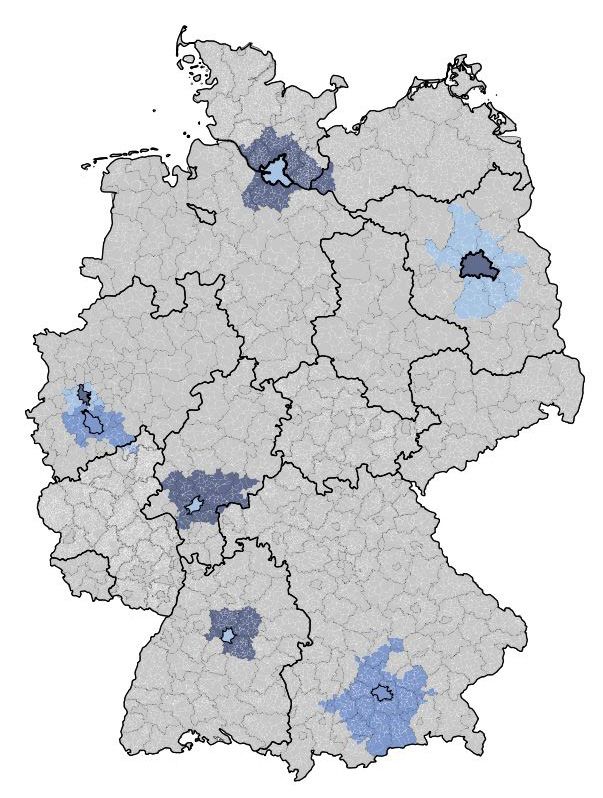
Market report | Residential market Germany                                                                                                                                                    March 2018

Growth in the shadow of the major cities

Conditions in the German residential market remain excellent for owners and investors. The population
continues to grow, average household incomes rose at the fastest rate for ten years in 2017 and the
unemployment rate is at its lowest level since German reunification. Furthermore, it is highly unlikely that
this environment will significantly deteriorate in the foreseeable future. Residential investors are, therefore,
expected to enjoy continued outstanding conditions over the coming years. However, this also entails
certain challenges. Already, there are no longer any genuine hidden gems for investors to discover in
the major cities and competition among bidders is correspondingly strong everywhere. That being
said, outside of the traditional ABCD city categories, there remain some interesting locations where few
investors have been active to date.

Text: Matti Schenk
                                                                                              GRAPH 1
                                               only risen for thirteen years. New-build
Half of all districts will                     activity has also risen consistently           Population will decline, number of
continue to grow                               since 2010. In 2016, a total of around         households will increase by a majority
Population growth is not only benefiting       278,000 apartments were completed                                                                                     growing        stagnating      shrinking
                                                                                                                       350
the major cities. Between 2012 and             in Germany, approximately 115,000 of
2016, the population increased in              which were in apartment buildings. This                                 300
some two thirds of the 401 rural               represents an increase in completions
districts (Landkreis) and urban districts      of almost 39% compared with five                                        250
(kreisfreie Stadt). In further 81 districts,   years earlier. The number of new-build
                                                                                                 number of districts

the population remained relatively             apartments completed in apartment                                       200

stable (+/- 1%). Only 45 districts             buildings even rose by 62% (Graph 2).
                                                                                                                       150
recorded a decline of 1% or more in            However, this still fell significantly short
the number of inhabitants, with 32 of          of the current annual requirement of                                    100
these situated in the federal states           400,000 new-build apartments. In
created from the former East Germany.          addition, the trend for the number of                                    50
Going forward, however, population             building permits is showing signs of
figures will decline in an increasing          reversal. According to the Federal                                        0
                                                                                                                                  2012-2016            2017-2030*              2012-2016         2017-2030*
number of districts. According to              Statistical Office, around 313,700
                                                                                                                                          population                      households
projections from Bulwiengesa based             apartments were approved between
                                                                                              Source: Bulwiengesa, BBSR / * forecast
on the 13th coordinated population             January and November 2017, which
projection of the Federal Statistical          reflects an 8% decrease year on year.
Office, only 95 rural and urban districts      While there may be a large backlog
                                                                                              GRAPH. 2
will witness growth between 2017 and           in terms of building permits, the
2030. In 237 rural and urban districts,        indications of an end to the boom in           More is being built, but still too little
the population is expected to decline          apartment construction are increasing.
(Graph 1). Growth in the number                This is substantiated by research from                                        completions                                  permits
of households is significantly more            the German Institute for Economic                                             completions: proportion of apartments        permits: proportion of apartments
                                                                                                                   450,000                                                                               90%
positive. This is expected to increase         Research, which cites a lack of
in 198 rural and urban districts, i.e. half    tradespeople, shortage of sites and                                 400,000 Demand of new buildings per year                                              80%
                                                                                                                                                                                                                share apartments in apartment buildings

of all districts, by 2030. These regions       rising construction costs as reasons.                               350,000                                                                               70%
account for 62% of all households.             The effects of measures to promote
                                                                                                                   300,000                                                                               60%
                                               housebuilding agreed between the
                                                                                              apartments

                                               SPD and CDU/CSU during coalition                                    250,000                                                                               50%

No relaxation at the                           negotiations remain to be seen.                                     200,000                                                                               40%
rental apartment                               However, there is little evidence to
markets                                        indicate any noticeable relief in the                               150,000                                                                               30%

Owing to the high demand, rents on             strain in the housing markets on the                                100,000                                                                               20%
existing and new-build apartments rose         horizon. Consequently, landlords will
                                                                                                                       50,000                                                                            10%
once again last year, increasing by an         remain in a strong position in many
average of 6% year on year in the 127          locations.                                                                    0                                                                           0%
                                                                                                                                   2010       2011     2012      2013      2014        2015      2016
largest property markets. Rents did not
fall in a single city. Indeed, they have                                                      Source: Federal Statistical Office

                                                                                                                                                                      savills.de/research                     02
Market report | Residential market Germany March 2018
even these cities have witnessed GRAPH 3
Investment market appreciable yield compression since Largest investment dynamics in some
remains highly 2015. Yields in Oberhausen, for
cities in the Ruhr region
competitive instance, hardened by 167 basis points
transaction volume 2017
In view of the favourable general between 2015 and 2017 while those transaction volume compared to the 5-year average
conditions combined with modest in Mülheim hardened by 144 basis 28 700
growth in supply, demand for points. This represents significantly 24 600
2017 vs. Ø previous 5 years
22
apartments also remains high in greater yield compression than in the
20 500
the investment market. Moreover, A-cities, where yields hardened by an
a multitude of recently launched average of just 90 basis points. The 16 400
€m
15
residential funds will now start to same applies to other cities. Of the 22 12 300
11
build their portfolios, which will cities that recorded yield compression
8 200
further intensify competition among of more than 150 basis points, 18 7
116
333
630
89
bidders. Average prices of apartments have negative population growth 5
89
245
4 4 4 100
3 3 3 3 3 2 2 2
Oberhausen 124
transacted have already risen projections. These include Salzgitter,
Mainz 190
76
Remscheid 50
Ingolstadt 81
Kaiserslautern 68
Hanau 65
Fürth 55
Neuss 60
0 0
significantly over the last three years. Brandenburg (Havel), Recklinghausen
Mülheim (Ruhr)
Düsseldorf
Bochum
Chemnitz
Duisburg
Schönefeld
Essen
In 2017 alone, average prices rose and Siegen (see Graph 4). Oberhausen
by 28%. In the seven A-cities, the and Mülheim will also witness
corresponding increase was 33%. population declines of 5% by
While this may be explained by other 2030 according to the projections. Source: Savills / * only transactions from 50 units; locations from €50m
factors, such as a higher proportion of Although population projections are
development acquisitions, it is likely to just one indicator among many for
be at least partially attributable to the evaluating opportunities and risks, GRAPH 4
more intensive competition among this observation can be regarded as
bidders. an indication of stronger appetite for Strong yield compression even in
risk on the part of investors. While shrinking cities
stable rental income can doubtlessly 300
Majority of investors be achieved on residential properties Salzgitter
remain focused on
yield compression in basic points 2015-2017
in good locations in Oberhausen, 250
established markets
Brandenburg (Havel)
Chemnitz and Mülheim, the
Recklinghausen
Competition among bidders remains significantly greater risks of the macro- 200
Chemnitz Bremerhaven
Zwickau
strong, particularly in the A-cities, location cannot be ignored. Villingen-Schwenningen
Erfurt
which is attributable both to the
150
positive growth prospects and the
high liquidity of these markets. The Under-valued cities are
seven A-cities accounted for around now scarce 100
50% of the transaction volume last That some investors are now venturing
50
year (5-year average: 46%). A further into cities with unfavourable population
19% of the volume was attributable to projections could also be explained by
the 14 B-cities (5-year average: 16%). the fact that there are now scarcely any 0
-20% -15% -10% -5% 0% 5% 10%
To put this into context, these 21 cities with favourable fundamental data population forecast 2017-2030
cities are home to around 20% of the that do not attract significant demand
Source: Bulwiengesa
German population. Hence, investors from investors. If we compare average
are narrowing their focus on a small gross initial yields and population
number of major cities, driving local projections in the 127 largest property
GRAPH 5
prices even higher. markets (Graph 5), there are only six
growing cities in Bergisch Gladbach, Yield-risk-matrix: Hardly any
Brunswick, Bremerhaven, Flensburg, under-valued growth location
Some investors are Greifswald and Halberstadt where tendential overrated tendential balanced tendential underrated
relaxing their attitude to yields appear relatively high. Two years 10%
risk ago, there were eleven such cities. This
9%
However, other cities also attracted also demonstrates that investors have
8%
gross initial yield 2017
significantly greater interest from widened their search radius.
investors last year. Transaction 7%
volumes in cities such as Oberhausen 6%
and Mülheim an der Ruhr, for Beyond the city limits – 5%
example, totalled more than ten times are surrounding regions
the hidden champions?
4%
the average figure over the last five
3%
years. Other cities in the Ruhr region, While some investors are seeking
such as Duisburg and Bochum, also investment opportunities in the 2%
witnessed significant growth (see demographically less favourable 1%
Graph 3). Many of these locations C-cities and D-cities, the population is 0%
are gaining in popularity due to increasingly migrating to other regions. -20% -15% -10% -5% 0% 5% 10%
population forecast 2017-2030
relatively attractive gross initial yields The surrounding regions of A-cities
of significantly above 6%. However, in particular are registering increasing Source: Bulwiengesa
savills.de/research 03Market report | Residential market Germany March 2018
GRAPH 6
„In the surrounding areas of A-citites Population growth in the surrounding
strong fundamentals are meeting areas is gaining momentum
comparably low demand from investors.
core cities: 2011-2015 surroundings: 2011-2015
core cities: 2014-2015 surroundings: 2014-2015
9%
Therefore, checking these locations could 8%
be worthwhile.” Matti Schenk, Savills Research 7%
growth of population
6%
population growth. While such regions increased migration to surrounding 5%
have received little attention as areas. As shown by BBSR analysis,
4%
investment locations to date, there is Berlin and Munich for instance have
much to suggest that this neglect is consistently lost inhabitants to their 3%
unwarranted. surrounding areas since 2005. Even
2%
during the boom in the major cities
of recent years, there has been 1%
Metropolitan regions are continuous suburbanisation and 0%
likely to be even more there are indications that migration Berlin Frankfurt Hamburg Munich Düsseldorf Cologne Stuttgart
attractive going forward to surrounding areas has been on Source: BBSR, Federal Statistical Office
It is safe to assume that the major the increase. Migration from Berlin
metropolitan regions will continue to Brandenburg, for instance, was
to grow. As centres of academia higher in 2015 than at any time in the GRAPH 7
and business, they will continue to last 15 years. Migration from Munich
attract young and well-educated to Bavaria has also risen significantly. Asking rents are rising partly faster
people from elsewhere in Germany Both cities have been growing for than in core cities
and abroad. Besides the core cities, many years, primarily due to positive rent core city rent surrounding area
core city: rental growth 2014-2017 surrounding area: rental growth 2014-2017
this is also likely to benefit the external migration. As shown by BBSR
20 20%
surrounding areas as illustrated by research, the immediate surroundings
average asking rents in € per s qm
18 18%
the small-scale population projection of commuter intersection areas are
from the German Federal Institute particularly likely to benefit from 16 16%
rental increase 2014-2017
for Research on Building, Urban increasing migration from cities to 14 14%
Affairs and Spatial Development surrounding regions 12 12%
(BBSR). In contrast, the prospects
10 10%
in small and medium-sized cities in
structurally weak areas in particular Some surrounding 8 8%
are overwhelmingly unfavourable. In regions are already 6 6%
his column in the New York Times, growing faster than their 4 4%
Nobel Prize winner Paul Krugman core cities 2 2%
recently wrote about the decline of For the purpose of defining the
0 0%
America’s small and medium-sized surrounding regions, we will use the Berlin Düsseldorf Frankfurt Hamburg Cologne Munich Stuttgart
cities. Although the situation in the urban-rural regions (Stadt-Land-
Source: empirica Systeme Marktdatenbank
USA cannot be compared directly Region)1devised by the BBSR. Based
with that in Germany, industrial cities upon these regions, more than 9.9
and rural locations in Germany are million people live in the surrounding
GRAPH 8
also expected to predominantly regions of the A-cities. This is higher
lose inhabitants over the long term. than the populations of the cities Transaction volume remains behind
Conversely, in an increasingly themselves, which total approximately core cities
digitised knowledge-based economy, 9.8 million people. While population transaction volume surrounding areas of A-cities*
academia, research and high-quality figures in the A-cities grew faster than transaction volume compared to A-cities
900 18%
services will continue to expand. This in the surrounding regions between
transaction volume in % of the A-city-volume
suggests that the metropolitan regions 2011 and 2015, this trend is slowly 800 16%
could be even more attractive going reversing. In 2015, four in seven
transaction volume in €m
700 14%
forward. Another consequence of surrounding regions witnessed faster 600 12%
this is that demand for housing will growth than their core cities, as shown
500 10%
increase further in future in Graph 6. This was particularly the
case in Berlin and Munich. While 400 8%
no more recent population growth 300 6%
Are we at the start data is available from the individual
of a new wave of municipalities, it can be assumed that
200 4%
suburbanisation? this trend has continued and there is 100 2%
However, the core cities in the much to suggest that the growth will 0 0%
metropolitan regions already continue for the long term. 2009 2010 2011 2012 2013 2014 2015 2016 2017
appear to be reaching their growth
limits. This could potentially lead to Source: Savills / * only transaction from 50 units; locations from €50m
1
The demarcation of these regions respects municipality (Gemeinde) boundaries and is primarily
based around commuter intersections and accessibility. savills.de/research 04Market report | Residential market Germany March 2018
Some surrounding GRAPH 9
regions are overtaking The seven urban-rural regions of A-cities with development of
core cities in terms of asking rents since 2014
rental growth
Not only are the surrounding regions
benefiting from relatively favourable
demographic growth, the situation
in the rental apartment market is
also attractive to investors. This
is substantiated by an analysis of
average asking rents (Graph 7).
Between 2014 and 2017, these
showed higher growth in the
surrounding regions of Frankfurt,
Hamburg and Stuttgart than in the core
cities. In Cologne and Munich, asking
rents rose at the same pace in the
surrounding regions and core cities.
Only in Berlin (-5 percentage points)
and Düsseldorf (-1 percentage point)
did rents increase more slowly in the
surrounding regions (see also Graph 9).
Building a portfolio in
the surrounding regions
could be worthwhile
In addition, from an investor's
perspective, the investment markets
in surrounding regions are significantly
less competitive than in the core cities.
Although the surrounding regions of
the A-cities have more inhabitants than
the A-cities themselves, residential
properties in the surrounding regions
changed hands for a total of just
€812m last year (Graph 8). This
compares with a transaction volume
of more than €6.7bn in the A-cities
themselves. A total of approximately
5,400 apartments were sold in the
surrounding regions at an average
price 20% lower than in the core
cities. While the number of existing
apartments in apartment buildings
is lower in the surrounding regions
than in the A-cities, surrounding
districts account for approximately
44% of all apartments in apartment
buildings. Consequently, investment Legend: rental growth of core city and surrounding area in comparison
opportunities for institutional investors stronger rent increase
are available. Therefore, it may be weaker rent increase
a promising strategy to extend
same rent increase
investment searches beyond the
boundaries of the A-cities. Source: Savills / map source: BKG
savills.de/research 05Market report | Residential market Germany March 2018
Savills Germany
Savills is present in Germany with HH
around 200 employees with seven
offices in the most important estate
sites Berlin, Dusseldorf, Frankfurt,
B
Hamburg, Cologne, Munich and
Stuttgart. Today Savills provides
expertise and market transparency
to its clients in the following areas
D
of activity
Unsere Dienstleistungen C
»» Investment
»» Agency F
»» Portfolio Investment
»» Debt Advisory
»» Valuation
S
M
www.savills.de
Savills Germany
Please contact us for further information
Marcus Lemli Karsten Nemecek Draženko Grahovac Matti Schenk
CEO Germany Corp. Finance - Valuation Corp. Finance - Valuation Research Germany
+49 (0) 69 273 000 12 +49 (0) 30 726 165 138 +49 (0) 30 726 165 140 +49 (0) 30 726 165 128
mlemli@savills.de knemecek@savills.de dgrahovac@savills.de mschenk@savills.de
Savills is a leading global real estate service provider listed on the London Stock Exchange. The company, established in 1855, has a rich heritage with unrivalled growth. It is a company
that leads rather than follows and now has over 600 offices and associates throughout the Americas, Europe, Asia Pacific, Africa and the Middle East with more than 35,000 employees
worldwide. Savills is present in Germany with around 200 employees with seven offices in the most important estate sites Berlin, Dusseldorf, Frankfurt, Hamburg, Cologne, Munich and
Stuttgart.
his bulletin is for general informative purposes only. Whilst every effort has been made to ensure its accuracy, Savills accepts no liability whatsoever for any direct or consequential loss
arising from its use. The bulletin is strictly copyright and reproduction of the whole or part of it in any form is prohibited without written permission from Savills Research.
© Savills March 2018
savills.de/research 06You can also read


