Medium- and High-Tech Export and Renewable Energy Consumption: Non-Linear Evidence from the ASEAN Countries
←
→
Page content transcription
If your browser does not render page correctly, please read the page content below
Munich Personal RePEc Archive

Medium- and High-Tech Export and
Renewable Energy Consumption:
Non-Linear Evidence from the ASEAN
Countries

Dinh, Cong Khai and Ngo, Quang Thanh and Nguyen,
Trung Thanh

22 July 2021

Online at https://mpra.ub.uni-muenchen.de/109669/
MPRA Paper No. 109669, posted 12 Sep 2021 03:49 UTC
Medium- and High-Tech Export and Renewable Energy
Consumption: Non-Linear Evidence from the
ASEAN Countries
Cong Khai Dinh 1 , Quang Thanh Ngo 1      and Trung Thanh Nguyen 1,2, *

                          1   School of Government, University of Economics Ho Chi Minh City, Ho Chi Minh City 72407, Vietnam;
                              khai@ueh.edu.vn (C.K.D.); thanhnq@ueh.edu.vn (Q.T.N.)
                          2   Institute for Environmental Economics & World Trade, Leibniz University Hannover,
                              30167 Hannover, Germany
                          *   Correspondence: thanh.nguyen@iuw.uni-hannover.de or thanhnt@ueh.edu.vn

                          Abstract: Sustaining economic growth while reducing dependence on fossil fuels remains a challenge
                          for our world to fight against climate change and therefore finding a way to promote economic
                          growth and increase renewable energy use is needed. This paper uses a 22-year panel dataset (1994–
                          2015) of 9 countries in the Association of Southeast Asian Nations provided by the World Bank World
                          Development Indicators to examine the impact of medium- and high-tech export on renewable energy
                          use. We employ a fixed-effects regression model with the Driscoll–Kraay nonparametric covariance
                          matrix estimator to account for sectoral and temporal dependence. We also control for inflation,
                          employment, population growth, and gross domestic product per capita in our estimations. Our
                          results demonstrate a U-shaped association between medium- and high-tech export and renewable
                          energy consumption of these economies. The results propose that enhancing medium- and high-tech
                          export could be a feasible solution for promoting renewable energy consumption.

                          Keywords: renewable energy; medium- and high-tech export; economic growth; employment;
                          inflation; ASEAN

                          1. Introduction
                               Sustaining economic growth while reducing dependence on fossil fuels remains a
                          challenge in our era of climate change. In addition to the need for reducing emissions, con-
                          tinuingly increasing fossil fuel prices, fears of unaffordable and rapidly depleting sources
                          of fossil fuels, and the desire to transitioning into a low carbon economy have combined
                          to heighten the importance of renewable energy use [1]. Several countries have set a
                          target of specific renewable energy share in their total energy consumption. For example,
                          Germany aims to supply electricity solely from renewable energy sources by 2045. China
                          also pledges to be carbon neutral by 2060 and sets the share of non-fossil fuels in primary
                          energy consumption to around 25% by 2030 from a previous commitment of 20%. How-
                          ever, increasing renewable energy consumption is not easy for many developing countries,
                          especially for rapidly growing economies as their demand for energy is increasing and their
                          technical and financial capacities for a large-scale supply of renewable energy are limited.
                          In this regard, looking for possible ways to increase renewable energy consumption while
                          maintaining economic growth is required.
                               Industrialization generally results in a structural transformation from fossil fuel-
                          based and low technology to clean energy-based and medium- and high technology.
                          Medium- and high-tech industries are the value-added manufacturing sectors with higher
                          technological intensity and productivity. They are referred to the level of technology that
                          companies and industries producing goods with innovative qualifications and advanced
                          technologies [2,3]. High technology industries include, for example, aviation and spacecraft
                          industry, pharmaceutical industry, accounting and information processing technologies,
2 of 16
radio, television and communication equipment industry, and medical and optical devices
industry [4]. Thus, the production and export of medium- and high-tech products are an
important source of export-oriented growth and development, and of the transition to a
low-carbon economy [5–7].
There have been several studies on socio-economic factors affecting renewable energy
consumption [8–15]. However, new drivers such as medium- and high-tech export have
been given much less attention, especially in the context of developing countries [16]. In
addition, existing research mainly explores the competitiveness benefit of the policies on
renewable energy use in conventional industrial sectors, such as in iron, steel, paper, and
glass industries [17]. Globalization has facilitated trade among countries, and the export
of medium- and high-tech products have been promoted in rapidly growing economies.
However, so far, the causal effects of trade in general, on renewable energy use in both
short- and long- terms are weak and scattered [16,18,19], and the effect of medium- and
high-tech export on renewable energy use has not been investigated, especially in the
context of rapidly growing economies. This is the main motivation for our study.
Theoretically, high- and medium-tech export affect renewable energy use through
three channels. First, higher export of high- and medium-tech goods stimulate domestic
production of these exported goods and hence economic growth. Increases in domestic
production of these goods and economic growth change the energy demand as energy is
a key input for production. This is referred to as the scale effect. Second, trade openness
allows countries to exchange energy-saving and cleaner energy technologies, which are
exported by developed economies and imported by developing economies [20–23]. Such
exchange facilitates technological advancement. This is referred to as the technique effect.
Third, economic growth leads to economic structural transformation which means that at
the beginning of the transformation when the economy is largely agricultural-based, energy
intensity is low. However, at a later stage when industrialization starts, energy intensity
increases. At the same time, economic growth makes people better-off and increases their
awareness of the environment, thus demand more medium and high-tech goods from
environmentally friendly producers. This is referred to as the composite effect. The net
effect depends on the stage of economic growth and the changes in consumption patterns
of consumers. While developed economies have advantages in improving technologies
for promoting renewable energy, developing countries are less able to do so and most of
them may rely on technology transfers from developed countries, but for various reasons,
technology transfers might be constrained. Therefore, at an earlier stage medium- and
high-export from developing countries may still demand more fossil-based resources. Later
on, renewable energy use will increase.
We focus our analysis on the nine countries of the Association of Southeast Asian
Nations (ASEAN), including Cambodia, Indonesia, Laos, Malaysia, Myanmar, the Philip-
pines, Singapore, Thailand, and Vietnam (hereafter referred to as ASEAN-9 countries).
The ASEAN has 10 member countries but we purposely exclude Brunei as its energy
consumption solely depends on fossil fuels. Even though these countries differ in several
aspects, especially in terms of income per capita (Figure 1), they are commonly known as
rapidly growing economies and thus have an increased energy demand. It is projected that
the overall primary energy supply will increase from 621 Mtoe in 2015 to 1.544 Mtoe in
2050, an annual increase of 2.6%; and the gross final energy consumption will increase with
an annual rate of 2.4%, from 436 Mtoe in 2015 to 1006 Mtoe in 2050. However, ASEAN
remains highly reliant on fossil fuels. Nearly 80% of the global primary energy supply
by 2050 are projected to adhere to fossil fuels. The heavy reliance on fossil fuels along
with the decreasing domestic fossil fuel stocks would force the ASEAN’s member states to
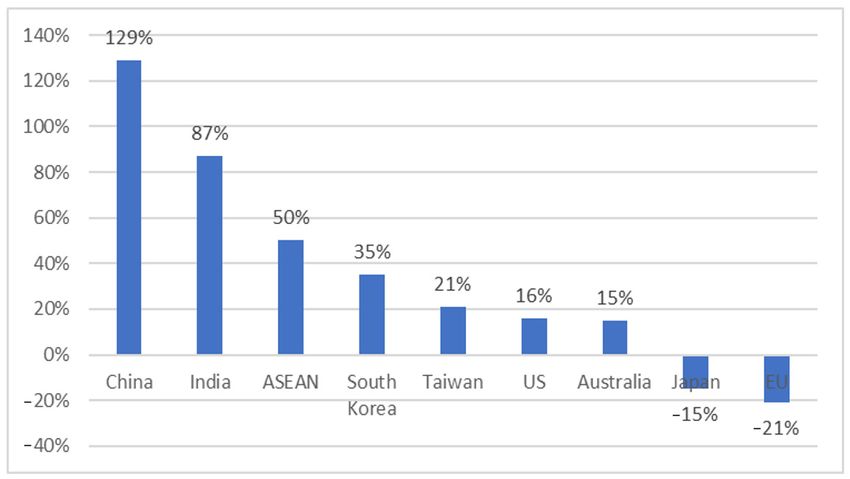
import more fossil fuels. ASEAN is currently the 3rd largest economy in the Indo-Pacific
and the 5th largest economy in the world. It has a combined gross domestic product (GDP)
of $US 2.8 trillion, and is also the 3rd fastest-growing major Indo-Pacific economy in the
past decade, after China and India (Figure 2). As a critical hub for global trade, over $3.4
trillion in global trade transits through the ASEAN region each year [24]. Their export of3 of 16
medium- and high-tech has also been growing. However, the share of renewable energy in
the total energy consumption of these countries is still modest. In this regard, examining
the effect of medium- and high-tech export on renewable energy in ASEAN is of particular
interest and relevant for policymakers and the public. We use a 22-year panel dataset
(1994–2015) of these ASEAN-9 countries provided by the World Bank World Development
Indicators to empirically examine the impact of medium- and high-tech export on the share
of renewable energy use in total energy consumption of these countries. These countries are
diverse in many aspects. For example, Singapore is an advanced economy, Indonesia and
Thailand are upper-middle-income countries, Vietnam is a lower-middle-income country,
and Cambodia and Laos belong to the group of the least developed countries. Following
the arguments in the previous paragraph, we hypothesize that the relationship between
medium- and high-tech export and renewable energy consumption in these ASEAN-9
countries is U-shaped.
USD
USD
United States 59,792.00
United States 59,792.00
Singapore 57,713.00
Singapore 57,713.00
Brunei 28,278.00
Brunei 28,278.00
Maylaysia 9755.00
Maylaysia 9755.00
Thailand 6591.00
Thailand 6591.00
Indonesia 3876.00
Indonesia 3876.00
Philippines 2989.00
Philippines 2989.00
Laos 2541.00
Laos 2541.00
Vietnam 2353.00
Vietnam 2353.00
Cambodia 1379.00
Cambodia 1379.00
Myanmar 1278.00
Myanmar 1278.00
0.00 10,000.00 20,000.00 30,000.00 40,000.00 50,000.00 60,000.00 70,000.00
0.00 10,000.00 20,000.00 30,000.00 40,000.00 50,000.00 60,000.00 70,000.00
Figure 1. Per capita GDP of the ASEAN economies as compared to the US in 2017. Source: East-West Center, 2019 [24].
Figure 2. Real GDP growth of ASEAN as compared to some other economies. Source: East-West Center, 2019 [24].4 of 16
2. Literature Review
As natural resources in general and fossil fuels in particular, have been deplet-
ing, renewable energy use and economic growth are highlighted as major concerns
for sustainable development of the global economy [25–29], given the fact that the
sustainability of the economic system is dependent on the environment and natural
resources [30]. Due to an increasing level of globalization, global energy demand
has changed over time and has been driven by trade-related factors. Trade openness,
export-oriented policies, and internationalization are considered crucial in the long-
term development strategy of many developing countries [31,32]. In this context, recent
literature has considered new determinants of energy demand and energy intensity
such as export or import product portfolio [33,34], trade openness, and technological
advancement [35–38]. In general, there is a controversy on the effect of trade on energy
intensity. On the one hand, many studies find that trade openness positively affects
energy intensity [39–45]. On the other hand, the effect can be adverse [46], or ambigu-
ous [47] depending on competitiveness, factor price, and technology and infrastructure
factors ([35,48]). Regarding the spectrum of trade and innovation, Samargandi [35]
reveals that trade openness and innovation are significant factors for reducing energy
intensity. Beser and Soyyigit [2] indicate that high-tech export has a strong impact on
CO2 emission in developed economies.
The importance of technology in determining energy use and energy efficiency
in developing countries is increasing due to a growing level of internationalization
and integration [22,49,50]. Technology innovation induced by investment in research
and development and by foreign direct investment is supposed to increase energy use
efficiency [40]. Domestic innovation is also an important contributor to technical de-
velopment [49,51]. To mitigate the negative effects of climate change, technological
progress is crucial [52], and increased R&D is associated with more technical innova-
tion and renewable energy adoption [53] in both developed and developing countries,
where renewable energy sources such as biomass, solar, wind and hydropower are
adopted [54,55]. Recent studies on the relationship between technological advancement
and carbon emission demonstrate positive effects of technology innovations on carbon
emission reduction [56–58]). Liu, Xia, Tao, and Chen [56], for instance, analyze carbon
emission in China and find that increasing technological expenditure could in turn in-
creases carbon emission efficiency. Wang, Zhao, Wang, Guo, Kan, and Yuan [57] discover
that investments in technology decrease carbon emissions. Zeng, Lu, Liu, Zhou, and
Hu [58] find that foreign trade, foreign capital, and technological progress have positive
effects on carbon emission reduction.
Several studies examine the drivers of renewable energy use. Most of these indicate the
causal interactions between economic growth and renewable energy use [59–62], between
renewable energy use and sustainable development [63–65], between energy use and
trade openness, and between technological progress and renewable energy use. For
example, Apergis and Payne [61] investigate the relationship between economic growth
and renewable energy use of 20 OECD countries during 1985–2005 and find a bidirectional
link between economic outcome and energy use. Fang and Chang [62] analyze the causality
between energy use and economic performance in 16 countries of the Asia Pacific and finds
a long-run cointegrating relationship. Kahia et al. [66] examine the relationship between
energy use and economic growth, using a sample of 7 MENA Net Oil Importing Countries
(NOICs) during 1980–2012; and their empirical results confirm the bidirectional causality
between renewable energy use (and non-renewable energy use) and economic growth. Le
and Sarkodie [67] investigate the nexus between renewable and conventional energy and
economic growth, using panel data of 45 Emerging Market and Developing Economies
(EMDEs) from 1990 to 2014. They find that renewable energy and GDP growth impact
each other. Marques and Fuinhas [68], using a sample of 24 European countries during
1990–2006, find that the current level of renewable energy use is positively dependent
on the previous level of renewable energy use. However, income and prices of fossil-5 of 16
based fuels are not significant for the development of renewable energy during the
studied period. Ahmed et al. [69] investigate the interactions between renewable and
non-renewable energies, CO2 intensity, and economic growth in Myanmar during 1990–
2016; and their results reveal that renewable energy use significantly promotes economic
growth.
Few studies have also examined the relationship between trade openness, techno-
logical innovation, and (renewable) energy use (Alam and Murad [16], Sohag, Begum,
Abdullah, and Jaafar [22], Sbia et al. [70,71], Khan et al. [72], Cole [47], Shahbaz, Nasreen,
Ling, and Sbia [21]). Alam and Murad [16] reveal that economic growth, trade openness,
and technological progress significantly influence renewable energy use in 25 OECD coun-
tries. Sohag, Begum, Abdullah, and Jaafar [22] employ a dataset during 1985–2012 in
Malaysia and find that while economic growth and trade openness are the main determi-
nants of energy use, technological innovation reduces energy use in manufacturing sectors.
Sbia, Shahbaz, and Hamdi [70] examine the impacts of foreign direct investment, trade
openness, clean energy price, carbon emissions, and economic growth on the demand
for energy in the United Arab Emirates. Their findings indicate that trade openness and
foreign direct investment reduce energy use because energy-efficient technologies have
been employed. By comparing upper-middle-income countries in Asia, Europe, Africa, and
America, Khan, Yaseen, and Ali [72] indicate that trade can induce technology transfer for
renewable energy. Shahbaz, Nasreen, Ling, and Sbia [21] use the data from 91 high, middle,
and low-income economies and conclude that domestic energy use is affected by trade
openness through several channels such as technological transfers, economies of scale,
and input factors. In high-income economies, an inverted U-shaped relationship between
trade openness and energy consumption is found. According to Shahbaz, Nasreen, Ling,
and Sbia [21], the U-shaped relationship between trade openness and energy consumption
exists when low and middle-income countries import or use energy-efficient technologies
from developed countries to lower energy consumption, on the one hand; and on the other
hand, when developed countries allow to release those technologies and share profits for
low and middle-income countries that have limited access to technology and capital.
A most recent study that is close to our work in terms of geographical coverage (for
ASEAN with a 22-year span of time) is Azam, Khan, Zaman, and Ahmad [25], who find
that trade openness has a positive relationship with energy consumption in Thailand,
Malaysia, and Indonesia. Apart from trade openness, they discover that population growth
increases the energy consumption in Malaysia, while it decreases energy consumption in
Indonesia. Real GDP is found to have a positive relationship with energy consumption in
Thailand, Malaysia, and Indonesia.
The causal effects between international trade (exports or imports) and renewable
energy use in both short- and long- terms that have been found so far are weak [16]. The
results from Sadorsky [20] for a sample of Middle Eastern countries show that international
trade increases domestic use of energy. In addition, Shahbaz, Nasreen, Ling, and Sbia [21]
conclude that a U-shaped relationship exists for high-income countries, whereas an inverted
U-shaped relationship is found for middle- and low-income countries for the relationship
between international trade and energy use.
In sum, none of the previous studies examine the impact of medium-and high-tech
export on renewable energy use. Our study is thus aimed to contribute to filling this gap.
The contribution of our study to the literature are two-fold. First, our study is the first
effort to examine the effects of medium- and high-tech export on renewable energy share
in total energy consumption for this group of rapidly expanding economies. To our best
knowledge, only Shahbaz, Nasreen, Ling, and Sbia [21] discover non-linear relationships
between trade openness and energy consumption for two country groups, high-income
countries and middle- and low-income countries. Second, from a methodological perspec-
tive, we use panel data and employ a fixed-effects regression model with the Driscoll–Kraay
nonparametric covariance matrix estimator to account for unobservable time-invariant6 of 16
factors and sectoral and temporal dependence. These concerns have not been successfully
addressed in many previous studies (Azam et al. [25]).
3. Data and Methods
3.1. Data Source
We extract the data needed for our study from the World Bank World Development
Indicators (WDI). This database has been established for years in many countries. For the
ASEAN countries, the data are available from 1994 to 2015. This allows us to establish a
balanced panel dataset for these nine ASEAN countries. As explained above, we exclude
Brunei from the sample since it is an outlier in terms of renewable energy use. Our variables
of interest are medium- and high-tech export, and renewable energy use of these countries
over time as we would like to investigate the association between these two important
variables. From the literature review presented in the previous section, it is clear that a
direct relationship between them can be established.
We use the share of renewable energy in the total energy consumption of each country
in each year (% of total final energy consumption) to represent renewable energy use. It
is the explained variable. For explanatory variables, the share of medium- and high-tech
export in total manufactured export (% of manufactured export) is our key variable of
interest. In addition, we control for inflation, employment, population growth, and GDP
per capita. Inflation is measured as the change in the consumer price index (%, year 2010
is the base year, 2010 = 100), employment is measured as the share of employment in the
industrial sectors in total employment of an economy in each year (% of total employment)
while population growth is also reported annually for each country. The GDP per capita is
measured in purchasing power parity (PPP, constant 2017). These variables are coded as
follows: REU for renewable energy share (%), MHTE for medium- and high-tech export
share in total manufactured export (%), INF for inflation (%), POPG for population growth
(%), EMP for the employment share in industry (%), and GDPPC for GDP per capita (PPP,
constant 2017). All these variables are annual for these ASEAN-9 countries from 1994 to
2015. A more detailed definition of these variables is in Appendix A. The description of the
data for each country is presented in Table 1 whereas Table 2 summarizes the data for the
whole block. These tables show the REU mean value is 42.673 (%), the mean value of MHTE
is 37.168 (%), while the mean value of INF is 77.034 (%). On average, POPG is 1.575%, EMP
is 17.915 (%), and GDPPC is 13,417 (USD PPP 2007). The correlation coefficients between
these variables are in Appendix B which show that NHTE, INF, POPG, EMP, and GDPPC
all have a negative association with REU at a 1% level of significance.
Table 1. Descriptive statistics of variables of each ASEAN country (1994–2015).
Country REU (%) MHTE (%) INF (%) POPG (%) EMP (%) GDPPC (USD PPP, 2007)
Mean SD Mean SD Mean SD Mean SD Mean SD Mean SD
Cambodia 75.59 6.58 3.34 2.93 76.00 25.42 2.01 0.63 12.99 5.50 2118 789
Indonesia 42.65 4.63 29.22 3.70 69.59 36.22 1.38 0.08 19.03 1.29 7150 1501
Laos 75.94 9.94 5.45 4.34 68.51 40.83 1.72 0.27 6.43 2.43 3858 1329
Malaysia 5.79 1.63 67.45 6.13 88.99 13.80 2.00 0.42 30.19 2.17 18,262 3316
Myanmar 80.64 6.29 1.66 2.78 55.45 43.77 0.94 0.23 14.36 2.28 2080 1175
Philippines 32.64 3.78 73.81 10.44 79.34 23.13 1.94 0.27 15.51 0.39 5230 966
Singapore 0.51 0.08 68.87 16.55 92.89 11.308 2.33 1.44 25.03 4.45 65,782 14,060
Thailand 21.85 1.27 58.68 3.99 87.08 15.89 0.74 0.28 20.50 1.65 12,286 2386
Vietnam 48.45 11.12 26.04 10.84 75.46 37.01 1.13 0.26 17.20 4.26 3986 1337
Source: Authors’ estimation based on WDI database; SD: Standard deviations.7 of 16
Table 2. Descriptive statistics of variables of nine ASEAN countries (1994–2015).
SD
Variable Mean
overall between within
REU (%) 42.67 29.26 30.29 6.07
MHTE (%) 37.17 29.70 30.26 8.02
INF (%) 77.03 31.26 11.72 29.23
POPG (%) 1.58 0.77 0.55 0.57
EMP (%) 17.92 7.24 6.93 3.07
GDPPC (USD PPP, 2007) 13,419 1983 20,340 4877
Source: Authors’ estimation based on WDI database; SD: Standard deviations; No. observations: 198; No. of countries: 9; No. of years: 22.
3.2. Methods
We employ an econometric analysis to examine the effect of the explanatory vari-
able (medium- and high-tech export) on the explained variable (renewable energy share).
Following previous studies, we control for GDP per capita, inflation, employment, and
population growth as these factors have been found to influence energy use. They are
the factors affecting energy demand. GPD per capita, inflation, and employment are key
drivers of changes in purchasing power parity; and for population, Samargandi [35] argues
that population growth positively influences energy usage and energy intensity, which
might be harmful to the environment. The employment share of the industry might have
either a positive or a negative on renewable energy use [73–75]. For the effects of these
factors on energy use, see [7,16,20–22,35] for GDP, [73,74] for inflation, [75] for employment,
and [35,76] for population growth. A factor affecting renewable energy use is its price. The
declining price of renewable energy driven by technological progress could be important
in increasing the renewable energy share in total energy consumption. Unfortunately, we
cannot collect sufficient data. Oil price could be another significant factor. However, as
some studies find the least influence of oil price on renewable energy production [7,8,11,20],
or insignificant [77], especially in the case of oil-exporting countries like these ASEAN-9
countries, and/or in the case that these countries have subsidized oil prices to avoid any
adverse effect of oil price fluctuations on the economy [11]. In addition, incorporating oil
prices in our analysis could lead to an endogenous issue that must be addressed. Therefore,
we excluded prices factors in our analysis.
Econometrically, the causal relationship could be examined using either a pooled
ordinary least square (OLS) technique or the panel data method, including either a fixed-
effects model (FEM) or a random-effects model (REM) [78]. To choose either the OLS
technique or the panel data method, we conducted an F-test for the joint significance of
differing group means. Results of the F-test presented in Appendix C (F (8, 184) = 76.97 with
p-value 0.0000) indicate the null hypothesis that the pooled OLS model is appropriate is
rejected. Thus, panel data analysis was chosen. We advanced further to choose either FEM
or REM by performing a Hausman test. Results of this test in Appendix C indicate the FEM
is a more suitable specification. From a theoretical point of view, FEM has the advantage
of controlling for time-invariant unobservable factors. An alternative test to choose either
FEM or REM was the overidentifying restriction test [79,80] which also indicates that
the FEM model is a more suitable specification (results of this test in the last two rows
in Appendix C). In addition, FEM is also recommended to estimate the parameters for
a small cross-sectional sample [81] which is our case as we have only 9 countries. Our
specification is also in line with previous studies on factors affecting renewable energy
use such as Bamati and Raoofi [7] for 25 developed and developing countries, Alam and
Murad [16] for 25 OECD countries, Azam, Khan, Zaman, and Ahmad [25] for three ASEAN
countries (namely Indonesia, Malaysia, and Thailand); Kahia, Aïssa, and Lanouar [66]
for 7 MENA Net Oil Importing Countries; Marques and Fuinhas [68] for 24 European
countries; Sadorsky [20] for eight Middle Eastern countries; Bashir, Sheng, Doğan, Sarwar,8 of 16
and Shahzad [31] for 29 OECD countries; Beser and Soyyigit [2] for G20 countries (except
Russia), Chen, Du, Huang, and Huang [5] for 34 industrial sectors in China, and Waheed
et al. [82] for 6 Gulf Cooperation and Council countries.
Therefore, our econometric regression model is specified as follows (Equation (1)):
REUit = α0 + β 1 MHTEit + β 2 I NFit + β 3 POPGit + β 4 EMPit + β 5 PGDPCit + vi + eit (1)
where REU is the share of renewable energy in total energy consumption; MHTE is the
share of medium- and high-tech export in total export; INF is the inflation rate; POPG is the
population growth rate; EMP is the employment share of industry (%), and GDPPC is GDP
per capita (PPP, constant 2017) as defined in Section 3.1 (see Tables 1 and 2). Subscripts
i and t denote country and time, respectively; α is the fixed country effect while vi is the
country-specific effect, and eit is the error term.
Several tests were undertaken to ensure the validity of our regression model. First, to
control for possible multicollinearity between explanatory variables, the variance inflation
factor (VIF) values were checked [83,84] and the results documented in Appendix D do
not signal that problem. Second, as our sample is small in terms of both the number
of countries (9 countries) and the number of time periods (22 years), we undertook the
following tests: (i) Modified Wald test for group-wise heteroskedasticity, (ii) the Breusch–
Pagan LM test for cross-sectional dependence [85,86]; (iii) the slope homogeneity test
introduced by Swamy [87], and (iv) the stationarity test for each variable.
Cross-sectional heterogeneity should be controlled for when conducting a panel data
empirical analysis [88]. Swamy [87] proposes the homoskedasticity assumption test for the
slope homogeneity assumption. Results of this test presented in Appendix E show that we
can reject the null hypothesis of the slope homogeneity for our sample. In addition, results
of the Breusch–Pagan LM test of independence (also in Appendix E) indicate that the null
hypothesis of no cross-sectional independence is rejected at the 1% level of significance,
indicating strong cross-sectional dependence.
Once there is cross-sectional dependence across countries in the panel, it is needed
to perform the cross-sectionally augmented Dickey-Fuller (CADF) procedure from Pe-
saran [89]. Results presented in Appendix F show that we were not able to reject the null
unit root hypothesis for the GDPPC series; but when taking the first difference, the null
hypothesis of the unit root is rejected for variables POPG and INF. However, this is not
sufficient for us to conclude that there is a long-run equilibrium relationship among the
concerned variables, namely REU, MHTE, INF, EMP, POPG, and GDPPC.
Given the presence of cross-sectional dependence and/or heteroscedasticity, we
adopted our FEM with Driscoll–Kraay standard errors. According to Hoechle [90], the
Driscoll–Kraay standard errors are heteroskedasticity-, and autocorrelation-, consistent
and robust to general forms of cross-sectional and temporal dependence.
4. Findings and Discussion
4.1. Findings
Table 3 presents the results of our estimation, including both a normal fixed effects
specification and the fixed effects specification with the Driscoll–Kraay standard errors.
The R squared value of 0.718 from these two specifications indicates that shows our model
can predict about 72% of the variation in the share of renewable energy in total energy
consumption.
Regarding the effect of medium- and high-tech export, Table 3 shows that the medium-
and high-tech export has a significant U-shaped relationship with the share of renewable
energy use of these ASEAN-9 countries. This U-shaped relationship implies that at the
beginning stage of economic development, a higher level of medium- and high-tech
export would lead to a lower share of non-renewable energy in total energy consumption.
However, once the economy has reached a certain level of medium- and high-tech export,
then the higher the level of medium- and high-tech export, the higher the share of renewable
energy in the total energy consumption of that economy. In our case, the threshold value for9 of 16
the turning point of the U-shaped relationship is 64.47%. Within these ASEAN-9 countries,
Malaysia and Singapore have passed this turning point since 1994, and the Philippines
since 1995.
With regards to the controlled variables, inflation, employment in the industry sector,
and GDP per capita are significantly and negatively associated with the share of renewable
energy in total energy consumption, meanwhile, population growth is significantly and
positively associated with the share of renewable energy.
Table 3. Impact of medium- and high-tech export on renewable energy share.
Fixed Effects Model with xxx
Variable Normal Fixed Effects Model
Driscoll-Kraay Standard Errors
MHTE −0.420 *** (0.105) −0.420 ** (0.163)
MHTE, squared 0.0036 *** (0.0011) 0.0036 ** (0.0015)
INF −0.0895 *** (0.0133) −0.0895 *** (0.0130)
POPG 0.989 * (0.518) 0.989 * (0.476)
EMP −0.719 *** (0.121) −0.719 *** (0.199)
GDPPC −7.29 × 10⁻⁵ (7.32 × 10⁻⁵ ) −7.29 × 10⁻⁵ (0.0001)
Constant 69.28 *** (2.460) 69.28 *** (3.043)
No. of observations 198 198
No. of time periods 22 22
No. of countries 9 9
F test that MHTE and MHTE squared are F(2, 183) = 8.46 F(2, 8) = 3.32
jointly equal to zero Prob > F = 0.0003 Prob > F = 0.0890
Overall R squared 0.718 0.718
Source: Authors’ estimation, standard errors in parentheses, ***, **, and * denote statistical significance at the 1%, 5%, and 10% levels,
respectively.
4.2. Discussion
With respect to the influences of medium- and high-tech export on renewable energy
use, our results indicate that medium- and high-tech export has a U-shaped association
with renewable energy use in the ASEAN-9 countries. A couple of previous studies
have not found any short- and long-term effects of trade on renewable energy use [8,91].
Our finding is a contribution to a new strand of literature on the non-linear effects of
trade on resource use. This strand includes, for example, Shahbaz, Nasreen, Ling, and
Sbia [21] who find the pattern of a U-shaped relationship exists in high-income countries,
and an inverted U-shaped relationship in the middle- and low-income countries for the
relationship between international trade and energy use.
Most previous studies so far have found only a positive effect of high-tech export. It
is generally argued that under high-tech export orientation, there is peer-to-peer lending
which enables them to adopt such technology that uses lower energy; in addition, different
technologies and resources can be shared. Thus, energy consumption is also shared and
reduced and it helps save energy costs, including renewable energy [2,7]. Bamati and
Raoofi [7] provide an analysis of the influence of high-tech export on renewable energy
production by levels of development and find that high-tech export increases renewable
energy production for 10 developed countries, but for 15 developing countries the effect
is insignificant. A stronger effect of high-tech export on developed countries rather than
developing countries is also confirmed by Beser and Soyyigit [2] with a sample of the G20
countries (except Russia).
Our result can be explained by the fact that, in terms of medium- and high-tech export,
most of the ASEAN-9 countries do not seem to have high shares of high-tech export or
at least technologies that could affect promoting renewable energy use. This means, at a
lower level of development, the effect is negative but later on, it turns out to be positive.
Renewable energy use is upon the spending and expectations toward the behaviors of
consumers that are affected by different aspects of inflation [92–94]. While depicting the10 of 16
concern of medium- and high-tech export toward renewable energy use, the controlled
factors have a specific influence on renewable energy use in the ASEAN-9 countries. This
is widely stated by the variables like GDP per capita and employment. Inflation is also
counted as a major factor that influences renewable energy use. Inflation has a dominant
impact on economic performance due to the implications of targeting the environment
by high inflation [73]. Our results indicate that inflation has a negative relationship with
renewable energy use. These results are supported by Kosai, Yuasa, and Yamasue [74].
Although prices of various products are associated with inflation and wide interpretation
enhances the role of renewable energy use in the ASEAN-9 countries, a hike in prices
of various goods and services induces a significant impact on renewable energy use.
Therefore, inflation with the relevance of medium- and high-tech export inserts a negative
role toward the renewable energy use of many ASEAN-9 countries [95]. It could be due to
the devaluation of the currency that renders renewable energy use with a hike in prices.
Inflation could help in uplifting the economies of various countries but could lead to some
adverse effects too.
Our regression model shows that population growth has a positive effect on renewable
energy use. In fact, the introduction of technology and innovation in renewable energy use
has increased the demand of the population for renewable energy. While enumerating the
ecological problems with energy-related factors, population growth is the main driver of
environmental degradation [96]. Therefore, population growth might result in a negative
contribution toward renewable energy use. Our results contribute, to some extent, to this
disputable discussion. Recall that Azam, Khan, Zaman, and Ahmad [25] when examining
the impact of various factors on energy consumption in three ASEAN countries (Indonesia,
Malaysia, and Thailand) in the period 1980–2012, find that population growth increases
the energy consumption in Malaysia, while it decreases energy consumption in Indonesia.
The advantage of renewable energy use is indisputable. It is upon the governments
of these ASEAN-9 countries to induce needed measures to promote energy use. Potential
impacts of employment on renewable energy use in various industries are evident with
local renewable resources [97]. Many ASEAN-9 countries have contributed to a significant
rise in the employment rate due to its influence on renewable energy use. For the regional
development policy of renewable energy use, the employment regimes and challenges
insert an important role [98]. The improper sharing of the economy has been eliminated by
the positive enclosure of employment elements that widely induce technological innovation
in ASEAN-9 countries.
The empirical results also show that GDP per capita has a negative but insignificant
effect on renewable energy use. The result is in line with Marques and Fuinhas [68] who
investigate drivers promoting renewable energy in 24 European countries and find that
the per capita income (in natural logarithm) is not statistically significant in explaining the
use of renewables. A negative effect is found by Waheed, Sarwar, and Mighri [82], and
Samargandi [35]. Samargandi [35], for example, examines the impacts of trade openness,
technological innovation, and energy price on energy intensity in OPEC countries, in which
GDPPC is used as a controlling variable.
5. Conclusions
Our study investigates the influences of medium- and high-tech export on the renew-
able energy use of nine ASEAN countries in the period 1994–2015. We control for inflation,
population growth, employment, and GDP per capita. Our findings suggest that medium-
and high-tech export reduces the share of renewable energy in total energy consumption
during an earlier stage of economic development but then increases the share of renewable
energy consumption during the later stage of economic development. This seems to be a
characterized feature observed in these ASEAN-9 countries, contributing to the complexity
of trade-renewable energy nexus in the literature. Our study also elaborates that under high
inflation, individuals and firms cannot afford costly high technology, effective techniques,
and skilled human resources, which consume a smaller amount of renewable energy in11 of 16
production. Growth in the population provides human resources and at the same time
promotes renewable energy use. High employment opportunities indicate high economic
growth, which can help to save energy.
Our study has some limitations despite its theoretical and empirical importance. First,
due to the availability of the data provided by the World Bank in the World Development
indicator, we are not able to control for other factors such as oil prices and/or price of
renewable energy that might have significant effects on renewable energy use. Therefore,
our results should be interpreted with care. Second, our study is at the macro level and thus
not on the behavior of individual energy users (i.e., firms and businesses). The changes in
the behavior of energy users should be examined as well to provide a better understanding
of energy transition. Third, our sample is small with only nine ASEAN countries in a
short-term period. Expanding the study to cover more countries in a longer time period
would provide a more comprehensive picture of the effect of medium- and high-tech export
on renewable energy use. Last, we are unable to undertake a measurement uncertainty
analysis [99]. These issues should be themes for future studies.
Author Contributions: Conceptualization, T.T.N., and Q.T.N.; methodology, T.T.N.; data curation,
Q.T.N.; writing—original draft preparation, T.T.N., Q.T.N., C.K.D.; writing—review and editing,
T.T.N., Q.T.N., C.K.D.; project administration, T.T.N.; funding acquisition, Q.T.N. All authors have
read and agreed to the published version of the manuscript.
Funding: This research is funded by the University of Economics Ho Chi Minh City, Vietnam.
Data Availability Statement: The data presented in this study are available on request from the
corresponding author.
Conflicts of Interest: The authors declare no conflict of interest. The funders had no role in the design
of the study; in the collection, analyses, or interpretation of data; in the writing of the manuscript, or
in the decision to publish the results.
Appendix A. Definition of Variables Used in the Analysis
Variable Definition & Measurement
REU Share (%) of renewable energy consumption in total final energy consumption in
a year of a country
INF Change (%) in consumer price index with year 2010 as the base year (100%). It
reflects changes in the cost to the average consumer of acquiring a basket of
goods and services that may be fixed or changed at specified intervals. It is
annual for each country.
EMP Share (%) of employment in industry in total employment of an economy.
Employment is defined as persons of working age who are engaged in any
activity to produce goods or provide services for pay or profit, whether at work
during the reference period or not at work due to temporary absence from a job,
or to working-time arrangement. The industry sector consists of mining and
quarrying, manufacturing, construction, and public utilities (electricity, gas, and
water), in accordance with divisions 2–5 (ISIC 2) or categories C-F (ISIC 3) or
categories B-F (ISIC 4).
POPG Annual growth (%) of the population of a country
GDPPC GDP per capita measured in purchasing power parity (PPP) 2017. PPP GDP is
gross domestic product converted to international dollars using purchasing
power parity rates. An international dollar has the same purchasing power as a
U.S. dollar has in the United States. GDP at purchaser’s prices is the sum of
gross value added by all resident producers in the country plus any product
taxes and minus any subsidies not included in the value of the products. It is
calculated without making deductions for depreciation of fabricated assets or for
depletion and degradation of natural resources.
MHTE Share (%) of medium- and high-tech export in total manufactured export
Source: WDI.12 of 16
Appendix B. Correlation Matrix of the Variables Used in the Analysis
Variable REU MHTE INF POPG EMP GDPPC
REU 1.0000
MHTE −0.9015 *** 1.0000
INF −0.4541 *** 0.3562 *** 1.0000
POPG −0.1662 *** 0.2578 *** −0.1246 * 1.0000
EMP −0.8293 *** 0.6782 *** 0.4239 *** 0.07722 1.0000
GDPPC −0.6737 *** 0.5109 *** 0.3077 *** 0.2964 *** 0.4741 *** 1.0000
***, **, and *: Significant at the 1%, 5% and 10% level, respectively. Source: Authors’ estimation.
Appendix C. F test, Hausman Test, and Test of Overidentifying Restrictions
F Test Coef.
F test that all u_i = 0: F(8, 184) 76.97
p-value 0.0000
Hausman Test Coef.
Chi-square test value 40.83
p-value 0.0000
Test of overidentifying restrictions: fixed vs.
random effects
Sargan–Hansen statistic Chi-sq(5) 51.628
p-value 0.0000
Source: Authors’ estimation.
Appendix D. Variance Inflation Factor (VIF) Value
Variable VIF 1/VIF
MHTE 2.15 0.464597
EMP 2.08 0.479953
GDPPC 1.53 0.651664
INF 1.33 0.753238
POPG 1.23 0.813535
Mean VIF 1.67
Source: Authors’ estimation.
Appendix E. Cross-Sectional Dependence, Heteroskedasticity, and Slope
Homogeneity Tests
Breusch-Pagan LM Test of Independence Coef.
Chi-square test value: χ2 (36) 134.156
p-value 0.0000
Modified Wald test for groupwise
heteroskedasticity
χ2 (10) 509.54
p-value 0.0000
Swamy slope homogeneity test
Chi-square test value: χ2 (48) 41658.21
p-value 0.0000
Note: The null hypothesis of the cross-sectional dependence test is no cross-sectional dependence. The null
hypothesis of the slope homogeneity test is slope homogeneity. The Cross-sectional dependence and slope
homogeneity tests are conducted by using respectively ‘xttest2’ [100] and ‘xtrchh2’ [101] commands in Stata.
Source: Authors’ estimation.13 of 16
Appendix F. Panel Unit Root Test
Level (CIPS) 1st Difference (CADF)
Variable
Intercept Intercept and Trend Intercept Intercept and Trend
REU −2.055 −1.883 −0.913 1.004
MHTE −0.865 −1.4615 1.977 1.2513
INF −1.683 −2.435 0.671 −1.499 *
POPG −3.124 −2.536 −2.927 *** 5.047
EMP −1.507 −1. 670 1.081 1.339
GDPPC −1.437 *** −1.784 *** 0.839 1.452
Note: *** and * denote statistical significance at the 1% and 10% levels, respectively. The null hypothesis is
nonstationarity. The panel unit root test is conducted by using the ‘xtcips’ command in Stata [102]. Source:
Authors’ estimation.
References
1. Nguyen, T.T.; Tenhunen, J. Review of integrated ecological—Economic analyses for bioenergy plants under climate change at
local scale. Int. J. Clim. Chang. Strat. Manag. 2013, 5, 324–343. [CrossRef]
2. Beser, N.O.; Soyyigit, S. The effects of high technology export and per capita income on carbon emission: An investigation on G20
countries. Bus. Econ. Horiz. 2019, 15, 542–559.
3. Seyoum, B. The role of factor conditions in high-technology exports: An empirical examination. J. High. Technol. Manag. Res. 2004,
15, 145–162. [CrossRef]
4. OECD (Organisation for Economic Co-operation and Development). Technology Intensity Definition. Classification of manu-
facturing industries into categories based on R&D intensities. In OECD Directories for Science, Technology and Industry Economic
Analysis and Statistics Division; OECD: Paris, France, 2011; Volume 9.
5. Chen, S.; Du, X.; Huang, J.; Huang, C. The impact of foreign and indigenous innovations on the energy intensity of China’s
industries. Sustainability 2019, 11, 1107. [CrossRef]
6. MacKenzie, J.J. Technology growth curves: A new approach to reducing global CO2 emissions. Energy Policy 2003, 31, 1183–1187.
[CrossRef]
7. Bamati, N.; Raoofi, A. Development level and the impact of technological factor on renewable energy production. Renew. Energy
2020, 151, 946–955. [CrossRef]
8. Sadorsky, P. Renewable energy consumption, CO2 emissions and oil prices in the G7 countries. Energy Econ. 2009, 31, 456–462.
[CrossRef]
9. Sadorsky, P. Renewable energy consumption and income in emerging economies. Energy Policy 2009, 37, 4021–4028. [CrossRef]
10. Payne, J.E. The causal dynamics between US renewable energy consumption, output, emissions, and oil prices. Energy Sources
Part B 2012, 7, 323–330. [CrossRef]
11. Salim, R.A.; Rafiq, S. Why do some emerging economies proactively accelerate the adoption of renewable energy? Energy Econ.
2012, 34, 1051–1057. [CrossRef]
12. Lean, H.H.; Smyth, R. Will policies to promote renewable electricity generation be effective? Evidence from panel stationarity
and unit root tests for 115 countries. Renew. Sustain. Energy Rev. 2013, 22, 371–379. [CrossRef]
13. Smyth, R. Are fluctuations in energy variables permanent or transitory? A survey of the literature on the integration properties of
energy consumption and production. Appl. Energy 2013, 104, 371–378. [CrossRef]
14. Omri, A.; Nguyen, D.K. On the determinants of renewable energy consumption: International evidence. Energy 2014, 72, 554–560.
[CrossRef]
15. Omri, A.; Daly, S.; Nguyen, D.K. A robust analysis of the relationship between renewable energy consumption and its main
drivers. Appl. Econ. 2015, 47, 2913–2923. [CrossRef]
16. Alam, M.M.; Murad, M.W. The impacts of economic growth, trade openness and technological progress on renewable energy use
in organization for economic co-operation and development countries. Renew. Energy 2020, 145, 382–390. [CrossRef]
17. Bakker, M.H.; Duncan, J.A. Future bottlenecks in international river basins: Where transboundary institutions, population growth
and hydrological variability intersect. Water Int. 2017, 42, 400–424. [CrossRef]
18. Hasanov, F.J.; Liddle, B.; Mikayilov, J. The impact of international trade on CO2 emissions in oil exporting countries: Territory vs.
consumption emissions accounting. Energy Econ. 2018, 74, 343–350. [CrossRef]
19. Mikayilov, J.I.; Galeotti, M.; Hasanov, F.J. The impact of economic growth on CO2 emissions in Azerbaijan. J. Clean. Prod. 2018,
197, 1558–1572. [CrossRef]
20. Sadorsky, P. Trade and energy consumption in the Middle East. Energy Econ. 2011, 33, 739–749. [CrossRef]
21. Shahbaz, M.; Nasreen, S.; Ling, C.H.; Sbia, R. Causality between trade openness and energy consumption: What causes what in
high, middle and low income countries. Energy Policy 2014, 70, 126–143. [CrossRef]
22. Sohag, K.; Begum, R.; Abdullah, S.M.S.; Jaafar, M. Dynamics of energy use, technological innovation, economic growth and trade
openness in Malaysia. Energy 2015, 90, 1497–1507. [CrossRef]14 of 16
23. Corcelli, F.; Fiorentino, G.; Vehmas, J.; Ulgiati, S. Energy efficiency and environmental assessment of papermaking from chemical
pulp—A Finland case study. J. Clean. Prod. 2018, 198, 96–111. [CrossRef]
24. East-West Center. ASEAN Matters for America; East-West Center: Washington, DC, USA, 2019.
25. Azam, M.; Khan, A.Q.; Zaman, K.; Ahmad, M. Factors determining energy consumption: Evidence from Indonesia, Malaysia and
Thailand. Renew. Sustain. Energy Rev. 2015, 42, 1123–1131. [CrossRef]
26. Mohsin, M.; Kamran, H.W.; Nawaz, M.A.; Hussain, M.S.; Dahri, A.S. Assessing the impact of transition from non-renewable to
renewable energy consumption on economic growth-environmental nexus from developing Asian countries. J. Environ. Manag.
2021, 284, 1–8. [CrossRef]
27. Androniceanu, A.-M.; Căplescu, R.; Tvaronavičienė, M.; Dobrin, C. The interdependencies between economic growth, energy
consumption and pollution in Europe. Energies 2021, 14, 2577. [CrossRef]
28. Grabara, J.; Tleppayev, A.; Dabylova, M.; Mihardjo, L.W.; Dacko-Pikiewicz, Z. Empirical research on the relationship amongst
renewable energy consumption, economic growth and foreign direct investment in Kazakhstan and Uzbekistan. Energies 2021, 14,
332. [CrossRef]
29. Hsu, C.C.; Chien, F.; Ngo, Q.T.; Nguyen, T.D.; Vu, H.M.; Hugo, C. Nexus between energy security and economic development:
Empirical evidence from BRICS economies. Singap. Econ. Rev. 2021, 165, 381–390. [CrossRef]
30. Nguyen, T.T.; Nguyen, T.-T.; Hoang, V.-N.; Wilson, C.; Managi, S. Energy transition, poverty and inequality in Vietnam. Energy
Policy 2019, 132, 536–548. [CrossRef]
31. Bashir, M.A.; Sheng, B.; Doğan, B.; Sarwar, S.; Shahzad, U. Export product diversification and energy efficiency: Empirical
evidence from OECD countries. Struct. Chang. Econ. Dyn. 2020, 55, 232–243. [CrossRef]
32. Ngo, Q.-T.; Nguyen, C.T. Do export transitions differently affect firm productivity? Evidence across Vietnamese manufacturing
sectors. Post Communist Econ. 2020, 32, 1011–1037. [CrossRef]
33. Shahbaz, M.; Gozgor, G.; Hammoudeh, S. Human capital and export diversification as new determinants of energy demand in
the United States. Energy Econ. 2019, 78, 335–349. [CrossRef]
34. Gozgor, G.; Can, M. Effects of the product diversification of exports on income at different stages of economic development.
Eurasian Bus. Rev. 2016, 6, 215–235. [CrossRef]
35. Samargandi, N. Energy intensity and its determinants in OPEC countries. Energy 2019, 186, 115803. [CrossRef]
36. Lv, Y.; Chen, W.; Cheng, J. Direct and indirect effects of urbanization on energy intensity in Chinese cities: A regional heterogeneity
analysis. Sustainability 2019, 11, 3167. [CrossRef]
37. Huo, T.; Ren, H.; Cai, W. Estimating urban residential building-related energy consumption and energy intensity in China based
on improved building stock turnover model. Sci. Total Environ. 2019, 650, 427–437. [CrossRef] [PubMed]
38. Sun, H.; Edziah, B.K.; Sun, C.; Kporsu, A.K. Institutional quality, green innovation and energy efficiency. Energy Policy 2019, 135,
111002. [CrossRef]
39. Yan, H. Provincial energy intensity in China: The role of urbanization. Energy Policy 2015, 86, 635–650. [CrossRef]
40. Adom, P.K. Asymmetric impacts of the determinants of energy intensity in Nigeria. Energy Econ. 2015, 49, 570–580. [CrossRef]
41. Adom, P.K.; Minlah, M.K.; Adams, S. Impact of renewable energy (hydro) on electricity prices in Ghana: A tale of the short- and
long-run. Energy Strat. Rev. 2018, 20, 163–178. [CrossRef]
42. Elliott, R.; Sun, P.; Chen, S. Energy intensity and foreign direct investment: A Chinese city-level study. Energy Econ. 2013, 40,
484–494. [CrossRef]
43. Yu, H. The influential factors of China’s regional energy intensity and its spatial linkages: 1988–2007. Energy Policy 2012, 45,
583–593. [CrossRef]
44. Rafiq, S.; Salim, R.; Nielsen, I. Urbanization, openness, emissions, and energy intensity: A study of increasingly urbanized
emerging economies. Energy Econ. 2016, 56, 20–28. [CrossRef]
45. Adom, P.K.; Kwakwa, P.A. Effects of changing trade structure and technical characteristics of the manufacturing sector on energy
intensity in Ghana. Renew. Sustain. Energy Rev. 2014, 35, 475–483. [CrossRef]
46. Adom, P.K. Determinants of energy intensity in South Africa: Testing for structural effects in parameters. Energy 2015, 89, 334–346.
[CrossRef]
47. Cole, M.A. Does trade liberalization increase national energy use? Econ. Lett. 2006, 92, 108–112. [CrossRef]
48. Barnsley, A.B.; Brown, A. Enabling Renewable Energy and Energy Efficiency Technologies: Opportunities in Eastern Europe, Caucasus,
Central Asia, Southern and Eastern Mediterranean; International Energy Agency (IEA): Paris, France, 2015.
49. Fisher-Vanden, K.; Jefferson, G.H.; Liu, H.; Tao, Q. What is driving China’s decline in energy intensity? Resour. Energy Econ. 2004,
26, 77–97. [CrossRef]
50. Zhou, N.; Levine, M.D.; Price, L. Overview of current energy-efficiency policies in China. Energy Policy 2010, 38, 6439–6452.
[CrossRef]
51. Huang, J.; Hao, Y.; Lei, H. Indigenous versus foreign innovation and energy intensity in China. Renew. Sustain. Energy Rev. 2018,
81, 1721–1729. [CrossRef]
52. Borghesi, S.; Crespi, F.; D’Amato, A.; Mazzanti, M.; Silvestri, F. Carbon abatement, sector heterogeneity and policy responses:
Evidence on induced eco innovations in the EU. Environ. Sci. Policy 2015, 54, 377–388. [CrossRef]
53. Mamun, A.; Sohag, K.; Shahbaz, M.; Hammoudeh, S. Financial markets, innovations and cleaner energy production in OECD
countries. Energy Econ. 2018, 72, 236–254. [CrossRef]15 of 16
54. Rathore, N.S.; Panwar, N. Renewable Energy Sources for Sustainable Development; New India Publishing: New Delhi, India, 2007.
55. Strantzali, E.; Aravossis, K. Decision making in renewable energy investments: A review. Renew. Sustain. Energy Rev. 2016, 55,
885–898. [CrossRef]
56. Liu, S.; Xia, X.; Tao, F.; Chen, X. Assessing urban carbon emission efficiency in China: Based on the global data envelopment
analysis. Energy Procedia 2018, 152, 762–767. [CrossRef]
57. Wang, Y.; Zhao, T.; Wang, J.; Guo, F.; Kan, X.; Yuan, R. Spatial analysis on carbon emission abatement capacity at provincial level
in China from 1997 to 2014: An empirical study based on SDM model. Atmos. Pollut. Res. 2019, 10, 97–104. [CrossRef]
58. Zeng, L.; Lu, H.; Liu, Y.; Zhou, Y.; Hu, H. Analysis of regional differences and influencing factors on China’s carbon emission
efficiency in 2005–2015. Energies 2019, 12, 3081. [CrossRef]
59. Mathiesen, B.V.; Lund, H.; Karlsson, K. 100% Renewable energy systems, climate mitigation and economic growth. Appl. Energy
2011, 88, 488–501. [CrossRef]
60. Menyah, K.; Wolde-Rufael, Y. CO2 emissions, nuclear energy, renewable energy and economic growth in the US. Energy Policy
2010, 38, 2911–2915. [CrossRef]
61. Apergis, N.; Payne, J.E. Renewable energy consumption and economic growth: Evidence from a panel of OECD countries. Energy
Policy 2010, 38, 656–660. [CrossRef]
62. Fang, Z.; Chang, Y. Energy, human capital and economic growth in Asia Pacific countries—Evidence from a panel cointegration
and causality analysis. Energy Econ. 2016, 56, 177–184. [CrossRef]
63. Oyedepo, S.O. Energy and sustainable development in Nigeria: The way forward. Energy Sustain. Soc. 2012, 2, 1–17. [CrossRef]
64. Ahmad, S.; Tahar, R.M. Selection of renewable energy sources for sustainable development of electricity generation system using
analytic hierarchy process: A case of Malaysia. Renew. Energy 2014, 63, 458–466. [CrossRef]
65. Lund, H. Renewable energy strategies for sustainable development. Energy 2007, 32, 912–919. [CrossRef]
66. Kahia, M.; Ben Aïssa, M.S.; Lanouar, C. Renewable and non-renewable energy use-economic growth nexus: The case of MENA
Net Oil Importing Countries. Renew. Sustain. Energy Rev. 2017, 71, 127–140. [CrossRef]
67. Le, H.P.; Sarkodie, S.A. Dynamic linkage between renewable and conventional energy use, environmental quality and economic
growth: Evidence from emerging market and developing economies. Energy Rep. 2020, 6, 965–973. [CrossRef]
68. Marques, A.C.; Fuinhas, J.A. Drivers promoting renewable energy: A dynamic panel approach. Renew. Sustain. Energy Rev. 2011,
15, 1601–1608. [CrossRef]
69. Ahmed, S.; Alam, K.; Sohag, K.; Gow, J.; Rashid, A.; Akter, M. Renewable and non-renewable energy use and its relationship with
economic growth in Myanmar. Environ. Sci. Pollut. Res. 2019, 26, 22812–22825. [CrossRef] [PubMed]
70. Sbia, R.; Shahbaz, M.; Hamdi, H. A contribution of foreign direct investment, clean energy, trade openness, carbon emissions and
economic growth to energy demand in UAE. Econ. Model. 2014, 36, 191–197. [CrossRef]
71. Wan, J.; Baylis, K.; Mulder, P. Trade-facilitated technology spillovers in energy productivity convergence processes across EU
countries. Energy Econ. 2015, 48, 253–264. [CrossRef]
72. Khan, M.T.I.; Yaseen, M.R.; Ali, Q. Dynamic relationship between financial development, energy consumption, trade and
greenhouse gas: Comparison of upper middle income countries from Asia, Europe, Africa and America. J. Clean. Prod. 2017, 161,
567–580. [CrossRef]
73. Tweneboah, G.; Alagidede, P. Dollarization, inflation targeting, and inflationary dynamics in Ghana. J. Afr. Bus. 2019, 20, 358–375.
[CrossRef]
74. Kosai, S.; Yuasa, M.; Yamasue, E. Chronological transition of relationship between intracity lifecycle transport energy efficiency
and population density. Energies 2020, 13, 2094. [CrossRef]
75. Wang, W.; Yang, H.; Zhang, Y.; Xu, J. IoT-enabled real-time energy efficiency optimisation method for energy-intensive manufac-
turing enterprises. Int. J. Comput. Integr. Manuf. 2017, 31, 362–379. [CrossRef]
76. Rahman, M.; Vu, X.-B. Are energy consumption, population density and exports causing environmental damage in China?
autoregressive distributed lag and vector error correction model approaches. Sustainability 2021, 13, 3749. [CrossRef]
77. Marques, A.C.; Fuinhas, J.A.; Manso, J.P. Motivations driving renewable energy in European countries: A panel data approach.
Energy Policy 2010, 38, 6877–6885. [CrossRef]
78. Baltagi, B.H. Econometric Analysis of Panel Data; Springer Science and Business Media LLC: Berlin, Germany, 2021.
79. Arellano, M. On the testing of correlated effects with panel data. J. Econ. 1993, 59, 87–97. [CrossRef]
80. Wooldridge, J.M. Econometric Analysis of Cross Section and Panel Data; MIT Press: Cambridge, UK, 2010.
81. Seddigi, H.; Lawler, K.A. Econometrics: A Practical Approach; Routledge: New York, NY, USA, 2000.
82. Waheed, R.; Sarwar, S.; Mighri, Z. Role of high technology exports for energy efficiency: Empirical evidence in the context of Gulf
Cooperation Council countries. Energy Environ. 2020, 0958305x20954196. [CrossRef]
83. Kennedy, P. A Guide to Econometrics; John Wiley and Sons: Hoboken, NJ, USA, 2008.
84. Goldberger, A.S. A Course in Econometrics; Harvard University Press: Cambridge, MA, USA, 1991.
85. Breusch, T.S.; Pagan, A.R. The lagrange multiplier test and its applications to model specification in econometrics. Rev. Econ. Stud.
1980, 47, 239–253. [CrossRef]
86. Greene, W.H. Econometric Analysis, 4th ed.; Prentice Hall: Upper Saddle River, NJ, USA, 2000; pp. 201–215.
87. Swamy, P.A.V.B. Efficient inference in a random coefficient regression model. Econometrica 1970, 38, 311–323. [CrossRef]
88. Grossman, G.M.; Krueger, A.B. Economic growth and the environment. Q. J. Econ. 1995, 110, 353–377. [CrossRef]You can also read


