Montclair State University Digital Commons - Montclair State ...
←
→
Page content transcription
If your browser does not render page correctly, please read the page content below
Montclair State University
                                                          Montclair State University Digital
                                                                                Commons

Theses, Dissertations and Culminating Projects

1-2022

The Privacy Leakage of IP Camera Systems
Lee R. Castro
Montclair State University

Follow this and additional works at: https://digitalcommons.montclair.edu/etd

   Part of the Computer Sciences Commons

Recommended Citation
Castro, Lee R., "The Privacy Leakage of IP Camera Systems" (2022). Theses, Dissertations and
Culminating Projects. 867.
https://digitalcommons.montclair.edu/etd/867

This Thesis is brought to you for free and open access by Montclair State University Digital Commons. It has been
accepted for inclusion in Theses, Dissertations and Culminating Projects by an authorized administrator of
Montclair State University Digital Commons. For more information, please contact digitalcommons@montclair.edu.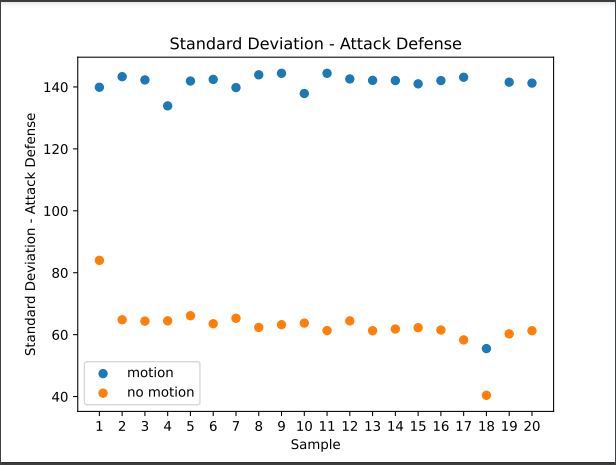
CASTRO 1

                                          Abstract
For in-home security, intelligent operations like top individual recognition and minimizing
losses due to home break-ins, emergencies, and fraud are keys to success. This application
integrates the closed-circuit television (CCTV) camera and the deep learning algorithms used
to process these images. Automated intrusion detection alerts, real-time fire alerts, smart
checkout, and potentially fraudulent point of sale (POS) transactions are its main features.
Dynamic intrusion with machine learning is a software program in which the price of certain
products changes over time through an algorithm that considers a variety of pricing variables.
The face locator is a part of the algorithm that locates and detects motion by using the image
search function. The system collects all available product locations from the live videos from
multiple cameras. This is a helpful feature for finding misplaced products and detecting POS
user fraud. This intrusion detection system (IDS) records POS transaction details on the
screen as an overlay on video images to reduce home break-ins. To improve the ease and
speed of transaction searches, the faces of individuals are used to search for disputed cases.
Smart Checkout System (SCS) utilizes a self-service kiosk where users can generate bills by
showing products to the linked camera. SCS uses Google vision technology to identify
products. Motion detector and queue detection will detect long queues at the checkout
counter in real-time and open new lanes to speed up the transaction, improve the experience,
and reduce the number of abandoned purchases. Face recognition premium and alerts can
also be provided.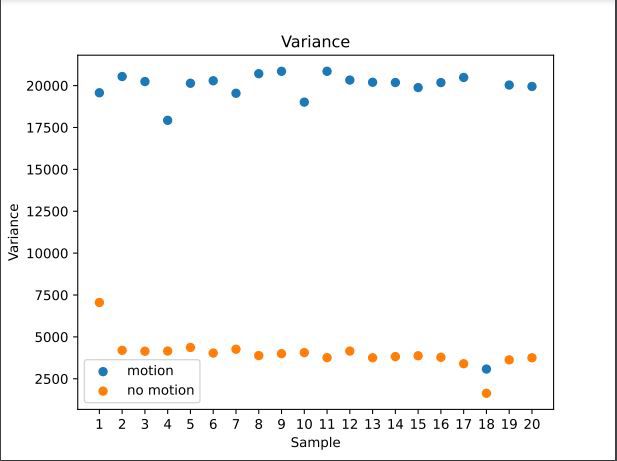
CASTRO 2

                         MONTCLAIR STATE UNIVERSITY

                      The Privacy Leakage ofIP Camera Systems

                                           by

                                      Lee R. Castro

                     A Master's Thesis Submitted to the Faculty of

                                Montclair State University

                       In Partial Fulfillment ofthe Requirements

                                    For the Degree of

                                    Master ofScience

                                      January 2022

College ofScience and Mathematics                        Thesis Committee:

Department ofComputer Science

                                                         Dr. Jiacheng Shang

                                                         Thesis Sponsor

                                                         Dr. Bharath K. Samanthula

                                                         Committee Member

                                                         Dr. Li Dawei

                                                         Committee Member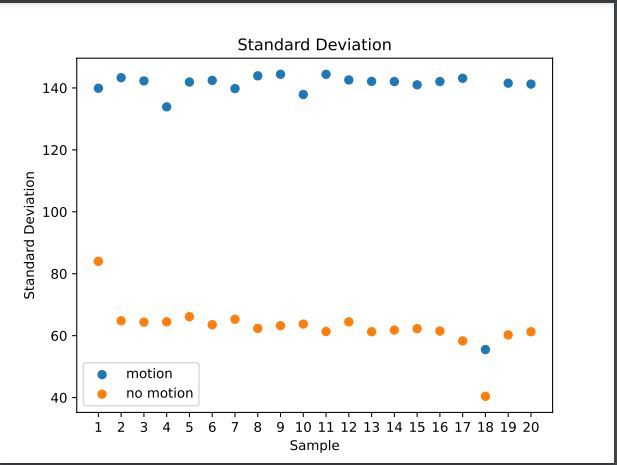
CASTRO 3

THE PRIVACY LEAKAGE OF IP CAMERA SYSTEMS

                      A THESIS

  Submitted in partial fulfillment of the requirements

         For the degree of Master of Science

                          by

                    Lee R. Castro

              Montclair State University

                    Montclair, NJ

                         2022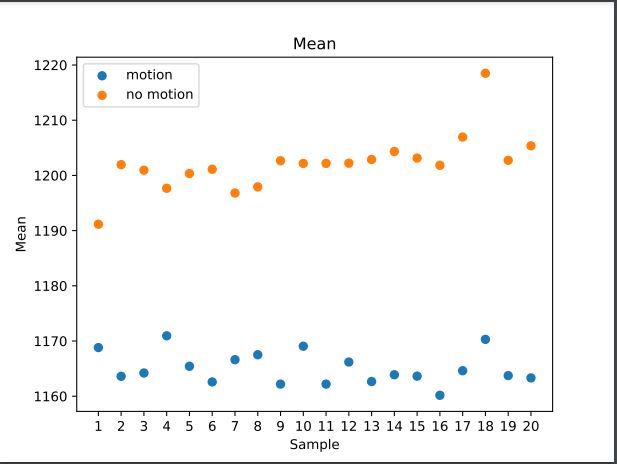
CASTRO 4

Copyright@2022 by Lee R. Castro. All rights reserved.
CASTRO 5

                                                         Table of Contents

Abstract.................................................................................................................................................. 1
Introduction ........................................................................................................................................... 6
Aim and objectives ................................................................................................................................ 7
Research Problem ................................................................................................................................. 8
Motivation............................................................................................................................................ 11
Dissertation Report Outline ............................................................................................................... 13
Methodology ........................................................................................................................................ 13
   Hardware Requirement.................................................................................................................. 14
   Software Requirement .................................................................................................................... 14
System Design ...................................................................................................................................... 15
Results .................................................................................................................................................. 16
   Mean ................................................................................................................................................. 18
   Standard Deviation ......................................................................................................................... 19
   Variance ........................................................................................................................................... 20
Conclusion ........................................................................................................................................... 21
Recommendations ............................................................................................................................... 22
References ............................................................................................................................................ 24

Table 1: Show the mean score of the motion and no-motion.............................................................. 18
Table 2: Shows a table of the Standard variance between motion and no-motion ............................. 19
Table 3: Show the variance of the motion and no-motion ................................................................... 20

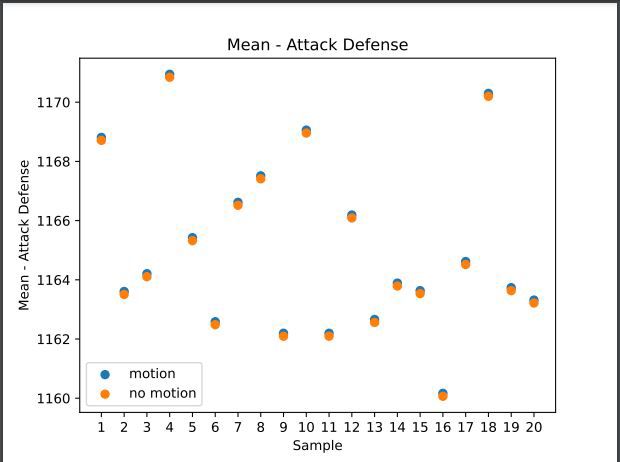
Figure 1: Shows a graph of the mean attack defense........................................................................... 18
Figure 2: A graph of the standard deviation between motion and no-motion .................................... 19
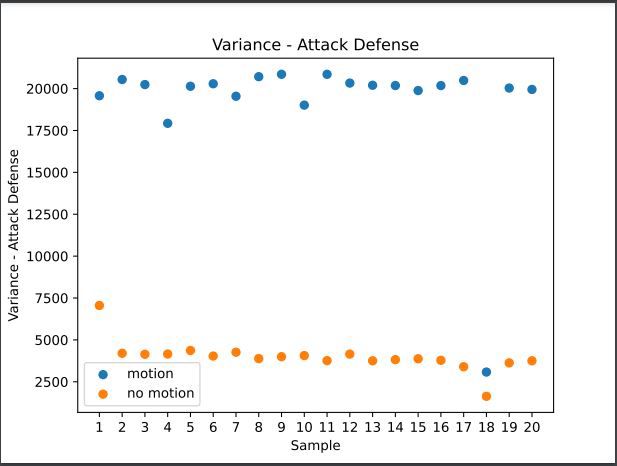
Figure 3: Shows a graph of the variance attack defense ...................................................................... 20
CASTRO 6
Introduction
Intelligent operations like top facial recognition and minimizing losses due to
shoplifting, emergencies, and fraud are keys to success in the retail industry. This application
integrates the CCTV camera and the deep learning algorithms used to process these images.
Automated intrusion detection alerts, real-time fire alerts, smart checkout, and potentially
fraudulent point of sale (POS) transactions are its main features (Kocher and Kumar 9731-
63). IP camera security is meant to protect the user’s data handling and use. Most IP Cameras
have generic software that does the least by protecting the cameras from hackers, misuse of
data, or disabling. This experiment was justified by how the entropy of the data analyzed can
be processed to predict whether there is an intruder in the house or not, going by the size of
data packets transmitted.
The problem was determining a method to capture the camera packets and noticing if
there was someone present in the home or not. I have used Wireshark, a network protocol
analyzer, to fetch and analyze the network packets. Wireshark can capture packets when the
camera is both online and offline. IP cameras are cameras that transmit and receive data via
Internet Protocol. These cameras can send packets and alerts, which can trigger the alarm
system automatically. The cameras can also notify a user through applications when any
unusual activity is happening.
Areas where IP cameras can be used are commercial properties, industrial spaces, and
home security systems. A manufacturer can use this experiment to produce more intelligent
IP Cameras with updated sensory features for alerting a user if there is an intrusion in their
absence when they are connected to the internet. Modern cameras have evolved to be so
discreet that their presence is unnoticeable and can work wirelessly (Ortiz et al.).
IP cameras are used in surveillance by business owners and homeowners to monitor
theft, burglary, and employee behavior while at work. This helps the users gather evidence inCASTRO 7
case something happens; in our case, this experiment will demonstrate how a data generating
module can be used to notify the owner or capture videos for investigation purposes. The
advancement of the hardware technology complements IP technology by capturing high-
resolution footage with fewer network demands using wireless cameras and the
manufacturer's software. This technology can be important in maintaining the integrity of
premises. Our experiment leverages the ability of IP cameras to communicate directly to the
network like any other network device. The cameras come installed with applications that
make it easier to connect them to the internet; users have the options of installing
decentralized or centralized cameras. The transmitted data in motion packets via inbuilt or
installed protocols can output user information via the packet-based network.
Aim and Objectives
This report aims to explore the motion of objects and analyze the sensing systems
with respect to the design and the user. The development methodology for probable object
detection with tracing systems as well as the techniques used to define, analyze, and measure
velocities and trajectories when the location of the moving sceneries of the "Sensing"
Systems changes to identify items in the user's surroundings.
The following are the central objectives described in this report:
i. Detailed study of "moving Scenery" of items in the context of "real-time"
Kinematical data in the vicinity of the user using "Sensing" Systems.
ii. The project's application potential for the corresponding "Open-Source
Software" Python as a design and development tool.
iii. The project's applicability in a real-world setting.
The project's main goal is to improve the security and ease for the individuals with the
help of operations like top facial recognition and minimize losses due to shoplifting. The
application can also be used for checkout automation, trust, queue detection, reducing the useCASTRO 8
of the workforce, and increasing efficiency. This application integrates the CCTV camera and
the deep learning algorithms used to process these images. Automated intrusion detection
alerts, real-time fire alerts, smart checkout, and potentially fraudulent point of sale (POS)
transactions are its main features (Kocher and Kumar 9731-63). The prices of certain
products can be changed over time through a dynamic pricing algorithm that considers a
variety of pricing variables. All these will automate the running of a retail shop. Self-
checkout system, detection of misplaced objects, dynamic pricing according to the market
rate analysis, etc. are the main highlights of this application that will help increase the
efficiency of retail shop’s running and decrease the workforce. This will be more convenient
for the owners
Research Problem
We are exploring IP camera security vulnerabilities and analytical potential by
applying meaning to the data transmitted over to a network analysis tool from an IP camera.
It uses a data-generating function that demonstrates the difference between the packet activity
in scenarios where there is motion and no motion to enhance the language. The experiment
deduced that the data size is more in an in-motion state than in a no-motion state.
This experiment is an example of how motion information can be transmitted and
analyzed using time and spatial coordinates. By exploring the nature of the waves of the
Wireshark packets, the user can tell if there is an uninvited intruder just by predicting the
entropy from the graph. There are various properties of the digital signal transmitted that can
help this experiment attain the narrow objective of telling whether there is someone at home
or not.
The packet information carries motion vectors, acceleration rates of the moved object
velocities of the packets, and packet time. With this information stored in a database and
connected to a remote network device like a phone or an alarm system, the user can receiveCASTRO 9
notifications. This is the most remarkable aspect of IP camera systems. When the Wireshark
packets are captured, the wave is observed while the zoom camera is on. The locks with
higher entropy can be hard to predict, but as the programmer, you can use these properties to
determine the program's output.
Entropy is the measure of randomness of the transmitted bits. By using statistical
models, a program can measure the properties of the packets. Some of the most used
characteristics of entropy, include unpredictability, uniformity in bit distribution, and absence
of patterns. The lack of patterns implies both unpredictability and uniformity. Their
unpredictability does not mean uniformity and their uniformity does not, in turn, guarantee
the measure of solid non-computability of the transmitted sequence.
Real-time movement in front of the Zoom camera is captured as network packets and
analyzed as digital signals. This experiment can be applied to machine learning applications
intelligently to use the data sets. The default status of the camera in this experiment is on, but
the shutter is off when picking no-motion data.
In this experiment, we will not go to the extent of telling if the threat is human or not.
The experiment is a module to detect events or a rapid notification data-integrated systems
component. Surveillance systems have evolved from the traditional analog signal to the
digital signal. This has seen new paradigms of security issues. Packet-switched systems have
dynamic topologies compared to the latter. This is both a blessing and a curse. The more the
surface covered by IP-based camera systems, the more the exposure to attackers on the
internet. The attacks can occur to your internal network via other devices.
Despite the new problems, the need for IP camera systems in the market today is
enormous. The world has adopted the internet of things and there is a tremendous demand for
connectivity via intelligent technologies. We will explore the use of IP camera as a security
device by using motion information.CASTRO 10
The motion information will be sent to the user interface as network packets. These
are basic units of fragmented information transmitted via a network link. The camera will
pick the video as a sequence of packets sent to a Network Interface Card, which displays it in
a waveform (Ma et al. 1701-54). The waveform can be computed based on the specimen 20
boxes in the motion state and the no-motion state. These packets can be encoded with special
ordinates, timestamps, location, device type, etc.
Network protocols determine the ports and maintain a well-functioning transmission.
The packets are captured in the graphical user interface (GUI) of the Wireshark program
(Wireshark). Data waveforms are then analyzed using three mathematical operations: mean,
variance, and standard deviation. This data is plotted as graphs and the data observed shows
that low entropy is collected in a motion state compared to a no-motion state.
The data is compiled as packets with context descriptions. This experiment
emphasizes the quantity or size of data rather than the quality of the data. The data can only
be interpreted to detect movements but cannot reveal what type is captured. The program
does the capturing in waveforms by synthesizing the traffic characteristics. This data can help
us study the environment where the IP cameras have been placed to observe and identify
motion when the owner is not in the background, for example, at home or in business
premises.
The dataset was well-computed using the PyCharm program and entropy values of the
network packet traffic, which can be visually observed in the Wireshark panel as behavior
shape graphs or entropy graphs with timestamps for measuring the data size.
Wireshark is a protocol analyzer or a traffic generator tool to help programmers
collect predefined parameters with identifiers appendages on transmitted packets to reveal
how a network performs. Background-related works that resemble this thesis were carried on
smart-home sensor cameras using stochastic and heuristic graphs. This can enable real-timeCASTRO 11
surveillance by classifying the network traffic as either a motion or a no-motion state. This is
a valuable feature for an event-detection camera.
We used machine-learning functions, and the network packets to detect abnormal
traffic visually. Network traffic characterization is the central thesis problem of this
experiment. Using mathematical models of mean calculation, we can plot graphs of
heterogeneous cameras and decide whether the traffic has any anomaly. The device
classification framework helps us train the protocol analyzer to automatically predict using
the entropy graphs generated by the python program.
Motivation
Anomaly-based intrusion detection by factoring traffic descriptors. Anomaly
detection works by defining the empirical measure for the deviation from a no-motion state.
In analyzing the graphs, we use the traffic descriptors to describe different features of the data
collected. By using plotted behavior shape graphs and measuring the divergence to detect
abnormalities, we can advance and use association vectors to differentiate anomalous flows
from suspicious flows No-motion behavior doesn’t show network data on the traffic protocol
panel; the motion state is a recurrent time bin and is measured and compared by the normal
state of the camera with the shutter off.
This experiment aims to demonstrate the working of machine-learning Intrusion
Detection Systems and represent anomalies as signatures. In this phase, we assume misuse
detection, which attaches types to network packets. This classifier has low entropy; hence,
there is enough room to predict if a change occurs or when an anomaly is in the current time
bin (Ahmim et al. 208-25).
In contrast to anomaly detection, the outlook is to define a standard network profile
and the abnormal states by using the measure of deviation, mean, or variance from the normal
status. After determining the degree as a vector variable, it can generate a statistical model,CASTRO 12
for example, the graphs as per the 20 network packets in motion and no-motion states.
Machine learning systems can also process the variable. Modern Internet Protocol cameras
are embedded within Intrusion Detection Systems. These IDSs come installed with
sophisticated add-ons, that can be processed further by deep learning, feature engineering,
and network traffic grouping.
Since our experiment's input is network traffic, network-based IDSs are ideal for this
experiment. This experiment can develop a feature engineered to notify the user when the
degree of deviation is attributed to the detection method.
There are two machine-learning algorithms commonly applied to the IDS, supervised
and unsupervised systems. Supervised systems use signatures to classify data; this makes data
classification time-consuming but more thorough than unsupervised learning systems that use
calculated feature information to train the IDS. Let me highlight one learning model, the K-
Nearest Neighbour (KNN). KNN parametrizes a class of behavior and calculates the
hypothetic probability of the sample data. For example, the bin belongs to a particular class in
the current time. Thus, the classification is based on the top-k proximity to neighbors
(Sivasamy et al.).
About the system architecture, the first module parsed with subsequent time-bins.
Each file contains a list of keys observable and associable with the number of flows
transmitted by the IP address of the network camera. The data is processed and then passed to
the module responsible for statistical modelling. Using 2D graphs, we can compare the
current sketches and the sketches from the references. The degree of variance between the
mean and the actual average profile can determine whether there is an anomaly or not.
The architecture of the technology factors in the topology and the components. The
elements relate in ubiquitous ways that expose the IP cameras to vulnerable attacks. A goodCASTRO 13
example is how the cameras use public channels of communication, giving attackers access
points.
The quantity of data received is a calculated mean of the changes in the network
packets received. By analyzing the wave using the models we have highlighted above, one
can observe the movement captured by the IP camera or sensor. The acceleration of
movements is received as motion vectors. IP cameras, magnetic devices, and motion sensors
can use this experiment as a reference. The data packets are simply data sets embedded in
sequences and can be changed to predict a programmed parameter. With further attributes
added to the graphs like spatial coordinates, the meaning of the data can be broader, and that
includes improving a user's interaction by making the data more readable.
Dissertation Report Outline
The dissertation of the given project has been completed by outlining the introduction,
pointing out the significance and motivations behind the project and the subject, outlining the
backdrop of the problems, and aims and objectives explored in the project in a real-world
setting. Also, the report depicts the corresponding literature review carried out in the context
of the research problem, the background and relevant literature associated with the given
subject to its best interest and elucidates different perspectives and lines of thought associated
with the topic. Following that, the project's approach has elaborated on the implemented
measures, the accompanying analyses and procedures, and the pertinent findings and
outcomes. Finally, there is the conclusion section that reveals the scope and limit of the
project.
Methodology
The experiment used a small dataset instead of a complex one because in the past, complex
systems have shown an increase in false alarm rates than in smaller datasets. Frequency
analysis technique have been used as intrusion detection algorithms.CASTRO 14
Hardware Requirement
Processor Intel i7 8th Gen
RAM 8 GB DDR4
Hard Disk 512 GB SSD
Display Size 15’’LED Monitor
Screen Resolution 1920*1080 Pixels
Keyboard Wireless Enabled Keyboard (Recommended: Logitech)
Keyboard Mouse Wireless Enabled Mouse (Recommended: Logitech)
MONITOR: LED Monitor
Camera: 8 Megapixel Full HD 1.8f lens
Dedicated Graphics Card: Nvidia Geforce GTX 1050 4GB DDR5
iPhone 12 5G speed A14 Bionic chip featuring Super-Retina XDR display with a 6.1-inch
edge-to-edge OLED display
Software Requirement
Operating System: Windows (10)
Programming Language: Python
IDE: Open CV
Front-End: Python Django
Back-End: MongoDBCASTRO 15
System Design
System design reduces an entire system to its basics by studying the various
operations performed and their relationships within the system and the requirements of the
various operations success. One aspect of the design is defining the system's boundaries and
determining whether the candidate system should consider other related systems. A system
can be defined as an orderly grouping of interdependent components that can be simple or
complex.
The idea of the system design has been most practical and necessary in computerizing
the interrelationships and integration of operations, especially when using computers. Thus, it
is a way of thinking about organizations and their problems. An organization consists of
several interrelated and interlocking components.
The most creative and challenging phase of the system life cycle is the system design.
The term design refers a final system and the process by which it is developed. It refers to the
technical specifications applied in implementing the candidate system. It also includes the
construction of programs and program testing.
The first step in the system design is to determine how the output is produced and in
what format. Samples of the output and the inputs are also presented. In the second step,
input data and master files are to be designed to meet the requirement of the proposed output.
The processing phase includes the system's objectives and complete documentation.
Finally, detailed system justification and an estimate of the impact of the candidate
system on the user and organization are documented and evaluated by management as a step
implementation. The final report prior to the implementation phase includes a procedure flow
chart, record layouts, and a workable plan for implementing the KDMS system.
System design has two phases:
LogicalCASTRO 16
Physical
The logical design reviews the present physical system, prepares the input and the
output, and prepares a logical design walk-through. We must decide how to log the required
entries and how we should process the user data. Also, we must present the data in an
informative and appealing format. This design also involves the methodology to store,
modify, and retrieve data from the database as per the requirement. The physical design maps
out the details of the physical system, plans the system implementation, and devises a test and
implementation plan as well as new hardware and software.
We must decide how and where to store the input data and how to process it so as to
present it to the user in an easy, informative, and attractive manner. A major step in the
designing is the preparation of input and output reports in a form that’s acceptable to the user.
In this step, a data entry operator can feed the relevant details asked by the system for a
particular task as input.
Results
The main motivation and objective of this system is to provide a solution to reduce
the inconvenience of finding a unique diet for the user and enabling a user-friendly interface.
Systematic handling of the schedules in such a way is key to increasing its manageability and
competence.
This experiment does not focus on contexts specific to the nature of the object being
captured by the IP camera. However, it identifies the traceability of the object or data packets
transmitted as a feature of machine learning. The data packets come with references to guide
the receiving protocol on interpreting the data. Wrapping these data packets in a protocol, for
example, the Session Initiation Protocol which controls and terminates a session involving
two-time bins, can be helpful for the network packets traffic descriptors that suit the
statistical model to be generated by the traffic tool. It is a simple experiment and does notCASTRO 17 utilize all complex detection methods; mainly, misuse-detection is demonstrated here (Bozionek et al.).
CASTRO 18

                                                           Mean

 motion                  No-motion
           1168.811          1191.163
           1163.606          1201.954
           1164.207          1200.948
           1170.943          1197.673
           1165.424           1200.34
           1162.584          1201.113
           1166.618          1196.808
           1167.512          1197.926
           1162.195          1202.666
           1169.058          1202.168
           1162.195          1202.185
           1166.189          1202.218
           1162.661          1202.881
            1163.89          1204.335
           1163.635          1203.147
           1160.165          1201.828
           1164.617          1206.947
           1170.298            1218.5
           1163.735          1202.736
           1163.316          1205.366
Table 1: Show the mean score of the motion and no-motion

Figure 1: (a ) shows the graph of the mean between motion and no-motion.) (b) Shows a graph of the mean attack defense
CASTRO 19
Standard Deviation
motion No- motion
139.9037 83.99331
143.3254 64.80622
142.2689 64.36674
133.8969 64.47009
141.9154 66.11246
142.4413 63.52951
139.7985 65.29485
143.9124 62.33829
144.4087 63.21792
137.8882 63.73919
144.4087 61.32955
142.5834 64.44398
142.1255 61.26935
142.0681 61.8148
141.0062 62.24672
142.0588 61.49628
143.1291 58.30157
55.49954 40.41349
141.5414 60.24284
141.2445 61.26941
Table 2: Shows a table the Standard variance between motion and no-motion
Figure 2: (a ) shows a graph of the standard deviation between motion and no-motion (b) )shows the standard deviation of
the attack defenseCASTRO 20
Variance
motion No-motion
19573.05 7054.876
20542.18 4199.846
20240.44 4143.077
17928.37 4156.393
20139.98 4370.857
20289.53 4035.998
19543.61 4263.418
20710.78 3886.062
20853.88 3996.506
19013.17 4062.685
20853.88 3761.314
20330.02 4153.026
20199.64 3753.933
20183.34 3821.07
19882.75 3874.654
20180.71 3781.793
20485.94 3399.073
3080.199 1633.25
20033.97 3629.2
19950.02 3753.941
Table 3: Show the variance of the motion and no-motion
Figure 3: (a) shows the variance between the motion and no-motion (b) Shows a graph of the variance attack defenseCASTRO 21
Network packets remain incomplete unless parsed with additional header and
application data. The header contains structured IP addresses, ports, and protocols fields.
Some of the reasons I chose to use packets is because of their effectiveness in detecting U2L
and R2L network hacking (Ortiz et al.). Packets have the ability to encode IPs and
timestamps, thereby storing the data sources. The packets can be matched with packet
patterns in real-time without caching.
This experiment tests algorithms based on statistical models. In IDS systems, false-
positive rates in machine learning approaches are due to the poor relationships between
features that are not well revised. Statistical equations calculate the deviation in the current
time bin from default profiles. Datasets can train the IDS algorithm to tolerate deviations
within an acceptable range. Statistical models can explicitly achieve noise handling.
Hotelling's multivariate statistical technique, is the concept this experiment is trying
to mimic as a correlation of variables, using a variance matrix of the control model adopted.
A null hypothesis is a conditioner to the descriptors; when the traffic in the current time bin
shows minor deviation, the process controller doesn’t output any anomaly. In an alternative
hypothesis, the current traffic is an anomaly, but the deviation is acceptable, as the degree of
deviation is an indicator. Hoteling has been used to track an object's scalar and spatial
coordinates. The test can differentiate moving and stationary objects; however, it has
challenges in processes with complex correlations, such as mean shift anomalies and counter
regressions.
Conclusion
The identification method detects any object in the image with outlined rectangular
boxes, then calculates each packet object and places its tag with these methods and
algorithms through the deep learning machines (Kocher and Kumar 9731-63). The object was
identified through the process of training datasets. Thousands of images were taken for eachCASTRO 22
object to improve the accuracy. Then, the object in the image was outlined and labeled to be
identified during real-time detection. Upon the completion of training of datasets, each object
was identified with proper labeling. Hence, more research was conducted on object detection
and more improvement were made to create a better algorithm. With this retailer can quickly
gain insight into transactions, interests, and hotspots. When it comes to efficiency, kiosks
offer the following:
• Reduced wait times compared to using cash registers. Customers can walk into
the store, order, and pay without waiting in line.
• Reduced labor costs as one member of staff can overlook several self-
checkout kiosks.
As the products are usually still handed out by employees or picked up by accessing
digital lockers, the risk of theft is minimized with this solution. This system is ahead of others
but less advanced than other options when it comes to transaction speed. Perceived control,
reliability, ease of use, and enjoyment are as optimal as they can be for customers using this
system. Next to online pre-ordering and checkout, kiosks are one of the most convenient self-
checkout options for retailers selling meals and should also be considered for other types of
products and stores.
Recommendations
This technology can be applied in various network device scenarios, for example,
smart appliances, smart thermostats, motion lights, IP cameras, and much more innovative
technology. When the camera is off, the behavior shape graph shows a smaller data quantity
than when the camera is on. It can be concluded that the entropy decreases when the camera
is on. This is because the camera receives a particular packet type. The functionalities and
generated data are different for many devices. Some of the purposes of the camera
surveillance system depend on user specifications such as for enforcement at the locationCASTRO 23
where intrusion detection occurs, monitoring the home or work premise remotely, forensics
on providing evidence in court proceedings, etc.
A drawback of this thesis problem/application is its inability to mask the statistical
models to protect the system’s integrity from attackers. Hackers can infiltrate the traffic
pattern by scanning the waveforms with more extensive data and muting the descriptors.
This can keep the shutter off even when there is motion in front of the camera. Some
of the prominent attacks include Denial of Service, which makes legitimate users unable to
access the system. Volumetric attacks on the traffic generate network clogging, which crashes
the systems denying service to the legitimate user. This provides scope for further research
and experimental approaches to tackle the vulnerability.
If there is access from a foreign port or protocol. Machine-learning responses can be
fed into the dataset to process the output to camouflage the back-end input, or layer the
output to indicate data quantized that is opposite to the observed traffic if access is from a
foreign port or protocol. The experiment has demonstrated the ability of Python algorithms
to analyze camera motion packets intelligently to predict an anomaly in the observed
timestamp against the established standard traffic profile.CASTRO 24
References
Ahmim, Ahmed., et al. “A Novel Hierarchical Intrusion Detection System Based on Decision
Tree and Rules-based Models.” In Proceedings of the 2019 15th International
Conference on Distributed Computing in Sensor Systems (DCOSS), 29–31 May 2019, pp.
208-25.
Bozionek, Bruno et al. METHOD FOR CAPTURING AND TRANSMITTING MOTION DATA. 5
Nov. 2015.
Kocher, Geeta., and Gulshan Kumar. “Machine Learning and Deep Learning Methods for
Intrusion Detection Systems: Recent Developments and Challenges.” Soft Computing,
vol. 25, no. 15, 2021, pp. 9731-63.
Ma, Tao., et al. “A Hybrid Spectral Clustering and Deep Neural Network Ensemble Algorithm
for Intrusion Detection in Sensor Networks.” Sensors, vol. 16, 2016, pp. 1701-54.
Ortiz, Julio, et al. “About IP Cameras.” Network Optix, 1 Oct. 2020,
https://www.networkoptix.com/2019/08/06/about-ip-cameras. Accessed 9 Oct. 2021.
Sivasamy, Avalappampatty, and Bose Sundan. “A Dynamic Intrusion Detection System Based
on Multivariate Hotelling's T2 Statistics Approach for Network Environments.” The
Scientific World Journal, 2015. doi.org/10.1155/2015/850153.
Wireshark (2020) Wireshark · Go Deep. 24 Jan. 2021, https://www.wireshark.org. Accessed 25
Nov. 2021.You can also read


