NVM Express: Unlock the Potential - Forum A-11 Audio-Visual Sponsor - Flash Memory Summit
←
→
Page content transcription
If your browser does not render page correctly, please read the page content below
NVM Express™: Unlock the Potential

                       Forum A-11

Audio-Visual Sponsor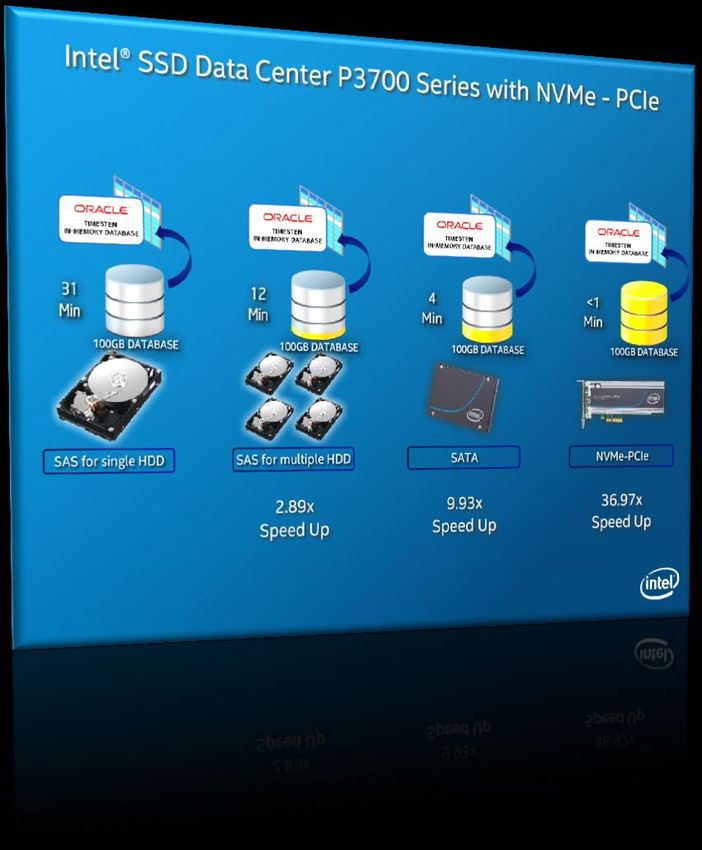
The Maturity of NVM Express™

                    Tom Lenny
            Principal Program Manager
                Seagate Technology

Audio-Visual Sponsor
NVMe Organization NVM Express is a scalable host controller interface designed for Enterprise and Client SSDs that utilize PCI Express® (PCIe®) NVM Express work group transitioned to an incorporated industry standards organization in March 2014 More than 50 member companies Go to www.nvmexpress.org for information on how to join Flash Memory Summit 2014 Santa Clara, CA 3
PCIe SSDs taking top share in datacenter

                                       Enterprise SSD Unit Shipment Forecast by Interface

     PCIe will be leading
   interface for datacenter
         SSD by 2018

                                                                                      Source: IDC*

     Performance: PCIe bandwidth is much greater than SAS and SATA, and NVMe™
     protocol with new software stacks have far lower latency

     Industry Standards: Transitioning from proprietary PCIe SSD hardware and software
     to standard NVMe™ software interface and standard 2.5” SFF 8639 form factor

Flash Memory Summit 2014                                      * IDC Worldwide Solid State
Santa Clara, CA                                               Drive 2014-2018 Forecast,              4
                                                              doc #248727, June 2014
PCIe overtakes SATA in Client SSD

 Client SSD Unit Shipment Forecast by Interface
                                                           Interface Performance
                                                           SATA 6Gb/s      0.6 G B/s

                                                           PCIe 3.0 x4                     4 G B/s

                                                                    M.2 Form Factor

                                        Source:
                                        Forward Insights

            PCIe performance and
                                                                 42mm    60mm   80mm   110mm
            new standard M.2 form
            factor driving transition

Flash Memory Summit 2014
Santa Clara, CA                                                                                      5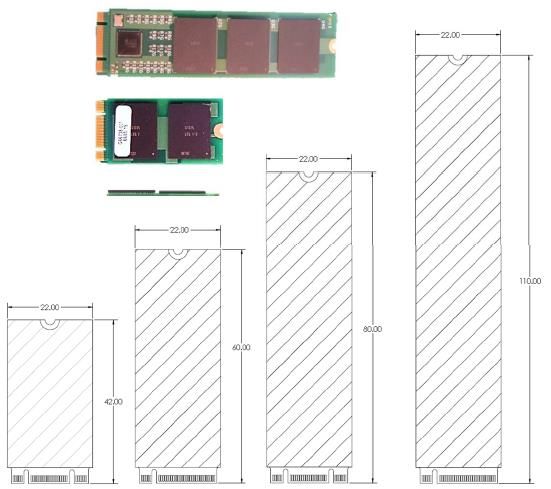
NVMe™ Interoperability

 • NVMe Organization along with UNH-IOL continue to
   develop new compliance and interoperability tests to drive
   for mature production devices with plug and play
   experience

 • 1st Plugfest, May 2013, had 11 participant companies
 • 2nd Plugfest, February 2014, had 14 companies
 • 3rd Plugfest scheduled for November 10-13, 2014 at UNH-IOL

 • Register for plugfest:
   www.iol.unh.edu/services/testing/NVMe/plugfest.php

Flash Memory Summit 2014
Santa Clara, CA                                                 6
1st NVM Express* Products

                                                               “…our first look at an NVMe
                                                                drive, and the results are
                                                                 impressive.” AnandTech

         “The NVMe interface can provide up to six times the throughput of the SATA 6Gb/s
                                  interface.” The SSD Review
Flash Memory Summit 2014
Santa Clara, CA                                                                              7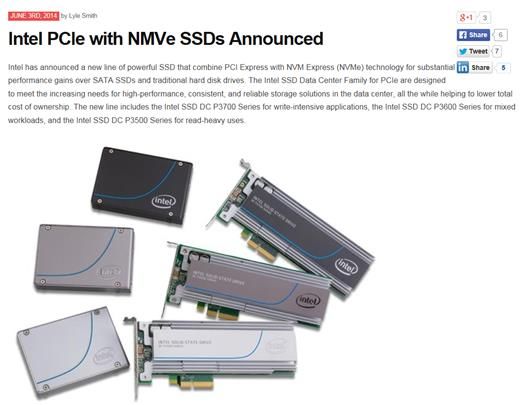
Track Agenda
NVMe Ecosystem Development – Amber Huffman (Intel)
NVMe 1.2 Feature Overview – Dave Landsman (Sandisk)
NVMe Management Interface – Peter Onufryk (PMC-Sierra)
An Implementer’s Perspective – Ken Okin (HGST)
Afternoon session A12 3:15 - 4:25:
Scaling from the Datacenter to the Client – KeunSoo Jo (Samsung)
NVMe in the real world – Dave Allen (PMC-Sierra)
Flash Memory Summit 2014
Santa Clara, CA 8
NVM Express Ecosystem Development

                    Amber Huffman
                Sr. Principal Engineer
                   Intel Corporation

Audio-Visual Sponsor
Outline
Ecosystem Embrace of PCIe* Storage
NVM Express Overview
Features for Client and Datacenter
Native Driver Support for NVMe™
Form Factors and Connectors
Using Hot Plug with NVMe
Interoperability Program for NVMe
Flash Memory Summit 2014
Santa Clara, CA 10PCIe* Enables 8 GB/s
Performance Possibilities
PCI Express* (PCIe) is scalable enabling an OEM to select
the right performance point for an individual drive
Do I need a 4 GB/s device 4 GB/s
for my application?
…Or an 8 GB/s device?
2 GB/s
1.2 GB/s
0.6 GB/s
SATA 6Gbps SAS 12Gbps PCIe 3.0 x2 PCIe 3.0 x4 PCIe 3.0 x8
Flash Memory Summit 2014
Santa Clara, CA Source: www.pcisig.com, www.t10.org, www.sata-io.org 11
*Other names and brands may be claimed as the property of others.PCIe* SSD Benefits
Performance: 1 GB/s per lane.. 4 GB/s, 8 GB/s, 16 GB/s per device..
Lower latency: Direct CPU connection
No host bus adapter (HBA): Lower power ~ 10W and cost ~ $15
Increased I/O opportunity: Up to 40 PCIe lanes per CPU socket
Form factor options: PCIe add-in-card, SFF-8639, M.2, SATA Express, BGA
Flash Memory Summit 2014
Santa Clara, CA 12NVM Express Overview
NVM Express (NVMe) is a standardized high performance host
controller interface for PCIe Storage, such as PCIe SSDs
• Standardizes register set, feature set, and command set where there
were only proprietary PCIe solutions before
• Architected from the ground up for NAND and next generation NVM
• Designed to scale from Enterprise to Client systems
NVMe was developed by an open industry consortium and is
directed by a 13 company Promoter Group
Flash Memory Summit 2014
Santa Clara, CA 13Technical Basics of NVMe
All parameters for 4KB command in single 64B command
Supports deep queues (64K commands per queue, up to 64K queues)
Supports MSI-X and interrupt steering
Streamlined & simple command set (13 required commands)
Optional features to address target segment (Client, Enterprise, etc.)
• Enterprise: End-to-end data protection, reservations, etc.
• Client: Autonomous power state transitions, etc.
Designed to scale for next generation NVM, agnostic to NVM type used
Flash Memory Summit 2014
Santa Clara, CA 14NVMe Delivers on Performance
500000
4K Random Workloads
NVM Express delivers versus 400000
leadership SAS & SATA products 300000
IOPS
200000
Random Workloads 100000
• > 2X performance of SAS 12Gbps 0
• 4-6X performance of SATA 6Gbps 100% Read
PCIe/NVMe
70% Read
SAS 12Gb/s
0% Read
SATA 6Gb/s HE
Source: Intel (PCIe/NVMe @ QD 128 ; SAS/SATA @ QD32
Sequential Workloads
• Realize almost 3 GB/s reads 3000
Sequential Workloads
• > 2X performance of SAS 12Gbps
2000
• > 4X performance of SATA 6Gbps
MBPs
1000
0
100% Read 0% Read
PCIe/NVMe SAS 12Gb/s SATA 6Gb/s HE
Source: Intel (PCIe/NVMe 128K @ QD 128 ; SATA 128K @ QD32; SAS 64K @QD32
Note: PCIe/NVMe Measurements made on Intel(R)Core(TM) i7-3770S system @ 3.1GHz and 4GB Mem running Windows Server 2012 Standard
Flash Memory Summit 2014 O/S, Intel PCIe/NVMe SSDs, data collected by IOmeter* tool. PCIe/NVMe SSD is under development. SAS Measurements from HGST Ultrastar
Santa Clara, CA SSD800M/1000M (SAS) Solid State Drive Specification. SATA Measurements from Intel Solid State Drive DC P3700 Series Product 15
Specification.
* Other names and brands are property of their respective ownersReal Workload Benefit of NVMe
Oracle TimesTen In-Memory Database Restart
Oracle TimesTen database checkpoint file
loaded to memory
Intel® SSD DC P3700 Series
with NVMe*
The products described in this document may vary based on
design defects, numbers, or errors known as errata which may
Flash Memory Summit 2014 cause the product to deviate from published specifications.
Santa Clara, CA 16
* Other names and brands may be claimed as the property of others.NVMe Scales
from Client to Datacenter
NVMe allows devices to flexibly report capabilities
• Number of queues, number of power states, etc
NVMe features may be focused on Datacenter, on Client, or both
Different features, form
factor, capacity, etc,
based on market
segment targeted
How do you determine the NVMe features needed for your use case?
Flash Memory Summit 2014
Santa Clara, CA 18Current Feature Guidance
Feature Datacenter Guidance Client Guidance
Number of Queues 16 to 128 2 to 8
Number of Namespaces 1 to 16 (use case dependent) 1 to 4 (use case dependent)
Number of Power States 1 to 4 3 to 4
Weighted Round Robin with Urgent
Arbitration Mechanism Round Robin
Priority Class or Round Robin
End-to-end Data Protection Yes No
Security Tunneling Yes Yes
Autonomous Power State
For small form factors Yes
Transitions
Scatter/Gather List Yes for Storage Customers No
Reservations (and Dual Port) Yes for Storage Customers No
Flash Memory Summit 2014
Santa Clara, CA 19Revision 1.2 Feature Guidance
Feature Datacenter Guidance Client Guidance
Namespace Management Yes (if multiple supported) Yes (if multiple supported)
Namespace Inventory Change
Yes No
Notices
Temperature Threshold Yes Minimal support (e.g., 1 sensor)
Power State Enhancements Yes
No
and Runtime D3 Entry/Exit
Host Memory Buffer No Yes
Controller Memory Buffer Yes for Storage Customers No
Replay Protected Memory
No Yes for mobile oriented SKU
Block
Command Effects Log for
Yes Yes
NVMe Passthrough Support
Flash Memory Summit 2014
Santa Clara, CA 20Driver Ecosystem Flourishing
• Windows* 8.1 and Windows* Server 2012 R2
Windows* include native driver
• Open source driver in collaboration with OFA
Linux* • Stable OS driver since Linux* kernel 3.12
Unix • FreeBSD driver upstream
Solaris* • Solaris driver will ship in S12
• Open source vmklinux driver available on
VMware* SourceForge
UEFI • Open source driver available on SourceForge
Native OS drivers already available, with more coming.
Flash Memory Summit 2014
Santa Clara, CA 21
* Other names and brands are property of their respective ownersServiceable Form Factor
for Datacenter
PCIe Signal Pins
(Lanes 0-3, SMBus, Dual Port) A serviceable (hot pluggable)
form factor is critical in
Datacenter
PCIe
CLK & Reset
The SFF-8639 form factor /
SAS Signal Pins
(Port B) connector supports NVMe,
SAS, and SATA
SATA & SAS • Enables OEMs to transition
Signal Pins (Port A) at their own speed
SFF-8639 can be used with
existing platforms using a
SATA Signal Pins Power and Control Pins PCIe* adapter
Flash Memory Summit 2014
Santa Clara, CA 22Client Form Factors
There are a variety of form factors depending on need
M.2 is an optimized SSD only form factor for laptops
The SATA Express connector supports 2.5” form factor
drives when allowing for HDD/SSHD is needed
Intel, SanDisk, Toshiba, and HP proposed a BGA solution
for standardization in PCI SIG for behind-the-glass usages
(e.g., 2-in-1 laptops) – join PCI SIG to participate!
*
Form factors are there to support NVMe adoption in client in 2015.
Flash Memory Summit 2014
Santa Clara, CA 23
*Other names and brands may be claimed as the property of others.Hot Plug: Why PCIe* is Different
SATA*/SAS PCIe
For SATA & SAS, the host applications >>
storage controller and
driver manage hot plug AHCI Driver AHCI/NVMe Driver
Host
OS driver PCI/PCIe OS driver PCI/PCIe
With PCIe, the storage AHCI/ SCSI Controller
controller moves into the SATA interface PCIe interface
SSD
SATA interface PCIe interface
Challenge: There is no Device Controller
AHCI/NVMe Controller
SSD
storage driver present to Device Controller
handle events for hot plug NVM Storage
NVM Storage
Hot plug needs support of the PCI bus driver, BIOS, and host software.
Flash Memory Summit 2014
Santa Clara, CA 24Surprise Removal
Surprise removal is not normal and not recommended!
• Device removal with I/O in flight invites data loss; not recommended for SAS either
• However, a random device failure or operator error may look like surprise removal
Storage controller driver must check for Master Abort
• On all reads to the device, the driver checks register for FFFF_FFFFh
• If data is FFFF_FFFFh, then driver reads another register expected to have a
value that includes zeroes to verify device is still present
Time order of removal notification is unknown
• e.g. Storage controller driver via Master Abort, or PCI Bus driver via Presence
Change interrupt, or RAID software may signal removal first
Software hardening for surprise removal is under development.
Flash Memory Summit 2014
Santa Clara, CA 25Normal Hot Plug Use Cases
Hot Add & Remove are software managed events
• The operator takes explicit action, including software configuration
During boot, the system must prepare for hot plug:
• Configure PCI Express* Slot Capability registers
• Enable/register for hot plug events to higher level software (e.g., RAID)
• Pre-allocate slot resources (Bus IDs, interrupts, memory regions) using
ACPI*
No updates to host hardware (CPU/chipset) is needed
Existing BIOS and Windows*/Linux* OS
are prepared to support PCIe hot plug today.
Flash Memory Summit 2014
Santa Clara, CA 26NVMe Interoperability Program
The University of New Hampshire Interoperability Lab (UNH-IOL)
has collaborated with NVMe to deliver a robust interop program
Two plugfests have been held in the past year, with another
slated for the end of this year
2013 2014
NVMe Plugfest #1 NVMe Plugfest #2 NVMe Plugfest #3
May 2013 Feb 2014 Nov 2014
Seven devices are already on the NVMe Integrator’s List
More details at www.iol.unh.edu/services/testing/NVMe.
Flash Memory Summit 2014
Santa Clara, CA 27Conformance and Interoperability
NVMe Interop program tests interoperability and conformance
• Interoperability: Ensure the device interoperates with many hosts
• Conformance: Ensure the device complies to the specification
Interoperability: Test against five different hosts – must pass with
at least four including both a Windows and Linux reference driver
Conformance: Test tools used to check proper response to
different NVMe host requests
Conformance Test
Stimulus / Response
IOL INTERACT
Testing Station
Comprehensive testing ensures high quality NVMe ecosystem.
Flash Memory Summit 2014
Santa Clara, CA 28Summary
NVM Express is the interface architected from the ground up for
non-volatile memory
NVMe performance meets the needs of demanding applications
A robust NVMe ecosystem is developing, including native OS
drivers, form factors, and an interoperability program
• Remember plugfest #3 the week of November 10
Join NVMe. Learn more at nvmexpress.org.
Flash Memory Summit 2014
Santa Clara, CA 29What’s New in NVMe™ Rev 1.2?
Dave Landsman
Director, Standards and Industry Associations
SanDisk
Audio-Visual SponsorNVMe Development Timeline
NVMe 1.2 – Q4 2014
• Host Memory Buffer
• Replay Protected Memory
• Active/Idle Power and RTD3
NVMe 1.1 – Oct-2012 • Temperature Thresholds
• Namespace Management
NVMe 1.0 – Mar-2011 • Multi-Path IO
• Enhanced Status Reporting
• Namespace Sharing
• Reservations • Pass through support
• Queuing Interface
• Command Set • Autonomous Power Transition • Controller Memory Buffer
• End-to-End Protection • Scatter Gather Lists • Firmware Update w/ no Reset
• Security
• PRP’s
2011 2012 2013 2014 2015
Flash Memory Summit 2014 31
Santa Clara, CANVMe Evolving for Client
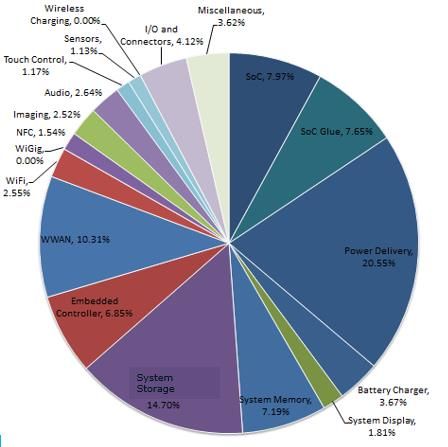
10” Tablet Area Budget
Client has become Mobile
• Push for lower cost, power, size
Storage occupying larger % of
area in ultra-thin, 2-in-1’s, tablets
NVMe Rev 1.2 adding support for
cost/power sensitive SFF
• Host Memory Buffer
• Replay Protected Memory Block
• Power Management Enhancements
Storage (22x80 M.2)
is ~ 15% of area
Source: Intel
Flash Memory Summit 2014
Santa Clara, CAHost Memory Buffer (HMB)
Allow the host driver to Client
allocate system memory for System
DRAM
the SSD’s exclusive use
Enables DRAM savings
• E.g., store translation tables in
Host Memory Allocated for
host DRAM
PCIe SSD’s Exclusive Use
Spec
• Host can enable/disable
feature, preserve/reassign
buffer after RTD3
• Device can specify minimum
and preferred buffer size
Flash Memory Summit 2014
Santa Clara, CAReplay Protected Memory Block (RPMB)
Allow host to store data to Security Send
authenticated and replay (RPMB Message)
NVMe
protected area of memory Host
Security Receive Controller
• e.g. WWAN provisioning (RPMB Message)
RPMB Layout (up to 7)
Description
Authentication • Write Once, no Erase or Read
Key • Used to generate MAC
Write Counter • Read Only, cannot be reset
• # of authenticated write requests
Data Area • Read/Write, no Erase
• May be read and written after authentication
Flash Memory Summit 2014
Santa Clara, CARTD3 Entry/Exit Latency
Enable host to be more aggressive using RTD3
In NVMe Rev 1.1, RTD3 is a bit of a guessing game
• Driver issues shutdown intent, polls till device says ready
• Host does not know entry/exit latency to calculate ROI of device shutdown
NVMe Rev 1.2 adds RTD3 entry and exit latency reporting
• Knowing entry time reduces polling effort
• Knowing entry + exit time enables better host policy
RTD3 RTD3
Enter Exit
Device 1
Device 2
Entry Time Exit
Entry Exit
Flash Memory Summit 2014
Santa Clara, CAActive and Idle Power
NVMe Rev 1.1
Example Device State Definitions Power Descriptors
Max Operational
Power Descriptor Field State 1 State 2 Instantaneous State
Max Relative Read Relative Write
X Y Throughput Throughput
Instantaneous
Entry Exit
Latency Latency
Relative Read Relative Write
Latency Latency
New power-related fields enable better host policy
Power Descriptor Field State 1 State 2
Idle New NVMe Rev 1.2 Descriptors
Typical power over 30 Low High • “In-state” power, with workload
seconds when idle assumptions
• Example Host Policy
Active
Largest average power over High Low – State 1 for “Instant Go” workload
10 second period – State 2 for “Compute” workload
Flash Memory Summit 2014
Santa Clara, CATemperature Management
- Threshold Model
NVMe Rev 1.1 NVMe Rev 1.2
Critical Temp and Over Alert Add Warning Temp & Under Alert
Over Over
Alert Alert
Critical Critical
Over B
Alert
Warning
Under
Alert
A A
• In region A, set Over Alert to Warning
Set alert for over temp • If warning temp exceeded (now in B)
If exceeded, poll temp – Assign Over Alert to Critical
– Assign Under Alert to Warning
till below critical level – Begin cooling measures
• If Under Alert triggered (back in A)
– Cooling measures worked
– Re-assign Over and Under alerts
• If Over Alert triggered
– Cooling did not work
– Shut down or other measures
Flash Memory Summit 2014
Santa Clara, CATemperature Management
- Additional Temp Sensors
NVMe Rev 1.1
• Single overall device/subsystem Temperature (K)
NVMe Rev 1.2
• Keep original abstract temperature 1
6
– Renamed “Composite Temperature” 2 3
4
• Add Temperature Sensors 1-8 7
5
– Actual temperature (K) 8
• Platform can use Sensors 1-8 for overall system
temperature control
– E.g., Composite Temp may be ok for NVMe device, but
laptop case getting hot
Flash Memory Summit 2014
Santa Clara, CANamespace Management
A namespace is a region of NVM, made visible to applications as
collection of logical blocks, which has defined Format, Features, PI, etc.
Each namespace is independent of other namespaces in the subsystem.
NVMe Subsystem
This example:
NVMe Controller
OS sees two drives
NSID 1 NSID 2 NS A = Disk 0
NS B = Disk 1
NVM Pool B
Logical partitions
on A and B
NS A NS B
• Today, creation/configuration of namespaces is vendor specific
OEM’s and Customers wanted standard solution:
Configure any vendor’s drive with same tool
Flash Memory Summit 2014 39
Santa Clara, CANVMe Namespace Management
- Command Set
Create/Modify Namespace Properties
Namespace Size (NSZE)
Namespace Management (new) Namespace Capacity (NCAP)
Formatted LBA Size (FLBAS)
• Create, Modify, or Delete Namespace Usage Hints (NUH)
namespaces End-to-end Data Protection Setting (DPS)
Multi-path I/O & Sharing Cap (NMIC)
End-to-end Data Protection Cap (DPC)
Namespace Attachment (new) Per Namespace Atomicity Values
• Attach/Detach Namespace Utilization (NUSE)
Namespace Features (NSFEAT)
• Control visibility of namespaces by
Number of LBA Formats (NLBAF)
controllers and applications
Metadata Capabilities (MC)
Reservation Capabilities (RESCAP)
Identify Device (changes) NVM Capacity (NVMCAP)
IEEE Extended Unique Identifier (EUI64)
• Enumerate namespaces, LBA Format 0 Support (LBAF0)
controllers, and attachment status LBA Format 1 Support (LBAF1)
of both, in subsystem …
LBA Format 15 Support (LBAF15)
Set by host software
during Create or Modify
Controller generated or
Flash Memory Summit 2014 fixed subsystem value40
Santa Clara, CANVMe Namespace Management Example
- Before Configuration
NVMe Subsystem
No storage
configured NVMe Controller NVMe Controller
0 1
B
Unallocated NVM
Issued to
Command After Create Attach Status
Controller
Flash Memory Summit 2014
Santa Clara, CANVMe Namespace Management Example
- After Create
NVMe Subsystem
Namespace
structures NVMe Controller NVMe Controller
created by 0 1
controllers
NSID’s
(handles)
mapped to
NSID 1 NSID 2 NSID 3
NS’s B
NS’s still not
NS A NSUnallocated
B NS C
NVM Unallocated NVM
visible to apps
Issued to
Command After Create Attach Status
Controller
Create NS A (private, …) 0 NSID 1 NS A Not attached
Create NS B (shared, …) 1 NSID 2 NS B Not attached
Create NS C (private, …) 1 NSID 3 NS C Not attached
Flash Memory Summit 2014
Santa Clara, CANVMe Namespace Management Example
- After Attach
NVMe Subsystem
Namespaces
assigned to NVMe Controller NVMe Controller
controllers 0 1
and visible to
applications NSID 1 NSID 2 NSID 3 NSID 2
B
NS A NSUnallocated
B NS C
NVM Unallocated NVM
Issued to
Command After Create Attach Status
Controller
Create NS A (private, …) 0 NSID 1 NS A
Create NS B (shared, …) 1 NSID 2 NS B
Create NS C (private, …) 1 NSID 3 NS C
Attach (NS A, Controller 0) 0 NS A Controller 0
Attach (NS B, Controller 0, 1) 0 NS B Controller 0 and 1
Attach (NS C, Controller 1) 1 NS C Controller 1
Flash Memory Summit 2014
Santa Clara, CANVMe Namespace Management
- Summary
Namespace Management (new)
• Create, Modify, or Delete NVMe Subsystem
namespaces
NVMe
Controller
Namespace Attachment (new)
NSID 1 NSID 2
• Attach/Detach (i.e., control
visibility of) namespaces
NVM Pool B
Identify Device (changes)
NS A NS B
• Enumerate namespaces,
controllers, and attachment
status of both, in subsystem
Configure any vendor’s NVMe drive with tools
based on standard NVMe commands
Flash Memory Summit 2014
Santa Clara, CAController Memory Buffer
1 Host Memory
As NVMe gets deployed in larger systems, e.g.
Host
PCIe JBODs with PCIe switches for scale,
Thunderbolt and other interbox PCIe, etc., fabric 2 4
latency and variability can increase
PCIe
Switch PCIe read/write
1 Command written to host memory ordering rules
affect latency as
2 Host PCIe Write to SQ doorbell more read/write
cross-traffic
3 Controller PCIe Read to fetch command PCIe
Switch PCIe reads take
4 Command data returned from host resources in
switches,
5 Data + Completion affecting
5 3
performance
NVMe Memory space
Controller
Flash Memory Summit 2014
Santa Clara, CAController Memory Buffer
• Enable host dedicated access to a region in 1 Host Memory
controller memory space for commands and data Host
• Revised sequence:
Command/data written to controller memory +
1 PCIe
Host PCIe Write to SQ doorbell Switch
2
3 Controller PCIe Read to fetch SQ entry
4 SQ Returned from host entry PCIe
Switch
5 Data + Completion
Command
• Reduces latency/variability 5 queues and/or
data written to
• Increase performance NVMe Memory space controller
Controller
based buffer
Flash Memory Summit 2014
Santa Clara, CAFirmware Update w/o Reset
Firmware Commit in Rev 1.2
Firmware Image
in Host Memory
In NVMe Rev 1.1 firmware Firmware Image
update requires reset Download
• Queues/Commands lost Firmware Image
in Controller
Firmware Commit
(no reset)
In NVMe Rev 1.2 Firmware Slots 0 1 2 3 4 5 6 7
• “No Reset” option added
to Firmware Commit
OR OR
• Successful • Not successful • Not successful
• Running image • Image applied • Max time exceeded;
from Slot 2 at next reset command must be
re-issued
Flash Memory Summit 2014
Santa Clara, CAOther NVMe Rev 1.2 Features Atomicity enhancements Command Effects Log (pass-through) Enhanced Status Reporting
NVMe Expanding, Maturing
NVM Express Rev 1.2 continues the growth
• Architected for NVM • Client
• Simple Command Set • Enterprise
• Low Latency • General Usability
• Exploits Parallelism
NVMe 1.2 – Q4 2014
• Host Memory Buffer
• Replay Protected Memory
• Active/Idle Power and RTD3
• Temperature Thresholds
NVMe 1.0 – Mar-2011 NVMe 1.1 – Oct-2012 • Namespace Management
• Queuing Interface • Multi-Path IO
• Enhanced Status Reporting
• Command Set • Namespace Sharing • Pass through support
• End-to-End Protection • Reservations
• Security • Autonomous Power Transition
• Controller Memory Buffer
• PRP’s • Scatter Gather Lists • Firmware Update w/ no Reset
2011 2012 2013 2014 2015
Flash Memory Summit 2014 49
Santa Clara, CAThank You!
NVM Express Management Interface

          Peter Onufryk                    Austin Bolen
Sr. Director Product Development   Storage Development Principal
           PMC Sierra                        Engineer
                                               Dell

Audio-Visual Sponsor
NVMe Storage Device Management
Server Caching Server Storage External Storage
Root Root
NVMe Controller A Root Root Controller B
Complex Complex Complex Complex
x16 x16 x16 x16
PCIe PCIe
SAS SAS
PCIe PCIe/PCIe Switch Switch
Switch RAID
x4 x4 NVMe
NVMe
NVMe
NVMe
NVMe NVMe NVMe NVMe NVMe NVMe
SAS
HDD
Example Pre-boot Management
• Inventory, Power Budgeting, Configuration, Firmware Update
Example Out-of-Band Management During System Operation
• Health Monitoring, Power/Thermal Management, Firmware Update, Configuration
Flash Memory Summit 2014
Santa Clara, CA 52Why Standardize
NVMe Storage Device Management?
Reduces Cost and Broadens Adoption
• Allows OEMs to source storage devices from multiple suppliers
• Eliminates need for NVMe storage device suppliers to develop
custom OEM specific management features
Consistent Feature Set
• All storage devices that implement management implement a
common baseline feature set
• Optional features are implemented in a consistent manner
Industry Ecosystem
• Compliance tests / program
• Development tools
Flash Memory Summit 2014
Santa Clara, CA 53NVM Express Organization
NVMe Promoters
“Board of Directors”
Technical Management Interface
Workgroup Workgroup
Queuing Interface Out-of-Band Management
Admin Command Set over PCIe VDM and SMBus
NVMe I/O Command Set
Driver Based Management
Flash Memory Summit 2014
Santa Clara, CA 54NVMe Architecture (review)
NVM Subsystem - one or more controllers, one or more
namespaces, one or more PCI Express ports, a non-volatile
memory storage medium, and an interface between the
controller(s) and non-volatile memory storage medium
PCIe Port
PCIe Port x PCIe Port y
PCI Function 0 PCI Function 1 PCI Function 0 PCI Function 0
NVM Express Controller NVM Express Controller NVM Express Controller NVM Express Controller
NSID 1 NSID 2 NSID 1 NSID 2 NSID 1 NSID 2 NSID 1 NSID 2
NS NS NS NS
A C A C
NS NS
B B
NVM Subsystem with Two Controllers NVM Subsystem with Two Controllers
and One Port and Two Ports
Flash Memory Summit 2014
Santa Clara, CA 55NVMe Storage Devices
PCIe PCIe PCIe
Port Port 0 Port 1
NVM Subsystem NVM Subsystem SMBus/I2C
PCIe SSD PCIe SSD
An NVMe Storage Device consists of one NVM Subsystem with
• One or more PCIe ports
• An optional SMBus/I2C interface
Flash Memory Summit 2014
Santa Clara, CA 56Driver vs. Out-of-Band Management
Management
Applications
Controller
Operating System Platform
Management
NVMe NVMe
Driver Driver
PCIe
PCIe PCIe VDM
PCIe VDM
SMBus/I2C
PCIe Port PCIe Port
0 1
SMBus/I2C
NVM Subsystem
PCIe SSD
Flash Memory Summit 2014
Santa Clara, CA 57Management Interface Workgroup
Mission
Create, define, and specify out-of-band management that is
independent of the physical transport and its associated protocol.
Define mapping of the management interface to one or more out-
of-band physical interfaces.
Create, define and specify a management command set for
NVMe devices.
Provide feedback and recommendations into the Technical
Workgroup on command and interface behaviors required for
management
Flash Memory Summit 2014
Santa Clara, CA 58Key Management Interface Tenets
Works across operational times
• Deployment (No OS)
• Pre-OS (e.g., UEFI/BIOS)
• Runtime
• Aux Power (VPD/FRU)
• Decommissioning
Does not create new security holes
Supports robust error reporting and recovery
No host or OS dependencies (e.g., out-of-band management)
Form factor agnostic
Comprehends surprise add/remove (hot-plug)
Flash Memory Summit 2014
Santa Clara, CA 59Management Interface
Protocol Layering
Management Applications (e.g., Remote Console)
Application
Management Controller Layer
(BMC or Host Processor)
Protocol
NVMe Management Interface Management
Layer
Applications (e.g.,
Management Component Transport Protocol (MCTP) Remote Console)
Transport
MCTP over MCTP over Layer
SMBus/I2C Binding PCIe VDM Binding
Physical
SMBus/I2C PCIe
Layer
PCIe SSD
Flash Memory Summit 2014
Santa Clara, CA 60NVMe Management Interface
Command Set Overview (preliminary)
Command Type Command Command Type Command
Controller Inventory Get Log Page
Read / Write VPD Identify
NVMe
Management Run Diagnostics Set Feature
Interface Health Status Get Feature
Specific Command Flow Control Firmware Activate
Commands NVMe
Exception Handling Firmware Image Download
Commands
… Vendor Specific
Configuration Read Format NVM
Configuration write Security Send
I/O Read Security Receive
PCIe
I/O Write …
Command
Memory Read
Memory Write
…
Flash Memory Summit 2014
Santa Clara, CA 61NVM Subsystem Architectural Model
PCIe PCIe PCIe
Port Port 0 Port 1
NVMe NVMe NVMe
NVMe Controller NVMe Controller NVMe Controller NVMe Controller
Management Management Management
PCI Function 0 PCI Function 0 PCI Function 1 PCI Function 0
Endpoint Endpoint Endpoint NVMe
Management SMBus/I2C
NVMe Controller NVMe Controller NVMe Controller NVMe Controller Endpoint
Management Interface Management Interface Management Interface Management Interface
NVM Subsystem NVM Subsystem
NVMe Management Endpoint – An MCTP endpoint that is the terminus and
origin of MCTP packets/messages and which processes MCTP and NVMe
Management Interface commands
NVMe Controller Management Interface – An interface associated with each
NVMe controller in the NVM subsystem that is responsible for executing
management operation on behalf on an NVMe Management Endpoint
Flash Memory Summit 2014
Santa Clara, CA 62NVMe Management Interface Specific
Command Processing
Management
Controller
1
PCIe PCIe
Port 0 Port 1
3
NVMe NVMe
NVMe Controller NVMe Controller NVMe Controller
Management Management
PCI Function 0 PCI Function 1 PCI Function 0
Endpoint Endpoint NVMe
2 Management SMBus/I2C
NVMe Controller NVMe Controller NVMe Controller Endpoint
Management Interface Management Interface Management Interface
NVM Subsystem
1. Management Controller sends request message to NVMe Management Endpoint
2. Management Endpoint processes command
3. NVMe Management Endpoint sends response message to Management Controller
Flash Memory Summit 2014
Santa Clara, CA 63PCIe and NVMe Management
Command Processing
Management
Controller
1
PCIe PCIe
Port 0 Port 1
5
NVMe NVMe
NVMe Controller NVMe Controller NVMe Controller
3
Management Management
PCI Function 0 PCI Function 1 PCI Function 0
Endpoint Endpoint NVMe
4 Management
2 SMBus/I2C
NVMe Controller NVMe Controller NVMe Controller Endpoint
Management Interface Management Interface Management Interface
NVM Subsystem
1. Management Controller sends request message to NVMe Management Endpoint
2. NVMe Management Endpoint forwards request to appropriate NVMe Controller Management Interface
3. NVMe Controller Management Interface executes command on NVMe Controller
4. NVMe Management Endpoint sends response back to NVMe Management Endpoint
5. NVMe Management Endpoint sends response message to Management Controller
Flash Memory Summit 2014
Santa Clara, CA 64Management Concurrency (case 1)
Request
PCIe PCIe
Port 0 Port 1
NVMe NVMe
NVMe Controller NVMe Controller NVMe Controller
Management Management
PCI Function 0 PCI Function 1 PCI Function 0
Endpoint Endpoint NVMe
Management SMBus/I2C
NVMe Controller NVMe Controller NVMe Controller Endpoint Request
Management Interface Management Interface Management Interface
NVM Subsystem
Two or more requests received on NVMe Management Endpoints which
contain PCIe or NVMe commands that target the same NVMe Controller
Flash Memory Summit 2014
Santa Clara, CA 65Management Concurrency (case 2)
Request Request
PCIe PCIe
Port 0 Port 1
NVMe NVMe
NVMe Controller NVMe Controller NVMe Controller
Management Management
PCI Function 0 PCI Function 1 PCI Function 0
Endpoint Endpoint NVMe
Management SMBus/I2C
NVMe Controller NVMe Controller NVMe Controller Endpoint
Management Interface Management Interface Management Interface
NVM Subsystem
Two requests received on a NVMe Management Endpoint which contain
NVMe Management Interface Specific Commands that conflict
Flash Memory Summit 2014
Santa Clara, CA 66Management Concurrency (case 3)
NVMe
Command Request
PCIe PCIe
Port 0 Port 1
NVMe NVMe
NVMe Controller NVMe Controller NVMe Controller
Management Management
PCI Function 0 PCI Function 1 PCI Function 0
Endpoint Endpoint NVMe
Management SMBus/I2C
NVMe Controller NVMe Controller NVMe Controller Endpoint Request
Management Interface Management Interface Management Interface
NVM Subsystem
A management command that targets an NVMe Controller that is
executing an NVMe command
Flash Memory Summit 2014
Santa Clara, CA 67Handling Management Concurrency
Case 1: Two or more requests received on NVMe Management Endpoints which
contain PCIe or NVMe commands that target the same NVMe Controller
• Concurrent management commands executed on an NVMe Controller shall
be executed in parallel and the result shall be equivalent to some sequential
execution of commands
Case 2: Two requests received on a NVMe Management Endpoint which contain
NVMe Management Interface Specific Commands that conflict
• Concurrent management commands executed on an NVMe Management
Endpoint shall be executed in parallel and the result shall be equivalent to
some sequential execution of commands
Case 3: A management command that targets an NVMe Controller that is
executing an NVMe command
• No hardware enforcement of concurrency between management commands
and NVMe commands
Flash Memory Summit 2014
Santa Clara, CA 68Vital Product Data (VPD)
Vital Product Data (VPD) contains information
about the storage device
PCIe PCIe • Examples:
Port 0 Port 1
─ Manufacturer
─ Serial number
PCIe SSD ─ Device configuration
─ Power requirements
NVMe Controller • See IPMI FRU information
SMBus/I2C
ASIC VPD accessible using I2C serial EEPROM
VPD read/write operations and NVMe Management
Device Interface commands over MCTP
NAND
NAND
NAND
NAND
NAND
Two I2C addresses
• I2C serial EEPROM access (VPD device)
• MCTP Endpoint (NVMe controller ASIC)
VPD accessibility during power modes
• During Auxiliary Power
─ I2C serial EEPROM read/write
• During Main Power
─ I2C serial EEPROM read/write
─ NVMe Management Interface commands
Flash Memory Summit 2014
Santa Clara, CA 69SMBus/I2C Topologies
Shared SMBus/I2C Segmented SMBus/I2C
Mux Control Management
Management
Controller Controller
SMBus/I2C
SMBus/I2C SMBus/I2C Mux
SMBus/I2C
Other Other Other Other
NVMe NVMe NVMe NVMe NVMe NVMe
SMBus SMBus SMBus SMBus
SSD SSD SSD SSD SSD SSD
Device Device Device Device
Requires Unique SMBus/I2C addresses Repeated SMBus/I2C Addresses Supported
Flash Memory Summit 2014
Santa Clara, CA 70SMBus/I2C Addressing
During Auxiliary Power (if supported)
• I2C serial EEPROM read/write access at default SMBus/I2C address 0xA6,
but may be modified using ARP
During Main Power
• MCTP Endpoint at default SMBus/I2C address 0xD4, but may be modified
using ARP
• I2C serial EEPROM read/write access
─ If auxiliary power was provided, then SMBus/I2C address shall be maintained
if modified using ARP; otherwise, the default address is 0xA6
─ SMBus/I2C address may be modified using ARP
Supports both shared and segmented SMBus/I2C environments
Flash Memory Summit 2014
Santa Clara, CA 71Summary
We are standardizing out-of-band management interface for NVMe
storage devices
• PCIe VDM and SMBus/I2C
The NVMe management interface is leveraging other management
specifications/standards
• Complementary and not a replacement
The specification is planned to be completed at the end of this year
Flash Memory Summit 2014
Santa Clara, CA 72References
MCTP Overview:
http://dmtf.org/sites/default/files/standards/documents/DSP2016.pdf
http://www.mandevcon.com/2007/presentations/ts_mctp.pdf
MCTP Base Spec:
http://www.dmtf.org/sites/default/files/standards/documents/DSP0236_1.2.0.pdf
MCTP SMBus/I2C Binding:
http://www.dmtf.org/sites/default/files/standards/documents/DSP0237_1.0.0.pdf
MCTP over PCIe VDM Overview:
http://www.pcisig.com/developers/main/training_materials/get_document?doc_id=
6ea959c29d4cd2cdd77667d4d260d64f24374a4d
MCTP PCIe VDM Binding:
http://www.dmtf.org/sites/default/files/standards/documents/DSP0238_1.0.1.pdf
IPMI Platform Management FRU Information Storage Definition:
http://www.intel.com/content/www/us/en/servers/ipmi/information-storage-
definition.html
Flash Memory Summit 2014
Santa Clara, CA 73Contents
Where we are now
Latest Additions
Future Possibilities
Flash Memory Summit 2014
Santa Clara, CA 75Where we are now…
NVMe was a clean slate built from the ground up for
high performance SSDs and future non-volatile
storage possibilities
Defines Device Commands and Transport
Leverages PCIe, T10 (SGLs, Security)
Simple yet extensible
Storage addressed by NAMESPACE.LBA
Multi-queue based communication: Host and
controllers write to submission and completion
queues in Host memory. PCIe is only read by the
Host only at initialization.
Flash Memory Summit 2014
Santa Clara, CA 76Managing Command Processing
Latency
L1
L2 MEMORY STORAGE
CPU CACHE
CACHE DEVICE
I/D
QUEUES
1 10 100 1000
Relative Latency 1Ghz -> 1ns clock cycle
L1 / L2 (L3) Caches very close:
Memory hundreds of clock cycles away
Storage device thousand(s) of clock cycles away
Flash Memory Summit 2014
Santa Clara, CA 77Where we are now
Can build a simple client controller
Can build a very high performance controller from the
same specification
Multiple submission / completion queues from
different processor packages
Controller can reorder command execution
Controller can deliver data out of order
Can create a complex NVMe Subsystem with
multiple controllers using multiple physical links and /
or multiple functions on a link
Flash Memory Summit 2014
Santa Clara, CA 78Latest Additions
NS NS NS
UNUSED
Standardized #1 #2 #3
Namespace
Management VM VM VM
#1 #2 #3
Flexibility to easily
reallocate Disks / NS
#1
NS
#3
NS
UNUSED
#4
Partitions
VM VM VM
#1 #3 #4
Flash Memory Summit 2014
Santa Clara, CA 79Latest Additions
Workload Optimized Database Application
Namespaces
Database logging Multiple 4KB 512B
Namespace optimized for 4KB 512B
sequential 512 byte writes 4KB
4KB 512B
512B
Main Database 4KB
512B
512B
Namespace optimized for 4KB 512B
512B
random reads and writes 4KB
512B
4KB
4KB 4KB 512B 512B
NAMESPACE NAMESPACE
NVMe SSD OPTIMIZED 4KB OPTIMIZED 512B
Flash Memory Summit 2014
Santa Clara, CA 80Latest Additions
Command effects Log (Pass Vendor Specific
Through Commands) Command Aware
Allows OS to understand Application
side effects of commands
and properly insert them Operating System
into Submission Queues
IO Stack
Allows device / application
innovation without requiring Standard NVMe Driver
OS framework updates
NVMe CONTROLLER with
Vendor Specific commands
Flash Memory Summit 2014
Santa Clara, CA 81Latest Additions
HOST HOST NVMe
System Memory Architecture CPUS MEMORY CONTROLLER
Enhancements
Host Memory Buffer
Controller Scratchpad
V2P table for low cost
SET
or really huge drives ASIDE
HOST MEMORY NVMe
CPUS CONTROLLER
HOST
MEMORY
Flash Memory Summit 2014
Santa Clara, CA 82Latest Additions
Today SQ / PRP lists / SGLs
in HOST memory
Command execution latency
NVMe CONTROLLER
COMP INTERNAL
QUEUE CPU(s)
HOST HOST DATA
CPUS MEMORY
SQ / PRP
SGLs
Flash Memory Summit 2014
Santa Clara, CA
83Latest Additions
Move SQ / PRP lists / SGLs
to device reduces command
initiation latency
Simplify Controller Front End
NVMe CONTROLLER
COMP INTERNAL
QUEUE CPU(s)
HOST HOST DATA
CPUS MEMORY
SQ / PRP
SGLs
Flash Memory Summit 2014
Santa Clara, CA
84Promise for the Future
Admin ASQ
Weighted SQ
Urgent RR
Round Robin SQ
Strict
with Priority Priority 1
Submission High
SQ
Strict
SQ RR Priority 2 Priority
queues. Priority
SQ Weight(High)
Strict
Priority 3
SQ
Medium Weight(Medium)
SQ RR WRR
Priority
SQ
SQ Weight(Low)
Low
SQ RR
Priority
SQ
Flash Memory Summit 2014
Santa Clara, CA 85Promise for the Future
I/O Command Prioritization
Today Applications cannot tell the driver the
priority of a given command.
Once they can, The NVMe Weighted Round
Robin with Priority arbitration can meter
commands into the Controller and keep lower
priority commands in the Host memory
OS Challenge: Deliver application I/O priority from
the application through to the driver
Flash Memory Summit 2014
Santa Clara, CA 86Promise for the Future –
NVMe Specification evolution
Namespace Management
Richer set of manageable Namespace attributes
R/W vs R/O
Controller
Protection NS
NS
NS NS
#2 UNUSED
#1 #3 #4
OS
RW
RW
RO RO RW
RO
CONT CONT CONT
#1 #2 #3
Flash Memory Summit 2014
Santa Clara, CA
87Future Possibilities
Simple interface can interact with more complex data
storage systems
High availability Namespace Attribute: Don’t post
a write to the Completion queue until the data is
safely stored in a remote device.
NVMe
HOST
SSD
NVMe REMOTE
HOST
SSD NVMe SSD
Flash Memory Summit 2014
Santa Clara, CA 88Future Possibilities
The existing NVMe command set can interact with
more complex data storage systems
Transparent data migration: Data may reside in a
hidden storage hierarchy but still be referenced by
namespace and LBA
NVMe
HOST
CONTROLLER
FLASH
HOST NVMe
HDD
CONTROLLER
????
Flash Memory Summit 2014
Santa Clara, CA 89Potential for the far future
Namespaces as files:
• File system should resolve naming, protection,
and gross device utilization, but not micro
allocate storage within files.
• The controller is always shuffling data around, let
it allocate the blocks and communicate about
subsystem “fullness” back to the file system as
needed.
Flash Memory Summit 2014
Santa Clara, CA 90Thanks
Come see HGST’s NVMe
technology demo in the NVMe
Booth
Flash Memory Summit 2014
Santa Clara, CA 91You can also read


