ORIGINAL ARTICLE EFFECTS OF ALKALINE WATER INTAKE ON GASTRITIS AND MIRNA EXPRESSION (MIR-7, MIR-155, MIR-135B AND MIR-29C)
←
→
Page content transcription
If your browser does not render page correctly, please read the page content below
Am J Transl Res 2020;12(7):4043-4050
www.ajtr.org /ISSN:1943-8141/AJTR0106543

Original Article
Effects of alkaline water intake on gastritis and miRNA
expression (miR-7, miR-155, miR-135b and miR-29c)
Juliana R Chaves1,5,6, Carolina R T de Souza4, Antonio A C Modesto2,3, Fabiano C Moreira1,2,3, Eliel B Teixeira1,
Jonathan S Sarraf3,5, Thaís S R Allen5,7, Taíssa M T Araújo2, André S Khayat1,2,3,4
1
 Post Graduation in Oncology and Medical Sciences-Federal University of Pará (UFPA), Brazil; 2Oncology Research
Center-Federal University of Pará (UFPA), Brazil; 3Post Graduation in Genetics and Molecular Biology-Federal Uni-
versity of Pará (UFPA), Brazil; 4Institute of Biological Sciences-Federal University of Pará (UFPA), Brazil; 5Oncológi-
ca do Brasil-Learning and Research, Brazil; 6Brazilian Navy, Brazil; 7State University of Pará (UEPA), Brazil
Received December 17, 2019; Accepted June 27, 2020; Epub July 15, 2020; Published July 30, 2020

Abstract: It is known that abnormal expression of miRNAs in the gastric cancer (GC) contributes to its carcinogene-
sis. Therefore, ingestion of commercial (usual) water on a daily basis may be a contributing factor for the occurrence
of alterations in the gastric mucosal. In this study, it was evaluated the expression of the miRNAs miR-29c, miR-7,
miR-155, and miR-135b in the gastric tissue of patients with gastritis before and after the consumption of alkaline
water (pH range from 8.0 to 10.0), as well as the clinic pathological characteristics. Methods: 50 subjects from the
Amazon region, diagnosed with gastritis that routinely used commercial (usual) water with a pH lower than 5.0, were
enrolled to change the consume water to a pH of 8.5 to 10.0 for 5 months. Results: Endoscopic findings of gastritis
were such different (less severe disease), P = 0.024; in 43% diagnosed with moderate gastritis upfront esopha-
gogastroduodenoscopy (EGD) presented mild gastritis after the consumption of alkaline water, according to study
methods; there were no worsening gastritis and there were a significant increase in the expression of miR-135b (P
= 0.039) and miR-29c (P = 0.039). Conclusion: Modified pH range water (from 8.0 to 10.0) ingested for 5 months
was able lead to a less severe gastritis according to the Sidney classification system, suggesting that this lifestyle
change represented a clinical benefit in patients with gastritis on the Amazon region. In addition, higher expression
of miR-135b and miR-29c was observed after the consumption of alkaline water for 5 months.

Keywords: Gastritis, water alkalinity, epigenetics, microRNAs, Amazon population

Introduction                                                    The association between GC and diet is well
                                                                established in the literature [5]. The character-
Gastric cancer (GC) is the fifth most common                    istic diet of Pará, e.g., high intake of salty foods
malignant neoplasm worldwide and accounts                       (jerky, fish, and shrimp), low intake of greens
for 8.2% of all cancer deaths [1, 2]. In northern               and vegetables and high consumption of glu-
Brazil, it is the second most common cancer in                  cose (flour), has contributed to the high inci-
men and fifth in women and is a public health                   dence of GC in the region [6].
problem in the state of Pará [3].
                                                                The cellular transformation characteristics of
Gastric carcinoma is the most common cancer                     gastric carcinogenesis may take time to pres-
type in the stomach, and the intestinal subty-                  ent; however, epigenetic transformations, su-
pe is the most frequent [4]. It develops in mul-                ch as DNA methylation, histone changes and
tiple stages: normal mucosa, chronic gastritis,                 miRNA expression changes [7], can be identi-
gastric atrophy, intestinal metaplasia, dyspla-                 fied early and are more likely to be influenced by
sia and malignant neoplasia [4]. These condi-                   environmental factors (smoking, sun exposure,
tions are usually sequential and occur over a                   inflammation and pollutants, and diet) [8].
period of many years as a result of the interac-
tion between a variety of endogenous and exo-                   Previous studies have shown that the abnormal
genous factors [4].                                             expression of several miRNAs contribute to the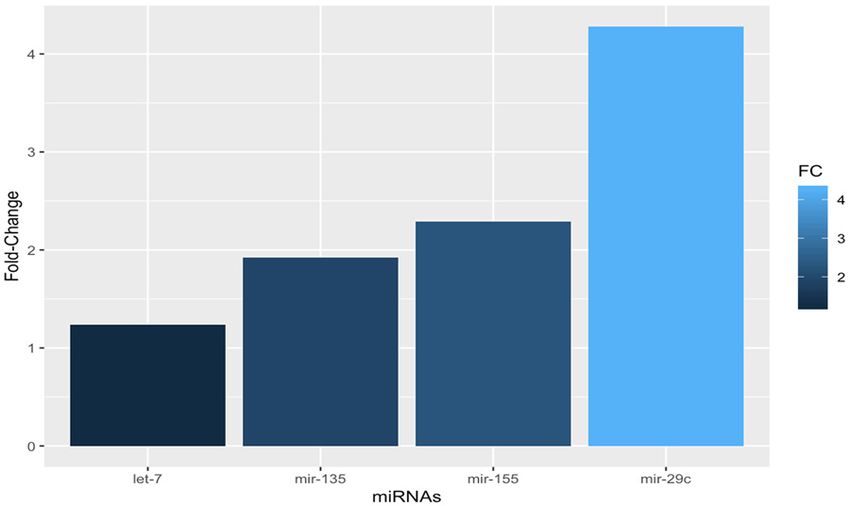
Effects of alkaline water intake on gastritis and miRNA expression

Table 1. Composition and chemical char-                 In addition, a study showed the ability of water
acteristics of the alkaline water used in the           with a pH of 8.8 to inactivate pepsin. This irre-
study                                                   versible inactivation of pepsin in this alkaline
Parameters                             Results          medium can generate a possible benefit of an
                                                        alkalizing diet for the treatment of acid reflux
Electric Conductivity             243.40 µS/cm
                                                        because this enzyme is related to protein lysis
pH                                      10.01
                                                        and is activated when pepsinogen is in acidic
Total Alkalinity                34.19 mg/L CaCO3        medium [18].
Alkalinity to Hydroxides        < 0.5 mg/L CaCO3
Alkalinity to Carbonates        25.87 mg/L CaCO3        Thus, the objective of this study was to evalu-
Alkalinity to Bicarbonates      8.32 mg/L CaCO3         ate the expression of the miRNAs miR-29c,
Ammoniac Nitrogen                 0.14 mg/L NH3
                                                        miR-7, miR-155, and miR-135b in the gastric
                                                        tissue of patients with gastritis before and af-
Nitrate                             7.38 mg/L N
                                                        ter the consumption of alkaline water to under-
Nitrite                            < 0.10 mg/L N        stand how changes in consumption may affect
Calcium                           2.57 mg/L Ca2+        the modulation of the expression of these
Magnesium                        13.92 mg/L Mg2+        microRNAs as well as the clinicopathological
Sodium                           21.80 mg/L Na2+        characteristics of the patients.
Potassium                          4.70 mg/L K+
                                                        Materials and methods
Iron                             < 0.05 mg/L Fe3+
Carbonate                        15.52 mg/L CO32-       A total of 50 individuals, positive and negative
Bicarbonate                     10.15 mg/L HCO3-        for Helicobacter pylori, were recruited by non-
Sulfate                           4.68 mg/L SO42-       probabilistic and convenience sampling. This
Chloride                          33.76 mg/L Cl-        study was approved by a research ethics com-
Certificate of analysis No. 0456/2017 provided by the   mittee under protocol 2.033.180.
filter manufacturer.
                                                        Individuals older than 35 years, diagnosed with
                                                        gastritis by anatomopathological examination,
carcinogenesis and progression of neoplasms,            were included. The patients excluded were th-
including GC, and may also be useful as pre-            ose with a prior or familial history of GC, those
dictors of drug resistance and as prognostic            who were using alkaline water and/or antacids,
factors [8-10]. The epigenetic targets chosen           those who had endoscopic criteria for immedi-
in the present study (miR-29c, miR-7, miR-155,          ate eradication of H. pylori (past and present
miR-135b) are dysregulated in GC and altered            gastric and/or duodenal ulcers with or without
in tissues with inflammation, as occurs in gas-         complications), or those who had gastric MALT
tritis, and are thus potential biomarkers for the       lymphoma or atrophic gastritis.
carcinogenesis of GC [10-13].
                                                        The individuals recruited routinely used water
In the North region of Brazil, the waters sold          with a pH lower than 5.0 and began to consume
have a low pH, ranging from 3.0 to 5.0, and are         water with a pH of 8.5 to 10.0 voluntarily for a
therefore outside the standards required by             median of 5 months. These filters provided pre-
the World Health Organization and the Brazi-            treated, filtered, purified, ionized and alkaline
lian Ministry of Health [14, 15]. In addition, in       water with negative potential renal acid load
this region, there is also a high incidence of          (PRAL), obtained using a water ionizer. Table 1
gastritis and GC, above the national average            shows the composition of the alkaline water
                                                        provided to the participants.
[3]. Thus, water pH may be a contributing fac-
tor for the occurrence of these gastric issues,         After this period, all the individuals underwent
and therefore, its evaluation is extremely im-          a new esophagogastroduodenoscopy (EGD) du-
portant for understanding the high incidence            ring which the anatomopathological parame-
rates of this cancer in the region. Mousa [16].         ters and the proposed outcomes were again
Furthermore, it was observed that electrolyzed          evaluated.
alkaline water has anti-inflammatory properties
because of its ability to reduce the expressi-          For all participants, miR-155, miR-7, miR-29c
on of TNF-α in the gastric mucosa Naito [17].           and miR-135b expression was evaluated before

4044                                                           Am J Transl Res 2020;12(7):4043-4050
Effects of alkaline water intake on gastritis and miRNA expression
Table 2. Descriptive analysis of the qualita- Use of controlled medication
tive variables for patients with gastritis before No 16 57.14
the consumption of alkaline water in Belém Yes 9 32.14
do Pará
Did not answer 3 10.72
Variable N % Prior treatment for gastritis
Sex Never received 11 39.29
Male 5 17.86 Received 13 46.43
Female 23 82.14 Did not answer 4 14.28
H. pylori 1st test
Negative 14 50.00
Positive 14 50.00 and after the study period (median of 5 mon-
Sydney classification 1st test ths). Total RNA extraction was performed us-
Mild 2 7.14 ing an mirVana miRNA isolation kit (Ambion,
Texas, USA) according to the manufacturer’s
Moderate 26 92.86
instructions. RNA concentrations were deter-
Amount of liquid ingested per day
mined using a SpectraMax i3 spectrophoto-
1 liter or less 7 25.00 meter (Molecular Devices, Sunnyvale, Califor-
1 liter-1.5 liters 10 35.71 nia, USA) with a concentration of 10 ng/µL as
2 liters or more 8 28.57 the standard, and RNA integrity was visualized
Did not answer 3 10.72 in an agarose gel.
Type of water ingested per day
Filtered public water 6 21.43
To detect miRNA expression, reverse transcrip-
tion was performed using total RNA samples
Carbonated mineral water 1 3.57
(TaqMan MicroRNA Reverse Transcription Kit,
Noncarbonated mineral water 14 50.00 Life Technologies, Foster City, CA), followed by
Filtered water from artesian well 4 14.28 real-time PCR with commercially available prim-
Did not answer 3 10.72 ers and probes (TaqMan MicroRNA Assays, Life
Alcohol consumption Technologies, Foster City, CA). The endogenous
No 11 39.28 miRNAs used for standardization were RNU6B,
Yes 14 50.00 miR-1403p and miR-101, which were select-
Did not answer 3 10.72 ed after analysis of data available in the litera-
Frequency of alcohol consumption ture [19-21]. After analyzing the results in
NormFinder software [22], RNU6B and miR-
Once a week 1 3.57
1403p were the endogens selected to calcu-
Weekend 13 46.43
late differential expression.
Did not answer 14 50.00
Volume of alcohol (weekly) All assays followed the manufacturer’s recom-
Up to 500 milliliters 11 39.29 mendations and were performed in quadrupli-
Up to 2 liters 2 7.14 cate, according to the following thermocycling
Did not answer 15 53.57 program (95°C for 10’ and 40 cycles of 95°C
for 15” and 60°C for 1’). Gene expression was
Type of alcohol
evaluated using the comparative CT method
Beer 8 28.57
(-2ΔΔCT).
Wine and spirits 6 21.43
Did not answer 14 50.00 Identification of H. pylori bacteria was per-
Physical activity formed both by histological analysis and by
No 7 25.01 real-time PCR through amplification of the bac-
Yes, sometimes 9 32.14 terial 16SRNA region [23, 24]. The sample was
Yes, regularly 8 28.57
considered infected when positive in any of the
methodologies.
Did not answer 4 14.28
Smoking For the statistical analysis, clinical-epidemio-
No 28 100.00 logical qualitative variables are presented as
Did not answer 0 0.00 absolute and relative frequencies. The quanti-
4045 Am J Transl Res 2020;12(7):4043-4050Effects of alkaline water intake on gastritis and miRNA expression
Table 3. Descriptive analysis of the qualitative vari- The median age was 44.5 years (IQR
ables of patients with gastritis after the consumption 38.75-52.25). The results showed endo-
of alkaline water in Belém do Pará scopic improvement of gastritiS (P =
Variable N % 0.024) because 12 patients (43%) diag-
Sydney classification 2nd test (return) nosed with moderate gastritis in the first
Mild 12 42.30 EGD presented mild gastritis (Table 4) af-
Moderate 16 57.70
ter the consumption of alkaline water. In
addition, there were no patients with wors-
H. Pylori 2nd test (return)
ening gastritis.
Negative 11 39.28
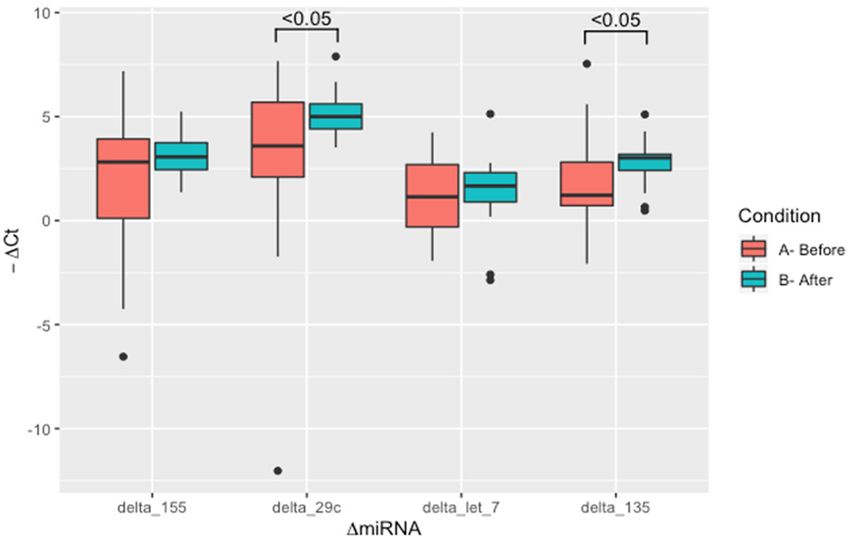
Positive 17 60.71 Figure 1 shows a box plot comparing the
expression levels of miR-135b (P = 0.039)
Table 4. Evaluation of the Sidney classification be- and miR-29c (P = 0.039) before and after
tween endoscopies in patients with gastritis in Belém the median period of 5 months of alkaline
do Pará water consumption. The expression levels
were higher after the consumption of alka-
Sydney classification
2nd EGD (return) line water. There was no significant in-
Sydney classification 1 EGD
st
P* crease in miR-155 and miR-7 expression
Mild Moderate
N (%) N (%) (Figure 1).
Mild 2 (7%) 0 0.024
The FoldChange analysis of the differenc-
Moderate 12 (43%) 14 (50%)
es between 2-ΔΔCT, before and after the con-
*Fisher’s exact test.
sumption of alkaline water for a median of
5 months, of the target microRNAs show-
tative variable “age” (Shapiro-Wilks < 0.05) is ed values greater than 1 for every miRNA
presented as the median and 25%-75% percen- (Figure 2).
tiles. Fisher’s exact test was used to assess the
correlation between categorical variables. Discussion
The difference in microRNA expression between Currently, there is a wide discussion about the
the 2 groups (before and after alkaline water effects of the pH of drinking water and its con-
intake) was determined by the paired t-test for sequences on human health, such as its rela-
all samples (Stata 11.0 and R-studio). Two- tionship with inflammation and cancer [25].
tailed P < 0.05 was considered statistically However, there is little scientific evidence sup-
significant. porting this association.
Results In the present study, we found a significant
increase in the expression of 2 microRNAs,
A total of 50 individuals, positive and negative miR-29c and miR-135b, after the consumption
for H. pylori, were recruited between May 2017 of alkaline water for 5 consecutive months, as
and February 2018 after confirmation of gastri- well as an improvement in gastritis as evaluat-
tis by EGD to evaluate the effects of changing ed by a second EGD; i.e., 42% of the patients
the type of water consumed from water with an who had moderate gastritis in the first EGD
acidic pH (pH less than 5) to water with an alka- had mild gastritis in the second EGD, accord-
line pH (pH between 8.5 and 10). Of these, 28 ing to the Sydney classification system. It is
completed all steps of the study with the use of also worth noting that the patients did not
alkaline water for the period established and undergo pharmacological treatment for gastri-
then performed a new EGD. tis during the intervention period and were not
instructed to change their diet during the pe-
The absolute and relative frequencies of quali- riod.
tative variables for the data collected before
and after the consumption of alkaline water are Gastritis is considered a preneoplastic condi-
shown in Tables 2 and 3, respectively. tion, as it participates in gastric carcinogenesis
4046 Am J Transl Res 2020;12(7):4043-4050Effects of alkaline water intake on gastritis and miRNA expression
medications are associated
with an increased risk of the
development of premalignant
lesions (fundic gland polyps,
worsening of gastric atrophy
and metaplasia) and GC, par-
ticularly in individuals infected
with H. pylori, especially when
PPIs are used for over one year
[28-30]. The use of alkaline
water does not compare with
the mechanism of action of
PPIs because there is no inhi-
bition of acid secretion but,
rather, a reduction in exposu-
re to acidic substances of a
Figure 1. Expression of miRNAs miR-155, miR135, miR29c and miR7 be- mucosa that is damaged by
fore and after the consumption of alkaline water for a median of 5 months gastritis [30].
(first and second EGD).
miR-29c is commonly describ-
ed as a tumor suppressor be-
cause it inhibits the prolifera-
tion, invasion and migration
of malignant cells. Decreased
expression of this microRNA
has been reported in several
human malignancies, such as
pancreatic cancer [31], brea-
st cancer [32], prostate can-
cer [33], hepatocellular cancer
[34], nasopharyngeal cancer
[35] and GC [10, 36].
The miR-29c expression levels
were significantly decreased (P
< 0.001) in GC tissues com-
Figure 2. Fold change of the differences between the 2-ΔΔCT for the target mi-
pared to normal tissue [37]. In
cro-RNAs before and after the consumption of alkaline water for 5 months.
addition, it has been demon-
strated by in vitro and in vivo
in the early stages of the process, followed by assays that the increased expression of this
gastric atrophy, ulcerations, intestinal metapla- miRNA suppressed tumor growth through the
sia, dysplasia and, finally, malignant neoplasia downregulation of ITGB1 (β1 integrin, also
[4, 26, 27]. Thus, the improvement in gastritis known as CD29) [37].
observed in the present study with the use of
alkaline water may represent a protective fac- As previously described, miR-29c expression
tor of inflammation in the gastric mucosa. Thus, levels gradually decrease as gastric carcino-
this simple lifestyle change may act positively genesis progresses at different stages of mu-
in the early stages of the carcinogenesis cas- cosal aggression, demonstrating a direct cor-
cade of GC. relation between the loss of mir-29c expressi-
on and the tumorigenesis of this cancer [10].
Proton pump inhibitors (PPIs) are among the Thus, in our study, the increased expression of
most commonly prescribed drugs in the world; this miRNA after the consumption of alkaline
however, although they are generally consid- water may suggest that its frequent use may
ered safe, they have several adverse effects function as a modifying factor of the epigene-
associated with prolonged use [28, 29]. These tic environment of these tissues, providing an
4047 Am J Transl Res 2020;12(7):4043-4050Effects of alkaline water intake on gastritis and miRNA expression
environment with lower chances of carcinogen- Acknowledgements
ic progression. Transfection of the miR-7 pre-
cursor into AZ521 and Kato III GC cells signifi- We acknowledge University of Pará, the com-
cantly inhibited cell proliferation capacity [13]. pany Acqualive, and Oncological Clinic of Brazil
for technical support, CAPES (Coordenação de
miR-135b has been described in the literature Aperfeiçoamento de Pessoal de Nível Superior)
as an oncomiR in most tumor tissues, such as for fellowship support and doctor Otávio da
colon cancer [38], lung cancer [39], oral can- Cunha Bembom, who performed endoscopies
cer [40] and breast cancer [41], but few studi- (in memoriam).
es have evaluated its role in gastric tissue.
Vidal, et al. [10] observed that miR-135b ex- Disclosure of conflict of interest
pression was increased in gastric lesions when
compared with normal gastric mucosa but was None.
decreased when gastritis tissue was compar-
Address correspondence to: Juliana R Chaves, Post
ed with cancer tissue; thus, its role in the vari-
Graduation in Oncology and Medical Sciences-
ous stages of gastric carcinogenesis remains
Federal University of Pará (UFPA), Brazil. E-mail: juli-
uncertain. anaramoschaves@gmail.com
miR-135b has been described as a tumor sup- References
pressor in osteosarcoma, and the MYC gene,
which is related to the progression of several [1] Bernard W. Stewart and Christopher P. Wild.
tumors, is its direct target [42]. That role is si- World cancer report, ISBN 2014; 978-92-832-
milar to that observed for prostate cancer, for 0429-9.
which Wang, et al. [43] observed a decrease [2] Organization WH. 2019.
in miR-135b expression in prostate cancer tis- [3] INCA. Estomago Brasil, 2018 [cited 2018
sues compared to normal tissues, acting as a 02/09/2018]. Available from: http://www2.
tumor suppressor by inactivating the STAT6 inca.gov.br/wps/wcm/connect/tiposdecan-
pathway, known as oncogenic in several tu- cer/site/home/estomago/definicao.
[4] Cotran R, Kumar V and Collins T. Red cells and
mors. Thus, as the signaling pathways and
bleeding disorders. Robbins pathologic basis
activity of this miRNA are not yet certain, we
of disease. 6th edition. Philadelphia: WB Saun-
cannot affirm or suggest protective or delete- ders Company; 1999. pp. 638-640.
rious effects generated by increased miR-135b [5] Tsugane S and Sasazuki S. Diet and the risk of
expression after alkaline water consumption. gastric cancer: review of epidemiological evi-
dence. Gastric Cancer 2007; 10: 75-83.
Conclusion [6] Resende ALDS, Mattos IE and Koifman S. Die-
ta e câncer gástrico: aspectos históricos asso-
The present study evaluated the effect of a ciados ao padrão de consumo alimentar no
patient lifestyle intervention on the first abnor- Estado do Pará. Rev Nutr 2006; 511-519.
mal stage of the gastric carcinogenesis cas- [7] Kiec-Wilk B, Razny U, Mathers J and Dembins-
cade, gastritis, and it was observed that the ka-Kiec A. DNA methylation, induced by beta-
pH change in the water ingested for 5 months carotene and arachidonic acid, plays a regula-
was able to improve gastritis according to the tory role in the pro-angiogenic VEGF-receptor
Sidney classification system, suggesting that (KDR) gene expression in endothelial cells. J
this lifestyle change represented a clinical ben- Physiol Pharmacol 2009; 60: 49-53.
[8] Kanherkar RR, Bhatia-Dey N and Csoka AB.
efit in patients with gastritis. In addition, higher
Epigenetics across the human lifespan. Front
expression of miR-135b (P = 0.039) and miR-
Cell Dev Biol 2014; 2: 49.
29c (P = 0.039) was observed after the con- [9] Krützfeldt J, Poy MN and Stoffel M. Strategies
sumption of alkaline water for 5 months. to determine the biological function of microR-
NAs. Nat Genet 2006; 38: S14-S19.
Thus, the present study generates preliminary [10] Vidal AF, Cruz AM, Magalhães L, Pereira AL,
hypotheses and provides initial information Anaissi AK, Alves NC, Albuquerque PJ, Burbano
about the ideal pH for regularly consumed bev- RM, Demachki S and Ribeiro-dos-Santos Â.
erages, such as water, and can serve as a bas- hsa-miR-29c and hsa-miR-135b differential
is for larger, randomized studies. expression as potential biomarker of gastric
4048 Am J Transl Res 2020;12(7):4043-4050Effects of alkaline water intake on gastritis and miRNA expression
carcinogenesis. World J Gastroenterol 2016; [23] Ho SA, Hoyle JA, Lewis FA, Secker A, Cross D,
22: 2060-70. Mapstone N, Dixon M, Wyatt J, Tompkins D and
[11] Xiao B, Liu Z, Li BS, Tang B, Li W, Guo G, Shi Y, Taylor G. Direct polymerase chain reaction test
Wang F, Wu Y and Tong WD. Induction of mi- for detection of Helicobacter pylori in humans
croRNA-155 during Helicobacter pylori infec- and animals. J Clin Microbiol 1991; 29: 2543-
tion and its negative regulatory role in the in- 2549.
flammatory response. J Infect Dis 2009; 200: [24] Saeidi E and Sheikhshahrokh A. VacA geno-
916-925. type status of Helicobacter pylori isolated from
[12] Zabaglia LM. Expressão de MicroRNAs e dos foods with animal origin. Biomed Res Int 2016;
genes da interleucina 2 e fator de necrose tu- 2016: 8701067.
moral e suas correlações com o H. pylori. [25] Fenton TR and Huang T. Systematic review of
2017. the association between dietary acid load, al-
[13] Kong D, Piao YS, Yamashita S, Oshima H, Ogu- kaline water and cancer. BMJ Open 2016; 6:
ma K, Fushida S, Fujimura T, Minamoto T, Seno e010438.
H and Yamada Y. Inflammation-induced re- [26] Kishino M, Nakamura S and Shiratori K. Clini-
pression of tumor suppressor miR-7 in gastric cal and endoscopic features of undifferentiat-
tumor cells. Oncogene 2012; 31: 3949-60. ed gastric cancer in patients with severe atro-
[14] Edition F. Guidelines for drinking-water quality. phic gastritis. Intern Med 2016; 55: 857-862.
WHO Chronicle 2011; 38: 104-108. [27] Yakirevich E and Resnick MB. Pathology of gas-
[15] EdSF R. Águas envasadas: características físi- tric cancer and its precursor lesions. Gastroen-
co-química, processo de produção E comercia- terol Clin North Am 2013; 42: 261-284.
lização no nordeste Paraense. 2012. [28] Brusselaers N, Wahlin K, Engstrand L and La-
[16] Mousa HA. Health effects of alkaline diet and gergren J. Maintenance therapy with proton
water, reduction of digestive-tract bacterial pump inhibitors and risk of gastric cancer: a
load, and earthing. Altern Ther Health Med nationwide population-based cohort study in
2016; 22 Suppl 1: 24-33. Sweden. BMJ Open 2017; 7: e017739.
[17] Naito Y, Takagi T, Uchiyama K, Tomatsuri N, [29] Cheung KS, Chan EW, Wong AY, Chen L, Wong
Matsuyama K, Fujii T, Yagi N, Yoshida N and IC and Leung WK. Long-term proton pump in-
Yoshikawa T. Chronic administration with elec- hibitors and risk of gastric cancer development
trolyzed alkaline water inhibits aspirin-induced after treatment for Helicobacter pylori: a popu-
gastric mucosal injury in rats through the inhi- lation-based study. Gut 2018; 67: 28-35.
bition of tumor necrosis factor-α expression. J [30] Tran-Duy A, Spaetgens B, Hoes AW, de Wit NJ
Clin Biochem Nutr 2002; 32: 69-81. and Stehouwer CD. Use of proton pump inhibi-
[18] Koufman JA and Johnston N. Potential benefits tors and risks of fundic gland polyps and gas-
of pH 8.8 alkaline drinking water as an adjunct tric cancer: systematic review and meta-an-
in the treatment of reflux disease. Ann Otol alysis. Clin Gastroenterol Hepatol 2016; 14:
Rhinol Laryngol 2012; 121: 431-434. 1706-1719, e5.
[19] Ribeiro-dos-Santos Â, Khayat AS, Silva A, Alen- [31] Lu Y, Hu J, Sun W, Li S, Deng S and Li M. MiR-
car DO, Lobato J, Luz L, Pinheiro DG, Varuzza L, 29c inhibits cell growth, invasion, and migra-
Assumpção M, Assumpção P, Santos S, tion of pancreatic cancer by targeting ITGB1.
Zanette DL, Silva WA Jr, Burbano R and Darnet Onco Targets Ther 2016; 9: 99-109.
S. Ultra-deep sequencing reveals the microR- [32] Li W, Yi J, Zheng X, Liu S, Fu W, Ren L, Li L,
NA expression pattern of the human stomach. Hoon DS, Wang J and Du G. miR-29c plays a
PLoS One 2010; 5: e13205. suppressive role in breast cancer by targeting
[20] Wu X, Tan X and Fu SW. May circulating microR- the TIMP3/STAT1/FOXO1 pathway. �����������
Clin Epige-
NAs be gastric cancer diagnostic biomarkers? netics 2018; 10: 64.
J Cancer 2015; 6: 1206-13. [33] Li J, Fu F, Wan X, Huang S, Wu D and Li Y. Up-
[21] Anauate AC, Leal MF, Wisnieski F, Santos LC, regulated miR-29c inhibits cell proliferation
Gigek CO, Chen ES, Geraldis JC, Calcagno DQ, and glycolysis by inhibiting SLC2A3 expression
Assumpção PP and Demachki S. Identification in prostate cancer. Gene 2018; 665: 26-34.
of suitable reference genes for miRNA expres- [34] Dong C, Wang Y, Du F, Ding W and Hu S.
sion normalization in gastric cancer. Gene Low miR-29c expression is a prognostic mark-
2017; 621: 59-68. er in hepatocellular carcinoma. Genet Mol Res
[22] Andersen CL, Jensen JL and Ørntoft TF. Nor- 2016; 15.
malization of real-time quantitative reverse [35] Niu M, Gao D, Wen Q, Wei P, Pan S, Shuai C,
transcription-PCR data: a model-based vari- Ma H, Xiang J, Li Z and Fan S. MiR-29c regu-
ance estimation approach to identify genes lates the expression of miR-34c and miR-449a
suited for normalization, applied to bladder by targeting DNA methyltransferase 3a and 3b
and colon cancer data sets. Cancer Res 2004; in nasopharyngeal carcinoma. BMC Cancer
64: 5245-5250. 2016; 16: 218.
4049 Am J Transl Res 2020;12(7):4043-4050Effects of alkaline water intake on gastritis and miRNA expression
[36] Matsuo M, Nakada C, Tsukamoto Y, Noguchi T, [40] Lopes CB, Magalhães LL, Teófilo CR, Alves
Uchida T, Hijiya N, Matsuura K and Moriyama APN, Montenegro RC, Negrini M and Ribeiro-
M. MiR-29c is downregulated in gastric carci- dos-Santos Â. Differential expression of hsa-
nomas and regulates cell proliferation by tar- miR-221, hsa-miR-21, hsa-miR-135b, and hsa-
geting RCC2. Mol Cancer 2013; 12: 15. miR-29c suggests a field effect in oral cancer.
[37] Han TS, Hur K, Xu G, Choi B, Okugawa Y, Toi- BMC Cancer 2018; 18: 721.
yama Y, Oshima H, Oshima M, Lee HJ, Kim VN, [41] Arigoni M, Barutello G, Riccardo F, Ercole E,
Chang AN, Goel A and Yang HK. MicroRNA-29c Cantarella D, Orso F, Conti L, Lanzardo S, Tav-
mediates initiation of gastric carcinogenesis by erna D and Merighi I. miR-135b coordinates
directly targeting ITGB1. Gut 2015; 64: 203- progression of ErbB2-driven mammary carci-
214. nomas through suppression of MID1 and
[38] Valeri N, Braconi C, Gasparini P, Murgia C, MTCH2. Am J Pathol 2013; 182: 2058-2070.
Lampis A, Paulus-Hock V, Hart JR, Ueno L, [42] Liu Z, Zhang G, Li J, Liu J and Lv P. The tumor-
Grivennikov SI and Lovat F. MicroRNA-135b suppressive microRNA-135b targets c-myc in
promotes cancer progression by acting as a osteoscarcoma. PLoS One 2014; 9: e102621.
downstream effector of oncogenic pathways in [43] Wang N, Tao L, Zhong H, Zhao S, Yu Y, Yu B,
colon cancer. Cancer Cell 2014; 25: 469-483. Chen X, Gao J and Wang R. miR‑135b inhibits
[39] Li H, Xie S, Liu M, Chen Z, Liu X, Wang L, Li D tumour metastasis in prostate cancer by tar-
and Zhou Y. The clinical significance of down- geting STAT6. Oncol Lett 2016; 11: 543-550.
regulation of mir-124-3p, mir-146a-5p, mir-
155-5p and mir-335-5p in gastric cancer tu-
morigenesis. Int J Oncol 2014; 45: 197-208.
4050 Am J Transl Res 2020;12(7):4043-4050You can also read


