Regional state of hygiene - West Africa - WaterAid West Africa February 2021 - WASH Matters
←
→
Page content transcription
If your browser does not render page correctly, please read the page content below
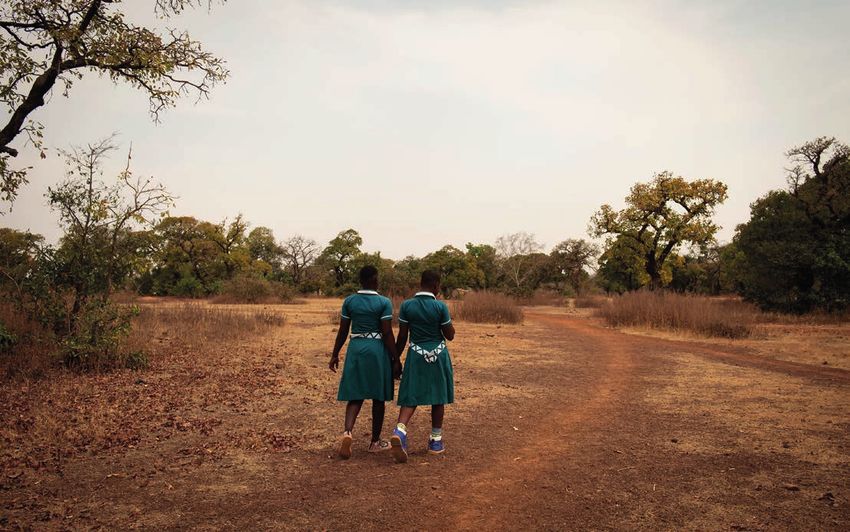
WaterAid/Guilhem Alandry

 Regional state
 of hygiene –
 West Africa
                           WaterAid/Guilhem Alandry

                             WaterAid West Africa
                             February 2021

WaterAid/Guilhem Alandry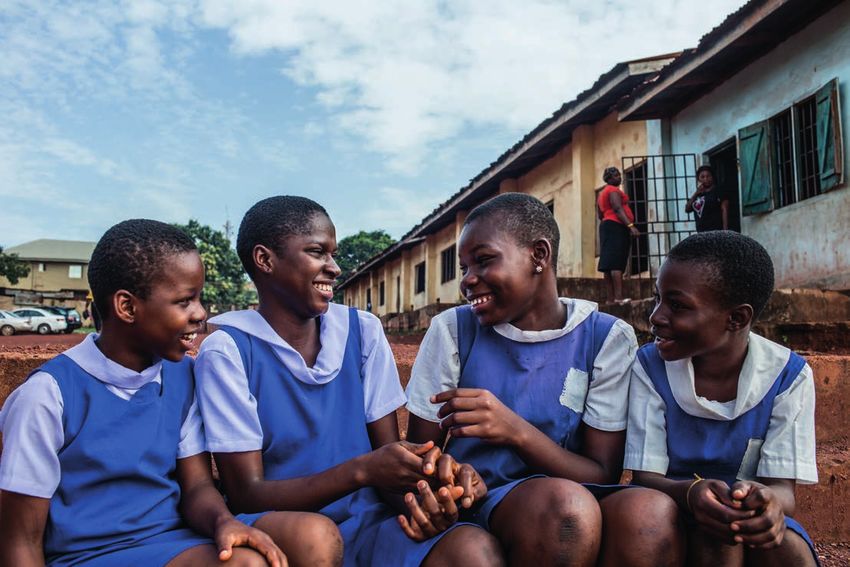
Introduction

  Good hygiene practices are among the most effective                             Sustainable Development
  ways to prevent the spread of common diseases –                                 Goal (SDG) 6.2:
  protecting lives and livelihoods, and saving billions of
  dollars in associated costs along the way. However, across                      ‘By 2030, achieve
  West Africa, approaches to sustainable hygiene adoption                         access to adequate and
  are often weak or failing, leaving millions of people                           equitable sanitation
  entrenched in unsafe hygiene behaviours and without                             and hygiene for all and
  access to lifesaving water and sanitation infrastructure.                       end open defecation,
                                                                                  paying special attention
  Emergency measures are crucial in times of crisis,                              to the needs of women
  but the process of changing and sustaining good                                 and girls and those in
  hygiene – both the facilities and hygiene behaviours –                          vulnerable situations.’
  requires consistent government prioritisation,                                  At the current rate of progress,
  substantial investment and the mass scale-up of                                 this will not be achieved.
  innovative approaches.

WaterAid/Eliza Powell

    Mary (R), 20, washes
  her hand using the tippy
  tap water point at Kayoro
  Junior High School, Kayoro
  Community, Kassena
  Nankana West District,             WaterAid/Aisha Augie-Kuta

  Upper East Region, Ghana.
  February 2019.                                                    A teacher conducts a hygiene class at a school
                                                                 in Norandé, Tillabéri, Niger. February 2018.

2 / Regional state of hygiene – West Africa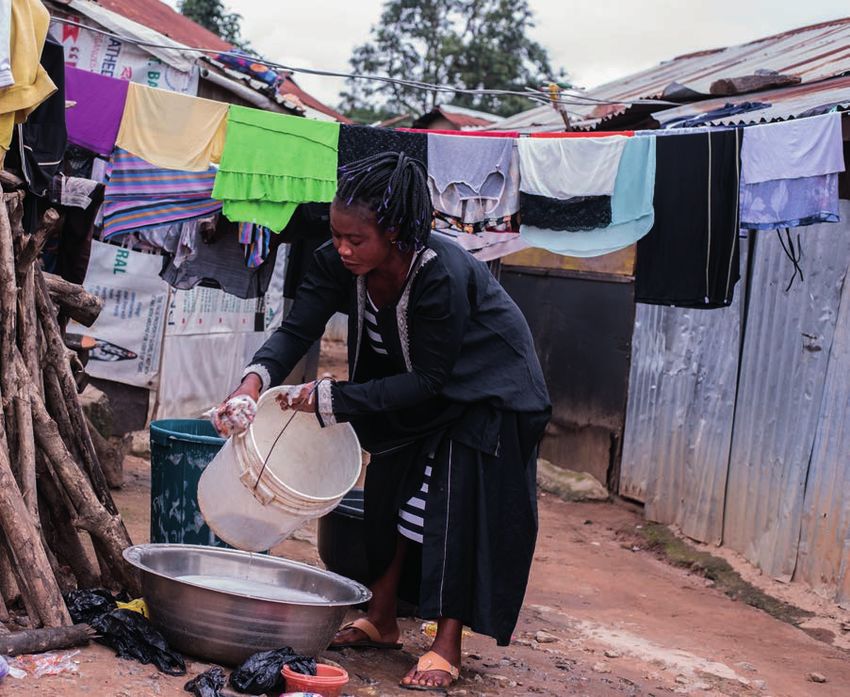
Lilian, 13, student outside the girls
toilets at Trans Ekulu River Primary School,
Trans Ekulu River Community, Enugu
State, Nigeria. October 2018.

We have been encouraging handwashing with
soap as part of our hygiene promotion work
for decades. The West Africa Regional Team,
with the support of the researchers – Professor
Issa Wone, Associate University Professor,
Consultant in Public Health, and Dr. Fatou Kiné
Sylla, PhD, Consultant in Epidemiology and
Nutrition – undertook this research study to
enhance our understanding of the current state
of hygiene across the region.

Whilst handwashing remains a top priority
                                                  WaterAid/Tom Saater
in hygiene behaviour to help prevent the
spread of disease, we researched five key
cross-cutting aspects of hygiene: handwashing,     What were the key findings?
food hygiene, menstrual hygiene, open
defecation and excreta disposal, to                     The proportion of people with access to
understand the interconnectedness between               adequate handwashing facilities in
these important hygiene themes and to                   West Africa remains very low, rarely reaching
analyse some of the shared barriers and                 40% of the population (in Ghana, Mauritania,
recommendations for improvement.                        Nigeria and Mali).
                                                        • The situation is worse in Liberia (just
Specifically, the objectives of this research             1%), The Gambia (8%) and Togo (10%).
were to provide accurate and in-depth
information on:                                         There is a low political commitment to
                                                        support hygiene interventions.
1) The institutional arrangements in
   each country for hygiene promotion and               • Policies are often obsolete and/or
   the provision of hygiene services.                     poorly implemented, incorporating
                                                          guidelines but remaining very general
2) The availability and implementation of                 and not addressing the specific issues
   national hygiene and sanitation policies,              currently at stake.
   strategies and guidelines.
                                                        Financing for hygiene programmes is
3) Bottlenecks in key policies and                      very low, with states contributing low levels
   programmes for effective prioritisation              of funding.
   of hygiene issues at national and
   regional levels.                                     • However, there isn’t enough accurate
                                                          data on funding – and what we do have is
4) Coordination mechanisms between                        often incomplete.
   ministerial departments in charge of
   hygiene and sanitation, as well as existing          Hygiene decision-making is coordinated
   financing mechanisms.                                differently across the region, through federal,
                                                        centralised, open and informal models.
5) Motivation factors for governments to
                                                        • These varying models make a substantial
   invest in hygiene and for individuals
                                                          difference in the effectiveness of hygiene
   to better understand what can change
                                                          interventions.
   their practices and maintain or reinforce
   good practices.

                                                                   Regional state of hygiene – West Africa   / 3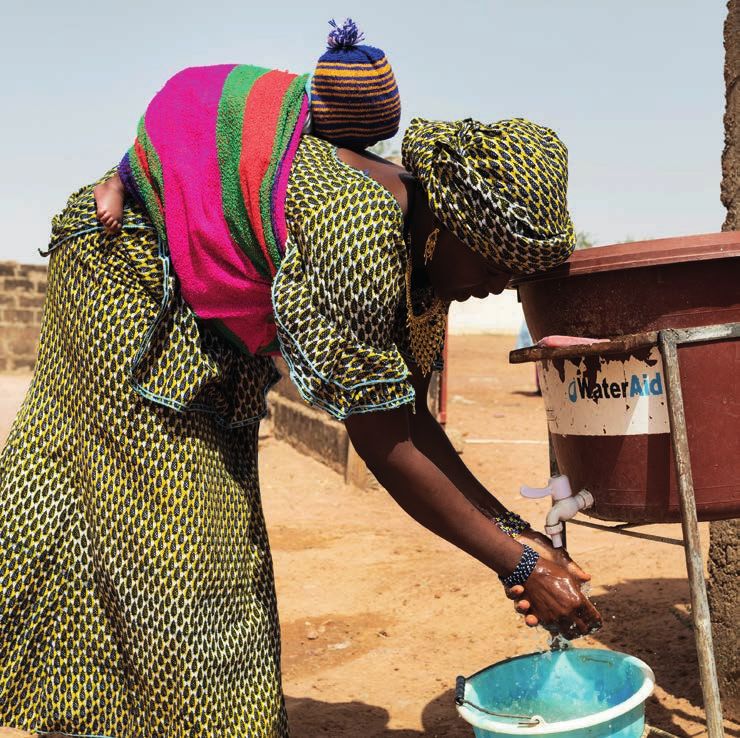
Call to action

 The importance of good hygiene is                 Specifically, based on this report’s findings,
 clearer now more than ever. More than             we call for governments in West Africa to:
 a year into the COVID-19 pandemic,
                                                   1. Urgently and significantly increase
 handwashing with soap remains the first           their investment in hygiene infrastructure
 line of defence against the virus and is          and promotion.
 at the core of public health advice from          Governments must increase their allocation
 the World Health Organization (WHO),1             for hygiene through developing and
 alongside other public health measures.           implementing costed plans for hygiene scale-
 This crisis must be the turning point for         up. This must be supported by increased
 hygiene prioritisation and investment.            investment by international development
                                                   banks, and international multilateral and
                                                   bilateral organisations.

                                                   2. Increase political commitment to
    Felecia, 36, is a mother of three living in    prioritise and implement hygiene policies.
 Guzape village in Asokoro Abuja, Nigeria, where   In many countries, plans and policies are
 lack of toilets are causing untold hardships to   lacking entirely. Even where they exist,
 women and girls. September 2020.                  implementation and monitoring is weak.
                                                   Governments must make and implement
                                                   political commitments to accelerated scale-up
                                                   to increased hygiene services and promotion,
                                                   along with documenting best practices, and
                                                   upholding standards and guidelines.

                                                   3. Scale-up sustainable and inclusive water
                                                   supply and sanitation provision.
                                                   Governments must ensure sufficient quality
                                                   and quantity of water for good hygiene
                                                   practices – settings including households,
                                                   healthcare facilities, schools, and other
                                                   institutions – as a fundamental component
                                                   of realising improved hygiene and to support
                                                   communities’ overall health and resilience.

                                                   4. Stronger monitoring and accountability
                                                   processes to ensure that hygiene policies are:
                                                     a) Clearly prioritised;
                                                     b) Implemented effectively and sustainably;
                                                     c) Supported by clear national
                                                        investment plans.

                                                   5. More efficient sector coordination
                                                   mechanisms, including all key stakeholders
                                                   and encouraging greater innovation.
WaterAid/Nelson Owoicho

4 / Regional state of hygiene – West Africa
Methodology

                                                                                                 WaterAid/Nelson Owoicho

 The study was conducted between
 March and September 2020, through
 a mixture of qualitative and
 quantitative research. The quantitative
 research came from sources including
 the Office for National Statistics,
 the World Bank World Development
 Indicators and the WHO/UNICEF Joint
 Monitoring Programme (JMP).

 To develop appropriate tools for external
 questionnaires and engagement, the Global
 Senior WASH Manager and the Regional
 Director of WaterAid in West Africa were
 interviewed alongside representatives from
 WaterAid offices in the region (Sierra Leone,
 Niger, Ghana, Nigeria, Mali, Burkina Faso and
 Liberia). These meetings helped to inform:
       Four questionnaires addressed to various
       stakeholders:                                                                                  Juliette helping her son, Herman, wash
                                                                                                   his hands at their home in the informal
       1) Heads of regional organisations                                                          settlement of Zongo in Burkina Faso’s capital,
          (the West Africa Health Organization                                                     Ouagadougou. February 2016.
          (WAHO), WHO-Afro (the Regional Office
          for Africa) and the Economic Community
          of West African States (ECOWAS));                                                        The questionnaires were sent via the Google Form
                                                                                                   application. The stakeholders’ appreciation of the
       2) National officials in charge of hygiene                                                  different themes under review were measured on a
          policies and strategies;                                                                 Lickert scale rated from 1 (not satisfactory at all) to
       3) Provincial/regional hygiene officials;                                                   5 (fully satisfactory).i The completed questionnaires
                                                                                                   were then uploaded to Excel for processing.
       4) Non-governmental organisation
          (NGO) officials working in the countries                                                 Due to COVID-19 regulations, the in-depth
          targeted by the study.                                                                   interviews were conducted and recorded via
                                                                                                   Zoom, and then later transcribed. Data analysis
       An in-depth interview guide developed                                                       was carried out according to a common grid for
       secondarily from a primary analysis of the                                                  documentary and interview data.
       questionnaires.
                                                                                                   Depending on the country, information from
                                                                                                   international databases was more or less
                                                                                                   available, complete or up-to-date.

i.   This enabled us to identify a satisfaction index specific to each country for each key variable, which reflects the cross-point of view of the various stakeholders on the issue.
     A satisfaction index of less than 60% is considered problematic.

                                                                                                                    Regional state of hygiene – West Africa                              / 5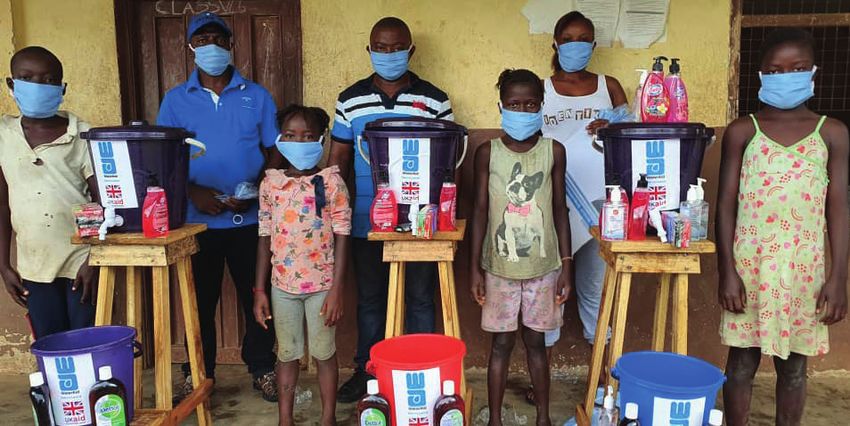
Key findings

 Access to handwashing facilities is exceptionally low

 Figure 1: People with access to basic handwashing facilities at home in West Africa in 2017 (JMP).

                                    50%                                                              KEY: Countries where WaterAid works
   % Basic hygiene access at home

                                                                                                     are in pink (where data is available).

                                    40%

                                    30%

                                    20%

                                    10%

                                    0%
                                            li     nia     ria    na     ga
                                                                            l      ire      a        so     nin     go     ia     ria
                                          Ma    ita     ige     ha     ne      ’Ivo     uine     a Fa     Be      To    amb    ibe
                                              ur       N       G      e       d        G        n                             L
                                            Ma
                                                                     S     te                rki                      eG
                                                                         CÔ               Bu                        Th

                                                                                    Country

   WaterAid Sierra Leone delivering hygiene and sanitation kits to
 three healthcare facilities and 15 communities in Pujehun district’ –
 as part of our COVID-19 response efforts, Sierra Leone. July 2020.

                                                                                                           Basic hygiene
                                                                                                           at home
                                                                                                           The availability of a
                                                                                                           handwashing
                                                                                                           facility on premises,
                                                                                                           with soap and water
                                                                                                           (JMP 2017). 2

WaterAid

6 / Regional state of hygiene – West Africa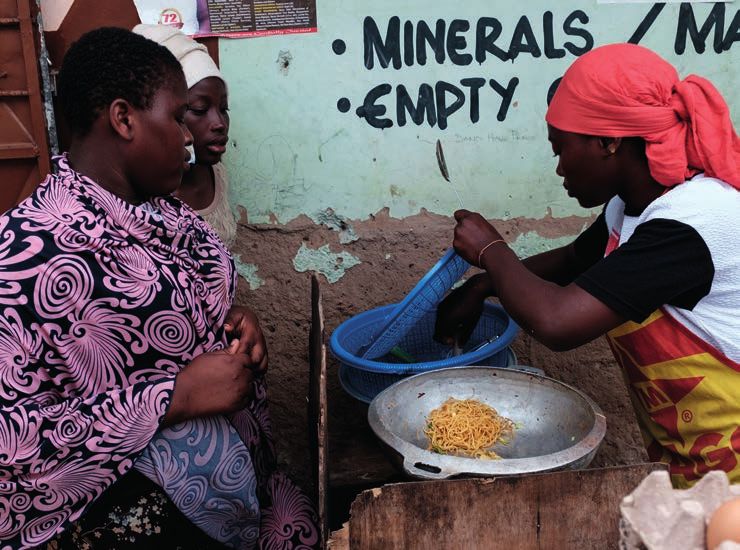
Key findings
The proportion of people with access to adequate handwashing facilities in West Africa remains
very low, rarely reaching 40% of the population (Ghana, Mauritania, Nigeria and Mali). The
situation is more serious in Liberia, where just 1% of the population have access to basic hygiene
(soap and clean water) at home. The contrast is noticeable in the countries where WaterAid
operates, with an above-average trend in Ghana, Nigeria and Mali, but particularly the poorest
areas in Liberia and Burkina Faso. A comparison (using available 2017 statistics) between countries
where WaterAid operates and others in the region is presented in the table below:

Table 1: A comparison                      WaterAid countries            Neighbouring countries
on the availability of
basic hygiene facilities in
                                                   % Basic hygiene                      % Basic hygiene
households in WaterAid              Country                             Country
                                                   access at home                       access at home
countries vs. other
countries in the region
countries (JMP).2                   Mali                 52           Mauritania                43

                                                                      Côte
Regional total: 35%                 Nigeria              42                                     19
                                                                      d'Ivoire
(where data is available)

                                    Ghana                41           Guinea                    17

                                    Senegal              24           Benin                     11

                                    Burkina
                                                         12           Togo                      10
                                    Faso

                                    Liberia              1            The Gambia                 8

Why is this important?
Handwashing with soap is one of the important and cost-effective
measures to prevent and control the spread of disease. Lack
of good hand hygiene practices enables disease transmission
and outbreaks, causing missed work days, preventing children
from attending school and increasing hospital admissions. It is
integrated and cross-cutting to all other areas of hygiene: open       “Hand washing with
defecation, food hygiene, menstrual hygiene and excreta disposal.      soap, especially at critical
                                                                       times, is one of the main
Amongst other benefits, the simple act of handwashing
                                                                       things we promote in our
with soap is linked with:
                                                                       hygiene activities, even
  Up to 30% reduction in risk of diarrhoea;                            though handwashing cuts
  Up to 20% reduction in all respiratory infections;3                  across all the domains of
                                                                       hygiene promotion.”
  Up to 50% reduction in pneumonia;4
  Substantial reduction in neonatal infections;5                       NGO Manager, Nigeria

  43% (fewer days) reduced school absenteeism.6

                                                              Regional state of hygiene – West Africa   / 7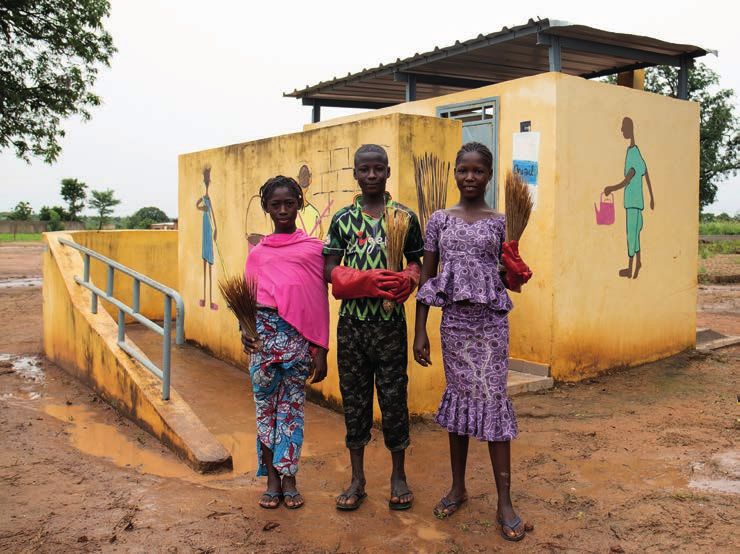
COVID-19 and handwashing                                     “The CLTS Guidelines and ODF Policy do not
                                                              stress on critical timing for washing hands
 Handwashing with soap is the first line of                   with soap and clean water.” NGO Hygiene
 defence against COVID-19. The current                        Manager, Liberia
 pandemic has highlighted on a global scale the
 critical role this intervention can play in reducing         “Students are not encouraged by their parent to
 and preventing the spread of disease. This has               practise at home.” Education Manager, Liberia
 resulted in some innovative responses to the
 crisis from governments and NGOs:                       Stakeholders are still dissatisfied with the
                                                         integration of this specific aspect into their
    “The promotion of handwashing has                    policies and strategies at country level,
    increased with the COVID-19 pandemic                 particularly in Burkina Faso, Liberia and
    thanks to the involvement of various actors          Sierra Leone. The practise of handwashing is
    and the use of several channels (radio, TV).”        constrained by inadequate equipment, irregular
    NGO Manager, Burkina Faso                            soap supply, unavailability of running water, and
                                                         a lack of monitoring of initiatives. Furthermore,
    “Effective hand washing is practised in
                                                         handwashing is routine in some public services,
    few communities where there are
                                                         but still insufficient within the community:
    interventions, and occasionally when
    there are outbreaks of diseases like Ebola,               “But for the COVID-19 measures, there are
    COVID-19.” NGO Manager, Nigeria                           no handwashing facilities at critical points.
                                                              Even during this COVID-19 pandemic, most of
 However, despite the recent increase in                      the handwashing points do not have soap.”
 awareness, certain limitations were identified               NGO Manager, Nigeria
 by the stakeholders relating to the
 dissemination of policies and programmes:               COVID-19 is a stark reminder that the simple
    “Hygiene promotion activities are only carried       act of handwashing with soap can save lives
    out on the World Water day, Toilet day, etc.         and prevent future pandemics. It has also shed
    days.” NGO Manager, Burkina Faso                     light on inequalities in access to basic services and
                                                         the barriers people face to practise this lifesaving
                                                         behaviour. With an unprecedented focus on
                                                         handwashing and high uptake in handwashing
 Case study: Mali                                        with soap, governments must take this
                                                         opportunity to change, and increase handwashing
 Aminata, 11, a student in the 5th grade and a           infrastructure and behaviours for an entire
 member of the hygiene club at the school in             generation – making hand hygiene possible for all.
 Dankoumani: “If there is no cleanliness at school,
 it has consequences on the students. They can             Aminata demonstrating handwashing to the
 get sick and it will disrupt their education.           children in her family in the village of Dankoumani,
 When the WASH project started in our school,            Bla district, Segou region, Mali. October 2019.
 they asked for volunteers to join the hygiene
 club and I accepted. I like everything that is
 clean, and I pay great attention to hygiene.
 That’s why I volunteered. Even if it’s more work
 it doesn’t bother me. It is very important to have
 cleanliness and hygiene.
 Even at home with my parents and brothers,
 I talk about hygiene. I tell them to wash their
 hands with soap after leaving the toilet, after
 playing in the dust, before eating. If you touch
 something that yourself know is bad, you have
 to wash your hands to avoid getting sick.”
                                                        WaterAid/Basile Ouedraogo

8 / Regional state of hygiene – West Africa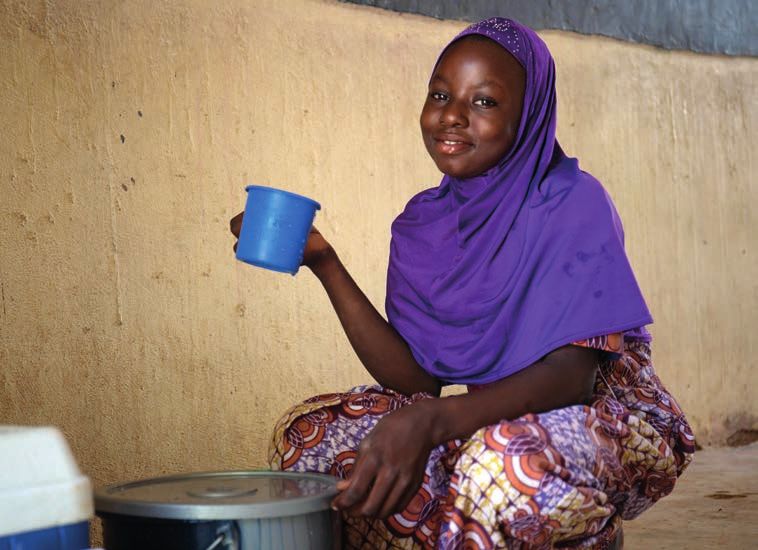
Lack of access to safe water is a central barrier

 Figure 2: People with access to basic drinking water at home in West Africa in 2017 (JMP).2

                                              90%                                                                                     KEY: Countries where WaterAid works
                                                                                                                                      are in pink (where data is available).
                                              80%
      % At least basic water access at home

                                              70%

                                              60%

                                              50%

                                              40%

                                              30%

                                              20%

                                              10%

                                              0%
                                                       e    a   al     li ia       ia  re   ia     ia   u in ogo nea one iger aso
                                                    erd Ghan neg    Ma amb iber ’Ivoi iger itan issa Ben     T     i     N na F
                                                 o V        Se         G     L       d   N aur       -B         Gu ra Le
                                              Cab                   he          Ôte       M     inea
                                                                                                                  i er     rki
                                                                   T           C              Gu                 S       Bu

                                                                                                              Country

                                                                                                                WaterAid/Basile Ouedraogo

                                                        Basic drinking
                                                        water access
                                                        Drinking waterii from
                                                        an improved source,
                                                        provided collection time
                                                        is not more than 30
                                                        minutes for a roundtrip
                                                        including queuing
                                                        (JMP 2017).2

   Aminata, serving herself some clean water to
 drink inside a classroom at Dankoumani school,
 Bla district, Segou region, Mali. October 2019.

ii.              Drinking water services refers to the accessibility, availability and quality of the main source                Regional state of hygiene – West Africa   / 9
                 used by households for drinking, cooking, personal hygiene and other domestic uses.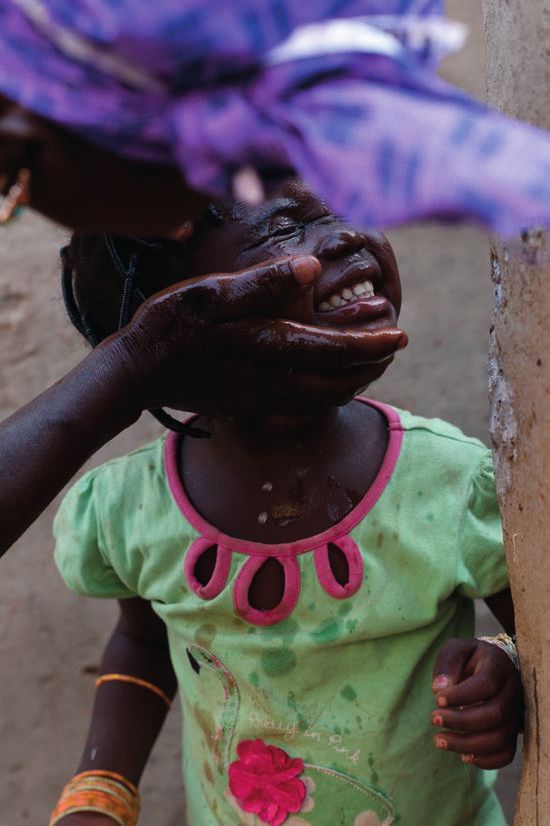
Supply of safe water remains a severe                                  % At least basic water
     challenge across West Africa, with almost               Country           access at home
     30% of the population still without access                             (where data is available)
     to at least basic drinking water, forcing
     millions to drink untreated, unsafe and          Cabo Verde                       87%
     contaminated water, significantly increasing
     the risk of disease.
                                                      Ghana                            81%
     The situation is widespread in some countries,
     affecting all segments of the population         Senegal                          81%
     (see table). However, a further breakdown
     in data shows the rural areas being hit the
                                                      Mali                             78%
     hardest. In Togo, the consumption of surface
     water is four times higher in rural areas
     (32% compared to 8%); the percentages are        The Gambia                       78%
     respectively 53% and 6% in Liberia, and 37%
     and 12% in Sierra Leone.                         Liberia                          73%
     The lack of access to safe drinking water at
     household level is reflected by the proportion   Côte d'Ivoire                    73%
     of people consuming unsafe surface water,
     shown in Figure 3 by wealth quintile, at         Nigeria                          71%
     the national level in 12 of the West African
     countries under review.
                                                      Mauritania                       71%

                                                      Guinea-Bissau                    67%

                                                      Benin                            66%

                                                      Togo                             65%

                                                      Guinea                           62%

                                                      Sierra Leone                     61%

                                                      Niger                            50%

                                                      Burkina Faso                     48%

                                                      Regional total                   70%

                                                         Bienvenue, 4, having her face washed by
                                                      her mother, Catherine, at their home in the
                                                      informal settlement of Zongo in Burkina Faso’s
WaterAid/Nyani Quarmyne/Panos
                                                      capital, Ouagadougou. February 2016.

  10 / Regional state of hygiene – West Africa
How is drinking water managed
across the region?
Several sectors and ministerial departments are
responsible for drinking water infrastructures
across the region. The stakeholders view this
management model as highly problematic –
with the situation in The Gambia, Sierra Leone
and Burkina Faso particularly criticised. In these
countries, there is poor access to drinking water
for individuals, especially in disadvantaged rural
areas. Households are often forced to use the WaterAid/Guilhem Alandry
unsafe water that is most accessible to them:
“(…) Household water treatment and “Safe water, sanitation and hygiene
storage is challenging for several at home should not be a privilege of
communities in the country especially in only those who are rich or live in urban
rural and slum communities.” National
centres. These are some of the most basic
Hygiene Manager, Sierra Leone
requirements for human health, and
At domestic level, due to the lack of adequate all countries have a responsibility to
mechanisms and the low impact of educational ensure that everyone can access them.”
activities, the situation is considered
unsatisfactory:
Dr. Tedros Adhanom Ghebreyesus,
the Director-General of WHO7
“More is required to promote the subject:
Safe storage and management of drinking
water.” National Hygiene Manager, Nigeria
Figure 3: Surface water consumption per wealth quintile (JMP 2017).2
100%
80%
60%
40%
20%
0%
so ire ia ea a a li er ria al e go
Fa Ivo mb Guin han iberi Ma Nig Nige neg eon To
na d’ a G L Se L
rki te eG rra
Bu Cô Th Sie
% Poorest % Poor % Middle % Rich % Richest (where data is available)
Regional state of hygiene – West Africa / 11Open defecation and poor waste disposal are still prevalent
Figure 4: Countries practising open defection (JMP 2017).
70%
KEY: Countries where WaterAid works
are in pink (where data is available).
60%
% Practise open defecation
50%
40%
30%
20%
10%
0%
er nin ogo aso eria ia ire de ria na ne au ea al li ia
Nig Be T a F Lib itan ’Ivo Ver Nige Gha Leo -Biss Guin eneg Ma amb
n ur d o
rki Ma CÔte Cab rra ea S eG
Bu Sie Guin Th
Country
Open defecation
The practise of
defecating in fields,
forests, bushes, bodies
of water or other
open spaces (JMP).
Rose, 42, hopes for a better life for
her children, where they will have access
to clean water and good toilet facilities.
Guzape, Nigeria. September 2020. WaterAid/Nelson Owoicho
12 / Regional state of hygiene – West AfricaWaterAid/Ahmed Jallanzo
Monica, 17, walks across
the wooden plank from the
over-hanging latrine in
West Point, Monrovia,
Liberia. September 2016.
Key findings % Practise open
Country defecation
The elimination of open defecation improves (where data is available)
dignity, reduces risks to children’s nutrition,
and leads to improved health and productivity Niger 68%
of affected communities. In West Africa, open
defecation is more common in areas of economic
Benin 54%
disadvantage and rural areas. Open defecation
is common among the poorest, affecting the
populations of Niger and Togo, whose gross Togo 48%
national products (GNPs) are among the lowest
in West Africa. The situation is no different Burkina Faso 47%
in the countries where WaterAid operates,
compared with neighbours: Niger (68%), Liberia 40%
Burkina Faso (47%), Liberia (40%), Ghana (18%),
Nigeria (20%), Sierra Leone (18%) and Mali (7%). Mauritania 32%
The situation of excreta disposal is unsatisfactory Côte d'Ivoire 26%
in almost all West African countries. It is
particularly criticised by stakeholders in Burkina
Cabo Verde 20%
Faso, Liberia, Niger and Sierra Leone. Moreover,
latrinisation and the installation of adequate
excreta disposal facilities is implemented Nigeria 20%
unevenly, depending on the region or province,
in the different countries. The maintenance of Ghana 18%
equipment is also a problem:
Sierra Leone 18%
“There are five provinces in the region, which
are not all aligned with each other. Some
Guinea-Bissau 17%
Community-Led Total Sanitation (CLTS)
projects involve or have involved certain
provinces. The practise of open defecation Guinea 14%
is still widespread even in urban areas. In
general, latrines are not well maintained Senegal 14%
at the household, public (markets, places
of worship, etc.) and institutional (schools, Mali 7%
health centres) levels. It is common to see
schools with latrines, but students defecate The Gambia 1%
next to them because they are poorly
maintained.” NGO Manager, Burkina Faso Regional total 25%
Regional state of hygiene – West Africa / 13Latrinisation programmes, particularly in rural The results of the actions undertaken to end
areas, have been implemented for a long open defecation are closely linked to those for
time in various West African countries, with access to sanitation. Hygiene officials in West
varying degrees of success. Nowadays, water, Africa are fully aware of the problems surrounding
sanitation and hygiene (WASH) infrastructures the disposal of excreta disposal and proposed
and CLTS initiatives are integrating excreta solutions to improve latrinisation programmes,
management. Insufficient consideration of the especially in rural areas. However, the effects of
school environment and inadequate monitoring these programmes are limited due to the poor
of interventions remain the main factors monitoring and maintenance of the infrastructure.
hampering these strategies.
“These factors are taken into account in
policies and strategic documents; however,
the adoption of these practises is affected by Case study: Ghana
inadequate infrastructure, poor coordination
of interventions and insufficient monitoring.” Akamo Primary School in Kassena Nankana,
National Hygiene Manager, Mali Akamo Community, is made up of 10 teachers
and 252 students, aged from two to 17 years
The institutional arrangements in place for proper old. The borehole is a 15-minute walk away
excreta disposal need to be adapted and updated: from the school and shared with the local
community, and there are no toilets for the
“The only policy document I know that covers students or the teachers at the school.
safe and hygienic disposal of human excreta is
the Sierra Leone Public Health Ordinance 1960, We go to the bush when we need the toilet;
which is very old and is currently under review.” it’s very dirty. Boys and girls go to the same
National Hygiene Manager, Sierra Leone place, which isn’t good. We avoid the boys and
sometimes wait until they have left before we
remove our clothes as we feel shy and don’t
want the boys to see us.
Rosina and Gifty, 16, walk to the area
where they defecate near Akamo Primary We sometimes see snakes when going for
School, Akamo Community, Kassena open defecation, which is scary, so we have to
Nankana West District, Upper East Region, run away.” Gifty, 16.
Ghana. February 2019.
WaterAid/Eliza Powell
14 / Regional state of hygiene – West AfricaTaboos and barriers are blocking progress on menstrual hygiene
Key findings
Menstruation is a reality for billions of women
and girls each month. However, research
suggests that every month, more than 500
million women globally9 lack the right support
they need to manage their periods effectively.
Menstrual hygiene management (MHM)
remains a neglected issue in West African
countries. Nevertheless, many initiatives, in
partnership with UNICEF and certain NGOs
(such as UN Women and the Water Supply
and Sanitation Collaborative Council (WSSCC)),
are emerging in these countries. There is still
considerable room for improvement in this
area, particularly in terms of training, equipment
and the supply of sanitary products.
WaterAid/Basile Ouedraogo
JMP defines good MHM as when: ‘Women
and adolescent girls are using a clean
menstrual management material to absorb or A sample of the protection kit distributed
collect menstrual blood, that can be changed by WaterAid to schools for the schoolgirls as
in privacy as often as necessary for the part of our MHM projects in rural areas, in
duration of a menstrual period, using soap collaboration with some local associations.
and water for washing the body as Burkina Faso, August 2018.
required, and having access to safe and
convenient facilities to dispose of used
menstrual management materials.’8
Effective MHM must include women and girls
understanding the basic facts linked to the
menstrual cycle and how to manage it with
dignity and without discomfort or fear. However,
menstruation remains a taboo subject across
many societies in the region and is often
regarded as a disease or a form of uncleanliness.
These taboos prevent many young girls from Menstrual hygiene
having access to the information that would
allow them to adopt healthy hygiene practises,10 management
including in education.
The management of
This situation is even more serious as hygiene associated with
most schools are overcrowded. As a result, the menstrual process.8
and according to some actors, national policies
and strategies in the field of hygiene are still
far from integrating the issue of menstrual
hygiene as a priority.
Regional state of hygiene – West Africa / 15“(…) a lot of barriers exist in this aspect, Case study: Burkina Faso
especially cultural and religious beliefs,
including some myths. More needs to be “In Burkina Faso, many people consider the
done to break those barriers and salvage our menstruating woman as being in a state
women and girls from the scourge of poor of ‘impurity’. This social perception is very
MHM issues.” NGO Manager, Nigeria widespread, with most girls and women feeling
“This is a new theme, and it is still taboo. embarrassed to approach the subject.
Studies by UNICEF in particular revealed
a negative impact of poor menstrual Women and girls manage their periods in
management among girls in school: absence different ways. They use different types of
from school, dropping out.” NGO Manager, materials that are kept in secret and are not
Burkina Faso all well-known by the general public. These
materials used by women during menstruation
As a result, national policies and strategies are not always adequate and sometimes have
in the field of hygiene are still far from harmful consequences on their personal
integrating the issue of menstrual hygiene hygiene, personal comfort and health.
as a priority.
These are still considered as ‘women’s secrets’
not to be exposed. During their periods,
girls and women do everything they can to
prevent people from knowing that they are
A group of students from Trans Ekulu menstruating. Also, the material is often kept in
River Primary School, which has clean and secret in the houses, at the bottom of suitcases
safe toilets for students and teachers to or handbags.” WaterAid Communications
use, Trans Ekulu River Community, Enugu Officer, Burkina Faso
State, Nigeria. October 2018.
WaterAid/Tom Saater
16 / Regional state of hygiene – West AfricaFood hygiene efforts are ineffective
Key findings
Poor food hygiene can contribute to stunting, diarrhoea, malnutrition and poor health. In the
absence of specific data, stunting and mortality among children can often indirectly reflect the
food hygiene situation in a country. Stunting is a low height/age ratio and is the result of chronic
or recurrent undernutrition – that is usually associated with several factors: poor socioeconomic
conditions, poor maternal health and nutrition, frequent illness, and/or inadequate of infants
and young children feeding and care. Stunting prevents children from reaching their physical and
cognitive potential11 and levels are particularly high in West Africa, with the latest data showing the
prevalence of stunting is 27.7%, which is higher than the global average of 21.3%.12
Figure 5: Mortality in children under five years of age (per 1000 infants) (2018, WDI).13
80.6
Burkina Faso
72
88.7
Côte d’Ivoire
72.5
62.8
The Gambia
53.6
52.4
Ghana
52.4
100.8
Guinea
95.9
103
Mali
92.1
87.2
Niger
79.7
126.7
Nigeria
112.8
47.5
Senegal
39.5
110.9
Sierra Leone
98.8
75.3
Togo
65
0 20 40 60 80 100 120 140
Male Female (where data is available)
Regional state of hygiene – West Africa / 17Fati, 17, runs a fast-food
stall selling noodles and
egg. Nima, Accra, Ghana.
September 2016.
WaterAid/Geoff Bartlett
At an institutional level, food hygiene in West The situation regarding food hygiene is
Africa has been under the responsibility of particularly worrying in schools:
two main bodies since the colonial period and
following the post-colonial laws and regulations: “In schools, most of the food sold to the
students are not monitored and the
Health and hygiene: The ministries in charge handling is very poor.” Ministry of Education
of health and hygiene are responsible for Official, Liberia
controlling food hygiene and the ability to
handle and sell foodstuffs. Despite certain efforts, food hygiene policies
and strategies still need to be revised,
Trade: The economic control services are in popularised, implemented and, above all,
charge of controlling the quality of foodstuffs. monitored. The training of agents should be a
key priority:
These arrangements are more or less the
same in all West African countries. However, “Despite the increased number of
they are obsolete and are no longer restaurants and fast food outlets, a lot of
sufficient to deal with the demographic efforts have to be made to eliminate street
growth and changing food consumption food, make markets cleaner, and review the
patterns. Similarly, food control systems are quality of the consumed food.” Regional
proving ineffective, in part due to their lack of Hygiene Manager, Senegal
integration with WASH initiatives:
Current food hygiene policies and strategies are
“Food hygiene is unsatisfactory. It is more related to control and repression, carried
reflected in the inspections and control of out by hygiene services and economic control
foodstuffs carried out by the hygiene services. services. Food hygiene is also poorly addressed
They are aimed at protecting the consumer in WASH and other integrative strategies,
from the risks of collective food poisoning despite the active involvement of several NGOs.
and focus on three major principles: food
quality, safety and innocuousness.” Regional
Hygiene Manager, Mali
18 / Regional state of hygiene – West AfricaKey bottlenecks
Hygiene policies are absent, Figure 6: Existence of national hygiene
policies (GLAAS 2020).14
or weak
Only four countries out of the 12 surveyed
reported having specific hygiene policies,
covering the three expected levels Burkina Faso
(communities, schools, health services): 1.0
Togo CÔte d’Ivoire
Ghana, Guinea, Liberia and Mali. Policies are 0.8
incomplete in Nigeria and Senegal, Togo
0.6
and Burkina Faso, and significantly incomplete The
Senegal 0.4
in Niger and Côte d’Ivoire. Gambia
0.2
Hygiene policy guidance is given in 0.0
national cross-cutting documents. In Niger, Nigeria Ghana
for example, the Economic and Social
Development Plan (PDES) emphasises the
‘effective operationalisation of the national
hygiene and sanitation policy as part of the Niger Guinea
priority areas of the urbanisation plan and the
land-use planning policy.’
Mali Liberia
However, these policies are often obsolete
and/or poorly implemented; they incorporate
guidelines but remain very general and do not
address the specific issues currently at stake:
“Hygiene policies are usually buried in
the main policies, as a result they
are not perceived are top priority.”
NGO Manager, Nigeria
Moreover, according to the actors, the policy
orientations are not specific and are mixed up
with WASH:
“No, we do not have a stand-alone policy
on hygiene. We have a WASH policy.”
National Hygiene Manager, Sierra Leone
WaterAid Sierra Leone deployed town
criers to spread the message of good
hygiene in their fight against COVID-19,
Sierra Leone. October 2020. WaterAid/Mohamed Kamara
Regional state of hygiene – West Africa / 19Policy adoption is not followed by clear implementation
In order for policies to succeed and to Figure 7: Existence of Hygiene policies
achieve the desired outcomes, they must be implementation plans (GLAAS 2020).14
implemented through fully costed plans. There
are implementation plans in place in some
countries (The Gambia, Ghana, Guinea, Liberia,
Mali and Niger), while in others the plans are
Burkina Faso
incomplete (Senegal and Nigeria) or even non-
existent (Burkina Faso and Côte d’Ivoire). 0.8 CÔte d’Ivoire
Togo
0.6
In reality, there are several ‘peripheral’ plans
in the countries, which are not specifically 0.4 The
Senegal
dedicated to hygiene, but take into account Gambia
0.2
certain aspects of it. In Mali, there is talk of
strategic plans gravitating around the hygiene 0.0
sector, without any real evidence of action. Nigeria Ghana
Ghana has a strategic investment plan for
environmental sanitation, but progress towards
their sanitation goals is still lagging behind.
Niger Guinea
There is also evidence across countries of
documents on technical management guidelines, Mali Liberia
created by varying ministries and partners, but
these are very fragmented. Each document
covers a specific aspect of hygiene: drinking
water management, solid waste management,
prevention of infections in healthcare facilities, Many technical partners, financial partners
vector control, restoration, management of and NGOs are involved in the implementation
mortuaries, biomedical waste, food, etc. of sanitation-related actions. This is a result of
bilateral and multilateral cooperation agreements.
However, not all NGOs are listed by the state
services, which has several consequences:
WaterAid/Aisha Augie-Kuta
Issaka, a The willingness of an NGO to recognise the
student, gives role of government departments and to
a handwashing involve them (whether at the national or
demonstration regional level) often depends on its size.
at a school Smaller NGOs have limited relations with
in Norandé, other actors and participate less frequently in
Tillabéri, Niger. the consultation frameworks.
February 2018.
Key actions:
Increase political commitment to prioritise and implement
hygiene policies. Governments must make and implement
political commitments to accelerate scale-up to increase
hygiene services and promotion, along with documenting best
practices, and upholding standards and guidelines.
20 / Regional state of hygiene – West AfricaThere is a large financing gap However, based on the data that we have, the
share of financing borne by the states is very
A recent report by Sanitation and Water for limited, if not insignificant. Instead, financing
All identifies large financing gap as one of the of WASH activities is essentially borne by
greatest barriers to achieving hygiene, and households, in proportions exceeding 40%.
linked water and sanitation-related targets of In Senegal, where the financing is the largest,
the SDGs.15 Even within limited WASH budgets, it represents 23% of total WASH expenditures,
hygiene comprises a global average of just 4%.14 compared to 1% in Côte d’Ivoire, 5% in Burkina
Faso and 7% in Mali (Figure 8).
Money is needed not only for the
construction of WASH and waste Considering current expenditures and
infrastructure, but also for the people and financing needs (estimated from existing plans
the institutions that maintain and expand with their quantified targets) to achieve national
services to a growing population. WASH targets, the gap analysis shows the
The World Bank has estimated that to meet SDG following situation in some West African countries
targets 6.1 and 6.2 globally, capital financing (see Table 2). The GLAAS survey also revealed the
would need to triple to US$ 114 billion per share of various sources (government, households,
annum, and operating and maintenance costs NGOs and reimbursable financing) in the financing
need to be considered in addition.16 of WASH activities in some African countries.
There are large variations in financing needs Given the huge needs, and generally insufficient
from country to country, financing strategies national funding, the gaps to be filled are equally
need to be based on evidence and realistic as great, ranging from 97% for Côte d’Ivoire to
proposals for how to fill the gaps. In West Africa, 0% for Guinea. In this case, situations such as
accessible data on funding is often minimal Guinea’s should be analysed in depth to ensure
and incomplete, making it difficult to get a clear that there is enough funding, and that this does
and accurate picture across the region.iii not reflect gaps in planning and budgeting.
Figure 8: Distribution of funding for WASH activities by source (GLAAS, 2019).14
Structure of WASH funding according to sources
Senegal
Mali
Côte d’Ivoire
Burkina Faso
0% 20% 40% 60% 80% 100%
Households Government NGO Reimbursable funding (where data is available)
iii. Information for other countries (especially English-speaking countries) was not
available in the database.
Regional state of hygiene – West Africa / 21Table 2: Analysis of funding gaps for WASH programmes in some West African countries
(where data is available) (GLAAS, 2019).14
Amount of annual budget allocated Estimated needs
Country Gap (%)
to WASH (2017) (million USD) (2017) (million USD)
Burkina Faso 122.1 229.9 47%
Côte d’Ivoire 0.9 27.4 97%
Ghana 303.5 1 202.7 75%
Guinea 62.3 41.2 0%
Senegal 278.4 818.1 66%
Togo 146.7 9.4 94%
In any case, financing is seen by sector Key actions:
stakeholders as an important bottleneck
in advancing hygiene issues. For example, Maximise existing public funding
in Togo, stakeholders believe that funding for through better planning, management and
the hygiene sector is very limited. Togo does subsidy targeting.
not have the means to implement its policy on Improve monitoring and reporting on
hygiene and basic sanitation. hygiene in order to support learning and
planning. Without a clear understanding of the
The development of the sanitation sub-sector current hygiene expenditure, it is challenging
depends largely on the financing and/or to provide additional funding and difficult to
participation of NGOs/associations and other use the funding that is available in the best way.
development partners. However, it should be
noted that the intervention of these partners
is more oriented towards the drinking water
and sanitation sub-sector than towards the Case study: Niger
hygiene sub-sector.
In Niger, the financing of the sector from the
In Sierra Leone, there is no national investment national budget is considered insignificant
plan for hygiene activities, and no budget by most of the actors involved in the hygiene
dedicated to hygiene. However, like most West sector. Local authorities are facing difficulties in
African countries, NGOs are very supportive in mobilising the financial resources needed to meet
financing hygiene-related activities. These include the challenges. Also in Niger, hygiene financing is
technical and financial partners such as UNICEF, essentially based on subsidies.
WHO, Action Contre la Faim (ACF), GOAL, Oxfam,
The involvement of banking structures in
WaterAid and Concern Worldwide. The financing
supporting the hygiene and sanitation sector
of the hygiene sector is therefore considered to be
is rare and is limited to isolated cases, such as
inefficient and unsustainable. One of the reasons
the partnership between the NGO RAIL and the
mentioned by one state respondent is that:
Crédit Mutuel du Niger in the framework of credits
“Hygiene activities are not stand-alone for the construction of latrines in the Commune
activities; they are part of general WASH of Dogondoutchi. Whilst there is a national
activities and most resources are spent on investment plan for WASH activities in general, the
water supply and sanitation (toilets).” budget line for hygiene is almost non-existent.
22 / Regional state of hygiene – West AfricaAmadou, caregiver, removing
gloves to throw them in a
bin inside the treatment room
at Bogoni Health Centre,
Bla district, Segou region, Mali.
October 2019.
WaterAid/Basile Ouedraogo
There is a lack of incentives to Key actions:
promote and attract investment
This political will shown in a period of crisis
The factors that motivate governments to must lead to a sustainable focus on hygiene.
invest, and seek investment in hygiene, In terms of WASH policies and strategies,
need to be carefully explored. The COVID-19 access to drinking water remains at the top
pandemic has led to unprecedented financial of the investment agenda (GLAAS survey)
mobilisation in West African countries. Indeed, and the involvement of local governments
given the urgency and the current and expected (in countries such as Nigeria), local authorities
impacts of the pandemic on society, some and community organisations.
governments in the region have announced
COVID-19 response plans with exceptional The private sector (companies in particular)
amounts. must work with the government to obtain
concessions to provide hygiene and
The swiftness of the response, with the sanitation services where these services do
development of costed plans, is therefore a clear not exist. These companies should provide
indication of the governments’ sensitivity to favourable conditions for people to make
crisis situations. However, hygiene measures investments in hygiene and to report back
are still significantly under-prioritised and to the government.
under-budgeted.
International development banks,
At the regional and national levels, international international multilateral and bilateral
organisations can also support or even cooperation organisations should help
encourage the achievement of political translate political will into action by increasing
commitments through conventions and their investments in hygiene and sanitation,
protocols aimed at promoting hygiene and documenting and disseminating good
sanitation. They can also facilitate a strong and best practices, and participating in the
political movement in favour of hygiene and definition of standards and guidelines.
sanitation, particularly through meetings and
direct discussions between the various
stakeholders.
Regional state of hygiene – West Africa / 23Hygiene coordination models
Hygiene coordination mechanisms and institutional framework’ (Sierra Leone) – this
leaves a very wide field in which several other
vary, so actions must be suitably ministerial departments could be involved.
adapted in each country. The same assignment can be seen in another
country (Niger), for the Ministry in charge of
Generally speaking, several ministerial health, is also ‘in charge of sanitation, public
departments are involved in hygiene and individual hygiene and school health.’
management, including the ministry in charge of
health, on an on-going basis. The main ministerial With regard to the coordination of hygiene
departments involved in hygiene issues include activities, several models emerged from the
health, hydraulics, education, environment, analysis:
territorial administration, information, finance
and decentralisation, among others. 1) A centralised model, based on the
administration and its components.
This fragmentation has been criticised by the This model is found in countries such as
actors and is considered a source of inefficiency. Mali, Senegal and Niger. The coordinating
Terms of reference are not clearly defined to bodies follow the administrative divisions
avoid overlap; when, for example, a Ministry and are headed by the administrative
of Water is responsible for ‘developing a authority (governor, prefect). In Mali, similar
comprehensive framework for the development coordination bodies with the branches
of sanitation services within an effective legal of the various ministries are chaired by
WaterAid Ghana/Samuel Nii Lantei
L-R George Yorke, Head of Policy, Advocacy and Campaigns; Afua Rida; Abdul Nashiru Mohammed,
Country Director; Okyeame Kwame; Anita Erskine; Jesse Danku, Head of Sustainable Services; and
David Aidoo, Grants Manager. WaterAid Ghana are working with national celebrities on a hygiene
promotion initiative to encourage people to practise life-saving hygiene behaviours, Ghana. July 2020.
24 / Regional state of hygiene – West Africathe governors, prefects and mayors of Local Government and Rural Development
respectively. (MLGRD). They provide leadership and
supervision of staff in the metropolitan,
The Public Hygiene and Sanitation Division municipal and district units (MMDAs).
of the National Directorate of Health of the
Ministry of Health is steered at the regional Ghana offers an interesting example on
level by the regional health directorates, the integration of hygiene actions involving
most of whose hygiene programmes are local authorities, health services, education
carried out at the health district level. and environmental management for the
However, it should be noted that Mali has a management of hygiene issues – while
coordinating body called ‘Task Force WASH’, everywhere else, different skills seem to be
whose role is still weak. exercised in a rather vertical approach.
2) A management model which is more
‘open’ to civil society and NGOs,
particularly in The Gambia and Liberia. In
Liberia, the National WASH Commission
is the coordinating body at national level.
At the regional and local levels, these
Figure 9: Hygiene coordination models.
stakeholders also form sub-committees for
the implementation of the strategic plans
on hygiene.
Centralised model Model more open
3) A federal management model, as in Senegal to NGOs and CSOs
Nigeria, where there is a coordination Mali The Gambia
mechanism for these different bodies
Niger Liberia
through the National Task Group for
Sanitation (NTGS). At the state level,
State Task Groups for Sanitation (STGS)
coordinate hygiene activities.
Hybrid model
4) An ‘in crisis’ model, as in Togo or Ghana
Sierra Leone. In Sierra Leone, there
is a lack of coordination between the
NGOs, and between the NGOs and the
Government. The problem is that NGOs Federal model ‘In crisis’ model
and other implementing partners do not
always cooperate and coordinate their Nigeria Sierra Leone
interventions, or fail to seek permission Togo
from government stakeholders (Ministry
of Health). In addition, standards and
guidelines, where they exist, are not
followed because they are unknown to
stakeholders or do not fit into plans.
5) The Ghanaian model could be described
as hybrid. In order to manage hygiene,
public and environmental health at the Key action:
decentralised level, 16 municipal councils,
also called metropolitan, municipal and Regardless of the country mechanism,
district units (MMDA), were created these need to be revised to ensure greater
in addition to ten regional health and efficiency and innovation, alongside greater
sanitation units. These regional health and inclusion of all key stakeholders.
sanitation units are branches of the Ministry
Regional state of hygiene – West Africa / 25Conclusion
This study highlights that progress towards The weakness of national information
everyone, everywhere in West Africa systems in the field of hygiene, which is an
obstacle to good knowledge of the situation,
having good hygiene is severely lacking
and therefore also to the formulation of
across the region. Data shows that only: relevant and efficient interventions.
35% have access to basic The management of menstrual hygiene, but
handwashing facilities at home. also food hygiene, have an even smaller place
on national agendas. There is little objective
70% have access to basic data to measure the extent of a phenomenon
water at home. that is still very timidly addressed in West
African countries.
33% have access to basic sanitation.
Various ministerial departments (health,
25% practise open defecation. sanitation, hydraulics and water, education,
literacy, etc.) are in charge of designing
policies and implementing them in the area
of hygiene, with a definition of roles that
sometimes remains imprecise.
The main bottlenecks for effective
There are many policy implementation plans
prioritisation of hygiene issues are:
(strategic plans, programmes), but they lack
Low political commitment (despite the implementation and monitoring, due to a
existence of national policies approved by lack of sustainable financing. There is a real
deliberative bodies in several countries, which risk that the achievements of hygiene and
is an asset) to support hygiene interventions, sanitation programmes (the example of
demonstrated by the existence of overly open defecation is often mentioned) will be
general and sometimes obsolete provisions. compromised.
This weak political will is also reflected in As a general rule, the mechanisms for
the absence of consistent budget lines for coordinating hygiene interventions are based
hygiene issues. The financing of interventions on the classic administrative organisation
in the area of hygiene is mainly borne by of countries: central umbrella coordination,
households. The portion of state budgets divided into regional, provincial and
allocated to the hygiene sub-sector is departmental committees. This system leaves
drowned out in the more global budget for little room for innovation and, in the opinion
health services, where it occupies a small of the actors, is inefficient. The coordination
share. Most of the financial resources of the systems in some countries (Nigeria, The
hygiene sub-sector are extra-budgetary and Gambia, Liberia, Ghana) are more open to Civil
come from NGOs and TFPs. The financing Society Organisations (CSOs) and NGOs. From
gaps for the achievement of national hygiene this point of view, the example of the National
objectives are considerable. Task Group for Sanitation (NTGS) in Nigeria
is interesting. The stakeholders reported its
The poor monitoring and coordination of transversal and operational character.
the programmes in place; the stakeholders
emphasised this aspect, arguing that it is a While national policies and strategies are
factor of vulnerability for the sustainability of generally in place, operational guidelines
the gains made in terms of hygiene. and procedures are not available in a
26 / Regional state of hygiene – West Africasingle document. For example, in Togo, the
stakeholders report the existence of
several operational documents, with no
evidence of their complementarity.
The importance of good hygiene is clearer
now more than ever. Handwashing with
soap remains the first line of defence against
COVID-19 and is at the core of public health
advice from the WHO, alongside other
public health measures. This crisis must be
the turning point for sustainable hygiene
prioritisation and investment.
Handwashing facilities outside of
Diaramana Health Centre, Cercle de Bla,
Segou Region, Mali. April 2018.
WaterAid/Guilhem Alandry
References
1. WHO (2020). Recommendations to Member States to improve 9. Amaya L, Marcatili J, Bhavaraju N/FSC (2020). Advancing
hand hygiene practices to help prevent the transmission of the Gender Equity by Improving Menstrual Health Opportunities in
COVID-19 virus. Available at: who.int/publications-detail/ Menstrual Health and Hygiene. Available at:
recommendations-to-member-states-to-improve-hand-hygiene- fsg.org/publications/advancing-gender-equity-improving-
practicesto-help-prevent-the-transmission-of-the-covid-19-virus menstrual-health (accessed 26 Jan 2021).
(accessed 5 May 2020). 10. Fall AS, Fall AT, Cissé R, Vidal L. L’assainissement et l’hygiène
2. WHO/UNICEF (2017). Progress on Drinking Water, Sanitation and en Afrique de l’Ouest et du Centre. UCAD. Available at:
Hygiene 2017. Update and SDG Baselines. Available at: who.int/ horizon.documentation.ird.fr/exl-doc/pleins_textes/
mediacentre/news/releases/2017/launch-version-report-jmp- divers18-01/010071753.pdf (accessed 20 Jan 2021).
water-sanitation-hygiene.pdf (accessed 26 Jan 2021). 11. WHO (2020). The various forms of Malnutrition. Available at:
3. Rabie T, Curtis V (2006). Handwashing and risk of respiratory who.int/fr/news-room/fact-sheets/detail/malnutrition
infections: a quantitative systematic review. Tropical Medicine (accessed 20 Jan 2021).
& International Health. vol 11, no 3, pp 258-67. Available at: 12. Global Nutrition Report. Country Nutrition Profiles. Western Africa.
pubmed.ncbi.nlm.nih.gov/16553905/ (accessed 26 Jan 2021). Available at: globalnutritionreport.org/resources/nutrition-
4. Luby S P, et al (2005). Effect of handwashing on child health: profiles/africa/western-africa/ (accessed 26 Jan 2021).
a randomised controlled trial. Lancet. vol 366, no 9481, 13. The World Bank Group. Mortality rate, under-5 (per 1,000 live
pp 225-3. Available at: pubmed.ncbi.nlm.nih.gov/16023513/ births). Available at: data.worldbank.org/indicator/SH.DYN.
(accessed 26 Jan 2021). MORT (accessed 26 Jan 2021).
5. Darmstadt G L, et al (2005). Infection Control Practices Reduce 14. UN Water (2020). Hygiene: UN-Water GLAAS findings on national
Nosocomial Infections and Mortality in Preterm Infants in policies, plans, targets and finance. Available at: unwater.org/
Bangladesh. Journal of Perinatology. vol 25, pp 331–335. Available publications/hygiene-un-water-glaas-findings-on-national-
at: nature.com/articles/7211283 (accessed 26 Jan 2021). policies-plans-targets-and-finance/ (accessed 26 Jan 2021).
6. Bowen A, et al. (2007). A cluster-randomized controlled trial 15. Sanitation and Water for All. Why SDG 6 matters. Available at:
evaluating the effect of a handwashing-promotion program in sanitationandwaterforall.org/about/about-us/water-sanitation-
Chinese primary schools. American Society of Tropical hygiene/why-sdg-6-matters (accessed 26 Jan 2021).
Medicine and Hygiene. vol 76, no 6, pp 1166-73. Available at:
16. Hutton G, Varughese M/The World Bank (2016). The Costs
pubmed.ncbi.nlm.nih.gov/17556631/ (accessed 26 Jan 2021).
of Meeting the 2030 Sustainable Development Goal Targets on
7. WHO (2017). 2.1 billion people lack safe drinking water at home, Drinking Water, Sanitation, and Hygiene. Available at: hworldbank.
more than twice as many lack safe sanitation. Available at: org/en/topic/water/publication/the-costs-of-meeting-the-
who.int/news/item/12-07-2017-2-1-billion-people-lack-safe- 2030-sustainable-development-goal-targets-on-drinking-
drinking-water-at-home-more-than-twice-as-many-lack-safe- water-sanitation-and-hygiene (accessed 26 Jan 2021).
sanitation (accessed 26 Jan 2021).
17. WHO (2020). Recommendations to Member States to improve
8. WHO/UNICEF (2017). Consultation on Draft Long List of Goal, hand hygiene practices to help prevent the transmission of the
Target and Indicator Options for Future Global Monitoring of COVID-19 virus. Available at: who.int/publications-detail/
Water, Sanitation and Hygiene. Available at: recommendations-to-member-states-to-improve-hand-
washdata.org/sites/default/files/documents/reports/2017-06/ hygiene-practicesto-help-prevent-the-transmission-of-the-
JMP-2012-post2015-consultation.pdf (accessed 26 Jan 2021). covid-19-virus (accessed 5 May 2020).
Regional state of hygiene – West Africa / 27You can also read


