Residential Guide To Solar Hot Water - Heat Your Water With The Sun!
←
→
Page content transcription
If your browser does not render page correctly, please read the page content below

MASSACHUSETTS

Residential Guide
To Solar Hot Water
 Heat Your Water
 With The Sun!

Dwight Smith/Bigstock
Table of Contents

Introduction                                         1

Solar Hot Water System Components                    3

Sizing and Optimizing Your Solar Hot Water System    7

Economics of Solar Hot Water                         9

Environmental Benefits of Solar Hot Water           11

How to Go Solar                                     12

Homeowner’s Solar Hot Water Checklist               15

Solar Hot Water Resources                           16

INTRODUCTION
Introduction

Solar Hot Water Today                                    About This Guide
Solar hot water (SHW) technology, also known as          The aim of this guide is to assist Massachusetts
solar thermal, is a reliable, pollution-free method to   residents who are considering using solar energy
generate heat for residential water and space heat-      to generate heat for their domestic water and space
ing needs. Homes and businesses around the coun-         heating needs. This guide can help you determine
try harness solar thermal energy to heat their water     whether SHW is technically and economically right
and buildings. Massachusetts initiated its first in-     for you. It reviews the installation process and pro-
centive program for SHW in 2011, funded through          vides advice and resources on finding an installer
the Massachusetts Clean Energy Center.                   and securing rebates, as well as other useful infor-
                                                         mation about SHW.
Residents decide to install SHW systems for various
reasons, including:                                      While this guide is intended primarily for home-
                                                         owners, many of the issues discussed apply to small-
■■ Monthly savings on utility bills and fuel price       scale installations in general and may also apply to
   stability                                             businesses considering installing SHW.

■■ Desire for energy independence and increased          WW Some  of the regulations and incentives
                                                            discussed in this guide may not apply to
   control over energy choices
                                                               customers of certain Municipal Light Plants
                                                               (MLPs). Customers of MLPs should contact
■■ Concern about pollution, the environment and
                                                               their MLP to determine whether they pay
   climate change
                                                               into MassCEC’s Renewable Energy Trust
                                                               (a prerequisite for receiving rebates from
For many residents throughout Massachusetts, in-               MassCEC’s Solar Hot Water programs).
stalling a SHW system is a smart investment that
converts clean, free sunlight to usable heat while
curbing air pollution and reducing monthly heat-
ing bills. Installing SHW also contributes to the lo-
cal economy by creating local jobs and supporting
local businesses.

Massachusetts Residential Guide To Solar Hot Water                                                                   1
INTRODUCTION

               About MassCEC
               Created by the Green Jobs Act of 2008, the Massa-
               chusetts Clean Energy Center (MassCEC) is dedi-
               cated to accelerating the success of clean energy
               technologies, companies and projects in the Com-
               monwealth—while creating high-quality jobs and
               long-term economic growth for the people of Mas-
               sachusetts. MassCEC is a partner, clearinghouse
               and connector for people in the clean energy sector,
               making direct investments in clean energy compa-
               nies, building a strong clean energy workforce, and
               supporting responsibly sited renewable energy proj-
               ects across the Commonwealth. MassCEC works
               with the entire clean energy community in Massa-
               chusetts to propel promising technologies from the
               drawing board to the global marketplace. For more
               information visit: www.MassCEC.com.

                   * More Resources

                 Visit www.MassCEC.com/AboutSolar
                 for additional resources and information
                 about solar energy technologies.

2                                                                     Massachusetts Residential Guide To Solar Hot Water
SOLAR HOT WATER SYSTEM COMPONENTS
Solar Hot Water System Components
A solar hot water (SHW) system looks somewhat          col/water mixture) that absorbs the sun’s heat as it
similar to a solar photovoltaic (PV) system from the   passes through the collectors. The conductive fluid
outside. Both solar systems feature collectors that    is circulated through the collectors by means of a
capture energy from the sun. However, a solar PV       pump, or by natural convection. The heat is then
system uses sunlight to generate electrical energy,    transferred to a water storage tank through a heat
while a SHW system uses thermal energy (heat)          exchanger. The heated water can then be circulat-
from the sun to heat water and space. Compared to      ed through a system for space heating or used for
a solar PV system, a SHW system is more efficient      domestic hot water needs. A supplementary heat-
overall because it loses less energy when converting   ing system (or backup) is always required in order
sunlight to heat energy for your home.                 to provide hot water at times when the hot water
                                                       demand is greater than the solar thermal produc-
In a SHW system, thermal energy is received            tivity (e.g. at night or during cloudy days). The ma-
through collectors and transferred to water in a       jor components and types of SHW systems are de-
storage tank by a conductive fluid (typically a gly-   scribed in more detail below.

                                                              1   Solar collector
                                                              2   Controller
                                                              3   Solar storage tank
                                                              4   Backup water heater
                                                              5   Boiler
                                                              6   Pump
                                                              7   Cold water feed
                                                              8   Hot water to home (washing machine,
                                                                  dishwasher, sink, shower, etc.)

Massachusetts Residential Guide To Solar Hot Water                                                                        3
SOLAR HOT WATER SYSTEM COMPONENTS

                                    Collectors
                                    When sunlight strikes the SHW collectors, the fluid
                                    inside the collectors captures radiant heat, and car-
                                    ries that heat into the home. There are two main
                                    types of collectors used for SHW systems in Massa-
                                    chusetts: Evacuated Tube and Flat Plate. Collectors
                                    typically last more than twenty years.

                                    Residential Evacuated Tube System - Boston, MA          Residential Flat Plate System – Saugus, MA

                                    WW Evacuated  Tube: These collectors often have
                                       a very high efficiency design, a high heat
                                                                                            WW Flat Plate: Flat plate solar collectors are
                                                                                               more common in the US market. Flat plate
                                          capacity per square foot, and operate well              collectors are generally less expensive
                                          in cold climates. However, they can be more             than evacuated tube collectors and have
                                          expensive than flat plate collectors. An array          proven their durability over the past 30-
                                          of double walled glass tubes uses a vacuum              40 years. They consist of a dark flat-plate
                                          to reduce heat loss, which is important                 absorber that receives heat energy, tubes
                                          in colder climates. A selective coating                 that circulate a conductive fluid to remove
                                          maximizes heat absorption in all sunlight               the heat from the absorbers, and insulating
                                          conditions.                                             material that minimizes heat loss from the
                                                                                                  top and back of the plate. Most flat plate
                                                                                                  collectors are “glazed.” An “unglazed”
                                                                                                  flat plate collector does not have an
                                                                                                  insulated cover, and is best used when
                                                                                                  ambient temperature is near to the desired
                                                                                                  temperature (as in pool heating). Glazed
                                                                                                  flat plate collectors heat water to higher
                                                                                                  temperatures relative to air temperature,
                                                                                                  and function better in Massachusetts.

4                                                                                                 Massachusetts Residential Guide To Solar Hot Water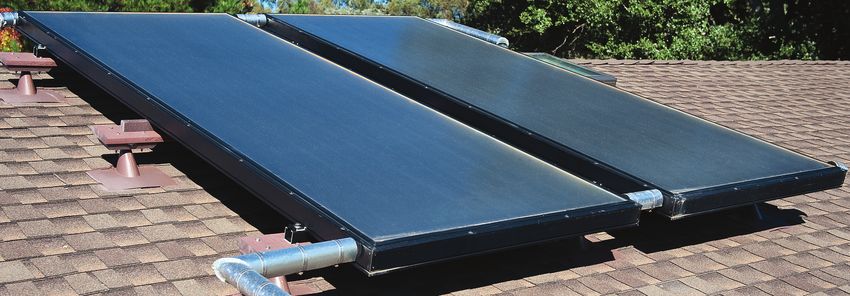
SOLAR HOT WATER SYSTEM COMPONENTS
   General Configuration                                                                         Hot water
                                                                                                 to building

                                                                Solar Tank              Conventional
            Solar Collector                                                             Water Heater

                                                                                            Reheat

   1   Collector loop heat exchange input            5   Hot water out                           Cold water
                                                                                                 from utility
   2   Collector loop heat exchange ouput            6   Optional (ambient)
   3   Collector loop top of tank                    7   Collector loop flow sensor
   4   Cold water in                                 8   Water loop flow sensor

Active Systems                                             the tank. When the temperature of the fluid in the
                                                           collectors is lower, the controller turns off the pump
Active systems use a pump to circulate a heat trans-       until the fluid in the collectors reheats.
fer fluid that brings heat from the collectors to the
heat exchanger and the tank. Active direct circula-
tion systems pump the building’s water through the
collectors and into the tank. These systems are bet-       Passive Systems
ter suited for mild climates where there is less risk
                                                           Passive systems circulate the heat transfer fluid
of water freezing inside the system. Active indirect
                                                           without a pump. There are two types of passive sys-
circulation systems use a heat transfer fluid with a
                                                           tems. Integral collector-storage systems only work
lower freezing temperature than water and is thus
                                                           in non-freezing climates. Thermosyphon systems,
more suitable for Massachusetts’ climate.
                                                           which are more suitable for Massachusetts, use the
                                                           relative densities of hot and cold water to cause cir-
                                                           culation between the collectors and the tank. Once
Controller                                                 the water or conductive fluid heats inside the collec-
                                                           tors, the heated fluid rises into a tank which must be
A controller switches the pump on or off in active         located above the collectors. The circulating liquid
systems. It is a simple electronic device which mea-       then cools and falls back into the collectors. These
sures the temperature of the collectors and the tem-       systems are typically less expensive, but can be less
perature of the fluid in the heat exchanger. When          efficient than active systems. Passive systems also
the temperature is higher in the collectors, the con-      require careful planning, as the weight of the tank
troller turns on the pump to move the hotter fluid to      can destabilize the roof.

Massachusetts Residential Guide To Solar Hot Water                                                                             5
SOLAR HOT WATER SYSTEM COMPONENTS

                                    Heat Exchanger                                             Solar Storage Tank
                                    The heat exchanger is the equipment that enables           The solar storage tank acts as a holding tank for wa-
                                    the fluid to transfer its heat to the water tank. The      ter heated by the collectors. The water stored in the
                                    most common type is a “coil-in-tank” configuration         tank is potable water, and can be used for all domes-
                                    (shown below), in which the heat transfer fluid pass-      tic hot water purposes.
                                    es through a spiral tube inside the tank. “Shell-and-
                                    tube” and “tube-in-tube” configurations require both       Typically, the solar storage tank is an additional tank
                                    fluids to be flowing in opposite directions.               installed adjacent to the existing hot water tank, and
                                                                                               is heated exclusively by the solar collectors. During
                                                                                               cloudy weather, when the solar thermal system is not
                                                                                               producing optimally, the existing water heating sys-
                                                                                               tem automatically turns on. Alternatively, two heat
                                                                                               exchanger spirals may be installed in a single tank
                                                                Solar
                                                               Collector                       (see figure above). The heat transfer fluid from the
                                                                                               collectors heats the bottom coil. When the solar ther-
                                                                                               mal system is not producing sufficient energy, the
                                                                                  Hot Water
                                                                                   Outlet
                                                                                               conventional system turns on to heat the top coil.
                                                                           Tank
                                                                                   Boiler
                                                 Controller

                                                                                               System Life
                                                                                               SHW systems can be expected to operate, with rou-
                                                                                  Cold Water
                                                                                    Supply     tine regular maintenance, for more than twenty
                                                              Pump                             years. However, solar storage tanks, like conven-
                                                                                               tional hot water tanks, are only expected to last
                                    Single Tank System
                                                                                               about ten years. Simple check-ups by the homeown-
                                                                                               er can ensure that the system is consistently operat-
                                                                                               ing at maximum efficiency. An installer will leave
                                                                                               detailed instructions on the required maintenance
                                                                                               at the time of installation. See System Maintenance
                                                                                               (Section How to Go Solar) for more information.

6                                                                                                     Massachusetts Residential Guide To Solar Hot Water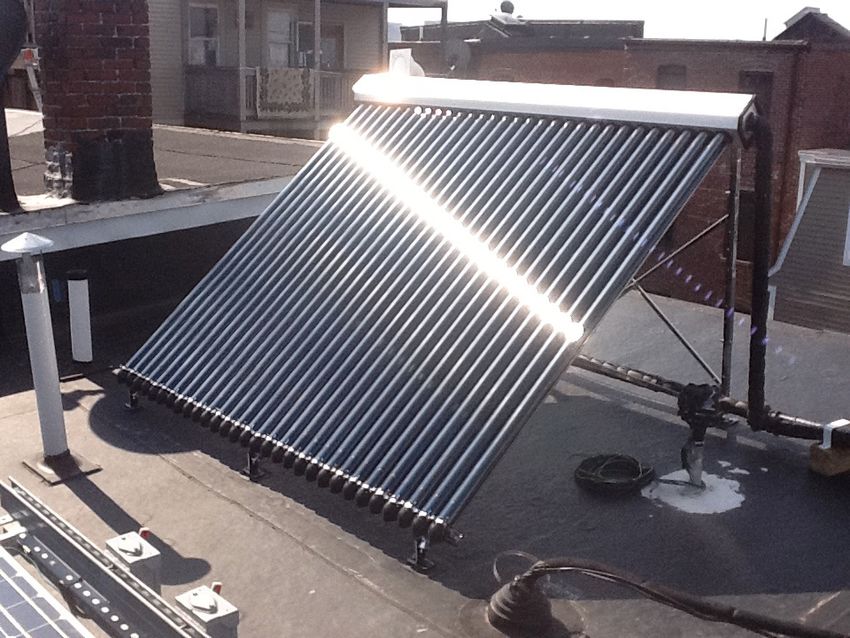
SIZING AND OPTIMIZING YOUR SOLAR HOT WATER SYSTEM
Sizing and Optimizing Your
Solar Hot Water System
It is critical to understand your home’s hot water
usage in order to install a solar hot water (SHW)
                                                         Sizing a System for
system that is appropriately sized and cost effective.   Space Heating
In Massachusetts, a SHW system typically provides
                                                         The amount of hot water needed each day for space
50-80% of a household’s hot water needs. SHW sys-
                                                         heating depends on the characteristics of the cur-
tems cannot provide 100% of a household’s hot wa-
                                                         rent space heating system. Factors such as the total
ter needs due to variations in thermal production
                                                         size (sq ft) of the residence, solar thermal system ef-
during the year – a system sized to produce 100%
                                                         ficiency, and desired thermostat temperature must
of hot water needs in the winter would overheat in
                                                         be considered to determine appropriate system re-
the summer months, which could damage the sys-
                                                         quirements. A SHW system can typically provide up
tem. A SHW system installer can accurately design
                                                         to 40% of a household’s space heating needs. SHW
a suitable system for your specific needs.
                                                         systems cannot provide 100% of a household’s space
                                                         heating needs due to the times when the sun is not
                                                         shining and because the solar resource is greatest
Sizing a System                                          during the summer months when space heating de-
                                                         mands are lowest.
for Domestic
Water Heating
Daily domestic hot water use is typically about          Mounting
twenty gallons per person per day. In Massachusetts,
approximately one square foot of collector area pro-     For most Massachusetts homeowners, rooftop in-
duces one gallon of hot water each day. Therefore, a     stallations are the easiest and most practical way to
system for three people might require sixty square       use SHW to heat their water and homes, although
feet of collector area (equal to about two collectors)   mounting the SHW collectors on the ground is
to accommodate a hot water demand of sixty gal-          also a viable option. Rooftops provide a ready lo-
lons. The recommended capacity of a solar hot wa-        cation for SHW collectors, which are less likely to
ter tank is approximately 1.25 times the estimated       be damaged than if the collectors are mounted on
daily water consumption. An installer will assess        the ground. Roofs in New England are usually tilted
the needs of individual households and sites based       to shed water and snow, which helps to keep SHW
upon estimated daily usage and system efficiency.        collectors clear from debris. A roof ’s elevation de-

Massachusetts Residential Guide To Solar Hot Water                                                                                  7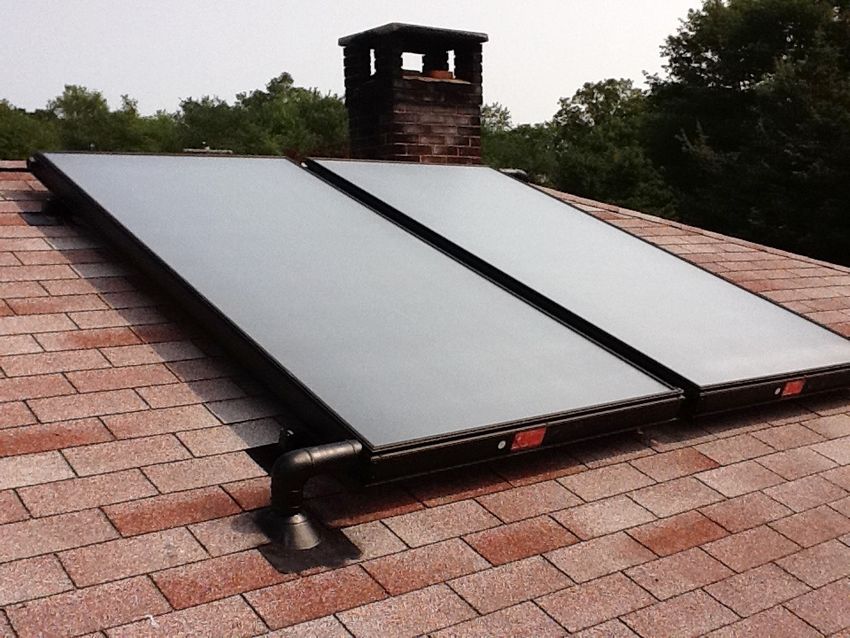
SIZING AND OPTIMIZING YOUR SOLAR HOT WATER SYSTEM

                                                    creases the likelihood of shade falling on the array,         Sun’s Path During Summer and Winter
                                                    and allows for the recommended five hours of di-
                                                    rect sunlight per day.                                                                         June 21

                                                                                                                                                            December
                                                                                                                                                               21
                                                                                                                                                     East

                                                    Roof Condition                                                  North

                                                    Since it is both time-consuming and costly to re-
                                                    move a system once it is in place, homeowners
                                                    should evaluate the condition of their roof and shin-                   Solar panel
                                                                                                                            (module)
                                                    gles before a system is installed to ensure structural                                                    NREL

                                                    integrity over the life of the SHW system. Make any
                                                    necessary roof repairs before a SHW system is put
                                                    in place. Some installers recommend replacement
                                                    if the roof has a remaining lifetime of eight years
                                                    or less.
                                                                                                             Tilt
                                                                                                             The ideal tilt is equal to the latitude of the site. For
                                                    The actual heat generated by a SHW system is a           maximum annual production in Massachusetts,
                                                    function of its size, efficiency, sun exposure, and a    SHW collectors should be installed at approximately
                                                    variety of other factors discussed below.                a 40 degree angle to the horizon. Most homes in New
                                                                                                             England have roofs that are pitched at 33 degrees or
                                                                                                             more to shed snow and ice. An installer may be able
                                                                                                             to design structural components to optimize tilt and
                                                    Roof direction                                           will help to determine if the added efficiency from
                                                                                                             optimizing the tilt of the panels will be worth the cost.
                                                    Roof-mounted SHW systems should be oriented as
                                                    close to due south as possible in order to maximize
                                                    annual production. The ideal collector orientation is
                                                    facing due south. Systems whose orientation is not       Shading
                                                    due south have less direct sun exposure through-
                                                    out the day, resulting in lower heat output; however,    SHW systems are slightly more tolerant of shading
                                                    systems can still perform economically even if their     than PV systems, but should be sited to maximize
                                                    orientation is not perfect.                              their direct exposure to sunlight and to avoid shad-
                                                                                                             ing by a home’s structural elements (such as chim-
                                                                                                             neys), nearby trees and vegetation (including small-
                                                                                                             er trees that could later become obstacles) or other
                                                                                                             buildings. Collectors should receive at least 5 hours
                                                                                                             per day of unobstructed sunlight (75% shade-free).

8                                                                                                                   Massachusetts Residential Guide To Solar Hot Water
ECONOMICS OF SOLAR HOT WATER
Economics of Solar Hot Water
The financial return on investing in a SHW system further described below. For up to date informa-
in Massachusetts can be very favorable for home- tion, please visit the Database of State Incentives for
owners with a suitable site and where the cost of the Renewables & Efficiency (DSIRE) webpage, at www.
fuel traditionally used to heat water is expensive. dsireusa.org.
SHW systems in Massachusetts can have a three to
twenty year simple payback period, and will contin- FEDERAL TAX CREDIT: Most owners of new resi-
ue to produce financial returns long after the system dential SHW systems qualify for the federal Resi-
is paid off. SHW systems that offset electric water dential Renewable Energy Tax Credit, the value of
heating systems will generally be the most cost ef- which is 30 percent of total system costs.
fective (3-7 year paybacks) because of the high price
of electric water heating. SHW systems that offset
MASSACHUSETTS TAX CREDIT: Most owners of
oil or propane water heating generally have pay-
new residential solar SHW systems in Massachu-
backs ranging from 6-12 years. SHW systems that
setts qualify for a state personal income tax credit
offset natural gas water heating are currently (in
for the lesser of 15 percent of the total cost of the
2012) less cost effective than other systems, due to
solar hot water system or $1,000.
the low price of natural gas.
MASSACHUSETTS SALES TAX EXEMPTION:
Equipment purchased for a residential SHW sys-
Upfront Cost and tem in Massachusetts is usually exempt from the
Incentives sales tax.
Like most renewable energy systems, SHW systems MASSACHUSETTS PROPERTY TAX EXEMPTION:
involve an upfront cost, but lower future expendi- Homeowners with a SHW system are eligible for a
tures on fuel, since sunlight is a free resource. A new property tax exemption on the value added to their
conventionally-fired domestic hot water system can home by the system, for a period of 20 years. Home-
cost between $800 and $2,000 (ACEEE). A typical owners are encouraged to discuss this with their in-
medium sized residential SHW system will likely staller and the local tax assessor’s office.
cost $7,000 - $10,000.1 To reduce these high upfront
costs, there are several state and federal incentives,
1 Estimate from 2011 Commonwealth Solar Hot Water pilot program av-
erages. Actual costs will vary based on system size, site characteristics,
permit fees, and any optional equipment additions. Up to date cost
information can be found at MassCEC.com/SolarHotWater.
Massachusetts Residential Guide To Solar Hot Water 9ECONOMICS OF SOLAR HOT WATER
Long-Term Costs
WW Homeowners considering installing a SHW
system are advised to consult a professional and Savings
to determine if the potential project would
be eligible for available tax incentives, Avoided Energy Costs
how these tax incentives may impact one The most fundamental benefit a homeowner will
another, and the taxability of any rebates receive from a SHW system is the heat generated
or revenues received for a project. System which will directly displace heating fuel or electric-
paybacks will vary depending on the net ity that the homeowner would otherwise purchase.
system cost. Fuel cost increases, rising demand for fuel or elec-
tricity, and fuel supply constraints can all cause the
COMMONWEALTH SOLAR HOT WATER REBATE: cost of purchasing fuel or electricity to increase over
MassCEC offers a rebate for residential and com- time. An owner of a SHW system avoids these fu-
mercial SHW projects. The rebate value is based on ture energy cost increases by utilizing free sunlight
collector performance and the number of collectors as their fuel. Investing in a solar domestic hot water
installed. The current rebates are typically $1,100- system typically eliminates approximately 25% of
$1,400 for a residential system, and are capped at total residential monthly utility costs.
$3,500. For further information about this rebate,
along with relevant rebate level and participation System Maintenance
guidelines, see the MassCEC’s Commonwealth So-
lar Hot Water program page at www.masscec.com/ As is the case with any appliance, SHW systems
solarhotwater. require some maintenance over their lifetime. Bi-
annual system check-ups are important, but are not
expensive or time consuming. Installers that apply
OTHER INCENTIVES: Other incentives are ad-
for MassCEC rebates are required to provide a labor
ministered by utility companies or local agencies.
warranty to protect the equipment against defective
An option available to all Massachusetts residents
workmanship, component breakdown, or signifi-
is the Mass Save HEAT Loan program, which offers
cant degradation in energy production. In addition,
zero-interest loans for up to 7 years for the installa-
the SHW equipment must have appropriate manu-
tion of SHW systems. Visit the DSIRE webpage for
facturer’s warranties.
more information about loan and rebate programs
offered through utility companies or local agencies.
10 Massachusetts Residential Guide To Solar Hot WaterPavlo Vakhrushev/Bigstock
ENVIRONMENTAL BENEFITS OF SOLAR HOT WATAER
Environmental Benefits
of Solar Hot Water
The use of SHW systems to generate heat dramati-
Alexey Sergeev
cally reduces the environmental impact of the myr-
iad personal, industrial, and commercial processes
which rely on fossil fuels to heat water and space.
SHW systems do not emit carbon dioxide or any
other greenhouse gases (GHGs) while operating
and do not require intensive extraction operations
to provide fuel or dispose of residual waste. Com-
pared to the mix of fossil fuel heat sources typically 1 SWH SYSTEM REDUCES
used to satisfy hot water needs in New England, a 3,400 LBS OF GREENHOUSE GAS
typical SHW system for a family of four who cur-
rently use an electric water heater will prevent 3,400
pounds of greenhouse gas emissions each year. In
addition, SHW systems reduce the production of
particulate matter that contribute to respiratory
problems, which is important as Massachusetts has
among the highest rates of asthma in the country.
Massachusetts Residential Guide To Solar Hot Water 11Tudor Stanica/Bigstock
HOW TO GO SOLAR
How To Go Solar
1 Energy Efficiency assessment and design a system specific to the
home or building’s needs. Installers should pro-
In Massachusetts, energy efficiency is considered to vide a formal write-up of their proposal that in-
be our “first fuel” when it comes to making fiscally cludes a timeline and expected costs.
sound, environmentally friendly choices about ener-
gy use, and it is the most cost effective way to reduce Seek Multiple Bids
a home’s total electricity use and cost. The Common-
wealth Solar Hot Water Rebate Program requires As with any home improvement project, a home-
homeowners to schedule an energy audit before re- owner should seek multiple bids to find someone
ceiving a SHW rebate. Massachusetts utilities offer he or she is comfortable working with and to ensure
free energy efficiency audits, advice and services to they are getting the best price possible. In order to
customers. Call Mass Save at 1-866-527-7283 or visit get the most appropriate and cost effective system
www.masssave.com for more information. for a home, make sure to receive and compare the
recommendations and estimates of at least two or
three installers. For reference, compare your sys-
tem cost and specifics with similar projects awarded
2 Installer Selection through the Commonwealth Solar Hot Water Pro-
gram (visit www.masscec.com/solarhotwater for a
How to Find an Installer list of awarded project specifications).
Massachusetts has a large number of experienced
professionals who install SHW technologies. Ask for References
MassCEC maintains a list of SHW installers that and Licenses
have successfully submitted applications through
Potential SHW customers should ask if the installer
the Commonwealth Solar Hot Water Program,
can provide customer references, and—if possible—
which can be found at www.masscec.com/solar-
should visit one or more of the installer’s previous in-
hotwater. Some installers are a one-stop shop for
stallations. According to Massachusetts law, a prima-
SHW; a single installation company can provide
ry vendor must be a registered home improvement
both plumbing and solar thermal expertise. Oth-
contractor, have a licensed construction supervisor
er SHW contracting companies do not have a li-
on staff, and have a licensed plumber to connect the
censed plumber in house, and will subcontract a
SHW system to the domestic hot water system. In
licensed plumber for the portions of the job that
addition, there are various training and certification
require one. The SHW installer will conduct a site
12 Massachusetts Residential Guide To Solar Hot WaterHOW TO GO SOLAR
programs which many installers go through, such as
those offered by the North American Board of Certi- 3 Design
fied Energy Practitioners (NABCEP).
Prior to installation, the installer will prepare a
design for the SHW system. Where SHW is being
Require Liability and Workers’ incorporated into new construction, it is advanta-
Compensation Insurance geous to integrate the SHW design process into the
For liability protection homeowners should insist overall site planning and building design process to
that a vendor carry a certificate of insurance for realize certain construction efficiencies and ensure
general liability insurance. A homeowner should optimal orientation and tilt of the system.
also verify that workers’ compensation insurance
is carried to protect against liability for any on-site,
work related injuries. These are required to obtain a
building permit. 4 Permitting
The installer is responsible for obtaining local per-
Require Warranties mits before the installation of a SHW system. When
Homeowners should ensure that equipment and an installation results in a structural change to an
workmanship are covered under appropriate war- existing building, as is commonly the case, a SHW
ranties. It is recommended that customers request system is subject to the Massachusetts Building
equipment warranties that, at a minimum, meet Code. The licensed plumber is responsible for ensur-
the requirements outlined below. These warranties ing that the installation meets state plumbing code
are required for systems that receive a rebate from requirements. Towns with historical districts may
MassCEC. require additional approvals, which should be com-
pleted in the design phase of the project. All issued
paperwork, including invoices, should be kept as
■■ Workmanship: at least a 2-year comprehensive
documentation even after the project is completed.
installation warranty
■■ Solar Collectors: 10-year manufacturer’s warranty
5 Rebates and
■■ Other System Components: 2-year warranty for
other system components
Incentives
MassCEC’s Commonwealth Solar Hot Water Pro-
Obtain a Written Contract gram will only pay rebates for project applications
approved prior to commencing construction. Re-
The written contract with an installer should, at a bate applications are submitted by the installer on
minimum, specify the exact equipment to be in- the system owner’s behalf. For more details on the
stalled, all applicable warranty information, the procedural, technical, and other requirements of the
project’s start and completion dates, the itemized Commonwealth Solar Hot Water Rebate Program,
budget with any exclusions or potential adders, a visit www.MassCEC.com/Solarhotwater or contact
list of any subcontractors that are going to be used, an installer. Massachusetts and federal tax credit
and a progress payment schedule. Contracts should information can be found at www.dsireusa.org, by
include contingencies for approval of rebates and selecting Massachusetts or Federal Incentives.
other relevant incentives.
Massachusetts Residential Guide To Solar Hot Water 13HOW TO GO SOLAR
6 Construction 9 Ongoing System
Once a contract is signed, the necessary permits Maintenance
have been issued, and rebate approval has been re- and Performance
ceived from MassCEC (if applying for a Common-
wealth Solar Hot Water rebate), the installer will in- Metering
stall the SHW system. Installation typically involves Maintenance in a correctly installed system is not
delivery of materials to the site, site preparation, and time consuming. To ensure the SHW system func-
installation of the SHW collectors and solar storage tions properly, the system owner should periodi-
tank. SHW installations can occur over a short pe- cally look to make sure no obvious obstructions,
riod of time relative to other construction projects. such as leaves or branches, are blocking the collec-
As noted above, the written contract should be clear tors from the sun. System “check-ups” should be
about the timeline of the project. performed every two years. These check-ups should
be very inexpensive and brief. During the check-up,
electrical parts should be examined thoroughly, and
may need to be replaced after 10 years. The system’s
7 Inspection plumbing should also be checked for corrosion and
freeze damage.
Once a SHW system is fully installed, building and
plumbing inspections may be required to review the
system to verify that the installation meets state and Some system owners may choose to install metering
local code requirements. equipment on their SHW system. The meter mea-
sures temperatures and flow rates in order to track
energy production. A performance monitoring sys-
tem will help homeowners and installers ensure the
8 Post-Installation system is functioning at maximum efficiency.
System Testing
and Education
When the installation is complete, the installer
should test the equipment to confirm that it is op-
erating properly. Homeowners should also ensure
that the installer provides copies of any technical
equipment manuals and warranties. Finally, the in-
staller should educate the owner about safety, op-
erations, and maintenance requirements.
14 Massachusetts Residential Guide To Solar Hot WaterHOMEOWNER'S SOLAR HOT WATER CHECKLIST
Homeowner’s Solar Hot Water Checklist
Preliminary Questions
❑❑Do I know how much energy I currently con-
sume to heat my water and home, and how
❑❑Do I have a south-facing roof?
much it costs? ❑❑Do I know where there is shading on my roof
(or on my property) during different times of
❑❑Do I know how much hot water my household
consumes per day?
the day and at different times of year?
WW On average, people consume 20 gallons of
hot water per day. Consider whether your
household may have additional hot water
demands.
Purchasing and Contracting
❑❑Am I comfortable with the installer’s knowl-
edge and experience?
❑❑Does the installation contract clearly lay out
what is included and what is not included in
the price?
❑❑Does the installer have credible references?
❑❑Does the proposed payment schedule protect
❑❑Isme,theas installer adequately insured to protect
well as the company’s employees and
me by allowing payment to be withheld until
the system passes local code inspections, and is
subcontractors? shown to be operating properly?
❑❑Does the contract include performance specifi-
cations for the system being installed, including ❑❑Are all warranties clearly stated with informa-
tion on how to use them if necessary?
an estimate of the energy that will be produced
annually or under different conditions?
Post Installation
❑❑ Has the installer tested and turned on the system? ❑❑Has the installer left reference materials and
equipment operating manuals?
❑❑Have all necessary inspections occurred?
Massachusetts Residential Guide To Solar Hot Water 15SOLAR HOT WATER RESOURCES AND LINKS
Solar Hot Water Resources and Links
Commonwealth Solar Hot MassSave
Water Program Webpage www.masssave.org
www.masscec.com/solarhotwater
For information on the Mass Save Heat Loan pro-
✓✓ COMMONWEALTH SOLAR HOT WATER gram, and other energy efficiency incentives, visit
RESIDENTIAL AWARDED PROJECTS DATA- Mass Save and click "For Your Home."
BASE: This excel file contains information on
all projects that have been awarded through the DSIRE
CSHW residential program, including project
www.dsireusa.org
size, type, costs, installers, etc.
For up to date information on state and federal so-
✓✓ SOLAR THERMAL INSPECTION CHECKLIST lar hot water incentives, visit the Database of State
Incentives for Renewables & Efficiency.
Energy Savers
www.energysavers.org
The U.S. Department of Energy’s maintains an “En-
ergy Savers” webpage for consumers. It has exten-
sive information on SHW.
16 Massachusetts Residential Guide To Solar Hot Water55 Summer Street, 9th Floor Boston, MA 02110 Phone: 617-315-9355 | Fax: 617-315-9356 Info@masscec.com | www.masscec.com
You can also read


