Review of the Augmented Reality Systems for Shoulder Rehabilitation - MDPI
←
→
Page content transcription
If your browser does not render page correctly, please read the page content below
information
Review
Review of the Augmented Reality Systems
for Shoulder Rehabilitation
Rosanna Maria Viglialoro 1, *, Sara Condino 1,2, *, Giuseppe Turini 1,3 , Marina Carbone 1,2 ,
Vincenzo Ferrari 1,2 and Marco Gesi 4,5
 1   EndoCAS Center, Department of Translational Research and of New Surgical and Medical Technologies,
     University of Pisa, 56126 Pisa, Italy; marina.carbone@endocas.unipi.it (M.C.);
     vincenzo.ferrari@endocas.unipi.it (V.F.)
 2   Department of Information Engineering, University of Pisa, 56126 Pisa, Italy
 3   Department of Computer Science, Kettering University, Flint, MI 48504, USA; gturini@kettering.edu
 4   Department of Translational Research and of New Surgical and Medical Technologies, University of Pisa,
     56126 Pisa, Italy; marco.gesi@med.unipi.it
 5   Center for Rehabilitative Medicine “Sport and Anatomy”, University of Pisa, 56126 Pisa, Italy
 *   Correspondence: rosanna.viglialoro@endocas.unipi.it (R.M.V.); sara.condino@endocas.unipi.it (S.C.);
     Tel.: +39-50-995689 (R.M.V. & S.C.)

 Received: 22 March 2019; Accepted: 23 April 2019; Published: 26 April 2019

 Abstract: Literature shows an increasing interest for the development of augmented reality (AR)
 applications in several fields, including rehabilitation. Current studies show the need for new
 rehabilitation tools for upper extremity, since traditional interventions are less effective than in other
 body regions. This review aims at: Studying to what extent AR applications are used in shoulder
 rehabilitation, examining wearable/non-wearable technologies employed, and investigating the evidence
 supporting AR effectiveness. Nine AR systems were identified and analyzed in terms of: Tracking
 methods, visualization technologies, integrated feedback, rehabilitation setting, and clinical evaluation.
 Our findings show that all these systems utilize vision-based registration, mainly with wearable
 marker-based tracking, and spatial displays. No system uses head-mounted displays, and only one
 system (11%) integrates a wearable interface (for tactile feedback). Three systems (33%) provide only
 visual feedback; 66% present visual-audio feedback, and only 33% of these provide visual-audio
 feedback, 22% visual-audio with biofeedback, and 11% visual-audio with haptic feedback. Moreover,
 several systems (44%) are designed primarily for home settings. Three systems (33%) have been
 successfully evaluated in clinical trials with more than 10 patients, showing advantages over traditional
 rehabilitation methods. Further clinical studies are needed to generalize the obtained findings,
 supporting the effectiveness of the AR applications.

 Keywords: augmented reality; rehabilitation; shoulder disorders

1. Introduction
     Shoulder disorders affect 16–26% of the community [1,2] causing pain and functional loss.
The symptoms can be so severe and persistent to have self-reported impact on activities of daily life
(ADLs) and on the patient’s quality of life, both mental and physical. In addition to the aforementioned
consequences, shoulder disorders have repercussions on health and social care systems, due to:
Economic burden (associated with significant direct and indirect costs of healthcare), increased
demands on healthcare, poor performance at work, sickness absence, and early retirement [3].
     Shoulder disorders have many causes. In addition to musculoskeletal diseases (e.g., rotator cuff,
biceps tendinopathy and glenohumeral disorders, alterations in the deep fascia [4,5]), which are the
most common causes of shoulder pain, shoulder disorders can be manifestations of gastrointestinal

Information 2019, 10, 154; doi:10.3390/info10050154                           www.mdpi.com/journal/information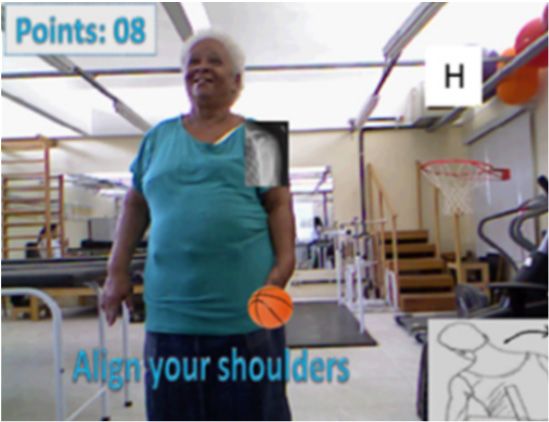
Information 2019, 10, 154                                                                            2 of 14

(e.g., gallstone disease, liver cancer or abscess), neurological (e.g., Parkinson’s disease), cardiological
(e.g., stroke), or rheumatological (e.g., Rheumatic polymyalgia) diseases [1,2,6].
      Treatments depend on the underlying cause of the disorder, and can range from anti-inflammatories
to physiotherapy; however, sometimes they can also involve surgery.
      Rehabilitation plays a key role in maximizing recovery and improving function to increase
performance and autonomy in ADLs for both neurological and orthopedic patients [7]. In particular,
shoulder rehabilitation focuses on two main aspects: Flexibility, to regain range of motion (ROM);
and strength, to fortify the muscles around the shoulder. Traditional rehabilitation methods are
based on a therapist-patient one-to-one activity, and on repeated exercises: Usually carried out with
external devices to strengthen a target body area. However, the traditional rehabilitation process
is time-consuming and difficult, especially for patients who suffered particularly severe strokes.
Additionally, the repetitiveness of exercises reduces the patient’s motivation; consequently, the patient
is bored, and tends to neglect the exercises prescribed [8].
      The application of virtual and augmented reality (VR-AR) is gaining popularity and scholarly
interest because of the possibility to generate environmental and perceptual stimuli [9], which transform
the user experience offering high levels of “personal efficacy” (beliefs about own capability to accomplish
challenging goals), and “self-reflectiveness” (intense focus on the particular instance or experience),
generated by the user sense of presence and emotional engagement [10].
      AR is in the exploratory stage in many applications, including the rehabilitation field where it
shows advantages over VR. In fact, AR supplements reality but does not replace it, providing also a
better sense of presence and reality judgments of the environment: As the elements the patient uses to
interact with the application are real [11].
      However, while in VR the user is completely immersed in a computer-generated environment,
in AR the user sees both the real world and the virtual objects superimposed on it [12].
      As defined by Azuma et al. [13], a system must fulfil the requirements to be considered an
AR system: to combine real and virtual objects in a common environment, to run in real-time and
interactively, and to align both spatially and coherently (i.e., register [12,14]) real and virtual objects.
AR may overcome the difficulties related to traditional rehabilitation methods, by creating interactive
and immersive environments. Additionally, AR can provide reliable and accurate feedback to guide
and correct the patient during an exercise, enhancing the individual motor learning as showed in [15,16].
In this way, the rehabilitation process can occur outside of a clinical setting, and without requiring
the therapist supervision; however, in case of an unsupervised rehabilitation, the AR system should
provide the therapist with the user performance data, allowing an offline physiotherapeutic evaluation.
      Current literature shows the need for new rehabilitation tools for upper extremity. Indeed, even if
several studies have demonstrated that physical therapy can improve the recovery rate of upper
extremity function, the effectiveness of traditional interventions in this human body region has resulted
to be less pronounced than in other areas (such as the lower extremity) [17]. AR technology seems
promising, offering an alternative approach to traditional rehabilitation. AR-based rehabilitation
increases patient motivation, gives clinicians full control over specific parameters (e.g., movement
distance), and allows for adjustment to individual capabilities.
      The aim of this review is to provide an overview of the AR systems developed in the field of
shoulder rehabilitation, and to understand the added value of AR. In particular, we aim to classify the
AR rehabilitation systems reviewed (AR Rehab Systems) on the basis of: Wearable and non-wearable
technology, integrated feedback, rehabilitation setting, and type of evaluation conducted.

2. Overview, Technical and Clinical Aspects of AR-Based Systems for Shoulder Rehabilitation
    The literature search was conducted using the following databases: PubMed, Web of Science and
Scopus up to September 2018. The search terms used were “Rehabilitation AND Augmented Reality” or
“Rehabilitation AND Mixed Reality (MR)”, selecting only reports using AR-based systems for shoulder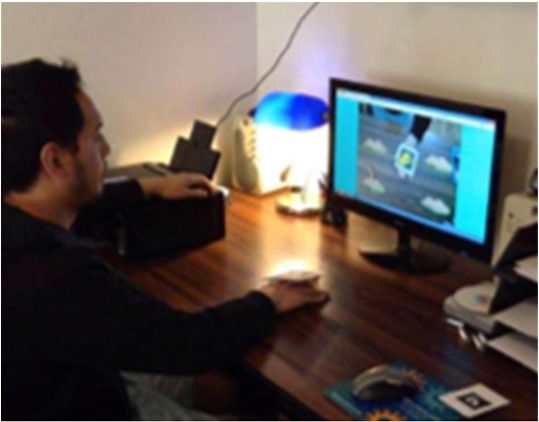
Information 2019, 10, 154 3 of 14
Information 2019, 10, x FOR PEER REVIEW 3 of 14
rehabilitation.
wearable The following
technology, data wererehabilitation
feedback provided, extracted from each clinical
setting, paper: usefulness,
Wearable and andnon-wearable
feasibility of
technology,
the system. feedback provided, rehabilitation setting, clinical usefulness, and feasibility of the system.
Ourliterature
Our literaturereview
reviewidentified
identified212
212articles.
articles.After
Afterremoving
removingduplicates,
duplicates,143
143studies
studiesremained.
remained.
Of these, 123 were discarded since they did not fulfil the inclusion criteria: Seven
Of these, 123 were discarded since they did not fulfil the inclusion criteria: Seven papers were papers werenot
not
written in English, three were book chapters, 112 were not related to shoulder rehabilitation.
written in English, three were book chapters, 112 were not related to shoulder rehabilitation. A total A total
of12
of 12articles
articlesremained
remainedrelevant
relevantfor
forinclusion,
inclusion,corresponding
correspondingto tonine
ninedifferent
differentAR-based
AR-basedsystems
systemsforfor
shoulder rehabilitation (see Figure 1): NeuroR [18], ARS [19], RehaBio [20], MirrARbilitation
shoulder rehabilitation (see Figure 1): NeuroR [18], ARS [19], RehaBio [20], MirrARbilitation [21,22], [21,22],
ARIS[23,24],
ARIS [23,24],AR
ARGames
Gamesby byDe
DeLeon
Leonet etal.
al.[25],
[25],SleeveAR
SleeveAR[26,27],
[26,27],AR
ARFruit
FruitNinja
Ninja[28],
[28],AR
ARSystem
Systemby by
Colomer et al. [29].
Colomer et al. [29].
Figure
Figure 1.1. The
Thenine
nine AR
AR Rehab
Rehab Systems:
Systems: NeuroR
NeuroR (top-left),
(top-left), ARS
ARS (top-center),
(top-center), RehaBio
RehaBio (top-right),
(top-right),
MirrARbilitation
MirrARbilitation(middle-left),
(middle-left),ARIS
ARIS(middle-center),
(middle-center),AR
ARGames
Gamesby byDe
DeLeon
Leon etet al.
al. (middle-right),
(middle-right),
SleeveAR
SleeveAR(bottom-left), AR Fruit
(bottom-left), Ninja (bottom-center),
AR Fruit and AR System
Ninja (bottom-center), and ARby Colomer
System et byal.Colomer
(bottom-right)
et al.
[18–29] .
(bottom-right) [18–29].
The following
The followingsection
sectionpresents
presentsanan overview
overview of
of the
the AR-based
AR-based reviewed
reviewed systems
systems for
for shoulder
shoulder
rehabilitation,as
rehabilitation, aswell
wellas
asan
ananalysis
analysisand
anddiscussion
discussion of
of their
their technical
technical and
and clinical
clinical aspects.
aspects.
2.1.Overview
2.1. Overview
[18](Figure
NeuroR[18]
NeuroR (Figure1,1,top-left)
top-left)isisaapost-stroke
post-strokerehabilitation
rehabilitationsystem
systembased
basedon onAR ARtechnology.
technology.
The system provides motor imagery (which can be defined as “the mental execution
The system provides motor imagery (which can be defined as “the mental execution of a movement of a movement
without any overt movement or without any peripheral activation” [30]) by means
without any overt movement or without any peripheral activation” [30]) by means of a virtual of a virtual 3D arm
3D
that replaces the paralyzed arm in a virtual avatar of the patient. It can be used either
arm that replaces the paralyzed arm in a virtual avatar of the patient. It can be used either in in rehabilitation
centers as wellcenters
rehabilitation as at home. The
as well assystem
at home.includes exercises
The system to achieve
includes ROMto
exercises ofachieve
flexion and
ROM abduction of
of flexion
the abduction
and shoulder. of the shoulder.
ARS [19] (Figure 1, top-center) is a simple AR system for home rehabilitation after stroke. The
system uses AR technology to provide a motivational environment, based on a “butterfly catching”
game, to perform reaching tasks. The authors presented two versions: A basic modality based on a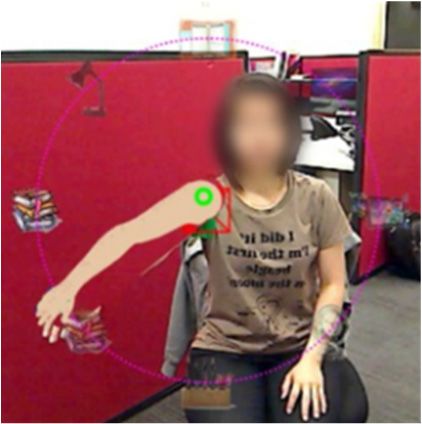
Information 2019, 10, 154                                                                             4 of 14

      ARS [19] (Figure 1, top-center) is a simple AR system for home rehabilitation after stroke. The system
uses AR technology to provide a motivational environment, based on a “butterfly catching” game, to
perform reaching tasks. The authors presented two versions: A basic modality based on a computer game,
and a more advanced version which incorporates a control tool (a computer mouse/arm skate) to increase
the physical effort associated with reaching tasks. Additionally, the system includes a game score.
      RehaBio [20] (Figure 1, top-right) is an AR system for home rehabilitation that can be used to
restore the upper-limb lost functions of patients who have hemiparesis from stroke, traumatic brain
injury (TBI), or spinal cord injury (SCI). The system includes three modules: (1) a database module to
store patient profile and training information, (2) a module for AR-based rehabilitation comprising four
exercises (pin pong rehab, balloon collection rehab, transfer object rehab, and feeding animal rehab),
and (3) a biofeedback simulation module (as described in Section 2.3) to monitor and to visualize the
trained muscles performance. The system includes the user performance evaluation.
      MirrARbilitation [21,22] (Figure 1, middle-left) is an AR rehabilitation system with gesture
recognition based on marker-less body tracking technology, such as the Kinect™ motion sensing input
device (Microsoft® , Redmond, WA, USA [31]). The system guides and motivates the user during the
execution of a reaching task, allowing the physiotherapist to set the target object angle. In addition,
it provides score points and gives instructions to avoid the incorrect execution of movements. This system
is specifically designed to fit within a home environment.
      ARIS (Augmented Reality based Illusion System) [23,24] (Figure 1, middle-center) is a system
designed for clinical rehabilitation after stroke. The system uses: AR technology to develop a
rehabilitation game-exercise with visual and audio feedback, computer vision technology to create the
illusory environment, and signal processing to monitor the performance of trained muscles via EMG
signal (electromyography signal). The game consists in a circular motion exercise (CME) to increase
the shoulder joint ROM.
      The AR Games by De Leon et al. [25] (Figure 1, middle-right) are developed to rehabilitate stroke
patients. This system provides an interactive and motivational augmented reality environment and is
designed for a home setting. The proposed AR games are “color ball” and “mole attack”. Both can be
played with a hand-held roller-ball device, that gives the possibility to focus the exercises on different
movements and muscles. The system provides a game score.
      SleeveAR [26,27] (Figure 1, bottom-left) is a system that integrates multimodal feedback
(visual-audio-haptic) to guide the patient through therapeutic rehabilitation exercises (abduction-adduction,
elevation-depression, flexion-extension) prescribed by a physical therapist. The system provides the
patient a guidance for movements together with a report on the exercise progress by means of AR
projections on their arm and on the floor. Specifically, motion capture technology, such as Optitrack [32]
is used to track peoples’ arm movement. AR Sleeve system is designed for home settings; however,
because of its complexity and high cost, at this time it can be used in rehabilitation gyms with multiple
and concurrent therapeutic sessions.
      AR Fruit Ninja [28] (Figure 1, bottom-center) is an AR version of the popular “Fruit Ninja”
game [33] for patients with chronic stroke. The system uses a projection-based AR technology and
provides a game score.
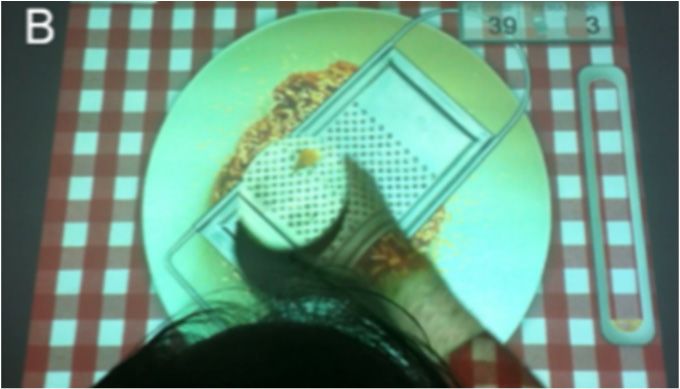
      The AR System by Colomer et al. [29] (Figure 1, bottom-right) is a portable and low-cost mixed
reality tabletop system for upper limb rehabilitation which is based on marker-less tracking technology
(Kinect™ Microsoft® , Redmond, WA, USA [31]). This system allows multi-touch interaction with the
hands or via manipulation of tangible objects, depending on the exercise selected. The exercises cover
a wide range of hand and arm movements and involve ADLs (e.g., sweeping the crumbs from the
table). In addition, the system provides audio-visual feedback of the user performance.
      Table 1 shows a summary of the AR Rehab Systems for shoulder rehabilitation.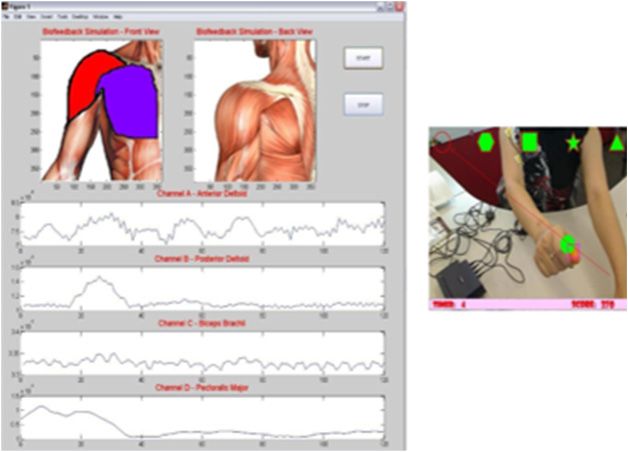
Information 2019, 10, 154                                                                                 5 of 14

        Table 1. A summary of the AR-based systems for shoulder rehabilitation, reviewed in this paper.

      AR Rehab System          Physiotherapy Applications       Rehab Settings        Target Population
                               Shoulder abduction-flexion
                               Shoulder horizontal flexion      Home setting
          NeuroR [18]                                                                Patients after stroke
                                   Finger extension             Clinical setting
                                    Hand grasping
            ARS [19]           Shoulder-elbow movements          Home setting        Patients after stroke
                                    Shoulder flexion
          RehaBio [20]        Shoulder horizontal adduction     Clinical setting     Patients after stroke
                                  Elbow-wrist flexion
                                                                                   Patients after stroke and
   MirrARbilitation [21,22]        Shoulder abduction            Home setting
                                                                                         mastectomy
                                    Shoulder flexion
          ARIS [23,24]        Shoulder adduction-abduction      Clinical setting     Patients after stroke
                                Shoulder int.-ext. rotation
                                Elbow flexion -extension
                               Shoulder abduction-flexion
       AR Games by
                               Shoulder medial-lateral rot       Home setting        Patients after stroke
      De Leon et al. [25]
                                  Wrist radial deviation
                              Forearm pronation-supination
                              Shoulder abduction-adduction
                              Shoulder elevation-depression      Home setting
       SleeveAR [26,27]                                                              Patients after stroke
                               Shoulder flexion-extension         Rehab gym
                              Elbow-wrist flexion-extension
                                   Hand movements
      AR Fruit Ninja [28]                                              -             Patients after stroke
                                  Shoulder movements
                                  Wrist flexion-extension
                                 Elbow flexion-extension
        AR System by
                                 Fingers flexion-extension      Clinical setting    Chronic stroke patients
      Colomer et al. [29]
                                     Grasping objects
                                    Shoulder rotation

2.2. Wearable Technologies for Tracking, Enabling Augmented Reality
     Accurate tracking between virtual objects and real world objects is a crucial challenges for
developing AR applications [34]. The alignment of virtual content whit the real-world depends on
a precise tracking of the viewing pose (relative to the real environment), and the annotated objects.
Zhou et al. [35] categorized AR tracking techniques in: Sensor-based methods, employing sensors
placed in the environment; vision-based methods, using image information to track the position and
orientation of the desired object/subject; and hybrid tracking techniques, able to utilize both previous
methods [34].
     According to the literature [36], there is a wide variety of wearable sensing devices proposed for
data collection of human body motion. Although many publications report effective tracking of body
motion, most of the proposed methods rely on sensor/peripheral interconnection cables, not always
flexible, and other components that have to be worn. These devices are usually not comfortable or
easily wearable, and hamper the patient’s movements; thus, they are neither suitable for physical
rehabilitation activities, nor for training programs in sports rehabilitation [36].
     All the AR Rehab Systems reviewed use vision-based methods, which do not require the user
to wear cabled devices; these methods can be further categorized in: Marker-based, or marker-less
(“location-based position”). Marker-based AR technology uses the recognition of a distinguishable
element, which can be identified apart from other objects in the environment by means of a camera.
The virtual object is displayed only if the corresponding marker is visible. Although this technology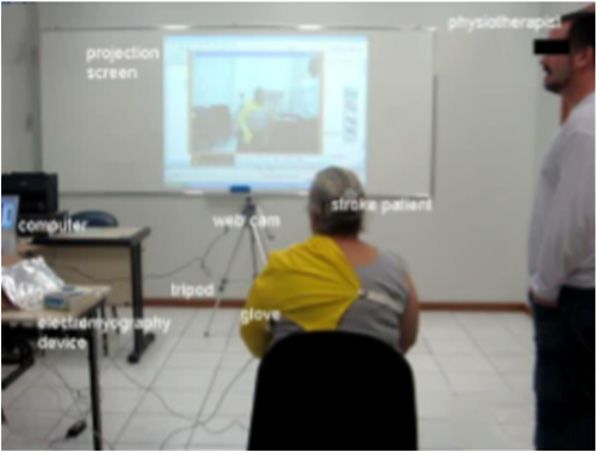
Information 2019, 10, 154                                                                                     6 of 14

uses visually obtrusive markers, it can offer a better tracking (more precise and faster), thus it is used
in numerous AR applications [37].
      The wearable markers employed in the AR Rehab Systems reviewed are inexpensive passive
markers, extremely light to wear, that can be used by everybody, including children. More in particular,
the markers employed consist of: black-and-white (B/W) fiducial markers in the form of a pattern,
colored fiducial markers in the shape of strips or finger glove, and fiducial markers covered with
retroreflective materials to reflect infrared (IR) light emitted from IR LEDs of the tracking camera.
      The main issues of marker-based AR are related to possible difficulties in marker recognition
due to poor lighting conditions (that can make the makers unrecognizable), and marker occlusions.
The use of IR retroreflective markers improves the reliability of tracking, reducing the effects of
ambient illumination.
      Placing markers is not always practical, especially when they should be placed on the subject body.
Therefore, with the recent advances in hardware (modern GPUs and low-cost motion capture devices),
marker-less based systems now represent attractive solutions to solve the problems associated with
marker-based tools.
      In November 2010, Microsoft launched the low-cost marker-less camera-based Kinect™ motion
sensing input device (Microsoft® , Redmond, WA, USA [31]) which originally was used for the Xbox
360 gaming console, to track the users generating the 3D position and orientation of each body segment.
This system requires minimal calibration with no marker to be positioned on the body. As disadvantage,
its cameras are only capable of capturing 30 frames per second, thus are only able to track certain basic
motions (e.g., walking or jumping), rather than fast movements [38].
      Table 2 summarizes the tracking methods used by the AR Rehab Systems reviewed.

                       Table 2. Tracking methods utilized by the AR Rehab Systems reviewed.

                                                                Tracking Methods
        AR Rehab System
                                             Tracking Type                         Trackable Items
                                       Wearable marker-based AR            Fiducial markers (B/W pattern)
               NeuroR
                                            Marker-less AR                   Natural features (skin-face)
                                                                           Fiducial markers (B/W pattern)
                 ARS                   Wearable marker-based AR
                                                                                IR Fiducia markers
              RehaBio                  Wearable marker-based AR        Fiducial markers (colored finger glove)
                                            Marker-less AR
         MirrARbilitation                                                    None (full-body tracking)
                                       (Microsoft® , Kinect™ [31])
                ARIS                   Wearable marker-based AR           Fiducial markers (colored strips)
   AR Games by De Leon et al.          Wearable marker-based AR           Fiducial markers (B/W pattern)
                                      Wearable marker-based AR
              SleeveAR                                                          IR Fiducial markers
                                    (OptiTrack Motion Capture [32])
           AR Fruit Ninja           Non-wearable marker-based AR         Colored Fiducial markers (strips)
                                            Marker-less AR
   AR System by Colomer et al.                                               None (full-body tracking)
                                       (Microsoft® , Kinect™ [31])

2.3. Augmented Reality Interfaces: Wearable and Non-Wearable Technology Used
      Besides motion tracking technology, the primary components of the AR Rehab Systems reviewed
are the augmented reality interfaces providing the desired feedback to the user.
      In general, feedback can provide: information for guidance and error detection during the
exercise execution, and information about performance outcomes; additionally, feedback can be used
for motivational purposes. Augmented (extrinsic) feedback, if provided in an appropriate manner,
facilitates the motor (re-) learning. It can be delivered by a trainer, a therapist, or technical displays
according to a chosen feedback modality, such as: Visual, auditory, haptic, a combination of these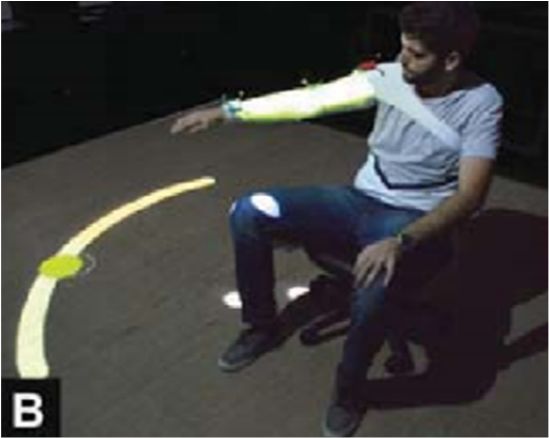
Information 2019, 10, 154                                                                                  7 of 14

(multimodal feedback), and/or from biofeedback devices [15]. Biofeedback provides biomechanical
measurements (related to the movement, postural control, and forces), and measurements of the
body physiological systems (neuromuscular, respiratory, and cardiovascular). Specifically, in physical
rehabilitation, biofeedback based on EMG is the most used and provides information about muscle
activity. Sigrist et al. [15] indicate that the multimodal feedback is more efficient than unimodal
feedback, because it prevents the cognitive overload enhancing the learning effectiveness.
     Table 3 summarizes the types of feedback implemented in each AR Rehab System reviewed and
the AR interfaces.
     Regarding the visual feedback, available display technologies for AR include: Spatial displays;
hand-held displays (mobile phones and tablets), and head-mounted displays (HMDs) [39]. The AR
Rehab Systems reviewed use spatial displays, which can be further categorized in: Screen-based,
and projection-based.

                  Table 3. Feedback modalities and interfaces of the AR Rehab Systems reviewed.

       Integrated             AR Rehab                                  AR Interface
        Feedback               System
                                                Visual      Audio            Haptic                 Bio
                                ARS             Screen         /                 /                   /
                            MirrARbilitation    Screen         /                 /                   /
   Unimodal: Visual
                            AR Games by
                                                Screen         /                 /                   /
                            De Leon et al.
                                                           PC audio
                               NeuroR          Projector                         /                   /
                                                           speakers
       Bimodal:                                            PC audio
     Visual-Audio           AR Fruit Ninja     Projector                         /                   /
                                                           speakers
                            AR System by                   PC audio
                                               Projector                         /                   /
                            Colomer et al.                 speakers
      Trimodal:                                            Ext. audio    MYO wearable
                              SleeveAR         Projector                                             /
  Visual-Audio-Haptic                                       speakers     tactile interface
                                                           PC audio                          FlexComp Infiniti™
                               RehaBio          Screen                           /
       Trimodal:                                           speakers                              System [40]
   Visual-Audio-Bio                                        PC audio                          FlexComp Infiniti™
                                ARIS            Screen                           /
                                                           speakers                              System [40]

     Screen-based AR technologies use video mixing and display the merged images on a regular
monitor. In this type of AR, the field of view (FOV) is limited by: The monitor size, the spatial
alignment of the display relative to the observer, and the distance between monitor and observer.
     Projector-based spatial displays use front-projection to display images directly on physical
surfaces. These systems overcome some of the shortcomings that are related to wearable HMDs,
providing: Improved ergonomics, a theoretically unlimited FOV, a scalable resolution, and an easier
eye accommodation. However, they also have several issues, such as: Shadow-casting of physical
objects and interacting users; restrictions of the display area (constrained to the size, shape, and colors
of physical surfaces); and restriction to a single user when virtual data is displayed with non-zero
parallax. Moreover, conventional projectors only focus on a single focal plane located at a constant
distance, and projecting images onto non-planar surfaces causes blur [41].
     Until now, wearable visual feedback was challenging due to practical limitations. Despite their
popularity, HMDs are sometimes avoided in clinical applications because of side effects such as
simulator sickness and visual fatigue [42]. Besides, HMDs still present technological and perceptual
limitations. Some technological issues are: A small FOV, the obtrusiveness and weight of the
device, and the low luminance of micro-displays. Additionally, examples of perceptual conflicts are:
Information 2019, 10, 154 8 of 14
The vergence-accommodation conflict [43], and the mismatched accommodation between virtual
content and real-world scene for optical see-through (OST) HMDs [44].
All these limitations are the reason why HMDs have not been used yet in shoulder rehabilitation.
However, upcoming developments in AR headsets are expected to improve their functionalities,
guaranteeing an unobtrusive use in the future. HMDs deserve future attention since they can provide
a more immersive experience than other non-wearable AR display technologies, and they intrinsically
provide the user with an egocentric viewpoint. Furthermore, HMDs can integrate both sensing
capabilities (to derive their position and orientation in 3D) and computing capabilities (to track external
environments and self-localization). Finally, HMDs as the Microsoft HoloLens [45], can also provide
multi-modal interactions for a more intuitive and enjoyable AR experience [46].
Visual feedback is incorporated, as exclusive feedback modality, in only three of the nine AR Rehab
Systems reviewed: Two computer games (ARS, and AR Games by De Leon et al.), and MirrARbilitation.
Specifically, in these two games, visual feedback is used as a motivational tool to provide a funnier
experience for patients. The motivational aspect is very important during therapy sessions, because it
can increase the chances of a fast recovery [47]. The visual feedback integrated in MirrARbilitation is
used to guide and correct patient movements during rehab sessions, to evaluate user performance,
and also for motivational purposes. Exercise instructions, as well as scores and positive feedbacks,
are displayed on a standard screen during therapy sessions. In addition, once more for motivational
purposes, X-ray images of the shoulder anatomy are superimposed during the interval of motion.
A combination of visual and other feedbacks is used by the other AR Rehab Systems reviewed.
Particularly, five systems (NeuroR, RehaBio, ARIS, AR Fruit Ninja and AR System by Colomer et
al.) incorporate both audio and visual feedback. Additionally, two of them (ARIS and RehaBio) also
include biofeedback in real-time. The audio-visual feedback is utilized in these systems to motivate
and encourage users during long-term training sessions, and also to notify patients of specific events.
The visualization of content ranges from simple abstract in form of basic objects (i.e., EMG line graph,
muscle animation, and score, all integrated in both ARIS and RehaBio), to natural visualization of a 3D
virtual arm (included in NeuroR and ARIS). The latter is superimposed on the user impaired arm to
create an illusory scene of a real arm, speeding up in this way the recovery.
Audio feedback is used as an alarm during the exercise execution, for example: to detect a
collision, to provide a score, or to indicate the beginning of movement. External audio speakers (Sleeve
AR), and PC audio speakers (Neuro, AR Fruit Ninja, AR System by Colomer et al., RehaBio, ARIS),
are employed as audio interfaces in the AR Rehab Systems reviewed.
ARIS and RehaBio also integrate biofeedback, which has a twofold purpose: it monitors and
tracks the trained muscles providing performance information, and it motivates the user during the
exercise execution showing visual reflections of currently activated muscles. Many studies have shown
that the inclusion of biofeedback improves the quality of rehabilitation therapy, because it provides
higher motivation especially for long-term training [26]. In both these AR Rehab Systems, FlexComp
Infiniti™ System from Thought Technology [40], with four wearable EMG MyoScan™ Sensors for the
user’s upper limb muscles, is used to acquire the sEMG (surface electromyography) data in real time.
Extracted EMG data are then displayed in real-time on a screen.
Finally, SleeveAR incorporates audio-visual-haptic trimodal feedback that is applied to guide and
motivate the user during a task. In particular, tactile feedback is used to notify patients of specific
events (e.g., current state of the exercise). The AR interface in this system is a wearable device (MYO
bracelet, North Inc., Canada) able to provide multiple ranges of vibrations in an easy and simple way
via wireless communication.
2.4. Rehabilitation Settings
Rehabilitation services may be conducted by therapists, physicians, community rehabilitation
workers, and family members. Thus, they can be provided in a wide variety of settings, such as:
Rehabilitation centers, hospitals, clinics, community facilities, and homes.Information 2019, 10, 154 9 of 14
The choice of a rehabilitation setting is based on patient characteristics, for example: Overall
health, age, and degree of disability. However, patients with mobility difficulties who live in rural
and remote areas have issues related to accessibility, availability, and utilization of rehabilitation
services [48]. Furthermore, since rehabilitation can be very expensive and not widely available in
healthcare sectors, a way to overcome these problems could be to implement user-friendly, portable,
and low-cost systems that do not require the supervision of a therapist for guiding the patient during
the rehabilitation task execution.
Four AR rehabilitation systems (MirrARbilitation, SleeveAR, ARS, AR Games proposed by De
Leon et al.) are designed to support a home rehabilitation process without the direct supervision of the
therapist. However, only two systems (MirrARbilitation and SleeveAR) provide a real time feedback
to guide the patient during the rehabilitation exercise and to maintain a quality in the execution of the
task; the others (ARS and AR Games by De Leon et al.) only provide a performance score which can be
useful for motivational purpose. Moreover, at this time, SleeveAR can be only used in rehabilitation
gyms with multiple and concurrent therapeutic sessions, because of its complexity and high cost.
In all four cases, the possibility of registering user performance for (online or offline) evaluation
by physiotherapists is not explicitly mentioned: The latter functionality is of fundamental importance
to support a home rehabilitation process and should therefore be integrated in the future.
As for AR Fruit Ninja, the authors do not specify the type of rehabilitation setting, and the system
only provides score points as in ARS and AR Games by De Leon et al.
NeuroR can be considered suitable for both home rehabilitation without direct therapist supervision
and rehabilitation centers.
Finally, ARIS, RehaBio and AR System by Colomer et al. are designed for clinical settings.
2.5. Evaluations
All AR Rehab Systems reviewed, except from AR Fruit Ninja, have been evaluated in terms of
usability. A technical evaluation has been carried out for two systems (RehaBio and ARIS); and a
clinical evaluation, involving real patients, has been performed for five systems (MirrARbilitation,
NeuroR, AR System by Colomer et al., ARS, AR Fruit Ninja). All the other AR Rehab Systems reviewed
have been tested by healthy subjects: RehaBio, ARIS, AR Games by De Leon et al., and SleeveAR.
Table 4 shows the types of evaluation performed on each AR Rehab System reviewed with details
on the number of subjects involved in the testing, and the evaluation methods.
Table 4. Evaluation of the AR Rehab Systems reviewed.
AR Rehab System Evaluation Type Evaluation Method
Usability and clinical Objective (performance analysis) and
NeuroR
(n = 8; stroke patients) subjective measures (via questionnaire)
Usability and clinical Objective (performance analysis) and
ARS
(n = 4; chronic stroke patients) subjective measures (interviews)
Usability and technical Objective (performance analysis) and
RehaBio
(n = 10; normal people) subjective measures (via questionnaire)
Usability (n = 33; 11 patients;11 Objective (performance analysis) and
MirrARbilitation
therapists; 11 developers) subjective measures (via observations)
Usability Objective (performance analysis) and
ARIS
(n = 10; normal people) subjective measures (via questionnaire)
Usability
AR Games by De Leon et al. Subjective measures (via questionnaire)
(n = 4; normal people)
Usability Objective (performance analysis) and
SleeveAR
(n = 18; normal people) subjective measures (via questionnaire)
Usability and clinical (n = 18;
AR Fruit Ninja Objective (performance analysis) measures
patients with chronic hemiparesis)
Usability and clinical (n = 30; Objective (performance analysis) and
AR System by Colomer et al.
patients with residual hemiparesis) subjective measuresInformation 2019, 10, 154 10 of 14
The authors of NeuroR conducted two studies. In the first study, they evaluated the effectiveness
of the system on upper limb motor function using the Fugl-Meyer scale [49]. The results of Fugl-Meyer
test suggested a trend for greater upper limb motor improvement in the augmented reality group
(from 17% to 62%) than in the control group (from 4% to 14%). In the second study, they measured the
increase of shoulder ROM with computerized photogrammetry. All participants showed an increase of
the ROM for the shoulder flexion (61.3% to 90%) and abduction (46.7% to 73.9%). However, a further
large randomized study is needed to support observed improvements.
The ARS system was evaluated as a good tool for home rehabilitation after stroke. Of the 4
participants in the study, 2 showed improvement in the execution on the timed game-play and in arm
function. The system was evaluated using: The Fugl-Meyer test [49] to assess motor performance,
the Wolf Motor Function Test to assess functional movement, and the DASH (Disabilities of the Arm,
Shoulder and Hand questionnaire) to acquire information about patients symptoms and abilities. At the
end of session, participants were asked to express their opinion regarding the system. The participants
considered the game score to be a very important motivational tool and they suggested to make it
visible on the screen while playing. However, the results of the study are tentative since the sample
size was very small thus limiting the ability to generalize the obtained findings.
Authors of RehaBio and of ARIS showed encouraging results, in terms of effectiveness, user
motivation, and enjoyment. For both systems, patients’ opinions were collected using a five-point
Likert questionnaire to investigate if the system is motivating, fun, ease to use, and to express opinions
regarding the system interface and the AR characteristics. However, also in this case, clinical trials are
needed to validate the effectiveness of the systems.
The AR Games by De Leon et al. was evaluated positively as a motivational rehabilitation
tool. Also, for this system a qualitative evaluation was performed; at the end of game sessions, each
participant completed a five-point Likert scale questionnaire, comprising 6 items, focused on the users’
opinion (i.e., item 2: “I felt the game was intuitive and enjoyable”). However, the results are tentative
since only four healthy volunteers participated in the tests.
Only four systems were evaluated by more than ten subjects: MirrARbilitation, SleeveAR, AR Fruit
Ninja, and AR System by Colomer et al.
The authors of AR Fruit Ninja, MirrARbilitation and SleeveAR and AR System by Colomer
et al. conducted a comparative study showing the efficacy of their AR application. The former
compared the user motor performances obtained whit their system to those obtained using the original
videogame “Fruit Ninja” without AR. The results were very positive: scores were higher (21%),
reaching times were faster (19%) and less movement variability was observed (15%). In addition,
the authors of the MirrARbilitation system showed that their application is more efficient than traditional
rehabilitation methods because it improves the user engagement and the exercise performance outcomes.
The motivational and usability aspects were evaluated by means of a five-point Likert questionnaire.
In addition, the increased motivation of the users was showed by the number of exercise repetitions
that was improved from 34.06% to 66.09%. On the other hand, the exercise performance outcomes
were showed from increase percentage of correct exercises from 69.02% to 93.73%.
The authors of SleeveAR conducted a usability study to evaluate user performance: The results
showed that the system can successfully guide subjects through an exercise prescribed (and demonstrated)
by a physical therapist, with performance improvements between consecutive executions. The study
included a comparison of two different approaches: AR system and video observation. Each test session
involved the execution of five different exercises in the two approaches as the guidance: The video and
with the SleeveAR. At the end of test sessions, all participants filled a six-point Likert questionnaire;
results showed a statistically significant difference for the item “It was easy to see if the arm was in the
wrong position”, whereby it is noteworthy that participants gave higher assessment to the AR system.
Finally, Colomer et al. demonstrated the clinical effectiveness and the acceptance of their AR
system, comparing it to conventional physical therapy.Information 2019, 10, 154 11 of 14
Patients treated with the AR system showed positive results in terms of body activity (assessed
using the following tests: The Wolf Motor Function Test, the Box and Blocks Test, and the Nine Hole Peg
Test) and participation (assessed using the subscales of Quality of Movement and Amount of Use of the
Motor Activity Log). Additionally, the authors have evaluated the acceptance of their AR system using:
the System Usability Scale (a Likert scale with scores ranging from 0 to 100) and four (seven-point
Likert) subscales of the Intrinsic Motivation Inventory. The former scale was used to provide a global
assessment of subjective usability; the results have showed a good acceptance (79.13 ± 7.54 from a total
score of 100) of AR system. The latter scales were used to assess perceived value/usefulness of the
system, participant interest/enjoyment, perceived competence and pressure/tension.
Results have showed that the system is highly usable (6.17 ± 0.69), enjoyable (5.73 ± 0.79 of 7),
and the participants have found themselves competent (5.21 ± 0.98) but not pressured (1.98 ± 0.58).
3. Conclusions
Augmented reality allows to merge the natural perception of real environment with
computer-generated information, and it is considered an enabling technology of the fourth industrial
revolution, aimed at aiding specific tasks as a tool in the manufacturing industry. Additionally, AR has
proven to be a promising technology in healthcare as demonstrated by the increasing number of
publications in medical training [50], surgery [51–54], and rehabilitation [55].
The goal of this review was to investigate to which extent augmented reality applications are
currently used in shoulder rehabilitation. A literature search was conducted and a total of nine different
AR-based systems for shoulder rehabilitation were identified. This review has shown that current
systems use vision-based methods for registration, and primarily wearable marker based- tracking
(avoiding sensor-based methods). Moreover, all of them employ spatial displays (both screen-based,
and projection-based) for the visualization of AR content. The use of HMDs has not been explored yet for
this specific type of rehabilitation (shoulder); and a wearable myoelectric remote-control interface been
only used to provide haptic (tactile) feedback. Probably, until now, HMDs have not been used because
of technical impediments (small FOV, obtrusiveness and weight, low luminance of micro-displays)
and perceptual limitations (vergence-accommodation conflict, mismatched accommodation between
virtual content and real-world). However, HMDs deserve future attention since can deliver a more
immersive experience than other non-wearable AR display technologies, and they intrinsically provide
the user with an egocentric viewpoint. Additionally, modern HMDs such as the Microsoft HoloLens
can integrate tracking capabilities (for external environments and self-localization) and provide
multi-modal interactions for a more intuitive, and enjoyable AR experience.
Concerning the incorporated feedback, three systems (33%) present visual feedback only,
the remaining systems (66%) provide also audio feedback: alone (33%), coupled with biofeedback
(22%), or together haptic feedback (11%).
As for the rehabilitation setting, most of the systems reviewed are designed for are designed to
support a home rehabilitation process without the direct supervision of the therapist (44%), one systems
is suitable for both home settings and rehabilitation centers (11%), three are designed only for clinical
settings (33%), however, the authors of one system do not specify the type of rehabilitation setting
(11%).
However, only two out of four systems (MirrARbilitation and SleeveAR) can be considered
suitable for home sitting because they provide feedbacks, normally given by physiotherapist, to guide
patients on how to perform the movements.
The other two systems, (ARS and AR Games by De Leon et al.) together to AR Fruit Ninja, at the
time, can be considered suitable only for motivational purposes because they provide only score game.
Most systems have reached the maturity to support test with the final user, but only four AR
Rehab Systems have been evaluated in clinical trials: of these, only three systems have been evaluated
by more than ten subjects. Clinical studies conducted show clear benefit over traditional rehabilitationInformation 2019, 10, 154 12 of 14
methods in terms of usability, enjoyability, and motivation and in terms of improving of exercise
performance outcomes.
To conclude, this review shows that the use of AR technologies in shoulder rehabilitation is
promising and deserve future attention, but today the number of clinical studies conducted is low
thus limiting the ability to generalize the obtained findings to support the effectiveness of the AR
applications for shoulder rehabilitation.
Funding: This work was partially supported by the European Project VOSTARS (H2020 Call ICT-29-2016 G.A.
(731974).
Conflicts of Interest: The authors declare that there are no conflicts of interest regarding the publication of
this paper.
References
1. Mitchell, C.; Adebajo, A.; Hay, E.; Carr, A. Shoulder pain: Diagnosis and management in primary care. BMJ
2005, 331, 1124–1128. [CrossRef] [PubMed]
2. Linaker, C.H.; Walker-Bone, K. Shoulder disorders and occupation. Best Pract. Res. Clin. Rheumatol. 2015, 29,
405–423. [CrossRef] [PubMed]
3. Lunde, L.-K.; Koch, M.; Knardahl, S.; Wærsted, M.; Mathiassen, S.E.; Forsman, M.; Holtermann, A.;
Veiersted, K.B. Musculoskeletal health and work ability in physically demanding occupations: Study protocol
for a prospective field study on construction and health care workers. BMC Public Health 2014, 14, 1075.
[CrossRef]
4. Natale, G.; Condino, S.; Soldani, P.; Fornai, F.; Mattioli Belmonte, M.; Gesi, M. Natale et. al.’s response to
Stecco’s fascial nomenclature editorial. J. Bodyw. Mov. Ther. 2014, 18, 588–590. [CrossRef]
5. Natale, G.; Condino, S.; Stecco, A.; Soldani, P.; Belmonte, M.M.; Gesi, M. Is the cervical fascia an anatomical
proteus? Surg. Radiol. Anat. 2015, 37, 1119–1127. [CrossRef] [PubMed]
6. Lollino, N.; Brunocilla, P.R.; Poglio, F.; Vannini, E.; Lollino, S.; Lancia, M. Non-orthopaedic causes of shoulder
pain: What the shoulder expert must remember. Musculoskelet. Surg. 2012, 96, 63–68. [CrossRef]
7. Sicuri, C.; Porcellini, G.; Merolla, G. Robotics in shoulder rehabilitation. Muscles Ligaments Tendons J. 2014, 4,
207–213. [CrossRef] [PubMed]
8. Burdea, G. Virtual Rehabilitation—Benefits and Challenges. Methods Inf. Med. 2003, 42, 519–523. [PubMed]
9. Penn, I.W.; Chuang, E.; Chuang, T.-Y.; Yang, C.-Y. Effects of Virtual-Reality-Augmented Cardiopulmonary
Rehabilitation Programs for Patients with Cardiovascular Diseases: A Systemic Review. Neuropsychiatry
2018, 8, 1630–1636. [CrossRef]
10. Riva, G.; Baños, R.M.; Botella, C.; Mantovani, F.; Gaggioli, A. Transforming Experience: The Potential of
Augmented Reality and Virtual Reality for Enhancing Personal and Clinical Change. Front. Psychiatry 2016,
7, 164. [CrossRef]
11. Al-Issa, H.; Regenbrecht, H.; Hale, L. Augmented reality applications in rehabilitation to improve physical
outcomes. Phys. Ther. Rev. 2012, 17, 16–28. [CrossRef]
12. Azuma, R.T. A survey of augmented reality. Presence Teleoper. Virtual Environ. 1997, 6, 355–385. [CrossRef]
13. Azuma, R.; Baillot, Y.; Behringer, R.; Feiner, S.; Julier, S.; MacIntyre, B. Recent advances in augmented reality.
IEEE Comput. Graph. Appl. 2001, 21, 34–47. [CrossRef]
14. Hoff, W.; Nguyen, K.; Lyon, T. Computer Vision-Based Registration Techniques for Augmented Reality.
Proc. SPIE 2000, 2904. [CrossRef]
15. Sigrist, R.; Rauter, G.; Riener, R.; Wolf, P. Augmented visual, auditory, haptic, and multimodal feedback in
motor learning: A review. Psychon. Bull. Rev. 2013, 20, 21–53. [CrossRef]
16. Da Gama, A.; Chaves, T.; Figueiredo, L.; Teichrieb, V. Guidance and movement correction based on
therapeutics movements for motor rehabilitation support systems. In Proceedings of the 14th Symposium
on Virtual and Augmented Reality, Rio de Janeiro, Brazil, 28–31 May 2012; pp. 191–200.
17. Merians, A.S.; Jack, D.; Boian, R.; Tremaine, M.; Burdea, G.C.; Adamovich, S.V.; Recce, M.; Poizner, H. Virtual
reality-augmented rehabilitation for patients following stroke. Phys. Ther. 2002, 82, 898–915. [PubMed]Information 2019, 10, 154 13 of 14
18. de Assis, G.A.; Corrêa, A.G.D.; Martins, M.B.R.; Pedrozo, W.G.; Lopes, R.D. An augmented reality system for
upper-limb post-stroke motor rehabilitation: A feasibility study. Disabil. Rehabil. Assist. Technol. 2016, 11,
521–528. [CrossRef]
19. King, M.; Hale, L.; Pekkari, A.; Persson, M.; Gregorsson, M.; Nilsson, M. An affordable, computerised,
table-based exercise system for stroke survivors. Disabil. Rehabil. Assist. Technol. 2010, 5, 288–293. [CrossRef]
[PubMed]
20. Aung, Y.; Al-Jumaily, A. Augmented reality-based RehaBio system for shoulder rehabilitation. Int. J.
Mechatron. Autom. 2014, 4, 52–62. [CrossRef]
21. Da Gama, A.E.F.; Chaves, T.M.; Figueiredo, L.S.; Baltar, A.; Meng, M.; Navab, N.; Teichrieb, V.; Fallavollita, P.
MirrARbilitation: A clinically-related gesture recognition interactive tool for an AR rehabilitation system.
Comput. Methods Programs Biomed. 2016, 135, 105–114. [CrossRef]
22. Gama, A.D.; Chaves, T.; Figueiredo, L.; Teichrieb, V. Poster: Improving motor rehabilitation process through
a natural interaction based system using Kinect sensor. In Proceedings of the 2012 IEEE Symposium on 3D
User Interfaces (3DUI), Costa Mesa, CA, USA, 4–5 March 2012; pp. 145–146.
23. Aung, Y.M.; Al-Jumaily, A. Augmented Reality based Illusion System with biofeedback. In Proceedings of
the 2nd Middle East Conference on Biomedical Engineering, Doha, Qatar, 17–20 February 2014; pp. 265–268.
24. Aung, Y.M.; Al-Jumaily, A.; Anam, K. A novel upper limb rehabilitation system with self-driven virtual
arm illusion. In Proceedings of the 2014 36th Annual International Conference of the IEEE Engineering in
Medicine and Biology Society, Chicago, IL, USA, 26–30 August 2014; pp. 3614–3617.
25. De Leon, N.; Bhatt, S.; Al-Jumaily, A. Augmented reality game based multi-usage rehabilitation therapist for
stroke patients. Int. J. Smart Sens. Intell. Syst. 2014, 7, 1044–1058. [CrossRef]
26. Vieira, J.; Sousa, M.; Arsénio, A.; Jorge, J. Augmented Reality for Rehabilitation Using Multimodal Feedback.
In Proceedings of the 3rd 2015 Workshop on ICTs for Improving Patients Rehabilitation Research Techniques,
Lisbon, Portugal, 1–2 October 2015; pp. 38–41.
27. Sousa, M.; Vieira, J.; Medeiros, D.; Arsénio, A.; Jorge, J. SleeveAR: Augmented reality for rehabilitation using
realtime feedback. In Proceedings of the International Conference on Intelligent User Interfaces, Sonoma,
CA, USA, 7–10 March 2016; pp. 175–185.
28. Mousavi Hondori, H.; Khademi, M.; Dodakian, L.; McKenzie, A.; Lopes, C.V.; Cramer, S.C. Choice of
Human–Computer Interaction Mode in Stroke Rehabilitation. Neurorehabil. Neural Repair 2016, 30, 258–265.
[CrossRef] [PubMed]
29. Colomer, C.; Llorens, R.; Noé, E.; Alcañiz, M. Effect of a mixed reality-based intervention on arm, hand, and
finger function on chronic stroke. J. Neuroeng. Rehabil. 2016, 13, 45. [CrossRef] [PubMed]
30. Mulder, T. Motor imagery and action observation: Cognitive tools for rehabilitation. J. Neural Transm. 2007,
114, 1265–1278. [CrossRef] [PubMed]
31. Wikipedia. Kinect. Available online: https://en.wikipedia.org/wiki/Kinect (accessed on 8 April 2019).
32. OptiTrack Motion Capture System. Available online: https://www.optitrack.com/ (accessed on 8 April 2019).
33. Wikipedia. Fruit Ninja. Available online: https://en.wikipedia.org/wiki/Fruit_Ninja (accessed on 18 March 2019).
34. Rabbi, I.; Ullah, S. A Survey of Augmented Reality Challenges and Tracking. Acta Graphica 2013, 24, 29–46.
35. Zhou, F.; Duh, H.B.L.; Billinghurst, M. Trends in Augmented Reality Tracking, Interaction and Display: A
Review of Ten Years of ISMAR. In Proceedings of the 7th IEEE International Symposium on Mixed and
Augmented Reality, Cambridge, UK, 15–18 September 2008; pp. 193–202.
36. González-Villanueva, L.; Cagnoni, S.; Ascari, L. Design of a wearable sensing system for human motion
monitoring in physical rehabilitation. Sensors 2013, 13, 7735–7755. [CrossRef] [PubMed]
37. Seo, J.; Shim, J.; Choi, J.H.; Park, J.; Han, T.-d. Enhancing Marker-Based AR Technology; Springer:
Berlin/Heidelberg, Germany, 2011; pp. 97–104.
38. Macedo, M.C.F.; Apolinário, A.L.; Souza, A.C.S.; Giraldi, G.A. A Semi-automatic Markerless Augmented
Reality Approach for On-Patient Volumetric Medical Data Visualization. In Proceedings of the 2014 XVI
Symposium on Virtual and Augmented Reality, Salvador, Brazil, 12–15 May 2014; pp. 63–70.
39. Condino, S.; Turini, G.; Parchi, P.D.; Viglialoro, R.M.; Piolanti, N.; Gesi, M.; Ferrari, M.; Ferrari, V. How to Build
a Patient-Specific Hybrid Simulator for Orthopaedic Open Surgery: Benefits and Limits of Mixed-Reality
Using the Microsoft HoloLens. J. Heal. Eng. 2018, 2018, 1–12. [CrossRef] [PubMed]
40. Thought Technology. Available online: http://www.thoughttechnology.com/ (accessed on 8 April 2019).Information 2019, 10, 154 14 of 14
41. Bimber, O.; Raskar, R. Spatial Augmented Reality Merging Real and Virtual Worlds; AK Peters/CRC Press:
New York, NY, USA, 2005.
42. Karatsidis, A.; Richards, R.E.; Konrath, J.M.; van den Noort, J.C.; Schepers, H.M.; Bellusci, G.; Harlaar, J.;
Veltink, P.H. Validation of wearable visual feedback for retraining foot progression angle using inertial
sensors and an augmented reality headset. J. Neuroeng. Rehabil. 2018, 15, 78. [CrossRef]
43. Koulieris, G.-A.; Bui, B.; Banks, M.; Drettakis, G. Accommodation and Comfort in Head-Mounted Displays.
ACM Trans. Graph. 2017, 36, 11. [CrossRef]
44. Hua, H. Enabling Focus Cues in Head-Mounted Displays. Proc. IEEE 2017, 105, 805–824. [CrossRef]
45. ©Microsoft Hololens. Available online: https://www.microsoft.com/en-us/hololens (accessed on 8 April 2019).
46. Kress, B.C.; Cummings, W.J. 11-1: Invited Paper: Towards the Ultimate Mixed Reality Experience: HoloLens
Display Architecture Choices. SID Symp. Tech. Pap. 2017, 48, 127–131. [CrossRef]
47. De Mauro, A. Virtual Reality Based Rehabilitation and Game Technology. EICS4Med 2011, 1, 48–52.
48. Kumar, S.G.; Roy, G.; Kar, S.S. Disability and rehabilitation services in India: Issues and challenges. J. Fam.
Med. Prim. Care 2012, 1, 69–73. [CrossRef] [PubMed]
49. Fugl-Meyer, A.R.; Jääskö, L.; Il, L.; Olsson, S.; Steglind, S. The post stroke hemiplegic patient. I. A method for
evaluation of physical performance. Scand. J. Rehabil. Med. 1975, 7, 13–31. [PubMed]
50. Zhu, E.; Hadadgar, A.; Masiello, I.; Zary, N. Augmented reality in healthcare education: An integrative
review. PeerJ 2014, 2, e469. [CrossRef]
51. Meola, A.; Cutolo, F.; Carbone, M.; Cagnazzo, F.; Ferrari, M.; Ferrari, V. Augmented reality in neurosurgery:
A systematic review. Neurosurg. Rev. 2017, 40, 537–548. [CrossRef] [PubMed]
52. Moglia, A.; Ferrari, V.; Morelli, L.; Ferrari, M.; Mosca, F.; Cuschieri, A. A Systematic Review of Virtual Reality
Simulators for Robot-assisted Surgery. Eur. Urol. 2016, 69, 1065–1080. [CrossRef]
53. Carbone, M.; Condino, S.; Cutolo, F.; Viglialoro, R.M.; Kaschke, O.; Thomale, U.W.; Ferrari, V. Proof of Concept:
Wearable Augmented Reality Video See-Through Display for Neuro-Endoscopy; Springer: Cham, Switzerland, 2018;
pp. 95–104.
54. Fida, B.; Cutolo, F.; di Franco, G.; Ferrari, M.; Ferrari, V. Augmented reality in open surgery. Updat. Surg.
2018, 70, 389–400. [CrossRef]
55. Dunn, J.; Yeo, E.; Moghaddampour, P.; Chau, B.; Humbert, S. Virtual and augmented reality in the treatment
of phantom limb pain: A literature review. NeuroRehabilitation 2017, 40, 595–601. [CrossRef]
© 2019 by the authors. Licensee MDPI, Basel, Switzerland. This article is an open access
article distributed under the terms and conditions of the Creative Commons Attribution
(CC BY) license (http://creativecommons.org/licenses/by/4.0/).You can also read


