Role of Wetland Plants and Use of Ornamental Flowering Plants in Constructed Wetlands for Wastewater Treatment: A Review - MDPI
←
→
Page content transcription
If your browser does not render page correctly, please read the page content below
applied
           sciences
Review
Role of Wetland Plants and Use of Ornamental
Flowering Plants in Constructed Wetlands for
Wastewater Treatment: A Review
Luis Sandoval 1,2 , Sergio Aurelio Zamora-Castro 3 , Monserrat Vidal-Álvarez 2 and
José Luis Marín-Muñiz 2, *
 1    Department of Civil Engineering, Tecnológico Nacional de México/Instituto Tecnológico Superior de
      Misantla, Veracruz 93164, México; lcsandovalh@gmail.com
 2    Sustainable Regional Development Academy, El Colegio de Veracruz, Xalapa, Veracruz 93164, Mexico;
      monserrat.vidal@gmail.com
 3    Facultad de Ingeniería, Universidad Veracruzana, Veracruz 93164, México; szamora@uv.mx
 *    Correspondence: soydrew@hotmail.com; Tel.: +52-228-162-4680

 Received: 22 January 2019; Accepted: 13 February 2019; Published: 17 February 2019

 Featured Application: This study describes the importance of the use of ornamental flowering
 plants in constructed wetlands as wastewater treatment systems, as well as highlighting which
 species have been tested in terms of their ability to adapt and remove contaminants so that they
 can be used in new designs of domiciliary, rural and urban wetlands, generating better water
 cleaning, aesthetic landscape and economic potential.

 Abstract: The vegetation in constructed wetlands (CWs) plays an important role in wastewater
 treatment. Popularly, the common emergent plants in CWs have been vegetation of natural wetlands.
 However, there are ornamental flowering plants that have some physiological characteristics similar
 to the plants of natural wetlands that can stimulate the removal of pollutants in wastewater treatments;
 such importance in CWs is described here. A literature survey of 87 CWs from 21 countries
 showed that the four most commonly used flowering ornamental vegetation genera were Canna,
 Iris, Heliconia and Zantedeschia. In terms of geographical location, Canna spp. is commonly found in
 Asia, Zantedeschia spp. is frequent in Mexico (a country in North America), Iris is most commonly
 used in Asia, Europe and North America, and species of the Heliconia genus are commonly used in
 Asia and parts of the Americas (Mexico, Central and South America). This review also compares the
 use of ornamental plants versus natural wetland plants and systems without plants for removing
 pollutants (organic matter, nitrogen, nitrogen and phosphorous compounds). The removal efficiency
 was similar between flowering ornamental and natural wetland plants. However, pollutant removal
 was better when using ornamental plants than in unplanted CWs. The use of ornamental flowering
 plants in CWs is an excellent option, and efforts should be made to increase the adoption of these
 system types and use them in domiciliary, rural and urban areas.

 Keywords: ornamental flowering plants; constructed wetlands; wastewater; pollutants

1. Introduction
     Nowadays, the use of constructed wetlands (CWs) for wastewater treatment is an option widely
recognized. This sustainable ecotechnology is based on natural wetland processes for the removal of
contaminants, including physical, chemical and biological routes, but in a more controlled environment
compared with natural ecosystems [1–3]. These ecologically engineered systems involve three
important components: porous-filter media, microorganism and vegetation [2]. The mechanisms

Appl. Sci. 2019, 9, 685; doi:10.3390/app9040685                                www.mdpi.com/journal/applsci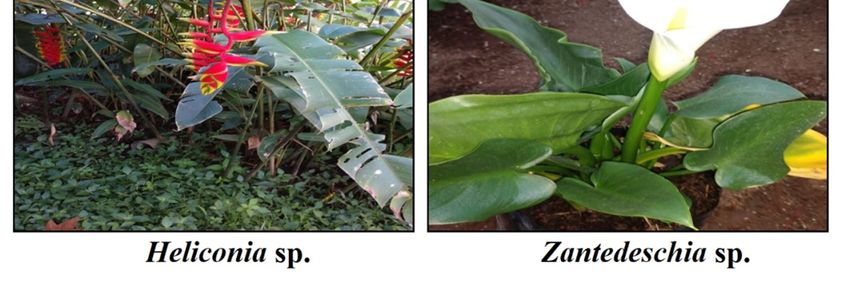
Appl. Sci. 2019, 9, 685                                                                           2 of 17

for the transformation of nutrient and organic matter compounds are conducted by biofilms of
microorganisms formed in the porous media and the rhizosphere zone [4,5]. The media materials (soil,
sand, rocks, and gravel) provide a huge surface area for microorganisms to attach, contributing to
macrophyte growth, and also act as filtration and/or adsorption medium for contaminants present
in the water [6]. Regarding the vegetation, one of the most conspicuous features of wetlands is the
role that plants play in the production of root and rhizomes in order to provide substrates for attached
bacteria and oxygenation of areas adjacent to the root, and absorb pollutants from water. Nitrogen
(N), Phosphorus (P) and other nutrients are mainly taken up by wetland plants through the epidermis
and vascular bundles of the roots, and are further transported upward to the stem and leaves [7].
This provides carbon for denitrification during biomass decomposition and prevents pollutants from
being released from sediments [8–10]. The use of the CW technology began in Europe during the
1960s [1], and has been replicated on other continents. The type of vegetation used are plants from
natural wetlands, including Cyperus papyrus, Phragmites australis, Typha and Scirpus spp., which have
been evaluated for their positive effects on treatment efficiency for nutrient and organic compounds
around the globe [8,9,11]. In Americas, such species are typical in CWs, and are found mainly in
the United States, where the technology has been used extensively and is implemented in different
rural and urban zones [12–16]. In recent studies (15 years ago), the goal of CW studies involved an
investigation into the use of herbaceous perennial ornamental plants in CWs, including the use of
species with different colored flowers to make the systems more esthetic, and therefore making it more
probable for adoption and replication.
      This review elucidates the role of macrophytes in CWs and highlights the use of ornamental
flowering plants in this type of ecotechnology around the world. This includes plants that are not
typical in natural wetlands, and shows the resulting removal efficiency and their importance in rural
communities. The aim of this review is to create a context regarding the advantages that the use of
CWs with ornamental flowering plants provides, emphasizing that these systems could be used for
more sites that require wastewater treatment. The information from 87 constructed wetlands using
ornamental flowering plants (OFP) in 21 countries was reported in the literature that was analyzed.
Only published or accepted (in press) papers were considered; the results of theses or abstracts of
conferences were not considered.

2. Role of Macrophytes in CWs
     The plants that grow in constructed wetlands have several properties related to the water
treatment process that make them an essential component of the design. Macrophytes are the
main source of oxygen in CWs through a process that occurs in the root zone, called radial oxygen
loss (ROL) [17]. The ROL contributes to the removal of pollutants because it favors an aerobic
micro-environment, and waste removal is therefore accelerated, whereas, in anaerobic conditions (the
main environment in CWs), there is less pollutant removal. In a recent study [18] comparing the use of
plants in high density (32 plants m−2 ) and low density (16 plants m−2 ) CWs, the removal of nitrogen
compounds in high density CWs was twice that of CWs using a low density of plants, which is strong
evidence of the importance of plants in such systems. The removal rate of total nitrogen (TN) and total
phosphorous (TP) were also positively correlated with the ROL of wetland plants, according to a study
involving 35 different species [19].
     The roots of plants are the site of many microorganisms because they provide a source of microbial
attachment [8] and release exudates, an excretion of carbon that contributes to the denitrification
process, which increases the removal of pollutants in anoxic conditions [20,21]. Other physical effects
in plant tissue in water include: reduction in the velocity of water flow, promotion of sedimentation,
decreased resuspension, and uptake of nutrients. However, for roots and rhizomes in the sediment,
the physical effects include: stabilizing the sediment surface, less erosion, nutrient absorption,
prevention of medium clogging (in subsurface conditions) and improved hydraulic conductivity.
Aerial plant tissue favors in the light attenuation (reduced growth of photosynthesis), reduced wind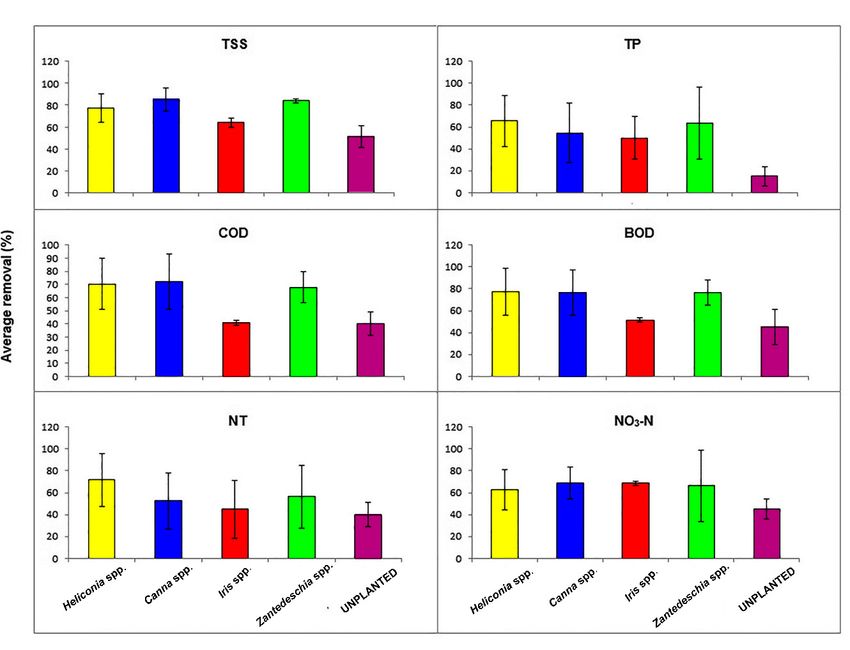
Appl. Sci. 2019, 9, 685                                                                                                       3 of 17

velocity, storage of nutrients and aesthetic pleasing appearance of the system [2,5]. A 5-year study
evaluated the influence of vegetation on sedimentation and resuspension of soil particles in small
CWs [22]. The author showed that macrophytes stimulated sediment retention by mitigating the
resuspension of the CW sediment (14 to 121 kg m−2 ). Macrophytes increased the hydraulic efficiency
by reducing short-circuit or preferential flow. Plant presence led to decreasing saturated hydraulic
conductivity in horizontal subsurface flow. This study was relevant, since monitoring macrophytes is
essential for understanding and controlling clogging in subsurface CWs [22].
     The removal of organic and inorganic pollutants in CWs is not only the role of microorganisms.
This function is also exerted by plants that are able to tolerate high concentrations of nutrients and
heavy metals, and, in some cases, plants are able to accumulate them in their tissues [23]. It has been
estimated that between 15 and 32 mg g−1 of TN and 2–6 mg g−1 (dry mass) of TP are removed by CW
plants, which was measured in the aboveground biomass [24,25].
     Other uptakes of xenobiotic compounds (organic pollutants) are also the result of the presence of
plants, involving processes such as transformation, conjugation and compartmentation [23].

3. Survey Results of the Use of Ornamental Flowering Plants in CWs
     Many CWs around the world used OFP for the removal of various types of wastewater (Table 1).
For example, in China, the most popular plants used is Canna sp., while in Mexico the ornamental
plant used is more diverse, including plants with flowers of different colors, shapes and aromatic
characteristics (Canna, Heliconia, Zantedeschia, Strelitzia spp).

      Table 1. Ornamental flowering plants and removal of wastewater pollutants in CWs (constructed
      wetlands) around the globe.

                           Type of                                         Removal Efficiency of
      Country                                    Vegetation                                                  Reference
                          Wastewater                                          Pollutants (%)
        Brazil              Domestic        Heliconia psittacorum        TSS: 88, COD: 95, BOD: 95        Paulo et al. [26]
                                          Alpinia purpurataArundina
                                                                        COD: 48-90, PO4 -P: 20, TKN:
                            Domestic       bambusifoliaCanna spp.                                         Paulo et al. [27]
                                                                              31 and TSS: 34.
                                          Heliconia psittacorum L.F.
                                                                        COD: 59, TP: 44, TKN: 34 and
                                            Hedychium coronarium                  NHx 35
                             Swine                                                                       Sarmento et al. [28]
                                              Heliconia rostrata        COD: 57, TP: 38, TKN: 34 and
                                                                                  NHx: 37
                                                                        COD: 72, BOD: 90, TN: 52, TP:
                                              Hemerocallis flava                                           Prata et al. [29]
                                                                              41 and SST: 72.
                                          Heliconia psittacorum L.F.                                     Teodoro et al. [30]
                                                                         COD: 77, BOD: 86, TP: >82,
        China              Municipal             Canna indica                                               Shi et al. [31]
                                                                                  TN: >45
                                                                               BOD: 71, TSS: 82,
                                          Canna indica mixed with
                     Aquaculture ponds                                   chlorophyll-a: 91.9, NH4 -N:       Li et al. [32]
                                               other species
                                                                          62, NO3 -N: 68 and TP: 20.
                                                                         COD: 82.31, BOD: 88.6, TP:
                            Domestic          Canna indica Linn                                            Yang et al. [33]
                                                                               >80, TN: >85
                           Municipal             Canna indica               NH4 -N: 99, PO4 -P: 87        Zhang et al. [34]
                          Drain of some    R. carnea, I. pseudacorus,      COD: 58-92, BOD: 60-90
                                                                                                          Zhang et al. [35]
                            factories             L. salicaria              TN: 60-92, TP: 50-97,
                                                                        COD: 95, N-NH4 : 100, N-NO3 :
                              River               Canna sp                                                 Sun et al. [36]
                                                                                 76, TN: 72
                            Domestic             Canna indica           TP: 60, NH4 -N: 30-70, TN: ~25      Cui et al. [37]
                                          Canna indica mixed with
                                                                        BOD: 56, COD: 26, TSS: 58, TP:
                     Aquaculture ponds     other natural wetland                                          Zhang et al. [38]
                                                                         17, TN: 48 and NH4 -N: 34.
                                                   plants
Appl. Sci. 2019, 9, 685 4 of 17
Table 1. Cont.
Type of Removal Efficiency of
Country Vegetation Reference
Wastewater Pollutants (%)
Wastewater from a Canna indica mixed with
COD: 50–70, BOD: 60–80,
China student dormitory other natural wetland Qiu et al. [39]
N-NO3 : 65–75, TP: 50–80
(University) plants
Canna indica and
Domestic TP: 40–70 Wen et al. [40]
Hedychium coronarium
Iris pseudacorus mixed with
Polluted river other natural wetland TN: 68, NH4 -N: 93, TP: 67 Wu et al. [41]
plants
Iris pseudacorus, mixed
Sewage with other plants of TN: 20 and TP: 44 Xie et al. [42]
natural wetlands
COD: 60, NO3 -N: 80, TN: 15,
Municipal Canna indica Chang et al. [43]
TP: 52
Simulated polluted COD: 22, TN: 46, NH4 -N: 62,
Iris sibirica Gao et al. [44]
river water TP: 58
Synthetic Canna sp Fluoride: 51, Arsenic: 95 Li et al. [45]
Simulated polluted
Iris sibirica Cd: 92 Gao et al. [46]
river water
Synthetic Canna indica L. N: 56–60 Hu et al. [47]
Synthetic TN: 40–60, N-NO3 : 20–95,
Canna indica L. Wang et al. [48]
(hydrophonic sol.) NH4 -N: 20–55
Zantedeschia aethiopica,
Chile Sewage BOD: 82, TN: 53, TP: 60. Morales et al. [49]
Canna spp. and Iris spp
Tulbaghia violácea, and Iris BOD: 57–88, COD: 45–72, TSS:
Sewage Burgos et al. [50]
pseudacorus. 70–93, PO4 -P: 6–20.
Ww rural
Zantedeschia aethiopica Organic matter: 60%, TSS: 90% Leyva et al. [51]
community
Gutiérrez-Mosquera
NH3 : 57
Colombia Domestic Heliconia psíttacorum and Peña-Varón
COD: 70
[52]
Synthetic landfill COD, TKN and NH4 Madera-Parra et al.
Heliconia psittacorum
leachate (all: 65–75) [53]
Marrugo-Negrete
Cattle bath Alpinia purpurata SST: 58, TP: 85, COD: 63
et al. [54]
Bisphenol A: 73, Toro-Vélez et al.
Municipal Heliconia psitacorum
Nonylphenols: 63 [55]
Ludwigia inucta,
Zantedechia aetiopica, BOD: 62, NO3 -N: 93, PO4 -P: León and Cháves
Costa Rica Dairy raw manure
Hedychium coronarium and 91, TSS: 84 [56]
Canna generalis
Abou-Elela and
Egypt Municipal Canna sp TSS: 92, COD: 88, BOD: 90
Hellal [57]
Abou-Elela et al.
Municipal Canna sp TSS: 92, COD: 92, BOD: 92
[58]
9,10,12,13-tetrachlor- ostearic
Choudhary et al.
India Paper mill effluent Canna indica acid: 92 and
[59]
9,10-dichlorostearic acid: 96
Dye: 70-90
Synthetic Canna indica Yadav et al. [60]
COD: 75
Synthetic COD:40, BOD: 70, TSS: 62,
Heliconia angusta Saumya et al. [61]
greywater TDS: 19
Domestic Canna generalis TN: 52, T-PO3: 9 Ojoawo et al. [62]
Collection pond Canna Lily BOD: 70-96, COD: 64–99 Haritash et al. [63]Appl. Sci. 2019, 9, 685 5 of 17
Table 1. Cont.
Type of Removal Efficiency of
Country Vegetation Reference
Wastewater Pollutants (%)
COD, TKN and Pathogen all Patil and
India Hostel greywater Canna indica
up 70 Munavalli, [64]
Heavy metals (Pb and Fe:
Singh and
Domestic Polianthus tuberosa L. 73–87), (Cu and Zn: 31–34)
Srivastava [65]
and Ni and Al: 20–26
Gill and
Ireland Domestic Iris pseudacorus TN: 30, TP:28
O’Luanaigh [66]
N: 65–67, P: 63–74, Zn and Cu:
Zantedeschia aethiopica,
Italy Synthetic 98–99, Carbamazepine: 25–51, Macci et al. [67]
Canna indica
LAS: 60–72
BOD: 87, COD: 67, TSS: 90,
Kenya Flower farm Canna spp. Kimani et al. [68]
TN: 61
Belmont and
Mexico Municipal Zantedeschia aethiopoca COD: 35, TN: 45.6
Metcalfe [69]
Zantedeschia Aethiopica and SST: 85.9, COD: 85.8, NO3 -N:
Domestic Belmont et al. [70]
Canna flaccid 81.7, NH4 -N: 65.5, NT: 72.6
Coffee processing Heliconia psittacorum COD: 91, Coliformes: 93 Orozco et al. [71]
Strelitzia reginae,
Zantedeschia esthiopica,
COD: >75, P: >66,
Domestic Canna hybrids, Anthurium Zurita et al. [72]
Coliforms: 99
andreanum, Hemerocallis
Dumortieri
Domestic Zantedeschia aethiopica BOD: 79, TN: 55, PT: 50 Zurita et al. [73]
Wastewater form COD: 92, N-NH4 : 85, Ramírez-Carrillo et
Zantedeschia aethiopica
canals P-PO4 : 80 al. [74]
Strelitzia reginae, TSS: 62, COD: 80, BOD: 82, TP:
Municipal Zurita et al. [75]
Anthurium, andreanum. >50, TN: >49
Zantedeschia aethiopica and
Groundwater As: 75-78 Zurita et al. [76]
Anemopsis californica
Castañeda and
Domestic Gladiolus spp BOD: 33, TN: 53, TP: 75
Flores [77]
Mixture of
greywater (from a
Zantedeschia aethiopica and Zurita and White
cafeteria and COD: 65, NT: 22.4, PT: 5.
Canna indica [78]
research
laboratories)
Domestic Zantedeschia aethiopica BOD: 70 Hallack et al. [79]
Heliconia stricta, Heliconia
BOD: 48, COD: 64, TP: 39, Méndez-Mendoza
Domestic psittacorum and Alpinia
TN: 39 et al. [80]
purpurata
Canna hybrids and Strelitzia Merino-Solís et al.
Municipal DQO: 86, NT: 30-33, PT: 24–44
reginae [81]
Zurita and
Zantedeschia aethiopica and COD: 75, TN: 18, TP: 2,
Municipal Carreón-Álvarez
Strelitzia reginae TSS: 88.
[82]
Spathiphyllum wallisii,
Zantedechia aethiopica, Iris
N-NH4 : 64–93
japonica, Hedychium
Domiciliar BOD: 22–96 Garzón et al. [83]
coronarium, Alocasia sp,
COD: 25–64
Heliconia sp. and Strelitzia
reginae.
Zantedeschia aethiopica,
Community Lilium sp, Anturium spp NT: 47, PT: 33, COD: 67 Hernández [84]
and Hedychium coronariumAppl. Sci. 2019, 9, 685 6 of 17
Table 1. Cont.
Type of Removal Efficiency of
Country Vegetation Reference
Wastewater Pollutants (%)
López-Rivera et al.
Mexico Stillage Treatment Canna indica BOD: 87, COD: 70
[85]
Iris sibirica and
Artificial Carbamazepine: 50–65 Tejeda et al. [86]
Zantedeschia aethiopica
Alpinia purpurata and Marín-Muñiz et al.
Community
Zantedeschia aethiopica [87]
NO3 -N: 45, NH4 -N: 70, Hernández et al.
Polluted river Zantedeschia aethiopica
PO4 -P: 30 [18]
Spathiphyllum wallisii, and Sandoval-Herazo
Municipal
Zantedeschia aethiopica et al. [88]
University Strelitzia reginae Martínez et al. [21]
TSS: 97, COD: 97, BOD: 89,
Nepal Municipal Canna latifolia Sigh et al. [89]
TP: >30
Canna indica mixed with
Portugal Tannery COD: 41–73, BOD: 41–58 Calheiros et al. [90]
other plants
Canna flaccida, Zantedeschia
BOD, COD, P-PO4 , NH4 and
aethiopica, Canna indica,
Community total coliform bacteria (all up Calheiros et al. [91]
Agapanthus africanus and
to 84)
Watsonia borbonica
Spain Domestic Iris spp Bacteria: 37 García et al. [92]
Municipal Iris pseudacorus Bacteria: 43 Ansola et al. [93]
BOD: 66, TP: 89, NH4 -N: 82, Weragoda et al.
Sri Lanka Municipal Canna iridiflora
N-NO3 : 50 [94]
Taiwan Domestic Canna indica N-NH4 : 73, BOD: 11 Chyan et al. [95]
Canna indica N-NH4 : 57, N-NO3 : 57 Chyan et al. [96]
Sirianuntapiboon
COD: 92, BOD: 93, TSS: 84,
Thailand Domestic Canna spp and Jitvimolnimit
NH4 -N: 88, TP: 90
[97]
Canna siamensis, Heliconia
BOD: 91–99, SS: 52–90, TN:
Seafood spp and Hymenocallis Sohsalam et al. [98]
72–92 and TP: 72–77
littoralis
Heliconia psittacorum L.f.
Konnerup et al.
Domestic and Canna generalis L. TSS: Both > 88, COD: 42–83
[99]
Bailey
Fermented fish Kantawanichkul et
Canna hybrid BOD, COD, TKN: ~ 97
production al. [100]
Collection system
BOD: 92, TSS: 90, NO3 -N: 50,
for business and Cannae lilies, Heliconia Brix et al. [101]
TP: 46
hotel
Crinum asiaticum,
Domestic Spathiphyllum clevelandii PO4 -P: ~20 Torit et al. [102]
Schott
Turkey Municipal Iris australis NH4 -N: 91, NO3 -N: 89, TN: 91 Tunçsiper [103]
Canna flaccida, Gladiolus sp.,
USA Domestic Baceria: ~50 Neralla et al. [104]
Iris sp.
Canna· generalis, Eleocharis
Palomsky et al.
Nursery dulcis, Iris N: ~50, P: ~60
[105]
Peltandravirginica.
Iris pseudacorus L., Canna x.
generalis L.H. Bail., BOD > 75, TSS > 88, Fecal Karathanasis et al.
Domestic
Hemerocallis fulva L. and baceteria > 93 [14]
Hibiscus moscheutos L.Appl. Sci. 2019, 9, 685 7 of 17
Table 1. Cont.
Type of Removal Efficiency of
Country Vegetation Reference
Wastewater Pollutants (%)
TSS: 90, NO2 -N: 91, NO3 -N:
USA Tilapia production Canna sp. Zachritz et al. [106]
76, COD: 12.5 and NH3 -N: 7.5
Canna x generalis Bailey, N and P
Stormwater runoff Iris pseudacorus L., Canna (>90), Iris (>30) Chen et al. [107]
Zantedeschia aethiopica (L.) Zantedeschia (>90)
Aeonium purpureum and
Crassula ovate, Equisetum
TSS: 95
Residential hyemale, Nasturtium, Yu et al. [16]
BOD: 97
Narcissus impatiens,
and Anigozanthos
Konnerup et al.
Vietnam Fishpond Canna generalis BOD: 50, COD: 25–55
[108]
United Herbicide polluted McKinlay and
Iris pseudacorus Atrazine: 90–100
Kingdom water Kasperek. [109]
A review of the available literature showed that ornamental plants are used to remove
pollutants from domestic, municipal, aquaculture ponds, industrial or farm wastewater. The removal
efficiency of ornamental plants was also evaluated for the following parameters: biochemical oxygen
demand (BOD), chemical oxygen demand (COD), total suspended solids (TSS), total nitrogen (TN),
total phosphorous (TP), ammonium (NH4 -N), nitrates (NO3 -N), coliforms and some metals (Cu, Zn,
Ni and Al). There is no clear pattern in the use of certain species of ornamental plants for certain
types of wastewater. However, it is important to keep in mind that CWs using ornamental plants
are usually utilized as secondary or tertiary treatments, due to the reported toxic effects that high
organic/inorganic loading has on plants in systems that use them for primary treatment (in the absence
of other complementary treatment options) [110,111]. The use of OFP in CWs generates an esthetic
appearance in the systems. In CWs with high plant production, OFP harvesting can be an economic
entity for CW operators, providing social and economic benefits, such as the improvement of system
landscapes and a better habitat quality. Some authors have reported that polyculture systems enhanced
the CW resistance to environmental stress and disease [14,112].
3.1. Common Ornamental Plants Used in CWs
Limited quantities of OFP have been used in CWs. These types of plants are typical of subtropical
and tropical regions. Our survey showed that the four most frequently used genera are, in order of
most to least frequently used: Canna spp, Iris spp, Heliconia spp, Zantedeschia spp (Table 2). Species
of the Canna genus are used in all continents, with Asia using them the most frequently. The Iris
genus is also used in Asia, along with Europe and North America. Species of the Heliconia genus
are commonly used in Asia and America, including Mexico, Central and South America. While
Zantedeschia is most frequently used in Mexico (a country in North America), they are found with less
frequency in Europe, Africa, and Central and South America. The use of OFP in CWs is most popular
in tropical and subtropical regions, due to the warm temperatures and the extensive sunlight hours.
Such environmental features stimulate a richer biodiversity than in other regions.Appl. Sci. 2019, 9, 685 8 of 17
Appl. Sci. 2019, 9, x 9 of 18
Table 2. Four most commonly genera plants used in CWs around the globe, identified during the 87
Table 2.studies
survey Four most
in 21commonly genera plants
countries, grouped used in CWs around the globe, identified during the 87
by continents.
survey studies in 21 countries, grouped by continents.
America
Asia Europe North America America
Central and South Africa Total
Asia Europe North America America Africa Total
USA MexicoCentral and South America
USA Mexico
Canna 22 4 5 4 2 2 39
Canna 22 4 5 4 2 2 39
Iris Iris 5 5 5 5 4 4 2 2 2
2 18
18
Heliconia 4 4 4 12
Heliconia
Zantedeschia4 2 1 4 13 34 1 20 12
Zantedeschia 2 1 13 3 1 20
3.1.1. Canna Spp
3.1.1. Canna Spp
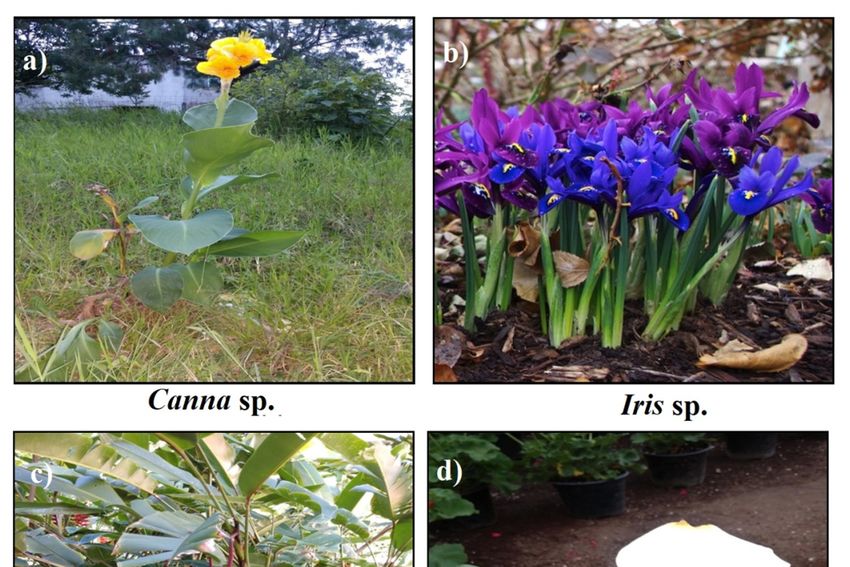
This perennial herb belongs to the family Cannaceae (Figure 1a). It can grow in full sun or
This perennial herb belongs to the family Cannaceae (Figure 1a). It can grow in full sun or semi-
semi-shaded areas and in loamy soils, with plant heights varying from 0.75 to 3.0 m under tropical and
shaded areas and in loamy soils, with plant heights varying from 0.75 to 3.0 m under tropical and
subtropical conditions. It reportedly originated in Central and South America and spread throughout
subtropical conditions. It reportedly originated in Central and South America and spread throughout
Europe, North America and many tropical regions of the world. The Canna genus includes 8–10 wild
Europe, North America and many tropical regions of the world. The Canna genus includes 8–10 wild
species and over 1000 hybrids that are used as garden ornamentals. During the last two centuries of
species and over 1000 hybrids that are used as garden ornamentals. During the last two centuries of
cultivation and improvement, Canna has been transformed into an attractive OFP, with variability
cultivation and improvement, Canna has been transformed into an attractive OFP, with variability in
in flower colours (yellow, orange, red and salmon, achieved using colored stains) and other positive
flower colours (yellow, orange, red and salmon, achieved using colored stains) and other positive
attributes [113,114].
attributes [113,114].
Figure 1. Popular Ornamental flowering plants used in CWs (constructed wetlands). (a) Canna sp.;
(b) Iris sp.,
Figure (c) Heliconia
1. Popular sp. and (d)
Ornamental Zantedeschia
flowering plantssp.
used in CWs (constructed wetlands). (a) Canna sp.;
(b) Iris sp., Heliconia sp. and d) Zantedeschia sp.Appl. Sci. 2019, 9, 685 9 of 17
3.1.2. Iris Spp
Irises are perennial plants (Figure 1b) whose flowers are distinguished by a great variety of colors
and miscellany of patterns on the perianth leaves [115]. Depending on the species, flower width ranges
from 2.5 to 25 cm. Iris leaves are grass-like or sword-like and embrace the shoot with their bracts.
Plant height is highly diverse, ranging from 10 to 200 cm, which allows them to be used in a variety of
flower compositions. As both the leaves and the flowers are decorative, with the proper selection of
species and varieties, they can add splendour to any garden from early spring until late autumn. Irises
of the beardless variety (Limniris) are growing in popularity throughout the world, characterized by
the various shapes of their perianth sepals and their untypical leafy pistils. They are low-maintenance
plants and are resistant to the diseases that affect bearded irises [115,116].
3.1.3. Heliconia Spp
This species is the only genus in the plant family Heliconiaceae (Figure 1c), which is a member
of the order Zingiberales. In addition to the several cellular features (short root hair cells, sieve tube
plastids with starch, silica bodies, inaperturate and exineless pollen) that distinguish the Zingiberales
from other monocots, there are several very conspicuous characters by which they can be recognized,
including (1) large leaves with long petioles and blades possessing transverse venation, (2) large,
usually colorful, bracteate inflorescences, and (3) arillate seeds. This order is most closely related to the
family Bromeliaceae and their relatives in the superorder Bromeliiflorae [117]. The inverted flowers,
presence of a single staminode, and drupaceous fruits are special features of Heliconia. Many species
and varieties native from Brazil are now being grown as potted plants and as cut-flowers. The number
of species of Heliconia ranges from 120 to over 400 [118].
3.1.4. Zantedeschia Spp
Also known as Arum or Calla lilies, a relatively small genus of eight species, forms the tribe
Zantedeschieae (Figure 1d) in the subfamily Philodendroideae [119]. This genus is confined to Southern
Africa, including Angola, Zambia, Malawi, Zimbabwe and Tanzania. Showy and decorative hybrids
and varieties of Zantedeschia have drawn much interest among plant breeders abroad, where tubers,
cut flowers and container plants form the basis of a lucrative export industry in the USA, the
Netherlands and New Zealand [119,120].
3.2. Influence of Plants on Treatment Performance in Constructed Wetlands
Some studies have provided evidence of the positive effects that vegetation of natural wetlands
has on pollutant removal (organic matter, nitrogen and phosphorus compounds) in constructed
wetlands when compared to systems without plants [5,10]. In planted mesocosms with Phragmites
australis, the efficiency of total nitrogen and total phosphorous removal was 97% and 91%, respectively,
while, in systems without plants, the removal efficiency was 53% for total nitrogen and 61% for
total phosphorous [121]. A similar situation was observed when studying fluoride ion removal in
constructed wetlands, where the pollutant removal in systems without plants was 20% lower than in
systems with vegetation [45]. The increase in the removal of pollutants in systems with plants is due
to the increased oxygen supply to the rhizosphere through the plants’ roots [2,8].
The use of ornamental plants in constructed wetlands for pollutant removal has been applied
in different countries around the globe (Table 1), commonly in tropical and subtropical areas.
A comparison of average performance efficiencies of CWs with different OFP showed that the
removal percentages were similar across all plant genera for TSS (62–86%; n = 26; p = 0.236), COD
(41–72%; n = 49; p = 0.211), BOD (51–82%; n = 38; p = 0.241), TP (49–66%; n = 44; p = 0.111), NH4 -N
(62–82%; n = 24; p = 0.301), NO3 -N (63–93%; n = 34; p = 0.214) and TN (48–72%; n = 32; p = 0.116)
(Figure 2). Such values are within the range reported [6] for CWs from China, India, Ireland, Spain and
Thailand, as well as for the values reported in a review of wastewater treatment of CWs in developingAppl. Sci. 2019, 9, 685 10 of 17
Appl. Sci. 2019, 9, x 11 of 18
countries [122] and CWs in tropical and subtropical regions [123,124], all using plants typically found
in natural wetlands (Cyperus, Typha and Phragmites sp.), which were 67–92.5% for TSS, 49–81% for
BOD, 33–90% for NH4-N, and 50–77% for TP. In general, the mean TN and TP removal when using
COD, 60–91.5% for BOD, 33–90% for NH4 -N, and 50–77% for TP. In general, the mean TN and TP
ornamental plants in CWs were less than the mean removal of the other pollutants (TSS, CDO, BOD,
removal when using ornamental plants in CWs were less than the mean removal of the other pollutants
NH4-N or NO3-N) (Figure 2). Such removal is influenced not only by the plants, but also by other
(TSS, CDO, BOD, NH4 -N or NO3 -N) (Figure 2). Such removal is influenced not only by the plants,
parameters, such as filter media, or operational parameters, such as hydraulic and influent loading,
but also by other parameters, such as filter media, or operational parameters, such as hydraulic and
which are related with the removal of pollutants in CWs and need to be considered in system designs
influent loading, which are related with the removal of pollutants in CWs and need to be considered
[125]. When comparing the removal efficiency of pollutants in CWs with OFP and CWs without
in system designs [125]. When comparing the removal efficiency of pollutants in CWs with OFP and
plants (Figure 2), pollutant removal was almost 40% higher for TSS, COD, BOD, NT and N-NO3 in
CWs without plants (Figure 2), pollutant removal was almost 40% higher for TSS, COD, BOD, NT and
CWs with plants than in those without. For TP, the removal efficiency was almost 70% higher in CWs
N-NO3 in CWs with plants than in those without. For TP, the removal efficiency was almost 70%
using ornamental plants than in those without vegetation.
higher in CWs using ornamental plants than in those without vegetation.
Figure 2. Comparing the average removal efficiencies of contaminants using ornamental plants and
Figure 2. Comparing the average removal efficiencies of contaminants using ornamental plants and
systems unplanted in various CW systems in the globe.
systems unplanted in various CW systems in the globe.
Machado et al. [124] evaluated the use of CWs in Brazil, including systems with ornamental plants,
Machado et al. [124] evaluated the use of CWs in Brazil, including systems with ornamental
and concluded that warm temperatures, extensive sunlight hours and available land are important
plants, and concluded that warm temperatures, extensive sunlight hours and available land are
characteristics for encouraging plant growth and proliferation. Such features are typical in tropical
important characteristics for encouraging plant growth and proliferation. Such features are typical in
and subtropical regions, where the option of a CW with ornamental plants can be an excellent choice
tropical and subtropical regions, where the option of a CW with ornamental plants can be an excellent
for the removal of pollutants.
choice for the removal of pollutants.
In cases where the wetlands are constructed to assist rural communities that involve big areas,
In cases where the wetlands are constructed to assist rural communities that involve big areas,
the growth of OFP also creates a useful source of commercialization. The flowers could be sold as
the growth of OFP also creates a useful source of commercialization. The flowers could be sold as
bouquets, as plants with attached roots for use in gardens, or for crafts made with parts of the plants,
bouquets, as plants with attached roots for use in gardens, or for crafts made with parts of the plants,
providing another strategy for convincing landowners to adopt these systems. The statistics that we
providing another strategy for convincing landowners to adopt these systems. The statistics that we
report here regarding the removal efficiency of ornamental plants in CWs around the world is evidence
report here regarding the removal efficiency of ornamental plants in CWs around the world is
that urban areas can also use CW systems as beautiful landscapes in supermarkets, streets, universities,
evidence that urban areas can also use CW systems as beautiful landscapes in supermarkets, streets,
hospitals, in riverine areas or as floating wetlands in rivers, lakes or lagoons. The combination of
universities, hospitals, in riverine areas or as floating wetlands in rivers, lakes or lagoons. The
different species of ornamental plants in CWs makes the system more colorful, and, therefore, more
combination of different species of ornamental plants in CWs makes the system more colorful, and,
attractive for the public.
therefore, more attractive for the public.
These comparisons indicate the same general range of removal efficiency between CWs using
ornamental plants and CWs with vegetation from natural wetlands. Thus, it is clear that ornamental
plants should be considered in new CW designs. The use of ornamental plants could be a strategy
used to increase the adoption of these systems because it makes the systems more aesthetic, and,Appl. Sci. 2019, 9, 685 11 of 17
These comparisons indicate the same general range of removal efficiency between CWs using
ornamental plants and CWs with vegetation from natural wetlands. Thus, it is clear that ornamental
plants should be considered in new CW designs. The use of ornamental plants could be a strategy used
to increase the adoption of these systems because it makes the systems more aesthetic, and, therefore,
they would not be observed as a treatment system, but instead would be seen as large outdoor planters
in house gardens. We recommend the construction of domiciliary wetlands using ornamental plants to
decrease water pollution and to assist with maintaining a better public health.
3.3. Advantages of Using Ornamental Plants in CWs
A range of novel and cost-effective constructed wetland systems for wastewater treatment have
been engineered around the world. The influence of design parameters, such as porous media,
hydraulic retention time, and flow of water, on the performance of CWs has been reported, highlighting
the sustainability of this technology and the esthetic appearance using OFP [6,28,125].
One of the advantages of using OFP in CWs is the significant reduction of nutrient contamination
(20–35%; Figure 2) comparing when CWs unplanted, representing an economical and sustainable
alternative to decentralization practices; CWs are less expensive than commercial systems and are
easier to build and operate [16,72]. Furthermore, by using plants with commercial value, the resources
invested in the design, construction and maintenance of the system can be recovered in the profits of
retail sales, without impeding the removal of pollutants of the system. The production of flowers in
the CWs can provide economic benefits to the operators of the technology and can create beautiful
landscapes using flowers such as Canna, Iris, Heliconias and Zantedeschia spp. (Tables 1 and 2). Such
species have removed almost 80% of pollutants and provides color with the flowers to the systems
and its use was detected in 39 countries for Canna genus and Zantedeschia genus was detected in
20 countries. In Thailand, a treatment water system with a butterfly shape was designed with the
polyculture of OFP as reviewed in this study [111].
4. Conclusions
The use of ornamental flowering plants in constructed wetlands has been identified in 21 countries.
The most commonly used ornamental plants are Canna spp., Iris spp, Heliconia spp., and Zantedeschia
spp., which are mainly used in tropical and subtropical regions. Therefore, as CWs with OFP show
good contaminants’ removal efficiencies in the reviewed studies, it is suggested that further research
on CWs should be developed, particularly in tropical and subtropical regions. Our survey also found
that many ornamental plants are planted using a mixture of various species, or are mixed with plants
from natural wetlands. There is no clear pattern in the use of a specific plant species for a certain
type of wastewater, but the use of ornamental plants in wastewater treatment is a great economic and
ecological option, and their flowers add to the esthetic appearance of CWs. The last characteristic could
be used to increase system adoptions by the people in domiciliary, rural or urban areas. As an integral
part of standard operating procedures, and the social involvement, using CWs with OFP would be a
big step towards mitigating problems of small wastewater treatment systems in a timely manner.
Author Contributions: J.L.M.-M. and L.C.S.-H. wrote, coordinated and reviewed the paper and finalized the data
collection. S.A.Z.-C. and M.V.-A. contributed to refining the paper structure and to improving the scientific aspects.
Funding: This research was funded by ”El Colegio de Veracruz” with the agreement 2017-III-IerExt-21.
Acknowledgments: The authors acknowledge to El Colegio de Veracruz and Tecnológico Nacionalde México,
for the permits to carry out the study.
Conflicts of Interest: The authors declare no conflict of interest.
References
1. Kadlec, R.; Wallace, S. Treatment Wetlands, 2nd ed.; Taylor and Francis Group: Boca Raton, FL, USA, 2009.
2. Mitsch, W.J.; Gosselink, J.G. Wetlands, 5th ed.; Wiley: Hoboken, NJ, USA, 2015.Appl. Sci. 2019, 9, 685 12 of 17
3. Marín-Muñiz, J.L. Humedales: Riñones del planeta y hábitat de múltiples especies; SEV-COLVER: Mexico, 2018; 100p.
4. Brix, H. Functions of macrophytes in constructed wetlands. Water Sci. Technol. 1994, 4, 71–78. [CrossRef]
5. Shelef, O.; Gross, A.; Rachmilevitch, S. Role of plants in a constructed wetland: Current and new perspectives.
Water 2013, 5, 405–419. [CrossRef]
6. Valipour, A.; Ahn, Y. Constructed wetlands as sustainable ecotechnologies in decentralization practices:
A review. Environ. Pollut. Res. 2016, 23, 180–197. [CrossRef] [PubMed]
7. Valipour, A.; Azizi, S.; Raman, V.K.; Jamshidi, S.; Hamnabard, N. The comparative evaluation of the
performance of two phytoremediation systems for domestic wastewater treatment. Environ. Sci. Eng. 2014,
56, 319–326.
8. Vymazal, J. Plants used in constructed wetlands with horizontal subsurface flow: A review. Hydrobiologia
2011, 20, 133–156. [CrossRef]
9. Vymazal, J. Emergent plant used in free water surface constructed wetlands: A review. Ecol. Eng. 2013, 61,
582–592. [CrossRef]
10. Wang, C.; Zhang, M.; Ye, M.; Wang, J.; Li, G. Pilot-scale electrochemical oxidation combined with constructed
wetland system for unconventional surface water treatment. J. Chem. Technol. Biotechnol. 2014, 89, 1599–1606.
[CrossRef]
11. Mburu, N.; Rousseau, D.; Bruggen, J.; Lens, P. Use of Macrophyte Cyperus papyrus in Wastewater Treatment;
Springer International Publishing: Cham, Switzerland, 2015. [CrossRef]
12. Bachand, P.A.M.; Horne, A.J. Denitrification in constructed free-water surface wetland: II. Effects of
vegetation and temperature. Ecol. Eng. 2000, 14, 17–32. [CrossRef]
13. Tilley, D.R.; Badrinarayanan, H.; Rosati, R.; Son, J. Constructed wetlands as recirculation filters in large-scale
shrimp aquaculture. Aquac. Eng. 2002, 26, 81–109. [CrossRef]
14. Karathanasis, A.D.; Potter, C.L.; Coyne, M.S. Vegetation effects on fecal bacteria, BOD, and suspended solid
removal in constructed wetlands treating domestic wastewater. Ecol. Eng. 2003, 20, 157–169. [CrossRef]
15. Chang, N.B.; Islam, K.; Marimon, Z.; Wanielista, M.P. Assessing biological and chemical signatures related to
nutrient removal by floating islands in stormwater mesocosms. Chemosphere 2012, 88, 736–743. [CrossRef]
[PubMed]
16. Yu, Z.; Bill, B.; Stenstrom, M.; Cohen, Y. Feasibility of a semi-batch vertical-flow wetland for onsite residential
gray water treatment. Ecol. Eng. 2015, 82, 311–322. [CrossRef]
17. Wang, Q.; Hu, Y.; Xie, H.; Yang, Z. Constructed wetlands: A review on the role of radial oxygen loss in the
rhizosphere by macrophytes. Water 2018, 10, 678. [CrossRef]
18. Hernández, M.E.; Galindo-Zetina, M.; Hernandez-Hernández, J.C. Greenhouse gas emissions and pollutant
removal in treatment wetlands with ornamental plants under subtropical conditions. Ecol. Eng. 2018, 114,
88–95. [CrossRef]
19. Lai, W.; Zhang, Y.; Chen, Z. Radial oxygen loss, photosynthesis, and nutrient removal of 35 wetland plants.
Ecol. Eng. 2012, 39, 24–30. [CrossRef]
20. Morgan, J.A.; Martin, J.F. Performance of an ecological treatment system at three strengths of dairy
wastewater loading. Ecol. Eng. 2008, 33, 195–209. [CrossRef]
21. Martínez, N.; Tejeda, A.; Del Toro, A.; Sánchez, M.P.; Zurita, F. Nitrogen removal in pilot-scale partially
saturated vertical wetlands with and without and internal source of carbon. Sci. Total Environ. 2018, 645,
524–532. [CrossRef]
22. Baptestini, G.; Matos, A.; Martinez, M.; Borges, A.; Matos, M. Hydraulic conductivity variability in horizontal
subsurface flow constructed wetlands. J. Braz. Assoc. Agric. Eng. 2017, 37, 333–342. [CrossRef]
23. Stottmeister, U.; Wiebner, A.; Kuschk, P.; Kappelmer, U.; Kästner, M.; Bederski, O.; Müler, R.A.; Moormann, H.
Effects of plants and microotganisms in constructed wetlands for wastewater treatment. Biotecnol. Adv. 2003,
22, 93–117. [CrossRef]
24. Tanner, C.C. Plants for constructed wetland treatment systems-a comparison of the growth and nutrient
uptake of eigh emergent species. Ecol. Eng. 1996, 7, 59–83. [CrossRef]
25. Liu, X.; Huang, S.; Tang, T.; Liu, X.; Scholz, M. Growth characteristic and nutrient removal capability of
plants in subsurface vertical flow constructed wetlands. Ecol. Eng. 2012, 44, 189–198. [CrossRef]
26. Paulo, P.L.; Begosso, L.; Pansonato, N.; Shrestha, R.R.; Bonez, M.A. Design and configuration criteria for
wetland systems treating greywater. Water Sci. Technol. 2009, 60, 2001–2007. [CrossRef] [PubMed]Appl. Sci. 2019, 9, 685 13 of 17
27. Paulo, P.L.; Azevedo, C.; Begosso, L.; Galbiati, A.F.; Boncz, M.A. Natural systems treating greywater and
blackwater on-site: Integrating treatment, reuse and landscaping. Ecol. Eng. 2013, 50, 95–100. [CrossRef]
28. Sarmento, A.P.; Borges, A.C.; Matos, A.T. Effect of cultivated species and retention time on the performance
of constructed wetlands. Environ. Technol. 2013, 35, 961–965. [CrossRef] [PubMed]
29. Prata, R.; Matos, A.; Cecon, P.; Monaco, P.; Pimenta, L. Sewage treatment in wetlands cultivated with yellow
lilly. Eng. Agrícola 2013, 33, 1144–1155. [CrossRef]
30. Teodoro, A.; Boncz, M.; Júnior, A.; Paulo, P. Disinfection of greywater pretreated by constructed wetlands
using photo-Fenton: Influence of pH on the decay of Pseudomonas aeruginosa. J. Environ. Chem. Eng. 2014, 2,
958–962. [CrossRef]
31. Shi, L.; Wang, B.Z.; Cao, X.D.; Wang, J.; Lei, Z.H.; Wang, Z.R.; Liu, Z.Y.; Lu, B.N. Performance of a
subsurface-flow constructed wetland in Southern China. J. Environ. Sci. 2004, 16, 476–481.
32. Li, G.; Wu, Z.; Cheng, S.; Liang, W.; He, F.; Fu, G.; Zhong, F. Application of constructed wetlands on
wastewater treatment for aquaculture ponds. Wuhan Univ. J. Nat. Sci. 2007, 12, 1131–1135. [CrossRef]
33. Yang, Q.; Chen, Z.; Zhao, J.; Gu, B. Contaminant removal of domestic wastewater by constructed wetlands:
Effects of plant species. J. Integr. Plant Biol. 2007, 49, 437–446. [CrossRef]
34. Zhang, Z.H.; Rengel, Z.; Meney, K. Nutrient removal from simulated wastewater using Canna indica and
Schoenoplectus validus in mono- and mixed culture in wetland microcosms? Water Air Soil Pollut. 2007, 183,
95–105. [CrossRef]
35. Zhang, X.B.; Liu, P.; Yang, Y.S.; Chen, W.R. Phytoremediation of urban wastewater by model wetlands with
ornamental hydrophytes. J. Environ. Sci. (China) 2007, 19, 902–909. [CrossRef]
36. Sun, L.P.; Liu, Y.; Jin, H. Nitrogen removal from polluted river by enhanced floating bed grown canna.
Ecol. Eng. 2009, 35, 135–140. [CrossRef]
37. Cui, L.; Ouyang, Y.; Lou, Q.; Yang, F.; Chen, Y.; Zhu, W.; Luos, S. Removal of nutrients from wastewater with
Canna indica L. under different vertical-flow constructed wetland conditions. Ecol. Eng. 2010, 36, 1083–1088.
[CrossRef]
38. Zhang, S.; Zhou, Q.; Xu, D.; He, F.; Cheng, S.; Liang, W.; Du, C.; Wu, Z. Vertical-flow constructed wetlands
applied in a recirculating aquaculture system for channel catfish culture: Effects on water quality and
zooplankton. Pol. J. Environ. Stud. 2010, 19, 1063–1070.
39. Qiu, Z.; Wang, M.; Lai, W.; He, F.; Chen, Z. Plant growth and nutrient removal in constructed monoculture
and mixed wetlands related to stubble attributes. Hydrobiologia 2011, 661, 251–260. [CrossRef]
40. Wen, L.; Hua, C.; Ping, Z.; Xiang, L. Removal of total phosphorus from septic tank effluent by the hybrid
constructed wetland system. Procedia Environ. Sci. 2011, 10, 2102–2107. [CrossRef]
41. Wu, H.; Zhang, J.; Li, P.; Zhang, J.; Xie, H.; Zhang, B. Nutrient removal in constructed microcosm wetlands
for treating polluted river water in northern China. Ecol. Eng. 2011, 37, 560–568. [CrossRef]
42. Xie, X.; He, F.; Xu, D.; Dong, J.; Cheng, S.; Wu, Z. Application of large scale integrated vertical-flow
constructed wetland in Beijing Olympic forest park: Design, operation and performance. Water Environ. J.
2012, 26, 100–107. [CrossRef]
43. Chang, J.J.; Wu, S.Q.; Dai, Y.D.; Liang, W.; Wu, Z.B. Treatment performance of integrated vertical-flow
constructed wetland plots for domestic wastewater. Ecol. Eng. 2012, 44, 152–159. [CrossRef]
44. Gao, J.; Wang, W.; Guo, X.; Zhu, S. Nutrient removal capability and growth characteristics of iris sibrica in
subsurface vertical flow constructed wetlands in winter. Ecol. Eng. 2014, 70, 351–361. [CrossRef]
45. Li, J.; Liu, X.; Yu, Z.; Yi, X.; Ju, Y.; Huang, J.; Liu, R. Removal of fluoride and arsenic by pilot vertical-flow
constructed wetlands using soil and coal cinder as substrate. Water Sci. Technol. 2014, 70, 620–626. [CrossRef]
[PubMed]
46. Gao, J.; Zhang, J.; Ma, N.; Wang, W.; Ma, C.; Zhang, R. Cadmium removal capability and growth
characteristics of iris sibrica in subsurface vertical flow constructed wetlands. Ecol. Eng. 2015, 84, 443–450.
[CrossRef]
47. Hu, Y.; He, F.; Ma, L.; Zhang, Y.; Wu, Z. Microbial nitrogen removal patways in integrated vertical-flow
constructed wetland systems. Bioresour. Technol. 2016, 207, 339–345. [CrossRef] [PubMed]
48. Wang, W.; Ding, Y.; Ullman, J.; Ambrose, R.; Wang, Y.; Song, X.; Zhao, Z. Nitrogen removal performance in
planted and unplanted horizontal subsurface flow constructed wetlands treating different influent COD/N
ratios. Environ. Sci. Pollut. Res. 2016, 23, 9012–9018. [CrossRef] [PubMed]Appl. Sci. 2019, 9, 685 14 of 17
49. Morales, G.; López, D.; Vera, I.; Vidal, G. Humedales construidos con plantas ornamentales para el
tratamiento de materia orgánica y nutrientes contenidos en aguas servidas. Theoria 2013, 22, 33–46.
50. Burgos, V.; Araya, F.; Reyes-Contreras, C.; Vera, I.; Vidal, G. Performance of ornamental plants in mesocosm
subsurface constructed wetlands under different organic sewage loading constructed wetlands under
different organic sewage loading. Ecol. Eng. 2017, 99, 246–255. [CrossRef]
51. Leiva, A.; Núñez, R.; Gómez, G.; López, D.; Vidal, G. Performance of ornamental plants in monoculture and
polyculture horizontal subsurface flow constructed wetlands for treating wastewater. Ecol. Eng. 2018, 120,
116–125. [CrossRef]
52. Gutiérrez-Mosquera, H.; Peña-Varón, M. Eliminación de nitrógeno en un humedal construido subsuperficial,
plantado con Heliconia psíttacorum. Tecnol. Cienc. Agua 2011, 11, 49–60.
53. Madera-Parra, C.A.; Peña-Salamanca, E.J.; Peña, M.R.; Rousseau, D.P.L.; Lens, P.N. Phytoremediation
of landfill leachate with Colocasia esculenta, Gynerum sagittatum and Heliconia psittacorum in Constructed
Wetlands. Int. J. Phytoremediat. 2015, 17, 16–24. [CrossRef]
54. Marrugo-Negrete, J.; Ortega-Ruíz, J.; Navarro-Frómeta, A.; Enamorado-Montes, G.; Urango-Cárdenas, I.;
Pinedo-Hernández, J.; Durango-Hernández, J.; Estrada-Martínez, A. Remoción de cipermetrina presente
en el baño de ganado utilizando humedales construidos. Corpoica Cienc. Tecnol. Agrop. 2016, 17, 203–216.
[CrossRef]
55. Toro-Vélez, A.F.; Madera-Parra, C.A.; Peñón-Varón, M.R.; Lee, W.Y.; Bezares-Cruz, J.C.; Walker, W.S.;
Cárdenas-Henao, H.; Quesada-Calderón, S.; García-Hernández, H.; Lens, P.N.I. BPA and NP removal from
municipal wastewater by tropical horizontal subsurface constructed wetlands. Sci. Total Environ. 2016, 542,
93–101. [CrossRef] [PubMed]
56. León, C.; Cháves, D. Tratamiento de residual vacuno utilizando microalgas, la lenteja de agua Lemna
aequinoctiales y un humedal subsuperficial en Costa Rica. Rev. Latinoam. Biotecnol. Ambient. Algal 2010, 1,
155–177. [CrossRef]
57. Abou-Elela, S.; Hellal, M. Municipal wastewater treatment using vertical flow constructed wetlands planted
with Canna, Phragmites and Cyprus. Ecol. Eng. 2012, 47, 209–213. [CrossRef]
58. Abou-Elela, S.; Golinielli, G.; Abou-Taleb, E.; Hellal, M. Municipal wastewater treatment in horizontal and
vertical flows constructed wetlands. Ecol. Eng. 2013, 61, 460–468. [CrossRef]
59. Choudhary, A.K.; Kumar, S.; Sharma, C. Removal of chlorinated resin and fatty acids from paper mill
wastewater through constructed wetland. World Acad. Sci. Eng. Technol. 2010, 80, 67–71.
60. Yadav, A.; Dash, P.; Mohanty, A.; Abbassi, R.; Mishra, B. Performance assessment of innovative constructed
wetland-microbial fuel cell for electricity production and dye removal. Ecol. Eng. 2012, 47, 126–131.
[CrossRef]
61. Saumya, S.; Akansha, A.; Rinaldo, J.; Jayasri, M.A.; Suthindhiran, K. Construction and evaluation of
prototype subsurface flow wetland planted with Heliconia angusta for the treatment of synthetic greywater.
J. Clean. Prod. 2015, 91, 235–240. [CrossRef]
62. Ojoawo, S.; Udayakuman, G.; Naik, P. Phytoremediation of phosphorus and nitrogen with Canna x generalis
reeds in domestic wastewater through NMAMIT constructed wetlands. Aquat. Procedia 2015, 4, 349–356.
[CrossRef]
63. Haritash, A.K.; Sharma, A.; Bahel, K. The potential of Canna lily for wastewater treatment under Indian
conditions. Int. J. Phytoremed. 2015, 17, 999–1004. [CrossRef]
64. Patil, Y.M.; Munavalli, G.R. Performance evaluation of and integrated on-site greywater treatment system in
a tropical region. Ecol. Eng. 2016, 95, 492–500. [CrossRef]
65. Singh, M.; Srivastava, R. Horizontal subsurface flow constructed wetland for heavy metal removal from
domestic wastewater. Environ. Prog. Sustain. Energy 2016, 35, 125–132. [CrossRef]
66. Gill, L.W.; O’Luanaigh, N. Nutrient removal from on-site wastewater in horizontal subsurface flow
constructed wetlands in Ireland. Water Pract. Technol. 2011, 6, wpt2011041. [CrossRef]
67. Macci, C.; Peruzzi, E.; Doni, S.; Iannelli, R.; Masciandaro, G. Ornamental plants for micropollutant removal
in wetland systems. Environ. Sci. Pollut. Res. 2015, 22, 2406–2415. [CrossRef] [PubMed]
68. Kimani, R.W.; Mwangi, B.M.; Gichuki, C.M. Treatment of flower farm wastewater effluents using constructed
wetlands in lake Naivasha Kenya. Indian J. Sci. Technol. 2012, 5, 1870–1878.Appl. Sci. 2019, 9, 685 15 of 17
69. Belmont, M.A.; Metcalfe, C.D. Feasibility of using ornamental plants (Zantedeschia aethiopica) in subsurface
flow treatment wetlands to remove nitrogen, chemical oxygen demand and nonylphenol ethoxylate
surfactants—A laboratory-scale study. Ecol. Eng. 2003, 21, 233–247. [CrossRef]
70. Belmont, M.A.; Cantellano, E.; Thompson, S.; Williamson, M.; Sánchez, A.; Metcalfe, C.D. Treatment of
domestic wastewater in a pilot scale natural treatment system in central Mexico. Ecol. Eng. 2004, 23, 299–311.
[CrossRef]
71. Orozco, C.; Cruz, A.; Rodríguez, M.; Pohlan, A. Humedal subsuperficial de flujo vertical como sistema de
depuración terciaria en el proceso de beneficiado de café. Hig. Sanid. Ambient. 2006, 6, 190–196.
72. Zurita, F.; De Anda, J.; Belmont, M. Performance of laboratory-scale wetlands planted with tropical
ornamental plants to treat domestic wastewater. Water Qual. Res. J. Can. 2006, 41, 410–417. [CrossRef]
73. Zurita, F.; Belmont, M.; De Anda, J.; Cervantes-Martínez, J. Stress detection by laser-induced fluorescence
in Zantedeschia aethiopica planted in subsurface-flow treatment wetlands. Ecol. Eng. 2008, 33, 110–118.
[CrossRef]
74. Ramírez-Carrillo, H.F.; Luna-Pabello, V.M.; Arredondo-Figueroa, JL. Evaluación de un humedal artificial de
flujo vertical intermitente, para obtener agua de buena calidad para la acuicultura. Rev. Mex. Ing. Quím.
2009, 8, 93–99.
75. Zurita, F.; De Anda, J.; Belmont, M.A. Treatment of domestic wastewater and production of commercial
flowers in vertical and horizontal subsurface-flow constructed wetlands. Ecol. Eng. 2009, 35, 861–869.
[CrossRef]
76. Zurita, F.; Del Toro-Sánchez, C.; Gutierrez-Lomelí, M.; Rodríguez-Sahagún, A.; Castellanos-Hernández, O.;
Ramirez-Martínez, G.; White, J. Preliminary study on the potential of arsenic removal by subsurface flow
constructed mesocosms. Ecol. Eng. 2012, 47, 101–104. [CrossRef]
77. Castañeda, A.A.; Flores, H.E. Tratamiento de aguas residuales domésticas mediante plantas macrófitas
típicas en Los Altos de Jalisco, México. Paakat Rev. Tecnol. Sociedad 2013, 3, 126–134.
78. Zurita, F.; White, J. Comparative study of three two-stage hybrid ecological wastewater treatment systems
for producing high nutrient, reclaimend water for irrigation reuse in developing countries. Water 2014, 6,
213–228. [CrossRef]
79. Hallack, M.; Payan, J.C.; Mungaray, A.; López, A.; González, M.; Castañón, M.C.; Pérez-Banuet, M.
Implementación y evaluación de un sistema de tratamiento de agua residual natural a través de humedales
construidos en el noroeste de México. In Gestión de Humedales Españoles y Mexicanos: Apuesta Conjunta por su
Futuro; Sastre, A., Díaz, I., Ramíres, J., Eds.; Universidad de Alcalá, 2015; ISBN 978-84-16599-15-8. Available
online: http://www.redalyc.org/pdf/370/37012012004.pdf (accessed on 13 November 2018).
80. Mendoza, A.; Bello-Mendoza, R.; Herrea-López, D.; Mejía-González, G.; Calixto-Romo, A. Performance of
constructed wetlands with ornamental plants in the treatment of domestic wastewater under the tropical
climate of south Mexico. Water Pract. Technol. 2015, 10, 110–123. [CrossRef]
81. Merino-Solís, M.; Villegas, E.; de Anda, J.; López-López, A. The effect of the hydraulic retention time on the
performance of an ecological wastewater treatment system: An anaerobic filter with a constructed wetland.
Water 2015, 7, 1149–1163. [CrossRef]
82. Zurita, F.; Carreón-Álvarez, A. Performance of three pilot-scale hybrid constructed wetlands for total
coliforms and Escherichia coli removal from primary effluent—A 2-year study in subtropical climate.
J. Water Health 2015, 13, 446–458. [CrossRef]
83. Garzón, M.; González, J.; García, R. Evaluación de un sistema de tratamiento doméstico para reúso de agua
residual. Rev. Int. Contam. Ambient. 2016, 32, 199–211. [CrossRef]
84. Hernández, M.E. Humedales ornamentales con participación comunitaria para el saneamiento de aguas
municipales en México. RINDERESU 2016, 1, 1–12.
85. López-Rivera, A.; López-López, A.; Vallejo-Rodríguez, R.; León-Becerril, E. Effect of the organic loading rate
in the stillage treatment in a constructed wetland with Canna indica. Environ. Prog. Sustain. Energy 2016, 35,
411–415. [CrossRef]
86. Tejeda, A.; Torres-Bojorges, A.; Zurita, F. Carbamazepine removal in three pilot-scale hybrid wetlands
planted with ornamental species. Ecol. Eng. 2017, 98, 410–417. [CrossRef]
87. Marín-Muñiz, J.L.; García-González, M.C.; Ruelas-Monjardín, L.C.; Moreno-Casasola, P. Influence of different
porous media and ornamental vegetation on wastewater pollutant removal in vertical subsurface flow
wetland microcosms. Environ. Eng. Sci. 2018, 35, 88–94. [CrossRef]You can also read


