The Arup - Steps towards a walkable Singapore
←
→
Page content transcription
If your browser does not render page correctly, please read the page content below
the Arup

             Shaping cities, spaces and places in Asia

                                Steps towards
                                a walkable Singapore

MCI (P) 084/02/2019 Issue 1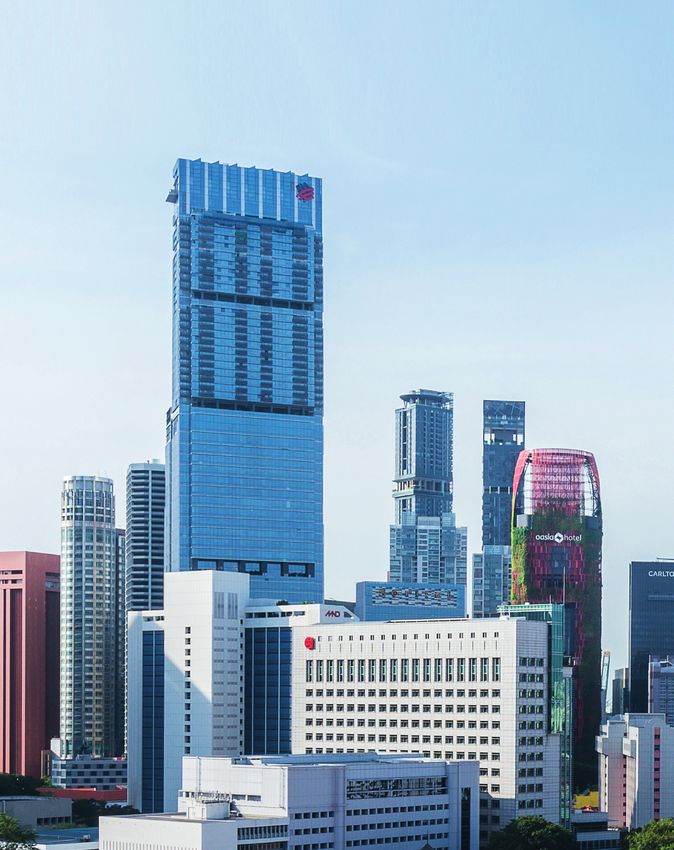
Contents
FOCUS

08                                                                               20
Raising the bar in Singapore’s CBD                                               Designing a better commute in Singapore

11                                                                               23
Steps towards a walkable Singapore                                               Building a one-stop cancer treatment hub

18                                                                               24
Optimising underground space                                                     Building resilience in Jakarta
in land-scarce Singapore

                                                                                 NEWS
    UNDERGROUND DEVELOPMENTS
     A benchmarking study to explore international best
     practices in underground space management                                   04
                                                                                 Our latest project wins, awards, and events
                                                                                 at a glance

                                                                                 PEOPLE

                                                                                 16
                                                                                 Faces behind our work in Arup

                                                                                 SNAPSHOTS

Page 18 Learn more about our study on international best
practices in underground space planning and framework                            27
for Singapore’s underground masterplan.                                          Bringing art to life with acoustics

                                    MCI (P) 084/02/2019. Publisher: Arup Singapore Pte Ltd
                                    (Reg. No. 200100731M). Printer: Ngai Heng Pte Ltd (L001/08/2018).
                                    Address: Arup, 182 Cecil Street #06-01 Frasers Tower Singapore 069547.
                                    Editorial: Celia Choong and Sarah Liu. Design: Evonne Lim and Frank K.
                                    Email us: SINMarketing&Comms@arup.com                                    0047876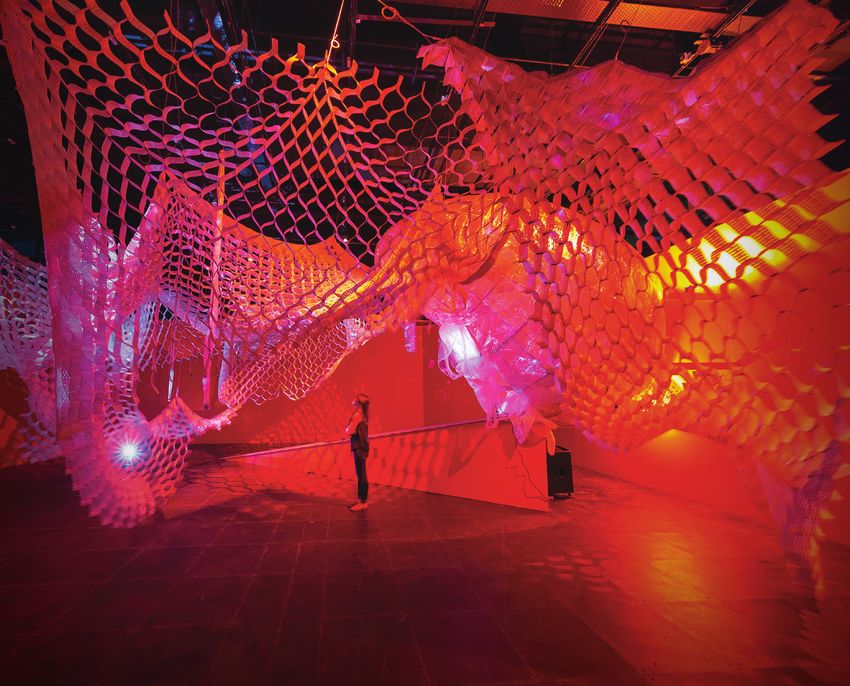
Foreword
           Welcome to our brand-new edition of
           ‘The Arup Profile’! We said goodbye to 2018
           with many reasons to celebrate – chief among
           them was the commemoration of our golden
           jubilee at our new next-generation ready
           office at Frasers Tower. I’m really proud of
           our people-first approach, and the efforts we
           have made to place health and wellbeing at
           the heart of our workplace design (pg 5).

           Arup brings the same principles to our work
           in shaping more liveable and inclusive cities.
           A key theme we continue to research and
           delve into is active mobility. Our feature
           story on walkability (pg 11) showcases the
           steps we are taking to create more ‘car-lite’
           and walkable precincts, starting with the
           Civic District. The global subterranean land
           use study we conducted (pg 18) is helping to
           further that aspiration with recommendations
           that could maximise above-ground
           liveability. Singapore’s expanding rail
           network in the upcoming Thomson-East
           Coast Line (pg 20) will be a key enabler of
           the active mobility narrative by creating more
           connected communities and encouraging
           multi-modal transportation.

           We look forward to bringing you fresh
           perspectives and city-shaping content in our
           next issue. In the meantime, please enjoy this
           new read.

           Tan Yoong Heng
           Singapore Office Leader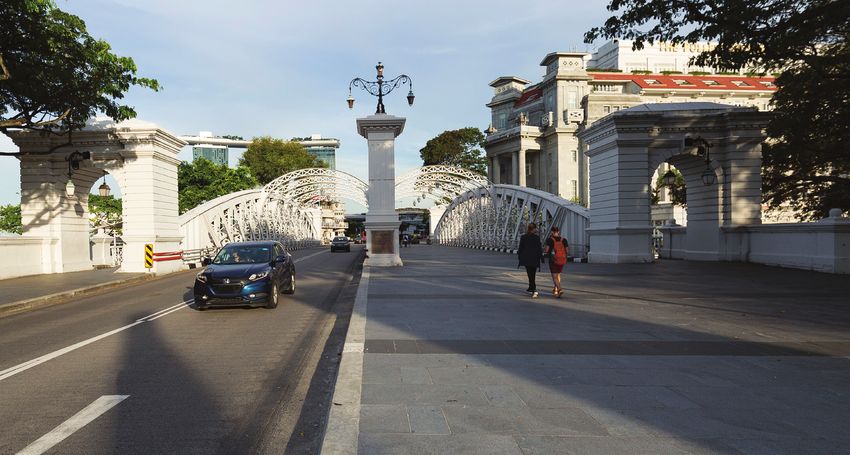
NEWS

       Briefly speaking
       We bring you the latest news, awards, events and happenings
       from Arup across the region.

       Contact Celia Choong | celia.choong@arup.com

                                                         Top awards for
                                                         Guoco Tower
                                                         Singapore’s tallest building at 290 m
                                                         was conferred the Best Design for Land
                                                         Transport Integration at the prestigious
                                                         Land Transport Excellence Awards 2019.

                                                         Across the 156,000 m2 mixed-use
                                                         development, Arup provided civil,
                                                         structural and façade engineering, and
                                                         environmentally sustainable design –
                                                         delivering efficient and innovative solutions
                                                         to realise the architectural complexity
                                                         within a dense CBD environment.

                                                         In December, it also received the Supreme
                                                         Award for Structural Engineering
                                                         Excellence, the highest accolade, and the
                                                         Award for Tall or Slender Structures at the
                                                         IStructE Singapore Structural Awards.

                                 © Ying Yi Photography

4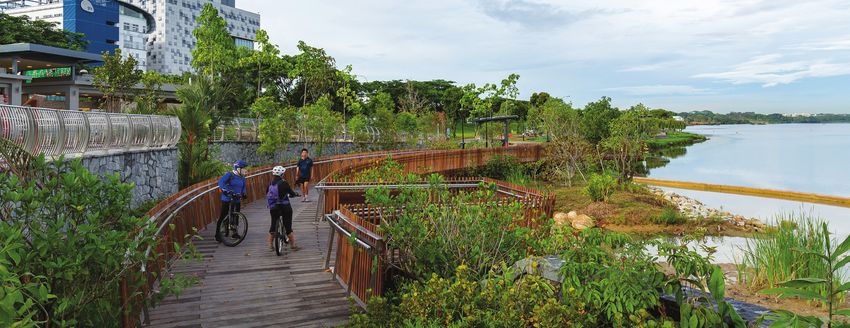
NEWS

Celebrating 50 years of
excellence in Singapore

Arup’s jubilee event, graced by
Mr Lawrence Wong, Singapore’s
Minister for National Development,
saw over 200 clients and partners
gather at our new workplace to
celebrate our legacy and innovations
in Singapore since 1968. Guests
were also treated to an experiential      Top rating for
tour showcasing our boundary-
pushing digital tools and facilities.
                                          wellness in the
Launching the new                         workplace
Arup Future Cities Hub
                                          The Building and Construction Authority (BCA)
Supported by Singapore’s                  conferred Arup’s new Singapore office the top-tier rating
Economic Development Board                for wellness in the workplace at this year’s BCA Awards.
(EDB), the Arup Future Cities Hub         Collaborating with the Health Promotion Board (HPB),
(FCH) was launched to address             the BCA launched the BCA-HPB Green Mark for
critical issues in Southeast Asian        Healthier Workplaces scheme to recognise organisations
cities. The FCH will support              that integrate health and wellbeing strategies beyond
Singapore’s resilient, sustainable        the adoption of sustainable design features in the office
and smart future developments,            environment.
while exporting best practices across
urban development, transport, social      Arup is one of the first five companies in Singapore
and civil infrastructure to the region.   to receive the Platinum certification. Our people-
We will be training the next              first design principles guided the provision of spaces,
generation of consultants, planners       furniture and initiatives such as height-adjustable desks,
and designers, and expand our             an internal staircase to encourage physical activity, and
expertise in urban mobility,              Arup’s Employee Assistance Programme, which offers
infrastructure masterplanning,            mental health support. These provisions emphasise
digital, advisory, resilience and         employees’ physical and psychological wellbeing,
sustainability consulting.                as well as promote healthier behaviour.

                                                                                                          5
NEWS

                                              © PHORIA   The hit documentary series on Netflix
                                                         ‘Our Planet’ launched in April with a
                                                         stunning and interactive exhibition at the
                                                         ArtScience Museum in Singapore and two
                                                         other venues across the world. ‘REWILD
                                                         Our Planet’ used augmented reality (AR) and
                                                         video from the series narrated by Sir David
                                                         Attenborough to take visitors deep into the
                                                         world’s most fragile ecosystems. As visitors
                                                         interacted with the IMAX style projections
                                                         and the AR landscapes, their experience was
                                                         intensified by an emotive soundscape. This
                                                         evocative exhibition was a world-first creative
                                                         collaboration between Arup, Australian
                                                         immersive technology studio PHORIA, Netflix,
       Inspiring action to                               Google and the World Wide Fund for Nature.

       REWILD
       Our Planet

       Developing coastal protection                     Continuing our partnership
       measures in Sentosa                               with Digital Realty

       Sentosa Development Corporation rolled out        Arup was commissioned to provide mechanical
       an initiative to tackle the effects of climate    and electrical engineering services for Digital
       change on Sentosa Island. Arup was appointed      Realty’s third data centre (SIN12). The new
       to lead a project on mitigating coastal-related   34,000 m2 multistorey facility at Loyang Drive
       flooding due to sea level rise. This project      is next to their second data centre (SIN11),
       tackles the complexity of planning for sea        which we were also heavily involved in.
       level rise along the challenging coastal          Opening by 2020, SIN12 will add 50 MW
       condition, while ensuring that the popularity     of IT power capacity to customers and create
       of Singapore’s premier tourism and leisure        opportunities for companies to expand their
       hotspot remains unaffected.                       digital assets in Singapore.

6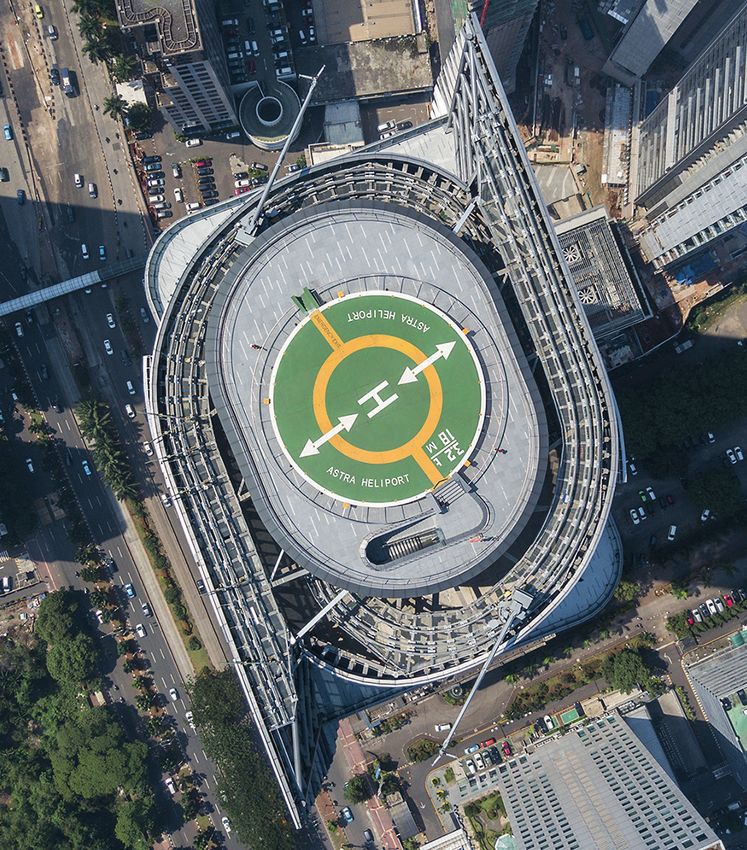
NEWS

                                                            Redefining ecotourism
                                                            with smart city concepts

                                                            Arup, with PDW Architects,
                                                            WATG and Colliers International,
                                                            was commissioned by tourism
                                                            destination developer Flores
                                                            Prosperindo to provide vision
                                                            masterplanning, a development
                                                            framework, and strategic advisory
                                                            services for TanaNaga and
                                                            GoloMori in Labuan Bajo,
                                                            Flores Island, Indonesia –
                                                            an hour’s flight east of Bali.
Building homes for                                          We are tasked to tackle challenges

women and
                                                            in transport and site development
                                                            due to the site’s natural landscape
                                                            and remote location. Awarded
children in need                                            for our integrated approach
                                                            and overarching sustainability
                                                            framework, Arup will be providing
Arup volunteers from Australasia including Singapore        masterplanning, environmental
helped renovate housing and shelter for women and           and sustainable design, site
children experiencing homelessness. A part of Habitat       and transport planning, digital
for Humanity’s ‘Homes of Hope’ project, these homes         masterplanning, and supporting
provide a clean, nice and safe respite for single mothers   the feasibility study for future
and women leaving abusive relationships. This project,      development. The 2,000 Ha
along with other events by Habitat for Humanity, were       TanaNaga is planned as an
organised in recognition of International Women’s Day.      ecotourism smart city, while the
                                                            300 Ha GoloMori will be developed
                                                            as an exclusive and spiritual
                                                            tourism destination.

                                                                                                     7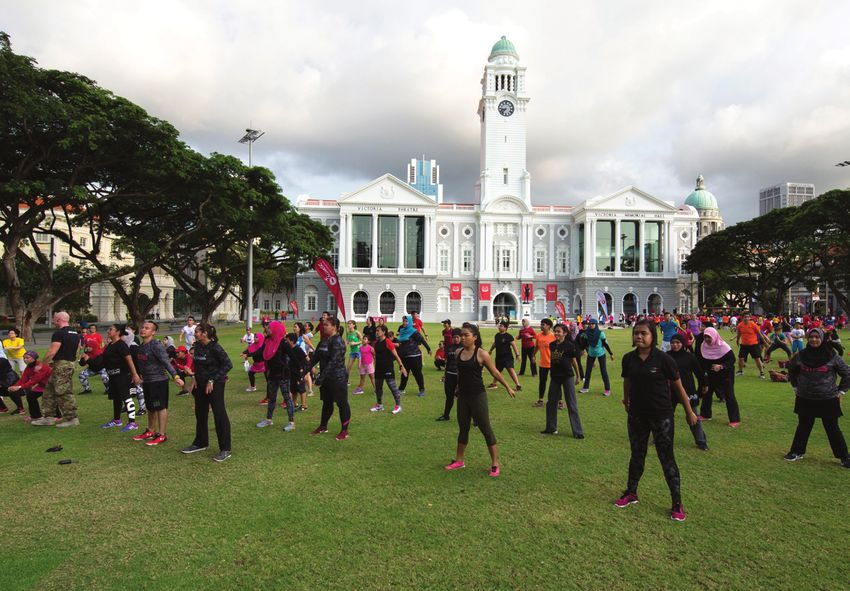
FOCUS

                                                 GUOCO TOWER

                                 Raising the bar in
                                 Singapore’s CBD
                      This vertical city offers vibrant new spaces for people
                          to live, work and play in the business centre.

        Guoco Tower was developed by GuocoLand
        Group, designed by Skidmore, Owings &
        Merrill in association with Architects 61,
        and engineered by Arup. This 156,000 m2
        development has direct access to Tanjong
        Pagar MRT station and comprises commercial,
        residential, retail and hotel amenities.
        The urban park is fully integrated with the
        City Room – a naturally ventilated event                                                             Core
        venue with a 15 m high ceiling. Across the                                                           wall
        development, Arup provided structural and
        façade engineering and environmentally
        sustainable design.

        Overcoming complex building design

        The building’s scale and changing geometry
        at several levels made for complex design and
        construction. Large steel plates with shear
        studs were embedded in the concrete core
        wall to ensure that ‘kick-out’ horizontal forces
        were transferred to the core wall directly and
        effectively. We also designed an innovative           Sloping
        transfer plate and belt-wall system that tied         columns
        together and stabilised the residential and
        office towers, which are atop one another.
        These solutions realised the ambitious
        design without compromising the building’s
        structural integrity.                              Deformation of core wall due to vertical loads.

8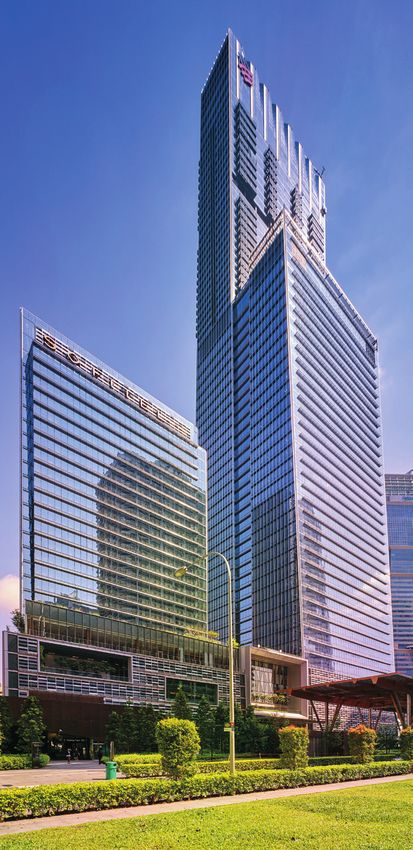
FOCUS

290 m
Guoco Tower is the
tallest building in Singapore

150,000 sq ft
Size of the urban park and green
spaces within the development

31%
Estimated energy savings compared
to similar code-compliant buildings

                                                   9
                                      © GuocoLand Group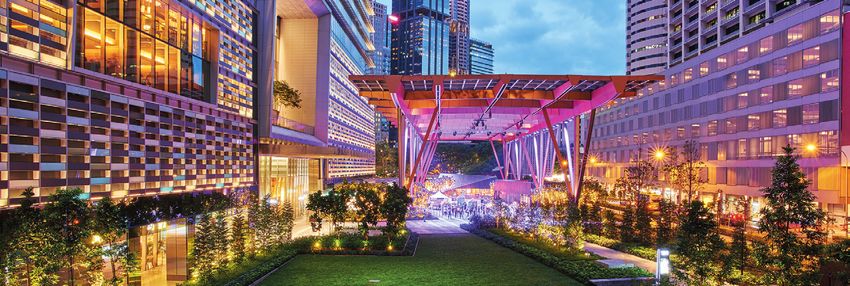
FOCUS

        Tanjong Pagar Park and the ground-level City Room. © Ying Yi Photography

        “This seven-year journey                                          Seamless MRT integration
        has special significance to me.                                   The value of direct access to the MRT station
        A project of this scale involved                                  was a result of Arup’s proposal to connect
        Arup’s multidisciplinary, local                                   the three-level basement to the station’s
                                                                          structure. Coupled with construction phasing,
        and global teams, our client,                                     the basement also doubled as a retaining
        authorities and partners.                                         wall, allowing construction and MRT
                                                                          operations to continue. Arup worked with
        We couldn’t have done it
                                                                          the contractor to develop a full top-down
        in silo. Beyond engineering                                       construction approach, providing robust
        design, these relationships                                       support to the excavation and streamlining
                                                                          basement construction processes.
        saw the project to successful
        completion.”                                                      Greening in the Garden City

        Jason Tan                                                         This iconic skyscraper is at the forefront of
        Project Manager                                                   sustainable developments in Southeast Asia.
                                                                          Roofs are installed with photovoltaic solar
                                                                          panels that capture sunlight for renewable
                                                                          energy. Rainwater is harvested from all roofs
                                                                          to irrigate the extensive greenery, while
                                                                          fresh air is delivered to interior spaces at
                                                                          a 30% higher rate than conventional office
                                                                          buildings. The development was awarded
                                                                          LEED Platinum Precertification, Green Mark
                                                                          Platinum (hotel and retail), and Green Mark
                                                                          Gold Plus (residential).

                                                                          Contact Jason Tan
        Read more & share                                                 jason.tan@arup.com

10
FOCUS
Steps towards a
walkable Singapore
How has Arup contributed to walkability and what more can we do in
getting people to walk to places in the Little Red Dot?
11FOCUS
Chances are that you have probably seen the be the rejuvenation of Empress Place and
term ‘walkability’ – or how friendly an area Esplanade Park. Arup helped to improve
is to walking – as cities around the world pedestrian connectivity and reduce traffic,
gravitate towards active mobility measures moving one step closer to realising the Urban
such as returning roads to pedestrians and Redevelopment Authority’s vision of an arts
developing more sustainable transportation and culture precinct in Singapore’s historic
modes. Civic District.
The benefits of walkability are clear, as This project involved calming traffic
uncovered in Arup’s extensive report titled and creating a shared zone that returned
‘Cities Alive: Towards a walking world’. road equity to pedestrians. Arup also did
A walkable urban environment could impact extensive traffic modelling and simulations
economies positively, boost tourism, improve to assure stakeholders that lane reductions
public health, reduce traffic congestions, would not affect visitorship to cultural
and many more. venues in the area or impact traffic
elsewhere. Today, Connaught Drive is
Singapore too, is no stranger to this halved from four lanes to two, while 50%
concept with its urban design interventions, of Fullerton Road at Anderson Bridge
‘car-lite’ strategies, campaigns encouraging has been turned into a footpath.
commuters to walk, cycle and ride, and
efforts to understand attributes beyond Enhancing the attractiveness of, and things
infrastructure to improve walkability. to do in, the public realm also influences
walkability in an area. Arup achieved this
Yet there is much more to uncover, such as by helping to beautify the streetscape and
reasons why people might continue to avoid improve green cover. Working with arborists,
walking short distances despite seemingly we designed a system that helped transplant
tolerable heat and humidity levels. The eight 90-tonne heritage trees to shade
weather is one, albeit major, deciding factor pathways, while creating unobstructed views
to walk to places – but just what other factors at Empress Lawn. This flexible space allows
and design interventions have Arup and the pop-up events to take place – drawing people
city explored, and what more could we do to to activities, not just destinations, and helping
make us stretch our legs and get moving? to boost the economic viability of the area.
Paving pleasant and delightful paths Seamlessly connected, these green spaces,
parks and streets in the precinct are now
A project that best illustrates a move away enjoyed by the community for recreational
from a traffic-dominated cityscape would and sport activities.
12FOCUS
The transplanted heritage trees at
Empress Lawn now provide an unobstructed
space for events, and more shaded paths.
Half of Fullerton Road on Anderson Bridge
has been turned into a footpath.
13FOCUS
Rower’s Bay, a new node along the Round Island Route, is connecting people to nature and supporting more active lifestyles.
Go green and get moving Network will also support healthier mobility
choices and more active lifestyles.
Beyond infrastructure design or measures
to reduce private vehicle dependence, Communities can look forward to the North-
Arup is also privileged to work on projects South Corridor, the island’s first integrated
that encourage active mobility, improve active mobility and public transport corridor
accessibility and bring people closer to nature with dedicated bus, foot and cycling paths.
and lush greenery. This uninterrupted and pedestrian-first
Transit Priority Corridor spans a remarkable
Labrador Coastal Walk, completed in 2012, length of 21.5 km and will link up northern
features an ecologically sensitive design towns to the city centre, bringing together
that allows visitors to soak in mangrove communities and improving connectivity
and coastal views. between different towns. It is expected to be
completed around 2026.
Rower’s Bay, a node along the Round
Island Route at Seletar, was launched this These projects are complemented with
year. When progressively completed by shorter public transport travelling times,
2035, the Round Island Route will feature and improved infrastructure and mobility
more dynamic green corridors, connecting ecosystems: enhanced last-mile facilities and
visitors by foot to many natural, cultural and increasing availability of end-of-trip facilities
historical attractions around Singapore. in workplaces such as bicycle parking,
This 150 km interlinking Park Connector lockers and shower rooms.
14FOCUS
The vision is to have more people out on the streets
meeting and interacting, not staying indoors. That is
instantly more exciting – a scene that, when multiplied
everywhere, would translate into a safer, more innovative
and dynamic city. Best of all, it also makes people happy.
Create better streets, not roads uncover remedial and action plans in a
chosen area. Guided by five overarching
Even as we better understand walkability in principles – Social, Infrastructure,
Singapore’s context, there is more to learn Environmental, Economic and Political
about challenges with climate, traffic and – this scoring framework is informed
pedestrians’ attitudes towards walking. by a qualitative and quantitative mix of
open-source data and spatial analytics,
There are, however, positive signs of benchmarked measurements and
increasing receptiveness towards walkability. questionnaires. The next phase of our
Government campaigns to support a more walkability study will involve compiling best
active Singapore and the provision of suitable practices, formulating guidelines and policy
infrastructure are encouraging people to recommendations. We also continue to study
walk to places. We also see changing design pedestrian profiles and define street design
trends prioritising people over vehicles. elements that are suitable for walking.
Meanwhile, Arup is building on our In creating better streets, not roads,
‘Cities Alive’ research, refining indices Arup hopes to shape a future environment
and parameters to create a more tailored where people are inclined to adopt active
framework for measuring walkability – mobility choices and have less hesitation
particularly in tropical environments. getting out and about on foot.
Our new ‘Urban Walkability Score’ uses Contact Chintan Raveshia
30 parameters to measure walkability and chintan.raveshia@arup.com
15PEOPLE
Designers at work
Get in touch and get to know the faces
behind our work in Arup.
“Part of my role here is to
help cities, districts and
developments to differentiate
themselves, adding value
to investments by creating
liveable and sustainable
places for everyone.”
Neil Walmsley
Advisory, Planning and Design Leader
neil.walmsley@arup.com
Neil joined Arup in the United Kingdom
in 1997. He moved to the Middle East,
where he was attracted by the emerging
economies’ immediate appetite for major
infrastructure developments. There, he led
multiple city-shaping projects including
Dubai’s 2020 Transport Strategy,
Abu Dhabi’s Plan Capital 2030, Sharjah’s
2030 Master Plan and Dubai’s successful bid
to host World Expo 2020. With over 20 years’
experience, Neil moved to Singapore in 2017
to lead our Advisory, Planning and Design
business, working across Southeast Asia.
16PEOPLE
Ying Sun
Lighting Design Leader
ying.sun@arup.com
Trained as an architect, Ying followed
her passion to focus on lighting design.
Her unique background gives her a deep
appreciation for architecture and design,
and a keen understanding of clients’ needs.
Over the past 15 years, she has contributed
to high profile projects worldwide including
Marina One in Singapore, Venice Pavilion
in Italy, Musée du Louvre in northern France
and masterplanning projects across multiple
prominent districts in China. Ying currently
leads the Lighting Design team in Singapore
as it shapes and refines user experiences
across interior and exterior spaces,
and transform cityscapes.
“My interest is to help clients and
collaborators think about lighting
in a way that shapes positive
spaces for people and design
solutions that are sustainable.”
17FOCUS
BENCHMARKING STUDY AND ESTABLISHMENT OF GUIDELINES FOR UNDERGROUND SPACE PLANNING
Optimising underground space
in land-scarce Singapore
Our study unearthed international best practices in underground space
planning and shaped a framework for Singapore’s underground masterplan.
Singapore is looking underground to practices in underground space planning
overcome land scarcity and meet its growing and management. We compared Singapore’s
urban demands – in a way that ensures the use of underground spaces against locations
efficient and coordinated use of this finite worldwide, established guidelines to optimise
and valuable resource. A key focus was underground development, and proposed
to move utility, transport and industrial a format for an underground masterplan.
facilities below ground to free up land
above for housing, greenery and people- Recommendations and findings from
focused activities. this study were foundational to shaping
Singapore’s strategic framework and
Commissioned by the Urban Redevelopment decisions on its planned use of subterranean
Authority (URA), Arup led a team, including spaces. The URA has since rolled out a 3D
architects, economists, cost consultants and underground map for pilot areas as part of
academics, and explored international best the new Draft Master Plan 2019.
Contact Tan Yoong Heng
tan.yoongheng@arup.com
Tokyo Marunouchi District
Read more & share 10.4 km / km2
London
115 m / km2
Singapore
116 m / km2
Montréal RÉSO
18.1 km / km2 Tokyo
125 m / km2
18FOCUS
Underground
Pedestrian
Networks
Singapore City Centre
0.7 km / km2
Helsinki Kamppi District
3.3 km / km2
Rail
Beijing
2 m / km2
Hong Kong
73 m / km2
Road
Singapore
22 m / km2
Cavern Utility plants Storage
Tokyo Helsinki Singapore
uses
39 m / km2 Hong Kong Helsinki
Seoul Hong Kong
Seoul
Hong Kong
43 m / km2 Car parks Recreational spaces Data centres Rail stations
Helsinki Helsinki Helsinki Hong KongFOCUS
Outram
Maxwell
Shenton Way
THOMSON-EAST COAST LINE
Designing a better
commute in Singapore
Improving connectivity to key commercial, retail and
tourism hubs with innovative engineering solutions.
Arup continues to enhance the city-state’s building services engineering, alignment,
rail network with the design of three out tunnel design, geotechnics, geographic
of seven Thomson-East Coast Line (TEL) information systems, security, risk,
packages, and a design and build contract acoustic and transport consulting services.
for Bright Hill Station. Awarded by the
Land Transport Authority, the packages Greater city-centre connectivity
include three stations in Woodlands,
four eastern stations, and six stations Some of the most complex construction and
across the Central Business District (CBD). design challenges are concentrated in the
southern section of the CBD, where the
These multidisciplinary projects are TEL intersects with the business centre at
exemplary of Arup’s total design approach. Shenton Way and Marina Bay, and tourist
Delivering our global expertise locally, attractions at Chinatown and Gardens by the
we are providing civil, structural and Bay. Significant geological variations occurred
20FOCUS
Gardens by
the Bay
Marina Bay
Marina South
“There are several constraints to overcome in this key section of the line.
But ultimately, the end-product is for the end-user – a better commute,
future-proofed for maximum convenience in the heart of Singapore.”
Michael McGowan
Project Director
from one station to another – covering Designing multiple three-line
sedimentary rock at Outram Park, to soft soil interchanges
at Marina Bay and Gardens by the Bay.
Arup is also leading the design of Singapore’s
Arup’s solutions emphasised innovation, two newest three-line interchanges at Outram
cost-effectiveness and safety, with minimal Park and Marina Bay, where we carried
disruption to ground-level services and out Pedestrian Flow Modelling to ensure
structures. Tunnelling works between seamless commuter connectivity.
Maxwell and Shenton Way stations overcame
challenges from the mixed-face condition We developed two mined linkways at
composed of sedimentary rock, Fort Canning Outram Park – one involved mining beneath
boulder bed, and soft soil. East-West Line Outram Road, and within 4 m below the live
(EWL) and business operations above the EWL tunnel, and another mined under the
section continued without disruption. existing EWL station.
21FOCUS
Circle
Line
Transfer slab
New pedestrian
linkway
Transfer beams
North-
South
Line Freeze tubes
Mined tunnel
Existing slab (Changi-bound)
Existing pile Mined tunnel
foundation of (Woodlands-bound)
NSL tunnel
Ice walls
The ground-freezing design developed at the Marina Bay interchange.
This was achieved safely with the In response to the station’s unique
construction of a temporary canopy made of conditions, Arup proposed the first
a series of interlocking steel pipes. The new ground-freezing solution that was developed
Outram Park station box will link the EWL, in Singapore. This involves creating an
North-East Line and TEL in a continuous impermeable and stiff ice wall around the
linkway to the Outram Medical Campus. lower tunnel to allow for safe mining works
of the tunnel through the interface between
Singapore’s first soft clay and stiff alluvial soil.
ground-freezing design
Taisei Corporation then developed this
At the Marina Bay three-line interchange, notional design in detail. A -30 0C liquid
Arup is developing a station design in brine solution was used to create the ice wall,
a stacked platform configuration. This facilitating mining works. The lower tunnel
approach optimises space in a prime district, has been completed, and the interchange
and enhances connectivity for commuters station is expected to open in 2021.
travelling through the different lines.
While the jet grouting ground improvement When fully operational by 2024, the 43 km
method was proposed for the construction TEL will add 31 stations, including seven
of the pedestrian linkway and upper tunnel, interchanges to Singapore’s rail network.
this option would not be effective to treat the
permeability and stability of the mixed-face Contact Michael McGowan
zone where the lower tunnel is located. michael.mcgowan@arup.com
22FOCUS
NEW NATIONAL CANCER CENTRE SINGAPORE
Building a one-stop
cancer treatment hub
Cutting-edge technology at the new National Cancer Centre Singapore
(NCCS) to advance oncological care for the nation.
The NCCS will provide patient-centric care, Arup is designing a shielding system to
state-of-the-art treatment facilities as well protect the surroundings from the intense
as advance research and education. Arup radiation. We specified the principal
was appointed by the Ministry of Health, parameters for the concrete mix of the
Singapore to provide civil, structural and shielding bunker and worked with the main
façade engineering, geotechnics and traffic contractor and proton therapy equipment
consulting across the development. The NCCS vendor to plan the construction sequence
will house a proton therapy centre offering and installation method. Emphasising
proton beam therapy – a new form of radiation efficiency and productivity, a semi-top-down
therapy that targets and destroys cancer cells, construction method was selected.
while minimising damage to surrounding
healthy tissues. As an important environmental moderator,
the façade was designed to reduce embodied
energy and operational energy consumption.
This enables the incorporation of energy-
generating technologies that can improve
occupants’ comfort and productivity.
To assess the building’s lateral performance,
Arup studied provision, positions and
thickness of core walls. We also carried
out 3D lateral analysis to determine
the building’s performance in terms of
allowable drift, inter-storey drift and natural
frequencies of the dominant modes.
The new NCCS building is expected to open
by 2022.
This new 24-storey centre will form a part of the
Outram Medical Campus when complete.
Contact Mak Swee Chiang
© Ministry of Health, Singapore mak.swee-chiang@arup.com
23FOCUS 24
FOCUS

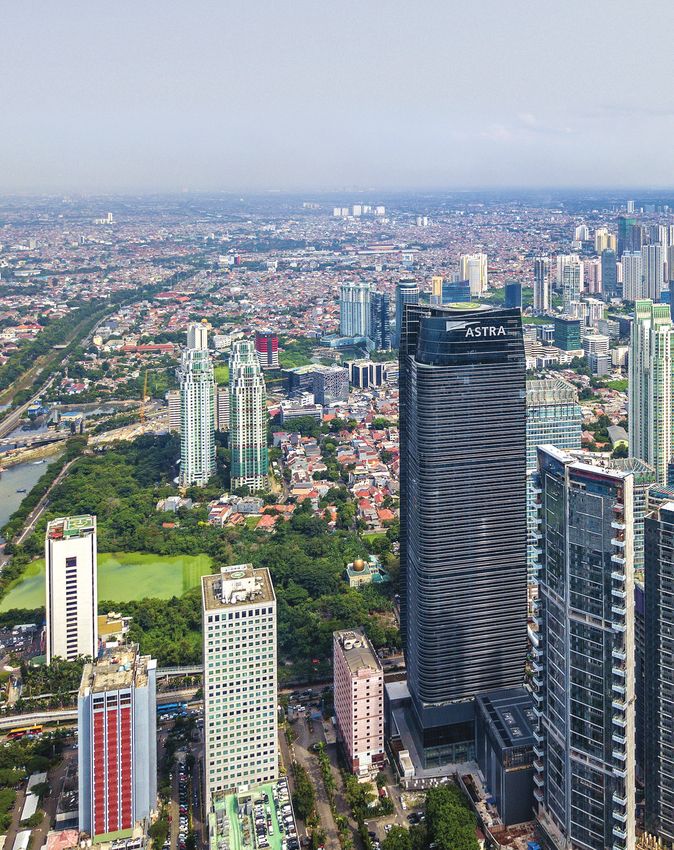
               MENARA ASTRA

            Building
           resilience
          in Jakarta
   How Arup engineered a 270 m
   Grade A commercial tower to
   withstand seismic events in the
       Indonesian metropolis.

Menara Astra is one of Jakarta’s tallest
buildings offering commercial, retail,
arts and culture spaces in the CBD.
Arup’s structural and civil teams
engineered a safe, robust, durable and
efficient skyscraper capable of withstanding
a once-in-500-years seismic event in the
quake-prone capital. We also maximised
floor space across the development and
expedited the project to early completion.
It officially opened in 2017.

Safeguarding against seismic events

To mitigate against seismic events,
our engineers adopted a lateral system that
is not commonly used in Jakarta. The design
incorporated a dual system with a shear core
wall and ductile perimeter frame, reinforced
with belt trusses. We also introduced seismic
separation between the tower and podium,
which better controlled the seismic behaviour of
the building. We created uninterrupted internal
space for the equipment and our belt-truss
solution resolved the client’s concerns around
space for mechanical and electrical plants.

                                                      25
FOCUS
Underground innovations
Arup’s specialists proposed semi-top-down
construction for the six-level basement,
one of the deepest basements in Jakarta.
Higher level slabs with openings were
constructed before excavation progressed
below slab level and before casting lower
level slabs. This method minimised impact
on the surroundings, created more working
space during excavation and reduced cost
of temporary works. Our basement design
also incorporated knock-out panels for
future connections to a car park, pedestrian
underpass, and Mass Rapid Transit station.
Front-of-mind sustainability
Bird’s eye view of the helipad.
Our concern for sustainability was Images © Shimizu Corporation
demonstrated as we minimised structures,
reduced the quantity of concrete and
improved the agility of the concrete used
in the floor system. Early in the project,
2.5 ha
Size of the development including
we proposed and clearly communicated
Menara Astra
the pros and cons of several floor structure
systems, which assisted our client in making
informed and timely decisions. The selected 51
design used less concrete and also achieved Storeys above ground including
significant cost savings. six basement levels
Crowning glory 90%
Of the world’s earthquakes occur
Arup designed the tower crown and annex in the Ring of Fire
roof steel structure in tubular sections to
support the façade cladding and building
maintenance unit (BMU) and enabled it to
brace directly to the central core for stability.
To realise the tower crown on Level 46,
we coordinated with the façade consultant
Read more & share
to address the maximum permissible
deformation for operating the BMU system,
and overcame the challenges of how it Contact Rudi Lioe
interfaces with the executive floor roof slab. rudi.lioe@arup.com
26SNAPSHOTS
Bringing art to life with acoustics
Launched early this year at the National Museum of Singapore, ‘Sonic Womb’
was an interactive installation that is designed to mimic the way a foetus
experiences sound within the womb. Working closely with the artist
Randy Chan, Arup provided acoustic and sound system design support for
the reactive audio system that is integral to the installation’s concept.
Contact Dr Xu Jingfeng | jingfeng.xu@arup.com
Read more & share
27Arup is an independent firm of designers, planners, engineers, consultants and technical specialists, working across every aspect of the built environment today. Together, we help our clients solve their most complex challenges – turning exciting ideas into tangible reality as we strive to find a better way and shape a better world. Connect with us We shape a better world | www.arup.com
You can also read


