THE FUTURE OF MOBILITY - Imagining how Roland, Nathalie, Mark and Maya will get around in 2040 - Webflow
←
→
Page content transcription
If your browser does not render page correctly, please read the page content below

January 2020

THE FUTURE
OF MOBILITY
Imagining how Roland, Nathalie, Mark
and Maya will get around in 2040
The Future of Mobility
FOREWORD
The ultimate societal or economic outcomes discussion about future studies is also This last purpose is often neglected. Future
to which a new technology will lead, for connected to the even broader discussion studies help us understand the evidence,
example, are very difficult to predict, and will about science and technology policies, which is so often incomplete and unclear. By
always be so. But this is not the point of since this conversation began at a time (the placing current knowledge in the context of
future, or foresight, studies. Rather, the aim 1960s) when the issue of the responsi- our prior expectations, future studies show us
is to build a transparent, inclusive process bilities of the scientific community (which when reality began to take a different turn,
through which different stakeholders voice was then promoting contentious technologies and might help us understand why and how.
their assumptions, ideas and concerns such as nuclear energy) came to the fore.
so they can develop plausible evolutionary The report you are reading is an excellent
trends together. Since then, future studies have been widely example of this approach to future studies. It
used in academic, industry and policy offers a concise, transparent discussion of
Stefano Brusoni
Professor of Technology and Of course, specific outcomes may be circles alike. Expert interviews, Delphi the future of mobility, and what that might
Innovation Management discussed – often in the form of scenarios, methods, scenario analyses and many bring about. It builds on expert interviews,
ETH Zurich which can help articulate assumptions, other methods have developed over time needs analysis, panel discussions and iterative
illuminate specific risks, or highlight poten- in order to support decision makers in feedback workshops. It concerns itself
tial change triggers and crucial turning their efforts to make sensible choices, as well with the interaction of societal, technological,
points. Yet, the value of such scenarios is as to enable interested stakeholders to economic, environmental and political
The effort to predict the future helps us not as plausible future outcomes, but understand which criteria and assumptions factors that might lead all of us to very differ-
understand the present rather as devices to focus our attention – informed such choices. ent places. It is about predicting, not
and, in so doing, make transparent the making predictions. It is about checking
“It is very difficult to make predictions, assumptions on which we base our decisions Future studies cannot take away respon assumptions, rather than making them.
especially about the future.” This sentiment, in the present day. sibility, but they can guide, inform and As such, it provides valuable guidance and
often attributed to the physicist Niels Bohr illuminate the key issues at stake. Crucially, advice to all those who are interested in
(but most likely originating in an older Danish In other words, the foresight is less impor- they enable people to pause and think understanding where the domain of mobility
proverb), perfectly encapsulates the diffi tant than the “foresighting”: the structured of possible unintended outcomes – for other is going, whether we look at it as investors,
culties – and disbelief – faced by those who process of engagement that makes future people, organizations or society as managers, academics or users.
attempt to make sense of the future. studies predictive, but not prescriptive. When a whole. They can offer no guarantee of
well implemented, future studies enable success, and are not intended to do so.
Both the difficulty and the disbelief originate us to “check our assumptions” as their conse- Rather, they offer a structure and a process
in the all-too-common misunderstanding quences unfold. They are about trans to continuously update our beliefs
about the goal of such efforts. Prediction is parency and responsibility, not choice and about the future, based on whatever
not about identifying a specific end-state. normativity. It is no accident that the evidence emerges along the way.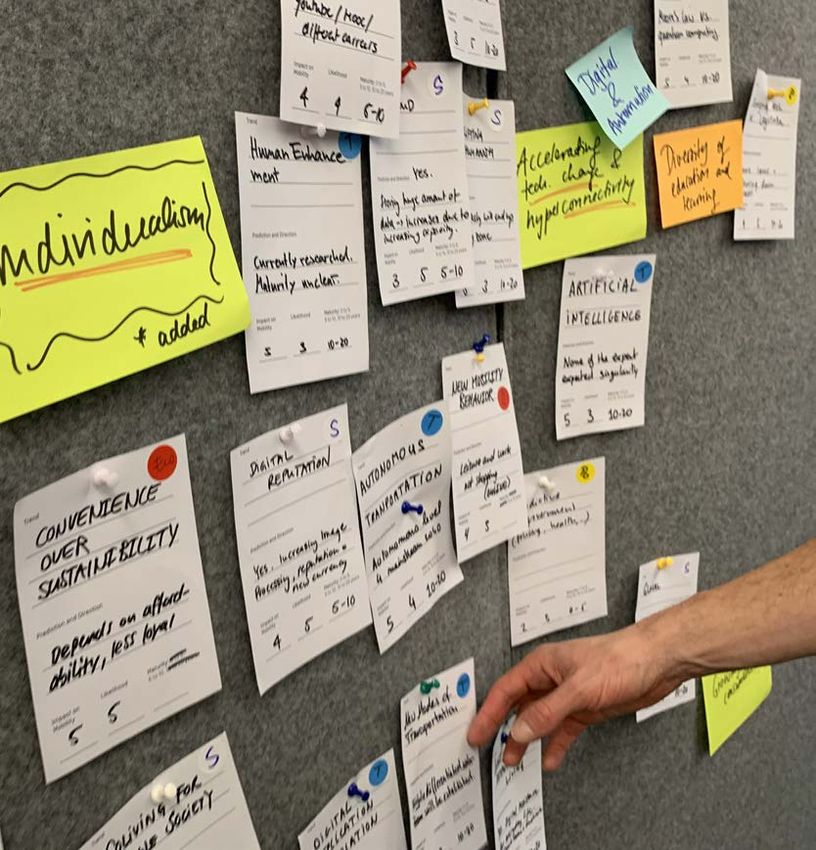
The Future of Mobility Foreword
motor insurance industry worldwide. emission public transportation. Such trends swered focus on the impact of different
Autonomous and connected cars are more and offerings might also enter European trends, the likelihood that they will
than just a vision; we are already seeing markets in the foreseeable future. materialize, and the possible picture of
them on our roads. Electric mobility is our mobility experience in Europe in
booming, driven also by the sustainability These changes in the field of mobility will 2030 and beyond. Together with Spark Labs
challenges that humankind is facing. A open up new service and risk coverage and Spark Works, we have developed a
growing sharing economy is emerging out needs. This situation is a unique opportunity map of trends and scenarios that will help us
of different economic and social trends. for Baloise as an innovative front-runner. find the best way forward for Baloise in
We may be best in class in what we do today, The future of mobility requires new solutions these turbulent times. New opportunities for
but the world is changing faster and faster. and business models, and we are in a Baloise in the mobility space are there –
We assume that the need for individual strong position to offer them – across not we just need to find them.
Patrick Wirth
Director Investment and car insurance will decline, and that autono- only traditional risk-coverage solutions,
Innovation, Group Strategy mous cars will make driving safer in the but also new mobility-focused service offer-
and Digital Transformation future. We call this scenario for the ings. For example, we have started to
Baloise Insurance future of mobility “The Three Zeros”: zero explore new mobility opportunities with our
emissions, zero ownership and zero investments in Carhelper and Gowago,
accidents. This will fundamentally change but also with our internally incubated spin-
When entering new territories, you are the insurance industry and the solutions off Mobly in Belgium. We also know
lost without a map and compass it offers to customers and partners. how to build and scale new companies, as we
have shown with Friday, our greenfield
The world is changing. The fourth industrial As Baloise, we have a responsibility towards digital insurance spin-off in Berlin, Germany.
revolution changed our daily life dramatically. our customers, employees and stake- Thanks to our retail and commercial
Smartphones and the internet are enablers holders. In this context, we want to play insurance business, we have a broad partner
for new, customer-centered business models. an active part in the transformation of network in the field of mobility. With our
Rapid access to scalable cloud services our industry and adjust our service offerings startup investments, managed by our
and emerging AI technology are additional accordingly. The entire mobility market Anthemis Baloise Strategic Venture team,
drivers for change and innovation across is undergoing major changes. Big players – we have access to companies that are
most industries. strong brands – are struggling with their already offering different types of solutions
existing business models. The established for the mobility ecosystem.
Nowadays, 30–50 percent of the premium automotive OEMs, for example, are
of a Property & Casualty (P&C) insurer is under attack from pioneers such as Tesla We are convinced that Baloise has the
typically based on classical motor-insurance and the shift away from combustion capabilities to be a relevant future player in
products. Baloise fits into that category. We engines. Uber has changed the taxi business, the new mobility ecosystems. However,
are proud to say that our insurance ex- and newcomer Flixbus is redefining the focus and an intelligent use of our resources
cellence helps us to run the motor insurance way we travel. China is at the forefront of will be key. To this end, we want to under-
business very well. But a range of mega the development and usage of new tech- stand the most likely scenarios of how the
trends are set to have a huge impact on the nologies in many areas, such as zero- future might look. Questions to be an-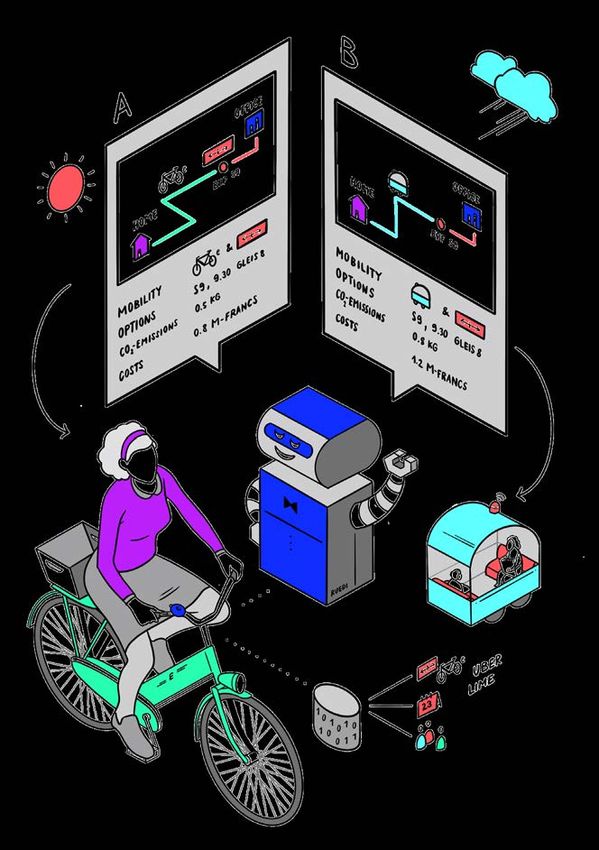
The Future of Mobility
INTRODUCTION
The concept of mobility can be interpreted last 10 years, international arrivals at Euro-
HISTORY OF MOBILITY
in several ways. The immediate connotations pean cities – an indicator for tourist
of “being mobile” include the daily commute activity – have grown by 45%. While there
to work, the school run or a trip to the grocery were 488 million arrivals in 2008, by SUBMARINE
WHEELCHAIR STEAM
store. Some go on foot, some catch the 2018 the number had surged to 710 million.3 BOATS PROPELLED BY
WITH CRANKS LOCOMOTIVE
ROWING
metro, some use pedal power, a few even after 5000 B.C. 1620 1655 1769
take a boat – and more and more people Active sports or walking for pleasure are
mix various means of transport. In fact, the other ways to experience mobility. Forty INTERNAL
ELECTRIC CABLE BICYCLE WITH HOT-AIR
dominant means for commuting varies percent of Europeans exercise or play a sport CAR PEDALS
COMBUSTION
BALLOON
ENGINE
widely depending on the city. In Paris, more at least once a week. Mostly this is done 1879 1861 1860 1782
than 50% walk, in Vienna almost 75% of outdoors, in locations such as parks, and some-
citizens commute by public transport and in times even combined with the commute to POWERED
AUTOMOBILE MOTORCYCLE HELICOPTER
Copenhagen and Amsterdam most inhabi- work (23%). Europeans exercise to improve AIRCRAFT
tants cycle to work or school.1 In general, the their wellbeing, to relax or for the pure 1885 1894 1901 1937
level of commuting into a city depends, at fun of it.4
SHINKANSEN
least partly, on the population density and ARMORED
HIGH-SPEED CONTAINER SHIP JET AIRCRAFT
DRONES
patterns of urban development in sur Sadly, too many people do not get the chance RAILWAY
1995 1964 1956 1939
rounding areas.2 Overall, this is mobility to walk, hike or exercise at all. For them, FCP
out of necessity – a means to a desired physical mobility is a desire that can only be
HYBRID CARS FUEL-CELL-
end. No one would commute without a job achieved through aids and workarounds. IN SERIAL POWERED CAR AS E-SPORTS CARS
SOLAR AIRPLANE
FLYING BY NIGHT
to get to. The journey itself can still be fun, Eight out of 100 EU citizens experience a PRODUCTION
1997
PROTOTYPE
2000 2006 2010
comfortable or pleasant – but the point is the barrier to personal mobility.5 A A PA A
arrival, not the travelling. AUTONOMOUS AUTONOMOUS PARTIALLY AUTONOMOUS AUTONOMOUS
These four perspectives underline the vital E-BICYCLES, E-BUS, 3D ELECTRIC CARS IN SERIAL E-CAR AS
PROTOTYPE PRINTED PRODUCTION PROTOTYPE
When we travel, however, the journey is the importance of mobility and its subliminal 2019 2016 2015 2013
destination. We may not even know the ubiquity for every European. They sketch the
exact route in advance, making the discovery multifarious angles on mobility, especially
exciting in itself. However, we will still need when considered from a personal level. This
to do far more planning and adjustment to is a topic with myriad distinctions and
local behaviors, cultures and routines. But delineations, and they depend heavily on
more importantly, we have more freedom to personal experiences, preferences, back- Land Water Air A: Autonomous PA: Partially Autonomous AFE: Artificial Fuel Engines
explore and feed our curiosity. Within the grounds and regions.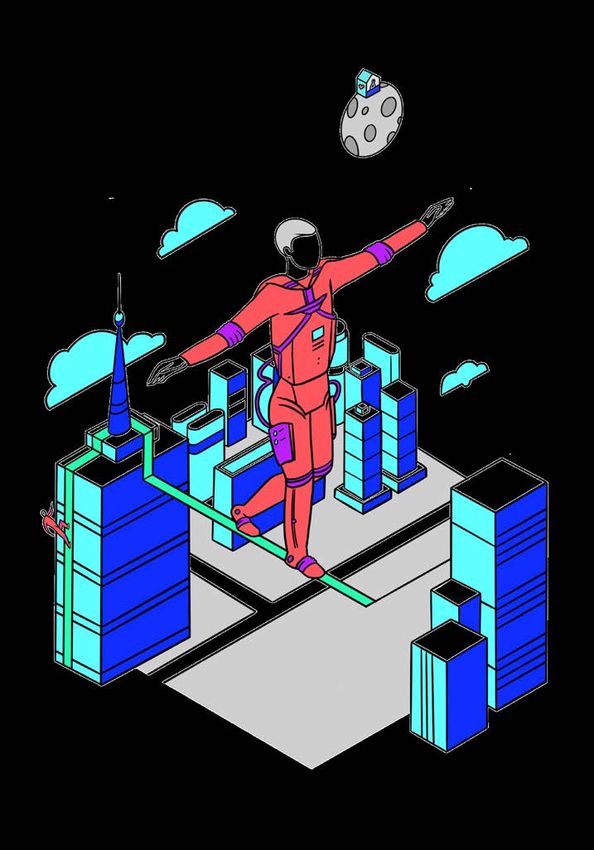
The Future of Mobility Introduction
One universal constant, however, is the fact of the other dimensions within the chapter.
FUTURE OF MOBILITY
that mobility – and how we think about it – Additionally, at the end of the research pro-
is always in flux. New means of transport are cess, all trends were related to the Euro- 4LVL
300M
always being introduced, thanks to con- pean Commission’s megatrends, which can E-AIRPLANES FOR
AUTONOMOUS VR/AR VIRTUAL SOLID-STATE
tinual technological advances. From 1762, be found at the end of the chapter. The CAR AT LEVEL 4
DISTANCES UP TO
TRAVELLING BATTERIES
300MILES
steam locomotives took passengers report concludes with four scenarios about
from A to B, while the first rideable bicycles how four very different individuals – Roland, AFE
appeared in 1861. Every new invention Nathalie, Mark and Maya – will get around AUTONOMOUS
AUTONOMOUS CAR AIRPLANES WITH
HYDROGEN
ARTIFICIAL FUEL
transforms how we as individuals think about in the year 2040. Their stories delimit the DRONE TAXI
AT LEVEL 5 WITH
BOATS
PASSENGERS ENGINES
mobility today, and what products, services space in which the actual future will come to
and jobs are available to us. But how will this pass, and will take you on a journey to
evolve in the future? experience, at first hand, how it might be to INTERNATIONAL EXOSKELETONS TO
HYPERLOOP IN
BAN OF CARS WITH ENHANCE PHYSICAL
travel in Europe 20 years from today. STEERING WHEELS MOBILITY AND SPEED
EUROPE 2040
Society is continuously changing in ways that
affect needs, desires and preferences when
commuting, travelling, exercising or dealing TELEPORTATION?!
with a disability. All in all, mobility offerings
change, and so do their underlying drivers and
influencers. One thing is clear: Mobility in
2040 will be different from today, and what-
ever is coming, the path that takes us there
will not be linear.
This study, carried out in collaboration
between Spark Labs and Baloise Insurance,
aims to provide a glimpse of mobility in
20 years’ time. The process of “foresighting,”
which traces how trends in society,
technology, economy, the environment and
European politics might evolve over the
next 20 years, also offers a way to imagine
how mobility will develop within society
over the same period. The Trend Radar gives
an overview of these trends, their impor-
tance for mobility, their likelihood of coming
true and their time horizons. Technological Land Water Air Other A: Autonomous PA: Partially Autonomous AFE: Artificial Fuel Engines
Trends are related specifically to the trends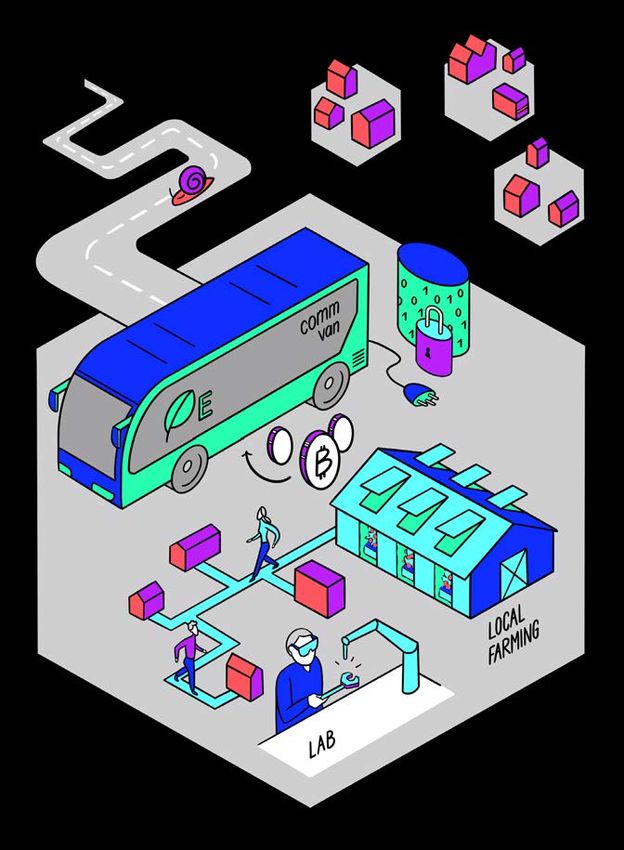
The Future of Mobility

COLLABORATIVE
EFFORT
This project was carried out in tight colla-     BALOISE INSURANCE
boration between Spark Labs, Spark Works
and Baloise Insurance. Spark Labs con-           − Project Lead
tributed with expertise in the field of Human-     Patrick Wirth
Centered Innovation and bridging it with         − Project Manager
a future foresight approach. Spark Works           Anna Sigrist
supported with project management,               − Support
workshop facilitation and design resources.        Fabienne Gisiger
Baloise Insurance has a strong interest            Corsin Sulser
in understanding how people will move in
the future to support this transition and
make upcoming journeys more pleasant with
the utmost efforts.

SPARK LABS AND SPARK WORKS                       SPECIAL THANKS

− Project Lead                                   − Christoph Neye and Ulli Palm
  Alan Cabello                                     of MotionLab Berlin for providing
− Project Manager                                  space and insights for the
  Daniel Perschy                                   Design Thinking Workshop.
− Researchers                                    − Aaron Broderick of the International
  Alexis Terrée                                    School of Zug and Luzern for
  Barbara Schnyder                                 helping organize the Children’s
  Céline Heim                                      Future Lab.
  Laura Mählmann
  Michael Augsburger
  Sebastian Niederberger
  Thomas Möckel
− Design
  Lilian Hörler
The Future of Mobility

CONTENT
     07 METHODOLOGY                               28   Decentralization                            43   Suburbanization
                                                  28   Autonomous Robotics                         44   Pollution
        08     Research Design                    29   Power Sources and Energy Storage            45   Recycling
        10     Data Collection                    30   Digitally Enhanced Realities                45   Extreme Weather Events
                                                  30   Digital Replication and Simulation
                                                  31   Human Enhancement                           47   POLITICAL TRENDS
     14 TREND RADAR                               32   Trend Relations
                                                                                                   47   E-Governance
        16     SOCIETAL TRENDS                    34   ECONOMIC TRENDS                             47   Decentralization of Politics
                                                                                                   48   Big Tech in Politics
        16     Anywhere, Somewhere, X-Where       34   Meaningful Consumption                      48   Predictive Governance
        17     Smart Responsive City              35   Rising Inequality and Extreme Markets       48   Digital Warfare
        17     Real and Virtual                   35   Localization                                49   Euro-Pessimism
        17     Community Culture                  35   Sustainable Value Propositions              49   Rise of Nationalist Politics
        18     Social Participation               36   Convenience and Price over Sustainability   50   Green Wave
        18     Mind-Lifting and Post-Humanism     36   Public and Private Convergence              50   Migration
        18     New Work                           36   Emergence of Hidden Platforms               50   Emerging Technologies vs. Legislation
        19     Simplification                     37   Sharing Economy                             51   Separatism
        19     Slow Culture                       37   Consumption Equality                        51   Securitization
        20     Sustainable Behavior               37   Cities and Rural Areas                      51   Aging Voters
        21     Education Revolution               38   Monetary Substitution
        21     Digital Reputation                 38   Safety Culture                              52   Megatrends
        22     Technology Fear                    38   Data Infrastructure and Governance
        22     Health as a Status Symbol          39   Integrated Systems
        23     Co-Living for the Single Society   39   Post-Scarcity Economy                       53 SCENARIOS
        23     Hyper-Personalization
        24     Personal Cloud                     40   ENVIRONMENTAL TRENDS                        54   Human+
                                                                                                   57   EchoTech Archipelago
        25     TECHNOLOGICAL TRENDS               40   Global Warming                              61   Digital Venice
                                                  41   Rising Sea Levels                           65   Swiss Flow
        25     Artificial Intelligence            41   Decarbonization
        26     Autonomous Transportation          42   Resource Availability
        26     Processing Power                   43   Land-Use Change                             70 REFERENCES
        26     New Means of Mass Transportation   43   Environmental Regulations
1.1 Subtitle   Explanation   7

METHODOLOGY

Sharing methodology makes the research process
transparent and explains how the results of this study
came about. The approach can be divided into
three phases: information collection, scenario build-
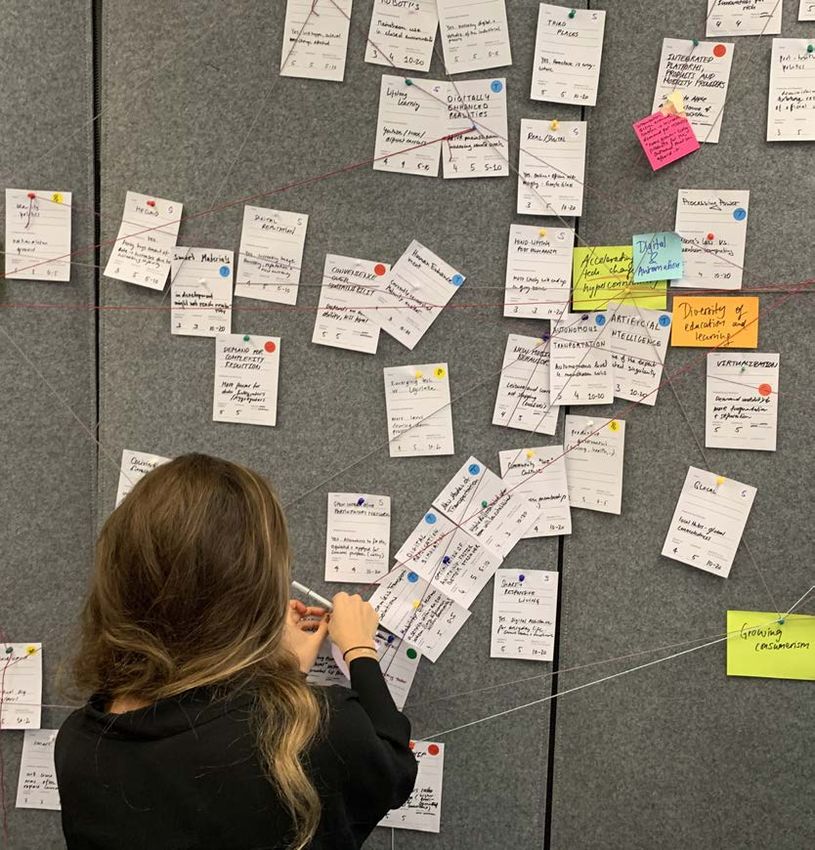
ing, and testing. Seven researchers were involved
in the study, which followed a highly exploratory
approach and predominantly relies on primary data
obtained through in-depth, semi-structured inter-
views with experts and extreme users. All references
can be found towards the end of this report.

Methodology                                                                                                                                                                                  8

RESEARCH
DESIGN
The research corresponding to this report     leading experts from universities, public      mation from the entire research group could       bility. This matrix then served as a foun-
was carried out between September and         institutions and corporates, as well as        be considered without neglecting continu-         dation to build scenarios, which aim to out-
December 2019. Its focus is to explore the    interviews with extreme users. Furthermore,    ous exploration, which a study of such scope      line potential futures through intuitive
future of mobility for people in Europe       interactive formats were used to make          requires. Throughout the process, the in-         storylines, and take account of the many ways
until 2040. The research process was divided  sense of the gaps that emerged between the     formation found was structured into trends,       in which the world could develop. None
into three main temporal phases. First,       findings from experts and extreme users.       which represent delimited subunits of             of these stories will transpire exactly as des-
evidence was collected in a highly exploratoryMore details about the different sources and   streams and a graspable entity for discussions.   cribed. In all likelihood, nothing remotely
manner from a broad range of sources,         formats can be found in Data Collection.       Based on the insights, these trends were          like them will come to pass. However, in com-
and clustered into trends. Second, scenarios  Interviewees were contacted via e-mail and     then rated by the responsible researcher on       bination, they provide a space to imagine
were built connecting these trends in         selected based on upfront desk research,       the dimension’s impact, likelihood and            and trace the various trajectories within
order to express uncertainty, pluralism and   or following a previous interview that gene-   level of maturity. Maturity reflects when         them. Trends with a high impact and a high
interactions between the trends, as well      rated insightful findings or a recommenda-     the respective trend is expected to have          likelihood are reflected in most of the sce-
as the myriad ways they might combine.        tion to consider another relevant topic.       reached full diffusion or manifestation within    narios, while those trends with lesser impact
Third, trends and especially scenarios were   This illustrates the aforementioned highly     society. As these ratings were carried out        and likelihood are present in just one. To-
tested and adjusted to improve their          exploratory format of this study, where        by one researcher, the validity of the quanti-    gether, they draw a picture of the possibilities
validity and quality.                         paths were built and redirected along the      fications are rather weak. In consequence,        for mobility in 2040.
                                              way, rather than planned from the be-          the quality could be improved by a follow-up-
Information and data were collected fol-      ginning. Most interviews were carried out      study which involves all interviewees in         To strengthen validity and quality, the sce-
lowing the STEEP structure. This means five by phone, although a few were also con-          the rating process.                              narios and trends were presented to experts
different perspectives were taken on the      ducted face-to-face. Audio recordings and                                                       and students, most of whom had not been
topic. How these streams relate to each other documentation of the interviews, events        Following this, all researchers participated in involved during the first phase of information
is illustrated on the following page. A team  attended and interactive formats are avai-     a two-day synthesis workshop where all           collection. They provided feedback and
of seven researchers was tasked with focu-    lable upon request.                            information was brought together to create critically discussed the research outcome.
sing on Societal, Technological, Economic,                                                   a holistic understanding in respect of the       Several adjustments were made after
Environmental or Political developments       Each of the researchers worked rather inde-    scope of the research. In detail, the previously this process, and some of their reflections
over the next 20 years. Within each of these pendently to avoid group-thinking. However,     mentioned trends were clustered based            are presented alongside the scenarios.
five streams, the focus was on understanding weekly meetings allowed for information to      on their relationships with each other, and
major developments or major drivers of        be exchanged, and for the research path        their co-dependency was described. More-         For reasons of transparency and reliability,
change, to subsequently make sense of how     to be adjusted based on findings from other    over, they were located within an impact         all references and figure sources can be found
they will impact mobility until 2040. The     streams and for engagement in a careful        and likelihood matrix to get an understand-      at the end of this report.
main sources during data collection were in- and preliminary synthesis. Overall, this al-    ing of which combination of trends will
depth, semi-structured interviews with        lowed for an open process where infor-         predominantly influence the future of mo-
Methodology                                                                                                      Research Design                   9

                                                          ECONOMIC                                                         TECHNOLOGICAL

                                                                         2
                                                                                                             3

1    Curiosity and human desire for
     progress drive technological research.
                                                                                                      6
2    Early funding fosters technology
     development.

3    New technology arriving as product
                                                                                 8
     or service on the market experiences
     societal selection.

4    Further investment appetite and                                         8                  8
     subsequent growth is mediated by
                                                                                                                     5
     societal acceptance.                                        4
                                                                     5               8
                                                          1
5    Impactful innovations are regulated       SOCIETAL                                                                                POLITICAL
     by politics.
                                                                                         7
6    Adoption of products or services
     impacts the environment either
     negatively or positively.

7    Environmental effects influence
     societal and political choices.

8    Continuous economic decisions
     mediate product or service growth
     based on societal acceptance, political                                                 ENVIRONMENTAL
     regulations and environmental impact.
Methodology 10
DATA
COLLECTION
− Max Bergmann − Yves Farge − Patrick Hofstetter
University of Basel Academie des technologies WWF
Chair of Social Research and Methodology Senior Scientist Head of Climate and Energy Policy
at the Department of Social Sciences − Markus Farner − Patrick Hunger
− René Bohnsack Federal Office of Civil Aviation Switzerland CEO Saxo Bank Switzerland until
Smart City Innovation Lab Lisbon Co-Leader Innovation and Digitalisation March 2019
Founder and Assistant Professor − Claudio Feser − Stefan Innerhofer
− Ulrik Brandes McKinsey & Company VividQ
ETH Zurich Senior Advisor Business Development Manager
Professor at the Department of − Pieter Fourie − Michael G Jacobides
EXPERTS Humanities, Social and Political Sciences ETH Zurich London Business School
Seventy-six pre-selected experts from − Alice Charles Urban Mobility Senior Researcher and Sir Donald Gordon Professor of
universities, public institutions and corpo- World Economic Forum Expert in Digital Twin Simulation Entrepreneurship and Innovation;
rates around the globe have shared their Project Lead, Cities, Infrastructure and − Mickaël Gandecki Professor of Strategy and Entrepreneurship
knowledge and provided the foundation for Urban Services Platform myfood − Stephan Karpischek
the predictable development of the trends. − Chiara Cortinovis Founder Etherisc
Lund University − Anja Guelpa Founder
− MiMi Aung Postdoctoral Fellow at the Centre for Civic Lab − Nikolaos Kastrinos
Expert in Extraterrestrial Autonomous Environmental and Climate Research Chief Executive Officer European Commission
Robots − Michael Cusumano − Lothar Harings Policy Officer
− Kay Axhausen MIT Sloan School of Management Kuehne + Nagel − Alexander Klimburg
ETH Zurich Expert in Strategy and Innovation, Member of the Board The Hague Centre for Strategic Studies
Professor at the Institute for Transport Especially in Digital Platforms − Ekaterina Herzig Director of the Global Commission on
Planning and Systems − Bas de Geus Dufry Group the Stability of Cyberspace Initiative and
− Gery Balmer Brussels Centre for Urban Studies Managing Director Switzerland Secretariat and Director of the Cyber
Federal Office of Transport Professor of Human Physiology − Dmitri Hitrov Policy and Resilience Program
Vice-Director, Head of Policy Division − Claus Doll inlusion Inc. − Finn Köhler
− Carsten Beck Fraunhofer Institute for Systems and Founder Space10
Copenhagen Institute for Futures Studies Innovation − Volker Hoffman Resident Learning Designer
Director and Futurist Coordinator of Business Unit Mobility ETH Zurich − Benjamin Leiding
Professor for Sustainability and University of Goettingen
Technology Research on Blockchain TechnologiesMethodology Data Collection 11
− Jana Lév − Monique Morrow − Armin Reller − Erik Schönenberger
sharoo The VETRI Foundation University of Augsburg Digital Gesellschaft
Head of Strategic Business Development Top Digital Shaper Switzerland and Top Professor Emeritus at the Department for General Manager
− Kevin Liggieri 50 Women Globally in Tech Materials Resource Management − Anja Schulze
ETH Zurich − Caroline Mullen − Tobias Reusch University of Zurich
Chair of Science Studies University of Leeds Holoeye Professor of Technology and Innovation
− Janina Loh Senior Research Fellow at Insititute Development Engineer for Microdisplay Management
University of Vienna for Transport, Focus on Mobility Technology − Tony Seba
Research on Roboethics and Critical Management and Policy − Marc Roland RethinkX
Posthumanism − Karla Münzel FarmBot Expert in Technological Disruption, Serial
− Bart Los Utrecht University and TNO Director of Marketing and Sales and Entrepreneur and Educator
University of Groningen PhD Candidate and Mobility Consultant Reliability Engineer − Rainer Selvet
Professor of the Economics of Tech- − Christoph Neye − Rolien Sandelowsky Wolf 3D
nological Progress and Structural Change MotionLab Berlin Creative Activist and Philosopher Chief Technology Officer
− Ernst Lutz Founder − Murod Saymudinov − James Shell
ESM Foundation: Research and − Alexander Norta Swissloop Expert in Space Communication
Development Activities in the Field of Tallinn University of Technology Project Manager and Expert about − Roland Siegwart
Rare and Critical Elements Research on Decentralization Hyper Loop ETH Zurich
Chairman of the Board − Petr Novák − Christian Schaffner Professor of Autonomous Systems
− Cathy Macharis ETH Zurich ETH Zurich − Slavko Simic
Brussels Centre for Urban Studies Professor at the Department of Executive Director of the Energy DB Systel
Professor of Mobility and Logistics Chemistry and Applied Biosciences and Science Center Consultant, Mobility Expert and Team
− William Maloney Expert for Battery Technologies − Michael Schetsche Fermata
The World Bank − Guido Palazzo University of Freiburg − Bob Sumner
Chief Economist, Equitable Growth, HEC Lausanne Research on Futurology, Xenology ETH Zurich
Finance and Institutions Professor of Business Ethics and Exosoziology Professor at Game Technology Center
− Anna Kathrin Meier − Anthony Patt − Ulrich Schimpel − Gladman Sydney
Allianz Global Corporate & Specialty ETH Zurich IBM Harvard University
Chief Risk Officer Professor at the Department of CTO IBM Switzerland and Expert in Expert in Materials Science and
− Jürg Michel Environmental Systems Science Blockchain Technologies Engineering
PostBus − Aurélie Pezous − Gerhard Schmitt − Minoru Tsuru
Project Manager “Smart Shuttle” CERN ETH Singapore Tesla
− Philippe Monnier Knowledge Transfer Officer Director of Singapore-ETH Centre, Senior Product Engineer for
WayRay − Sigrid Pirkelbauer Principal Investigator of Big Data Informed Superchargers
Director and Expert for True Schweizerische Bundeskanzlei Urban Design and Governance Project − Oliver Väärtnõu
Augmented Reality Head Mobility- and Cybernetica
Innovationmanagement ChairmanMethodology Data Collection 12
− Daniel Vogt − Erik
Harvard University Lives self-sufficiently in the Emmental
Academic Fellow for Research & − Patrick
Technology Transfer Art and culture geek
− Heinz Wanner − Joshka
University of Bern Retired at an extremely early age
Professor Emeritus and Founding − Louise
Director of the Oeschger Centre for Oldest gas station carrier in Europe
Climate Change Research − Sandro
− Tara Welschinger Anti-food waste campaigner
FOIFI ZeroWaste Ladencafé EXTREME USERS − Bernhard EVENTS
Co-Founder Expert knowledge was complemented Hitchhiked all the way to South America Attending mobility-related events gave
− Hans Werder by insights from extreme users. They exhibit − Eva insights into expert opinions, as well as
Avenir Mobilité off-grid positions or behaviors today, and Producing all her cosmetics and laundry allowing observations of audience reactions
President might act as a role model for the masses of detergent herself towards the topic. This provided early
− Mehmet Fatih Yanik the future. Therefore, they account for − Kathrine glimpses into the development of certain
ETH Zurich the “unknown unknowns” and take account Author at online future magazine trends. Furthermore, product prototypes
Professor at the Department of of what we cannot see clearly today. − Alice exhibited at events cultivated hands-on
Information Technology and Electrical Bitnation person understanding of certain technologies, and
Engineering and Expert in Brain- − Chris − Luise helped to contextualize them with related
Computer Interfaces Founder of a micro living movement “Illegal” migrant trends in order to predict diffusion.
− Sandra − Fred
and countless others who have supported Sailed to COP 25 Super rich and overprotected individual − Future of Mobility Summit
this research, but cannot be named. − Alex − Lukas September 5, 2019 in Berlin
Bike activist Digital hacker An international meeting for mobility
− Nadine − Jim experts and a showroom for disruptive
Police officer in Berlin Leader of a seperatist movement technological applications. Key speakers
− Lisa − Thomas included Mars Geuze of Hyperloop,
Promotes zero waste President of a young right-wing party Felix Lee of EHang 116 and Sebastian
− Simon Straubel of Interstellar Ventures.
Owns multiple 3D printing machines in
his flat − Tour to Empa Research Center
− Anton September 9, 2019 in Dübendorf
Inventor of winter mobility solution Empa is a Swiss Federal research institute
− Birgit focused on “post-fossil mobility”. The
Lives without a home event included a presentation by Christian
Bach (Head of the Automotive Power-Methodology Data Collection 13
train Technology Laboratory) on the corporate applications. The field research structured poster to provide a frame for
challenges and solutions for post-fossil was executed by talking to various the taskset. The children used Lego as
mobility. This was followed by a visit types of market actors and by evaluating prototyping material to make the
to the demonstration labs to experience the customer experience of some story more tangible. Later on, they
these new technologies. available products. were asked to create a timeline
of events (2020–2040) that lay behind
− Social Democracy in Europe Other events that contributed to the their character’s life.
September 30, 2019 in Zurich research of this study included the
The Europa Institut of the University McKinsey Quarterly Insights about Auto- − Expert Dinner
of Zurich invited Peer Steinbrück to speak nomous Driving on September 4, 2019, November 4, 2019 in Zurich
on the topic of “Social Democracy in the ETH Week about Mobility from Sep- INTERACTIVE FORMATS To refine and improve the quality of the
Europe”. In front of a packed lecture hall, tember 8 to 13, 2019, the Meeting of Interactive workshops were set up to gene- final outcome, the findings from the
the former German Federal Minister the Digital Society Initiative UZH “Mobility” rate new knowledge from different sources research process and the scenarios were
explored the reasons for the social demo- on September 12, 2019 and the Future to further broaden the discussion and discussed, questioned and challenged
cratic crisis, and reflected on possible Cities: Actions 2019 FCL Conference on take into account perspectives from beyond during an expert dinner. Twelve experts
pathways to a successful future. The September 24, 2019 in Zurich as well the mainstream. They were also held in from various disciplines met to discuss
majority of the audience was male, white, as the Dialoganlass “Multimodalität – Vision order to synthesize information, challenge the preliminary findings on trends and
old and of upper-class origin. und Realität” on October 17, 2019 in Biel. the findings and find common ground offer their opinion on the Scenarios.
between expert and extreme user positions. First, they were divided into three sub-
− Brexit: The last chapter? groups for in-depth discussions, and
October 8, 2019 in Lucerne − Children’s Future Lab then gathered in a plenum to reflect on
Mr. Allioth contextualized the emergence October 5, 2019 in Zurich the interconnectedness of the work.
and potential consequences of Brexit. In a society where “our children are […] The overall criteria for the evaluations
Drawing on historical data and analyses, our future”, this event aimed to explore were feasibility and probability.
he explained the reasons that lead to the acceptance for certain technologies
the Brexit vote, how the popular petition and the mobility offerings of the next Furthermore, a Generation Y Workshop
changed its nature from a soft to a hard generation. The storytelling method was in Zurich, a Design Thinking Workshop
Brexit and estimated the consequences. designed to provide a sneak peek into on October 14, 2019 at the MotionLab
The majority of the audience was male, the subconscious of the younger genera- Berlin, and an online Art Competition
white, old and of upper-class origin. tion and help the creation of scenarios. were hosted to collect findings from
diverse groups.
− AWE EU 2019 This workshop provided space for 22
October 17, 2019 in Munich children from Zurich, aged 8–16, to create
This major AR/VR conference featured a Story of the Future in five mixed-age
contributions from many companies teams. Their task was to imagine one day
engaged in creating and using AR/VR in the life of an imaginary character in
products, for both consumer and the future of 2040. Facilitators provided a1.1 Subtitle Explanation 14 TREND RADAR The Trend Radar presents all 65 trends relevant for mobility, along with in-depth descriptions of each. It should help you to get a quick overview of the different drivers of change that impact the future of mobility, to guide you through the landscape of the future. The Technological Trends are followed by 10 illustrations that clarify their links to Societal, Economic, Environmental and Political Trends.
Trend Radar 15
SOCIETAL
Mind-Lifting
Smart & Post -
Responsive Humanism Social
City Participation
Real &
Virtual Anywhere,
Somewhere,
XWhere
Community
Culture
Sustainable
Behavior
New Processing
Slow Work Power
Culture Education
Revolution
Digital New Means
Replication & of Mass
Digital
TEC
Simulation Transportation
Reputation Personal
AL
E-Governance Cloud
Technology
Fear Hyper-
TIC
HN
Predictive Persona-
Gover- Digital Decentra-
lization
nance Warfare Co-Living for Power lization
the Single
POLI
Sources &
OLO
Society Energy
Decent- Storage
ralization of
Separatism Autonomous
Politics
Health as a Transportation
GICAL
Status Symbol
Migration Euro- Digitally
Big Tech Enhanced
Pessimism
in Politics Realities
Rise of
Low impact High impact Nationalist
Politics Autonomous
Aging
Robotics
Securitization Voters
Green Wave
Human
Emerging Enhancement
Tech vs.
Legislation
Low likelihood High likelihood
Pollution
Post-
Scarcity
The radar on the right gives a holistic Sub-
Economy Safety
Culture
urbanization
perspective on the trends affecting mobility Environmental
Regulations Data Infra-
Convenience
& Price over
until 2040. The inner circle contains all Land-
Use
structure &
Governance
Sustainability
Change Meaningful
trends arising within the next five years, Extreme Consumption
Weather Recycling
Cities & Rural
those in the middle circle will materialize by Events Integrated
Systems Sharing Areas
Rising
Economy
2030 and all those in the outer band Sea
Levels
Decarbonization
will impact our understanding of mobility
Consumption Localization
by 2040. The size of the bubble reflects Equality
Emergence
the impact that specific development will Resources of Hidden
Public & Private
Convergence
Availability Platforms Rising
have on mobility, while the different
N
Inequality &
Monetary Extreme
VI
IC
shades illustrate its likelihood of coming true
E
Markets
M
Substitution
as described: light shading reflects low RO Global
Warming Sustainable
O
probability, medium shading indicates mode- NM
Value
N
CO
Propositions
rate probability and dark shading means EN E
high probability. Detailed descriptions of all TAL
trends follow this radar.Trend Radar 16
SOCIETAL
TRENDS
By 2040, there will be 525 million people ANYWHERE, SOMEWHERE, X-WHERE It means access to information, influen- group belonging and particular places.”
living within the European Union region For some parts of society, the “home base” cers and power, and therefore determines It is this, rather than educational level or
(including UK), with a median age of 45. The of the future will be everywhere. It will the biographies and geographies of life social class, that binds them together:
proportion of people aged 65 and older encompass everything that happens at the for many.”11 As a result, the main fault line they earn, live, work, and vote in widely
will be around 27 percent; the number of traditional dwelling and the workplace, in contemporary society is not between differing ways, but they are typically
over-65s is projected to rise from 84.6 as well as third spaces in between, such as right and left, nor between capitalists and more local in outlook. They are communi-
million in 2008 to 130 million in 2040.6 As railway stations, airports, waiting areas socialists. Rather, as David Goodhart tarian, stable, patriotic, traditional, mind-
a result, the old-age-dependency ratio and retail environments. As such places be- argues in The Road to Somewhere: The New ful of security and tied to specific places.12
– meaning the relation between economic come increasingly important, they will be Tribes Shaping British Politics (which Zooming out, the future belongs to
contributors and economic beneficiaries confronted with new demands from their probably applies to most other European the growing group of “Glocalists,” as mobility
– is changing rapidly. The challenges arising users. This could mean a higher level of countries too), the true division is “be- is becoming increasingly affordable (see
from demographic shifts, climate change comfort than they can offer today, or adjusted tween the people who see the world from Consumption Equality), which blurs these
and the rise of new technologies are sure to infrastructure depending on the purpose Anywhere and the people who see it current distinctions. Glocalists unite
influence everyday life of the European they will serve in the future. And of course, from Somewhere.”12 both elements at a new level of integration,
citizen. Societal values will evolve under the vehicles are another sort of “X-Space,” In Goodhart’s analysis, “Anywheres,” combining home with an open horizon
influence of technological advances – because being “on the way” to somewhere who represent about 25 percent of the UK’s on the prosperity that has arisen in the big
although whether these changes will enhance is becoming a space in its own right. This population today, dominate British culture cities through digitalization. For example,
progressive, liberal thinking or lead to development will potentially make the mobi- and society. They pass exams, do well at numerous socially cohesive villages are
further polarization is unclear. Optimists lity journey an experience in itself once school, go on to a residential university, work growing within cities, in the form of co-living
speak of human-centered, responsive more, and less of a transitional necessity in a major city at some stage, marry late projects.13 These are cooperative forms
design, integrating nature-based digital when going from A to B. Thus, a vehicle and comprise almost all of the political, jour- of housing in which the residential communi-
systems as solutions for livable envi- could become a connected education space, nalistic, corporate and artistic elites. They ties of the 70s are enjoying a renais-
ronments.7 Pessimists, meanwhile, point a café, a bank, an insurance branch, a have identities that are “portable” and sance.14 This effect is related to the trend
to numerous ecological disasters, poten- shopping mall or a meeting room, reducing “achieved,” and pride themselves on being Real and Virtual.
tial nuclear war and man-made virus the relevancy of any start and end point. tolerant, meritocratic, egalitarian, auto- In terms of mobility, this shift of power
epidemics – or argue that artificial super- “Gas guzzlers” will no longer be judged on nomous, open to change, internationalist will most likely result in a new class of
intelligence has already started taking their horsepower, but instead by connec- and individualist.12 working nomad. These people will work in
control.8 Overall, the key decision-makers tivity or ecosystem power, increasing their “Somewheres,” meanwhile, who consti- a very different place, and will have
of the future are science and technology, current mobility supremacy still further.10 tute about 50 percent of the UK population, very little real attachment to their home
politics, religion and business.9 “At the moment, access to such a “are more rooted and usually have ‘ascribed’ base – if any. While this lifestyle was
decentralized and mobile lifestyle mainly identities – Scottish farmer, working-class previously considered highly exclusive and
depends on profession and societal status. Geordie, Cornish housewife – based on lucrative, the Glocalists are now the newTrend Radar Societal Trends 17
elite, since they combine the privilege of or increasing the efficiency of existing imposed in real time with additional infor- lization illustrate. In response, a newtype
high mobility and deep relatedness to their infrastructure.”7 Therefore, Citizen Design mation that appears to be part of the of collectivism has emerged. It is character-
local community. Science has huge potential to fulfill the real object.20 Projects such as Google Glass ized by situational orientation towards
unused potential in our current system. give a sense of the next step: augmented groups and engagement with the community,
SMART RESPONSIVE CITIES enviroCar16 is one example, using citizens, reality becomes detached from the smart- while retaining a focus on the self.24 Tech-
In 2040, living will be smart,15 so cities will traffic planners, scientists and companies phone hardware.21 This represents a nology has enabled new forms of situational
need to continuously adjust to changes to collect and analyze vehicle information in real advance over current solutions, and communities, collaborations and coopera-
in their environment through sensor data various traffic situations, and gain insights will most likely lead to higher diffusion tion. Therefore, “local co-working and
and connected information systems. How- that can support the development of sustain- and acceptance. At the same time, companies co-learning communities”25 are booming, as
ever, such a “technology-based Smart able traffic concepts. Other initiatives are such as Samsung, Sony, Novartis and is as the hunt for meetup events. Specia-
City is often disconnected from the citizens.”7 bikeable,17 bike citizen18 and CitieS-Health.19 Sensimed, as well as research centers across lized communities such as Transition Town
To mitigate these effects, an urban mana- the globe, are working on “smart contact Totnes are focusing on strengthening the
gement system shared between humans and lenses.” Applications for these beyond the local economy, reducing environmental
machines, with citizens ultimately in control, medical realm include thermal imaging, impact and building resilience for a short-
will continually create touchpoints to allow “long-distance” vision, augmented reality or term future in which more expensive energy
discussions around these technological controlling devices just by blinking.22 and a changing climate might begin to
changes. A responsive city with “smart tools These technological advancements manifest themselves.26
can be used to improve convenience and could lead to completely new ways of On the one hand, community culture
to support participation in the interest of interacting with computer systems. Instead is growing as an essential way to organize one-
society.”7 In this case, “everyone will be better of entering inputs via buttons or key- self in a new and meaningful way in a highly
informed about what is happening in the boards, voice could become the preferred complex world.27 On the other, in a world full
city, not through a surveillance system, but way to interact with your car or smart- of autonomous individuals, self-chosen group
through an informative system.”7 phone. Additionally, the use of technology membership is becoming more significant
Furthermore, cities will have unique that enhances the visual field will create for one’s own identity and way of life. Part of
local elements – integrated, digital systems new ways of navigating and open up new this collaborative lifestyle is participating
that are based in nature and rooted in business opportunities – especially for in the Sharing Economy.28 Since this youthful
the concept of Citizen Design Science (illu- entertainment and location-based marketing. lifestyle is seen as hip and desirable,A it is
strated in Figure 1). “Citizen Design By 2040, “most needs will still be likely to be picked up by older generations
Science is a participatory design approach met physically and locally, while specific too. However, it does have its limits: “Shar-
Figure 1: Citizens will engage directly and digitally in the
that engages citizens through online interests will be realized virtually. The ing platforms such as Sharoo, Berlkönig or
urban planning process.
design tools in the planning process. It can importance of individual transport will Clevershuttle will not reach the masses, since
be considered as a symbiosis of traditional REAL AND VIRTUAL therefore decline in the long term.”8 people prefer to choose how they use their
participation in urban planning (citizen The online and offline worlds are slowly personal car, or who they share a car with.”29
design) with modern participation methods merging, and interconnectivity is increasing COMMUNITY CULTURE
that build a form of citizen science.”7 too. Using virtual reality technology or Lately “we’ve gone a little overboard with A
A hipster is a person who follows the latest trends and
For mobility, a major question will augmented reality software, the view through individualism,”23 as the trends Co-Living fashions, especially those regarded as being outside the
be whether to “invest in new technologies a mobile phone camera can be super- for the Single Society and Hyper-Persona- cultural mainstream.Trend Radar Societal Trends 18
On this theme, in terms of mobility, we design of processes. It is the first time in political opinion or even vote at the bus enhancements could potentially replace
can expect that as ownership declines, history that so many people are living stop, influenced by the arbitrary information some of the currently used modes of trans-
private-vehicle sharing will require comple- so close together in urban systems. And as and impressions impinging on them right portation in micro-mobility. Depending on
mentary services that regulate access a consequence, governance systems, at that moment.”30 the improvement delivered in terms of speed
based on the owner’s preferences. This which were originally set up for far fewer and physical strength, it’s even possible that
could increase the importance of monetary people and far lower population density, MIND-LIFTING AND POST-HUMANISM many places will ban the use of such technol-
substitution through the use of virtual need to evolve.”7 “Futurologists like Nick Bostrom predict ogies, since they could be regarded as
currencies (e.g. a points system) and make However, “the rise of social media is that AI will soon be able to keep pace with weapons and make people feel threatened.
customer ratings even more crucial for accompanied by a strong tendency towards human intelligence, a super-intelligence
the service provider (see Digital Reputation). the formation of monopolies.”30 And “par- will eventually emerge and it could take con- NEW WORK
Furthermore, since these trends will lead ticipation, especially in the online world, is trol of Earth – resulting in the enslave- Start-ups are increasingly putting established
to much higher car-usage rates, companies often associated with an informal pressure to ment of humanity.”8 companies and industries under pressure
providing services such as vehicle clea- conform – the fear of ‘dislikes.’ People To keep up in the “race” with AI, the to innovate.39 The contingent workforces at
ning, maintenance and refueling will grow decide in favor of their image.”34 At the same digital offerings of the future will aim at en- such start-ups reject both the well-paid
in importance. time, however, the scrutiny put into eva- hancing humans’ mental and emotional existence of an employee and the comfort
luating opinions is declining. “The result could performance. Tech innovators want to link zone of the welfare state, preferring to stay
SOCIAL PARTICIPATION be that people will rashly share their the brain directly to a computer so that independent. Hence, they are becoming
Social media has risen in just a few years from humans merge with AI.35,36 However, huma- an increasingly important economic factor.40
a marginal phenomenon to a central part nists see this as folly. “It is very naïve, how With their interdisciplinarity, business
RISE OF CITIZEN-SCIENCE PROJECTS
of everyday life.30 In the same way, focused we glorify the ratio,”23 and “the entire corpo- ideas, working style and approach to prob-
internet communities are increasingly The SciStarter repository has been documenting reality of man is not taken into account.”37 lems, contingent workers create an economic
the rise of citizen-science projects and events.
used in the private and public sphere to ex- The field is largely decentralized, and dates on
However, the real danger in this race is “that ecosystem in which an enormous amount
change information in a semistructured this chart reflect the year in which the initiatives we lose sight of the human being.”25 of resources and knowledge are exchanged,
manner. In the future, new open and regu- were added to SciStarter’s records. In 2040, the first regulatory discussions because they operate in such a highly
lated networks will be established that will emerge on how and where to limit networked way.39 “At least 90 percent of
focus primarily on tools for providing direct 800
cybernetic augmentation of the human body. millennials say they would rather work
700
Projects and events added
feedback. They will be used for purposes Otherwise, if left unchecked, the trend will at a startup than a corporate giant”41 – even
600
such as running Smart Responsive Cities, e- 500
open up an unbridgeable divide between though many corporates adjust and slowly
voting, etc. Some concrete examples of 400 those who can afford to become cyborgs and allow a similar work-style.
citizen science projects include birdwatch,31 300 those who cannot.38 In terms of mobility Mobility-wise, these preferences indi-
PatientsLikeMe32 and Galaxy Zoo.33 Figure 2 200 advances, prostheses, powered wheelchairs cate a shift towards more flexible life-styles,
illustrates the rise in citizen involvement. 100 and exoskeletons will maintain, reactivate or including frequent changes of location and
0
As outlined in the trend Anywhere, 2010 2012 2014 2016 2018*
even improve human capabilities of move- working from everywhere, plus high demands
Somewhere, X-Where, “Digital technology *As of October 2018 ment and walking. Some disabilities might for accessibility, seamlessness, simplicity
enables citizens to contribute to and to become a thing of the past. These advances and speed of mobility. The underlying require-
participate in science, but also in design: Figure 2: Citizens increasingly play a part in shaping their in individual human mobility will lead to a ments for such behavior are described in
design of objects, design of buildings, own environment. more inclusive society. Furthermore, human the trend Anywhere, Somewhere, X-Where.Trend Radar Societal Trends 19
“Robots were originally built to make Another important value of the future Furthermore, work processes are in- SLOW CULTURE
certain tasks easier for people.”42 Progressive of work is collaboration. Technology is creasingly being reorganized to meet Today, professional, leisure and family
automation begs the question: Who will mediating new possibilities to work together changing preferences and adapt to ongoing life are all under considerable time
still have work in the future? “Why work at in teams, faster and more intensively, on a Societal Trends. This change in the nature pressure – and mobility is contributing
all? Can’t we imagine a society where global basis, without the need to be gathered of work, combined with the increase of livable to this development. “Until 5000 years ago
people have time, based on an unconditional in the same physical space.7 Additionally, the and affordable housing-workplaces in we were nomadic hunters and gatherers;
basic income, for instance, to do whatever uniform nine-to-five life rhythm of the neighborhoods, will drastically reduce daily only then did we settle down. Now, since the
they like?”42 The likelihood of full automation industrial era, with its fixed business hours commuting time.7 For mobility, “this 20th century, we have had a new incentive
by 2040 is small, because most of the tasks and rigid separation of work and leisure structural change would ease the current for mobility in the form of the car, which sti-
we do are still too complicated for machines. time, is giving way to a more flexible and rush hour problem.”45 Simplified, less mulated a completely new behavior: Suddenly
However, there is a good chance that we mobile lifestyle. Accordingly, expecta- crowded commutes will increase people’s it seemed desirable to move continuously
will have more free time to spend on leisure tions of round-the-clock availability of ser- acceptance of flexible work hours, and from A to B.”8
activities – creating a need for better op- vices are rising – from shopping oppor- even a shift toward 24-hour work.41, 46 Beyond a certain point, great flexibility
tions in terms of leisure mobility.43 Figure 3 tunities, whether through e-commerce or and speed are no longer perceived as a
shows the likelihood of automation for stationary retail, and mobility to permanent SIMPLIFICATION benefit, but rather as a burden.23 In response,
a range of types of work. access to resources in the business world.44 People increasingly prefer simplicity over any people turn towards a more mindful life.
other criterion. Therefore, they tend to Mindfulness is the countertrend to perma-
rely on digital assistants to optimize decisions nent stimulus overload, media-driven
AUTOMATED FOR THE PEOPLE such as choosing the best flight, food or excitement and mounting demands on our
info b
Automation risk by job type, % insurance.10 As assistants’ algorithms improve cognitive resources. “More and more
0 10 20 30 40 50 60 and their use becomes more mainstream, often we question the way we deal with
Food preparation this reliance is likely to increase. This, in turn, ourselves and the world. Mindfulness
Construction
will improve the market position of data arises when you let go and take a few steps
Cleaning
Driving aggregators such as Google, and other tech- back to observe yourself and the world.”23
Agricultural labor nological and data-driven companies too.10 This is why more and more people in our hyper-
Garment manufacturing The trend is crucial for mobility, especially mobile society are looking for ways to
Personal service considering the rise of “mobility as a ser- slow down, not speed up. “Standstill is beco-
Sales
vice” and the use of platforms.47 The user base ming a luxury.”23 On the flip side, however,
Customer service
Business administration
of any data-aggregation company provides reducing time spent travelling to work
Information technology an excellent foundation for offering mobility is paramount – especially for commuters.
Science & engineering services and providing options such as “In 2040 the reason for travelling will
Healthcare entertainment services. Because of this re- change, and we will not commute to work,
Hospitality & retail management liance on data, privacy regulations in but instead travel for pleasure. We are
Upper management & politics
Europe will determine the structure of the wasting too much time on lonely journeys
Teaching
mobility market in the year 2040 (see for work purposes.”45
Emerging Technologies vs. Legislation).
Figure 3: Jobs in food preparation, construction and cleaning are most vulnerable to automation.You can also read


