UNESCO WORLD HERITAGE - WALKING THROUGH OLD TOWN AND FORTIFICATIONS - Luxembourg
←
→
Page content transcription
If your browser does not render page correctly, please read the page content below
UNESCO
                    WORLD
                  HERITAGE

 WALKING THROUGH

LUXEMBOURG
OLD TOWN AND FORTIFICATIONS   © Vic Fischbach
© Vic Fischbach

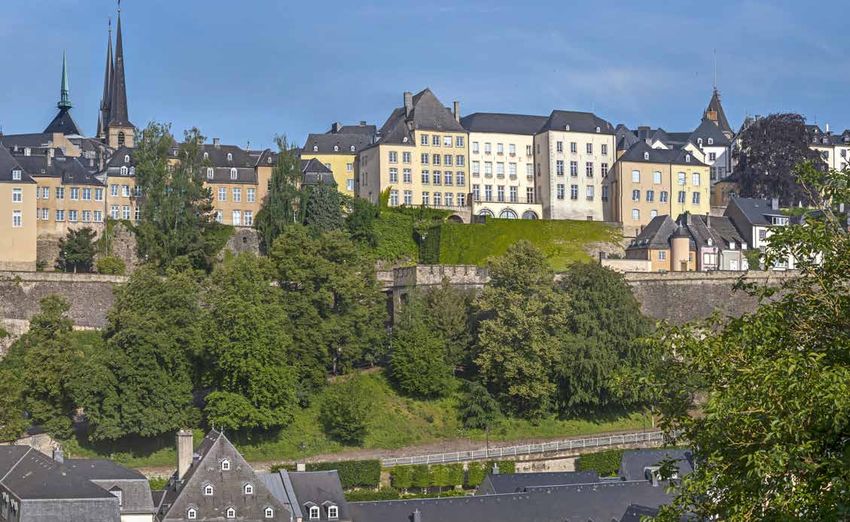
      UNESCO recognized Luxembourg City’s fortifi-
      cations and historical quarter as a World Her-
      itage Site in 1994.

                      Even if you only have an hour or two
                      to spare, explore the city on foot or
                      by bike and take in some remarkable
                      attractions.

2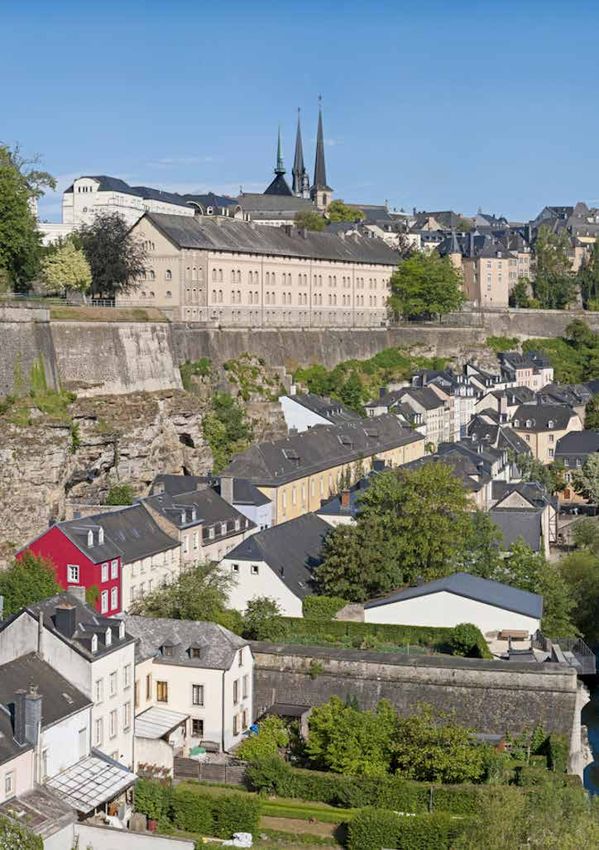
Panoramic view of the old town, Grund   O

Medieval, classical and contemporary architec-
tural styles mingle in Luxembourg City, in a land-
scape interspersed with green valleys, rivers and
streams, and numerous picturesque bridges.
This striking mixture reflects the Grand Duchy’s
distinctive cultural diversity.

                                                     3
ALONG THE WAY
1 Place de la Constitution 8 Marché-aux-Poissons –
2 Petrusse Park St Michael‘s Church
3 Saint-Esprit Plateau 9 Grand Ducal Palace
4 Grund Gate 10 Place Clairefontaine
5 Corniche 11 Cathedral of Our Lady-
6 Bock - Casemates National Library
7 Ramparts
M
P
Palais Grand-Duca
O
A Cathédrale Notre-Dame 11
1 K
SITE OR MUSEUM
2
NEARBY Place de la Constitution
A Casino Contemporary Art
Forum
JParc
MUDAM - Grand Duke Jean
B Saint Quirin Chapel de la Pétrusse
Museum of Modern Art
C Natural History Museum K Fort Thungen - Musée 3
Eechelen
D Neimënster Cultural
Exchange Centre L Muerbelsmillen
E Saint John‘s Church, Black
Madonna
M National Art and History
Museum
F Melusina sculpture N Lëtzebuerg City Museum
G Bock Casemates O Luxembourg City Tourist
Office
H Mansfeld Park
I Birthplace of Robert P Cercle Cité
Schuman
Open access with the Luxembourg Card
4
J
K
I
H
L
L
Remparts
Marché aux Poissons - Eglise t. Michel
7 Bock-Casemates /
3 Glands
M
8
6 G
P
5
Clausen- Plateau de Kirchberg
Corniche / Stadtgrund
9
Palais Grand-Ducal
F E
O
Remparts
D
10
N 4 C
A Cathédrale Notre-Dame 11
Porte du Stadtgrund
Marché aux Poissons - Eglise t. Michel 1
K Place Clairefontaine
2
7
Place de la Constitution
Bock-Casemates/3Glands
Parc de la Pétrusse
M
3
8 6 G
Plateau du Saint Esprit B
5
Corniche / Stadtgrund
al
9
F E
D
10
N 4 C
Porte du Stadtgrund
Place Clairefontaine
3
Plateau du Saint Esprit B
5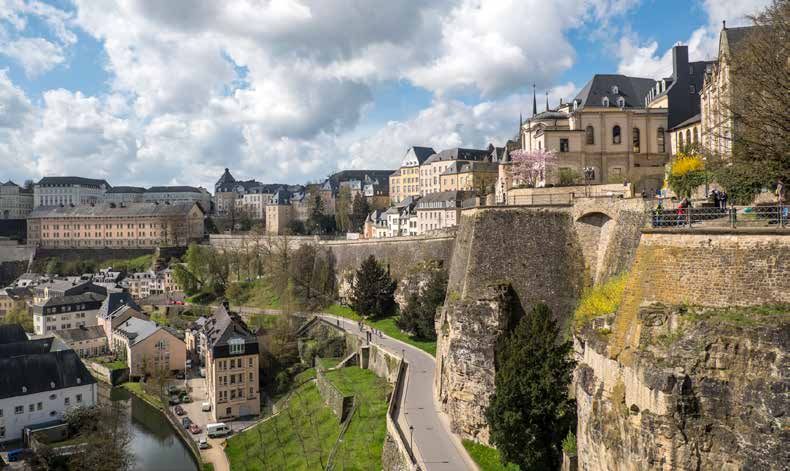
Place de la Constitution
                      © LCTO

1
 The Place de la Constitu-         to the Adolphe Bridge
 tion O is situated on the         O. Named after the Grand
 Beck Bastion – the remains        Duke of the day, the bridge is
 of fortifications built in 1644   known locally as “Nei Bréck”
 and reinforced in the late        (New Bridge) and was built
 1680s by Sébastien Le Prestre     between 1900 and 1903.
 de Vauban, the renowned ar-       It is based on a design by
 chitect and military engineer     the engineer Paul Séjourné
 of King Louis XIV of France.      (1851-1939) and was once
                                   the longest stone arch in the
 From here you can enjoy           world (84.55m/277ft). To get
 spectacular views over the        a close-up look at the beau-
 Petrusse valley and across        ty and ingenuity of this work

      O                        GËLLE FRA ▼

       The "Gëlle Fra" (Golden
       Lady) monument – cre-
       ated by the Luxembour-
       gish sculptor Claus Cito
       in 1923 – commemo-
       rates Luxembourgers who
       fought with the French
       army during World War I.
       Destroyed by the Nazi
       occupation force, it was
       restored in 1984.

                                    © Vic Fischbach

 6
© Vic Fischbach

                                                    Adolphe Bridge ▲
O                                              National savings bank.

of art, take the footpath/cy-       Further down the elegant
cle path which was added in         Avenue de la Liberté is a
2017 and runs below the road        building which resembles a
surface.                            historical stately home: the
                                    former headquarters of the
A striking neo-Renaissance          Luxembourgish steel firm
style building, with its distinc-   ARBED. It was built in 1921
tive pointed turret, dominates      by the Luxembourg architect
the valley, greeting visitors as    Sosthène Weis, using plans
they cross the bridge onto the      by the French architect René
Bourbon Plateau. This is the        Théry. The building’s gran-
headquarters of the Banque          deur reflects the international
et Caisse d’Epargne de l’Etat       importance of the firm and of
(BCEE), the state savings           Luxembourg’s steel industry,
bank.                               which powered the country’s
                                    economy for a century. This
Across the bridge, on the           prestigious building was pur-
Place de Metz, you will find        chased by the BCEE in 2014,
the building that once housed       and was declared a national
the headquarters of the first       monument in the same year.
institution of what would be-
come the EU: the European
Coal and Steel Community,
created by the Treaty of Paris      Ancient office of the       O
                                    European Coal and Steel
of 18th April 1951. The build-      Community ▼
ing dates back to 1911. Built
by the architects Karl Jüsgen
& Nicolas Petit, it original-
ly housed the offices of the
Guillaume-Luxembourg Rail
Company.
                                     ©Roph

                                                                    7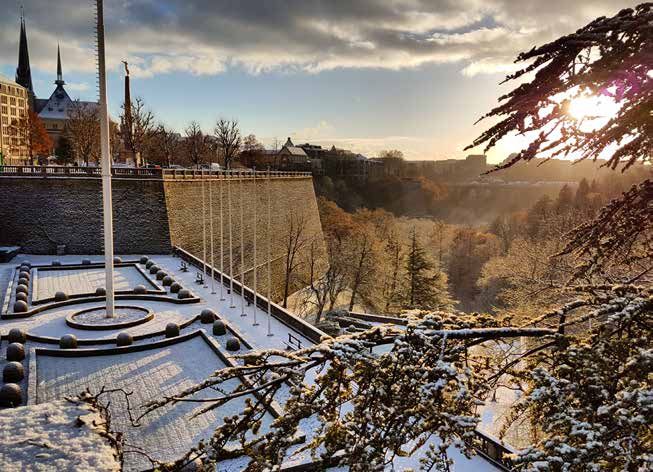
Petrusse Park
                       © Vic Fischbach

2
Petrusse Park O was de-             the viaduct, the city author-
signed in the romantic style        ities built an extensive skate
in the late 19th century by the     park O, which fits perfectly
French landscape architect          into its surroundings.
Edouard André. He used the
dramatic valley landscape,          The viaduct, known as the
with its rock formations and        “Passerelle” or “Al Bréck”
ruined military fortifications,     (old bridge), was designed
to create “the most beauti-         by the engineers Edouard
ful scene in Europe”. Of par-       Grenier and Auguste Letelli-
ticular interest is the Saint       er. It was built between 1859
Quirin chapel, which is cut         and 1861 and linked the rail-
into the rock face and has a        way station with the (then
14th century façade. It is one      still fortified) city.
of the oldest religious sites
in the city. Nearby, close to

O                        Skatepark ▼

                                               © Ville de Luxembourg

8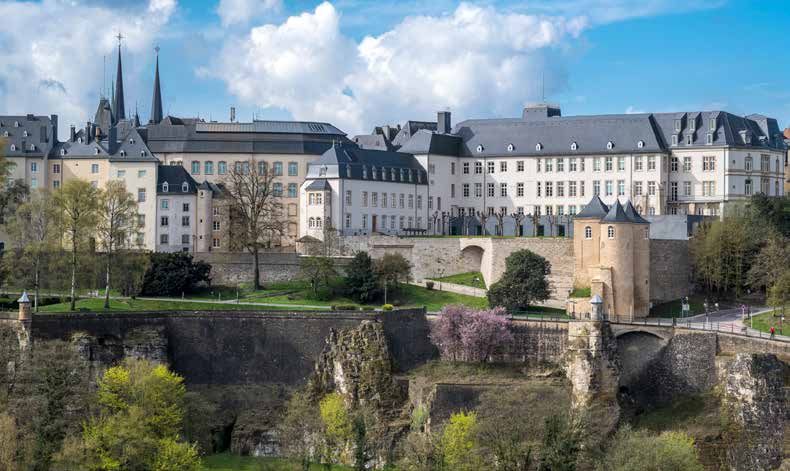
Saint-Esprit Plateau © Vic Fischbach
3
Around 1234, a group of nuns ing Luxembourg's famous gar-
founded a convent on the den-industry of the 19th century.
Sain-Esprit Plateau O. Be- It is one several gardens honor-
tween 1340 and 1610 the major ing this famous past.
annual “Schueberfouer” fair was
held here, before being moved In the 19th century the Prussians
outside the city walls. In the 17th installed a military hospital
century, Vauban transformed here and the building currently
this site into an impressive houses the National Archives.
fortress with several barracks The “Cité judiciaire”, a com-
and a network of underground plex of law courts comprising six
“casemates” tunnels. One of the buildings, designed by the Lux-
rotundas of the ancient citadel embourgish architect Rob Krier,
has been conceived as an aro- dominates the plateau.
matic rose-garden, remember-
TREATY OF LONDON
The Treaty of London of 11th May 1867
was signed by the great European powers
and guaranteed the neutrality of the Grand
Duchy. The garrison of 4,000 Prussian troops,
which had been stationed in the country fol-
lowing the Congress of Vienna of 1815, was
withdrawn. The treaty also required the dismantling of the substantial fortifi-
cations and prohibited all reconstruction of them in the future. These major
fortifications had led to Luxembourg being known as the “Gibraltar of the
North”. Nevertheless much of this heritage remains and can be explored by
tourists. For example, the Wenzel Way signposted walk features the towers
of the third ring of city walls. The Vauban Trail focuses on the fortifications
and barracks created by Louis XIV’s famous engineer. There are also 23km (15
miles) of “casemates” military tunnels to be visited.
9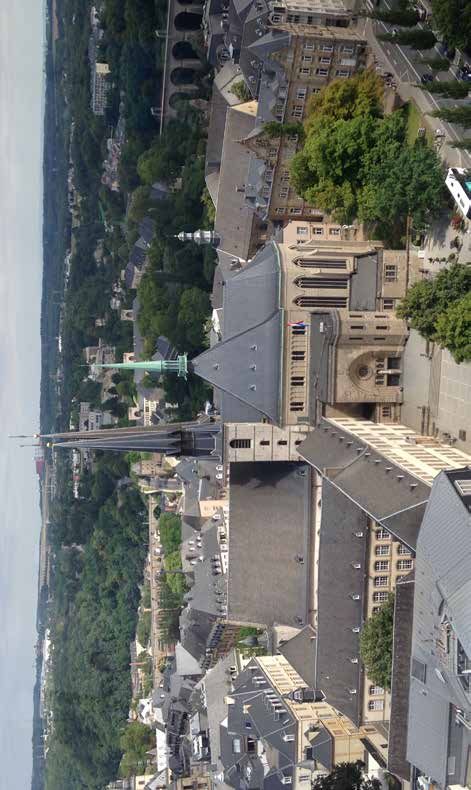
Grund Gate
                           © Vic Fischbach

4
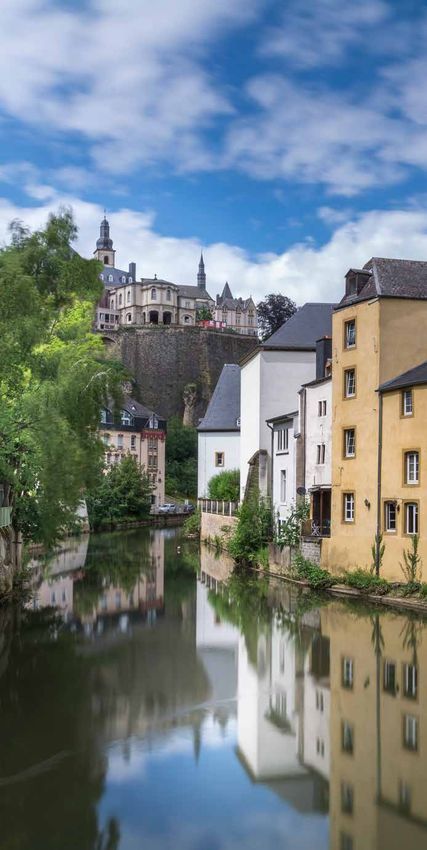
The Grund Gate (also known as          and later as a men’s prison.
the Spanish Gate), was built in        Since 2004 it has been home
the 17th century and was the en-       to the Neimënster Cultural Ex-
trance to the upper town.              change Centre.

The picturesque Grund O is             The remarkable “Klouschter-
the heart of the city’s lower          gaart“ O, a terraced vegetable
town, with its harmonious mix-         garden and vineyard on the
ture of architecture and nature,       sunny south side below the
steeped in over 1000 years of          Bock, is used to cultivate, in a
history. This was one of the ear-      microclimate, rare but useful
liest neighbourhoods to emerge         plants. It is also home to sever-
before the 10th century, becom-        al beehives, which produce top
ing a home to artisans and             quality honey.
shopkeepers.
                                       The Natural History Museum’s
The ex-Benedictine Neumün-             permanent and temporary exhi-
ster Abbey was built in 1606 and       bitions help visitors understand
de-consecrated after Luxem-            evolution and biodiversity. It
bourg was annexed by France in         is housed in the former Saint
1795. It was used as a barracks        John Hospice, founded in 1308.

                 O

          Neimënster
                        @Catherine Decker
    Klouschtergaart ▶

10
Corniche
© Vic Fischbach
5
The Corniche O is the “Grund”, the lower town. It
"most beautiful balcony in also offers a panoramic view
Europe” according to the of the Alzette valley and the
Luxembourgish author Bat- Rham plateau. The buildings
ty Weber. Created on ram- here are typical of the local
parts built in the 17th century style, with their façades fea-
by the Spanish and French turing two, three or five bay
forces that occupied the city windows and steep, four-sid-
at the time, it overlooks the ed roofs.
MELUSINA
© Jaques Nicolay
The legend of the beautiful Melusina
has not only inspired artists, poets, and
historians for centuries, but is an important
foundation myth for Luxembourg City.
According to legend, the founder of
Luxembourg City, Count Sigefroi, was
married to Melusina, who in secret was a
mermaid. When Sigefroi broke his promise
not to spy on her she was so upset by his
breach of trust that she threw herself from the castle on the Bock into the
Alzette River, never to be seen again. Sigefroi is the founder of the House
of Luxembourg, which during the Middle Ages produced four Holy Roman
Emperors and four kings of Bohemia.
Local artist Serge Ecker created a sculpture of Melusina; it stands under
the Bock from where she is said to have jumped. History and technology
come together in the work, with the legendary figure represented in a
sculpture created using a 3D printer, based on the scan of a live model
and digital exchange. Ceramics were also used in homage to the locality’s
traditional pottery industry.
11Bock - Casemates© Vic Fischbach
6
Next to the Corniche is the Acorns” round towers are left
Bock, the site where the city standing. Since 2012, these
originated, when the first house the Dräi Eechelen
counts of Luxembourg built Museum, devoted to the his-
their castle here in the 10th tory of the fortress. It backs
century. The Bock was aban- onto the MUDAM, the Grand
doned in the 16th century, Duke Jean Museum of Mod-
as it could no longer resist ern Art, designed by the cel-
modern artillery, and was ebrated Chinese - American
replaced with new fortifica- architect Ieoh Ming Pei and
tions in the 17th century. An inaugurated in 2006.
archaeological crypt, as well
as the fortified tunnels of the Near the Bock, as you go to-
“casemates” O, were dug in wards the Kirchberg plateau,
the sandstone rock during is the birthplace of Robert
the 17th and 18th centuries. Schuman, one the found-
Today, these excavations are ers of what would become
open to visitors. the European Union. Born
in Luxembourg-Clausen in
Fort Thüngen O is to be 1886, he had a successful
seen opposite the Bock on political career and became
the Kirchberg plateau. Built a leading French statesman.
in 1732, only the “Three
© Vic Fischbach
O
◀ Fort Thungen -
Dräi Eechelen Museum
and MUDAM
12Ramparts
© Vic Fischbach
7
▼ Three Towers Gate O
of Saxe-Weimar, on the Ger-
man campaign against revo-
lutionary France.
The stone stands opposite
the Conseil d’Etat (Council
of State), the national leg-
islative review body. From
here we follow the 16th cen-
tury rampart to the Montée
du Pfaffenthal, which passes
through the Three Towers
© Vic Fischbach Gate O. This was one of
the main entrance points to
The Castle Bridge O was the old fortified town and is
built on two levels in 1735, a fine example of the city’s
linking the Bock to the up- medieval military architec-
per town via four passages ture. Its name refers to its
at different heights. It was architectural form.
an important part of the old ▼ Castle bridge
fortifications. Nearby is a
memorial stone from 1936,
with a quotation from J.W.
Goethe praising the town’s
beautiful landscape. Ger-
many’s national poet visited
Luxembourg in 1792, accom-
panying his patron, the Duke © Vic Fischbach
13Marché-aux-Poissons –
Saint Michael’s Church
© Vic Fischbach
8
This part of the city is a jour- building which bears Luxem-
ney back in time to the Middle bourg’s famous motto: “Mir
Ages. Take a stroll through the wëlle bleiwe wat mir sin!” (We
Old Town’s O narrow wind- want to remain what we are!).
ing streets. From the rue de la
Loge, Breedewee (rue Large), The Marché - aux - Poissons
rue de la Boucherie, rue de square hosts the traditional
la Monnaie, to Marché-aux- Éimaischen (Emmaus pot-
Poissons square, each street tery market) every year on
is imbued with centuries of Easter Monday.
history. The house called
“Ënnert de Stäiler” (Under The origins of Saint Mi-
the columns), with its char- chael’s Church go back to
acteristic arches, is typical of the 7th century. In 987, at the
this period, as is the turreted request of count Sigefroi,
Archbishop Egbert of Trier
O Saint Michael’s Church ▼ consecrated the church in
the name of the Holy Sav-
iour. Since then it has been
destroyed and rebuilt several
times and dates in its cur-
rent form to 1688. The cab-
inet-maker Barthélémy Na-
mur designed the main altar
in 1770, while the organ was
built in the 17th century.
© Vic Fischbach
14© Vic Fischbach
National Museum of History and Art ▲
O
The National Museum of European Affairs is almost
History and Art (MNHA) O 500 years old and was recent-
has a varied permanent col- ly restored. Built in 1545 by the
lection, including fine art and king’s adviser, Nicolas Greisch,
decorative art, precious coins it became the palace of Gov-
and medals, as well as signif- ernor Pierre Ernest de Mans-
icant archaeological discov- feld (1517-1604) in 1564. It
eries. The most spectacular remained the palace of Lux-
exhibit is the unique Vichten embourg’s governors until
Roman mosaic depicting the Luxembourg was absorbed
nine Muses, discovered in into the First French Republic
1995. The building housing in 1795. Until 2008, it housed
the Ministry of Foreign and the different courts of law.
ÉIMAISCHEN
Each Easter Monday, Marché-aux-Pois-
sons square is turned into a folklore
market, selling ceramic handicrafts,
in particular the traditional “Péckvil-
lercher”, bird-whistles. Couples in love
generally purchase these collectable,
locally produced whistles as a token of
© SIP fertility. This unique Luxembourgish tra-
dition dates from at least 1827. In 1937
local residents formed the “Alstad Committee“ to revive this tradition,
which is now part of Luxembourg‘s intangible cultural heritage.
15Grand-Ducal Palace © Vic Fischbach 9 The Grand-Ducal Palace O located in the Grand-Ducal is an example of the Flemish palace. The building housing Renaissance style. The city’s the parliament, the Chamber master architect Adam Rober- of Deputies, on the right-hand ti designed the building in the side of the palace, dates back second half the 16th century; it to 1860, with recent extensions served as the town hall from (19th & 20th centuries) spanning 1572 until the city’s occupation the palace courtyard. by the French Revolutionary Army in 1795. France annexed The Lëtzebuerg City Mu- the Duchy and made Luxem- seum traces a thousand years bourg City the capital of the of the city’s history. Opened in “Département des Forêts”. The 1996, it is located in the rue du ancient town hall was used Saint-Esprit, in four renovated as the prefect’s residence and historical town houses, once offices. Following the creation serving as an abbot’s retreat. of the Grand Duchy of Luxem- The buildings date from the bourg in 1815, the palace first 17th, 18th, and 19th centuries, became the seat of govern- with some vestiges going back ment, in 1817, before being to the Middle Ages. The mu- assigned to the Grand Duke’s seum’s exhibits bear witness as his official residence and for to the changes the city has his audiences in the capital, in undergone, including its so- 1890. The splendid interior is cio-cultural evolution. There open to the public for guided are also detailed wooden mo- tours during the summer mon- dels, showing how the city and ths. After the Grand-Duchy be- the fortress have expanded came independent in 1839, over the centuries. the state assembly gathered in the government building 16
Place Clairefontaine
                               © Imedia.

10
 Since 1975, the Hôtel de              of a wider renovation of the
 Bourgogne O has housed                old town. The centrepiece
 state offices, an official resi-      is a statue of Grand Duchess
 dence of the Luxembourgish            Charlotte, who reigned from
 government and the seat               1919 to 1964. The sculp-
 of the Ministry of State. A           ture, symbolizing resistance
 document from 1447 des-               to Nazi occupation, was
 cribed the building as once           created by the Parisian artist
 being the residence of the            Jean Cardot and inaugu-
 representative of Charles the         rated in 1990. The baroque
 Bold, duke of Burgundy.               St Maximin building dates
                                       from 1751 and originally ser-
 O            Hôtel de Bourgogne ▼     ved as a retreat for monks
                                       from the St Maximin abbey
                                       in Trier, Germany. After se-
                                       cularisation, it became the
                                       governor's residence until
                                       1867. It was then used as a
                                       general government buil-
                                       ding, and until 2017 housed
     © SIP                             the Ministry of Foreign Af-
                                       fairs.
 Place    Clairefontaine O,
 located near the cathedral            Place Guillaume II is na-
 and the government quar-              med after the King of the
 ter, has only been conceived          Netherlands and the second
 as a public square in 1935.           Grand Duke of Luxembourg.
 Further changes were made             Locals call the square the
 half a century later as part          “Knuedler” O after the style

17 KNUEDLER
© Vic Fischbach The Franciscan church was one of the lar-
gest in the capital, and contained treasures
such as the tombs of former governors P.E.
de Mansfeld and Jean Beck. It had also
been the temporary resting-place of Count
John the Blind, king of Bohemia, and
Charles the Bold, duke of Burgundy. The
French Revolutionary Army confiscated the
Monument Guillaume II ▲ friary in 1795 and suppressed the monastic
order in 1796. The building was demolished in 1827 with the aim of crea-
ting the city’s largest square and making space to build a new town hall.
Plans to build a palace for the fortress commander on the site were unfor-
tunately shelved. These days the square is an important public space, with
a farmers’ market held here every Wednesday and Saturday morning.
O Place Guillaume and town hall ▼
of dress of the Franciscans,
whose friary and a church
stood on this site for over
500 years from the 13th cen-
tury. The friars wore their
cord belts with a distinctive
knot (“Knuet” in Luxembour-
© Christophe Weiber stdm
gish). The statue of King/
Grand Duke Guillaume II J. E. Remont. Two bronze
of Orange-Nassau recalls lions have flanked the steps
the granting of the first par- since 1931. The Luxembourg
liamentary constitution in artist Auguste Trémont
1848, considered at the time created these two impres-
to be one of the most libe- sive works of art. The town
ral in Europe. Inaugurated hall also played a role in the
in 1884, the statue is by the creation of the European
French artist Antonin Mercié. Union, with the treaty esta-
blishing the first European
The Town Hall’s grand flight institution (the European
of steps was built between Coal and Steel Community)
1830 and 1838, to plans being signed here on 10th
by the Belgian architect August 1952.
18Cathedral of Our Lady of Luxembourg –
National Library
©Roph
11
The Cathedral O of Notre of Crécy after taking part in
Dame was originally the many of the great battles and
church of a Jesuit monaste- campaigns of the period. He
ry founded in 1613. It is a re- became a celebrated figure
markable example of the late in the Middle Ages. He swore
Gothic style, featuring va- allegiance to both the Empe-
rious ornaments inspired by ror and the French king, thus
the Renaissance. At the end making him an early symbol
of the 18th century, the statue of the idea of European com-
of Our Lady of Luxembourg, munity. Buildings near the
Comforter of the Afflicted, cathedral and the Place de
who is the patron saint of the la Constitution were once Je-
city and the country, found suit teaching colleges (1603-
a permanent home in this 1773), before becoming the
church. In 1879 Pope Pius IX “Athénée grand-ducal” gram-
consecrated the church as mar school in the 19th cen-
the Cathedral of the recently tury. From 1973 to 2018, this
created local diocese (1870). impressive building housed
Between 1935 and 1938 it the National Library.
was substantially enlarged.
The crypts with the tombs of
the Luxembourgish bishops,
as well as members of the
Grand-Ducal family, are wor-
th a visit, as is the tomb of
Count John the Blind, son O
of the Holy Roman Empe-
ror Henry VII. John became
King of Bohemia, and died © Roger Nilles
a hero’s death at the Battle Our Lady of Luxembourg ▲
19Some key dates
© LCM
X
In the Roman period, two consular roads
cross what is now Luxembourg City, near
the Marché-aux-Poissons square. Watch
is kept from a fortified tower.
963 Count Sigefroi acquires the Bock and
builds a castle on the site. This was
Luxembourg City’s founding act.
963- 1354 Luxembourg is an autonomous
county.
1083 Altmunster Abbey is founded next to the
count’s castle. The classes in Latin, Ger-
man, and French dispensed by the mo-
nastery school are considered to be the
beginnings of Luxembourg’s tradition of
multilingualism.
1244 Countess Ermesinde enfranchises the
city, thus granting its citizens a number
of rights and freedoms which encourage
economic development.
1340 The annual “Schueberfouer” is founded
by Count John the Blind. This fair helps
position the city on the burgeoning Ita-
ly-Gotthard-Flanders trade route.
1354: The county of Luxembourg beco-
mes a duchy.
1354 The county of Luxembourg becomes a duchy.
1443 City occupied by the Burgundians.
Burgundian rule. (1443-1506)
201506 Spanish rule (1506-1684)
1554 Major gunpowder explosion and subse-
quent fire destroys much of the upper
town.
1684 Luxembourg is conquered by the forces
of Louis XIV and incorporated into France.
Under French rule, the fortress is enlarged
by Vauban. (1684-1697)
1698 Spanish rule. (1698-1700)
1701 War of the Spanish Succession. (1701-1714)
1715 Austrian rule. (1715-1795)
1795 French Revolutionary Army occupies
Luxembourg and the duchy is incorporated
into France as the “Forêts” department.
French republican rule. (1795-1814)
1815 Luxembourg becomes a Grand Duchy,
with the king of the Netherlands as grand
duke. A Prussian garrison is stationed in
the fortress and Luxembourg becomes
part of the German Confederation.
1839 The Grand Duchy gains political indepen-
dence.
1867 The Treaty of London grants Luxembourg
political and military neutrality – the
fortress is dismantled, and the city declared
open.
1890 Reign of the House of Nassau-Weilburg.
(1890 - today)
1952 Headquarters of the European Coal and
Steel Community are established provi-
sionally in Luxembourg.
1992 The Edinburgh EU summit confirms
Luxembourg City as one of the headquar-
ters of EU institutions, together with Brus-
sels and Strasbourg.
1994 The Fortress and the old town are inscri-
bed on the UNESCO list of World Heritage
Sites
1995 Luxembourg European City of Culture
2007 Luxembourg and greater Region, Euro-
pean Capital of Culture.
21Site or museum
along the way Site or museum
nearby
G Bock Casemates A Casino Luxembourg
Y Opening: 10 feb-29 march; Contemporary Art
1 oct-4 nov 2018, open daily: Forum
10-5.30pm, 30 march-30 sept, Y mo-su: 11-5pm, th: 11-11pm
every day: 10-8.30pm Closed: tu, 1 jan, 1 nov,
touristinfo@lcto.lu 25 dec
www.luxembourg-city.lu ^ 41, rue Notre-Dame
L-2240 Luxembourg
M National Museum of +352 22 50 45
History and Art
info@casino-luxembourg.lu
Y tu-sun: 10-6pm, th: 10-8pm,
www.casino-luxembourg.lu
open public holidays.
^ Marché-aux-Poissons
L-2345 Luxembourg
C National Museum of
Natural History
+352 47 93 30 1 Y tu: 10-8pm, we-su: 10-6pm
musee@mnha.etat.lu ^ 24, rue Münster
www.mnha.lu L-2160 Luxembourg
+352 46 22 33 1
Grand Ducal Palace
musee-info@mnh.lu
Y Guided tours from mid-July
until the end of August www.mnhn.lu
^ 17, rue du Marché-aux-Herbes
L-1728 Luxembourg
D Neimënster Cultural
Exchange Centre
touristinfo@lcto.lu mo-fr: 8-7pm, WE: 10-8pm
Y
www.luxembourg-city.lu 28, rue Münster
^
L-2160 Luxembourg
N Lëtzebuerg
+352 26 20 52 1
City Museum
tu-su: 10-6pm, th: 10-8pm, contact@neimenster.lu
Y
open public holidays. www.neimenster.lu
^ 14, rue du St-Esprit
L-2090 Luxembourg
H Mansfeld Park
Y Open:
+352 47 96 45 00 nov-feb: 7.30-6pm
mhvl@2musees.vdl.lu mars: 7.30-8pm
www.citymuseum.lu april-sept: 7-10pm
oct: 7.30-8pm
Cathedral of our Lady
of Luxembourg
Y mo-su: 8-8pm
^ Rue Notre Dame
L-2240 Luxembourg
+352 46 20 23
Places of the sites have a X on
the map of pages 4 and 5
archeveche@cathol.lu
www.cathol.lu
22Site or museum
nearby
J MUDAM-Museum of The “Luxembourg Card” is ideal for culture
enthusiasts. For 1, 2 or 3 days, individuals
Modern Art Grand-
and groups of up to five can enjoy free ac-
Duke Jean cess to more than 60 museums and tourist
Y mo-th & public holidays: attractions in Luxembourg. What’s more,
10-6pm, we: 10-11pm you are not limited to the capital, with the
tourist destinations included in the Luxem-
(the galleries close at 10pm),
bourg Card found throughout the Grand
closed on monday. Duchy. This is just one of the many advan-
^ 3, Park Dräi Eechelen tages of using this card to help you discover
L-1499 Luxembourg and explore this country’s many places of
interest. Moreover, it gives you free use on
+352 45 37 85 960 all public transport (bus, train and tram).
info@mudam.lu Prices range from €13 to €68, including an
www.mudam.lu
information brochure. Visit www.visitluxem-
bourg.com for more information, or down-
K Fort Thungen Museum load the Luxembourg Card App onto you
mobile device.
3 Eechelen Find out more about the UNESCO World
Y tu, th - su: 10-6 ,
pm
Heritage Site in Luxembourg with the book
we: 10-8pm available from the Luxembourg Tourist Of-
fice or the “Luxembourg House” (2, rue de
^ 5, Park Dräi Eechelen
l’Eau). Also, discover Luxembourg’s heritage
L-1499 Luxembourg with guided tours: Bock Casemates, Wenzel
+352 26 43 35 Circuit, Mansfeld Circuit, Vauban Circuit, City
Promenade.
info@m3e.etat.lu
www.m3e.lu
L Old mustard factory
"Muerbelsmillen"
Documentary centre
Y sa-su: 2pm-6pm LUXEMBOURG CARD:
^ 69, rue de Mohrfels OPEN ACCESS TO MUSEUMS
L-2158 Luxembourg AND ATTRACTIONS
+352 47 96 45 01
visites@2musees.vdl.lu
www.citymuseum.lu
O Luxembourg City
P Cercle Cité Tourist Office
Y Open : see the Agenda Y Open:
^ Place d’Armes oct-mars: 9-6pm
L-1136 Luxembourg apr-sept: 9-7pm
Reception Cercle Cité : su, holidays: 10-6pm
2, rue Genistre ^ 30, place Guillaume II
L-1623 Luxembourg L-1648 Luxemburg
+352 47 96 51-33 +352 22 28 09
info@cerclecite.lu touristinfo@lcto.lu
www.cerclecite.lu www.luxembourg-city.lu
23© SDM
Organisation
des Nations Unies Commission luxembourgeoise
pour l’éducation, pour la coopération
la science et la culture avec l’UNESCO
Frënn vun der Festungsgeschicht
Lëtzebuerg - a.s.b.l.
LE CŒUR BATTANT DE VOTRE JARDIN
Editor : Luxembourg Commission for
cooperation with UNESCO in colla-
boration with: City of Luxembourg,
Ministère de la Culture, Ministère du
développement durable et des in-
frastructures, Luxembourg City Tourist
Office, Comité Alstad, Syndicat des
Intérêts Locaux Pfaffenthal-Siechen-
hof, Syndicat des Intérêts Locaux du
Stadtgrund, Les Amis du Château
de Clausen, Frënn vun der Festungs-
geschicht, Geschichtsfrenn St Quirinus,
Patrimoine Roses pour le Luxembourg.
Layout : Kiwi media
Photos : Copyright on pictures
Print : Imprimerie Schlimé
Print run : 1000
© 2018
www.unesco.luYou can also read


