BREAST RADIOTHERAPY - POSSIBLE LONG-TERM SIDE EFFECTS - A PRACTICAL GUIDE TO TESTS AND TREATMENTS
←
→
Page content transcription
If your browser does not render page correctly, please read the page content below

A practical guide to tests
and treatments

bReAST
radiotheRapy –
possible Long-term
side effects
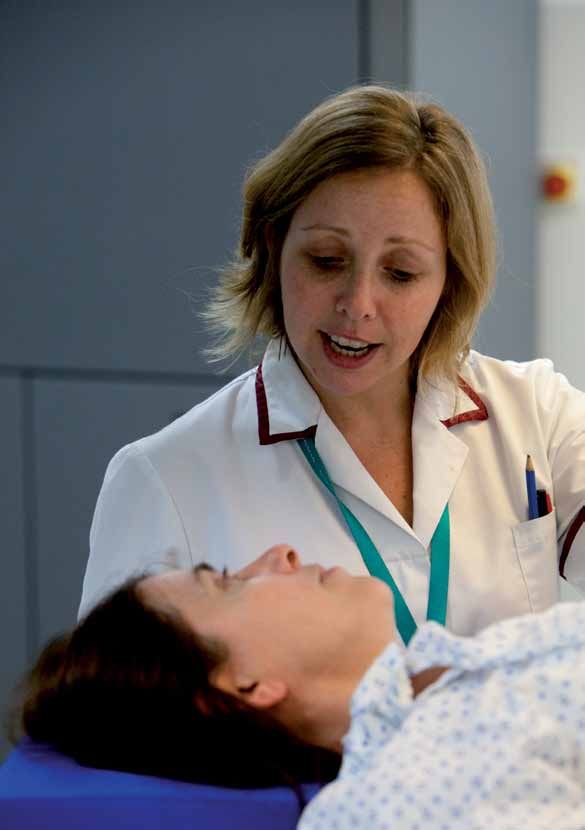
Breast radiotherapy – possible long-term side effects

Contents

About Breast radiotherapy – possible long-term side effects                           3
Radiotherapy                                                                          4
Side effects of radiotherapy for breast cancer                                        6
Possible delayed side effects                                                         8
    Breast changes                                                                    8
    Restricted arm and shoulder movement                                            11
    Changes in the way your heart works                                             12
    Lung problems                                                                   14
    Effect on the bones                                                             15
    Lymphoedema in the arm                                                          16
    Numbness, pain and weakness in the arm                                          18
    Radiation-induced second cancers                                                20
Your feelings                                                                       21
How we can help you                                                                 23
Other useful organisations                                                          27
Further resources                                                                   30
Questions you might like to ask your doctor or nurse                                33

                                                                                       1
Breast radiotherapy – possible long-term side effects

2
About Breast radiotherapy – possible long-term side effects

About Breast radiotherapy –
possible long-term side effects
This booklet gives information about the possible
long-term (delayed) side effects of radiotherapy
to the breast.

These side effects are rare and have become less common
as radiotherapy planning techniques have improved. We’ve
included all of the possible delayed side effects so that you
can be aware of them. But it’s important to remember that
you’re unlikely to get all of the side effects mentioned here.
Many women only have mild, short-term side effects.

We hope this booklet answers some of your questions about
dealing with long-term side effects of radiotherapy. It may help
to read this information alongside our information about breast
cancer and radiotherapy.

As the main audience for this information is women we use the
term women throughout the text, but it’s also appropriate for
men who have been treated for breast cancer.

We can’t advise you about the best treatment for yourself.
This information can only come from your own doctor,
who knows your full medical history.

If you’d like to discuss this information, call the Macmillan
Support Line free on 0808 808 00 00, Monday–Friday,
9am–8pm. If you’re hard of hearing you can use textphone
0808 808 0121, or Text Relay. For non English speakers,
interpreters are available. Alternatively, visit macmillan.org.uk
                                                                                    3
Breast radiotherapy – possible long-term side effects Turn to pages 27–32 for some useful addresses and websites, and page 33 to write down questions for your doctor or breast care nurse. If you find this booklet helpful, you could pass it on to your family and friends. They may also want information to help them support you. Radiotherapy Radiotherapy treats cancer by using targeted high-energy rays to destroy cancer cells, while doing as little harm as possible to normal cells. Radiotherapy is a common part of the treatment of many cancers and can cure some cancers or help reduce the risk of them coming back after surgery. Radiotherapy may also be given to help relieve symptoms. Radiotherapy is often used as part of your treatment for breast cancer. It’s given: • After surgery: It’s commonly given after surgery that removes the breast lump and some of the breast tissue surrounding it (lumpectomy or a wide local excision), and sometimes after removal of the whole breast (mastectomy). • Before surgery: Occasionally radiotherapy is given before, or instead of, an operation. • To the lymph nodes: Sometimes radiotherapy is given to the lymph nodes in the underarm (axilla). 4
Radiotherapy

• To the lymph nodes behind and above the collarbone
  (the supra clavicular nodes): Radiotherapy may also be
  given to the lymph nodes in this area if it’s thought there is
  a risk they might contain cancer cells.
External radiotherapy is the main type of radiotherapy used
to treat breast cancer. Less commonly a type of internal
radiotherapy (also called brachytherapy) is used. This places
a radioactive source close to the tumour. Our cancer support
specialists can give you more information about this.

External radiotherapy is normally given as a series of short
daily treatments in the radiotherapy department at the hospital,
using a machine called a Linear Accelerator which produces
high-energy x-rays. Treatment is usually given over 3–6 weeks,
once a day Monday–Friday, with a rest at weekends. Treatment
takes several minutes each day and is painless. It won’t make
you radioactive and it is safe for you to be around other people,
including children. Treatment is usually given as an outpatient.

Some women are also given a ‘boost’ dose of radiotherapy to
the part of the breast where the cancer was located (known as
the tumour bed). This is usually given after the main course of
radiotherapy has finished.

                                                                          5
Breast radiotherapy – possible long-term side effects
Side effects of radiotherapy
for breast cancer
Although radiotherapy can destroy cancer cells, it can
also affect some of the normal cells in the treatment area.
Your doctors will decide whether or not to recommend a
particular radiotherapy treatment by weighing up the likely
benefits of treating the cancer against the possible risks
and side effects.
The benefits of the treatment usually outweigh the risk
of developing delayed side effects.
You should be given the chance to discuss any possible side
effects with your doctor. As there’s often a lot of information
to take in, it may help to take a relative or friend with you
when you see the doctor.
Radiotherapy affects people in different ways, so it can be
difficult to predict whether you will develop any long-term
problems. Most side effects of radiotherapy to the breast are
temporary and disappear over a few weeks or months once the
radiotherapy has finished. For a small number of women the
side effects can become long-term problems that may develop
months, or even years, later.
Developments in the way that radiotherapy is given have
reduced the risk of side effects, and serious long-term problems
are now very rare. However, because breast cancer is becoming
more common, and treatment is now very successful, more
women are living longer after treatment. As a result, the number
of women with a long-term problem has slightly increased.
6Side effects of radiotherapy for breast cancer
Most women will only need to have radiotherapy to the breast
area, which makes the risk of developing serious delayed side
effects very small indeed. However, some women will also
need to have radiotherapy to the area under the arm (axilla)
which can increase the risk of long-term problems. Long-term
problems are more likely if radiotherapy is combined with the
removal of all, or a large number of, the lymph nodes from
under the arm.
This information is about the possible delayed side effects that
may occur months, or years, after treatment.
Radiotherapy can also cause some general side effects
during treatment, such as tiredness or redness of the
skin. These are discussed in our booklet Understanding
breast cancer.
7Breast radiotherapy – possible long-term side effects Possible delayed side effects If you develop any new symptoms after your treatment is over, or if you’re concerned that the side effects you developed during your treatment aren’t getting better, you should contact your doctor, radiographer or breast care nurse at the hospital for advice. There is often a simple explanation for these symptoms and they don’t necessarily mean that you are developing long-term side effects. Your doctor will probably want to do tests to find the possible cause of your symptoms. These may include x-rays, scans and specialist investigations, depending upon your particular symptoms. You may be referred to a doctor who specialises in treating long-term side effects of radiotherapy. These specialist doctors aren’t available in every hospital, so you may need to travel to see one. The main long-term side effects are covered on the following pages (8–20). Breast changes Most women will develop changes in the look and feel of their treated breast after radiotherapy, although for many these changes are very slight. Changes to the skin During treatment some women develop a skin reaction similar to sunburn, known as erythema. The skin may become red and itchy, and if you have dark skin it may appear darker with a blue or black tinge. Usually this side effect will settle down 2–4 weeks after radiotherapy, but sometimes it can continue. 8
Possible delayed side effects

A few women find that their operation scar remains tender or
sensitive for some time after radiotherapy.

Some women may develop changes which can include small
red blotches on the breast caused by dilated blood vessels
under the skin. This condition is known as telangiectasia.
Although this affects how the breast looks, it shouldn’t cause
any other problems.

Skin care
If you have a skin reaction, your doctor, nurse or the
radiographer will give you advice on how to look after your
skin. The following tips may be helpful:

• Avoid using perfumed soaps, talcum powder and
  deodorants/antiperspirants until the reaction has settled.
• Avoid shaving under your arm on the affected side.
• Showers are better than baths, and you should avoid
  soaking the affected area for too long if you have a bath.
• After washing, pat the area dry rather than rubbing it with
  a towel, or dry it with a hairdryer on a cool setting.
• Loose clothing may be more comfortable to wear.
• Avoid exposing the area to strong sunlight for at least a
  year, as your skin will continue to be more sensitive. If you
  do go out in the sun, apply sun block to the skin which has
  been treated by radiotherapy.

Breast swelling
A few women will develop swelling of the breast area during,
or shortly after treatment. This swelling is known as oedema,
and usually goes away a couple of months after treatment has

                                                                            9
Breast radiotherapy – possible long-term side effects
finished, although in some women it may persist for months
or years.
Sometimes, a different type of swelling called lymphoedema
can develop. This can occur if the lymph nodes have been
removed or are damaged by radiotherapy, causing a build-up
of lymph fluid. It more commonly affects the arm (see page 16),
but can also cause swelling of the breast.
Lymphoedema can develop many months or years after
treatment has finished. Talk to your breast care nurse or doctor
if you think you have lymphoedema. If necessary they can refer
you to a lymphoedema specialist.
There is more information about lymphoedema in our
booklet Understanding lymphoedema, which includes
tips to help you avoid it and advice on how to reduce
its effects.
Soreness or pain
Many women find that the area in the breast that has been
treated feels uncomfortable or sore. This tends to become less
of a problem year after year. If this happens and is causing you
a problem, your doctor can prescribe painkillers to help relieve
any pain. Some women find that the pain can be relieved by
wearing a support bra. It can also help to wear a soft bra at
night, but make sure the bra has no underwire.
Shrinking of the breast
It’s fairly common for the breast to shrink slightly over time,
but for it to feel the same. A few women develop a hardening
or thickening of the breast tissue (fibrosis). This can cause the
breast to become harder and smaller than it was, although the
effect is mostly very mild. In severe cases this can make the
breasts look different to each other.
10Possible delayed side effects
Some women find that as they get older their breasts tend to
get bigger. Breasts can also get bigger as a result of gaining
weight. A breast that has been treated with radiotherapy may
not increase in size as much as the untreated breast. If this is
a problem for you, talk to your doctor or breast care nurse,
as a silicone shell (partial prosthesis) can be fitted to your bra.
Surgery can also sometimes be done to correct an imbalance
in size.
Restricted arm and shoulder movement
Radiotherapy can affect how well you can move your arm
and shoulder. It’s fairly common for women who have
radiotherapy to the area under the arm to experience some
restriction in movement, especially if they’ve had surgery to
their underarm area as well. This may make it difficult to
carry heavy bags and do household chores or some types of
exercise, such as swimming.
Before surgery, a physiotherapist should show you exercises
to help improve the movement of the arm and shoulder.
It’s a good idea to continue the exercises for a couple of years
– your physiotherapist can tell you how frequently to do them.
Any restrictions in movement should gradually improve after
treatment, but some women continue to have problems. If you
have problems, ask to see a physiotherapist again for advice.
If the arm and shoulder are painful, it can help to take
painkillers before doing any exercises. Some women find that
complementary therapies are helpful. There’s more information
in our booklet Understanding complementary therapies.
11Breast radiotherapy – possible long-term side effects Changes in the way your heart works (cardiac complications) There is a very small risk of damage to the heart muscle or the major blood vessels around the heart. This is only a potential problem if you have had cancer in your left breast, as the heart is on the left side of the chest. Radiotherapy is now very carefully planned, so that the heart is either not within the radiation area or only a small amount of the heart will receive any radiation. As a result, the risk of developing any heart problems is now very low. If your heart has been damaged by radiotherapy you may find that you get tired very easily or get breathless on exertion, for example when climbing the stairs. You may also notice that you sometimes feel dizzy or get chest pains. It’s important to remember that these symptoms can be caused by many things and they aren’t always a result of damage to the heart. Treatment for heart changes The treatment will depend upon the part of the heart that has been damaged and how it’s affecting you. You may just be advised to avoid things that could cause further damage, such as alcohol, smoking and stress, or to improve your diet. Treatment may include medicines to improve the heart rhythm (anti-arrhythmics), or improve the blood flow around the heart to help reduce chest pain (anti-anginals). Your doctor or nurse will explain more about the treatment that you need and can answer any questions you have. 12
Breast radiotherapy – possible long-term side effects

                                                                 13
Breast radiotherapy – possible long-term side effects Lung problems A small number of women (around 1 in 50) develop symptoms such as breathlessness, a dry cough or chest pain. These may occur because the radiotherapy can damage the cells lining the lungs, causing inflammation or a hardening and thickening (fibrosis). This problem appears to be slightly more likely if you’ve had certain chemotherapy drugs at the same time. These symptoms can develop 2–3 months after the radiotherapy has finished, or sometimes up to a year later. The changes are usually temporary, lasting a month or two, but occasionally can become a long-term side effect. Your risk of developing lung problems is slightly higher if: • radiotherapy is also given to the lymph nodes in the chest area • you’ve had chemotherapy. These symptoms may be made worse if you already have a lung problem such as asthma, or if you smoke. Treatment for lung problems Most lung problems are treatable and it’s unusual for them to continue over time. Treatment depends on exactly what is wrong with your lungs and may simply involve advice on cutting down or giving up smoking, and maintaining a healthy weight. You may be given inhalers that contain drugs to help open up the airways (bronchodilators). Steroids can be given as tablets or inhalers to reduce inflammation. You may be given antibiotics if you have an infection in the lung. 14
Possible delayed side effects

Your doctor or nurse will explain more about the treatment you
need and will teach you how to use an inhaler if necessary.

Effect on the bones

A rare late side effect of radiotherapy to the breast is damage
to the bones, especially the ribs. This affects fewer than 1 in
100 women and is slightly more likely if you’ve had certain
chemotherapy drugs at the same time. The bones can become
thinner and more brittle. If this happens, it can cause pain and
make it hard for you to lift heavy objects or to exercise.

It’s important to be aware that this problem can happen,
so that if you have any symptoms you can get them checked
by your doctor. Radiotherapy damage to the bones is very
uncommon so it’s likely that if you have any symptoms there
will be another cause.

Treatment for bone damage
Treatment relieves any symptoms that occur. This may
involve taking painkillers or anti-inflammatory drugs.
Sometimes calcium supplements, vitamin D, or drugs called
bisphosphonates, which can help to strengthen the bones,
may be helpful.

If you have pain, this can usually be controlled with painkillers.
You may also need to see a physiotherapist or occupational
therapist (OT) if the damaged bone is making it difficult to
carry out daily activities. Very occasionally, surgery may be
suggested to remove the damaged ribs.

Very rarely, if the bone has been severely damaged, a
treatment known as hyperbaric oxygen therapy may help to
prevent further weakening of the bone and improve symptoms.

                                                                            15
Breast radiotherapy – possible long-term side effects
This is a newer type of treatment and the exact benefits are still
being researched. It’s not available in many places in the UK.
We can send you information about controlling cancer
pain and hyperbaric oxygen therapy.
Lymphoedema in the arm
Lymphoedema is a type of swelling. It can occur if lymph
nodes in the armpit have been removed or are damaged by
radiotherapy. Lymph fluid normally flows along the lymph
vessels and through the lymph nodes. If the lymph vessels are
damaged, excess fluid may build up in the arm causing it
to swell.
Lymphoedema can occur in women who had radiotherapy to
the armpit as part of their treatment for breast cancer. It’s more
common in women who’ve had surgery to remove most,
or all, of the lymph glands in the area under the arm as well
as radiotherapy to the underarm.
Lymphoedema in the arm can also occur after radiotherapy to
the breast and chest wall, but this is very rare.
If your arm is swollen because of lymphoedema it may become
stiff, uncomfortable and awkward to move. This can make
daily activities like dressing difficult. The skin of your arm may
become tight and stretched. Once lymphoedema occurs it can
never be completely cured. However, many things can be done
to help reduce the swelling and discomfort and allow women to
use their arm normally.
16Possible delayed side effects
Preventing lymphoedema
If you’re at risk of developing lymphoedema, it may help not
to put too much strain on your lymphatic system. This means
trying to avoid any infection or inflammation, as these can
cause more lymph fluid to be produced and increase the risk of
lymphoedema. It’s important to avoid getting any cuts or grazes
on your arm. If you do get them, use antiseptic and plasters
straight away and use moisturiser to keep your skin supple.
Treating lymphoedema
If you develop lymphoedema, you will usually be referred to a
lymphoedema specialist for treatment and advice. This may be
a nurse, physiotherapist or doctor. The treatment will depend
upon how much lymphoedema you have, and aims to help
reduce the swelling, prevent further swelling and relieve any
discomfort. There are four main types of treatment:
• skin care
• supporting the arm using compression stockings
or bandages
• positioning and movement, or exercising the arm
• a particular type of massage called manual lymphatic
drainage (MLD) or simple lymphatic drainage (SLD).
Our booklet Understanding lymphoedema has more
detailed information about preventing and treating
lymphoedema.
17Breast radiotherapy – possible long-term side effects Numbness, pain and weakness in the arm About 1 in 100 women who have radiotherapy to the underarm will develop some numbness and tingling in the hand, weakness in the hand, or pain around the shoulder, arm or hand. These symptoms will usually be mild but very occasionally may be more severe and troublesome. The symptoms are due to damage to the nerves going into the arm, which can sometimes occur after radiotherapy to the armpit. These nerves are known as the brachial plexus and the long-term side effect is often called radiation-induced brachial plexus neuropathy or brachial plexopathy. Treating brachial plexopathy Usually this is a mild symptom. But, if severe brachial plexopathy develops it can’t be reversed. However, treatments can help to control symptoms such as pain, and make the practical aspects of life easier. One of the priorities of treatment is to find the best way of controlling the pain. People often describe the pain as ‘shooting’ or ‘burning’, but you may also have pins and needles, numbness or tightness. There are various painkillers that may be helpful, depending upon how severe the pain is, and your doctor can advise you about these. They may prescribe low-dose antidepressants or antiepileptic drugs, as these can be effective in controlling nerve pain. You may be referred to a specialist pain clinic for further advice. Your doctors may also suggest other treatments, such as massage or applying heat and cold to the painful areas. Another possibility is using a TENS (transcutaneous electrical nerve stimulation) machine. This can be very effective at 18
Possible delayed side effects

relieving pain. It involves placing sticky pads that contain
electrodes onto your skin. A weak electrical current is passed
through the pads. The electrical current can make the body
release its own natural painkillers (endorphins), which can help
control pain.

Some women find acupuncture helpful, and some GP or
hospital clinics now offer this. Other complementary therapies
may also be useful, but you should always discuss these with
your doctor first.

  We can send you a booklet about cancer and
  complementary therapies.

You may be referred to a physiotherapist and an occupational
therapist (OT). A physiotherapist will help you keep your arm
as mobile and strong as possible. This will involve exercises to
strengthen the muscles and keep them supple. They will also
be able to show you how to use slings or splints to support your
arm. The OT will assess how the nerve damage has affected
the use of your arm, and look at how this interferes with
your daily life. The physiotherapist and OT can then suggest
practical ways to help you carry on as normally as possible.

If you aren’t able to work because of the damage to your arm,
you may be entitled to some benefits. A social worker, either at
the hospital or in the community, or your local Jobcentre Plus
office can advise you about this. You can find details of your
local Jobcentre Plus office and get more information about
benefits on the Department for Work and Pensions public
services website direct.gov.uk

                                                                           19
Breast radiotherapy – possible long-term side effects
Our booklets, Work and cancer and Self-employment
and cancer have helpful information about work,
disability and financial issues. We can also send you
a copy of Help with the cost of cancer.
Radiation-induced second cancers
This is a very rare long-term problem following radiotherapy for
some types of cancer, including cancer of the breast. Less than
1 in 1,000 women will develop a second cancer, such as a
sarcoma, within the treatment area. This can occur many years
later. Second cancers are very rare but any new symptoms
should always be checked with your doctor.
20Your feelings
Your feelings
You may have all kinds of emotions if you are diagnosed
as having damage caused by your radiotherapy treatment.
Radiotherapy damage is uncommon and it can take
a long time to find out that the problem is related to
radiotherapy. You may feel angry about this. You may
be relieved that you now know the reasons for your
symptoms, or feel cheated that you have survived cancer
only to be damaged by the treatment. You may be worried
about how you will cope with any disability, or worried
about money problems if you have to give up work.
These are all normal reactions and part of the process that
many women go through. Everyone has their own way
of coping. Some women find it helpful to talk to friends
or family members, while others prefer to seek help from
people outside their situation, such as counsellors. Many
people find support through online forums where they can
share experiences with others in a similar situation. Others
prefer to keep their feelings to themselves. There is no
right or wrong way to cope, but help is there if you need it.
A number of organisations and support groups can help
and support you. Our cancer support specialists can give
you details of those that are local to you.
Our booklet The emotional effects of cancer
discusses the feelings you may experience and has
advice on how to cope with them.
21Breast radiotherapy – possible long-term side effects 22
How we can help you

How we can help you
Cancer is the toughest         Clear, reliable information
fight most of us will ever     about cancer
face. But you don’t have
to go through it alone.        We can help you by phone,
The Macmillan team is with     email, via our website and
you every step of the way.     publications or in person.
                               And our information is free to
Get in touch                   everyone affected by cancer.

Macmillan Cancer Support       Macmillan Support Line
89 Albert Embankment,          Our free, confidential phone
London SE1 7UQ                 line is open Monday–Friday,
Questions about cancer?        9am–8pm. Our cancer
Call free on 0808 808 00 00    support specialists provide
(Mon–Fri, 9am–8pm)             clinical, financial, emotional
www.macmillan.org.uk           and practical information and
Hard of hearing?               support to anyone affected by
Use textphone                  cancer. Call us on 0808 808
0808 808 0121 or Text Relay.   00 00 or email us via our
Non-English speaker?           website, macmillan.org.uk/
Interpreters are available.    talktous

                               Information centres
                               Our information and support
                               centres are based in hospitals,
                               libraries and mobile centres,
                               and offer you the opportunity
                               to speak with someone
                               face-to-face. Find your nearest
                               one at macmillan.org.uk/
                               informationcentres

                                                               23
Breast radiotherapy – possible long-term side effects
Publications Need out-of-hours support?
We provide expert, up-to-date You can find a lot of
information about different information on our website,
types of cancer, tests and macmillan.org.uk
treatments, and information For medical attention out of
about living with and after hours, please contact your GP
cancer. We can send you free for their out-of-hours service.
information in a variety of
formats, including booklets, Someone to talk to
leaflets, fact sheets, and audio
CDs. We can also provide When you or someone you
our information in Braille know has cancer, it can be
and large print. difficult to talk about how
you’re feeling. You can call
You can find all of our our cancer support specialists
information, along with several to talk about how you feel and
videos, online at macmillan. what’s worrying you.
org.uk/cancerinformation
We can also help you find
Review our information support in your local area,
Help us make our resources so you can speak face-to-face
even better for people affected with people who understand
by cancer. Being one of our what you’re going through.
reviewers gives you the chance
to comment on a variety of
information including booklets,
fact sheets, leaflets, videos,
illustrations and website text.
24How we can help you
Professional help Support for each other
Our Macmillan nurses, doctors No one knows more about
and other healthcare and the impact cancer has on a
social care professionals offer person’s life than those who
expert treatment and care. have been affected by it
They help individuals and themselves. That’s why we
families deal with cancer from help to bring people with
diagnosis onwards, until they cancer and carers together in
no longer need this help. their communities and online.
You can ask your GP, hospital Support groups
consultant, district nurse You can find out about support
or hospital ward sister if groups in your area by calling
there are any Macmillan us or by visiting macmillan.
professionals available org.uk/selfhelpandsupport
in your area, or call us.
Online community
You can also share your
experiences, ask questions,
get and give support to others
in our online community
at macmillan.org.uk/
community
25Breast radiotherapy – possible long-term side effects
Financial and Find out more about the
work-related support financial and work-related
support we can offer
Having cancer can bring extra at macmillan.org.uk/
costs such as hospital parking, financialsupport
travel fares and higher heating
bills. Some people may have Learning about cancer
to stop working.
You may find it useful to learn
If you’ve been affected in this more about cancer and how
way, we can help. Call the to manage the impact it can
Macmillan Support Line and have on your life.
one of our cancer support
specialists will tell you about You can do this online on our
the benefits and other financial Learn Zone – macmillan.org.
help you may be entitled to. uk/learnzone – which offers
a variety of e-learning courses
We can also give you and workshops. There’s
information about your rights also a section dedicated to
at work as an employee, and supporting people with cancer
help you find further support. – ideal for people who want
to learn more about what
Macmillan Grants their relative or friend is
Money worries are the last going through.
thing you need when you have
cancer. A Macmillan Grant is
a one-off payment for people
with cancer, to cover a variety
of practical needs including
heating bills, extra clothing,
or a much needed break.
26Other useful organisations
Other useful organisations
Breast Cancer Care www.lymphoedema.org
5–13 Great Suffolk Street, A national charity that
Southwark, London SE1 0NS provides information and
Helpline 0808 800 6000 support to people affected
(Mon–Fri, 9am–5pm, by lymphoedema.
Sat, 9am–2pm)
Tel (admin) 0845 092 0800 RAGE (Radiotherapy Action
Tel (text) 0808 800 6001 Group Exposure)
Email Tel 01892 557804
info@breastcancercare.org.uk Email janice.millington@
www.breastcancercare.org. btinternet.com
uk www.rage.webeden.co.uk
Provides information, practical For women who have survived
help and emotional support breast cancer but have been
to anyone affected by breast damaged by radiotherapy
cancer. Specialist breast care treatment.
nurses run the helpline. The
Lavender Trust also runs from General cancer and
Breast Cancer Care, offering support organisations
information and support
specifically for younger women Cancer Black Care
with breast cancer. 79 Acton Lane,
London NW10 8UT
Lymphoedema Tel 020 8961 4151
Support Network (Mon–Fri, 9.30am–4.30pm)
St Luke’s Crypt, Sydney Street, Email
London SW3 6NH info@cancerblackcare.org
Info and support line www.cancerblackcare.org
020 7351 4480 Offers a range of information
Email adminlsn@ and support for people
lymhoedema.freeserve.co.uk with cancer from ethnic
27Breast radiotherapy – possible long-term side effects
communities, their friends, of charge and under one roof.
carers and families. Welcomes You don’t have to make an
people from different ethnic appointment or be referred.
groups including African,
Asian, Turkish and West Tak Tent Cancer Support –
Indian communities. Scotland
Flat 5, 30 Shelley Court,
Irish Cancer Society Gartnavel Complex,
43–45 Northumberland Road, Glasgow G12 0YN
Dublin 4, Ireland Tel 0141 211 0122
Cancer Helpline Email taktent4u@gmail.com
1800 200 700 (Mon–Thurs, www.taktent.org
9am–7pm, Fri, 9am–5pm) Offers information and
Email helpline@irishcancer.ie support for cancer patients,
www.cancer.ie families, friends and health
Operates Ireland’s only professionals. Runs a
freephone cancer helpline, network of monthly support
which is staffed by qualified groups across Scotland. Also
nurses trained in cancer care provides counselling and
complementary therapies.
Maggie’s Centres
8 Newton Place, Tenovus
Glasgow G3 7PR 9th Floor, Gleider House,
Tel 0300 123 1801 Ty Glas Road, Llanishen,
Email enquiries@ Cardiff CF14 5BD
maggiescentres.org Freephone helpline
www.maggiescentres.org 0808 808 1010
Located throughout the Tel 029 2076 8850
country, Maggie’s Centres are Email post@tenovus.com
places to turn to for anyone www.tenovus.org.uk
affected by cancer. You can Based in Wales, Tenovus
access information, benefits provides a range of services
advice, and emotional or to people with cancer and
psychological support free their families, including
28Other useful organisations
counselling and a Offers information and
freephone cancer helpline. support to carers. Can put
people in contact with support
The Ulster Cancer groups for carers in their
Foundation area. Has national offices
40–44 Eglantine Avenue, for Scotland, Wales and
Belfast BT9 6DX Northern Ireland:
Freephone helpline
0800 783 3339 Carers Scotland
Helpline email The Cottage, 21 Pearce Street,
infocis@ulstercancer.org Glasgow G51 3UT
Tel 028 9066 3281 Tel 0141 445 3070
Email info@ulstercancer.org Email info@carerscotland.org
www.ulstercancer.org www.carerscotland.org
Provides a range of services
to people with cancer and Carers Wales
their families, including a free River House, Ynsbridge Court,
telephone helpline, which is Gwaelod-y-Garth,
staffed by specially trained Cardiff CF15 9SS
nurses with experience in Tel 029 2081 1370
cancer care. Email info@carerswales.org
www.carerswales.org
Support for carers
Carers Northern Ireland
Carers UK 58 Howard Street,
20 Great Dover Street, Belfast BT1 6PJ
London SE1 4LX Tel 028 9043 9843
Tel 020 7378 4999 Email info@carersni.org
Carers line 0808 808 7777 www.carersni.org
(Wed and Thurs, 10am–12pm
and 2–4pm
Email info@carersuk.org
www.carersuk.org
29Breast radiotherapy – possible long-term side effects
Financial and Further
legal advice
Benefit Enquiry Line
resources
2nd Floor, Red Rose House,
Lancaster Road, Preston, Audiotapes and CDs
Lancs PR1 1HB
Tel 0800 882 200 Our high-quality audio
Textphone 0800 243 355 materials, based on our
Email BEL-Customer- range of booklets, include
Services@dwp.gsi.gov.uk information about cancer
www.direct.gov.uk/en/Dl1/ types and different treatments.
Directories/DG_10011165 They also give advice about
Provides advice about benefits, living with cancer.
and can also provide help
to complete some disability To order your free CD or tape
related claim packs. visit be.macmillan.org.uk
or call 0808 808 00 00.
Citizens Advice Bureau
Find contact details for your Useful websites
local office in the phone book
or at citizensadvice.org.uk A lot of information about
Find advice for the UK online, cancer is available on the
in a range of languages, internet. Some websites
at adviceguide.org.uk are excellent, others have
Citizens Advice Bureaus misleading or out-of-date
provide free, confidential, information. The sites listed
independent advice on a on the following pages are
variety of issues including considered by nurses
financial, legal, housing and doctors to contain
and employment. accurate information and
are regularly updated.
Citizens Advice Scotland
www.cas.org.uk
30Further resources
Macmillan Cancer Support www.cancer.gov
www.macmillan.org.uk (National Cancer Institute –
Find out more about living National Institute of Health
with the practical, emotional – USA)
and financial effects of cancer. Gives comprehensive
Our website contains expert, information on cancer
accurate and up-to-date and treatments.
information on cancer and
its treatments, including: www.cancer.org
(American Cancer Society)
• our 100+ booklets, Nationwide community-based
300+ fact sheets, voluntary health organisation
and cancer Q&As dedicated to eliminating
• how Macmillan can help, cancer as a major health
the services we offer and problem. It aims to do this
where to get support through research, education,
advocacy and service.
• how to contact our cancer
support specialists, www.cancerhelp.org.uk
including an email form (Cancer Research UK)
for sending your questions Contains patient information
on all types of cancer and has
• local support groups
a clinical trials database.
search, links to other
cancer organisations
www.healthtalkonline.org
and a directory of
www.youthhealthtalk.org
information materials
(site for teens and young
• a huge online community adults)
of people affected by Both websites contain
cancer sharing their information about some
experiences, advice cancers and have video and
and support. audio clips of people talking
about their experiences of
cancer and its treatments.
31Breast radiotherapy – possible long-term side effects www.nhs.uk (NHS Choices) www.riprap.org.uk NHS Choices is the online (Riprap) ‘front door’ to the NHS. It is Developed especially for the country’s biggest health teenagers who have a parent website and gives all the with cancer. information you need to make choices about your health. www.nhsdirect.nhs.uk (NHS Direct Online) NHS health information site for England – covers all aspects of health, illness and treatments. www.nhsdirect.wales.nhs. uk (NHS Direct Wales) www.nhs24.com (NHS 24 in Scotland) www.patient.co.uk (Patient UK) Aims to provide non-medical people in the UK with good-quality information about health and disease. Includes evidence-based information leaflets on a wide range of medical and health topics. Also reviews and links to many health and illness related websites, some of which are overseas. 32
Breast radiotherapy – possible long-term side effects

Questions you might like to
ask your doctor or nurse
You can fill this in before you see the doctor or nurse, and then
use it to remind yourself of the questions you want to ask, and
the answers you receive.

1.

Answer

2.

Answer

3.

Answer

4.

Answer

5.

Answer

6.

Answer

                                                                                      33
Breast radiotherapy – possible long-term side effects Disclaimer We make every effort to ensure that the information we provide is accurate but it should not be relied upon to reflect the current state of medical research, which is constantly changing. If you are concerned about your health, you should consult a doctor. Macmillan cannot accept liability for any loss or damage resulting from any inaccuracy in this information or third party information such as information on websites to which we link. We feature real life stories in all of our articles. Some photographs are of models. Thanks This booklet has been written, revised and edited by Macmillan Cancer Support’s information development nurses and editorial team. It has been approved by our medical editor, Dr Terry Priestman, Consultant Clinical Oncologist. With thanks to: Morven Angus, Breast Specialist Nurse; Professor Michael Dixon, Consultant Surgeon and Senior Lecturer; Vicki Harmer, Specialist Breast Care Advisor; Dr David Morgan, Consultant Clinical Oncologist; and the patient reviewers. Sources Faithfull S, Wells M. Supportive Care in Radiotherapy. 2003. Churchill Livingstone. Chao et al. Radiation Oncology: Management Decisions. 2nd edition. 2002. Lippincott Williams and Wilkins. Donegan WL, Spratt JS. Cancer of the Breast. 5th edition. 2002. WB Saunders. UpToDate Online. Techniques and complications of breast and chest wall irradiation for early stage breast cancer. www.uptodate.com (accessed 5 May 2010). UpToDate Online. Cardiotoxicity of radiation therapy for malignancy. www.uptodate.com (accessed 5 May 2010). 34
Can you do something to help?
We hope this booklet has been useful to you. It’s just one of our
many publications that are available free to anyone affected by
cancer. They’re produced by our cancer information specialists
who, along with our nurses, benefits advisers, campaigners and
volunteers, are part of the Macmillan team. When people are
facing the toughest fight of their lives, we’re there to support
them every step of the way.
We want to make sure no one has to go through cancer alone,
so we need more people to help us. When the time is right for you,
here are some ways in which you can become a part of our team.

 5 ways
 you can someone
 hElP with
      cAncer

Share your cancer experience
Support people living with cancer by telling your story,
online, in the media or face-to-face.
Campaign for change
We need your help to make sure everyone gets the right support.
Take an action, big or small, for better cancer care.
Help someone in your community
A lift to an appointment. Help with the shopping.
Or just a cup of tea and a chat. Could you lend a hand?
Raise money
Whatever you like doing, you can raise money to help.
Take part in one of our events or create your own.
Give money
Big or small, every penny helps.
To make a regular or one-off donation – see over.

Call us to find out more
0300 1000 200
macmillan.org.uk/getinvolved
Please fill in your Don’t let the taxman
personal details keep your money
Mr/Mrs/Miss/Other Do you pay tax? If so, your gift will
be worth almost a third more to us –
Name
at no extra cost to you. All you have
Surname to do is write your name below, and
Address the tax office will give 25p for every
pound you give.
Postcode £ I am a UK taxpayer and I
would like Macmillan Cancer
Phone
Support to treat all donations
Email I have made for the six years
Please accept my gift of £ prior to this year and all
donations I make in future
(Please delete as appropriate) as Gift Aid donations, until I
I enclose a cheque / postal order / notify you otherwise.
Charity Voucher made payable to
Macmillan Cancer Support
I understand that I must pay an amount of
OR debit my: Income Tax and/or Capital Gains Tax for
each tax year (6 April one year to 5 April the
Visa / MasterCard / CAF Charity next) that is at least equal to the amount of
Card / Switch / Maestro tax that Macmillan will reclaim on my gifts
for that tax year.
Card number
Macmillan Cancer Support and our trading
££££ ££££ companies would like to hold your details in
££££ ££££ order to contact you about our fundraising,
campaigning and services for people affected
by cancer. If you would prefer us not to use
Valid from Expiry date your details in this way please tick this box. o
££££ ££££ In order to carry out our work we may need to
pass your details to agents or partners who act
Issue no Security number on our behalf.
£££ £££
Signature
Date / /
If you’d rather donate online, go to macmillan.org.uk/donate
Please cut out this form and return it in an envelope (no stamp required) to:
Supporter Donations, Macmillan Cancer Support, FREEPOST LON15851,
#
89 Albert Embankment, London SE1 7UQ
27530Cancer is the toughest fight most of us will ever face. If you or a loved one has been diagnosed, you need a team of people in your corner, supporting you every step of the way. That’s who we are. We are the nurses and therapists helping you through treatment. The experts on the end of the phone. The advisers telling you which benefits you’re entitled to. The volunteers giving you a hand with the everyday things. The campaigners improving cancer care. The community supporting you online, any time. The fundraisers who make it all possible. You don’t have to face cancer alone. We can give you the strength to get through it. We are Macmillan Cancer Support. Questions about living with cancer? Call free on 0808 808 00 00 (Mon–Fri, 9am–8pm) Alternatively, visit macmillan.org.uk Hard of hearing? Use textphone 0808 808 0121, or Text Relay. Non-English speaker? Interpreters available. Printed using sustainable material. Please recycle. © Macmillan Cancer Support, 2010. 3rd edition. MAC11681. Next planned review 2012. Registered charity in England and Wales (261017), Scotland (SC039907) and the Isle of Man (604).
You can also read


