CLEAN HYDROGEN IN EUROPEAN CITIES - KEY FACTS, RESULTS, RECOMMENDATIONS - Fuel Cell Electric Buses
←
→
Page content transcription
If your browser does not render page correctly, please read the page content below
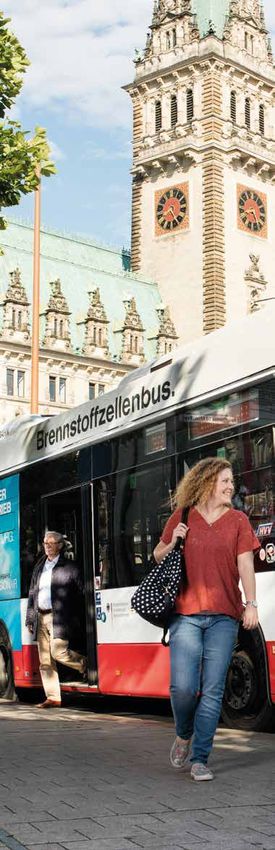
CLEAN HYDROGEN
    IN EUROPEAN CITIES
                       2010 - 2016

                                    OSLO

                         HAMBURG

             LONDON                        BERLIN
                      COLOGNE

                         AARGAU
                                       BOLZANO

                                   MILAN

FUEL CELL ELECTRIC BUSES: A PROVEN ZERO-EMISSION SOLUTION
KEY FACTS, RESULTS, RECOMMENDATIONS
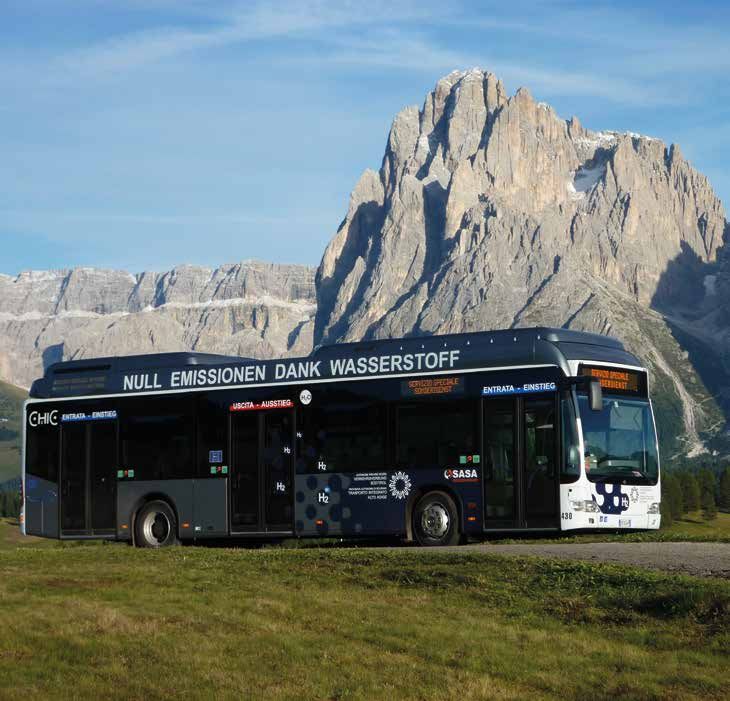
CLEAN HYDROGEN
 IN EUROPEAN CITIES
                   2010 - 2016
FUEL CELL ELECTRIC BUSES: A PROVEN ZERO-EMISSION SOLUTION
          KEY FACTS, RESULTS, RECOMMENDATIONS
CHIC PROJECT
PARTNERS

    IN COLLABORATION WITH
TABLE OF
CONTENTS
FOREWORDS................................................................................................................6
CHIC AT A GLANCE..................................................................................................8
FUEL CELL BUS TECHNOLOGY......................................................................10
INFRASTRUCTURE TECHNOLOGY...............................................................12
AARGAU........................................................................................................................14
BOLZANO.....................................................................................................................16
LONDON........................................................................................................................18
MILAN.............................................................................................................................20
OSLO/AKERSHUS..................................................................................................22
BERLIN...........................................................................................................................24
COLOGNE......................................................................................................................26
HAMBURG...................................................................................................................28
WHISTLER...................................................................................................................30
BUS OPERATION.....................................................................................................32
INFRASTRUCTURE OPERATION...................................................................36
SOCIAL STUDY RESULTS..................................................................................38
ENVIRONMENTAL ANALYSIS RESULTS..................................................40
FUEL CELL BUSES WORLDWIDE.................................................................42
CLOSING THE GAP TO COMMERCIALISATION...................................44
CHIC CONCLUSIONS............................................................................................46
AKNOWLEDGEMENTS.........................................................................................47
SOURCES OF INFORMATION..........................................................................48
ABBREVIATIONS AND DISCLAIMER..........................................................49

NOTE: ALL FIGURES IN THIS DOCUMENT ARE AS OF JUNE 2016
                                                                                                                                       5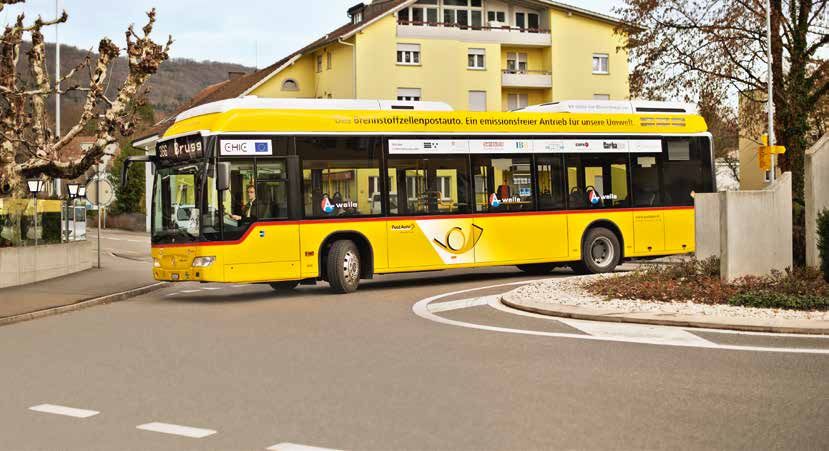
6

    FOREWORDS
            The drive to improve air quality in our
            cities and mitigate the impacts of climate
            change continues to be a high priority
            for our city leaders. The CHIC project
            has brought together a number of
            cities, transport operators and suppliers
            who are committed to demonstrating
            that fuel cell buses can help deliver
            these improvements alongside other
            emerging technologies.

            With the support of the European Union
            the CHIC project has clearly demonstrated
            the role clean fuel cell electric buses have
            in making our cities better places to live.

            The positive results of this project,
            following the success of previous fuel cell
            bus projects, have clearly demonstrated
            from a transport operator perspective
            that this technology is a practical form of
            propulsion to replace the standard diesel
            bus in our cities.

            The project has also clearly shown that
            hydrogen can be produced efficiently
            and with minimal carbon emissions
            when renewable and other low carbon
            energy sources are utilised. The future for
            fuel cell buses is assured with many cities
            now planning and moving towards larger
            scale deployment.
            This is a real testament to the benefits the
            CHIC project has delivered.

            I would like to thank all the CHIC partners
            for their hard work which has made this
            project such a success.

            MIKE WESTON
            CHIC Steering Committee Chairman
            Transport for London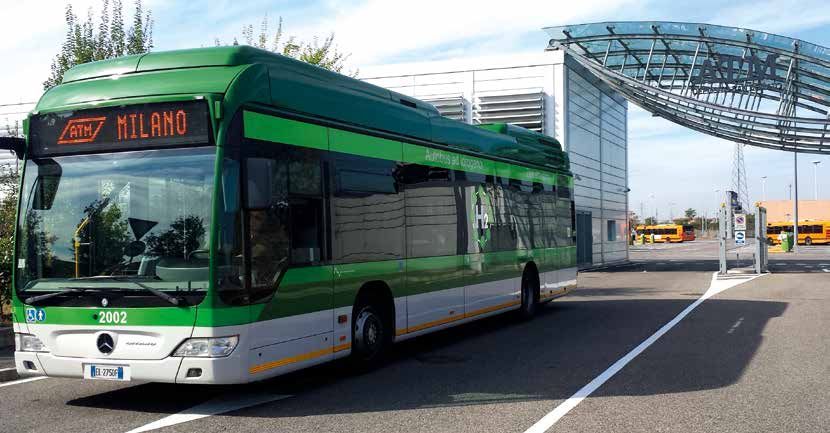
Transport is at the heart of our society, enabling people and goods to move
      about flexibly, quickly and at reasonable cost across Europe. At the same time, it
  is a sector which is responsible for one third of Europe’s greenhouse gas emissions,
and the main cause of air and noise pollution in cities. For these reasons, transport and
mobility are essential components of the European transition towards a sustainable,
low-carbon economy.

It is therefore a logical step that the European Commission has recently adopted
a Communication on A European Strategy for Low-Emission Mobility (COM(2016)
501 Final), which sets out priority areas for the decarbonisation of the transport
sector. Moreover, the European Commission voices frequently its support for
electric vehicles.

I strongly believe that, by combining emission-free and silent electric transport with
the short refuelling time of diesel buses, fuel cell buses can be an integral part of this
Strategy. But fuel cell buses are more than just another building block in the reduction
of emissions and the creation of a more liveable urban environment: as a widely-
used means of transport, they are ideal ambassadors towards the general public for
introducing hydrogen in our society. In addition, their development brings together
public and industrial partners.

The green production of hydrogen from renewable sources creates a link between
the energy and the transport sectors, allowing a system-oriented and smart approach
for cities to manage their environment. This systemic approach has already been
demonstrated in earlier projects, but I am particularly impressed with the amount of
experience, progress and support that has been gathered during the past six years.
Thanks to the CHIC project, fuel cell buses are now firmly in the spotlight, building
confidence for operators across Europe. I am delighted to see that a steadily increasing
number of cities and regions are now becoming convinced that hydrogen is offering
a real, reliable and affordable alternative to existing mobility options.

I would like to congratulate the CHIC project partners for their
achievements, and for the role they have played in taking fuel cell
buses this crucial step closer to maturity. I very much hope that, thanks to
your hard work, millions of European citizens will soon have a chance to
embrace a new, environmentally-friendly technology that is also a real
pleasure to use.

JAN-ROBERT SMITS, DIRECTOR-GENERAL
Directorate General Research and Innovation,
European Commission
                                                                                             7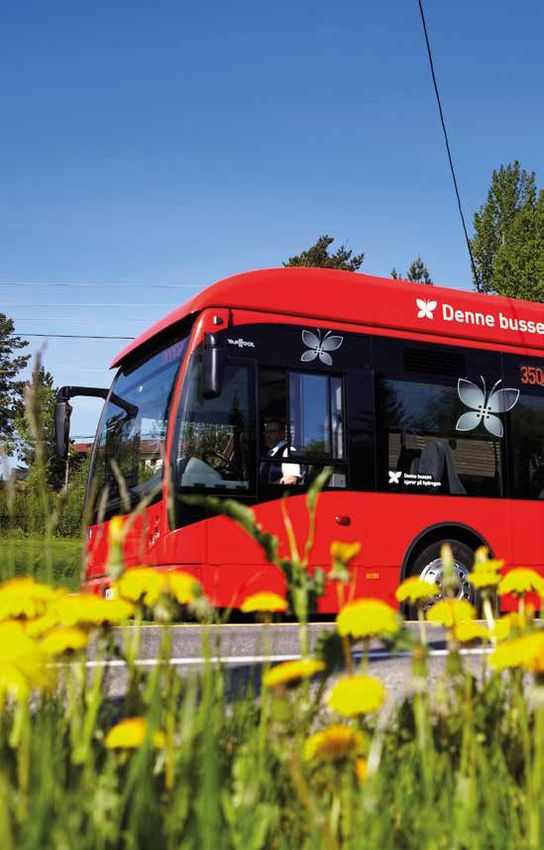
8

CHIC AT A
GLANCE
The Clean Hydrogen in European Cities project (CHIC) was a flagship zero emission
bus project that deployed a fleet of fuel cell electric buses and hydrogen refuelling
stations in cities across Europe and at one site in Canada. The project started in 2010
and ended in December 2016.
                                                                                              The CHIC project has
The project successfully demonstrated that fuel cell buses can offer a functional
solution for cities to decarbonise their public transport fleets, improve their air quality   demonstrated that fuel
and lower their noise levels. The buses can operate with the same flexibility as a diesel
                                                                                              cell buses can offer:
bus without compromising the productivity of public transport.

                                                                                                n operating range similar
                                                                                               A
The total project budget was €81.8 million, of which €25.88 million was co-funded by
the Fuel Cells and Hydrogen Joint Undertaking (FCH JU). 26 fuel cell electric buses            to that of a diesel bus
receiving FCH JU co-funding operated in the canton of Aargau (CH – 5 buses), in                (>350 km)
Bolzano (IT – 5 buses), London (UK – 8 buses), Milan (IT – 3 buses) and Oslo (NO – 5
                                                                                               hort refuelling times at
                                                                                               S
buses). Cologne (DE – 4 buses) and Hamburg (DE – 4 buses) operated 8 further fuel
cell buses through separately funded programs. In Whistler (CA), 20 fuel cell buses            hydrogen refuelling stations
were deployed between 2010 (Winter Olympics Games) and March 2014. In Berlin                   (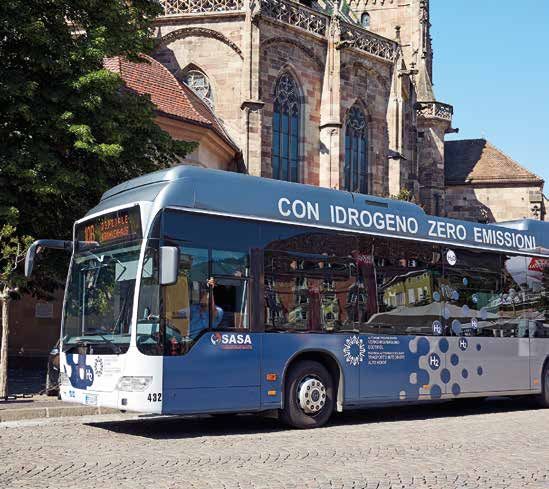
5 | Oslo

                                                4 | Hamburg
                                                                                   4 | Berlin
                                   8 | London                      4 | Cologne
                                        5 | Aargau
                                                                             5 | Bolzano

                                                   3 | Milan
                                                                                                       +20 fuel cell buses
                                                                                                         Whistler (Canada)

            Co-funded by the FCH JU                  Co-funded by other programmes          X Number of buses per city
                                           Hydrogen ICE buses co-funded by other programme

What is the FCH JU?
The Fuel Cells and Hydrogen Joint Undertaking (FCH JU) is a public private partnership supporting research, technological
development and demonstration activities in fuel cell and hydrogen energy technologies in Europe. Its aim is to accelerate the market
introduction of these technologies, so realising their potential as an instrument in achieving a low carbon energy system.

The partnership is formed by the European Commission (Directorate General Research and Innovation), industry (represented by
Hydrogen Europe) and research (represented by N.ERGHY.) [1]

                                                                                                                                 9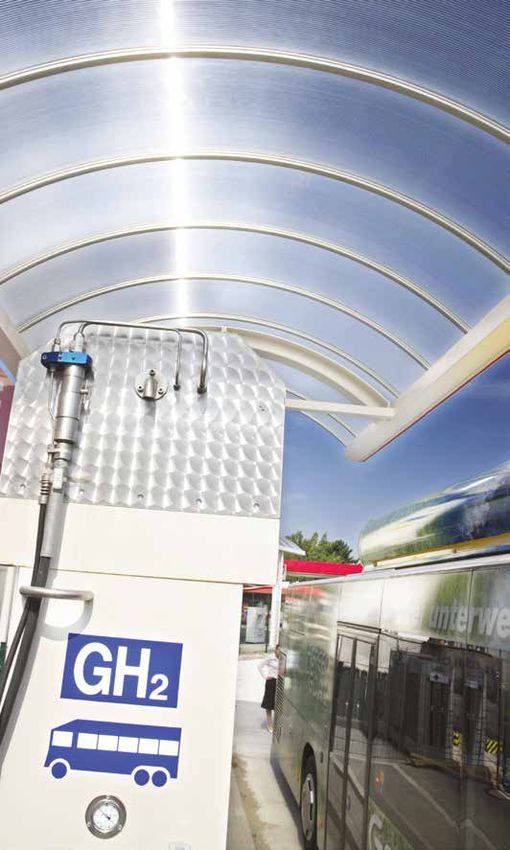
10

    FUEL CELL BUS
    TECHNOLOGY
WHAT ARE FUEL CELL BUSES?
Fuel cell buses are a type of electric bus. They share many components with battery
electric buses, such as electric motors and associated power electronics. However,             “I particularly enjoy driving
rather than storing energy in large batteries, fuel cell buses use hydrogen as fuel. The
                                                                                               a fuel cell bus because of
fuel cells consume hydrogen and oxygen to generate electricity through an electro-
chemical process, producing only water and heat as by-products, which then powers
                                                                                               the smooth ride without the
the electric motors.                                                                           noises and vibrations you have
                                                                                               in a diesel bus. You feel more
Hydrogen offers a much higher energy density than electrical storage systems (batteries        relaxed after your shift and
and super capacitors), meaning fuel cell buses can comfortably operate for an entire           in addition you know that you
day of service without refuelling.
                                                                                               have done something good for
Modern fuel cell electric buses generally incorporate a small battery or super capacitor
                                                                                               the environment.”
as a part of the drivetrain, which improve the performance of the fuel cell and the
overall energy efficiency of the bus, for example by boosting acceleration and allowing        Sylvia Sendlhofer,
recuperation of braking energy.                                                                bus driver at RVK, Cologne

Apart from these differences, the bus structure and the other non-electric components
are the same as in conventional buses.

                               MAINFUEL
                              MAIN  FUEL CELL
                                         CELL BUS
                                              BUSCOMPONENTS
                                                  COMPONENTS

                                                                                    HYDROGEN STORAGE
                                                                                    (NUMBER OF TANKS INDICATIVE)
                                                    FUEL CELL

           BATTERY

                          ELECTRIC
                           MOTOR
BENEFITS OF USING FUEL CELL BUSES
Fuel cell buses have the potential to be a at the tailpipe as the buses emit nothing Additionally, they offer enhanced comfort,
drop-in replacement for diesel buses, with but water vapour, and can help reduce reduced noise and vibrations levels and
a long driving range, route flexibility and CO2 emissions when the hydrogen is can provide a solution to ambitious policy
short refuelling times. They offer a local produced from a low carbon source (see targets set for transport decarbonisation
zero emission solution, with no pollution “environmental analysis results” section). and clean air.
CHIC BUSES KEY SPECIFICATIONS
Within CHIC, fuel cell buses from five manufacturers were trialled. The table below shows their key specifications.
EvoBus
Bus manufacturer APTS Mercedes- New Flyer Van Hool Wrightbus
Benz
Aargau (5)
Operated in CHIC city and num- Cologne (2)
Bolzano (5)
Whistler (20)
Cologne (2)
London (8)
ber of buses Hamburg (4) Oslo (5)
Milan (3)
Overall length (m) 18.5 12 12.5 13.2 11.9
Passenger capacity 96 76 60 101 / 75 49
Net weight (tonne) 20.59 13.20 15.42 15.70 / 16.07 10.35 - 11.35
Drive power (kW) 240 240 170 170 134
Fuel cell system power (kW) 150 120 150 150 75
Hydrogen storage capacity 40 (1,333) 35 (1,167) 56 (1,866) 40/35 (1,333) 31 (1,023)
(kg and in kWh)
NiMH battery + Super
Electricity storage type super capacitors
Li-Ion battery Li-Ion battery Li-Ion battery
capacitors
90 (max 120) /
Electricity storage power (kW) 200 250 n/a
100
105
26 (battery)
Electricity storage capacity + 2 (super 26.9 47 24 / 17.4 20
(kWh) capacitors)
ADAPTATION OF THE TRAINING
BUS DEPOT A specialised operator training programme was required to optimise deployment
conditions for the fuel cell buses. Dedicated initial and regular “refresher” courses
Bus maintenance facilities were adapt- were held for bus drivers, maintenance staff/technicians and first responders.
ed to accommodate the fuel cell buses. For bus drivers, the training included explanation of the technology, emergency
Specifically, hydrogen sensors, lighting measures, procedures to follow in case of failure and hydrogen refuelling. Courses
and ventilation adapted for use in haz- for technicians focussed on enhancing their understanding of the hybrid diagnostics
ardous locations, along with emergency systems, and of the hybrid, high voltage and gas systems. First responder training
venting, were installed in the workshops focussed on risk assessment and handling hazardous materials.
and (indoor) parking spaces. Platforms
to allow rooftop working (e.g. mobile
working platform) were built. Interested? (see page 48)
nalysis of investments in workshops for fuel cell buses
A
and hydrogen refuelling stations 1112
INFRASTRUCTURE
TECHNOLOGY
HYDROGEN PRODUCTION
1. Hydrogen from conventional sources: Most hydrogen used in industry today is produced
from a process known as steam reforming. When natural gas (methane) is used as the feedstock,
it is referred to as steam methane reforming (SMR). Alternatively, oil, coal and Liquefied Petroleum Gas
(LPG) can be employed.
2. Hydrogen from renewable sources: Hydrogen is produced by using electricity to separate water into
hydrogen and oxygen. This process is called water electrolysis. “Green hydrogen” can be made through this
process when the electricity is generated from renewable sources. The term “green” highlights that this hydrogen
is produced with very low emissions of greenhouse gases e.g. CO2.
3. By-product hydrogen: This is hydrogen originating from the chemical industry as a by-product, such as during chlor-
alkali electrolysis.
In addition, other production methods are being developed such as biological, waste, solar heat or photoelectrochemical.
Hydrogen infrastucture
CHIC city Hydrogen sources and supply pathways
manufacturer
On-site production from renewable sources
Aargau Air Liquide
+ regular trailer delivery from by-product source
Bolzano Linde On-site production from renewable sources
London Air Products Trailer delivery of gaseous hydrogen from SMR
On-site production with a mix of electricity
Milan Linde (from the grid, from a local combined heat and power plant and photovoltaics plant)
(+ trailer backup delivery)
Oslo Air Liquide On-site production from renewable sources
Berlin Linde Trailer delivery of gaseous hydrogen from SMR
Trailer delivery of gaseous hydrogen from by-product source
Cologne Air Products
(nearby chemical plant)
On-site production from renewable sources
Hamburg Linde
+ regular trailer delivery from by-product source
Trailer delivery of liquid hydrogen from hydro-electric power in Quebec,
Whistler Air Liquide
refuelled in gaseous form
Photography ©PostAutoHYDROGEN SUPPLY PATHWAYS IN CHIC REFUELLING A FUEL
As shown in the schematic, there are two main approaches for hydrogen supply: CELL BUS
1. O n-siteproduction of hydrogen involves installing a hydrogen generation unit At the refuelling station, hydrogen
as part of the refuelling station, with on-site compression. is compressed (unless delivered at
sufficiently high pressure), stored,
2. Delivered hydrogen involves trailer transport of either compressed hydrogen or and dispensed on demand to the
liquid hydrogen to be evaporated at the refuelling station. Depending on the delivery buses. Dispensing requires a pressure
pressure, an on-site compressor may not be required. differential between the station storage
and the vehicle tank. The equipment
(e.g. gas-tight nozzles and receptacles)
LOCATION OF THE HYDROGEN REFUELLING is comparable to that used for the
refuelling of natural gas. It takes less than
STATIONS IN CHIC 10 minutes on average to refuel a bus
Most of the hydrogen refuelling stations in the CHIC project were located either at after a full day of service.
bus depots or close by. Some refuelling stations were open to the public (such as in
Hamburg) and could be used by other vehicles, e.g. fuel cell cars. Since hydrogen can be produced in
several ways, every region can produce
its own fuel, based on its specific
resources and circumstances, potentially
providing benefits for the environment
and the local economy.
HYDROGEN SUPPLY PATHWAYS IN CHIC
OXYGEN
HYDROGEN
+ -
WATER
GREEN ELECTRICITY ELECTROLYSIS
COMPR
E
H2
SS
OR
HYDROGEN DISPENSER
STORAGE
STEAM REFORMING /BY-PRODUCT TRANSPORT
1314
AU
RG
AA
Photography ©PostAuto
The canton of Aargau,
located in the North of
Switzerland, is one of the
country’s most densely
populated areas, and has “PostBus is very upbeat about the pro-
adopted an ambitious en- ject. The fuel cell Postbuses are pop-
ergy strategy to reduce ular among passengers and drivers
alike, attracting attention for their qui-
local emissions. To meet
et and smooth ride.”
these targets, Aargau is
taking part in a number
of different projects, in-
Daniel Landolf,
cluding the deployment of CEO PostBus
fuel cell buses and diesel Switzerland
hybrid vehicles. PostBus
will also be testing two
electric buses in the are-
as of Berne and Obwalden
from winter 2016.
Photography ©PostAuto5 BUSES (12 M) 1,230,691 KM
SINCE 12/2011
18-20 HOURS/DAY 7.9 KG H / 100
2
KM
HYDROGEN PRODUCED ON-SITE
H2 FROM RENEWABLE SOURCES
+ TRAILER DELIVERY
(BY-PRODUCT HYDROGEN)
467,663
LITRES DIESEL REPLACED
THE CANTON OF AARGAU,
THE SWISS POST, IBB HOLDING AG,
THE PAUL SCHERRER INSTITUTE
AND EMPA
NEXT STEPS
The fuel cell Postbuses will gradually be replaced from the beginning of 2017. The end of the fuel cell bus project in
Aargau does not mean that PostBus is definitively departing from hydrogen-based technology. PostBus’s long term
goal is to become fossil free and fuel cell technology remains an option for future fleets. PostBus will continue to
closely monitor developments in the field.
15
Photography ©PostAuto16
O
AN The Autonomous Province of Bolzano - South Tyrol is taking
action in the fight for climate protection. With the Climate Plan
“Energy South Tyrol 2050” drawn up in 2011, a series of activi-
LZ
ties have been defined for different key areas to reduce annual
CO2 emissions below 1.5 tons per capita by 2050. South Tyrol
has the ambitious aim of taking a leading role and positioning
BO
itself as a model region for sustainable alpine mobility by 2030.
Florian Mussner,
provincial minister of mobility, “The Autonomous Province of Bolzano,
Autonomous Province of
Bolzano-South Tyrol South Tyrol will reduce its CO2 emissions
in the transport sector by implementing
various measures. This includes the fur-
ther extension of public transport over the
whole province, fostering the reduction of
individual transport use, the increase of
intermodality, the long term substitution
of fossil fuels by renewables, and the ex-
pansion of electromobility in both private
and public transport.”
Photography ©STA Photography ©STANEXT STEPS
With the introduction of the first five fuel cell buses on powered fuel cell buses and battery electric buses) in
the city routes of the bus operator SASA in 2013, the city and suburban public transport, as well as to build the
Autonomous Province of Bolzano-South Tyrol gave a associated infrastructure for refuelling/recharging
strong political signal. The aim in the coming years will these vehicles.
be to deploy further emission free buses (both hydrogen
Photography ©STA
5 BUSES (12 M) 481,454 KM
SINCE 11/2013
UP TO 12 HOURS/DAY
6 DAYS A WEEK 8.6 KG H / 1002
KM
H2
HYDROGEN PRODUCED BY
ELECTROLYSIS AND REFUELLED 208,277
AT THE H 2 -CENTRE SOUTH TYROL LITRES DIESEL REPLACED
STA, SASA AND IIT
1718
ON
D
N
LO
London has been pioneering the develop-
ment of clean bus technology to tackle the city’s
challenging poor air quality issues, which contrib-
ute to premature death and respiratory illnesses.
By 2019 the central London area is expected to become
an Ultra-Low Emission Zone (ULEZ). All double decker buses
operating in the zone must be Euro VI standard hybrids, and all
single decker buses operating in the ULEZ must be zero emis-
sion at tailpipe models.
Outside the central area, around 4,000 Euro IV and Euro V
buses will be retrofitted to reduce tailpipe NOx and particulate
matter by up to 95%. This will raise them to the latest Euro VI
standard. On top of these extensive measures, the Mayor
Valerie Shawcross,
of London proposes that only diesel hybrid or zero emission London Deputy Mayor
double decker buses join the fleet from 2018. for Transport
Photography ©Tower Transit8 BUSES (11.9 M)
16-18 HOURS/DAY
H2 TRAILER DELIVERY
OF GASEOUS HYDROGEN
Photography ©Tower Transit
1,298,565 KM
“Cleaning up the toxic air is London’s biggest SINCE 01/2011
environmental challenge and hydrogen
technology plays a key role in our vision
for a low carbon city. With help from this
project, London was one of the first cities
to use hydrogen fuel cell buses in its fleet. 9.7 KG H / 100
2
KM
We are now working with the industry to build
on this success going forward.”
480,469
LITRES DIESEL REPLACED
TRANSPORT FOR LONDON, TOWER
TRANSIT, UK DEPARTMENT OF
NEXT STEPS ENERGY AND CLIMATE CHANGE
Two additional fuel cell buses will join the (DECC), AIR PRODUCTS
fleet in 2017 as part of the European project
3Emotion [2]. London is expected to expand the
fuel cell bus fleet further in the coming years if
external funding can be tapped into.
1920
AN
IL
Pacillo
Tommaso,
bus driver
M
trainer, ATM
“Fuel cell buses are great vehi-
The city of Milan is looking at ways to improve its cles to drive, offering comfort
poor air quality as, particularly in winter, it affects cit- with no noise or vibrations.
izens’ health and their mobility needs, with cars being Some of the initial issues were
regularly banned from the city. In 2012 Milan launched the solved in collaboration with the
bus manufacturer and now the
Congestion Charge area (Area C) in the historic centre of the
level of reliability is high. The
city. To enter Area C a ticket must be purchased, although
drivers love these buses for
certain high emission vehicles are banned completely, and low their visibility and maneuverabil-
emission vehicles are exempt from the charge. Milan’s bus op- ity. It has been very easy to learn
erator, Azienda Trasporti Milanesi (ATM), is looking for clean how to drive fuel cell buses and
technologies offering the right compromise between costs and also to teach drivers how to
operational results. Along with fuel cell buses, ATM is consider- use them. Impressed by pas-
sengers’ enthusiasm, drivers
ing the potential offered by hybrid and electric buses.
always give particular attention
in service and are happy to an-
swer questions.”
Photography ©ATM3 BUSES (12 M) NEXT STEPS
After CHIC, ATM will, in collaboration with
the bus manufacturer and infrastructure
provider, continue passenger service with
fuel cell buses for another couple of years,
and test other clean technologies.
UP TO 17 HOURS/DAY
ONSITE AT THE BUS DEPOT,
H2 POWERED BY A MIX OF ELECTRICITY
(FROM GRID, CHP, SOLAR ENERGY)
+ TRAILER DELIVERY AS BACKUP
178,396 KM
SINCE 10/2013
10.3 KG H / 100
2
KM
100,259
LITRES DIESEL REPLACED
ATM, LOMBARDY REGION,
CITY OF MILAN
21
Photography ©ATMS
22
U
SH
ER
AK
/
LO
OS
The environmental tar-
gets in Oslo and in the
surrounding region of
Akershus are very am-
bitious. In June 2016,
Oslo announced it would
reduce the city’s carbon
emissions 50% by 2020
and 95% by 2030, while
Akershus has a target of
50% reduction by 2030.
A regional hydrogen strat-
egy for 2014-2025 has
been adopted which aims
to make hydrogen widely
Photography ©Ruter - Moxness/CatchLight Fotostudio
available in the transport
sector by ramping up the Bernt Reitan Jenssen,
number of hydrogen refu- CEO, Ruter
elling stations. “For Ruter to succeed in our ambi-
tious mission, it is essential to test new
Ruter, the public trans- technology. Participation in the for-
port authority in the re- ward-leaning CHIC project has provid-
gion, is working to ensure ed us with valuable experience in test-
that all public transport in ing fuel cell buses in operation. This is
important knowledge in our further ef-
Oslo and Akershus runs
forts to accelerate the commercializa-
on only renewable energy tion and deployment of zero emission
by the end of 2020. solutions in public transport.”Fuel cell bus at the hydrogen refuelling station
Photography ©Ruter - Moxness/CatchLight Fotostudio
NEXT STEPS
Fuel cell buses are part of the hydrogen strategy of the region and of Ruter’s Fossil Free 2020 plan.
5 BUSES (13.2 M) 546,223 KM
SINCE 04/2013
UP TO 17 HOURS/DAY 13.2 KG H / 100 2
KM
H2
HYDROGEN PRODUCED ON-SITE
AT THE BUS DEPOT FROM 273,112
RENEWABLE SOURCES LITRES DIESEL REPLACED
RUTER, CITY OF OSLO, AKERSHUS
COUNTY, TRANSNOVA,
THE NORWEGIAN RESEARCH COUNCIL
2324
IN
RL
Guillaume Larroque
BE
Director of Service
Stations, Total Deutschland
“We’ve been investing in re-
search and development on
hydrogen mobility since 2002.
Initially our efforts centered on
defining common standards
for tank technology together
with our partners. As a leading
player in the network expan-
sion, Total alone operates nine
of Germany’s 22 public hydro-
gen refuelling stations! With
regard to fuel cell buses, we do
believe they could play an im-
portant role in reducing emis-
sions especially in major cities
like Berlin. They would also help
to increase capacity use of
our existing stations. In Berlin,
we use 100% green hydrogen
from a windfarm and, together
with partners, we are able to
produce green energy at our
dedicated facility in Schönefeld.”
Photography ©TOTAL/Bernd Lammel
Berlin’s Mobility Programme 2016 (“Mobilitätsprogramm”) includes key measures that aim to support
increased use of public transport and uptake of electro-mobility from renewable energy sources, as well as
reduce noise and local air pollution produced by transport. The operation of hydrogen Internal Combustion
Engine buses began during the 2006 FIFA World Cup and ended in December 2014. The buses deployed
were the same as those deployed in a previous EU funded hydrogen bus project, HyFLEET:CUTE. Additional
alternative technologies have since been trialled, with four battery electric buses currently in operation.Photography ©TOTAL/Bernd Lammel
NEXT STEPS
On 30 August 2016, the first mayor of Berlin, the industry that there is demand for such al-
Mr Müller, and the first mayor of Hamburg, ternative vehicles. The Letter of Intent foresees
Mr Scholz, signed a joint Letter of Intent to adopt that the two cities will procure up to 200 zero
zero emission buses, giving a strong signal to emission buses per year from 2020.
4 BUSES (12 M) 898,477 KM
SINCE 06/2006
H2 TRAILER DELIVERY OF
GASEOUS HYDROGEN 22.8 KG H / 100
2
KM
BERLINER VERKEHRSBETRIEBE,
CLEAN ENERGY PARTNERSHIP,
377,360
TOTAL DEUTSCHLAND LITRES DIESEL REPLACED
2526
E
GN
LO
CO
Photography ©RVK
Carsten Bußjaeger, “From a regional public transport oper-
Operations Director, RVK ator’s perspective, if you are looking for
zero emission solutions, fuel cell buses
are the best alternative, given their short
In 2013 the state of
refuelling time and most importantly their
North Rhine-Westphalia range and flexibility. Furthermore fuel cell
passed a climate protec- buses offer the same passenger capacity
tion law that sets a target as diesel buses. With the same or similar
to cut greenhouse gas characteristics as conventional buses we
emissions in the region by don’t need to change or adjust our op-
at least 25%, compared erating processes when introducing fuel
cell buses to our fleet. On top of that, they
to 1990 levels, by 2020.
come with the major advantage of emit-
One of the key elements in ting locally no harmful emissions unlike
achieving this goal is the conventional buses.“
reduction of road traffic
emissions. Through the
project “Zero Emission/
Null Emission”, Region-
alverkehr Köln GmbH
(RVK), the public trans-
port operator in the re-
gion of Cologne, has set
an ambitious target to re-
place its entire diesel bus
fleet with alternative pow-
ertrains. From 2030 on-
wards, only zero emission
buses will be procured by
RVK, and in the meantime
a significant fleet of emis-
sion free buses and cor-
responding infrastructure
will be built up.
Photography ©RVKNEXT STEPS S
Fuel cell electric buses are part of the hydrogen A large share of the fleet will be replaced with
strategy of the region and there are plans to fuel cell buses and more depots will be equipped
expand the fleet, with 30 additional vehicles and with hydrogen refuelling stations by 2030.
two additional refuelling stations in the region
of Cologne.
2 BUSES (18.5 M) 109,790 KM SINCE 09/2011
2 BUSES (13.2 M) 122,656 KM SINCE 05/2014
16.5 KG H / 100 KM
UP TO 12-16 HOURS/DAY
2
12.5 KG H / 100 KM
2
48,813
H2
TRAILER DELIVERY OF GASEOUS
HYDROGEN BY-PRODUCT SOURCED
NEARBY (CHEMICAL PLANT)
54,533
LITRES DIESEL REPLACED
REGIONALVERKEHR KÖLN GMBH (RVK),
HYCOLOGNE – WASSERSTOFF REGION
RHEINLAND, STADTWERKE HÜRTH,
STADTWERKE BRÜHL, STATE OF NORTH
RHINE-WESTPHALIA
2728
RG
BU
AM
H
Photography ©CEP
Hamburg, the second Ulrike Riedel,
largest city in Germany, is Board Member of
HOCHBAHN “The growing amount of traffic in cities
a role model for sustaina-
and the corresponding pollution and
bility and climate protec-
noise emissions present an enormous
tion. The city’s target to challenge for all of us. Using public
reduce CO2 emissions by transport is in itself an option to con-
80% in 2050 (compared tribute to climate protection. However,
to 1990 baseline) is very HOCHBAHN’s objective is to further im-
ambitious. Fuel cell buses prove their services to protect the cli-
mate and to improve air quality. There-
and other emission-free
fore, we already operate fuel cell buses
buses have the poten-
in regular line service since 2003.”
tial to eliminate airborne
pollutant emissions from
public transport, so from
2020 onwards, only
emission-free buses are
to be purchased by
HOCHBAHN.
Photography ©HOCHBAHNNEXT STEPS
In Hamburg, as part of Europe’s first bus innovation
line 109, HOCHBAHN currently operates fuel cell and
other alternative technology buses, with an increasing
amount of electric buses set to come into service from
2017 onwards.
4 BUSES (12 M)
DOUBLE SHIFT SERVICE UP TO
16 HOURS/DAY
80% PRODUCED ON-SITE AT THE
H2
HYDROGEN REFUELLING STATION FROM
RENEWABLE SOURCES;
20% DELIVERED BY TRAILER
(BY-PRODUCT HYDROGEN)
457,712 KM
SINCE 04/2012
8 KG H / 100
2
KM
171,651
LITRES DIESEL REPLACED
HOCHBAHN
hySOLUTIONS
VATTENFALL
29
Photography ©CEP30
ER
TL
IS
H
W
Whistler is a mountain resort community in the The bus fleet became the largest demonstration
Province of British Columbia (B.C.), Canada. BC of this zero-emission technology in the world. The
Transit is the Provincial Crown Agency charged five-year demonstration project was completed on
with coordinating the delivery of public transport in March 31, 2014.
the region, and has been involved in fuel cell bus
deployment for over a decade. Their fleet of 20 fuel Two reports on the performance of the buses were
cell buses was introduced during the 2010 Winter released by the US National Renewable Energy Labo-
Olympic Games to support B.C’s initiative to reduce ratory (NREL) in collaboration with BC Transit for the
greenhouse gases. California Air Resources Board [3].
Juan Carlos Gomez,
P. Eng. General Manager,
Whistler Transit Ltd
“Whistler Transit Ltd., a division of Pacific Western Transportation, is hon-
ored to have been the entity responsible for the operation and maintenance
of the largest fuel cell bus fleet in the world. Due to the innovation and tech-
nology of these buses, our technicians were thrilled, eager and excited about
the whole project. Operating the fleet did come with some challenges, but
the technical support from our partners and suppliers, strong teamwork,
commitment and leadership helped us persevere. The results of this project
were amazing, having a zero emission heavy duty vehicle, which can carry
up to 60 passengers, can perform well in adverse weather conditions.”NEXT STEPS
BC Transit’s 2030 Corporate Strategic Plan in-
cludes increasing the company’s environmental,
social and economic accountability. BC Transit re-
solves to continue to test and implement vehicles
with alternative propulsion systems that are less
reliant on fossil fuels.
Photography ©BC Transit
Photography ©BC Transit
20 BUSES (12.5 M) OVER 4,005,000 KM
SINCE 12/2009
UP TO 22 HOURS/DAY 15.67 KG H / 1002
KM
LIQUID HYDROGEN GENERATED
H2 FROM HYDRO-ELECTRIC POWER IN
QUEBEC, DELIVERED TO THE BUSES
IN GASEOUS FORM
2,202,750
LITRES DIESEL REPLACED
GOVERNMENT OF CANADA, PROVINCE
OF BRITISH COLUMBIA, BC TRANSIT,
RESORT MUNICIPALITY OF WHISTLER,
CANADIAN HYDROGEN FUEL CELL
ASSOCIATION 3132
BUS OPERATION
The operation of the CHIC fuel cell buses has been highly successful, with the buses
meeting the demanding daily operational requirements of public transport without
compromise. This, combined with the step change generational improvement in
performance, bodes well for the technology into the future.
THE 54 FUEL CELL BUSES HAVE:
Travelled over 9 million kilometres – equivalent to travelling around
the globe 233 times!
Operated for about 500,000 hours on the fuel cell system,
with some of the individual fuel cell stacks already having
logged over 20,000 operating hours and still operating.
Demonstrated a daily duty up to 20 hours and over 350 km
driving range.
Achieved a high fuel efficiency with a consumption as low as 9 kg
hydrogen / 100 km for 12 m buses (equivalent to 30 litres of diesel) –
26% more efficient than an equivalent diesel bus
(40.91 l of diesel/100 km on average). [a]
CO2 emissions reduced by 85% compared to diesel buses along
the bus life cycle when the hydrogen fuel is produced from renewable
energy sources; saved 6,800 tonnes of CO2 equivalent. [b]
Photography ©Tower Transit
MAIN ACHIEVEMENTS
New generation technology A full-time operation in the making By the end of the project the buses
leading to improved efficiency perators have been able to plan
O were close to meeting the 85%
All fuel cell buses operated in CHIC to have fuel cell buses provide daily availability project target across the
belonged to a newer generation transit services that usually have been fleet – with some buses reaching a
than previous bus models. The key provided by a diesel or a Compressed 90% availability level.
improvements were: Natural Gas (CNG) bus.
The bus operators agreed that there
owever, as is the case for all innovative
H is no technological reason why fuel
ybridisation of the fuel cell drivetrain,
H technologies, one cannot expect a fuel cell buses cannot meet the level of
with the integration of batteries/super cell bus to be 100% reliable on day one. availability expected for diesel buses.
capacitors allowing the bus to buffer All city partners had to face a teething Instead issues with availability have
peak loads, boost acceleration and period where bus availability was lower primarily derived from immature
allow energy recovery from braking. than expected due to component supply chains, diagnosis of problems
ybrid systems allowed smaller and
H failures and long spare parts delivery requires experts that are in short supply
cheaper fuel cell systems, offering times. and there are currently too few trained
extended lifetimes and better fuel ef- maintenance technicians on depots to
us availability steadily improved, as
B
ficiency, leading to the use of fewer carry out repairs.
issues with some of the components
storage tanks while maintaining the and controls on these new bus hese issues will be resolved with
T
range. generation were ironed out and increased scale in the supply chain and
maintenance technicians learned to thus there is no obvious technical issue
maintain the vehicles. preventing a move to the next stage
of larger scale commercialisation of
the technology.New maintenance concepts
Another step change in CHIC was the
move to in-house maintenance of the “Repairing and maintaining these vehicles, to me, was like working on
fuel cell buses. While most previous a giant computer […]. As we were the only fuel cell bus operator in the
fuel cell bus fleets had been maintained
country at the time, it was a big learning curve […]. Being a part of the
by dedicated technicians from the
bus manufacturers, bus operator staff solution gave me the feeling that I was working towards something
conducted much of the CHIC bus that could have a positive impact on the environment, and future gen-
maintenance: an important step forward erations to come.”
in bringing fuel cell technology into
the normal commercial operational Ross Lewin,
environment of bus operators.
Tower Transit Mechanical / Electrical Apprentice, London
Photography ©STA 3334
NEXT STEPS/RECOMMENDATIONS
Reducing technology costs Increasing availability
Whilst a 12 m a fuel cell bus cost well over €1 million at the project start, this is Operational availability needs to meet or
expected to come down to €650,000 or even below for orders placed in 2017 [4]. exceed that of a diesel bus. This has been
Further cost reductions in total servicing cost are required for commercialisation. partly solved by resolving the teething
This is expected to be achieved through a combination of scale (primarily) and further issues of the new drivetrains within
technology development. CHIC. This will be further improved in
next generation demonstration projects
The FCH JU’s fuel cell bus commercialisation study [5] concluded that a volume of currently underway, where the increased
300-400 fuel cell buses would be a sufficient pre-condition to speed up scale in the supply chain will reduce
commercialisation. Hence a pan-European effort has begun, with a view to unlocking waiting times for parts and ensure more
the market potential of fuel cell buses by bringing down the costs through joint trained specialists are available to diagnose
procurement of large fuel cell bus fleets across Europe. The expectation is that these and fix problems. These improvements
orders will stimulate bus manufacturers to invest in production of larger and therefore to create a more mature and robust
cheaper fuel cell bus fleets. (see section “closing the gap to commercialisation”). supply chain will be an essential part of
commercialising the technology.
Strategies for a full 10-15 year life for fuel cell buses
The longevity of the fuel cell bus product, fuel cell bus suppliers must
components has been demonstrated develop strategies for the full 10-15
during the trial. Indeed, some of the fuel year working life of a bus. This will
cells which were expected to last for involve even longer life fuel cell stacks
6,000 hours are still running after 20,000 and/or low cost programs for fuel cell
hours. However, for a fully commercial replacements.
People are key – don’t underestimate training
Sufficient time and financial resources with passengers with a good knowledge
should be allocated for training and of the technology and its broader
refresher courses for bus drivers, as environmental and community benefits
well as training for depot managers, helps to increase public understanding
first responders etc. It is important and acceptance. Sharing training
to start training as early as practical, resources from other cities was highly
although having buses available beneficial in CHIC and a repository
increases participant levels of interest where all upcoming “fuel cell bus” cities
and understanding. Providing those bus can pool training information would be
drivers and staff who will have contact beneficial.
Photography ©RVK“Because of the different characteristics the fuel cell bus has from a
diesel bus, it was important that drivers had a basic understanding of
how hydrogen and the engineering/electrical components combine in
order for this bus to be used in service. Training for this vehicle takes
one day. All selected drivers are given classroom training with an em-
phasis on safety and vehicle handling. Drivers are also given a tour
of the refuelling compound and the specially built workshops where
Billy Hadley, Tower Transit’s highly trained engineers are available to answer any
Tower Transit driver “more technical” questions. Classroom training is usually managed in
trainer, London a group session […].”
Photography ©Tower Transit
A collaborative approach and Policies driving clean air regulations
strong project management Industry is improving the technology and availability of both fuel cell
Given their complexity, fuel cell bus de- and battery electric zero emission buses, while costs are decreasing.
ployment trials require strong planning Local authorities and national regulators will play a key role in
(including a detailed funding strategy) introducing these technologies by mandating zero emission
and project management. Given the public transport in certain zones (e.g. London’s Ultra Low
number and diversity of partners in- emission Zone). Based on the results of the CHIC
volved, collaboration at an early stage is project, decision-makers can start to feel secure
key to make the project a success. Es- that the technology is ready to allow regulation
tablishing a “delivery forum” where all in favour of these technologies.
partners involved in the project (opera-
tors, infrastructure providers, bus suppli-
ers, funders, planners etc.) can meet and
update each other on progress should
be an early priority when developing
these projects.
“I am happy and some-
what proud that this innova-
tive technology was implement-
ed here in my town […]. It is good for
the environment and a very pleasant
ride – similar to a tram in regards to the
noise and judder.”
Passenger
while riding a fuel cell bus
in Hürth, near Cologne
Interested? (see page 48)
Guidelines for delivering fuel cell bus projects
Public executive summary of the report on bus operation
Report collecting the experience with respect to certification of the buses and hydrogen refuelling infrastructure
3536
INFRASTRUCTURE
OPERATION
THE HYDROGEN RE-
FUELLING STATIONS
IN CHIC:
ere highly reliable – with
W
an average availability of 97%
across all sites.
Allowed fuel cell buses to be
refuelled in less than 10 minutes
after a full day in service.
ere well integrated into busy
W
bus depots.
atched expectations, with a
M
refuelling capacity of over 200
kg/day, easily capable of fuel-
ling current fleets of fuel cell
buses.
More than 1.2 million kg
hydrogen refuelled .
Close to 62,000 fillings.
About 17 kg dispensed per fil-
ling on average at the European
sites and 25 kg in the Canadian
site.
Use of more than 4.3 million
Photography ©Tower Transit litres of diesel avoided.
MAIN ACHIEVEMENTS For the time being, this issue can be resolved or at least
mitigated by installing a spare unit in parallel (redundancy),
High availability of the refuelling stations or alternatively through high-pressure hydrogen delivery from
On average across the project, the availability achieved by an external source.
stations was 97%, a number achieving more than 99% and none
falling short of 94%[c]. This is by far better than in previous trials. A short refuelling time
A high refuelling speed will be very important for large hydrogen
More than half of all downtime hours were caused by issues with bus stations where many buses need to refuel in a short overnight
hydrogen compressors. At all sites where station availability fell window. CHIC usually achieved refuelling in less than 10 minutes,
below 97% it was because of a hydrogen compressor problem. typically 6 to 8 minutes for the average dispensed amount
Downtime was also partially caused by immature supply chains of hydrogen (17 kg), representing a significant improvement
and resulting long lead times for spare parts, as was also compared to the previous generation of hydrogen refuelling
encountered on the bus side. stations for buses.[6]NEXT STEPS/ Significant challenges still lie ahead on
the way to large-scale, fully commercial
RECOMMENDATIONS refuelling infrastructure for buses. These “We have been trained to do
challenges are well understood and are
Towards hydrogen refuelling
the refuelling of fuel cell buses.
being tackled. A dedicated project, New-
Refuelling is fast and safe. […]”
stations for complete bus depots BusFuel [7], looks at engineering solutions
Today’s stations have demonstrated their for depots integrating larger fuel cell bus
capability to reliably supply current fuel fleets (50 to 250 buses) in 12 locations Antonio Cosentino,
cell bus fleets with hydrogen fuel. The across Europe, with results expected for bus operator, ATM, Milan
challenge is to develop stations suitable spring 2017.
for refuelling a complete depot of fuel
cell buses, i.e. 100+ vehicles every day.
People, people, people!
With respect to staff requirements in day-
The question of what requirements such
to-day service, operators point out that
stations will have to meet was debated Harmonising standards at
enthusiastic and trained staff are still key to
among the CHIC partners. Whilst there European level
ensuring a high level of availability. Future
was an agreement on qualitative criteria, Some of the cities encountered delays
stations need to place less demands on
it turned out that the quantitative due to lengthy permitting procedures for
staff. In particular, unsupervised refuelling
expectations associated with some of their hydrogen refuelling infrastructure.
must always be possible.
these criteria were not universal. These This underlines the need for specific
expectations depend on the size of the Enhancing collaboration documents which support both the
individual depot and on how the routine The interaction with the various parties operator, who has to obtain approvals,
of preparing the buses for the next day of throughout the trial, in particular during and the authorities considering granting
service is organised. In particular: its early stages, was of key importance. them. This could lead to a mandatory EU
Apart for a generally high availability,
Recommendations in this respect include: description of safety requirements on/
the station has to be operative by 100% around hydrogen infrastructure, such as
every day during a dedicated refuelling Hold regular progress meetings with a recognised European standard. Some
window (4 to 12 hours, depending on all parties involved, both within the CHIC partners even favoured the set-up
the local circumstances). organisation and with local partners. of a European Directive.
If buses are cleaned during refuelling, Keep the neighbourhood, the general
refuelling time is not critical so long as public, decision makers etc. well However, the prevailing experience is that
it is shorter than the cleaning time. Up informed.[8] individual local authorities follow their
to 10 minutes may be acceptable. When Involve the relevant permitting author- own procedures within an overarching
refuelling and cleaning are consecutive ities from the beginning and develop a framework. Therefore, even an EU
work items, the requirements on filling collaborative working relationship. An Directive would not necessarily solve
time are usually more demanding. inclusive approach at the outset pays all major infrastructure licensing issues,
5 minutes or faster were quoted. major dividends. since such a document cannot substitute
Early work with local first responders
individual and organisational experiences
Scaling up: making the refuelling
(fire brigade and police) to ensure they on regional level.
of 100’s of buses a reality
are aware of the project and receive the
Bus operators are unlikely to convert a The project has gathered best practices
information and training they need to be
depot to hydrogen within a short period, that will be helpful for fuel cell bus
comfortable with the installation.
such as a year. Such a process will primarily deployments in other cities. Additionally,
be based on the end-of-life schedule of further Europe-wide harmonisation of
Comprehensive lessons and recommen-
existing diesel vehicles. Future stations regulations, codes and standards (RCS)
dations that resulted from planning, pro-
therefore need to be scalable (modular are ongoing. Key stakeholders in the
curement, obtaining approvals, and oper-
and flexible) in line with fleet growth, to sector work on a common framework
ation of the hydrogen stations in the CHIC
avoid a huge initial investment followed to simplify procedures and thereby
project were collected and compiled.
by underutilisation for a long time. reduce costs.
Interested? (see page 48)
Recommendations for hydrogen infrastructure in subsequent projects
Guidelines for delivering fuel cell bus projects
Public executive summary of the report on infrastructure operation
Report collecting the experience with respect to certification of the buses and hydrogen refuelling infrastructure
3738
38
SOCIAL STUDY RESULTS
PEOPLE AND FUEL CELL BUS TECHNOLOGY
Understanding influencing factors in fuel cell bus acceptance
Before CHIC, research on social The CHIC approach aimed to extend the over time. In total 185 face-to-face,
acceptance of fuel cell & hydrogen existing knowledge about the state of one-hour interviews in five of the CHIC
technologies in transport had focussed technology acceptance by identifying regions (Bolzano, Hamburg, Cologne/
on public acceptance and revealed drivers to acceptance, shedding Huerth, Oslo, Aargau/Brugg) were
a generally positive attitude amongst light on the concerns of different conducted between August 2011 and
the general public. In contrast to some stakeholders such as environmental March 2013.
other contemporary innovations e.g. groups, industry, civil servants and
nanotechnology, hydrogen applications decision-makers, and providing the
appeared to not unduly concern people. necessary background information to
However, stakeholders responsible for understand the acceptance process
planning, implementing and operating rather than measuring it.
hydrogen applications have generally
not been the focus of social acceptance The CHIC qualitative research approach
studies, nor has there been engagement was based upon the understanding that
with people “sceptical” about the acceptance is a process, dependent on
potential of hydrogen in transport. several influencing factors and changing
The importance of added value
An important finding of the acceptance The analysis of expectations and the CHIC research stated. It is not
study was that changing a running system experiences of bus drivers, stakeholders, always the absolute cost that seems to
and switching to a new technology when and the general public revealed a high be relevant to the acceptance process,
competitive and reliable alternatives support of the idea to green transport and but the perceived added value that
are in place will require more than of the technology potential on the one offsets the additional cost.
“just” environmental benefit and energy hand, and a set of regional challenges
efficiency – it requires a greater added- to be tackled to increase acceptance For the transition to the new
value to the early adopters (region and/ in demonstration projects, whenever technology, it would be helpful to find
or organization). The social acceptance technology is more expensive and less added value other than that related to
needed in the transition phase of a new reliable in daily use than expected and the technology concept. For example,
technology is a highly supportive one: required by the regional stakeholders and improved bus services related to fuel
people will either have to actively use the public. In addition, it was revealed cell buses (connections, fast lanes),
it, adapt their behaviour, pay additional that so long as the concrete regional or more comfortable or appealing design
costs or take the risk of investing into this personal benefits remained unclear in of the buses (including seating) and
new technology. Possible motivation the project environment and amongst other improvements will help increase
factors to make these changes are the actors responsible for supporting the acceptance of higher costs.
manifold: the implementation process, “value for
money” was questioned. To sum up, framing the cost discussion
People want the product. of the new technology in terms of
People want the image the product
“Value for money” may be a promising “value for money” proved to be a key
provides. concept to increase motivation and argument in favour of fuel cell buses,
People are “externally motivated” to
acceptance of higher costs or the need on top of the arguments related to the
use the product. to change behaviour, as interviewees in environmental benefits.Photography ©STA
ENGAGING WITH HYDROGEN SCEPTICS
“At the end of the day for us, it is all about where hydrogen will come from.”
Environmental NGO
Two rounds of interviews were NGOs) and research organisations. members of the CHIC consortium along
conducted with 50+ individuals within They were thought in most cases to be with some influential hydrogen experts.
organisations external to the hydrogen sceptical of hydrogen in transport. In general, interviewees believed that
world in Europe and in North America, Subsequently a round table was held at hydrogen would have an application
representing governments (elected and which a sub group of the interviewees in future transport because hydrogen
civil servants), industry, lobby and peak discussed key issues and concerns raised powered fuel cells had technological
groups (in particular environmental frequently in the initial interviews with and environmental advantages.
“If hydrogen is to be an efficient energy vector for transport it needs to find its niche.”
Researcher
Discussions over a two year period between “sceptics” and CHIC S
upportive government policy will continue to be a most
partners came to some general agreements, specifically: significant influence in the drive to commercialise fuel cell
Hydrogen production must be sustainable and based on vehicles.
renewable energies. The costs of hydrogen production and acquiring the vehicles
Hydrogen transport business cases must be credible and focus must be significantly reduced.
on those areas where the technology has advantages.
Policy development should include the role of hydrogen within
the broader energy system.
“We should also be aware of the WOW factor of all of this.
We are living in a time when we can produce buses that don’t pollute.”
Comment by participant in “Sceptics” Roundtable
Interested? (see page 48)
Study on the influencing factors for fuel cell and hydrogen technologies in public transport
Issues of concerns for external stakeholders and critics and pathways to their resolution
3940
ENVIRONMENTAL
ANALYSIS RESULTS
LOCALLY EMISSION LIFE CYCLE
FREE ASSESSMENT
Fuel cell buses have a great advantage To understand the full environmental impact of the application of fuel cell buses,
in comparison to diesel buses: they are further investigations on the environmental impacts of fuel cell buses within CHIC
emission free while driving, except for were quantified with a Life Cycle Assessment (LCA) study, considering not only the
water vapour. Even state of the art diesel local lack of emissions from fuel cell buses on the road, but all phases of their life
buses (Euro VI emission standard) release cycle, from raw material extraction, manufacturing of the buses, operation including
NOx and particulate emissions. the production of hydrogen, and maintenance of the buses, up to their disposal
For example, a 12 m bus emits 0.45 g/ (see schema below). All data on material flows, energy flows and emissions were
km NOx and 6 mg/km of particulate collected, aggregated and evaluated.
matter (PM) on average [9]. Additionally,
the combustion of one litre of diesel
produces 2.67 kg CO2. All of these
emissions are avoided entirely through a
LIFE CYCLE PHASES OF A FUEL CELL BUS
move to fuel cell buses.
MATERIAL
PRODUCTION
RAW MATERIAL MANUFACTURING
EXTRACTION
DISPOSAL
END - OF - LIFE OPERATION AND
MAINTENANCE
The vehicle profile assumed for the evaluation is the average of all CHIC 12 m fuel cell
buses, with a consumption of 9 kg hydrogen/100 km. The hydrogen mix within CHIC
consisted of 72% green hydrogen and 28% hydrogen produced from conventional
energy sources.
The assessment of a fuel cell bus over its life cycle shows that environmental impacts
mainly occur during hydrogen production and bus manufacturing.
The overall impact of fuel cell buses on climate change (Global Warming Potential -
GWP - resulting from the emission of CO2 and other greenhouse gases) was studied
in detail, considering two hydrogen supply routes: the CHIC hydrogen mix and 100%
green hydrogen. This was compared to an average CHIC 12 m diesel reference bus,
with a diesel consumption of 40.9 l/100 km [a]. The lifetime of the buses was assumed
to be 720,000 km [d].
The figure shows that, even when 100% green hydrogen is used and even though
fuel cell buses do not emit CO2, a certain GWP impact from the operation of fuel cell
buses remains. This is because electricity provision, hydrogen production as well as
bus maintenance require facilities, equipment and infrastructure. Their construction,
operation and maintenance causes a GHG impact.You can also read


