Climate Positive Europe Alliance - Accelerating the transformation Launch Event, 18 March 2021
←
→
Page content transcription
If your browser does not render page correctly, please read the page content below

Climate Positive Europe Alliance

                                                    © swencarlin.com

Accelerating the transformation
Launch Event, 18 March 2021
How it started… SDG 17 – Partnership for the Goals Network of like-minded professionals

Who We Are Now Professional Network of like-minded professionals CPEA, A.I.S.B.L (Climate Positive Alliance Europe)* is a non-for-profit think tank based in Brussels. *CPEA is currently under incorporation Founding Members REHVA is the Federation of European Heating, Ventilation and Air Conditioning Associations, represented by Frank Hovorka who has been instrumental in the incorporation of CPEA.
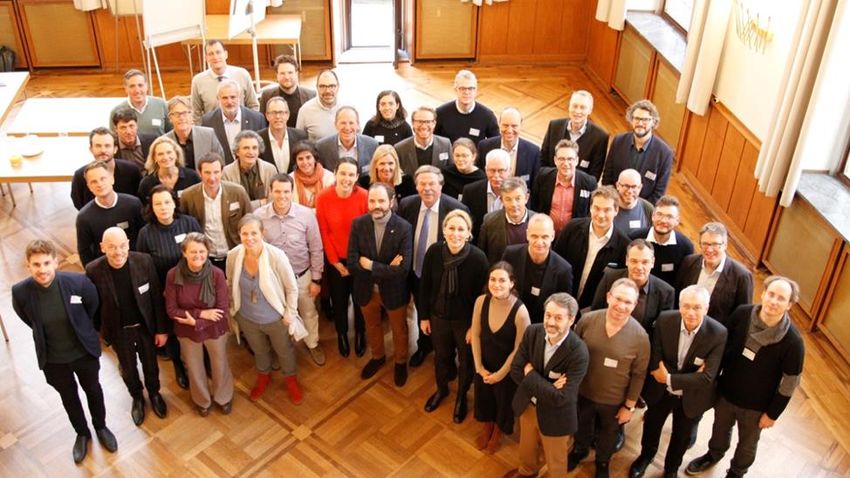
The CPEA Team

Dr. Christine Lemaitre   Bruno Sauer
Chair                    Vice-Chair
CEO DGNB                 CEO GBCe      Frank Hovorka
                                       Treasurer
                                       President REHVA
                                       Chair RICS France

Ursula Hartenberger
Secretary General
CPEA
Our Mission
Our core mission is to collaboratively
accelerate market transformation towards a
climate positive Europe.

We will achieve this, by collaboration,
facilitating cross-sectoral dialogue and
providing sectoral insights and tangible
solutions for the most pressing challenges
faced by the construction and real estate
stakeholder community.

                                             © DGNB
5 | © DGNB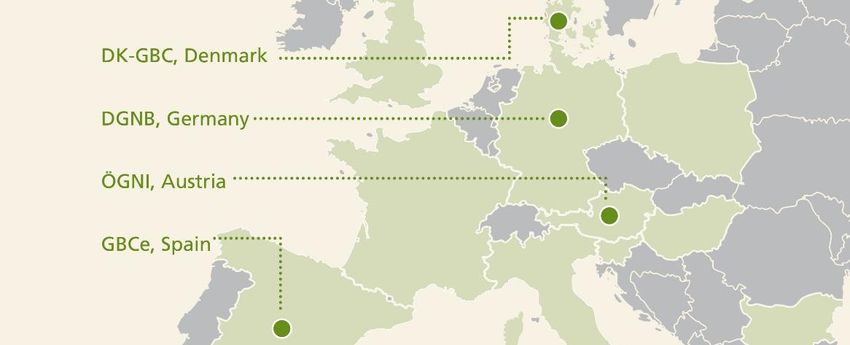
Unique Approach
CPEA works with a collaborative bottom-up,
market-focused capacity building approach.
All of our the activities-and projects are
based on years of extensive, first-hand
experience in the area of the sustainability
certification of individual buildings and
districts.

Based on the common European DGNB
methodology this data-driven and fact
based approach covers the whole range of
life-cycle-assessment, life-cycle costing and
building material requirements and aspects
of indoor air quality and comfort aspects.

                                                © DGNB
6 | © DGNB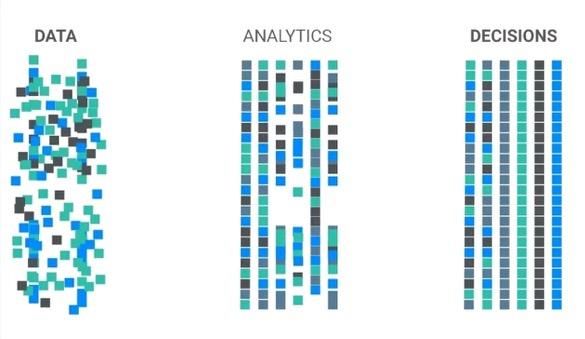
Sustainable Finance
  CPEA Thematic Focus                                                          Building on the findings of the EU Taxonomy
                                                                               Market-Readiness Study and the work of its
                                                                               European ESG Group, CPEA will continue to
                                                           Sustainable         support the work of the EU Commission and
                                                                               the Sustainable Finance Platform in developing
                                                            Finance            technical screening criteria for the remaining four
                                                          (Taxonomy &ESG)      environmental objectives.

Buildings and the SDGs
CPEA will work with EU institutions
and representatives towards
having the SDGs as a focal point
when developing building policy.        Buildings
                                                                              Circular
                                         and the                                               Circular Economy
                                                                             Economy
                                          SDGs                                                 CPEA will increase awareness of these
                                                                                               aspects and associated instruments to
                                                                                               strengthen the understanding and use
                                                                                               of the European building stock as
                                                                                               “urban mine”.

Building Data and Information                            Building Data and
CPEA will support the establishment of
standardised central data repository where                  Information
all relevant life cycle building information is stored
or tagged to.
     7 | © DGNB
Activities Roadmap 2021
March 18 th:
       Virtual official launch event and
               presentation of CPEA ✓✓✓

Q2 / 2021:
        Offer of Taxonomy-Checks for Buildings
        Start of Knowledge Programme

Q2 / 2021:
        Kick-off European ESG Working Group

                                                 © DGNB
  8 | © DGNB
How to get involved
 Type of Involvement   Type of Organisation             Eligibility                       Fees

 Network Partner       European or global               Eligible to participate in CPEA   None
                       organisations sharing the same   Working Groups and
                       values, interested in            Committees
                       collaboration, exchange and
                       learning from each other

 Alliance Supporter    DGNB, GBCe or ÖGNI member        Eligible to participate in CPEA   None
                       companies sharing the same       Working Groups and
                       values, interested in            Committees
                       collaboration, exchange and
                       learning from each other
 Project Partner       Company or organisation who      Eligible to participate in        tbd
                       wants to participate in          dedicated projects
                       marketability studies, pilot
                       phases, etc.
 CPEA Member           Membership model to start in     Full access to all activities     tbd
                       2022

                                                                                                 © DGNB
9 | © DGNB
Thematic Panel discussion
Moderation:
Ursula Hartenberger, Secretary General, CPEA

EU Taxonomy
Dr. Anna Braune, Director Research &
Development, DGNB

European ESG Working Group
Dr. Michael Bauer, Managing Director, Drees &
Sommer
Claudio Tschätsch, Senior Consultant, Drees &
Sommer

Building data capture and management
Frank Hovorka, President, REHVA
                                                © DGNB
 10 | © DGNB
Evaluating the market-readiness of the EU taxonomy criteria for buildings Dr. Anna Braune, DGNB, March 18 th, 2021
Are the proposed
Taxonomy criteria
applicable and is the
market ready for the
criteria?

                        Bild von Arek Socha auf Pixabay
12 |
Study rationale and objectives o Evaluate the market-readiness and applicability of the proposed Taxonomy screening criteria for buildings, based on real case studies o Prepare and build up capacities within financial market participants’ organisations to embed sustainability criteria into internal processes o Learn about effort, costs and advantages of implementing processes targeted at identifying reliable sustainable investments o Derive recommendations for the European Commission 13 |
Participating Companies

14 | © DGNB
The Case Studies

                   New Construction   Renovation   Acquisition and Ownership

                   22                 4            36
15 | © DGNB
Tangible results: Reports & Recommendations I. Evaluation of the market-readiness of proposed ‘EU Taxonomy Screening Criteria’ for buildings (3/2021) II. Recommendations to the European Commission & the Sustainable Finance Platform (12/2020) III. Company specific reports (confidential) with specific “Taxonomy Check“ results and recommendations 16 |
Market-readiness for Taxonomy screening criteria:
Main assessment results
New Construction & Renovation projects had least
difficulty in proving criteria eligibility.
Their non-eligibility was mainly due to unavailable data
for the DNSH criteria.
Acquisition & Ownership projects could prove eligibility
for only one third of the criteria.
The Acquisition & Ownership projects are mostly non-
eligible in the climate change mitigation criteria due to
low performance and missing benchmarks and have data
gaps in DNSH criteria
17 | © DGNBMarket-readiness for Taxonomy screening criteria:
Main assessment results
Out of the 62 buildings, 26 were certified
Certified projects could prove their eligibility
more often
Buildings, which performed better, had data of
higher quality and data that was much better
accessible, hence required less time and effort
18 | © DGNBMarket-readiness for business activity: New Construction
(22 projects)
Half of the buildings could fulfil more than 2/3 of the
criteria, only two buildings were close to be fully eligible
Residential buildings could better prove their eligibility
Smaller buildings could prove overall eligibility, while
bigger buildings more often had insufficient data
Non-certified buildings were more likely to have
insufficient data (especially in regard to DNSH criteria)
Spanish and Austrian projects could prove CCM
criteria, but had difficulty in proving DNSH criteria, while
Danish projects could fulfil most DNSH requirements
• Climate Change Adaptation followed by Pollution
prevention and Circular Economy are the most difficult
DNSH criteria
19 | © DGNBMarket-readiness for business activity: Renovation
(4 projects)
All projects were able to prove their eligibility
to the Climate Change Mitigation criteria
Even more obvious than in new constructions,
Climate Change Adaptation, Circular
Economy and Pollution Prevention were the
most difficult DNSH criteria
20 | © DGNBMarket readiness for business activity: Acquisition & Ownership (36 projects) Only one building was rated fully eligible and only 15% of the buildings could fulfil more than 2/3 of criteria 60 % of the projects were non-eligible to the climate change mitigation criteria: missing primary energy data Buildings built after 2005 were more likely to be eligible On average 66 % of the projects were rated as non- eligible or unrateable due to missing data for DNSH Larger assets had more data blind spots than smaller Certified projects were more likely to prove eligibility Austrian and Danish projects had enough data to assess a project’s eligibility, while projects in Germany had insufficient data for around half of the requirements 21 | © DGNB
Summary & Recommendations

• EC:                                            • EC:                                          • EC:
• Install roadmap for the Taxonomy criteria      • Improve definition of CCM criteria for A&O   • Introduce recognition of certification
  to prepare the market. Roadmap should            (benchmarks) and the applicability of the      schemes
  include higher ambition, climate metrics /       climate change adaptation criteria.
  targets and expanded scope of GHG              • Balance CCM and DNSH criteria properly       • Market:
  emissions.                                       to stimulate the market.                     • Recognize benefits of certifications,
                                                                                                  especially regarding lower effort, higher
• Market:                                        • Market:                                        reliability and holistic, future-proof
• Prepare for higher future climate change       • Build up inhouse capacities, collect &         sustainability performance.
  mitigation ambitions.                            properly store relevant data during
• Invest into transition of existing buildings     acquisition and management processes.
  and use climate action roadmaps.               • Use certification schemes to improve
                                                   performance of your building stock.

„For new buildings and                                                                          „Certified buildings could prove
                                                 „Half of the new buildings but
renovations the climate change                                                                  eligibility more often, performed
                                                 only 15% of the assessed
mitigation criteria is not too                                                                  better, had data of higher quality
                                                 existing buildings could fulfil at
ambitious but DNSH criteria are                                                                 and the data was much better
                                                 least 2/3 of all criteria.“
a burden for many.“                                                                             accessible.”
Are the proposed
Taxonomy Criteria
applicable and is the
market ready for the
criteria?
Partly.
Market should be better
prepared and some of the
criteria need improvement.
Bild von Arek Socha auf Pixabay
23 |Authors and Contact German Sustainable Building Council (DGNB) - www.dgnb.de Dr. Anna Braune, Seema Issar, Raphael Montigel, Dr. Christine Lemaitre Green Building Council España (GBCe) - www.gbce.es Emilio Miguel Mitre, Julia Manzano, Bruno Sauer Danish Green Building Council (DK-GBC) - www.dk-gbc.dk Dr. Thomas Fænø Mondrup, Mette Qvist, Dr. Peter Andreas Sattrup Austrian Sustainable Building Council (ÖGNI) - www.ogni.at Wolfgang Lukaschek, Katharina Saxa, Peter Engert Climate Positive Europe Alliance (CPEA) - www.cpea.eu Ursula Hartenberger 24 | © DGNB
Dr. Anna Braune
              Head of Research & Development at DGNB
              Tel: +49 711 722322-67
              a.braune@dgnb.de

25 | © DGNB
CPEA LAUNCH
ESG-WORKING GROUP
2021-03-18
Prof. Dr.-Ing. Michael Bauer
M.Sc. Claudio TschätschGLOBAL RISKS
ESG FACTORS
= THE MAJOR
GLOBAL RISKS
(E)nvironmental
Impact
(S)ocial
Likelihood
(G)Governance
The Global Risks Report 2021 | World Economic Forum (weforum.org)
27 2021-03-18 - CPEA Launch - ESG Working Group | Prof. Dr.-Ing. Michael Bauer | M.Sc. Claudio TschätschEU STRATEGY
Guidelines/Priorities 2016-2019 (2020)
EU Taxonomy
Classification System
Disclosure requirements
EU Commission Action Plan
EU Green Bond
Rules sustainable finance
EU Green Bond Standard
ESG & EU Benchmarks
Risk assessment
Reporting Benchmarks
2015 2016-2020
28 2021-03-18 - CPEA Launch - ESG Working Group | Prof. Dr.-Ing. Michael Bauer | M.Sc. Claudio TschätschWHAT IS ESG? Urban Mining Biodiversity
Environmental Health Renewable
Energy Life-Cycle
Energy Efficiency Climate Adaptation Climate Risks
Rents
Flexibility CO2 Material Resources Green Building
Health & Wellbeing Cradle to Cradle
Green Finance
Loans Environmental Compliance
Digitalisation Reporting
Green Lease
Social Impact Investment Social Governance
ESG
Topics & Data
Data Fonds / AM Data Projects
DATA
Data Strategy DATA
DATA
External Sources DATA
DATA Generic Data
Internal Sources
Public Data Benchmarks, Databases
29 2021-03-18 - CPEA Launch - ESG Working Group | Prof. Dr.-Ing. Michael Bauer | M.Sc. Claudio TschätschWHAT IS ESG?
Global & EU Green Deal
Funds & Portfolio Corporate Reporting
ESG
Green Buildings - Levels - Consumer Goods & All other
Products
…and many more
30 2021-03-18 - CPEA Launch - ESG Working Group | Prof. Dr.-Ing. Michael Bauer | M.Sc. Claudio TschätschTHERE IS A LACK AND GAP IN
UNDERSTANDING ESG
THERE IS A NEED FOR HARMONISED ESG
STANDARDS (RISK|BENCHMARKING|REPORTING)
AND MORE CONSISTENT DIGITISED DATA-
StockSnap auf Pixabay
GATHERING AT PORTFOLIO - AND ASSET LEVEL
©CPEA ESG WORKING GROUP Challenges, targets and solutions MOTIVATION & RATIONALE DATA Uniform - Benchmarks/KPIS Risk of greenwashing OBJECTIVES Exchange of experience at European level on the subject of ESG Overview and mapping of ESG activities in the real estate sector Understanding national differences in the perception of ESG Translation of ESG criteria and processes for the real estate sector Standardisation of definitions and approaches in Europe Deeper treatment of social and governance issues (as input for Taxonomy) Joint evaluation of existing tools/assessment systems, and, if necessary, development and use of new tools 32 2021-03-18 - CPEA Launch - ESG Working Group | Prof. Dr.-Ing. Michael Bauer | M.Sc. Claudio Tschätsch
CPEA ESG WORKING GROUP
Challenges, targets and solutions
TARGET GROUP:
Financial institutions, Pension Funds, insurers, project developers, building owners/occupiers, PropComs, real estate investors, capital
management companies, data providers plus consultants associated with the industry, trade and industry associations as well as NGOs
PLANNED ACTIVITIES:
Survey regarding understanding of ESG and associated tools
Mapping of indicators within different rating systems
Establishment of a harmonised uniform European ESG standard
Provision of input to the Sustainable Finance Platform and other EU Initiatives
HOW IS IT GOING TO BE DONE…:
Working group under the umbrella of CPEA (Climate Positive Europe Alliance)
4 - 6 meetings per year, at least partly virtual If you are interested in the work of ESG
Working Group, please contact us on
Establishment of sub-working groups (as far as necessary and reasonable)
info@cpea.eu or via the contact form on
Cooperation and partnerships with relevant initiatives the CPEA website: www.cpea.eu
European ESG Congress as annual meeting
33 2021-03-18 - CPEA Launch - ESG Working Group | Prof. Dr.-Ing. Michael Bauer | M.Sc. Claudio TschätschCONTACT Drees & Sommer Drees & Sommer Prof. Dr.-Ing. Michael Bauer M.Sc. Claudio Tschätsch michael.bauer@dreso.com claudio.tschaetsch@dreso.com
Building Data and Information
Frank Hovorka (mrics) - President HVAC European Federation
36

                  REHVA
Federation of European Heating, Ventilation and
         Air Conditioning Associations

         is a professional organisation
                founded in 1963
             representing 120.000+
          building services engineers
               from 26 countries
WITHIN EUROPE 37
EU LEVEL
Networking and collaboration among and
Engagement in and support of EU policy
with REHVA members and supporters
development and harmonised MS
implementation • Membership collaboration
EU level associations and stakeholders • EU projects
• Knowledge exchange, capacity
building
BEYOND EUROPE
Collaboration and dissemination of EU
Advocacy actions & policy HVAC culture at global level
intelligence
(EPBD, SRI, Ecodesign, EN
standards)
• Global collaboration (IEQ-GA)
• Knowledge exchange & transfer
ENHANCING REHVA STRENGHTENING THE
REPUTATION AND VISIBILITY REHVA NETWORK38
Addressing core data challenges
“For a successful roll-out and application of the EU
1. Storage Taxonomy, current efforts by various stakeholders
No centralised storage location
across Europe and beyond to develop and roll out
2. Reporting whole life cycle building data and information
Too many different, non-harmonised reporting obligations repositories should be stepped up and supported
3. Availability by governments and the industry…
Data not or only partially available
Having a central data repository where all
4. Collection relevant life cycle building information could be
No standardised data collection format stored or tagged to in a standardised way,
5. Accessibility would increase market participants’ in-house
Data not accessible capacity for capturing and subsequently managing
data needed for reporting against the EU Taxonomy
6. Quality
Lack of quality proofed data and increase market buy-in, both at single asset as
Source: Global Alliance for Buildings and Construction well as at portfolio level.” Source: Taxonomy Market-Readiness Study39
Step 1:
Building Passport
Capturing, storing and Name:
Address:
Designed indoor
climate class:
Measured user
satisfaction:
and managing the data:
I/II/III %
Year of completion:
Heated floor area: Indoor Environment Quality
The Building Passport
Number of occupants:
2
kgCO /m 2 kWh/m2
Renewable, building, users
Renewable, building, users
- A “one-top-shop” 1500
Renewable, building, users
Renewable, building, users
Renewable, building, users
Renewable, building, users
150
Data repository
Maintenance, repairs, retrofit
Maintenance, refurbishment
Recycling, reuse, demolish
Transport
Energy:
Energy:
Energy:
Work
Energy:
Energy:
Energy:
1000
Maintenance, repairs
Maintenance, repairs
Maintenance, repairs
100
Waste
Maintenance
500 50
Materials
0 0
Design Real
-500 -50
Year: 0 1 2…9 10 11…24 25 26…49 50
Primary Embodied: Operational: Embodied: Recycling: Measured Energy Travel Water
kWh/m2 kgCO2/m2 kgCO2/m2,a kgCO2/m2,a
- kgCO2/m2 kWh/m2 kgCO2/pers,a kgCO2/pers,a m3/pers,a
Energy Display Recycling of Landfill
Performance Designed carbon footprint Annual
Energy waste waste
Certificate of building Certificate Footprint
% kg/pers,a40
Building Passport Designed indoor Measured user
Name: IPMS and IPMVP
climate :
class: satisfaction:
Address: A/B/C %
Measurement definition
Year of completion:
Heated floor area: Indoor Environment Quality
Number of occupants:
kgCO2/m2 kWh/m2
Renewable, building, users
Renewable, building, users
Renewable, building, users
Renewable, building, users
Renewable, building, users
Renewable, building, users
1500 150
Maintenance, repairs, retrofit
Maintenance, refurbishment
Recycling, reuse, demolish
Transport
Energy:
Energy:
Energy:
Work
Energy:
Uncertainty :
Energy:
Dynamic :
Energy:
1000
Maintenance, repairs
Maintenance, repairs
Maintenance, repairs
100
Waste Calculated energy use Check the calculation by real consumption
• Sensitivity to climate Every year
• Sensitivity to uses
Maintenance
500 • Sensitivity to density 50
Materials
• Sensitivity to mobility
0 0
Design Real
-500 -50
Year: 0 1 2…9 10 11…24 25 26…49 50
Primary Embodied: Operational: Embodied: Recycling: Measured Energy Travel Water
kWh/m2 kgCO2/m2 kgCO2/m2,a kgCO2/m2,a
- kgCO2/m2 kWh/m2 kgCO2/pers,a kgCO2/pers,a m3/pers,a
Energy Display Recycling of Landfill
Performance Designed carbon footprint Annual
Energy waste waste
Certificate of building Certificate Footprint
% kg/pers,aStep 2:
Assessing data quality:
Sustainable Data Analytics
Why do we need this?
• Massive investments needed to achieve Paris goal and SDGs
• Risk managers currently don’t use data regarding the sustainability of buildings
• One major reason is that they don’t trust (lack of quality) and understand available
data
Scope, objectives and desired outputs
• In collaboration with risk managers of investors, banks and insurance companies
develop a process to assess the quality of available sustainability data as illustrated
below:Translating information for 42
decision-making
“
Fr om the boiler r oom to the boar d r oom.
regarding building/portfolio
CORPORATE LEVEL
Corporate requirements
Step 3:
Corporate Vision, Investment Strategy “ Hard” corporate
Culture and success factors
Philosophy
performance
Translating data and
“ Soft” corporate
success factors
information into financial “ Second order” external conditions and factors
Point of
decision
decision-making
making
Physical property Performance / Quality Economic “ Hard” economic
characteristics characteristics decision-parameters success factors
Building/Portfolio-induced contribution to
ESG “ Soft” economic
decision-parameters success factors
corporate success
SITE & LOCATION
SINGLE BUILDING/ PORTFOLIOLEVEL
“ First order” external conditions and factors not related to the building itsel f
UNEP FI Property Working Group report · SUSTAINABILITY METRICS · TRANSLATION AND IMPACT ON PROPERTY INVESTMENT AND
MANAGEMENT
13CPEA and Building Data and Information: 43
Work Programme
CPEA will work with sectoral stakeholders, the European Commission and the Global
Alliance for Buildings and Construction (GlobalABC) to support the work on the
Commission’s Digital Building Logbook and the practical application of the forthcoming
GlobalABC Building Passport Guidelines by:
• Participating in pilot development projects
• Setting up a dedicated EU Building Passport Implementation Working GroupYour Contact at CPEA
Ihr Kontakt
bei der DGNB
Let us know if you are
interested in working with us
as a Network Partner, Alliance
Vielen Dank
fürSupporter or Project Partner!
Ihre Aufmerksamkeit Ursula Hartenberger
Secretary General, CPEA AISBL
E-Mail: u.hartenberger@cpea.eu
Visit our website: www.cpea.euYou can also read


