DNA barcoding of Scandinavian birds reveals divergent lineages in trans-Atlantic species
←
→
Page content transcription
If your browser does not render page correctly, please read the page content below
J Ornithol
DOI 10.1007/s10336-009-0490-3

 ORIGINAL ARTICLE

DNA barcoding of Scandinavian birds reveals divergent lineages
in trans-Atlantic species
Arild Johnsen • Eirik Rindal • Per G. P. Ericson • Dario Zuccon               •

Kevin C. R. Kerr • Mark Y. Stoeckle • Jan T. Lifjeld

Received: 25 May 2009 / Revised: 29 October 2009 / Accepted: 21 December 2009
Ó The Author(s) 2010. This article is published with open access at Springerlink.com

Abstract Birds are a taxonomically well-described group                which may reflect incomplete lineage sorting or a single
of animals, yet DNA barcoding, i.e., the molecular char-               gene pool. Four species showed large intra-specific diver-
acterization of species using a standardized genetic marker,           gences within Scandinavia, despite no apparent morpho-
has revealed unexpected patterns of genetic divergences                logical differentiation or indications of reproductive
among North American birds. We performed a compre-                     isolation. These cases may reflect admixture of previously
hensive COI (cytochrome c oxidase subunit I) barcode                   isolated lineages, and may thus warrant more comprehen-
survey of 296 species of Scandinavian birds, and compared              sive phylogeographic analyses. Nineteen (24%) of 78
genetic divergences among 78 trans-Atlantic species whose              trans-Atlantic species exhibited divergent genetic clusters
breeding ranges include both Scandinavia and North                     which correspond with regional subspecies. Three of these
America. Ninety-four percent of the Scandinavian species               trans-Atlantic divergences were paraphyletic. Our study
showed unique barcode clusters; the remaining 6% had                   demonstrates the effectiveness of COI barcodes for iden-
overlapping barcodes with one or more congeneric species,              tifying Scandinavian birds and highlights taxa for taxo-
                                                                       nomic review. The standardized DNA barcoding approach
Communicated by M. Wink.                                               amplified the power of our regional studies by enabling
                                                                       independently obtained datasets to be merged with the
Electronic supplementary material The online version of this           established avian barcode library.
article (doi:10.1007/s10336-009-0490-3) contains supplementary
material, which is available to authorized users.
                                                                       Keywords DNA barcoding  Genetic divergence
A. Johnsen (&)  E. Rindal  J. T. Lifjeld                             Cytochrome c oxidase I  Trans-Atlantic comparison
National Centre for Biosystematics, Natural History Museum,
University of Oslo, P.O. Box 1172 Blindern, 0318 Oslo, Norway
e-mail: arild.johnsen@nhm.uio.no
                                                                       Introduction
P. G. P. Ericson
Department of Vertebrate Zoology, Swedish Museum of Natural            DNA barcoding, the molecular characterization of species
History, P.O. Box 50007, 104 05 Stockholm, Sweden
                                                                       using a standardized DNA region, is a potentially effective
D. Zuccon                                                              tool for identifying species across the eukaryotes of the
Molecular Systematics Laboratory, Swedish Museum of Natural            world (Frezal and Leblois 2008). For animals, a 648-bp
History, P.O. Box 50007, 104 05 Stockholm, Sweden                      fragment of the mitochondrial gene cytochrome c oxidase
                                                                       subunit I (COI) has been chosen as the standard barcoding
K. C. R. Kerr
Department of Integrative Biology, Biodiversity                        marker due to its high interspecific variation, low intraspe-
Institute of Ontario, University of Guelph,                            cific variation, and relatively universal primers for taxo-
Guelph, ON N1G 2W1, Canada                                             nomic groups at the level of orders and even classes (Hebert
                                                                       et al. 2003). This marker features high resolution in many of
M. Y. Stoeckle
Program for the Human Environment,                                     the animal groups studies so far, e.g., Neotropical bats
The Rockefeller University, New York, NY 10065, USA                    (Clare et al. 2007), North American birds (Kerr et al. 2007),

                                                                                                                         123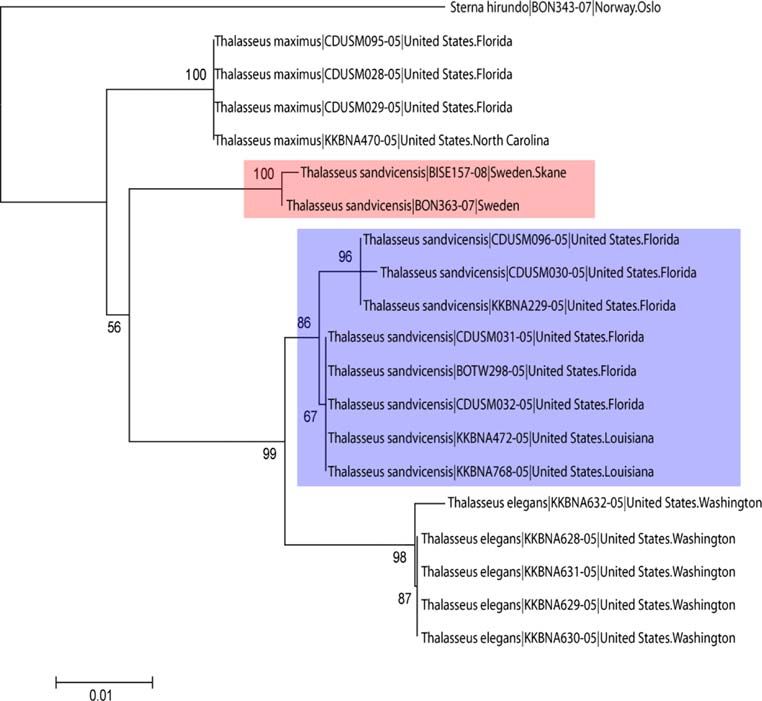
J Ornithol

Australian fishes (Ward et al. 2005), and tropical Lepidop-      closely related species (Moritz and Cicero 2004; Tavares
tera (Hajibabaei et al. 2006; but see Elias et al. 2007). In     and Baker 2008).
other groups, resolution is more moderate, e.g., Diptera            A number of bird species inhabit both the Palearctic and
(Meier et al. 2006) and marine gastropods (Meyer and             the Nearctic region. Typically, such species are divided
Paulay 2005). Species identification through DNA barcod-         into one or more different subspecies on each continent,
ing has many practical utilities such as in conservation         based primarily on morphology (del Hoyo et al. 1992–
biology (Neigel et al. 2007; Ward et al. 2008a), food security   2008). Recent studies of genetic divergence in a few
control (Wong and Hanner 2008), and birdstrike identifi-         Holarctic species have found relatively high levels of
cation (Dove et al. 2008). This approach depends on a good       divergence between Palearctic and Nearctic populations
library of COI sequences being established prior to testing      (e.g., Drovetski et al. 2004; Koopman et al. 2005; Zink
the species identity of an unknown sample or specimen.           et al. 2006). To date, no comprehensive study of the
   In addition to the practical utility of DNA barcoding, the    genetic divergence between populations on each side of the
method provides a means of quickly screening biodiversity        Atlantic Ocean has been performed. Given the presumably
to identify species or species groups with unusual genetic       long history of separation and lack of current gene flow for
structure, e.g., cryptic species or species with shared COI      many species, the potential for deep trans-Atlantic splits
haplotypes. The potential for discovering biologically           should be high.
interesting patterns should be highest among the so-called          The aims of the present study are twofold. First, we
microfauna, but even in more charismatic, well-studied           wanted to test the resolution power of DNA barcoding in
groups like fishes and birds, DNA barcoding has revealed         species discrimination in a data set of 296 Scandinavian
cases of apparent cryptic speciation and indicated the           bird species. Second, we wanted to assess the degrees of
genetic uniformity of species that are classically viewed as     trans-Atlantic sequence divergence for 78 species breeding
two or more separate species (Hebert et al. 2004; Kerr et al.    both in Scandinavia and in North America.
2007; Ward et al. 2005, 2008). DNA barcoding can
therefore have a scientific value beyond species identifi-
cation, since it can provide clues to ongoing speciation         Methods
processes and direct attention to species or species com-
plexes that deserve more detailed morphological and              Sampling
genetic scrutiny.
   Birds are among the best-studied and taxonomically            Blood and tissue samples originated from the tissue
well-described animal groups, which makes them good              collections of the Swedish Museum of Natural History in
models for testing the efficacy of DNA barcoding as a            Stockholm, the Natural History Museum, University of
species identification tool. Two publications have sum-          Oslo, Tromsø University Museum, Agder Museum of
marized DNA barcoding results for the North American             Natural History, Helgeland Museum, Bergen Museum,
bird fauna (Hebert et al. 2004; Kerr et al. 2007). These         Ajtte—Swedish Mountain and Sami Museum, and
studies revealed a high species identification power (94%        Göteborg Natural History Museum. These were subsam-
of species resolved), and pinpointed 15 species with deep        pled and subjected to DNA extraction using Omega blood/
intraspecific genetic splits (termed provisional species)        tissue extraction kits (Omega) or QIAamp DNA Mini Kit
and 17 congeneric species pairs/complexes with little or         (Qiagen). All samples originated from breeding or non-
no differentiation. Two recent studies have focused on the       breeding birds in Scandinavia (Norway, Sweden, and
ability of COI barcoding to distinguish between closely          Denmark) and Svalbard, except five samples collected
related, and potentially hybridizing, sister bird species        from three Holarctic species in Canada, with members of
(Aliabadian et al. 2009; Tavares and Baker 2008). While          the same species collected from widely-spaced geographic
Tavares and Baker (2008) found 100% resolution of COI            localities whenever possible. The full details about these
barcoding in a sample of 60 sister species pairs based on        samples, including information about vouchers and
neighbor-joining tree clustering and diagnostic fixed            e-vouchers, are available at the BOLD website (http://www.
substitutions, Aliabadian et al. (2009) found that a high        barcodinglife.com/), project ‘‘Birds of Scandinavia’’. Details
percentage (42%) of 36 Holarctic allopatric sister species       about the North American samples used in the cross-Atlantic
pairs could not be distinguished based on the suggested          comparison can be found in Kerr et al. (2007), and
threshold genetic distance for bird species at 10 times          sequences are available in BOLD (project: ‘‘Birds of North
the average intraspecific distance (Hebert et al. 2004).         America—Phase II’’).
Delimiting species based on a threshold of sequence                 Species nomenclature follows the taxonomy of
difference is controversial (Meyer and Paulay 2005;              Clements (2007), which is also used by the ‘‘All Birds
Moritz and Cicero 2004) and may not be applicable to             Barcoding Initiative’’ (http://www.barcodingbirds.org/).

123
J Ornithol

DNA sequencing                                                  few cases of large intra-specific variation in COI sequences
                                                                (see ‘‘Results’’), we checked the mitochondrial origin of
DNA extraction, PCR amplification, and DNA sequencing           our sequences by amplifying a much longer sequence of
of the COI gene was performed at the Swedish Museum of          the mitochondrial genome and thereby reducing the risk
Natural History in Stockholm and the Natural History            of co-amplifying any pseudogene. We used the primers
Museum in Oslo. In the two laboratories, several combi-         L6615 and H10884 (Sorenson et al. 1999), which amplify
nations of primers were utilized: standard primers Bird         an approximately 4,000-bp mitochondrial fragment in
F1 (TTCTCCAACCACAAAGACATTGGCAC), Bird R1                        birds, together with the GeneAmpÓ XL PCR kit (Applied
(ACGTGGGAGATAATTCCAAATCCTG), Bird R2 (ACT                       Biosystems), following the instructions of the manufac-
ACATGTGAGATGATTCCGAATCCAG), and COIbirdR2                       turer. We then performed a second PCR on the product of
(ACGTGGGAGATAATTCCAAATCCTGG), plus newly                        this long PCR, using primers COI-ExtF and Bird R2, and
designed CO1-ExtF (ACGCTTTAACACTCAGCCATCT                       checked whether the resulting sequences were identical to
TACC) and CO1-ExtR (AACCAGCATATGAGGGTTCG                        those originally obtained.
ATTCCT). The number of different primer pairs used in
this study reflects the fact that the work was carried out in   Dataset
two different laboratories which happened to choose
different published primer sets, plus both experienced          The original Scandinavian dataset consisted of 996 speci-
problems with sequencing some specimens, which                  mens from 302 species. However, we failed to obtain
prompted one of us (D.Z.) to design a new set of primers        sequences from 27 specimens of 24 species. In addition, we
located outside the standard region (CO1-ExtF and               excluded all sequences with [1% ambiguous nucleotides
CO1-ExtR). These were used either in an initial PCR             from the analyses (n = 10). The sequences from one
before a second PCR with standard primers, or as both PCR       specimen of Glaucidium passerinum and one specimen of
and sequencing primers. The reasons for our problems with       Motacilla flava were excluded because they contained stop
obtaining COI sequences from a number of individuals are        codons, suggesting that they were pseudogene sequences.
unknown, but may partly be due to primer mismatches for         The original sequences from 2 specimens of Bucephala
the standard COI primers in several taxa. A recent paper        clangula proved to be very different from sequences of 9
described similar problems with the standard primers            other specimens from the same species and 18 specimens
and recommended newly designed primers for passerines           from two other congeners (Bucephala albeola and
(Lohman et al. 2008).                                           B. islandica) in the BOLD database. These samples were
   During the course of the analyses, we used three dif-        repeatedly amplified and sequenced with different combi-
ferent DNA polymerases, DyNAzyme II (Finnzymes),                nations of the aforementioned COI primers, with similar
AmpliTaq Gold (Applied Biosystems), and Platinum taq            results. However, using the XL-PCR procedure, we were
(Invitrogen). The standard thermal profile used in Oslo         able to recover mitochondrial COI sequences from both
was: 94°C for 1 min (6 min for AmpliTaq Gold), 5 cycles         specimens that grouped with the other sequences from the
of 94°C for 1 min, 45°C for 1.5 min, 72°C for 1.5 min,          same species. This suggests that the original sequences
followed by 30 cycles of 94°C for 1 min, 51°C for 1.5 min,      came from a nuclear pseudogene, despite containing no
72°C for 1.5 min, and a final extension at 72°C for 5 min.      stop codons or frame-shift mutations (Song et al. 2008).
The standard thermal profile used in Stockholm was:                High quality sequences were thus obtained from 957
(1) initial PCR, using CO1-ExtF and CO1-ExtR: 95°C for          (96%) specimens, representing 296 species. The average
5 min, 2 cycles of 95°C for 30 s, 66°C for 30 s, 72°C for       number of specimens per species was 3.2 (range 1–10),
50 s, 2 cycles of 95°C for 30 s, 64°C for 30 s, 72°C            with 256 species consisting of two or more specimens. The
for 50 s, 16 cycles of 95°C for 30 s, 62°C for 30 s, 72°C       sample included 97% of the 250 species breeding in
for 50 s, and a final extension at 72°C for 8 min; and (2)      Sweden and 98% of the 258 species breeding in Norway
second PCR, using internal primers: 95°C for 5 min,             and Svalbard.
4 cycles of 95°C for 30 s, 64°C for 30 s, 72°C for 10 s,
4 cycles of 95°C for 30 s, 62°C for 30 s, 72°C for              Statistical procedures
10 s, 22 cycles of 95°C for 30 s, 60°C for 30 s, 72°C for
10 s, and a final extension at 72°C for 8 min.                  We used the analytical tools at the BOLD website (http://
   Pseudogenes (numts), i.e., mtDNA fragments incorpo-          www.barcodinglife.com/) to calculate nearest neighbor
rated in the nuclear genome (Bensasson et al. 2001;             distances and other summary statistics (Ratnasingham and
Sorenson and Quinn 1998), may represent a source of error       Hebert 2007). Neighbor-joining (NJ) trees were con-
since PCR-based analyses will often amplify both the            structed based on the Kimura 2 parameter model. Bootstrap
authentic mitochondrial sequence and the pseudogene. In a       values were calculated in Mega using 1,000 iterations.

                                                                                                                  123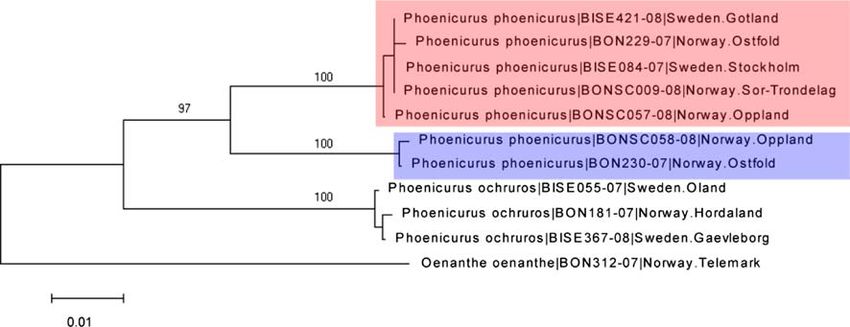
J Ornithol

For a subsample containing 97.7% of the specimens in the                (93.6%) had unique DNA barcodes with no overlap with
NJ tree, a Bayesian Markov chain Monte Carlo (MCMC)                     other species and nearest neighbor distances ranging within
analysis was performed using MrBayes version 3.1.2                      the interval 0.94–17.05% (average 8.0%) (see complete
(Huelsenbeck and Ronquist 2001) as implemented at the                   NJ-tree in electronic supplementary material). Bootstrap
Bioportal at the University of Oslo (http://www.bioportal.              support for these monophyletic clusters averaged 99.84
uio.no/). The analysis was run with 4 chains for 20 million             (range 88–100). The Bayesian phylogenetic analysis gave
generations, using 9 million generations as burnin, taking              virtually identical results (data not shown). Of these 277
samples every 1,000 generations. The substitution model                 species, 12 species had a distance to a sister species that
was determined using Mr Modeltest Version 3.7 (Posada                   fell below the threshold suggested by Hebert et al. (2004),
and Crandall 1998) based on the Akaike Information                      which amounted to 2.4% in our study (average nearest
Criterion (AIC). The preferred model was the general time               neighbour distance for the 12 species 1.42%, range 0.94–
reversible model (GTR; four nucleotide frequency state                  1.74%). Nevertheless, these 12 species had between 6 and
parameters; six substitution rate parameters) with a                    13 diagnostic base substitutions compared to their nearest
proportion of invariable sites (I) and a gamma distribution             neighbors. Three species pairs (Cygnus columbianus and
for (G).                                                                C. cygnus, Gavia adamsii and G. immer, and Stercorarius
                                                                        pomarinus and S. skua) displayed high degrees of sequence
                                                                        similarity (99.38, 99.22, and 99.70%, respectively); how-
Results                                                                 ever, this observation should be treated with caution since
                                                                        one species in each of these pairs was only represented by
DNA barcodes of Scandinavian birds                                      one individual (see ‘‘Discussion’’). Thirteen species (4.4%)
                                                                        in five clusters had overlapping barcodes with one or more
Average intraspecific distance was 0.24% (range 0–                      closely related species (Table 1), with sequence similarity
5.08%), while the average nearest neighbour distance was                ranging from 99.86 to 100%.
7.95% (range 0–17.05%) (Fig. 1). A total of 277 species                    Four species showed relatively high ([2%) intraspecific
                                                                        sequence variation (Table 2). This is illustrated for
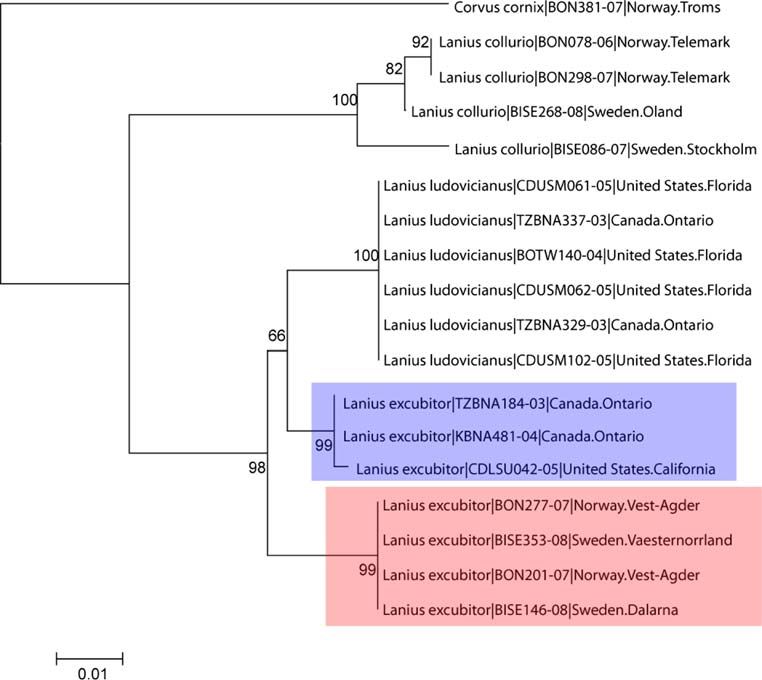
                                                                        Phoenicurus phoenicurus in Fig. 2 and for Lanius collurio
                                                                        in Fig. 3. For the two species with the highest intraspecific
                                                                        divergence (Phoenicurus phoenicurus and Periparus ater),
                                                                        we used the XL-PCR procedure and found support for a
                                                                        mitochondrial origin of the divergent haplotypes.

                                                                        Scandinavian versus North American species

                                                                        The sample contained 78 species breeding both in Scan-
                                                                        dinavia and North America. The average intraspecific
                                                                        between-continent distance was 0.85% (range 0–4.86%)
                                                                        for these species (Table 3). Nineteen species (24%)
                                                                        showed divergent genetic clusters in the two regions, with
                                                                        an average between-continent distance of 2.53% (range
                                                                        0.45–4.86%). For another three species (Lagopus lagopus,
                                                                        Fulmarus glacialis, Corvus corax), the Scandinavian birds
                                                                        clustered with some North American specimens in a clade
                                                                        that was clearly separable from a second North American
                                                                        clade. The remaining 56 species (72%) showed little or no
                                                                        divergence related to continent, with an average between-
                                                                        continent distance of 0.25% (Table 3). Sixteen (84%) of
                                                                        the species with trans-Atlantic splits were terrestrial or
                                                                        inland breeders, whereas more marine or aquatic species
                                                                        were represented among the 59 species with no distinct
                                                                        trans-Atlantic clustering (Table 3).
                                                                           Three of the trans-Atlantic species were paraphyletic,
Fig. 1 Histograms showing the distribution of a average intraspecific
distances and b the average nearest neighbor distance across 296        that is, one cluster was more similar to a sister species than
Scandinavian bird species                                               to the other intraspecific cluster. COI barcodes of North

123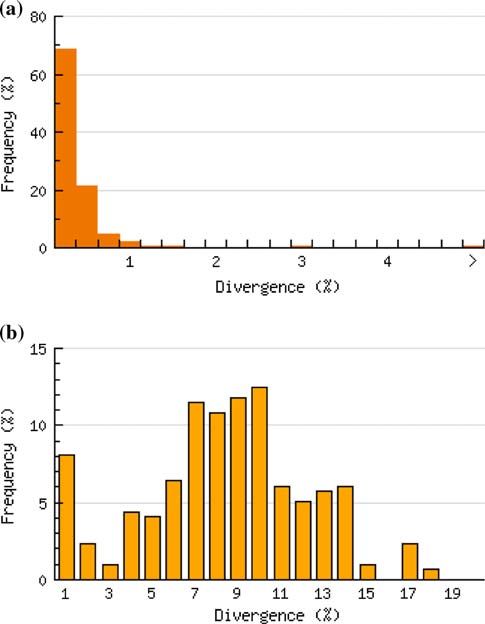
J Ornithol

Table 1 Scandinavian species with overlapping barcode clusters
Cluster         Order                     Common name                          Scientific name              n          Similarity (%)

1               Anseriformes              Pink-footed Goose                    Anser brachyrhynchus         1           99.84
                                          Lesser white-fronted Goose           Anser erythropus             1
                                          Bean Goose                           Anser fabalis                2
2               Anseriformes              Common Eider                         Somateria mollissima         4          100
                                          King Eider                           Somateria spectabilis        1
3               Charadriiformes           Herring Gull                         Larus argentatus             2           99.86
                                          Lesser black-backed Gull             Larus fuscus                 4
                                          Glaucous Gull                        Larus hyperboreus            2
                                          Greater black-backed Gull            Larus marinus                4
4               Passeriformes             Common Redpoll                       Carduelis flammea            6          100
                                          Hoary Redpoll                        Carduelis hornemanni         5
5               Passeriformes             Common Crossbill                     Loxia curvirostra            6          100
                                          Parrot Crossbill                     Loxia pytyopsittacus         6

Table 2 Scandinavian species with large ([2%) within-species           and North America revealed 19 species with well-defined
variation
                                                                       haplotype groups confined to each continent, some of
Common name        Scientific name           Max. intraspecific n      which had an inter-continental degree of divergence com-
                                             distance (%)              monly seen at the between-species level. Our results thus
Common Cuckoo      Cuculus canorus           2.87                4     contribute to the growing library of DNA barcodes of bird
Red-backed Shrike Lanius collurio            2.76                4     species of the world, and flag particular species and species
Coal Tit           Periparus ater            4.47                5     groups in need of taxonomic reassessments.
Common Redstart    Phoenicurus phoenicurus 5.08                  7        The high resolution of COI in species identification
                                                                       among Scandinavian birds (94%) is similar to that found in
                                                                       other studies of COI performance in well-known vertebrate
American Northern Shrikes Lanius excubitor were more                   groups, e.g., North American birds (94%; Kerr et al. 2007),
closely related to the North American Loggerhead Shrike                Australian fishes (100%; Ward et al. 2005) and Neotropical
(Lanius ludovicianus) than to the Scandinavian Northern                bats (93%; Clare et al. 2007), and contrasts with lower
Shrikes (Fig. 3). Similarly, North American Sandwich                   identification rates of COI in some invertebrate groups
Terns Thalasseus sandvicensis appeared more closely                    (e.g., Elias et al. 2007; Meier et al. 2006; Meyer and Paulay
related to North American Elegant Terns (Thalasseus                    2005). Obviously, the success of DNA barcoding as a
elegans) than to their Scandinavian counterparts (Fig. 4).             species identification tool can only be evaluated in groups
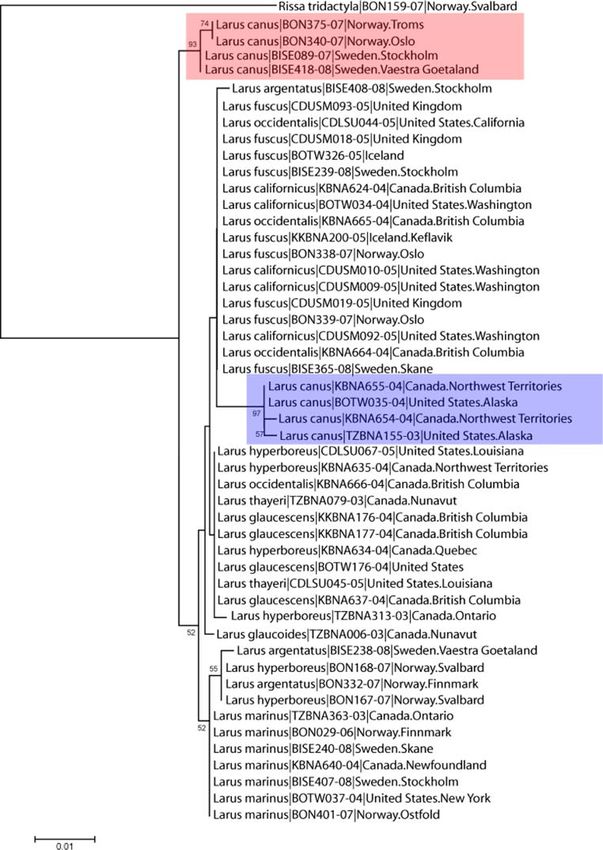
North American Mew Gulls Larus canus grouped together                  for which robust species taxonomy exists already. This is
within the shallow multispecies cluster of white-headed                definitely the case for vertebrates, but less so for many
Larus gulls, while Scandinavian L. canus clustered outside             invertebrate groups. In any case, resolution of more than
the entire group with relatively good bootstrap support                90% of all species is quite an impressive performance by a
(Fig. 5). A mitochondrial origin of the Scandinavian                   single genetic marker, and provides a cost-effective tool for
sequences was supported by XL-PCR for Lanius excubitor                 screening of biodiversity (Hebert and Gregory 2005;
and Larus canus, but not tested in Thalasseus sandvicensis             Stoeckle and Hebert 2008). Resolution was higher when
due to technical problems.                                             using uniqueness of NJ-clusters (i.e., monophyly) as a
                                                                       species delimitation criterion (94%) rather than the
                                                                       threshold genetic distance (89%) proposed by Hebert et al.
Discussion                                                             (2004). This is consistent with the results of two recent
                                                                       papers on DNA barcoding in closely related bird species
Cytochrome c oxidase subunit I barcodes gave high species              (Aliabadian et al. 2009; Tavares and Baker 2008).
resolution of Scandinavian birds, with 94% of currently                   We found five species pairs or groups that could not be
recognized species displaying unique barcodes. Five                    distinguished by DNA barcoding. In all five cases, the
genetic clusters consisted of two or more congeneric spe-              species or species groups in question were closely related
cies that could not be separated using the COI gene. The               congeners. There are two mutually non-exclusive hypoth-
comparison of bird species breeding both in Scandinavia                eses to explain a lack of COI haplotype divergence

                                                                                                                         123
J Ornithol Fig. 2 Neighbor-joining tree (based on the Kimura 2 parameter) are highlighted with colors/shading. For each individual, the scientific illustrating intraspecific distances in two congeneric passerine name is followed by the BOLD process ID number and the sampling species, Phoenicurus phoenicurus and P. ochruros, with Oenanthe locality oenanthe as outgroup. The two divergent P. phoenicurus haplotypes Fig. 3 Neighbor-joining tree (based on the Kimura 2 parameter) for three Lanius species, with Corvus cornix as outgroup. The tree illustrates the paraphyletic relationship between Lanius excubitor from North America (upper/blue box) and Scandinavia (lower/red box). For each individual, the scientific name is followed by the BOLD process ID number and the sampling locality between closely related, but good species. First, the species biased with respect to sex and species, one would expect to may have diverged relatively recently, with insufficient find two haplotype clusters, both consisting of a mix of time for lineage sorting of their mtDNA haplotypes. both species. However, there could also be a directional Second, hybridization may be prevalent, resulting in bias in mtDNA transfer, which has been suggested for introgression of the whole mitochondrial genome from one Stercoraria skua and S. pomarinus (Andersson 1999). species to the other. Assuming that hybrid pairs are not All five groups of species with overlapping barcodes in this 123
J Ornithol

Table 3 Summary statistics for 78 species breeding both in Scandinavia and North America
Scientific name          Between Intercontinental Bootstrap Breeding Breeding              n      Number of Subspecies
                         continents clusters?     support   habitat  distribution          (S/NA) diagnostic (S/NA)
                         K2P                                                                      positionsc

Falco rusticolus         0.00       No               98        I          Continuous       4/2
Gavia stellata           0.00       No               99        I          Continuous       4/2
Larus marinus            0.00       No               Not mp    M          Discontinuous 4/3
Phalaropus fulicarius    0.00       No               99        I          Continuous    3/2
Podiceps auritus         0.00       No               99        I          Continuous       4/1
Somateria spectabilis    0.00       No               97b       M          Continuous       1/2
Stercorarius pomarinus   0.00       No               99        M          Continuous       1/5
Streptopelia decaocto    0.00       No               99        I          Introduced       2/2
Branta bernicla          0.02       No               98        M          Continuous       1/9
Phalaropus lobatus       0.02       No               99        I          Continuous       3/7
Aquila chrysaetos        0.04       No               99        I          Discontinuous 4/2
Asio flammeus            0.04       No               99        I          Continuous       4/5
Cygnus olor              0.04       No               99        I/M        Introduced       4/2
Melanitta fusca          0.04       No               99        I/M        Discontinuous 2/5
Morus bassanus           0.04       No               99        M          Discontinuous 4/4
Passer montanus          0.04       No               99        I          Introduced       4/2
Somateria mollissima     0.05       No               97b       M          Continuous       4/10
Anas acuta               0.06       No               99        I          Continuous       3/7
Branta canadensis        0.06       No               46        I/M        Introduced       4/122
Columba livia            0.06       No               99        I          Discontinuous 3/2
Aythya marila            0.07       No               99        I/M        Continuous       3/10
Clangula hyemalis        0.07       No               99        I/M        Continuous       3/9
Branta leucopsis         0.09       No               97        M          Discontinuous 4/1
Cepphus grylle           0.09       No               98        M          Continuous       5/2
Riparia riparia          0.09       No               99        I          Discontinuous 4/2
Carduelis flammea        0.11       No               90        I          Continuous       6/2
Hydroprogne caspia       0.12       No               99        M          Discontinuous 3/3
Mergus serrator          0.13       No               98        I/M        Continuous       4/6
Passer domesticus        0.13       No               99        I          Introduced       4/4
Alca torda               0.14       No               99        M          Discontinuous 4/6
Anas strepera            0.14       No               88        I          Discontinuous 2/6
Arenaria interpres       0.16       No               99        I/M        Continuous       4/3
Falco peregrinus         0.16       No               46        I          Continuous       4/3
Stercorarius longicaudus 0.17       No               99        M          Continuous       2/4
Bubo scandiacus          0.21       No               99        I          Continuous       4/4
Anas clypeata            0.22       No               99        I          Continuous       3/7
Alle alle                0.23       No               99        M          Discontinuous 4/3
Oceanodroma leucorhoa 0.23          No               99        M          Discontinuous 2/3
Fratercula arctica       0.25       No               99        M          Discontinuous 4/5
Calidris alba            0.26       No               99        I/M        Discontinuous 2/3
Sterna hirundo           0.26       No               99        I/M        Discontinuous 4/2
Bucephala clangula       0.30       No               96        I          Continuous       1/6
Rissa tridactyla         0.32       No               99        M          Discontinuous 2/7
Oenanthe oenanthe        0.34       No               99        I          Continuous       6/1
Buteo lagopus            0.39       No               99        I          Continuous       4/2
Anas platyrhynchos       0.46       No               95        I/M        Continuous       4/8

                                                                                                                         123
J Ornithol
Table 3 continued
Scientific name Between Intercontinental Bootstrap Breeding Breeding n Number of Subspecies
continents clusters? support habitat distribution (S/NA) diagnostic (S/NA)
K2P positionsc
Sturnus vulgaris 0.55 No 99 I Introduced 4/7
Uria lomvia 0.58 No 70 M Continuous 3/3
Podiceps grisegena 0.63 No 99 I Discontinuous 2/3
Uria aalge 0.65 No 89 M Discontinuous 4/2
Calcarius lapponicus 0.70 No 99 I Continuous 4/3
Mergus merganser 0.73 No 99 I/M Discontinuous 3/9
Lagopus muta 1.04 No 98 I Continuous 3/18
Calidris alpina 1.10 No 99 I/M Continuous 4/3
Loxia curvirostra 1.15 No 82 I Discontinuous 6/3
Loxia leucoptera 1.29 No 98 I Continuous 2/2
Lagopus lagopus 1.03 Noa 95/94 I Continuous 4/5 lagopus (variegata)/
six NA
Fulmarus glacialis 1.18 Noa 99 M Discontinuous 4/3 glacialis/rodgersii
Corvus corax 1.89 Noa 95/98 I Continuous 4/5 corax/principalis,
sinuatus
Melanitta nigra 0.45 Yes 60/63 I Discontinuous 3/7 1 nigra/americana
Eremophila alpestris 0.52 Yes 67/66 I Discontinuous 2/2 2 Numerous
Polysticta stelleri 1.12 Yes –/69 M Continuous 1/2 5 None
Asio otus 1.13 Yes 85/85 I Discontinuous 4/4 6 otus/tuftsi (wilsonianus)
Circus cyaneus 1.36 Yes 66/86 I Discontinuous 4/4 7 cyaneus/hudsonius
Hirundo rustica 1.68 Yes 93/93 I Discontinuous 4/5 9 rustica/erythrogaster
Larus canus 1.91 Yes 64/86 M Continuous 4/4 9 canus/brachyrhynchus
Falco columbarius 2.28 Yes 94/94 I Continuous 4/4 13 aesalon/three NA
Pandion haliaetus 2.28 Yes 87/93 I Discontinuous 5/5 12 haliaetus/carolinensis
Lanius excubitor 2.51 Yes 89/89 I Discontinuous 4/3 21 excubitor/borealis,
invictus
Accipiter gentilis 2.60 Yes 87/88 I Discontinuous 4/7 14 gentilis/atricapillus
Gallinula chloropus 3.24 Yes 97/99 I Discontinuous 3/5 18 chloropus/cachinnans
Strix nebulosa 3.31 Yes 93/95 I Discontinuous 4/4 19 lapponica/nebulosa
Numenius phaeopus 3.62 Yes 99/– I Discontinuous 2/1 18 phaeopus/hudsonicus
Aegolius funereus 3.69 Yes 72/99 I Discontinuous 4/2 19 funereus/richardsoni
Tyto alba 3.73 Yes 99/99 I Discontinuous 2/3 31 alba (guttata)/
pratincola
Thalasseus sandvicensis 3.95 Yes 99/99 M Discontinuous 2/8 20 sandvicensis/
acuflavidus
Pinicola enucleator 3.96 Yes 99/98 I Continuous 3/2 22 eunucleator/seven NA
Troglodytes troglodytes 4.86 Yes 99/95/73 I Continuous 4/7 14 troglodytes/numerous NA
Not mp Not monophyletic, I inland breeder, M marine breeder, S Scandinavia, NA North America
a
Scandinavian birds cluster in one of two North American groups
b
Overlapping barcode clusters
c
Number of diagnostic base substitutions between the Scandinavian and the North American group(s)
study are known to hybridize occasionally today (McCarthy explain the overlapping barcodes in most cases. Three of
2006). However, the specimens included in this study were the five species groups were also identified as having
selected for showing clear species identity based on mor- overlapping barcodes in the previous study of North
phology, hence current hybridization seems unlikely to American birds (Somateria mollissima/spectabilis, Larus
123J Ornithol
Fig. 4 Neighbor-joining tree
(based on the Kimura 2
parameter) for three Thalasseus
species, with Sterna hirundo as
outgroup. The tree illustrates the
paraphyletic relationship
between Thalasseus
sandvicensis from North
America (lower/blue box) and
Scandinavia (upper/red box).
For each individual, the
scientific name is followed by
the BOLD process ID number
and the sampling locality
spp., and Carduelis flammea/hornemanni; Kerr et al. 2007). Three species pairs (Cygnus columbianus and C. cygnus,
In the Larus case, our study adds L. marinus to the group of Gavia adamsii and G. immer, and Stercorarius pomarinus
large white-headed gulls with overlapping barcodes. For and S. skua) showed non-overlapping, but very similar,
the Somateria eiders and Larus gulls there is generally little barcodes. In each of these species pairs, one species was
doubt that the taxa in question behave as good biological represented by a single specimen, which precludes any
species with distinct gene pools being reproductively iso- conclusion about consistent differences based on the
lated, even in sympatry. For the Carduelis flammea/ Scandinavian samples alone. However, when pooling these
hornemanni complex, the taxonomy has long been debated specimens with the published North American ones (Kerr
(Knox 1988; Marthinsen et al. 2008; Molau 1985). A et al. 2007), well-defined monophyletic groups were
recent study of mtDNA (control region) and nuclear observed in all six species, albeit with a very low degree of
(microsatellite) markers revealed no genetic differentiation differentiation (data not shown). These and several of the
within this species complex (Marthinsen et al. 2008). The species with overlapping barcodes may be young species,
possibility of one common gene pool, displaying distinct in which morphological divergences have established fas-
clinal morphological variation, cannot yet be ruled out ter than neutral genetic divergences (Peters et al. 2005).
(Marthinsen et al. 2008). The two crossbills, Loxia curvi- In contrast to interspecifically similar or overlapping
rostra and L. pytyopsittacus, were found to be morpho- barcodes, we also identified some Scandinavian species
logically distinct and to mate assortatively with respect to with large intraspecific sequence divergence, typically
bill morphology, but they were not genetically distinct in represented by two distinct haplotype lineages (Table 2).
either mtDNA or microsatellites (Summers et al. 2007). The magnitude of intraspecific divergence in COI exceeds
The Loxia species complex may be an example of recent typical species-level differences, particularly in Periparus
ecological speciation caused by adaptation of beak size to ater and Phoenicurus phoenicurus, yet there is no indica-
different seed types (Benkman 2003; Smith and Benkman tion that this large sequence variation represents cryptic
2007). species. There is no known morphological differentiation
123J Ornithol Fig. 5 Neighbor-joining tree (based on the Kimura 2 parameter) for ten Larus species, with Rissa tridactyla as outgroup. The tree illustrates the paraphyletic relationship between Larus canus from North America (lower/blue box) and Scandinavia (upper/red box). For each individual, the scientific name is followed by the BOLD process ID number and the sampling locality between these haplotype groups, and in the species with procedure supported a mitochondrial origin of the diver- largest intraspecific distance, Phoenicurus phoenicurus, we gent haplotypes in these species. In addition, we amplified have direct evidence for interbreeding of the haplotypes. another mtDNA marker, the 16S gene, for some specimens Either these large intraspecific divergences are real and to see if they segregated similarly as for COI. This con- demand an evolutionary explanation, or they are analytical firmed the segregation pattern for Periparus ater and artifacts due to amplification of nuclear pseudogenes (Song Phoenicurus phoenicurus (A. Johnsen and J.T. Lifjeld, et al. 2008). To test the latter alternative, we amplified a unpublished data). Furthermore, for all four species in long fragment ([4,000 bp) using conserved mitochondrial Table 2, we have unpublished barcode results of specimens markers (Sorenson et al. 1999), and used this as the basis from other parts of the Palearctic, which adhere to the same for a second PCR with internal COI primers. This XL-PCR pattern of two or more separate lineages within the species 123
J Ornithol

range (K.C.R. Kerr et al., unpublished data; A. Johnsen and      sampling confirms these patterns of monophyly, it is a
J.T. Lifjeld, unpublished data). Hence, the most parsimo-        highly relevant issue for avian taxonomic authorities
nious explanation for these divergences is that the current      whether these subspecies should be lifted to the species
populations consist of a mixture of separate lineages that       rank. As argued by Zink (2004), a high proportion of current
once evolved in allopatry but at some point in time merged       avian subspecies are not monophyletic units and should
and have since survived as two separate clusters in symp-        therefore not be assigned a taxonomic name or rank. An
atry. Only sequencing of more specimens from a wider             implication of this view, following a phylogenetic species
geographical coverage of their ranges can elucidate the          concept, is that monophyletic groups should be assigned the
phylogeographical history of these lineages.                     rank of species. We would not make specific recommenda-
   Our comparison of sequence divergence among 78                tions for taxonomy here, since our analyses in most cases
Holarctic species occurring both in Scandinavia and North        reflect a restricted and geographically limited sampling within
America revealed 19 species with well-defined barcode            the species’ ranges. However, we would like to comment
clusters for each continent, with another three species          more specifically on the three particular cases of trans-
(Lagopus lagopus, Fulmarus glacialis, Corvus corax) in           Atlantic splits that revealed evidence of paraphyletic groups.
which Scandinavian birds clustered with one of two North            First, North American Lanius excubitor (probably
American groups. For one of the latter species, Corvus           belonging to the subspecies borealis and invictus) formed
corax, a similar pattern was found using the mitochondrial       a sister clade to L. ludovicianus, whereas European
control region (Omland et al. 2006). The remaining 56            L. excubitor (subspecies excubitor) clustered outside this
species had low intraspecific divergence and no consistent       North American clade (Fig. 3). This pattern is supported by
intercontinental groupings. Six of these species have been       Gonzalez et al. (2008) and Klassert et al. (2008), who both
introduced from Europe to North America (Streptopelia            analyzed the Lanius excubitor/meridionalis complex with
decaocto, Cygnus olor, Passer domesticus, Sturnus vulga-         the cytochrome b gene, and found L. e. excubitor on the
ris, and Columba livia) or vice versa (Branta canadensis),       European side and L. e.invictus on the North American side
hence their lack of genetic divergence is not surprising.        to be paraphyletic. L. excubitor is widely distributed in the
More than half (60%) the naturally occurring species with        northern Holarctic, but does not occur in northeastern
no divergence between the continents have a more or less         Siberia, making the geographic distance between Palearctic
continuous distribution from western Europe to eastern           and Nearctic birds very long. Gene flow between these
Siberia which continues on the other side of the Bering strait   populations should therefore be negligible, and the rela-
into Alaska and further into North America, while 70% of         tively large sequence divergence (2.5%) between them
the remaining species with discontinuous distribution are        suggests that they have been separated for a long time.
marine breeders (see Table 3). In contrast, 14 of the 19         A mitochondrial origin of the Scandinavian sequences was
divergent species (74%) show a discontinuous distribution        supported by XL-PCR, hence the patterns found are unli-
with little geographic connection between populations on         kely to result from amplification of pseudogenes. Second,
the two continents, and the majority (84%) are inland-           North American Thalasseus sandvicensis (subspecies
breeding birds. The likelihood of gene flow between the          acuflavidus), clustered together with another North Amer-
continents therefore seems very low for many of these            ican Thalasseus species, T. elegans, while the European
species. Previous studies, using other genetic markers, have     T. sandvicensis (subspecies sandvicensis) formed a group
found strong intercontinental genetic divergence in 11 of        outside this clade (Fig. 4). T. sandvicensis breeds on each
the 19 divergent species identified in the present study:        side of the Atlantic Ocean and shows a 3.9% sequence
Aegolius funereus (Koopman et al. 2005), Circus cyaneus          divergence between the continents. This combination of
(Wink and Sauer-Gürth 2004), Falco columbarius (Wink            large sequence difference, geographic separation, and
and Sauer-Gürth 2004), Hirundo rustica (Zink et al. 2006),      paraphyly suggests that these populations should be con-
Lanius excubitor (Gonzalez et al. 2008; Klassert et al.          sidered separate species (i.e., acuflavidis be given species
2008), Larus canus (Zink et al. 1995), Numenius phaeopus         rank), supporting the conclusions of a recent paper docu-
(Zink et al. 1995), Pandion haliaetus (Wink et al. 2004),        menting similar divergences in both mitochondrial and
Thalasseus sandvicensis (Efe et al. 2009), Troglodytes           nuclear markers between Spanish and American Thalas-
troglodytes (Drovetski et al. 2004), and Tyto alba (Wink         seus sandvicensis (Efe et al. 2009). Third, Scandinavian
et al. 2008). For almost all the divergent species, different    Larus canus (subspecies canus) formed a clade outside the
subspecies have been described on each continent                 large clade of white-headed Larus gulls to which North
(Clements 2007), and in many cases the divergence matches        American L. canus (subspecies brachyrhynchus) belong
current subspecific taxonomy. It is an important but unre-       (Fig. 5). A mitochondrial origin of the Scandinavian Larus
solved issue in avian taxonomy what merits subspecific or        canus sequences was supported by XL-PCR. Larus canus
specific taxonomic status in each case. If more extensive        has a more or less continuous circumpolar distribution, but

                                                                                                                     123
J Ornithol
the Bering Strait may act as a barrier to gene flow, as nordamerikanischen Vögeln aufgezeigt. Wir haben eine
suggested by Zink et al. (1995). Even if the overall umfassende COI (Cytochrom-c-Oxidase-Untereinheit I)
divergence between the continents (1.9%) was more Barcode-Erfassung von 296 skandinavischen Vogelarten
moderate than for the previous two species, paraphyly in durchgeführt und genetische Divergenzen zwischen 78
COI indicates that a taxonomic revision is needed. Other transatlantischen Arten verglichen, deren Brutgebiete
species that deserve more detailed study include Gallinula sowohl Skandinavien als auch Nordamerika einschließen.
chloropus, Strix nebulosa, Numenius phaeopus, Tyto alba, Vierundneunzig Prozent der skandinavischen Arten
and Pinicola enucleator, all of which have [3% conti- zeigten einzigartige Barcode-Cluster; die verbleibenden
nental divergence. sechs Prozent hatten überlappende Barcodes mit einer oder
Three North American species have recently been split mehreren Arten der gleichen Gattung, was ,,incomplete
from their Eurasian counterparts (Anas carolinensis from lineage sorting‘‘ oder einen einzigen Genpool
A. crecca, Gallinago delicata from G. gallinago, and widerspiegeln könnte. Vier Arten zeigten große inner-
Picoides dorsalis from P. tridactylus) (Clements 2007). artliche Divergenzen innerhalb Skandinaviens, trotz
The combined Scandinavian and North American barcod- fehlender offensichtlicher morphologischer Differenzierung
ing projects provide support for two of these splits oder Anzeichen reproduktiver Isolation. Diese Fälle
(A. carolinensis and A. crecca: nearest neighbor distance könnten Beimischung zuvor isolierter Linien widerspiegeln
3.56%, and P. dorsalis and P. tridactylus: nearest neighbor und daher umfassendere phylogeographische Analysen
distance 3.69%), but not for the third one, since G. delicata rechtfertigen. Neunzehn (24%) von 78 transatlantischen
cannot be separated from G. gallinago based on COI bar- Arten zeigten divergente genetische Cluster, die mit
codes (nearest neighbor distance 0%). regionalen Unterarten übereinstimmen. Drei dieser
In conclusion, we have shown that DNA barcoding with transatlantischen Divergenzen waren paraphyletisch.
COI has a high species resolution for Scandinavian birds. Unsere Studie zeigt die Effektivität von COI-Barcodes für
Our approach also identified several species with large die Identifizierung skandinavischer Vögel und hebt
intraspecific variation as well as some species groups with Taxa für eine taxonomische Nachprüfung hervor. Der
overlapping barcodes, which make them good candidates standardisierte DNA-Barcoding Ansatz verstärkte die
for further studies of phylogeography and speciation pro- Power unserer regionalen Studien, indem er es
cesses. In particular, our comparison of trans-Atlantic ermöglichte, unabhängig gewonnene Datensätze mit der
species identified several species with deep intercontinental etablierten Vogel-Barcode-Bibliothek zu fusionieren.
divergences. Further phylogenetic work on these species,
using other genetic markers as well as morphology, will Acknowledgments We would like to thank the following people and
institutions for providing samples: Roar Solheim (Agder Museum of
reveal which of these highly divergent and geographically Natural History), Ingvar Byrkjedal (Bergen Museum), Per Ole
separated populations should be treated as belonging to the Syvertsen (Helgeland Museum), Robert Barrett (Tromsø University
same species or sister species. We leave it to the taxonomic Museum), Göran Sjöberg (Ajtte, Swedish Mountain and Sami
authorities to decide, but we are convinced that continued Museum), and Göran Nilson (Göteborg Natural History Museum). We
are also grateful to numerous bird ringers who have contributed blood
DNA barcoding of birds from various regions of the world samples to the NHM DNA/tissue collection, and especially the bird
will be of great help for avian taxonomists in the contin- observatories at Jomfruland, Lista, and Utsira in Norway. Credits are
uing process of delimiting species. Lastly, we found that due to Gunnhild Marthinsen, Liv Wennerberg, Jarl Andreas Anmarkrud
the DNA barcoding approach greatly amplified the power and Silje Hogner for performing parts of the DNA sequencing. This
study was funded by the Natural History Museum, Oslo, the Swedish
of our regional studies by enabling easy merging of our Museum of Natural History, the Swedish Research Council (grant no.
independently obtained datasets with the established avian 621-2007-5280), and the Swedish Research Council for Environment,
barcode library (http://www.barcodingbirds.org). Agricultural Sciences and Spatial Planning (grant no. 2006-714).
Open Access This article is distributed under the terms of the
Creative Commons Attribution Noncommercial License which per-
Zusammenfassung mits any noncommercial use, distribution, and reproduction in any
medium, provided the original author(s) and source are credited.
DNA-barcoding skandinavischer Vögel zeigt
divergente Abstammungslinien bei transatlantischen
Arten
References
Vögel sind eine taxonomisch gut beschriebene Tiergruppe,
Aliabadian M, Kaboli M, Nijman V, Vences M (2009) Molecular
doch DNA-Barcoding, die molekulare Charakterisierung identification of birds: performance of distance-based DNA
von Arten mittels eines standardisierten genetischen barcoding in three genes to delimit parapatric species. PLoS
Markers, hat unerwartete Muster genetischer Divergenz bei ONE 4:e4119
123J Ornithol
Andersson M (1999) Hybridization and skua phylogeny. Proc R Soc hornemanni-cabaret) from analyses of mtDNA and microsatel-
Lond B 266:1579–1585 lite markers. Mol Phyl Evol 47:1005–1017
Benkman CW (2003) Divergent selection drives the adaptive McCarthy EM (2006) Handbook of avian hybrids of the world.
radiation of crossbills. Evolution 57:1176–1181 Oxford University Press, New York
Bensasson D, Zhang DX, Hartl DL, Hewitt GM (2001) Mitochondrial Meier R, Shiyang K, Vaidya G, Ng PKL (2006) DNA barcoding and
pseudogenes: evolution’s misplaced witnesses. Trend Ecol Evol taxonomy in diptera: a tale of high intraspecific variability and
16:314–321 low identification success. Syst Biol 55:715–728
Clare EL, Lim BK, Engstrom MD, Eger JL, Hebert PDN (2007) DNA Meyer CP, Paulay G (2005) DNA barcoding: error rates based on
barcoding of Neotropical bats: species identification and dis- comprehensive sampling. PLoS Biol 3:2229–2238
covery within Guyana. Mol Ecol Notes 7:184–190 Molau U (1985) The redpoll complex in Sweden. Vår Fågelvärld
Clements JF (2007) The Clements checklist of birds of the world, 6th 44:5–20
edn. Cornell University Press, Ithaca Moritz C, Cicero C (2004) DNA barcoding: promise and pitfalls.
del Hoyo J, Elliot A, Sargatal J, Christie D (1992–2008) Handbook of PLoS Biol 2:1529–1531
the birds of the world. Lynx, Barcelona Neigel J, Domingo A, Stake J (2007) DNA barcoding as a tool for
Dove CJ, Rotzel NC, Heacker M, Weigt LA (2008) Using DNA coral reef conservation. Coral Reefs 26:487–499
barcodes to identify bird species involved in birdstrikes. J Wildl Omland KE, Baker JM, Peters JL (2006) Genetic signatures of
Manage 72:1231–1236 intermediate divergence: population history of Old and New
Drovetski SV, Zink RM, Rohwer S, Fadeev IV, Nesterov EV, World Holarctic ravens (Corvus corax). Mol Ecol 15:795–808
Karagodin I, Koblik EA, Red’kin YA (2004) Complex biogeo- Peters JL, McCracken KG, Zhuravlev YN, Lu Y, Wilson RE, Johnson
graphic history of a Holarctic passerine. Proc R Soc Lond B KP, Omland KE (2005) Phylogenetics of wigeons and allies
271:545–551 (Anatidae: Anas): the importance of sampling multiple loci and
Efe MA, Tavares ES, Baker AJ, Bonatto SL (2009) Multigene multiple individuals. Mol Phyl Evol 35:209–224
phylogeny and DNA barcoding indicate that the Sandwich tern Posada D, Crandall KA (1998) MODELTEST: testing the model of
complex (Thalasseus sandvicensis, Laridae, Sternini) comprises DNA substitution. Bioinformatics 14:817–818
two species. Mol Phyl Evol 52:263–267 Ratnasingham S, Hebert PDN (2007) BOLD: The Barcode of Life
Elias M, Hill RI, Willmott KR, Dasmahapatra KK, Brower AVZ, Data System (http://www.barcodinglife.org). Mol Ecol Notes
Mallet J, Jiggins CD (2007) Limited performance of DNA 7:355–364
barcoding in a diverse community of tropical butterflies. Proc R Smith JW, Benkman CW (2007) A coevolutionary arms race causes
Soc B 274:2881–2889 ecological speciation in crossbills. Am Nat 169:455–465
Frezal L, Leblois R (2008) Four years of DNA barcoding: current Song H, Buhay JE, Whiting MF, Crandall KA (2008) Many species in
advances and prospects. Infect Genet Evol 8:727–736 one: DNA barcoding overestimates the number of species when
Gonzalez J, Wink M, Garcia-del-Rey E, Delgado Castro G nuclear mitochondrial pseudogenes are coamplified. Proc Natl
(2008) Evidence from DNA nucleotide sequences and Acad Sci USA 105:13486–13491
ISSR profiles indicates paraphyly in subspecies of the Sorenson MD, Quinn TW (1998) Numts: a challenge for avian
Southern Grey Shrike (Lanius meridionalis). J Ornithol systematics and population biology. Auk 115:214–221
149:495–506 Sorenson MD, Ast JC, Dimcheff DE, Yuri T, Mindell DP (1999)
Hajibabaei M, Janzen DH, Burns JM, Hallwachs W, Hebert PDN Primers for a PCR-based approach to mitochondrial genome
(2006) DNA barcodes distinguish species of tropical Lepidop- sequencing in birds and other vertebrates. Mol Phyl Evol
tera. Proc Natl Acad Sci USA 103:968–971 12:105–114
Hebert PDN, Gregory TR (2005) The promise of DNA barcoding for Stoeckle MY, Hebert PDN (2008) Barcode of life. Sci Am 299:82–88
taxonomy. Syst Biol 54:852–859 Summers RW, Dawson RJG, Phillips RE (2007) Assortative mating
Hebert PDN, Ratnasingham S, de Waard JR (2003) Barcoding animal and patterns of inheritance indicate that the three crossbill taxa in
life: cytochrome c oxidase subunit 1 divergences among closely Scotland are species. J Avian Biol 38:153–162
related species. Proc R Soc Lond B 270:S96–S99 Tavares E, Baker A (2008) Single mitochondrial gene barcodes
Hebert PDN, Stoeckle MY, Zemlak TS, Francis CM (2004) reliably identify sister-species in diverse clades of birds. BMC
Identification of birds through DNA barcodes. PLoS Biol Evol Biol 8:81
2:1657–1663 Ward RD, Zemlak TS, Innes BH, Last PR, Hebert PDN (2005) DNA
Huelsenbeck JP, Ronquist F (2001) MRBAYES: Bayesian inference barcoding Australia’s fish species. Philos Trans R Soc Lond B
of phylogenetic trees. Bioinformatics 17:754–755 360:1847–1857
Kerr KCR, Stoeckle MY, Dove CJ, Weigt LA, Francis CM, Hebert Ward RD, Holmes BH, White WT, Last PR (2008a) DNA barcoding
PDN (2007) Comprehensive DNA barcode coverage of North Australasian chondrichthyans: results and potential uses in
American birds. Mol Ecol Notes 7:535–543 conservation. Mar Freshw Res 59:57–71
Klassert TE, Hernández MÁ, Campos F, Infante O, Almeida T, Ward RD, Holmes BH, Yearsley GK (2008b) DNA barcoding reveals
Suárez NM, Pestano J, Hernández M (2008) Mitochondrial DNA a likely second species of Asian sea bass (barramundi) (Lates
points to Lanius meridionalis as a polyphyletic species. Mol Phyl calcarifer). J Fish Biol 72:458–463
Evol 47:1227–1231 Wink M, Sauer-Gürth H (2004) Phylogenetic relationships in diurnal
Knox AG (1988) The taxonomy of redpolls. Ardea 76:1–26 raptors based on nucleotide sequences of mitochondrial and
Koopman ME, McDonald DB, Hayward GD, Eldegard K, Sonerud nuclear marker genes. In: Chancelor RD, Meyburg B-U (eds)
GA, Sermach SG (2005) Genetic similarity among Eurasian Raptors worldwide. WWGBP, Berlin
subspecies of boreal owls Aegolius funereus. J Avian Biol Wink M, Sauer-Gürth H, Witt H-H (2004) Phylogenetic differentiation
36:179–183 in the Osprey (Pandion haliaetus) inferred from nucleotide
Lohman DJ, Prawiradilaga DM, Meier R (2008) Improved COI sequences of the mitochondrial cytochrome b gene. In: Chancellor
barcoding primers for Southeast Asian perching birds (Aves: RD, Meyburg B-U (eds) Raptors worldwide. WWGBP, Berlin
Passeriformes). Mol Ecol Res 9999 Wink M, Heidrich P, Sauer-Gürth H, Elsayed A-A (2008) Molecular
Marthinsen G, Wennerberg L, Lifjeld JT (2008) Low support for phylogeny and systematics of owls (Strigiformes). In: König C,
separate species within the redpoll complex (Carduelis flammea- Weick F (eds) Owls of the world. Black, London
123J Ornithol
Wong EHK, Hanner RH (2008) DNA barcoding detects market Zink RM, Rohwer S, Andreev AV, Dittmann DL (1995) Trans-
substitution in North American seafood. Food Res Int 41:828– Beringia comparisons of mitochondrial DNA differentiation in
837 birds. Condor 97:639–649
Zink RM (2004) The role of subspecies in obscuring avian biological Zink RM, Pavlova A, Rohwer S, Drovetski SV (2006) Barn swallows
diversity and misleading conservation policy. Proc R Soc Lond before barns: population histories and intercontinental coloniza-
B 271:561–564 tion. Proc R Soc Lond B 273:1245–1251
123You can also read


