Do Epstein-Barr Virus Mutations and Natural Genome Sequence Variations Contribute to Disease? - MDPI
←
→
Page content transcription
If your browser does not render page correctly, please read the page content below
biomolecules

Review
Do Epstein–Barr Virus Mutations and Natural Genome
Sequence Variations Contribute to Disease?
Paul J. Farrell *           and Robert E. White
                                          Department of Infectious Disease, Imperial College London, London W2 1PG, UK; robert.e.white@imperial.ac.uk
                                          * Correspondence: p.farrell@imperial.ac.uk

                                          Abstract: Most of the world’s population is infected by the Epstein–Barr virus (EBV), but the incidence
                                          of the diseases associated with EBV infection differs greatly in different parts of the world. Many
                                          factors may determine those differences, but variation in the virus genome is likely to be a contributing
                                          factor for some of the diseases. Here, we describe the main forms of EBV genome sequence variation,
                                          and the mechanisms by which variations in the virus genome are likely to contribute to disease. EBV
                                          genome deletions or polymorphisms can also provide useful markers for monitoring disease. If some
                                          EBV strains prove to be more pathogenic than others, this suggests the possible value of immunising
                                          people against infection by those pathogenic strains.

                                          Keywords: Epstein–Barr virus; lymphoma; nasopharyngeal carcinoma; EBER; vaccine

                                          1. Epstein–Barr Virus Biology
                                                 Most people become infected by the Epstein–Barr virus (EBV, human herpesvirus 4)
                                early in life, without any symptoms. Like all herpesviruses, EBV can infect cells at a
                                   peripheral location in the body to allow transmission, but also infect another cell type
Citation: Farrell, P.J.; White, R.E. Do   where latent (quiescent, non-productive, persistent) infection occurs. For EBV, transmission
Epstein–Barr Virus Mutations and          is via saliva transfer (for example, in kissing), with the virus perhaps briefly replicating
Natural Genome Sequence Variations        in epithelial cells in the mouth or throat. This then gives access to the main target cells,
Contribute to Disease? Biomolecules       which are B lymphocytes, most likely encountered in the tonsils or other lymphoid organs
2022, 12, 17. https://doi.org/            in the oropharynx. The infected B lymphocytes become activated and proliferate, but can
10.3390/biom12010017
                                          then differentiate into memory B cells, in which EBV persists latently in vivo. The primary
Academic Editors: Jonathan Kerr and       infection is normally controlled by the host’s immune response, which makes the natural
Vladimir N. Uversky                       killer (NK) cell and cytotoxic T cell responses that destroy the EBV-infected B cells, in
                                          addition to antibodies targeted to many viral proteins. In contrast to infants (who do not
Received: 29 November 2021
                                          develop obvious symptoms), people who become infected as teenagers or adults may suffer
Accepted: 22 December 2021
                                          infectious mononucleosis; their inflammatory symptoms correlate with an elevated CD8
Published: 23 December 2021
                                          T cell response against the virus [1]. Usually, those symptoms fade after a few weeks or
Publisher’s Note: MDPI stays neutral      months, and the recovered patient (or asymptomatically infected child) carries the virus for
with regard to jurisdictional claims in   the rest of their life. People shed highly variable levels of infectious virus in their saliva over
published maps and institutional affil-   time [2] and maintain a long-term immune response, including antibodies to the EBNA1
iations.                                  viral protein and memory T cells that can target several EBV antigens.
                                                 Infection of B lymphocytes is accompanied by the expression of a set of viral genes that
                                          encode proteins (various EBNAs and LMPs), two functional small RNAs (EBERs) and many
                                          viral micro RNAs [3]. EBNAs are the Epstein–Barr nuclear antigens—EBNA1, EBNA2,
Copyright: © 2021 by the authors.
                                          EBNA3A, B, C and EBNA-LP; these proteins promote activation, proliferation and survival
Licensee MDPI, Basel, Switzerland.
This article is an open access article
                                          of the infected cell, and maintain the viral genome as a multicopy episome in the cell
distributed under the terms and
                                          nucleus. In cell culture, EBV-infected primary B cells grow indefinitely as lymphoblastoid
conditions of the Creative Commons        cell lines (LCLs). Thus, together, the viral EBNA and LMP proteins cause the cells to behave
Attribution (CC BY) license (https://     as if they had been activated by binding their cognate antigen.
creativecommons.org/licenses/by/
4.0/).

Biomolecules 2022, 12, 17. https://doi.org/10.3390/biom12010017                                        https://www.mdpi.com/journal/biomolecules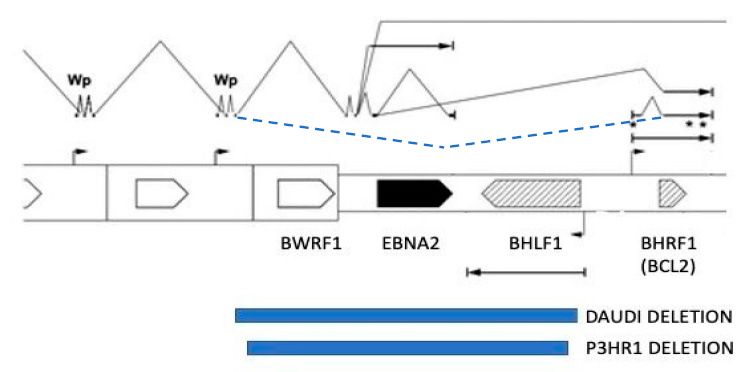
Biomolecules 2022, 12, 17                                                                                            2 of 15

                                 Although most infected people will never experience any symptoms or disease from
                            EBV infection, there are many diseases in which EBV plays an important role. The abilities
                            of EBV gene products to cause cell proliferation, prevent apoptosis or evade immunity link
                            the virus to some of these diseases. Details of EBV biology and its mechanisms in human
                            cancer have been described elsewhere [3,4]. This article will focus on the significance of
                            diseases caused by variations and alterations in the EBV genome.

                            1.1. Natural Variation in the EBV Genome
                                  Understanding of EBV genome variation has progressed rapidly over the last 10 years
                            since the development of the hybrid enrichment sequencing method [5]. This technique
                            allows specific purification of the EBV DNA present in cells in culture or clinical samples
                            for sequencing using standard methods [6]. There are now more than 1000 EBV genome
                            sequences in Genbank, derived both from healthy people and from many of the diseases
                            associated with EBV infection, with representation from many parts of the world.
                                  In healthy carriers of the virus, and in most cases of diseases associated with EBV, the
                            viral genome appears to be intact (without obvious deletions or rearrangements). There
                            are, however, some examples where deletions occur that seem to be relevant to the disease:
                            these can suggest mechanisms that cause disease. DNA viruses like EBV generally have
                            quite stable genome sequences, but there is some variation between different parts of the
                            world that might be relevant to the different geographic incidences of diseases associated
                            with EBV. There is evidence for virus recombination [6,7] in EBV, but it is difficult to define
                            evolutionary lineages of EBV because of the uneven distribution of polymorphisms and
                            inter-strain recombination.

                            1.2. Type 1 and Type 2 EBV
                                  The classification of EBV into type 1 and type 2 strains, and some indication of
                            geographic variation in the type 1 viral genome sequence, have been known since the
                            1980s. However, the greatly increased number of sequences in recent years has allowed the
                            construction of a multiple sequence alignment of 241 EBV genome sequences [8], which
                            has been used to define the basis of these classifications more clearly.
                                  Comparison of single nucleotide polymorphisms (SNPs) between type 1 EBV and type
                            2 EBV strains has confirmed that the differences are mostly in the EBNA2 and EBNA3 genes.
                            In the genome region around EBNA2, the differences are confined to the region between the
                            last two coding exons of EBNA-LP (Y exons) and the protein coding sequence of EBNA2.
                            The large internal repeat (IR1) immediately upstream, and the downstream repeat sequence
                            encoding BHLF1 (called IR2 or the Not I repeat) cannot be used to distinguish type 1 from
                            type 2 EBV [7]. At the EBNA3 locus, differences between type 1 and type 2 extend to the
                            adjacent viral genes [9]. Interestingly, these encode the two glycoproteins on the surface of
                            the virus particle (gp350 and gp42) that mediate binding to the EBV receptors found on B
                            cells of CD21 and MHC class II, respectively.
                                  EBNA2 functions as a transcription activator, switching on cell and viral genes required
                            for cell growth [3]. One apparent counter-example to this, where EBNA2 was found to
                            result in downregulation of the cell CIITA factor (which causes expression of MHC class II),
                            was shown to be a consequence of EBNA2 activating the adjacent cell gene DEXI with the
                            consequent reorganisation of cell chromatin indirectly resulting in the downregulation of
                            CTIIA [10]. The EBNA3 genes also control cell gene expression, but have more complex
                            mechanisms of action, which involve the repression or activation of many cell genes [11].
                                  The best-known biological difference between type 1 and type 2 EBV is that type 1
                            strains are better at transforming B cells into LCLs than type 2 strains [12]. Replacing
                            the EBNA2 of a type 2 strain with a type 1 EBNA2 is sufficient to convert the B cell
                            transformation activity of the type 2 strain to that of a type 1 strain [13]. Although the
                            amino acid sequences of type 1 and type 2 EBNA2 are only about 50% identical, the key
                            determinant of the superior ability of type 1 EBNA2 to maintain LCL growth has been
                            mapped to a few amino acids in the transactivation domain [14,15]. These amino acids
Biomolecules 2022, 12, 17 3 of 15
control interaction with the cell protein BS69 (also called ZMYND11), which normally tends
to inhibit the transactivation of function of EBNA2. There is an extra binding site for BS69
in type 2 EBNA2, which consequently appears to be inhibited more effectively by BS69
than type 1 EBNA2 [15]. EBNA2 function is also regulated by CDK1- and PLK1-dependent
phosphorylation in the C terminal part of the protein, near the transactivation domain [16].
The EBNA2 amino acids that are phosphorylated by CDK1 and PLK1 are conserved in
type 1 and type 2 EBNA2, but it is not currently known whether the differential binding of
BS69 might modulate the EBNA2 phosphorylation.
Although homologous recombination appears to occur in most parts of the viral
genome [6], detectable when cells have been infected by two or more strains of EBV, the
EBNA2 and EBNA3 loci maintain their type 1 or type 2 identity in naturally occurring
strains. This is thought to be because the EBNA2 and EBNA3 sequences are sufficiently
different between the two types to prevent homologous recombination within these genes.
Interestingly, intertypic recombinants (for example a virus with a type 2 EBNA2 and a type 1
EBNA3) are rare [8,17], suggesting that there may be also some functional compatibility
required for cooperation between the EBNA2 and EBNA3 proteins of the same type that
selects against such recombinants. This could be consistent with EBNA2 and EBNA3
proteins both associating with DNA through their interactions with RBPJ (also called CBF1).
Chromatin immunoprecipitation (ChIP) analyses that have shown that they frequently
bind to many of the same gene loci in the human genome [18,19].
Type 1 EBV is much more frequent than type 2 in most parts of the world, but in some
parts of central Africa (Kenya, for example) there is an approximately equal prevalence
of type 1 and type 2 EBV [17]. Some other tropical regions of the world are also known
to have substantial levels of type 2 EBV, for example Papua New Guinea [9]. How the
types arose and diversified is not known but, given its high presence in the tropics, it might
be that the type 2 EBV found some historical selective advantage in the immune state of
people who are chronically exposed to infection, for example, endemic malaria or other
tropical diseases. Type 1 EBV strains are known to efficiently transform resting B cells but
not exogenously activated B cells [20]; the activity of type 2 EBV in this comparison has
not yet been investigated. Although the highest incidence of type 2 EBV is found in black
African people, ethnicity is not a definitive determinant of type specific infection: some
clear examples of white British people shedding type 2 EBV were found in a survey of
university students in London [9].
Induction of the lytic replication cycle is initiated by activation of the expression of
the EBV BZLF1 gene via its promoter Zp. The BZLF1 protein (also called Zta or ZEBRA in
some publications) is a transcription factor. It switches on the early genes of the EBV lytic
cycle, whose products mediate viral DNA replication, which then allows for the subsequent
production of new virus particles. The most efficient and physiologically relevant mecha-
nism for inducing the EBV lytic cycle from latency is via the signal transduction from the B
cell receptor (BCR). This process can readily be activated in cell culture by cross-linking the
BCR on the cell surface of some Burkitt lymphoma cell lines using a suitable isotype specific
antibody, for example in the Akata Burkitt lymphoma cell line (which contains EBV). An
EBV single nucleotide polymorphism (SNP) in Zp known as V3 results in the stronger
activation of BZLF1 because it creates an extra binding site for the cell NF-AT transcription
factor [21], which is activated by BCR signal transduction. This V3 polymorphism is present
in all type 2 EBV strains, and about 50% of type 1 EBV strains, including Akata EBV [9].
LCLs containing type 2 EBV also have a higher expression of NF-AT, so this all results
in type 2 EBV LCLs having more spontaneous lytic replication of EBV than type 1 EBV
LCLs [22]. The shedding of EBV DNA in saliva was not found to be higher in people with
type 1 V3 EBV SNP [9], but it is possible that the V3 SNP might increase EBV levels (or EBV
lytic cycle gene expression) in vivo, in some locations in the body.Biomolecules 2022, 11, x FOR PEER REVIEW 4 of 15
Biomolecules 2022, 12, 17 4 of 15
1.3. Geographic and Ethnic Variation in EBV Genome Sequence
1.3. Geographic and Ethnic Variation in EBV Genome Sequence
Interest in EBV genome sequence variation developed from the need to ensure that
Interest
the lab strainsinused
EBVfor genome
studying sequence
the virusvariation developed from
are representative the need
of clinical to ensure
isolates that
and from
the lab
large strains used
geographic for studying
variations in thethe virus areofrepresentative
incidence some diseasesofassociated
clinical isolates and from
with EBV. For
large geographic variations in the incidence of some diseases
example, nasopharyngeal carcinoma (NPC) has a high incidence in South China and EBV- associated with EBV. For
example, nasopharyngeal carcinoma (NPC) has a high incidence
associated Burkitt lymphoma is frequent in sub-Saharan Africa (reviewed in [3]). Among in South China and
EBV-associated
the many possible Burkitt
reasonslymphoma
for thoseisdifferent
frequentdisease
in sub-Saharan
incidencesAfrica (reviewed
(for example, in [3]).
environ-
Among the many possible reasons for those different disease incidences
mental carcinogen exposure and host genetics), geographic variation in the virus genome (for example,
environmental
would carcinogen
be an important exposure and host genetics), geographic variation in the virus
consideration.
genome wouldcomponent
Principal be an important
analysis consideration.
(PCA) has proven to be an effective method for analys-
Principal component analysis
ing EBV genome sequence variation. (PCA) has proven
Based to be ansequence
on a multiple effective method
alignment for (MSA)
analysingof
EBV genome sequence variation. Based on a multiple sequence
241 EBV genomes from samples that were annotated with geographic region of origin alignment (MSA) of 241 EBVor
genomes of
ethnicity from
thesamples
infectedthat were PCA
person, annotated with geographic
clustering showed thatregion there of origin
are or ethnicity
systematic geo-
of the infected person, PCA clustering showed that there are systematic geographic differ-
graphic differences [8]. The results showed that the EBV sequences clustered into distinct
ences [8]. The results showed that the EBV sequences clustered into distinct geographic
geographic categories, for example, Asia, Europe, USA, Africa, South America and Papua
categories, for example, Asia, Europe, USA, Africa, South America and Papua New Guinea.
New Guinea. Similar clustering patterns were seen using phylogenetic tree analysis of the
Similar clustering patterns were seen using phylogenetic tree analysis of the sequences [8],
sequences [8], but the phylogenetic trees did not provide a method to identify which nu-
but the phylogenetic trees did not provide a method to identify which nucleotides in the
cleotides in the EBV genome determined the clustering.
EBV genome determined the clustering.
As the values for each sequence on each principal component (eigenvector) in the
As the values for each sequence on each principal component (eigenvector) in the
usual PCA clustering plots are derived by summing the individual PCA coefficients at
usual PCA clustering plots are derived by summing the individual PCA coefficients at
each genome position where the nucleotide in that sequence differs from the consensus,
each genome position where the nucleotide in that sequence differs from the consensus,
the contribution of each nucleotide position to each component can be quantified. Most of
the contribution of each nucleotide position to each component can be quantified. Most
the coefficients
of the coefficientsareare
very
verysmall
small butbuta afew
fewlocations
locationsininthethesequence
sequencehave have relatively
relatively large
large
coefficients, and these can be used to identify combinations of nucleotide
coefficients, and these can be used to identify combinations of nucleotide positions where positions where
SNPs
SNPs are characteristic of
are characteristic of each
eachgeographic
geographiccluster
cluster[23].
[23].Thus,
Thus,the theEBV
EBVgenome
genome sequence
sequence at
at some of the nucleotide positions characteristic of each geographic cluster
some of the nucleotide positions characteristic of each geographic cluster (Figure 1) allows (Figure 1) al-
lows assignment
assignment of a EBV
of a new new EBV
sequencesequence to a geographic
to a geographic category.
category. This This
may may
proveprove partic-
particularly
ularly useful for samples that may contain too little EBV to determine
useful for samples that may contain too little EBV to determine the complete genome the complete ge-
nome sequence, but sufficient to PCR amplify and sequence in
sequence, but sufficient to PCR amplify and sequence in some small regions containing some small regions con-
taining these diagnostic
these diagnostic SNPs. SNPs.
Figure 1.
Figure Schematic showing
1. Schematic showing EBVEBV genome
genome locations
locations containing
containing SNPs
SNPs characteristics
characteristics for
for geographic
geographic
origins
origins of
of EBV
EBV on
on aa scale
scale of the
the reference NC007605
NC007605 EBV EBV genome.
genome. Vertical
Vertical bars
bars represent
represent genomic
genomic
positions
positions of SNPs or haplotypes that are geographic location-specific. Exact details of SNPs specific
of SNPs or haplotypes that are geographic location-specific. Exact details of SNPs specific
for
for each
each geographic
geographic location
location are
are given
given in
in Table
Table S3
S3 of
of [23],
[23], (details
(details of
of Ind-Pak-Sri
Ind-Pak-Sri locations
locations will
will be
be
published elsewhere, but are available on request). PNG is Papua New Guinea; Ind-Pak-Sri is India,
published elsewhere, but are available on request). PNG is Papua New Guinea; Ind-Pak-Sri is India,
Pakistan, Sri Lanka.
Pakistan, Sri Lanka.Biomolecules 2022, 12, 17 5 of 15
EBV persists in an infected person in a balance with host immune surveillance, so
it seems likely that positions of positive selection in the virus genome sequence might
correspond to epitopes for cytotoxic T cell surveillance. EBNA3 proteins are major targets
for this immune surveillance, and CD8 T cell epitopes have been mapped extensively in
this gene region in patients from different parts of the world, and with a range of known
HLA types. Surprisingly, there was little correlation between the points of positive selection
in the EBNA3 genes and the characterised immune epitopes [6]. However, high levels
of linkage disequilibrium appear to be slightly more common in EBV genes that contain
known T cell epitopes, which suggests that host immune selection has probably contributed
to patterns of genetic diversity in EBV [24].
In summary, we know that variation at defined nucleotide positions in the EBV
genome is characteristic of the geographic region of origin of EBV strains, but there is
uncertainty about the factors that select those differences. It is useful to note that direct
sequencing of the EBV DNA from normal, healthy, persistently infected people shows
that they usually contain a predominant unique EBV sequence, but there can also be low
levels of alternative sequences, indicating mixtures of strains in some individuals. It is
not known whether those mixtures derive from being initially infected with a mixture of
strains, or are due to superinfection during normal social contact. This question of whether
normal immunity protects against additional infection will become an important point in
the context of potential future vaccines against EBV.
2. Sequence Variations in Diseases Associated with EBV
2.1. Immune Deficiency in EBV-Associated Diseases
Immune suppression resulting from inherited immunodeficiency genes, HIV infection
or immunosuppressive therapy after a tissue transplant may allow the B blasts that result
from EBV infection of normal B cells to cause a lymphoproliferative disease. In this case,
the viral gene expression is similar to that of an LCL in culture, with all the EBNAs, LMPs
and non-coding RNAs. Healthy carriers of EBV have abundant cytotoxic T cells specific
for epitopes in the EBNA and LMP proteins. The excessive proliferation of EBV infected
lymphoblasts in transplant patients (post-transplant lymphoproliferative disease—PTLD)
is a significant clinical problem. Partial reduction of the immunosuppressive treatment
may allow the patient to recover, eliminating the excessive EBV-positive B blasts without
rejection of the transplant. Some centres can also grow EBV-specific cytotoxic T cells, either
from the patient’s own blood or from a panel of HLA-matched donors, and use these for
successful therapy [25].
The unrestrained proliferation of EBV-positive Blasts is also a feature of X-linked
lymphoproliferative syndrome (XLP), which is due to an inherited mutation in the SH2D1A
gene. SH2D1A encodes SAP, a component of lymphocyte signaling complexes in T cells and
NK cells that is crucial for their development. Boys who inherit the mutation can develop a
potentially fatal lymphoma due to defective immune surveillance and the proliferation of
EBV-infected B lymphocytes [26]. Many of the relevant families are now identified and the
affected children may receive a haematopoietic stem-cell transplant to prevent the disease.
There is currently no evidence for any role of specific EBV variants in XLP patients.
In some other immune deficient patients, the genetic defect is not in the production of
the cytotoxic T cells that would normally kill EBV-infected cells, but in their function [27].
In this situation, an ineffective immune response to EBV-infected cells causes excessive
recruitment of macrophages by gamma interferon from the T cells that can result in a severe
inflammatory disease called haemophagocytic lymphohistiocytosis (HLH).
Before modern combinations of anti-HIV drugs were developed, oral hairy leuko-
plakia was a frequent sign of advanced AIDS disease. This appeared as white patches,
usually on the edge of the tongue or some other oral mucosal sites. Biopsies showed that
EBV was replicating in defined layers of the stratified epithelium [28], presumably made
macroscopically visible by the lack of immune surveillance in AIDS immunodeficiency.
This is the clearest opportunity to observe epithelial replication of EBV in vivo. The sitesBiomolecules 2022, 12, 17 6 of 15
where EBV replication occurs in healthy infected people producing the usual low-level
or sporadic shedding of virus into saliva cannot normally be recognised [2], so these oral
hairy leukoplakia lesions may give some insight into that process.
EBV Genome Deletions in T/NK Disease
Although the main life cycle of EBV occurs in B lymphocytes and most EBV associated
lymphomas are in B cells, a low incidence of lymphomas with EBV infection of T cells or
NK cells also occurs. The biology of EBV in T cells remains uncertain: some strains of type
2 EBV have been shown to infect adult T cells in vitro [29] and EBV is also readily detected
in the T cells of Kenyan infants that have been infected with type 2 EBV [30]. However,
most T/NK cell malignancies contain type 1 EBV. These lymphomas often arise in children,
who are sometimes found to have a mutation in a gene involved in immune regulation [27].
Although T cells and NK cells from adults do not normally express the usual B cell receptor
for EBV infection (CD21), these NK/T lymphomas show that infection of the cells must
have occurred somehow. Immature T cells in the adult thyroid express CD21, and in very
young children most circulating T cells express CD21 [31], so it is possible that this accounts
for the fact [32] that T cells can be infected by certain strains of EBV in culture (via CD21).
The direct infection of NK cells in culture has not been possible, but NK cells have been
found to use antibodies to capture and internalise membrane-bound EBV particles (with
CD21) from the surface of B lymphocytes, so this might offer an additional mechanism [33].
Infection of the common progenitor of T and NK cells in haematopoietic development has
also been proposed as a mechanism for the rare viral entry that occurs into these cell types
that might precede NK/T cell lymphoma development [34].
EBV T/NK lymphomas and chronic active EBV infection (CAEBV) involving the
infection of T cells appear to be more frequent in Asia (Japan, China, Korea) than Western
countries, but many cases have now also been described in Europe [35] and the USA [36].
In a about 30–40% of T/NK lymphomas, there is a deletion or re-arrangement of the
EBV genome [35,37,38]. Often, a wild-type EBV genome is detectable in addition to
the deleted genome. These mutations in the EBV genome are different in every patient,
but they are most frequently clustered around the BART transcript region, and seem
likely to affect the expression of the BART miRNAs. How these mutations promote
disease is not fully understood, but experiments comparing wild-type EBV with strains
lacking the BART region in infection of peripheral blood mononuclear cells (PBMCs)
from adolescents indicated that absence of the BART miRNAs resulted in an interferon
response [39]. The patients who develop these diseases are often found to have inherited
immune deficiencies affecting T or NK function [27], so the mechanism likely involves a
combination of immunodeficiency and the altered EBV gene expression in a cell type that
is not usually infected by EBV.
2.2. Lymphomas Derived from B lymphocytes
2.2.1. Burkitt Lymphoma
EBV was originally discovered in the early 1960s using electron microscopy to search
for viral particles in Burkitt lymphoma. The incidence of Burkitt lymphoma (BL), particu-
larly in children, is high in central Africa and some other parts of the world where malaria
is endemic. The high incidence of BL in these areas led to Denis Burkitt identifying the
“endemic BL”: in these cases, EBV is almost always present in the malignant cells. In other
parts of the world, “sporadic BL” tumours are rare, and usually do not contain EBV (al-
though the patients are typically infected by EBV). However, the phenotypic characteristics
of BL are primarily defined by their EBV status, regardless of whether they originated in an
endemic or sporadic area [40].
BL cells are now known to always have a chromosome translocation which places
the MYC proto-oncogene under the transcriptional control of one of the immunoglobulin
gene loci, resulting in an abnormally high production of MYC protein. The high level
of MYC activates cell proliferation, but the associated proliferative stress also inducesthe MYC proto-oncogene under the transcriptional control of one of the immun
gene loci, resulting in an abnormally high production of MYC protein. The hig
MYC activates cell proliferation, but the associated proliferative stress also indu
tosis. EBV-negative tumours usually have a mutation in the p53 pathway (TP53
Biomolecules 2022, 12, 17
CDKN2A mutation in 75% of cases) that overcomes this tendency to7 ofundergo 15
a
but these occur in only 30% of EBV-positive BL [40]. This is because EBV has
variety of mechanisms
apoptosis. to overcome
EBV-negative tumours usually the
haveapoptosis,
a mutation indiscussed in detail
the p53 pathway in [3], tha
(TP53,
the BLorcells
USP7 to survive.
CDKN2A mutation Ininsome
75% of BL tumours,
cases) there isthis
that overcomes a deletion
tendency in the EBV geno
to undergo
apoptosis, but these occur in only 30% of EBV-positive BL [40].
removes the EBNA2 region, leading to altered splicing of BHRF1 transcripts This is because EBV has
evolved a variety of mechanisms to overcome the apoptosis, discussed in detail in [3],
control of the Wp latent cycle EBNA promotor, and the increased production
that can help the BL cells to survive. In some BL tumours, there is a deletion in the EBV
protein
genome [41].
whichBHRF1
removes theis aEBNA2
paralogue
region,of the cell
leading BCL2splicing
to altered protein, and has
of BHRF1 a powerful a
transcripts
totic
underfunction.
the controlExamples of these
of the Wp latent EBV promotor,
cycle EBNA genomeand deletions wereproduction
the increased known of for man
BHRF1 protein [41]. BHRF1 is a paralogue of the cell BCL2 protein,
the P3HR1 and Daudi BL cell lines (Figure 2), but they have now been found to b and has a powerful
anti-apoptotic function. Examples of these EBV genome deletions were known for many
inyears
about 10% of BL cell lines analysed [41]. The altered splicing can also result
in the P3HR1 and Daudi BL cell lines (Figure 2), but they have now been found to be
pression
present in of EBNA3
about 10% of proteins
BL cell lines inanalysed
these BLs. Interestingly,
[41]. The type
altered splicing can 1 EBV
also is in
result found m
than type 2 in African BL (in Kenya), even though both virus types are presen
the expression of EBNA3 proteins in these BLs. Interestingly, type 1 EBV is found more
often than type 2 in African BL (in Kenya), even though both virus types are present at
equal frequency in the population [17].
about equal frequency in the population [17].
Figure 2. Genomic locations of Daudi and P3HR1 BL deletions (blue boxes) that result in increased
Figure 2. Genomic locations of Daudi and P3HR1 BL deletions (blue boxes) that result in
expression of the BHRF1 protein from the spliced mRNAs, which normally express the EBNA proteins.
expression of the BHRF1 protein from the spliced mRNAs, which normally express the
Black lines above the open reading frame map indicate the spliced transcripts produced by intact
teins.
EBV genomes.lines
Black above
The novel RNA the openfrom
splicing reading
the W2frame map
exon near Wpindicate thecoding
to the BHRF1 spliced transcripts
exon in BL pr
intact EBV
cells with genomes.
this The
deletion [41] novelasRNA
is shown splicing
a dashed fromSymbols
line (blue). the W2* are
exon near
BHRF1 Wp to the BHRF1 c
miRNAs.
in BL cells with this deletion [41] is shown as a dashed line (blue).
2.2.2. Hodgkin Lymphoma
In Western countries, the most frequent EBV-associated lymphoma is Hodgkin disease,
2.2.2. Hodgkin Lymphoma
in which about 30% of cases have EBV in the tumour-defining Reed–Sternberg cells. These
In key
are the Western countries,
malignant the
cells in the most
cancer frequent
(much EBV-associated
of the rest of the tumour is lymphoma
composed of is Hod
reactive normal B cells). The Reed–Sternberg cell is thought to be derived from a B cell
ease, in which about 30% of cases have EBV in the tumour-defining Reed–Stern
which has undergone a defective B cell receptor mutation or rearrangement that would be
These
expectedaretothe keyinmalignant
result cell apoptosis.cells in the
In most cancer
cases of the(much of thedisease,
EBV negative rest ofthese
the tumour
cells is c
ofsurvive
reactive normal
because B cells).inThe
of a mutation Reed–Sternberg
the A20 cell which
apoptosis regulator, is thought
affects to be derived
signaling to fro
NF-kB [42]. In the EBV-positive Reed–Sternberg cells, the viral LMP2A
which has undergone a defective B cell receptor mutation or rearrangement th protein can produce
survival signals including those provided by the BCR [43], whereas LMP1 is thought to
be expected to result in cell apoptosis. In most cases of the EBV negative dise
provide signals that substitute for T cell help, preventing cell death and allowing the disease
cells survive because of a mutation in the A20 apoptosis regulator, which affects
to develop.
to NF-kB [42]. In the EBV-positive Reed–Sternberg cells, the viral LMP2A protei
duce survival signals including those provided by the BCR [43], whereas LMP1
to provide signals that substitute for T cell help, preventing cell death and allo
disease to develop.
2.2.3. Diffuse Large B Cell Lymphoma (DLBCL)
The DLBCL classification is based on a cellular phenotype. However, EBV-a
DLBCLs are often defined by a contributory immunological defect, for examBiomolecules 2022, 12, 17 8 of 15
2.2.3. Diffuse Large B Cell Lymphoma (DLBCL)
The DLBCL classification is based on a cellular phenotype. However, EBV-associated
DLBCLs are often defined by a contributory immunological defect, for example HIV
lymphomas and post-transplant lymphomas (PTLD). Overall, EBV-associated DLBCL is a
relatively uncommon category—around 3–5% of the total. There are two main phenotypic
subtypes: activated B cell (ABC)-DLBCL and germinal centre DLBCL, based on the cell
surface markers of the cell type. Based on the observation that a recombinant EBV, deleted
for its EBNA-3B coding region, induced an ABC-DLBCL-like tumour in mice reconstituted
with human immune cells, examples were identified of nonsense mutations in the EBNA3B
gene in three ABC-DLBCLs, from PTLD or HIV lymphoma patients [44]. The extensive
polymorphisms in the EBNA3B gene currently preclude an accurate assessment of the
proportion of DLBCLs that carry an EBNA-3B mutation, but the frequency of potential
EBNA3B mutations was substantially higher in ABC-DLBCL than other EBV cancers.
Intriguingly, examples of small in-frame EBNA3B deletions have also been identified
in Hodgkin and Burkitt lymphomas, suggesting a wider role for EBNA3B mutation in
the induction of EBV-associated cancers [44]. More examples of BART region deletions
(mentioned above in the context of NK/T lymphomas) have been found in DLBCL cases
from Japan [38].
2.3. Carcinomas Associated with EBV
The malignant cells of most cases of undifferentiated nasopharyngeal carcinoma and
about 8% of cases of gastric carcinoma worldwide contain EBV and have some viral gene
expression. Worldwide, these are the most frequent cancers associated with EBV and most
cases occur in immunocompetent people. The diseases reflect the ability of EBV to infect
epithelial cells as part of its normal life cycle.
2.3.1. Nasopharyngeal Carcinoma (NPC)
NPC is exceptionally frequent in Southern China, having an incidence there about
50-fold higher than in Europe, but there are also regions of intermediate incidence in several
other parts of the world. The tumour includes malignant epithelial cells containing EBV
and a substantial lymphocytic component which is thought to facilitate tumour growth
and immune evasion. The lymphoid component of NPC does not usually contain EBV.
Polymerase chain-reaction (PCR) detection of EBV DNA in blood plasma is an effective
way to identify patients with early-stage NPC in high incidence areas [45], when the disease
can be treated successfully.
There is no evidence for large scale deletions or rearrangements of the EBV genome in
NPC, but the unusual geographic distribution of the disease has led to many investigations
of SNPs or other small differences in the virus that might contribute to the disease. These
studies have demonstrated the complexity of distinguishing a geographic virus sequence
variation that is not relevant to disease from sequence changes that might give a more
pathogenic virus. Several additional factors have been associated with NPC incidence,
including the MHC variants prevalent in Cantonese people in South China who are at
risk [46] and dietary carcinogens (although the traditional association of dried salted fish
and other preserved foods with NPC has been questioned in a recent large study [47]).
It has been difficult to distinguish whether the disease incidence is determined by these
other factors, or whether there might also be a specific variant of EBV prevalent in the NPC
endemic areas.
Some of the EBV polymorphisms that have been proposed to be linked to NPC may
be correlated to geographic or ethnic differences in EBV strains, rather than an effect of the
disease. The Zp V3 polymorphism (which could be indirectly pathogenic by increasing
the level of virus or EBV lytic cycle gene expression in an infected person) was epidemio-
logically linked to NPC cases in Indonesia [8]. The CAO deletion within the C terminal
part of LMP1 is prevalent in China and Taiwan [23] and CAO LMP1 was found to be more
oncogenic than the reference LMP1 in an epithelial cell culture assay [48], but has notBiomolecules 2022, 12, 17 9 of 15
been shown to be enriched in NPC cases relative to matched controls. LMP1 expression
is quite variable in NPC tumours: it is now understood that NPC tumours require NF-kB
expression, but this is achieved either through mutations in the NF-kB signaling pathway
that result in NF-kB activation, or by LMP1 expression. One or the other of these two
mechanisms is found in NPC biopsies [49].
A study of EBV sequence variation comparing geographically matched NPC cases and
controls from South China (high-incidence region) found a SNP in the EBV RPMS1 open
reading frame to be a specific risk factor for NPC [50]. This caused reduced stability of the
RPMS1 protein, but there is unfortunately no evidence that the RPMS1 protein is produced
in any EBV-infected cells [51]. Further sequencing studies found a SNP in the EBV BALF2
protein to be strongly associated with NPC cases [52], but no specific mechanism could
be proposed. Since BALF2 is a single-stranded DNA-binding protein that functions as a
processivity factor for the EBV genome replication complex, its expression could potentially
facilitate oncogenesis by promoting aberrant recombination or reduced replication fidelity,
but functional analysis of the variants will be required to understand whether this SNP
might promote NPC development.
In contrast, a study in Hong Kong comparing EBV strains in NPC cases with healthy
Cantonese people linked a polymorphism in the viral non-coding RNA EBER2 to NPC
disease [53]. Recent molecular analysis of this M81 EBER2 polymorphism, which is frequent
in Chinese EBV compared with other parts of the world, suggests a mechanism by which
those viruses could be more oncogenic [54]. EBER2 is now known to form a ribonucleopro-
tein complex in the cell nucleus that affects gene expression. This was first described to
affect the transcription of the EBV LMP2 gene by binding to the EBV terminal repeats [55],
but further analysis has shown that it also increases expression of the cell UCHL1 gene [54].
Base pairing between part of the EBER2 RNA and the 50 end of the nascent UCHL1 mRNA
facilitates expression of the UCHL1 mRNA. UCHL1 is a deubiquitinase that increases the
expression of cyclin B1 and Aurora B; both are cell cycle control genes. EBER RNAs with
the M81 variant of EBER2 (which has a sequence change that increases its binding efficiency
to the UCHL1 mRNA) resulted in about five-fold more Aurora B protein expression than
the reference EBER genes [54]. This is the most convincing potential oncogenic mechanism
related to EBV SNPs that has been found so far and may prove to be significant in the
incidence of NPC.
The large number of EBV strains already sequenced from China allows an assessment
of the relative frequency of the M81 Chinese EBER2 variant and the Zp V3 SNP in NPC
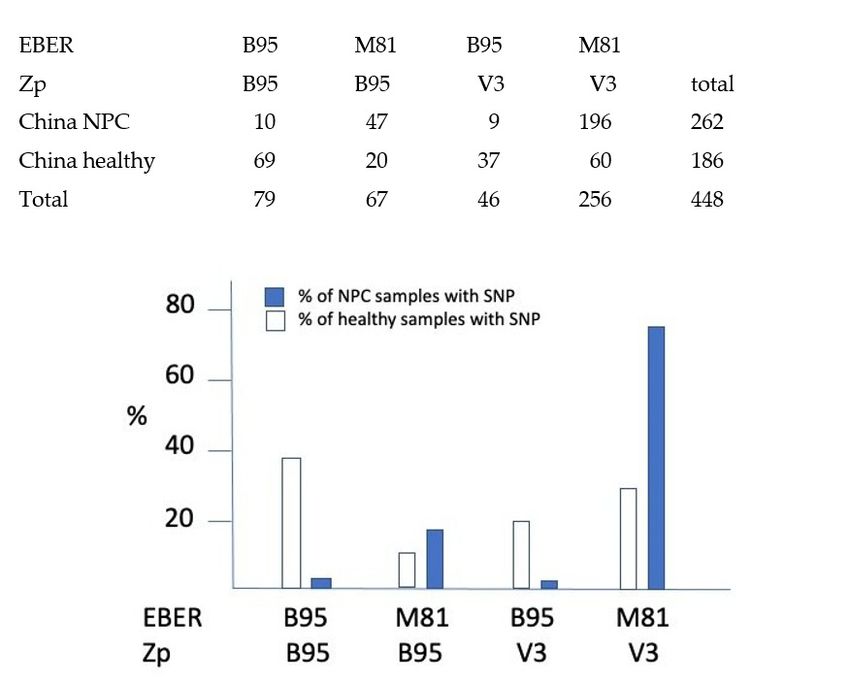
cases relative to normal controls (Figure 3). Of the 1015 EBV genome sequences in Genbank
that could be classified according to their EBER and Zp SNPs, 500 were from China, of
which 262 were NPC cases and 186 were healthy controls (Figure 3). The incidence of
the reference Western strain B95-8 EBER2 and Zp was compared to incidence of the M81
EBER2 and Zp V3 SNP. The M81 EBER2 variant was found in 93% of Chinese NPC cases,
but only 43% of isolates from healthy Chinese people. The Zp V3 SNP was enriched in
NPC cases to a lesser degree; 78% of NPC cases and 52% of controls. Most strikingly, the
combination of M81 EBER and V3 Zp was 22.5-fold more frequent in NPC cases relative to
healthy controls than the B95-8 EBER and Zp SNPs (Figure 3). The data therefore support a
connection between these polymorphisms and the incidence of NPC, particularly the EBER
M81 variant.Biomolecules 2022, 11, x FOR PEER REVIEW 10 of 15
Biomolecules 2022, 12, 17 10 of 15
Figure 3.
Figure Incidenceof
3. Incidence ofthe
thedifferent
differentcombinations
combinationsof ofEBER2
EBER2and andZpZpSNPs
SNPsin inChinese
ChineseEBVEBVstrains,
strains,
comparing
comparingviruses
virusesfrom
fromNPCNPCdisease
diseasewith healthy
with controls.
healthy controls. x-axis
x-axis shows the different
shows possible
the different com-
possible
binations of Zpof
combinations and
ZpEBER SNPs,SNPs,
and EBER classified into either
classified B95 (the
into either B95sequence of the reference
(the sequence B95-8 west-
of the reference B95-8
ern strain)strain)
western or theor
Zp-V3 and EBER2-M81
the Zp-V3 and EBER2-M81 SNPs described in the text.
SNPs described Chitext.
in the squared
Chi test shows
squared a highly
test shows
significant
a highly significant = 1 × 10⁻²⁷(p) in
increase (pincrease = NPC
1 × 10cases
−27 )in
inpeople whoseinEBV
NPC cases contains
people whose both EBER2-M81
EBV and
contains both
Zp-V3 SNPs.
EBER2-M81 and Zp-V3 SNPs.
2.3.2.
2.3.2.Gastric
GastricCarcinoma
Carcinoma
About
About8% 8%ofofgastric
gastriccarcinoma
carcinoma cases
cases have
have EBV
EBV in in the
the malignant
malignant cells.
cells. A
Amajor
majorstudy
study
of
ofgenetic
geneticmutations
mutationsiningastric carcinoma
gastric carcinoma [56] showed
[56] showed thatthat
the the
EBV-positive
EBV-positive cases are ge-
cases are
netically and
genetically transcriptionally
and transcriptionallydistinct, having
distinct, havinghigh
highlevels
levelsofofpromoter
promotermethylation,
methylation,and and
frequentmutations
frequent mutationsin inPI3kinase
PI3kinase(activating
(activatingthe
thekinase)
kinase)andandARID3A,
ARID3A,but butlacking
lackingthethep53
p53
mutations which are frequent in the EBV negative disease. At present, there
mutations which are frequent in the EBV negative disease. At present, there is no evidenceis no evidence
forEBV
for EBVmutations
mutationsin ingastric
gastriccarcinoma,
carcinoma,andandthere
thereare
areno
noreports
reportsofofEBV
EBVSNPs
SNPsspecifically
specifically
relatedto
related tothe
the disease.
disease.The
Theincidence
incidenceof ofgastric
gastriccancer
cancerisisrelatively
relativelyhigh
highin
inJapan;
Japan;thetheM81
M81
EBER2has
EBER2 hasaavery
verylow
lowfrequency
frequencythere,
there,but
butabout
abouthalf
halfthe
thereported
reportedsequences
sequencesin inGenbank
Genbank
havethe
have theZp
ZpV3V3 polymorphism.
polymorphism.
3.Multiple
3. MultipleSclerosis
Sclerosis
Of the many autoimmune diseases
Of the many autoimmune diseases epidemiologically
epidemiologically linked
linkedtotoEBV,
EBV,multiple
multiplesclerosis
sclero-
(MS) is the most strongly associated. MS involves damage to the myelin sheath
sis (MS) is the most strongly associated. MS involves damage to the myelin sheath that that
protects neurons and consequently results in progressive loss of nerve function.
protects neurons and consequently results in progressive loss of nerve function. The speedThe
speed of progression and disease severity varies—often remission and relapses occur, but
of progression and disease severity varies—often remission and relapses occur, but even-
eventually the disease progresses in most cases. EBV has been suggested as a source of
tually the disease progresses in most cases. EBV has been suggested as a source of antigens
antigens that might result in an auto-reactive immune response, for example by cross
that might result in an auto-reactive immune response, for example by cross reaction with
reaction with proteins in cells important for nerve function. Studies of large numbers of
proteins in cells important for nerve function. Studies of large numbers of cases and con-
cases and controls indicate that essentially 100% of people with MS have an EBV infection,
trols indicate that essentially 100% of people with MS have an EBV infection, compared
compared with about 90% of the control population [57] and the cerebrospinal fluid (CSF)
with about 90% of the control population [57] and the cerebrospinal fluid (CSF) of MS
of MS patients is often found to contain oligoclonal immunoglobulins, consistent with
patients is often found to contain oligoclonal immunoglobulins, consistent with immune
immune cross-reaction contributing to disease. Surprisingly, EBV sequence variation hasBiomolecules 2022, 12, 17 11 of 15
not been studied in relation to MS. Some EBV-infected cells have been found in the brains
of MS patients [58–60], but the proposed role of EBV in this disease and mechanism remain
to be established. One interpretation would be that EBV infection can be considered as
essential for activating the host’s risk alleles [61], but a cross-reactive immune response
to an EBV antigen that also recognizes a cell protein in the brain is very likely to mediate
the disease in some cases. Recent studies, using an animal model system for MS, have
proposed a new class of CD8+ suppressor T cells, which could play a role in controlling
the disease [58]. Moreover, the administration of CD8 T cells has been investigated in MS
patients, with some clinical responses noted [62].
4. Vaccines to Prevent Diseases Associated with EBV
Virus-associated cancers offer the possibility of preventing cancer by immunisation
against virus infection, or by developing drugs targeting the virus. Antiviral treatments
for hepatitis C and vaccines against Hepatitis B and human papillomaviruses can already
prevent cancers associated with those infections, which are the leading viral causes of
cancer. Vaccines or antivirals targeting EBV—the next biggest cause of viral cancers—have
therefore become a high priority.
In the past, most attempts at immunisation against EBV used immunogenic parts of
the gp350 EBV surface glycoprotein, because antibodies to gp350 can neutralise infection in
cell culture. An important early clinical trial of a gp350 vaccine in healthy EBV-negative
people involved immunising half the group, while the others received a placebo. The
health of the participants was monitored over 19 months, observing the outcome as the
people carried on their normal lives and social contact [63]. The frequency of infectious
mononucleosis was reduced in the immunised group, but there was no reduction in
asymptomatic EBV infection. It is now recognised that antibodies to gH/gL and gp42
can also neutralise infection [64]. New clinical trials are therefore being developed using
improved formulations of gp350, alongside some of these additional glycoproteins [65].
These vaccines seem likely to be able to prophylactically reduce the incidence of infectious
mononucleosis in healthy teenagers, and to reduce post-transplant lymphoproliferative
disease in solid organ transplant patients who were not already infected by EBV. However,
if EBV infection of the person is not prevented by this type of immunisation, EBV-associated
cancers occurring in immunocompetent people may not be reduced. Those cancers develop
over many years, and EBV would likely still be present in the body.
If endemic strains in some parts of the world are found to be more oncogenic (as
discussed above for NPC), this could suggest a strategy of deliberately infecting infants
with an attenuated non-oncogenic strain of EBV. This type of immunisation was done
successfully for many years in some countries for another herpesvirus, Varicella Zoster
virus (VZV), which causes chickenpox and shingles. That immunisation infects the child
with the Oka strain of VZV, which causes a very mild infection that does not result in
chickenpox symptoms, but can establish latency and give long term immunity. It would
be a big step to consider doing the same with natural EBV strains, but the possibility of
creating an attenuated version of one of these, or a virus-like particle, for immunisation is
currently under investigation. Understanding worldwide EBV sequence variation might
give a background of knowledge for developing a suitable virus vaccine strain, but it is
also not currently known whether being infected with EBV protects against superinfection.
If it does not, then the endemic (oncogenic) strain would likely still become established,
and there would probably be little advantage from the immunisation. It will therefore be
important to establish whether EBV infection confers resistance to superinfection.
5. Conclusions
The improved sequencing of EBV DNA directly from clinical samples using the hybrid
enrichment method has provided a much greater understanding of the variation in the
virus genome and the deletions and polymorphisms that are associated with some EBV
diseases. This helps to focus research on virus genes that are important for disease andBiomolecules 2022, 12, 17 12 of 15
the mechanisms of these diseases. In principle, PCR to detect EBV genome deletions can
be used for monitoring the disease load (for example, in some NKT lymphomas), but the
different deletions in every case reduce the convenience of this approach.
For a link between sequence variation and disease to be convincing, both an epidemio-
logical association and a mechanism are required. Differences in the activities of EBNA2
and EBNA3 proteins may explain the superior transformation of B lymphocytes by type 1
EBV strains, but this has not yet been linked to an EBV-associated disease. The recently
identified functional differences in EBER2 function between Chinese and African/European
EBV strains (with M81 as the prototype Chinese example) appear epidemiologically to con-
tribute to the elevated incidence of NPC in Southern China. To fulfil Koch’s postulates, this
will need to be demonstrated in an experimental cancer induction model. If the pathogenic
nature of some EBV strains is confirmed, this will strengthen the case for immunisation
against infection by those strains.
Author Contributions: P.J.F. and R.E.W. wrote the article. All authors have read and agreed to the
published version of the manuscript.
Funding: This research was funded by MRC, grant number: MR/S022597/1 (P.J.F. and R.E.W.). We
thank NIHR Imperial Biomedical Research Centre (P.J.F.) for support.
Institutional Review Board Statement: Not applicable.
Informed Consent Statement: Not applicable.
Data Availability Statement: Not applicable.
Acknowledgments: We thank Ray Bridges for helpful discussion.
Conflicts of Interest: The authors declare no conflict of interest.
References
1. Jayasooriya, S.; de Silva, T.I.; Njie-jobe, J.; Sanyang, C.; Leese, A.M.; Bell, A.I.; McAulay, K.A.; Yanchun, P.; Long, H.M.; Dong,
T.; et al. Early virological and immunological events in asymptomatic Epstein-Barr virus infection in African children. PLoS
Pathog. 2015, 11, e1004746. [CrossRef]
2. Hadinoto, V.; Shapiro, M.; Sun, C.C.; Thorley-Lawson, D.A. The dynamics of EBV shedding implicate a central role for epithelial
cells in amplifying viral output. PLoS Pathog. 2009, 5, e1000496. [CrossRef]
3. Farrell, P.J. Epstein-Barr Virus and Cancer. Annu. Rev. Pathol. 2019, 14, 29–53. [CrossRef] [PubMed]
4. Laichalk, L.L.; Hochberg, D.; Babcock, G.J.; Freeman, R.B.; Thorley-Lawson, D.A. The dispersal of mucosal memory B cells:
Evidence from persistent EBV infection. Immunity 2002, 16, 745–754. [CrossRef]
5. Depledge, D.P.; Palser, A.L.; Watson, S.J.; Lai, I.Y.; Gray, E.R.; Grant, P.; Kanda, R.K.; Leproust, E.; Kellam, P.; Breuer, J. Specific
capture and whole-genome sequencing of viruses from clinical samples. PLoS ONE 2011, 6, e27805. [CrossRef] [PubMed]
6. Palser, A.L.; Grayson, N.E.; White, R.E.; Corton, C.; Correia, S.; Ba Abdullah, M.M.; Watson, S.J.; Cotten, M.; Arrand, J.R.; Murray,
P.G.; et al. Genome diversity of Epstein-Barr virus from multiple tumor types and normal infection. J. Virol. 2015, 89, 5222–5237.
[CrossRef]
7. Ba Abdullah, M.M.; Palermo, R.D.; Palser, A.L.; Grayson, N.E.; Kellam, P.; Correia, S.; Szymula, A.; White, R.E. Heterogeneity of
the Epstein-Barr Virus (EBV) Major Internal Repeat Reveals Evolutionary Mechanisms of EBV and a Functional Defect in the
Prototype EBV Strain B95-8. J. Virol. 2017, 91, e00920-17. [CrossRef] [PubMed]
8. Correia, S.; Bridges, R.; Wegner, F.; Venturini, C.; Palser, A.; Middeldorp, J.M.; Cohen, J.I.; Lorenzetti, M.A.; Bassano, I.; White,
R.E.; et al. Sequence Variation of Epstein-Barr Virus: Viral Types, Geography, Codon Usage, and Diseases. J. Virol. 2018,
92, e01132-18. [CrossRef]
9. Correia, S.; Palser, A.; Elgueta Karstegl, C.; Middeldorp, J.M.; Ramayanti, O.; Cohen, J.I.; Hildesheim, A.; Fellner, M.D.; Wiels, J.;
White, R.E.; et al. Natural Variation of Epstein-Barr Virus Genes, Proteins, and Primary MicroRNA. J. Virol. 2017, 91, e00375-17.
[CrossRef]
10. Su, C.; Lu, F.; Soldan, S.S.; Lamontagne, R.J.; Tang, H.Y.; Napoletani, G.; Farrell, P.J.; Tempera, I.; Kossenkov, A.V.; Lieberman, P.M.
EBNA2 driven enhancer switching at the CIITA-DEXI locus suppresses HLA class II gene expression during EBV infection of
B-lymphocytes. PLoS Pathog. 2021, 17, e1009834. [CrossRef] [PubMed]
11. Styles, C.T.; Paschos, K.; White, R.E.; Farrell, P.J. The Cooperative Functions of the EBNA3 Proteins Are Central to EBV Persistence
and Latency. Pathogens 2018, 7, 31. [CrossRef]
12. Rickinson, A.B.; Young, L.S.; Rowe, M. Influence of the Epstein-Barr virus nuclear antigen EBNA 2 on the growth phenotype of
virus-transformed B cells. J. Virol. 1987, 61, 1310–1317. [CrossRef] [PubMed]Biomolecules 2022, 12, 17 13 of 15
13. Cohen, J.I.; Wang, F.; Mannick, J.; Kieff, E. Epstein-Barr virus nuclear protein 2 is a key determinant of lymphocyte transformation.
Proc. Natl. Acad. Sci. USA 1989, 86, 9558–9562. [CrossRef] [PubMed]
14. Tzellos, S.; Correia, P.B.; Karstegl, C.E.; Cancian, L.; Cano-Flanagan, J.; McClellan, M.J.; West, M.J.; Farrell, P.J. A single amino acid
in EBNA-2 determines superior B lymphoblastoid cell line growth maintenance by Epstein-Barr virus type 1 EBNA-2. J. Virol.
2014, 88, 8743–8753. [CrossRef] [PubMed]
15. Ponnusamy, R.; Khatri, R.; Correia, P.B.; Wood, C.D.; Mancini, E.J.; Farrell, P.J.; West, M.J. Increased association between
Epstein-Barr virus EBNA2 from type 2 strains and the transcriptional repressor BS69 restricts EBNA2 activity. PLoS Pathog. 2019,
15, e1007458. [CrossRef]
16. Zhang, X.; Schuhmachers, P.; Mourao, A.; Giansanti, P.; Murer, A.; Thumann, S.; Kuklik-Roos, C.; Beer, S.; Hauck, S.M.;
Hammerschmidt, W.; et al. PLK1-dependent phosphorylation restrains EBNA2 activity and lymphomagenesis in EBV-infected
mice. EMBO Rep. 2021, 22, e53007. [CrossRef]
17. Kaymaz, Y.; Oduor, C.I.; Aydemir, O.; Luftig, M.A.; Otieno, J.A.; Ong’echa, J.M.; Bailey, J.A.; Moormann, A.M. Epstein-Barr Virus
Genomes Reveal Population Structure and Type 1 Association with Endemic Burkitt Lymphoma. J. Virol. 2020, 94, e02007-19.
[CrossRef] [PubMed]
18. McClellan, M.J.; Wood, C.D.; Ojeniyi, O.; Cooper, T.J.; Kanhere, A.; Arvey, A.; Webb, H.M.; Palermo, R.D.; Harth-Hertle, M.L.;
Kempkes, B.; et al. Modulation of enhancer looping and differential gene targeting by Epstein-Barr virus transcription factors
directs cellular reprogramming. PLoS Pathog. 2013, 9, e1003636. [CrossRef] [PubMed]
19. Wang, A.; Welch, R.; Zhao, B.; Ta, T.; Keles, S.; Johannsen, E. Epstein-Barr Virus Nuclear Antigen 3 (EBNA3) Proteins Regulate
EBNA2 Binding to Distinct RBPJ Genomic Sites. J. Virol. 2015, 90, 2906–2919. [CrossRef] [PubMed]
20. O’Nions, J.; Allday, M.J. Proliferation and differentiation in isogenic populations of peripheral B cells activated by Epstein-Barr
virus or T cell-derived mitogens. J. Gen. Virol. 2004, 85 Pt 4, 881–895. [CrossRef]
21. Bristol, J.A.; Djavadian, R.; Albright, E.R.; Coleman, C.B.; Ohashi, M.; Hayes, M.; Romero-Masters, J.C.; Barlow, E.A.; Farrell, P.J.;
Rochford, R.; et al. A cancer-associated Epstein-Barr virus BZLF1 promoter variant enhances lytic infection. PLoS Pathog. 2018,
14, e1007179. [CrossRef] [PubMed]
22. Romero-Masters, J.C.; Huebner, S.M.; Ohashi, M.; Bristol, J.A.; Benner, B.E.; Barlow, E.A.; Turk, G.L.; Nelson, S.E.; Baiu, D.C.; Van
Sciver, N.; et al. B cells infected with Type 2 Epstein-Barr virus (EBV) have increased NFATc1/NFATc2 activity and enhanced lytic
gene expression in comparison to Type 1 EBV infection. PLoS Pathog. 2020, 16, e1008365. [CrossRef] [PubMed]
23. Bridges, R.; Correia, S.; Wegner, F.; Venturini, C.; Palser, A.; White, R.E.; Kellam, P.; Breuer, J.; Farrell, P.J. Essential role of inverted
repeat in Epstein-Barr virus IR-1 in B cell transformation; geographical variation of the viral genome. Philos. Trans. R Soc. Lond. B
Biol. Sci. 2019, 374, 20180299. [CrossRef] [PubMed]
24. Wegner, F.; Lassalle, F.; Depledge, D.P.; Balloux, F.; Breuer, J. Co-evolution of sites under immune selection shapes Epstein-Barr
Virus population structure. Mol. Biol. Evol. 2019, 36, 2512–2521. [CrossRef]
25. Tzannou, I.; Papadopoulou, A.; Naik, S.; Leung, K.; Martinez, C.A.; Ramos, C.A.; Carrum, G.; Sasa, G.; Lulla, P.; Watanabe,
A.; et al. Off-the-Shelf Virus-Specific T Cells to Treat BK Virus, Human Herpesvirus 6, Cytomegalovirus, Epstein-Barr Virus, and
Adenovirus Infections After Allogeneic Hematopoietic Stem-Cell Transplantation. J. Clin. Oncol. 2017, 35, 3547–3557. [CrossRef]
26. Tangye, S.G. XLP: Clinical features and molecular etiology due to mutations in SH2D1A encoding SAP. J. Clin. Immunol. 2014, 34,
772–779. [CrossRef] [PubMed]
27. Fournier, B.; Latour, S. Immunity to EBV as revealed by immunedeficiencies. Curr. Opin. Immunol. 2021, 72, 107–115. [CrossRef]
28. Young, L.S.; Lau, R.; Rowe, M.; Niedobitek, G.; Packham, G.; Shanahan, F.; Rowe, D.T.; Greenspan, D.; Greenspan, J.S.; Rickinson,
A.B.; et al. Differentiation-associated expression of the Epstein-Barr virus BZLF1 transactivator protein in oral hairy leukoplakia.
J. Virol. 1991, 65, 2868–2874. [CrossRef]
29. Coleman, C.B.; Wohlford, E.M.; Smith, N.A.; King, C.A.; Ritchie, J.A.; Baresel, P.C.; Kimura, H.; Rochford, R. Epstein-Barr virus
type 2 latently infects T cells, inducing an atypical activation characterized by expression of lymphotactic cytokines. J. Virol. 2015,
89, 2301–2312. [CrossRef]
30. Coleman, C.B.; Daud, I.I.; Ogolla, S.O.; Ritchie, J.A.; Smith, N.A.; Sumba, P.O.; Dent, A.E.; Rochford, R. Epstein-Barr Virus Type 2
Infects T Cells in Healthy Kenyan Children. J. Infect. Dis. 2017, 216, 670–677. [CrossRef]
31. Pekalski, M.L.; Garcia, A.R.; Ferreira, R.C.; Rainbow, D.B.; Smyth, D.J.; Mashar, M.; Brady, J.; Savinykh, N.; Dopico, X.C.;
Mahmood, S.; et al. Neonatal and adult recent thymic emigrants produce IL-8 and express complement receptors CR1 and CR2.
JCI Insight 2017, 2, e93739. [CrossRef]
32. Smith, N.A.; Coleman, C.B.; Gewurz, B.E.; Rochford, R. CD21 (Complement Receptor 2) Is the Receptor for Epstein-Barr Virus
Entry into T Cells. J. Virol. 2020, 94, e00428. [CrossRef] [PubMed]
33. Alari-Pahissa, E.; Ataya, M.; Moraitis, I.; Campos-Ruiz, M.; Altadill, M.; Muntasell, A.; Moles, A.; López-Botet, M. NK cells
eliminate Epstein-Barr virus bound to B cells through a specific antibody-mediated uptake. PLoS Pathog. 2021, 17, e1009868.
[CrossRef]
34. Murata, T.; Okuno, Y.; Sato, Y.; Watanabe, T.; Kimura, H. Oncogenesis of CAEBV revealed: Intragenic deletions in the viral
genome and leaky expression of lytic genes. Rev. Med. Virol. 2020, 30, e2095. [CrossRef] [PubMed]
35. Venturini, C.; Houldcroft, C.J.; Lazareva, A.; Wegner, F.; Morfopoulou, S.; Amrolia, P.J.; Golwala, Z.; Rao, A.; Marks, S.D.;
Simmonds, J.; et al. Epstein-Barr virus (EBV) deletions as biomarkers of response to treatment of chronic active EBV. Br. J.
Haematol. 2021, 195, 249–255. [CrossRef] [PubMed]You can also read


