ECONOMIC IMPACT OF HEINEKEN IN SIERRA LEONE - AMSTERDAM, NOVEMBER 23 2006 2006 TRIPLE VALUE STRATEGY CONSULTING AND INRETURN CONSULTANCY ALL ...
←
→
Page content transcription
If your browser does not render page correctly, please read the page content below
Economic impact of Heineken in Sierra Leone

                 Amsterdam, November 23 2006

      © 2006 Triple Value Strategy Consulting and InReturn Consultancy all rights reserved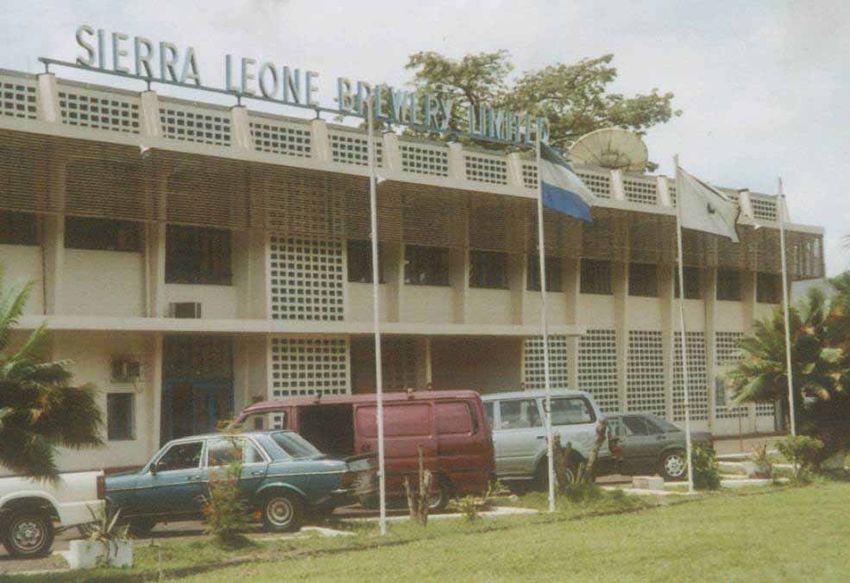
Economic Impact Assessment model commissioned by
NCDO and Heineken International

In March 2006 NCDO and Heineken commissioned a project to develop an
Economic Impact Assessment model that is:
    • User-friendly
    • Expandable
    • Data-friendly
    • Re-usable

The model was to be tested at the Heineken operating company in Sierra Leone

Triple Value Strategy Consulting and InReturn Consultancy have executed the
project

                  Today the results of this project are presented

                  © 2006 Triple Value Strategy Consulting and InReturn Consultancy all rights reserved   1
Agenda

Introduction and summary

Some model results reflecting Heineken economic Impact
   • Current economic impact
   • Effect on inequality
   • Increase of local raw materials
   • Scenario planning facilitated by model

What is needed to adjust the model for other companies and regions

Information about participating NCDO, Heineken, Triple Value and InReturn

                   © 2006 Triple Value Strategy Consulting and InReturn Consultancy all rights reserved   2
Multinational companies in developing markets:
   Earthworms or Eggplants

                      Earthworms                                                           Eggplants
take what they need from the soil, but put back in the               take all the goodness out of the soil and leave it totally
  form of rich humus. Thus they enrich the soil and                    denuded. They put nothing of value back and each
leave it better than they found it. In so doing they co-             eggplant operates alone, with only its own interests at
     operate with one another and work together                         heart and is dependent on the soil for sustenance

                                   Analogy by Darlyne Bailey and Rose Bator

                              © 2006 Triple Value Strategy Consulting and InReturn Consultancy all rights reserved                3
Foreign companies can contribute to development but some
perceive their presence in emerging markets negatively
Companies can contribute to development …                       … but some perceive their presence negatively

                 Foreign                                                                   Foreign
                company                                                                   company

               Economic
                                                                                        Exploitation
                activity

                                                                    Extraction                               Unfair
  Industrial
                                     Jobs                            of (hard)                               labour
 production
                                                                      money                                 practices

                                                                                        Low salaries
                Incomes
                                                                                          and tax
                and taxes
                                                                                        advantages

                             Two views are two sides of the same coin

                     © 2006 Triple Value Strategy Consulting and InReturn Consultancy all rights reserved               4
A better insight into economic impact of (foreign) companies
may benefit many different parties in different ways

Companies:
   Enables management to tune decisions more towards enhancing the local
   economic impact and thereby achieving a better fit in society

Governments:
    Understand the wider impact that a company has on development and tune
    policies and legislation towards enhancing it’s economic impact

Non-Governmental Organizations:
    Maximize development impact in cooperation with companies

                  © 2006 Triple Value Strategy Consulting and InReturn Consultancy all rights reserved   5
A model has been developed that enables analysis of the
economic impact of companies in (emerging) markets
The model enables companies to develop an informed opinion about their economic and
societal impacts
     • Look at the company and its societal environment through a different set of glasses

The model enables management to analyse different scenarios regarding their local
economic impact
    • Develop a broader view when taking management decisions

The model has proven useful and reliable in a real life situation
    • The model has been tested for Sierra Leone Brewery Limited (SLBL) in which
      Heineken has a controlling stake

The model focuses on the economic impact and does not regard environmental
degradation etc
    • Such topics can be added but are too specific to include in a general model

                     © 2006 Triple Value Strategy Consulting and InReturn Consultancy all rights reserved   6
Model delivers production, incomes, taxes and jobs
generated and includes direct and indirect economic impacts
Industrial production
Model
Incomes and taxes
outputs
Jobs
Indirect effect Total economic
Direct inputs
(respending effects) impact
Effects included in model
© 2006 Triple Value Strategy Consulting and InReturn Consultancy all rights reserved 7Model can be tailored to other companies and to other
regions
Mapping of the
profit & loss /
cash flow
of the company or
operating unit
Inputs Model Results
Table that
summarizes the
financial
interactions
between different
sectors and
households within
the economy
© 2006 Triple Value Strategy Consulting and InReturn Consultancy all rights reserved 8Agenda
Introduction and summary
Some model results reflecting Heineken economic impact in Sierra Leone
• Current economic impact
• Effect on inequality
• Increase of local raw materials
• Scenario planning facilitated by model
What is needed to adjust the model for other companies and regions
Information about participating NCDO, Heineken, Triple Value and InReturn
© 2006 Triple Value Strategy Consulting and InReturn Consultancy all rights reserved 9© 2006 Triple Value Strategy Consulting and InReturn Consultancy all rights reserved 10
© 2006 Triple Value Strategy Consulting and InReturn Consultancy all rights reserved 11
Doing business in Africa is hard work. The World Bank study measures things
 like red tape and taxes. […] But of the 35 least business-friendly countries, 27
are in sub-Saharan Africa. Some are impossibly hard: if firms paid all taxes due
     in Sierra Leone, they would spend almost three times their total profits;

                                      September 8, 2006

                   © 2006 Triple Value Strategy Consulting and InReturn Consultancy all rights reserved   12
Sierra Leone Brewery is a case in point:
it pays all its taxes and makes a loss
Indexed profit and Loss statement of Sierra Leone Brewery
Index 100
(revenues = 100)
80
Taxes represent 33%
of gross revenues
and 50% of net
60 revenues
40
20
0
2005 Gross Sierra Leone Households Imports Taxes Loss
revenues suppliers (employees)
-20
© 2006 Triple Value Strategy Consulting and InReturn Consultancy all rights reserved 13Sierra Leone Brewery is of major direct importance to Sierra
Leonean economy
Some indicators of the importance of SLBL for the Sierra Leonean economy
(without considering the informal economy):
• SLBL product consumption as % of household final consumption: 2.0%
• SLBL value added as % of GDP: 0.5%
• Workforce as % of estimated people with formal jobs: 0.3%
• Total tax payments as % of Sierra Leone tax revenues: 3.7%
© 2006 Triple Value Strategy Consulting and InReturn Consultancy all rights reserved 14When facing Sierra Leone Brewery in a stand alone mode it
appears to be an extractor of (hard) cash
100
Index
(“exported” loss = 100)
50
0
Cash into SL Cash extracted Net cash extracted
-50 economy (loss from SL economy from SL economy
exported to foreign (imports)
shareholders)
-100
-150
-200
-250
© 2006 Triple Value Strategy Consulting and InReturn Consultancy all rights reserved 15SLBL spends money in the Sierra Leonean economy which
is subsequently re-spend causing indirect economic effects
Cash of SLBL to
imports
Cash of local suppliers
and households to
imports
Cash of SLBL Cash of local suppliers
and households to
to local suppliers
imports
and households Cash of local
suppliers and Cash of local suppliers and
households to imports
households that Cash of local suppliers
remains in and households that
Cash of local suppliers and
Sierra Leone remains in households that remains in
Sierra Leone Sierra Leone
SLBL spending Re-spending 1 Re-spending 2 Re-spending 3
Direct effects Indirect effects
© 2006 Triple Value Strategy Consulting and InReturn Consultancy all rights reserved 16Overview of direct and indirect cash flows and leakage
Industry
Direct Indirect Leakage
SLBL
cash flows cash flows out of SL
House
holds
Every bottle of beer that SLBL produces requires production
from suppliers and labour from their workers.
This indirectly generates economic activity and wages
© 2006 Triple Value Strategy Consulting and InReturn Consultancy all rights reserved 17Impression of how the SLBL cash is being re-spend in the
(model of the) Sierra Leonean economy
This does not
indicate a time
effect since the
model is static
© 2006 Triple Value Strategy Consulting and InReturn Consultancy all rights reserved 18Indirect impacts make the importance of SLBL for the
economy more pronounced
Direct and Indirect cash flows from Sierra Leone Brewery to industry
50
USD (mln)
Maximum total
45
impact
40
35
Indirect cash Most likely
30 due to value closer to
households maximum
25
impact
20 Indirect cash
15
due to
industry Very
10 conservative
estimate
5
0
Cash from Direct cash to Indirect cash to Total cash to
industry industry industry industry
© 2006 Triple Value Strategy Consulting and InReturn Consultancy all rights reserved 19And despite the cash spent on beer the direct and indirect
cash flows to households and taxes is positive
Direct and Indirect cash flows from Sierra Leone Brewery to households and taxes
25 Indirect cash
USD (mln) due to
20 households
Maximum total
15 Conservative impact
since they
10 would buy beer
5
anyway
0
Cash from Direct cash to Indirect cash to Total cash to Unrealistically
-5 households salaries and salaries and households conservative
spent on beer(1) taxes taxes salaries and estimate
-10 taxes
-15 Indirect cash
due to
-20 industry
-25
(1) Household spending on beer is larger than SLBL revenues
© 2006 Triple Value Strategy Consulting and InReturn Consultancy all rights reserved 20Because of the labour-intensive nature of beer distribution
SLBL indirectly supports a large number of jobs
Direct jobs provided (for employees and casual workers): 175
Jobs provided by distributors: 180
Jobs provided by retailers that can be attributed to SLBL: ~5.400
Jobs provided by suppliers attributable to SLBL: ~1.200
Total employments due to presence of SLBL: ~6.900
Each job at Sierra Leone Brewery generates
approximately 40 jobs in indirect employment
• 32 in distribution and retail
• 8 in Sorghum agriculture
© 2006 Triple Value Strategy Consulting and InReturn Consultancy all rights reserved 21A customer officer is permanently on site to assure tax
revenues
SLBL carries almost the entire tax burden (90%) of its entire
supply chain due to narrow tax base of Sierra Leone
© 2006 Triple Value Strategy Consulting and InReturn Consultancy all rights reserved 22Agenda
Introduction and summary
Some model results reflecting Heineken economic impact in Sierra Leone
• Current economic impact
• Effect on inequality
• Increase of local raw materials
• Scenario planning facilitated by model
What is needed to adjust the model for other companies and regions
Information about participating NCDO, Heineken, Triple Value and InReturn
© 2006 Triple Value Strategy Consulting and InReturn Consultancy all rights reserved 23With the EIA model the effect of SLBL on inequality can be
quantified
Food Poor Poor Non Poor
24% of the people in Sierra 46% of the people in Sierra 30% of the people in Sierra
Leone Leone Leone
Have too little to feed themselves Have too little to meet their Are not considered poor
sufficiently broader daily needs
Because they live on less than Because they live on less than Because they live on more than
$0.35 per day $0.75 per day $0.75 per day
Therefore they typically do not They typically consume only They consume imported
consume SLBL products locally brewed Star and Guinness Heineken and Star/Guinness
SLBL impact on inequality can be
quantified using EIA model
SLBL specific information Household economic information
Information about salaries provided by SLBL and Information about how the three income groups
the average dependency rate in Sierra Leone earn and spend money in Sierra Leone economy
© 2006 Triple Value Strategy Consulting and InReturn Consultancy all rights reserved 24Although non-poor benefit the most from SLBL’s presence it
is also beneficial for the food poor and the poor
SLBL consumption SLBL by (In)direct SLBL-related cash Cash inflow – SLBL consumption
the three income groups inflow to the three income groups for the three income groups
Non
poor
Poor
Direct cash
Indirect cash
Food
poor
0 5 10 15 20 0 5 10 15 20 0 5 10 15 20
$ mln $ mln $ mln
Beer is only consumed by the poor But SLBL’s presence generates Which makes them net
and especially non poor but not by indirect cash flows for the food beneficiaries of
the food poor poor (in the supply chain) SLBL’s presence
© 2006 Triple Value Strategy Consulting and InReturn Consultancy all rights reserved 25Agenda
Introduction and summary
Some model results reflecting Heineken economic impact in Sierra Leone
• Current economic impact
• Effect on inequality
• Increase of local raw materials
• Scenario planning facilitated by model
What is needed to adjust the model for other companies and regions
Information about participating NCDO, Heineken, Triple Value and InReturn
© 2006 Triple Value Strategy Consulting and InReturn Consultancy all rights reserved 26SLBL increases the “local content” of its beers by
substituting imported Barley with locally grown Sorghum
Barley Sorghum
© 2006 Triple Value Strategy Consulting and InReturn Consultancy all rights reserved 27Sierra Leone is one of the countries where Heineken has
programs to increase the “local content” of its beer
Barley is an essential ingredient of beer but it does not grow in the tropics
However, Barley can be (partly) substituted by other cereals like Sorghum which is grown
locally
• Reduce cost for SLBL and reduce dependence on foreign currency
• Increase local development impact
• Increase local embedding of company
Heineken currently runs substitution projects in several countries in Africa among others in
Sierra Leone
• Co-operation with NGOs and farmers to efficiently grow Sorghum
• Training of farmers who have never been involved in commercial farming
• Involvement of women in farming
• Construction of facilities (drying floors, warehouse, schools etc)
• Stimulation of co-operatives and credit groups
The model enables analysis of the economic impact of these import substitution projects
© 2006 Triple Value Strategy Consulting and InReturn Consultancy all rights reserved 28The economic effect of substituting Sorghum is positive for
the local economy
In 2005, Heineken spent USD 210.000 on the substitution project
• Approximately 3.000 farmers participate
The indirect impact of keeping this money in the Sierra Leonean economy was
approximately USD 790.000 which brings the impact on Sierra Leonean
production close to USD 1.000.000
This increase of production generates USD 630.000 in household income
© 2006 Triple Value Strategy Consulting and InReturn Consultancy all rights reserved 29Buying Sorghum locally benefits the poor relatively the most
Distribution of household income increase
over the three income groups Household income increase per group
(100% = USD 630 k)
Food
Non poor
poor
(77k)
Non poor
(301k) Poor
Poor
(257k)
Food poor
0% 2% 4% 6% 8% 10% 12%
© 2006 Triple Value Strategy Consulting and InReturn Consultancy all rights reserved 30Agenda
Introduction and summary
Some model results reflecting Heineken economic impact in Sierra Leone
• Current economic impact
• Effect on inequality
• Increase of local raw materials
• Scenario planning facilitated by model
What is needed to adjust the model for other companies and regions
Information about participating NCDO, Heineken, Triple Value and InReturn
© 2006 Triple Value Strategy Consulting and InReturn Consultancy all rights reserved 31A scenario has been constructed to compare SLBL
economic impact to its non-producing importing competitors
SLBL is the only local beer producer in Sierra Leone
The competitors only export beer to Sierra Leone that are subsequently distributed by
different channels
It would be useful to know how SLBL’s economic impact compares to that of competitors
Therefore a scenario has been constructed to analyse (using the EIA model) what would
happen if SLBL ceased local beer production and reverted to importing beer
• Discontinuing Star and Guinness production
• Assuming that the total beer consumption does not change in money terms and in
origin from the three income groups
• The imported (Heineken) beer carries the tax rates and margins as currently
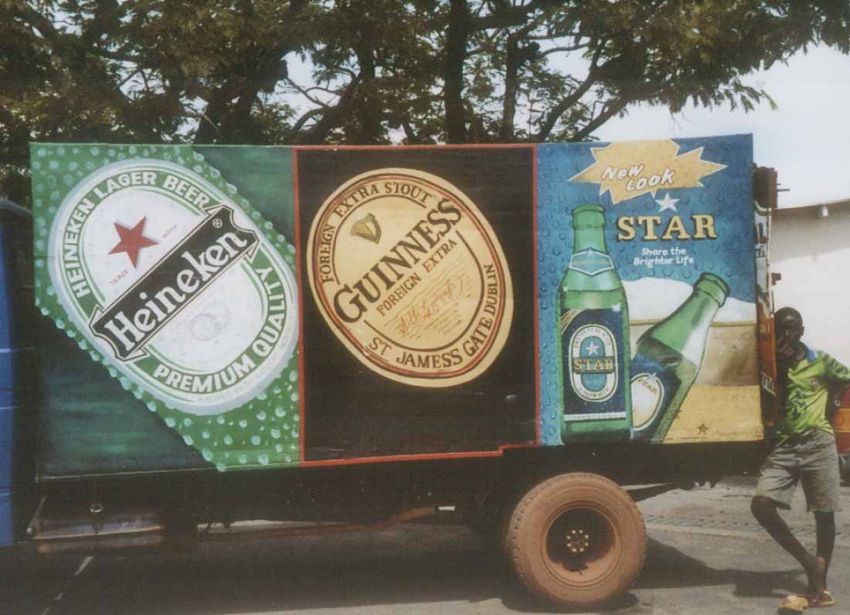
© 2006 Triple Value Strategy Consulting and InReturn Consultancy all rights reserved 32If you want local beer you
have to brew it yourself
© 2006 Triple Value Strategy Consulting and InReturn Consultancy all rights reserved 33A situation in which SLBL would not produce but only import
and wholesale beer would be detrimental for Sierra Leone
In case SLBL would focus entirely on importing and wholesaling Heineken beer it
would have a greatly reduced economic impact:
• A 64% smaller total impact on industrial production
• A 60% smaller total impact on household income
However, perversely, it would pay 66% more taxes due to fact that imported
(Heineken) beer is taxed more heavily
• Because of the narrow tax base, the reduction of industrial production
would not induce a large decrease in taxes (SLBL pays almost all the
taxes of the entire supply chain)
© 2006 Triple Value Strategy Consulting and InReturn Consultancy all rights reserved 34An import scenario would reduce SLBL cash flows to
industry by 64%
Direct and Indirect cash flows from Sierra Leone Brewery to industry
50
USD (mln) 45
40
35
-64%
30
25
20
15
10
5
0
Cash Direct Indirect Total Reduction Reduction Scenario
from cash to cash to cash to of direct of indirect total cash
industry industry industry industry cash cash to
industry
Current situation Import scenario
© 2006 Triple Value Strategy Consulting and InReturn Consultancy all rights reserved 35In the import scenario SLBL would be a cash extractor from
the point of view of households
Current cash flows to different Cash flows to different income
income groups groups in import scenario
Non poor Non poor
Poor Poor
Food poor Food poor
-6 -3 0 3 6 -6 -3 0 3 6
Cash flow Cash flow
(USD mln) (USD mln)
© 2006 Triple Value Strategy Consulting and InReturn Consultancy all rights reserved 36Perversely the tax income of the government would increase
by 66% due to higher excise duties
Direct and Indirect taxes resulting from presence of Sierra Leone Brewery
10
USD (mln) 9 +66%
8
7
6
5
4
3
2
1
0
Current Current Current Extra tax Impact on Total taxes
SLBL indirect total taxes paid in indirect in supply
taxes taxes paid in import taxes chain
generated SLBL scenario import import
supply scenario scenario
chain
Current situation Import scenario
© 2006 Triple Value Strategy Consulting and InReturn Consultancy all rights reserved 37Heineken behaves more like a Bee than as a Locust
© 2006 Triple Value Strategy Consulting and InReturn Consultancy all rights reserved 38Agenda
Introduction and summary
Some model results reflecting Heineken economic Impact
• Current economic impact
• Effect on inequality
• Increase of local raw materials
• Scenario planning facilitated by model
What is needed to adjust the model for other companies and regions
Information about participating NCDO, Heineken, Triple Value and InReturn
© 2006 Triple Value Strategy Consulting and InReturn Consultancy all rights reserved 39What to do when you are a different company and/or you
operate in a different region
Different company in same (or economically similar) region
Map company P&L Direct economic
on stakeholders impact Economic impact of a
Direct and indirect
different company in
economic impact same region
Determination of coefficients of
Input-output matrix of regional economy
Different company in different region
Map company P&L Direct economic
on stakeholders impact Economic impact of a
Direct and indirect
different company in a
economic impact different region
Determination of coefficients of
Input-output matrix of regional economy
Coefficients and parameters change but the model does not
© 2006 Triple Value Strategy Consulting and InReturn Consultancy all rights reserved 40The cost of tailoring the model to your needs are modest and
may be reduced when companies join forces
Use the model for a company in a region for which the economic infrastructure has been
modeled already
• Starting from EUR 10.000
Use the model for a company in a region for which the economic infrastructure has not
been modeled yet
• Starting from EUR 25.000
In order to minimize costs the plan is to create a set of “generic” regional-economic kernels
for a group of companies with geographic overlaps
• Sub Saharan Africa
• Latin America
• China
• South East Asia
• Etc
Through this set one can cost effectively combine company data with the generic kernels to
obtain answers that may have some inaccuracy but are directionally correct
© 2006 Triple Value Strategy Consulting and InReturn Consultancy all rights reserved 41Agenda
Introduction and summary
Some model results reflecting Heineken economic Impact
• Current economic impact
• Effect on inequality
• Increase of local raw materials
• Scenario planning facilitated by model
What is needed to adjust the model for other companies and regions
Information about participating NCDO, Heineken, Triple Value and InReturn
© 2006 Triple Value Strategy Consulting and InReturn Consultancy all rights reserved 42The Dutch National Committee for International Cooperation and Sustainable Development’s (NCDO) core goal is to
strengthen and highlight public support for international cooperation and sustainable development and achievement of the
Millennium Development Goals.
NCDO does this through campaigns, documentaries, subsidies for projects and events. It also initiates its own
programmes and projects if feels other organisations are not devoting enough attention to important themes. One of these
themes is the role of business in development. For this purpose NCDO has run a ‘Business in Development programme
since September 2003.
The Business in Development programme aims to engage Dutch companies and its employees in market-oriented
approaches to poverty reduction. This programme stimulates cooperation between companies in the Netherlands and
developing countries. The Business in Development programme has initiated:
• BiD Challenge www.bidchallenge.org
• Dutch Design in Development www.ddid.nl
• BiD Network www.bidnetwork.org
• MDG measurement framework www.bidnetwork.org/mdgscan
• Economic impact assessment tool www.bidnetwork.org/eiaheineken
• BiD Seminars www.bidnetwork.org/bidseminars
• Small Business Guide www.bidnetwork.org/smallbusinessguide
Visit www.ncdo.nl
© 2006 Triple Value Strategy Consulting and InReturn Consultancy all rights reserved 43The story of Heineken® began in 1864 when Gerard Adriaan Heineken bought a brewery in the heart of Amsterdam. Over 140 years,
four generations of the Heineken family have strengthened and expanded our brands and company in Europe and around the rest of
the globe.
The business of Heineken is about building great brands. The Heineken brand is sold in almost every country in the world. In addition
to the Heineken brand, the company brews and sells more than 170 international premium, regional, local and specialty beers. The
Amstel® brand of the Heineken group is Europe’s third-largest brand. Other famous brands in its portfolio include Cruzcampo®,
Tiger®, Zywiec®, Birra Moretti®, Ochota®, Murphy’s® and Star®. Heineken has the widest presence of all international brewers,
thanks to its global network of distributors and 115 breweries in more than 65 countries. The popularity of the beers of the Heineken
group is growing daily in rapidly-expanding beer markets, such as Russia and China.
In the beer markets of Western Europe, Heineken is the largest brewer and beverage distributor and the region accounts for more
than half of its global sales. Heineken wholesalers also distribute wine, spirits and soft drinks to the on-trade channel. The company
has now extended that leadership to Central and Eastern Europe. Heineken also has an international export operation, shipping beer
to major profitable markets such as the US. In some markets, the company also produces soft drinks.
Heineken is committed to growth and has embraced innovation as a key component of its strategy. The company works to continually
anticipate and meet the changing needs of consumers. Innovations of Heineken are in the areas of production, marketing,
communication, packaging and, in particular, draught beer systems, where the company is an acknowledged leader.
Heineken takes seriously its commitment to conduct business responsibly and sustainably. The company continuously expands its
initiatives to combat alcohol abuse and misuse and works to set and exceed ever-higher standards in the social and environmental
areas of our business.
In 2005, the Heineken group employed an average number of employees of 64,305 worldwide.
See also www.heinekeninternational.com and www.enjoyheinekenresponsibly.com
© 2006 Triple Value Strategy Consulting and InReturn Consultancy all rights reserved 44Triple Value helps its clients to connect Triple Value’s clients are mostly
Access, Allocation and Agility leading multinationals
Base-of-the-pyramid
strategies
Transparency &
Eco-efficiency
reporting
Customer analysis
Stakeholder
Investor analysis
engagement
Reputation Connected to Access
management societal trends
Access to
Agility key markets
Effective and
efficient Allocation
Trend analysis organisation
Economic impact
assessment Value-based management
Non-financial value drivers
Operational efficiency
Management information Visit www.triple-value.com
© 2006 Triple Value Strategy Consulting and InReturn Consultancy all rights reserved 45Mission:
Generate commercial finance strategies in developing countries that stimulate sustainable
entrepreneurship in developing countries and benefit investors
Products:
– Initiate and managing commercial funds investing in SMEs and MFIs in developing
countries
– Provide strategic and financial advisory services regarding investments in SMEs and MFIs
in developing countries
Advisory services:
– Investing in SMEs and MFIs
– Desk research and due diligence on SMEs and MFIs
– Economic impact analysis of SMEs in developing countries
– Public Private Partnerships
– International development and development finance
Partners:
The economic impact study for Heineken/NCDO was performed together with Econovision
Visit www.inreturncapital.com
© 2006 Triple Value Strategy Consulting and InReturn Consultancy all rights reserved 46You can also read


