Edward Lemon - Central Asia Papers - Foreign Policy Research Institute
←
→
Page content transcription
If your browser does not render page correctly, please read the page content below
Central Asia Papers

Edward Lemon
All rights reserved. Printed in the United States of America. No part of this publication may be reproduced
or transmitted in any form or by any means, electronic or mechanical, including photocopy, recording, or any
information storage and retrieval system, without permission in writing from the publisher.

Author: Edward Lemon
Eurasia Program Leadership

Director: Chris Miller
Deputy Director: Maia Otarashvili

Edited by: Thomas J. Shattuck
Designed by: Natalia Kopytnik

© 2019 by the Foreign Policy Research Institute

June 2019

COVER: Designed by Natalia Kopytnik
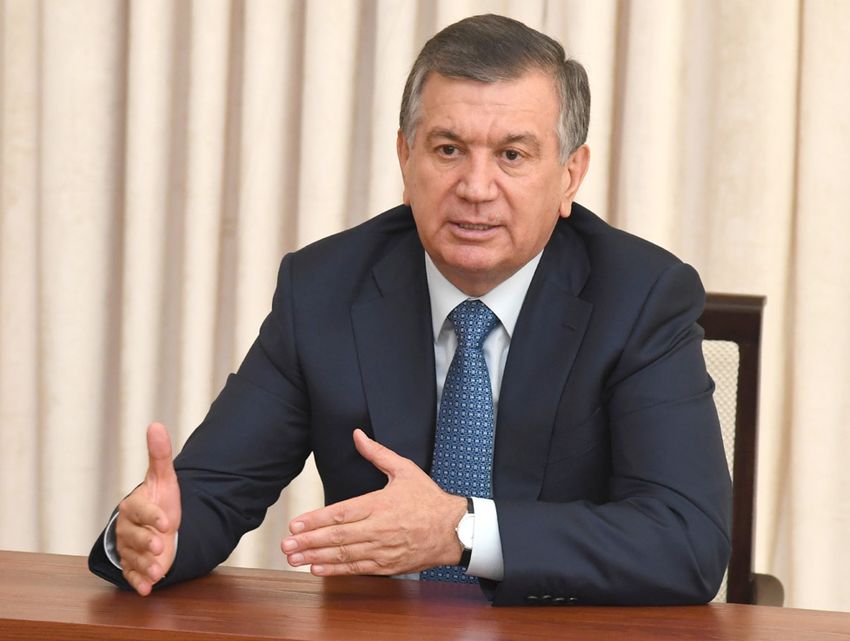
Photography: Flag of Uzbekistan (Adobe Stock). President Mirziyoyev (prezident.uz.)
Our Mission

The Foreign Policy Research Institute is dedicated to bringing the insights of scholarship to
bear on the foreign policy and national security challenges facing the United States. It seeks
to educate the public, teach teachers, train students, and offer ideas to advance U.S. national
interests based on a nonpartisan, geopolitical perspective that illuminates contemporary
international affairs through the lens of history, geography, and culture.

Offering Ideas

In an increasingly polarized world, we pride ourselves on our tradition of nonpartisan scholarship.
We count among our ranks over 100 affiliated scholars located throughout the nation and the
world who appear regularly in national and international media, testify on Capitol Hill, and are
consulted by U.S. government agencies.

Educating the American Public

FPRI was founded on the premise that an informed and educated citizenry is paramount for
the U.S. to conduct a coherent foreign policy. Through in-depth research and events on issues
spanning the geopolitical spectrum, FPRI offers insights to help the public understand our
volatile world.

Championing Civic Literacy

We believe that a robust civic education is a national imperative. FPRI aims to provide teachers
with the tools they need in developing civic literacy, and works to enrich young people’s
understanding of the institutions and ideas that shape American political life and our role in the
world.
About the Initiative
Central Asia is changing rapidly. The five countries in the region have young, growing populations.
The old Soviet generation is leaving the scene, giving way to a new post-Soviet generation that
came of age in independent countries. This new generation must reckon with Russia and China,
both of which shape the region’s politics and economics, and both of which are pushing new
integration schemes via the Eurasian Economic Union and the Belt and Road. Central Asia’s
next generation must also forge new economies that provide jobs beyond oil and gas.

FPRI’s Central Asia Initiative provides non-partisan, objective analysis of trends in Central Asia,
informing policy makers and the public on matters that affect U.S. national interests, including
energy, the Belt and Road Initiative; terrorism and extremism, and competition between
regional powers such as Iran, Turkey, Russia, and China.

About the author

                            Edward Lemon is DMGS-Kennan Institute Fellow at the Daniel Morgan
                            Graduate School in Washington D.C. and a Global Fellow at the Wilson
                            Center. His research examines security issues and political developments
                            in Central Asia. He is the editor of Critical Approaches to Security in Central
                            Asia (Routledge 2018). He holds a PhD in political science from the
                            University of Exeter.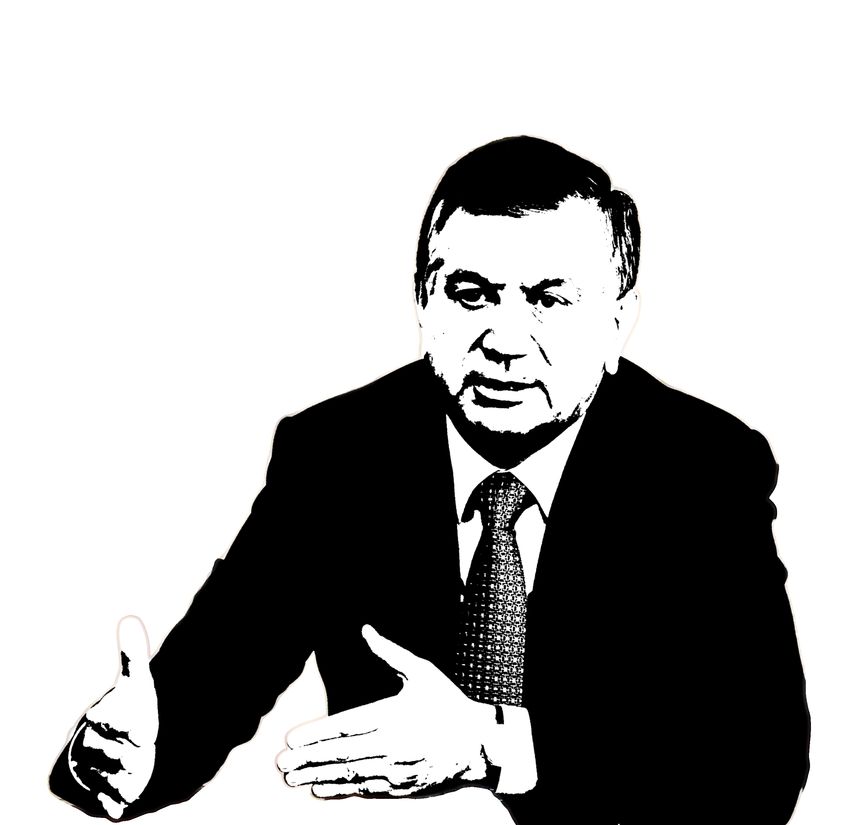
Mirziyoyev’s Uzbekistan:
        Democratization or Authoritarian Upgrading?

    Executive Summary

    Edward Lemon

    Uzbekistan is undergoing a remarkable transformation. After decades of repression and isolation
    under President Islam Karimov, who died in 2016, the government of Shavkat Mirziyoyev
    has embarked on a series of reforms to soften repression, create a freer market to stimulate
    growth and attract foreign investment, replace Karimov-era leaders with young technocrats,
    and repair ties with neighboring Central Asian states. But what we are seeing in Uzbekistan
    is not democratization. Rather, it is “authoritarian upgrading.” Authoritarian upgrading entails
    selectively adopting economic and political reforms to placate the population’s demands for
    democratization, while existing elites capture most of the benefits of the country’s embrace of
    globalization and marketization. The result is a softer authoritarian regime which relies more
    on persuasion than coercion. So far the reforms have been welcomed by many citizens. But if
    the regime fails to deliver on its promises and demand for further change grows, Mirziyoyev’s
    new Uzbek path could meet with resistance from both those who desire a return to Karimov
    era repression and those wanting genuine democratization.

1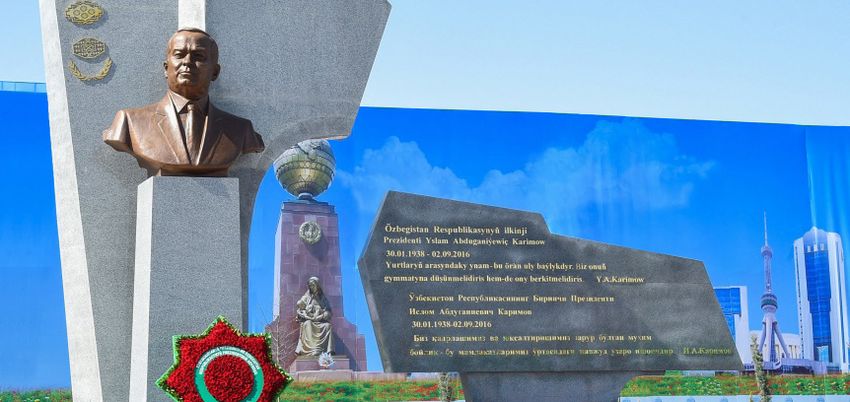
Central Asia Papers

                                Uzbekistan’s New Path
When the first President of Uzbekistan Islam
Karimov died in August 2016, he left behind
a stagnant economy and a repressive political
system. Karimov assumed power in 1989
when he was appointed First Secretary of
the Uzbek Communist Party. Over the years,
he cultivated a strong, paternalistic state,
insisting that the “Uzbek Path”—isolationism
plus widespread repression—was the only
path to ensure stability and stave off outside
interference. Upon Karimov’s death, Shavkat
Mirziyoyev came to power. Mirziyoyev was
very much part of the system that Karimov
created during his long tenure. As governor
                                                                      Shavkat Mirziyoyev, President of Uzbekistan (Source:
of Jizzax province (1996–2001), he gained
                                                                      kremlin.ru)
a reputation as someone “who gets the job
done,” earning the nickname “Tyson,” after
                                                                      welcomed by observers. The International
boxer Mike Tyson, for his aggressive methods
                                                                      Finance Corporation and World Bank lauded
used to enforce directives. Mirziyoyev’s
                                                                      Mirziyoyev’s government for creating an
aptitude led Karimov to appoint him Prime
                                                                      “open economy,”2 the New York Times praised
Minister in 2003, a position he held until
                                                                      him for “going the other way,”3 and U.S.
Karimov’s death. Few observers expected
                                                                      Commerce Secretary Wilbur Ross applauded
such a regime insider to divert from the Uzbek
                                                                      the “political and democratic reforms that
Path, but Karimov’s death and Mirziyoyev’s
                                                                      are underway.”4 But taking Uzbek officials at
rise have proven critical junctures that have
                                                                      their word when they make vague promises
set the country in a new direction.1
                                                                      of reform may be giving Tashkent a “free
Since becoming president in September                                 pass.”5
2016, Mirziyoyev has relaxed repression;
                                                                      True, Mirziyoyev’s reforms are not merely
begun economic reforms intended to shift
                                                                      a demagogical smokescreen for the
the economy from an isolationist, command
                                                                      preservation of authoritarian power. They
economy to a privatized, outward-looking
                                                                      are producing genuine benefits for the
one; liberalized the currency; overhauled
                                                                      population, such as lower repression and
the bureaucracy; and strengthened ties with
                                                                      the economic benefits of increased foreign
neighboring states. These moves have been
                                                                      investment. Yet, while real democratization
1 Andrew Cortell and Susan Peterson, “Altered States: Explaining Domestic Institutional Change,” British Journal of Political Science,
Vol. 29, No. 1 (1999), pp. 177-203.
2 Lilia Burunciuc, Wolfgang Fengler, Wiebke Schloemer and Daria Taglioni, “How Uzbekistan is Transforming into an Open Econo-
my,” Brookings, Dec. 20, 2018, at https://www.brookings.edu/blog/future-development/2018/12/20/how-uzbekistan-is-transforming-in-
to-an-open-economy/.
3 Andrew Higgins, “As Authoritarianism Spreads, Uzbekistan Goes the Other Way,” New York Times, April1, 2018, at https://www.
nytimes.com/2018/04/01/world/asia/uzbekistan-reform.html.
4 “Remarks by Secretary of Commerce Wilbur Ross,” US Embassy in Tashkent, Oct. 23, 2018, at https://uz.usembassy.gov/remarks-by-
secretary-of-commerce-wilbur-ross/.
5 Peter Leonard, “Tashkent Syndrome: Is Uzbekistan Getting a Free Pass?” Eurasianet, May 16, 2018, at https://eurasianet.org/perspec-
tives-tashkent-syndrome-is-uzbekistan-getting-a-free-pass.

                                                                                                                                         2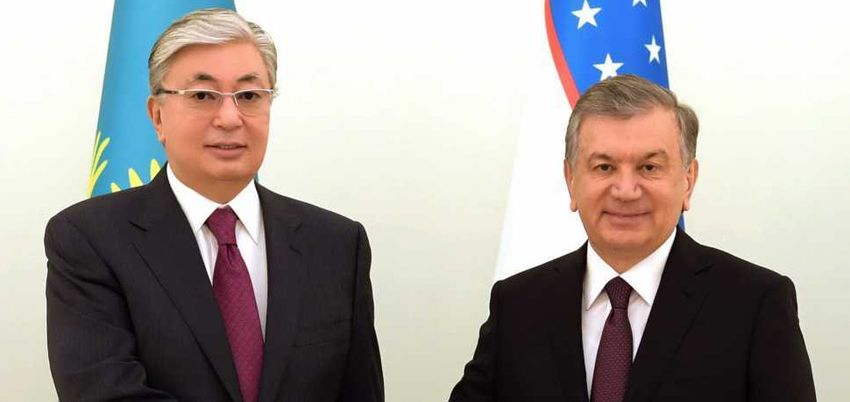
may be possible in the long term, in the short                        upgrading” may produce benefits for citizens
      term, Mirziyoyev’s reform agenda is better                            by relaxing the Karimov-era repression
      understood as “authoritarian modernization”6                          that included state-sanctioned child labor,
      or       “upgrading       authoritarianism.”7                         widespread torture and the detention of over
      Authoritarian modernization involves the                              10,000 political prisoners.11 But it is ultimately
      selective adoption of economic and political                          the elite who will benefit most from the
      reforms to placate the population’s demands                           “upgraded” system. Authoritarian upgrading
      for democratization. Change in Uzbekistan                             allows Mirziyoyev to manage changing
      remains top-down and tightly controlled by                            political, economic, and social conditions,
      Tashkent. The result is a transition towards                          notably the triple threat of globalization,
      more of a “soft authoritarian” regime, which                          markets, and democratization. Cultivating an
      “relies more centrally on the means of                                image as a reformer, Mirizyoyev can bolster
      persuasion than on the means of coercion.”8                           his legitimacy and suppress demand for
                                                                            democratization by providing the population
                                                                            with material benefits. By opening the
                                                                            economy and increasing competitiveness,
In its path to authoritarian                                                the government can harness markets and
modernization, Uzbekistan’s                                                 globalization for its own purposes.
government is looking for models in
                                                                            Authoritarian upgrading in Uzbekistan
countries such as Singapore, China, and                                     features four strategies. First, Mirziyoyev
Kazakhstan, where elites found ways to                                      has implemented market-oriented economic
modernize without democracy.                                                reforms, allowing the ruling elite to capture
                                                                            many of these benefits. Second, he has purged
                                                                            the old elite, bringing in new technocrats
                                                                            to improve efficiency. Third, he has moved
      In its path to authoritarian modernization,                           from a system that views the population
      Uzbekistan’s government is looking for                                as a threat requiring constant discipline
      models in countries such as Singapore, China,                         towards one that manages society through
      and Kazakhstan, where elites found ways to                            looser regulations and new incentives.
      modernize without democracy. Since the                                Fourth, he has strengthened and diversified
      end of the Cold War, the share of global                              Uzbekistan’s external ties.
      gross domestic product (GDP) produced
      by autocratic states has risen from 12 to
      33 percent, buoyed by China’s rise.9 Half of
      the ten countries with the highest average
      incomes are classified as “not free” or “partly
      free” by Freedom House.10
      Uzbekistan’s          model        of      “authoritarian
      6 Luca Anceschi, “Modernising Authoritarianism in Uzbekistan,” OpenDemocracy, July 9, 2018, at https://www.opendemocracy.net/
      od-russia/luca-anceschi/modernising-authoritarianism-in-uzbekistan.
      7 The term was coined by Stephen Heydemann in “Upgrading Authoritarianism in the Arab World,” Brookings Analysis Paper, 13,
      October 2017. For an application of the concept to Uzbekistan see Sebastian Schiek, “Uzbekistan’s Transformation from an “Old” to an
      “Upgraded” Autocracy,” L’Europe en Formation, Vol. 385, No. 1 (2018), pp. 87-103.
      8 Edward Schatz, “Transnational Image Making and Soft Authoritarian Kazakhstan,” Slavic Review, Vol. 67, No. 1 (2008), p. 50.
      9 Roberto Stefan Foa, “Modernization and Authoritarianism,” Journal of Democracy, Vol. 29, No.3 (2018), pp. 129-140.
      10 “World Economic Outlook Database,” International Monetary Fund, April 2019, at https://bit.ly/2X0pfUK
      11 Casey Michel, “Uzbekistan’s Karimov Leaves Behind a Legacy of Repression, Slavery, and Kleptocracy,” The Diplomat, Sept. 3,
      2016, at https://thediplomat.com/2016/09/uzbekistans-karimov-leaves-behind-a-legacy-of-repression-slavery-and-kleptocracy/

 3                                                                                             Foreign Policy Research Institute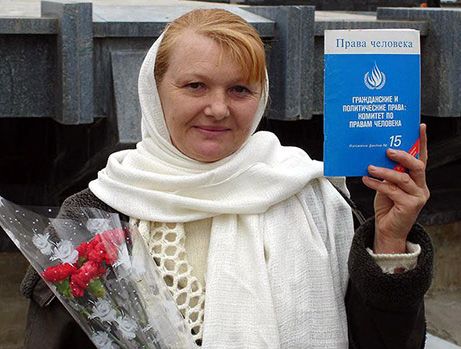
Central Asia Papers

Economic Reform: Strengthening Patronage
Uzbekistan’s economy performed relatively                            the main obstacle to privatization and
                                                                     foreign investment. Two further reforms
well in the years following independence.
Driven by a large domestic market, profitable                        are particularly noteworthy. To further
cotton exports, and the development of                               boost trade, Mirziyoyev signed a decree,
natural gas resources, it became the first                           “On Measures to Further Streamline the
former Soviet republic to regain its pre-1991                        Foreign Economic Activity of the Republic
real GDP level.12 But the economy soon                               of Uzbekistan,” in 2017, reducing tariffs
began to stagnate. From 1996, the Central                            on over 8,000 categories of products
Bank set the exchange rate of the Uzbek                              to an average of 6.45 percent. Second,
currency, the som, preventing investment                             Mirziyoyev’s government has further
and further bolstering corruption by creating                        embarked on tax reform, with the goal of
a large black market for foreign exchange.                           reducing corporate income tax from 14 to
Large, inefficiently managed state-owned                             12 percent.
enterprises continued to dominate the
economy. Cotton prices fell to an all-time
low in 2001, driven by high crop yields
and flat consumption. While economic                                       Since 2013, Uzbekistan has risen
diversification efforts managed to reduce                                  from 146th to 74th place in the World
reliance on revenues from cotton exports,                                  Bank’s “Doing Business” ranking.
the economy continued to be driven by
gold, cotton, and gas, which together made
up 60 percent of export revenues in 2012.13
Officials implemented measures to protect
the economy from foreign competitors. By
2002, tariffs on imported consumer goods                             Since 2013, Uzbekistan has risen from 146th
reached 90 percent. Borders with neighboring                         to 74th place in the World Bank’s “Doing
states were closed. Millions of citizens were                        Business” ranking. Foreign investment
forced to move abroad, primarily to Russia,                          increased from $1.9 billion in 2016 to $4.2
in search of work.                                                   billion in 2017.14 Mirziyoyev returned from
                                                                     the inaugural Belt and Road Forum in Beijing
Since 2016, Uzbekistan’s government                                  in May 2017 with 100 investment deals
has undertaken a series of policies                                  worth over $20 billion, although only $1.3
to liberalize the economy. The most                                  billion of projects are listed on the Ministry
significant economic reform to date came                             of Investment and Foreign Trade’s website.15
in September 2017 when the Central                                   According to the president, 456 projects
Bank introduced the convertibility of the                            involving foreign participation, worth $23
som into foreign currencies, removing                                billion, are currently being implemented in

12 Mamuka Tsereteli, “The Economic Modernization of Uzbekistan,” Silk Road Paper, April 2018, at http://isdp.eu/publication/eco-
nomic-modernization-uzbekistan/.
13 Roberto Bendini. “Uzbekistan: Selected Trade and Economic Issues.” European Parliament, Sept. 12, 2013, at http://www.europarl.
europa.eu/RegData/etudes/briefing_note/join/2013/491518/EXPO-INTA_SP(2013)491518_EN.pdf.
14 “Uzbekistan’s Foreign Investments Inflow at $4.2 billion YTD - Investments Committee Chief,” Tashkent Times, Nov. 9, 2017, at
http://tashkenttimes.uz/economy/1664-uzbekistan-s-foreign-investments-inflow-at-4-2-billion-ytd-investments-committee-chief.
15 “Проекты с участием ПИИ” [Projects Involving FDI], Ministry of Investment and Foreign Trade, at https://invest.gov.uz/en/in-
vest-projects-taxonomy/perechen-realizuemyh-proektov-s-uchastiem-pii/.

                                                                                                                                     4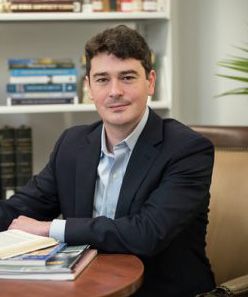
Uzbekistan.16 Trade has also surged. Exports
      increased by more than 15 percent in
      2017, with Uzbekistan signing export deals
      worth $11 billion covering an undisclosed
      time period with representatives from 60
      states, organizations, and companies.17

Under Karimov, Uzbekistan was one
of the most corrupt and kleptocratic
countries in the world. Officials used
links to the state to amass vast personal
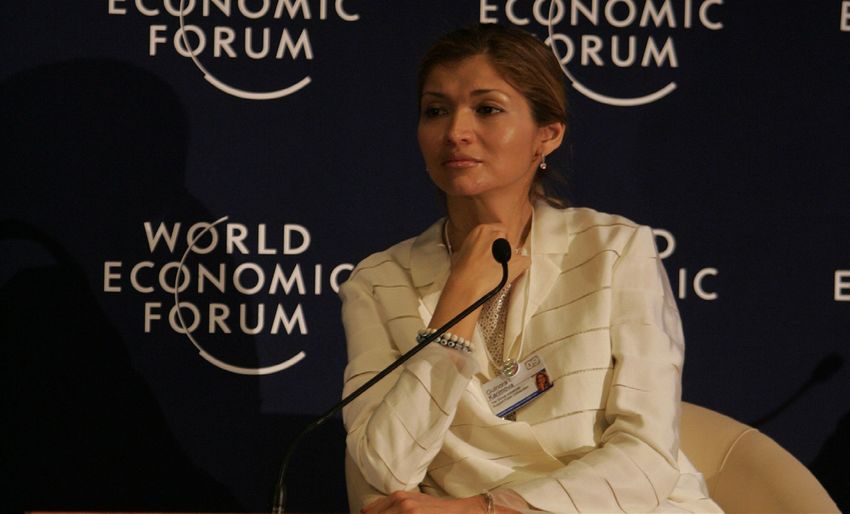
fortunes.                                                                    Gulnara Karimova in 2009. (Source: World Economic Forum)

                                                                             Under Karimov, Uzbekistan was one of the
      As authoritarian upgrading seeks to                                    most corrupt and kleptocratic countries
      increase economic opportunities for regime                             in the world. Officials used links to the
      insiders while mitigating public pressure                              state to amass vast personal fortunes.
      for political reforms, the regime’s economic                           Karimov’s daughter, Gulnara Karimova, for
      reforms primarily serve to strengthen                                  instance, used her position to solicit over
      the current patronage system. While the                                $1 billion in bribes from investors in the
      government relies on the private sector to                             telecommunications market.19 Mirziyoyev’s
      boost economic performance and spur job                                government has introduced a new law
      creation, the state remains the prominent                              on combating corruption, initiating cases
      economic actor, directing investments                                  against 1,566 officials in the first half of
      and allocating rents. Eighty percent of                                2017 alone.20 But whether this is a genuine
      Uzbekistan’s 603 joint-stock companies are                             attempt to clean up or an excuse to purge
      state-owned, as is 83 percent of capital in                            bureaucrats—as is often the case in the former
      the banking sector.18 Citizens may benefit                             Soviet Union—remains unclear. What is clear
      from new jobs, lower corruption, and new                               is that grand corruption remains a problem in
      opportunities for entrepreneurship, but                                Uzbekistan. Officials appear to be siphoning
      ultimately, it is regime elites and their allies                       off the benefits of increased investment. A
      who are capturing the greatest share of                                recent investigation indicated that Tashkent
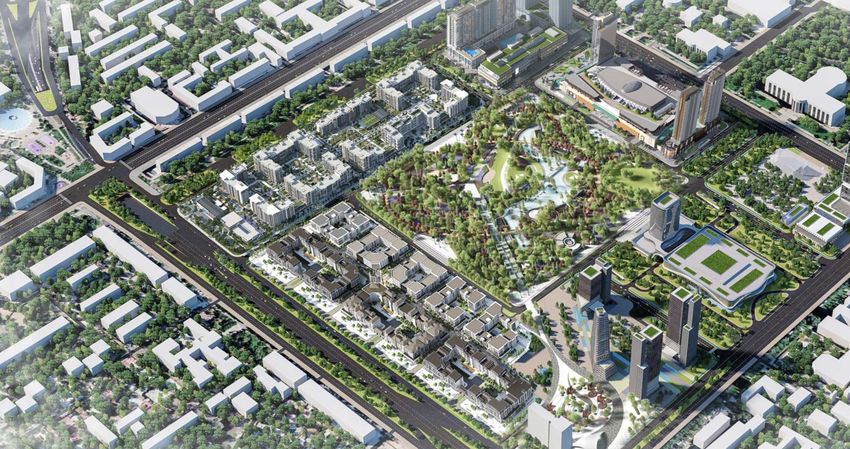
      the benefits generated by Uzbekistan’s                                 City—a flagship $1.3 billion megaproject of
      economic opening.                                                      Mirziyoyev’s presidency—is linked to entities
                                                                             close to Akfa Group, a conglomerate owned

      16 “Address by the President of the Republic of Uzbekistan Shavkat Mirziyoyev to Oliy Majlis,” Dec. 28, 2018, at https://www.un.int/
      uzbekistan/news/address-president-republic-uzbekistan-shavkat-mirziyoyev-oliy-majlis.
      17 “Uzbekistan Plans to Increase Exports’ volume to US$30bn by 2022,” UzDaily, December 28, 2017, at https://www.uzdaily.uz/en/
      post/42156.
      18 “Address by the President of the Republic of Uzbekistan Shavkat Mirziyoyev to Oliy Majlis,” Dec. 28, 2018, at https://www.un.int/
      uzbekistan/news/address-president-republic-uzbekistan-shavkat-mirziyoyev-oliy-majlis.
      19 Miranda Patrucic, “How The President’s Daughter Controlled the Telecom Industry,” Organized Crime and Corruption Reporting
      Project, March 22, 2015, at https://www.occrp.org/en/corruptistan/uzbekistan/gulnarakarimova/presidents-daughter-controlled-tele-
      com-industry.
      20 “1,566 Corrupt Officials Reportedly Identified in Uzbekistan in H1 2017,” Asia Plus, December 16, 2017, at https://www.asiaplus.tj/
      en/news/centralasia/20171226/1566-corrupt-officials-reportedly-identified-in-uzbekistan-in-h1-2017.

 5                                                                                              Foreign Policy Research Institute
Central Asia Papers
Plans for Tashkent City (Source: tcibc.uz)
by Jaxongir Artikxodjaev, the Mayor of Economic reforms are making Uzbekistan a
Tashkent.21 Artikxodjaev, despite his dubious more attractive investment destination and
financial interests, is thus directly responsible improving the business climate. As the country
for overseeing the project’s implementation. becomes more integrated into global markets,
spill-over benefits enhance the regime’s
Officials are not the only ones cashing in on the standing among the population. But the
country’s economic reforms. Sidelined under main beneficiaries of the new opportunities
Karimov, Uzbekistan’s oligarchs are staging a created by selective processes of economic
comeback. Alisher Usmanov, an Uzbek native liberalization are the country’s elite who
who has become Russia’s seventh-richest continue to capture benefits through their
man, has invested over $7 billion in projects patronage networks. As privatization moves
since 2017. These include a tourism zone forward, those with ties to the regime will
in Bukhara, a metallurgical plant, a football benefit most from the sale of lucrative state-
team, and an oil-supply contract.22 Belgium- owned enterprises. The government is looking
based Pattoh Chodiev opened a branch of his to improve economic performance without
charitable foundation, International Chodiev conceding political control or relinquishing
Foundation, in Tashkent and invested $300 elite dominance over the economy.
million in a metallurgical plant in the city. His
nephew Olim Chodiev plans to invest $300
million “to develop seven tungsten deposits
in Uzbekistan, aiming to account for 6 percent
of global output.”23
21 Kristian Lasslett. “Uzbekistan Ltd: Private-public Interests Clash in Flagship Project,” OpenDemocracy, Jan. 29, 2019, at https://
www.opendemocracy.net/en/odr/uzbekistan-ltd/.
22“Узбекские миллиардеры в России хотят вложить капитал в экономику своей малой родины” [Uzbek Billionaires in Russia to
Invest in the Economy of their Homeland], Radio Ozodlik, April 6, 2017, at https://rus.ozodlik.org/a/28413517.html.
23 “Luxembourg’s IFG Capital Seeks to Tap Tungsten Deposits in Uzbekistan,” Reuters, Oct. 1, 2018, at https://in.reuters.com/article/
ifg-capital-uzbekistan-tungsten/luxembourgs-ifg-capital-seeks-to-tap-tungsten-deposits-in-uzbekistan-idINKCN1MB1JT.
6Purging the Elite, Promoting the Technocrats
Under Karimov, the government adhered He had run Uzbekistan’s security services for
almost 23 years, growing rich and powerful in
to a concept borrowed from the Brezhnev-
era of Soviet history: “stability of the cadres.” the process. Mirziyoyev managed to remove
Officials often kept their positions for years, the security chief in January 2018 following
even decades, allowing them to amass power. criticism that his agency engaged in “systemic
In an effort to consolidate his position, violations of ordinary people’s rights.”26
Mirziyoyev has broken from the mold, quickly In addition to the State Security Service,
and quietly reshuffling the Uzbek leadership. Mirziyoyev restricted the authority of two
Of 66 ministers, first deputy ministers, other powerful institutions from Karimov’s
chairpersons of state committees, and CEOs day: the Prosecutor General’s Office and
of state companies, only Foreign Minister the Ministry of Justice. Mirziyoyev met with
Abdulaziz Kamilov has retained his position prosecutors in January 2017, announcing
from Karimov’s time. Mirziyoyev has purged that he would establish public control over
all government institutions at the national the office and prevent it from being used
and local levels, rotating cadres, removing for repression. Later that year, he castigated
powerful Karimov-era appointees, bringing Uzbekistan’s prosecutors, calling them “the
in a new generation of young technocrats, biggest thieves” in the “old rotten system.”27
and rehabilitating some who had fallen out Mirziyoyev similarly overhauled the Ministry
of favor under the previous administration.24 of Justice, a so-called “hidden hand” that
These moves are part of a strategy to bolster manipulated Uzbek institutions under
bureaucratic efficiency, but more importantly Karimov. Western-educated technocrat
they are aimed at creating a new elite loyal to Ruslanbek Davletov now heads the ministry.
Mirziyoyev.
Mirziyoyev’s appointees are not only well-
When Karimov died, three people emerged as educated, but they’re also individuals that
potential successors: Prime Minister Shavkat the new president believes will be loyal.
Mirziyoyev, Finance Minister Rustam Azimov, Head of the presidential administration
and Security Chief Rustam Inoyatov, who was Zainilobiddin Nizomiddinov worked with
viewed more as a kingmaker than a potential Mirziyoyev in the Cabinet of Ministers
king. Mirziyoyev was selected to organize before 2016 and reportedly influences the
Karimov’s funeral, a sign since Soviet times president’s personnel decisions.28 Following
that he was the chosen successor. A day after the authoritarian playbook, Mirziyoyev
his presidential inauguration in January 2017, appointed his sons-in-law Otabek Shahanov
Mirziyoyev removed Azimov from his post. and Oybek Tursonov as deputy head of the
He made the former finance minister a deputy president’s security service and deputy
prime minister, only to fire him five months head of the presidential administration,
later.25 Inoyatov proved harder to dismiss.
24 Bruce Pannier, “How Shavkat Mirziyoev Became Uzbekistan’s Supreme Leader,” RFE/RL, February 3, 2018, at https://www.rferl.
org/a/uzbekistan-mirziyoev-consolidation-of-power/29016113.html.
25 Bruce Pannier, “Rustam Azimov, Once Seen As Potential Uzbek President, Dismissed From Government,” RFE/RL, June 6, 2017, at
https://www.rferl.org/a/qishloq-ovozi-azimov-out-uzbekistan-government/28531755.html.
26 “Powerful Uzbek Security Service Chief ‘Dismissed’,” RFE/RL, Jan. 31, 2018, at https://www.rferl.org/a/uzbekistan-powerful-secu-
rity-chief-inoyatov-ousted/29009224.html.
27 “Шавкат Мирзияев назвал прокуроров «самыми большими ворами» (видео)” [Shavkat Mirziyoyev Called Prosecutors “the
Biggest Thieves”], Radio Ozodlik, Aug. 4, 2017, at https://rus.ozodlik.org/a/28658153.html.
28 “Держать совет. Кто будет управлять Узбекистаном вместе с президентом” [Hold Advice. Who Will Rule Together with the
President], Fergana News, Sept. 3, 2018, at https://www.fergananews.com/articles/10156.
7 Foreign Policy Research InstituteCentral Asia Papers
Monument to Islam Karimov in Tashkent (Source: prezident.uz)
respectively.29 His youngest daughter is now an adviser on law enforcement. Influential
deputy head of the Department for Preschool “gray cardinal” Zilemkhan Khaidarov heads
Educational Institutions at the Ministry of the Financial and Economic Department of
Education. Former deputy prime minister the president’s administration,30 and Umar
Abdulla Aripov, who lost his job in 2012 Ismailov, the president’s adviser on the
after the General Prosecutor’s Office filed civil service, held the same position under
criminal charges against him for colluding Karimov and used to work for the secret
with Karimov’s daughter to shake down the services. Although he lost his position as State
telecommunications companies, became Councilor for Culture, Press and Creative
prime minister in 2016. Former Tashkent Organizations in August 2018, Khayridden
Sultanov, who played a key role in censorship
Mayor Kozim Tulaganov, convicted of
under Karimov, is still a speechwrier for
economic crimes and sentenced to 20 years
Mirziyoyev. 31
in prison in 2006, became deputy chairman
of the Committee for Architecture and Moves to restrict the abuse of power by law
Construction. enforcement and to bring young, educated,
apolitical technocrats into the government
At the same time, Mirziyoyev know to keep
will make the government more efficient
power players from Karimov’s regime close.
Many members of Karimov’s inner circle – and more transparent. But this shift from
mostly those with links to law enforcement dominance of the security services to a
– remain within the president’s reach. reliance on specialists, family members, and
Former security chief Inoyatov has retained rehabilitated officials is about creating an elite
his influence and is now an adviser on legal that is loyal to Mirziyoyev and that shares his
reforms, while Former Minister of Emergency vision of authoritarian upgrading.
Situations Tursinkhan Khudaibergenov is
29 Rafael Sattarov, “Uzbekistan’s New Balance of Forces,” Carnegie, Sept. 15, 2017, at https://carnegie.ru/commentary/73122.
30 “Рустам Иноятов и Зилемхан Хайдаров получили новые посты в администрации президента Узбекистана” [Rustam Inoyator
and Zilemkhan Khaidarov Received New Posts in the Presidential Administration of Uzbekistan], Fergana News, Aug. 28, 2018, at
https://www.fergananews.com/news/32314.
31 “Куранбаев и Султанов лишились постов госсоветников президента Узбекистана” [Kuranbayev and Sultanov Lost Their Posts
as Advisers to the President of Uzbekistan], Fergana News, Aug. 27, 2018, at https://www.fergananews.com/news/32292.
8Softening Repression
Under Karimov, Uzbekistan appeared Censorship has also been relaxed to a degree.33
In May 2019, the State Information and Mass
annually in Freedom House’s “worst of
the worst” list for its widespread human Communication Agency restored access to a
rights abuses. Torture was systematic in dozen foreign news websites, including the
the criminal justice system. Thousands BBC and leading independent site Fergana.
were jailed on politically motivated charges. ru, some of which were blocked since 2004.34
Child labor, especially during each year’s Citizens and the media have begun discussing
cotton harvest, was widespread and genuine social problems, including corruption
facilitated by the government. Freedom of and child labor.
expression was severely limited. After the
government expelled many international
non-governmental organizations (NGO) and
media outlets following a state-sponsored Rather than constituting systematic
massacre of hundreds of civilians in Andijon change, these conciliations have been
in 2005, Uzbekistan became virtually closed piecemeal, aimed at signaling to foreign
to independent scrutiny. observers and the domestic population
Repression came at a cost. Uzbekistan became that the country is slightly less repressive.
isolated from the West, and the security
services become the most powerful force in
the country. To fend off scrutiny and signal
that Uzbekistan is opening up, Mirziyoyev’s
path of authoritarian upgrading looks to Child labor has been “significantly reduced,”
soften repression. Regarding criminal justice, but not eliminated, since Mirziyoyev issued a
Mirziyoyev issued a decree prohibiting the decree aimed at ending the practice in May
use of torture to extract confessions and 2018.35 Officials have started to give more
outlawing such confessions as evidence regular press conferences. While the Karimov
in court proceedings. The government regime viewed religion as a potentially
has pardoned 2,700 political prisoners.32 dangerous force in need of tight regulation
Among those released include the longest- and suppression, Mirziyoyev’s government
held journalist in the world, Muhammad has embraced a more permissive attitude.
Bekjanov, who was detained since 1999, Emboldened by the new situation, imams in
along with human rights defender Azamjon Tashkent have begun broadcasting the Adhan
Farmonov, journalist Solijon Abdurahmonov,
call to prayer over loudspeakers for the first
and civil society leader Agzam Turgunov. The
time in a decade.36 Yet, these changes also
Ministry of Internal Affairs further removed
18,000 people from its blacklist of suspected have limits. Under Uzbekistan’s Religion Law,
extremists in early 2018. all religious activities need state permission.
32 “Uzbek President Mirziyoev Pardons 2,700 Convicts With Decree.” RFE/RL, 7 December 2017, https://www.rferl.org/a/uzbeki-
stan-mirzyoev-amnesty-2700/28902611.html.
33 “‘You Can’t See Them, but They’re Always There:’ Censorship and Freedom of the Media in Uzbekistan,” Human Rights Watch,
March 28, 2018, at https://www.hrw.org/sites/default/files/report_pdf/uzbekistan0318_web_0.pdf.
34 “Uzbek Government Says It Has Unblocked Prominent Independent Websites,” RFE/RL, May 11, 2019, at https://www.rferl.org/a/
uzbek-government-says-it-has-unblocked-prominent-independent-websites-/29935101.html
35 “U.S. Lifts Uzbek Cotton Ban, Saying Forced Child Labor ‘Significantly Reduced,”’ RFE/RL, March 28, 2019, at https://www.rferl.
org/a/u-s-lifts-uzbek-cotton-ban-child-labor-educed-/29845439.html
36 Mukhammadsharif Mamatkulov. “Emboldened by Change, Some Uzbek Imams Turn on Loudspeakers for Call to Prayer.” Reuters,
Dec. 11, 2017, at https://www.reuters.com/article/us-uzbekistan-islam/emboldened-by-change-some-uzbek-imams-turn-on-loudspeak-
ers-for-call-to-prayer-idUSKBN1E51KQ.
9 Foreign Policy Research InstituteCentral Asia Papers
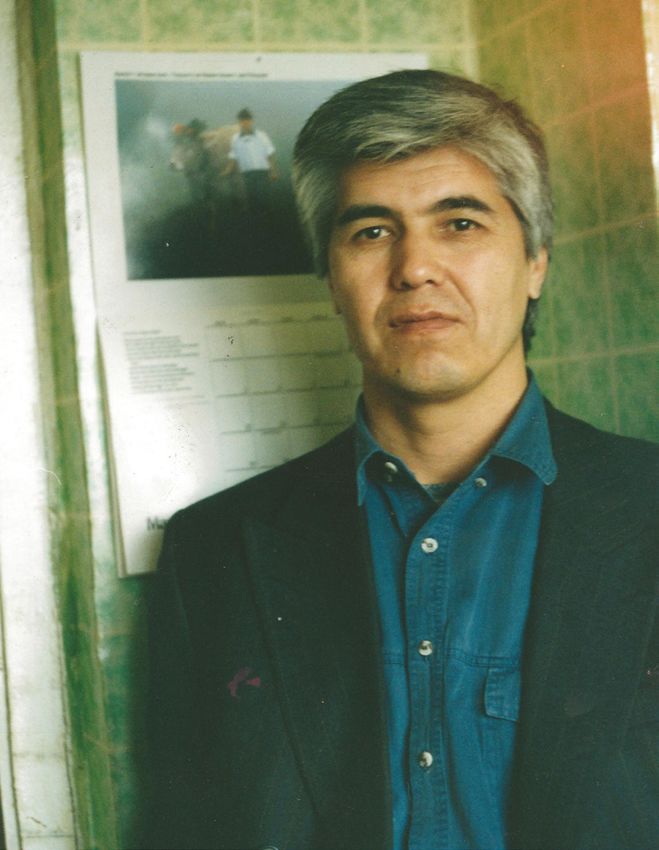
Uzbek activist Elena Urlaeva (Source: civicsolidarity.org) and Muhammad Bekjanov (Source: uz.usembassy.gov)
While parliament adopted a road map to In September 2018, police detained eight
relax regulations on religious activities, the conservative religious bloggers who criticized
government introduced new guidelines the regime for its treatment of the faithful.38
banning religious clothing in schools and Other journalists and civil society activists
universities, including the newly-established have been harassed by law enforcement.39
Islamic Academy, in August 2018.37
Despite political reforms, Uzbekistan remains
Rather than constituting systematic change, a de-facto one party state. Although the
these conciliations have been piecemeal, ruling Liberal Democratic Party shares seats
aimed at signaling to foreign observers and in the country’s Supreme Assembly with four
the domestic population that the country other parties, all of them are pro-presidential.
is slightly less repressive. Broader political With parliamentary elections scheduled for
liberalization remains elusive. Political the end of 2019, no opposition movement
contestation is still tightly controlled by has emerged in the country.40 The country’s
the regime, which has a limited tolerance leading opposition party, Erk, remains
unregistered, and its leader Muhammad Salih
for independent criticism. In March 2017,
is still in exile. No new opposition party has
for example, human rights defender Elena
managed to gain registration since Mirziyoyev
Urlaeva was beaten and forcibly admitted came to power in 2016. It appears that the
to a psychiatric facility in Tashkent for 23 ruling Uzbek Liberal Democratic Party will
days to prevent her from meeting with continue to dominate the political scene.
representatives of the World Bank to discuss
the practice of forced labor in Uzbekistan.
37 “Has Mirziyoyev Really Brought Religious Liberty to Uzbekistan?” Freedom House, Jan. 16, 2019, https://freedomhouse.org/blog/
has-mirziyoyev-really-brought-religious-liberty-uzbekistan
38 Catherine Putz, “Conservative Religious Bloggers Detained in Uzbekistan.” The Diplomat, Sept. 6, 2018, at https://thediplomat.
com/2018/09/conservative-religious-bloggers-detained-in-uzbekistan/
39 “Uzbekistan: Some public criticism of security services surfaces but open public debate remains far-off,” International Partner-
ship for Human Rights, March 5, 2018, at https://iphronline.org/public-criticism-security-services-surfaces-open-public-debate-re-
mains-far-off.html.
40 “Uzbekistan Remains Desolate Place for Opposition Politics,” Eurasianet, Aug. 13, 2018, at https://eurasianet.org/uzbekistan-re-
mains-desolate-place-for-opposition-politics.
10The Pursuit of Regional Hegemony
Upon independence, Uzbekistan was well- Union, regional trade between the Central
Asian states constituted 20 percent of their
positioned to become Central Asia’s leading
power. It is the only country to border total turnover. By 2012, regional trade
every other state in the region, including had fallen to under 5 percent.42 Thanks to
Afghanistan. It had the largest population, the booming commodity prices, market-oriented
strongest army, and a tradition of operating as reforms, and efforts to maintain relations with
the region’s administrative center since tsarist external partners, Kazakhstan’s economy is
times. Yet, disputes over water and borders, now twice as large as Uzbekistan’s.
plus personal animosity towards the other
presidents of the region, led the Karimov
regime to cut Uzbekistan off.
Since coming to power, the Uzbek
Tensions were highest with neighboring president has prioritized relations with
Tajikistan. Relations between the two neighbors. Rather than Moscow or
countries typify Karimov’s dispute-laden
foreign policy.41 When civil war broke out in Beijing, he chose Turkmenistan for his
Tajikistan in 1992, the Uzbek government first foreign trip.
sent troops to help Tajik President Emomali
Rahmon restore order. But ties rapidly
deteriorated when the Tajik government
accused Uzbekistan of supporting Colonel
Makhmud Khudoberdiyev, who invaded Consistent with authoritarian upgrading,
north Tajikistan in 1998. In turn, the Uzbek Mirizyoyev looks to develop international
government accused Tajikistan of harboring linkages to capture the benefits of increased
the Islamic Movement of Uzbekistan, trade and investment. He also aims to
which attempted an armed incursion into reposition Uzbekistan as the region’s
Uzbekistan in 1999. Uzbekistan mined the hegemon. Success in these ventures
border in 1999 and introduced a visa regime in will dampen calls for broader political
2001. The dispute deepened when Tajikistan liberalization. Since coming to power, the
resumed construction on the massive Rogun Uzbek president has prioritized relations with
dam in 2008, which Karimov’s government neighbors. Rather than Moscow or Beijing, he
complained would restrict the amount of chose Turkmenistan for his first foreign trip.
water available for irrigation. Customs officials In his first year in office, Mirziyoyev made 11
from Uzbekistan began preventing rail freight visits, two working visits, and 15 phone calls with
from passing into Tajikistan in December presidents of neighboring countries, including
2009. After what Uzbekistan described as the first state visit from Uzbekistan to Tajikistan
a “terrorist” attack in November 2011, all since 2000.43 In 2018, Mirziyoyev continued
traffic was halted. Trade dwindled from $230 these efforts, making seven visits to neighboring
million in 2008 to $14.9 million in 2015. states. In September 2017, he announced at
the UN General Assembly the dawn of a “new
Immediately after the collapse of the Soviet political atmosphere” in the region, based on
41 Edward Lemon, “The Transformation of the Uzbek-Tajik Relationship,” Eurasia Daily Monitor, March 12, 2018, at https://james-
town.org/program/transformation-uzbek-tajik-relationship/
42 Johannes Linn, “Central Asian Regional Integration and Cooperation: Reality or Mirage?” The EDB Eurasian Integration Yearbook
2012, at https://www.brookings.edu/wp-content/uploads/2016/06/10-regional-integration-and-cooperation-linn.pdf.
43 Iskander Zakirov and Yuliya Nevskaya, “Uzbekistan’s New Foreign Policy Doctrine,” CACI-Analyst, Sept. 18, 2017, at https://
www.cacianalyst.org/publications/analytical-articles/item/13470-uzbekistans-new-foreign-policy-doctrine.html
11 Foreign Policy Research InstituteCentral Asia Papers
President Kassym-Jomart Tokayev and President of Uzbekistan Shavkat Mirziyoyev after signing the Joint Statement in
Tashkent April, 2019. (Source: mfa.gov.kz)
“good-neighborliness.”44 outside of Central Asia were also frosty. Karimov
openly defied Moscow’s attempts to enhance
Mirziyoyev’s comments are more than rhetoric. its influence in the region, saying that he did
Uzbekistan has settled Soviet-era border not want a return of the Soviet Union. After the
disputes with Kyrgyzstan, Kazakhstan, and United States government criticized his handling
Tajikistan. It has also tried to position itself as a of the Andijon massacre, Karimov evicted the
leader in addressing transnational issues in the U.S. military from its base in Karshi-Khanabad.
region. In March 2018, an informal summit with Relations with China were the most consistent,
the five Central Asian states took place in Astana as Karimov’s government viewed ties with
after a 15-year hiatus.45 Tashkent also hosted China as a means to push back against Russia’s
an international conference on Afghanistan in hegemonic aspirations in the region. China
March 2018, signaling its desire to play a role became Uzbekistan’s largest investor in 2013
in settling the region’s most significant crisis. and leading trade partner in 2015, positions it
Uzbekistan’s trade volume increased by 11.3 has since maintained.
percent in 2017, with the largest gains coming
from within Central Asia.46 Since 2015, trade Like other states in the region, Mirziyoyev
with Kazakhstan has risen by 25 percent to now is pursuing a “multivector” foreign policy,
reach $2.5 billion; trade with Kyrgyzstan has trying to avoid dependence on any one outside
increased 68 percent to $336 million; and power. China and Russia remain the country’s
trade with Tajikistan has increased a staggering main external trade partners, representing
nineteen-fold to $281.5 million in 2018. 19 and 18 percent of total trade, respectively.
Trade turnover between Russia and Uzbekistan
Under Karimov, relations with external powers
44 “Address by H.E. Mr. Shavkat Mirziyoyev, President of the Republic of Uzbekistan at the General Debate of the 72nd Session of
the United Nations General Assembly,” United Nations, Sept. 19, 2017, at https://gadebate.un.org/sites/default/files/gastatements/72/
uz_en.pdf.
45 Georgi Gotev. “Astana Hosts Little-publicised Central Asia Summit,” Euractiv, March 16, 2018, at https://www.euractiv.com/section/
central-asia/news/fri-astana-hosts-little-publicised-central-asia-summit/.
46 “Summary of 2017 in Foreign Trade Policy of the Republic of Uzbekistan,” Embassy of Uzbekistan in New Dehli, Jan. 26, 2018, at
http://www.uzbekembassy.in/summary-of-2017-in-foreign-trade-policy-of-the-republic-of-uzbekistan/.
12increased by 21 percent in 2018 to $5.7 billion.47 with U.S.-based companies.51 Uzbekistan
Moscow has simplified the customs regime for has also diversified international linkages by
Uzbek agricultural exports and promised to strengthening ties with the Gulf states, South
invest in a $13 billion nuclear power plant.48 Korea, Iran, and Turkey. Mirziyoyev’s trip to
Between two and three million Uzbeks work Seoul in November 2017 brought $9 billion
in Russia, sending back $3.9 billion in 2017 and in investment deals in the banking, energy,
creating a dependency that gives Russia lasting chemical, and mining sectors.52
influence over Tashkent.49 But Uzbekistan has
still managed to resist Russia’s attempts to re- Uzbekistan is emerging from decades of
integrate it into the Collective Security Treaty isolation. The transformation of its relations with
Organization—which Uzbekistan left in 2012— neighboring Central Asian states has been the
and to join the Eurasian Economic Union. signature achievement of the new government
and has been welcomed across the region. Thus
far, Mirziyoyev’s government has also managed
to balance relations with external powers,
thereby attracting greater investment and
The United States remains the distant strengthening ties to the global system. As with
great power in the region, lacking the economic reforms, the government’s efforts
regional influence of Russia and China, to boost trade and investment are driven by a
although economic reforms have paved desire to modernize Uzbekistan’s long-isolated
authoritarian state. Following Kazakhstan
the way for increased U.S. investment. and China’s lead, Uzbekistan is opening up
its economy to outside investment, aiming to
raise living standards and bolster the regime’s
legitimacy without the need to decentralize
China is the country’s leading trade partner, with political power.
over $6 billion in trade in 2018. It also has over
$7.8 billion in active investments in Uzbekistan,
including Beijing’s largest project in Central
Asia, the $500-million Angren-Pap tunnel.50
Mirziyoyev is keen to secure investment projects
and place Uzbekistan at the center of China’s Belt
and Road Initiative. The United States remains
the distant great power in the region, lacking
the regional influence of Russia and China,
although economic reforms have paved the
way for increased U.S. investment. Uzbekistan
has signed investment deals worth $2.6 billion
47 Abdul Kerimkhanov, “Trade Between Uzbekistan, Russia Increases by 21 pct.,” AzerNews, Jan. 18, 2019, at https://www.azernews.
az/region/144209.html.
48 “Remittances to Central Asia Surge but Fall Short of Historic Highs,” Eurasianet, May 22, 2018, at https://eurasianet.org/remittanc-
es-to-central-asia-surge-but-fall-short-of-historic-highs.
49 Ibid.
50 “China Becomes Largest Trade Partner of Uzbekistan Again,” Xinhua, Nov. 16, 2018, at http://en.silkroad.news.
cn/2018/1116/120030.shtml.
51 “Uzbekistan, US Firms Sign $2.6 billion Worth of Deals at Uzbek-American Business Forum,” Tashkent Times, Sept. 21, 2017, at
http://tashkenttimes.uz/business/1456-uzbekistan-us-firms-sign-2-6-billion-worth-of-deals-at-uzbek-american-business-forum.
52 “South Korea and Uzbekistan Sign $9bn Investment Package,” Eurasian Business Briefing, Nov. 24, 2017, at https://www.eurasian-
businessbriefing.com/south-korea-uzbekistan-sign-9bn-investment-package/.
13 Foreign Policy Research InstituteCentral Asia Papers
What’s Next for Uzbekistan?
Speaking for the first time as president to Relaxing repression, although welcome, also
comes with risks. As citizens are given greater
the UN General Assembly in 2017, Miriyoyev freedoms while expecting the government to
promised to “build a democratic state and a deliver on its promised reforms, the potential
just society.”53 Karimov’s death provided an for opposition to the government will grow. If
opportunity to transform existing institutions the government faces protests over foreign
and reset the state’s relationship with society. investments, as has occurred in Kyrgyzstan and
At present, despite some moves to liberalize Kazakhstan, or labor unrest similar to the kind
the economy and relax repression, reforms seen in the Kazakh oil town of Zhanaozen in
within Uzbekistan remain limited. Mirziyoyev’s December 2011, its reaction will be a litmus test
Uzbekistan is not undergoing a process of for the sincerity of Mirziyoyev’s reform agenda.
genuine democratization, at least not yet. Would law enforcement peacefully deal with
What we are witnessing instead is authoritarian protestors, and would the government respond
upgrading. Mirziyoyev’s ultimate goal is to stay in to their demands? Or would law enforcement
power. Opening the country to investment and use violence as those in power seek to maintain
reforming the economy allows elites to benefit the status quo?
disproportionately from the rents generated.
Purging the elite, bringing in technocrats, family Mirziyoyev has taken a number of steps to
members, and rehabilitated officials create transform the country since coming to power in
a political class that is loyal to the president. 2016. He has promised to “build a prosperous
Meanwhile, relaxing repression and introducing and democratic state, trusted and respected by
economic reforms that increase welfare allows its people and the international community.”54
the new president to build popular legitimacy. But meaningful political change remains
And indeed, the benefits to the population are merely rhetorical. While the system is being
real. People are able to speak more freely, travel, modernized, there is little evidence that this
open businesses, and hold officials accountable. will result in political liberalization. Quite the
But authoritarian upgrading also comes with opposite, it appears to be a ploy to ensure the
risks. country remains authoritarian.
Mirziyoyev’s government and his policies
have not yet faced any real tests. Privatization
and deregulation may create jobs, but
the liberalization of currency regulations,
devaluation of the som, and utility price
adjustments are also leading to inflation. The
International Monetary Fund predicts that
inflation could reach 18 percent in 2019.
Authoritarian upgrading is premised on continual
economic growth, improved governance, job
creation, and rising living standards. Should
this falter, the legitimacy of modernization
without democratization could be challenged.
53 “Address by H.E. Mr. Shavkat Mirziyoyev, President of the Republic of Uzbekistan at the General Debate of the 72nd Session of
the United Nations General Assembly,” United Nations, Sept. 19, 2017, at https://gadebate.un.org/sites/default/files/gastatements/72/
uz_en.pdf.
54 Navbahor Imamova, “Uzbek Leaders Insist Reforms Are Designed to Endure,” Voice of America, Nov. 25, 2018, at https://www.
voanews.com/a/uzbek-leaders-insist-reforms-are-designed-to-endure/4669094.html.
14Central Asia Papers
Foreign Policy Research Institute
The Foreign Policy Research
Institute is dedicated to
producing the highest quality
scholarship and nonpartisan
policy analysis focused on
crucial foreign policy and national security
challenges facing the United States. We
educate those who make and influence policy,
as well as the public at large, through the lens
of history, geography, and culture.
Foreign Policy Research Institute
1528 Walnut Street, Suite 610
Philadelphia, PA 19102
215-732-3774 www.fpri.org
20You can also read


