Fashion Institute of Technology State University of New York Cosmetics and Fragrance Marketing and Management Master's Degree Program
←
→
Page content transcription
If your browser does not render page correctly, please read the page content below
Fashion Institute of Technology
          State University of New York
          Cosmetics and Fragrance Marketing and Management Master’s Degree Program
          This 2013 Capstone research paper is the work of graduate students, and any reproduction or use of this material requires written
          permission from the FIT CFMM Master's Program.

Capstone 2013 White Paper DIGITAL ANALYTICS

Authors: Emily Coleman (L’Oréal), group lead-        mately represent value. There is a reason that
er; Jacqueline Chan (Coty Beauty), co-leader;        many “quantreprenuers” say that Big Data is
Courtney Das (The Estée Lauder Companies);           the new Oil (Kahn, 2013). By applying technol-
Eileen Kim (Chanel); Craig LaManna                   ogy to data, businesses are expected to quickly
(Beiersdorf); Erica Roberson (Unilever); Lisa-       derive insights to improve their bottom line
Anne Sequino (The Estée Lauder Companies)            and outpace the competition.

Future of Big Data and Beauty                        Beauty Product Launch 2020                        Figure 1: How Big Is Big Data
   Today, there are already pharmaceutical              To understand what Big Data means for the
companies approved to manufacture pills              beauty industry, one can examine the potential
which are able to track ingestion time, heart        impact through the Product Launch cycle of
rate, temperature, and activity. In fact, in just    2020. By 2020, Big Data will have an impact
the first half of last year, venture capital firms   on each stage of the product development pro-
invested $700 million in businesses develop-         cess. Data will bring value to beauty companies
ing wearable, edible, and implanted sensors          enabling cost savings, speed to market, and
(Kahn, 2013). Big Data is projected to be            greater return on investments (Figure 5). The
worth $300 billion annually to the health care       below addresses six specific ways Big Data will
industry alone. It has become one of the lead-       affect beauty innovation:                         Figure 2: The Internet of Things
ing topics in business today, and there are now         Data-Centric Focus Groups: Product experi-
more connected devices in the U.S. than there        ence is based on a range of cues that are not
are people and by 2020, there will be 31 billion     always conscious. However, we know the
devices used by the 4 billion people connected       medical industry is using ingestible sensors
to the Internet (Badcock, 2013, Figure 1). This      to track patient’s usage of medications. In the
explosion of devices has been termed “The            future, sensors are predicted to go beyond what
Internet of Things” (Tyler, 2006, Figure 2).         people can verbally express and track what they
                                                     physically do with the beauty product. Sensors
The Internet of Things                               will be molded into product packaging to track
                                                                                                       Figure 3: Sensor Intelligence
   In order to understand the Internet of            actual consumer usage behavior as compa-
Things, one must comprehend the true size            nies develop and validate product concepts
and meaning of Big Data.                             (Holmes, 2012). These sensors will allow          specific aging needs of consumers. For each
   Size of Big Data: In 2012, the total amount       brand marketers to understand where and how       consumer, a brand can understand how he or
of data created was enough to fill a stack of        consumers are using products, as well as how      she makes and retains collagen, how skin is
DVDs that could reach the moon and back.             much product and how often. For example, in       protected, and how quickly it repairs from UV
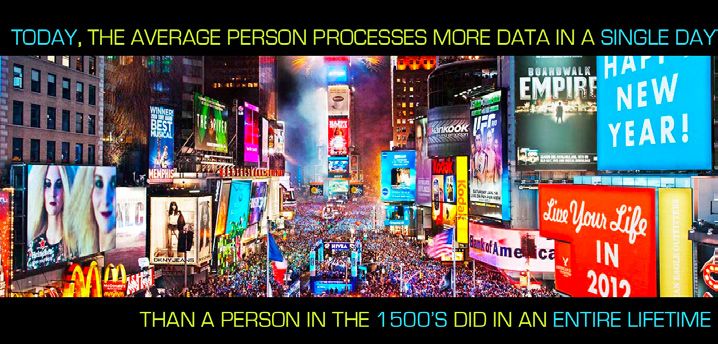
In 2013, the average person will process more        a recent survey consumers claimed that they       damage. After receiving the data from the sen-
data in a single day than a person in the 1500s      apply five strokes of mascara to each eye. But    sors, the biological information will be put into
did in an entire lifetime. In 2020, the amount       when counted during actual usage observation,     a digital database pre-loaded with information
of data the world’s population generates will        it was closer to 50 (“Big Data issue,” 2013).     about active ingredients and their effectiveness
be 57 times the amount of sand on all of the            Biology-Led Innovations: Biological fac-       with these biological variations (“Delivering
beaches in the world (Tyler, 2006).                  tors affect a significant part of the way each    on-demand,” 2012). Recommendations directly
   Meaning of Big Data: Big Data is defined          human ages. All human beings carry genes          related to each individual’s skin care require-
on three dimensions: Velocity, Volume, and           that control these factors, but what differs is   ments will determine which existing products
Variety (Kaushik, 2013). Data is generated           exactly which variants of them each person        will be the most effective or even allow the
faster than ever before and is so big that it has    has. Today, the industry looks at skin health     brand to create a specific product for that con-
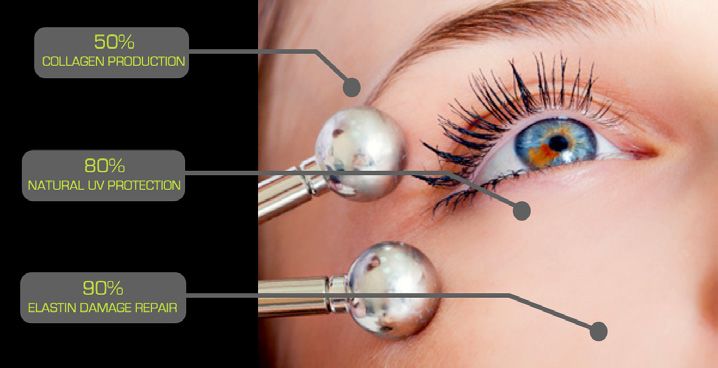
outgrown today’s server technologies. These          when assessing aging. In the future, sensors      sumer (“How Big Data,” Figure 3).
factors, along with data’s increasing amounts        built into beauty devices will go deeper and
of structured and unstructured formats, ulti-        capture biological information to understand

1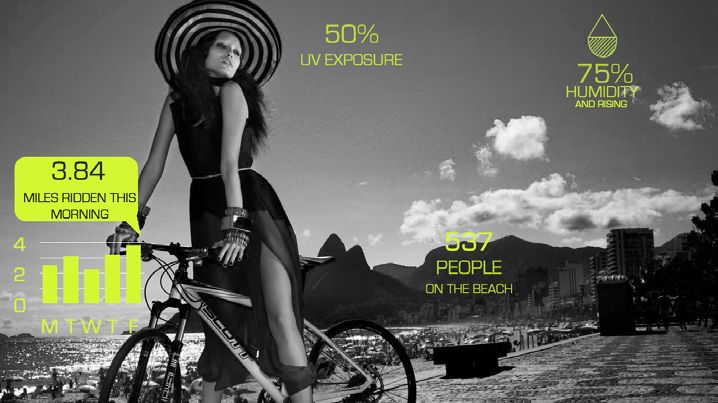
Data-Driven Innovation Choices                      food quality and temperature, and identify
   Delivering this innovation successfully          adverse reactions for hospital patients through
is critical for high performing companies.          implanted microchips. In 2020 there will be
However, only 8% of prestige beauty retail          new ways to leverage this technology and inte-
sales were from true innovations or newness in      grate it with GPS and advanced data analytics.
the marketplace (Ferber, 2013). By 2020 there       This will provide the manufacturer with real
will be new technologies that will allow brands     time information about the consumer, and,
to quickly aggregate Big Data across several        most importantly, where and how products are
macro factors including environment, natural        used (Gulbahace, 2010). For example, during           Figure 4: Data-Centric Organization
resources, search analytics, consumer ratings       a typical fragrance launch a beauty brand can
and reviews, and consumer sentiment analysis.       spend an estimated 6% of projected retail sales       across the company. To solve for this, compa-
This information will enable companies to           on sampling. But the company is not always            nies should create data-centric beauty organiza-
create virtual trending scenarios of the future,    certain of the return it is getting on that invest-   tions. In this new data-centric organization,
helping to identify gaps within product offer-      ment. In 2020, this integrated tracking system        data is at the core. It feeds into and connects all
ings (“Big Data issue,” 2013). For example, in a    will give businesses a way to capture data on         elements of the company through a newly cre-
virtual trending scenario, there is a prediction    where product was sampled, who received               ated function of data strategy. This new group
that employment rates will rise for women,          the sample, and if they enjoyed it enough to          receives data from all company sources includ-
despite a downturn in the economy. Social           purchase.                                             ing supply, finance, and sales. Data is analyzed
media sentiment reveals that working women             This technology will also improve consumer         and strategies are implemented across the
are more stressed and have less time to dedi-       experience. According to NPD, by 2015, one in         company to affect everything from product
cate to beauty rituals. They are choosing nail      six people will be over 65 years old, and 14%         development to execution (Figures 4, 5).
accessories to treat themselves during this poor    more people will reach 100 years of age. As a            While the new data-focused organization
economy. Search analytics show that women           result, the U.S. anti-aging market is projected       will bring analytics across the company, find-
are looking to update their look more often.        to skyrocket to $144 billion a year.                  ing data experts to lead these functions will be
Sales trends indicate strong growth predictions        In the future, brands will leverage algo-          challenging. There are currently 40 universi-
through 2025 in the nail category, outpacing        rithms so consumers can receive specific              ties in the U.S. with data science programs,
total beauty, and product sensors have popu-        recommendations to prevent or reduce aging            and we predict that this will be the most
lated data of nail polish usage revealing women     (Grace, 2012). These algorithms will be based         popular major by 2020. However, at the same
are beginning to change their nail look two to      on three elements:                                    time, there will be a shortage of 200K data
three times per week. By gaining these insights        1) Intrinsic biometrics that detect skin           scientists in the workforce. Today, companies
a nail company could identify an opportunity        health, moisture, collagen, and elastin levels.       like American Express are buying smaller ana-
to create nail polish that updates instantly with      2) Extrinsic measurements that capture             lytics companies to acquire talent in this area.
a UV wand.                                          pollution, UVA and UVB rays, and climate              The beauty industry needs to start recruiting,
   Data Stock Options: Big Data will also affect    conditions.                                           acquiring, and developing data scientists now
the future supply chain. Today, over $800              3) Behavioral data that tracks behaviors that      (“Global powers of retailing,” 2010).
billion in sales are lost annually due to inven-    affect aging like stress, exercise, and sleep.           Many companies have a large amount of
tory distribution challenges like out-of-stocks.       Once the technology captures this informa-         data, however only 12% of marketing experts
For retailers, out-of-stocks lead to dissatisfied   tion, it will export a consumer’s profile of skin     claim to have access to actionable data (Jones,
shoppers and for brands a lost sale to competi-     health and suggest hyper-personalized product         2012). In order to be effective, brands need
tion. Overstocks lead to heavy discounting or       and behavior recommendations. It will then            to know what data to focus on, and what to
returns which not only negatively impact the        calculate an aging index score and project            push aside. They must start with the business
brand profit but may also lead to diminished        the consumers’ future aging profile based             objectives and eliminate irrelevant data to
brand equity. In 2020, digital technologies         on the three elements. With continuous data           ensure that Big Data can go to work generat-
will allow retailers and manufacturers to break     processing and regular input, the platform will       ing the desired results. For example, in 2010, a
down silos that exist in inventory management       empower the consumer with hyper-personal-             Singapore taxi company was looking to expand
and provide full visibility across channels.        ized recommendations to minimize the effects          its customer base and increase taxi bookings.
Brands will be able to collaborate with retailers   of aging.                                             The company invested $8 million in Big Data,
to ensure the right stock is available in the          From product innovation all the way to con-        ramping up its booking system and tracking
right place at the right time. This will enable     sumer relationship management, the future of          its fleet of taxis through billions of data points
real-time visibility, better planning, improved     Big Data and beauty looks quite promising.            including GPS, weather patterns, consumer
customer service levels, and, most importantly,                                                           usage, and traffic trends. In two years, the
shopper satisfaction (Lohr, 2011).                  Beauty & Data Today                                   company tripled its revenue, increasing taxi
   Sensor Intelligence: Data will improve              While 2020 holds groundbreaking possibili-         bookings by 251% (O’Connor 2013).
executional elements as well. Adjacent indus-       ties, Big Data can affect the beauty industry            Privacy is also a concern. Over 90% of
tries are using radio-frequency electromagnetic     right now. Today, 93% of beauty organiza-             internet users are worried about their privacy,
fields, also known as RFID, to transfer data for    tions do not have a data-dedicated function           and it is the top reason why non-users still
the purposes of automatically identifying and       (Meerman Scott, 2009). Data is often gener-           avoid the internet. The current patchwork of
tracking objects. Today, it is used to monitor      ated and disseminated within the sales and            privacy laws fails to provide comprehensive
the distribution of pharmaceuticals, assess         finance teams, instead of cross-pollinating           protection, which causes confusion, distrust,

2
and skepticism. When it comes to preserving
privacy, brands must invite consumers to share
1. BIG DATA 2013 Capstone: Digital Analytics 3. BIG VALUE
personal information in exchange for some Today Data-centricity
type of value-add. Then, when speaking with
Internet of People: 2. BEAUTY: Launch 2020 Talent
Beauty companies must pro-actively recruit,
75% adoption in US acquire or develop data scientists. Finding
them, brands must only use information which 1.Identify
new client needs
talent that has both the skills to identify and
manipulate data correctly but also have a
high level of understanding of business
consumers have knowingly shared in order to strategies will be a challenge.It is however a
pre-requisite.
Capturing
build a loyal and trusting relationship (Homes, 6.Build biological
a strong needs with 2.Validate Organization
2010). customer relationship devices concepts A new model where the data function is at
the epicenter of the business organization
Beyond privacy, it is difficult to know exactly will need to be adopted. It will connect all
functions of the company, receiving data
Product from all internal and external sources. Data
who your target consumer is. You need to Anti-aging index
platform
usage using must be analyzed and strategies
implemented to affect everything from
motion
go deeper to understand them, as inaccurate sensors
product implementation to execution.
personalization could lead to missed opportu-
Tomorrow Customer Relationships
nities. For example, when the credit agencies
undervalued the probability of failure in the Internet of Things: Mining Personalization
GPS and Incorrect personalization can lead to missed
40 billion by 2020 consumptions
biological data opportunities. A control group must always
U.S. housing markets in the mid-2000s, they sensors in
& macro
factors
be used to ensure correct targeting and
personalization, and this needs to be
constantly refined. Once a company has
based their assumptions on data pulled from identified their best customers they must
5.Track consumption 3.Innovate
focus their efforts on this segment.
housing statistics during the boom years. It & diversion Cross-silo
inventory
successfully
was a recipe for egregiously wrong predic- management Privacy
90% of internet users are worried about
tions, as there were many observations but 4.Optimize inventory
their privacy, and it’s the top reason why non-
users still avoid the internet. Companies
distribution must offer value in exchange for personal
no variance to show how the housing system information and when speaking with
customers only use information which they
would function under different conditions GROUP LEADER: Emily Coleman (L’Oreal) and CO-LEADER: Jacqueline Chan (Coty)
TEAM MEMBERS: Courtney Das (Estee Lauder), Eileen Kim (Chanel),
have knowingly shared to build a loyal and
trusting relationship.
(David, 2012). This mistake demonstrates the Craig LaManna (Beiersdorf), Erica Roberson (Unilever), Lisa Sequino (Estee Lauder)
2013 Capstone Projects are property of FIT CFMM MPS Program. No reprints are allowed without prior permission from FIT.
importance of testing. You must ensure that Tuesday, May 28, 13
Figure 5: Beauty Launch 2020
you are constantly testing with a control group
to capture real time learnings and evolve your
targeting. Will Be Spending Billions to Counter Aging. technology&utm_medium=email&utm_
Big Data is changing the beauty world as Retrieved May 14, 2013 http://usatoday30. campaign=technology051313.
we know it. It is estimated to be worth $300 usatoday.com/news/health/story/health/ Global powers of retailing 2013: Retail beyond.
billion a year to the health care industry story/2011/08/Anti-aging-industry-grows-with- (2010, December). Retrieved from http://www.
alone, and the impact on the beauty industry boomer-demand/50087672/1. deloitte.com.
is expected to be double (Heussner, 2010). Cunningham, K.(2013). Showrooming Gulbahace, Robert (2010). Born To Be
Big Data will increase operating margins by and Inventory Challenges: An Infographic Beautiful? Genomic Insights Into Healthy
60% in the retail sector, and will save over from Intel. Retrieved from http://pointofsale. Skin. Australian Advanced Aesthetics.
$150 billion in government spending through com/Point-of-Sale-Blog/Showrooming-and- Retrieved May 13, 2013 from http://www.
added efficiencies. The beauty industry must Inventory-Challenges-An-Infographic-from- skindna.com.au/.
act today to capture the value that Big Data and Intel.html. Heussner, Ki Mae (February 13, 2012).
associated analytics represent. If brands do not David Crary, (September 4, 2011). Antiaging Divorcees, Southerners Most Concerned About
act on data now, they may not be ready in 2020 Industry Booms for Baby Boomers. Retrieved Web Privacy. Retrieved May 11, 2013 from
(“Big Data issue,” 2013) (see Figure 5). May 11, 2013. http://www.sfgate.com/business/ http://www.adweek.com/news/technology/
article/Antiaging-industry-booms-for-Baby- divorcees-southerners-most-concerned-about-
References Boomers-2311221.php#page-3. web-privacy-138185.
Accenture. (2008). Innovation in Data Science 101, Learning to be a Data Holmes, Elizabeth (March, 20 2013).
Consumer Products: How to achieve high Scientist (April 9, 2012). Colleges with Data Makeup to Women: Apply Brandsrself. Wall
performance through new product innova- Science Degrees. Retrieved April 19, 2014 Street Journal. Retrieved May 13, 2013 from
tion. Retrieved from http://www.accenture. from http://datascience101.wordpress. http://online.wsj.com/article/SB10001424127
com/SiteCollectionDocuments/PDF/ com/2012/04/09/colleges-with-data-science- 887323419104578372311872888312.html.
ConsumerProductsGroupPoV_103008_fnl.pdf. degrees/. How Big Data can predict brandsr divorce.
Badcock, Corey (May 16, 2013). Infographic: EMC Corporation. (2012). New Digital BrandsTube. [Video podcast]. Retrieved from
How Much Data is Generated Every Minute? Universe Study Reveals Big Data Gap: Less Than http://www.brandstube.com/watch?v=DS310J
Retrieved May 21, 2013 from http://www. 1% of World’s Data is Analyzed; Less Than 20% Mdu2s&feature=brandstu.be. (2013). “Big data
exinda.com/blog/article/infographic-how- is Protected. Retrieved from http://www.emc. issue.” AdAge, (March)
much-data-is-generated-every-minute. com/about/news/press/2012/20121211-01.htm. Intel and The Internet of Things
Census Bureau (March 9, 2006). Dramatic Ferber, Stefan (May 7, 2013). Harvard Infographic. (2011) [Infographic illustration of
Changes in the U.S. Aging Population Business Review: How the Internet of Things The Internet of Things, August 23, 2011]. Intel
Highlighted in New Census, NIH report. Changes Everything. Retrieved May 12, 2013 created snapshot of how the number of con-
Retrieved May 14, 2013 from http://www.nia. http://blogs.hbr.org/cs/2013/05/how_the_ nected devices has exploded since the Internet
nih.gov/newsroom/2006/03/dramatic-chang- internet_of_things_cha.html?cm_mmc=email- and PC. Retrieved from http://newsroom.intel.
es-us-aging-highlighted-new-census-nih-report. _-newsletter-_-technology-_-technology05131 com/docs/DOC-2297.
Crary, David (August 22, 2011) Boomers 3&referral=00208&utm_source=newsletter_ Jones, Sam and Kennedy, Maev (March
3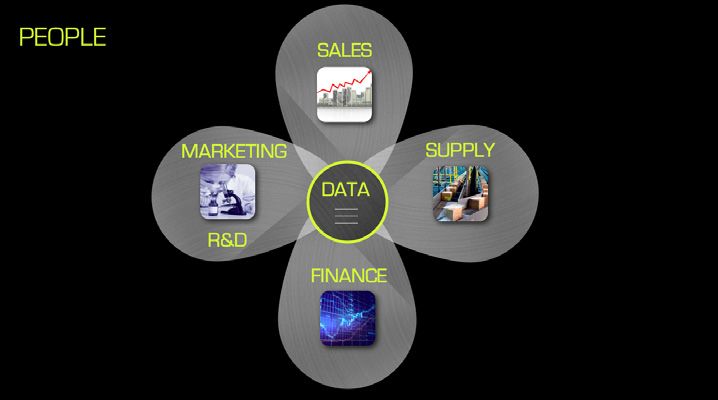
26, 2012). Ageing Population: More than a           news/press-releases/more-than-400-million-
Third of Babies Born in 2012 will live to 100.      devices-are-connected-in-us-homes-according-
Retrieved May 11, 2013 http://www.guardian.         to-the-npd-group.
co.uk/society/2012/mar/26/third-babies-2012-           Tyler, M. E. (2006). Google analytics.
live-100.                                           Indianapolis: Wiley Publishing. n
   Kahn, H. (2013, May). Who really owns
brands personal data? Details, 92-95. (n.d.).
Retrieved from www.zeromomentoftruth.com.
   Kaushik, A. (2013). Web analytics-an hour a
day. New York: (2013). Big data issue – adver-
tising analytics 2.0. Harvard Business Review,
“Delivering on-demand analytics at the speed of
thought.” (2012 , March 12). Retrieved from
http://www.cmo.com/content/cmo-.
   Landt, Jerry (2001). “Shrouds of Time: The
history of RFID” (PDF). AIM, Inc. Retrieved
May 23, 2013, from http://www.transcore.com/
pdf/AIM%20shrouds_of_time.pdf.
   Leake, Tim (May 7, 2013). Personal Lifecycle
Management. Digital Agency Day. Lecture con-
ducted from Dream Hotel, New York, NY.
   Lohr, S. (2011, February). Big data is opening
doors, but maybe too many. Newsweek, Grace,
H. (2012). “The potential for omnichannel analyt-
ics, parts i, ii, iii.” New York: RetailNext.
   McKinsey Global Institute. (2011). Big data:
The next frontier for innovation competition, and
productivity. Seoul, San Francisco, London, and
Washington D.C. Manyika, J., Chui, M., Brown,
B., Bughin, J., Dobbs, R., Roxburgh, C., &
Byers, A.H.
   Meerman Scott, D. (2009). “Real-time
marketing and pr: How to instantly engage brands
market, connect with customers, and create prod-
ucts that grow brands business now.” New York:
John Wiley & Sons, Inc.
   Miller, Claire Cain (April 11, 2013). Data
Science: The Numbers of our Lives. Retrieved
May 2, 2013, from http://www.nytimes.
com/2013/04/14/education/edlife/universities-
offer-courses-in-a-hot-new-field-data-science.
html.
   O’Conner, Mary Catherine, Ohio Boutique
Takes a Unique Approach to RFID. RFID
Journal. Retrieved on May 23, 2013 from http://
www.rfidjournal.com/articles/view?3688.
   Swedberg, Claire. (October 2, 2008).
Cosmetics and Liquor Companies Assess
Toppan Printing’s Holographic RFID Labels.
Retrieved May 18, 2013. http://www.rfidjourn-
al.com/articles/view?4356/.
   The Beauty Company (2012). Beauty Facts,
Figures and Trends. Retrieved from http://
www.thebeautycompany.co/downloads/Beyer_
BeautyNumbers.pdf.
   The NPD Group. (2013). More than 400
Million Devices are Connected in the U.S. Homes,
According to The NPD Group. Retrieved from
https://www.npd.com/wps/portal/npd/us/

4
You can also read


