Individual Sports - NCERT
←
→
Page content transcription
If your browser does not render page correctly, please read the page content below
Individual Sports                                                      6

                         6.1 Introduction
                         Games and sports in some form or the other have been a part
                         of human life either for survival or for pleasure. Gradually
                         human beings started organising events including games and
                         sports as community events. Consequently, the need was felt
                         to acquire specific skills and advancement in many sports.
                         Each sport has its specific skills which need to be developed
                         for playing correctly. In this chapter we are going to discuss
                         how some individual sports have evolved and how to develop
                         proficiency in playing these sports. Rules and regulations of
                         these sports are revised from time to time by there federations.
Box 6.1                              6.2 Badminton
 It is important to note that     Badminton is a game which is played by men,
 playing any sport:               women (Singles/Doubles) and both men and
 • strengthens heart muscles;     women ( Mixed Doubles) together. It can be played
 • reduces hypertension;          by persons of all ages. The first set of rules were
 • helps in keeping optimal weightformulated in Pune, in India in 1901. These rules
    as per height; and            were gradually adopted by other nations. Due to this
 • helps in preventing of bone
                                  reason, it is believed that badminton originated in
    related disorders.
 If played at least for 30 minutesIndia. However, the game became an international
 a day after adequate warming     sport after the first All England Championship.
 up it keeps you feeling strong,  In 1934, the International Badminton Federation
 motivated, stress-free, having   (IBF) was formed and the rules of the game were
 high self-esteem and induces     standardised. World Badminton Federation (WBF)
 better sleep at night.
                                  regulates the game. Badminton Association of India
                                  came into existence in 1934 and various State
                         Badminton Associations are affiliated to it.
                         6.2.1 Types of Events
Activity 6.1                 • Singles (boys, girls),
                             • Doubles (boys, girls),
Collect information
                             • Mixed Doubles (Combination of a boy and a girl)
about your favourite
Badminton player         6.2.2 Facilities and Equipment
national/international       • For playing badminton, a racket, net and shuttle cock
and which aspects of           are required.
his/her game do you          • Court measurements: The length and width of the
like?                          doubles court shall be of 13.40m × 6.10m. The height of
                               the net is 1.55m at the sides and 1.52m at the centre.

                                        2021–22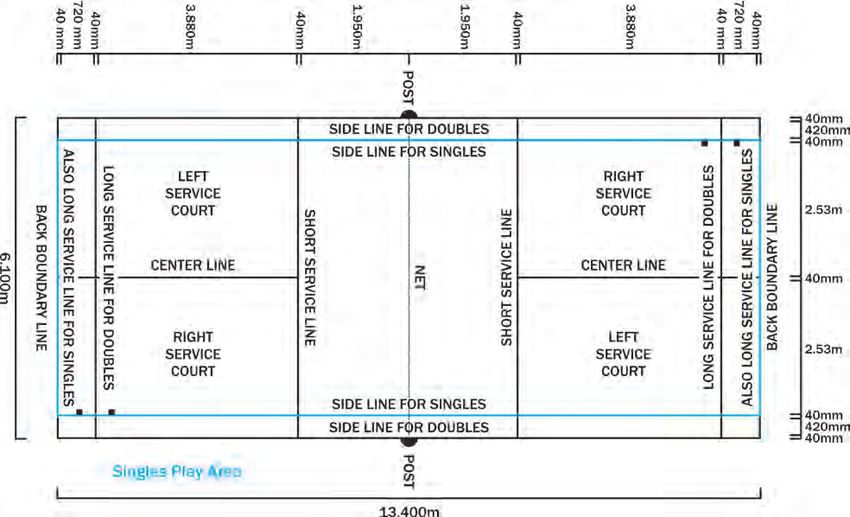
54                                                           Health and Physical Education — Class IX

                                                          Fig. 6.1 : Badminton Court

                                                   6.2.3 How to Play Badminton
                                                   In singles, there is one player on each side and in doubles,
                                                   there are two players on each side.
                                                      • The game begins with a toss and winner of the toss has
                                                         the choice either to serve or to receive to serve or opt any
                                                         side of the court to start the game.
                                                      • Each player has to serve from alternate sides of the court
                                                         and winner of each rally will get one point.
                                                      • A standard game consists of 21 points with a two point
                                                         difference.
                                                      • The side winning a game, serves first in the next game.
                                                      • Server and receiver stand in diagonally opposite service
                                                         courts and the shuttle must be hit below the waist.
                                                      • The shaft of the racket must be pointing in the downward
                                                         direction with both feet in contact with the surface of the
                                                         court until service is delivered.
                                                      • A ‘let’ is called when a rally is stopped without any point.
                                                         A let may be given, if:
                         Fig. 6.2 : A Racket and         – there is an accidental interference during play,
                                 a Shuttle               – the shuttle gets caught in the net after passing over
                                                      		 the net (except during service).

                                                                   2021–22

Chapter-6 Individuals Sports.indd 54                                                                                08-11-2016 11:36:27 AM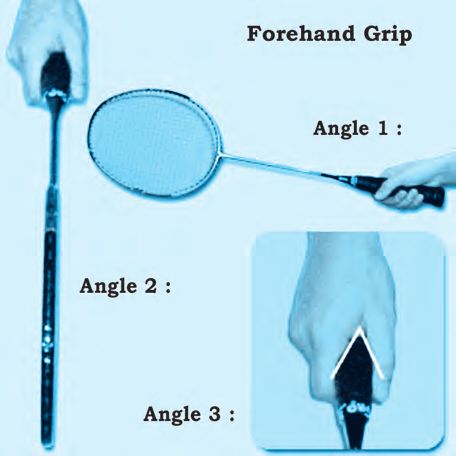
Individual Sports                                                                           55

                          – the server serves before the receiver is ready.            Activity 6.2
                          – umpire is unable to make a decision.
                          – both sides commit a service court error.                     Is badminton
                          – any other situation as deemed fit.                           played in your
                        • A player will lose the rally if service is not correct or      school? If yes,
                          server misses the service or shuttle lands outside the         is it played in a
                          prescribed area, shuttle passes through the net, shuttle       specially prepared
                          does not cross the net, shuttle touches the walls/ceiling      court? Observe the
                          or shuttle hits twice on the player’s racket and any part      court and find out
                          of her/his body touches the net.                               the measurements.
                        • Three types of cards are used in Badminton, i.e. yellow        Compare it with
                          card for first warning due to misconduct, red card for         the Fig. 6.1 given in
                          those who have been previously warned and black card           your book.
                          for disqualifying a player for persistent misbehaviour,
                          this shall render a player disqualified for the entire
                          tournament.
                 6.2.4 Fundamental Skills of Badminton
                 The Forehand Grip
                 The grip is very important for a player. The racket is held with
                 a shake hand grip. The 'v' between the thumb and fore fingers
                 runs down the middle of the side of the handle as shown in
                 Fig. 6.3.
                 Backhand Grip
                 In this, the player holds the racquet in the
                 forehand grip. She/he then relaxes the grip
                 and moves her/his hand over the top edge of
                 the handle until the thumb lies flat along the
                 back edge. The strength is directly behind the
                 backhand face of the racket.
                 Footwork
                 Footwork is an essential skill for Badminton.
                 Being agile and flexible, enables a badminton
                 player move all over the court efficiently in
                 accordance with a Forehand, Backhand, Drop,
                 Drive shot etc. and these are given below:
                 Strokes
                        • Forehand stroke - The stroke which is
                          hit from the right side of the body by the         Fig. 6.3 : Forehand Grip
                          right handed player.
                        • Backhand stroke - The stroke which is
                          hit from the left side of a right handed player.
                        • Smash - The player will jump upwards, sideways and
                          backwards and the shuttle is hit (smashed) quickly and
                          forcefully downwards.

                                                               2021–22

Chapter-6 Individuals Sports.indd 55                                                                         08-11-2016 11:36:27 AM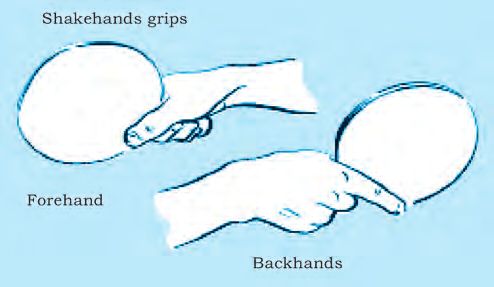
56                                                    Health and Physical Education — Class IX

                                           • Drop - This shot is slow and is hit gently but firmly and
                                             after clearing the net the shuttle falls close to the net.
                                           • Drives - These are shots hit flat into the side zones with
                                             impact of the racquet hand.
                                           • Toss and clear - The shuttle is hit high and deep towards
                                             the baseline of the opponent.
                                       The Service
                                       The service is one of the most important strokes. There are two
                                       basic badminton serves:
                                          • Long/High service
                                          • Short/Low service
                                          • The player should be centrally located on the court
                                             standing halfway between the net and the backline and
                                             near the centre service line.

                                       3                           2                    1
                                              Fig. 6.4 : Badminton service

                                           • keep the body sideways to the receiver’s service court.
                                           • using forehand grip the server takes the service position
                                             with both hands between the chest and shoulder.
                                           • drop the shuttle and hitting hand is brought down and
                                             forward, forearm rotates upward at the point of contact.
                                       6.2.5 Scoring
                                       If a serve lands in the court of the opponent without volleyed
                                       back or the opponent returns a volley outside the play area, the
                                       server scores a point. In case of boys, it is best of five games of
                                       21 points with two points lead, e.g. 21-19, 19-21, 22-20 and
                                       21-17 and in case of girls, best of three games with same lead
                                       of two points.

                                                        2021–22

Chapter-6 Individuals Sports.indd 56                                                                        08-11-2016 11:36:28 AM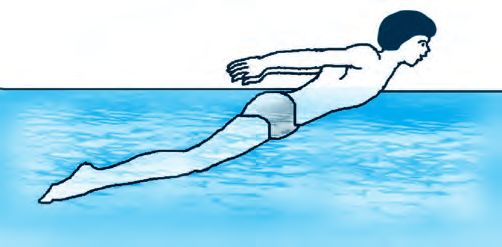
Individual Sports                                                                     57

                 6.3          Gymnastics
                 The word gymnastics has been derived from the Greek word
                 ‘Gymnos’ meaning “naked art”. In ancient Greek, the word
                 “Gymnastics” was used to denote the exercise done with the
                 naked body. Guts Muths, is known as the Grand Father of
                 Modern Gymnastics and Friedrich Ludwig Jahn is known as
                 the Father of Gymnastics. Modern gymnastics is regulated
                 by the Federation International de Gymnastique (FIG) which
                 was founded in 1881. Gymnastics was included in the Modern
                 Olympic Games in 1896 and women gymnastics was introduced
                 in Olympic Games in 1928. The first gymnastics world cup was
                 organised in 1975. At present, gymnastics as an event can be
                 seen in almost all the known multi sports meets.
                 6.3.1 Types of Gymnastics
                 Broadly gymnastics has been classified in three types, i.e. Basic
                 Gymnastics, Sportive Gymnastics, and Auxiliary Gymnastics.
                    Sportive gymnastics is further categorised as artistic (men
                 and women), rhythmic, aerobics, acrobatics, and trampoline
                 gymnastics. This chapter deals with artistic gymnastics which
                 is a popular discipline of gymnastics. Artistic gymnastics
                 apparatus for men are: floor exercise, pommel horse, roman
                 rings, vaulting table, parallel bars, and horizontal bar. For
                 women, the apparatus are: vaulting table, uneven bars,
                 balancing beam and floor exercises.
                 6.3.2 Basic Skills of Artistic
                       Gymnastics
                 As you know now, gymnastics is
                 performed on various apparatus and
                 for all the apparatus some skills are
                 identified as the basic skills of the
                 game. Some basic skills, apparatus
                 wise are listed below:
                 1. Floor Exercises
                     Floor exercises are done on floor
                 carpet. Measurement of floor mat is
                 given in (Fig. 6.5)
                     • Handstand is an inverted
                        gymnastics controlled skill
                        performed by supporting the
                        body on both hands, with the
                        arms straight and the body
                        vertical. (Fig. 6.5.1)
                     • Cartwheel is a common gym-
                        nastics skill where a gymnast
                        starts with one leg push and
                                                                       Fig. 6.5 : Floor Exercise Mat

                                                            2021–22

Chapter-6 Individuals Sports.indd 57                                                                   08-11-2016 11:36:28 AM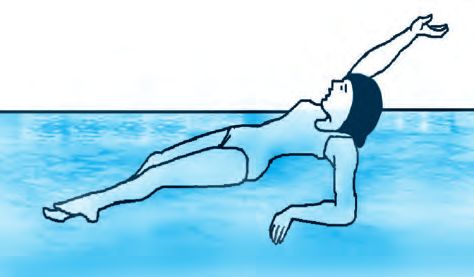
58                                                                   Health and Physical Education — Class IX

                                       Fig. 6.5.1 : Handstand                                 Fig. 6.6 : Cartwheel

                 Activity 6.3                                 places her/his hands on the ground in the same line
                                                              while kicking with other leg up into a side handstand.
                     The student must                         The gymnast then lands with one leg on the other side
                     learn to perform                         followed by the other leg. (Fig. 6.6)
                     five floor exercises.                  • Front Handspring is a forward tumbling skill that starts
                     As per availability                      with a step or a hurdle. The body then bounces on to the
                     of the apparatus.                        hands and rotates through a handstand before landing
                                                              on the feet. (Fig. 6.7)

                                                                Fig. 6.7 : Front Handspring

                                                                                                    • Round-off           is     a
                                                                                                    common           gymnastics
                                                                                                    movement that leads into
                                                                                                    many more difficult skills.
                                                                                                    It is performed by pushing
                                                                                                    off one leg, swinging legs
                                                                                                    quickly in a cartwheel
                                                                                                    motion and landing on
                                                                                                    both feet with a half turn.
                                                                                                    It is usually the initial skill
                                                                                                    for all backward tumbling
                                                   Fig. 6.7.1 : Round Off                           movements. (Fig. 6.7.1)

                                                                            2021–22

Chapter-6 Individuals Sports.indd 58                                                                                            08-11-2016 11:36:32 AM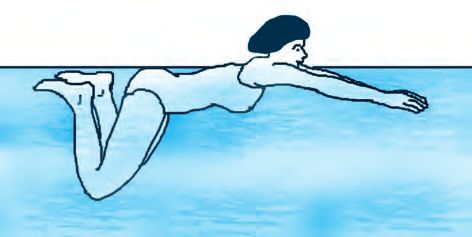
Individual Sports                                                                 59

                 2. Pommel Horse (Fig. 6.8)
                        • Leg swings are considered as one of the basic swings
                          on pommel horse. These are sideways swings which
                          are performed with legs apart. Leg swings are the
                          basis for scissors, leg cuts and undercuts and one leg
                          circle. (Fig. 6.8.1)
                        • One Leg Circle can be done with right as well as left
                          leg. The procedure and technique of leg circle is given
                          in Fig. 6.8.2.

                                                                                    Fig. 6.8 : Pommel
                                                                                          Horse

                                                   Fig. 6.8.1 : Leg Swings

                                              Fig. 6.8.2 : One Leg Circle

                                                                  2021–22

Chapter-6 Individuals Sports.indd 59                                                               08-11-2016 11:36:33 AM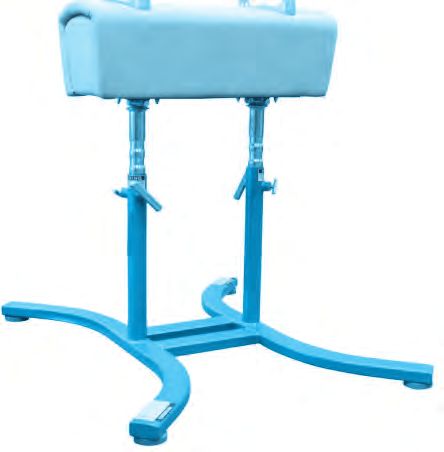
60                                                              Health and Physical Education — Class IX

                                                        3. Roman Rings (Fig. 6.9)
                                                        • Inlocation – This skill is typically performed by kicking
                                                         heels high behind in a backward swing. On the top of
                                                         the swing, head rolls forward and arms and shoulder
                                                         rotate inwards, bringing the body once again into a pike
                                                         position. (Fig. 6.9.1)

                              Fig. 6.9 : Roman Rings

                                                                                 Fig. 6.9.1 : Inlocation

                                                       • Dislocation – This is a skill in gymnastics that involves
                                                         a rotation of the shoulders when performing a forward
                                                         swing or movement. Dislocation requires a good degree
                                                         of shoulder flexibility. (Fig. 6.9.2)

                                                             Fig. 6.9.2 : Dislocation

                                                                    2021–22

Chapter-6 Individuals Sports.indd 60                                                                                  08-11-2016 11:36:35 AM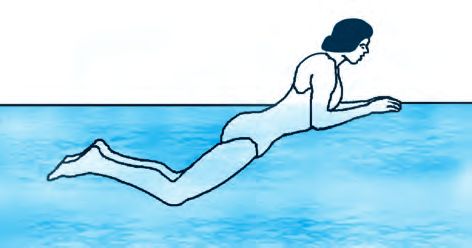
Individual Sports                                                                                              61

                 4. Vaulting Table
                        • Squat vault –  In this skill a gymnast crosses over the
                          vaulting table with knees bent and body bent from the
                          hips. (Fig. 6.10)
                        • Split vault – In this skill the body bends forward from
                          the hips as the feet pass over the table with split (legs
                          apart) legs. (Fig. 6.10.1)

                                           Fig. 6.10 : Squat vault

                                           Fig. 6.10.1 : Split vault                                 Fig. 6.11 : Parallel Bar

                 5. Parallel Bars (Fig. 6.11)
                        • Upper arm support swing –
                          At the start of front swing, the
                          body is straight and slightly
                          pike, with shoulders as high
                          as possible. Thereafter, the
                          body swings backward. (Fig.
                          6.11.1)
                                                                             Fig. 6.11.1 : Upper arm support swing

                                                                       2021–22

Chapter-6 Individuals Sports.indd 61                                                                                            08-11-2016 11:36:38 AM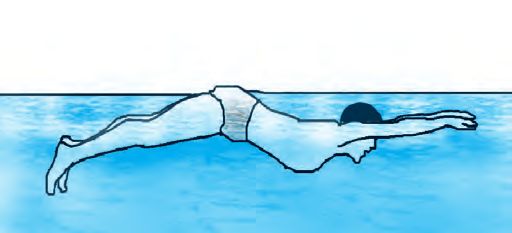
62                                                            Health and Physical Education — Class IX

                                                             Fig. 6.11.2 : L-Hold position
                                                          • L–hold position – In this position the gymnast’s arms,
                                                            legs and body are held straight over the parallel bars
                                                            while legs are brought at an angle of 90 degrees at the
                                                            hips in support position. (Fig. 6.11.2)
                                                      6. Horizontal Bar (Fig. 6.12)
                                                          • Front hip circle – In this skill, the body acquires a
                                                            forward movement around the bar while touching upper
                                                            part of thigh to the bar and body rotates forward and
                                                            downward around the bar in a circle.
                                                          • Back hip circle – In this skill, the body acquires a
                                                            backward movement around the bar with the hips
                     Fig. 6.12 : Horizontal Bar             resting on the bar and the body rotating backward and
                                                            downward around the bar in a circle.
                                                                7. Balancing Beam (Fig. 6.13)
                                                                • Balance on one leg ('T' Balance) – In this skill a
                                                                gymnast stands on one leg, with other leg backward
                                                                above horizontal level keeping arms side ways and
                                                                holds the position for 2 seconds.
                                                                • Walking on the beam - In this skill, the gymnast
                                                                rocks the knees with feet pointing on each step and
                                                                performs walk, with variations in arms movements.
                                                                Eventually the arms position can be combined
                                                                during the walk on each step changing from straight
                                                                arms out to crown up and vice-versa.
                             Fig. 6.13 : Balancing Beam

                                                                     2021–22

Chapter-6 Individuals Sports.indd 62                                                                                08-11-2016 11:36:40 AM
Individual Sports 63
8. Uneven Bars (Fig. 6.14)
• Front hip circle – The gymnast initiates the
skill from support position. The gymnast
falls forward with a tight body touching
upper thigh or stomach, leaning well forward
to initiate momentum and to complete the
forward circle.
• Back hip circle – In this skill, from support
position, a gymnast takes back swing, brings
body forward and by touching the upper
thigh with the bar takes shoulders backward
and rotates around the bar.
Fig. 6.14 : Uneven Bar
• Evaluation Procedure for the above
elements (Movements) – There are four
elements on floor exercises and two elements
each, on all other apparatuses given in this chapter.
The evaluation of these elements will be done as per the
following procedure.
(a) Value of each element is =5.00 points (each element
will be evlauated out of 5.00 points)
(b) Value of four elements on floor exercises =20.00 points
(Four elements × 5.00 points each =20.00)
(c) Value of two elements on pommel horse =10.00 (Two
elements × 5.00 points each =10.00)
(d) Value of two elements on rings =10.00 points
(e) Value of two elements on vaulting table =10.00 points
(f) Value of two elements on parallel bars =10.00 points
(g) Value of two elements on horizontal bars =10.00 points
(h) Value of two elements on balancing beam =10.00
points
(i) Value of two elements on uneven bars =10.00 points
The total value for the boy's section comes to 70.00 points
(i.e. 20.00 for floor and 50.00 for rest of the five apparatuses)
The total value for the girl's section comes to 50.00 points
(i.e. 20.00 for floor and 30.00 for rest of the three apparatuses)
6.4 Judo
Activity 6.4
Judo had its origin in the ancient Japanese art of Ju-jitsu
(Gentle art), a system of hand-to-hand combat. It is a sport of Join a Judo class in
Asian origin which was included in Tokyo Olympic Games in your school or in your
1964. The first school of Judo was started by Professor Jigoro locality and share
Kano in 1882 at Eishoji (a Buddhist temple) in Tokyo, Japan. your experience with
As a player progresses through the ranks (Grading reflected by your friends.
the belt of the Judo player) and the very nature of the grading
system ensures that the next goal is always realistic and
achievable with effort.
2021–22
Chapter-6 Individuals Sports.indd 63 08-11-2016 11:36:40 AM64 Health and Physical Education — Class IX
6.4.1 Competition Area (Square)
The Judo platform is 18m long,18m wide and 50cm in height.
Total area for competition : 14m x 14m
Contest area including danger zone : 10m x 10m
Danger zone in red colour : 1m in width
Safety area outside danger zone : 3m in width
Distance between the tapes
(red and white) at the centre area : 4m
Length of tapes : 25m
Width of tapes : 6cm
Duration of Bouts (boy/girl) : 5min/4min
The Judo bouts are played in different weight categories for
equality and to avoid injuries because body weight has direct
relation with body inertia, mass and strength (force) of an
individual. There are following categories of Judo competitions
in india:
1. Sub-junior girls having different weight categories.
2. Sub-junior boys having different weight categories.
3. Junior girls having different weight categories.
4. Junior boys having different weight categories.
5. Women (senior) having different weight categories.
6. Men (senior) having different weight categories.
Note: The weight categories keep on changing. For latest weight categories
kindly contact the game website www.onlinejbi.org.rulesdis.php)
6.4.2 Judo Grades
Judo grades are divided into “Kyu” (pupil) “Dan” (master or
teacher) grade.
• 10th Kyu will wear white belt
• 9th Kyu will wear yellow belt
• 7th and 8th Kyu will wear orange belt
• 5th and 6th Kyu will wear green belt
• 3rd and 4th Kyu will wear blue belt
Fig. 6.15 : Judo steps
2021–22
Chapter-6 Individuals Sports.indd 64 08-11-2016 11:36:41 AMIndividual Sports 65
• 1st and 2nd Kyu will wear brown belt
• 1st, 2nd, 3rd, 4th and 5th Dans will wear black belt
• 6th and 7th Dans will wear red and white striped belt
• 8th, 9th and 10th Dans will wear red belt.
6.4.3 Scoring
Scoring Throwing Holding
Ippon Throwing the opponent Maintaing a
with considerable speed, recognised hold for
force and squarely on 20 seconds
his/her back (control)
Waza-ari Throwing the opponent Maintain a
with speed and force recognised hold for
and squarely to his back 15 seconds to less
(control) but any one of than 20 seconds
the above component
is lacking partly. (Note:
two waza-ari become an
Ippon)
Yuko Throwing the opponent Maintain a
with speed and force recognised hold for
and squarely to his/ 10 seconds to less
her back (control) but than 15 seconds.
any two of the above
components is lacking
partly.
Special decision – When not fit to continue because of
injuries, winner is she/he, who is injured due to errors of his/
her opponent and loser is she/he who is injured because of
his/her own mistakes/faults.
6.4.4 End of Contest
The contest will end as under :
• scoring of Ippon.
• scoring of Waza-Ari Awasete Ippon.
• because of Sogo-Gachi (compound win).
• because of Fusen-Gachi (default).
• because of Hansoku-Make (disqalified).
• because of injury.
• because of expiry of allotted time.
6.4.5 Fundamental Skills
Rei (salutation) - Rei is of two types, i.e. Ritsu-Rei
(standing salutation), Za-Rei (sitting salutation)
Kumikata (gripping) How to hold the judogi
• Migi kumikata (right side grip)
• Hidari kumikata (left side grip)
2021–22
Chapter-6 Individuals Sports.indd 65 08-11-2016 11:36:41 AM66 Health and Physical Education — Class IX
Shintai (walking movements)
• Tsugi ashi (following foot movements)
• Ayumi ashi (advance foot movements)
Shizentai (posture)
• Shizen-hontai (natural posture)
• Shizen-jigotai (defensive posture)
Ukemi (break fall or method or art of falling)
• Ushiro ukemi (back break fall)
• Yoko ukemi (side break fall)
• Mae ukemi (front break fall)
• Mae mawari ukemi (forward rolling break fall
Tai-sabaki turning movements or management of body
movements
Kuzushi breaking the balance of the defender (UKE)
or off balancing the UKE for applying Judo
technique.
Tsukuri Fitting the body of attacker (tori) against the
UKE for applying a technique against UKE.
Kake Actual or final action of throw technique that
is execution of the throw technique.
Activity 6.5 6.5 Swimming
Swimming is a sport where a person propels his/her body
You or your friend through the water with his/her arms, called strokes, and
might have the legs kick and move progressively through water. Swimming is
experiences of sometimes used for physical rehabilitation of people recovering
swimming. Share from injuries because it is a non-weight bearing exercise. It is
your views about also a good recreational activity.
different strokes. Swimming was included in the first modern Olympic Games
at Athens in 1896. The first Olympic Champion was Alfred
Hajos from Hungary. Diving events were added in 1904. The
women’s competitions were recognised in 1912. Federation
Internationale de Natations Aquatics (FINA) was formed at
London Olympic Games in 1908.
6.5.1 Facilities and Equipment
• Swimming Pool : The standard dimensions of a swimming
pool are: length 50m, width 25m and depth 1.80m.
• Eight lanes of 2.5 m width each (10 lanes for international
competitions).
• The height of the starting platform shall range between
50-75 cm above the water surface; the top surface shall
be 50 cm × 50 cm (Length × Breadth).
• Water temperature should be 24oC.
• Swimming costume is made of nylon or lycra. Other items
needed are towel, swimming cap and swimming goggles.
2021–22
Chapter-6 Individuals Sports.indd 66 08-11-2016 11:36:41 AMIndividual Sports 67
6.5.2 Types of Strokes
There are four recognised strokes for a swimming competition :
• Front Stroke/ Free Style
• Back Stroke
• Breast Stroke and
• Butterfly Stroke
Front Stroke or Free Style
In freestyle events, a swimmer can swim in any manner. It is
also called crawl because the swimmer uses alternate stroking
of the arms over the water surface with up and down kick
action of legs. In turning after finishing one length, some body
part of the swimmer should touch the wall.
The swimmer lies flat on his/her stomach with both arms
stretched out in front, passing by the side of ears and the water
level is at hair line. Both legs are extended to the back with toes
pointed. The arms are pulled alternately from front to back
inside the water and recovered from outside the water. While
one arm is pulling and pushing, the other arm is recovering.
(i) (ii)
(iii) Fig. 6.16 : Sequence of Free Style Stroke (iv)
The legs move alternately up and down. While one leg kicks
downward, the other leg recovers upward. The knees are flexed
with toes pointed during the down beat and are kept straight
with toes relaxed during the up beat.
The swimmer takes the breath through the mouth by
turning the head to the side of the pushing arm at the beginning
of recovery. Soon the face goes back into the water and the
swimmer breathes out more through the mouth and only a
small portion through the nose.
2021–22
Chapter-6 Individuals Sports.indd 67 08-11-2016 11:36:42 AM68 Health and Physical Education — Class IX
Back Stroke
The back stroke consists of alternate action of arms with up
and down kicking of legs while the swimmer is on the back.
During a turn, the swimmer should bend from the stomach
and take flip turn. Some body part of the swimmer should
touch the wall and he/she should finish in the back position
only.
The basic body position for the back stroke is the supine
position. The swimmer lies flat on his/her back with both
arms stretched out back over head, passing by the side of ears.
Face is out of the water and both legs are extended forward
with toes pointed. Hips are just below the water surface.
(i) (ii)
(iii) Fig. 6.17 : Sequence of Back Stroke (iv)
The arms are pulled alternately from back to front inside
the water and recovered from outside the water with straight
arm over the body. While one arm is pulling and pushing, the
other arm is recovering.
The legs move alternately up and down. The leg movement
originates from the hip joint. While one leg kicks downward,
the other leg recovers upward. The knees are flexed with toes
pointed during the up beat and are kept straight with toes
relaxed during the down beat. Breathing in back stroke is very
easy, as the mouth and nose are usually over the water. The
swimmer breathes once in every arm cycle.
2021–22
Chapter-6 Individuals Sports.indd 68 08-11-2016 11:36:42 AMIndividual Sports 69
Breast Stroke
The breast stroke involves simultaneous horizontal movements
of the arms in heart shape to propel the body forward by
pushing the water. The kicking action is in circular motion
similar to that of frog. During turn and finish, swimmer must
touch the wall with both hands.
Breast stroke involves lying on the chest, with the arms only
breaking the surface of the water and legs always underwater,
while the head is underwater for the second half of the stroke.
Both hands, thumbs together, reach forward, fully extending
the arm at the elbow. The arms will stay in this position until
the kick is completed by the feet. Arms continue to flex at the
elbow. Leg kick starts to push back to continue the forward
movement. The legs flex at the knee and hips to prepare for
the kick. Breathing is usually done in the beginning of the in-
sweep phase of the arms, and the swimmer breathes through
the mouth.
(i) (ii)
(iii) Fig. 6.18 : Sequence of Breast Stroke (iv)
Butterfly Stroke
In this stroke, the swimmer must keep both the legs together
and she/he should not use breast stroke. During a “turn” and
“finish” both hands must touch the wall simultaneously.
The butterfly technique with the dolphin kick consists of
arm movement with a leg kick. Both arms break the water
simultaneously, hands and forearms first, the arms swing
outwards, elbows slightly flexed as they both continue to
2021–22
Chapter-6 Individuals Sports.indd 69 08-11-2016 11:36:43 AM70 Health and Physical Education — Class IX
(i) (ii)
(iii) Fig. 6.19 : Sequence of Butterfly Stroke (iv)
swing, take a round and meet in front of the head, thumb and
fingers entering the water first. As the hands come close to
the body, they then press towards the feet, fully extending the
arms at the elbow in preparation for the quick “flick” out of the
water for recovery.
The shoulders are brought above the water surface by a
strong up and medium down kick.
The breathing process begins when the swimmer presses
both hands downward, and the swimmer breathes in through
the mouth.
6.5.3 Before and after swimming the following care should
be taken
• Take bath before and after swim.
cm • Wipe the body after shower with a clean towel.
15 25
cm • Swim under the presence of a lifeguard.
• Do not go into deep water if you are not confident.
• Warm up before swimming.
• Stretching and mobility exercises should be done before
Bat and after swimming.
6.6 Table Tennis
International Table Tennis Federation (ITTF) was founded in
1926. Since 1988, Table Tennis has been an Olympic sport.
Ball Weight 2.7 gm
Other historical names of table tennis were gossima, whiff-
Fig. 6.20 Racket and Ball whaff and ping-pong.
2021–22
Chapter-6 Individuals Sports.indd 70 08-11-2016 11:36:43 AMIndividual Sports 71
6.6.1 Facilities
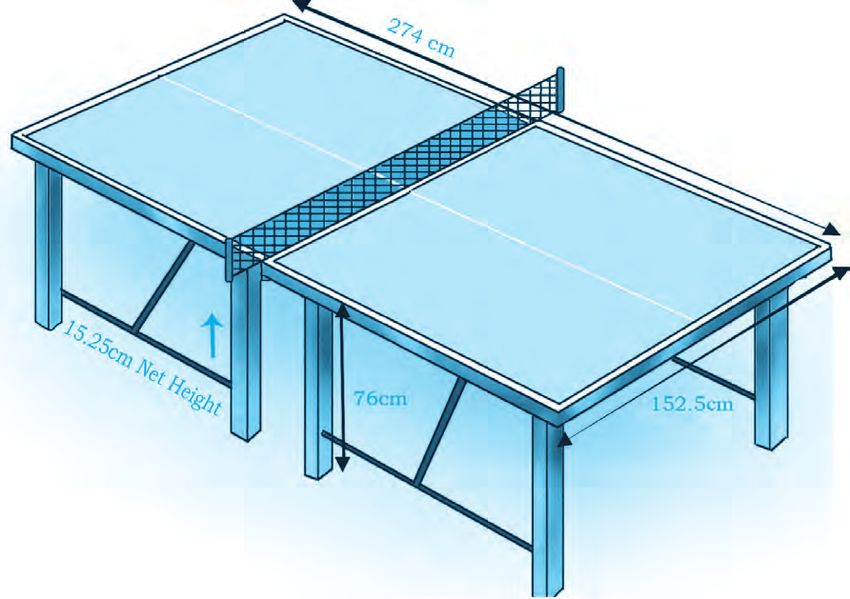
• The upper surface of the table, known as the playing
surface is rectangular, with a dimension of 274 cm long
and 152.5 cm wide. The height of the table is 76 cm
above the floor.
• The playing surface shall be uniformly dark coloured
and matt, but with a white border line, 2 cm (3/4inch.)
wide, along each 2.74m (9 feet.) edge and a white end
line as shown below in Fig. 6.21.
Fig. 6.21 : Dimensions of a Table Tennis Table
6.6.2 Equipment Activity 6.6
• Net Assembly : which consists of upright post, height
adjuster, horizontal part of the net post and attaching Find any three
system (clamp). The net is suspended by a cord attached rules of ITTF
at each end to an upright post 15.25 cm high. The colour related to the game
of net assembly should be of dark green, dark blue or of Table Tenis.
black and have a white top not more than 15 mm wide.
• Ball: the ball is spherical, orange or white in colour made
of celluloid or similar plastic material with a diameter of
40 mm, weight 2.7g. (Fig. 6.20)
2021–22
Chapter-6 Individuals Sports.indd 71 08-11-2016 11:36:44 AM72 Health and Physical Education — Class IX
• Bat: The bat is also known as a paddle, or racket. The
blade shall be flat and made up of wood of dark matte
colour, one side black and other side bright red. But
majority of rackets are of similar size about 15cm across
and 25cm long including the handle. (see fig. 6.20)
• Scoreboard: The board, used for scoring is called Table
Tennis Scoreboard.
• Net Gauge is used to measure the height of the net and
also to measure the thickness of the racket and tension
of the bat rubber which should be as per International
Table Tennis Federation regulations.
Activity 6.7 Dimensions
Table Tennis Table Net Ball
From the Table
Tenis table available Shape
in your school, fill Length N.A.
the given columns
Width N.A.
on the right side,
and compare the Height N.A.
standard norms Weight N.A. N.A.
given above. Diameter N.A. N.A.
6.6.3 Events
• Singles (Boys, Girls),
• Doubles (Boys, Girls),
• Mixed Doubles (Combination of boys and girls)
6.6.4 How to play Table Tennis
• A player/team who wins the toss shall have a choice of
service or receiving or side of the table to begin.
• The server shall project the ball resting freely on the
palm, toss the ball and strike the ball with the bat. The
ball must first touch down on the half of the table then it
should pass over the net and land in the opponent’s half
without touching the net.
• The ball, having been served or returned, shall be struck
so that it passes over the net assembly and touches
the opponent’s half of the table, either directly or after
touching the net assembly.
• In singles, the server shall first make a service, the
receiver shall then make a return. Thereafter, each
server and receiver shall alternately make a return.
• In doubles, the server shall first make a service, the
receiver shall then make a return. The partner of the
server shall then make a return, and the partner of the
receiver shall then make a return and thereafter each
player in turn, in that sequence, shall make a return.
2021–22
Chapter-6 Individuals Sports.indd 72 08-11-2016 11:36:44 AMIndividual Sports 73
• The service shall be a “LET” if the ball touches the net
and goes to the opponent half of the table or if a ball is
served when receiver is not ready.
• If a player fails to serve or receive the ball, point shall be
awarded accordingly.
• A game is won by the player who first scores 11 points.
If both players score 10 points, then the player who get
2 point lead is declared the winner.
6.6.5 Basic skills of the Game
The Grip
There are two types of grips— the shake
hand grip and the pen hold grip.
(a) Shake hand grip (fig 6.22) —
The paddle (a part of the tennis
bat) is held as if one is shaking
someone’s hand, with the index
finger extending over the bottom
part of the rubber on the back
hand side and the thumb slightly
touching the rubber on the
forehand.
Fig. 6.22 : Shake hand grip
(b) Pen hold grip (fig 6.23)— The
paddle is held just like a pen, only
grasping the paddle at the top of the handle.
Spin
(a) There are three spins most commonly used — top spin,
back spin and side spin. To hit a top spin the bat has
to be angled in such a way so that the forehand - side
faces downward 40 degrees (closed face).
(b) To hit a back spin, angle of the bat should be upward
so that the forehand side faces the ceiling, facing
upward 45 degrees (open face). Swing through the ball,
but much speed should not be used as in topspin.
(c) A side spin is used in service. It is a combination of
topspin and sidespin, or backspin and sidespin in the
service.
Strokes
(a) Strokes are generally offensive and defensive: while
performing a stroke the player should stand close Fig. 6.23 : Pen Hold Grip
to the table and take a stance facing the line of play. Now
using a short stroke the racket arm should move from
the elbow in a horizontal plane while the free arm should
move upward. The strokes can be played with a backhand
push and forehand push.
2021–22
Chapter-6 Individuals Sports.indd 73 08-11-2016 11:36:44 AM74 Health and Physical Education — Class IX
6.7 Wrestling
There are two Olympic styles of wrestling, Freestyle and Greco-
Roman. With one key exception, the rules of the two styles are
identical.
In Greco-Roman, a wrestler may not attack his opponent’s
legs, nor use his own legs to trip, lift or execute other moves. In
freestyle, both the arms and legs may be used to execute holds
or to defend against attack. This style was introduced in 1904
at St. Louis Olympic Games. After a century, women free style
wrestling was introduced in Athens Olympics in 2004.
In addition to the above one more style of wrestling is
played in India which is called the Indian style of wrestling or
otherwise known as Pehlwani or Kushti. This kind of wrestling
takes place in a clay or a mud pit. Traditional Indian wrestling
isn’t just a sport, it’s an ancient sub-culture where wrestlers
live and train together.
6.7.1 Equipment and Facilities for indoor (Fig. 6.24)
• Wrestling is an indoor sport played on a mat.
• The wresting area can be circle or square in shape (12
metre ×12 metre).
• The thickness of the mat should be between 5 to 7
Activity 6.8 centimetres.
Visit an Akhada • The mats are covered with a non-abrasive vinyl material
and write your which prevents slipping, injuries and is easy to clean.
observations. • The bout is played on a yellow colour area with a diameter
of seven metres.
• The centre circle in the middle of the playing area is of
one metre diameter, generally of red and white colour.
6.7.2 How to Wrestle
• The sport of wrestling is played
in different weight categories for
both boys and girls. The weight
categories are provided to minimise
the chance of injuries and also
to provide an equal platform for
applying strength and force for all
the wrestlers. The weight categories
are different for junior level,
senior level, open championships,
world championships, Olympic
championships and so on. The
changes in weight categories are
done by the Federations from time
to time. As an example, weight
categories for men and women are
Fig. 6.24 : Wrestling Ring given below.
2021–22
Chapter-6 Individuals Sports.indd 74 08-11-2016 11:36:45 AMIndividual Sports 75
Gender Age Weight Categories (kg.)
Men 29-32 35 38 42 47 53 59 66 73 85
Women 28-30 32 34 37 40 44 48 52 57 65
Note: International Wrestling Federation (FILA), rules July 2014, traditional wrestling Greco-Roman and
Freestyle.
• A wrestler can participate in only one weight category in
a wrestling competition.
• Wrestler(s) must appear on the mat wearing red or blue Activity 6.9
colour uniform as assigned to them. Both wrestlers
shake hands in the centre of the mat and referee blows Prepare a scrap
the whistle to start. book on Indian
• There are three rounds of two minutes each. In case two famous personality
rounds are in favour of any wrestler, she/he is declared of wrestling and
the winner. Bout can also be won by fall. discuss with your
• One point is earned when one wrestler takes the other to classmates.
the mat and establishes control. However, if an attacking
wrestler exposes the opponent’s back to the mat in the
process of the takedown, two more points are awarded.
A maximum of five points can be awarded for throwing
an opponent over one’s head.
• If a wrestler is pushed out of bounds or attempts to
escape a hold by stepping into the protection zone with
at least one foot, the offensive wrestler is awarded a
point.
• Par terre is when the action of the match is on the mat,
with one wrestler in the top position and the other in
the bottom position. The top wrestler is allowed to lock Activity 6.10
his hands anywhere on the body in order to turn his Identify famous
opponent to his back. Turning an opponent to the back, Indian wrestlers.
the attacking wrestler earns two points. If the wrestler Take their
holds the opponent on his back for five seconds or more, photographs and
this will earn him an extra point. make a collage.
• If there are no points scored in the par terre position by
either wrestler after about ten seconds, the official stops
the action on the ground and restarts the bout in the
neutral position. This is done to keep the action going
and allow both wrestlers more opportunities to score.
• If the score is tied at the end of a round, there is a specific
tie-breaking criterion that must be followed to determine
the winner. The criteria must be applied in the following
order, moving on to the next rule when one rule does not
apply:
The wrestler with the least amount of cautions or
penalty points against him wins the bout.
2021–22
Chapter-6 Individuals Sports.indd 75 08-11-2016 11:36:45 AM76 Health and Physical Education — Class IX
The wrestler who scored the highest number of
technical points with one offensive manoeuvre wins
the period.
The wrestler that scores the last point before the end
of the round wins.
• The clinch rule, or “ordered position,” is used to force
action and decide the winner of a scoreless period. This
position starts with one wrestler standing in the centre
of the mat, and the other wrestler squatting and taking
control of one of his/her opponent’s legs. The defensive
wrestler (standing) is allowed to put his/her hands on
his opponent’s back, but may not block or defend in any
other way before wrestling starts. These offensive and
defensive positions are chosen at random.
• Once the offensive wrestler has taken a leg, this is when
wrestling starts. If the offensive wrestler scores in this
position, wrestling is stopped and this wrestler wins
the period. If the attacking wrestler does not score in
this position at the end of this 30-second-period, the
defending wrestler is awarded one point and wins that
round of wrestling.
6.7.3 Skills
The seven basic skills are:
• stance
• motion
• level change
• penetration
• lifting
• back step
• back arch
Stance
While in the neutral (standing) position, some wrestlers prefer
a square stance (Fig. 6.25) and others prefer a staggered stance
Fig. 6.25 : Square Stance
(Fig 6.26). Either stance can work equally well. The wrestler
should not stand
straight up or
leave herself/
himself open to
a takedown from
the opponent. An
effective stance
always prepares
the wrestler for a
quick attack and
proper defence.
Fig. 6.26 : Wrestling Stance (Staggered)
2021–22
Chapter-6 Individuals Sports.indd 76 08-11-2016 11:36:46 AMIndividual Sports 77
Motion
Wrestling involves a tremendous
amount of motion. Wrestler
may circle their opponent.
The wrestler may attack their
opponent with a take down
attempt. They may also snap
the opponent to the mat and
spin around behind him/her.
The wrestler may also sprawl to
defend against a take down and
need to learn to move fluidly and
Fig. 6.27 : Wrestling Motion quickly. All the movements need
to be explosive and crisp.
Level Change
Before a wrestler shoots a take down, he/she
must lower his/her level. This is accomplished
by lowering his/her hips. When a wrestler
sprawls to counter a take down he/she is also
using level change. In addition, a wrestler may
lower and raise his/her level to force a reaction
from his/her opponent. A wrestler needs to be
able to maintain good posture while changing
levels. For instance, a wrestler sometime over-
extends when shooting a take down because
he/she forgot to lower his/her level first. A
wrestler should always bend at the knees, not Fig. 6.28 : Wrestling Level Change
at the waist.
Penetration
When a wrestler shoots for a take down on his/her opponent,
he/she does not merely reach for the opponent's legs or dive
wildly for the opponent's legs. He/she makes sure to be close
enough to the opponent and then takes a deep penetration
Fig. 6.29 : Wrestling Penetration
2021–22
Chapter-6 Individuals Sports.indd 77 08-11-2016 11:36:46 AM78 Health and Physical Education — Class IX
step, keeping the back straight and head up. Lower the level
and penetrate deeply. Always make it sure to keep the hips
forward and lower the shoulders, while driving through the
opponent.
Lifting
A wrestler often lifts his opponent off the mat when
executing a take down as shown in fig. 6.30. He/she
may also lift an opponent who has performed a stand
up from the bottom position. The wrestler lifts his/
her opponent and returns to the mat. The legs and the
hips are most important when lifting. For instance,
when a wrestler shoots a double leg, he/she does
not lift with the back. He/she gets the hips squarely
down and then uses the leg and hip strength to lift the
opponent off the mat. When a wrestler has been lifted
Fig. 6.30 : Wrestling Lifting
off the mat, he/she is in a very vulnerable position,
lacking support and balance.
Assessment
Answer the following questions
1. Write down the history of badminton game.
2. Write any five rules of badminton game.
3. Write down the dimensions of the badminton court.
4. How do games and sports help to improve health fitness?
5. List down the Gymnastic events for men.
6. List down the Gymnastic events for women.
7. Which motor abilities can be developed through
Gymnastics?
8. Write a short history of Judo.
9. Draw a diagram of Judo competition area with all
specifications?
10. What is Judogi?
11. What is the name of the apex body which controls the
Judo all over the world?
12. List down the names of swimming strokes.
13. Explain the technique of any stroke of your choice.
14. How does swimming help to improve the physical fitness
of an individual?
15. Which motor abilities improve swimming performance?
16. Write any five important rules of the Table Tennis game.
17. How can playing Table Tennis help us in the improvement
of our health?
18. Which fundamental skill did you enjoy the most in Table
Tennis game and why?
2021–22
Chapter-6 Individuals Sports.indd 78 08-11-2016 11:36:47 AMIndividual Sports 79
19. Explain any one fundamental skill of Table Tennis.
20. Briefly describe the history of wrestling.
21. What is Par terre?
22. What is the duration of a wrestling bout?
23. What is the ordered position in wrestling?
24. Collect information about national and international
Gymnasts with their photographs and write about them.
25. If you are a swimmer write down about how you enjoy
it. If not, ask any of your friends who has a swimming
experience of pond, river or pool about his/her experience.
Fill in the blanks
(i) Measurement of badminton court for singles is .....…….
(ii) Measurement of badminton court for doubles is ....…….
(iii) Height of the net from the floor is ………………….......
(iv) Rhythmic Gymnastics was included in Olympic games
in …........... at…..…......
(v) Measurement of floor for floor exercises in gymnastics
is ……….. metre.
(vi) Judo was included in Olympic Games in………….....
(vii) The Judo platform is of 18 m × …….............................
(viii) The meaning of Ritsu Rei ...........................................
(ix) The meaning of Za Rei ...............................................
(x) The meaning of Migi Kumikata ...................................
(xi) The meaning of Hidari Kumikata ................................
(xii) The meaning of Shintai ..............................................
(xiii) The meaning of Tsugiashi ..........................................
(xiv) The meaning of Ayumiashi .........................................
(xv) Standard swimming pool should be of ....……….m
length and …..……m width.
(xvi) There are …….....….. lanes in standard swimming
pool.
(xvii) Width of a swimming lane is ...............…….................
(xviii) Height of the starting platform of a swimming pool
should be ......................
(xix) Temperature of water in a swimming pool should be
ideally ........................
(xx) Measurement of a Table Tennis table is ……...............…
length…............….breadth.
(xxi) Height of the Table Tennis table from floor is ....……. .
(xxii) Height of the net from surface of the table in TT is …. .
(xxiii) Length of the net TT is ……………….....…. .
(xiv) Circumference of the TT ball is.....…and weight is…...…
(xxv) Measurement of wrestling mat is …….........…………. .
(xxvi) The measurement of the mat area in wrestling is
...............in length and ..............in width.
(xxvii) The diameter of the central circle in wrestling is …… .
(xxviii) The diameter of the yellow circle in a wrestling area... .
2021–22
Chapter-6 Individuals Sports.indd 79 08-11-2016 11:36:47 AM80 Health and Physical Education — Class IX
Tick (P) mark either Yes / No
(i) Four players are required to start a game in Badminton.
(Yes/No)
(ii) International Badminton Federation (IBF) was founded
in 1934. (Yes/No)
(iii) Player can leave the court in Badminton at any time.
(Yes/No)
(iv) Breadth of badminton net is 2’6”. (Yes/No)
(v) Height of the badminton net from floor is 5 feet.(Yes/No)
(vi) Uneven bar is a men’s event. (Yes/No)
(vii) Balancing beam is a women’s event. (Yes/No)
(viii) Pommel horse is a men’s event. (Yes/No)
(ix) Parallel bars is a men’s event. (Yes/No)
(x) International Gymnastic Federation was founded in
the year 1881. (Yes/No)
(xi) The first school of Judo was started in 1882. (Yes/No)
(xii) Judo was included in the Olympic Games in 1968.
(Yes/No)
(xiii) Professor Jigoro Kano started the first school of Judo.
(Yes/No)
(xiv) Judo is a sport of European origin. (Yes/No)
(xv) Shizentai means posture. (Yes/No)
(xvi) Ukeme means breakfall. (Yes/No)
(xvii) Ushiro means back. (Yes/No)
(xviii) Mae means front. (Yes/No)
(xix) Kake means execution. (Yes/No)
(xx) Kuzushi means breaking the balance. (Yes/No)
(xxi) Can a swimmer change the lane after a start? (Yes/No)
(xxii) There are four strokes in swimming. (Yes/No)
(xxiii) A free style swimmer has to perform a similar type of
movement. (Yes/No)
(xxiv) A back stroke swimmer is not allowed to take rollover
turn. (Yes/No)
(xxv) Table Tennis game was invented in 1979. (Yes/No)
(xxvi) Player in Table Tennis can be substituted at any
time. (Yes/No)
(xxvii) Player in Table Tenis can leave the game at any time.
(Yes/No)
(xxviii) Every player in Table Tenis has to change ends after
each game. (Yes/No)
(xxix) Wrestling is an outdoor sport, which is played on the
ground. (Yes/No)
(xxx) The wrestlers come to shake hands in the centre of the
mat in red and blue colour. (Yes/No)
(xxxi) The women free style wresting was introduced in
2004 (Yes/No)
(xxxii) Every bout contains 3 round of 2 minute each.(Yes/No)
2021–22
Chapter-6 Individuals Sports.indd 80 08-11-2016 11:36:48 AMYou can also read


