Investment Opportunity - Trust Tairawhiti
←
→
Page content transcription
If your browser does not render page correctly, please read the page content below
Investment                 Opportunity

    Wood Processing in Tairāwhiti
              March 2020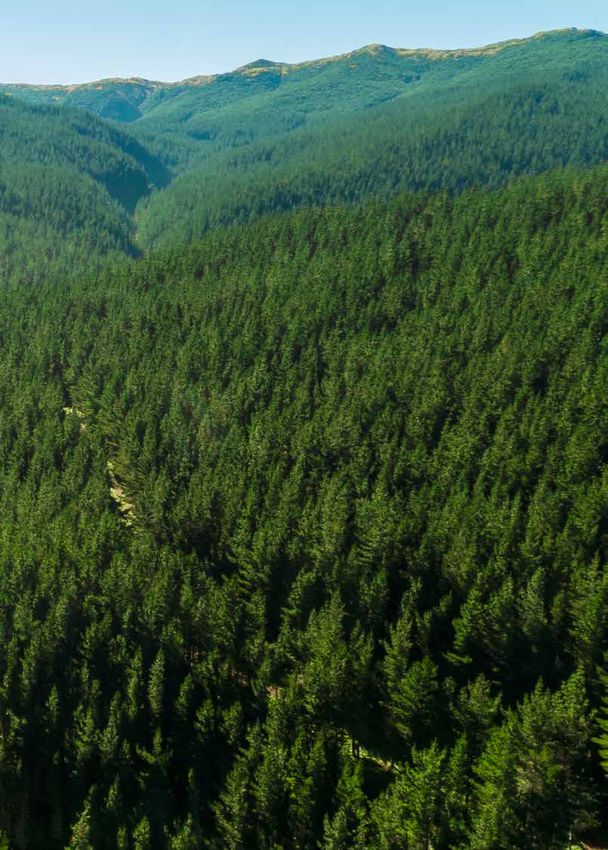
Ready when you are
Tairāwhiti Gisborne offers
an attractive investment
opportunity with a large
forecast supply of logs, plans
to expand key infrastructure,
and a regional development
agency focused on creating
a prosperous wood
processing industry.
Let’s get started

Table of
contents

Introduction
Outlining the opportunity
Minister’s foreword                                                            7
Trust Tairāwhiti foreword                                                      9
Executive summary                                                              10

Section one: Key information for investors
A prime location for
wood processing
Tairāwhiti wood sector overview                                                15
Wood availability                                                              17
Land                                                                           21
Electricity                                                                    22
Heat                                                                           25
Logistics                                                                      26
Workforce development                                                          28

Section two: Background information
Would you like to know more?
New Zealand’s wood sector overview                                             33
Tairāwhiti region overview                                                     37
Good for business                                                              40
Rules for overseas investors                                                   41
Government support                                                             42

All figures are in New Zealand Dollars unless otherwise stated.
This Information Document has been prepared solely for information purposes only and does not purport to contain all the
information that a prospective investor may require. Trust Tairāwhiti has not independently verified much of the information in
this Information Pack. Recipients are expected to conduct their own investigation and analysis of their proposed wood processing
initiatives in the Te Tairāwhiti region.

image

Minister’s foreword                                                                                Introduction   7

     Foreword
     The Government is committed to revitalising          of an over-reliance on any one market and serve
     New Zealand’s wood sector to help our regions        as a timely reminder about the need to diversify
     thrive and boost the size of the nation’s lung.      our products and markets. While we continue to
                                                          promote our export market, these challenges have
     The sector is New Zealand’s third largest primary    only strengthened the Government’s commitment
     export earner behind dairy and meat. In the          to supporting and encouraging investment in the
     year to September 2019, the sector generated         sector to move from volume based logs to added
     $6.6 billion in export revenue and it directly       value domestic processing.
     employs around 35,000 people.
                                                          In addition to the One Billion Trees Programme,
     We’re focusing on planting the right tree in the     the Government has invested in wood processing
     right place as an immediate defence against          initiatives through the three billion Provincial
     climate change and we also want to see more logs     Growth Fund, with Tairāwhiti being a beneficiary
     processed domestically to maximise the benefit of    of significant investment in this space.
     the forestry sector for all New Zealanders.
                                                          The Provincial Growth Fund also made an
     The ambitious One Billion Trees Programme            investment of $137 million to help unlock the
     we embarked on in 2018 provides the perfect          economic potential of Tairāwhiti through stronger,
     opportunity to think about our whole supply chain    safer and more resilient transport connections.
     with fresh eyes.
                                                          I welcome investors who share New Zealanders’
     No region is more primed to take advantage of        vision for the wood sector and values of a
     this than Tairāwhiti – with its commercial forest    sustainable and environmentally conscious future
     estate being one of the largest, most sustainable    and invite them to be part of our journey.
     and highest quality in the world.
     Disappointingly, only four percent of logs from      Like any sector, forestry is not immune to
     the region are processed in the region.              disruption but the long-term future is bright.

     Sustained high export log prices have led to         I look forward to seeing the sector increase its
     New Zealand exporting 60 percent of our wood as      proportion of our country’s GDP while providing
     logs. Current global challenges highlight the risk   sustainable and exciting careers for our people.

     Hon Shane Jones
     Minister of Forestry
     Minister for Infrastructure
     Minister for Regional Economic Development
Together

Tatau    Tatau and the theme of sharing is central
    to our kaupapa and vision for the region of
 Te Mana - Shared Pride, Te Ihi - Shared Prosperity
        and Te Wehi - Shared Opportunity.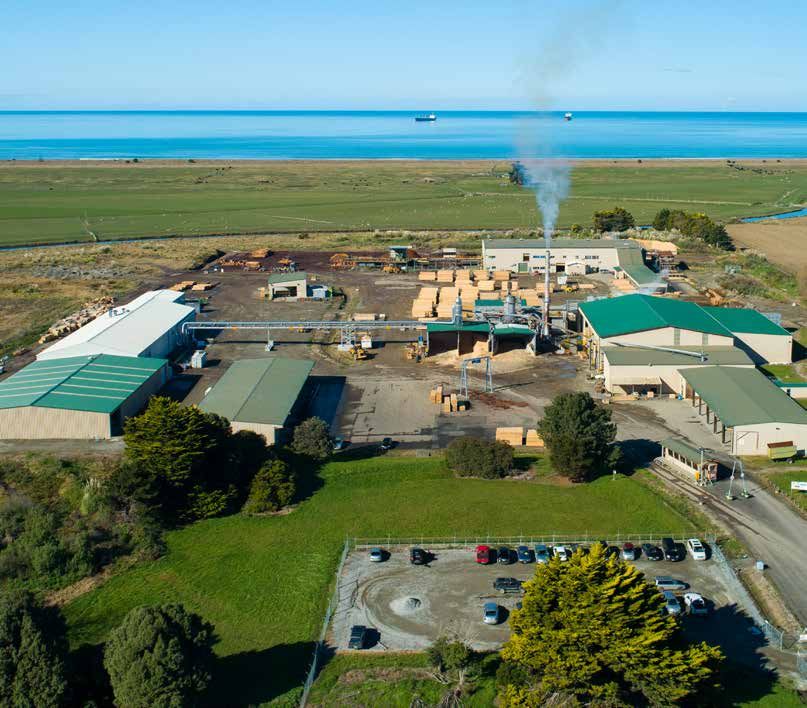
Trust Tairāwhiti foreword                                                                                Introduction   9

     Invested in the
     growth of Tairāwhiti
     Trust Tairāwhiti is the regional development trust      Specifically, for wood processing investors, it is
     for the Tairāwhiti region. We invest in the wellbeing   pertinent to note two things:
     of our people, the success of our businesses and
     the future of our region. We are passionate about       1.   Trust Tairāwhiti owns 100 percent of the shares
     creating a greater Tairāwhiti for everyone.                  in Eastland Group Limited (see
                                                                  www.eastland.nz).Eastland Group specialises
     Information about Trust Tairāwhiti can be found              in regional infrastructure including ports,
     on our website at www.trusttairawhiti.nz.                    electricity distribution, transmission networks
                                                                  and electricity generation.
     Trust Tairāwhiti is the author of this Information
     Document as well as having oversight of the             2. Trust Tairāwhiti has invested in local
     Tairāwhiti Economic Action Plan (or TEAP) which is         infrastructure and start-up wood processing
     the framework document for growth and economic             businesses to act as a catalyst for growth in
     development in the region. The TEAP is governed by         the wood processing sector. This demonstrates
     a steering group made up of key local stakeholders         an active commitment to the goals set out in
     and is focused on three areas of development:              the TEAP.

     1.   Sector Actions                                     For new wood processing businesses looking to
     2. Enabling Actions                                     establish themselves in our region, Trust Tairāwhiti
                                                             can offer support, funding, infrastructure and
     3. Future Proofing Actions.
                                                             networks to help unlock the full potential of your
     Within the Sector Actions, “Growing Wood,               business case proposition.
     Processing Locally” is a key focus area given
     that around 96 percent of the region’s total
     log harvest, currently just under three million
     cubic metres per annum, is exported with
     no further value added nor jobs created.

     For more information,                 Gavin Murphy                          Richard Searle
     please contact:                       Chief Executive Officer               General Manager Commercial
                                           m:   +64 21 760 029                   m:   +64 21 644 194
                                           e:   gavin@trusttairawhiti.nz         e:   richard@trusttairawhiti.nz
Executive summary

    Primed
    for growth
    The Tairāwhiti region is located in the                period of three to five years for a committed
    north-eastern corner of the central North              investor. Eastland Group is prepared to work with
    Island of New Zealand. The area is also                such committed wood processing investors to
    referred to as East Cape, East Coast and               stage introduction of these projects to meet the
    the Eastland region.                                   investor’s commissioning timelines.

    Recently completed wood availability forecasts         The industrial zoned precinct is located at
    show minimum volumes of just over two million          Matawhero about 10 kilometres west of Gisborne.
    cubic metres per annum are potentially available       Around 251 hectares of land is vacant across
    for processing on a sustainable basis for at least     multiple titles. These are of varying sizes (typically
    the next 40 years.                                     1 to 15 hectares) and many of the titles are
                                                           contiguous so land for larger developments could
    Trust Tairāwhiti recognises that growth in wood        be purchased and aggregated.
    processing in the region will require a staged
    approach that provides key infrastructure and          The region has excellent examples of partnerships
    support on a sustainable basis. This approach will     between industry, education and training
    require investors to consider how clustered primary    providers to develop programs to meet workforce
    and secondary wood processing facilities can           development needs. These are often supported by
    support each other and maximise use of available       central government investment and a dedicated
    wood resources and residues. The inclusion of solid    program could be developed with any prospective
    wood secondary processing (e.g. remanufacturing        investor to upskill locals with the requisite wood
    and CLT) is likely to be attractive due to the lower   processing knowledge.
    energy input requirement of these processes.

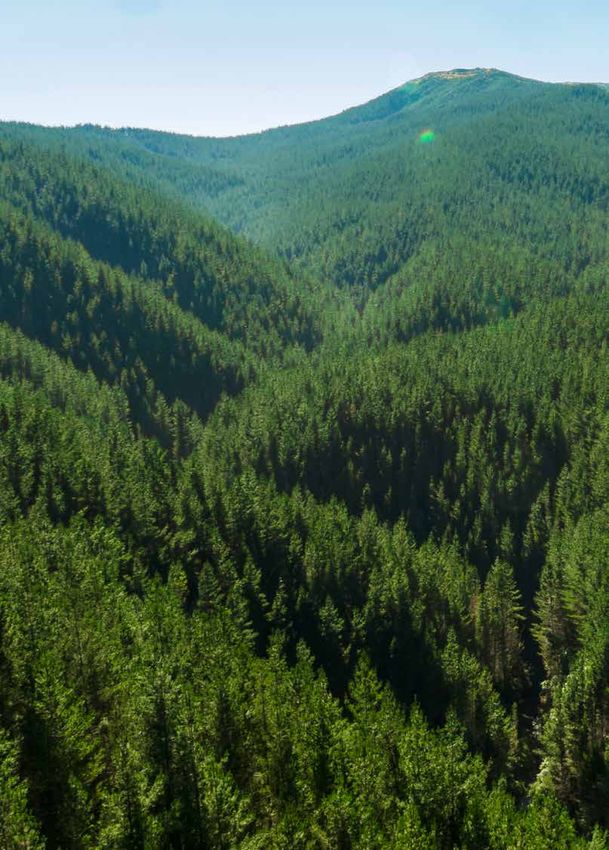
    About 155,000 hectares is planted in commercial
    forestry, predominantly Pinus radiata (known
    as Radiata, Radiata pine or NZ pine) which is
    generally harvested anywhere from 25-30 years            Christchurch
    after planting.

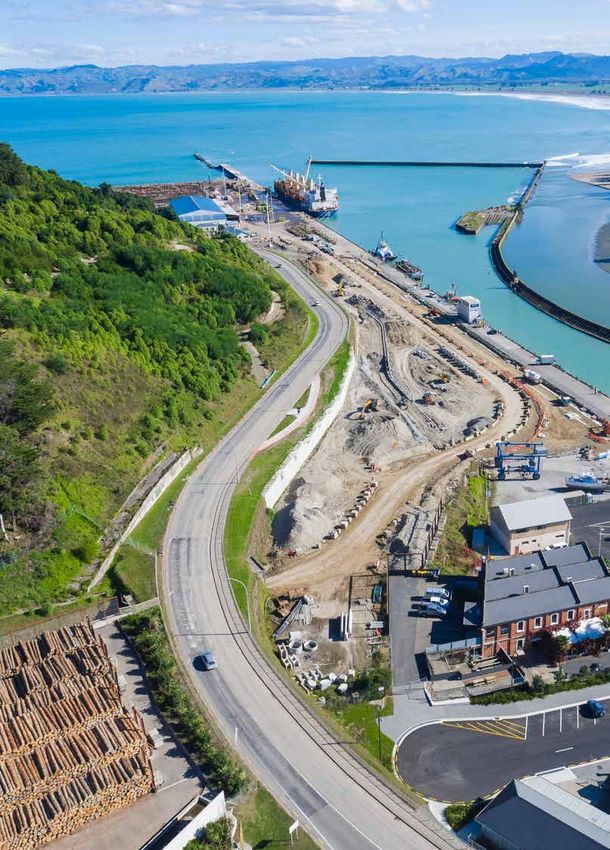
    Eastland Port, the second largest log exporter
    in New Zealand, is embarking on a multi-phase
    “Twin Berth” project which will increase the port’s
    capacity and see containerisation introduced to
    the port in 2023.                                        Queenstown
    Eastland Group’s Network and Generation
    divisions have identified a series of stacked,
    independent projects that would increase
    electricity supply to the Tairāwhiti region by an
    additional 35MWe. This could be achieved in a            Dunedin
Introduction 11
Auckland
Tauranga
Tairāwhiti
Gisborne
The indigenous people of New Zealand,
the Māori, from this region refer to it as
Te Tairāwhiti (or just Tairāwhiti) which
means “the coast upon which the sun
shines across the water”.
The largest town is the city of Gisborne
with a population of around 35,000
residents, representing about 71 percent
of the total resident population of the
whole district (around 49,000 people).
Regional GDP for Tairāwhiti was
NZ$1.575 billion in 2018. Key industries
include forestry and log exports,
Wellington agriculture and horticulture.
The Tairāwhiti region can offer investors
2.2
million m per
3
251
hectares
35
MWe
year of fibre of land of power
Sustainable availability Available across Potential availability
multiple titlesSection one:
Key information for investors
Processing PotentialA prime location for wood processing
Tairāwhiti wood sector overview                                                         Key information for investors   15

    A growing
    harvest
    The forestry industry contributes significantly to      • Trust Tairāwhiti further invested $5.7m into
    the regional economy. There are 155,617 hectares          the $12m joint venture with WET Gisborne
    of radiata pine planted throughout Tairāwhiti, with       Ltd, turning lower-grade logs into high-value
    a standing volume of 54,964 million cubic metres.1        structural lumber and engineered wood
    The figure on the next page shows that Eastland           products. Long term, up to 80 jobs could be
    Port annual exports of logs have grown from 1.2           created, with 20 jobs created to date.
    million cubic metres to around 2.9 million cubic           See https://www.woodeng.co.nz.
    metres in the last ten years, due to increasing
    forestry harvests.                                      • In July 2019, $19.5 million of the Provincial
                                                              Growth Fund (PGF)3 funding was committed
    This harvest is expected to rise to over 3.5 million      to the Prime site, following an initial PGF
    cubic metres per year for the next 15 years as            investment of $500,000, for the first stage of
    indicated in the Wood availability discussion             developing further wood processing capacity.
    in Section one. This growth is underpinned
    by significant plantings in the 16-30 years age         • Investigations are underway into the use of
    classes as shown in the figure on the next page           wood waste for energy, both for use on the
    and illustrates why the Eastland Port Twin Berth          Prime site and for wider regional benefit.
    Project is so critical to the region.
                                                            Te Rūnanganui o Ngāti Porou are looking to
    Complete reliance on export in log form can             progress an East Coast Wood Logistics Solution,
    present significant risks for forest owners including   investigating wood processing facility options on
    biosecurity, log degrade during transit, exposure       the East Coast (including transport alternatives),
    to increased shipping costs and limited number          for an estimated 200,000 to 600,000 tonnes
    of markets. Processing logs into wood products          annually. Early feasibility work indicates up to
    will reduce these risks, add to regional GDP            150 new jobs could be created, alongside a
    and increase job opportunities. Current wood            $100 million injection annually into the
    processing is valued at $27.8m in regional GDP,         East Coast economy.
    but less than four percent of logs harvested are
    milled locally. This compares to the national
    statistics which show that 40 percent of the total
    log harvest is processed domestically.2                 One Billion Trees Framework for Tairāwhiti

    In response to this and to signal its intentions to     Facilitating a more diverse range of land uses
    support this sector, Trust Tairāwhiti purchased the     that support economic, cultural, social and
    ex-Prime processing plant at Matawhero for $7.4m        environmental wellbeing would contribute to the
    in 2015. The Prime Site could potentially process       region’s sustainable economic development.
    400,000m3 per annum, producing 200,000m3 of             Central government’s One Billion Trees Programme
    product, with a value of $30m annually in GDP.          (1BT)4 aims to increase the number of trees
                                                            planted by 2028. Funded through the PGF and
    Significant progress has been made on the site          administered by Te Uru Rākau (Forestry NZ), part
    as follows:                                             of the Ministry for Primary Industries (MPI), 1BT
                                                            will improve social, environmental and economic
    • The former Prime Sawmill was sold to Far East         outcomes for New Zealand with its predominance
      Sawmills in February 2018. Operational by April       of forestry. The Tairāwhiti region stands to benefit
      2018, it is a central part of the Prime Wood          directly from this initiative. Gisborne District Council
      Processing Cluster Centre of Excellence with          has received funding from the MPI to develop a
      51 staff currently employed at the Sawmill.           Tairāwhiti 1BT Strategy. This will include determining
       See https://www.fareastsawmill.com.                  optimal land uses regionwide.
Cubic metres of logs exported from Eastland Port
3000000
2500000
2000000
Logs exported (m3)
1500000
1000000
500000
0
To To To To To To To To To To
Sept 2010 Sept 2011 Sept 2012 Sept 2013 Sept 2014 Sept 2015 Sept 2016 Sept 2017 Sept 2018 Sept 2019
Area Planted by Forest Age Class
50000
40000
Area planted (hectares)
30000
20000
10000
0
1-5 6 - 10 11 - 15 16 - 20 21 - 25 26 - 30 31 - 35 36 - 40 41 - 50 51 - 60 61+
Forest age (years)
1
National Exotic Forest Description as at 1 April 2019. See https://www.teururakau.govt.nz/dmsdocument/34425-2019-nefd-report-pdf
2
NZ Forest Owners Association “Facts and Figures 2018/19”. See https://www.nzfoa.or.nz/resources/publications/facts-and-figures
3
The New Zealand Government has allocated three billion dollars over a three-year term to invest in regional economic development
through the Provincial Growth Fund (PGF).
4
See https://www.mpi.govt.nz/dmsdocument/31860/directWood availability Key information for investors 17
Strong,
reliable supply
Trust Tairāwhiti, along with other stakeholders The harvest projections were smoothed into
including Eastland Port, commissioned a report five-year increments to reflect a more probable
in the third quarter of 2019 that looked at log outcome due to capacity and infrastructure
availability.5 Three contestability classes were constraints in any one given year. This data is shown
established as follows: for the easily contestable and contestable volumes
only in the figure on the top of the next page.
a. Easily contestable – volume that would logically
flow to Eastland Port; Projected wood availability is well over 3.5 million
b. Contestable – volume that is contestable to cubic metres per annum until the early 2030s.
the point that Eastland Port (or a wood There is a ten year period after that from about
processing operation nearby) would need 2034 to 2043 where the wood availability drops
to be competitive and active to secure this to between 2.2 to 2.5 million cubic metres per
wood; and annum. This reflects a period of very little new
planting—following a spike in planting during the
c. Not contestable – volume that would not
1990s that are now maturing. All New Zealand
flow to Eastland Port due to factors such as
regions exhibit the same characteristic of a log
distance, prior agreements or ownership.
supply dip from the early 2030s to a greater or
lesser extent.
Eastland Port - Review of Regional Log Availability, Aug–Oct 2019, Forme Consulting Group Ltd
5Image credit: Strike Photography
This ten-year period from 2034 to 2043 effectively The volume by grade in five-year increments
establishes the maximum volume of available is shown in the figure on the bottom of the
wood that any new investor will be able to secure next page.
over the next 30 years to supply sustainably a
wood processing operation. The wood availability
does drop off again in the 2060s, but this is
manageable through establishment of new
forests in the district from 2030 onward. Trust Tairāwhiti support
The report also broke out the log grades that Note that specifications for these various
would make up this volume, as follows: grades can differ slightly by forest owner.
Trust Tairāwhiti has some indicative log
• Pruned (P30+) grade specifications and pricing history
• A grade (A30+) for these various grades sold from the
Tairāwhiti region that we can make
• K grade
available to committed wood processing
• KI grade investors. We can also make the necessary
• KIS grade introductions to key management within
• Pulp. the relevant forest owner companies.Key information for investors 19
Projected Wood Availability in Tairāwhiti*
6,000,000
5,000,000
Projected volume (m3)
4,000,000
3,000,000
2,000,000
1,000,000
0
2019 2024 2029 2034 2039 2044 2049 2054 2059 2064 2069
Years
Projected Log Grade Volume in Tairāwhiti*
2069-2073
2064-2068
2059-2063
Five-year increments
2054-2058
2049-2053
2044-2048
2039-2043
2034-2038
2029-2033
2024-2028
2019-2023
1,000,000 2,000,000 3,000,000 4,000,000 5,000,000
m3 per annum
Pruned (P30+) A (A30+) K KI KIS PULP
*
Data is based on easily contestable and contestable volumes smoothed into five-year increments. Wood availability data may vary
from national datasets due to the inclusion of the neighbouring Wairoa and Opotoki districts.Image credit: Strike Photography
Land Key information for investors 21
Room to grow
Wood processing is a permitted activity Trust Tairāwhiti support
on land zoned as “Rural Industrial” in the
Tairāwhiti District. The only significant Rural Trust Tairāwhiti has further information on each of
Industrial precinct lies in the Matawhero area the vacant titles including an independent report
about 10 kilometres west of Eastland Port on indicative land pricing in that area and the
and the Central Business District of the city. land-owner name for each title.
Trust Tairāwhiti analysis of this precinct has
shown that it comprises 468 hectares in
total of which 251 hectares are either vacant
land or being used for horticultural cropping.
Are either vacant
This area of 251 hectares is made up of 53
land or being used
separate titles, giving an average title size
of 4.5 hectares, with the single largest title 251 for horticultural
cropping.
being 18.5 hectares. Many of the titles are
contiguous (see figure below) so that several hectares The largest title
adjacent land blocks could be purchased is 18.5 hectares.
to give a single larger site if required for a
significant wood processing venture.
Rural industrial zoning in Tairāwhiti OA
D
GS6C/46
GS1C/566
CO
CH
RIVER R RA
NE
S TRE
D
E T
OA
GS5A/72
RIVERPOINT ROAD
SR
B IRR
T
559721 ELL S
EE
ER
GS1C/480 TR
EE
ROAD
TR
T
ALM
DS
559720
CH
AD
ON
ERATA
RO
SCO
DM
559719 GS1C/481 TT ST
REET
N
559717
RE
TO
WHAR
801710 GS115/151
LYT
559718 GS3A/728
AD
GS2C/193 533858
AERO
RO
OP GS4D/290 GS3A/981
WS
OU AW
D RO
RO AP LY
LO
AD U 548214 T
NI GS3B/1048 548215 TO
WIL
ME R
801709 RO N
WAY
AD 548213 RO
548217 AD
OAD
ROAD
GS2A/980 GS2A/598
548212 548216
GS2A/1476 533859
GS3B/1001 548211
GS4B/1387
GS108/178 548209
633949 GS5D/26 GS3B/305 420804
GS2C/1222 548210
AD
633948
GS2B/767 GS1C/482 548208
RO
GS5D/27
LD
GS4D/527 GS1D/619 GS3A/852
NA
548207
O
GS4D/242 GS1D/1364
D
810250
AC
810248
M
810249
GS2C/1387
GS6D/293 GS4D/533 GS1C/483
GS6B/807
GS6D/292 GS2A/479
GS5B/1254
GS4D/156 GS2A/453
GS6B/808 GS4D/287
E
IV
820655 GS4D/142 DR
E
GS2A/452 IN
820654 AR
ROAD M
TUARAKI L
GS2A/277 NIA
EN
282110 NT
GS2D/146 CE
AD
GSPR5D/1284 GS5B/1255
RO
GS4D/61
N
TA
GS5D/931 GS4C/135
NS
GS4D/59
Legend
ROAD
DU
GS4B/932
GS4C/1173
GS4C/1109
WHARERATA
GS3C/1419
Rural Industrial A
GS4D/60
GS6D/371
GS4C/1110
Rural Industrial B
342836
342837
In use
KA
R
342835
AU
AR
Partially vacant
GS5B/1089
GS4C/663
OA
D
GS4C/664 Vacant
GS5B/1090Electricity
Powering
your success
Electricity is supplied to Tairāwhiti from the The only local generation of electricity is from
national grid Tuai Grid Exit Point, located near several semi-permanent 1MWe diesel generators
Lake Waikaremoana (75 kilometres west of at key locations around the Tairāwhiti and
Gisborne, see map on the next page) and Wairoa regions. These generators provide back
provides the connection of Eastland Network up and support on the network and allow
Limited’s electricity network to the North Island Eastland Network to undertake maintenance
Transmission Grid owned and operated by while minimising outages. Electricity generation
Transpower. Two 110kV transmission circuits on can also be provided to remote areas if they are
overhead towers each rated at approximately cut off by weather events or other emergencies.
60MWe6 supply electricity into the Gisborne
substation (subject to energy losses). Either one An option to build an independent, new
of these circuits can supply the peak needs of the transmission line into the region would cost in
Gisborne District (approximately 50MWe) but the order of $150 million and require central
redundancy is required for security reasons. government investment. Although this is not
For a large part of the line, the two circuits are seen as a likely short-term possibility, central
located on the same towers. government has indicated that it is prepared
to consider options.Key information for investors 23
TO AUCKLAND
2
Cape Runaway Potaka
TAURANGA Wharekahika - Hicks Bay
Waihau Bay Te Araroa
East Cape
Te Kaha
Maunga
Hikurangi
2
As such, given the need for redundancy of one WHAKATĀNE 35 Ruatoria
1
of the 60MWe circuits, the available supply
33 ŌPŌTIKI Torere
based on current peak demand in Tairāwhiti
5
30
is approximately 10MWe.6 Eastland Group,
ROTORUA Gisborne Tokomaru Bay
through its Network and 1Generation divisions,
Region
is investigating several projects which
30
could be Motu
implemented to increase available supply of up Matawai
to 35MWe. Tolaga Bay
5 2
The most feasible independent projects are: 35
Rere Tatapouri
• Gas peaking plant 38
TAUPŌ
• Thermal upgrade of the 110kV Tuai to GISBORNE
Gisborne circuits Lake
Taupō Lake Tiniroto
Waikaremoana
• Combined Heat and Power (CHP) plant
using wood residues.
Tūrangi
5
Any capacity constraints will be addressed 2 Wairoa
Māhia Peninsula
by using a mix of upgrades and new energy Mohaka
resources. The exact mix will be dependent on
the requirements of 1the proposed processing HAWKES BAY
facility and the final solution will require
customers specifying their exact needs.
Waiouru NAPIER
HASTINGS
Trust Tairāwhiti support
50
Eastland Network is a subsidiary
company of Eastland Group who works
with Trust Tairāwhiti when looking at new Key:
opportunities for the region. We would 110kV transmission circuit
make the necessary introductions2 to key
management within Eastland Group for
any committed wood processing investor
and help oversee related activities required
within the total project scope i.e. site
location, electricity supply, design etc.
6
Note that MWe refers to the electric power produced by an electrical generator as megawatts electrical. By contrast MWth refers to
the thermal power as megawatts thermal produced by a plant, typically a boiler raising steam. Both units can also be used to reflect
demand requirements for specific pieces of wood processing equipment as well as the total site needs.Image credit: Strike Photography
Heat                                                                                                  Key information for investors   25

       A thermal
       alternative
       New Zealand pine logs typically have about 50 percent               for energy purposes will ultimately depend on the
       of their weight as moisture when received for wood                  opportunity cost to use the in-mill residues as a
       processing. Final products, whether sawn timber,                    feedstock for other products such as fibreboard
       veneers or panel products will have target moisture                 or wood pellets.
       contents anywhere up to 20 percent depending on
       the wood product and its application. This means                    As an example, a Scion report7 investigated a
       heat (thermal energy) will be required at some                      large CHP plant located at Matawhero generating
       point in the process to remove water from the                       31MWth and 12MWe:
       wood fibres yielding a drier, more stable product.
                                                                           •   This is the largest of the plants assessed.
       Options include a dedicated boiler to raise steam                       The total size of the boiler is 62MWth with
       that is fired with either natural gas (available from                   an overall efficiency of 70 percent giving 20
       the national transmission system in Gisborne)                           percent of the output as electricity (12MWe)
       or the use of biomass. A more compelling option                         and 50 percent as heat (31MWth)
       may be to integrate the boiler with a turbine                       •   Estimated capital cost is $65 million
       to generate electricity thereby establishing a                      •   Fuel requirements as biomass are 363,000
       Combined Heat and Power (CHP) plant that can                            green tonnes per annum of wood
       supply both electrical and thermal energy to the
                                                                           •   The average delivered cost of this volume of
       wood processing plant.
                                                                               biomass is $68-70 per green tonne (equivalent
       The biomass could come from within the wood                             to $10 per GJ)
       processing operation as in-mill residues e.g. bark,                 •   This scale of operation is at the upper limit
       chips, shavings, off-cuts, waste or as in-forest                        of the local wood supply and in some years
       residues specifically collected and delivered to site                   will require a working circle for collection as
       during forest harvesting operations. What is used                       far as 150 kilometres.

       Trust Tairāwhiti support

       Trust Tairāwhiti commissioned the Scion report                      Trust Tairāwhiti is prepared to make this
       in early 2019 that looked at these options.                         report available to committed wood
       It considered in-forest residue supply and                          processing investors to help give some initial
       compared the financial viability of CHP plants                      insight into the requirements. In addition,
       versus just a heat plant at Matawhero as well                       Eastland Group has done its own further
       as looking at options for smaller CHP plants at                     analysis that can be taken into consideration.
       other locations in the East Cape.

       Tairāwhiti – biomass to energy Jan 2019, Peter Hall and David Palmer, Scion
       7
Logistics
Developing
infrastructure
Eastland Port is currently configured Roading infrastructure
TO AUCKLAND
predominantly for the export of logs 2
and smaller fishing vessels. Exports are TAURANGA
Cape Runaway Potaka
Wharekahika - Hicks Bay
dominated by the log trade (>99 percent) Waihau Bay Te Araroa
and the port is progressing development Te Kaha
East Cape
of containerisation capacity. The inability
Maunga
Hikurangi
to load two large log ships simultaneously
2
WHAKATĀNE 35 Ruatoria
and to handle containerised freight is seen
1 33 ŌPŌTIKI Torere
as a major constraint for the region and
5
30
is being addressed through the Twin Berth 1 ROTORUA Gisborne Tokomaru Bay
Region
project. Currently all materials requiring 30
Motu
containerised shipping are shifted by Matawai
Tolaga Bay
road to either the Port of Napier (via SH2 5 2
south through Wairoa) or to the Port of 35
Tauranga (via SH2 north through Ōpōtiki).
Rere Tatapouri
38
The other main road out of Gisborne is via TAUPŌ
GISBORNE
SH35 around the East Cape which is being Lake
Taupō Lake
Waikaremoana
Tiniroto
promoted as a tourist route. The region
and the central government are investing Tūrangi
in roading infrastructure to meet future 5
2 Wairoa
Māhia Peninsula
rural production and processing, export and
Mohaka
distribution demands. 1
HAWKES BAY
The existing rail link from Napier to Gisborne
was mothballed by KiwiRail in 2012 after Waiouru NAPIER
a storm caused slips and washouts. It was
partially restored as far as Wairoa and HASTINGS
50
re-opened in June 2019 after a $6.2 million
grant from the central government.
A BERL report8, released as recently as
December 2019, said restoring the Wairoa to Trust
2
Tairāwhiti support
Gisborne section of the line is economically,
environmentally, and socially justified. It Commissioning of any new wood processing facility
would need one-off spending of between may or may not coincide with the completion of the
$20 million and $23 million to become Twin Berth Project which would allow containers to
operational, with another $10 million to be shipped, via coastal shipping, to overseas markets.
$13 million to improve its resilience to bad There may be an initial transition period where
weather, and upgrade bridges and tunnels. containerised product needs to be delivered by road
to either the Port of Napier or the Port of Tauranga
There is no rail link north to the Port of for export. Trust Tairāwhiti have good contacts with
Tauranga. There are direct air links with logistics solutions providers who would be able to work
Air New Zealand to Gisborne from both with committed wood processing investors to develop
Auckland and Wellington. The flight time the most cost-effective delivery option to get product
is just over an hour from either location. from a plant in Matawhero to customer ports overseas.Key information for investors 27
The Twin Berth Project planned stages
Eastland Port is the second largest log exporter After this first stage, expected to be completed in
in New Zealand. Exports through the port have 2023, the port will be able to accommodate one
increased significantly over the last 10 years. Handymax ship plus a coastal container vessel up
The port is currently planning to redevelop its to 130m in length.
wharf infrastructure through a two-staged,
multi-million dollar construction project likely The second stage, for which a resource consent
to take from three to five years to complete. application is yet to be submitted, involves
extending the wharf eight frontage by about
The first stage, for which a resource consent has 80m plus additional work involving reclamation,
been granted, is for: breakwater repairs and dredging.
• Rebuilding wharves six and seven which are Completion of this second stage will allow two
over 60 years old Handymax ships to berth simultaneously.
• Reshaping the slipway to allow safe
The aerial diagram below shows the work planned
manoeuvring of two vessels in port.
across the two stages.
Stage 1
Stage 2
More detail on the Twin Berth Project can be found at https://www.twinberth.nz.
8
Tūranga ki Wairoa Rail: Feasibility study into reinstatement of rail line Whiringa-ā-rangi 2019
BERL Reference No: #5993 Whiringa-ā-rangi 2019. Available at https://www.berl.co.nz/research/reconnecting-gisborneWorkforce development
Skilled and
passionate
The graph on the next page shows that the total The base camp approach ensures that the
people employed in Gisborne has been steadily trainees have all the needed requirements,
growing and the unemployment rate has decreased including health and safety, site visits, practical
to historically low levels in the last two years. skills learning and talking to people in the
industry who are keen to share their passion for
This reflects strong economic growth in both the work they do. Once trainees have completed
regions over this period and growing confidence base camp, they head out onto placement
to train local people or attract new talent to with contractors and companies from across
the region with the necessary skillsets for any the industry, including silviculture, harvesting,
investor. Tellingly, within the region there have operations, transport and logistics.
been several successful partnerships between
industry, education and training providers to meet Additionally, it is noteworthy that vocational
workforce development needs. These include: training is offered by the local EIT, including a
dedicated trades academy.
• The Generation Programme
• Tipu
• Licence to Work
• The Heavy Vehicle Licensing Programme. Trust Tairāwhiti support
The Generation Programme is a particularly Like any region elsewhere in the world, there
instructive example as it has been developed for will be peculiarities due to culture, lifestyle,
the forestry sector and is run by the Eastland colloquialisms that need to be considered when
Wood Council – an organisation which provides developing workforce training programs for
a collective voice for the forestry industry in the new recruits from across the Tairāwhiti region.
Eastland region. The Generation Programme Trust Tairāwhiti has been involved directly and
is recognised as a new way of preparing the indirectly with several successful programs in
workforce to ensure they are ready to work the Tairāwhiti region. This experience will be of
from day one. particular interest to a wood processing investor
looking for the most effective way to recruit
Participants spend six weeks at a forestry and train their workforce during the plant
base camp industry introduction programme construction phase which will typically take at
followed by “learn while you earn” work with least 12 months. Trust Tairāwhiti is able to assist
contractors, complemented with part-time in helping to design any such training program
courses through Eastern Institute of Technology by using its regional knowledge and network
(EIT), Turanga Ararau and Competenz. All the of contacts with business, local and central
while, students receive pastoral care from government and community.
First Choice Employment.Key information for investors 29
Gisborne Regional Total Annual
Employment 2010-2019*
25000 10.0%
24000 8.0%
Total unemployment rate %
Total employment
23000 6.0%
22000 4.0%
21000 2.0%
20000 0.0%
2010 2011 2012 2013 2014 2015 2016 2017 2018 2019
Total employment Total unemployment rate %
*
Source: Gisborne Region Labour Market Trends 2010-2019, January 2020, Economic Solutions LtdSection two: Background information Global Partner
Would
you like
to know
more?
New Zealand’s wood sector overview                                                      Background information   33

    New Zealand’s
    significant
    softwood supply
    International forestry production and trade data      Forest plantations cover about 1.7 million
    shows that New Zealand is a significant player        hectares, equivalent to about seven percent of
    in the export of softwood logs, representing          New Zealand’s land area. Radiata pine (Pinus
    just over 25 percent of all softwood roundwood        radiata) dominates with about 90 percent of the
    exports (23 million cubic metres of a total global    exotic plantation area. Douglas-fir (Pseudotsuga
    trade of almost 91 million cubic metres in 2018).     menziesii) accounts for a further six percent, with
    However, this does not translate through to the       the rest made up of eucalypts and other species.
    softwood lumber market, where New Zealand
    exports of 1.9 million cubic metres represented       Radiata pine is generally harvested at 25-28 years
    only 1.5 percent of total global softwood lumber      and delivers an attractive yield, typically around
    exports of around 120 million cubic metres in 2018.   640-690 cubic metres per hectare.

    Nonetheless, the wood sector domestically is          The wood processing sector provides a diverse mix
    significant with total exports (including logs and    of sawn timber and remanufactured products,
    processed wood products) being the third largest      engineered wood products (including plywood, LVL,
    primary export earner behind dairy and meat at        MDF, particleboard) and pulp and paper products
    $6.6 billion / annum (as at September 2019).          for the domestic and export markets.

      New Zealand’s softwood supply

        25%                                    $6.6                                       1.7
        of worldwide                           billion dollars                             million
           exports                              per annum                                 hectares

       Makes up 25 percent of                 The export value of the                 Of production forests
       all softwood roundwood                 New Zealand wood sector
       exports worldwide
Image credit: Juken New Zealand Ltd
The Ministry for Primary Industries (MPI) is the Some quick facts taken from this website for
New Zealand government’s principal forestry wood processing and wood product markets are:
advisor through Forestry New Zealand
(Te Uru Rākau) with its key roles being to: For the year ending September 2019
• Regulate forestry and develop forestry policy • 37 million cubic metres
of roundwood removed
• Manage forestry programmes such as the
Emissions Trading Scheme • 4.5 million cubic metres
of total sawn timber production
• Promote and protect sustainable forestry
in New Zealand and overseas • 1.8 million cubic metres
of panel production
• Manage forestry grants and
information services. • 1.4 million air dry tonnes
of wood pulp production
This includes collecting statistical information on • 42 percent of all sawn timber produced
production, trade and other forestry activities in was exported.
New Zealand. This information is available at the
website below under three sections as:9 The New Zealand Forest Owners Association
publishes annually a booklet entitled
• New Zealand’s forest “Facts and Figures” that summarises a
• Wood processing lot of this data. The latest 2018-19 year is
• Wood product markets. available for free download.10
9
See www.mpi.govt.nz/news-and-resources/open-data-and forecasting/forestry/.
NZ Forest Owners Association “Facts and Figures 2018/19”. See https://www.nzfoa.or.nz/resources/publications/facts-and-figures
10Background information 35
New Zealand’s production
forests in hectares*
Northland
185,943
Central North Island
562,792 East Coast
155,617
Southern North Island
159,690
Hawke’s Bay
131,733
Nelson/Marlborough
West Coast
165,077
30,401
Canterbury
94,782
Otago/Southland
210,549
*
Net stocked planted production forest area. Source: National Exotic Forest Description as at 1 April 2019.
See https://www.teururakau.govt.nz/dmsdocument/34425-2019-nefd-report-pdfRegional overview Background information 37
Tairāwhiti Economic Action Plan
Welcome to
‘the coast where
the sun shines’
The Tairāwhiti region is located on the famously Iwi aspirations and unlocking the potential
sunny and fertile north-eastern corner of the of local Māori are key outcomes sought in the
central North Island of New Zealand. It covers Tairāwhiti Economic Action Plan (TEAP) document.11
838,600 hectares which is just over three percent The aspirations and priorities of Tairāwhiti Iwi are
of the total land area of New Zealand. included in this document. This is reflected in many
of the actions in the TEAP and through a greater
This region of New Zealand is also referred to as emphasis on:
East Cape, East Coast and the Eastland region.
Tairāwhiti translates to mean “the coast upon • An inclusive economy - sharing the benefits
which the sun shines across the water”. of economic prosperity across communities
in the region
Gisborne, the urban centre of the region, is the
• Celebrating and capitalising on our
easternmost city in New Zealand. It is a very
cultural distinctiveness
affordable business location with competitive
salaries and industrial land costs. The resident • Kaitiakitanga - protecting and enhancing
population of the region is currently estimated our environment
at 49,000 with about 35,000 (71 percent) living • Effective and meaningful collaboration
in the city of Gisborne. and partnerships with iwi.
The region is nationally renowned for its physical Working alongside local iwi and understanding
environment and climate, including a stunning their cultural values and objectives will be a key
coastline and marine environment, strong lifestyle consideration for investors in the region.
and tourism appeal, and prominent Māori culture.
Alongside forestry and wood processing, the key
The Māori word “iwi” is used to represent an extended sections in the TEAP focus on horticulture, whenua
kinship group (similar to a tribe) descended from māori, tourism, transport connections, technology,
a common ancestor and associated with a distinct and growing our people and future-proofing our
territory. The main iwi of the Tairāwhiti region are: prosperity through climate-friendly initiatives.
• Ngāti Porou More detail can be found
• Te Atianga a Hauiti in the TEAP at
• Rongowhakaata www.trusttairawhiti.nz/documents/
• Ngāi Tāmanuhiri Paikea Ariki e Whanake nei
On the Rise
• Te Aitanga a Māhaki. He Huarahi Whai Oranga
Tairāwhiti Economic Action Plan December 2019
11
The Tairāwhiti Economic Action Plan (or TEAP) is the framework document for growth and economic development in the
region. The TEAP is governed by a Steering Group made up of key local stakeholders and is overseen by Trust Tairāwhiti.
TEAP available at https://www.trusttairawhit.nz.Background information 38
Proportion of GDP by
Industries 2018
Regional GDP in 2018 was $1.575 billion with the various industry
proportions shown in the figure below.
6%
6% 19%
8%
6% 8%
7% 6%
8%
26%
Agriculture, Forestry and Fishing Owner-Occupied Property Operation
Unallocated Retail Trade
Manufacturing Rental, Hiring and Real Estate Services
All others Construction
Healthcare and Social Assistance Education and TrainingTairāwhiti region overview Background information 39
ASB Regional
Economic Scorecard
One of New Zealand’s major banks, The fastest growing regions gain the highest
ASB Bank Ltd, produces a quarterly Regional rankings. For the three quarters ending June 2019,
Economic Scorecard. This takes the latest September 2019 and December 2019, Tairāwhiti
quarterly statistics and ranks the economic was ranked the number one region by this
performance of the sixteen regional council areas scorecard, reflecting strong growth currently
of New Zealand. Measures include employment, in the region.
construction, retail trade and house prices.
Results for the December 2019 Quarter
Region This Previous Change
Quarter Quarter
Northland
Tairāwhiti 1 1 No change
Gisborne
Bay of Plenty 2 8= Up 6
Waikato 3 14 Up 11
Auckland
Auckland 4 3= Down 1
1st
Wellington 5 6 Up 1 Bay of Plenty
Otago 6 7 Up 1
Tasman 7 3= Down 4
Taranaki 8 10= Up 2
Southland 9 5 Down 4 Tairāwhiti
Taranaki
Gisborne
Manawatu- 10 8= Down 2
Whanganui
Hawke’s Bay 11 2 Down 9
Hawke’s Bay
Northland 12 10= Down 2
Marlborough 13 12= Down 1
Nelson
Nelson 14 16 Up 2 Tasman
Canterbury 15 12= Down 3 Manawatu/Whanganui
West Coast 16 15 Down 1
Wellington
West Coast Marlborough
“It’s three in a row
Canterbury
for Tairāwhiti as
the region tops the
scoreboard for a
third quarter.”
Otago
SouthlandGood for business
Open to the world
New Zealand is an exciting opportunity for smart investors and has a prosperous
economy that is open to the world. It is the best place for businesses to operate
with integrity in a stable and transparent economy.
1 ST
1 ST
2 ND
In the world for corruption For ease of starting a business Out of 102 countries for
transparency New Zealand ranks first out open government
New Zealand ranks first out of 190 economies for ease of New Zealand ranks second
of 180 countries for the latest starting a business based on out of 102 countries on the
corrupt public sector. procedure, time and cost. WJP, Open Government Index.
Source: Transparency International, 2019 Source: IFC World Bank, Doing Business Source: World Justice Project, Open
Corruption Perceptions Index. Report, 2020. Government Index, 2015.
3 RD
3 RD
3 RD
Out of 186 economies for Out of 139 nations for For protecting minority
economic freedom global creativity investments
New Zealand ranks third for New Zealand ranks third on the New Zealand ranks third in
advancement in economic Global Creativity Index which the world for protection of
freedom, prosperity measures a country’s advanced minority investments.
and opportunity. economic growth. Source: IFC World Bank, Doing Business
Source: Index of Economic Freedom, Source: Global Creativity Index, Martin Report, 2020.
The Heritage Foundation, 2019. Prosperity Institute, 2015.
TOP
3 %
5 TH
7 TH
Globally placed in Out of 161 nations for For developing and
tertiary education business friendliness deploying domestic talent
New Zealand’s eight universities New Zealand ranks fifth in the world New Zealand ranks seventh out of
rank in the global top three percent. for best countries for business. 130 countries for developing talent.
Source: QS World University Rankings, 2020. Source: Forbes Best Countries for Business, 2018. Source: Human Capital Report, World
Economic Forum, 2017.
Infographics source: The New Zealand Story. See www.nzstory.govt.nzRules for overseas investors Background information 41
Creating a
winning partnership
The Overseas Investment Office Key points for consideration are:
(OIO) administers New Zealand’s
overseas investment laws. • Potential benefit to New Zealand (“substantial and identifiable”)
The purpose of this regulation is • Economic factors: Creating jobs, increasing export receipts and
to realise the benefits of overseas additional investment for development
investment, while protecting • Non-economic factors: Protection of significant areas of
New Zealand’s sensitive land indigenous vegetation, fauna and providing walking access
and assets.
• Regulation 28 factors: Other consequential benefits, oversight
and participation by New Zealanders in investment.
Further information can be found at https://www.linz.govt.nz/overseas-investmentGovernment support
Here to help
The New Zealand Government is leading a co-ordinated effort to expand the
wood sector. Investor support is provided by the following government agencies.
New Zealand Trade & Enterprise (NZTE), is New Zealand’s
international business development agency. NZTE’s global
network offers potential investors independent guidance,
deep insights, and access to companies, people and
networks throughout New Zealand. NZTE Investment
connect investors to opportunities.
For more information, please contact:
Tony Haworth
Investment Manager, New Zealand Trade & Enterprise
More information at https://investnewzealand.nz
The Government has established a dedicated forestry
business unit, Te Uru Rākau (Forestry New Zealand) within
the Ministry for Primary Industries (MPI).
More information at:
https://www.mpi.govt.nz/te-uru-rakau-forestry-new-zealand
The three billion Provincial Growth Fund (PGF) is a key
platform for growing forestry along with infrastructure and
training initiatives. The PGF has $480 million allocated to
the ‘One Billion Trees’ Programme, as well as additional
funding for Te Ara Maki and wood processing.
More information at
https://www.growregions.govt.nz/about-us/the-provincial-growth-fund
The Sustainable Food and Fibre Futures (SFFF) programme
funds innovative projects to create more value from the
food and fibre industries.
More information at https://www.agriculture.govt.nz/funding-and-
programmes/sustainable-food-and-fibre-futuresAre you ready
to invest?
For more information, Gavin Murphy Richard Searle
please contact: Chief Executive Officer General Manager Commercial
m: +64 21 760 029 m: +64 21 644 194
e: gavin@trusttairawhiti.nz e: richard@trusttairawhiti.nzwww.trusttairawhiti.nz
You can also read


