North American Environmental Report 2020 - Toyota
←
→
Page content transcription
If your browser does not render page correctly, please read the page content below

North American
2020   Environmental Report

North American
2020                        Environmental Report

           TABLE OF CONTENTS

                         Welcome................................................................. 3

                         Dear Reader............................................................ 4

                         Highlights............................................................... 5

                         Strategy................................................................... 6

                         Carbon.................................................................... 12

                         Water....................................................................... 28

                         Materials.................................................................. 33

                         Biodiversity.............................................................. 39

                         Outreach................................................................. 44

                         Performance............................................................ 52

                         Features................................................................... 71

       2                                                                                                   Toyota North American Environmental Report
North American
2020                                 Environmental Report

           WELCOME
             Welcome to Toyota‘s 2020 North American Environmental Report, where we feature information about
             our environmental strategy and performance across four key focus areas — Carbon, Water, Materials and
             Biodiversity — plus related Outreach activities. We believe concentrating our efforts within these core focus
             areas will have the greatest positive impact on society, the planet and our business.

             Here in North America, we are innovating, continuously improving, and thinking big and boldly, all to go
             beyond minimizing negative impacts and bring us closer to creating a net positive impact on the planet and
             society. In this report, you’ll learn about how the Toyota Environmental Challenge 2050 (Challenge 2050) is
             informing our regional strategy and leading us to build a better, smarter, more sustainable future.

             Challenge 2050 was issued by Toyota Motor Corporation as a set of six goals that are part of the company’s
             global, long-term commitment to supporting the creation of a more inclusive and sustainable society.
             Challenge 2050 is inspiring Toyota team members, partners and customers and connecting them with the
             company’s core commitment to sustainable mobility.

           ABOUT THIS REPORT
             Toyota Motor North America, Inc. (TMNA) is headquartered in Plano, Texas, and is a wholly owned subsidiary
             of Toyota Motor Corporation (TMC). TMC is headquartered in Japan and produces an annual environmental
             report, which covers TMC initiatives as well as activities of consolidated subsidiaries and affiliates around the
             world. TMNA data is rolled up into this report.

             TMNA has been producing an annual regional environmental report covering activities in the United States,
             Canada and Mexico since 2002. This 2020 report covers TMNA activities under the Toyota and Lexus brands
             during fiscal year 2020 (April 1, 2019 through March 31, 2020) and product model years 2019 to 2021. Data
             presented with different dates are clearly indicated.

             In 2018, TMNA discontinued operations at the Bodine Aluminum plant in St. Louis, Missouri. Data for this
             plant was included in the 2019 report, but is not included this year. Production at Toyota’s new assembly
             plant in Apaseo el Grande, Guanajuato, Mexico, began in late 2019. We will include this plant in TMNA’s
             consolidated environmental data (energy, GHG, water, waste, VOCs and compliance) starting next year,
             after it has had a full year of operation.

             We listened to your comments and suggestions about last year’s report and considered them in improving
             this report. We appreciate your feedback. You may participate in a survey found here.

                                                                                                                 © December 2020

               CONTACT
               Environmental Report Manager
               Toyota Motor North America, Inc. | 6565 Headquarters Drive, Plano, Texas 75024
               Toyota Canada Inc. | One Toyota Place, Toronto, Ontario M1H1H9

       3                                                                                               Toyota North American Environmental Report
DEAR READER
    At Toyota, the health and wellbeing of the environment, our team members, dealer partners and customers
    is a top priority. It’s a commitment that has shaped how we approach environmental sustainability, and this
    year, it has driven how we do business during the worldwide pandemic.

    Rest assured, that even as we worked to reduce the impacts of COVID-19, we never wavered in our
    commitment to sustainability. The goals laid out in the Toyota Environmental Challenge 2050 remain aligned
    with the relevant Sustainable Development Goals (SDGs) outlined in the United Nations 2030 Agenda.

    We remain committed to the following:

           •   REDUCE CO2 EMISSIONS FROM NEW VEHICLES BY 90 PERCENT FROM 2010 LEVELS
           •   ELIMINATE CO2 EMISSIONS IN OUR SUPPLY CHAIN AND AT OUR DEALERS
           •   ELIMINATE CO2 EMISSIONS FROM OUR OPERATIONS
           •   PROTECT WATER RESOURCES
           •   SUPPORT A RECYCLING-BASED SOCIETY
           •   OPERATE IN HARMONY WITH NATURE.

    Meeting these goals requires consistent and meaningful improvements in nearly every aspect of our
    business. Whether it’s our headquarters and research facilities, or assembly plants and dealers, we strive to
    reduce negative impacts on the planet by using innovative strategies that produce tangible results.

    This report offers the latest updates on our environmental sustainability efforts throughout our North
    American organization. From our continued push into electrified vehicles like the all-new Sienna and
    Venza hybrids, to a green bond issued by Toyota Financial Services to help finance environmentally friendly
    vehicles, every initiative is a small, but important, step toward achieving our goals.

    As we continue this journey, we are constantly amazed at the perseverance, ingenuity and passion of our
    team members, dealers and local communities who contribute to our continued success in achieving our
    environmental goals. We are grateful for the continued commitment and look forward to a healthier, more
    sustainable environment in the future

                                     Tetsuo “Ted” Ogawa                                            Kevin Butt
                                     President and Chief Executive Officer                         Senior Director, Environmental Sustainability
                                     Toyota Motor North America, Inc.                              Toyota Motor North America, Inc.

4                                                                              Toyota North American Environmental Report / D E A R R E A D E R
Highlights

     Toyota’s 2020 North American Environmental Report focuses on Carbon, Water, Materials
        and Biodiversity, plus Outreach. To give you a quick overview of some of our most
      noteworthy accomplishments in each of these areas, we provide highlights below. We
       hope some of these information tidbits inspire you to learn more about our efforts to
      minimize environmental impacts across our business and maximize positive outcomes.

                            •

                            •

                            •

                            •

                            •

                            •

                            •

                            •

                            •

                            •

5                                                                Toyota North American Environmental Report / H I G H L I G H T S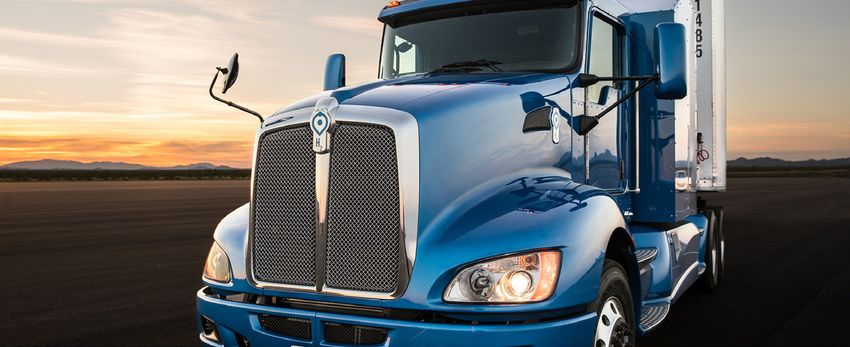
Strategy

    • Environmental
      Sustainability Strategy
    • Priority Issues
    • 2021 Targets
    • Governance

           Toyota’s global vision of Respect for the Planet is a core value of the company and a
            driving force behind our environmental initiatives. Respect for the planet is also the
            foundation for Toyota Motor North America’s environmental sustainability strategy.

                                     RESPECT FOR THE PLANET is one of Toyota’s core values.
             TOYOTA M OTO R
                                     To demonstrate the company’s commitment to this value, Toyota issued the
             NORTH AMERICA           Environmental Challenge 2050, a set of six global challenges to move our company
                                     beyond zero environmental impact to achieving a net positive impact on society. Here
             2050                    in North America, we have developed a strategy to align with these six challenges and
             Environmental           achieve a net positive impact in our region.
             Sustainability          Environmental Challenge 2050
             Strategy
                                     To go beyond zero environmental impact and achieve a net positive impact:
                                     1. Eliminate almost all CO2 emissions from new Toyota vehicles
                                     2. Partner with suppliers and dealers to help them eliminate CO₂ from their operations
                                     3. Eliminate all CO₂ emissions from Toyota facilities and processes
                                     4. Ensure all Toyota facilities and processes conserve and protect water resources
                                     5. Ensure all Toyota facilities and processes support a recycling-based society
                                     6. Ensure all Toyota facilities and processes operate in harmony with nature

                                     TMNA Environmental Mission
                                     TMNA will demonstrate Respect for the Planet and achieve a net positive impact on
                                     society and the environment by:
                                     1. Supporting Toyota’s global Environmental Challenge 2050 through our
                                        five-year Environmental Action Plans and regional strategy
                                     2. Managing priority issues specific to the North American region
                                     3. Engaging in outreach by promoting awareness, developing strategic
                                        partnerships and sharing know-how with business partners and other
                                        stakeholders to create positive change

                                     TMNA 5-Year Environmental                      TMNA Focus Areas
                                     Action Plans                                   TMNA has organized its priority issues
                                     Five-year targets in the following areas       into four focus areas:
                                     ensure incremental progress
                                     toward our 2050 goals:
                                     • Four Focus Areas
                                     • Outreach                                 Carbon      Water       Materials Biodiversity

6                                                                                        Toyota North American Environmental Report / S T R AT E G Y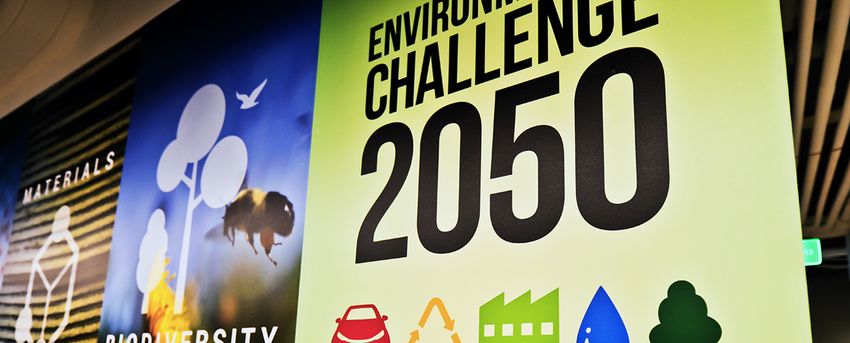
Environmental Strategy continued

          The Toyota Environmental Challenge 2050 (Challenge 2050), unveiled in September 2015, consists of six
          goals that seek to make a game-changing contribution to some of the critical environmental issues facing
          the world today, including climate change, water scarcity, resource depletion, and species and habitat loss.
          Challenge 2050 was developed by Toyota Motor Corporation and applies to all Toyota affiliates globally.

          Challenge 2050 is how team members across the company, in every region of the world, put Toyota’s
          global vision of respect for the planet into action. Challenge 2050 unites us all with a common purpose –
          to be more than just good stewards of the environment and to create positive changes beyond our facility
          boundaries.

          Within Toyota Motor North America (TMNA), we developed a regional environmental sustainability strategy
          to align Toyota’s global vision and Challenge 2050 with our regional four focus areas – Carbon, Water,
          Materials and Biodiversity. These focus areas in turn provide the framework for our five-year environmental
          action plans.

          In each focus area, we are working towards minimizing environmental impacts and, through outreach
          activities, towards a net positive impact on society and the planet. To further elaborate on our strategy
          for achieving Challenge 2050, we issued position statements in 2018. These statements were updated in
          December 2019 and represent our regional roadmap for attaining sustainable development by 2050.

                  •   CARBON Position Statement
                  •   WATER Position Statement
                  •   MATERIALS Position Statement
                  •   BIODIVERSITY Position Statement

          Achieving Challenge 2050 will require innovation, creativity and new ideas. For more on what it will take to
          achieve Challenge 2050, see the feature story “The Real Challenge in Challenge 2050.”

 7                                                                                      Toyota North American Environmental Report / S T R AT E G Y
Environmental Strategy continued

          PRIORITY ISSUES
          A global environmental materiality assessment was conducted by our parent company, Toyota Motor
          Corporation (TMC), as part of developing the Toyota Environmental Challenge 2050. TMC evaluated global
          trends, risks and opportunities, including the United Nations (UN) 2030 Agenda and the 17 Sustainable
          Development Goals (SDGs), and identified the following serious environmental issues facing society and the
          planet:

                  •   Extreme weather phenomena attributed to greenhouse gas emissions
                  •   Aggravated air pollution in cities
                  •   Water shortages due to population growth
                  •   Resource depletion
                  •   Ecosystem fragmentation and biodiversity loss

          TMC then evaluated the importance of these issues to Toyota and external stakeholders. As a result of this
          process, TMC identified six material issues:

                 1.   CO2 emissions from new vehicles
                 2.   CO2 emissions from upstream activities and end-of-life treatment of vehicles
                 3.   CO2 emissions from vehicle manufacturing
                 4.   Water stewardship
                 5.   Materials management
                 6.   Biodiversity protection

          TMC addresses these six issues in the Toyota Environmental Challenge 2050, which was introduced in
          September 2015.

          TMNA’s process in North America followed a similar path. Our identification of environmental priority issues
          aligns with TMC’s but consolidates the three CO2 emissions challenges into a single issue we call “Carbon.”
          We also call out the importance of outreach: sharing our know-how to achieve a net positive impact by 2050.
          Our priority issues in North America are our four focus areas – Carbon, Water, Materials and Biodiversity – as
          well as Outreach.

          We continue to manage other environmental issues, including air quality and green building, and we are as
          dedicated as ever to compliance with all applicable environmental laws and regulations. See “Performance”
          for information on our activities and progress in these areas.

          See the feature story “Contributing to the UN Sustainable Development Goals” for information on how
          Toyota’s environmental sustainability activities are supporting the UN’s 2030 Agenda and SDGs.

 8                                                                                     Toyota North American Environmental Report / S T R AT E G Y
Environmental Strategy continued

          PRIORITY ENVIRONMENTAL ISSUES FOR TMNA (MATERIALITY)

                                                             Materials                      Carbon
                                     Biodiversity
                                                             Outreach                        Water

                                         Other Environmental Issues

 9                                                                       Toyota North American Environmental Report / S T R AT E G Y
Environmental Strategy continued

          2021 TARGETS
          TMNA’s Environmental Action Plan (EAP) for fiscal years 2017 to 2021 puts us on a path to achieving all six of
          the Toyota Environmental Challenge 2050 (Challenge 2050) goals. We know there is much to do and a long
          way to go, but we are putting the building blocks in place to set us up for success by 2050.

          TMNA ENVIRONMENTAL ACTION PLAN, FY2017-2021
           NORTH AMERICAN   CHALLENGE
                                             FY2021 TARGET                   STATUS   FY2020 PROGRESS
           FOCUS AREA       2050

                                                                                         Supported global corporate commitment to offer an electrified version of
                                                                                         each Toyota and Lexus vehicle by 2025 with introduction of Toyota Sienna
                                                                                         and Venza hybrids, RAV4 Prime and next-generation Mirai.
                                                                                         Continued to support education initiatives, including funding the ECS Young
                                                Foster accelerated                       Investigator Fellowship.
                               Challenge 1     adoption of electrified                   Issued a 5th Green Bond to fund the acquisition of new retail installment
                                                     vehicles
                                                                                         contracts and operating lease contracts financing certain Toyota and Lexus
                                                                                         hybrid electric vehicles.
                                                                                         Continued partnerships with Shell, FirstElement Fuels and Air Liquide on
                                                                                         hydrogen fueling infrastructure.
             CARBON

                                                                                         Improved GHG intensity from owned and third-party U.S. parts and vehicle
                                              Improve GHG emissions
                                                                                         logistics by 4.7% compared to FY2016.
                                              intensity from all logistics
                               Challenge 2                                                                                               oyota fuel cell electric heavy-
                                                5% from a baseline of
                                                       FY2016

                                               Improve absolute GHG                      Reduced absolute GHG emissions by 14% compared to FY2016.
                                                emissions from North                     Announced virtual power purchase agreements that will reduce GHG
                               Challenge 3
                                             American operations 15%                     emissions from North American operations by up to 40%.
                                             from a baseline of FY2016

                                                                                                                                                     ™
                                              Prioritize and implement                   Mapped North American sites with updated version of Aqueduct  and
                                              water stewardship plans                    prioritized 2 sites for developing water stewardship plans.
              WATER            Challenge 4
                                               for facilities in water-
                                                                                         Continued to implement water reduction projects at various sites.
                                                   stressed areas

                                                                                         Continued to expand the use of returnable shipping containers for service
                                                 Reduce the use of                       parts and accessories. Between 2017-2019, this program has saved
            MATERIALS          Challenge 5
                                                packaging materials                      54.1 millionpounds of cardboard and 144.3 million pounds of wood.

                                                                                         Toyota has 17 sites with gardens that support monarch butterflies and other
                                                                                         pollinators. These gardens are located along the monarch butterfly's
                                               Participate in regional
           BIODIVERSITY        Challenge 6   biodiversity activities that                migration path and provide food and shelter to the butterflies at various
                                             support wildlife corridor(s)                stages of their life cycle as they make their way south for the winter, then
                                                                                         return in the spring.

             Target Exceeded        Target Achieved         On Track         Target Missed

 10                                                                                                                      Toyota North American Environmental Report / S T R AT E G Y
Environmental Strategy continued
GOVERNANCE
TMNA’s Sustainability and Regulatory Affairs (SRA) group handles Product Environmental and Safety
Regulation, Energy and Climate Research, Environmental Sustainability, Enterprise Chemical Management,
and Engine Certification and Compliance. The Environmental Sustainability (ES) division of SRA is
responsible for developing short-, medium- and long-term sustainability strategies for TMNA, including
planning and target setting in alignment with the Toyota Environmental Challenge 2050, which includes
developing consolidated five-year environmental action plan goals and targets. ES is also responsible for
developing the annual North American Environmental Report. ES reports progress on these activities to the
North American Executive Environmental Committee (NAEEC).
ES facilitates an Advisory Board and Working Group as coordinating mechanisms for TMNA. Both are
comprised of environmental experts and representatives from various divisions:
• Manufacturing
• Research and Development
• Logistics
• Product Support
• Corporate Resources (includes Regulatory Affairs and Legal)
• Social Innovation
• Toyota Canada Inc. (TCI)
This report contains information from these divisions. Representatives from these divisions also participate
in focus groups that concentrate on specific environmental issues, such as water or biodiversity. These
focus groups report to the Environmental Sustainability Working Group and help implement environmental
action plan targets, perform benchmarking and data gathering activities, and raise awareness among team
members and external stakeholders.
ENVIRONMENTAL SUSTAINABILITY GOVERNANCE IN NORTH AMERICA
11 Toyota North American Environmental Report / S T R AT E G YCarbon
• Carbon Targets
• CO₂ From New Vehicles
• CO₂ From Dealers &
Suppliers
• CO₂ From Operations
“CARBON” is one of Toyota’s four focus areas in North America. Our carbon strategy
addresses Challenges 1, 2 and 3 of the Toyota Environmental Challenge 2050 through
reducing CO2 emissions from new vehicles, helping suppliers and dealers eliminate
their CO2 emissions, and eliminating CO2 emissions from our operations. Climate change
affects people in all parts of the global community. We are working at every stage of the
vehicle life cycle to help the world build a low carbon future.
CARBON TARGETS
Toyota Motor North America (TMNA) has the following targets for fiscal years 2017 to 2021 for Carbon:
Challenge 1 (Reduce New Vehicle CO2 Emissions): Foster Accelerated Adoption of
Electrified Vehicles (On Track)
Globally, the company has committed to offer an electrified version of each Toyota and Lexus vehicle by
2025 and estimates that by then, it will have sold 5.5 million electrified vehicles. For information on our
approach to electrification, see our feature story “Electric Avenue.”
In North America, we seek to accelerate the adoption of electrified vehicles by continuously supporting
education initiatives, issuing green bonds to fund the acquisition of new purchase and lease contracts, and
funding hydrogen infrastructure development.
12 Toyota North American Environmental Report / C A R B O NCARBON continued
EDUCATION
We engage in a variety of activities to educate consumers and the public about our advanced technology
vehicles. For example, we host ride and drive events, participate in demonstration programs with universities and
government agencies, and support influential opinion leader forums, such as the Environmental Media Awards.
We also partner with the Electrochemical Society (ECS) to encourage young professors and scholars to pursue
research in green energy technology that may promote the development of next-generation vehicles capable of
utilizing alternative fuels (see “ECS Young Investigator Fellowship” for more information).
Toyota is also a Steering Committee member of the Hydrogen Council, a global initiative of leading energy,
transport and industry companies with a united vision and long-term ambition for hydrogen to foster the
transition to a low carbon society. The Hydrogen Council works with and provides recommendations to several
key stakeholders, including policy makers, investors, international agencies and civil society to achieve these
goals. Launched at the 2017 World Economic Forum in Davos, the Council is led by two co-chairs from different
geographies and sectors.
GREEN BONDS
Toyota Financial Services (TFS) issued its latest unsecured green bond, reinforcing the company’s industry-
leading commitment to the sale of electrified vehicles. Proceeds from the $750 million bond will be used to
fund the acquisition of new retail installment contracts and operating lease contracts financing Toyota and Lexus
vehicles that meet each of the three eligibility criteria:
• Possess a gasoline-electric hybrid or alternative fuel powertrain.
• Achieve a minimum of 40 highway and city miles per gallon (MPG or MPG equivalent).
• Receive a Smog Rating of 7 or better (where 10 is the cleanest), as determined by the U.S.
Environmental Protection Agency for the purchase of a vehicle in California.
There are currently seven vehicle models in the Toyota and Lexus lineup that qualify: Toyota Avalon Hybrid,
Toyota Camry Hybrid, Toyota Corolla Hybrid, Toyota Mirai, Toyota Prius, Toyota Prius Prime and Lexus ES 300h.
TFS revolutionized the Green Bond market by introducing the auto industry’s first-ever asset-backed green
bond in 2014. This issuance marks the fifth green bond the company has issued, and its first ever unsecured
green bond offered in U.S. dollars. With this latest iteration of its green bond program, Toyota increased the
vehicle eligibility requirements from 35 miles per gallon to 40 miles per gallon.
The TFS green bond program was reviewed by Sustainalytics, a leading global provider of environmental,
social and corporate governance research, ratings and analytics.
Citigroup and Credit Agricole CIB advised TFS on the green structuring considerations for the offering. BNP,
JP Morgan and Mizuho served as additional joint lead managers for the transaction.
See “Advancing Conventional Technologies” for information about Toyota’s latest advanced technology vehicles.
13 Toyota North American Environmental Report / C A R B O NCARBON continued
HYDROGEN FUELING INFRASTRUCTURE
Hydrogen fueling infrastructure is key for commercialization of fuel cell electric vehicles (FCEVs) like Toyota’s
Mirai. The University of California Irvine estimates only 68 stations are needed to support 10,000 FCEVs
state-wide, and more than 40 are already operating. The California Energy Commission (CEC) has earmarked
funding for about 100 total hydrogen stations to be built over the next several years.
As an example of recent progress, Shell, in partnership with Toyota, has opened five new stations in the
San Francisco and Sacramento areas, with more to come. Similarly, Iwatani has worked with Toyota to
further expand the network and now operates four hydrogen stations as part of Iwatani’s growing California
operations.
Overall, Toyota has foundationally helped fund the development of a hydrogen infrastructure that is
already supporting a growing community of more than 7,000 FCEV drivers in the United States:
• With support from Toyota, FirstElement Fuels has been a primary player in
developing an integrated and reliable network of fueling stations across
California in target market locations consistent with the California Fuel Cell
Partnership Road Map. As of August 2020, FirstElement has successfully
opened 21 hydrogen stations – including a new, high capacity, four-fueling
position, liquid hydrogen-supplied station in Fountain Valley, California –
and is currently developing many more of these larger liquid-hydrogen
stations to further expand hydrogen fuel availability while simultaneously
reducing fuel costs to FCEV customers.
• In the northeastern United States, Air Liquide is working to develop and
supply a fully integrated hydrogen fueling infrastructure network of
strategically located stations to support the introduction of Mirai on the
East Coast.
Additionally, Toyota Canada has been working closely with partners to ensure the introduction of an
appropriate fueling infrastructure in Canada. In June 2018, Canada’s first public retail hydrogen refueling
station opened in Vancouver. In 2019, other stations opened in Québec City and in Burnaby, and more in
Canada are in the works. Toyota Mirai became available for fleet purchase in Québec during the winter of
2019 and in British Columbia during the summer of 2019.
To further accelerate hydrogen infrastructure and FCEV adoption, Toyota is also actively involved in
collaborations towards even bigger, heavy-duty-truck-focused hydrogen stations in order to enable much
needed zero-emissions freight transport while amplifying light-duty hydrogen station efforts, leveraging
network supply synergies, and speeding economies of scale.
For more on heavy-duty hydrogen fuel cell vehicles, see “Zero-Emissions Freight Project.”
14 Toyota North American Environmental Report / C A R B O NCARBON continued
Challenge 2 (Reduce Dealer & Supplier CO2 Emissions): Reduce GHG emissions
intensity from logistics by 5 percent, from a baseline of fiscal year 2016 (On Track)
This target measures GHG emissions intensity from owned and third-party U.S. service parts/ accessories
and vehicle logistics from all transport modes (trucking, marine, air and rail). Logistics GHG intensity
increased 14 percent in fiscal year 2020 compared to the previous year, mainly due to an increase in
container miles from our owned parts logistics trucks. However, since the target baseline of fiscal year 2016,
GHG intensity has decreased 4.7 percent, putting us on track to achieving the target.
Production control logistics are currently not included in the scope of this target. They will be included in the
GHG logistics target when our new environmental action plan starts in fiscal year 2022.
Total emissions from all logistics sources – including owned and third-party service parts/accessories,
vehicle, and production control – were estimated to be 759,000 metric tons CO2e in fiscal year 2020, a
reduction of 1 percent from the previous year.
Toyota Transport (truck carrier) and Toyota Logistics Services (shipper) continue to participate in U.S. EPA’s
SmartWay® Transport Partnership, a market-driven partnership aimed at helping businesses move goods in
the cleanest, most efficient way possible. One of the main purposes of SmartWay is to improve fuel efficiency
and reduce GHG emissions from the movement of goods.
See “Logistics GHG Intensity” in Performance for GHG intensity performance from U.S. service parts/
accessories and vehicle logistics.
See “Suppliers” for more information on activities to reduce GHG emissions from third-party logistics.
Challenge 3 (Eliminate CO2 Emissions from Facilities): Reduce absolute GHG emissions
from North American operations 15 percent (On Track)
The target covers total Scope 1 and Scope 2 GHG emissions from stationary and mobile sources at both
manufacturing and non-production sites. The baseline year is fiscal year 2016. Total Scope 1 and 2 emissions
have decreased 14 percent between the baseline year and fiscal year 2020. The decrease is due to energy
efficiency improvements, investments in renewable energy and changes in production volumes and model mix.
See “CO2 From Operations” for information on our activities to reduce energy use and GHG emissions.
See “Greenhouse Gas Emissions” in Performance for GHG emissions performance data.
15 Toyota North American Environmental Report / C A R B O NCARBON continued
CO2 FROM NEW VEHICLES
Challenge 1 of the Toyota Environmental Challenge 2050 calls on all Toyota regions globally to reduce CO2
emissions from new vehicles 90 percent by 2050, from a 2010 baseline.
To achieve this challenge, Toyota is pursuing multiple pathways to reduce vehicle fuel consumption and
GHG emissions and is committed to utilizing various forms of electrification, including hybrid, battery
electric and fuel cell technology. We try to match technologies to customer needs and government policies
in each specific region. We evaluate vehicle powertrains, weight, aerodynamics and other design factors
to boost vehicle efficiency while preserving the vehicle size, power, driving range and affordability that our
customers demand — without sacrificing world-class vehicle quality, durability, reliability, safety features
and performance.
There are several factors that must be weighed when considering the appropriate match. That‘s why we
research driving trends, sociological behaviors, the changing energy and transportation landscape, the
synergies between vehicle fuels and technologies, and the evolution of cities. Government initiatives can
also influence the adoption of advanced technologies where the market and supporting infrastructure are
still developing. Researching these factors helps us understand which technologies are best suited for the
circumstances in a given market.
Going forward, hybrid technology will continue to be at the foundation of Toyota’s approach to minimizing
the environmental impacts of gasoline-powered vehicles. Knowledge gained from hybrid development and
deployment is helping Toyota accelerate the introduction of future powertrains that can utilize a wide variety
of energy sources and fuels, including hydrogen and electricity. Toyota believes that we will utilize not only
hybrid technology going forward, but also various additional electrified technologies, and has committed
to offering an electrified version of each vehicle by 2025.
Toyota and Lexus currently have 18 electrified vehicle models on the market in North America. This includes
15 hybrid gasoline-electric vehicles, two plug-in hybrid electric vehicles and one hydrogen-powered fuel cell
electric hybrid vehicle. Cumulative Toyota and Lexus electrified vehicle sales in the region are more than 4.1
million vehicles (as of August 2020). These numbers mean that Toyota will continue to use our portfolio of
technologically advanced powertrains to develop and build our vehicles to readily adapt to future consumer
needs while minimizing environmental impacts.
Looking further into the future, Toyota is collaborating with research entities, universities and companies
on materials science research, investing in artificial intelligence to help accelerate the design and discovery
of advanced materials. The research is helping to identify new advanced battery materials and fuel cell
catalysts that can power future zero-emission and carbon-neutral vehicles. These efforts are helping to lay
the groundwork for the future of clean energy to bring us even closer to achieving Toyota’s goal of reducing
global average new vehicle CO2 emissions 90 percent by 2050.
For additional information related to vehicle CO2 emissions, please see the following:
• Toyota’s approach to electrification feature story “Electric Avenue.”
• TMNA’s target to foster accelerated adoption of electrified vehicles, see “Carbon Targets.”
• “Vehicle CO2 Emissions” data for the U.S., Canada and Mexico.
16 Toyota North American Environmental Report / C A R B O NCARBON continued
TOYOTA’S HYBRID ELECTRIC FLEET
MODEL TYPE OF HYBRID ELECTRIC VEHICLE
Toyota Mirai Fuel Cell Electric
Toyota Prius PrimeP Plug-in Gasoline-Electric
Toyota RAV4 PrimeP Plug-in Gasoline-Electric
Toyota PriusG Gasoline-Electric
Toyota Avalon Hybrid Gasoline-Electric
Toyota Camry Hybrid Gasoline-Electric
Toyota Corolla Hybrid Gasoline-Electric
Toyota Highlander Hybrid Gasoline-Electric
Toyota RAV4 Hybrid Gasoline-Electric
Toyota Sienna Hybrid Gasoline-Electric
Toyota Venza Hybrid Gasoline-Electric
Lexus ES 300h Gasoline-Electric
Lexus LC 500h Gasoline-Electric
Lexus LS 500h Gasoline-Electric
Lexus NX 300h Gasoline-Electric
Lexus RX 450h Gasoline-Electric
Lexus RX 450hLG Gasoline-Electric
Lexus UX 250h Gasoline-Electric
All listed models are available as of December 2020.
17 Toyota North American Environmental Report / C A R B O NCARBON continued
ADVANCING CONVENTIONAL TECHNOLOGIES
The Toyota New Global Architecture (TNGA) exemplifies key elements of our technology strategy for
simultaneously reducing vehicle CO2 emissions, increasing fuel economy and boosting vehicle performance.
Toyota is proud to announce new vehicle models that continue building upon the TNGA technology
advancements showcased in previous North American Environmental Reports. The latest additions to our
TNGA lineup include the new 2021 Mirai, 2021 RAV4 Prime Plug-in Hybrid, 2021 Sienna and 2021 Venza.
Continuing the use of TNGA enables many of the groundbreaking technologies to be shared more easily
with future vehicles and is helping Toyota realize our commitment to “making ever-better cars.” TNGA‘s
integrated development supports the concept of total optimization for a lightweight, streamlined, high-
performance platform and powertrain unit. TNGA helps us meet consumers‘ needs while continuing to
improve the efficiency of our vehicles.
Toyota is excited to announce a completely
redesigned 2021 Mirai Fuel Cell Electric Vehicle
(FCEV) based on Toyota’s premium rear-wheel
drive TNGA platform. The new Mirai offers
improved passenger room, comfort and a new
driving experience compared to its pioneering
forerunner. A targeted 30 percent increase in
range is achieved by improved fuel cell system
performance and increased hydrogen storage
capacity. At its core, the Mirai is an electric
vehicle, but it never needs to be plugged in to
recharge. An FCEV generates its own electricity
onboard from hydrogen and oxygen, with water 2021 Toyota Mirai
as the only tailpipe emission. A fill-up takes just
about five minutes at a hydrogen fueling station.
The second-generation Mirai, which went on sale
in late 2020, delivers a significant evolution of
Toyota’s hydrogen FCEV powertrain technology
and offers a critical look into the future.
The 2021 Toyota RAV4 Prime Plug-in Hybrid
Electric Vehicle (PHEV) utilizes TNGA and offers
the most powerful hybrid RAV4 ever. Unlike any
other, the new RAV4 plug-in hybrid is celebrated
for its all-electric range, spirited acceleration,
nimble handling and impeccable style. The 2021
RAV4 PHEV has an EPA-estimated rating of 42
miles of all electric range, where the driver only
operates the vehicle on the battery. After the 2021 Toyota RAV4 Prime
driver exhausts the battery, the RAV4 Prime uses
hybrid technology to give the driver excellent fuel
economy and a total range of 600 miles. All of this is packaged in a vehicle that is currently
Toyota’s second quickest vehicle (behind the Toyota Supra) with a 0 to 60 speed of only 5.7
seconds, giving this RAV4 Prime a fuel-efficient and fun-to-drive attitude.
18 Toyota North American Environmental Report / C A R B O NCARBON continued
The fourth generation Toyota Sienna reimagines
the minivan to support a wider array of life
stages and activities. With a standard hybrid
powertrain now across all trims and an array of
new tech and amenities, the 2021 Toyota Sienna
raises the bar for style, safety, comfort, versatility
and fuel efficiency in its segment. To give the
Sienna driver confidence, a natural and intuitive
connection between the driver and the vehicle
is achieved with the optimized geometry of the
TNGA-K Platform combined with a trailing-arm
multi-link rear suspension and increased body
2021 Toyota Sienna Hybrid
rigidity. The Toyota Hybrid System II delivers 243
total horsepower and a manufacturer-estimated
33 combined MPG fuel economy, the latter setting a benchmark for the segment. Additionally, Sienna has
an optional Predictive Efficient Drive (PED), which analyzes driving habits and memorized road and traffic
conditions to optimize hybrid battery charging. When the driver activates PED, the system learns repeating
routes and can predict when and where the vehicle is likely to slow down or stop. Then, through optimum
accelerator pedal release timing guidance, the feature can reduce energy consumption, especially when
driving through hilly areas or in traffic congestion.
The all-new 2021 Venza comes equipped
exclusively with the Toyota Hybrid System II
powertrain and advanced Electronic On-Demand
All-Wheel Drive. The new-generation Toyota
Hybrid System in the Venza combines a high-
efficiency 2.5-liter DOHC four-cylinder engine with
three electric motors in a highly compact system.
Engine speed is synchronized with vehicle speed,
yielding effortless and quiet acceleration. Venza’s
hybrid system also adopts a newly developed
lithium-ion battery to enhance performance, 2021 Toyota Venza Hybrid
size and weight. Additionally, Venza utilizes the
same Predictive Efficient Drive (PED) used in the all-new Sienna. The PED uses the navigation system
operation to analyze driving habits and memorize road and traffic conditions, which can help reduce
energy consumption and optimize battery charging and discharging. All of this technology provides
comfortable urban and highway performance in addition to impressive fuel efficiency. The new Venza
has a preliminary manufacturer-estimated 40 MPG combined fuel economy in LE trim.
19 Toyota North American Environmental Report / C A R B O NCARBON continued
CO2 FROM DEALERS & SUPPLIERS
Challenge 2 of the Toyota Environmental Challenge 2050 calls on us to engage with our dealers and suppliers to
support their efforts to eliminate GHG emissions by 2050.
DEALERS
There are approximately 1,850 Toyota and Lexus dealerships in the United States, Canada and Mexico, all
independently owned franchises. The Toyota and Lexus brands work with their dealerships on an individual
basis, providing vendor support for products and programs that improve energy efficiency and save money.
Through efforts like the Toyota Image II facility initiative and Lexus Vision USA, dealerships incorporate the
best of sales and retail by including features such as LED lighting and windows that allow for natural light.
Energy is the third highest overhead expenditure for U.S. auto dealerships. On average, auto dealerships use
18 percent more energy than typical office buildings, according to the National Automobile Dealers Association
(NADA). That’s why Toyota and Lexus provide guidance to dealerships on implementing sustainable strategies
to achieve LEED® certification. LEED®, or Leadership in Energy and Environmental Design, emphasizes
building energy efficiency and allocates almost one-third of available points to building energy efficiency. For
information on Toyota and Lexus dealership LEED® certifications, see “Dealers” in Performance.
Beyond energy efficiency, we also help our dealers to source renewable energy and have partnered with
SunPower® to offer support for navigating through the process of installing solar panel arrays. Solar arrays can
drastically reduce a dealership’s electric bills, and they generate clean energy onsite. They can also make a
powerful statement to customers and the community about a dealership’s commitment to the environment.
Shottenkirk Desert Lexus in Cathedral City, California, completed ground-up construction in 2020. The
final touch on the new dealership was installing a 252 kW SunPower® solar panel system on the rooftop of
the service building – a system that’s more than 40 percent larger than the average system installed at an
automotive dealership. The solar panels are expected to generate more than 428,000 kWh per year, which is
an estimated 65 percent of the dealership’s annual electricity needs. The clean electricity generated by the
system avoids almost 100 metric tons of GHG emissions per year and is equivalent to the annual average
electricity use of 16 homes.
Shottenkirk Desert Lexus
installed a 252 kW rooftop
solar system that is
expected to generate 65
percent of the dealership’s
annual electricity needs.
20 Toyota North American Environmental Report / C A R B O NCARBON continued
SUPPLIERS
Freight transport is a significant — and growing — contributor to greenhouse gas (GHG) emissions.
According to the International Transport Forum and the Organization for Economic Cooperation and
Development (OECD), GHG emissions from trade-related freight transport are expected to increase by
almost a factor of four between 2010 and 2050. Experts project that by 2050, global freight transport
emissions will surpass those from passenger vehicles.
In North America, the majority of TMNA’s freight transport emissions are generated by third-party logistics
partners. Our logistics network consists of trucking, rail and marine carriers, all working in sync to ensure
smooth shipping and delivery of vehicles, parts and accessories across North America, from the supplier to
the plant, to Toyota’s distribution centers, and ultimately to dealerships and customers.
To help mitigate transport-related GHG emissions, TMNA’s internal logistics division works with third-party
partners to develop GHG reduction strategies. For example, Toyota’s production control logistics group –
which procures the parts and materials used to manufacture our vehicles – is working on a strategy to
reduce GHG emissions from two primary sources: over-the-road transportation (OTR) and cross dock yard
operations. The group’s focus is converting diesel-powered OTR equipment to alternative fuels, such as
renewable compressed natural gas, and to trial alternative power systems at the cross docks, such as electric
shunt trucks. In 2019, the cross dock in Louisville, Kentucky, completed the replacement of half of the forklift
fleet with electric forklifts and will convert the remaining forklifts as leases expire. Converting eight forklifts
from liquid propane to electric results in an annual reduction of 73 metric tons CO2e.
Toyota’s vehicle logistics group (TLS), which handles all finished vehicle shipments to dealerships as well
as all U.S. exports to more than 20 countries, has been working with logistics partners to develop a GHG
emissions reduction strategy. TLS tracks GHG metrics from each partner and works with them to pilot clean
technologies, improve fuel efficiency and reduce emissions.
In 2020, TLS enacted the final phase of the GHG strategy by launching the first annual Environmental
Leadership Awards. The main goal of the awards is to reward third-party partners for their efforts in
supporting the Toyota Environmental Challenge 2050 goal of eliminating CO2 emissions from supplier
activities. The awards were presented in March during the annual TLS Partners Meeting.
Between fiscal years 2018 and 2020, TLS and its partners have reduced total GHG emissions from transport
activities by 35,000 metric tons CO2e. The 2020 winning entries provide exceptional examples of how this
was accomplished:
• Emissions Reduction Project Award – Crowley Maritime Corp.:
Crowley introduced two of the world’s first combination container/roll on-roll off
(ConRo) ships powered by liquified natural gas (LNG) and created a reliable LNG
supply chain for fueling the ships in Jacksonville, Florida. These vessels are used to
deliver Toyota vehicles between Jacksonville and San Juan, Puerto Rico. The ships are
designed to consume both diesel and LNG for electrical power and main propulsion.
In 2019, the average operation on LNG during more than 100 voyages was 88 percent.
Fueling the ships with LNG reduces carbon dioxide (CO2) by 38 percent per container
as well as pollutant emissions, including reductions of nearly 100 percent in sulfur
oxide (SOx) emissions and nearly 90 percent in particulate matter (PM) emissions,
when the ships are operating on LNG instead of marine diesel oil.
21 Toyota North American Environmental Report / C A R B O NCARBON continued
• Environmental Strategy Award – Southeast Toyota Distributors, LLC: Southeast
partnered with Jackson Electric Membership Corporation, the local power
company, to utilize an undeveloped portion of its vehicle processing center
property in northeast Georgia to generate solar power. With over 3,600 solar
panels and 500 kWh of battery storage, this project annually produces 2.4 million
kWh of electricity, avoids 1,777 metric tons of CO2 and 21,346 pounds of NOx. Of
the power produced, 29 percent is used to operate the vehicle processing center
and the remainder powers the local community.
• Fuel Efficiency Award – CSX Transportation, Inc.: CSX operates a fleet of more
than 3,500 locomotives across its extensive rail network in the eastern United States.
Because locomotive fuel use represents more than 90 percent of the company’s total
GHG emissions, CSX has successfully implemented several fuel-saving technologies.
The railroad has installed automated cruise control devices on approximately 2,100
locomotives, shut down unnecessary backup locomotives and deployed distributed
power on certain trains to reduce lateral forces and friction. These initiatives,
combined with serving more direct routes, save nearly 11 million gallons of fuel per year.
The automated cruise control devices alone increase fuel efficiency by as much as 1
0 percent. CSX’s commitment to sustainable business practices have reduced GHG
emissions intensity by nearly 11 percent between 2014 and 2019.
• Innovation Award – Hansen & Adkins Auto Transport: Since 2016, Hansen &
Adkins has been installing remote start devices on all new equipment. These
devices reduce idling by allowing the driver to start the engine from the hydraulic
actuator stations on both the tractor and trailer, and shut off the engine after a
short time of inactivity. Idling time on trucks with remote start devices has been
reduced by more than 50 percent, and fuel efficiency has improved by 0.1 to 0.2
miles per gallon. This may not seem like much, but for every million miles driven,
Hansen & Adkins saves an estimated 5,000 gallons of diesel. Their trucks drive
over 80 million miles per year, which equates to annual fuel savings of 400,000
gallons and 4,064 metric tons CO2 avoided.
These activities are helping Toyota make progress towards our target to reduce the GHG intensity of transport
activities by 5 percent by fiscal year 2021. So far, we have reduced GHG intensity by 4.7 percent since the
baseline of fiscal year 2016.
22 Toyota North American Environmental Report / C A R B O NCARBON continued
ZERO-EMISSIONS FREIGHT PROJECT
Over 16,000 trucks serve the Los Angeles and Long Beach port complexes, North America’s largest trade
gateway for containerized cargo. That number is estimated to double by 2030.
Toyota is committed to hydrogen-powered fuel cell electric technology as a powertrain for the future
because it‘s a clean, scalable platform that can meet a broad range of mobility needs with zero emissions.
The Zero-and Near-Zero-Emission Freight Facilities project (ZANZEFF) provides a large-scale “Shore-to-
Store” hydrogen fuel cell electric technology framework that allows us to move heavy-duty truck fuel cell
electric technology towards commercialization. The initiative is expected to help reduce emissions by over
453 metric tons of CO2e and NOx, ROG and PM10 by 0.72 weighted tons.
The Port of Los Angeles, a global maritime leader with respect to zero-emission and near-zero-emission
technology testing and adoption, rolled out the first phase of ZANZEFF in the fall of 2020. New zero-
emissions hydrogen-powered fuel cell electric heavy-duty vehicles (FCEVs) are now operating at the ports,
utilizing the Kenworth T680 Class 8 model combined with Toyota’s fuel cell electric technology. Four of the
ZANZEFF trucks are currently operated by Toyota Logistics Services and in the future, three will be operated
by United Parcel Services, two by Total Transportation Services Inc., and one by Southern Counties Express.
This phase is designed to kick-start the leap to a new class of goods movement vehicles.
The new generation zero-emission truck expands on the capabilities of Toyota’s first two Project Portal Proof
of Concept trucks through enhanced capability, packaging and performance, with an estimated range of
more than 300 miles per fill, twice that of a typical drayage trucks’ average daily duty cycle. Since operations
began in April 2017, the Project Portal “Alpha” and “Beta” Proof of Concept Class 8 trucks have logged more
than 14,000 miles of testing and real-world drayage operations in and around the Ports of Los Angeles and
Long Beach while emitting nothing but water vapor.
CARB awarded $41 million dollars to the Port of Los Angeles for the ZANZEFF project as part of California
Climate Investments, a California initiative that puts billions of cap-and-trade dollars to work reducing
greenhouse gas emissions, strengthening the economy and improving public health and the environment,
particularly in disadvantaged communities.
Kenworth/Toyota FCEVs
under the ZANZEFF project
have been rolled out
in Southern California,
increasing the ports‘ zero-
emission trucking capacity
and further reducing the
environmental impact of
drayage operations.
23 Toyota North American Environmental Report / C A R B O NCARBON continued
CO2 FROM OPERATIONS
Challenge 3 of the Toyota Environmental Challenge 2050 calls on us to eliminate all CO2 emissions from the
use of energy at our facilities.
In fiscal year 2020, TMNA’s use of electricity, natural gas and other fuels resulted in emissions of 1.1 million
metric tons CO2e, which is a 9 percent decrease compared to the previous year and a 14 percent decrease
compared to fiscal year 2016 (the baseline year of our carbon target). For energy and GHG data, see
“Carbon” in Performance.
We track GHG reduction capital projects through our corporate production engineering group. Of the
projects we tracked in fiscal year 2020, we counted emissions reductions from manufacturing plant activities
of more than 57,000 metric tons CO2e. Our plants and other facilities continuously implement measures that
impact daily operations and reduce energy consumption and GHG emissions. For example:
• Improving Compressed Air System Efficiency: Toyota’s powertrain facility in West Virginia
implemented measures to increase the efficiency of the compressed air system. The improved system
utilizes a high pressure storage tank to reduce peak pressure demand on the central air compressors.
This allows for reduction of the overall system pressure and load on the central compressors. This
improvement is estimated to increase the efficiency of the compressed air system by 12 percent,
leading to an annual decrease of 2,600 metric tons of CO2e emissions.
• Reducing Equipment Operation During Non-Production Times: Toyota’s aluminum casting plant in
Missouri identified an opportunity to reduce equipment operation when not needed. Previously, the
metal heat treating furnace circulation fan and heat element operated continuously. Temperature
monitoring and controls were added to reduce operation during weekends and other non-
production times, which saves 2,747 MWh and avoids 2,000 metric tons CO2e annually.
• Converting to LED Lighting: Toyota’s assembly plant in Kentucky completed an LED lighting
conversion that reduces annual power consumption by 1,316 MWh and avoids 729 metric tons CO2e.
The low-level fluorescent lighting in the plastics, stamping and paint shop areas was replaced with
brighter, more efficient LEDs. Additional benefits are: 1) the lighting lifespan increases from three
years for fluorescent lamps to 10 years for LED, and 2) usage per four-foot section decreases from 64
watts to 32 watts.
• Reducing Natural Gas Consumption: Toyota’s assembly plant in Tijuana, Baja California (Mexico), is
utilizing exhaust waste heat from a regenerative thermal oxidizer (RTO) to preheat incoming water.
Adding this preheating from the RTO exhaust waste heat has reduced the boiler’s annual natural gas
consumption by 80 percent and the plant’s overall natural gas consumption by nearly 6 percent,
avoiding 686 metric tons CO2e.
• Installing VFDs on Equipment: Toyota’s assembly plant in San Antonio, Texas, installed 21 variable
frequency drives (VFDs) on equipment in the paint shop. VFDs save energy by varying the frequency
and voltage of electric motors driving circulation pumps and fans. Additional controls can match
pump and fan operation to process requirements. Combined with an “energy setback” standby
mode, fans and circulation pumps in the paint booths can reduce output when no vehicles are
present. These improvements are saving the plant an estimated 1,161 MWh in annual power
consumption and avoiding 602 metric tons CO2e.
• Optimizing Building Performance: Toyota’s autoparts facility in Delta, British Columbia, added variable
frequency drives (VFDs) to eight rooftop building HVAC units along with a new controller that provides
the ability to optimize building energy performance. This project is expected to achieve annual savings
of 1,278 MWh of electricity and 3,500 MMBtus of natural gas, and avoid 198 metric tons CO2e.
24 Toyota North American Environmental Report / C A R B O NCARBON continued
RENEWABLE POWER
According to the U.S. Energy Information Administration, renewable energy is defined as “energy from
sources that are naturally replenishing but flow-limited; renewable resources are virtually inexhaustible
in duration but limited in the amount of energy that is available per unit of time.” Sunlight, wind, biomass
and geothermal are common examples. The transition from fossil-fuel based energy sources to renewable
energy sources is key to addressing climate change and to achieving the Toyota Environmental Challenge
2050.
Ramping up renewable energy generation requires a huge capital investment. Companies that might want
to pursue this business opportunity need more than a vague promise of a stable market for their output.
They need the ironclad assurance that only a firm commitment from a buyer can give.
Virtual power purchase agreements (VPPAs) are helping accelerate the company’s shift to renewable
energy sources. Currently, just over 3 percent of TMNA’s power consumption is from renewable sources.
Once VPPAs are in place, that percentage is expected to increase to about 40.
“Nearly all the power that’s consumed in this country is currently purchased an hour or a day in advance,”
explained Kevin Butt, senior director of Environmental Sustainability at TMNA. “What we’re doing with a VPPA
is making a commitment to buy power from the system owner to offset electricity Toyota will need for several
years. That gives the renewable energy producers the backing they need to get the financing to expand their
operations. In return, the power is put on the grid that we get our power from, and we receive the Renewable
Energy Credits that accompany the electricity we need to offset our carbon footprint.”
25 Toyota North American Environmental Report / C A R B O NCARBON continued
In February 2020, Toyota signed an agreement and is waiting on approval from the Kentucky Public Service
Commission that would ensure that — by early 2022, if not sooner — 22 percent of Kentucky Utilities’ power
provided to our Georgetown operations will be renewable.
A VPPA signed in December 2019 calls for Toyota to guarantee the purchase of enough power going forward
to help Clearway Energy Group secure the funding it needs to begin constructing a 110-megawatt Black
Rock wind park in West Virginia in late 2020.
On a smaller scale, in California, Toyota has entered into a Hydrogen and Power Purchase Agreement for a
system to be built at the Port of Long Beach that will generate hydrogen and electricity from biomass and
provide onsite-generated renewable power for our vehicle logistics operation at the port. Doing so will
make this project environmentally beneficial and provide onsite-generated renewable power for our vehicle
logistics operation at the port. Doing so will make this project environmentally beneficial and economically
viable, while it fuels a pilot fleet of hydrogen fuel cell commercial trucks.
“We’re starting to embrace this strategy in a big way,” says Kevin Butt. “The West Virginia project, alone, will
offset 8 percent of our carbon footprint in North America. The Port of Long Beach project is much smaller.
But it’s very innovative and important as it will operate in one of the worst air quality districts in the country.”
VPPAs are beginning to have a tangible impact on our efforts to eliminate the carbon footprint of our North
American operations in keeping with the Toyota Environmental Challenge 2050. These actions, and others
like them, will help to usher in a new era in energy production that is carbon-free and renewable.
26 Toyota North American Environmental Report / C A R B O NYou can also read


