Oracle Cloud Using the Concur Adapter with Oracle Integration - Oracle Help Center
←
→
Page content transcription
If your browser does not render page correctly, please read the page content below
Oracle® Cloud
Using the Concur Adapter with Oracle
Integration

    E85530-09
    March 2019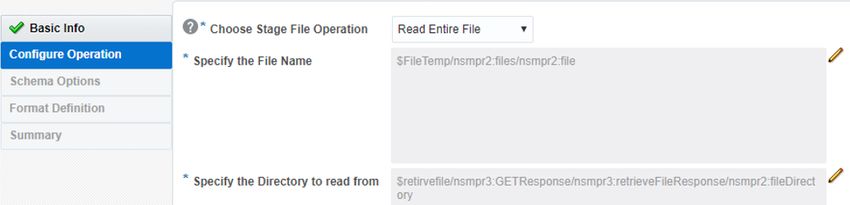
Oracle Cloud Using the Concur Adapter with Oracle Integration,

E85530-09

Copyright © 2019, 2019, Oracle and/or its affiliates. All rights reserved.

Primary Author: Oracle Corporation

This software and related documentation are provided under a license agreement containing restrictions on
use and disclosure and are protected by intellectual property laws. Except as expressly permitted in your
license agreement or allowed by law, you may not use, copy, reproduce, translate, broadcast, modify,
license, transmit, distribute, exhibit, perform, publish, or display any part, in any form, or by any means.
Reverse engineering, disassembly, or decompilation of this software, unless required by law for
interoperability, is prohibited.

The information contained herein is subject to change without notice and is not warranted to be error-free. If
you find any errors, please report them to us in writing.

If this is software or related documentation that is delivered to the U.S. Government or anyone licensing it on
behalf of the U.S. Government, then the following notice is applicable:

U.S. GOVERNMENT END USERS: Oracle programs, including any operating system, integrated software,
any programs installed on the hardware, and/or documentation, delivered to U.S. Government end users are
"commercial computer software" pursuant to the applicable Federal Acquisition Regulation and agency-
specific supplemental regulations. As such, use, duplication, disclosure, modification, and adaptation of the
programs, including any operating system, integrated software, any programs installed on the hardware,
and/or documentation, shall be subject to license terms and license restrictions applicable to the programs.
No other rights are granted to the U.S. Government.

This software or hardware is developed for general use in a variety of information management applications.
It is not developed or intended for use in any inherently dangerous applications, including applications that
may create a risk of personal injury. If you use this software or hardware in dangerous applications, then you
shall be responsible to take all appropriate fail-safe, backup, redundancy, and other measures to ensure its
safe use. Oracle Corporation and its affiliates disclaim any liability for any damages caused by use of this
software or hardware in dangerous applications.

Oracle and Java are registered trademarks of Oracle and/or its affiliates. Other names may be trademarks of
their respective owners.

Intel and Intel Xeon are trademarks or registered trademarks of Intel Corporation. All SPARC trademarks are
used under license and are trademarks or registered trademarks of SPARC International, Inc. AMD, Opteron,
the AMD logo, and the AMD Opteron logo are trademarks or registered trademarks of Advanced Micro
Devices. UNIX is a registered trademark of The Open Group.

This software or hardware and documentation may provide access to or information about content, products,
and services from third parties. Oracle Corporation and its affiliates are not responsible for and expressly
disclaim all warranties of any kind with respect to third-party content, products, and services unless otherwise
set forth in an applicable agreement between you and Oracle. Oracle Corporation and its affiliates will not be
responsible for any loss, costs, or damages incurred due to your access to or use of third-party content,
products, or services, except as set forth in an applicable agreement between you and Oracle.
Contents
    Preface
    Audience                                                                        v
    Documentation Accessibility                                                     v
    Related Resources                                                               v
    Conventions                                                                     vi

1   Understand the Concur Adapter
    Concur Adapter Capabilities                                                    1-1
    What Application Version Is Supported?                                         1-1
    Workflow to Create and Add a Concur Adapter Connection to an Integration       1-2

2   Create a Concur Adapter Connection
    Prerequisites for Creating a Connection                                        2-1
        Identify the Concur Application Edition                                    2-1
        Obtain the Consumer Key and Consumer Secret                                2-1
        Enable the APIs                                                            2-2
        Enable the Permissions for the Extract API and Payment Batch API for the
        Registered Application                                                     2-2
    Create a Connection                                                            2-2
        Add a Contact Email                                                        2-4
        Configure Connection Properties                                            2-4
        Configure Connection Security                                              2-4
        Test the Connection                                                        2-5
    Upload an SSL Certificate                                                      2-5

3   Add the Concur Adapter Connection to an Integration
    Basic Info Page                                                                3-1
    Invoke API Option Page                                                         3-1
    Invoke Operations Page                                                         3-2

                                                                                    iii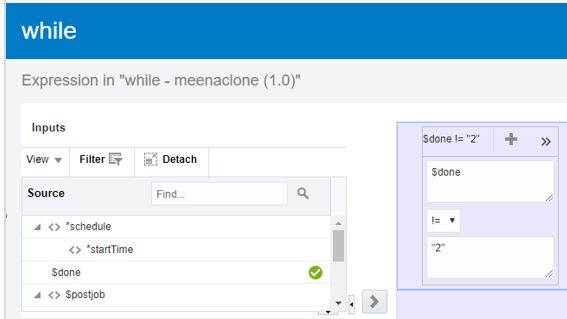
Summary Page                                                       3-4

4   Implement Common Patterns Using the Concur Adapter
    Synchronize Campaign Cost Data Between Salesforce.com and Concur   4-1
    Use the Extract API in a Scheduled Orchestrated Integration        4-1

5   Troubleshoot the Concur Adapter
    Troubleshoot Concur Adapter Connection Issues                      5-1

                                                                        iv
Preface
This guide describes how to configure the Concur Adapter as a connection in an
integration in Oracle Integration.
Note:
The information in this guide applies to all of your Oracle Integration
instances. It doesn’t matter which edition you’re using, what features you
have, or who manages your cloud environment. You’ll find what you need
here, including notes about any differences between the various flavors of
Oracle Integration when necessary.
Topics
• Audience
• Documentation Accessibility
• Related Resources
• Conventions
Audience
This guide is intended for developers who want to use the Concur Adapter in
integrations in Oracle Integration.
Documentation Accessibility
For information about Oracle's commitment to accessibility, visit the Oracle
Accessibility Program website at http://www.oracle.com/pls/topic/lookup?
ctx=acc&id=docacc.
Access to Oracle Support
Oracle customers that have purchased support have access to electronic support
through My Oracle Support. For information, visit http://www.oracle.com/pls/topic/
lookup?ctx=acc&id=info or visit http://www.oracle.com/pls/topic/lookup?
ctx=acc&id=trs if you are hearing impaired.
Related Resources
See these Oracle resources:
vPreface
• Oracle Cloud
http://cloud.oracle.com
• Using Integrations in Oracle Integration
• Using the Oracle Mapper with Oracle Integration
Conventions
The following text conventions are used in this document:
Convention Meaning
boldface Boldface type indicates graphical user interface elements associated
with an action, or terms defined in text or the glossary.
italic Italic type indicates book titles, emphasis, or placeholder variables for
which you supply particular values.
monospace Monospace type indicates commands within a paragraph, URLs, code
in examples, text that appears on the screen, or text that you enter.
vi1
Understand the Concur Adapter
Review the following conceptual topics to learn about the Concur Adapter and how to
use it as a connection in integrations in Oracle Integration. A typical workflow of
adapter and integration tasks is also provided.
Topics:
• Concur Adapter Capabilities
• What Application Version Is Supported?
• Workflow to Create and Add a Concur Adapter Connection to an Integration
Concur Adapter Capabilities
Use the Concur Adapter with Swagger API versions 3.0 and 3.1 to perform travel and
expense operations.
The Concur Adapter requires no custom coding and the integration can be completed
quickly without the need to hire a team of Concur application programming specialists.
The Concur Adapter allows you to quickly import expense categories, employee data,
customers, classes, and jobs. Use the Concur Adapter to eliminate duplicate manual
data entry and achieve faster data synchronization.
The Concur Adapter provides support for Concur’s Extract API and Payment Batch
API. Concur’s Extract Web Service enables you to request the extract of available data
objects, such as approved expense reports, travel requests, and payment requests.
Concur’s Payment Batch API enables you to manage payment batches and collect
their batch files.
Note:
You must know your edition of the Concur application to correctly configure
the Concur Adapter on the Connections page.
See Identify the Concur Application Edition.
The Concur Adapter is one of many predefined adapters included with Oracle
Integration. You can configure the Concur Adapter as a target in Oracle Integration.
What Application Version Is Supported?
For information about which application version is supported by this adapter, see the
Oracle Integration Adapters Certification Matrix under section Oracle Integration
Adapters Certification at the top of the page:
Oracle Integration Adapters Certification Matrix
1-1Chapter 1
Workflow to Create and Add a Concur Adapter Connection to an Integration
Workflow to Create and Add a Concur Adapter Connection
to an Integration
You follow a very simple workflow to create a connection with an adapter and include
the connection in an integration in Oracle Integration.
Step Description More Information
1 Create the adapter connections Create a Concur Adapter Connection
for the applications you want to
integrate. The connections can
be reused in multiple
integrations and are typically
created by the administrator.
2 Create the integration. When Create Integrations and Add the Concur Adapter
you do this, you add trigger and Connection to an Integration
invoke connections to the
integration.
3 Map data between the trigger Map Data of Using Oracle Integration
connection data structure and
the invoke connection data
structure.
4 (Optional) Create lookups that Manage Lookups of Using Oracle Integration
map the different values used
by those applications to identify
the same type of object (such
as gender codes or country
codes).
5 Activate the integration. Manage Integrations of Using Oracle Integration
6 Monitor the integration on the Monitor Integrations of Using Oracle Integration
dashboard.
7 Track payload fields in Assign Business Identifiers for Tracking Fields in
messages during runtime. Messages and Manage Business Identifiers for
Tracking Fields in Messages of Using Oracle
Integration
8 Manage errors at the integration Manage Errors of Using Oracle Integration
level, connection level, or
specific integration instance
level.
1-22
Create a Concur Adapter Connection
A connection is based on an adapter. You define connections to the specific cloud
applications that you want to integrate.
Topics:
• Prerequisites for Creating a Connection
• Create a Connection
• Upload an SSL Certificate
Prerequisites for Creating a Connection
You must satisfy the following prerequisites to create a connection with the Concur
Adapter.
• Identify the Concur Application Edition
• Obtain the Consumer Key and Consumer Secret
• Enable the APIs
• Enable the Permissions for the Extract API and Payment Batch API for the
Registered Application
Identify the Concur Application Edition
There are two types of Concur application edition: Professional Edition and Standard
Edition. Perform the following steps to identify the edition of the Concur application you
are using before creating a Concur connection.
1. Sign in to the Concur application.
2. In the upper right corner, select the Administration list.
3. Select Expenses > Expense Admin.
The Expense Admin option is available only in the Professional Edition. In the
Standard edition, the Expense Admin option is unavailable. Therefore, you can
identify your Concur application edition.
Obtain the Consumer Key and Consumer Secret
The Concur administrator must perform the following tasks to obtain the consumer key
and consumer secret.
1. Sign in to the Concur application.
2. In the upper right corner, select the Administration list.
3. Select Company > Web Services.
2-1Chapter 2
Create a Connection
4. From the left navigation pane, select Register Partner Application.
5. Click New to register a new partner application.
The New Partner Application dialog is displayed.
6. Fill in the required details and select the APIs.
The key and secret are mentioned in the Application Authorization section at the
bottom of the dialog.
7. Save this information because it is required when creating a connection in
Configure Connection Security.
8. Click OK.
Enable the APIs
Enable the APIs to use to complete operations. To enable and add APIs, see the
Concur documentation.
Enable the Permissions for the Extract API and Payment Batch API for
the Registered Application
The Concur administrator must perform the following tasks to enable the permissions
for the Extract API and Payment Batch API for the registered application.
1. Sign in to the Concur application.
2. In the upper right corner, select the Administration list.
3. Select Company > Web Services.
4. From the left navigation pane, select Register Partner Application.
5. Select the registered application and click Modify.
The Modify Partner Application dialog is displayed.
6. Select the Extract – Request Extract of Available Data and Payment Batch –
Close Batches and Request Batch Export Files APIs to enable the permissions
for the Extract API and Payment Batch API.
7. Click OK.
Create a Connection
The first step in creating an integration is to create the connections to the applications
with which you want to share data.
1. In the navigation pane, click Integrations, then click Connections.
2. Click Create.
2-2Chapter 2
Create a Connection
Note:
You can also create a connection in the integration canvas of:
• An orchestrated integration (See Define Inbound Triggers and
Outbound Invokes.)
• A basic routing integration (See Add a Trigger (Source) Connection.)
The Create Connection — Select Adapter dialog is displayed.
3. Select an adapter from the dialog. You can also search for the type of adapter to
use by entering a partial or full name in the Search field, and clicking Search.
The Create New Connection dialog is displayed.
4. Enter the information to describe the connection.
• Enter a meaningful name to help others find your connection when they begin
to create their own integrations. The name you enter is automatically added in
capital letters to the Identifier field. If you modify the identifier name, do not
include a blank space (for example, Sales Opportunity).
• Select the role (direction) in which to use this connection (trigger, invoke, or
both). Only the roles supported by this adapter are displayed for selection.
When you select a role, only the connection properties and security policies
appropriate to that role are displayed on the Connections page. If you select
an adapter that supports both invoke and trigger, but select only one of those
roles, then try to drag the adapter into the section you did not select, you
receive an error (for example, configure an Oracle Service Cloud (RightNow)
Adapter as only an invoke, but drag the adapter to the trigger section).
• Enter an optional description of the connection.
2-3Chapter 2
Create a Connection
5. Click Create.
Your connection is created and you are now ready to configure connection details,
such as email contact, connection properties, security policies, connection login
credentials, and (for certain connections) agent group.
Add a Contact Email
From the Connection Administrator section of the connection, you can add a contact
email address for notifications.
1. In the Email Address field, enter an email address to receive email notifications
when problems occur.
2. In the upper right corner, click Save.
Configure Connection Properties
Enter connection information so your application can process requests.
1. Click Configure Connectivity.
2. In the Concur Instance URL field, enter the URL for the Concur application host
location. This is the same URL that you use to log in to Concur.
The URL to specify is based on where the application is hosted:
• USA: https://www.concursolutions.com
• EMEA: https://eu1.concursolutions.com
3. In the Edition field, select the Concur application edition. You must know whether
you are using the Professional Edition or Standard Edition. See Identify the
Concur Application Edition.
4. Click OK.
5. Configure connection security.
Configure Connection Security
Use this procedure to configure security for your Concur Adapter connection.
1. Click Configure Security.
The Credentials dialog is displayed. The Security Policy field displays Concur
Resource Owner Password Credentials Policy. This value cannot be changed.
2. Complete these fields:
a. In the Consumer Key field, enter the consumer key for the Concur account.
You created the consumer key and consumer secret to specify in
Prerequisites for Creating a Connection.
b. In the Consumer Secret field, enter the consumer secret.
c. In the Confirm Consumer Secret field, enter the consumer secret again.
d. In the Username field, enter the user name for the Concur account.
e. In the Password field, enter the password for the Concur account.
f. In the Confirm Password field, enter the password for the Concur account.
2-4Chapter 2
Upload an SSL Certificate
3. Click OK.
Test the Connection
Test your connection to ensure that it is successfully configured.
1. In the upper right corner of the page, click Test.
2. If your adapter connection uses a WSDL, you are prompted to select the type of
connection testing to perform:
• Validate and Test: Performs a full validation of the WSDL, including
processing of the imported schemas and WSDLs. Complete validation can
take several minutes depending on the number of imported schemas and
WSDLs. No requests are sent to the operations exposed in the WSDL.
• Test: Connects to the WSDL URL and performs a syntax check on the WSDL.
No requests are sent to the operations exposed in the WSDL.
If successful, the following message is displayed and the progress indicator shows
100%.
Connection connection_name was tested successfully.
3. If your connection was unsuccessful, an error message is displayed with details.
Verify that the configuration details you entered are correct.
4. When complete, click Save, then click Close.
Upload an SSL Certificate
Certificates are used to validate outbound SSL connections. If you make an SSL
connection in which the root certificate does not exist in Oracle Integration, an
exception is thrown. In that case, you must upload the appropriate certificate. A
certificate enables Oracle Integration to connect with external services. If the external
endpoint requires a specific certificate, request the certificate and then upload it into
Oracle Integration.
To upload an SSL certificate:
1. In the navigation pane, click Integrations, then click the < arrow next to Designer.
2. Click Settings > Certificates.
All certificates currently uploaded to the trust store are displayed in the Certificates
dialog. The Filter By > Type list displays the following details:
• Preinstalled: Displays the certificates automatically installed in Oracle
Integration. These certificates cannot be deleted.
• Uploaded: Displays the certificates uploaded by individual users. These
certificates can be deleted and updated.
You can also search for certificates in the Search field. The search results are
limited to a maximum of ten records sorted by name for performance and usability
reasons. To ensure that your search results are more granular, enter as much of
the certificate name as possible.
3. Click Upload at the top of the page.
4. In the Upload Certificate dialog box, select the certificate type. Each certificate
type enables Oracle Integration to connect with external services.
2-5Chapter 2
Upload an SSL Certificate
• Trust Certificate: Use this option to upload a trust certificate.
a. Enter a unique alias for the certificate.
b. Click Browse, then select the trust file (for example, .cer or .crt) to
upload.
• Message Protection Certificate: Use this option to upload a keystore
certificate with SAML token support. Create, read, update, and delete (CRUD)
operations are supported on this type of certificate.
a. Enter a unique alias for the certificate.
b. Click Browse, then select the certificate file (.cer or .crt) to upload.
• Identity Certificate: Use this option to upload a certificate for two-way SSL
communication.
a. Click Browse, then select the keystore file (.jks) to upload.
b. Enter the password of the keystore being imported.
c. Enter the comma-separated list of aliases from the keystore being
imported.
d. Enter the comma-separated list of passwords corresponding to key
aliases.
e. If you want to display the passwords in clear text, select Show Key
Password(s). This enables you to ensure that you are correctly entering a
list of keystore passwords.
5. Click Upload.
6. Click the certificate name to view details such as the subject of the certificate, the
issuer of the certificate, the date the certificate was issued, and the date the
certificate expires.
2-63
Add the Concur Adapter Connection to an
Integration
When you drag the Concur Adapter into the invoke area of an integration, the Adapter
Endpoint Configuration Wizard appears. This wizard guides you through configuration
of theConcur Adapter endpoint properties.
These topics describe the wizard pages that guide you through configuration of the
Concur Adapter as an invoke in an integration. The Concur Adapter cannot be used as
a trigger in an integration.
Topics:
• Basic Info Page
• Invoke API Option Page
• Invoke Operations Page
• Summary Page
Basic Info Page
You can enter a name and description on the Basic Info page of each adapter in your
integration.
Element Description
What do you want to call your endpoint? Provide a meaningful name so that others can
understand the responsibilities of this
connection. You can include English
alphabetic characters, numbers, underscores,
and dashes in the name. You cannot include
the following:
• Blank spaces (for example, My Inbound
Connection)
• Special characters (for example, #;83&
or righ(t)now4)
• Multibyte characters
What does this endpoint do? Enter an optional description of the
connection’s responsibilities. For example:
This connection receives an inbound
request to synchronize account
information with the cloud
application.
Invoke API Option Page
Select the APIs to use.
3-1Chapter 3
Invoke Operations Page
Element Description
API Select the API to use in the integration.
• Swagger API: Enables you to perform
create, update, delete, and get operations
in the Concur application.
• Extract API: Enables you to request the
extract of available data objects, such as
approved expense reports, travel
requests, and payment requests.
• Payment Batch API: Enables you to
manage payment batches and collect
their batch files.
Note: The payment Batch API is not
available for selection if you are using
Concur’s Professional Edition.
API Description Describes the selected API.
Invoke Operations Page
Select the Concur Adapter invoke operation values for your integration.
You identify the operation type and the operations to perform in the Concur
application.
Element Description
Select Operation Type - If you selected Swagger API on the API Options page, these
Swagger API option are the available operations:
• Create
• Update
• Delete
• Get
3-2Chapter 3
Invoke Operations Page
Element Description
Select Operation Type - If you selected Extract API on the API Options page, these are
Extract API option the available operations:
• SubmitJobRequest: Submits a job request. After selecting
this option, you select an extract corresponding to the job
to post to the Concur application. The response of this
operation contains the link (status-link) to track the status
of the submitted job. The Summary page of the
SubmitJobRequest operation shows the file headers of
the file(s) returned after the job is completed. You can use
the RetrieveFile operation to get the extract file(s) for the
job and use the file headers on the Summary page for
further processing of the file(s).
Note: In Concur’s Standard Edition, only jobs for Invoice
GL Extract can be submitted, as provisioned by Concur.
• Getjobdetails: Fetches the details of the past 100 jobs
submitted to the Concur application corresponding to the
extract you select.
• GetJobstatus: Takes jobStatusLink as input in the
payload and returns the status of the job.
Note:
– The Status element’s value (the status of the job) in
the response is 2, as returned by Concur if the job is
completed.
– The link for the extract file is not available in the
response until the job status is completed.
– The jobStatusLink is returned by the
SubmitJobRequest or GetJobDetails operation in
the response.
• RetrieveFile: Takes file-link as input in the payload and
returns a CSV file(s) (if file-link returns a ZIP, extraction is
handled by the adapter) based on the response of the
respective file-link. You can use the RetrieveFile
operation to get the extract data corresponding to the file
link. The RetrieveFile operation downloads the file to a
virtual file system (VFS) directory. The VFS location of the
downloaded file is returned in the response of the
RetrieveFile operation, along with the file(s) name.
Note: The file-link value is used as the URI when
retrieving the extract data. You cannot get the file-link until
the job is in a running stage.
3-3Chapter 3
Summary Page
Element Description
Select Operation Type - If you selected Payment Batch API on the API Options page,
Payment Batch API option these are the available operations with Concur’s Standard
Edition:
• CloseBatch: Closes the specified batch based on the
payment batch you select. This prevents any new
expenses from entering. The batch list corresponding to
the Concur instance is displayed. You must select the
payment batch required to be closed from the Select
Payment Batch section. A request is sent to the Concur
application to close the respective batch. After the batch is
closed, Concur creates the batch file containing the
expense information. The response of this operation
contains the link (file-link) to get the corresponding
Payment Batch file(s) by using this link as input to the
RetrieveFile operation.
• RetrieveFile: Gets the file for the corresponding batch
once the batch is closed. This operation takes file-link as
input in the payload and returns a CSV file(s) (if the file-
link returns a ZIP, extraction is handled by the adapter)
based on the response of the respective file-link.
Select Operation Selects the API operation to perform.
Select Extract Selects the extract to perform.
Description A description of the API operation that is performed.
Summary Page
You can review the specified adapter configuration values on the Summary page.
Element Description
Summary Displays a summary of the configuration
values you defined on previous pages of the
wizard.
The information that is displayed can vary by
adapter. For some adapters, the selected
business objects and operation name are
displayed. For adapters for which a generated
XSD file is provided, click the XSD link to view
a read-only version of the file.
To return to a previous page to update any
values, click the appropriate tab in the left
panel or click Back. Click Cancel to cancel
your configuration details.
3-44
Implement Common Patterns Using the
Concur Adapter
You can use the Concur Adapter to implement the following common patterns.
Topics:
• Synchronize Campaign Cost Data Between Salesforce.com and Concur
• Use the Extract API in a Scheduled Orchestrated Integration
Synchronize Campaign Cost Data Between Salesforce.com
and Concur
This use case describes how the Concur Adapter is used to synchronize campaign
cost data between Salesforce.com and Concur in real-time.
• A new campaign is created in Salesforce.com.
• Campaign data is sent from Salesforce.com to the Concur Adapter.
• The Concur Adapter sends the campaign data to Concur.
• Campaign data from Salesforce.com is used to populate the campaign name and
campaign cost fields in a Concur expense report.
• When the campaign costs change in Salesforce.com, the updated data is sent to
the Concur Adapter and then Concur where the expense report is updated.
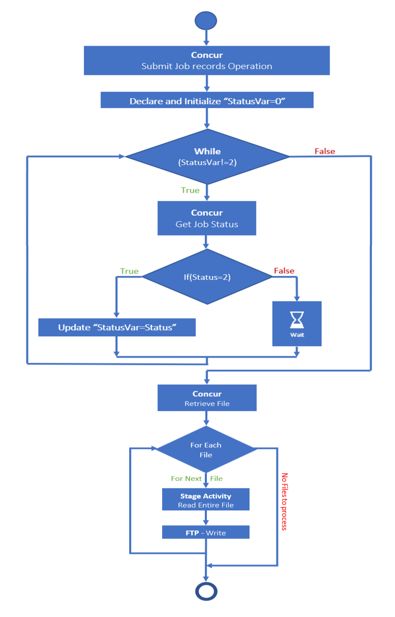
Use the Extract API in a Scheduled Orchestrated Integration
This use case provides a high level overview of how to submit a job, get job status,
and retrieve the extract data of the job created by using the Concur Adapter Extract
API.
4-1Chapter 4
Use the Extract API in a Scheduled Orchestrated Integration
1. Select and configure the Concur Adapter on the Connections page.
2. Create a scheduled orchestrated integration.
3. Drag the Concur Adapter into the integration as an invoke connection.
a. On the API Option page, select Extract API.
This API enables you to request the extract of available data objects, such as
approved expense reports, travel requests, and payment requests.
b. On the Operations page, select SumbitJobRequest from the Select
Operation list to configure the Concur Adapter to submit the job.
4. In the request mapper, map startTime to POST.
4-2Chapter 4
Use the Extract API in a Scheduled Orchestrated Integration
5. Add an assign activity.
a. Create two variables to store the status of the job (for this example, named
done) and a file link to retrieve the file (for this example, named Filelikvar).
6. Configure a while action below the assign action to check the status for the
submitted job.
a. Configure the condition for the status (“done! =2”).
Note:
The status of the job is 2 if the job is completed. This is returned by
Concur.
7. Drag a second Concur Adapter inside the while loop and configure the adapter to
get the job status.
a. On the API Option page, select Extract API.
b. On the Operations page, select GetJobStatus from the Select Operation list.
8. Map status-link from the SubmitJobRequest operation’s response to
JobStatusLink in the request of the GetJobStatus operation.
4-3Chapter 4
Use the Extract API in a Scheduled Orchestrated Integration
9. Drag a switch action into the integration.
a. Configure the condition for the status variable to check the job status.
10. Drag an assign action in the switch action to update the status.
If the status is completed (that is, status = ”2”), it is updated in the variable
created in Step 5.
a. Update done to status and Filelikvar to file-link.
b. In the Otherwise condition of the switch action, drag a wait action.
c. Configure the wait action to wait for 2 minutes.
11. Drag a third Concur Adapter connection outside of the while action.
a. On the API Option page, select Extract API.
4-4Chapter 4
Use the Extract API in a Scheduled Orchestrated Integration
b. On the Operations page, select the RetrieveFile operation. The RetrieveFile
operation downloads the file to a virtual file system (VFS) directory. The VFS
location of the downloaded file is returned in the response of the RetrieveFile
operation along with the file(s) name.
12. In the mapper, map $Filelikvar to file-link.
13. Drag a for-each action into the integration.
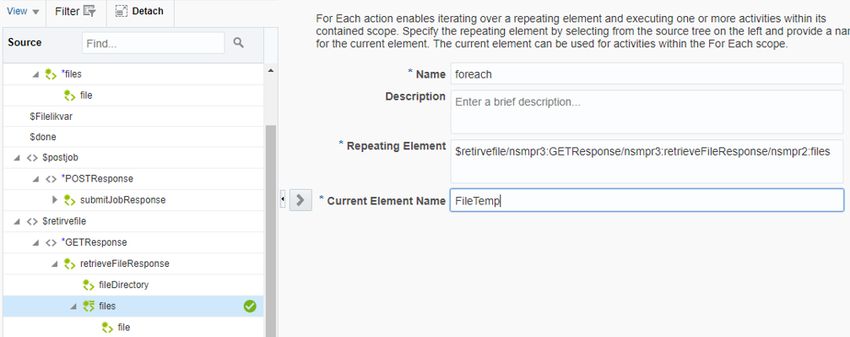
a. Name the activity (for this example, foreach is entered).
b. Drag the files element from the response of RetrieveFile to the Repeating
Element field.
c. Enter a name in the Current Element Name field (for this example, FileTemp
is entered).
d. Click Create and complete for-each action configuration.
14. Drag a stage file action inside the for-each action to read the downloaded result.
a. Provide a name, and then click Next.
b. Select Read Entire File from the list.
c. In the Specify the File Name field, provide the file name for the stage file
action response.
4-5Chapter 4
Use the Extract API in a Scheduled Orchestrated Integration
d. For the Specify the Directory to read from field, provide a file location.
The Configure Operation page looks as follows.
You now create a schema based on the sample headers mentioned on the
Summary page of the SubmitJobRequest operation for each extract.
e. On the Schema Options page, select Create a new schema from a CSV file,
which maintains the response file structure.
f. On the Schema Options page, select the CSV file.
g. Check the configuration in the Summary page.
15. Drag an FTP Adapter connection below the stage file action configured to read the
retrieved files.
a. On the Operations page, select the Write File operation.
b. On the Schema page, select to create a new schema.
c. On the Format Definition page, select a sample CSV file that maintains the
response file structure (for this example, InvoiceGLEExtract.csv is selected).
This is the same CSV file selected for the stage file action.
16. In the mapper, map the stage file action response elements to FTP Adapter
request elements.
4-6Chapter 4
Use the Extract API in a Scheduled Orchestrated Integration
17. Add the tracking variable:
a. In the upper-right corner, select Tracking from the Actions menu.
b. Drag a tracking variable.
18. Save and close the integration, which looks as follows:
19. Activate the integration.
20. From the Actions menu at the far right for this integration, select Submit Now.
You receive a run ID. You can monitor the flow using this run ID.
The integration is deployed and the web service is ready to accept requests.
4-75
Troubleshoot the Concur Adapter
Review the following topics to learn about troubleshooting issues with the Concur
Adapter.
Topics
• Troubleshoot Concur Adapter Connection Issues
Additional integration troubleshooting information is provided. See Troubleshoot
Oracle Integration Cloud of Using Integrations in Oracle Integration.
Troubleshoot Concur Adapter Connection Issues
The following issues can occur when using the Concur Adapter. Review the following
table to identify solutions for these issues.
Issue Solution
Why is the Payment Batch API not visible in You may have selected Professional Edition
the Adapter Endpoint Configuration Wizard? on the Connections page instead of Standard
edition and provided credentials for the
Standard Edition, or vice versa. Identify your
Concur edition and provide the correct
credentials. See Identify the Concur
Application Edition. Also, check whether the
Payment Batch API is enabled. You must
enable the permissions for the Extract API and
Payment Batch API for the registered
application as a prerequisite to configuring the
Concur Adapter. See Enable the Permissions
for the Extract API and Payment Batch API for
the Registered Application.
Why am I unable to see the Payment Batch 1. In the navigation pane, click Integrations
API after changing the edition to use Standard > Connections.
Edition instead of Professional Edition on the
Connections page? 2. On the Connections page, click at the
far right for the respective connection, and
select Refresh Metadata.
Why is the SubmitJobRequest operation for You may have selected Standard Edition on
the Extract API not visible in the Adapter the Connection page and provided credentials
Endpoint Configuration Wizard? for the Professional Edition. Identify your
Concur application edition and provide the
correct credentials. See Identify the Concur
Application Edition.
Why is the Extract API/Payment Batch API not You need to enable the Extract API/Payment
visible in the Adapter Endpoint Configuration Batch API in the Concur application. See
Wizard while configuring the Concur Adapter Enable the Permissions for the Extract API
connection for the Standard Edition? and Payment Batch API for the Registered
Application.
5-1Chapter 5
Troubleshoot Concur Adapter Connection Issues
Issue Solution
Why does the Concur Adapter show the error You need to enable the Extract API/ Payment
Unable to configure the operations Batch API in the Concur application. See
once you select the Extract API in the Concur Enable the Permissions for the Extract API
Adapter? and Payment Batch API for the Registered
Application.
5-2You can also read


